

A New Look at What It was Really Like at the Birth of Christ
Christmas is of course a beautiful season for most of us, filled with twinkling lights around cities and homes, highways and hills. Perhaps especially here in the Shenandoah Valley where the hills and mountains come alive with gorgeous lights, colors, and sweet and even funny decorations everywhere. “Grinches” anyone?
I hope some of the rest of you saw Kevin Costner’s movie last week on TV which he named “The First Christmas” which was a two-hour special on ABC-TV. I’ve often enjoyed Costner’s movies or films but this was out of the ordinary. Frankly, I had no idea he considers himself a Christian, growing up in a home where they went to church, and even shares what Christmas meant to him in his family growing up. In the movie, Costner also has various religious professors and experts give us an inside look and some background about real life in the days of Christ’s birth. It was not the sweet “Away in the Manager” we sing regarding Jesus’ birth.
It gave me a new glimpse of life in the time of Herod in Judah—where life was raw and crude and deadly for so many. As Luke states early in the New Testament, “In the time of Herod, king of Judea” … we soon see a clearly deranged Herod in Costner’s film. This king was known to gruesomely kill members of his own family and things were not beautiful and serene in his palace.
A beautiful Bethlehem, we may think, should have been the home for a sweet peaceful life. But not with an aging, insane king who feared the collapse of his reign.
The visit of Gabriel to Mary’s simple and poor (likely) home shows both her surprise, her amazement, and finally her acceptance of her future. Newsweek (online) wrote of the production, “An historically accurate version of the nativity story” including a probably truer location of Joseph and Mary laboring in a cave when baby Jesus was born.
As a woman and mother after birthing our three daughters (several years apart of course!), I loved this fascinating look at how it likely was in the days of Mary, Elizabeth, Zechariah, and Joseph as they dealt with their new offspring. And life in Nazareth, and then the escape two years or so later with Herod fearing a baby so much he makes his men kill all the boy babies under a certain age. Oh my. How very sick and sad. The weeping and agony of the mothers and fathers hit our hearts in sorrowful ways.
—
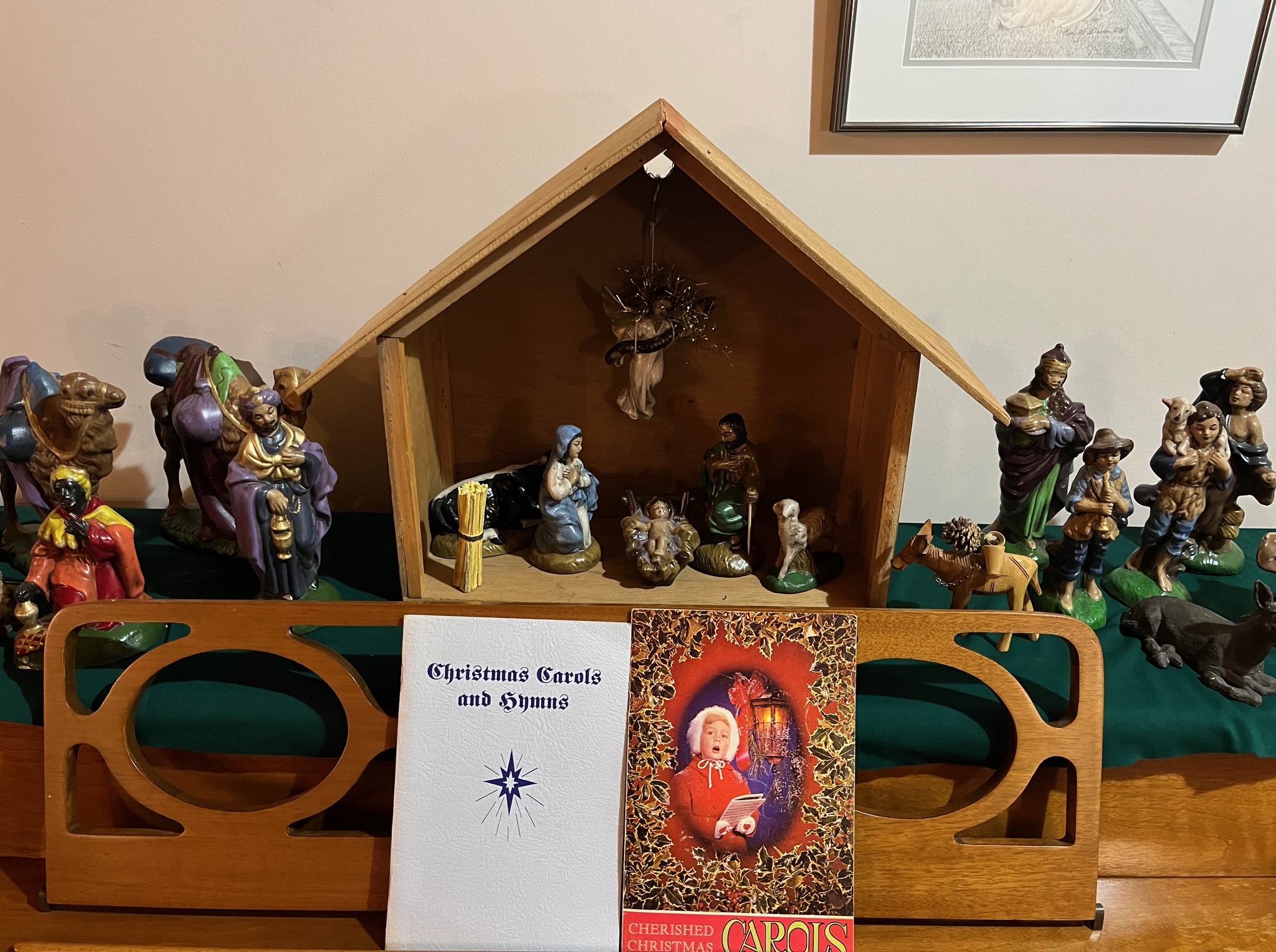
So. Like in many other homes, we have numerous “just so” nativity scenes all around our house which I love, but now realize how far from reality they certainly must be.
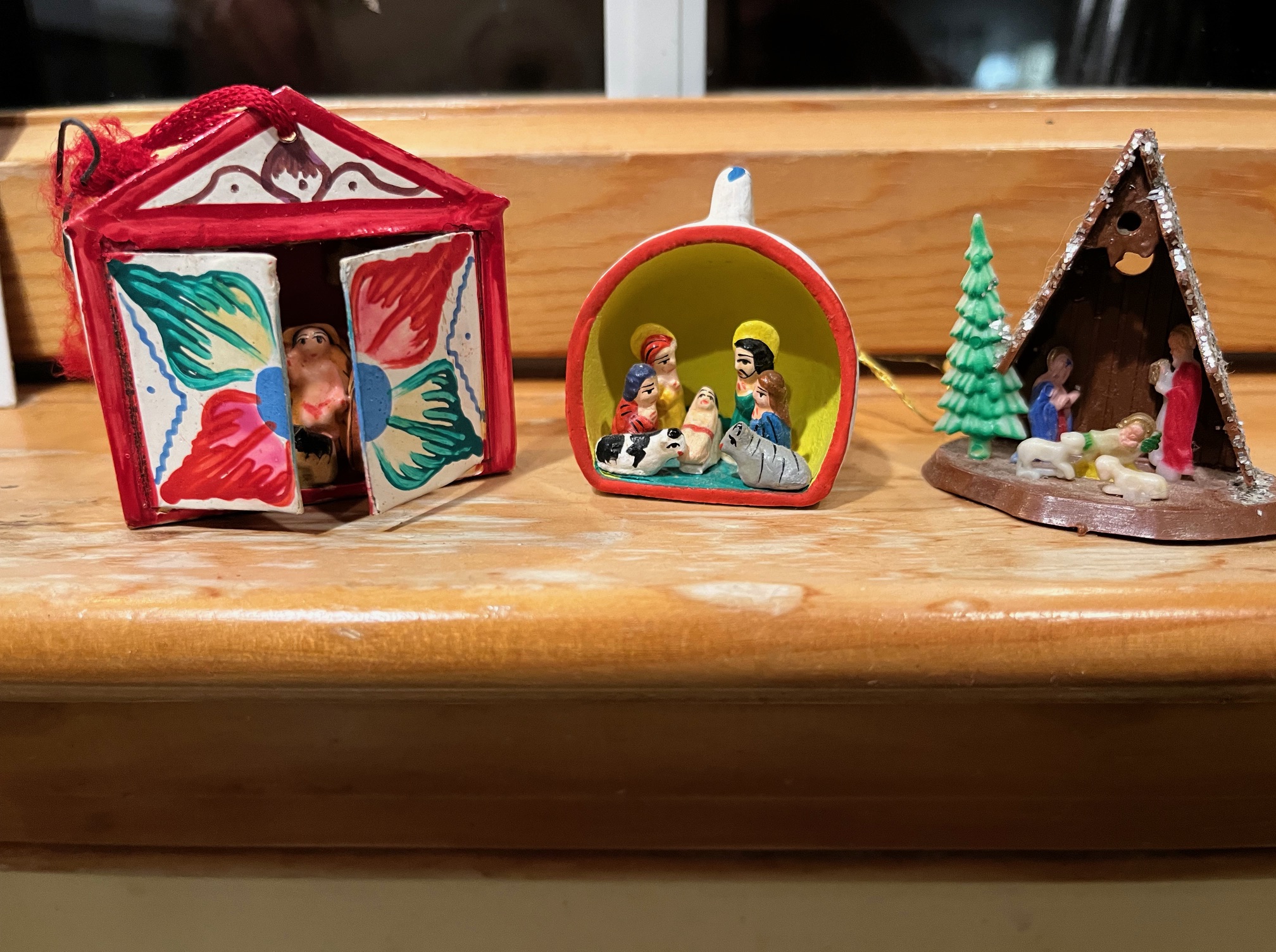
However, don’t put the nativities away: they carry stories for all of us, don’t they? The little darling nativity my 13ish daughter gave me after eyeing it in a giftshop at her camp, and giving it to me because she didn’t have enough money to also buy one of her own; another tiny nativity reminds me of the year I bought those sweet little boxes with little manger scenes to give to my Sunday school children one year; (I wonder how many of those are kept!).
And finally one more to share (I could do more), the tiny nativity pieces my mother bought in Spain which she treasured for 20-30 years, and which I now have owned for another 20ish years. So precious, and dear! I think Mother Mary and Father Joseph don’t mind the glittery versions we have on our windowsills, hutch, piano, and bookshelves.

We have enough bad Herod-like stuff in our world today on the evening news and elsewhere. Let’s celebrate what we can and live the Christ-centered life God wants us to remember and share with others.
Celebrating Christmas with you!

Who Started It?
It was a conspiracy. Or something.
I had forgotten to buy butter in town, one of the things that should have been on my list, but you know how that goes. I was mad enough to drive to the nearest store out here in the country, to get some butter for our supper.
However, the really bad part was late in the afternoon. I was working in our office bedroom and slowly become aware I was hearing something licking or slobbering out there in the living room.
Some background is needed here. Our cat, who has been with us four years now, hid in the basement for about 2-3 days when she first arrived. She was very shy. I can’t blame her, she had been attacked by some critter, and had to go to an animal emergency shelter a good 30 miles away. Eventually her owners decided they couldn’t afford all the pets/animals they kept if they hoped to build a house, so we said we’d try out Pumpkin. My husband had been looking for a cat—he’s truly a cat man. Our previous one had died maybe a year or so earlier.
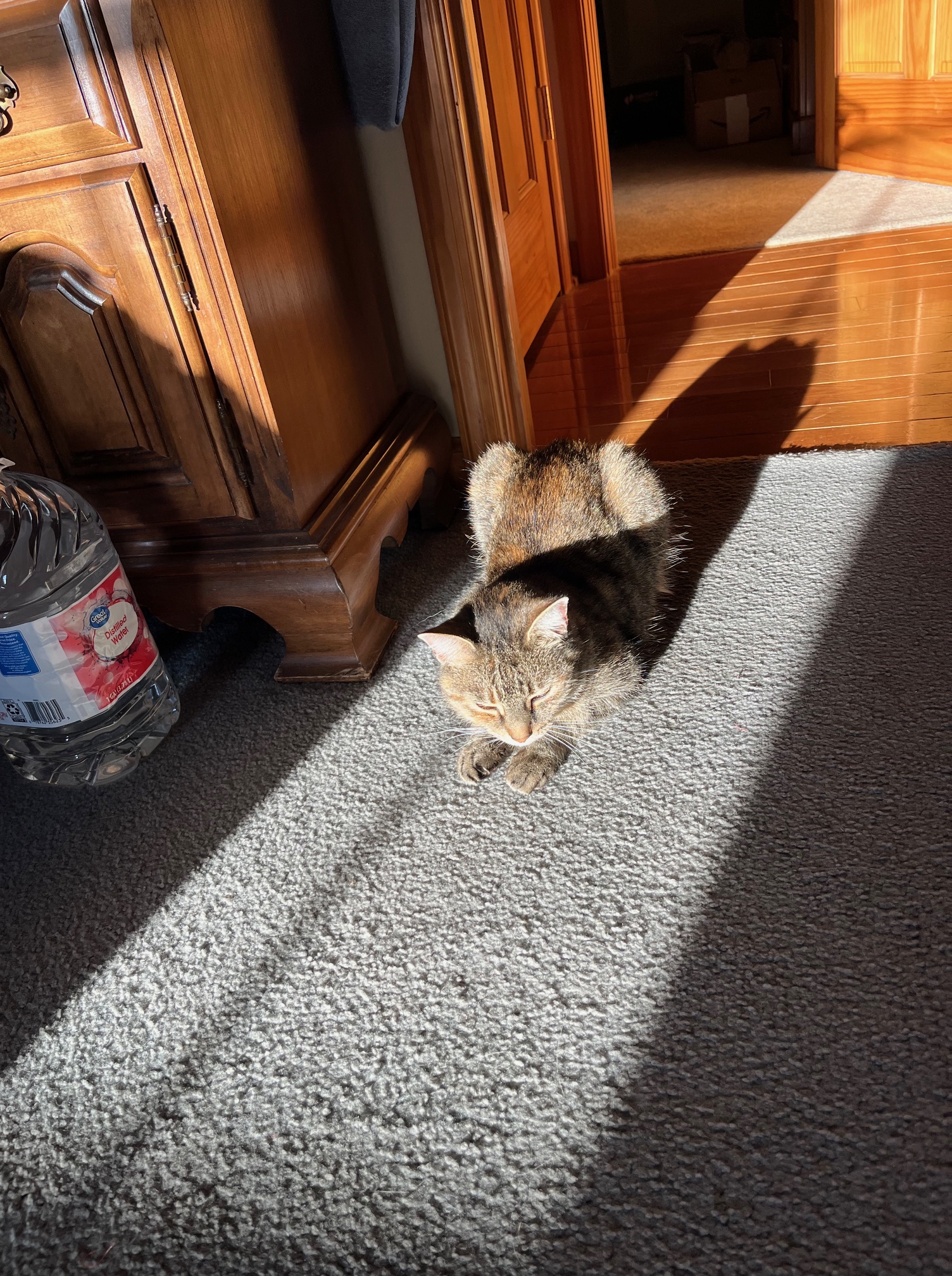
Well. This Pumpkin now thinks it is her right to jump on our chairs to get to our “island” and clean up crumbs, and if possible, attack the butter—if we’ve been so dumb as to leave it uncovered. We have taken to spraying her with water to get her to jump back down. We’re just not into having cats ruin our food.
So, I’m blaming the cat for jumping up on the island today while I was in another room (hubby was gone), and then I noticed the unusual noise in the living room.
I was astounded. “Velvet!” I screamed. (She’s our dog.) And of course she pretended to be all sad and embarrassed (ha, ha) and wouldn’t look at me.
Don’t you love to shame a dog so that she or he turns her head aside, very sorrowfully and you make her just stand there while you pout and frown and maybe try to stare her out. (I have not yet been able to take a picture of her being very sorrowful.)

Well, a dog doesn’t have a long memory, except she knows when she’s been bad, and she just hopes you’ll get out of YOUR bad mood soon.
And of course I do.
While puzzling inside. What are we going to do? Keep the butter in the fridge maybe, or hide it in a cupboard? (We hate hard butter from the fridge.)
I have a feeling the cat in particular will find something else to indulge in. Like ice cream bowls that have been left sitting around, or cereal bowls, etc.
Pumpkin skedaddles to our bedroom (to get out of being in ‘the dog house’) and promptly starts cleaning herself, and then pretends to go into a deep sleep. Which she accomplishes pretty well. I do see her looking slightly exasperated at me when she hears me start up my vacuum.
Oh well.
They’re the only children we have at home anymore.
I throw Velvet a potato chip, and Pumpkin is now sleeping in her favorite place–in hubby’s chair of course, like she didn’t do anything wrong.
Bad kids they are. Sometimes.
Who owns our house, anyway?! Who owns yours?

Pet lovers? Or not so much? Allergic to them?
Do you keep your butter in the fridge after every meal??
Your thoughts and advice here!
Guest blog post by Susan Scott Estep
I haven’t written anything for a while until recently, after looking through some of my favorite books. I ran across a few of Maya Angelou’s writings and that’s where my title for this short story begins.
My take or interpretation of the title seems to blend with Maya’s.
The Cage is a means of control, whether it be an animal or human. The bird’s tiny but mighty voice sings for its freedom. It dreams of one day flying away to never return to its bondage.
I remember as a child, my maternal Grandmother had a caged pet parakeet. She loved the little birds and when one died, she would get another. The little parakeet sang its heartfelt melody with the more attention she gave it.
One day, Grandmother decided to let the little bird fly around the house to be out of its cage for a while. I watched as the bird lit on the curtains and flew around and into the kitchen area where its cage was.
Then suddently, the screen door flew open, and my cousin Charlie (about 9 years old) ran in. However, as he ran in, the parakeet flew out the open door.
My Grandmother screamed in terror as she watched her beloved pet fly away. For a brief moment it lit on a nearby tree, but as Grandmother got close enough to grab him, the bird burst into the air and disappeared, never to return.
Sometimes cages are self-imposed and sometimes they are forced. Whatever the case, cages are not good! It holds us down to realize who we are or who we could be.
We will sing our hearts out like the caged bird until the voice with us that has been stifled can be heard, felt, and understood.
***
Susan would love to hear from others who have ever felt like a “caged bird.”
***
Susan Scott Estep has been a long time friend, sending me frequent stories which were published in the Valley Living magazine I edited for a number of years; in 2022 she published her own book of stories and poems, titled “Dragonfly Lite Gently.” I assisted her on that book because she has limited eyesight in recent years. Earlier she worked as a geriatric and psychiatric social worker and enjoyed creating art. (Susan’s faithful dog for many years.)

Maya Angelou was a poet, essayist, and civil rights activist, born in 1928 and died in 2014. Angelou’s series of seven autobiographies focus on her childhood and early adult experiences. Her first, “I Know Why the Caged Bird Sings” brought her international recognition and acclaim. (from Wikipedia)

Blog post https://www.amazon.com/Place-Fold-Melodie-Miller-Davis/dp/B0FZ8WXG7R
I can still write in sentences—even though at my age the words in person don’t come as easily. I start a conversation and get tangled up in finding the right word, name or thing I was wanting to talk about. It’s embarrassing but I’m gratified I can still write (and talk, on good days)! And helpers are always at my doorstep: “Siri, what is the word for ….” And she usually scores it. Of course AI will give you pages of words and stories and ChatGPT can route whole trips for you if you want. (And I didn’t use AI or ChatGPT with this!)
But I digress. Over my working years, I was able to write a number of non-fiction books, partially because I worked for the Mennonite Media organization, and later Herald Press, a primarily Mennonite publisher.
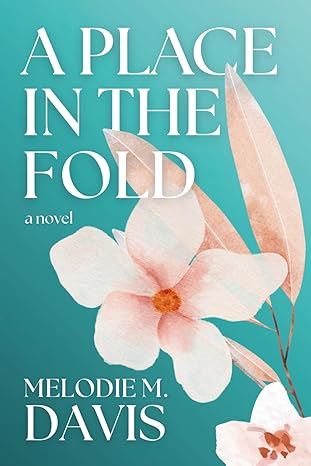
My very first novel has been published and is sitting at Amazon for you to peruse and even buy! That wasn’t my main object (finding customers), but I’m so glad I persisted in my oldest daughter’s suggestion: Mom, why don’t you write what people like to read: fiction! She knew I had spent many years piecing together various non-fiction books—which was also a blast for me, sharing the experiences and ups and downs of the child-raising years.
More back info, probably more than you need. When she was an infant to 5-year-old, I didn’t have time to read fiction and if I did have a spare minute before hitting the hay, I would simply pick up a women’s magazine or sometimes newspaper or whatever—in addition to a daily devotional magazine or piece. That was all I had time or energy for.
When she was a 6-17 year old, I was buzzing her back and forth—some days—to her own activities and those of our two other daughters, you know?
But, who wouldn’t take up a challenge after they (the kids) have gone through high school and college and even ahhhhh have actual paying jobs, while I on the other hand am joyfully retired. Then I should/could/would take up her suggestion.
And in the end, had FUN doing so. She didn’t tell me what to write—she always had a book in her hand and even couldn’t find her way around town when she was finally able to drive – because she didn’t know where streets were because when she was riding with us, she would be lost in a book. Hmmm. Those days are over, and she and her husband bus, walk, and drive their three sons ages 7 – 12 to activities ranging (through the years) to soccer, basketball, football, cross country running, baseball and Tae-Kwon-Do or however you spell it. My two grandsons living in another state also have plenty of activities—many now revolving around Cub and Boy Scouts, church, and traveling adventures. And now we’re also blessed to have our youngest daughter and husband raising their girls, a 2 ½ year-old and a 2-month-old in the family. Sweet.
So. The novel I’ve written is about a wife and husband, married for five years, who are trying to figure out when they want to or should start a family. Tim, the husband is a busy and dedicated pastor; Monica, wife, is an accountant, hoping to finish her CPA degree at some point. But how does that work with a family? Especially since Tim is called away to visit members in hospitals and homes, and also organizes sermons, runs meetings, takes care of business at church, or organizes a funeral for a member. Monica loves orderly sequences for her work, cooking, housekeeping, watching over up their finances, and finding time for fun with friends and family. She worries about taking toddlers to the nursery at church while they scream at the top of their lungs while Tim tries to preach.
So family and friends tease them about when they are going to start a family and Tim especially doesn’t see the issues ahead, which stare Monica in the face. She will also be in charge whenever their dad has to run off to another meeting or emergency call.
That’s probably enough for now. You can check some of the reviews inside the book at http://www.amazon.com/dpASIN:BOFZ8WXG7R
and I hope it encourages you to take a look and maybe put it on your list for the Christmas season coming up. Or not. 😊 Thanks for reading this and my blog frequently.
P.S. My daughter helped me a great deal in getting this published (proofreading, etc.) and her name is in the front of the book, along with our other two daughters. I’m also indebted to my husband who has supported my efforts through the years. Such blessings, all!

Blog post
How Do You Feel About Authority?
At my church, we have small groups that meet several times a month (like many others do). It is certainly a helpful way to be more closely related to friends and folks from church.
Our group meets twice a month, and one of the things we do is choose a study book which often lasts a year or so. This past year, we’ve been enjoying—and learning from a book called The Gift of Years: Growing Older Gracefully, by Joan Chittister. She is an American Benedictine nun and has written numerous helpful books.
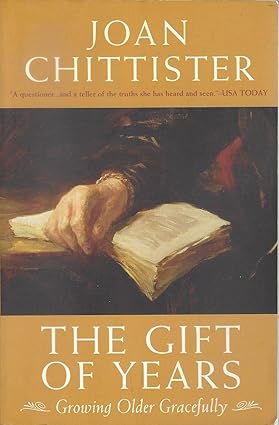
When I first looked at the chapter we were to study called “Authority,” I wondered, um, where is she going with this word? I’m not an authority, am I? I don’t really strive to be an authority.
But we all dug into this book offering new thinking, and I’ll capsulize it here. It gave me some new thoughts.
Okay, I’m no spring chicken but the opening quote from Cicero gave us pause: “Old age, especially an honored old age, has so great authority, that this is of more value than all the pleasure of youth.”
Well, I had to find out more about who Cicero actually was, rather than just someone to stump a Jeopardy contestant. Cicero was verifiably ancient—born 106 years before Christ and died in 7 BC. Before Christ. Wikipedia says he was a Roman statesman (politician??), lawyer, scholar, philosopher, a great orator, and writer!
So old age, he said, is better than our youthful days.
How, and what can aging mean for us?
We have a pick-up truck whose tires are aging, meaning that we better buy some new ones to keep the truck going. Most of us have equipment in our homes that is either failing or in need of repair. New stuff if what is needed, right?
Well, to an extent. But, with people, aging can be a special and delicious time of life.
As a mother of three daughters and now grandmother of five grandsons and two granddaughters (yay, finally, for the recent little girl arrivals to our family), I am thinking especially of how we adults and even oldsters can lead and teach and exert helpful authority. Not bossing around, but loving guidance and teaching of manners and love.
Chittister reminds us that it used to be in many societies all around the world, for those who were older, they were honored, respected, and in general, looked up to. Hmmm. Not seeing a lot of that although those of us who have been blessed with children and grands and great grands are—if they are taught well—can be grandparents who are looked up to. In ancient days, Chittister says “only the elderly were fit to rule.” I’m guessing that some were more fit and generous and helpful than others in their ruling. Be that as it may, as I get older, I can be happy that I can try to be a role model and helpful and loving.
My daughter was coaxing her daughter to apologize to her cousin after she hit him—not hard—but perhaps behavior observed or learned at her daycare. I don’t know. She pouted, didn’t want to apologize, perhaps didn’t know—although I know she’s been taught—what words to use. I said softly, just say “I’m sorry.” At last she quietly and quickly murmured “I’m sorry” and her oldest cousin responded nicely “thank you.” I wasn’t sure whether I should butt in, but I was so happy to hear her little “sorry.”
As older people, we do feel behind the times—can’t keep up with changes in technology, online or elsewhere. At least I do! I had to go without our computer for about two months this summer and when I finally got a working computer back again, I felt so out of it that I paid a guy I used to work with (who lives nearby) to come over and help me get started again with browsers and One Drive and Google photos etc.
We feel out of place and confused about many things—how SHORT do girls want their shorts to be, anyway?! Especially at football games, etc. We sigh and go on. Trends will change—nice long blue jeans and even long dresses and flowing skirts are also seen.
Chittister is now 86 and appears to be going strong as a theologian, author and speaker. She went to University of Notre Dame and Penn State University. She continues to be an influential person in social justice, peace and women’s issues, or so says Wikipedia. She says, “Clearly old age has a role to play in the development of the world around us. We do not live all these later years simply not to die. We live in order to make life better—both for ourselves and for others.”
She further points out that the calling to be comfortable and helpful in spreading wisdom doesn’t have a name in our current society. She mentions how “shamans” had roles as healers, religious leaders or counselors. Various religions have a role where those who are trying to help others and become even better persons as we age, is important. In such cultures there is “an understanding that in the older generations resides insight that is lacking to the younger ones,” says Chittister.
I like that idea, of trying to be better as we age. Retirement is for more than going to doctors (which is needed and important too, and understandably difficult as bones and diseases and muscles fade) and for long awaited vacations around the world. But we need to foster spiritual strength as elders.
Are we up to it? It gives us something to reach for in our older days.
It’s fall. October 7 now.


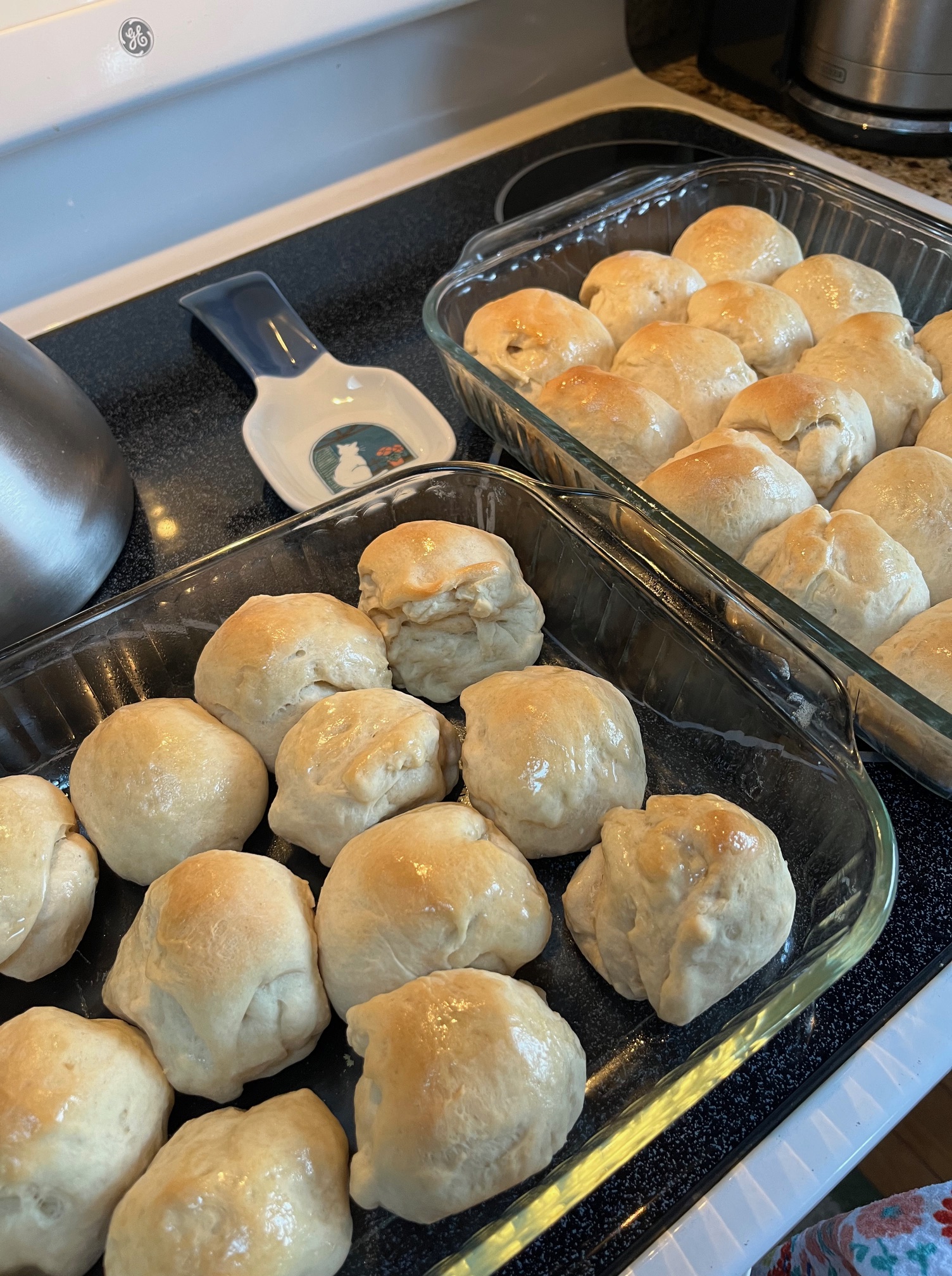
I have not made rolls or much of any yeast items for months, maybe even a year or two. I more often make instant-ish stuff, like sweet rolls out of a wrapped can of biscuits—which I douse with butter, brown sugar and cinnamon, and then after baking, top them with icing that I’ve mixed up with powdered sugar and cream. It worked for our family for a treat on Sunday mornings (when we used to be all home, five of us) and now after our Sunday morning yummies, my husband paces his share of the sweet rolls out for a quick breakfast treat the rest of the week, one day at a time.
Then I discovered I was totally out of bread in the freezer. Yikes, and I didn’t want to go to town or the little grocery 2 miles away. But luckily I had yeast and flour and shortening on hand.
So, I’m sharing an easy recipe if you enjoy making bread or rolls. This one comes from a well-known and top seller cookbook, Mennonite Country-Style Recipes & Kitchen Secrets, a collection by Esther H. Shank, and it received the Benjamin Franklin Award from Publishers Marketing Association back in 1987, with 100,000 copies in print at the point I received my copy. (Don’t know how many are in print now!) I’ve never tried this recipe, so I will let you know how they turn out.
I did make some delicious vegetable beef soup last night which will go great with these rolls, once I get them out of the oven!
Top-Notch Dinner Rolls
1 cup warm water
2 pks. dry yeast (2 tbsp.)
1 tbsp. sugar
Stir together until dissolved. Let set until foamy.
Then:
1 ½ cups hot water
½ cup shortening
½ cup sugar
2 ½ tsp. salt
Stir together until melted. Cool to lukewarm, and add to yeast mixture (or pour your yeast mixture into the water/shortening/sugar/salt mixture—is what I did.)
Then: Using approximately 10 cups sifted flour, or 8 cups unsifted, gradually add more flour, beating well. Then work in just enough more flour to make a soft but not sticky dough.
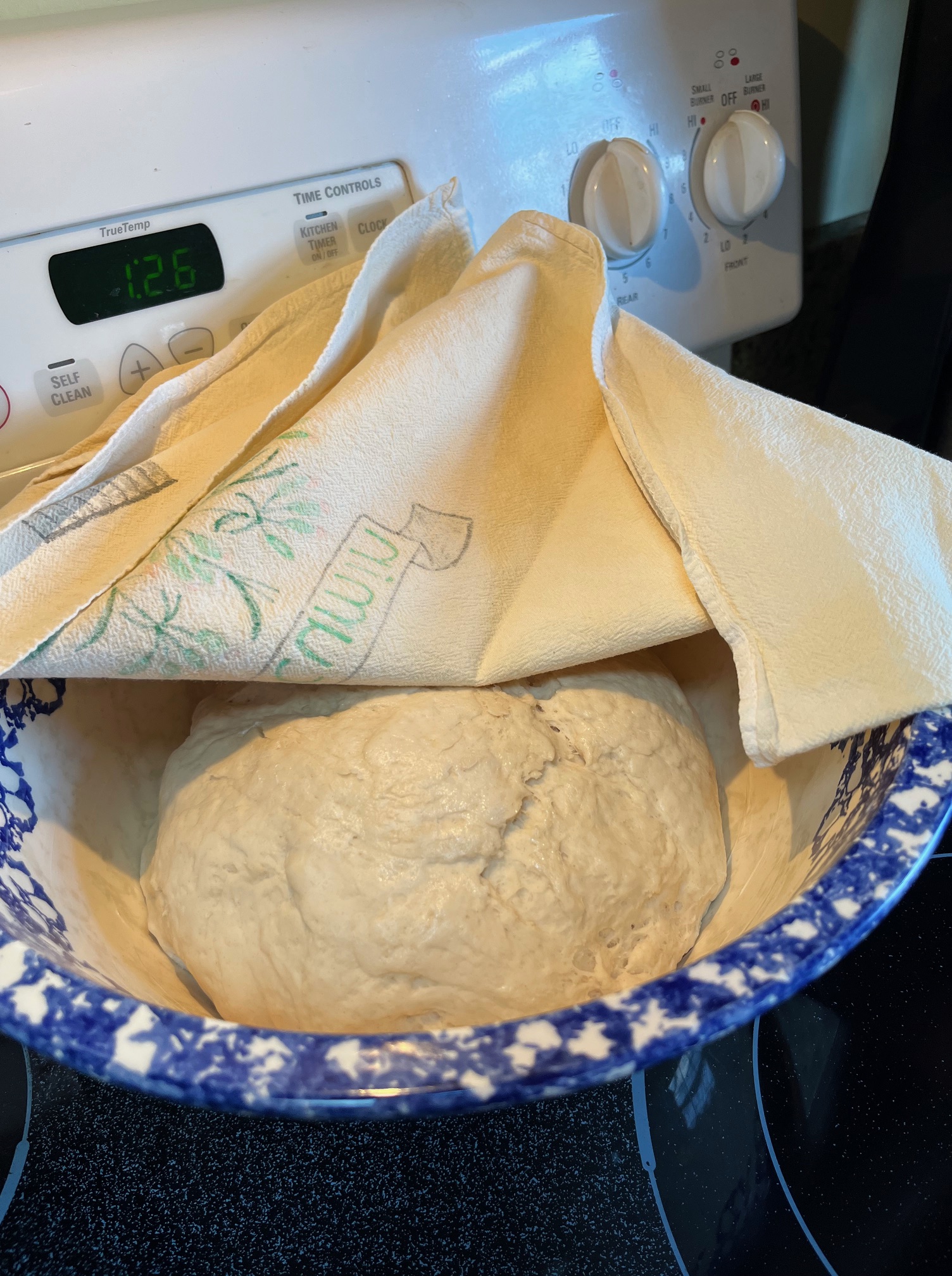
Grease the top of the dough, and then place in a greased bowl. Cover and let rise until double. Punch down and let rest 10 minutes, Shape into rolls and let rise until double again. Bake at 350 degrees about 25 minutes until lightly browned.
Yield: about 32 large rolls.
Ruby Petersheim
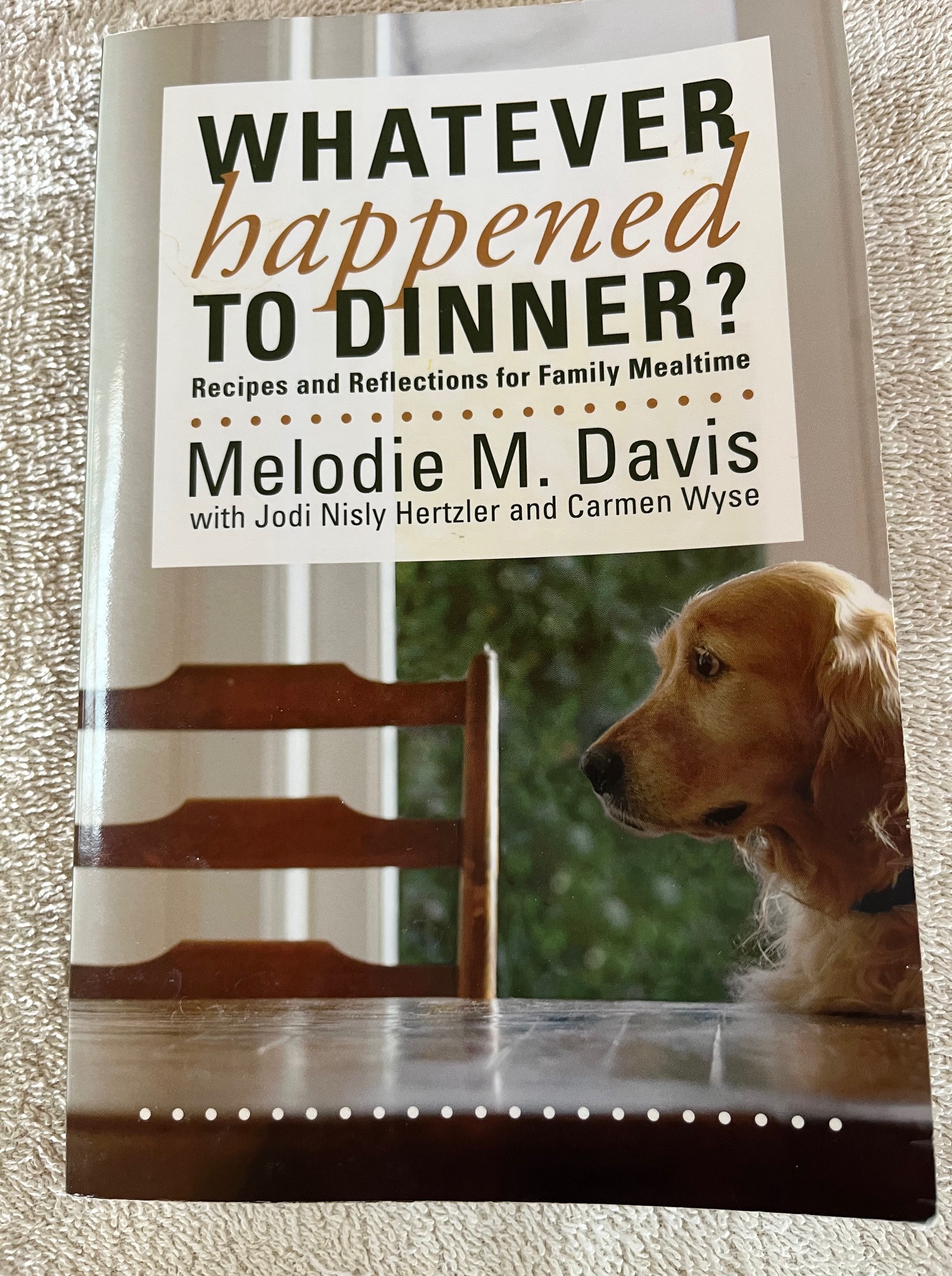
Esther Shenk is still living here in the Shenandoah Valley, as far as I know. She wrote a review for the cookbook I eventually put together (with others) in 2010, called Whatever Happened to Dinner.
Both books are available on Amazon.
Mennonite Country-Style Recipes – Herald Press

A Short Blip on a Long Problem – (this post especially for Rockingham County, Va. citizens)
Have you given up recycling all the plastics we use? When I go to events such as the fair—or locally we have “lawn parties” that serve lots of food and drinks—and end up with bags and bags of items to be trashed—I cringe that more can’t be recycled. Especially aluminum pop and beer cans.

In the old old days – I’m talking when my husband was a kid for instance—he and numerous others would run around the lawn party grounds and collect GLASS pop bottles which were sent somewhere and he earned like 5 cents. Not each: He would collect 24 bottles (in a wooden box holding 24 bottles) and earn 5 cents for each set of 24 bottles he turned in. One night, he recalls, he made $4—a heady amount for an 8-10 year old kid in the 60’s. Equivalent to maybe $30-40 today, for a kid (according to one Inflation Calculator).
Now, stuff does get recycled, but more can be done. We have a large local dump and five more places in our county where stuff can be tossed into large bins. Sometimes people say or think that such items “just get hauled anyway to the top of the mound at the county dump.” In the past I have asked various people working at the dump if that was true. The responses were not strong – like they weren’t sure, or didn’t want to say.
Recently I asked that question again to a worker who looked like she knew what she was doing, and working hard. I told her some people thought trash was sent out to sea or buried in the growing dirt mountain at the dump.
So I said, “Can you tell me where the recyclables go?” She had a ready answer: “Stuff goes to Dave’s Recycling.” I was impressed. I used to take my recyclable stuff directly to Dave’s Recycling but when the local dump was improved (years ago now) and added numerous bins where we could put recyclables, we began just taking our stuff directly to those bins at the dump.
I looked up Dave’s Recycling and its website said it takes stuff directly—and of course also processes what comes from the bins at the landfill which get carried to Dave’s. [For locals, Dave’s Recycling is open 8 a.m. – 4 p.m., closed Saturday and Sunday, and found at 130 Leray Circle in Harrisonburg.)
So that’s one convenient and efficient solution for paper to plastic to electronics to metals. Dave’s recycling accepts a wide range of material and can be found not far from the “Country Inn & Suites by Radisson” in Harrisonburg.
More info and comments here:
DAVE’S RECYCLING in Harrisonburg, VA 22801 – (540) 4…
The local Chamber of Commerce (at the link above) includes a listing of other recycling places in Harrisonburg, some where you get paid, especially when bringing scrap metal in.
Keep the Shenandoah Valley clean! And everywhere!

Simpler Times: The Way Back to Mayberry, Or maybe Singers Glen, Va.
We live near a small town (unincorporated) called Singers Glen. It has one store, a post office, an old building where a semitruck holds your old magazines and newspapers (and takes them for recycling, I think). The aging building offers free books and cans of food in a small cupboard, and also a free library of books you can borrow and return.
There are two small churches, a beautiful old but restored B&B place one can stay in for a night or a week, and a lovely cemetery overlooking the area. It’s place in history is that at one point a local named Joseph Funk published hymnals there—a shaped note hymnbook compiled and printed in the 19th century which became known as the Harmonia Sacra. Songsters love to have what they call a “Harmonia Sacra Sing” event. It is beautiful sacred music with books that some still use to this day.
Annual Harmonia Sacra Sings – The Harmonia Sacra Society

***
I’ve been reading a devotional book called “The Way Back to Mayberry: Lessons from a Simpler Time,” compiled by Joe Fann (published in 2001 by Broadman & Holman Publishers). Since “Andy of Mayberry” still plays on channels with old time TV shows and if you still enjoy them, the stories and “lessons” in this book have been fun, spiritual, and worthwhile: ultimately encouraging all of us to do better with the lives we have been given.
(While as a child I enjoyed the show, Andy had three wives over the years and later he had an ongoing affair for several years on the Andy Griffith show, with the teacher named “Helen Crump.” The affair was a pretty open secret among cast and crew, according to Wikipedia. She was never married.)
So neither Andy nor Mayberry was far from heavenly or perfect, but we can still learn from the show, and Fann’s (2001) “Lessons.” For instance, remember the time Opie met a new kid in town whose Dad apparently has lots of money, while Opie is lucky to get a 25 cent allowance each week. (I remember those meager days as a young girl, when a quarter actually bought a hamburger and soda at a McDonald’s. Right?) The new kid in town makes Opie jealous, but you can guess the eventual outcome—when the father realizes how spoiled his young son has become after the kid throws a mega-tantrum. And there is a turn around.
Thus I was not too surprised when I went into the grocery and beer store in our little “Mayberry-like” community and found a bright yellow sheet of paper reminding local citizens that people were driving too fast through the little burg, which could result in a child, pet, or elderly person getting hit when crossing the road to get mail or get out of their driveways. In fact, I had been driving on that road that very day and suddenly noticed a red blinking sign reminding ME to slow down to 25 mph. The title of the yellow sheet reminder says “Does the speed of the traffic through Singers Glen concern you?” The paper encouraged local citizens to help pay for two blinking “slow down” reminders (the state doesn’t supply them), and small towns must provide such. A blinking light, one for each end of town, would cost $7500 altogether. A local Ruritan Club is working to raise the money.
Then I went into the store to get what I had driven there for. On the top yellow sheet, someone else had scribbled, “No!” That citizen apparently didn’t find too fast of traffic a problem. I cringed, and we promptly sent off a check the next day, to help with the problem.
Like the yellow sheet reminds us: “You could make a life-changing difference for someone.”
***
Joey Fann has an older website that may be of interest to some: http://www.BarneyFife.com
His inspirational book was published by Broadman & Holman Publishers
20 years in the making – first novel
On a snowy, icy day this past February, I was ecstatic to have finished my first novel. I closed my computer and allowed myself to feel some great satisfaction. Some of you who have followed my writing know that I’ve also written ten nonfiction books over the years published by pretty big religious publishers like Word Books, Bethany House, and Zondervan. I had some good luck in those early years–1980s. Herald Press (Mennonite publisher) was also very generous in publishing several of my books. Publishing has changed hugely since then, I’ve found out.
I have also written small pieces of fiction over the years, and started various novels. My short stories were sometimes published in small magazines but basically, I wrote just because I enjoy writing.
But what really got me going was some 20-30 years ago when my oldest daughter—who also loves writing (and she’s probably a better writer than I am)—asked me, “Why don’t you write what people like to read—fiction!”
Well, a lot of people also like nonfiction but I decided to pursue her challenge in 2024, and resumed writing in earnest.
It is now a gorgeous day in September, 2025, and I am both relieved but also a bit nostalgic that I don’t have a book project to complete or go over. The tentative title, unless you talk me out of it, is “A Place in the Fold.” It is a faith-related book.

The thing I discovered was that writing fiction was fun! I could make things up as I went: conversations, work in memories from my own growing up years, and just plain enjoyment. I had written lots of articles, scripts, and done research for books that were nonfiction, but this was different. (I did have to be more careful and do some research when it came to writing about medical stuff and doctors and so on. But with our age group, we have friends and relatives where I hear plenty of doctor-related conversations I could work into the book, not a big part of the book).
If you are wondering what it’s about, here’s a quick peek at the back cover copy:
“Who would drive away from a beloved spouse the day before Christmas? Monica Sue Herald did, and untold drama followed. Her husband Timothy, is a well-liked pastor but she cringes every time he uses her for a personal story when preaching. His father is also a pastor several hours away, but they don’t always get along like they should. And what is the secret that Monica’s mother holds in her heart for nearly 30 years, and why?
The novel is placed in the 1990s, before the days of almost everyone having cell phones, which might have changed the outcome of this tale. This book will induce tears of sadness and also joy for many, and also help couples with their precious and loving relationships.”
Does this sound interesting to you?
Most of us old married folks (and younger ones too) deal with marital squabbles and if we’re lucky, we keep going, keep loving, keep hanging on to our mates.
Later on, I will let you know where and when the book is available—I hope in time for Christmas!
Will there ever be another one? Time will tell. It just feels good to have reached this goal. And to have taken on my daughter’s challenge.
Have you tried something new you never did before?
What was your outcome?
Enjoyable or not?
Thanks for reading this and commenting if you feel like it!
The Downside of our Trip: 37 Hours on the Train
I’ve written about the things we enjoyed on our trip to Montana, which we had looked forward to for over a year. My husband especially was looking forward to the long train ride from South Bend, Indiana to Chicago and on to Glacier Park—through Illinois, Wisconsin, Minnesota, North Dakota, and finally Montana. I had never been to North Dakota, and Montana was new for him.

But I heard my husband mumble “never again” after the 30-hour train trip that turned into 37 hours. We both tried to sleep in our seats (which were roomy and fairly new), but still it was hard sleeping sitting up, or laying heads on each other.
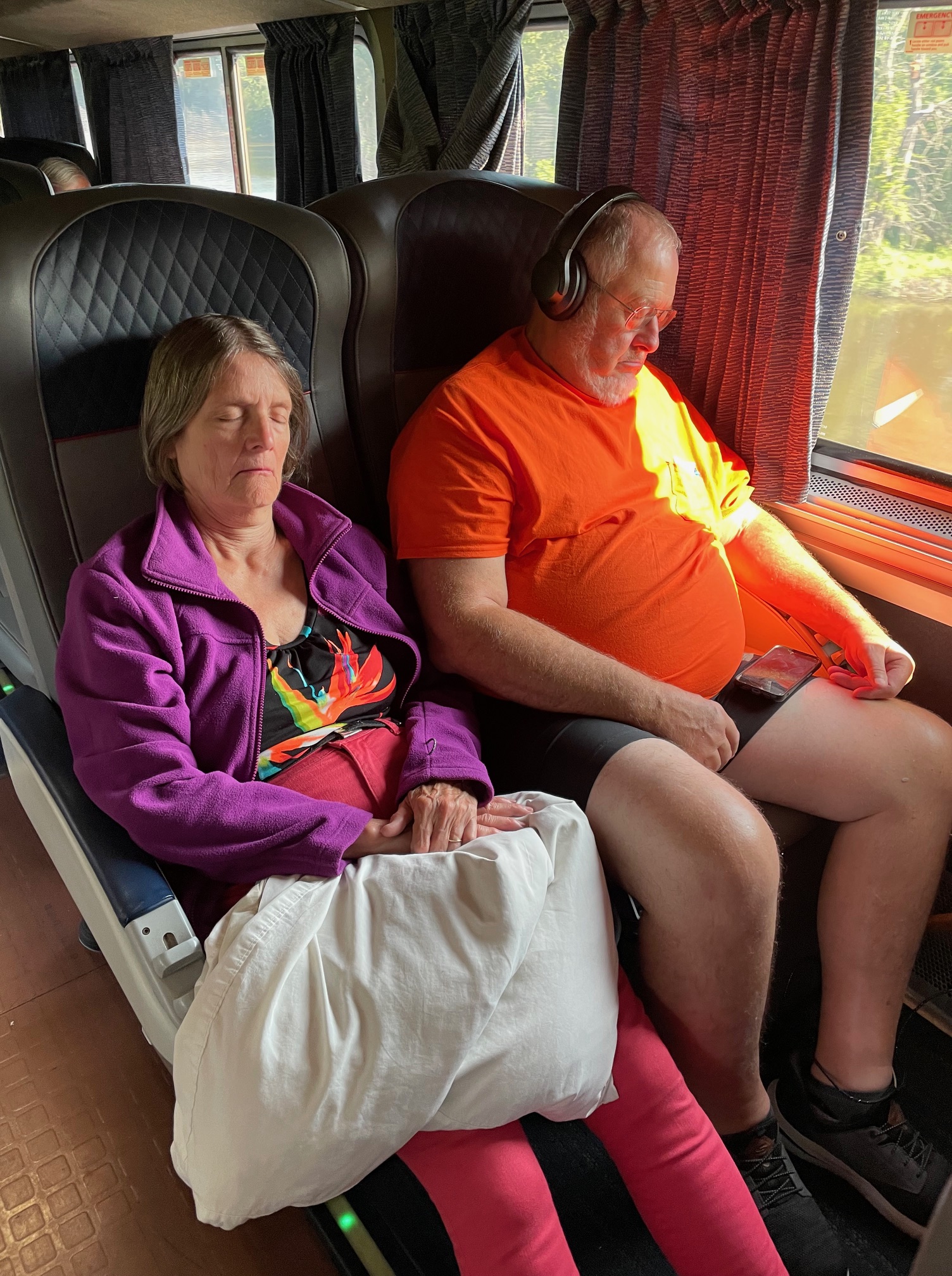
That night – after many delays and stops (there was a small tornado, leaving tree limbs on the tracks that workers had to remove, plus frequent waits for freight cars to pass), we were delighted when a head honcho of Amtrak apparently told our train personnel to offer all passengers in the coach cars two free pieces of pizza (sleeping car passengers get free meals anyway, or rather, it’s included in their overall cost). After all the waiting, the pizza was a sweet and appreciated surprise—and it was even a good and somewhat warm pizza!
Eventually, instead of arriving at our destination at the hour of 8 p.m., we got to our lodge in Montana about 3 a.m. Not much fun.
The bedrooms in the huge and ancient Lodge (circa 1913) were large enough—except for the bathrooms, where I had to hold the shower curtain for my husband to keep it and the water from billowing out. The sink was as tiny as the toy sink we have in our kids’ and grandkids’ playhouse.

Finally towards evening, we secured two tables for all of eight of us traveling together in the Observation car, and played our family’s silly but fun dice game, “Greedy.” We had some great laughs.
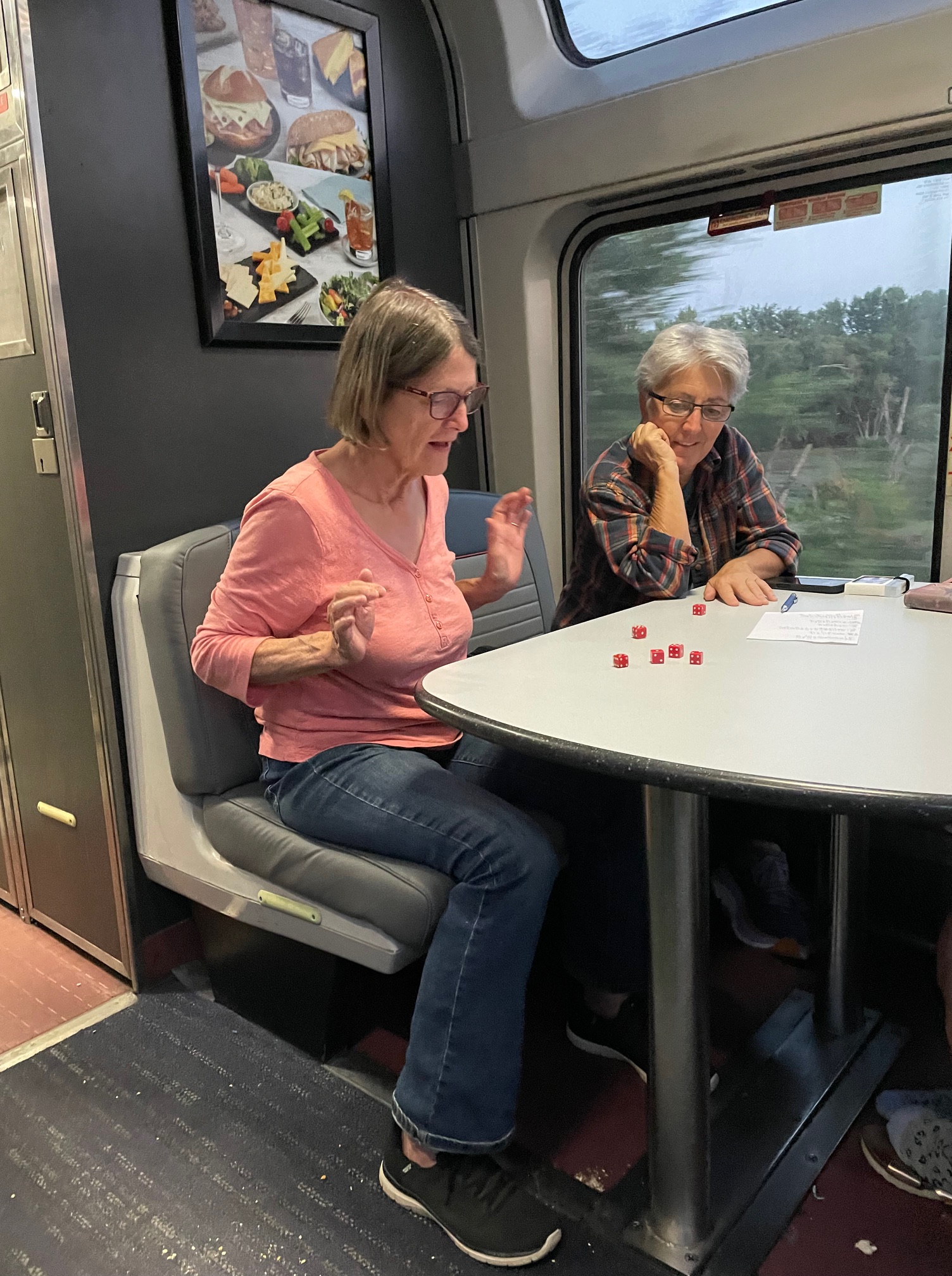
The worst rattling moments though on the final leg home was when we had to sit in the very first seats at the head of the train from Chicago to South Bend, on top of what Stuart says is the truck/boogie. It jiggled us enough to rock us off balance (certainly) and even in the seat, it was rough. The engineers were in a hurry too, sometimes going what felt like 80-85 mph.
You just have to expect unpleasantries when travelling anywhere, right?
We are so grateful, though, for this trip and the adventures we enjoyed, some great food and fun, especially our trip to the “Going to the Sun” road. As they say, trips like this make great memories, especially when travelling with family members you don’t see that often. And memorable happenings. And, we eventually caught up with our loss of sleep!

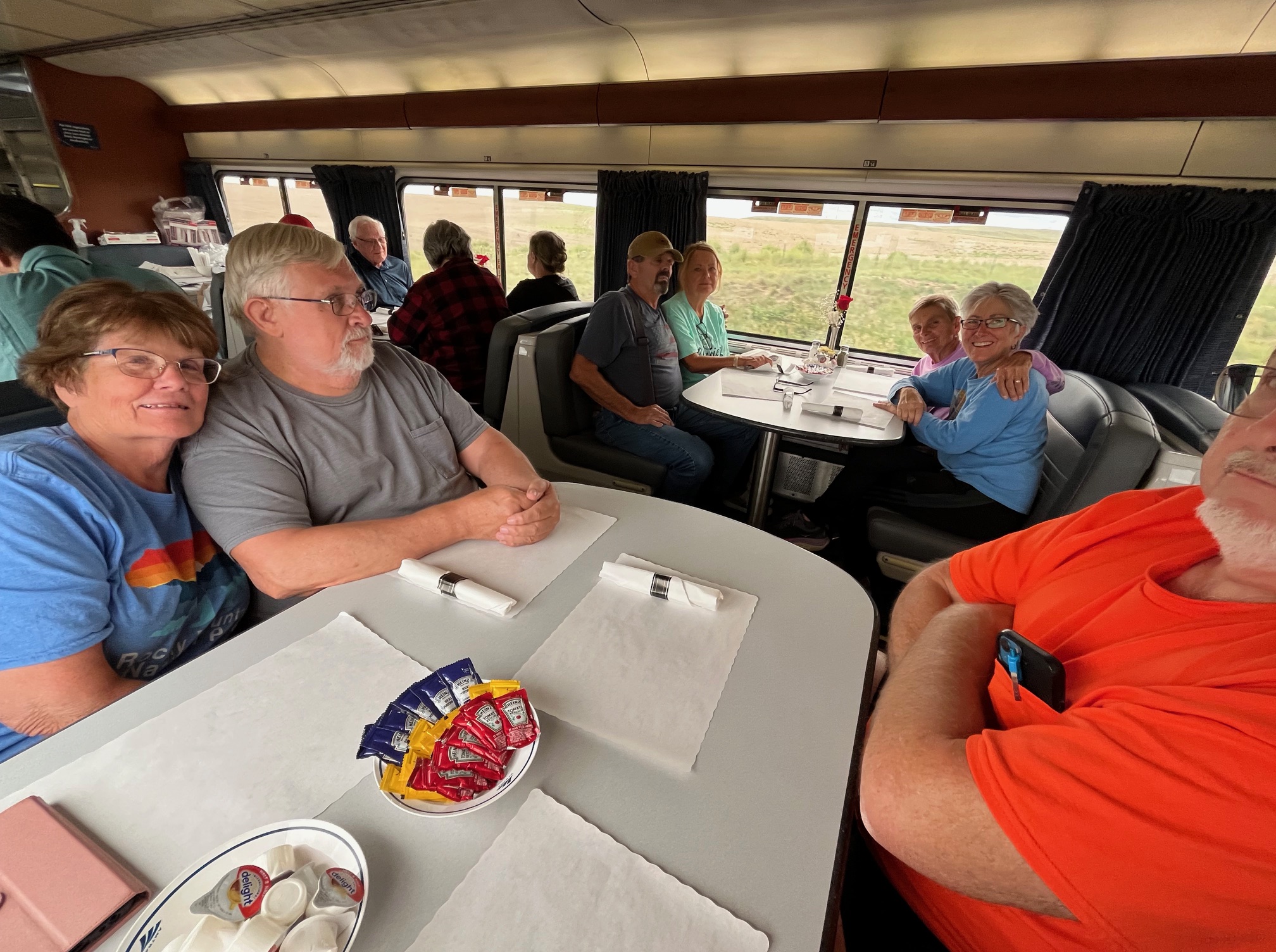
Have you had a trip experience to share?
I’d love to hear from what you like or don’t like!

 findingharmonyblog