

Another Way for week of December 18, 2020
The Unexpected
We are fortunate to live within a 50-minute drive of Shenandoah National Park. My oldest grandson, Sam, (seven) has fallen in love with National Parks in general. He has a book about them and knows many names and locations. So hiking in our “local” park when they visited for Thanksgiving was a high priority. My oldest daughter and family with three sons (including a two-year-old), drove to the park too, but didn’t join the hike.
Sam wondered if we would see a bear like my husband and I did when we visited Denali National Park in Alaska last year. I told him we’ve been to Shenandoah park many many times and had never seen even one.
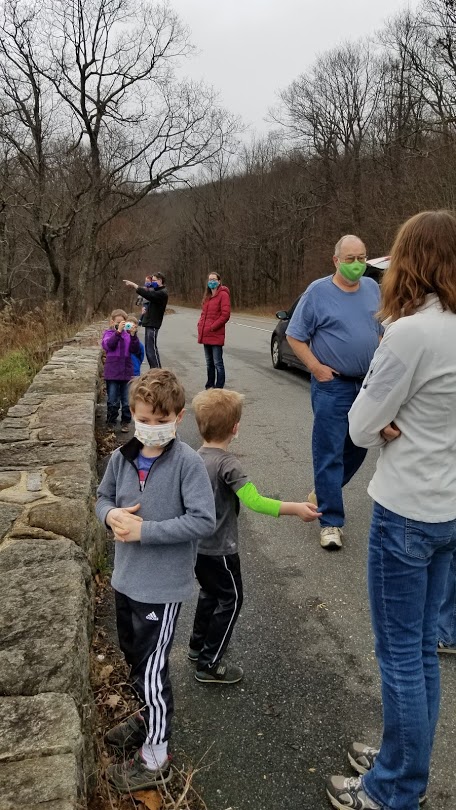
When we pulled over at the very first overlook, my son-in-law got excited as he thought he was seeing a bear. His wife looked too and both said where to look. But of course even that much commotion scared the bear away (a good thing) and it went lumbering off before the children or my husband and I could spot it. Totally unexpected. Having Jon and Tanya see a bear was almost as good as seeing it ourselves. A 20-year park volunteer said he could count on one hand the number of times he’d seen a bear up there.

But the real highlight was a hike I never expected to make again, at least not with my husband. If you follow my column, you might recall he had knee replacement surgery around nine months ago. As we looked at hiking options, we finally decided on Bearfence trail which has a long rock scramble near the top. Elevation: 3620 feet. The total hike was a little over one mile. My husband way exceeded my expectations!

I wondered how the four-and-a-half-year-old grandson would do. Would he get tired or complain—or worse, hurt himself? We walked and climbed with great care—helping each other find the best route up the various rocky surfaces. We used upper arm strength to help pull ourselves up, and wedged our shoes and feet into firm places. The trail was not too busy but there were enough other hikers that we carefully stood aside, masks in place, to wait for others to go around us if they were younger and faster. I was amazed and proud to see Stuart navigating the rocky inclines. He took a climbing stick along that he would occasionally hand over to me so he could pull himself through.
At one point another couple who looked about our ages was also pausing. I joked that I was turning 69 next week and needed to rest. The other woman lit up and said “Oh, when is your birthday?” I told her when and she said hers is the following day and we laughed at this unanticipated coincidence.

And the kiddos? They rocked it, no pun intended. At one point the youngest was a little scared (can’t blame him) but his mother talked him through the fear. He was in obvious enjoyment most of the time. A lot of playgrounds have fake rock climbs, but this was the real thing. Not that they’d been able to go on playgrounds this year with the coronavirus restrictions.
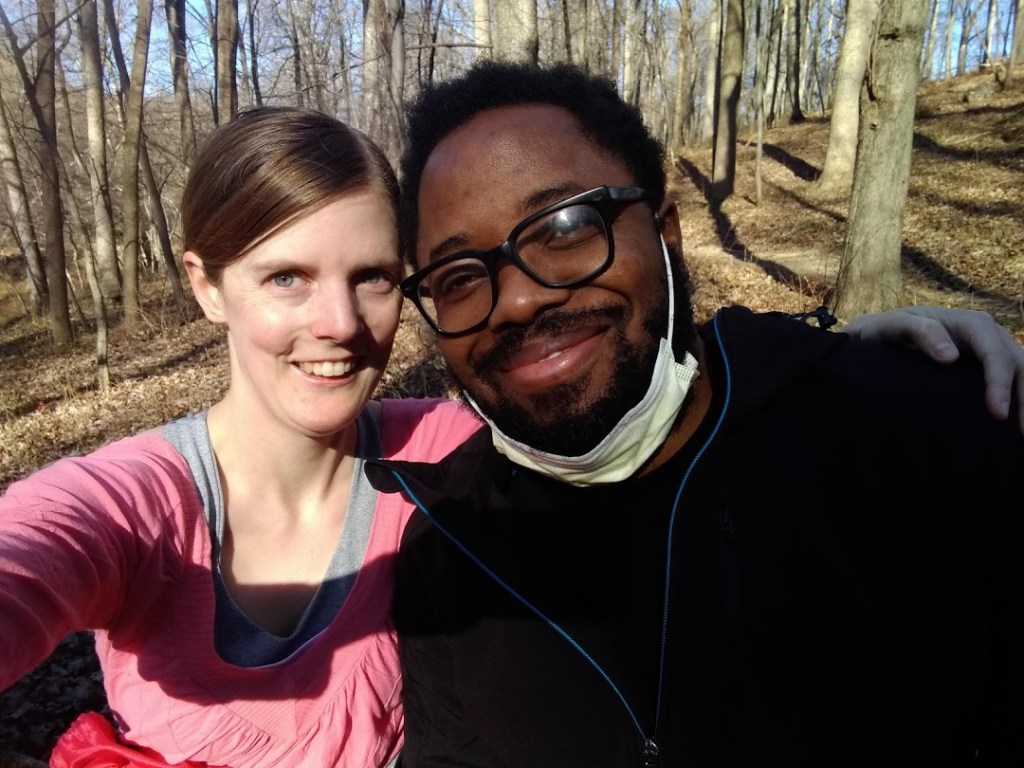
Our engaged couple hiked in a different state, keeping our numbers smaller and safer. 
Our family of three little boys will be more ready for this hike in a few years! 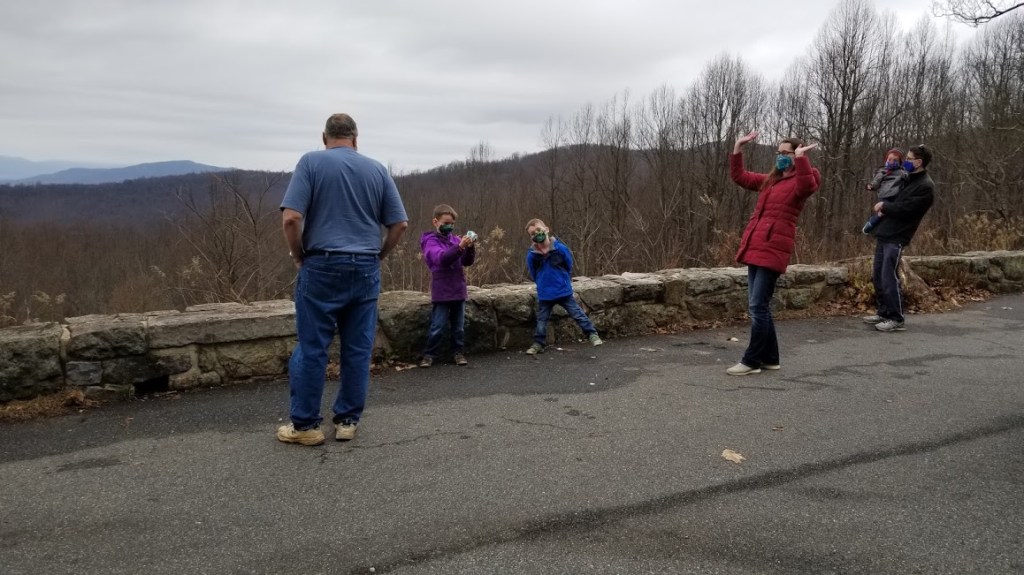
Horsing around on Skyline Drive. 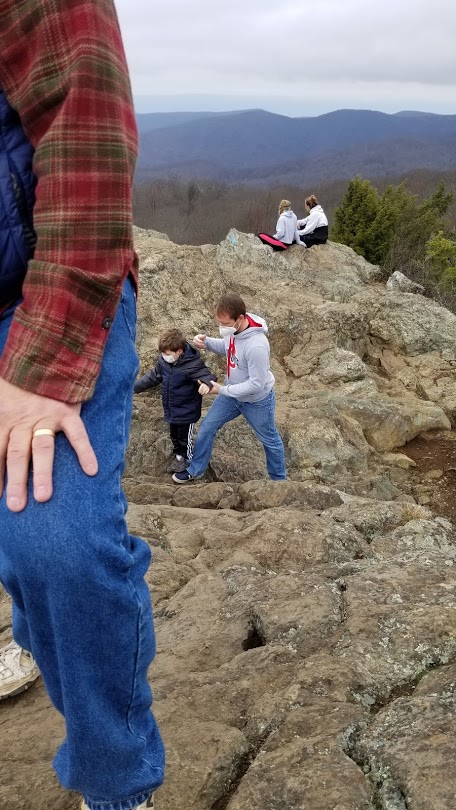
Father helping his son navigate the steep and rocky areas. 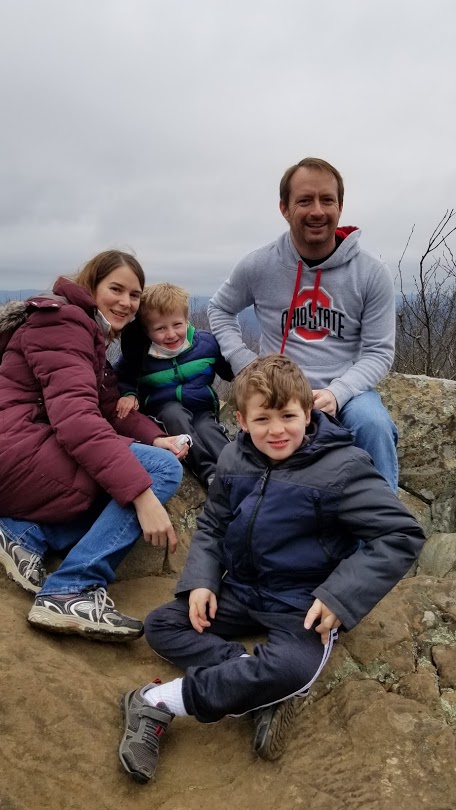
Made it! 
The terrain near the top of Bearfence.
We have entered the season of Advent where long ago, a young girl was told she was expecting a special baby who would come to rescue us all from ourselves. Mary met the news with great joy, but also questions. I have no idea yet what to expect for this Christmas season—probably more “aging in place” so to speak—not going out much, not seeing all the loved ones we’d love to see. It hurts and my heart pines for the pandemic to scale down safely and fade into history.
Our parents and grandparents have been through many difficult times, as my 96-year-old mother reminds me. She remembers how terrible the World War II years were, and how they longed for the “normal.” Let us treasure deep joy in our hearts like Mary as we enter this season of the unexpected.
***
Have you had unexpected surprises in this year? Could be good or not so good or downright difficult.
How do you stay open to the goodness of God and of other people?
One more week to enter my drawing for one of two books from Herald Press, Love in a Time of Hate or Simple Pleasures. Send name and email or address to me. Indicate which you’d rather receive. (I’ll draw two names.) Deadline: December 24. Send to anotherwaymedia@yahoo.com or Another Way Media, P.O. Box 363, Singers Glen, VA 22834.

See below for a trail map and some more photos from our excursion!
Another Way for week of December 4, 2020
A Christmas Present for Your Kids or Grandkids?
My two first grader grandsons both have small and simple desks now at their homes.
I’m envious. I’m thrilled for them, NOT because of the corona virus which at this point means they’re learning by Zoom (and other forms of technology) instead of in classrooms, but because I know how much I would have loved to have a desk at home.
My father, a farmer, had a desk and I guess that is what made me wish I had one as a child. We loved playing school and sometimes would use his desk as a teacher’s desk (careful to clean it up afterwards of course!). I didn’t even mind helping him clean it out occasionally because there was just something neat and organized about his desk.
Eventually Daddy made a cupboard in the dining room for us to hang up our coats and hats, with drawers at the bottom. We four kids each had a personal drawer for desky type of stuff: crayons, pencils, scissors, glue, school papers. And then we studied either at the dining room or kitchen table, or sometimes in the living room or our bedrooms. But none of us had desks.
Then before my senior year of high school, we moved to north Florida. I was excited, not only to be a “new girl in school,” but to have a room of my own for which I got to choose new bedroom furniture. My two older sisters had shared a bedroom, and then my middle sister and I shared it. But the bedroom suite was deemed too old and rickety to move to Florida. Soon after moving we went to a furniture store in a nearby city and I got to pick out my bed, dresser, and chest of drawers.
But I still wanted a desk. I think Mom and Dad said if I paid for it myself, I could have a desk. I worked some at babysitting and housecleaning, so it was not unreasonable for them to say I would need to pay for it myself.
I’m not sure if I picked out the cheapest desk I could find in the store, or in a catalog: it had only one drawer and it was triangular in shape to fit in the empty corner I had in my moderately sized bedroom.
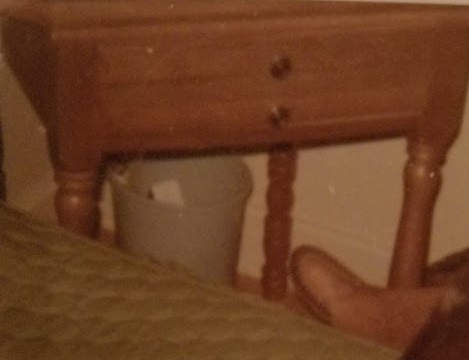
Whatever, I was ecstatic to set up my own desk, with a lamp and stuff in the single drawer. I’m sure it cost less than $80 (1969).
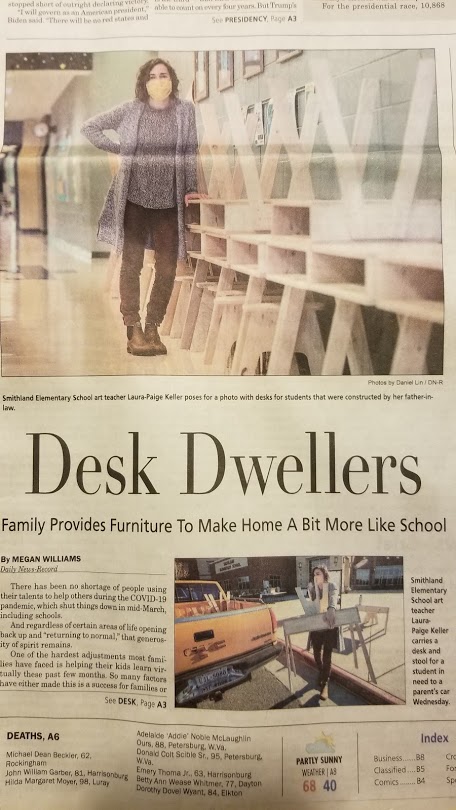
So I especially appreciated an article in our local paper, the Daily News Record, about a teacher who noticed her students mostly did not have desks to use for their class work at home via Zoom. Megan Williams, a reporter for our newspaper quoted Laura Paige Keller saying her students were often “laying on their beds during Zoom lessons, or on the floor. They clearly lacked a proper desk with which to learn.”
Laura mentioned this lack to her father-in-law who came up with a simple design where he could build desks out of plywood quite rapidly. The top of the desk is a simple box with an open side, and four legs, well-sanded. The school sent out a survey to families to find out who might need or want one. Forty-three families responded and Mr. Keller contacted a Lowes store to see if they might give him a deal on plywood (which was $48 a sheet at that time). In a couple weeks Lowes came through donating nine sheets of plywood for the project. Later Keller also built and offered small stools for the children.
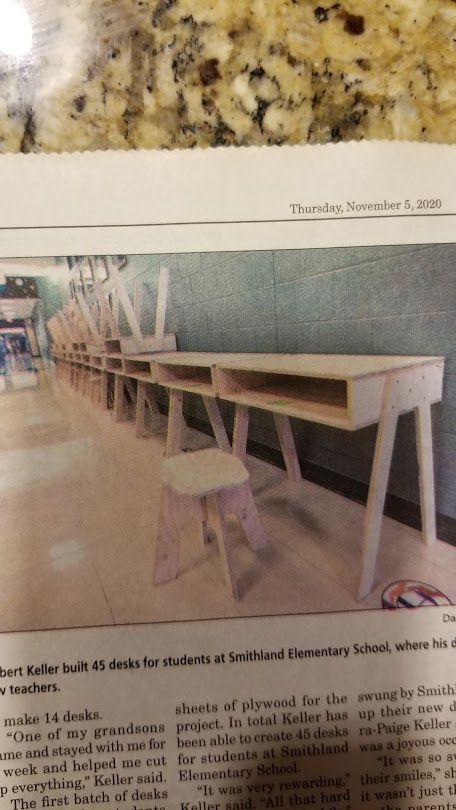
“It was so sweet to see their smiles,” said teacher Laura. “The parents were also overjoyed and grateful.”
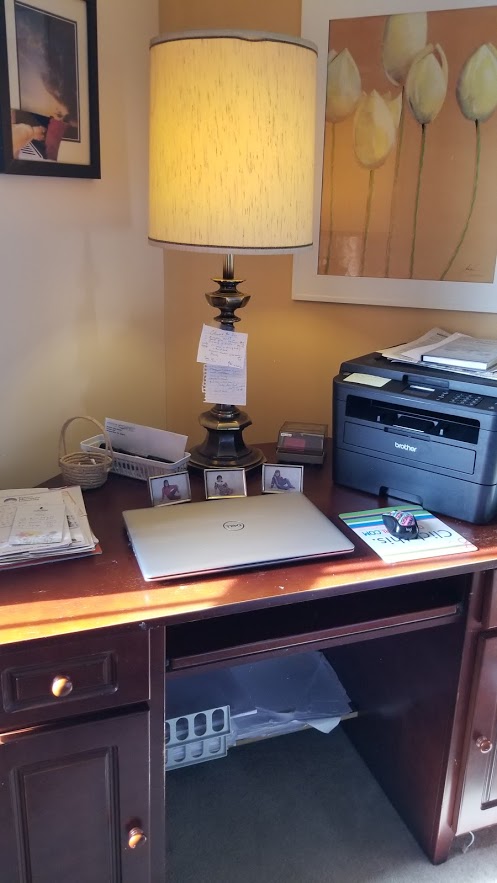
Which brings me to suggest that even if you don’t have building skills, someone you know might be able to build a simple desk (I’ll share a photo on my blog of the desks). Or purchase an inexpensive one? What a great Christmas present for some child!
***
Did you have a desk as a child, or other favorite place you could do homework?
How about now: Do you have a desk or would you rather curl up in a chair or on the couch?
How are your children or grandchildren coping with their classes and school work? I’d love to hear!
Comment here or write to anotherwaymedia@yahoo.com or Another Way Media, P.O. Box 363, Singers Glen, VA 22834.
Another Way is a column by Melodie Davis, in syndication since 1987. She is the author of nine books. Another Way columns are posted at FindingHarmonyBlog.com a week after newspaper publication.
Ready to tackle making cracker jack for the end-of-year holidays still to come?
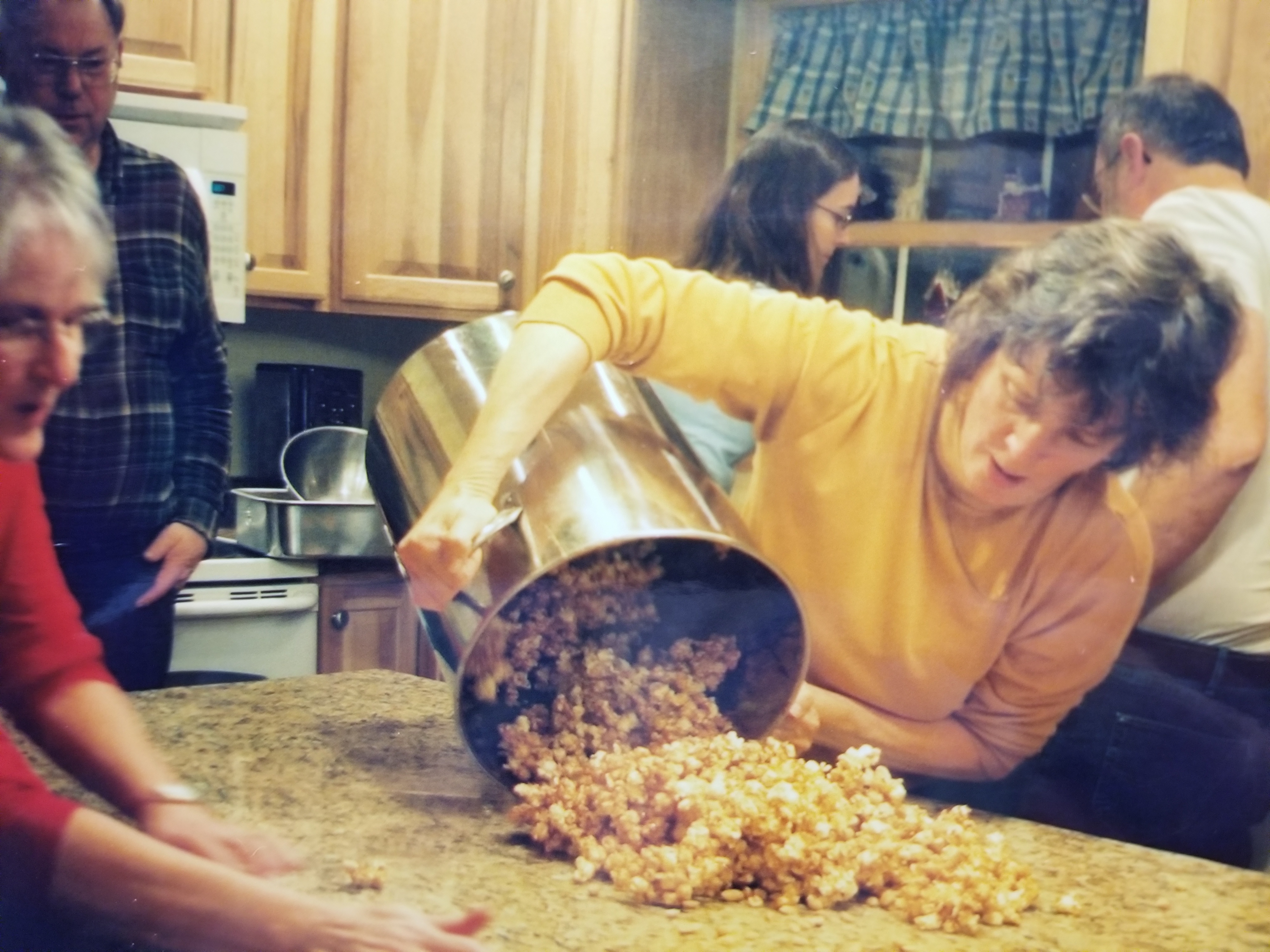
We actually made it closer to New Year’s Day, because with the array of sweets that are normally available at your typical Christmas dinner, cracker jack with its cups of various sugars can provide simply too much of a tasty thing. It is truly a family project, with at least three people working together. So it doesn’t hurt to plan ahead.
My dad (and all of us) loved making cracker jack—in fact we begged him to make it—but it always turned him into a bit of a captain barking out orders that we hastened to follow. Mom recalls how frantic she became hunting for the stirring paddle, because when you only use something once a year, you don’t tend to remember where it was/is stored.
Now that my husband and I have attempted a few turns at making cracker jack ourselves, I understand the need to pay attention to things like stirring the syrup until the exact moment when it begins to be brittle and break “like glass” when you test it, and more.
This recipe is not for the faint of heart, but in our opinion, is much better than many simpler and easier recipes for cracker jack. So here is the somewhat famous “Vernon Miller’s Special” Cracker Jack as published in the North Goshen Mennonite women’s cookbook in the early 1960s. (I previously shared it on Amish Wisdom blog but not here on my own blog.)
Please read the entire recipe for instructions before you start. I have adapted Dad’s recipe somewhat and added what I hope are helpful improvements and cautions.
“Vernon Miller Special” Cracker Jack
4 gallons homemade popcorn, popped
1 16-oz. bottle white Karo syrup
1 cup sorghum molasses (not “Grandma Molasses” brand)
2 cups white sugar
1 cup brown sugar
¼ cup water
½ pound butter, or two sticks
1 pound peanuts (my husband says 2 pounds is better)
Directions: One person can start popping homemade popcorn first, enough to make about 4 gallons. Set aside keeping popcorn warm in large ovenproof container, on lowest oven setting.
In large pan or Dutch oven, combine next five ingredients (the sweets plus the water). Heat on medium, stirring constantly with large spoon. Bring to a boil and cook until ready to test in a glass measuring cup that has about a cup of ice-cold water in it. Drip a small thread of syrup into the water and try breaking the thread. You want it to break like glass and not “taffy” or stick in the teeth. Keep testing the syrup until it “breaks.” At that point, add butter to the syrup mixture, and boil again, stirring constantly, until it breaks again. (Again if it taffies, it is not ready.)
When the syrup mixture is ready, have one person quickly pour all warm popcorn and peanuts into a five-gallon stainless steel kettle on the floor (protecting floor with a clean kitchen rug or towels. The syrup and popcorn are easier to stir together if lowered). One person should pour the hot syrup mixture into the kettle (caution, the syrup can burn bare skin) into the popcorn/peanuts, and another, using a large spoon or long paddle, mix the syrup and popcorn together.
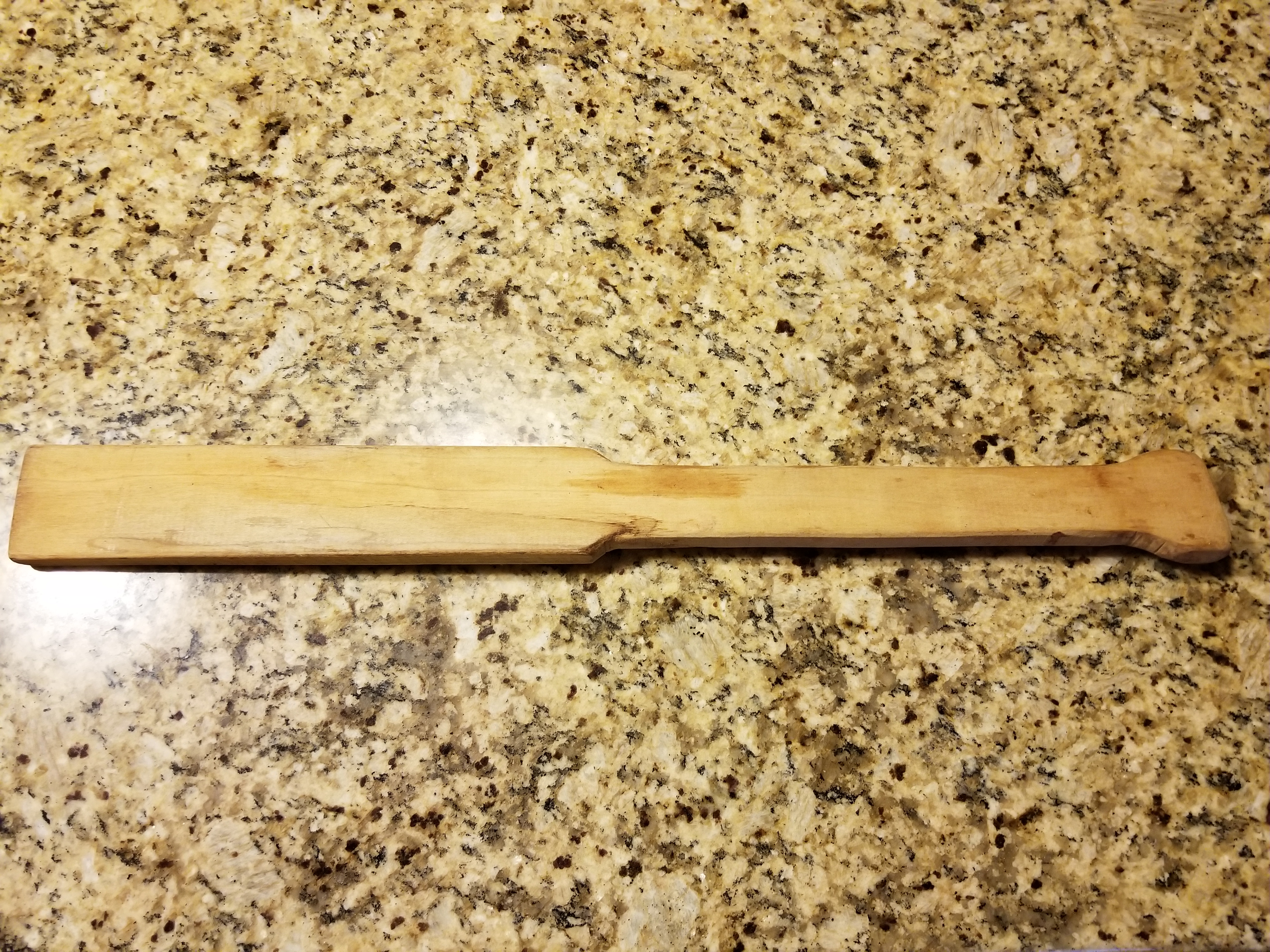
(My husband made a paddle of poplar wood which has worked well). Using potholders, another person should hold down the kettle so it stays flat on the floor while one continues the stirring-in process until all or most of the popcorn is well covered.
When well mixed and still warm, pour the whole mixture out onto a clean, clear table or counter to cool off. Then spread it out and begin eating! Some people put it into balls at this point, but that makes eating small parts of it harder later, (to bite into a hard popcorn ball). We always just left the cracker jack loose to pick up and enjoy a few pieces for snacks for weeks afterwards. Soak the empty kettle immediately in water so you can clean it later.
Store the remaining cracker jack in a container(s) with a tight lid.
***
Amish cookbook author Lovina Eicher frequently reminds folks in her syndicated newspaper column when neighbors, family, and friends pitch in to help, “many hands make light work.” Her The Essential Amish Cookbook contains one popcorn ball recipe. Her newest cookbook is below.

Or, buy some from Shirley’s Popcorn, another “Mennonite” specialty. It is tops and helps a small business! There are also 7 local locations in Ohio, Virginia, and Indiana.
***
Or tell us about your favorite “must have” holiday treat!
Another Way for week of November 27, 2020
Memories Creep Back and Make Connections
I had the oddest going-to-sleep memories filling my brain the other night. I had read a devotional in Rejoice! by Charlotte Hardt, a retired registered nurse who not only has grandchildren, but a great grandchild. She remembers sitting between her grandparents during church and loving it when her grandma slipped her peppermint candies during the sermon.
In my case it was Grandpa who was known for slipping kids wintergreen peppermints when they came up to him after the church service. And my dad carried forward the tradition, at least for a while.
All of a sudden my own grandmother popped into my mind. The one who lived in the apartment attached to our farm home in northern Indiana.
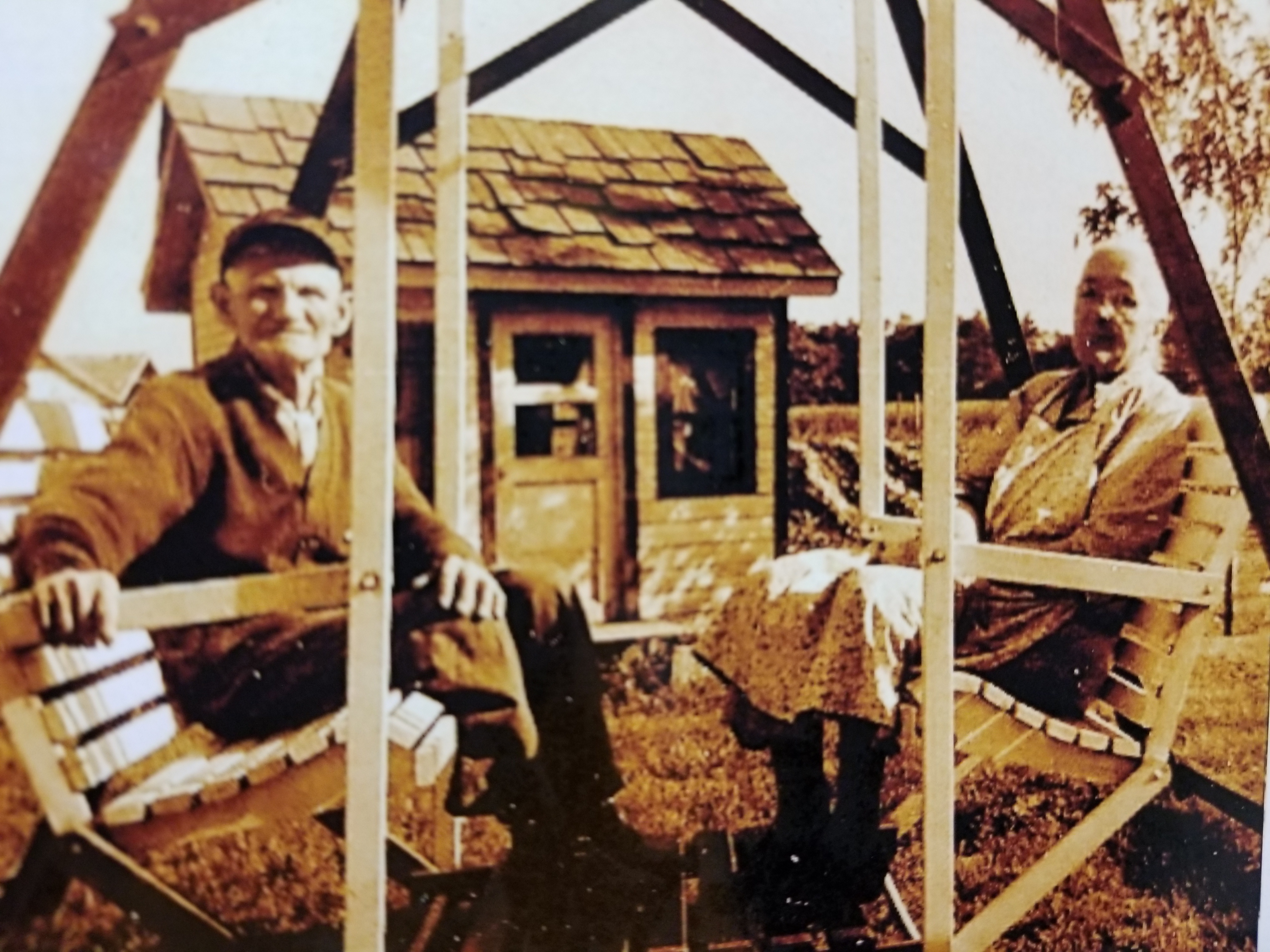
I started trying to remember what made her special. I knew her from approximately six months until I was 11. Since my oldest grandsons are now seven, I know the impressions and memories they are forming with us are long lasting.
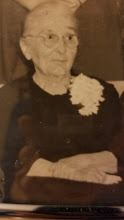
Grandma Miller was plump, no doubt it, and her roundness (especially when she was younger) was nothing but comforting when she enveloped you in a hug. She had “sugar diabetes” as we called back it then, and she watched her sugar. I remember seeing the strips of testing paper she kept in their very tiny bathroom. My mother recalls Grandma bringing over the test strips for her to see: blue meant her level of sugar was good, and orange was bad. Eventually she had a stroke.
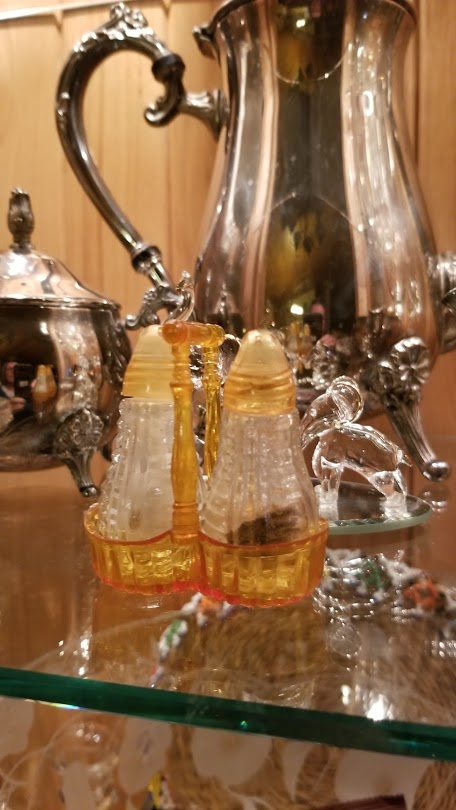
Their biggest room was a bedroom/living room combo where Grandpa’s legendary and historic grandfather clock stood in one corner. We loved to help Grandpa wind his clock. There was a china cabinet holding Grandma’s special antique dishes, and two chairs for them including a rocker (which I now have in my bedroom). Grandma Miller (her name was Barbara) would allow me to handle and play with some of the cabinet items including a small yellow plastic salt and pepper shaker in a basket. I loved it and asked her if I could have it when she was gone. She talked about such things often, so it wasn’t like I was anxious for her to die. It was quite unimaginable for me, because they were always there and my parents enjoyed having live-in babysitters, as my mother will still admit.
Their apartment included a very small porch to the east where trellises held climbing roses in summer. When Grandma died at age 85, Grandpa carried a fresh rose each day to the funeral home, to put in her hands. Their marriage and love last 67 years through bad times and good. May we all be so fortunate.
What will your grandkids remember about you?
Perhaps more than anything, we want things to stay the same at Grandma and Grandpa’s house, right?
–The same toys you played with the last time. For my girls they always wanted to play with my mother’s corn elevator and wagonload of kernels that they’d always scatter all over the carpet.
–The always-read books should be out—oh, maybe a new one now and then.
–The same foods we love.
–The house to smell the same.
–A big hug and kiss (maybe, for the willing).
–The familiar clothes.
–The rocker in the same place.
Some things have to change. My father eventually got to the point that he realized the message he was sending to children at church contradicted the things parents were teaching about not accepting candy from a stranger.
Finally, we learn that grandparents don’t last forever, and we cherish them even more, somehow, after they are gone. If yours are still living, make sure they know you love them even across the miles.
***
Your own strongest memory of a grandmother?
What will you grandchildren remember about you?
Heirlooms you love?
Comment here or send to anotherwaymedia@yahoo.com,
or Another Way Media, P.O. Box 363, Singers Glen, VA 22834.
Another Way is a column by Melodie Davis, in syndication since 1987. She is the author of nine books. Another Way columns are posted at FindingHarmonyBlog.com a week after newspaper publication.
Easy Turkey or Chicken Casserole
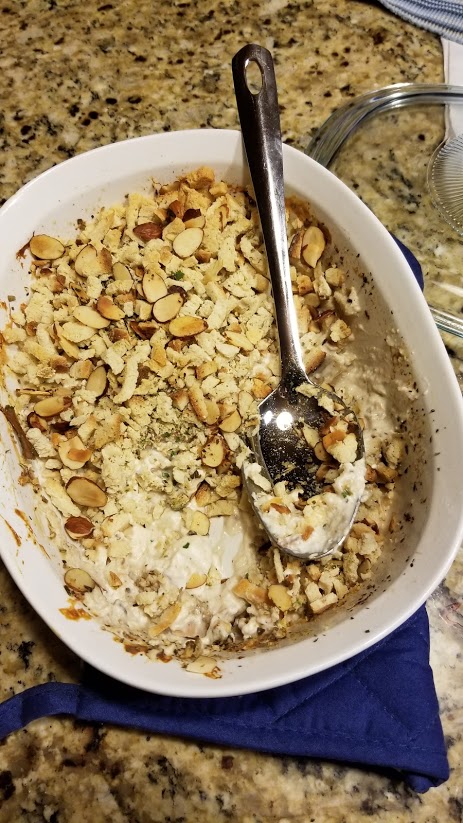
Got turkey leftovers?
You’re either a casserole lover, or you’re not. My husband is not so much. Turkey leftovers? Just put them in endless sandwiches for him. But he tries to be polite. I prefer a little variety.
So, if you’ve got turkey leftovers like we do and you’ve tired of plain sandwiches, here’s a recipe from a longtime church friend, Lauren. I first met her when she was an adorable (and talkative!) red-headed five-year-old. I’ve watched her grow up, went to her wedding, watched them raise two adorable little boys who are now fine young men, and Lauren herself is an awesome teacher, cook, and now a mother-in-law. Lauren gave me this so long ago I can barely read some of the words on it. You probably have most of the ingredients on hand.

Lauren’s Chicken Casserole (Or turkey as the case may be)
For 4-6 people
4-5 chicken breasts or 6-8 chicken thighs, (or 2 cups chopped turkey leftovers)
8 ounces sour cream (or plain yogurt)
1 can condensed cream of mushroom soup (or make your own white sauce)
1 Tablespoon Worcestershire sauce
Salt, pepper, and other spices to taste (I added dried basil and a bit of Italian seasoning)
Stuffing mix (Lauren likes Pepperidge Farm Herb Stuffing)
Skin chicken and boil until tender. Let cool, remove from bones, and cut into bite size pieces. (Chop roasted turkey leftovers to bite size.)
Mix the sour cream and soup until smooth. Add Worcestershire, salt, pepper, (and other spices if you’re using) and blend well. Add chicken/turkey pieces to sauce and mix together well.
Pour into greased medium casserole dish. Add thick layer (at least ½ inch thick) of stuffing.
Cover and bake at 350 degree 35-45 minutes. Remove cover for about last 10 minutes.
Other options: I also topped the casserole with 1/3 cup almond slivers, since I had them on hand. I browned the almond slices in a bit of butter first.
Enjoy!
![Whatever Happened to Dinner? Recipes and Reflections for Family Mealtime by [Melodie M. Davis]](https://m.media-amazon.com/images/I/51v6DtxSe9L.jpg)
In my book Whatever Happened to Dinner? I share a beautiful story from Lauren and one of her sons which you might enjoy too. Plus over 100 recipes in the book from my work colleagues and my own collection, and stories on how to keep family mealtime. Check it out here:
Another Way for week of November 20, 2020
Preparing for the Uncertain Holidays

I’d been wanting to do it for weeks: clean the top of my kitchen cupboards where I display some of my favorite things. These are plates and dishes and trays I seldom use in day to day cooking. They highlight the blues and yellows of our kitchen, and some of them are antiques passed down from grandmothers or aunts and cousins. The items tend to collect grease and dust up there, especially those sitting closest to my stove. I try to wash them all once or twice a year, and always before the holidays.
None of us are sure yet what kinds of holidays we’ll have given the virus hiding out everywhere. So I was a bit melancholy while cleaning.
I usually line the surface with newspaper to save some scrubbing and it is always something of a gas to see the news from a year ago.
This year, I was somewhat surprised that those newspapers were from 2018. That means even though I washed the objects on the top, I had skipped the chore of changing my newspaper liners in 2019. The news from two years ago reminded me of how unimaginable our 2020 has been, all around the world. It also made me wonder what we’ll be experiencing a year from now.
Sadness and family stress and disagreements about what is safe or not safe abound in these uncertain times. Families have not only lost loved ones, they have had to stress and discuss and disagree about how to honor their deceased family members. I know one family that split down the middle on whether it was safe for them to all gather in another state to bury ashes, which they had been delaying for over eight months. The husband deeply desired to have a meaningful burial and move on, while others wanted to wait indefinitely. I grieved for them afresh, and not just the passing of their dear wife, mother, and grandmother.
Thanksgiving is a favorite holiday of many here in the U.S. because you just get together to cook, eat, catch up, and maybe play football (or watch it). I remember the year I missed Thanksgiving most acutely. It was 1973 when I studying in Spain for a year, and learned that Thanksgiving is not a thing in that country. Canada of course celebrates theirs the second Monday in October. A few other countries, celebrate harvest time in November, notably Brazil, Philippines, Netherlands and some others.
I remember the year my husband and I decided that driving to Indiana for a short Thanksgiving weekend with my family was no longer worth it, given the horrible traffic that accompanies the holiday, at least in years past. That year we were driving from Indiana to Virginia on the Pennsylvania Turnpike and traffic was moving about 20-30 miles per hour (the toll road was also way cheaper back then). The speed was not because of an accident, but just the clog of traffic. We got off the toll road and went much faster on smaller highways to arrive safely home. But we told my mother and father that we would not plan to drive to Indiana for Thanksgiving after that, and generally made it for Christmas celebrations.
What I want to say to all families and to my own: The important thing is not whether you gather or how many are able to make it, but whether we all stay safe in anticipation of years ahead. Current spikes in illness and deaths do not sound encouraging, although reports on coming vaccines bring us all hope for the future.
I was happy when I finished cleaning my upper shelf decorative items: they look so pretty and it always feels good to have that chore done. Meanwhile, I will hold my family dear in my heart. For those who didn’t or couldn’t go home, we’ll look for better times in 2021 and beyond, the good Lord willing and the spikes don’t rise (to twist an old saying).
***
What do you or did you enjoy most about Thanksgiving?
Comment here or send to anotherwaymedia@yahoo.com, or Another Way Media, P.O. Box 363, Singers Glen, VA 22834.
Another Way is a column by Melodie Davis, in syndication since 1987. She is the author of nine books. Another Way columns are posted at FindingHarmonyBlog.com a week after newspaper publication.
Another Way for week of November 13, 2020
Building a Woodshed: A Year in the Making
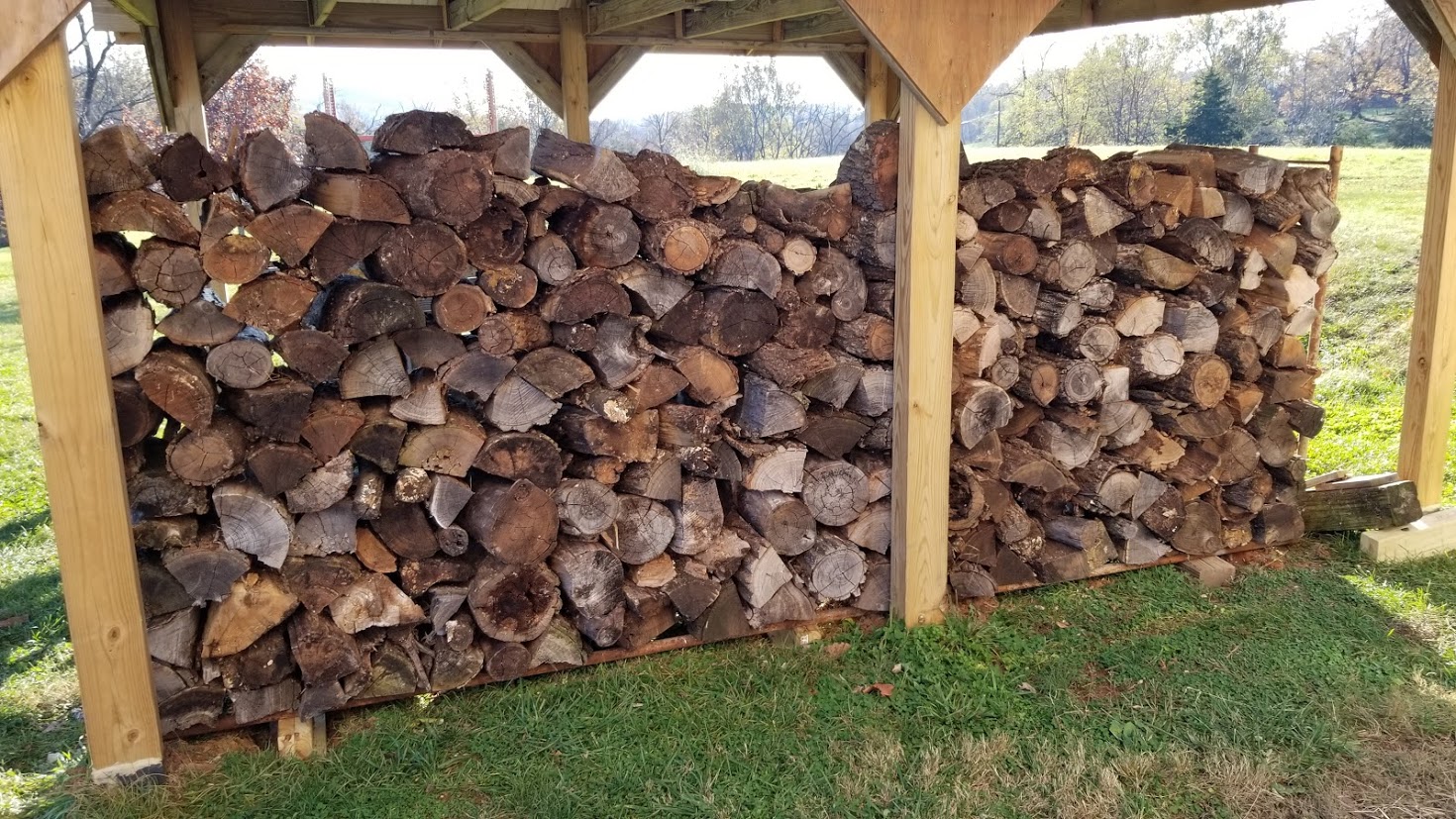
I am so proud of my husband. He/we finished the woodshed that we started over a year ago. I stood by him most of the way through construction and learned a lot. He even complimented me at times for how much better I did knowing which tool was which, which drill/driver he needed (you do know the difference, don’t you?), the difference between various screws and bolts and washers and all that jazz which always left me confused and bamboozled.
So I’m proud of myself too. Two mid-to-late 60-year-olds building a shed which we hope someone else will also eventually enjoy and use. Oh yeah, we paused for many months on this project after Stuart had his knee replacement surgery in early March. We also had lots of sore muscles, lots of arguments, lots of holding the ladders for each other so we wouldn’t fall.
We also had precious helpers: a brother-in-law, a close friend, some neighbors who brought in a tractor with a hole digger when we were putting six posts in the ground.
And I almost forgot the dog. She showed up in her tux (white fur front with black fuzz over the rest of her) and supervised our sessions as diligently as any boss. She watched, waited, got antsy toward suppertime when she thought we should be quitting. And, she managed to avoid having any drill or hammer fall on her head.
I guess the other reason I’m so proud and happy is that my husband managed to use up some lumber, plywood, and scrap pieces he had been saving for over 30 years. Over the years, he had worked in two different plants that produced wood products—and offered plenty of free scraps for the takers. Much to my dismay.
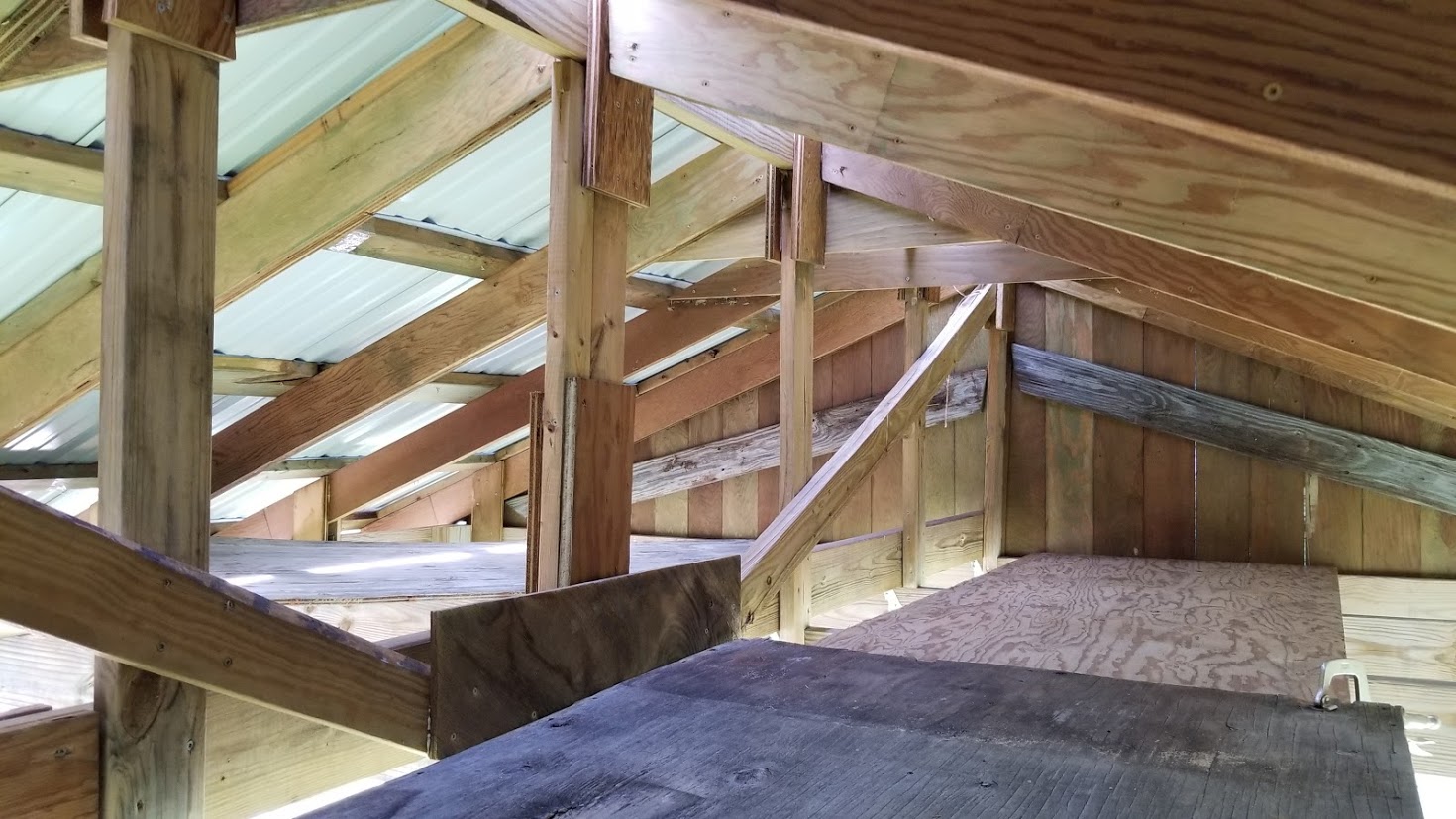
“Where will we put that?” I would holler every time he’d bring home a new batch of castoffs. “When will you use that?” Unknown.
Patiently and not so patiently I put up with stacks of high grade ¾ inch plywood planks (5 ½ inches by 8 feet). We moved all of them from the basement of our former house (13 years ago) to our current home. He is also now trying to get rid of other scraps and I’ve heard him say—and let me document this—“That’s the last building I’m building myself.” Yay! And truth be told, I don’t see a need for ANY more buildings.
The woodshed looks like a small open-sided picnic pavilion, which is the model he used in his head: no blueprints or sketched out designs. It is 14 by 14 feet with a nice brown metal roof that matches the shed where he keeps (ahem) multiple mowers and tractors. He wanted a woodshed that he could drive wagonloads of wood into with our old heavy-duty lawn and garden tractor, to make it easier to feed the wood stove in our basement. We also have a heat pump we use occasionally, and for when we are too decrepit to saw and carry in wood. In our area, there are lots of wooded areas, so we cut up downed trees in our woods or those of other friends and neighbors.
By building the shed ourselves, using largely scrap wood from other projects, we spent about $750. If someone had built it for us, it would probably have cost at least $2500, especially with recent plywood and lumber prices. Plus, what else are you going to do when you’re retired and the old corona virus keeps you home much more than you’d like. I’m especially glad that by this fall, Stuart’s knee had healed enough that climbing carefully up and down ladders and stretching out over the roof to nail down the roof, was doable.
I’m including a slideshow of pictures below for the curious. Indeed, my blog name “Finding Harmony” speaks here: we had to find ways to work together in harmony, and largely succeeded. We are also so grateful to God for safety and for the help of a friends and relatives.

Neighbors To the Rescue 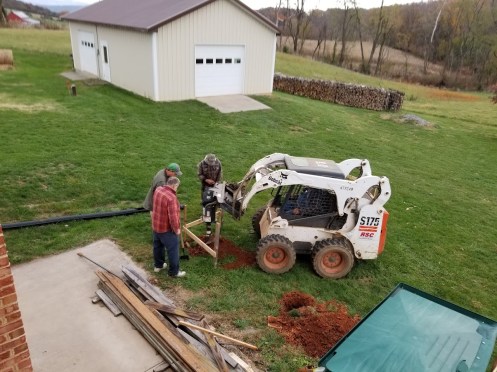
Love the Helpers 
Covering Posts with Protective Plastic 
Consulting Harold on Holes 
Posts in Place 
Anchoring Posts With Rocks and Dirt 
Rechecking Whether Foundation is Squared 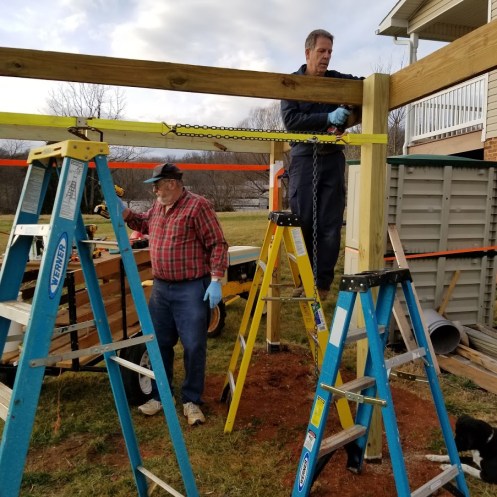
Putting Up First Framing 
Basic Size Taking Shape 
Early Rafters 
Bird Friends Think They Have a New Roost 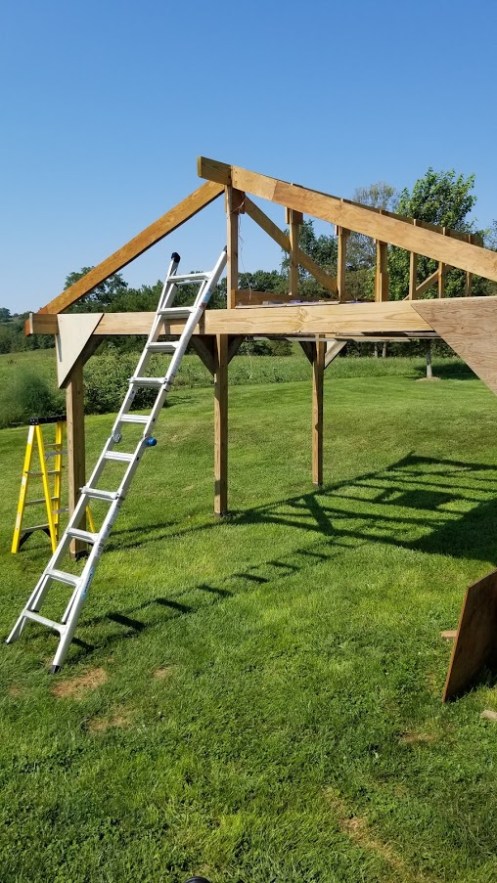
Now We Can See It! 
Roofline Takes Shape 
Daughter Doreen Helper 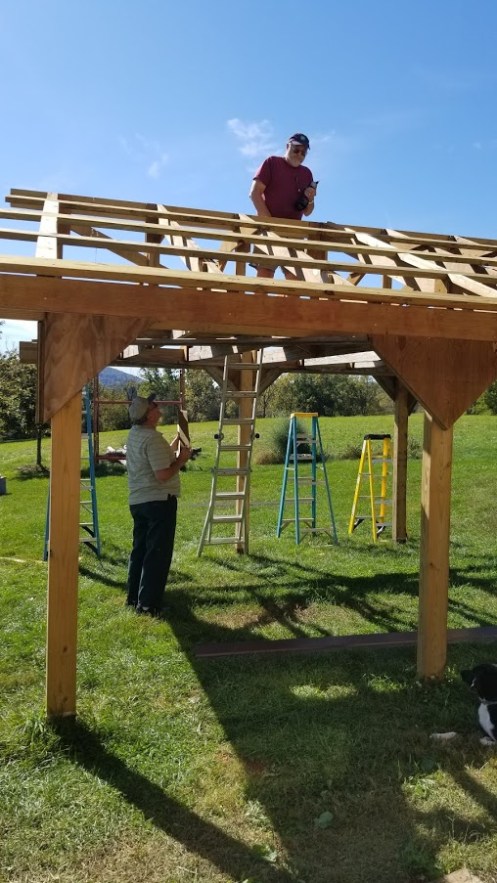
Do You Think There Are Enough Ladders? 
Da Glue! 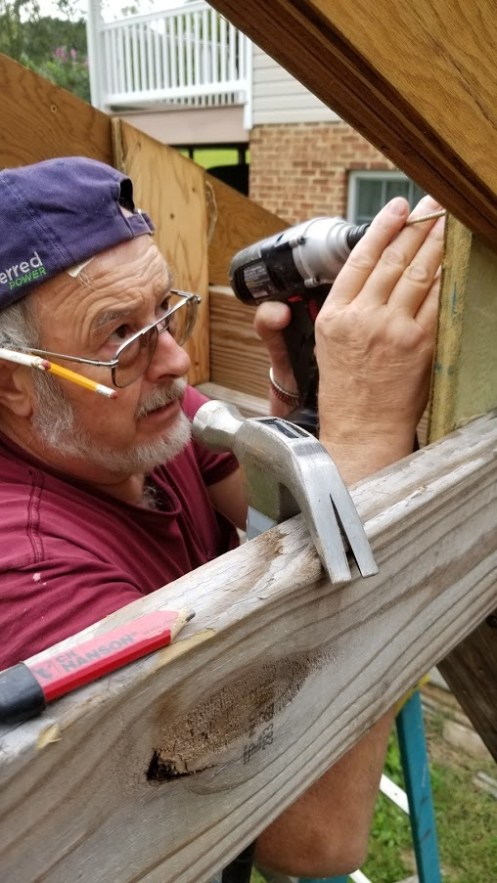
Da Boss 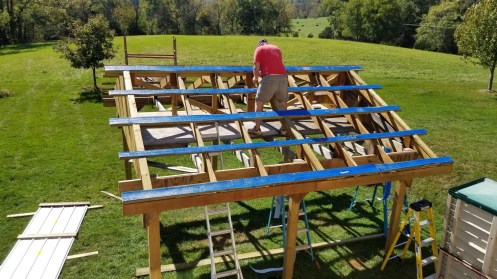
Protective Liners 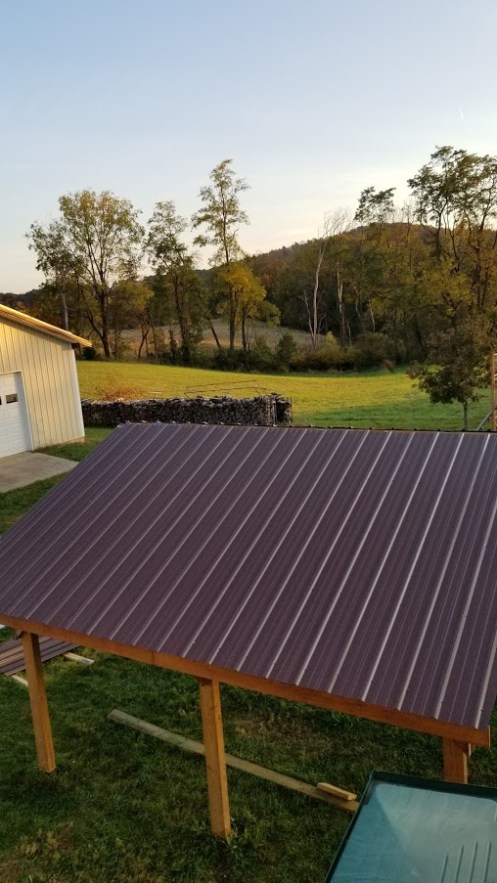
First Half of Roof Up 
Inside Under Roof 
Melodie on Windy Day 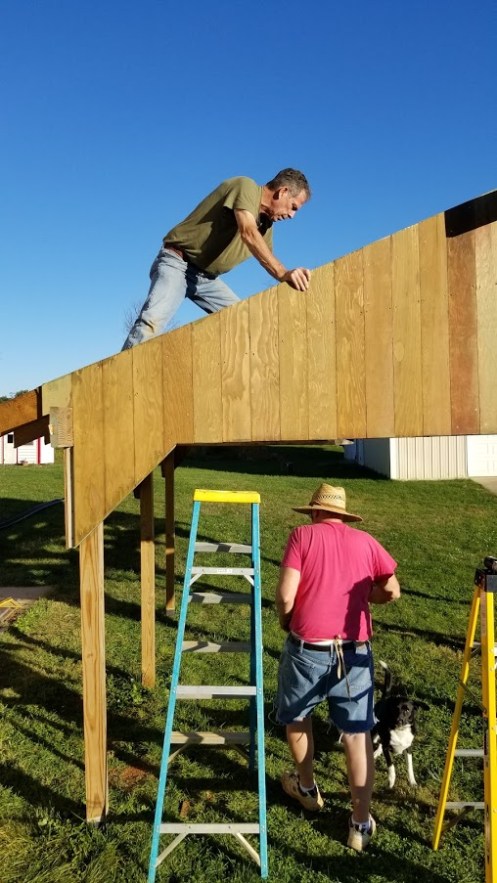
Friend Joe On Roof 
This is Seven Months After Knee Replacement 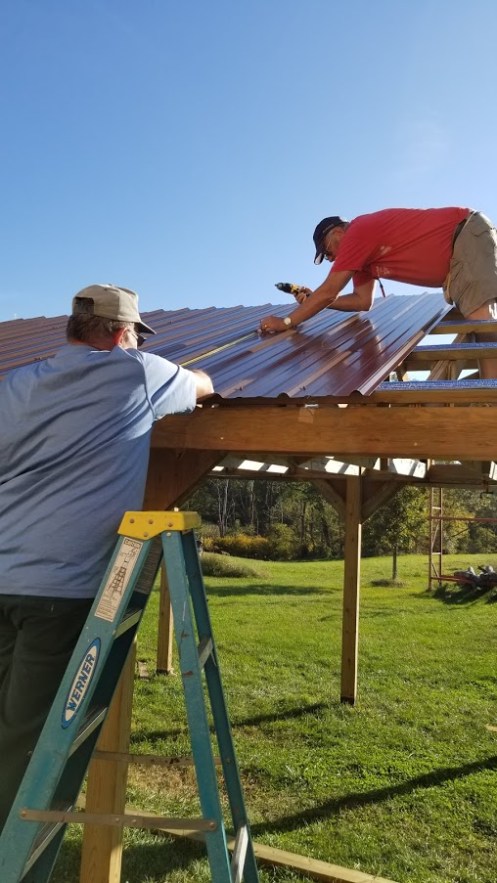
Stuart Stretching 
Prayers Ascending 
The Crew 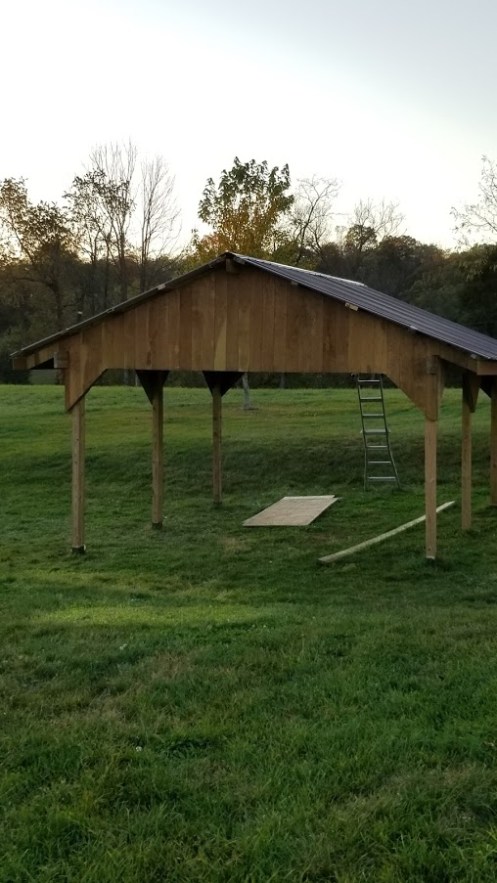
Finished! 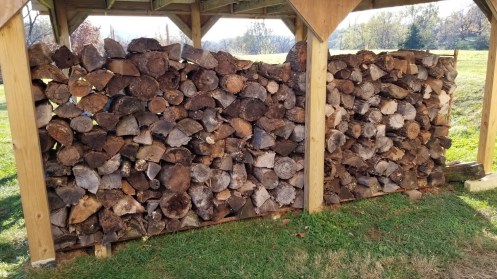
Filling it Up 
Happy Man with Full Woodshed 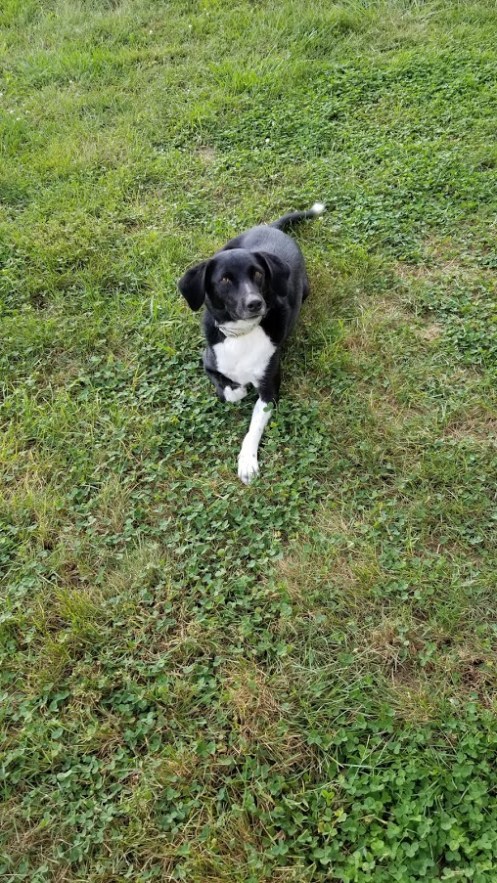
The Supervisor
***
I’d love to hear about projects you took on this year–or in recent times.
Are you handy with tools and equipment? What is your forte?
Comment here on send to anotherwaymedia@yahoo.com or Another Way Media, P.O. Box 363, Singers Glen, VA 22834.
Another Way is a column by Melodie Davis, in syndication since 1987. She is the author of nine books. Another Way columns are posted at FindingHarmonyBlog.com a week after newspaper publication.
Pecan Pie Muffins

A nice twist on traditional pecan pie for Thanksgiving is individual muffins with all the gooey goodness of pecan pie. Yes, I’m a fan of pecan pies and also these delectable “Southern Pecan Bars” (that you might want to save and make for Christmas).
But a couple years ago I got this recipe from Lovina’s Amish Kitchen newspaper column and blog and tried a batch and they are super easy. Here with only slight tweaking is an alternate to traditional pie. These can be frozen and kept around for treats after holidays.
The great part is this recipe only has five ingredients. I’m tempted to mess with it, as in subbing in dark corn syrup for some of the brown sugar, as I think that would increase the similarity to pecan pie. It is also interesting that there is no baking powder or baking soda here and in various renditions I’ve seen online.
Yet there is something really nice about throwing together a delicacy like this with only five ingredients.

Pecan Pie Muffins
Ingredients:
1 cup packed brown sugar
½ cup all-purpose flour
1 3/4 cups chopped pecans
2/3 cup butter, softened
2 eggs, beaten
Directions:
Preheat oven to 350 degrees. Line mini or regular muffin pan with liners. Mix brown sugar, flour, and chopped pecans. Stir. Add eggs and butter until combined. Spoon batter in muffin cups about ½ full. Bake for 12 minutes for mini, or 16 minutes for regular size muffins.
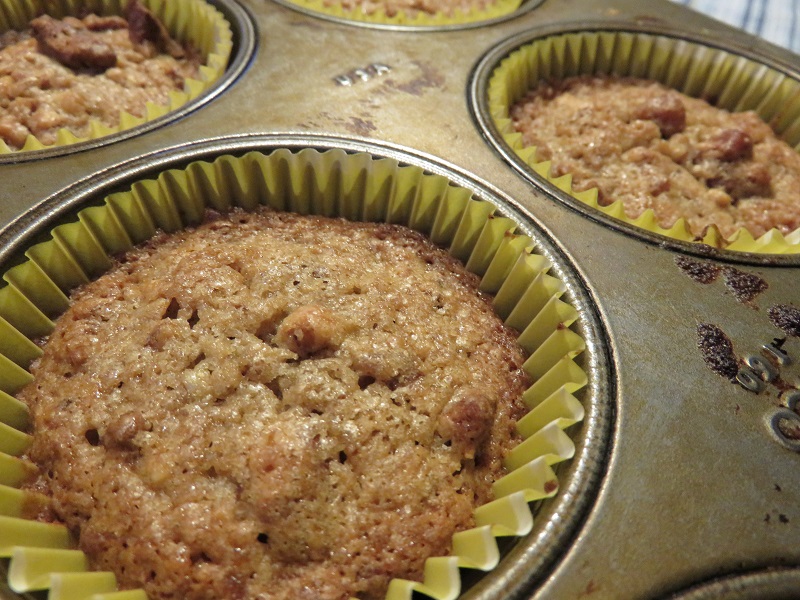
You can get Lovina’s latest cookbook which is a treasury of family recipes and stories from Lovina’s own family.

Amish Family Recipes was published earlier this pandemic year and she and her family could definitely use a boost in sales! Christmas is around the corner.
You can also follow the blog and Facebook page that Herald Press staff keep up for Lovina.
P.S. I previously shared this recipe on the Amish Wisdom blog but it has now been shut down, sorry to say. So if you think you read this before from me, it was on Amish Wisdom, not here. 🙂
Another Way for week of November 6, 2020
How to Deal with Addictions
The third Thursday in November is Great American Smokeout Day and billed as a day to stop smoking forever. I only ever smoked a little while in college but I can sympathize, because most of us have an addiction to coffee, chocolate, or any of numerous sweet attractions. Just ask my kids about my affinity for red licorice. If I have some in the house, I cannot leave it alone.
I feel an immense amount of sadness for those addicted to the stronger stuff like meth and codeine and heroin. My family has known too many who have struggled with these issues. It is life changing to be able to quit these habits.

Last fall I was asked to help edit a book titled, Escaping Addiction: Portraits of Hope and Restoration, by Christina Showalter who is both the book’s author and the photographer. Christina is a splendid photographer and I knew her older sister from work and we went to the same church for awhile.
Christina developed a vision to create a book of photography that helped tell the before and after stories of those addicted to alcohol or drugs, and how with God’s help they are recovering from their addictions. It is common to say “recovering” in this situation because what I hear from their stories is that the temptation or urge still exists, but by whatever means possible, just for today, they will choose to live without that drink or drug.
Christina’s introduction to the book says “In the following pages you will meet men and women who found themselves in terrible situations where they hit rock bottom.” I’ve received permission to share an excerpt, which could be the story of many:
“Sarah had never felt love before in her life. She had no clue what it felt like to be loved or accepted in any way. Her whole life, from birth, was one of rejection, abuse and extreme violence. Sarah left her abusive home at age 14 which began a life of prostitution and drug addiction. Violence was very much a part of her life working on the streets. The only breaks she had were short stays in a hospital after getting beaten up, or for psych evaluations in the psychiatric ward.
“In and out of rehabs for various time periods, she always went back to the streets. ‘That was all I knew; it was my job.’ She met a guy who was in a gang and started a relationship with him. She ended up getting stabbed and almost lost her arm. When she was in the hospital, she prayed that God would save her arm.
“At that same time, she was pregnant without knowing it. It was a miracle that the baby survived because Sarah had bruises all over her body and foot marks where this man would kick her. Her mental anguish was so extreme that she had been diagnosed with many different disorders including multiple personality disorder.
“When Sarah felt the love of Jesus for the first time, it was so powerful that it began an unstoppable change in her. Currently, Sarah says of herself, ‘I’m completely different now.’ After a short time in Betel (Christian rehabilitation program in Britain), she was praying in a worship service. As she closed her eyes a warm feeling came upon her that spread from her head to her toes. She suddenly burst into tears. These tears were a really big deal for Sarah because as she said, ‘I didn’t cry. I did not do it. It was a weakness to me. But I just felt so secure. So loved. So safe!’
“Today, Sarah doesn’t struggle with mental disorders; once she got off drugs and began the healing process, the mental disorders fell away. She is living and working at Betel and has a growing relationship with her daughter.” (Excerpted from Escaping Addiction, 2020, p. 70).
Betel is based in the UK and is an independent Christian charity for men, women and families affected by drug and alcohol abuse. In the U.S., the Teen Challenge program and many others offer religious-based rehab for those struggling. Perhaps you can share this story of hope with others.
Christina’s book can be purchased here: https://shop.multzi.com/product/escaping/ or write to her at Christina Showalter, PO Box 132, Linville VA 22834.

P.S. It is never too late! I also had the privilege of producing radio spots which were aired in the U.S some years ago. They are called “Never Too Late” and share true stories of persons who have found help. You can find them here.
Comment below if you have found help, or would like help for others. For those also struggling with mental issues, check https://www.samhsa.gov/find-treatment
Another Way is a column by Melodie Davis, in syndication since 1987. She is the author of nine books. Another Way columns are posted at FindingHarmonyBlog.com a week after newspaper publication.
Delicious Beef Roast and Veggies – Even with a cheap chuck roast
Now that fall is truly here, I love me some good old vegetables cooked with a juicy beef roast. (“I love me” is maybe a funny country expression to some readers. Urban dictionary online tells me it’s a slang expression for “I really love”.)

My husband is not fond of the stewed vegetables part. He loves the beef and the broth which he laces over the slices of beef, and while he loves potatoes and carrots and even cabbage (as cole slaw), he’ll take a pass on the veggies that have cooked several hours in the steamed environment of beef roasting (whether in a crockpot or in the oven).
So for his veggies, I also add a mess of green beans to the menu. I mash some potatoes, and voila, an easier dinner is hard to imagine. (Okay, slicing the beef and mashing the potatoes in close succession near serving time gets a little hairy in terms of keeping everything hot and juicy.) Sometimes I make beef gravy, which adds to the last minute fuss.

Do you need a recipe for throwing this together? Not really, but for the maybe newbies out there, here’s a start. And if you have family members who prefer to keep the vegetables separate from the beef, you can do as I did and layer several layers of cabbage leaves on top of the roast (boat fashion) and place there your potatoes, carrots, celery, and onions, as desired.
I used a carefully selected chuck roast—the best of several on display at the supermarket where I shop, and slightly hiding toward the back. It was on sale for $3.49 and it turned out to be delicious! This recipe should feed a family or group of 4, double for more. For two of us, it allows delightful leftovers for a meal or two.
Beef Roast and Veggies
3-4 pound roast
5-8 outer cabbage leaves
4 potatoes peeled and cut into smaller hunks (2 or 3 hunks from each potato)
4-5 whole carrots
(I did not use celery or onion with this roast but they add delightful savory flavors and texture)
1 teaspoon salt
½ to 1 teaspoon pepper or to taste
Brown roast on all sides in a hot skillet with about 1 tablespoon of Crisco or other shortening. To brown on all sides, use a large tongs to hold it up and carefully allow each edge to sear a bit. Just a minute or two is enough. (The roast can be frozen, partially frozen or thawed. Adjust cooking times and temperature accordingly.)
Put roast in crock pot. Add salt and pepper to the top of the roast. Then add maybe 1 cup water to the remains of your browning of the roast in the still hot skillet—the beginnings of a nice broth. Let it cook just a bit (not more than a minute). Pour this watery broth over the roast. (The roast’s own juices will cook out and add extra flavor and broth.)
Pile up the cabbage leaves (boat style), add carrots, potatoes, and any other veggies or seasoning you wish to add on top of the cabbage.
Put the lid on tight and cook for 4-6 hours on low.
When time to serve, skim off the layer of veggies into a separate bowl and serve that way. Carve roast (it will likely be very moist and easy to cut). Do not cook too long on high as this will burn or cook the bottom of the roast too fast.
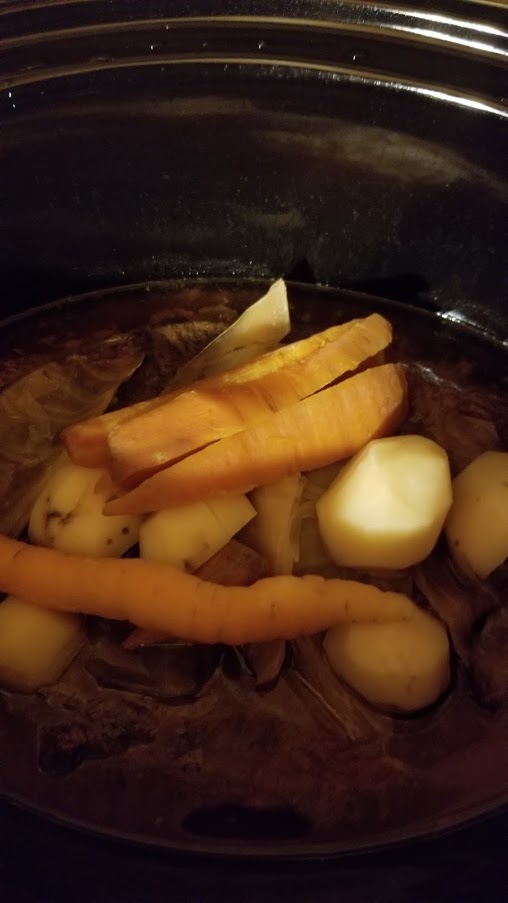
Bon appetit! Or as my father-in-law used to say (born in Alabama and lived most of his life in Virginia) “Take bread and eat!”
***
How do you enjoy roast beef? Or not?
What family differences do you have in relation to favorite meals or foods?
For some of the best of Mennonite cooking historically, check out this lovely volume! Available here.


 findingharmonyblog