


Another Way for week of October 2, 2020
When Your Work is Volunteering
(Editor’s note: Sixth in a seven-part series on the nature of work.)
Many people of all ages get a lot of inspiration and validation from volunteering: we feel good helping others feel better.
This is especially true in retirement when one’s work can be totally volunteer. Experts say it is wise to have interests to keep us motivated, involved, and helping society as we get older. Of course, the current pandemic has made a huge dent in what older people (especially) feel safe doing.
My mother has found fulfillment through a variety of volunteer jobs over the years. At 96 and not able to drive anymore, the options for volunteer work have changed, but not the will and opportunity. She nudged me to write about this topic because she hopes others might decide to get involved in volunteer work too.
Mom especially enjoyed her early years volunteering at her retirement complex. She greeted people who wished to visit the healthcare part of the facility, or helped them if they needed directions to a room. Mom had some scary challenges at times. One night a resident with memory issues wanted to go where he wasn’t allowed and she had to stop him. “You can’t tell me where to go,” he spouted.
But those were the exceptions. “I got a free dinner at the Sideboard [the in-house cafeteria for staff and guests] when I worked. They gave me a volunteer pass and I got all kinds of delicious meals!”
Mother also read to a blind woman—short stories from books like Chicken Soup for the Soul. She grew close enough to the woman and family to hug the daughter at the woman’s eventual funeral. “When you could hug in those days,” Mom reminisced.
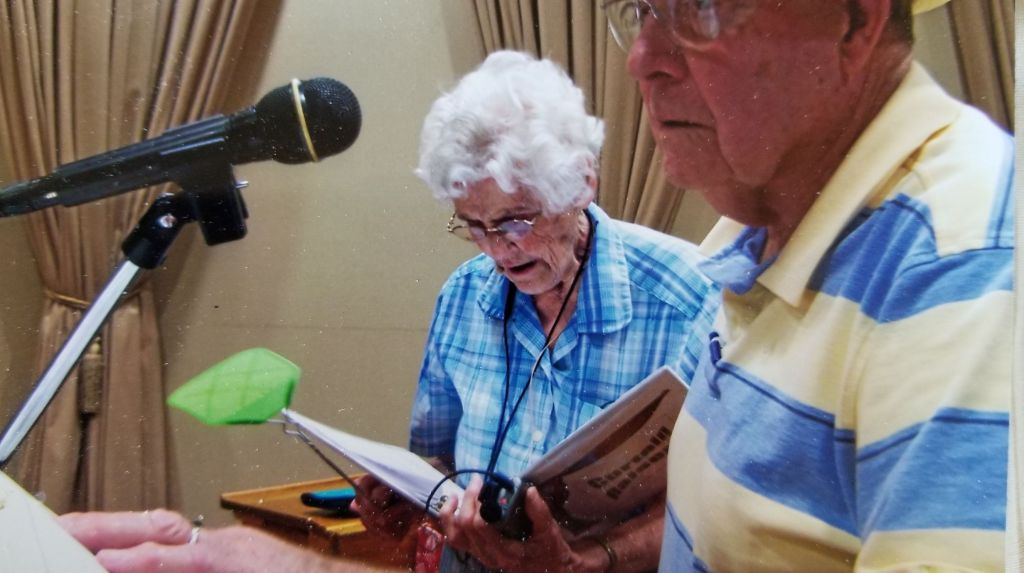
Then a good friend of hers from childhood couldn’t see to read, so Mom began reading for Mabel. “We grew up together, went to the same church and our mothers quilted together,” Mom said. In these later years in healthcare, Mabel couldn’t sing much but they sang together anyway and also cried together. “She lost two children,” Mom recalled sadly. And then her husband died after a fall on his head.
Earlier when our family lived in north Florida, Mom and women from our church drove to a facility where people needed help writing letters to their families. “Sometimes I just kind of made up stuff if they couldn’t think of what to say, and I read it to them and asked if it was ok.” Mother still enjoys writing letters.
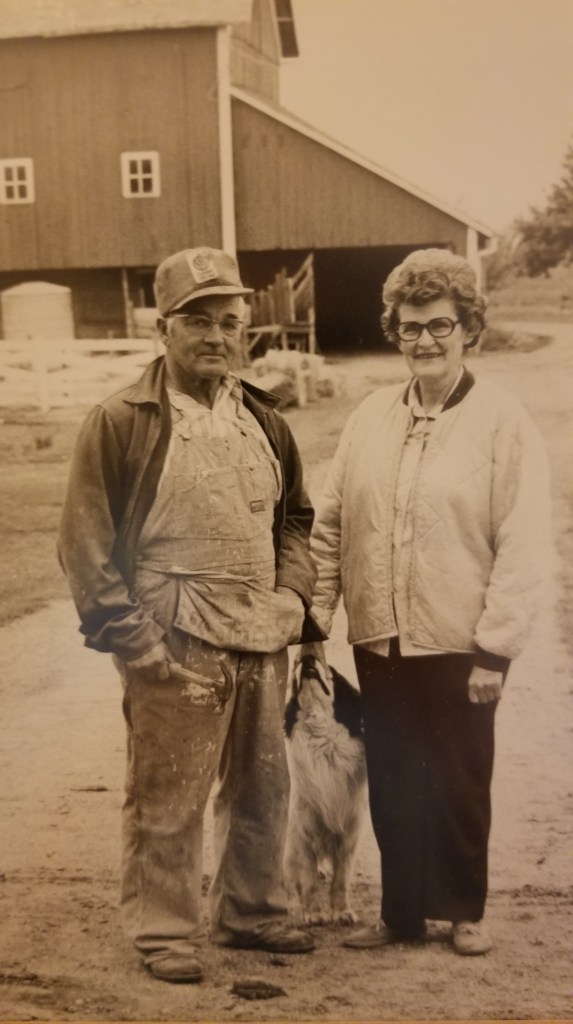
When my dad retired from farming, they volunteered for a couple months each winter in south Texas. They helped those with disabilities get in and out of a therapeutic pool, and played Bingo at a nursing home. My parents enjoyed the camaraderie with other volunteers in the SOOP program which at one point stood for Service Opportunities for Older People. Now it serves anyone—including families who want a short or long term service experience.
When Mother could no longer drive and couldn’t quilt because of arthritis, she began grading Bible correspondence courses for prison inmates through a program called Gospel Echoes. Since Mother lives nearby, someone delivers a pack of lessons to Mom most weeks. We are all very grateful for this outlet for Mom’s service at this point in her life. It helps keep her going and she talks about how much she has learned about prison life—and the Bible—through the questions they ask and the stories they share. She prays regularly for many of the students, and they express gratitude for her help.
I hope you can find the opportunities that fit you in retirement or any age. It’s best to start young because of how it opens your eyes to acute needs and the life experiences of other people.
What volunteer work would you like to try that you have not done yet?
What was your best volunteering experience ever?
Were there volunteer opportunities that didn’t pan out as expected?
For more information on SOOP, go to mennonitemission.net/Serve/soop or call 866-866-2872 (toll-free); or gospelechoes.com or call 574- 533-0221.
***
Another Way is a column by Melodie Davis, in syndication since 1987. She is the author of nine books. Another Way columns are posted at FindingHarmonyBlog.com a week after newspaper publication.
Butterscotch Squares
I feel embarrassed, chagrined, and sheepish.
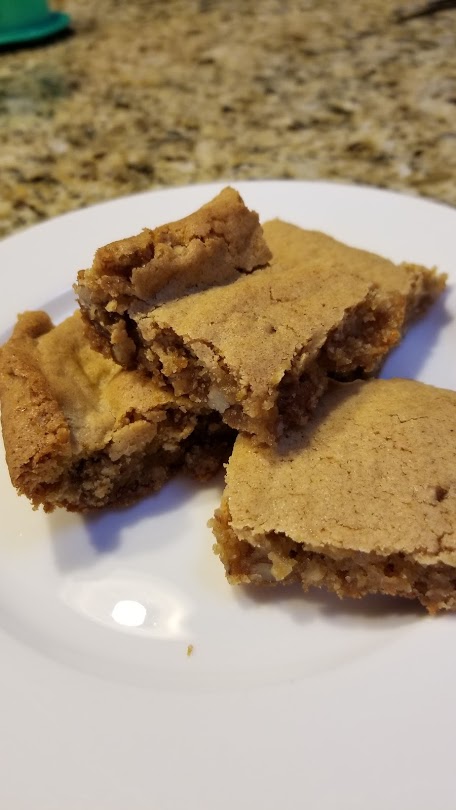
In the cookbook I published in 2010, my recipe testers and co-authors provided an excellent recipe for “Blondies” or what my mother called Butterscotch Brownies or Squares. I’ve made them for years (as did the person who shared the recipe) and usually they get rave reviews, according to both of us, even if they are bit crumbly as they get older (even when I keep them in the freezer), and chewy. The dough is also a bit hard to spread out in the pan, and our recipe writer encouraged spreading the dough by hand because otherwise it sort of stays in clumps.
Well. My mother at 96 realizes she has a right to say nix to baking, and even though she tries now and then, it ends up being a big headache and mess to clean up after. So, she put in a polite request wondering if I could bring her some Butterscotch Squares/Brownies on my next visit.
“Sure,” I agreed. She hated to ask Nancy who is the oldest daughter who lives nearby and the rest of us depend on Nancy to help mother out as she needs it. My mother would be very alone if not for Nancy and we all know it. (Thanks, Nan!)
I knew from past experience that the brownies I made were not as soft as what Nancy made. Mom had even talked about how good Nancy’s were/are. I compared what I thought was a recipe I had gotten from Mom, to the recipe we printed in the Whatever Happened to Dinner book (WHTD).
Ta da!! I have some tweaks to announce and if you have a copy of the above cookbook, you might want to make notes in it, or just use the version now posted here. Next, I was also shocked to find I had never shared this recipe at all on my blog. I’m flabbergasted (mother’s word) but also pleased to share a really great version now!
The secret appears to be margarine. This old recipe from the long-heralded Mennonite Community Cookbook (MCC) says to use butter. I use butter for almost everything. So today I subbed margarine for butter because that’s what my oldest sister said to do. You can always trust your older sister with cooking hints, right?? I usually don’t even have any margarine on hand but happened to have some on hand but that’s another story.

The other small difference is that MCC says to use 1 teaspoon baking powder while the recipe in WHTD says to use ¼ teaspoon baking powder and ¼ teaspoon baking soda. I now think that was an error. What do you think? Wikipedia says something that makes sense here: “Baking powder is used to increase the volume and lighten the texture of baked goods. It works by releasing carbon dioxide gas into a batter or dough through an acid-base reaction, causing bubbles in the wet mixture to expand and thus leavening the mixture.” Allrecipes.com adds regarding margarine: “Margarine, which can contain more water and less fat, may make thin cookies that spread out while baking.” So … I’m guessing that both items together made the difference for this batch.
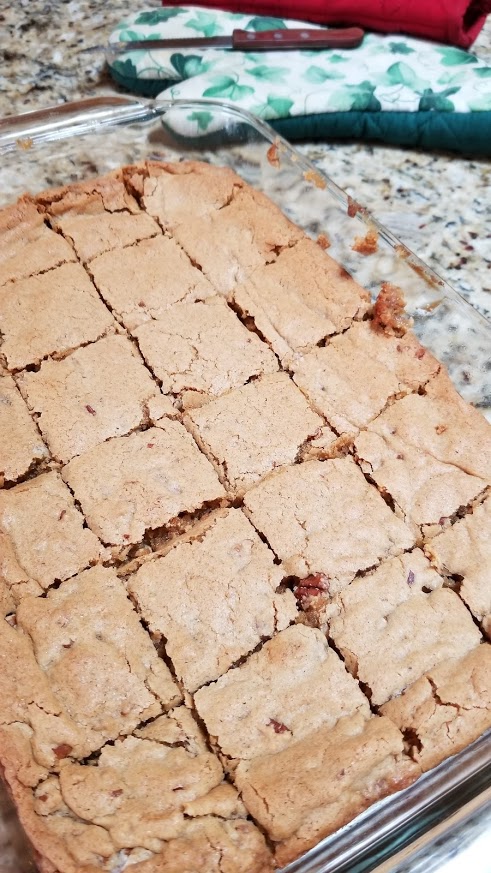
The blondies or butterscotch brownies shown here are delightfully soft. My sister’s other secret, which I’ve long followed, is to put a piece of bread crust into your storage container to keep them softer, and she specifies white bread crust. I’ve used both white and whole wheat type bread, when I freeze sweet treats like this. (Mom says she never did this. Hmm.)

Below, is the recipe doubled, as my sister does, originally from Mennonite Community Cookbook. I would advise using it rather than the one in Whatever Happened to Dinner. (And then maybe you won’t have to ask, “whatever happened to my dessert?”)
Butterscotch Squares
½ cup butter
2 cups brown sugar
2 eggs
2 cups flour
2 teaspoons baking powder
½ teaspoon salt
1 cup chopped nuts
2 teaspoons vanilla
Melt butter and blend with sugar. Add egg and beat vigorously. Measure flour into sifter, add baking powder and salt. Sift into egg and sugar mixture. Mix well.
Add chopped nuts and vanilla. Spread dough in a greased 9x 11 inch pan. Bake at 350 degrees for 30 minutes. Cut in squares or bars while warm. Makes about 24 squares.
Original recipe by Barbara Stutzman, Kalona Iowa
And please, please, if you try them, tell us here how they turn out, and also inform me if you ever run into recipes from me that don’t work out like you wanted!
***
Do you use butter or margarine or both?


And here’s the cookbook where this recipe came from. I was privileged to write the history of this cookbook, published in this 65th Anniversary Edition, published in 2015. It can be purchased here.
Another Way for week of September 25, 2020
Amish Work Habits Through the Seasons
(Editor’s note: Fifth in a seven-part series on the nature of work.)
What do you want to be? What do you want to do when you grow up?
These are questions we often ask children. But most of us—unless we want to be the commonplace answers like doctor, lawyer, nurse, teacher, firefighter—don’t grow up with any idea of what kind of job or career we will end up doing for a bulk of our lives. Everyone wants a job that is so amazing that we marvel we’re paid for our efforts. But alas there are assembly line and mechanical and warehouse jobs that need doing too.
As little ones, most of us would never say when asked what we want to do: “prepare legal notices for the newspaper” or “coordinator of fellowships for future endocrinologists” or “conservation specialist.” Yes, these are all real jobs my daughters have ended up in. Mostly we don’t land in jobs we could have predicted or stated.
But, our children often follow the environment we’ve established from little up of expectation that they will work at various jobs and hopefully at something worthwhile. One Bible verse puts it, “If anyone isn’t willing to work, they should not eat” (2 Thessalonians 3:10).
As a culture, some admire the work ethic we see demonstrated in Amish groups. The old fashioned barn raising. Helping each other harvest wheat or hay. We see small children working in gardens—and not just playing in the dirt.
Danny Graber is a photographer from northern Indiana who has shot stunning photos of Amish at work. He always gets permission (coming from Amish background himself) and does not photograph faces upclose. This year he has authored a coffee table type book of heartwarming and incredible photos. The pictures and text also speak to how Amish children, from little up, are taught how to do various jobs on the farm or in the cottage industries many families run for their livelihood. Titled Seasons of Amish Life, the book was published by Herald Press and I was asked to help provide expanded captions which I enjoyed immensely.
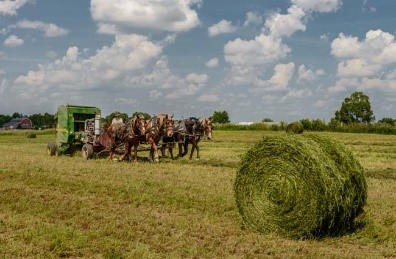
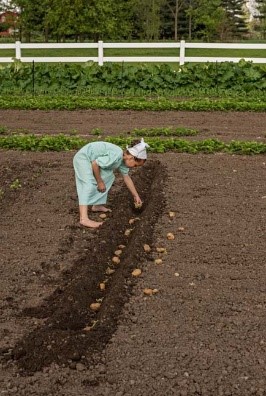


Growing up among the Amish myself, I was especially taken aback by one group which actually still harvests ice blocks for their refrigeration of food year-round. (Most no longer do this and use propane or solar to chill their refrigerators, but this is a very conservative group.) Gathering ice entails going out on the very coldest days of the year (below zero) to cut and heave cubes of ice weighing over one hundred pounds each. Young boys go along to begin learning what is involved and help as they are able. For instance, they use long poles to channel ice through a creek to be loaded onto the wagons pulled by horses. I’m sure many boys are proud to be old enough to help with such tough, freezing work.
The thing I wish to draw out for us as we train our children and grandchildren is that pitching in needs to be expected of even toddlers, as they learn to pick up and put away the toys they love. Older children can instruct younger ones as well. I have to chuckle as I recall two of my older grandchildren, ages 6 and 4, telling their younger brother emphatically “No drop puzzles! No drop puzzles!” He had purposely dropped a set of puzzles they had all just cleaned up. Their mother, busy with her own work did not join in to either pick up or scold the two-year-old.
So, how do we get from picking up blocks and puzzles to conservation specialist? Sometimes a long and painful road, but as we teach and model day by day that being part of a family means joining in the work as well as the play, children get the message that work is part of life.
***
To see all of Danny Graber’s photographs, including the jaw-dropping photos of the ice block harvesting, you will want to purchase the book. It makes a great gift!

***
Comment here or write to anotherwaymedia@yahoo.com or Another Way Media, P.O. Box 363, Singers Glen, VA 22834.
Another Way is a column by Melodie Davis, in syndication since 1987. She is the author of nine books. Another Way columns are posted at FindingHarmonyBlog.com a week after newspaper publication.
Another Way for week of September 18, 2020
The Work of Young Adults
(Editor’s note: Fourth in a seven-part series on the nature of work.)
In summer my husband likes to keep the garage door open just a few inches to cool things off. This summer a house wren made her home in our garage.
By the time we discovered it, Ms. Wren had laid her eggs. Babies were coming whether we wanted them or not. We couldn’t bring ourselves to move or dump the nest.

Then one day I crawled up to peek. The baby birds had hatched! Ms. Wren was flying in and out faithfully bringing breakfast, lunch, and dinner. And depositing her own breakfast, lunch, and dinner all over the garage. Eww. I cleaned up the messes every other day or so. We were expecting our whole family to arrive for a staycation at our home and the last thing I wanted to worry about was my five grandsons tramping in the bird doo.
Would Ms. Wren be able to fledge her babies before our babies arrived? (They’re not babies, but range in age from “almost two” to “not quite seven”.)
I looked up the habits of house wrens and learned that most baby birds fledge two to three weeks after hatching. Then yay! The peeps DID get out just in time. I scrubbed the garage floor one last time.
If only helping our own children fledge the nest was as easy as it seems for house wrens. But wait a minute: it was actually pretty incredible how she not only taught them to leave the nest on their own and fly (without our dog chasing them), but also taught them to find food for themselves. In other words, to be adult birds.
While as parents we have a much longer fledge period for our offspring, we all hope they grow up to be fine adult people. There is also lots to teach—but an important time in parenting.
I remember when our oldest daughter was graduating from high school. I suddenly became aware of things we hadn’t quite taught her about what it means to be an adult. Simple things, like say, ordering Chinese food to go. We (mom and dad) were gone for the evening and after Michelle got off work, she decided to just order Chinese take-out rather than cook dinner at home for herself and her sisters. She looked over the take out menu, and knowing that they enjoyed a variety of dishes when at Chinese buffets, ordered small containers of about 4-5 different dishes, plus rice, eggs rolls, and Chinese donuts. Needless to say, they ended up with leftovers for three or four meals, and a big bill.

Other things I remember: her surprise and disgruntlement when Dr. Greene, a children’s dentist, told her she needed to find a dentist for grown-ups. I think she would have preferred continuing to play Nintendo while waiting for checkups than reading old copies of People magazine. We talked about other rites of passage like signing in herself at the doctor’s office, ordering prescriptions, filing taxes, and much more.
Back to Ms. Wren: the two things most important to teach her little peeps was how to fly—their job if you will, and how to find food. The same with our young people. As they grow into adulthood, kids need to know the importance of working hard and holding a job—and learning to cook and take care of daily needs. Hopefully we teach them the importance of work while they are still young.
I have felt extremely sorry for young adults during this pandemic, especially those trying to start college. What a mess, in most places. My heart goes out to you and your parents. Adjustments to the normal fledging phase may have to be made but hang in there. I’m sure you’ll get there in the long run and find your way in the world. At least I pray that will be true. All the best to those in this difficult phase.
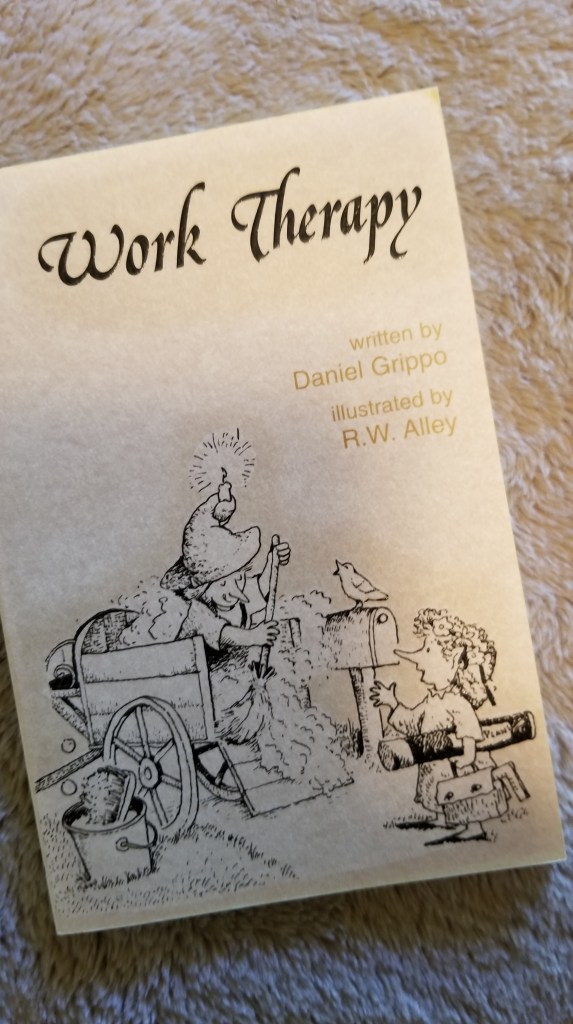
For a free small booklet called “Work Therapy” with 35 succinct tips on enjoying our work, write to anotherwaymedia@yahoo.com or Another Way Media, P.O. Box 363, Singers Glen, VA 22834.
***
Or, for more on helping young adults launch, you or a friend might love this book by Brenda L. Yoder.

Another Way is a column by Melodie Davis, in syndication since 1987. She is the author of nine books. Another Way columns are posted at FindingHarmonyBlog.com a week after newspaper publication.
Another Way Column for week of September 11, 2020
(Editor’s note: Third in a seven-part series on the nature of work.)
At the beginning of life, an infant’s job is basically four-fold: sucking on mother’s breast or a bottle (both take work, even if you don’t remember); letting parents know when something isn’t going well (wah wah wah); filling your pants; and exploring the new world you’ve landed in.
We’ve been recently blessed with a number of new babies (great nieces and nephews) in our extended family and it’s fun to watch the new parents taking on the responsibilities of molding and guiding the tiny ones as the kiddos learn about life outside the womb.
At first a baby’s eyes do much of the work: looking around at the lights and faces that come into view. I always think: what are they seeing? Even more, what are their earliest rudiments of thinking? They learn to recognize mommy’s face, daddy’s face and voices—and remember them, and then a grandma or grandpa join the parade, plus aunts and uncles.
Their newfound environment may be suddenly chilly, or too hot, or too bright and it’s the infant’s job to express disgruntlement or joy over their new situation. They move limbs and soon begin exploring their fists or feet and sucking on them when they can’t find anything else. That’s work!

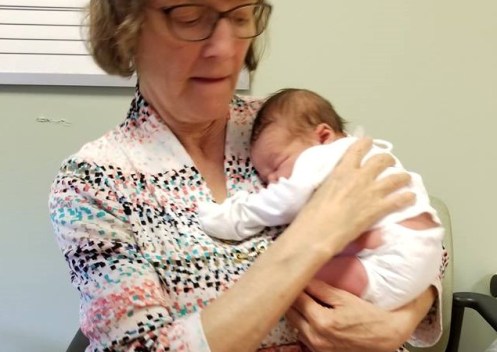
Baby Sawyer at three months has now begun talking. No, not words of course, but he coos and babbles, trying to move his mouth and tongue. He jerks his head back and forth, like he’s worried he’ll miss seeing something in his new world. He moves his legs around like he’s working on developing the muscles to crawl. I’m holding him thinking he’s really active and all of a sudden he communicates big time: wah wah wah! Does he have a tummy ache? Turns out he’s just tired, and his grandma snuggles and gently rocks him to sleep in her lap. That’s what he wanted: rest!
Whew. It’s hard working being a baby. Right? He even has to get his parents up at night—out of their desperately needed sleep—to tell them what to do next.
When you think of all the milestones a baby accomplishes within months and the first year, it is nothing short of amazing. Sadie, at one is a little girl who’s taking her first steps, eating real food, saying real words or at least things that sound like words, drinking out of a cup, being jealous when someone else is getting attention. Not long ago she was the adorable but clueless infant.

Her cousin Sawyer is holding his head up off the floor, so soon he’ll be rolling over, sitting up. He’ll explore his fingers, toes, belly button, kitty’s tail, the little tiny rattle shaped like a workout weight his Daddy loves handing him. His eyes and ears will follow along as his parents or others read or sing to him.
But experts tell us there’s a lot going on inside the brain that we as parents and grandparents don’t really see: the brain doubles in size in the first year, with lots of amazing growth in the part of the brain controlling motor skills and physical development. This is basically inner work that the child is unaware of—and we are too. But we know from sad stories of lack of development in deprived situations—old-time orphanages where children languished without much care or attention—advanced much more slowly in their developmental stages. So it is important to give children all of the love and stimulation and attention you can give. Just sitting down to read books together from the earliest days kindles their brains in ways they can absorb.
The Psalmist may have been watching a newborn when he marveled: “For you created my inmost being; you knit me together in my mother’s womb. I praise you because I am fearfully and wonderfully made. … My frame was not hidden from you when I was made in the secret place, when I was woven together” (Psalms 139: parts of verses 13-16).
***
What have you marveled about a very little one?
What amazed or surprised you?
How was one infant different from another, in your experience?
For a free booklet, “Work Therapy,” write to me at anotherwaymedia@yahoo.com or Another Way Media, P.O. Box 363, Singers Glen, VA 22834.
Another Way is a column by Melodie Davis, in syndication since 1987. She is the author of nine books. Another Way columns are posted at FindingHarmonyBlog.com a week after newspaper publication.
Zucchini Bread
Still drowning in zucchini? Either that you raised or given to you by a so-called friend? (I say so-called because of the old keep-your-car-locked-in-summer-at-church joke so no one gifts you with the zukes.)
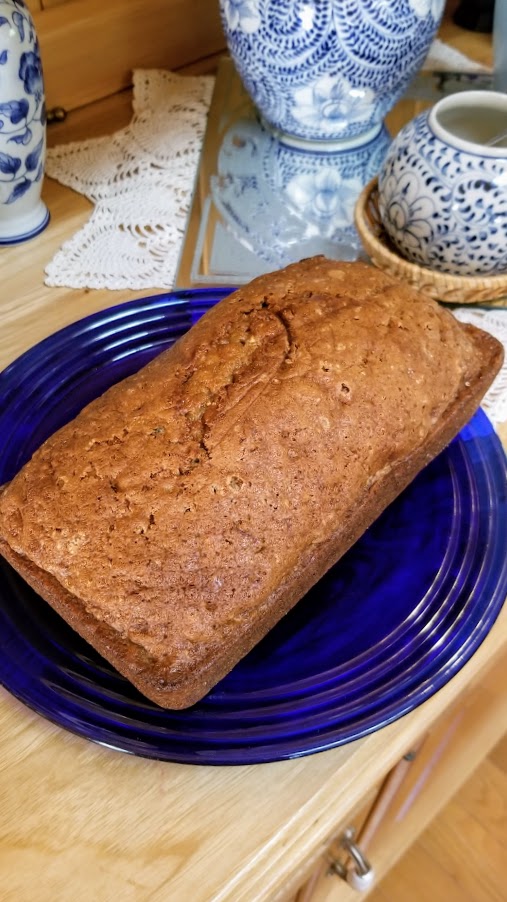
I’m making some to give away: zucchini bread is one of my mother’s favorite breads with her huge breakfast of coffee and 1 roll or slice of bread. At 96, we don’t set the rules on what she should eat. I don’t raise zucchini because of—my opening sentence—we have plenty offered to us. I want to take Mom some the next time we visit. (One of my nieces has already promised zucchini bread and pickles for Christmas presents.)
I’m sharing this recipe because:
1) I have decided to go back to posting recipes aiming for every week or two. I’ve had an increasing realization that recipes are the bread and butter (so to speak) of my blog. That tells me that if I want the traffic to continue, I better pony up with regular recipe posts again;
2) recipes for this common snack bread aren’t found in a lot of my cookbooks, surprisingly enough;
3) while the bread has a long list of ingredients, you likely have everything in your cupboard;
4) someone gave me a box of 18 eggs and a zucchini, all in one week;
5) I love writing recipe posts because they allow me to be breezy and not heavy and not preachy like I perhaps sometimes am in my columns.
And remember, if you don’t like pre-recipe stories and rationale for sharing, please roll right down to the recipe itself.
This recipe appears in the masterful collection, Mennonite Country-Style

Recipes and Kitchen Secrets: The Prized Collection of a Shenandoah Valley Cook, written a number of years ago now (1987) by Esther H. Shank from here in the Shenandoah Valley, for her daughters. She was sweet enough to endorse and write a blurb for my own book, Whatever Happened to Dinner.
Zucchini Bread (with an additional option of making cake)
2 cups grated raw zucchini
3 eggs, well beaten
2 cups sugar (I used one cup brown sugar instead of 2 white)
1 cup vegetable oil
2 teaspoons vanilla
3 cups flour
1 teaspoon baking powder
1 teaspoon salt
1 teaspoon ground cinnamon
½ teaspoon nutmeg
1 cup pecans (or divide ½ cup pecans and ½ cup optional raisins)
Directions:
Grate zucchini, set aside. Beat next five ingredients until fluffy. Sift together flour and next five dry ingredients. Add to wet ingredients and mix all together. Stir in grated zucchini plus nuts or raisins. Pour into 2 greased 9 x 5 inch loaf pans, and bake at 350 degrees for 55-60 minutes.
To make cake: fold in 1 cup undrained crushed pineapple along with nuts and raisins; bake in 9 x 13 inch cake pan for 35-40 minutes. –Marie Shank
To buy Esther’s cookbook, go here or your favorite bookstore.

To buy my cookbook and reflections on keeping family mealtime, go here or ask at your favorite bookstore.
Another Way for week of September 4, 2020
The Work You Don’t Enjoy
Last week I wrote kind of a rhapsody on work—especially gardening or house work. As I’ve reflected more on the nature of work, I decided to launch this into a short series exploring additional aspects of work. As we “celebrate” Labor Day this coming weekend, I admit that there is lots of work I don’t enjoy.
Our lot in life is to work. In Genesis the creation story says “Cursed is the ground because of [Adam and Eve’s sin]; through painful toil you will eat food from it all the days of your life. It will produce thorns and thistles for you, and you will eat the plants of the field. By the sweat of your brow you will eat your food.” (Genesis 3: 17b-19a).
This summer I would personally add: “Fighting off raccoons, skunks, and bean beetles, you will eat the fruit of your labor.”
No matter how you read Genesis or what you believe about creation, the result is the same: life involves work—some of it we enjoy and some of it feels like a curse.

We had a late summer rainstorm in which the wind whipped down three rows of corn: the corn I hoped to freeze for the winter. We plant our corn in about four plantings—much of it to eat fresh, but trying to harvest several rows for freezing. So Monday morning found me down on my knees in the garden mud, trying to make the stalks stand straighter again. I pushed mud and straw up on all sides of the stalks. Shoring the stalks up like that helps, although nothing can restore the corn to its full productivity. That work felt like a curse.

But it made me think of the heartsick farmers in the Midwest who watched their crops destroyed when the “derecho” went through a wide area August 10-11. (We were hit by a similar storm the summer of 2012.) As I worked, I thought of women in rice paddies on the other side of the world working in mud, and all those who must start each day carrying their day’s water supply many miles (approximately 11 percent of the world’s population according to the Centers for Disease Control).
Many of us groove to one type of work over other types. Office or factory or outdoors? Outdoors sounds great until you think about heat or nasty weather. Do you like head work or working with your hands and body? Working in hospitals, doctors’ offices, and nursing homes in this pandemic has even been a life and death matter. We continue to pray for protection and strength for all those working in such places whether it is cleaning or managing their jobs under difficult sanitation protocols, and all “first responders”.
I grew up more as mother’s helper rather than dad’s. Both my older sisters did more outdoor and farm work than I did, mainly because they were, well, older. My second oldest sister eventually fell into the pattern of being dad’s helper because she liked it more than she did housework. And she was so adept at it, although she and my younger brother will tell you (now that Dad is gone), that sometimes his demands as a boss fell heavy on kid ears.
This leads me to another confession. I don’t love helping my husband with his projects. I usually find the wrong tool for him, or mix up something.
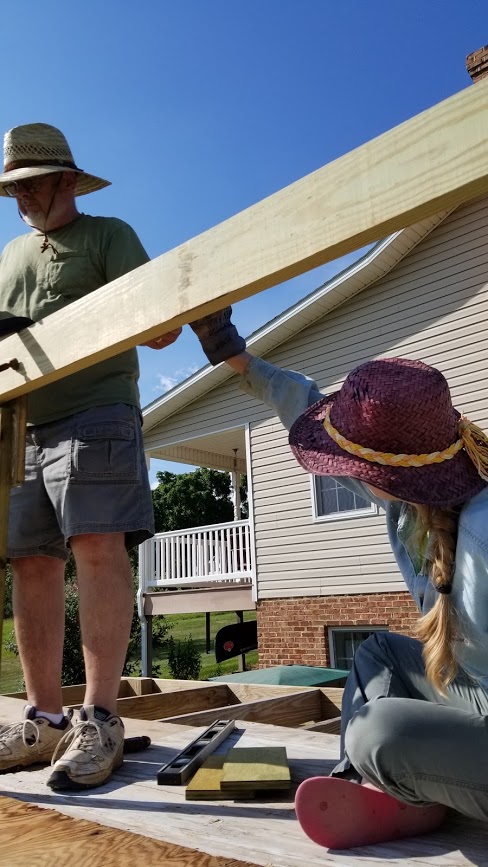
But my husband and I are building a woodshed where I learned a lot and helped enough that I began to enjoy it. I finally knew what tool he wanted or needed next. Like an assistant helping a dentist or in surgery, I would sometimes hand him the tool before he asked. I helped him put up the poles, structural joists, and side supports. It is currently waiting on rafters and roof, but as life happens, other projects have edged in.
So I guess what I’m saying is we all have work we don’t love: cleaning toilets anyone?
***
What’s your most hated chore?
What did you not enjoy doing as a child?
Were you/are you a mommy’s helper or a daddy’s helper? Or maybe these are outdated terms/concepts. How about “Family Helper”?
For a free small booklet called “Work Therapy” with 35 succinct tips on enjoying our work, write to anotherwaymedia@yahoo.com or Another Way Media, P.O. Box 363, Singers Glen, VA 22834.
Another Way is a column by Melodie Davis, in syndication since 1987. She is the author of nine books. Another Way columns are posted at FindingHarmonyBlog.com a week after newspaper publication.
Another Way for week of August 28, 2020
Mulling Things Over: The Holiness of Work
I love doing mindless work like canning tomatoes, snapping beans. My brain goes into overdrive thinking, processing, figuring things out. In my youth I didn’t even mind gathering thousands of eggs in the chicken house because my head was free to explore, remember, plan, dream, and get things thunk out. (Yes, I know that’s not a word but it works for me.)
Of course I will be glad to wrap up garden work this fall, but there is something about it that calms my mind: going out in the cool of the evening and just pulling weeds or picking bugs off green bean leaves or even pulling the watering hose around. It is quiet and restful work, when your soul can communicate with God and maybe vice versa.
For our church service the other week (pastor was on vacation), we watched a worship service by video from the Island of Iona off the west coast of Scotland. The island is just three miles long by one mile wide. One of my daughters went there a few years ago for a week of thinking, exploring, praying and processing. She stayed in an ancient abbey there used originally by Catholic monks.

In the year 563 a man named St. Columba brought Christianity to Scotland. After the Reformation in 1560 the abbey was not used for centuries. Part of the ruins there are an ancient nunnery and cemetery. Many Scottish kings, and the real Macbeth are buried there. Then in the late 1800s restoration work began and around 1938, Christians began using the partially restored abbey and grounds for worship. Today an ecumenical group calling itself simply the Iona Community (not all members live there) holds worship twice a day year-round. They also host visitors and volunteers who desire to experience the “thin space” of the island and grounds, where most people feel incredibly close to God.

When you think about island countries like Scotland and Ireland you might have heard of “Celtic spirituality” which typically focuses on worship, prayer, study, and work as part of the Christian life. “Work” is an interesting element for one’s religious life. Everyone who stays at the Iona Abbey participates in some of the daily chores of keeping it going. Guests help with cooking, setting tables, washing dishes, washing linens, cleaning bathrooms, and so on. While our daughter was there, in addition to rotating meal prep/clean up duties, she signed up for what might have seemed like a “fluff” chore: making sure the tea supplies were kept up with clean dishes at the ready. But keep in mind: tea time is six times a day in Scotland.

If you are older, perhaps you also recall that one of the hallmarks of a “vacation” at Grandma and Grandpa’s involved pitching in to do the work, whatever was needed and you were old enough to do. I didn’t spend a lot of overnights at my Grandma’s house—I think it made her nervous—but if we went for the day we were sure to get in on whatever work or activities she had going that day. I’m glad my grandsons are learning to do house and yard work and love the letter that one wrote about doing chores at his home. In careful kindergarten printing, it says “Dear Grandma and Grandpa, I cleaned up and I had fun cleaning up. I love you. James.”

Is it too much of a stretch to think of our daily work routines as part of our spiritual experience? Washing dishes or wiping tables after a meal should bring thankfulness that you had food to eat. Certainly, preparing food and serving it should make us mindful of the source of our food. In making beds, we can thank God for rest and restoration—or pray for a good’s night sleep to come!
May it be so in your life today. And enjoy your Labor Day holiday!

***
How often do you think of your work as holy therapy?
What would you like to change in your approach to your work life?
We’ll continue this theme on working for a few weeks and I would welcome your stories or comments on any of these angles:
–The life cycle of work, starting with work babies do
–The work of young adulting
–Paid work/jobs
–Volunteer work as a retired person
–When your work is just “staying alive”
***
For a free small booklet called “Work Therapy” with 35 succinct tips on enjoying our work, write to anotherwaymedia@yahoo.com or Another Way Media, P.O. Box 363, Singers Glen, VA 22834.
All photos courtesy of Doreen Davis, except for James’ letter.
Another Way is a column by Melodie Davis, in syndication since 1987. She is the author of nine books. Another Way columns are posted at FindingHarmonyBlog.com a week after newspaper publication.
After all our company left the other week, I had some leftovers (rice, taco filling, refried beans) in my freezer that I wanted to use up but knew my husband was not a big fan of burritos. (I know, what is he thinking? Well, he doesn’t like the messy mess—and he has trouble enough keeping his front clean when chowing down. But he loves taco salad, because the mess is on his plate and he can fork it up rather than try to eat a taco in his hand with taco toppings coming out all over.)
So, I had some leftover taco filling, 3 leftover large tortillas, some rice and yes corn, because we’re harvesting that in the garden right now. I also have plenty of tomatoes, green/yellow peppers, onions.
I followed blogger Jennifer Murch’s suggestion here and watched this video on what makes a good burrito. Then I googled for a more precise burrito recipe, found here from The Seasoned Mom. I liked that they were freezer friendly so I could use up all the tortillas and other leftovers and have enough ready-made burritos for 6 lunches for myself, (because I agree that for a “mature” woman like me, a whole burrito for lunch is just too big).

I’m sharing my adaption of The Seasoned Mom’s list of ingredients if you happen to have on hand the four ingredients I shared above. And yes, most of us like to add a salsa on the side with the burrito, so I just quickly chop up some tomatoes, a little lettuce or cilantro, some onion, green pepper for a side of instant homemade salsa (but without any hot peppers, which don’t agree with me).

What do you think?
Ingredients for 3 tortillas, which you can eat whole, or halve into 6 half servings, and freeze for the future. All amounts are approximate: add or subtract according to your likes.
1 cup leftover taco filling
3/4 cup refried beans
1 ½ cups rice, cooked
1/2 cup kernels of corn, cooked
3 large tortillas
1 cup shredded cheese
Optional salsa—any of these: finely diced red onion; lettuce; diced tomato or salsa; sour cream; fresh cilantro; avocado or guacamole.
To prepare:
- Lightly brown tortilla in skillet on stove, both sides.
- To make 1 burrito: spread ¼ cup beans down center of tortillas; top with ½ cup rice; 1/3 cup taco-flavored ground beef; 2 tablespoons corn; and 1/3 cup cheese.
2. Fold in opposite sides of each tortilla, then roll up, burrito style. Place, seam-sides down, in dish. Repeat with remaining ingredients to prepare 6 total burritos. Freeze. To serve, unthaw and heat in microwave about 1 minute. Try first at 30 seconds and then increase time if needed.
****
I’ll remind you of another classic cookbook from Herald Press for even more late summer great ideas for using up garden goodies.

To purchase, head here: https://heraldpress.com/books/simply-in-season-tenth-anniversary-edition/
Another Way for week of August 21, 2020
Precious Family Times + Homemade Ice Cream Recipe
Back in July I was checking out a a scad of groceries at Walmart. An older employee helping people having issues noticed I accidentally scanned something twice. She came over and took the extra charge off my register. I thanked her profusely and then I felt a need to share my pending joy at my grandchildren coming for a visit.
“I bought so much stuff because our grandchildren and their parents are coming for a visit for the first time in six months,” I blubbered. I could barely get the words out without choking up.
“Gotta stock up on snacks and stuff,” she agreed, even though I had not really purchased snacky things.

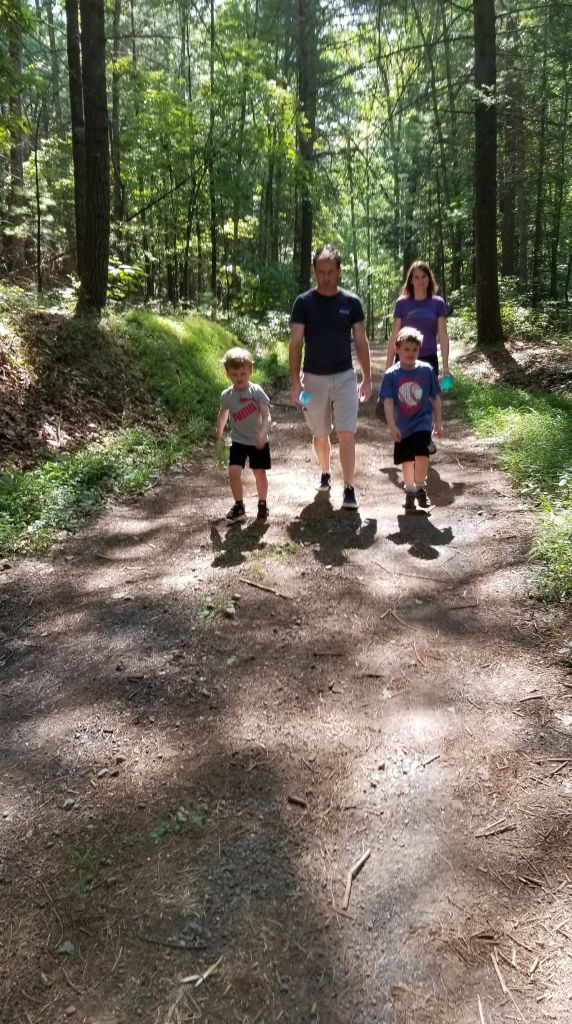
I’m sure I wasn’t the only grandparent this summer feeling emotional. On Facebook I’ve watched others who’ve been lucky enough to finally see their grandchildren. Our daughters and their loved ones held their breath and decided a careful visit might be safe out here on our eight acres, far from any city and most people. There would be no pool, no playgrounds or children’s museum, just old-fashioned fun we could find fishing at a secluded pond, hiking to a brother’s cabin in the woods, and enjoying a tent and playhouse on our own land.
It was a combination of the second Cousin Camp at our house (I wrote about last year) and replacement for a hoped-for lake vacation at a large cabin in western Maryland for the whole crew. We had to cancel those plans when the owners pulled their cabin off the rental market. Just one of many disappointments for millions this year.

I can’t even bear to look now at the schedule my daughter sent on February 21 for her kids’ summer. She had carefully lined up weeks of daycamps with various activities for the oldest. This was to be his “daycare” while she and her husband worked—including a week at our house and with their other grandmother.
By mid-March, all of those plans were upended, as the initial close downs of schools, restaurants, churches and more began to go into effect. I’m sure many of you could say the same thing, and feel similar anguish.
Tears have been just under my smile so often in the last six months. I’ve cried more in this half year than I have for many years. And we’ve had it good, comparatively speaking—and knocking on wood with both fists. But I think it is a sign of the times—and very normal—to have our emotions so thin as we read and hear about so many deaths, so many older folks suffering alone in nursing homes not able to see their loved ones, so many funerals that haven’t even been held, so much bad news.

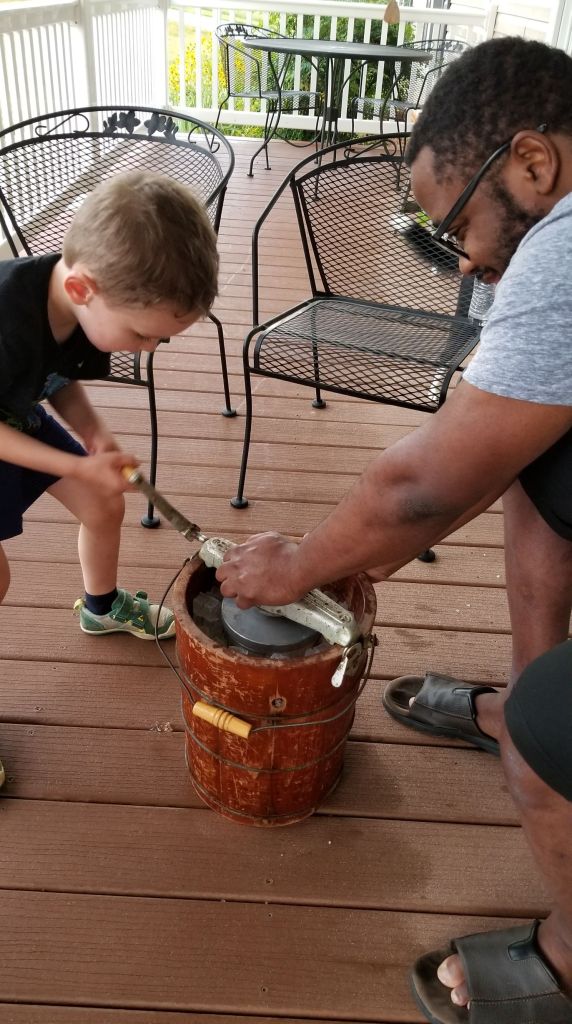
But back to the good stuff, what we have been able to enjoy and savor in these sometimes somber but precious days where we maybe have learned to appreciate family and friends more than ever. I will remember grandsons eagerly cranking the old ice cream freezer, which we had not used in years. I scoured the city for our usual ice cream mix, which made making ice cream so easy. The store that used to carry it has now closed. When I asked at other stores, no one seems to carry it anymore, or maybe shortages?
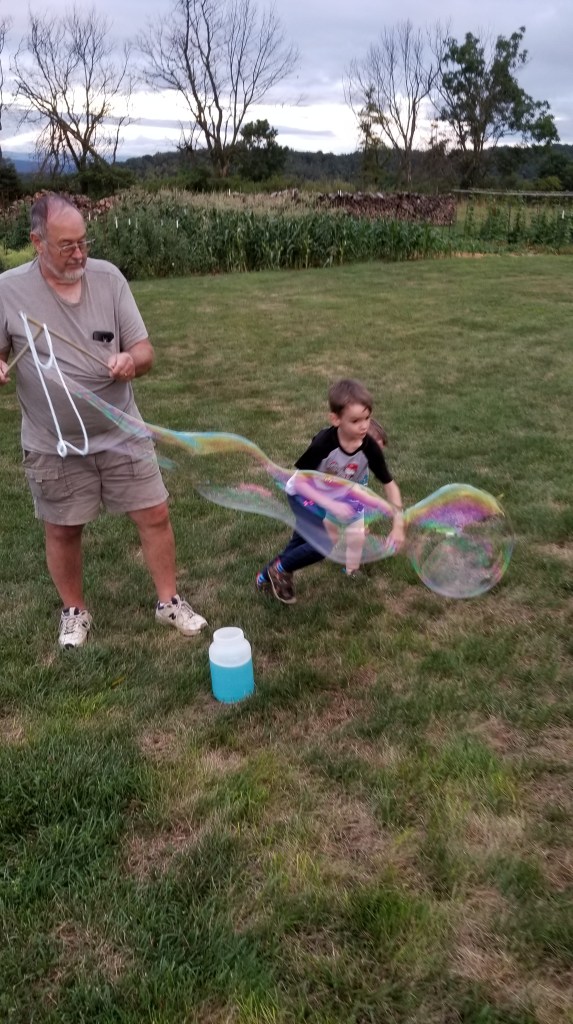
Then I rediscovered my friend Sheri Hartzler’s recipe for homemade ice cream right in my own book, Whatever Happened to Dinner. I got the ingredients and all of us luxuriated in the most delicious ice cream we’d had in a long time, pumped by eager five and six-year-olds until they couldn’t go anymore. What fun. Blowing bubbles. Playing in a sprinkler. Putting puzzles together. Coloring. Learning to cast a fishing line. Sleeping in a tent with your family (not me, but one of our visiting families) and hearing night howls. “What’s that?” my daughter whispered to her husband. “I … don’t … know,” her husband responded uneasily, before they both slipped back to sleep.
A quiet summer mostly at home filled with love and yes some stolen side hugs, mouths turned carefully the other direction. Precious times.

***
What has been your favorite thing, event, happening, or blessing this summer?
Bonus: Here is Sheri’s super easy ice cream recipe!
Homemade Ice Cream
1 can sweetened condensed milk
1 can evaporated milk
1 cup white sugar
1 8 0z container of Cool Whip
1 pint half and half
2 teaspoons vanilla
Put all ingredients in 2 quart ice cream freezer. Fill to 2/3 full or the fill line. Then make ice cream according to your freezer’s directions.
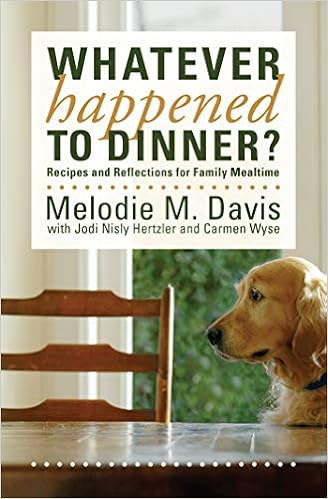
Reprinted from Whatever Happened to Dinner: Recipes and Reflections for Family Mealtime, Herald Press, 2010, p. 107. Available for purchase here.
I’m also happy to send this by email or mail. Request from anotherwaymedia@yahoo.com or Another Way Media, P.O. Box 363, Singers Glen, VA 22834.
Another Way is a column by Melodie Davis, in syndication since 1987. She is the author of nine books. Another Way columns are posted at FindingHarmonyBlog.com a week after newspaper publication.

 findingharmonyblog