

Another Way for week of June 5, 2020
Let’s Hear it for the 2020 Teachers!
Now that school is really finished for most kids, I want to do a belated salute to the teachers, parents, administrators and kids who navigated a couple of harrowing months during the first stage of the pandemic. What teachers managed to do with and for their students is just incredible. A year ago, we couldn’t have imagined this, at least I couldn’t have.
Our two oldest grandsons started kindergarten this year. One school was well prepared for a switch to virtual school by Zoom and other instructional videos from the teacher. The children already each had their own iPads, courtesy of the county-wide school system. My grandson was elated to be able to get on Zoom like his mother working from home. She and her husband have another son, not in school yet, whose schedule, safety and overall activity they still needed to manage. (Her husband has a job he can’t do from home, but is off Sundays and Mondays.)
One day about two months into the shutdown of schools, we were privileged to sit and watch Sam sign onto his iPad to listen to his teacher and get his instructions for the day’s focus and assignments. In one of the videos I saw, his teacher was dressed in a sweatshirt and ponytail, obviously casual in her home. But you could tell she loved her pupils.
On another day, this teacher was dressed up and juggling what appeared to be a six-month-old baby in one arm as she shared instructions for her students for the day. All the while, she was taping the video. That’s a lot of multitasking.
Sam felt SO grown up using the iPad like his parents, and these months have helped him mature in other ways, like sharing his iPad learning with his younger brother, helping him pronounce the words they see there.
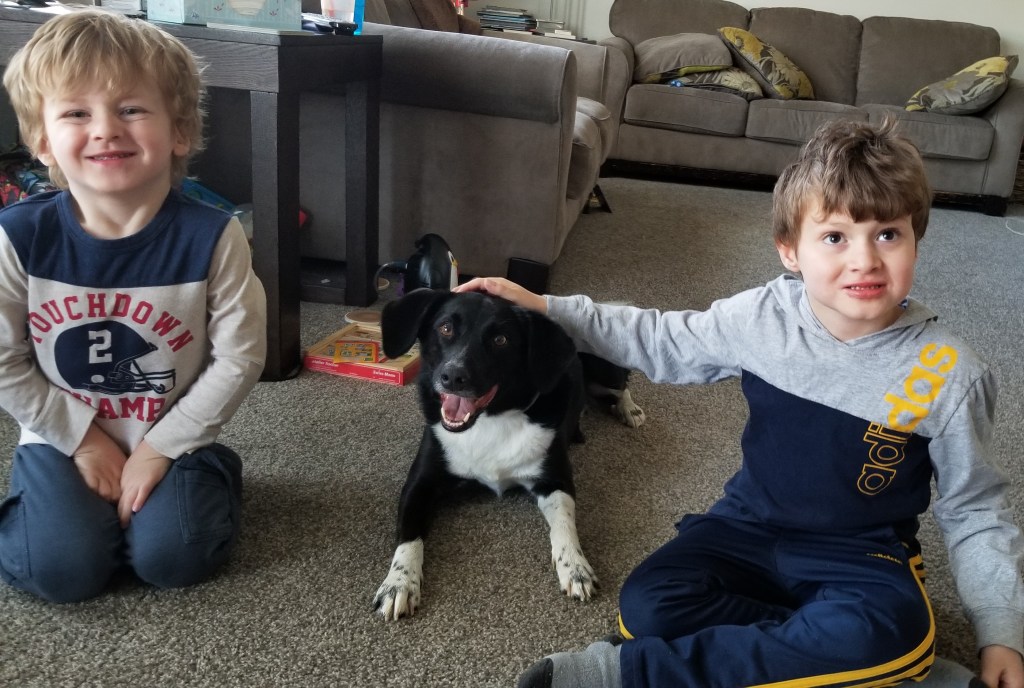
Our other grandson lives in one of the most well to do counties in the nation (in a modest home and community), but their county had three massive computer fails which infected their educational system for a couple weeks. The local newspaper said hackers were to blame; teachers could not log on. But the article also pointed out that “needed technology updates were neglected for more than a year.” Getting up to speed proved monumental, and one spokesperson said, “No one predicted a pandemic.” Yeah.
After they finally got online education working, James had to learn to deal with the boredom of waiting: being patient waiting to talk, turning his microphone on, raising his hand to be recognized, and then waiting while other students also try to get the right buttons pushed to give their answers.
As I assured his mother, children are often more resilient than we expect. His mother and father were frustrated by the whiplash of schedule changes (do we have lessons today or not?) while the school system processed its problems. The parents were working their own jobs at home while guiding the activities, safety, and education of their three little boys. Plus: cooking, cleaning, endless laundry.
One teacher in New Jersey wrote in the early days of the shuttering of schools, “We teachers have to figure out on the fly how to use different online services to keep meeting the needs of our friends [students]. That is going to be very different in each district and grade, depending on the technology available in the district and the level of home support” (nbcnews.com).
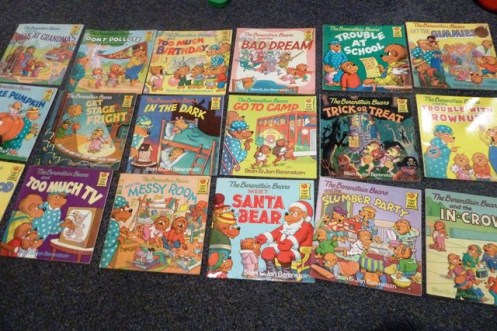
I’m sure that most teachers felt like my friend Lauren at the close of this tough year as she posted on Facebook, “I closed up my classroom yesterday: bagged up all the students’ belongings, put away the books we were reading, pitched the permission slips for the field trip we never took, threw away the activities we hadn’t finished. The hardest part was clearing all the ‘love notes’ off my desk. I’ll miss these students and all the time we didn’t have together! The year didn’t go as planned, but I loved every minute with these sweet children. I hope they remember this year fondly and not with bitter disappointment. Everyone is missing out on something they were looking forward to. Let’s appreciate the expected and routine when it returns, and savor the special occasions for the gifts that they are!”
A hardy “Hats off” salute to all the great teachers out there. May your kind increase, even when the pay can’t!
***
***
What have your children or grandchildren or YOU learned during this pandemic?
***
What experiences are you missing? Sometimes it helps to just air the grievances.
***
Any stories or examples or kudos to specific teachers
or persons who’ve gone the extra mile?
Comment below or may write to me at anotherwaymedia@yahoo.com or Another Way Media, P.O. Box 363, Singers Glen, VA 22834.
Another Way is a column by Melodie Davis, in syndication since 1987. She is the author of nine books. Another Way columns are posted at FindingHarmonyBlog.com a week after newspaper publication.
Another Way for week of May 29, 2020
The Bad Dream that Doesn’t Seem to End
Does anyone else think our life now has a dreamlike quality? Not in a good way as in experiencing a wonderful vacation, celebration, or concert, but hazy and unclear with things changing around you, over which you have little or no control. It’s like a bad, endless dream.
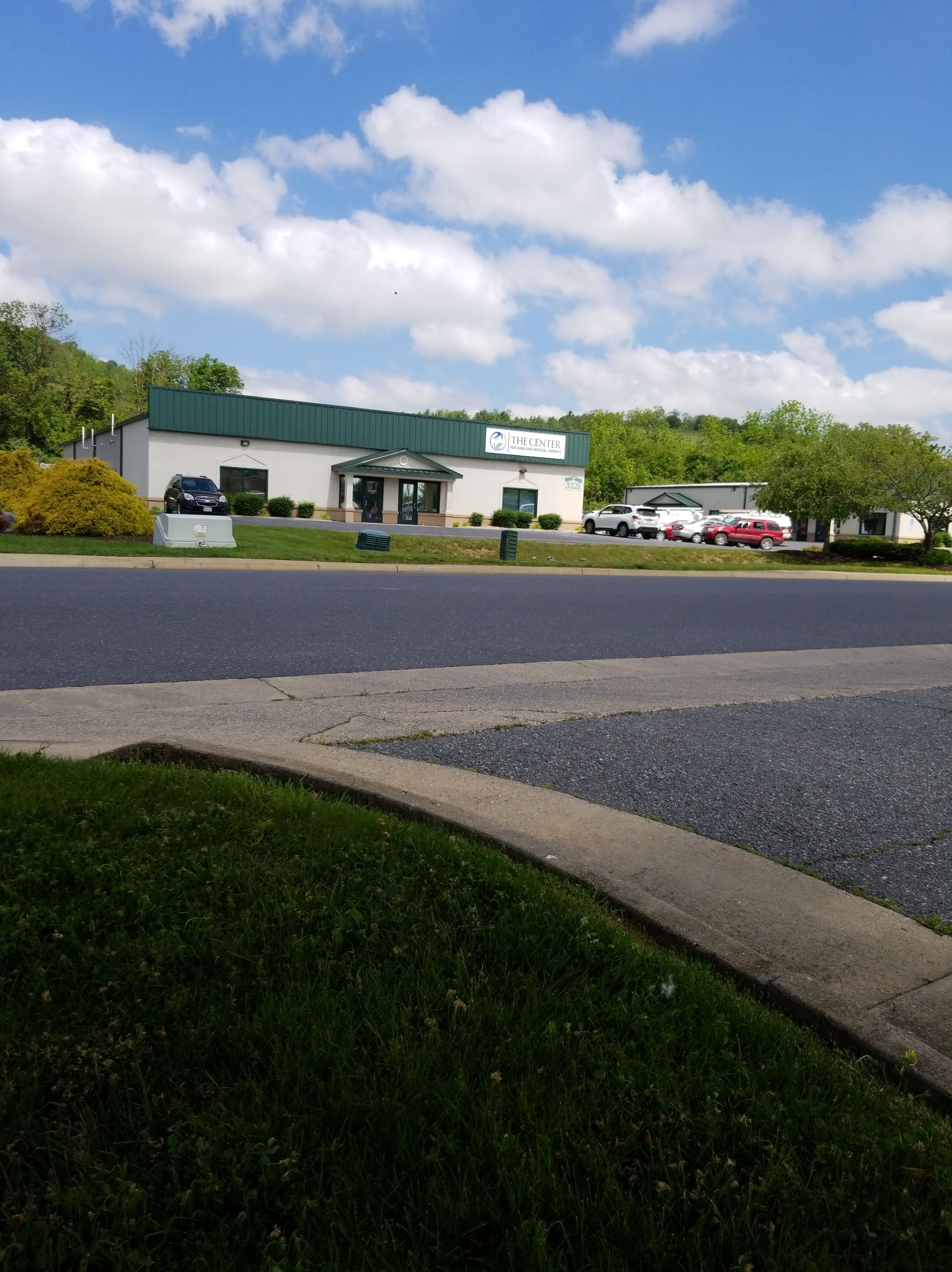
My husband’s therapy office at Center for Hand and Physical Therapy.*
So much has changed. I take a long walk while waiting for husband at physical therapy. I can no longer sit and wait in their reception area or observe and learn from his therapy. If I come in, that’s an extra chair they need to clean, and one more body to count or risk losing their license if they have too many people in the building.
As I walk, I see staff outside the local Department of Motor Vehicles with plastic shields over their faces, like visitors from a distant planet or an old sci-fi movie. The shields at least let you see smiles and read lips if you don’t hear so good. The sign says everyone needs an appointment now. You can book online, the sign says. That leaves out some who don’t have email or ability to navigate online, or access to the technology.
I circle two motels at 8:30 a.m. in this semi-suburban area with townhouses towards the rear. Curious about who’s traveling, the tags at the motels include five from New York state, five from Virginia, one each from South Carolina, Texas, Missouri, New Hampshire. A week ago we ourselves were checking out of a respected hotel chain in northern Indiana after visiting my 95-year-old mother. We stayed at the hotel because my husband brought equipment to use for his ongoing therapy and it would have overloaded Mom’s small space.
The whole time I was at that hotel, I had a nagging worry: were we safe from the virus? Had the cleaning woman disinfected every single thing in our room? Had she washed down the whole bathroom? What about the refrigerator? The microwave? (No complimentary buffet breakfast of course, no coffee in the lobby, no pool or gym room open.) What about the room’s coffee maker handle and buttons, the little paper packets of decaf and regular? It can drive you crazy if you let it, as in that bad dream.
The lobby and the whole hotel were very vacant: maybe two or three other parties staying there. And even the staff were sparse—only one on duty and a housekeeping person who came in if there were guests leaving. We made our own bed.
The sad and scary part is that none of us are waking up from that nightmare, but adjusting to the new altered world we live in. Our church council (Presbyterians call it Session meeting) met on Sunday afternoon (by Zoom of course) looking at how to open our church back up to worshippers, instead of just Facebook livestreaming. The devil is in the details. Who will disinfect folding chairs and hymn books between services?
I feel for the pastor who has the brunt of this responsibility on her shoulders, as well as two small boys at home. I ache for a friend facing few choices at this point in her journey with cancer. And for her husband who cannot accompany her on medical visits. And for my 95-year-old Mom who pulled up her big girl pants when my sister was not allowed to accompany her for a recent X-ray, but she managed to navigate the halls and directions (though hard of hearing and having a difficult time reading lips through masks). But hallelujah, the X-ray showed complete healing from her February hip break. Sometimes even bad dreams have their celebratory moments.
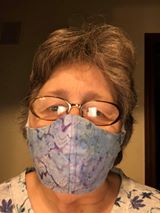
My friend, Carol Honderich who resides in Elkhart County, Indiana, urging all residents to wear masks especially when out shopping. Who could have imagined this a year ago?
You have had your own worries, disappointments, utter fails and falls—your own maze of “I can’t believe it has come to this.”
Hang in there. The refrains from worship services online and beautiful music emanating from Zoom recordings (where you don’t have to worry about infectious droplets spreading from the joyful noise we love to make in worship) can lift us up until we find new paths, new technologies even, to help us navigate this not so brave new and old world. We will persevere. There is hope, there is love, there are still good people all over the world. Time to shake off the nightmare, be kind to each other, conquer this beast of a virus.
Any dreams or nightmares you want to share?
What have been your encouraging moments?
What are you learning?
***
Comment here or write me at anotherwaymedia@yahoo.com or Another Way Media, P.O. Box 363, Singers Glen, VA 22834.
Another Way is a column by Melodie Davis, in syndication since 1987. She is the author of nine books. Another Way columns are posted at FindingHarmonyBlog.com a week after newspaper publication.
* Stuart’s first physical therapy place for his knee surgery closed down about two weeks into the overall shutdown. We were then thrilled to find Center for Hand and Physical Therapy still open, and are receiving great care following CDC cleanliness and about keeping space and washing hands.
Start Somewhere and You Never Know
Forty-five years ago this month I did not know what I was going to do after college. I took walks up the hill at school and cried out to God for guidance. Would I find a job anywhere close to my interests and capabilities in writing or journalism? Where? When? Who would hire me?
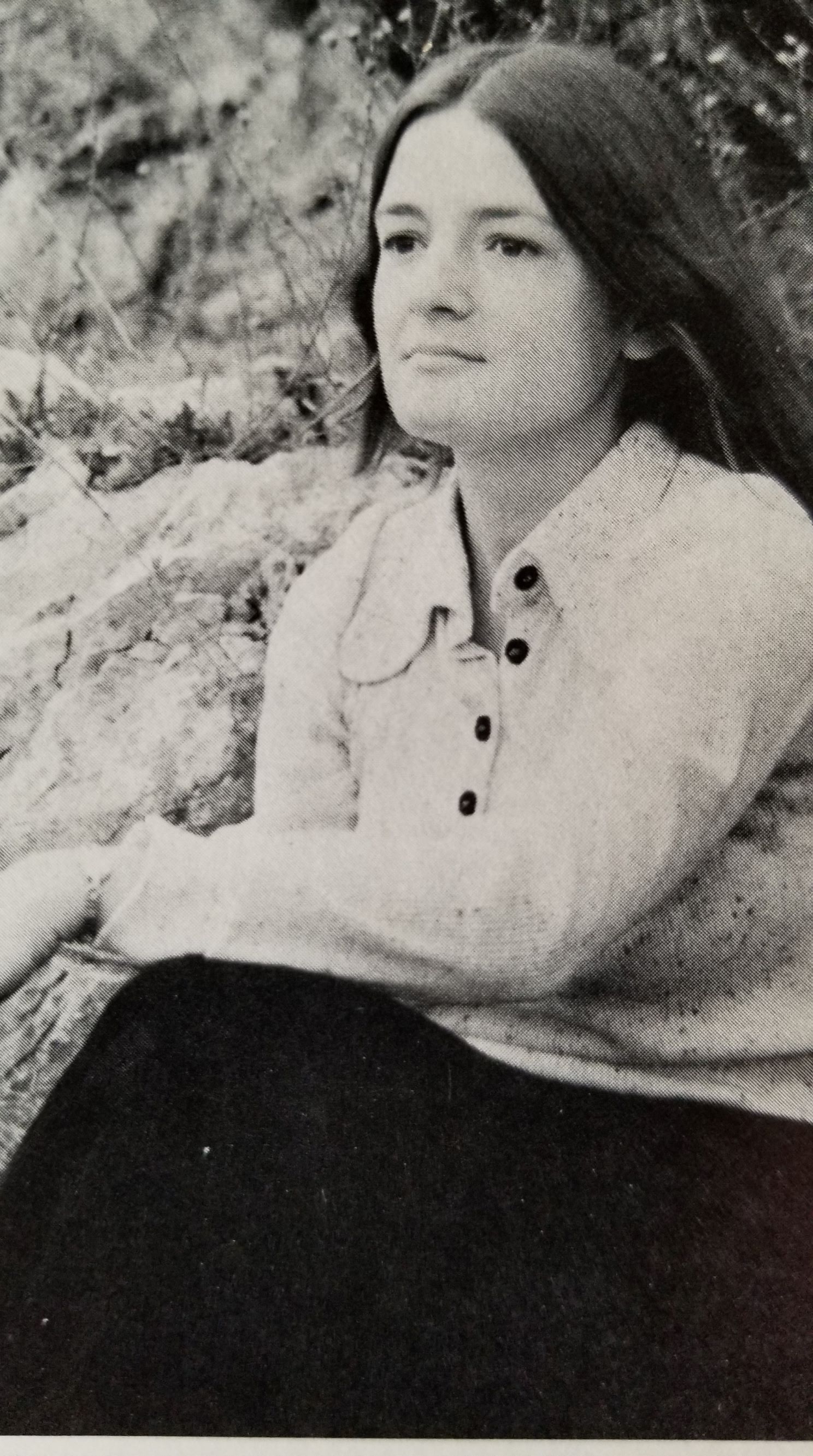
Senior picture from college yearbook, on one of the hills I loved.
I feel especially sorry for this year’s seniors whether they are graduating high school or college amid our sea of uncertainty. A couple weeks ago you heard from one of my great nephews, about how the lockdown in Michigan affected him. Then I learned of my great niece in Florida who was named valedictorian of her class: but what do you do if there is no gym or football stadium full of admiring parents, teachers, and fellow classmates? You give the speech anyway, to a small group outside your school building. These two kids have great families and I know they will go on to become fine adults and citizens, despite the recent huge disappointments.
As a college grad, what do you do when you or your parents have spent from $40,000 to $100,000 on four years of college and you need to land a job in one of the worst worldwide economic downturns since the great depression? Languish in your room or your parents’ basement for months? I hope not, but inevitably, it’s going to be hard to find work. There are jobs to be had—locally the poultry companies are offering sign-on bonuses to work on production lines.
Moving into the paid work force is a leap for most of us and I remember how stressed and worried I felt as I sent off resumes and cover letters the last several months of college. My Spanish professor asked, as everyone does, what I was going to do after I graduated. When I told him about various places I was applying, he said “Why don’t you apply where my wife works?” His wife, Ella May Miller, was a fairly well-known radio speaker for Mennonite Broadcasts. They had an opening for a secretary.
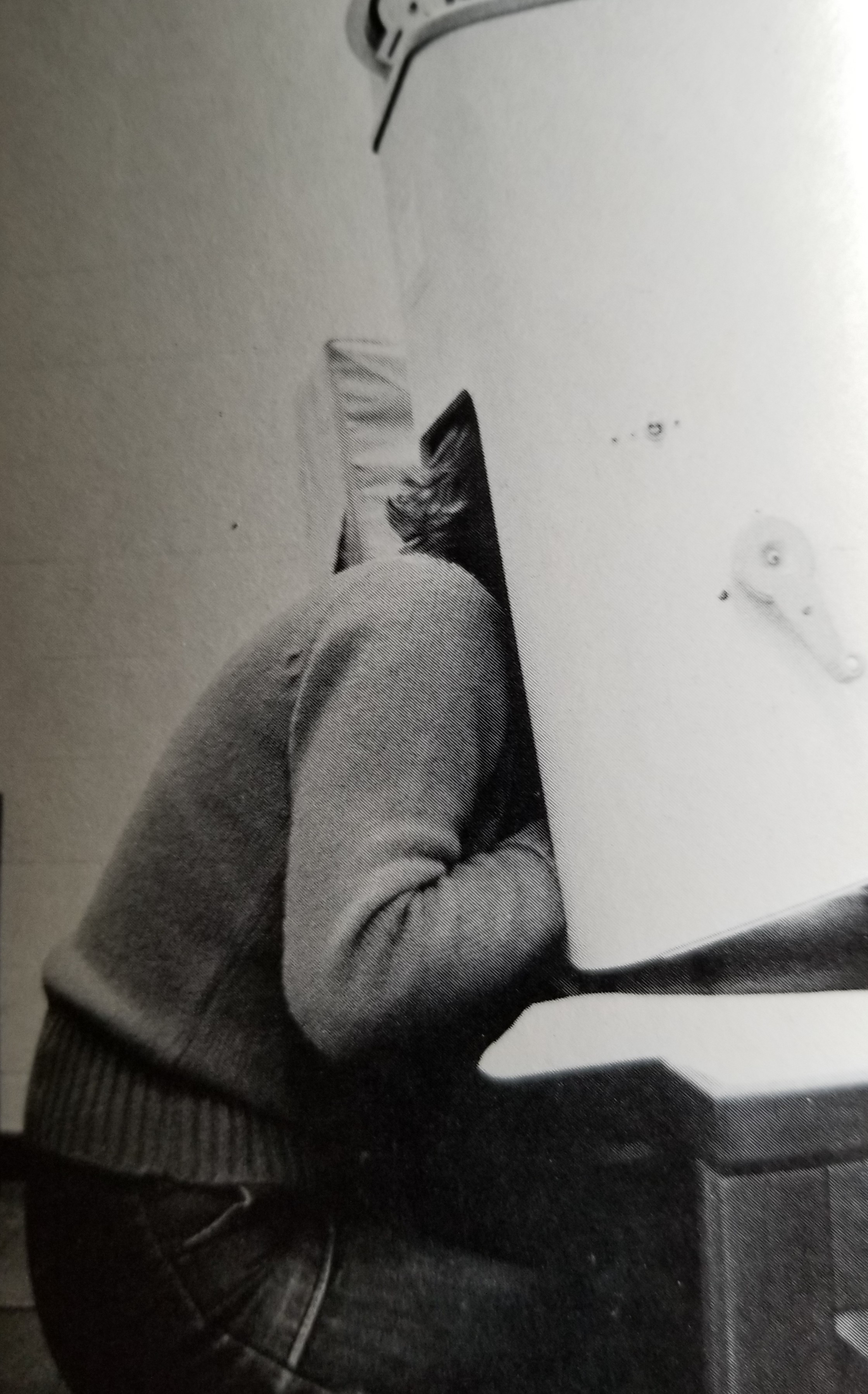
Anyone remember using a microfiche reader? This is me in a senior year yearbook photo with my head buried.
A secretary? My lofty ideals crashed into reality. So I took their typing test. I passed. And I got the job! I always say it was my high school typing teacher who gave me the main skill I needed for my first job. And the woman who was leaving taught me everything I needed to know working in an office. Running a copier. Fixing the jams. Coding a piece of mail. How to make the right number of carbon copies. (If you are younger than 40 you probably have no idea what a real carbon copy is, which is not just a CC on an email.) I was forever grateful for how Linda Brubaker patiently taught me the basics. You learn from the bottom up the way an organization works—always valuable.
I’m also indebted to my bosses at the organization, who allowed and encouraged me to move far beyond running a copier. They read through my portfolio and within several months, I was able to begin ghost writing for Ella May’s Heart to Heart program once a month, which meant attending brainstorming meetings. For my first writing project, I got to interview my Aunt Susie about the art of quilting. We offered a quilt pattern on the radio, and letters requesting the pattern came tumbling in: almost 2000. I was off to a good start and some years later, in 1987, I began writing this column which technically was a spin-off of the radio programs we were producing at the time. Those columns got spun into books. I enjoyed my work immensely.
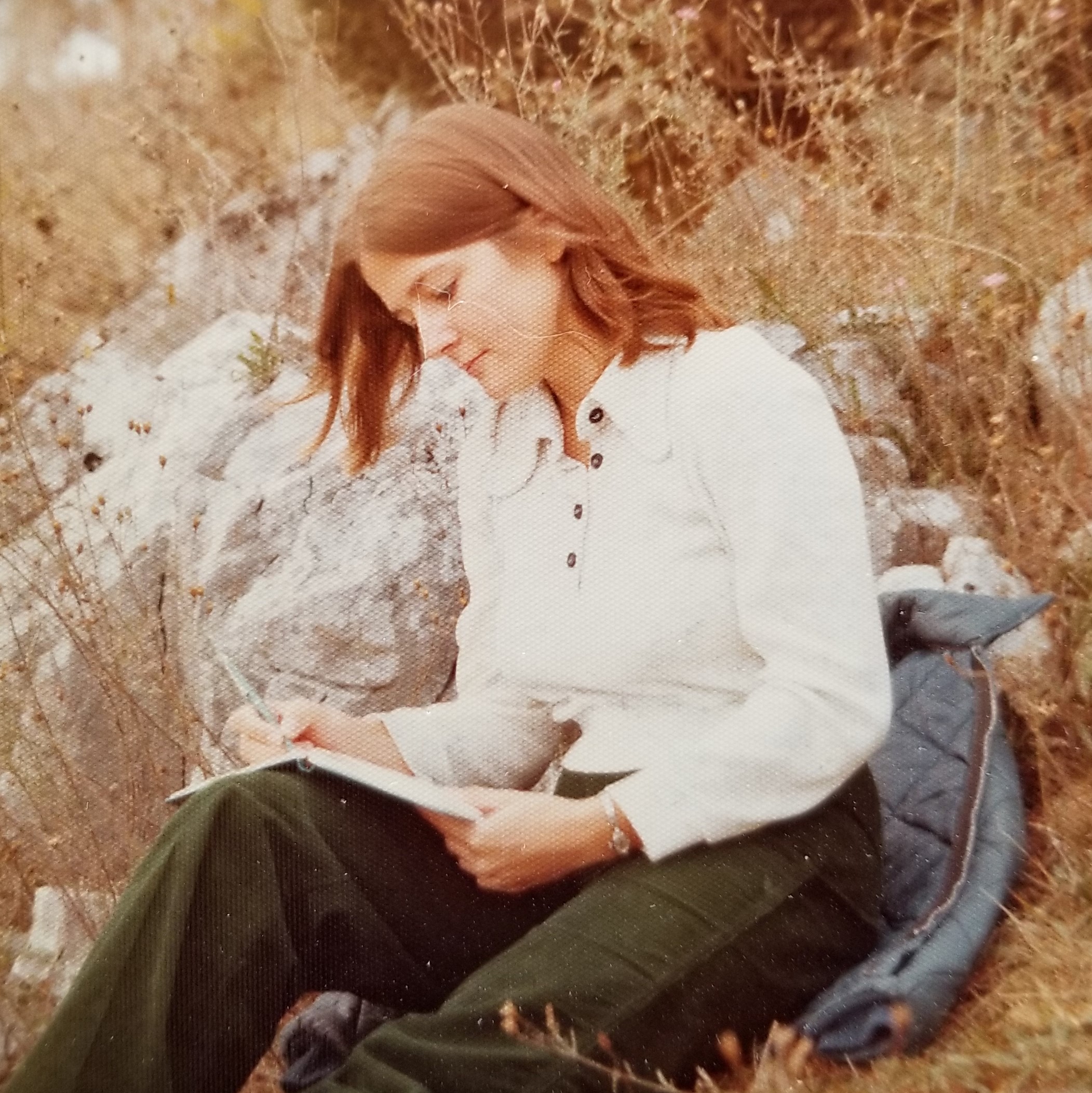
The future journalist/writer/producer.
So you never know. Don’t be too proud to start with typing, or working in a poultry plant—which is where my husband-to-be worked when we started dating. Don’t be too haughty to wash dishes like I wrote about last week. And good luck to all the seniors!
***
What was your first job out of high school or college?
***
Thoughts and memories when you were at this stage of life?
***
I still have some postcard/bookmarks from the Heart to Heart radio program which we called “Beatitudes for a Busy Day.” It makes a nice bookmark. Request yours by email at anotherwaymedia@yahoo.com or Another Way Media, P.O. Box 363, Singers Glen, VA 22834.
Another Way is a column by Melodie Davis, in syndication since 1987. She is the author of nine books. Another Way columns are posted at FindingHarmonyBlog.com a week after newspaper publication.
Another Way for week of May 15, 2020
When the Waitress Has a Really Really Bad Bad Day
My first “work study” job as a college student was washing dishes in the college cafeteria. I don’t remember much about that job but I sprayed off dirty dishes, put them in racks, loaded racks into washers, which finished in a drying cycle. The process resulted in sanitary cafeteria trays and plates out of the mayhem of garbage and leftovers. This was in the days before buffet service in university dining rooms.
I don’t remember all of the options presented by the work study advisor to earn part of my way through college. I think there were options to work in the library, DJ at the college radio station, or washing dishes. It seemed like the least challenging job for me to choose, but maybe I liked the hours, I don’t know. With the mealtime-focused employment, my evenings were free for study and extracurriculars.
I did more dishwashing my second year of college in a position that required a little more thinking: short order cook, server, and clerk in the college snack shop. At the end of a shift, we were to wash up any dirty pans.
But I never really thought about how crucial dishwashing was and is in the restaurant industry until I read a piece by food critic Tom Sietsema in The Washington Post Magazine. Two years ago he spent one shift washing dishes in an upscale restaurant to learn from the inside what it is like. He said that numerous employees who start as dishwashers work their way up to other restaurant jobs including chefs—after having learned the lay of a restaurant and how things operate. Like being slammed on a busy Saturday night. Broken dishes on the floor. Getting stabbed by a knife hiding in water.
In a restaurant where good plates, real utensils and glassware are used, everything revolves around good dishwashing—including the huge pots it takes to make restaurant-sized batches. Frequently those who wash dishes don’t get much pay or respect—although that is changing. However, Sietsema indicated that even chefs who have risen from the ranks of dishwasher are sometimes snobbish in regard to dishwashing staff.

My sister thought quickly enough to snap this photo of the meal disaster. (And white socks?? But this was a trip, dark socks were forgotten. :-))
I give all this as background to my main story, how a half rack of ribs landed on my husband’s lap and shoes at one of our favorite eateries near my mom’s apartment. Fine dining it is not, but they have good edible food in large quantiles at reasonable prices, served restaurant style (not buffet).
On this day we went to Lux’s a bit late after church. I could tell as we walked in that it had likely been a busy lunch period; our waitress seemed a bit distracted and weary. She neglected to give us eating utensils and napkins, so I got them myself.
My husband ordered a half rack of ribs, enough to save for a second meal. But as the waitress brought out the steaming dish on her smallish arm, the whole rack slid off the plate, onto Stuart’s good shirt, the table, and eventually his pants, socks, shoes and floor. As it tumbled downward we watched in shock. How did this happen? Was she new?
The waitress apologized profusely, said she’d comp the meal for him, and then disappeared to reorder. She removed the plate but neglected to have anyone clean up our messy barbecue sauce-covered table and floor. I called over a table cleaner to do that, and then I wiped up the floor myself with napkins.
When the waitress finally brought his meal, she apologized again and said she’d worked there seven years and that it had never happened before.
Later, my sister could hardly stop giggling. It was a funny picture, but not when it happened. We did not make a scene, although we were a scene for sure! It was undoubtedly our worst restaurant experience. Ever. The mess did come out of his clothes after soaking half a day.
But you know, in the scope of the world’s problems, it was nothing. Can I get an amen?
***
Can your restaurant story top this? I’d love to hear it here!
Do you have experience in commercial dishwashing? All tales welcome.
Comment here or send to anotherwaymedia@yahoo.com or Another Way Media, P.O. Box 363, Singers Glen, VA 22834.
Another Way is a column by Melodie Davis, in syndication since 1987. She is the author of nine books. Another Way columns are posted at FindingHarmonyBlog.com a week after newspaper publication.

Another Way for week of May 8, 2020
What I Learned from King David, and Mom and Dad
I was reading again the story of David, Bathsheba, and Uriah in the Bible,  but this time written as a novel. The poetic and powerful author Walt Wangerin, Jr. wrote The Book of God: The Bible as a Novel (Zondervan, 1999). I’m not going to write about the adultery part. (We know it was common for a king to have a whole harem of wives who took turns coming to his bed, so the problem here was David coveting what he didn’t have, and basically forcing Bathsheba into bed with him.) When Bathsheba ends up pregnant, David arranges for her husband Uriah to be conveniently killed in battle. Then the prophet Nathan confronts David with a story subtly reminiscent of what David has done. David quickly responds, “Anyone who can do such a thing deserves to die.” He then confesses his sin and cries out to the Lord for redemption.
It is always easier to see someone else’s mistakes and faults than your own. No where is that truer than in marriage and families, where we live in each other’s faces day in and day out, especially during this “lockdown.”
I was fussing at my husband for misplacing the strap of Velcro we’ve been using to secure ice pack holders when wrapping them around his knee after exercises (for knee replacement surgery March 10). The dandy holder they gave us is looking a little tattered after twice a day home therapy. (He also goes twice a week to a therapy office.) Stuart came up with the idea of using a short strip of Velcro to keep the ice pack from unrolling around his knee. I won’t go into here how many times he’s misplaced his best set of keys (currently missing for weeks), or how often I’ve helped him hunt for tools in the workshop.

Do I really NEED 3 jackets of the same type?
It was not long after I read this story of David (and others where David recognizes his own grave sins and failures as a father) when I remembered that I left my jacket that day at the therapy office. I hung it on a hook and by the time we left, it was warm enough that I never thought about wearing my jacket. So it was me, not my husband, who had again misplaced or forgotten something.
I had also left a different jacket in Indiana after our trip out there in February. So, two misplaced jackets should equal missing car keys and a Velcro strip. Guilty. I told Stuart that I had forgotten my jacket at therapy and was guilty of the same lack of attention to where I’d put my things that so frustrates me about him at times. After almost 44 years of marriage, these things are easier to take in stride and keep in perspective. Usually! Especially when we know the peccadilloes go both ways.
My parents had a love story that carried them through more than 60 years of marriage, even though the last years were especially difficult as Mom took care of Dad as increasing dementia affected their relationship. Here I want to do a Mother’s Day salute for the love and attention Mom gave Dad, and the affection they showed each other. She demonstrated how love gets you through the times when you dislike your spouse, and how being kind and generally peaceful and patient keeps you going. Us kids often talk about the example they gave us, cemented by a big hug and kiss as Dad left the supper table to go watch the news, or relax after a long and often hard day farming. We kids mostly took turns doing the dishes. Later in life, when Dad retired from farming, he took over washing the dishes.
Together they illustrated that it is more important to learn to love one another, and worry less about being loved. Philosopher/psychoanalyst Erich Fromm wrote in the classic The Art of Loving (1956) that love is a skill to be honed the way artists apprentice themselves to the work on their way to mastery. Growing in our love takes both knowledge, effort, and steady practice. I’ve edited slightly to modernize his words: “Love is not a sentiment which can be easily indulged in by anyone, regardless of the level of maturity reached … all his/her attempts for love are bound to fail, unless he/she tries actively to develop his/her total personality … it takes true humility, courage, faith and discipline.”
I’m still growing and learning on this journey.
***
What have you learned in the journey of marriage?
What have you learned about your own flaws in other relationships?
For my free booklet “Secrets of Long Marriage,” send $1 for shipping to me at Another Way Media, P.O. Box 363, Singers Glen, VA 22834. Or if you have comments, email me at anotherwaymedia@yahoo.com
Another Way is a column by Melodie Davis, in syndication since 1987. She is the author of nine books. Another Way columns are posted at FindingHarmonyBlog.com a week after newspaper publication.
Another Way for week of May 1, 2020
Go on an Adventure with These Books

Yours truly at the port of Haines, Alaska.
When I started writing this column back in early February, I had just finished reading three memoirs, two by women who lived in Alaska as far back as the 1930s. A third is currently a resident of Haines, Alaska who blogs, writes obituaries for a local paper (which lead to books), and has been a correspondent for NPR.
I had very little in common with the two older, now deceased adventurers, but their books left me with an awe and admiration for our beautiful and still wild 49th state. I admired their ability to rough it, work incredibly hard under extreme conditions, eat mundane diets and understand that plane accidents, drownings, and avalanches too often claim loved ones or people they knew.
You may recall reading here about our long-awaited visit to Alaska last summer with four others. This year, you couldn’t get me on a cruise, so we’re doubly thankful we made the trip last year.
My sister-in-law bought two books while there which she shared with me. Tisha: The True Love Story of a Young Teacher in the Alaskan Wilderness, by Anne Hobbs Purdy, (as told to Robert Specht) was captivating. “Tisha” is the name Alaskan natives called her (think “teacha, as said by a child). First published in 1976, it covers the journey of a 19-year-old teacher to Alaska when it was not even a state. Some children had no school at all if local leaders couldn’t find a teacher willing to come and live in the primitive but fascinating wilderness.
The story, as compelling as any novel, had me on the edge of my bed numerous times as “Tisha,” adopted two indigenous children who were orphaned when their mother died. The prejudice of white settlers towards the original peoples is fairly startling, at least to this reader—and to Tisha.
 Two in the Far North by Margaret E. Murie, is not as well written, but again gives readers rich insights into what life was like in Alaska before cruise ships started making tourism one of Alaska’s main industries. Margaret first lived in Alaska as a young girl herself. She finished college in the “lower 48” and then went back north and eventually married a biologist, Olaus. Together they spent many years documenting, researching and preserving much scientific information there: animals, flowers, trees, rivers, tundra lichens. His research showed that caribou, for instance, seemed to know when the lichen they munched on was getting scarce and needed time to grow. The caribou then traveled in great herds to new ground to find fresh food.
The most amazing part about Murie’s book was how she and her husband had their first child and took him along at 18 months on one of their summer-long research projects in the wild. They had to guard constantly to not only keep their son from sliding off their boat, but also protect him from the swarms of mosquitoes that make summers difficult in the backwoods of Alaska. (How do you feed a toddler when mosquitos zoom into his mouth?) Olaus and Margaret became champions of preserving the remote landscape of Alaska and elsewhere, to keep as much of the territory and now state in its natural condition.
Finally, I heartily recommend the books of a current author, Heather Lende. If You Lived Here, I’d Know Your Name is inspiring and life-affirming. Currently she’s sharing readings on YouTube of another of her bestselling books, Take Good Care of the Garden and the Dogs, for people to enjoy during this stay-at-home time.
Now it is May and we’re three months into this pandemic. I can identify very much with a comment lifted from Murie’s book. A man who originally came from Vermont and moved to Alaska talked about living where sometimes he didn’t see another human for months:
“You get so you don’t care [about how you look]; there’s nobody to care if you do care; you get in an awful rut … and after a while the life up here gets a hold of you so you can’t fit in anywhere else.” (p. 147)
Most of us can identify with this man. But reading any of these books or a multitude of others will surely lift us out of a rut, help us learn from other times and places, and survive this period of quarantine. And when I think I just can’t do something, I think about these women who survived excruciatingly hard circumstances, and grit my teeth and dig in.
***
What takes grit for you to get through it?
***
Which of these women’s adventures sound the most exciting to you?
***
What book has taken you on an adventure?
***
Read more about our Alaska adventure last summer here.
Comment here or write me at anotherwaymedia@yahoo.com or Another Way Media, P.O. Box 363, Singers Glen, VA 22834.
Another Way is a column by Melodie Davis, in syndication since 1987. She is the author of nine books. Another Way columns are posted at FindingHarmonyBlog.com a week after newspaper publication.
Another Way for week of April 24, 2020
Selling the Faithful Old Family Minivan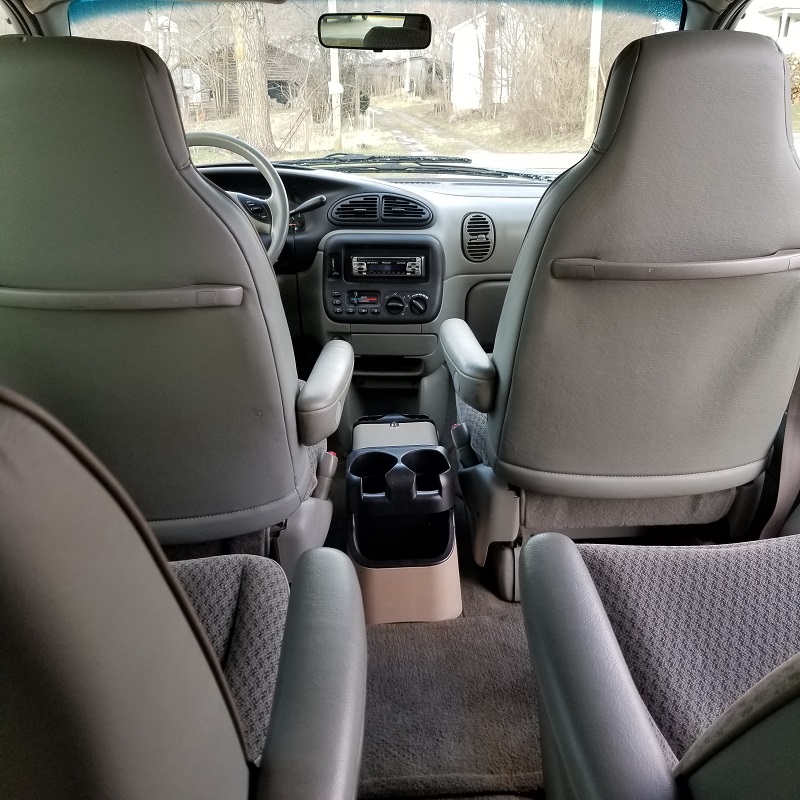
It didn’t really seem old to me. Why, it was a lovely 2000 year model, the first new vehicle that I’d ever owned. And the year 2000 still seems like a “new” century to me. Okay, so I need to wake up, Ms. Rip Van Winkle.
Never mind that 20 years had passed: 20 years of carrying daughters and their belongings to various state colleges. And home again after grad. Years when I rushed in the middle of the night to the labor rooms of two daughters having babies. Hauling friends and family. Trips to the beach and the northeast and many many to Indiana where my family comes from. Over 220,000 miles on the dear old van. But unlike some of my daughters who name their cars, I had never actually given that mini a moniker. Still, our memories of good times and bad rode with us in that van.
It had sustained only one very small smash up that required a bit of body work and paint by a friend. I’d kept seat covers on the seats and extra plastic mats on the carpet mats (back in the day when there was no WeatherTech or Husky mats). I faithfully tried to clean up my coffee spills as they occurred which were, admittedly, numerous. Embarrassingly numerous. The day of reckoning came.
In early February, we finally found an affordable 2017 minivan in almost pristine condition, and bought it. I could probably write a whole column about how buying a car is different in 2020 than 2000. We were so rusty and blown away by the technology. Both the new-fangled ways of operating a vehicle (cars that park themselves?) and the buying process itself had us whirling. At one point I felt I was on Star Trek or one of those modern detective shows. As the guy finished all our “paperwork,” he did so on a huge computer screen that was essentially his whole desk top. We signed endless forms with our finger tips on that screen, and he finally handed us the legal records on a thumb drive. No folder of paperwork.
Next we wanted to get our old Dodge Caravan ready to sell (we knew it wouldn’t have brought much as a trade-in). We went to a store specializing in products for cars to make them shiny and new again—and bought a spray carpet cleaner guaranteed to get out vomit, dog doo, urine and any odors thereof. I must give a shout out to E & M Auto Paint “Carpet Cleaner and Deodorizer”. The coffee stains were my biggest concerns and while not every stain came out, after the carpet shampoo and hours of scrubbing, I felt like keeping the dear old van myself.

Before scrubbing.

Same floor, after scrubbing. No perfect, but so much better.
What I liked about the spray was applying it to the floor, you could keep pressing a rag or towel into the carpet and it kept seeping up stains and residue. You didn’t have to keep spraying more spray. To me, the old van looked almost new. Yes, the ceiling fabric was hanging down in one place, there were a few scratches on the dashboard, there was a corner on the front seat that was starting to unravel a little, and a few patches of peeling
 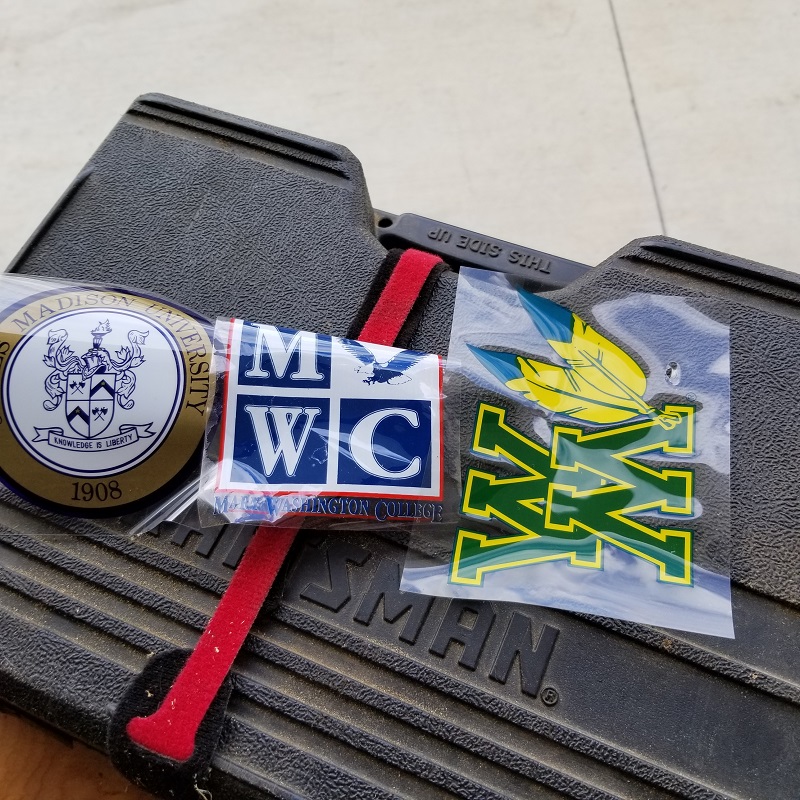 paint outside. As I sadly removed three college decals from a side window, I was happy we never put on bumper stickers.
Selling a car yourself these days is made somewhat easier online. However, you have to get wise to the scammers and the false inquiries. One man looked at it who would have mostly used it for a work van. And yes, with the seats out, we agreed it would make a fine work truck. But no sale. Several weeks went by.
Then a young woman began texting us regarding our ad on Craigslist. Her husband called to talk to my husband. Gradually we learned they had four small children, and they really needed the space our minivan offered. When they came to meet us at a city parking lot, Mimi was visibly excited about seeing it. “Oh, it’s just what I wanted! The kids will love it!”
That was like music to our hearts—to hear that someone wanted our family van. We made plans to meet up the next day to complete the purchase. Later she followed up with an email: “It has been wonderful, my children absolutely love it! They don’t want to go in their dad’s car at all anymore. I can’t thank you enough.”
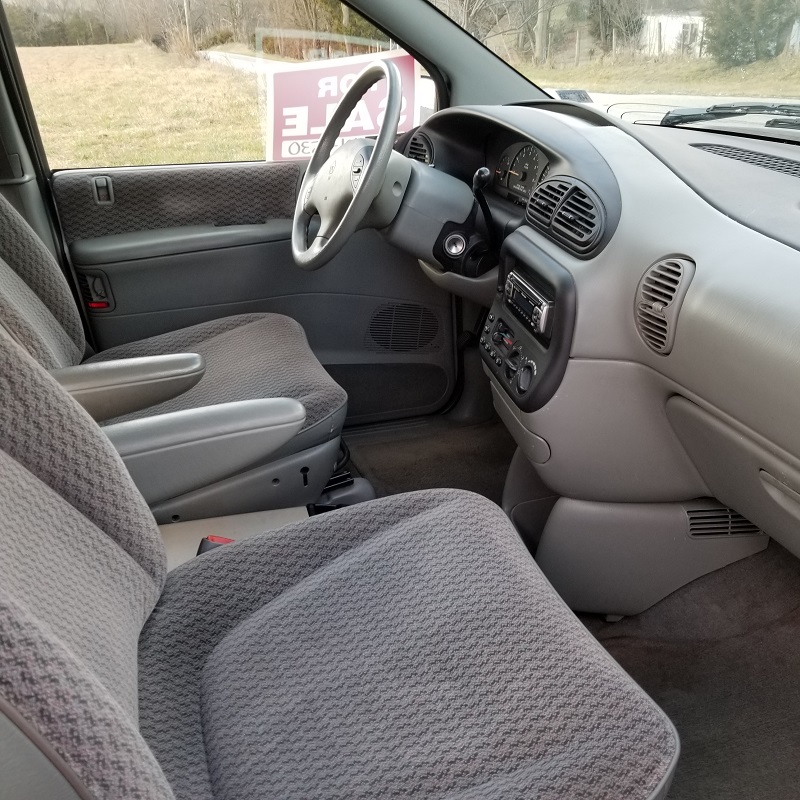 And that, my friends, is how we sold our 20-year-old minivan. With tears of nostalgic happiness. We hope it serves this family very well.
***
Your own story? Memories of favorite vehicles?
I remember my sister talking to one of our vehicles, long ago, when she said a fond farewell to it. Anyone else talk to your car?
***
Comment here or send to me at anotherwaymedia@yahoo.com or Another Way Media, P.O. Box 363, Singers Glen, VA 22834.
Another Way is a column by Melodie Davis, in syndication since 1987. She is the author of nine books. Another Way columns are posted at FindingHarmonyBlog.com a week after newspaper publication.
Another Way for week of April 17, 2020

Stone on his 18th birthday.
When Senior Year Ends Suddenly
Guest Columnist Stone Kemp
Stone Kemp is my guest columnist this week, a great nephew. Stone was a senior at White Pigeon, Michigan this past year and grew up in this small school where all 13 grades total under 800 students. Stone initially wrote this as a Facebook post and gave permission to share it here, in honor of all the seniors who are missing so many end-of-the-year festivities due to COVID-19. He has been accepted at University of Michigan.
Now that school is officially over [announced April 2], I wanted to just share my love for White Pigeon these past 13 years. White Pigeon, you’ve done so good for me. I’ve loved every aspect of it.
I started off in preschool with Mrs. Crespo. I remember hanging out in the “play kitchen” with my friend Blaine and we had contests of who could burp the loudest. I never won.
Then came Kindergarten with Miss Kincaid. So fun. I remember being nervous about going to school, and not wanting to leave my mom. But I made friends to help me along the way. I grew more comfortable through time.
I got to first grade and had Mrs. Hershbach. Honestly, I don’t remember too much about that grade. For second grade I was lucky enough to have Mrs. Crespo again and I began to have a “girlfriend.” It was a good time.
For third grade I had Mrs. Gray and I remember all the drama between the boys and the girls, especially when Kobie and Karey broke up. Oh boy, the whole class was divided then. Ha! Fourth grade I was with Mrs. Miracle and I remember she would always read books to us in her very fun pirate accents. I remember the spelling tests every Thursday and how my mom would take us “advanced spellers” to the lunch room and we would do quizzes and get candy if we did good.
Fifth grade was the golden year. I had Mrs. Vicki Chupp DeMeyer and we had so much fun in that class. During recess, it would always be DeMeyer’s class versus Schmeiling’s class playing football in the yard. We usually won. We also went to fifth grade camp as a class, and I remember getting pranked by our two teachers.
Sixth grade began my middle school life with the awkward moments, the raging hormones, the stinky middle schoolers (deodorant anyone?). It was a good time though and we went to Chicago on a field trip. That was so fun!
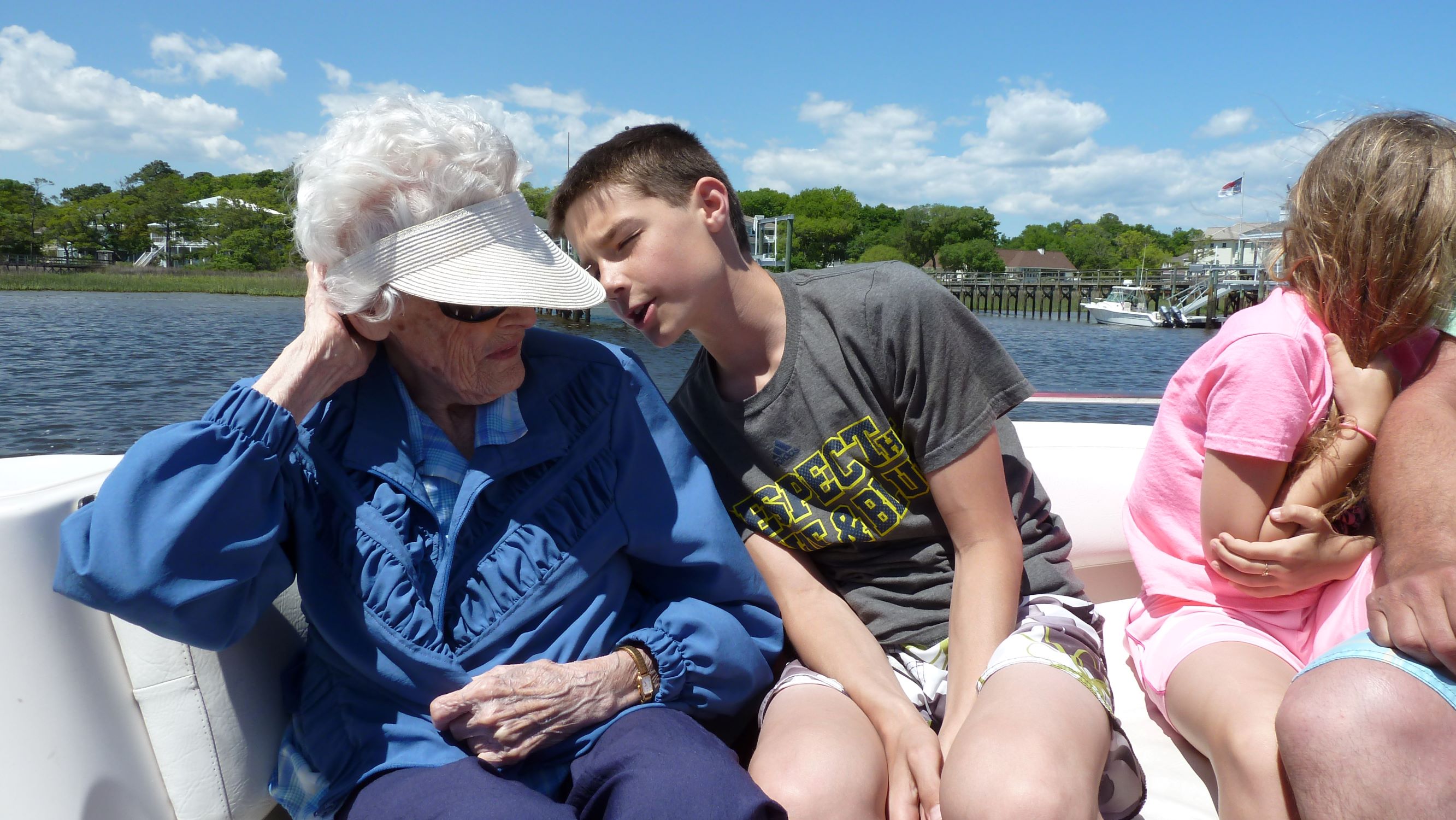
Stone, as a middle schooler, enjoying conversation with his Great Grandma Miller on a beach vacation.
Seventh grade year was a breeze and eighth grade got a little tougher. Claycee West and I got moved up to high school Algebra I, so we got a head start on “high school life.” Freshman year was wild. I missed the first week of school because my family had a vacation planned before Labor Day and that’s when the school decided to move the start date before Labor Day. I remember I quit football that year to run a Bible study. It was such a good, good time. I was dating a junior at the time and I was just a little freshie so I thought I was pretty cool. Sophomore year I got chosen for homecoming court and ran cross country, and did my only year of track.
Junior year was one for the books. Coach Shawn Strawser convinced me to come out and play varsity football and it was one of the best decisions I’ve ever made. We had such a good year and beat Mendon High for the first time in 20 years and made it to the playoffs. I also had to do the SAT but scored a decent 1250 and was proud of myself for that. Also they picked me prom prince which was so awesome.
Senior year. Oh where to start? I got homecoming king with Reyna Fielis and that was really cool. My football season was cut short due to a knee injury, but it worked out I could play basketball. Senior year was full of so many lasts. So it was very difficult to comprehend our senior year suddenly being over. I’m just now realizing how hard it is going to be for a little while.
I remember we seniors planned to skip school on Friday, March 13. We wanted to all go out to breakfast and do fun stuff. Well I remember waking up that day and saying that we should be at school because we would be getting three weeks off due to COVID. So I dragged myself out of bed and went to school. I remember that we weren’t doing hardly anything that day so I and a couple others left school during fourth hour. We went to Rachel’s and had lunch. I’ll never forget that.
So I skipped part of my last day of school, never thinking we would miss the rest of the school year. But here we are and it will be okay. God has a plan for everything. But like I was saying, thank you, White Pigeon. Thank you to all the teachers and staff and parents and lunch ladies and principals and coaches and janitors and endless speakers we had. And thank you to my peers, my best friends, my teammates, my WP family. You forever hold a place in my heart, White Pigeon. You’ve done good for me, now it is my turn to make a name for you guys.
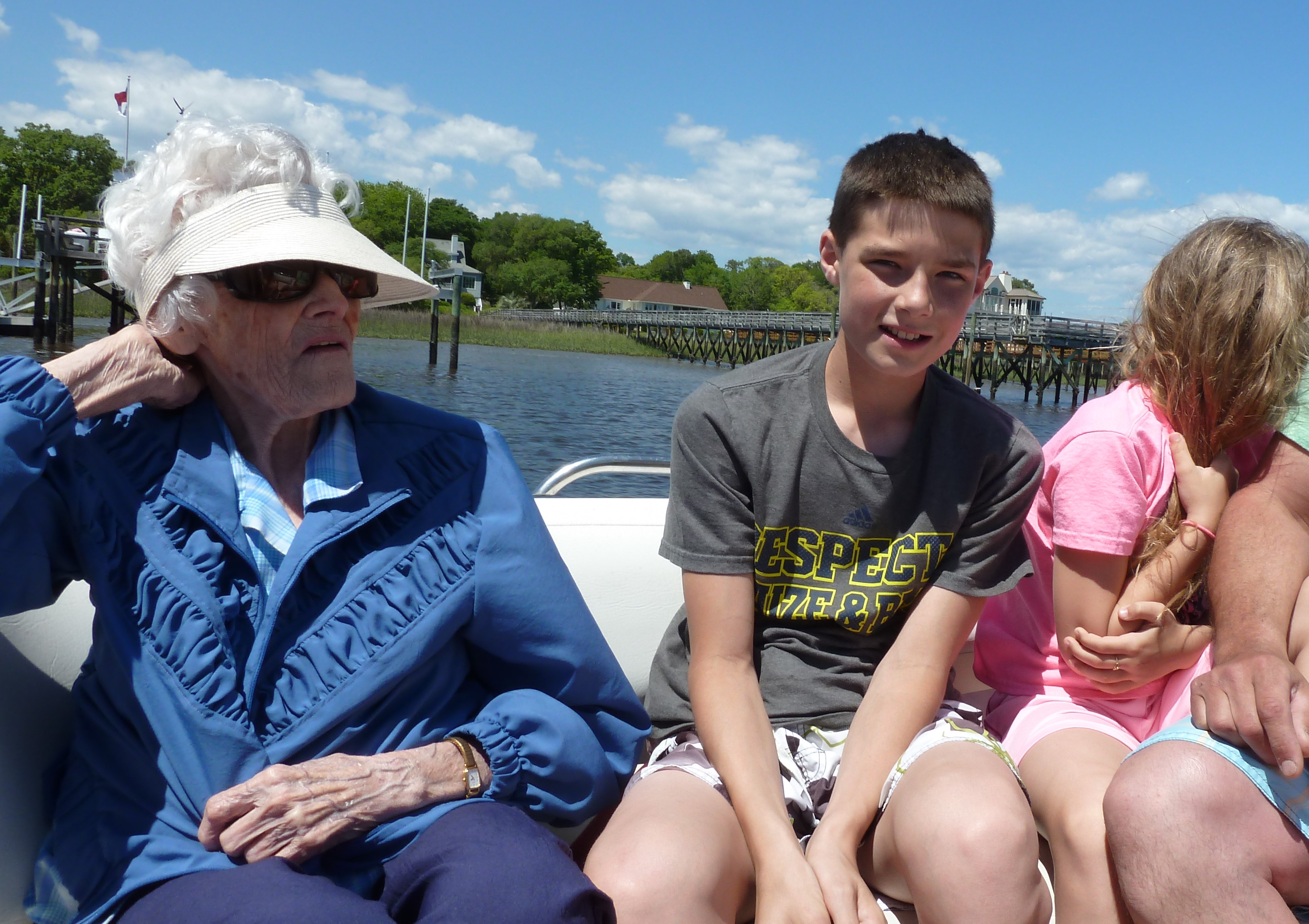
Stone and his great grandma enjoying a boat ride along with Stone’s sister, Megan.
God bless and I hope to see everyone, hopefully, at graduation.
Your thoughts or responses to Stone’s post?
Do you have kids in your family graduating from high school or college this year?
What do you remember about your senior year of high school?
What teachers do you remember and celebrate from your elementary school days?
Comment here and share your responses to Stone’s essay.
***
Or send them to me and I’ll make sure Stone gets them. Send to me at anotherwaymedia@yahoo.com or Another Way Media, P.O. Box 363, Singers Glen, VA 22834.
***
This isn’t the first time I’ve written about the village of White Pigeon, Michigan. See this fun story about my parents’ love story and how a small nut shop there was a special place.
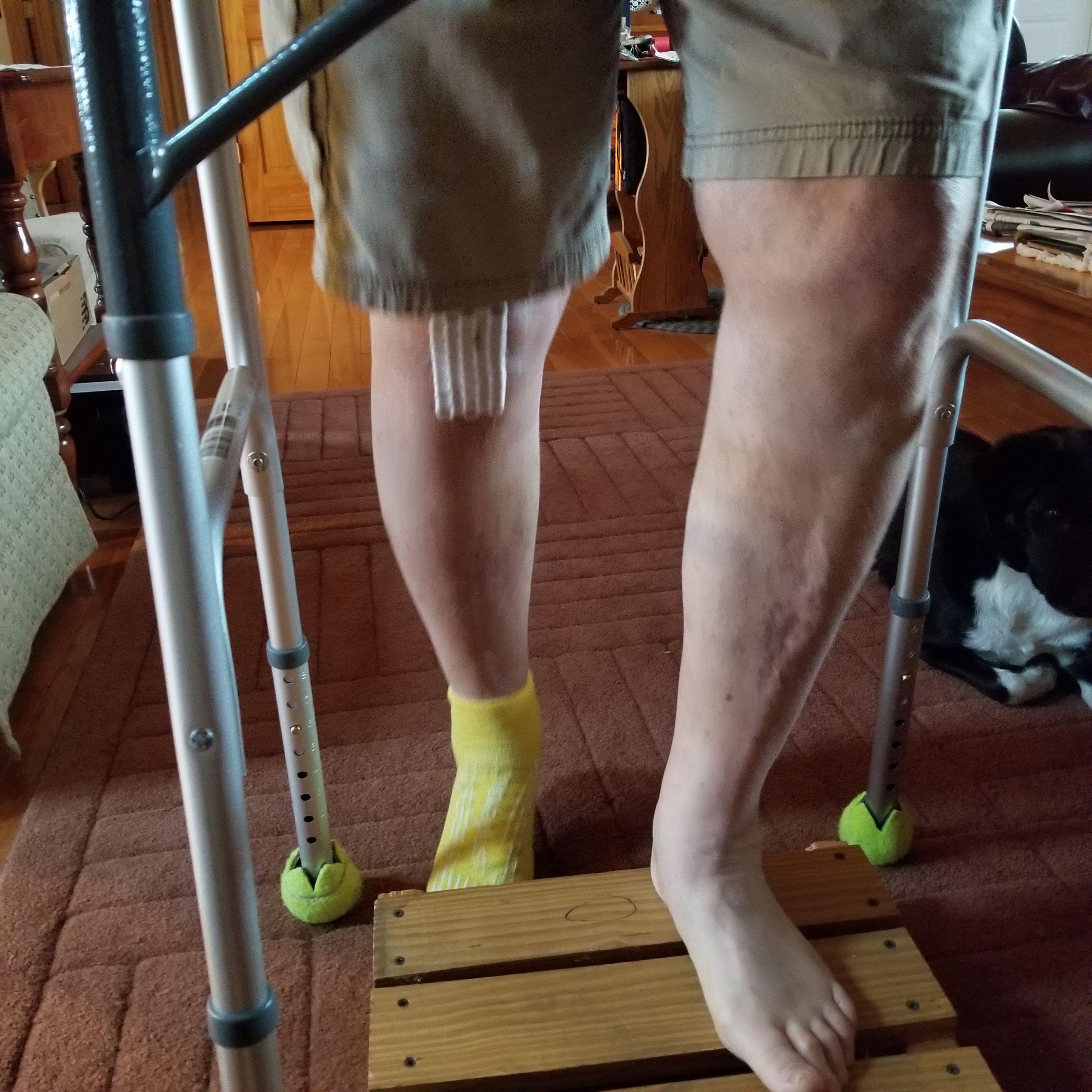
Stepping up, stepping down. His bandage stayed on the first two weeks post-surgery.
Another Way for week of April 12, 2020
Stress in Relationships Stalks Us All
Time to talk about the other malady we are feeling across the world: the stress, ugliness, arguments, and discord a pandemic of these dimensions can produce. This ailment, stress, will affect 100 percent of us unless we keep it in check. It can be as damaging to relationships as a deadly virus.
Because of the virus, my husband and I had to do physical therapy at home for the knee replacement surgery he had on March 10. He was able to go to one week of appointments with a trained physical therapist. Then, with little warning, all outpatient therapy at the nearby retirement complex was scrubbed. We felt gut-punched.
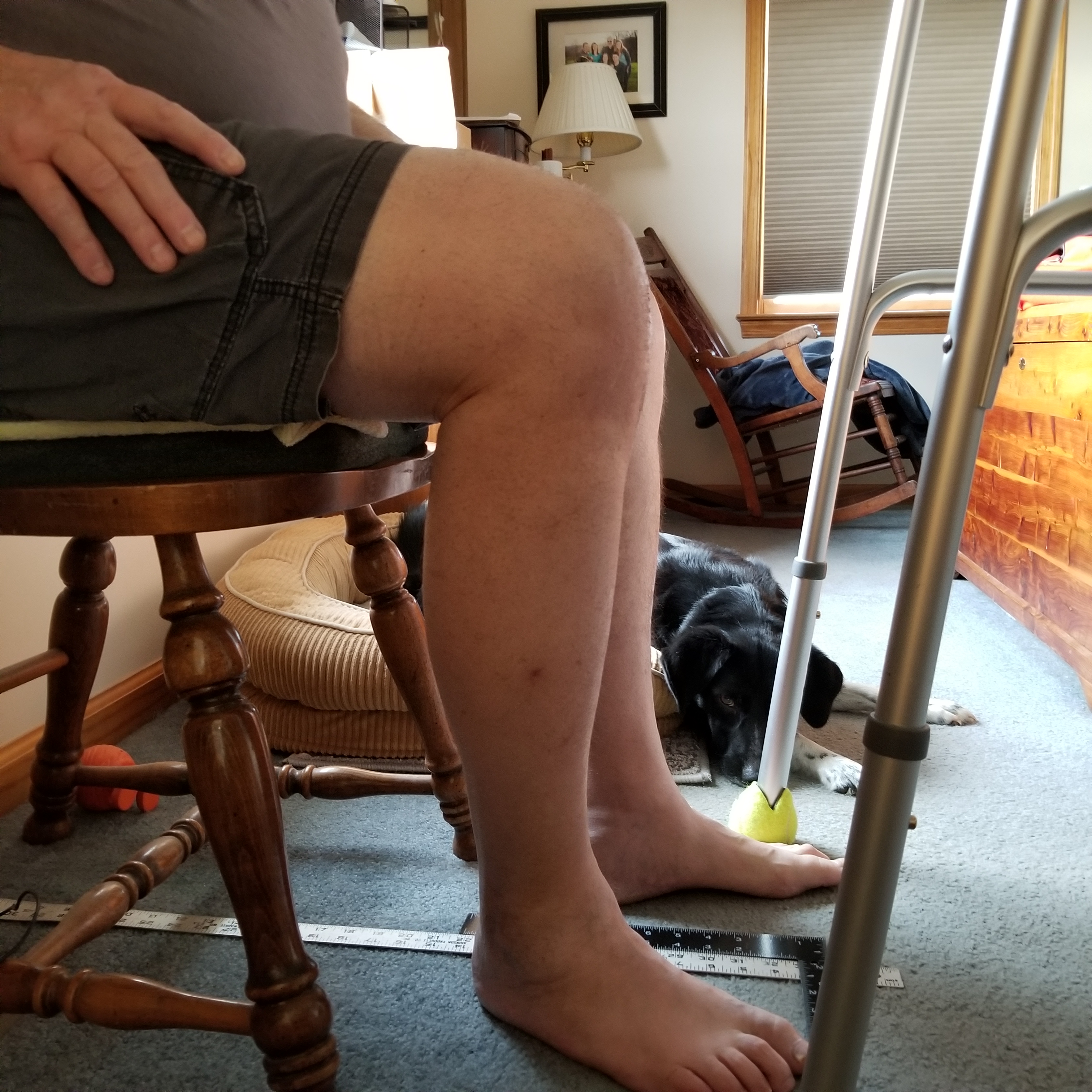
Our homemade way of measuring the progress getting bend into his knee. The dog, as usual, supervises.
When one spouse is in acute pain from the bends and stretches being flexed on his new knee, and the other spouse is occupied two hours a day supplying him with the various tools needed (stretch bands, squeeze balls, icing of knee, rulers and yardsticks to measure progress, notebooks to document the quarter inches gained), well, you can guess that there were some hurtful words and tearful times for both parties.
I have probably written about stress at least a dozen times over the years of publishing a weekly newspaper column. Let me be clear. I’d much rather have the stress ailment than Covid-19, but I lament the difficulties most of us are having in our families even across the miles—by phone or Facebook or texts. It isn’t easy to hibernate in our homes and apartments and (likely most difficult of all), in mobile homes. Cabin fever: yes.
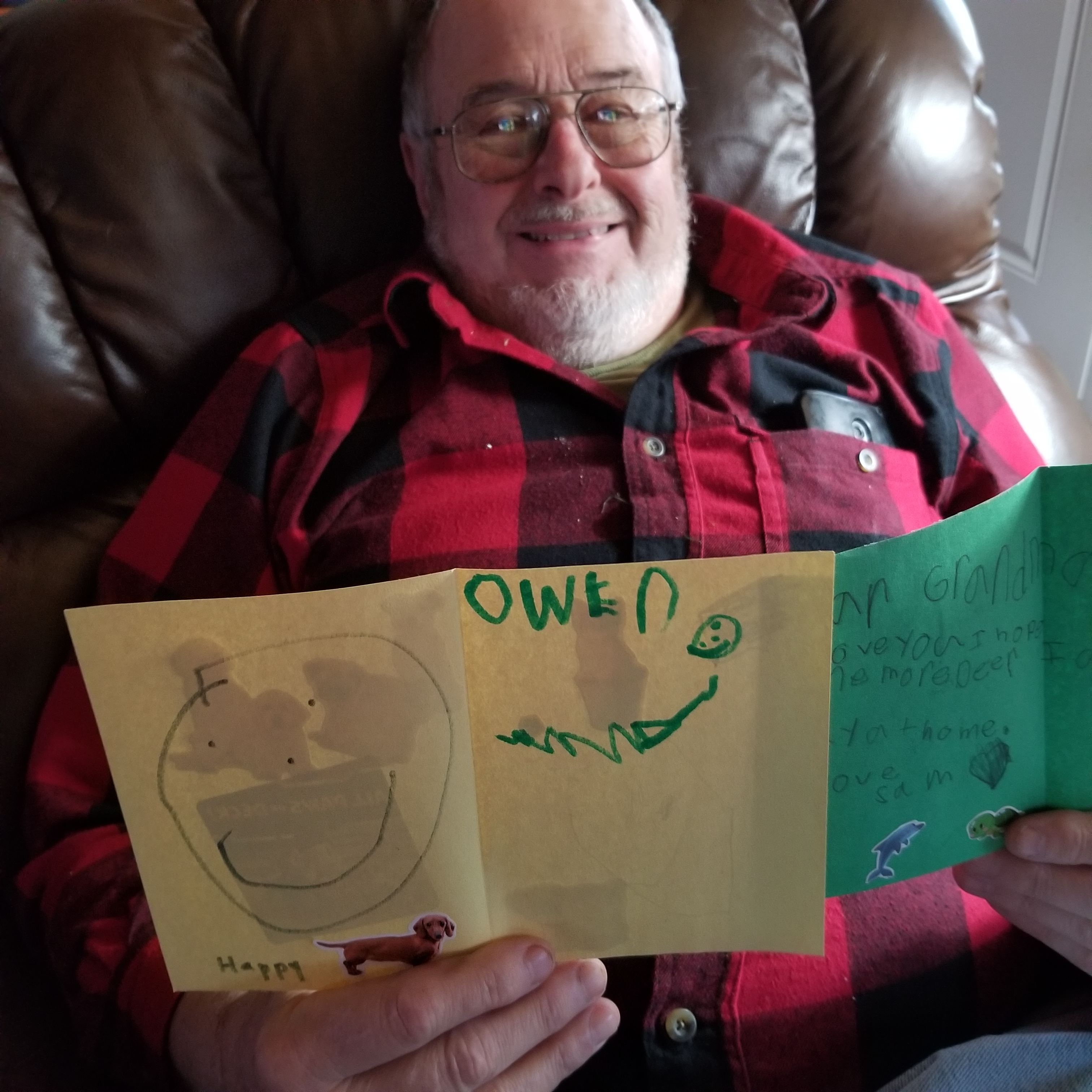
Homemade cards from grandchildren help to brighten the day.
Thankfully, we were able to find another therapy place that is open and very helpful, but he still has to do much therapy at home, of course. At least we have more guidance. I’d much rather be the helper for his therapy than the patient. I’m also glad I don’t have to add the two hours of therapy onto an eight-hour work day, plus cooking, housework, and walking the dog. I’ll admit it doesn’t take a quarantine to bring out arguments, but after 44 years of marriage, we know we will survive the current fray and kiss and make up.
The Harvard Business Review recently posted an article, “That Discomfort You’re Feeling is Grief,” an interview with grief expert David Kessler. He says the stress we’re under is a form of grief. Because none of us know who will get sick, who will become a caretaker of the sick, who will get well, how things will pan out—the anxiety we feel is a form of anticipatory grief. The advice they give, briefly, is to try to get back to the present—and not spend too much time worrying over what we cannot change or control. (Of course, there is much we can do to help avoid illness: washing hands, not touching face, physically keeping a distance from people, staying home, and more. You know the list.)
But as you are able, trying focusing on the present. Kessler suggests: “Name the things that are in the room you are in. There may be a computer, a chair, a picture of the dog, an old rug, a coffee mug. Breathe. Realize that in the present moment … you’re okay. You have food. You are not sick. Use your senses and think about what you are feeling. ‘The desk is hard. The blanket is soft. I can feel the breath coming into my nose.’ This really will work to dampen some of that [anticipatory] pain.”
They also encourage us to let go of what we can’t control, and “stock up.” Not on toilet paper or eggs or whatever is in short supply in your neighborhood, but give each other grace, good will, and share love. Let’s pray for and appreciate all of those working in health care, who are suffering some of the worst brunt of all this frustration, uncertainty, and even rage. Let’s share as we are able with those who are out of work, spending long days alone with toddlers or preschoolers who have little grasp of why their worlds have been upended with schedules changed and no seeing their friends.
It’s okay to feel grief, anger, and frustration, but don’t let those loom over your spirit and 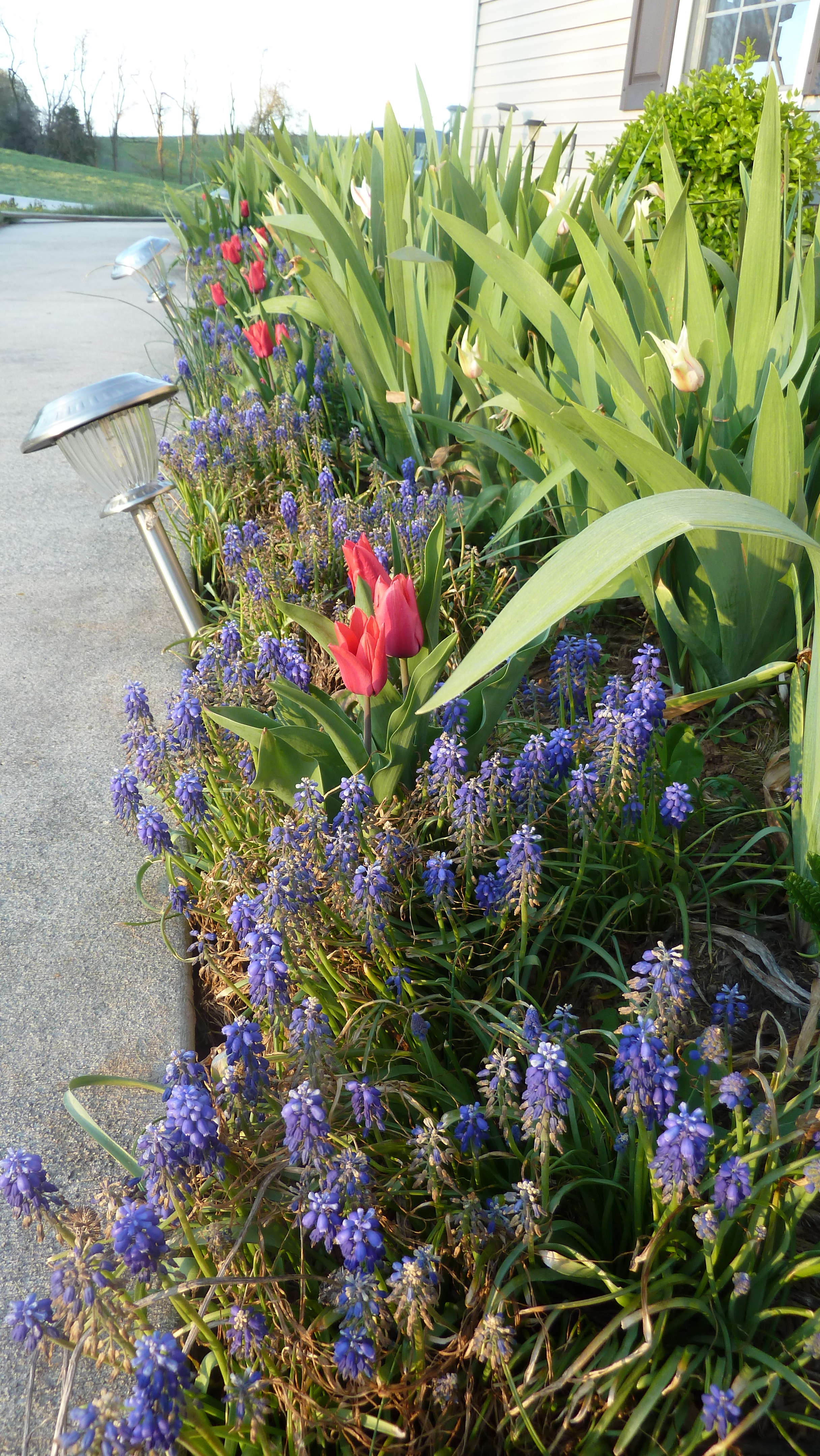 take over your household. I do hear many of us focusing instead on the beautiful colors of spring flowers, the return of green to the earth, newborn chicks or lambs, a celebration of Easter as we perhaps have never known it: no (or few) services in actual houses of worship, connecting with family and friends via Zoom, Facebook, Google Hangouts, or good old fashioned Ma Bell (phones). Maybe hiding Easter eggs in your own yard—no mass scramble in parks, at churches, or White House lawn.
I do pray for all of us a sane and healthy Easter, with God’s abundant love for all.
***
How are you staying sane, if you are?
***
What daily routines are a new enjoyment?
***
What have you learned about yourself?
***
Finally, if you need help, do reach out. Do not harm yourself or your family.
Call for help.
***
For a free booklet, “Secrets of Long Marriage: The Six C’s of Marriage” plus a bookmark with “101 Ways to Manage Stress,” send your request to me at anotherwaymedia@yahoo.com or Another Way Media, P.O. Box 363, Singers Glen, VA 22834.
Another Way is a column by Melodie Davis, in syndication since 1987. She is the author of nine books. Another Way columns are posted at FindingHarmonyBlog.com a week after newspaper publication.
Another Way for week of April 3, 2020
A Long Hard Week
It was a hard, tough week for us. You will likely recall your own circumstances of whatever week, day, or time when the corona virus began really changing your life, your outlook, your state of mind. For sure, the virus was out there much earlier, on the news, in other countries, and then bam. Things started really closing down, and we were told to stay home.
On top of that, four people we knew well died all in that same week: not from COVID-19, but they were taken from us just the same.
 It started on Sunday, March 8, with a startling announcement after worship at church. One of our longtime members, a coach who began the football program at the local now large university, passed away in his sleep. We collectively drew in our breath: that sucking-in sound that signals surprise, dismay, sadness. Challace was not quite 78. His memorial service later that week was massive for our moderately sized church, and the hugs we gave and received from his family were likely the last hugs we will have for a long time (from someone other than a mate).
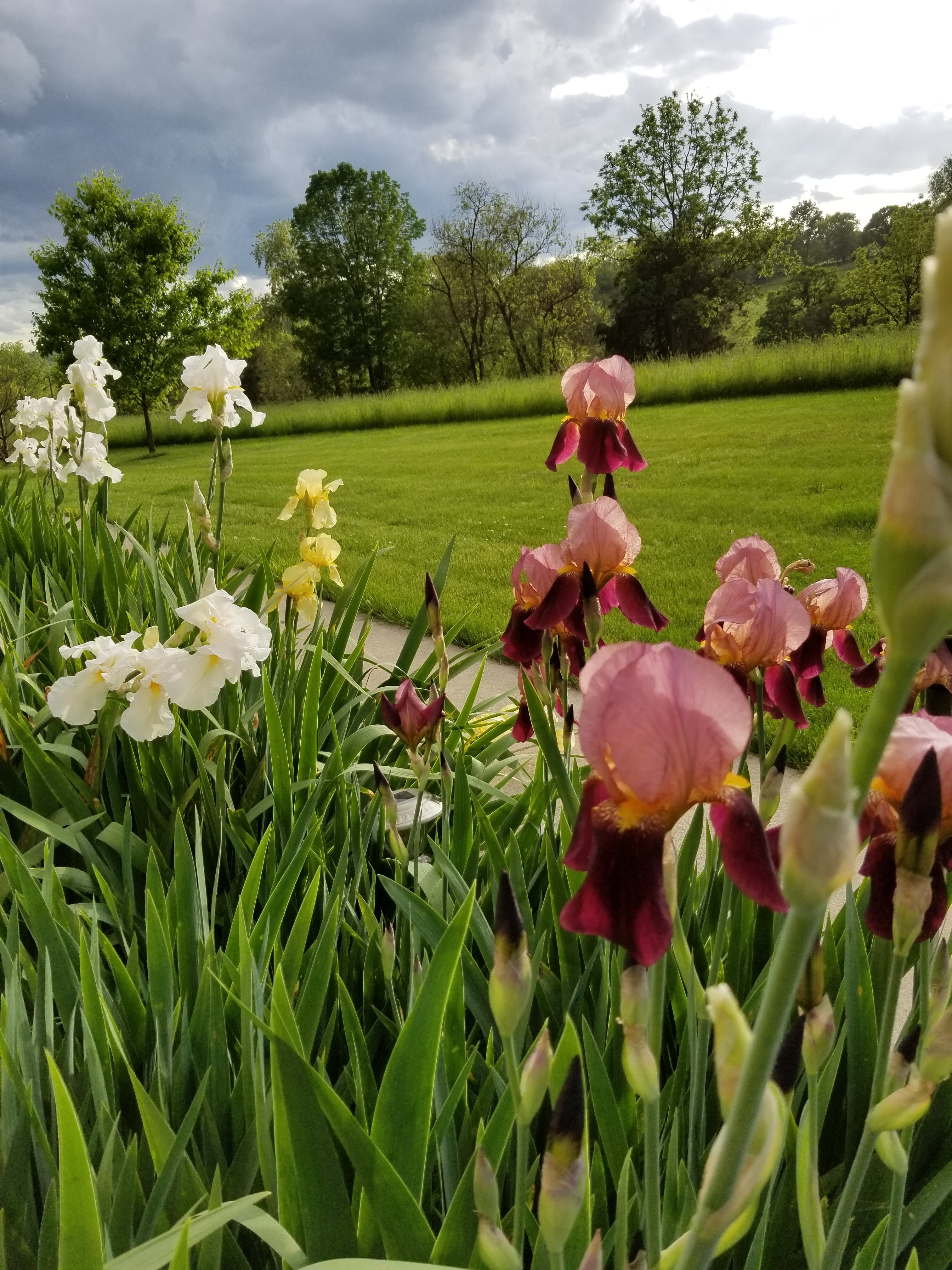 On Monday I learned that a sweet member of my water exercise class at our wellness center had also died on Sunday. Ruth was in her 90s. Her husband participated in the same class, and on Monday he came to class anyway. I imagine he desperately needed to do something normal, to get out of their apartment. They had been married over 72 years. Later I figured out I had worked closely with their son about five years.
On Tuesday I learned that the housekeeper at my former  office, Doris, had died. In her early 90s, we knew she had cancer, so it wasn’t a surprise. I had written about her in this column, about her long career working into her 90s. In fact, she did light cleaning at the local credit union until cancer made that impossible. I mostly rejoiced that Doris’ suffering was over, and went to the family viewing on Thursday night.
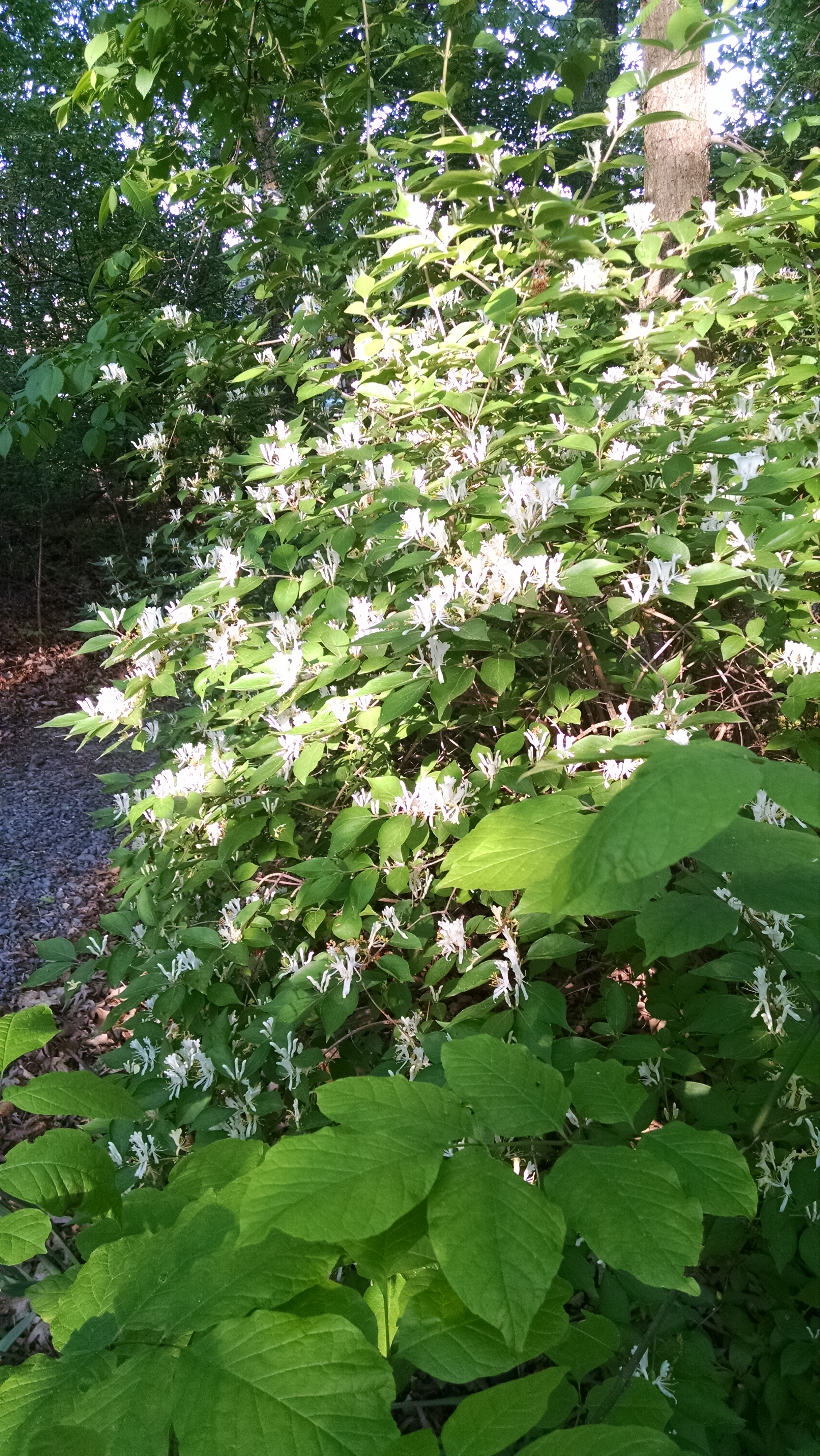 On Friday a dear cousin, Joyce, also went to her heavenly reward. She had “coded” (rescue slang for a cardiac arrest event although not a heart attack) the Friday night before in the yard at her home. Her daughter, a trained safety staff person at work, tried to revive her mother, performing CPR until the rescue squad got there. Joyce was put on a ventilator and chilled into a hypothermic state to save her organs. Her family spent the week faithfully by her side, praying for a miracle to overcome what had surely caused brain damage. Reluctantly they said their goodbyes and after much medical consultation, removed the ventilator. She died peacefully on March 13 at the age of 72. That’s young in my book.
That Friday the 13th in March, was the day many of us had our lives affected personally with restrictions on no gatherings of more than 10 people, keeping away from even our loved ones, locked out of nursing homes, closing of schools, daycares, restaurants, recreation, and gyms. Not a good Friday for anyone, but particularly devastating for all those who had already suffered the loss of a loved one. Bad luck superstitions aside, it was not a Good Friday.
This coming week of course in Christian circles is Holy Week. Jesus had a disaster of a week  some 2000 years ago. I’m sure the disciples found that particular week a whirlwind of emotions as well: to go from the triumph of Palm Sunday to their world falling apart. The closeness of Thursday night’s last Passover meal with Jesus, and later that night, Peter and Judas’ wretched betrayal of Jesus.
Then came the cross of “good” Friday. I guess we call it good because of Jesus’ willing sacrifice of himself—even though he knew how incredibly painful and ugly and gut wrenching it would be. His gift made it possible for the rest of us to grab onto the rays of hope which his birth, life, death, and resurrection give us. We can clutch his hand even amid the prolonged disruption and fear this virus has caused.
And praise be, the tomb was not the end for Jesus: his resurrection gave us the promise of the same raising to eternal life.
Look for those rays of hope and snag them for yourself: the love of family, friends, and colleagues which stretch beyond the borders of sidewalks and windows and closed doors. And don’t stop praying for those suffering grief, panic, pain, loneliness, and fear. We owe abundant thanks to those who provide their care.
***
How has your life changed since March 13, 2020?
How do you plan to celebrate Easter?
How are you?
Share or comment here or privately, to the address below.

Connect with me at anotherwaymedia@yahoo.com or Another Way Media, P.O. Box 363, Singers Glen, VA 22834.
Another Way is a column by Melodie Davis, in syndication since 1987. She is the author of nine books. Another Way columns are posted at FindingHarmonyBlog.com a week after newspaper publication.

 findingharmonyblog