

 Another Way for week of August 23, 2019

Small Plane Adventure to Central America
Guest column by Merle Headings
Editor’s Note: First of two columns by Merle Headings, who flew missions to Central America for Christian organizations. Columnist Melodie Davis also once flew with Merle on a youth group trip.
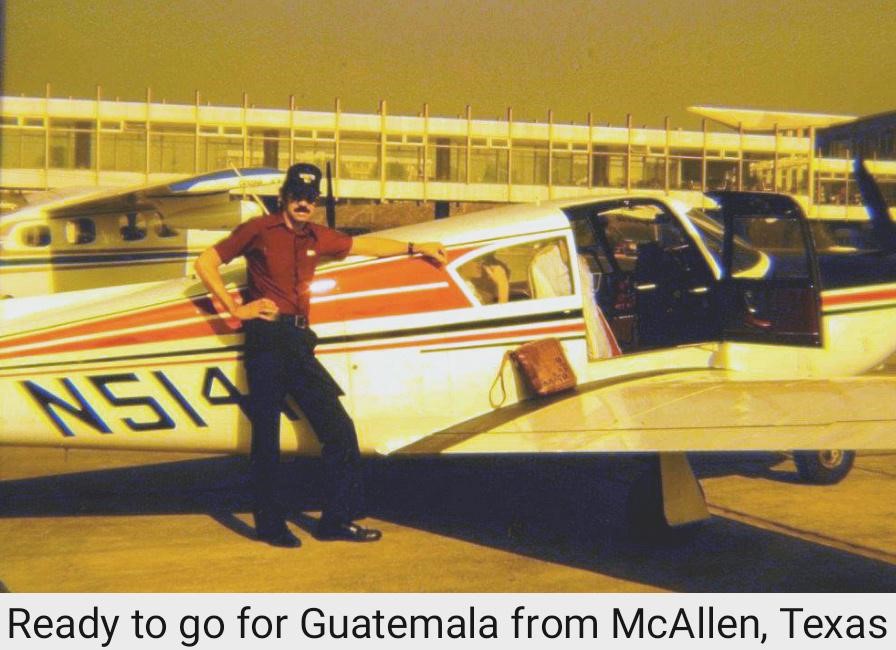
Merle Headings photo.
We lived in the Rio Grande valley of Texas for six years in the late 1970’s and early 80’s working with missionaries stationed along the southern border near McAllen, Texas. Four of us pilots regularly flew to Mexico and Central America, each with our own plane. Mine was a red and white Piper Comanche, which could fly 180 miles per hour. Most of the time the planes were filled with people and their belongings, but on this twelve-day trip to Guatemala, there was room to take two of my daughters, Carmen and Anita.
In February 1979, I received a message from a missionary doctor and his clinic, urgently requesting supplies in the deep jungles of northern Guatemala. We located and purchased the items on his list: a new chain saw and parts to fix old chainsaws; tractor parts for their old farm tractor; six different kinds of hand tools; and grocery items they could not get in Guatemala. I began to wonder if all this was going to fit in our plane.
The trip was sponsored by “The Flame of Truth” founders, Melvin and Anna High. Brother High (still ministering today at 90) was invited to speak at a conference being held at a missionary clinic located on the Pasión River.

Anita and Carmen, back seat of plane, 1979. [Photo from Merle Headings]
Early February 28 with the car packed full of supplies, tools, luggage, passports, and flight maps, my wife Verna drove us to the McAllen airport. Our big white bird was ready to be packed, fueled up, and prayed over. While Brother High, Carmen and Anita stuffed the cargo into the four-seat plane, I checked the weather and filed an international flight plan to Guatemala City, with a fuel stop in Veracruz, Mexico. When I got back to the plane, my crew was smiling. The baggage compartment was beyond full. I didn’t dare open that door but I did give it one good bump to make sure it was secure. What didn’t fit in the baggage compartment, went behind and under the back seat. Carmen and Anita would have to share their seats and foot space with the supplies.
The plane was soon in the air and across the Rio Grande river, leaving the U.S. into the wild blue yonder over Old Mexico. With Brother High’s hands soon on the controls, I radioed and activated our flight plan. Nothing looks better to a pilot than a clear day with a nice beach under the wing for the next three hours.
Carmen and Anita were seasoned flyers. Growing up with a pilot father, they had logged many trips. After a few hours, they were beginning to be hungry and in need of a stretch. I said Veracruz was about 40 miles out where we would land soon. After landing, two uniformed men walked toward us and welcomed us to Central America. In broken English, the airport officials asked how long we were staying and if we were U.S. citizens. They looked inside the packed plane, and thankfully did not ask to see the luggage department. After their inspection, I went to get our papers in order and pay for fuel. The girls had gone with Mr. High to order food. Our schedule was tight and we needed to keep moving if we were going to make it all the way to the missionary clinic in the heart of the Guatemala jungle—a four-hour canoe trip on the Pasión River after our long flights.
In short order, we took off. Our flight path soon took us away from the beautiful shore line and over the jungles of southern Mexico. I knew there would be mountains to get over so I climbed to 13,500 feet above the clouds where the mountains were poking up. At two p.m. we landed for another break. Everyone was ready to stretch, breath fresh air, find food, and move on.
While we were getting out of the plane, two Guatemalan officials greeted us. This time they wanted the luggage compartment opened and I thought they were after something. They told me I had to get a cart and bring everything to the terminal. I told them that it was so well packed that it would be very hard to get it all back in and I wasn’t going to bring it in. I went and sat down and looked at a magazine. (I had played the waiting game before in past trips over Central America.) In about ten minutes, the uniformed men came over, gave me my papers and said I was free to go. Thank God! With no time to spare, everyone loaded up with drinks and snacks and again we were in the air headed for the jungles of northern Guatemala. (To be continued.)
“Adventures to Central America,” is a small booklet by Merle Headings and two daughters, Carmen and Anita. For the book by email, write to me at anotherwaymedia@yahoo.com. Or send comments or questions to Another Way Media, P.O. Box 363, Singers Glen, VA 22834.
Another Way is a column by Melodie Davis, in syndication since 1987. She is the author of nine books. Another Way columns are posted at FindingHarmonyBlog.com a week after newspaper publication.
Another Way for week of August 9, 2019
How Children Grow—Especially the Brain
Our two oldest grandsons start real school as kindergartners this August. My mother told me recently she cried when her oldest grandchild, Larry, started school. I was a little surprised.
Perhaps my mom was also recalling her oldest daughter, Nancy, as a very young first grader (age 5, we had no kindergarten), missing the bus and deciding to walk home from school one day. We lived four miles away from town. She bravely started out, all alone, and walked at least a half mile before someone who knew our family distantly, saw her walking, picked her up, and carried her safely home. A small miracle itself.
I don’t think I’ll be weepy, since ours don’t live nearby, but going to school is a monumental step, for sure, even when they’ve been going to daycare and preschool most of their young lives.
When you think about all they’ve managed to “conquer” in five, almost six years since they made their way into the world and our anxious arms, it is nothing short of astonishing. Our grandsons could at first only lay there, look around, and cry if wet, tired, or hungry.
They soon learned to hold up their heads, communicate purposefully with their cries and behavior, sit up, crawl, walk, and talk. And now they are reading, even before starting school. These boys were born in September and November, and as with many other parents, their families decided it was better to start real school at almost 6 rather than almost 5.
So what have YOU or I mastered in the past five years? Anything as remarkable as all that?
From helpless one-day-olds, they can now engage in thoughtful conversation and great questions beyond the endless why’s. They have both certainly been read to for untold hours, and have patient, loving, intelligent parents.
The brain alone grows greatly in the first five years: A website on early childhood development says “At birth, the average baby’s brain is about a quarter of the size of the average adult brain.” Did you know the brain doubles in size that first year and it is nearly 90 percent of its mature size by age five?
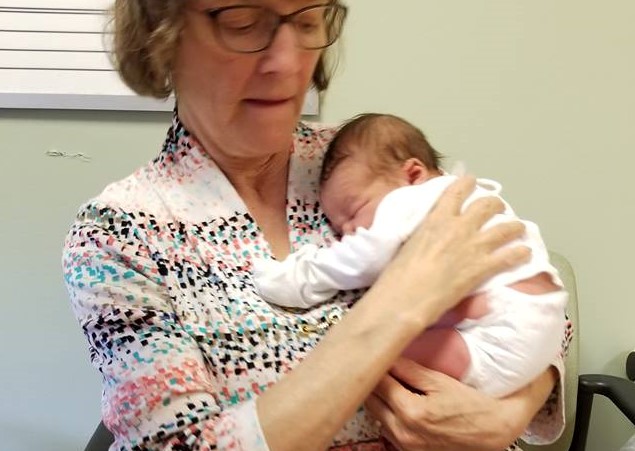
Me carefully holding my one day old grandson.
I found this even more fascinating: “A newborn baby has all of the brain cells (neurons) they’ll have for the rest of their life, but it’s the connections between these cells that really make the brain work.” I had known that it is these brain connections that help us move and think as well as communicate: pretty much everything we do. “The early childhood years are crucial for making these connections. At least one million new neural connections (synapses) are made every second, more than at any other time in life.” This is one reason our daughters and their husbands have chosen to not let their children watch much TV or videos. (From https://www.firstthingsfirst.org/early-childhood-matters/brain-development/)
So yes, the mental growth of children by age five is just incredible. I’ve also been thinking about what kind of world their children and their grandchildren will inherit or face: it is almost impossible to fathom the new technologies they will see and use. I certainly never thought of or imagined the many gadgets and tools we take for granted today. In my 16 years of formal education, I went from pencils and chalkboard to a huge computing machine at college (circa 1971) where we made punchcards using “Fortran” to enter data on the machine. Teachers went from old style non-digital overhead projectors using plastic sheets to write on, to video projectors plus whiteboards and smartboards.
The early years of learning are just fascinating, and thrilling to live through again through the eyes and experiences of the grandchildren. Not everyone is so lucky, I know, but most of us have children we can connect with at times through volunteer work, babysitting, neighbors, siblings with children or grandchildren, the nursery at church, or as an aide at school. Or offer foster care. Take time to appreciate, learn from, and enjoy any children in your life!
I’d be happy to send you one or several “Guidelines for Parents” postcards from the historic “Heart to Heart” radio program by Ella May Miller. Send a self-addressed, stamped envelop to Another Way Media, P.O. Box 363, Singers Glen, VA 22834, or request by email from anotherwaymedia@yahoo.com .
Another Way is a column by Melodie Davis, in syndication since 1987. She is the author of nine books. Another Way columns are posted at FindingHarmonyBlog.com a week after newspaper publication.
Another Way for week of August 2, 2019
The Rewards of Hosting Cousin Camp

H enjoying watermelon at Joe’s fishing and hunting cabin.
The last in a four-part series on “Learnings from Cousin Camp”
I hope our young grandsons will have memories of cousin camp that stick with them the rest of their lives—if only fuzzy and distant and prodded by pictures. That might be a stretch for H, the three-and-a-half-year-old, but I think most of us have memories from the time we were five so I’m sure S and J will remember some highlights.
And these are some of mine:
- Although young H was scared of the lightning bugs, I allowed J to go out on the porch with me to see the sea of lights in our hayfield. He took his breath in at the sight of the fireflies and said something like ah. I said “Don’t you have fireflies where you live?” He said, “A few, but not like here.”
- H being able to put into words why he was so distraught during the Paddington 2 movie.
- Hearing that S told his mommy he had learned how to lick envelopes to stay shut.
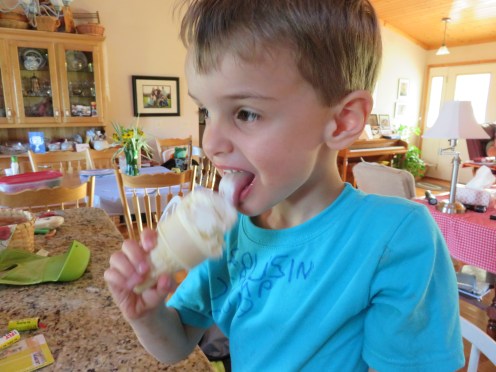
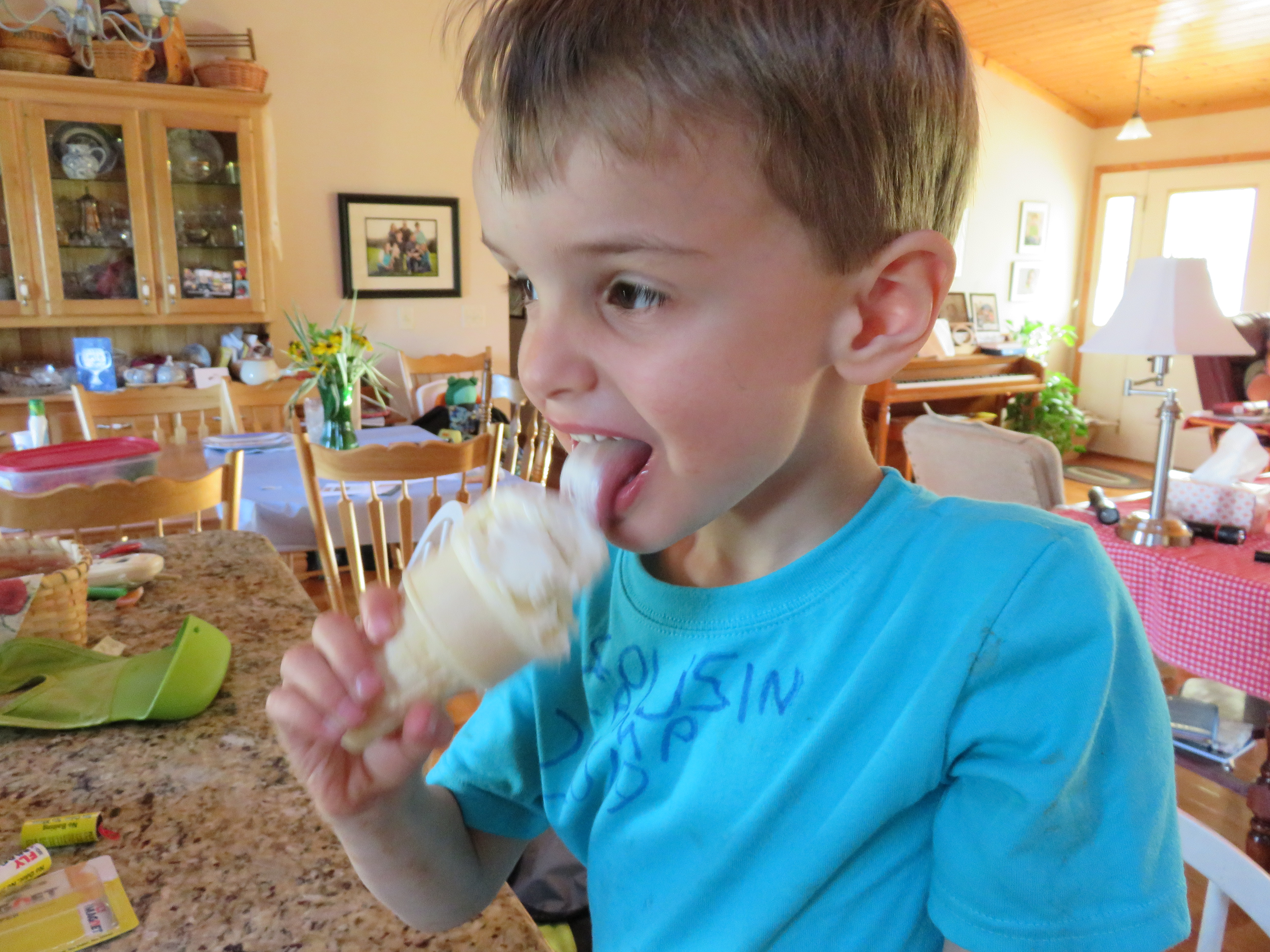
- J’s excitement over eating his very first ice cream cone. His parents had not been able to find gluten free cones where they lived but I found some in my local Food Lion and he was ecstatic. (And yes, the sugar buzz lasted a little while for all three boys.)
- S’s mimicking professional baseball players to a T: in stance, pitcher windup, and catcher squat, even though he mainly plays T-ball.

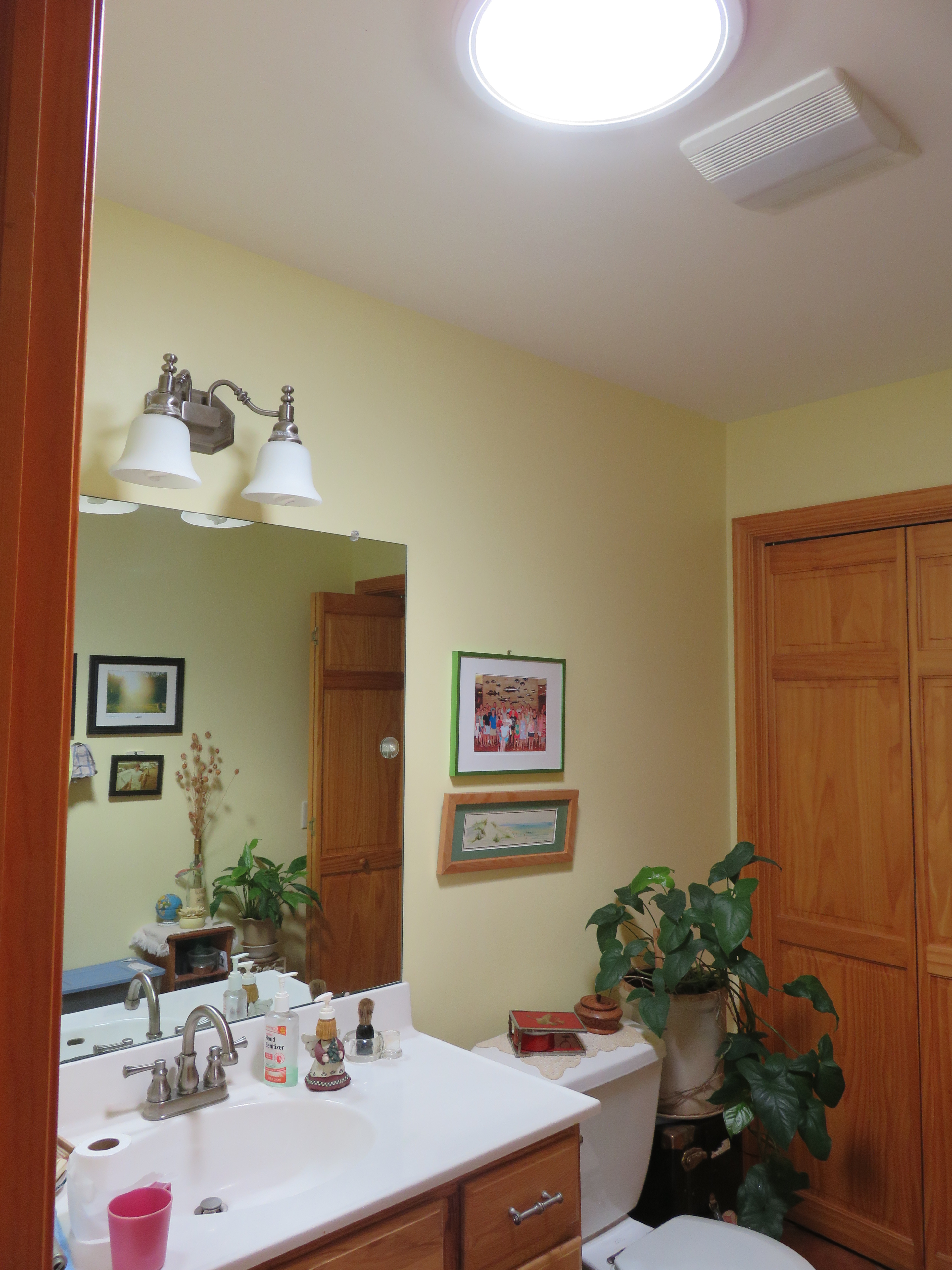
See light of ceiling solar tube in this photo that J. couldn’t turn off.
- My amusement when J came out of one of our bathrooms that have solar tubes in the ceiling (special tube—non-electric—which magnifies sunlight exponentially, making a very bright light). He said “I tried and tried to turn that light off but it won’t go off!”
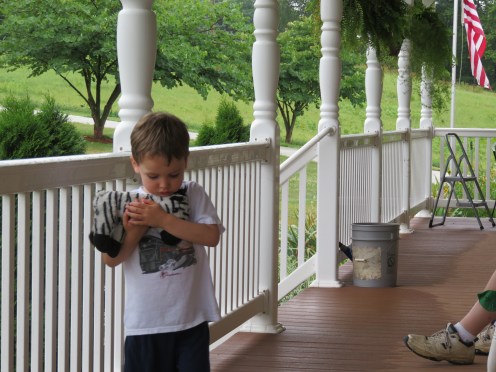
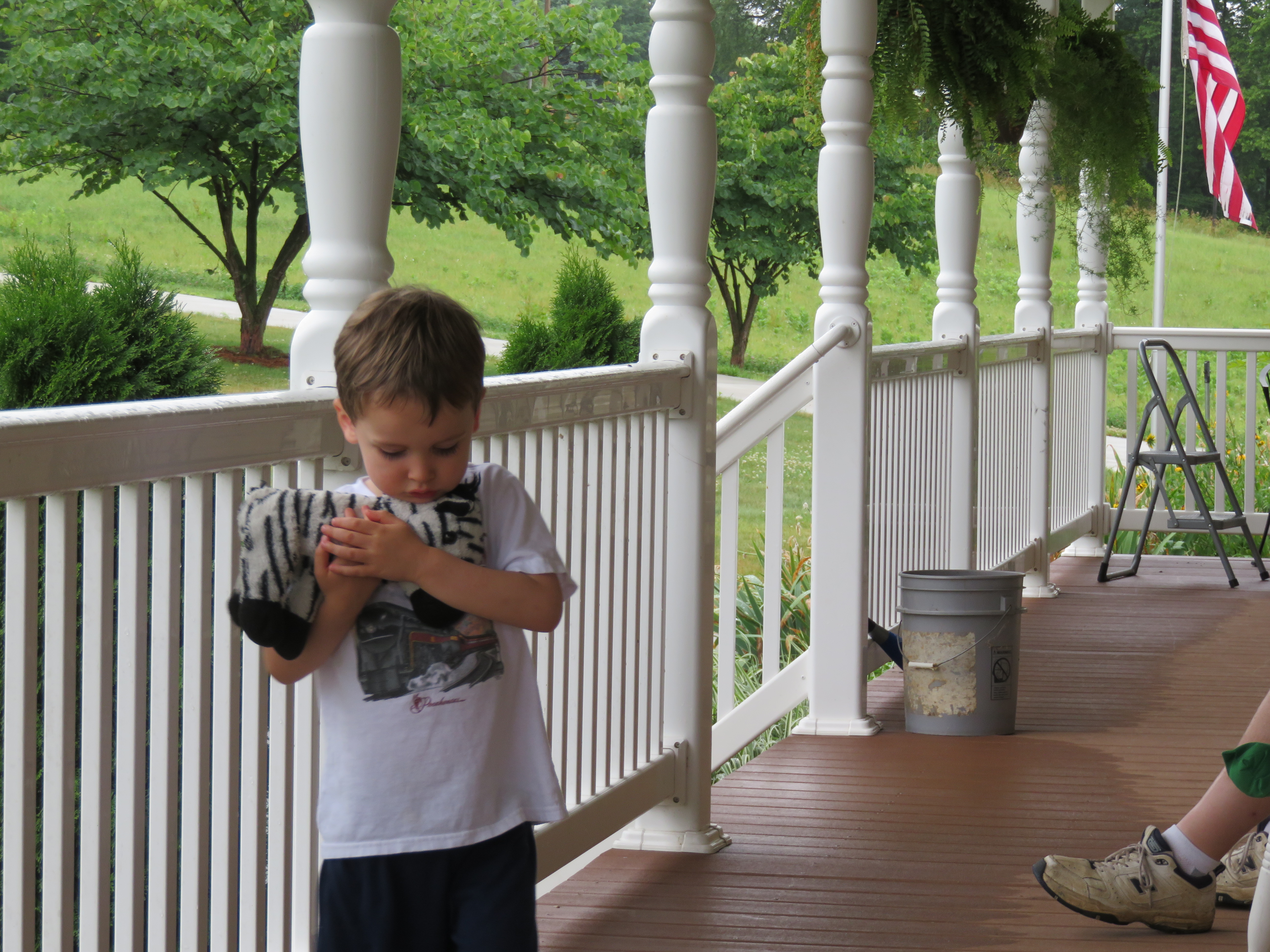
- H still loving to cuddle his pet zebra Zsa Zsa on swing or couch.
- S running (almost without looking) in the drive-thru lane at Chick-Fil-A to jump up and embrace his daddy when the week was up.
- J’s laser focus on the Bingo caller as we played real Bingo at a Rockingham County lawn party for the first time.
- Enjoying the older boys’ new interest in family pictures hanging on the walls, asking about “who is this?” and hearing more about them.
And here’s my list of “wish we had done this” or to do next time (check out Shirley Showalter’s post about their experiences).
- Plan a picture day or at least 5 minutes to take some really good pictures of the whole group.
- Have a list of more chores they need to do in order to earn good behavior points and a small prize at the end.


Overall, we learned to know them so much better – their likes and dislikes and the nuances of who was able to laugh at funny stunts in a movie, who got sad, who paid attention to names of roads, who pretends to like snakes.
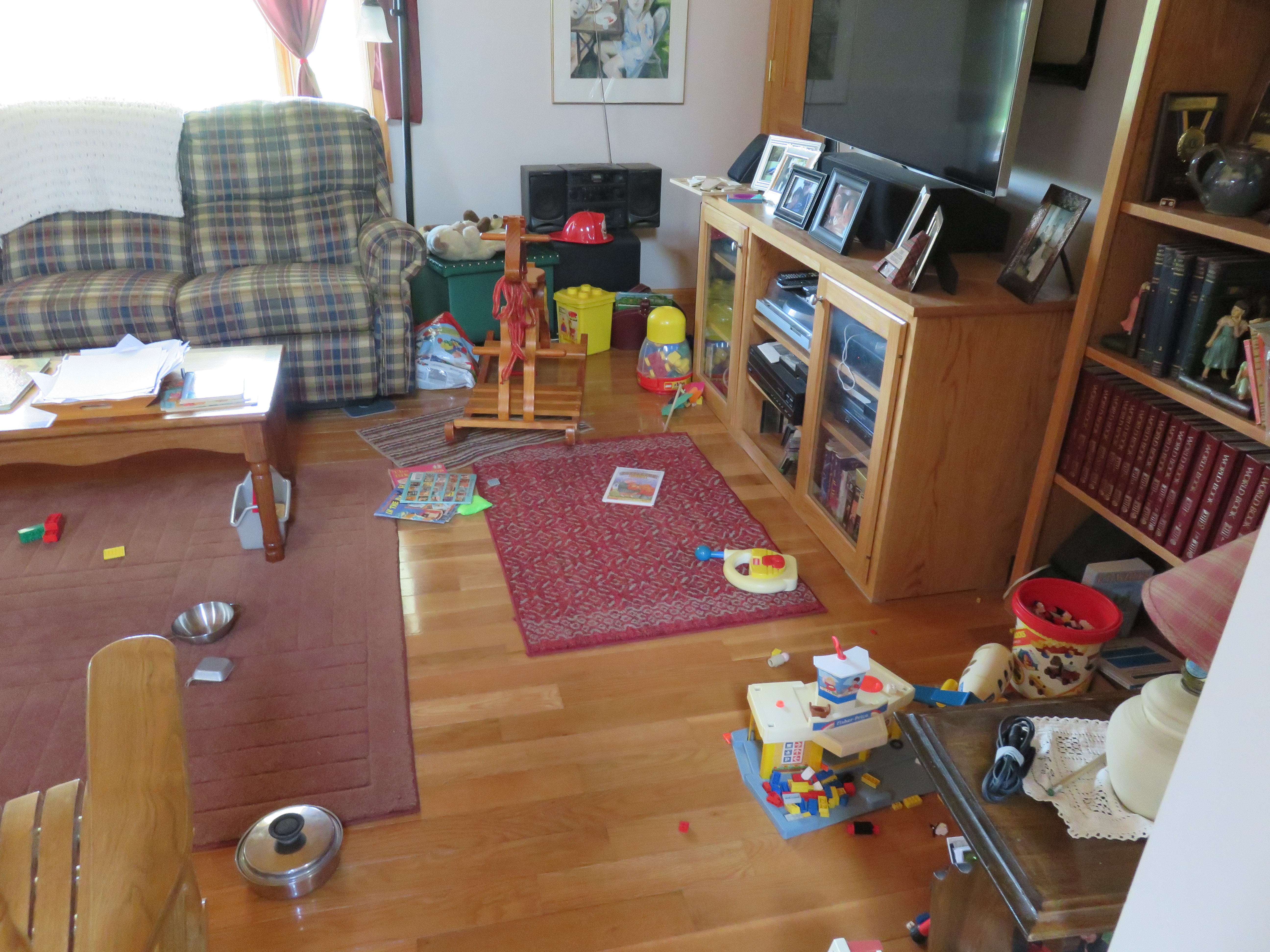
At the end of the week, I felt depleted, energy sapped. It made me remember those points as a young mom when I felt like jumping in the minivan and driving off, and then after refocusing on my many gifts and blessings, feeling more grateful and in control of my emotions again.

As grandparents, we walk a fine line between letting them enjoy grandparent love and leeway—and holding up parental standards and rules so they don’t become unruly monsters. But this was such a privilege and I hope we have many more highlights and special moments as the years fly by too fast.
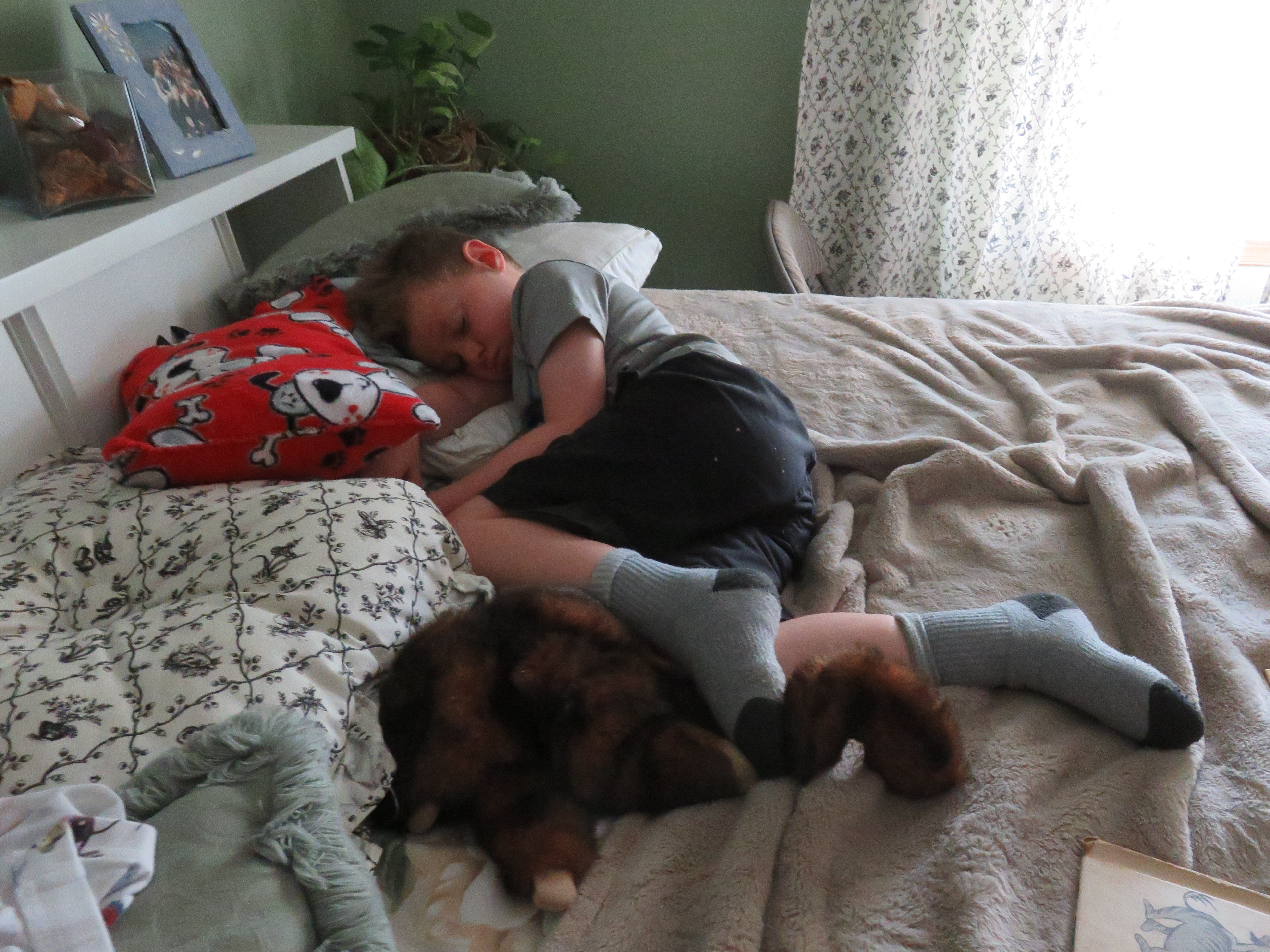

What have you enjoyed or learned in your own experiences in hosting grandchildren,
or memories from when you visited your own grandparents.

Can you spot the two extra local “second” cousins here who came over for dinner one night?
For a copy of all four columns on “Learnings from Cousin Camp,” you can write or email me at anotherwaymedia@yahoo.com or Another Way Media, P.O. Box 363, Singers Glen, VA 22834 and I’ll send it to you by mail or email.
Another Way is a column by Melodie Davis, in syndication since 1987. She is the author of nine books. Another Way columns are posted at FindingHarmonyBlog.com a week after newspaper publication.
Another Way for week of July 26, 2019
Don’t Try This Alone: Why Help May Be Essential
The third in a four-part series on “Learnings from Cousin Camp” by columnist Melodie Davis.
Wednesday was the day of our big outing for the week: a trip to Riven Rock Park in nearby mountains. The rustic park has the chilly and clear Dry Run (stream) running through it, a place we frequently enjoyed as a young family with three daughters. One time before we knew better (of how to access it), we climbed down a steepish bank on one side—each of us with a toddler in our arms and the oldest girl hoofing it safely down on her own. They always enjoyed rock hopping, hunting for minnows and crawdads, and we usually took a picnic lunch.

Reading our young campers the riot act before venturing out to the river.
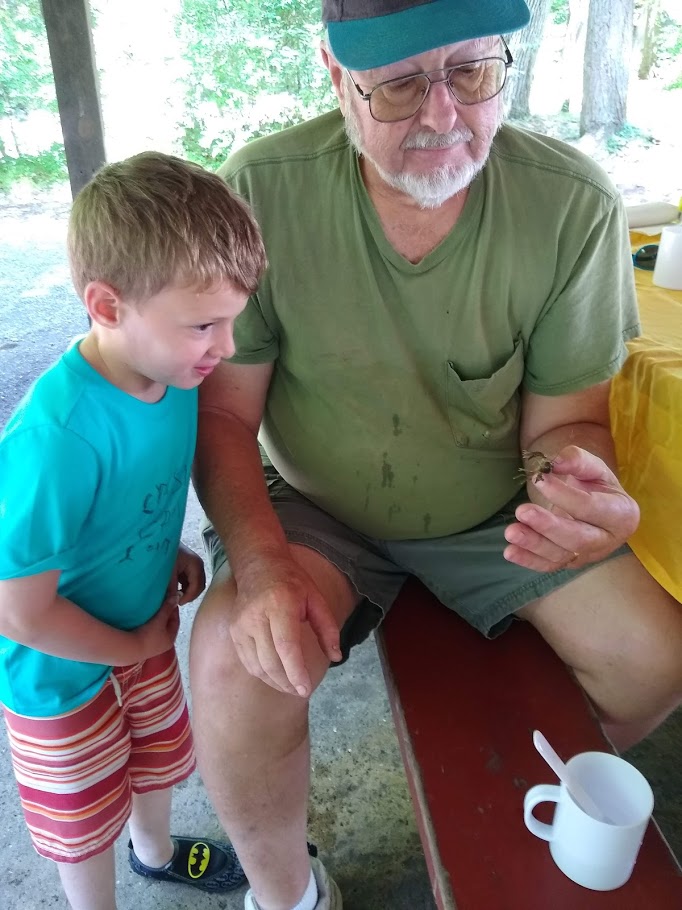
S and Grandpa with the crawdad!

Friend Joe helps our little bit squeamish camper H with his fish.
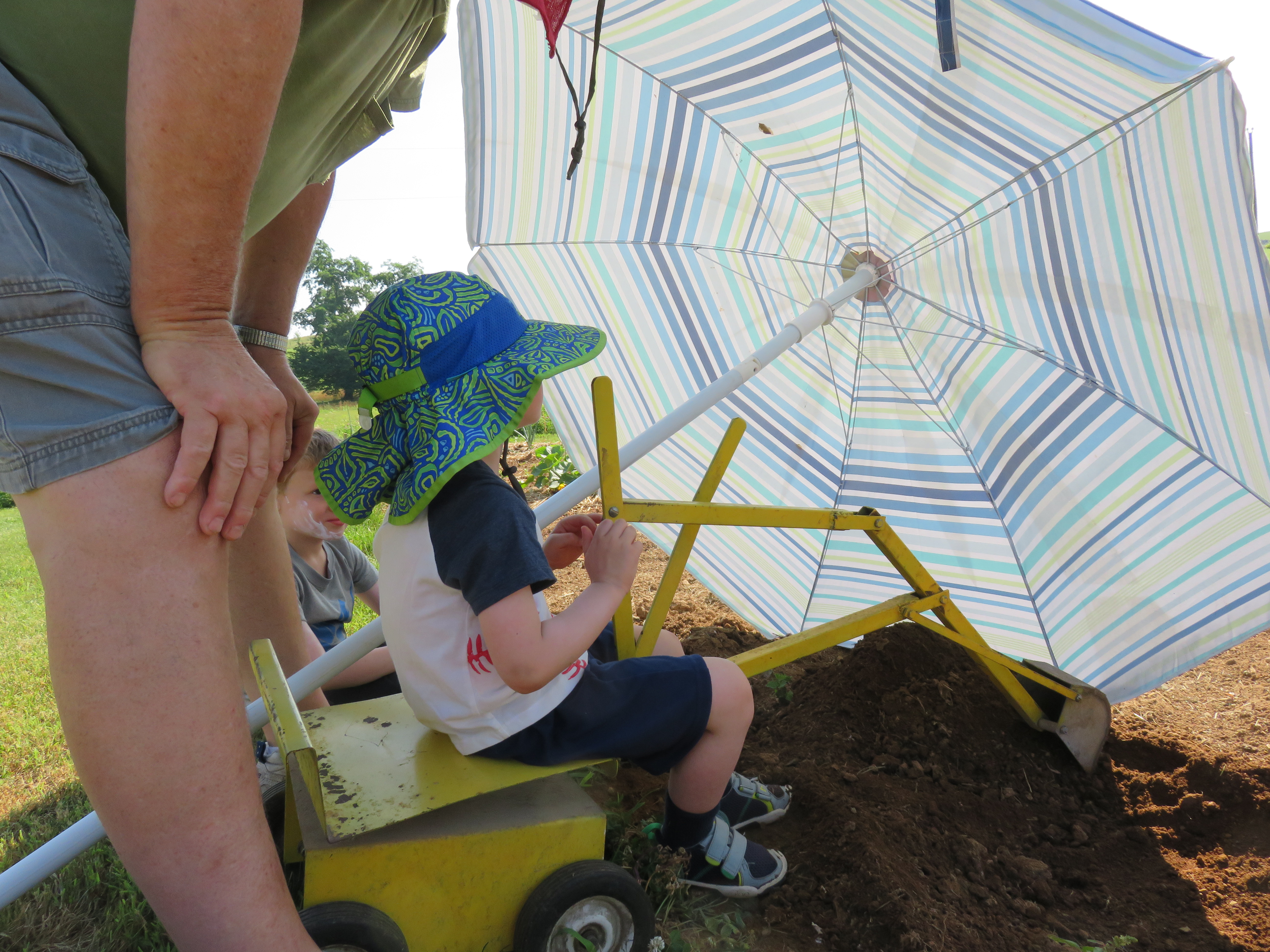
Grandpa and Henry working the little digger Grandpa welded long ago for our daughters.

Grandpa supervises a “sword fight” with leftover “clappers.”

Grandpa helps J. put together his wooden car project while H watches.

J, at bat and S, pitching working on their baseball skills.
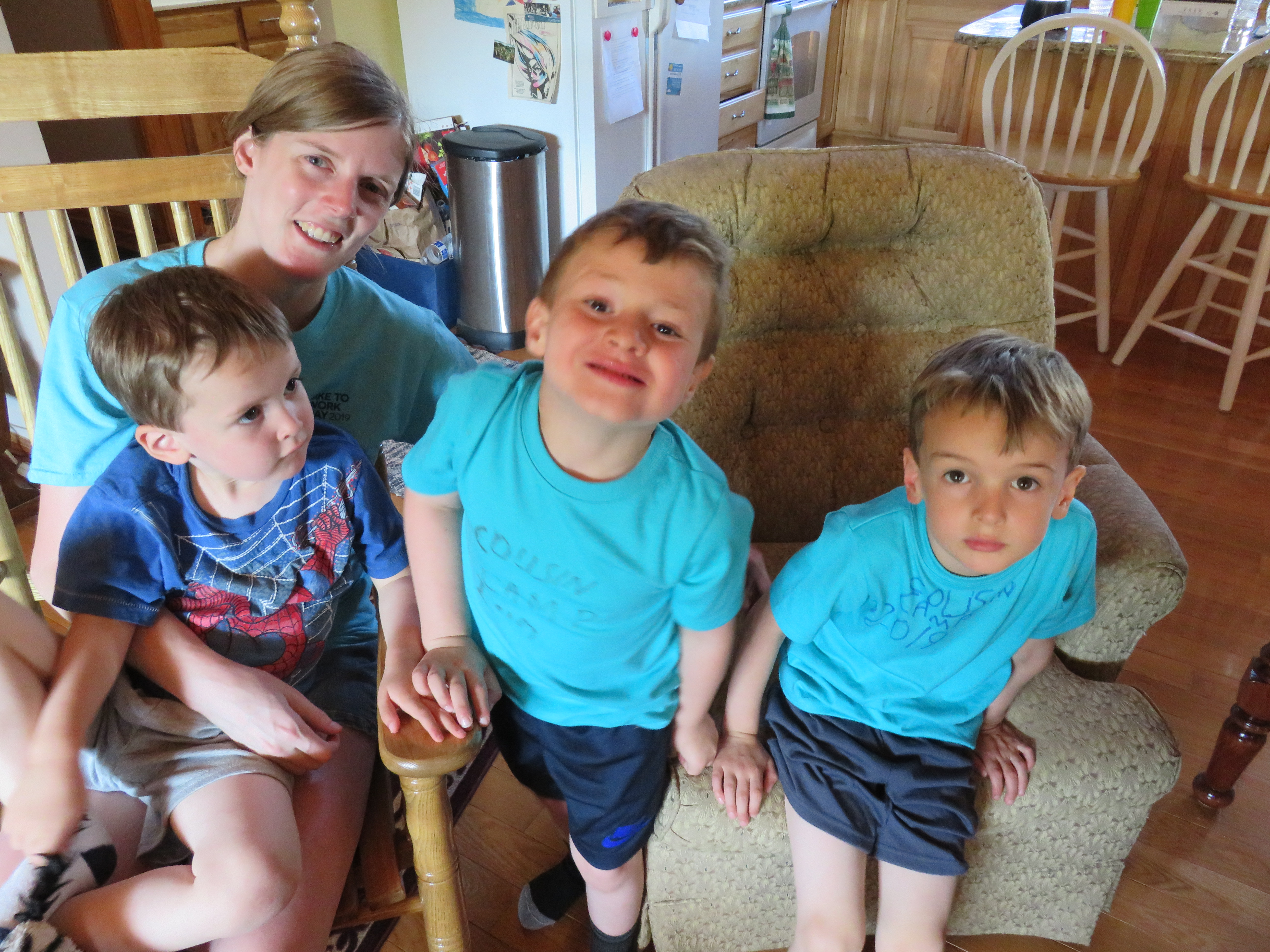
Super helper Aunt Doreen loves her nephews very much.
Now visiting this favorite place with our three oldest grandsons S, J, and H, (ages five, and three-and-a-half), I’m glad we had three adults watching over them. Earlier in this series I mentioned their Aunt Doreen came to help us out. This was one day we needed all hands on deck—or rocks as it were. As I made the boys sit down to go over our safety rules, I emphasized that they needed to listen to Grandma, Grandpa and Aunt Doreen because sometimes children in these settings in the wilderness have wondered off and gotten lost, drowned, or hurt. They seemed properly awed, but not scared off. All of them take swimming lessons, so they know the dangers of water. The water was moving quite fast.
We eventually spotted crawdads and minnows: pretty hard for little ones to find, flitting around their feet, but finally they did! Aunt Doreen ultimately captured a crawdad in a cup, so she and S waded back to show Grandpa (who doesn’t have the agility he used to have). He was keeping watch over our picnic basket, cooler, and open car.
I was very glad Grandpa could be as involved as he was the rest of the week—despite his mobility issues. He and Doreen took the boys fishing at a friend’s pond—leaving me home alone to luxuriate in a quiet house as I made several dishes for the wider family group that came over that evening. Toward the end of the week when I was nearing the end of my rope and creativity, he blew bubbles with them, but the bubbles were hard to get sailing on a very still morning. So we scratched that in favor of a water fight with large plastic water blasters and football stadium noisemakers—the things fans clap at a game to make a lot of noise. We got out the digger Stuart made long ago, and they learned how to operate its shovel in the garden. We ended up cancelling the trip to the local pool, feeling we all needed a low key day at home. Plus Doreen had to get back to her job.
Overall, it took three of us reading books, giving baths, picking up toys, helping with shoes (some were too small, some too new to easily slip on small feet), keeping dishes washed and food cooked. We managed to keep the three of them mostly happy, mostly dry, and mentally challenged. In the future I may try a four-day camp if feasible, unless we again have good “extra” help lined up! After raising three daughters, managing three grandsons for 6-7 days (with no parents present) is a fun but exhausting challenge. No one got sick—either homesick or the other kind, not one got really hurt (thankfully!), and we had only a few bathroom mishaps. There was no major fighting, just a few disagreements on whether to play soccer or baseball, who could sit where at the dining room table, and who got which kid plates. J willingly gave up his chosen evening reading book one night, (a Berenstain Bear volume on scary dreams) when Grandma pointed out that it may be too scary for the three-year-old right before bedtime.
As adult cousins and siblings, we don’t always agree and also get irked at one another, eh? The kids helped each other too: sometimes figuring out the ins and outs of their various car seats faster than Grandpa and Grandma. Next week I’ll share the rewards we found from this very special week.
Remember, we all need each other—and everything goes better with love.
For a copy of all four columns on “Learnings from Cousin Camp,” you can write or email me and I’ll send it to you by mail or email when the series is finished. Write to anotherwaymedia@yahoo.com or Another Way Media, P.O. Box 363, Singers Glen, VA 22834
Another Way is a column by Melodie Davis, in syndication since 1987. She is the author of nine books. Another Way columns are posted at FindingHarmonyBlog.com a week after newspaper publication.

So who’s strongest? Working together gets the job done. (Ha. The bale doesn’t actually budge.)
Another Way for week of July 19, 2019
Why You Need Plan B during Cousin Camp
The second in a four-part series on “Learnings from Cousin Camp” by columnist Melodie Davis.
Last week I began this short series on the pretty ambitious but so-rewarding experience of having our three oldest grandsons stay with us for one week. We came up with a day by day schedule, and like all good schedules, promptly wiggled some things around.
If you read last week’s column, you may recall Tuesday’s plans:
Go to morning $1 parent-approved movie, Paddington Bear 2; shop for sleeping bags at Walmart?; playground if time; write letters home and field trip to post office.
Whoa boy: that was way beyond ambitious, and here are some memorable moments on how we needed to punt.
First, this was the first time these boys had been to a real theater, period. Also, none of them watch much TV, and very few videos, mainly at preschool or at childcare.
A one-and-a-half hour movie—with the previews and “commercials”—took up almost all of the morning. We wound up just running to Chick-fil-A afterwards for a quick lunch, even with longish lines!). Chic-fil-a was our pick because it provides a gluten free option for grandson J.
Paddington 2 turned out to be quite traumatic for the youngest boy, H, who is three and a half and normally doesn’t cry very easily. But as his mother had reported, if he breaks down, he just wails and can’t get his breath, quite dramatically. Yet I do not regret going to this movie (spoiler alert). For me it was a side-splitter—just hilarious i n places and completely kid safe but very sad at one point when it looks like Paddington is going to drown. I kept telling H that Paddington wouldn’t drown. But we spent significant time afterword calming him down. As we left the building, he kept looking back at it, perhaps trying to figure out just what kind of place a theater was. I think he was also uncertain of what was real and unreal.
I was relieved a day or so later when he volunteered that he was scared that Paddington was going to drown when he fell off the train into the water. I was glad he was able to talk about his experience and feelings. The ending of the movie is very happy with a teachable moment, so I’ll leave it at that.

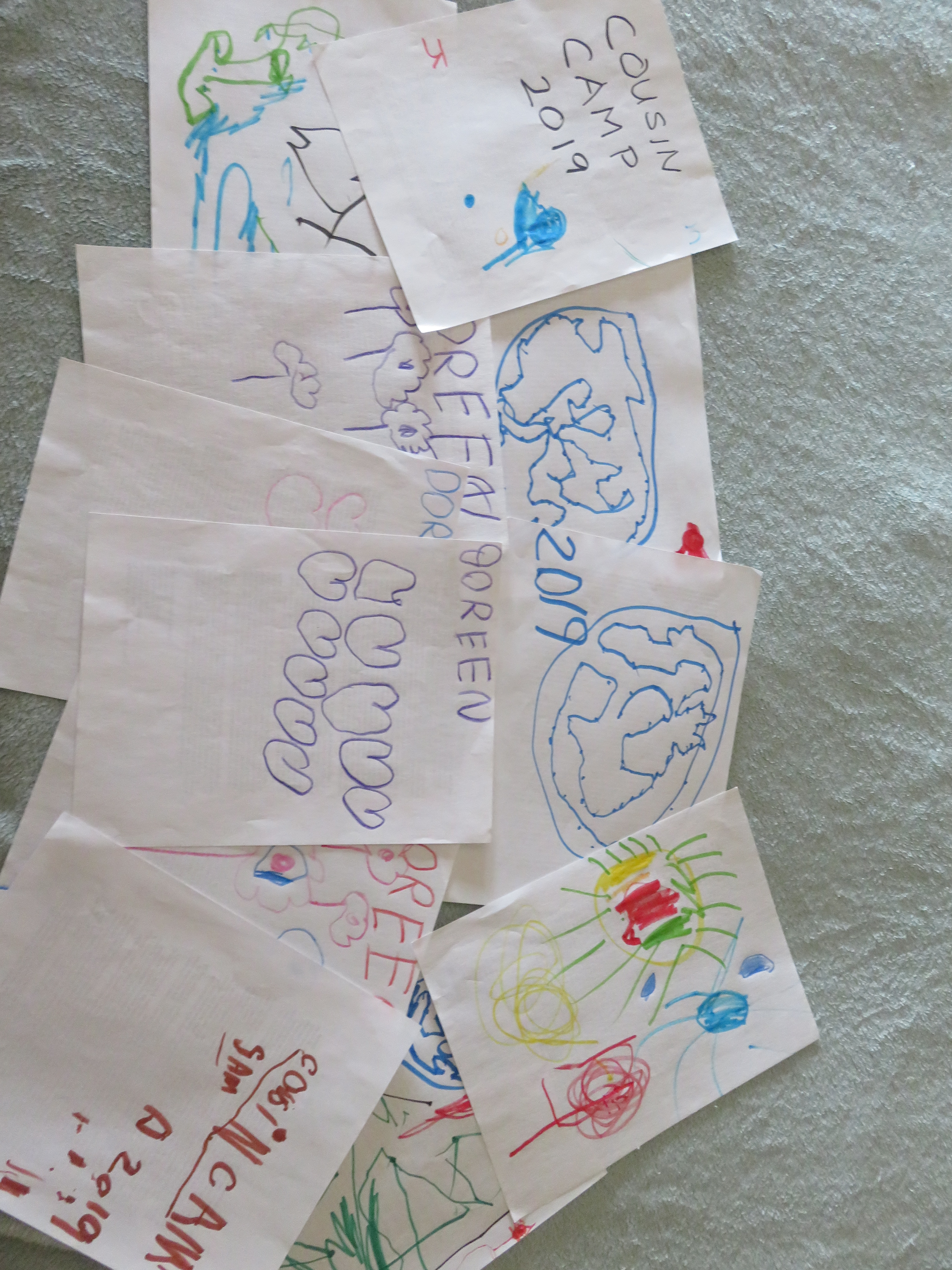
H draws pictures for his “letter” home.
Any doubt these boys love their Aunt Doreen?
We skipped the sto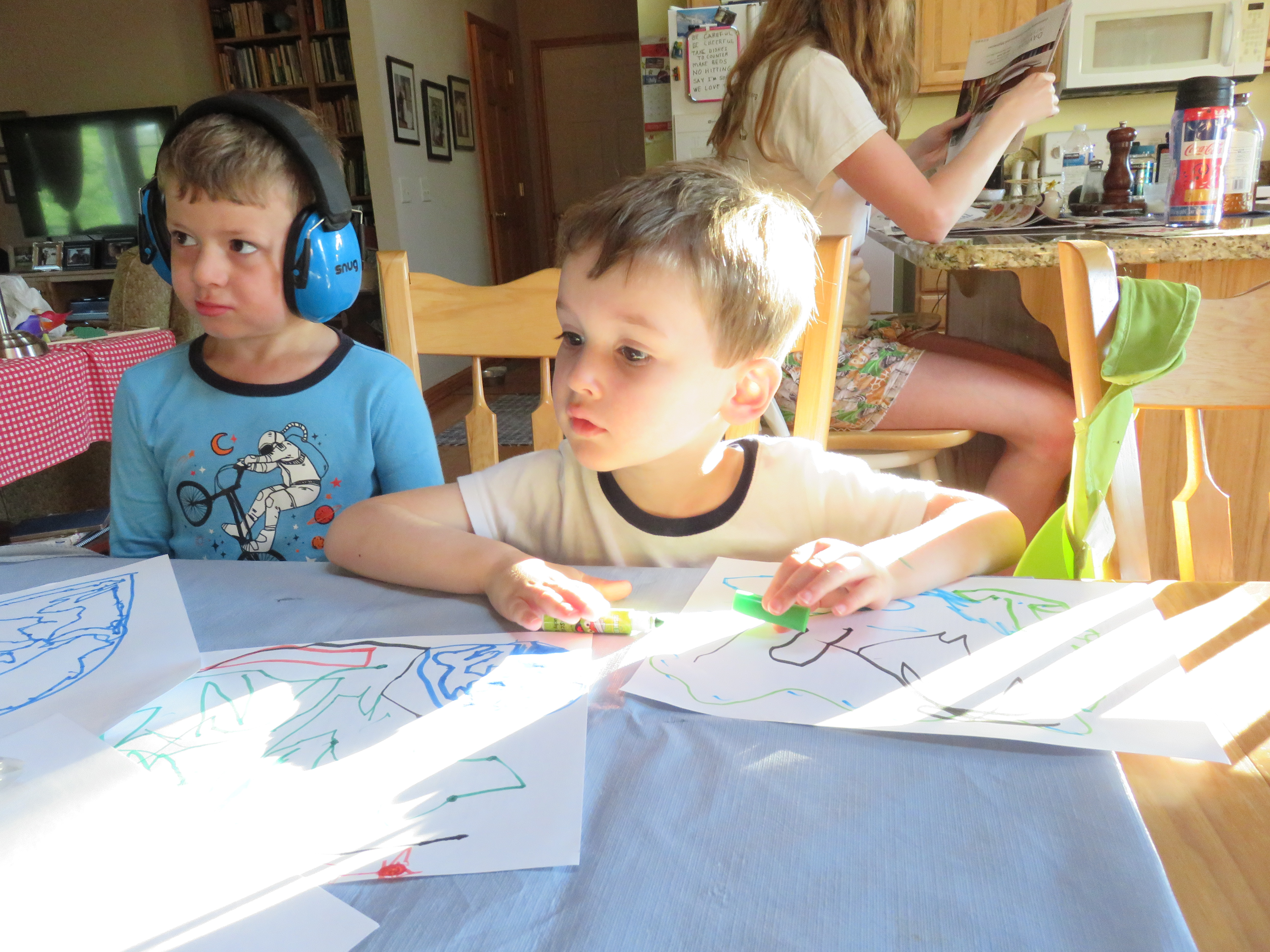 ps at Walmart and our town’s best playground—we really didn’t have time before afternoon rest time. It was also so hot that week I couldn’t imagine them playing in sleeping bags under a real or pretend tent, and it was too warm to think of trying to set up a tent which hadn’t been pulled out of the basement in over 10 years (perhaps moldy?). Later in the day, after naps/rest time, the two older boys did write “letters” to their parents—me spelling words that they wanted to use. And then they drew pictures and added lots and lots of stickers. They still love stickers. But by this time, I knew that trying to write a letter was quite beyond the three-year-old’s interest level, so he just colored on paper.
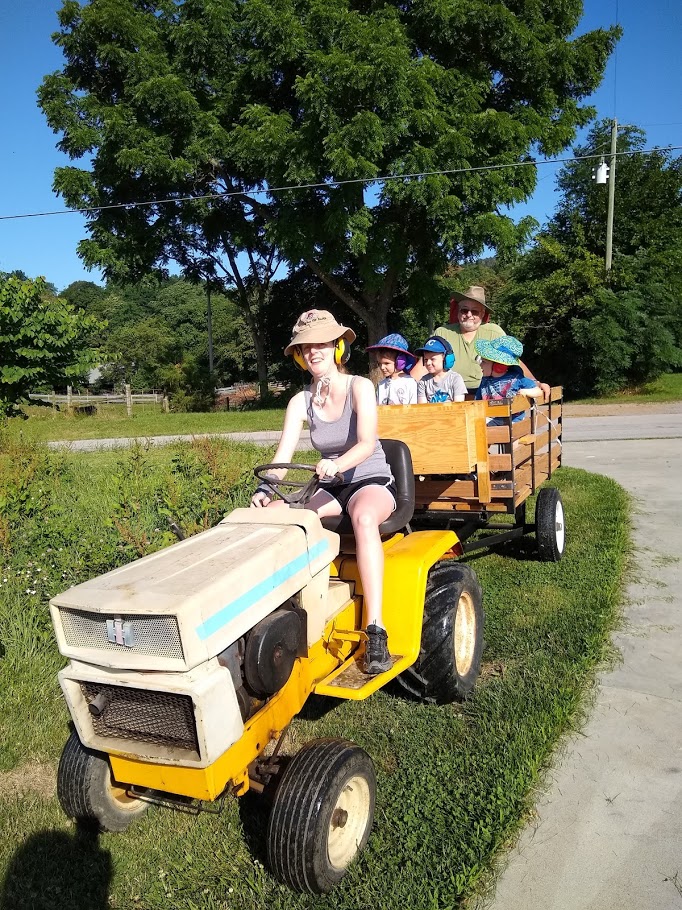
With sun hats and hearing protection for all, Doreen drives the boys on their requested “tractor ride,” while Grandpa rides tailgunner.
The lesson here? Make a master plan, but be flexible. My plan to work on their “Cousin Camp 2019” T-shirts got simplified and reduced to about ten minutes the next day. These boys aren’t into long craft projects! I also wanted to take the kids to our post office to mail their letters: a quaint old timey office where one lone postal worker processes most things by hand. I had reasoned that in their lifetime, they’ll see the demise of most smaller post offices—or perhaps all. It was still a learning experience: where you put things on an envelope (the return address, the stamp, and the main address); and how to lick an envelope—another new experience. Instead of driving to the post office, we just dropped them in my mailbox. S asked “Why is your mailbox on the other side of the road?” Kind of sounds like the beginning of a bad “chicken cross the road” joke. All in all, a “new experiences day” in a week of mostly fun.
My next column is called “Don’t Try This Alone.” Don’t miss it!
***
Having a Plan B is always good advice! When have you defaulted to Plan B or C with your family or activities or travels? We’d love to hear your trials and your triumphs.
***
For a copy of all four columns on “Learnings from Cousin Camp,” you can write or email me at anotherwaymedia@yahoo.com or Another Way Media, P.O. Box 363, Singers Glen, VA 22834 and I’ll send it to you by mail or email when the series is finished.
Another Way for week of July 12, 2019
Planning for Cousin Camp
The first in a four-part series on “Learnings from Cousin Camp” by columnist Melodie Davis.
Do you remember when you were five and got to spend some summer days and nights at your grandparents? What do you remember?
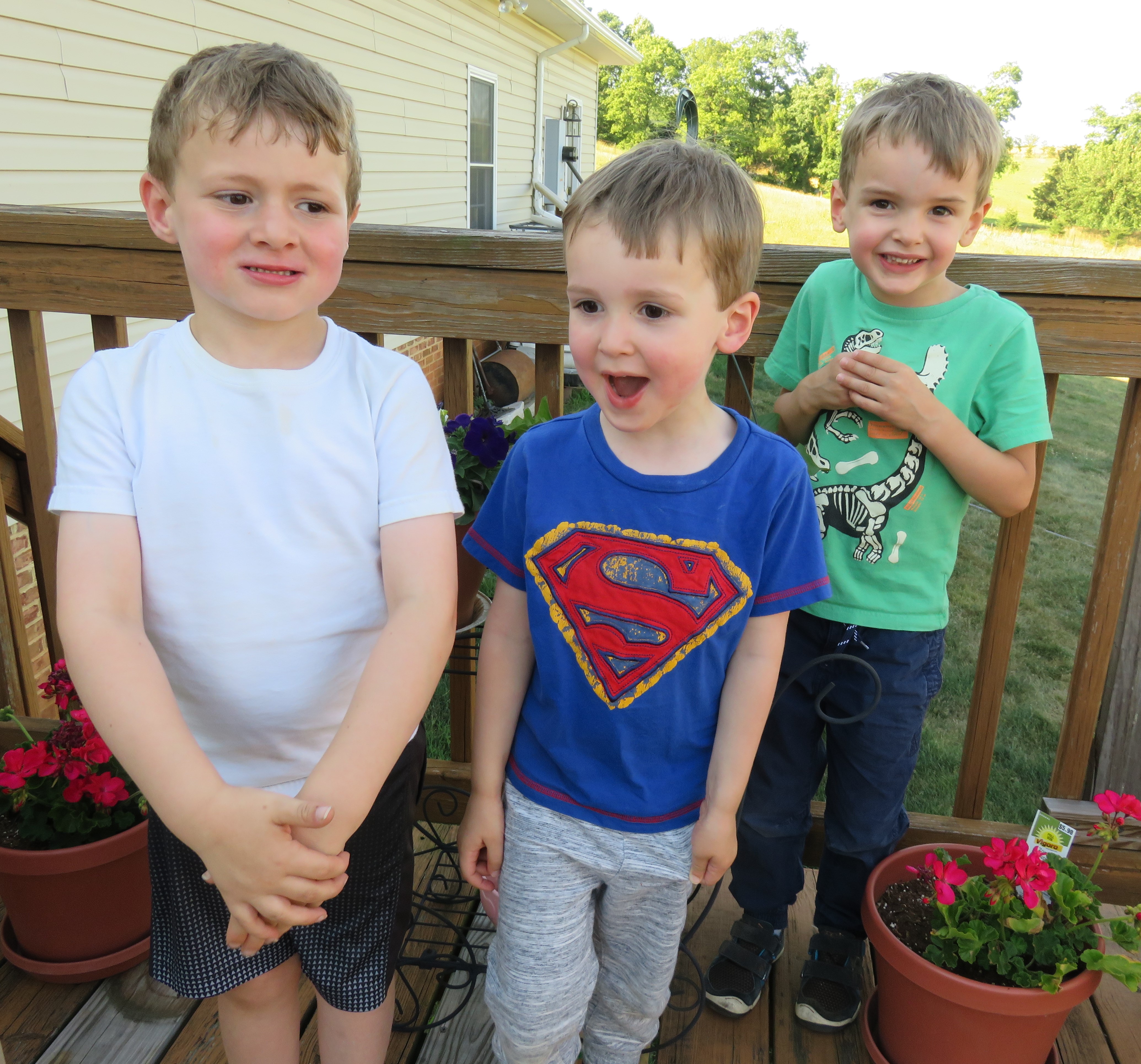
L to R: Our boys for the week: “S.” turning 6 in September, “H,” turning 4 in January, and big brother “J,” turning 6 in November.
Today’s version of this summer tradition in some families is sometimes called “Cousin Camp” or “Grandparent Camp.” I first heard it from friends at church. They had happily hosted their grandchildren together (rather than one or two at a time) so that grandchildren from far flung families get the experience of being together for extended play and conversation with cousins who see each other only infrequently. They mostly conducted it from their own home, but others travel with their young charges or operate from a vacation cabin, tent, or motel/hotel.
When I mentioned Cousin Camp to several friends or acquaintances they responded with “what a great idea.” So it felt like a new concept for some. But children have been “sent” to their grandparents over summer vacation for decades—perhaps even centuries, even though the need for this connection seems much more prevalent in our current culture when many families live hundreds of miles—or even continents apart. I realize how extremely fortunate we are to have grandchildren, to have good relationships with them and their parents, and to be able to afford spending extended time with them now that we are retired.
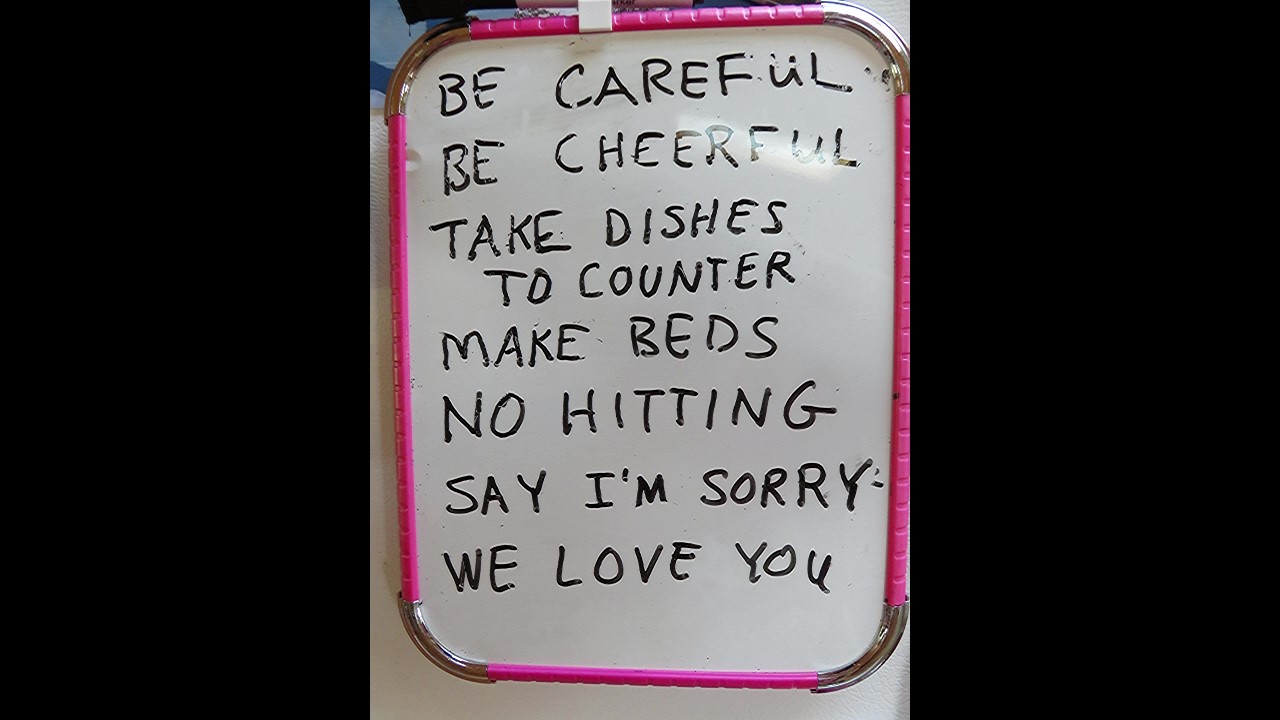
Our ground rules and values for camp.
So what can you do besides the obvious things like take them to a playground, on a hike, or to the nearest children’s museum? NONE of those obvious things happened during our recent special week because we had already done the first and last many many times, and the hike was ruled out as a little ambitious given the age of our youngest “camper.” We hosted two grandsons, S and J, who are five-and-a-half (born two months apart), and one grandson I’ll call H: a tall three-and-a-half-year-old.
Neighbor and blogger Jennifer Murch has held cousin camp numerous times for her own children (not grandchildren) who live at a distance from their first cousins. Her children are now mostly teens who actively help lead the week of activities, games and excursions. Some of their ideas and amenities included a trampoline (old fashioned rectangular kind), neighbors’ above ground swimming pool, taking all the kids to Costco to eat snacks (doesn’t work so well if kids have allergies), the library, and visiting a pet store. Author and former college president Shirley Showalter and her husband also had a week with their grandchildren which she wrote about here.
Here is a modified version of the schedule we initially planned. You could easily adapt this with your own schedule and ideas. (I’ve included a few pictures giving hints at which activities we were able to do or easily illustrate.)
Saturday 11:45 a.m. Pickup grandson S. in Beckley West Va. at Wendy’s (half way meeting point)
6:30 p.m. Friend Joe hosts us for BBQ ribs and then fireworks at our daughters’ old high school
Sunday 10 a.m. church – plus play on church playground after
Daughter Doreen brings grandsons J and H from the city where their family, plus Aunt Doreen live. She helps us with the three boys for four days.
Playtime: Baseball, soccer, and playhouse, plus dinner

Older cousin S sharing his sticker book with younger cousin H. In grandpa’s chair, of course.
Monday Backyard play, maybe put up tent or possibly fishing at Joe’s
4:00 p.m. More cousins (other side of family) come play pee-wee baseball, soccer
6 p.m. Grilled hamburgers, hot dogs, gluten free (GF) smores
Tuesday Go to morning $1 parent-approved movie, Paddington Bear 2; shop for sleeping bags at Walmart?; playground if time; letters home and field trip to post office
Evening: (Stuart and Melodie to Lion Club installation of new officers)
Wednesday Make camp t-shirts; go to Riven Rock park and creek with sandwich picnic (GF bread). Doreen leaves p.m.
Thursday Westover pool with new sprinklers if hot, or fishing if we haven’t been yet
Evening: West Rockingham Lawn Party with “bouncy” house; take GF sandwich for J. Music, real bingo.
Friday Take S. half way home to meet up with Dad. (Other grandma—nearby—keeps J and H)
Saturday Take J and H to meet their Mom at half way point near Walmart.
So, what went well? What had to be scratched or modified? Find out next week in this space!
I’d love to hear your experiences with grands coming to spend time with you. High moments, low moments, insights you gained about yourself or your grands?
What do you recall about your own days at your grandparents?
Comment here!
Or if you prefer, email me at anotherwaymedia@yahoo.com or write to Another Way Media, P.O. Box 363, Singers Glen, VA 22834.
Another Way is a column by Melodie Davis, in syndication since 1987. She is the author of nine books. Another Way columns are posted at FindingHarmonyBlog.com a week after newspaper publication.
Feeling Ripped Off?
I hate feeling ripped off—in this case losing about four hours of time—for both my husband and me. Added up, that makes eight hours, pretty much wasted. I have written about other experiences when we or I were played for the fool—once many years ago when we somehow participated in an offer at the fairgrounds that seemed too good to be true—and was.
This time it was a health screening. A widely advertised company was holding medical screenings in our area. The one for which my husband had signed up was about 30 miles away. We looked forward to the pleasant drive through some scenic areas on our new “both retired” schedule. It was also near a favorite eatery where we would finish off with a nice lunch—him after have an eight-hour fast from the night before. I had made his appointment for 11 a.m. He’d first have time for his morning workout, and we could probably finish the five screenings that were scheduled easily by 12:30. They said to allow 60-90 minutes for all five tests.
Ha ha. We arrived in plenty of time at 10:45 but didn’t walk out until about 2:15.

My mother and my sister (Mom all gussied up for a play she was appearing in).
What took so long? Inadequate staffing, about which the workers who did show up were also feeling really ticked-off. So teed-off in fact that one said if she could punish those who didn’t come for the day’s work, she would. Those who didn’t show up left the others short-handed, and those who came for appointments, waited for hours instead of 15 or 30 minutes to be seen. It appeared that appointments for one set of mostly older men being screened were all at 10 a.m., and another group at 11, and they were still working on the latest guys at 2:10 when we finally escaped. I know, they should call it “Medical Escape Room.” Reading some of the reviews at the Better Business Bureau website before signing up would have warned us.
You’ve probably seen ads for this type of screening, often held in a volunteer fire department facility or at the Salvation Army or other community-oriented place so that it seems like a real community health event. My husband had gone to an earlier one (without me) about three years ago. He didn’t have these problems with long waits and inadequate staffing at that screening center.
What I really didn’t like was all the communication tools they used to get the word out—a barrage of emails, ads online which popped up in my Facebook feed, and paper mail (because of my husband’s earlier experience) that made you think this was a really well-organized professional outfit. Trying to run an event like that without full staffing was no fun or fair for anyone: not for the workers, and certainly not for the victims. Oops, patients. I will doff my hat to all who were there, who tried to treat each other nicely and professionally in less than ideal circumstances. My husband, though seething, hung on to the end.
The day was rescued by a very pleasant, tasty, and affordable lunch at the Hawksbill Diner—not far from Skyline Drive. By the time we arrived it was 2:25 or so, and the noon rush was nearing an end, and we enjoyed chatting to the fine wait staff, cooks and the owner who came out from the kitchen to have their own late lunches.

My daughter listens to one of my mother’s stories. Mom will celebrate her 95th birthday later this month.
We did gain some valuable information from the screening and now that we’ve received a report that says a prior situation had improved, I guess we’re feeling a little less scammed—and my husband will discuss the reports with his own doctor. But there are so many health rip-offs especially targeting older people. Do be aware and try to check out organizations online or with your own doctor before you sign up. Good health is a gift so it is well worth it to try and stay as healthy as we can.
***
Most of us have times when we–or our parents or grandparents–were or felt ripped off. Share your story or comment here!
Or, get in touch by email at anotherwaymedia@yahoo.com or snail mail me at Another Way Media, P.O. Box 363, Singers Glen, VA 22834.
Another Way is a column by Melodie Davis, in syndication since 1987. She is the author of nine books. Another Way columns are posted at FindingHarmonyBlog.com a week after newspaper publication.
Another Way for week of June 28, 2019
Who’s Got Joy?
“I’ve got the joy, joy, joy, joy, down in my heart. Down in my heart, down in my heart…”
No, it wasn’t Marie Kondo crooning this old timey little Sunday school song but rather Granny on Beverly Hillbillies recently. If you’re not sure who Marie Kondo is, she’s the decluttering queen who encourages families or couples to look long and hard at all their possessions and to keep only the things that truly bring them joy. She has appeared on many television talk shows as the author of The Life-Changing Magic of Tidying Up.
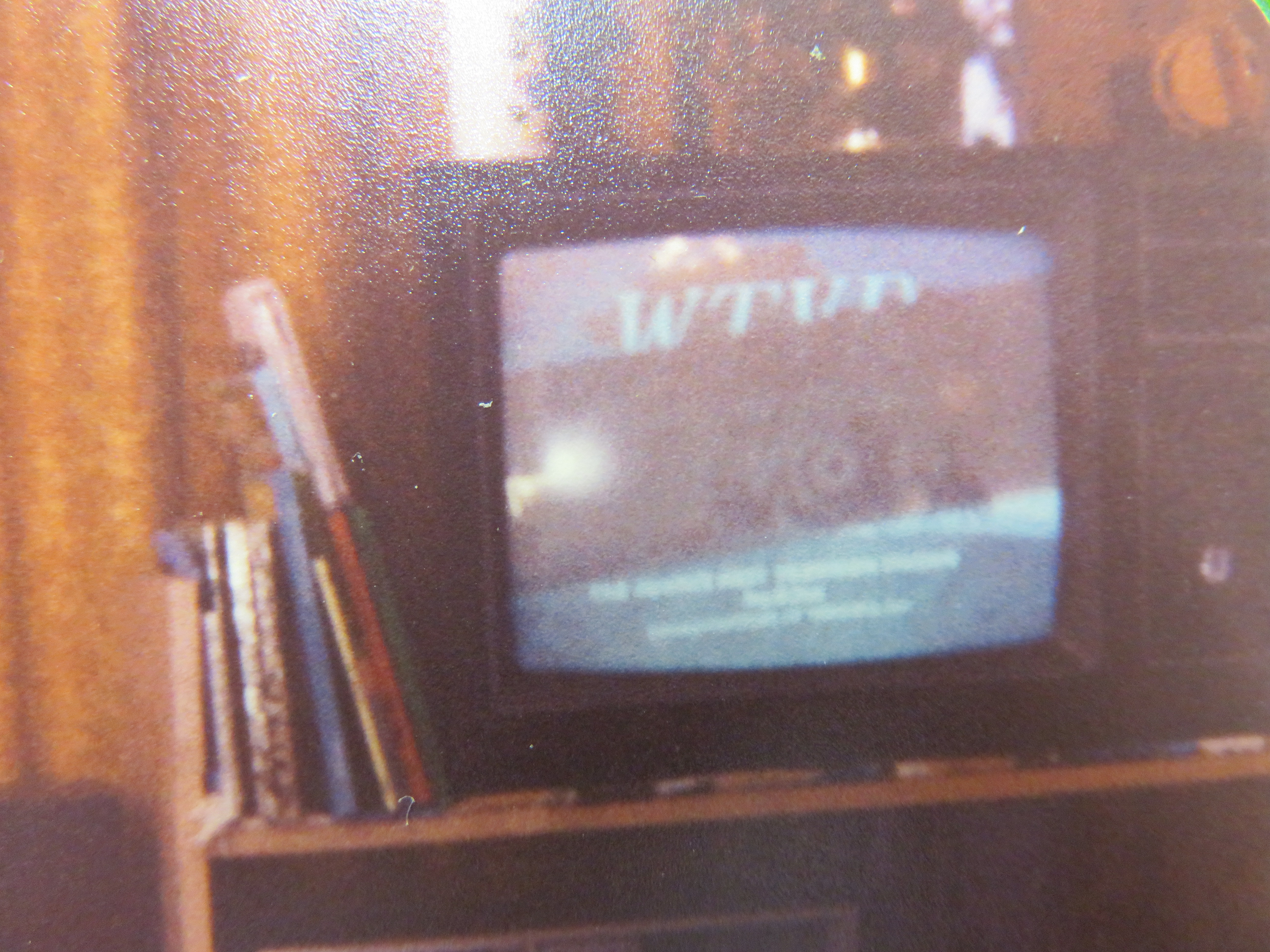
Old picture of the old style TV everyone used to have, upon which we watched things like Beverly Hillbillies.
If you’re not sure who Granny on Beverly Hillbillies is, that’s a show from the 60s that still airs on the MeTV channel, watched mostly by older folks. So, the other Saturday morning as I was getting breakfast (here I’m going to sound like the old timey, yes, Southern grandma that I am), it did my heart good to hear this little chorus from my growing up days.
Once in a while, even today, you see a television show with wise morals, values, and a positive portrayal of Christian faith that keeps you singing all day long. I wouldn’t hold up Beverly Hillbillies as a model of Christian behavior, but that morning’s program portrayed some excellent examples of how to treat other people.
Granny had gotten herself in trouble with her wealthy banker neighbors, the Drysdales, by picking up a garden implement she mistakenly thought her son Jethro had carelessly left outside. Granny took it home and the neighbors accused her of stealing it. Well that set off a feud to rival the McCoys and Hatfields, with an ongoing misunderstanding until the end of the show. Finally Granny, after numerous angry words back and forth, and numerous Sunday school songs she sings to herself, is inspired to take the high road and apologize to the Drysdales for her mistake. They reconcile and all is well, at least until the next episode. How many schoolyard fights and misunderstandings between spouses or coworkers would benefit from backing down, valuing the relationship, and offering a genuine apology? That was the message I took to heart that Saturday morning.
Perhaps it would do us all good to more frequently remember how loved and special we each are according to the teachings of the Bible. One seminary professor, Lynn Jost, writing in the Rejoice! devotional magazine, shared an experience from his own seminary days. He recalled an exercise where each student was asked to place humans on a 10-point scale, with earthworm as lowliest with a “1”, and God as highest with a “10.” Where would you rank yourself on that scale as a human? Probably most of us would only give ourselves a 7 or perhaps an 8, as he did in that class exercise. But according to Psalm 8:5, our place in creation as humans is just “a little lower than God and crowned with glory and honor.” So, we are all more like a “9” if you take this verse to heart. Does that give you joy or a wow for your day?
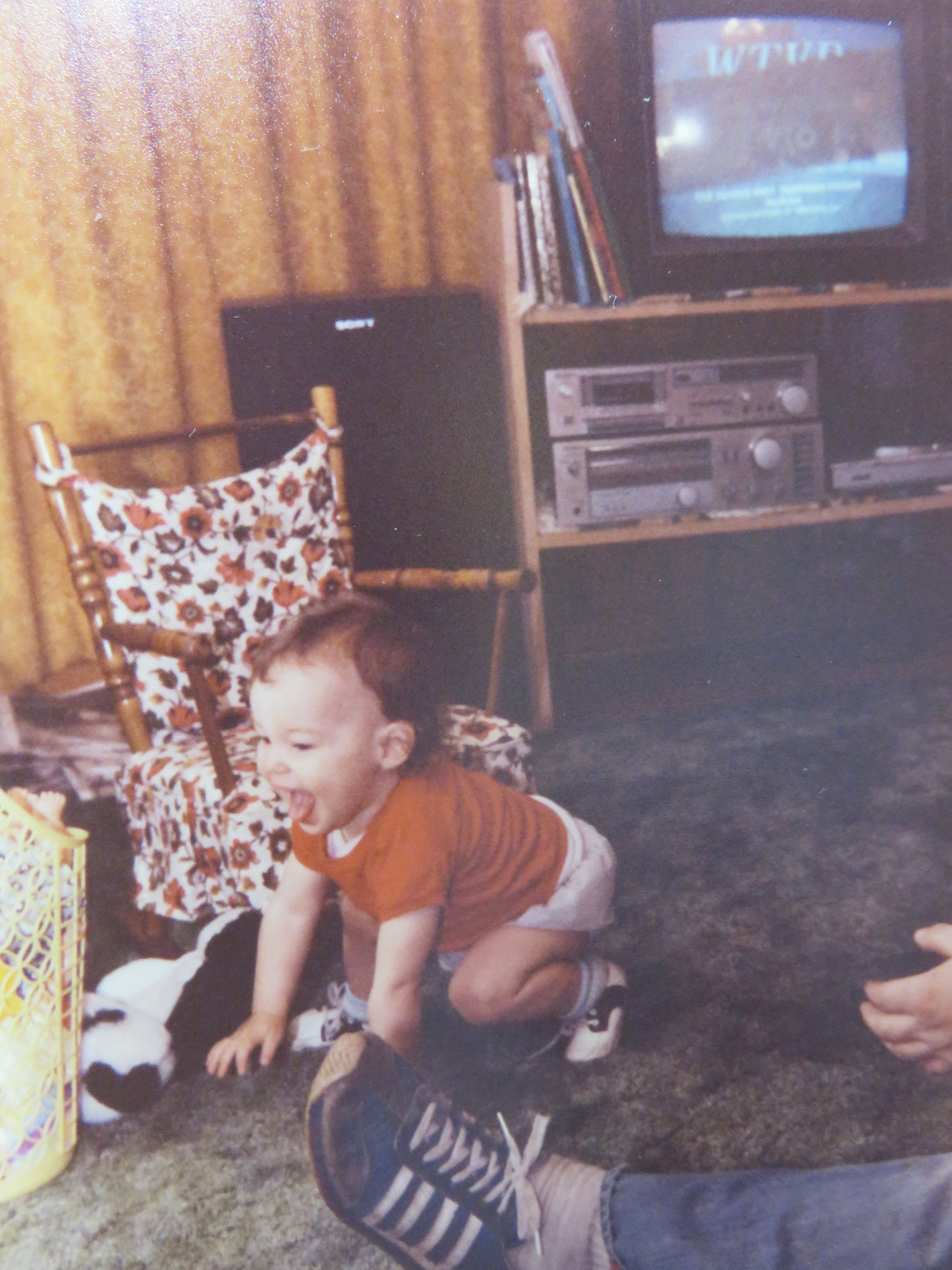
Here you see why I even have an old grainy picture of a grainy TV screen: our oldest daughter Michelle taking some of her first steps. Now that’s JOY, for child and parents alike. Her Daddy is sitting by, ready to catch her if she tumbles.
Jost goes on to suggest keeping this “9” status in front of you even when you are frustrated by the “wasted motions” of a grocery store clerk, or exasperated by a driver on the highway. Such an approach can make a difference in your attitude. Both you and that other person are “9” in God’s eyes. That thought can refill your well of joy.
In another scripture, Zephaniah the prophet is foretelling how the people of Israel in the Old Testament—who went astray many times—will be restored as God’s people. Zephaniah 3:17 reminds them and us: “The Lord your God … will take great delight in you.”
If quarreling and unruly people were told God will find joy in having created them, surely God delights in you, too. And my other takeaway? I haven’t yet done a Marie Kondo cleansing of our house, but I find that just donating objects I’m no longer using or want does my heart good, too!
***
When did a song lift you up at just the right time? What was it?
***
 I just have to mention an exciting new Mennonite hymnal that is coming out in 2020. Learn more over at Voices Together.
Other comments? Post here or Email me at anotherwaymedia@yahoo.com or write to Another Way Media, P.O. Box 363, Singers Glen, VA 22834.
Another Way is a column by Melodie Davis, in syndication since 1987. She is the author of nine books. Another Way columns are posted at FindingHarmonyBlog.com a week after newspaper publication.
Another Way for week of June 21, 2019
Come On In, the Water’s Great Exercise

The VMRC pool offers weekly family hours, with several free passes for family members, which we used in the past before I became a member. Here are several of my children and grandchildren, with me over to the right. (The only pool pictures I have.)
Of all the things I ever imagined happening in retirement, I never thought I would go regularly to a wellness center with a pool.
Some background: over the years we both have enjoyed family vacations with water—especially the beach, rivers, lakes (not many of these) and motels with pools. But my husband was not an avid swimmer: he could paddle around, but that was about it. He enjoyed water activities like boating, floating, canoeing, fishing, and riding ocean waves with a small surfboard—but never was one to swim much. After driving to a destination, he was usually ready to just flop on the bed and sleep. And then the children or I would coax him saying, “Come swim with us.” They loved horseplay with him in the water and building castles in the sand. I loved the water but hated, hated getting ready for it: putting on swimsuits, lotion, and organizing all the paraphernalia always required when a family went swimming.
But ever since my husband retired several years ago and sought assessment from an orthopedic surgeon for the stiffness in his feet and ankles—and difficulty walking, the doctor prescribed physical therapy. We went to the closest therapist at a nearby retirement center. That helped him a lot. Eventually the therapist suggested Stuart could save money (after reaching the limit on my insurance) by joining the pool and continuing some exercises in the water. At first he thought, “You’ve got to be kidding! Me, swimming?” But he respected her judgment and began, cautiously. It wasn’t long before he could see and feel real improvement doing the water exercises they recommended. These last couple years he has experienced far less swelling in his feet and ankles. He also developed enjoyable friendships at the pool.
So, you guessed it: getting me to join him in the pool was high on his priority list for what he hoped to do with me in retirement. By this time, I knew how it had benefited him, but was less sure of what physical benefit it would be to me. Oh, I enjoyed the water and the exercise and the movement and yes, relaxing in the hot tub. But my exercise of choice was walking. I hated the rigamarole of putting on the suit, trying to get out of it when it is wet, drying the hair, changing clothes, all that—still a chore even if I’m not herding three little girls.
After about six weeks, I realized I wasn’t having as much back pain when trying to turn over while sleeping. I had also changed my medicine for osteoporosis—due to going on Medicare. Long story short, I also met new people, made some new friends who have coffee together after their Friday water class, and was enjoying myself much more than I thought I would.
I realize this is a luxury for most of the world. In fact, the pool manager, a native of Guatemala, was reminding us of just what a luxury it is in his country. Only the country’s extremely small upper crust would ever be able to have access to an indoor heated pool and hot tub. Our opportunities here for people of average means are almost unimaginable.
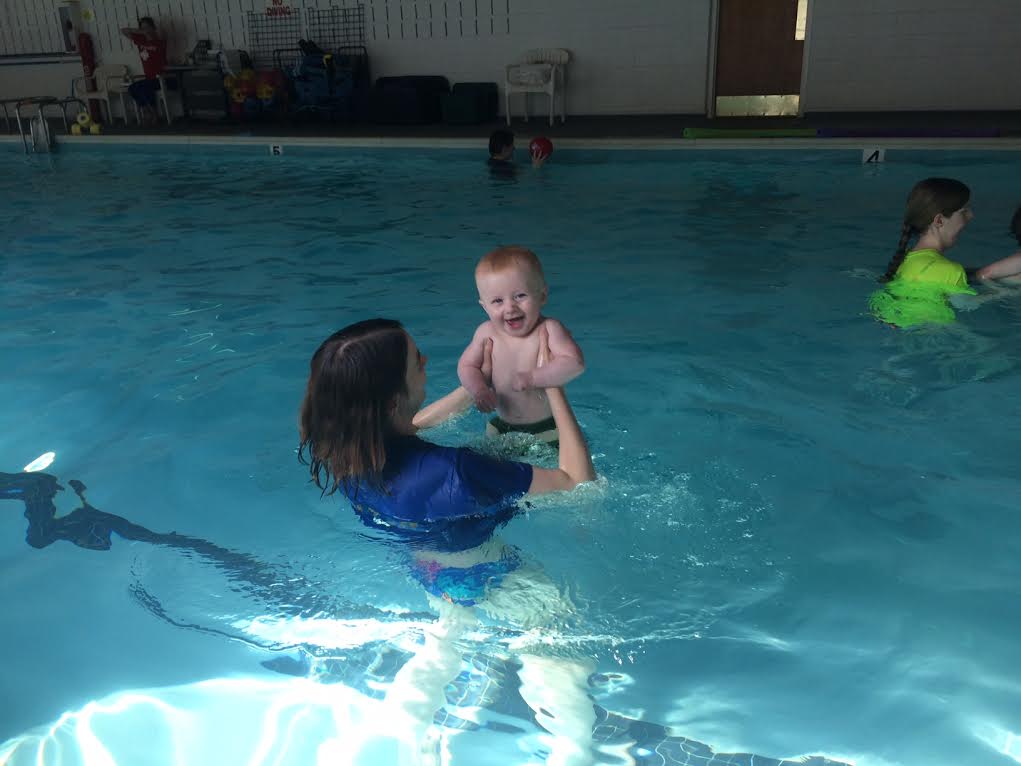
Water can be fun for young and old alike.
One of the things that I like about going to the pool—or at least it is good for me—is seeing women my age and older not being embarrassed by their bodies. We have endured, persisted, survived. Recently I learned one couple at the pool was celebrating their 71st wedding anniversary. At ages 91 and 94, they are remarkable. The husband in particular has amazing tenacity in keeping up with the water movements called out by the instructor. Inspiring indeed!
As with most information of this nature—don’t begin new exercises or try anything without checking with your doctor or physical therapist. Stuart followed careful directions to be on the safe side. But it’s fun to “bicycle” around in the water using a swim noodle, checking in with new friends to pass the time. Soon an hour of exercise has passed! Have a safe summer.
What’s your favorite go-to exercise? What is at the bottom of your list? I’d love to hear your opinions, experiences, stories!
***
For more ideas of how various exercises can be done in the water, check here: https://tinyurl.com/WaterExercises
If you live in our area and are over 50, check out Virginia Mennonite Retirement Community Wellness Center.
(P.S. VMRC is NOT just for Mennonites, in case you wondered.)
Comments here or Email me at anotherwaymedia@yahoo.com.
Another Way is a column by Melodie Davis, in syndication since 1987. She is the author of nine books. Another Way columns are posted at FindingHarmonyBlog.com a week after newspaper publication.

 findingharmonyblog