

Another Way for week of June 29, 2018
Thoughts on Mercy
It’s a song I’ve sung most of my life at church. As so often happens, I often do not really pay that much attention to the words. We enjoy the tunes and the sound but so often are minds are not open or connecting with the message of the hymn.
I’m guessing you know this one too, if you are a churchgoer: “There’s a Wideness in God’s Mercy.” It’s a very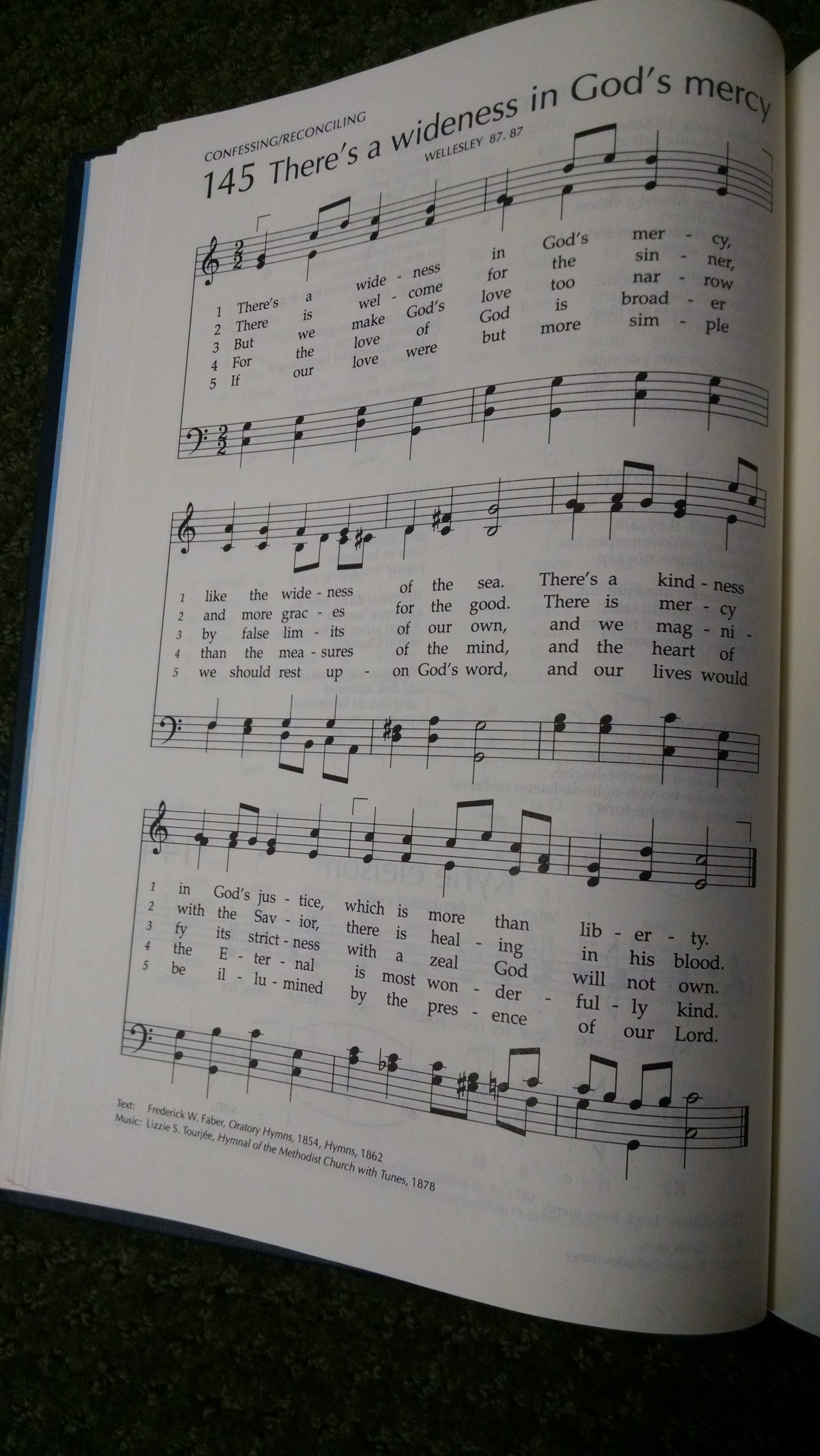 singable and familiar tune, and my hymnal Glory and Praise says it comes from a sturdy Dutch folk melody.
The line that grabbed me profoundly on a recent Sunday was this: “There is no place where earth’s sorrows are more felt than up in heaven.”
When we are hurt or in pain—particularly emotional pain such as after the death of a loved one, divorce, a child’s illness, the many horrific shootings we’ve become too accustomed to—we need to remember that it isn’t a matter of “God took him or her” or “God knows best” and even “God doesn’t make mistakes.”
But especially in the case of a too-early or tragic death, if we believe the line of the hymn, God grieves right along with us.
To me, that is very comforting. When terrible accidents and tragedies happen, God laments with us. When accidents happen—like an accidental gun shooting—God doesn’t cause or allow the tragedy to happen. They just happen—sometimes because of the evil thoughts and actions of men and women. There may be many reasons for accidents—carelessness, overconfidence in one’s ability, showing off, engaging in a sport one loves, making a mistake in speed or other judgment, or taking one’s eyes off the road. God didn’t “allow it to happen,” it just happened.
Rather than focusing on what is the cause, we can focus on supporting those whose lives have been changed forever by the accident or tragedy.
The week we sang this hymn, I had struggled with a particular weakness of mine. Another line of the hymn reminds us, “There is no place where earth’s failings have such kindly judgment given.” When we can’t forgive ourselves, God does.
When I think of abundant mercy, I think of women and men I have known who have poured out mercy when they were cheated on by a spouse. My husband is not perfect and neither am I (big surprise) but I am so grateful we have not had that problem in our marriage. Or, I think of Wilma Duerksen and her husband Cliff, a family in Manitoba who forgave the killer of their adolescent daughter. I had the opportunity to interview Wilma as our staff at Mennonite Media worked on a documentary, Journey Toward Forgiveness a number of years ago (2001). Hearing the stories of those who’d forgiven enormous wrongs affected all of us deeply who worked on the film, and the viewers we heard from by phone, email, and website.
When there are accidental tragedies, those too take a special gift to be able to forgive whoever was involved. I was touched and deeply moved by the story of Rachelle Friedman who was paralyzed from her neck down the night of her bachelorette party. She and her friends decided to go for a swim in a pool at one of their homes, and horsing around, one friend pushed Rachelle in. It was very shallow water at that end of the pool and Friedman’s head struck the pool’s bottom. She broke her neck, instantly paralyzing her from the collarbone down. A year of so after rehabilitation, she and her fiancé were able to go ahead with the wedding they’d planned, and have since had a child and love each other devotedly. Her mother lives with them to assist as they raise their little daughter, and Friedman forgave her friend, saying she in the past had pushed friends into pools also. Eventually the friendship was too hard to keep up with such a weight on it, and they are no longer actual friends. Friedman has written a book about her accident and the love she’s been shown by her husband and family in The Promise.
I felt this story was worth sharing not only because of the illustration of forgiveness and mercy shown by Friedman, but a prompt to be extra vigilant around pools, rivers, lakes and oceans as you enjoy nature this summer.
***
Here’s the tune and version of “There’s a Wideness in God’s Mercy” that I love: https://youtu.be/k-JDxOHTy5I
***
What is a hymn that struck you recently in a new way?
***

A helpful book that deals with the problem of suffering, mercy, and understanding God’s role–especially where children are involved–is Lord Willing? Wrestling with God’s Role in My Child’s Death, by Jessica Kelley. You can read more or purchase here.
And the film we made, Journey Toward Forgiveness, is still available for sale or download from Vision Video.
***
If you have comments or stories to share, send to me at anotherwaymedia@yahoo.com or Another Way Media, P.O. Box 363, Singers Glen, VA 22834.
Another Way is a column by Melodie Davis, in syndication since 1987. She is the author of nine books. Another Way columns are posted at FindingHarmonyBlog.com a week after newspaper publication.
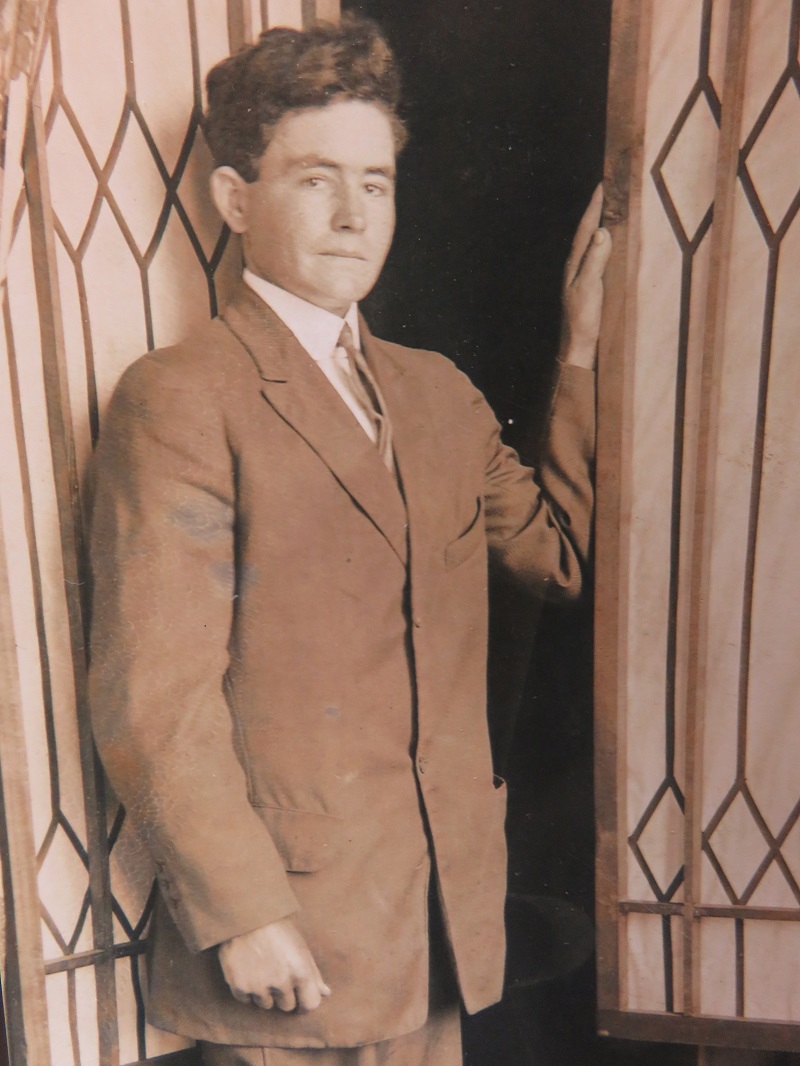
My grandfather Ivan C. Stauffer. Note the glint of mischief in this mostly serious face.
Another Way for week of June 15, 2018
In Memory of the Grandfather I Never Knew
The other week I wrote a column responding to my oldest grandson’s query to his mother, “Mommy, what did you do when you were little?”
That column inspired my mother, Bertha, who reads my column in The Goshen News (Ind.) to sit down and write a letter responding to my ending question, “What did you enjoy doing when you were a little girl or boy? Write your own letter for your children or grandchildren.”
I love the letter she wrote in response, mostly about the fun things her father created or brought home for pennies during the depression years of the 1930s. I am happy to share those memories. Her letter is especially poignant for me because her father died in a terrible car crash seven months after I was born. So I never had the chance to know my grandpa Ivan Stauffer.
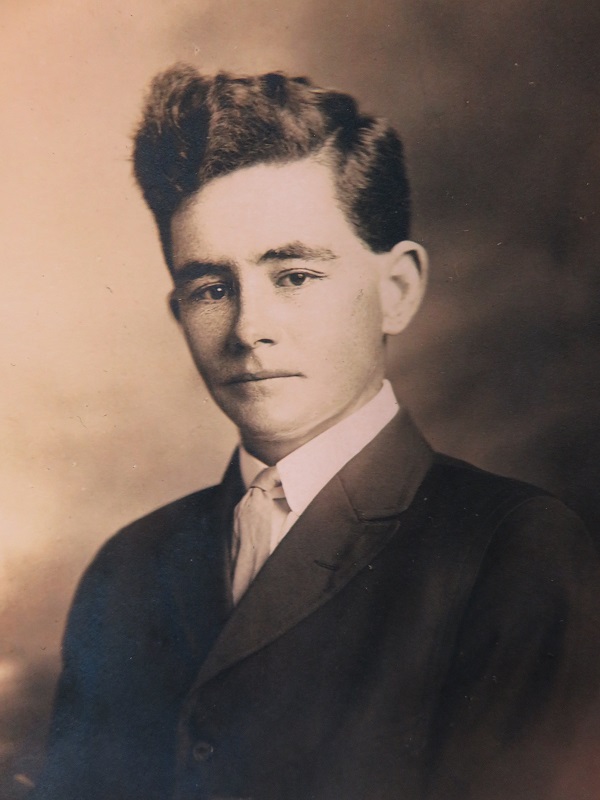
Ivan C. Stauffer, circa early 1900s.
Most of Mom’s memories of playing revolved around her dad (three children in the family). Usually her mother was too busy with sewing, gardening, or housework to join in, but had more time to play with them in the wintertime.
Here’s Mom’s letter—which I offer as a tribute in her own words. I’ve added my comments in parentheses.
We played croquet, a lot. Dad would get bargains at sales and bring them home (such as the croquet set). He got my first bicycle at a sale for 25 cents.
Dad would “knock out” flies with him at bat, and me catching on Sunday afternoon. I don’t remember if my sister (Florence) played or not, Mom never did. Daddy made us a basket to play basketball, out of an old bucket with the bottom banged out. I could even make baskets standing backwards. You didn’t know that, did you? Ha!
Florence and I, after a rain on the bare ground under the swing in the cherry tree, played our own game. She took a stick and drew pictures in the damp dirt, and I would “buy” what she drew on the ground in pictures. I bet few kids have ever done that. Cheap toys!
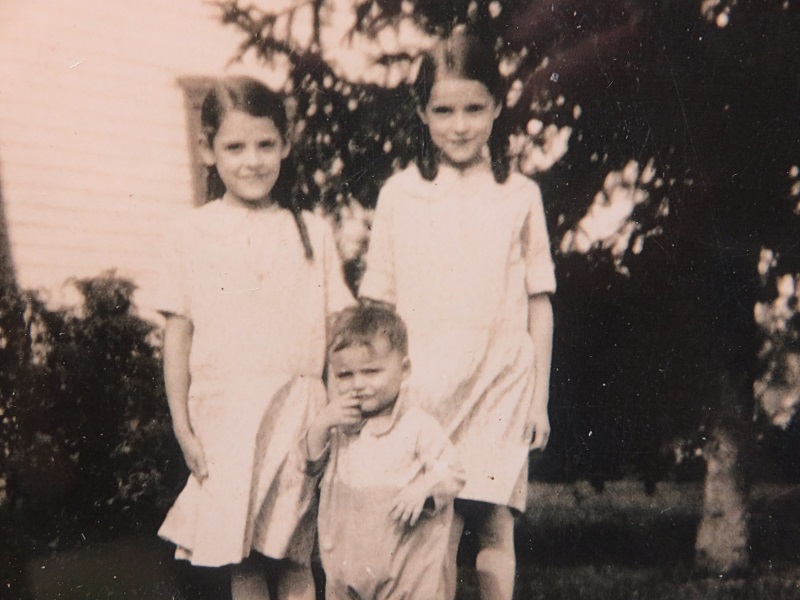
My mom, Bertha, far left, sister Florence, and toddler brother Paul.
(Aunt Florence became quite a renowned artist in the northern Indiana area who won ribbons in numerous art shows.)
Dad made all kinds of stuff for us. He made a merry-go-round out of a wagon wheel, quite big, with seats for us. It was lots of fun. We rode down our barn hill with a big cart he made from some more old wagon wheels—very exciting. We played like we were cooking catalpa tree beans and pretended to have lunch.
(Our own children also played with catalpa long bean pods “making dinner” on a pile of rocks under the tree.)
In winter, we played tic tac toe on a real slate blackboard with chalk, or Hangman—which was good spelling exercise, if you remember how to play Hangman. We made our own Authors card game using old cardboard.
None of this cost anything. Last of all I remember Dad making a chair swing from the wringer of an old wringer washer, and putting a round piece of old broom handle on a chain from the tree. I would climb a ladder and swing out over the gravel lane. What fun. That didn’t cost a cent either. I was a depression kid! We played hopscotch a lot when we could find nice cement. Indoors, we often played jacks with neighbor kids.
I do remember my sister playing piano; I used the piano rolls that came with our used piano. I spent hours pumping and listening to great music.
I love this portrait of the grandfather I never knew. It makes me sad though too, that we never knew him. But that’s life. Right now, I’m just grateful to still have my mother, and for her to write these things down, so I have at least these snippets of the creative and fun-loving father my Grandpa Stauffer was. I salute all the dads (my own dad and husband included) who created great toys and fun for their children and took time to play! Ask my grandkids about the wagon with seats and cushions Stuart made to haul them around the yard behind a lawn tractor.
***
A few years ago, I also wrote about Grandpa Ivan Stauffer here.
Do you have memories from your father or grandfather to share? I’d also love to hear! Comment below,
Or send to me at anotherwaymedia@yahoo.com or Another Way Media, P.O. Box 363, Singers Glen, VA 22834.
Another Way is a column by Melodie Davis, in syndication since 1987. She is the author of nine books. Another Way columns are posted at FindingHarmonyBlog.com a week after newspaper publication.
My online friend (who I’ve not yet met) and sometimes colleague, April Yamasaki, blogged recently about her experiments to do creative interpretations of Psalm 23 with every letter of the alphabet. She invited like-minded wordsmiths who enjoy word play into her mirth. I was mesmerized.
Ah, now, I’m getting carried away with “m” which I have chosen for my own Psalm 23 in the letter M. (Somehow this reminds me of mothering my daughters through their Sesame Street days!)
And while this can be a somewhat devotional activity, it is also clearly having fun with words and letters and any spiritual gravitas should be gleaned mainly from King David’s unforgettable and perhaps all time favorite passage of the Bible.
If you need freshening on the exact text, here is David’s Psalm as rendered by the New International Version, and with photos for inspiration:
1 The Lord is my shepherd, I lack nothing.
2 He makes me lie down in green pastures,
he leads me beside quiet waters,
3 he refreshes my soul.
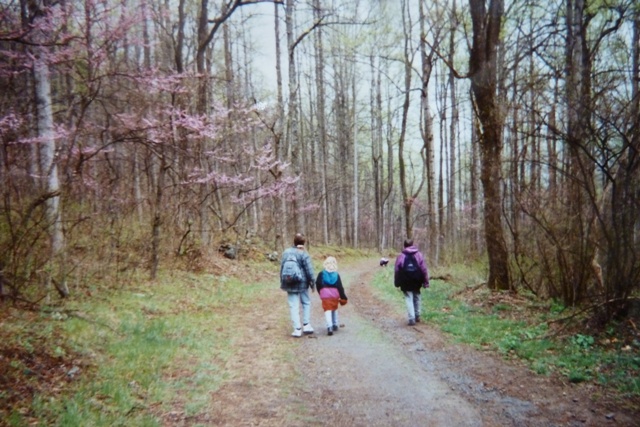
He guides me along the right paths
for his name’s sake.
4 Even though I walk
through the darkest valley,
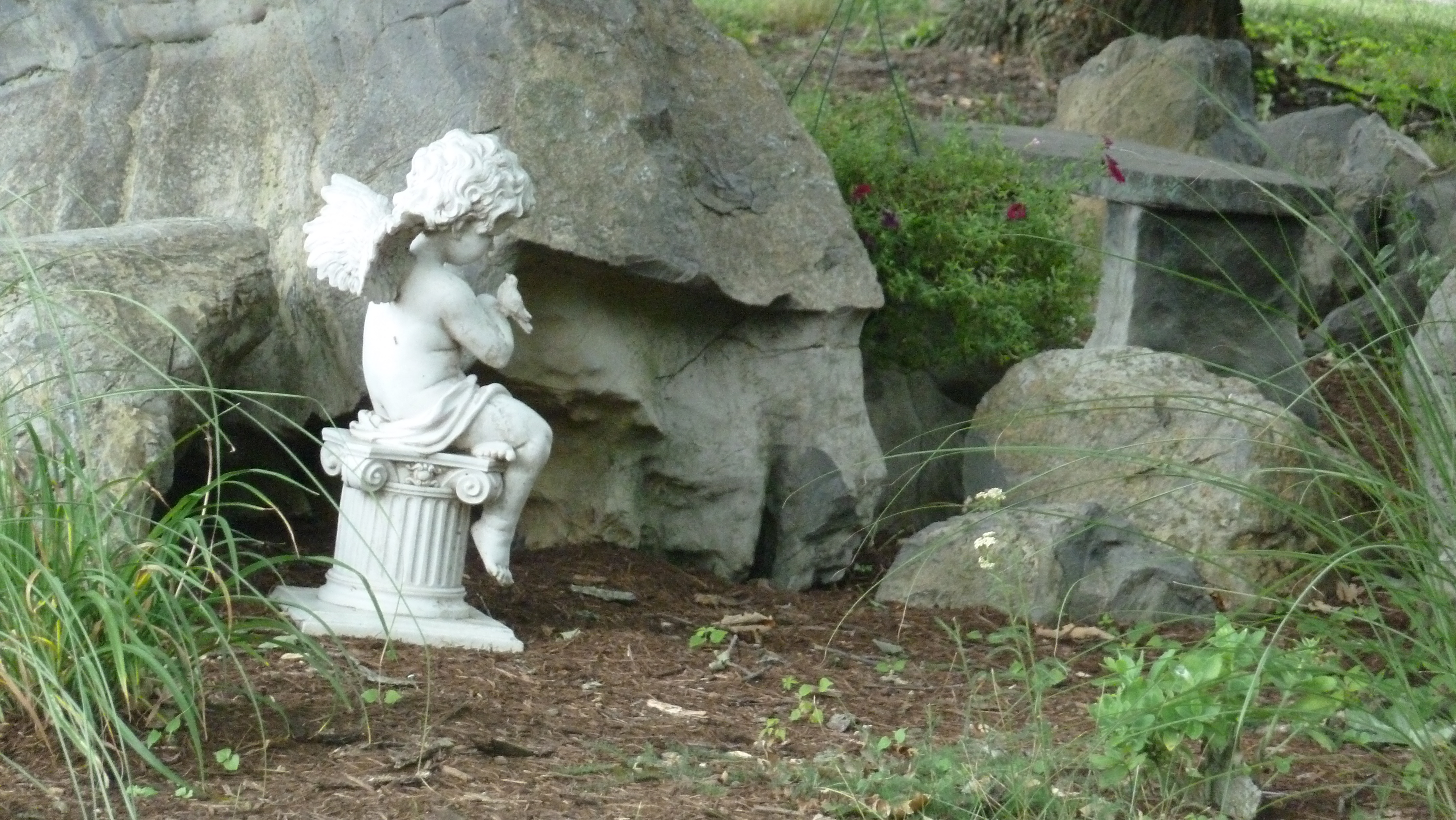
I will fear no evil,
for you are with me;
your rod and your staff,
they comfort me.
5 You prepare a table before me
in the presence of my enemies.
You anoint my head with oil;
my cup overflows.
6 Surely your goodness and love will follow me
all the days of my life,
and I will dwell in the house of the Lord
forever.

And here is my Psalm using M…
Psalm in the Letter M
1 The LORD is my mediator; Melodie shall not miss out.
2 He maketh me merry in marvelous meadows: he monitors me beside mild marine bodies.
3 He makes over my mobile inner self: he moves me in the methods of morality for his name’s memorability.
4 Mwah, though I meander through the murkiness of mortality, I will fear no madness: for thou art with me; thy miraculous wand mentors my members.
5 He manages to set a mouthwatering meal (metaphysically) with mine enemies: he makest my head murky and messed; my metaphors mirror each other.
6 Surely his mysterious mercy shall follow me mindfully all the measure of my marvelous life: and I will mellow in the house of my Maker for millennia.
–Melodie Davis
***
To find M words, I used the computer’s readily supplied thesaurus, and then Googled for a list of “good M words.” Google went right to work and brought me this marvelous list, all grouped together like you see below, and all in some way “good” or positive. I was spellbound and set to work.
Feast your imagination and then if you are similarly intrigued by creating your own Psalm, write yours after first checking out April’s post to see which letters she still has “available.”
April is a Mennonite pastor in British Columbia and is the author of several books and studies including the forthcoming book Four Gifts: Seeking Self-Care for Heart, Mind, Soul, and Strength from Herald Press, where I serve as managing editor. Her marvelous and mesmerizing new book (oh, opps) can be preordered here.
Good M Words – According to Google
MADE , MAESTRO, MAGIC, MAGICAL, MAGICALLY , MAGICIAN , MAGISTRATE , MAGNANIMITY, MAGNANIMOUS, MAGNANIMOUSLY , MAGNETIC, MAGNETIC TO LOVE, MAGNETICALLY , MAGNIFICENCE, MAGNIFICENT, MAGNIFICENTLY , MAGNIFIES IT, MAGNIFY, MAGNITUDE, MAIDEN, MAIN , MAINTAIN, MAJESTIC, MAJESTICALLY , MAJESTY, MAJOR , MAJOR LEAGUE, MAJOR-DOMO , MAJORITY , MAJORLY , MAKE, MAKE A DIFFERENCE, MAKE DREAMS COME TRUE, MAKE MY DAY, MAKE THE PENNY DROP, MAKER, MAKING AN IMPRESSION, MAKING-A-DIFFERENCE, MALLEABLE, MALLEABLY, MAN, MANA , MANAGE, MANAGEABLE, MANAGER, MANAGERIAL, MANAGERIALLY , MANIFEST, MANLY, MANNER, MANNERLY , MANEUVERABLE, MANY, MARKED, MARKEDLY , MARKING DIVINE, MARVEL , MARVELED, MARVELOUS, MARVELOUSLY, MARVELOUS, MARVELOUSLY, MARVELOUSNESS, MARVELS, MASCULINE, MASSAGE, MASTER, MASTERFUL, MASTERFULLY , MASTERLY, MASTERMIND , MASTERPIECE, MASTERPIECES, MASTERS, MASTERY, MATCHLESS, MATE, MATERNAL, MATERNALLY , MATRIARCH, MATTER , MATTER-OF-FACT, MATURE, MATURELY, MATURING, MATURITY, MAXI, MAXIMAL, MAXIMUM PROTECTION, MEANING, MEANINGFUL, MEANINGFUL WORDS, MEANINGFULLY, MEASURABLY , MEDIATE, MEDITATE, MEDITATION, MEDITATIVE, MEDITATIVELY , MEEK, MELIORISM, MELLOW, MELLOWLY , MELODIOUS, MELODIOUSLY , MEMORABLE, MENCH, MENSCH, MENTOR, MERCIFUL, MERCIFULLY , MERCY, MERIT, MERITABLE, MERITORIOUS, MERITORIOUSLY , MERRILY , MERRIMENT, MERRINESS, MERRY, MESMERIZE, MESMERIZED, MESMERIZES, MESMERIZING, MESMERIZINGLY , METAPHYSICAL, METAPHYSICALLY, METEORIC, METEORICALLY, METHOD, METHODICAL, METHODICALLY , METICULOUS, METICULOUSLY , METTLESOME, MHM, MIGHT, MIGHTILY , MIGHTY, MILD, MIND-BLOWING, MINDER, MINDFUL, MINDFULLY , MINDFULNESS, MINDSIGHT, MINIKIN , MINISTERIAL, MINT, MINT CONDITION, MIRACLE, MIRACLE WORKER, MIRACLES, MIRACULOUS, MIRACULOUSLY, MIRACULOUSNESS, MIRTH, MIRTHFUL, MIRTHFULLY , MITIGATE, MITIGATIVE, MITIGATORY, MM-HMM, MMM, MMMM, MODEL , MODERN, MODERNISTIC, MODEST, MODESTLY , MODESTY, MOM , MOMENTOUS, MONEYED, MONITOR , MONUMENTAL, MONUMENTALLY, MOPPET , MORAL, MORALE, MORALITY, MORALLY, MORE , MORPHING, MOST , MOST CERTAINLY, MOST FORTUNATELY , MOTHER , MOTIVATE , MOTIVATED, MOTIVATED WORDS, MOTIVATING, MOTIVATING WORDS, MOTIVATION, MOTIVATIONAL, MOTIVATIONAL WORDS, MOTIVATOR , MOTOR , MOURNING, MOUTHWATERING, MOVED, MOVEMENT, MOVER, MOVER AND SHAKER, MOVING , MUCH, MUCHO, MULTI, MULTIDIMENSIONAL, MULTIDISCIPLINED, MULTIFACETED, MULTI-PURPOSE, MULTITUDE , MUNCHY, MUNIFICENCE, MUNIFICENT, MUNIFICENTLY , MUSCULAR, MUSCULARLY, MUSICAL, MUSICALLY , MUST , MUTUAL, MUTUALITY, MUTUALLY , MWAH, MY, MY MY, MY WORD, MYRIAD
***
Do word games or puzzles grab you? Once I got started on this, I couldn’t let it go until I’d put together a Psalm. It was fun to do something I didn’t need to do. Thanks, April for this great exercise!
***
What do you do just for fun?
***
Has anything you googled recently utterly amazed you?

Another Way for week of June 8, 2018


Another Way for week of June 1, 2018
What Did You Do When You Were Little?
My oldest grandson, Sam, asked his mother recently, “What did you do when you were a little girl?”
So that evening she put him on the phone with me and I recalled a few pastimes or activities, and promised I would think about it more. Some of those details from 35 years ago have gotten swallowed up in time, but pictures helped me think about the particulars. I’m writing this as to him (and of course some of it applies also to his cousin who’s just two months younger than he is). If you have littles or grandchildren, you can read it to your own and insert little changes to make it fit your family. Or get out your own photo album (archaic?) to help recall their fun.
- Your mommy and her sisters (and here, with a first cousin Cathy who loved playing with them)

Tanya in front, Michelle behind, cousin Cathy.
used to spend hours playing dress up—not with Halloween costumes, but their own creations. They had a big box full of scarves, grandma’s old housecoats, slippers, blouses, shirts, hats, and once, a little girl loaned us ballerina costumes for a couple of weeks. Oh

Michelle and Tanya.
what fun they had then!
- Your mommy loved playing with the cats—especially when there were baby kittens. Oh the

Tanya, left in kindergarten with “show and tell pet day.”
tiny mew mew mews that came from their nests of old soft towels. The baby kitties were blind at first, couldn’t open their eyes. They had to hunt with their heads poking around to find their mommy’s milk. And of course it was very hard for your mommy to wait a week until the kitten’s eyes were open. (We said if children played with them too soon, they might make the kitties have mattery eyes.)
- Your mommy was just like you loving books and enjoying many hours of someone reading to her, or looking at the pictures and “reading” to herself.

Little sister Doreen front, Michelle and Tanya.
- Your mommy loved to play in snow. Don’t all children who live where it snows love it? You are learning more about snow since you have moved further north!

Michelle, left and Tanya, right.
- Just like you, your mommy learned to fish—at first throwing a fishing line in the yard, and later, fishing at a lake and river. You are lucky to have a grandpa that has his very own pond.

- Just like you, your mommy enjoyed playing in leaves in the fall,
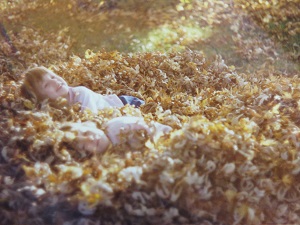
Tanya swimming in leaves.
wagon rides in a little red wagon,
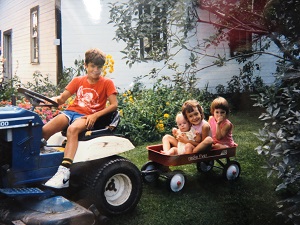
Indiana cousin Scott (he has a son now who looks just like him) on Grandpa’s wagon with baby Doreen, Michelle and Tanya.
and swimming. When she got bigger, she loved rock hopping in creeks, and also looking for crawdads and little fish in mountain streams. Maybe you can do that sometime soon.

Riven Rock Park where we sometimes swam. Tanya in a contemplative mood.
- Your mommy enjoyed climbing or hiking and rarely complained—not even when she climbed the Statue of Liberty when she was only three. We hope as you get older you will like hiking on trails and through woods and mountains.
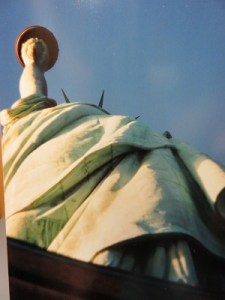
Lady Liberty–and yes Tanya climbed clear up to that torch at age 3.
- Just like you, she enjoyed hunting for and hiding Easter eggs—endlessly sometimes, playing with sisters to hide the eggs again and again.

The annual Easter egg hunt at Trinity, with Thomas Barber and Peter Grandstaff checking her stash.
- Just like you, she enjoyed music, and loved playing the piano. When she got old enough, she took lessons—many years, and became a flute player too. Sometimes practicing was work instead of fun, but she stuck to it.
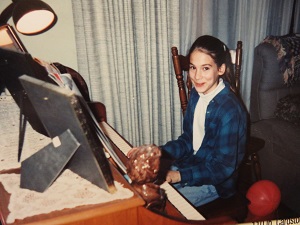
Tanya circa middle school.
- Your mommy had a dog and you have a dog. I know you love to feed your dog, even though he is much too big for you to take on a walk. (I love that our old dog Wendy is laying very close to the gold chair your dog Ike slept on for many many years!)

Our family dog, Wendy.
- When your baby brother was born, you couldn’t wait to play with him, and to help change his diaper. Your mommy loved playing with her baby sister as well. While babies are not toys, you enjoyed a doll to help teach you about taking care of a baby.
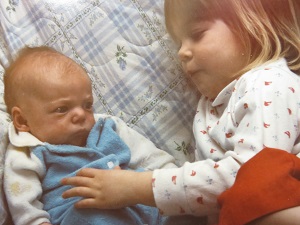
Baby sister Doreen; note Tanya’s bliss!
- The little airport you still play with at Grandma’s house was once your mommy’s. She was very excited to get it for Christmas one year. She was even more excited when our whole family got to fly to Florida and see real baggage carts, and airplanes being filled with fuel. We are happy you can still play with your mommy’s airport.

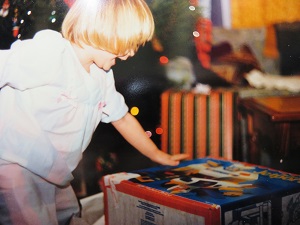
Tanya opening the Fisher-Price airport that her children still play with today.

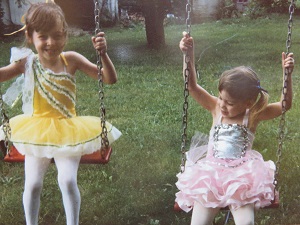


Love from Grandma Davis.
What did you enjoy doing when you were a little girl or boy? Write your own letter for your children or grandchildren. I’d also love to hear what you have to tell them. Comments welcome here!
Another Way is a column by Melodie Davis, in syndication since 1987. She is the author of nine books. Another Way columns are posted at FindingHarmonyBlog.com a week after newspaper publication.
Another Way for week of May 11, 2018
For Those Who Aren’t Moms or Grandmas
I have no right to write this, but I want any women who wished to have children, whether as birth moms or adoptive moms, or stepmoms, to know that those of us who have been fortunate in this department sometimes forget the miracle of a child does not occur for everyone.
Those who take their Mom role for granted can be unbelievably ignorant, unaware, forgetful or callous. We sweetly go on blabbing about the children (or worse, complaining); bragging about the grandchildren (and worse, talking about how parents used to raise their children, cough cough); or endlessly passing around phone photos (or worse, posting all the cuteness online).
Beyond the trials and pain of infertility, I know it simply does not work out for some to adopt. Illness of a spouse, worry about not knowing the genetic or health background, or the expense and risks makes some wary about adopting.
But, each of us had a mom and that mom gave us the gift of life, a beautiful, precious thing. Even if that mom failed you, was not there for you, or even abused you, as long as you have breath, the gift of life is a miracle. You are a wonder! With or without kids, you have so much to offer the world besides offspring.
***
One sister, through the circumstances of life, ended up not having children. But she loves kids. They feed something in her soul while cuddling babies (or puppies, kittens, lambs and goats, but that’s another story). All of her nieces and nephews adore her probably over their other aunts and uncles who have their own kids. Funny how that works in many families.
I love that she also looks after many of the financial details for my mother (at least the big picture stuff) and she and I are both fortunate to have one sister who lives near Mom (almost 94), taking her on a weekly errand run. My sisters are mothering my mother—and Pert wears that role well even though she’s never been a mum. My other sister Nancy, a nurse by profession and a mother, grandmother and great grandma many times over, excels in her roles—including watching out for Mom’s needs. Let’s hear it for women and men who mother even if they are not physically mothers.
***
In churches, where motherhood is right up there with godliness, Mother’s Day can be excruciatingly painful.
Our church has never given out roses or had moms stand up or otherwise made a practice of producing humiliation for those who have not had this role.

Icon image of prophetess Anna in the New Testament
Hannah (eventual mother of Samuel), Sarah (Isaac), Elizabeth (John the Baptist) and Anna (prophetess) in the Bible all suffered this way and were childless long after they were expected to have become moms. Back then you can believe they felt shame and neglected by God in their dilemma. But then God, or something intervened for them. Why not for all? Life is not fair. Small moments often produce fresh grief.
Jesus and Paul apparently didn’t have children. In fact, Jesus is pretty hard on families at times. The New Testament book of Matthew tells us, “While Jesus was still talking to the crowd, his mother and brothers stood outside, wanting to speak to him. Someone told him, ‘Your mother and brothers are standing outside, wanting to speak to you.’ He replied to him, ‘Who is my mother, and who are my brothers?’ Pointing to his disciples, he said, ‘Here are my mother and my brothers. For whoever does the will of my Father in heaven is my brother and sister and mother’” (Matthew 12: 46-50).
Sounds pretty harsh, but it was probably a rhetorical question and Jesus goes on to make the point that communicates across centuries and cultures: we may encounter difficult paths in life, but doing the will of God is what God wants us to do. The early Christians would have likely experienced rejection from their families for following the way of Jesus.
To my dear friends and relatives who have not had children or grandchildren by choice or happenstance: you are loved and appreciated and please forgive us when some of us behave badly—around Mother’s day or any old day. Godspeed!
***
Comments, or stories? Leave a comment here or write to me at @anotherwaymedia@yahoo.com or Another Way Media, P.O. Box 363, Singers Glen, VA.
Another Way is a column by Melodie Davis, in syndication since 1987. She is the author of nine books. Another Way columns are posted at FindingHarmonyBlog.com a week after newspaper publication.
Another Way for week of May 4, 2018
Word Pictures from a Great Day with Grandsons
Since none of our grandchildren live nearby, we have not had as much opportunity to be grandparents for a day or overnight or help out as much as we’d like. Plus I am also still employed full time.
But one Saturday in April our daughter and son-in-law went to a daylong seminar on raising fruit trees, and we gladly kept their two little boys from about 8:30-5:30.
It was a good exercise to reenter that preschool world, with a four-and-a-half-year-old and a tyke who just turned two.
We had visited their house on Easter and the older boy was very sad when we had to leave. We told him he would get to come to our house that week on Friday night. He quickly looked at the calendar, counted the days, and said “that’s not very far away!” So he looked forward to it all week.
The younger boy of course doesn’t get time concepts as well and Saturday morning, after his mommy and daddy left, he wore a sad face for a while. I sympathized and tried to cheer him up saying mommy and daddy would be back for supper. He cuddled and stroked the well-worn tail of his favorite stuffed animal, a zebra “Za-Za.”
I consulted my list of “things to do” and began to pull the different pieces of our old Fisher-Price airport out of the toy box. The youngest one is a big fan of “heh-copters” which often fly over their metropolitan community, so we found a “little person” figure to fly it, and the remaining pieces of our daughters’ much-loved set. The boys enjoyed it, but that lasted like, five minutes.
We played with a mechanical train the older boy brought along, and fixed it when it came apart. Both sets of our grandchildren have lots of wooden trains and tracks (Thomas the Tank Engine variety) at their homes, but the battery-operated train didn’t provide hours of fun like arranging and rearranging trains and track as the Thomas trains do.
Then we settled on Zingo, a Bingo version for little ones that was perfect even for the two-year-old. I think we played two or three rounds before they were ready to move on.
Another hit was the bouncy balls I bought them—light and small enough they could throw or roll carefully—but then that got a little wild too.
One wanted to play in the playhouse my dad originally built, and the older went with his grandpa to the garage to do some hammering of nails and other explorations. But what he really loved was “helping” Grandpa fire up the woodstove. He showed me how the flames went up using his hands—and of course Grandpa was careful to teach safety.
Meanwhile in the kitchen, I prepped veggies for my favorite homemade vegetable soup, under the theory that our daughters were always more willing to try food they helped prepare. I let the two-year-old have a plastic knife and some partially cooked (blanched) garden carrots that I unthawed from the freezer. I supervised as he tried to cut those up for the soup. He was moderately successful. But Grandma was not successful in getting him to at least try the soup. He loves lentils, rice and other yummy creations from his Pakistani caregiver at her home, but very stubborn about not liking vegetable soup, just like his mommy said.
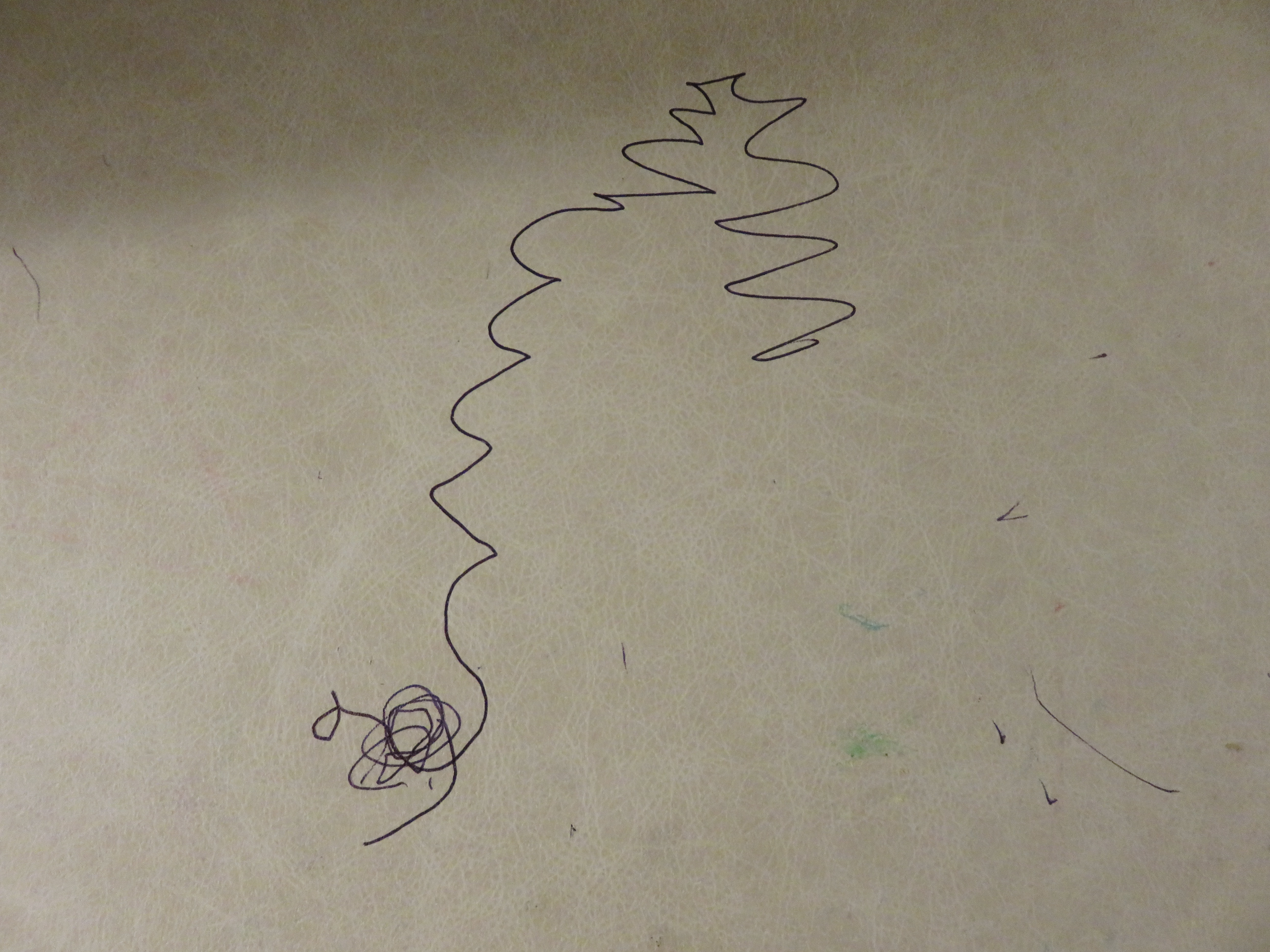 Which leads us to: willfulness. We have a nice little play table with two tot-sized folding chairs and they often center their table activities there. Then I caught the older one using an ink pen (left there by grandma) writing on the top. I scolded him mildly so he would know he was not supposed to write on the table, only on paper or coloring books. So I was especially disappointed when I discovered an even longer trail of ink on that table after they went home. I had to think of the walls my children wrote on—like children everywhere, or the day my toddler unrolled an entire roll of toilet paper at her caregiver’s house.
Don’t take any of this as a complaint of this dear day, but an acknowledgement that for most of us as adults, raising children takes energy, imagination, creativity and presence —and those things can come at the price of activities we might be doing otherwise. We make the sacrifices as parents because of the overarching love and commitment we have for our children—and years later wonder how the precious years ever went by “so fast.”
We all can use reminders that no matter what age of folks we’re around, big or little, the gift of presence—truly listening, engaging, interacting with our loved ones and especially new friends—are moments to remember and treasure.

Here are some great activity ideas I found and downloaded as a photo. If you click on it, it should enlarge to where you can read it.
 ***
***
For my free book, Working, Mothering, and other “Minor” Dilemmas (Word Books, 1983) with many stories from the growing up days of our children, send $3 for postage to Another Way Media, P.O. Box 363, Singers Glen, VA. (Amazon also has links to used copies here.)
Another Way is a column by Melodie Davis, in syndication since 1987. She is the author of nine books. Another Way columns are posted at FindingHarmonyBlog.com a week after newspaper publication.
Eastern Mennonite University: A Century of Countercultural Education
Book by Donald B. Kraybill
Review by Melodie M. Davis, class of 1975.
A Countercultural History, Part 2 (See Part 1 here.)
Last week I introduced some of the things I liked about Don Kraybill’s 100 year history of my alma mater, Eastern Mennonite University: A Century of Countercultural Education.
Some surprises in the history:
- I had never known that an early attempt at starting an eastern Mennonite school was first located in Alexandria, near Washington, D.C., within a mile or two of the Mt. Vernon home of George Washington, the first U.S. president. Of course the early Bible-focused short semester was two centuries after George, but how different EMU would be today had it been located in the metropolis surrounding our nation’s capital.
- My sister, a Goshen College student at the time (and later a faculty member) used to tease me that students wore capes and coverings at Eastern Mennonite. By the time I got there, not true, but if you are an alum of either Goshen or Eastern Mennonite, you need to check out the intense rivalry and rancor that existed between the two schools, not because of dress, sports or academics per se, but theology—almost to the point of splitting families and friendships.
- J.B. Smith, EMC’s first president, just four months after he became president, implored the Mennonite Board of Education to “drive out the enemy,” (the liberalism that he blamed Goshen College for spreading across the church). How Smith came to be president early on when founders were desperately seeking one, and then resigned under pressure, is another surprising story in itself.
- Although EMC turned away the first several African American students who wanted to attend (fearing the local community wouldn’t be happy about it), they later broke color barriers at a time when people in Virginia (the old South) weren’t very much inclined that way. In 1971, I was matched with an African American roommate, 23 years after the first black student was admitted to EMU. Paula and I had a good Freshman year and I learned much about her culture while she became acquainted with Mennonites, after bravely coming to a campus she had never set foot on, among Mennonites she had never heard of.
- I found another whole definition of “millennials” than what we use today, as Kraybill sorts out the many theological battles of the first half of the 20th century fundamentalists over premillennialism, amillennialism, and millennialism.
- The current (2017) enrollment of actual Mennonites in this long time Mennonite institution was only about 31 percent, which creates a very different campus environment than what existed in the 20th My roommate would find an entirely different campus today, but sad to say we’ve lost touch.
Some things or people I’m tickled to say I had first-hand (or almost first hand) experience with, that are mentioned in the book:
- An eccentric professor who was an inventor and believed firmly in UFOs, E.G. Gehman. Gehman was someone I picked to interview for a feature writing assignment. His second wife was a loyal and longtime volunteer for may local Mennonite agencies, including ours, Mennonite Media. Some of Gehman’s “political” cartoons (about EMU/Goshen conflicts and the fight over dispensationalism) are included in the history book.
- Nobel Peace Prize winner Leymah Gbowee (and an EMU grad school aluma) visited campus in 2011, author of a marvelous read, Mighty be the Powers; I was pleased to attend her press conference and meet her afterwards.
- Mary Emma Showalter, the first woman on the faculty to earn a doctorate, (although I was not on campus at any time when she was) compiled the bestselling Mennonite Community Cookbook published in 1950. Years later I got to research and write a 65th anniversary retrospective on the book (which is now published in the back of that historic cookbook). Can I be secretly proud and remain Mennonite-humble?
- One of my roommates my senior year of college, Sara Wenger Shenk, who now serves as president of Anabaptist Biblical Seminary, is the granddaughter of, A.D. Wenger, the second president of EMU. It blew me away that her grandpa grew up only 4-5 miles from where I live today. He lived near a village called Greenmount. (I didn’t know it ever was a village, although one old storefront still stands from that time). After losing his first wife to illness just a year after their wedding, out of grief and loneliness he decided to travel all the way around the world, perhaps the first Mennonite to do so, which became a launching pad for a remarkable preaching career and eventual invitation to be president of the college.
- Later I would infuriate the dean of the seminary, George R. Brunk II over an ill-conceived stream-of-consciousness description of Eastern Mennonite Seminary (mostly male at the time) in the EMU Shen (yearbook). Years later I apologized and received his gracious forgiveness, to keep peace with the man whose preaching once inspired me to walk the literal sawdust trail of a large tent revival meeting.
I found the second half of the book fascinating as well, although in not as personal of sense, because while I worked 42 years next door to the EMU campus and walked the grounds (or the indoor track) almost daily for exercise, I was not as involved with the daily and yearly workings and issues of the university.
For anyone interested in Mennonite cultural history and understanding some of the early dilemmas that were just as heated (maybe more so) as today’s divisive issues, this book brings, intellectual intrigue, delicious detail, inspiring insight, and admirable analysis.



2018 Mass Mennonite choir singing at the Eastern Mennonite University gymnasium on April 6, over 400 teens, hosted by Eastern Mennonite High School. Photo by Melodie Davis
Another Way for week of April 27, 2018
When We Sing
I grew up with a singing mother. I could count on hearing her lovely music from the kitchen almost every day of my 18 years at home, unless she was ill or had a cold. I started to write “or if she was in a bad mood” but I think she sang or at least whistled even then, to help chase away the blues.
Songs like “I’ll Praise My Maker, while I’ve Breath” and “I Owe the Lord a Morning Song,” come easily to mind from among her frequent tunes. What a beautiful habit and heritage.
I thought of Mom as I recently heard over 400 teens singing their hearts and souls out. Not only was the event beautiful and moving, the teenagers gave it their all, causing me to reflect on the role of music in our lives and worship.
The Mennonite Schools Council (of the Mennonite Education Agency) has been the supporting organization behind these mass choir events for 56 years, if my research is correct. That means some of my high school musical chums would have participated in this event while I attended Bethany Christian High School (Ind.) from 1966-1969.

Bethany Christian HS 1969 photo of me (top row) and one of my friends, Tobi Brenneman Goldfus, front, in the Varsity Chorale (not top choir).
Like many children born into a Mennonite household, I grew up enjoying singing. I dabbled in piano, and eventually tried out for choir in high school. I do not do well at holding pitch when singing by myself, so that is likely what kept me out of the top choir at school. So I sang in the “also ran” choirs in high school and college.
Our daughters were fortunate to grow up in a Presbyterian congregation that sings enthusiastically (no organ), with a pastor who organized a children’s choir directed by her musical husband, John Held. Dear John died way too early of cancer so I must sing his praises while he is enjoying the mass choir of the realm beyond. Two of our daughters went on to sing in the top choirs at their school which, even though it was a public high school, gave religious concerts in churches all over our valley. Their sister chose instrumental music, flute and piano. So I’ve been moved to tears by performances of all types.
The kids in this mass choir of hundreds of voices joined in so vigorously, their faces by turns angelic, intensely focused, and sincere. It left some of them almost panting as they hurried off the risers and gymnasium bleachers. I admired two young women who, though severely challenged with their gait from birth or injury, struggled to keep up. I was thrilled to see a good mix of ethnicities sprinkled through these “Mennonite” choirs, which now look like most of the colorful U.S. rather than the pale European blondes of earlier Mennonite lineages. Admirably, the music also represented a wide variety of countries and singing styles. I was also motivated to attend because my longtime friend’s husband, Jay Hertzler, was honored to direct this choir as perhaps a capstone of his long musical career, recently retired from directing at two different Mennonite high schools. (Do take time to listen to at least part of this gorgeous program here )
 I know that for many of the kids it was a deeply spiritual experience, moving to their bones, one they will remember the rest of their lives. Carol Penner, author of a forthcoming book called Every Day Worship, (Herald Press, June 2018) uses a line in her book I love: “When we sing we use our whole body in conversation with God.” Those kids looked like they were having deep soulful conversations with God which I hope they don’t forget.
I’m not so naïve to think none of them will be touched by drugs, alcohol, unwanted pregnancy and all of the pitfalls of our times through the teen and young adult years. As I watched them, I speculated that some of them were already involved in heavy relationships, or perhaps new crushes as they mixed with so many kids from other schools.
Next year, the mass choir will convene in Lancaster, Pa. Probably too far away for me to run to on a Sunday afternoon, and I don’t know if I’ll ever get to another, but I treasure greatly this deep reminder of how music stirs our souls—and brings us closer to God. What a gift God gave us when creating us with the ability to sing—or at least to make a joyful noise in the “also ran” choir.
***
For fun, send me the name of your favorite hymn or spiritual song. I’d also love to hear stories from your choir days or other musical highlights. Write me at @anotherwaymedia@yahoo.com or Another Way Media, P.O. Box 363, Singers Glen, VA.
***
Another Way is a column by Melodie Davis, in syndication since 1987. She is the author of nine books. Another Way columns are posted at FindingHarmonyBlog.com a week after newspaper publication.
Eastern Mennonite University: A Century of Countercultural Education
Book by Donald B. Kraybill
Review by Melodie M. Davis, class of 1975.
A countercultural history – Part 1
I have discovered in recent years an amazing affinity for historical books that touch on my own history–and none as revealing as Donald B. Kraybill’s newest tome, Eastern Mennonite University: A Century of Countercultural Education. History matters because we can all learn from the rich legacy left by those who came before us.
But a history book about one’s alma mater? Dry as dust, my mother might say, except for the subversive word in the title, “countercultural.” What does that mean? That we were learning to be hippies, revolutionaries?
No and no, but Kraybill, a sociologist by training and an expert on the Amish that even the Washington Post and TV networks call upon when they want someone knowledgeable and quotable, puts his own particular stamp on this history. Not in a personal sense, but in the context of Christian social history from a Mennonite values perspective. Kraybill says in his preface “Institutional histories … are social constructions—stories crafted by the researchers who write them … [and] this is not a conventional one.”
 As an author, Kraybill has made Christian social history in his own right, with at least two bestselling books which shed marvelous light on both Jesus and the Amish—not in the same book. I also have had the privilege of working with Kraybill in my role as an editor at Herald Press—where we’ve just released the 40th anniversary edition of his Upside Down Kingdom, and he’ll soon come out with another revised bestseller with a new title, Simply Amish, (updates the perennially popular The Amish: Why The Enchant Us).
But this book, the EMU history, was not published by our publishing company (I would not be reviewing it if we had). EMU contracted with Pennsylvania State University Press to publish the very readable volume.
Okay, why I loved it: On so many pages I stepped into my own history, not just on campus, but my growing up days near Goshen, Indiana, and my now decades-long sojourn here in the Shenandoah Valley where EMU makes its home. The first half of the book especially mirrored so much of my own life which is always a fun thing in a book. It touches on thousands of people I have been fortunate to either know personally, or I know as the son or granddaughter of teachers, administrators, and various presidents. It offers a rich understanding of the conflict we touched on as kids approaching our college choices–where my two older sisters chose the backyard Mennonite college–Goshen College which, according to the founders of EMU, needed to be fought for its liberalism and not just on whether or not to wear covering strings and capes.
And let’s be honest: another reason I enjoyed the book is Kraybill quotes some of my writing, from the college newspaper. Everyone wants to be remembered, and while I’ve written a few books myself, being mentioned in the 100-year history of my college feels a little more enduring. Like you know that puppy will be around in another 100 years—I’m not sure my forgettable books will have any longevity.
Ok, my name is only mentioned in Kraybill’s footnotes, and the spelling of my first name is wrong, (I’ve never been a stickler about that), and its history! The footnotes reflect his copious and painstaking research; if you check out the book, my footnote in history comes in the footnote section, chapter 8, footnote #126, regarding a piece I wrote parodying the rhetoric of our great orator of a college president, Myron Augsburger, in regard to a campus debate over whether or not to insist the grads wear graduation robes. Ironically, to robe or not robe was a dearly won right by students not too many years earlier, after decades of robes being considered too worldly and pompous, especially those worn by profs.
The really strange thing was when Kraybill emailed me about the quote, I couldn’t even remember  what he was referencing; turns out though, my packrat tendencies (on some things) meant I found an actual copy of the article and refreshed my memory. The paragraph Kraybill quotes gives you the flavor of the parody:
Next spake the wise orator Myronstotle in a great flow of words: “We need to be aggressively and frontally committed to significant involvement in contributing to a positive emphasis in the graduation exercises by maintaining mature dress in the context of brotherhood.”
I was not too surprised to find another piece I had written for the EMU Bulletin was mentioned in the history book, because it was about a very sad and difficult time on campus after some unusual deaths which greatly affected morale and atmosphere on campus.
Those are some very personal reasons I found myself eager to pick up the 400-page book even though it was physically hard to manage for my bedtime reading.
Next week: some surprises and first-hand acquaintances mentioned in the book.
***
Blog posts about other history/biography books I’ve enjoyed: Call Me a Menno-nerd;
My Connections to the Orie O. Miller Story; and A Woman I’ve Admired: Katharine Graham.
***
Do you like to read history books? Why or why not?
If you went to EMC/EMU let me hear from you! Why did you go and what did you find at EMU?

 findingharmonyblog