

 Another Way for week of January 26, 2018
Seven Benefits for All in Dismantling Racism
These days seem to be filled with needing to talk about racism because 1) it still exists and threatens to split the U.S. yet again; 2) there are so many incidents which are either racially charged or are debated as such; 3) for people of color, racial incidents happen all the time. How can we begin to truly dismantle racism in this country, for the benefit of all?
I like the helpful twist that Jodi Picoult adds to this thought in her novel Small Great Things:
Kennedy, public defender: “Do you think there will ever be a time when racism doesn’t exist?”
Ruth, an African-American nurse charged with murder: “No, because that means white people would have to buy into being equal. Who’d choose to dismantle the system that makes them special?”
When people talk about undoing racism you often hear folks talk about white privilege—the invisible backpack every white person has that gives them certain privileges without even thinking about it—or doing anything. I like the phrase “special” better than “privilege” because try telling a white man or woman living barely above the poverty line, doing the best he or she can to earn a living at around $20,000 a year with a family of four when they can hardly pay for rent, groceries and prescriptions—that they have white privilege.
Such a person already feels on society’s bottom rung. He or she may have a pretty hard time recognizing their privileged station in life. But they are privileged because at least they don’t have to worry their children will be seen as suspicious or dangerous youths while walking home from school, second guess why they didn’t get the promotion or accepted into college, or why they were stopped for an out-of-date car registration or followed all around a store. But Jodi Picoult is right with her character’s line: Who’d choose to dismantle the system that makes them special? Who would willingly give up those privileges?
We need to think of things another way. What are the positives for all in undoing the sin of racism? I can think of several potential positives:
- Make our society and culture safer
- More opportunities for an improved life for all
- Move forward from the past
- Less anger and hate in the world, more love
- Less crime, less need for more prisons
- Provide a stronger example to other countries of moving past racism
- Have time, energy and money to tackle other issues such as drug abuse and sexual abuse
That is a tall order and while no one can change the color of their skin or truly shuck the privileges that come with those unasked-for-advantages, if we are white we can work to recognize ways we as whites have had special treatment all our lives in the U.S. and don’t even recognize it.
One young woman, Osheta Moore, a mother of three who happens to be black and married to a white pastor, has written her vision for change in a book called Shalom Sistas: Living Wholeheartedly in a Brokenhearted World (Herald Press, 2017). She asks this question: “What if a bunch of Jesus-following women catch a vision of a vibrant, whole, flourishing world? What happens when shalom sistas [all colors] unite?”
I especially like this reminder in her 12-point manifesto, “We are beloved.” If we can wrap our heads around that, and let our children and spouse and neighbors feel that belovedness, that alone goes a long way to pouring into each man, woman and child (whether black, brown, beige or with a tint of yellow), that we are indeed loved by God.
We need to look at every human through those same eyes, even when they don’t realize how loved they are and don’t act it. The writer of 1 Corinthians 14:1 urges, “Make love your aim.”
May it be so.
What are your ideas on how to truly dismantle racism?
Stories?
Comment here or email me at anotherwaymedia@yahoo.com or at Another Way Media, Box 363, Singers Glen, VA 22850.
Another Way is a column © by Melodie Davis, in syndication since 1987. Columns are posted at http://www.FindingHarmonyBlog.com a week after newspaper publication.
Why at first I didn’t like The Day the Angels Fell
Book review
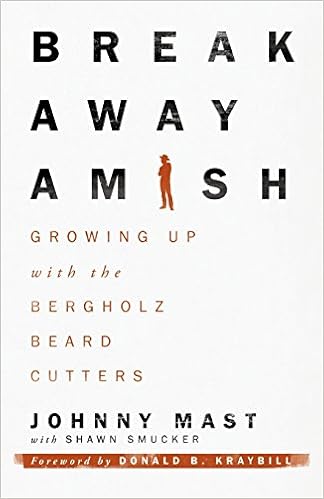
I enjoy the writing of Shawn Smucker: his books, his blog and the Uber driving stories he shares on his author Facebook page. I was first introduced to his writing as he assisted Johnny Mast in writing the excellent if understated Breakaway Amish: Growing up with the Bergholz Beard Cutters published by Herald Press in 2016.
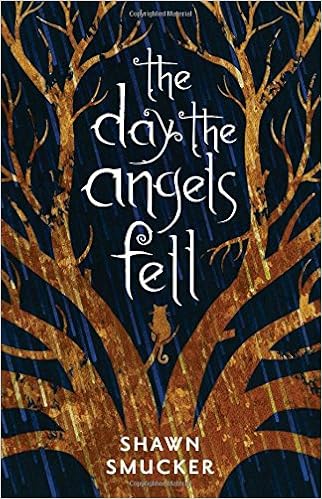
Then Smucker came out with a novel for children or adolescents, The Day the Angels Fell published by Revell in 2017. I bought a beautiful hardbound copy with a dust jacket that uses spot gloss to highlight long artistic rain smears (I would call them drops, but they are more like a mix of lightning and rain) which at first I critiqued to my design colleagues at the office. I said the gloss (shiny stuff often put on book covers to catch your eye in bookstores) made the white type font on back cover hard to read unless you held it at just the right angle in whatever light you had. Always an issue with those of us past middle age.
And at first I wasn’t sure if I liked the book enough, either, to review it. I usually don’t like to review books if I don’t like them because … I’m an author too and I know how much bad reviews can sting. But it was a top award winner late last year in the Christianity Today Book Awards for 2018 in the children and youth category (where the publisher I work for also happily picked up an award for God’s Country: Faith, Hope, and the Future of the Rural Church) so I figured there was something wrong with me if I didn’t love the book.
Then, months later here in January, driving along a back road on a rainy wintry night and passing a country funeral home, suddenly I thought of the young protagonist in Smucker’s book, who lost his mother. His mother had gone out in a lightning storm to rescue his cat that had gone up in a tree, and he knew he inadvertently caused his mother’s death.
Suddenly I put my finger on why something in me had recoiled against the plot line of the book. Inside I was remembering the many viewings we have attended over the years at that small country chapel—the accidents, the assumed suicides of beloved acquaintances who were taken from us much too soon, and I found myself shaking those tragedies in my brain like a distraught parent shaking a child in their mind (not in real life). That was why the book didn’t sit well: not the writing or the plot, but how it shakes you up.
The book taps all of our worst fears—not in this case the death of a child, but the death of the mother of an adolescent boy, and what happens to him as he deals with his grief in the days immediately after her death. None of us want that to happen to our children, either. And therein lies the power of this disturbing book. What would happen to my kids if I should die? For the author, with he and his wife currently raising six beloved children ages toddler to early teens—a troubling question indeed.
I realized my mixed feelings about the book then were not about the writing: no, it is masterful. Underplayed in places, rarely overdone, compelling, the mysteries keep you reading along with the questions about life and death he poses through his characters. The back of the book frames it this way: “Could it be possible that death is a gift?” Not the kind of question most of us want to answer—except that these are the important questions of life itself.
Young Sam wishes to turn back time on the night his mother died so he could keep his mother from going where she shouldn’t have gone. His adventures with his best friend, Abra (both are names of the author’s own children) mingle magic and fantasy and will appeal to young readers—I think—even though magic and fantasy are not my personal favorite genres. Improbably, Sam endeavors to find and bring his mother back to life, not an unrealistic wish for any child losing a parent. It is not for younger readers (like say seven through perhaps 10-12). It takes a certainly level of maturity to process the book. It reminded me of another award-winning (the esteemed Caldecott Award) young reader book from my own younger days, Bridge to Terabithia by Katherine Patterson, published in 1977. Patterson drew her inspiration from the true loss of a son’s friend struck by lightning. Is that where Smucker got his idea? I don’t know and it doesn’t matter. If you’re going to be inspired by another writer, you might as well be inspired by among the best.
I was relieved to discover why I was uncomfortable with the book, and now know that it is this terrifying topic that I didn’t like: not the writing, not the premise for the book, but my own shrinking from the unthinkable thoughts.
Bravo to the author for fingering and naming the fears held closest to our hearts. In doing so, he puts his hand on the bigger theme of our struggle as humans with the nature of good and evil. One line I had tabbed early in the book hints at the underlying grand theme: “But the darkness I [the protagonist] had taken with me from the cemetery grew just a little bit inside me.” Late in the novel Smucker also pens a disturbing but not unrealistic thought: “Maybe that’s the saddest part of death, the knowledge that when we die, we will eventually be forgotten.” That too.
Back to life. If you “like” Smucker’s author page on Facebook, you likely won’t find any of his fascinating Uber #RideShareConfessional blog stories for awhile because he’s in the midst of writing another novel and while he continues to do Uber runs to put bread on the table, he has put those blog stories on hold to finish this new novel under contract. And, like another earlier great writer, John Steinback, is writing about his process, each day! And sharing those inner thoughts and insights with interested readers. If you’re a writer type you may be interested in getting his daily emails (yes, I said daily, Monday through Friday) where he shares his writerly ups and downs as he progresses. You can sign up here. Or on a weekly basis, this page, and find the archive of all his journal type posts.
If you too become a Smucker fan and buy any of his books, know that you are helping feed hungry children. His, and all of us who hunger for meaty stories like this.
***
What thoughts does this review stir for you? Memories of the loss of loved ones? My own father felt he brought on his father’s death (at the age of 92) when he gave him a drink and Grandpa died choking. I’d love to hear your thoughts and stories.
***
To my own faithful readers who perhaps wonder why I’m not blogging as much as I used to (mainly re-posting my Another Way newspaper columns here) I too am a bit overloaded at the moment with various jobs. We also no longer get up at 3 a.m. for my husband’s job, so I’m blogging a bit less and will keep in touch here as ideas and thoughts and recipes and book reviews bubble up and beg to be written.
Here’s the novel and a link to buy it!
If the Amish fascinate you, and you remember hearing about the perversion of this overall honorable and faithful folk, you might appreciate the truths borne home by this insider look at the Bergholtz beard cutter travesty, co-written by Johnny Mast and Shawn Smucker. Check here.
And here’s the Herald Press award-winning book, God’s Country, if you’re looking! Another beautifully written book of stories about the rural church and how it can not only survive, but thrive.

Another Way for week of January 19, 2018

JMU Bridgeforth Stadium and university campus. Took photo on a flyover ride.
Learning from “Failure”
Our local university football team just completed a very successful season in which they won 14 games, then lost their final game at the of the NCAA (National College Athletic Association). This was after last season when they went all the way—and won the national championship. So, some would maybe say they “failed” this year.
Not in my book nor that of any smart coach or fan with a bit of maturity. While disappointing, these kiddos grew up having fun playing football. While playing at the university level and beyond has become increasingly dangerous, profitable, and a downright grind if you’re not loving it, the coaches at James Madison University emphasized “this is just another game, go out there and enjoy yourselves.”
Well of course it would have been more fun if more of the passes had stuck in the eager hands of the receivers. They lost by only four points.
We had season tickets this year and had a blast cheering them on to victory as part of the game’s “twelfth man” in the stands. Instead of going to costly concerts or many movies, we consider this our little splurge and bit of insanity

—especially sitting on cold bleachers in 20 degree temperatures at night. Or 90 degree sunny afternoons in late August.
We first began following this team back when the football program’s first coach for JMU was (and still is) a member of our church. We became go-to-many-games fans (both home and away) when our middle daughter was in the school’s marching band (which also has a legacy of winning awards), and followed her and the band to New York City’s Macy Day parade. We also went to a championship playoff game in 2004 (where we won!) in Chattanooga, Tennessee. Ever since then, we have enjoyed going to as many games as we can afford or have time for, but not when something more important takes place (the wedding of a niece, a chance to spend my birthday with my mom). We try to keep our priorities in line.
Which is what wise coaches do everywhere as they teach their young folks the true benefits of playing any sport: learning from the lessons it teaches you about life: hard work, sucking it up when you have pain, teamwork, discipline, and the super joy of success and accomplishment. After they lost their last game and the championship, I was a little amazed to read a quote in our local paper from the team’s outstanding quarterback, Brian Schor, about what he would take with him from these past two years under Coach Mike Houston. Schor was impressed with the integrity he saw in Houston and said, “When I raise my kids and I live the rest of my life, what I say is going to be what I mean [like Houston]” Daily News Record, January 9, 2018).
I hasten to say playing football is not for everyone and I will not be disappointed if my grandsons don’t play more than backyard football (my oldest four-year-old loves it already). We all know kids who’ve had bad injuries which affect them throughout life from biking, running, playing soccer, basketball, running track, or ballet. I’ve written before of the downside of too much emphasis on early competitive sports, which sometimes takes the fun out of the game. Children maybe play more to please their parents or for a future questionable scholarship than for downright love of the game. This topic is discussed thoroughly in a book co-authored by the athletic director at my alma mater, Dave King, with Margot Starbuck, Overplayed: A Parent’s Guide to Sanity in the World of Youth Sports (Herald Press, 2016). It makes a great study book for small groups or concerned parents.
You may not be a football fan but these principles apply to whenever you feel like a failure: Did you have fun? Was it healthy? Did it teach you something about life, other people, yourself, or God? If the answer to one or more of these is yes, then maybe it wasn’t really a failure.
***
What is or was your biggest failure so far? What did you learn?
***
Other comments, or your own sports or other competitive stories? Contact me at anotherwaymedia@yahoo.com or Another Way Media, Box 363, Singers Glen, VA 22850.
You can get more info or buy the book Overplayed by Dave King and Margot Starbuck here:

Another Way for week of January 12, 2018
New Dreams: Inspiring Kids to Be More
I never learned to play chess. Of course I never seriously tried; it always looked hopelessly complex. Although I graduated from college with a decent record and have had a somewhat successful career as a writer, producer and editor, chess was never something that really drew me in.
But we recently watched a “60 Minutes” segment on a man who loves the challenge of teaching chess to children to increase their opportunities in life and their intellectual capabilities. It was totally inspiring. Plus, he, according to others, is like a kid himself and just loves making chess into an engaging story.
In 2016 in their first year playing any kind of chess, children in the fourth and fifth grades in very rural Franklin County, Mississippi, (population 8000 for the whole county and only one stoplight), beat high schoolers competing in a state chess championship at Mississippi State University.
The best part was hearing that these kids were not only excelling in a board game, but bringing their grades up to high B’s and A’s. Dr. Jeff Bulington has worked for years teaching children to play chess—and not just the game, but using elements of chess to teach other academic subjects. They turn the chess board into a map of sorts, or a history lesson, and even science and math principles.
Dr. B., as he is known, moved to Franklin from Memphis. Franklin County fights the stereotypes of “dumb, poor and fat,” said one local man. It’s the kind of place people commonly call “nowhere,” but as Dr. B. put it in the program, “If there are people there, it’s not ‘nowhere.’ It’s just a somewhere that doesn’t get a lot of attention.”
In terms of chess, Dr. B. makes the various moves memorable by using stories like Little Red Riding Hood to illustrate what the pieces are doing. He and an assistant, Bobby Poole (also a pastor) have taught several hundred kids in that area to not only play chess locally, but to take on challenges from across the state and succeed.
Dr. Burlington grew up in rural Indiana as I did. I hasten to add my growing up days were in no way underprivileged: attending a private Christian high school for three years, taking piano lessons, playing sports, and participating in church girls’ club and youth activities. Later we moved to North Florida—away from the beaches, to an area like rural Alabama or Mississippi. If you didn’t have parents who could afford to pick you up from basketball or band practice, and who expected you to complete homework every night—you were pretty much stuck in a future flipping burgers or sawing pulpwood.
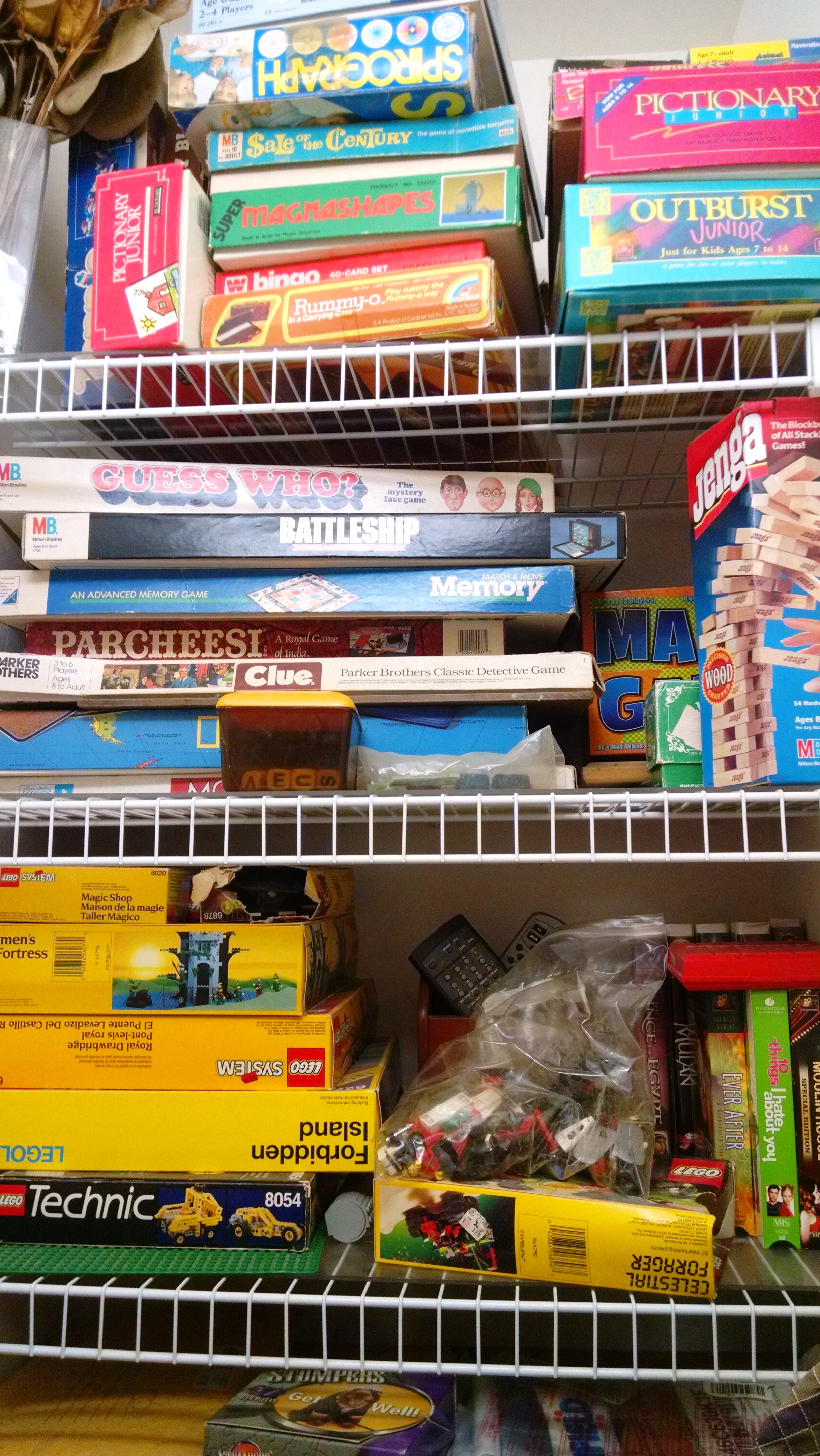
Lots of games in our game closet, but no chess.
I’ve lived in two other communities some would call “nowhere,” where the children had few of the opportunities of the average North American kid. The “poorest” of those places was definitely the Appalachian area of eastern Kentucky. The children there may have been underprivileged, but they also opened up beautifully as we taught them skills like sewing, woodworking and cooking through afterschool 4-H programs.
The 60 Minutes segment also reminded me of how my own children felt initially going to our public high school that was kind of considered the “poor hillbilly” area of our county with the sports nickname of “Gobblers.” But caring teachers offered incredible learning experiences in music and drama, and put on amazing Broadway musicals that dropped our jaws the first few years we saw them. The football team also finally made it to the state finals one year. All these things helped bolster pride in their school and themselves. They learned what people can do if they practice hard and work together, with the support and focus of great teachers.
Never forget that as kids, parents, teachers, and leaders. Even for those of us who are well past school age, don’t overlook that you can dream new dreams, set new goals. You never know what you’ll learn to do or accomplish. It’s almost enough to make me want to try chess!
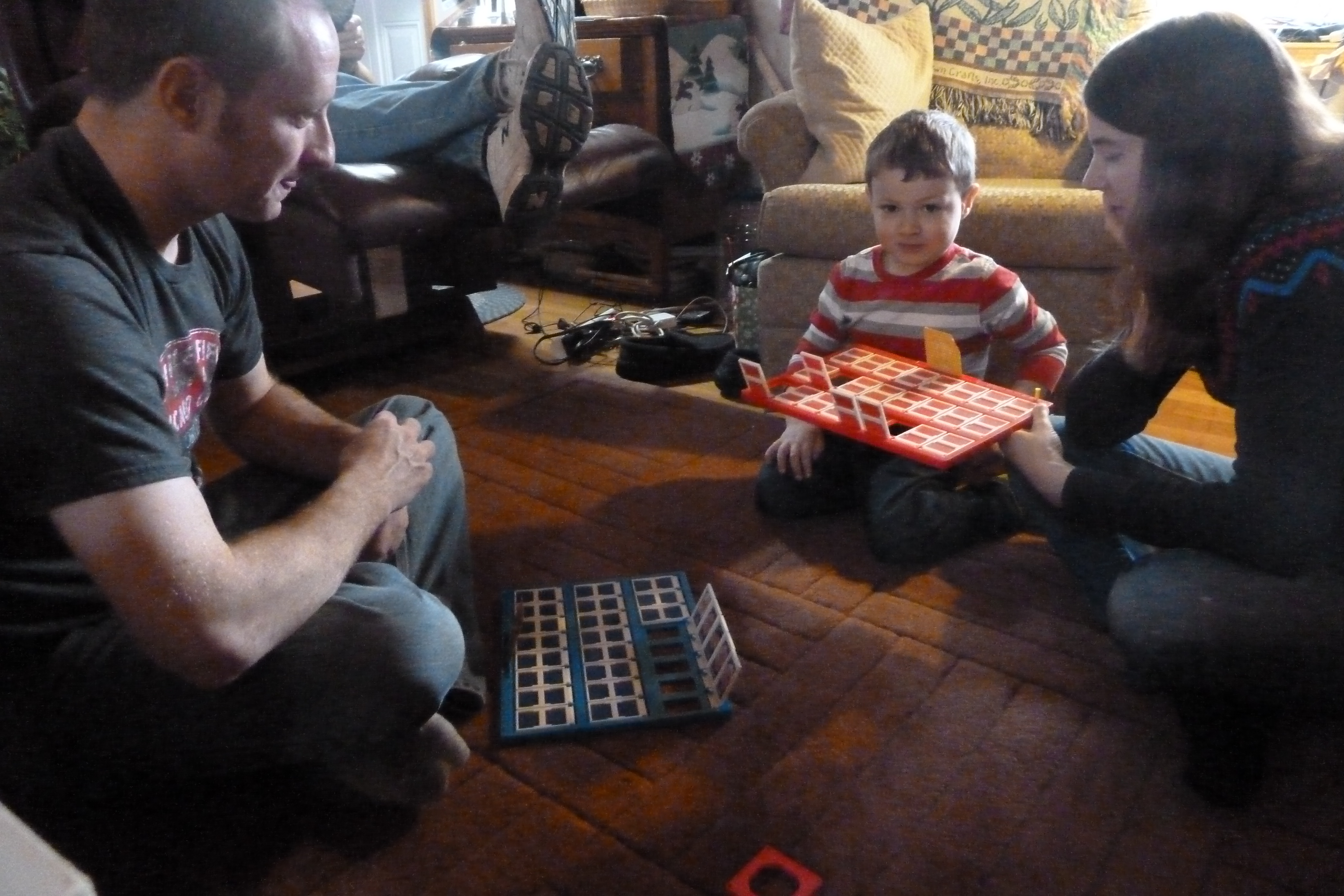
Oldest gradnson, Sam, learning to play Guess Who? with his parents at Christmas.
***
What are your new dreams for yourself or your family?
***
How did where you grew up influence your feelings about yourself and your opportunities?
You can easily find the whole story online googling for “Chess in Franklin County.” Comments or your own stories? Email me at anotherwaymedia@yahoo.com or at Another Way Media, Box 363, Singers Glen, VA 22850.
Another Way is a column © by Melodie Davis, in syndication since 1987. Columns are posted at http://www.FindingHarmonyBlog.com a week after newspaper publication.
Another Way for week of January 5, 2018
Clean Mugs and Emptied Trash Cans
Every time I pick up my mug from my office desk—and it still has some of yesterday’s stale coffee—I’m reminded of one of the reasons I’m missing our office housekeeper from the last 34 years.
If you follow my column closely, you know that my office changed locations in mid-November. It was a downsizing maneuver to a downtown location where we are renting space; Doris, the woman who had been the office housekeeper at the older, larger place for over 34 years decided she would not make the move with us. She just happens to be 89 years old, but that never—or rarely—stopped her from performing her daily duties over three floors of offices, no elevator.
One of the reasons she was able to keep working for us is that she lives just across the road from our former office location. So she didn’t have to drive far to “go to work.” In fact, she used to walk over until her adult children insisted she drive herself across the very busy five-lane highway. But getting to our downtown location is a bit dicey with one-way streets, many stoplights, and bad traffic at certain times of the day. So, she made a good call in using this move as a time to quit. She still happily cleans daily at another office near her home.
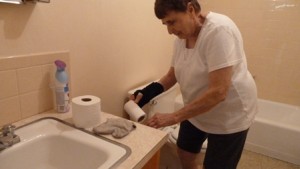 I miss Doris and we all do. For the last 34 years, she has watered my plants, seen the disgusting stuff I toss in my wastebasket (chewing gum, for instance, that I sometimes forgot to wad into paper), scrubbed my forgotten lunch dishes, and several times a year, took extra time to scour stains out of that “stainless” steel mug. She prided herself in knowing which Tupperware or Glad plastic container belonged to which worker, and usually delivered them back to the correct employee who, like me, frequently left them to drain and dry in the office kitchen.

Doris went far beyond the call of duty: one day she brought back to me my well-used 9×9-inch pan which has baked many brownies, batches of cornbread and other goodies over the years. She had taken it home for her extra-special Doris treatment, using scrubbing powder and lots of “elbow grease.” She got that ancient pan the cleanest it has looked in years. I was humbled and amazed. She went the second mile.
She also tidied and periodically cleaned the bathrooms and made sure they were stocked with necessities. Earlier she also did heavy-duty cleaning: vacuuming and washing and waxing the kitchen and bathroom floors. Eventually she accepted an outside cleaning company doing the deep cleaning.
Beyond these mundane duties, Doris also very much enjoyed checking in with office staff to keep up with our lives, even with the executive directors over the years. She truly cared about us and our families: asking about new babies, who was sick, who was on vacation, who was getting married. When her son was struggling with leukemia and a bone marrow transplant, she shared his ups and downs. I think she was one of our friendliest employees over the years, never hesitant to strike up a conversation with anyone. She has visited us twice in our new location in the six weeks we’ve been there and I have no doubt she’ll keep checking in as long as she can still drive.
Earlier I talked to her about why she kept working at age 86, 87, 88, 89. Her response: “I don’t like sitting around.” In May 2015, she fell and broke her wrist at home, requiring surgery. But she came back to work just six days after surgery, washing dishes with one arm in a brace.
All of us hope to have the vigor and capacity well into our 80s exhibited by Doris. She is happy to be a member of a large non-denominational church on the edge of our city. I hope she can continue to feel useful and “not sit around” for a good many years to come. Happy New Year, Doris!
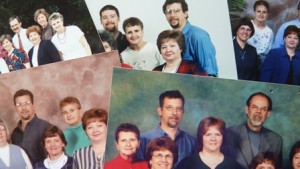
Some older office staff photos from past years. Can you find Doris in each photo??
***
I wrote more about Doris’s work in our office building in 2015, here.
***
What do you enjoy or enjoyed about your work life, job, or career? What have you not liked? Share here if you dare!
***
Any words of congratulations or way-to-go’s for Doris?? I’ll print them and make sure she sees them!
***
Also still sending out the 2018 lighthouse-themed monthly planning calendar, suitable for purse or pocket. Email me at anotherwaymedia@yahoo.com or request by mail from Another Way Media, Box 363, Singers Glen, VA 22850.
Another Way is a column © by Melodie Davis, in syndication since 1987. Columns are posted at http://www.FindingHarmonyBlog.com a week after newspaper publication.
Another Way for week of December 30, 2017
What We Leave Behind
So, what do you ship family members the day or week after Christmas or New Years and all the children have gone home?
Last year after Christmas, I saw my boss and his wife boxing up something in our shipping department when his wife said with some chagrin, “This is called shipping your kids the stuff they left at your house for Christmas.”
I blushed and drew my hands to my cheeks. “Oh dear, my mother is shipping stuff to me today, too.”
And I don’t need to remind you how old I am.
“So, it never ends,” said my boss.
This year we took a trip between Thanksgiving and Christmas to visit my mother. I took along my own breakfast cereal that I like for fiber reasons. Of course I left it in her cupboard! Mom has always willingly shipped (or saved for a future visit) our left-behinds.
And I don’t really mind doing that for my kids and grandkids either. If you show me a household where Mums and Dads willingly ship the left-behinds of their offspring, I’ll show you a family where the kids WANT to come home on holidays and at other times. Especially if they don’t hear too many reminders of “You never did remember to pick up all your stuff” or other snide, unhelpful remarks.
Taking care of what family members or other guests leave behind is just part of getting together. Perhaps more important is what feelings are left in our wake? Resentment? Exhaustion? Misunderstandings? Worse?
Read any advice column online or in the newspaper and it doesn’t take long to hear about the spiteful ways family members treat each other. Some of it might be in jest, but even good families with loving relationships who have good times together, accidentally push buttons (and sometimes not accidentally). Most of us know how to get under someone’s skin. Try to be mindful of what may be motivating someone’s behavior or putdowns—often insecurity, or feeling “less than.”
 Other issues that may arise include whoever is in charge of cooking, often ends up feeling they have spent most of their time in the kitchen over holidays. I’m grateful for our large “great room” where the kitchen includes our dining and living room space as well. So at least the kitchen isn’t closed off. I’m grateful to our daughters who after a big meal, kick me out of the sink and say “Mom, we’ll clean up.” That did not exactly happen when they were ten.
Depending on how many bathrooms you have in your home, sharing bathroom space often requires extra grace. There we don’t want to leave behind reminders from our visit—or our personal shampoo!
What do we want to leave behind?
- Memories of stories told and laughter shared
- Good impressions and examples of manners, grace, and love
- If sharp words have erupted, leave behind apologies and hugs
- Leftovers so the chief cook won’t have to cook for the next two days
- Rooms even neater than when we arrived
- Beds stripped and blankets neatly folded at the edge of the bed
- Small messy fingerprints left on windows are fine.
Finally, always go back for one more peek under beds, behind shower curtains, and in refrigerators for items you might have overlooked. And—one last hug or peck on the cheek. In our family, one outstanding memory is the time our oldest daughter had not had a chance to hug her 88-year-old grandfather goodbye when we left, because he was still in bed. A mile or two down the road, she said as much: she hadn’t had a chance to say goodbye to Dad. We did go back—and she was very grateful, especially when Dad died eight months later.
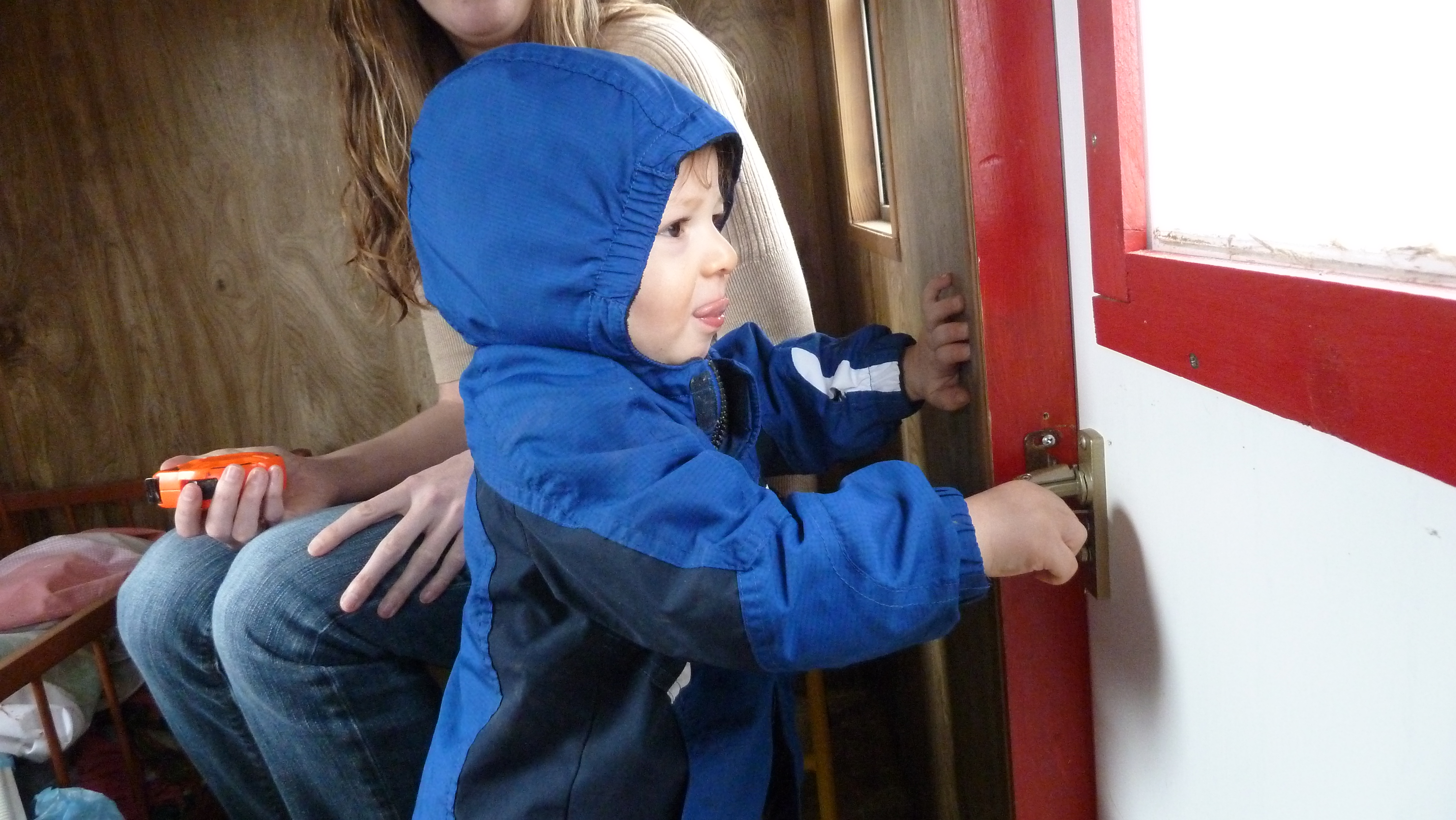 I wish you and yours happy and blessed comings and goings in this New Year.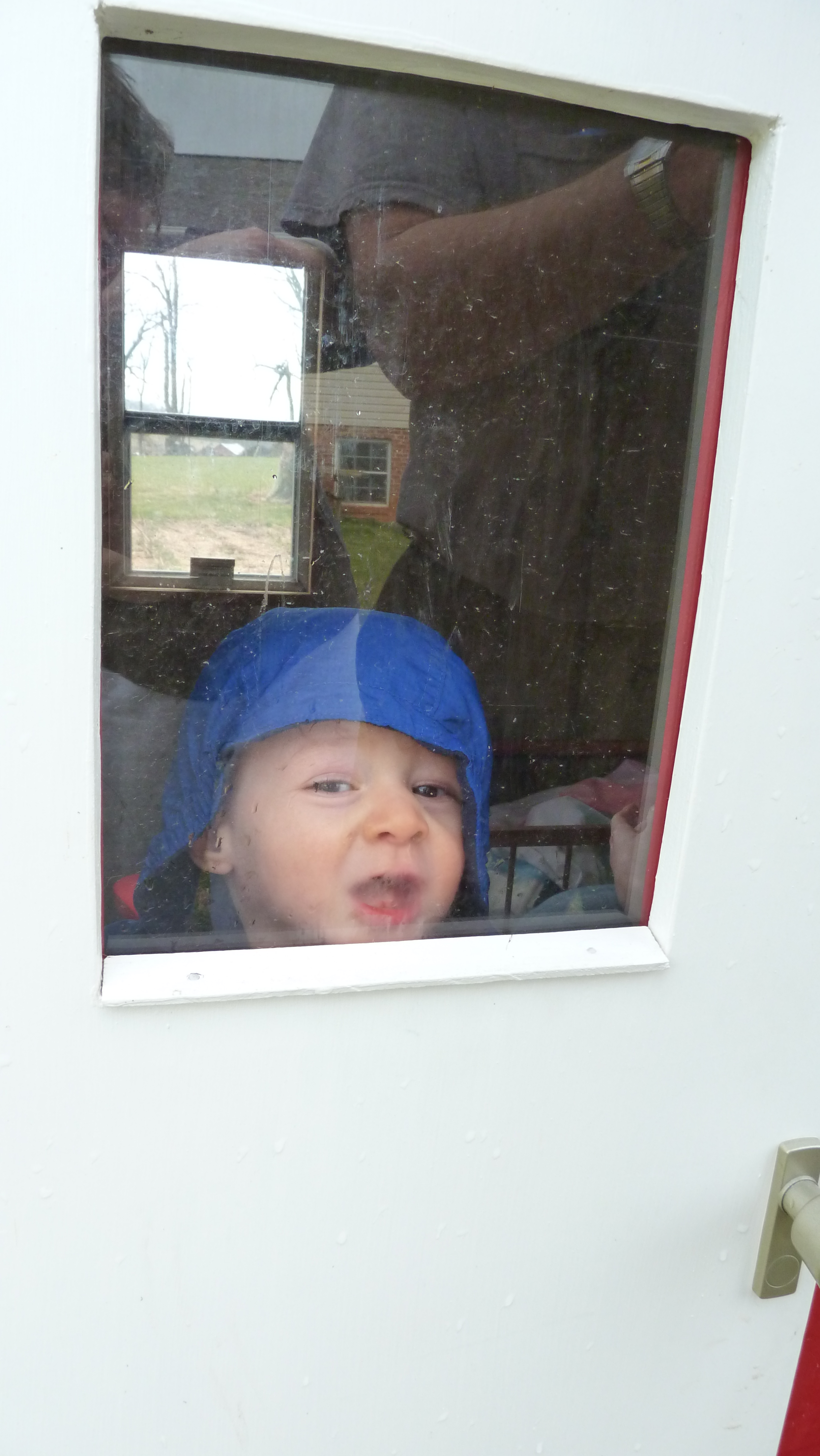
***
What was the most important/crucial thing you’ve left behind on your travels?
***
Any tales of memories you’re glad you made? We’d love to hear your stories, whether sad or glad.
***
There is still time to request your small 2018 lighthouse-themed monthly planning calendar, suitable for purse or pocket. Email me at anotherwaymedia@yahoo.com or request by mail from Another Way Media, Box 363, Singers Glen, VA 22850.
Another Way is a column © by Melodie Davis, in syndication since 1987. Columns are posted at http://www.FindingHarmonyBlog.com a week after newspaper publication.
Because of my three-part blog entry about Katharine Graham, I’m reposting my daughter’s review of The Post from over at Third Way website. Sign up for weekly media reviews from five excellent writers who tackle new topics each week!
The Post
How the press, and the Pentagon Papers changed history
By Michelle Davis Sinclair
Streep. Hanks. Spielberg. With Oscar-bait like that, The Post could have rested on its headlining laurels and cranked out a movie that would have made money and won recognition regardless.
Fortunately for history, the film is every bit as good as advertised. The classic book and movie All the President’s Men immortalized the most infamous event of the Nixon years, but the lesser known scandal that preceded it and positioned The Washington Post as a newspaper powerful enough to take on the president has faded from common knowledge. This is the story of the Pentagon Papers–both an indictment of five presidents lying to the public about the Vietnam War, and an exploration of the importance of a free press in sustaining democracy.
It’s 1971, and Katharine Graham (Meryl Streep) is about to take The Washington Post from being a local, family-owned newspaper to a publicly-traded company. She’s understandably nervous–she inherited the company from her late husband, who inherited it from her father–and wants nothing to jeopardize the company she has loved her entire life. Meanwhile, the New York Times has obtained a top secret government study of the Vietnam War that taints the legacy of every administration since Truman. When the Times begins to publish the papers, Post editor Ben Bradlee (Tom Hanks) practically froths at the mouth over getting his hands on some of these documents.
The movie doesn’t shy away from illustrating the tectonic shift in gender roles taking place in this era. In fact, Tom Hanks said the film could have been called “Katharine” and been just as fitting. In the movie, Kay Graham starts out as very much a woman of her time, deferring to the men in the room, the male advisors and businessmen who have so much more experience in this world than she does. But the indignity of it all–men talking at, talking over, and talking for her–has a transformative effect. Streep does a masterful job of taking Kay on this journey. Watching this woman come into her own as the pressure inches higher and the voices around her grow louder is nothing short of thrilling.

The entrance to the old and historic Washington Post building, with my daughter, Michelle, pointing out memorabilia to my then-83-year-old mother touring at Christmastime, 2007. Daughters Tanya and Doreen at far left.
It wasn’t possible to film The Post at the old Washington Post building because it was torn down at the beginning of 2016 (I am a thirteen-year Post employee myself–my review is my personal opinion and does not represent the views of The Washington Post), but the filmmakers did a superb job of recreating the essence of the place. Several times, my heart skipped a beat at the pans of the building exterior before my eyes clocked the differences. And just like they distilled the hallmarks of the old building well enough to recreate the place, Meryl Streep and Tom Hanks strike the right notes in recreating two larger-than-life figures in newspaper history. I didn’t know Katharine Graham, but I interacted with the late Ben Bradlee enough times to recognize the mannerisms in Hanks’ performance. Does Hanks look like Bradlee? Not really, and Meryl Streep resembles Mrs. Graham not at all, but between the excellent costuming, hair, and of course world-class acting, they embody the stellar working chemistry between Mrs. Graham and her “pirate” of an editor.
Spielberg sets a blistering pace, refusing to let his story wallow through a few days of American history. Even at that pace, the movie uses careful brushstrokes to paint the characters while also raising existential questions that resonate today: What exactly is the role of the press? How can the press, which depends on reporters gathering information and standing witness to events, do their jobs while also risking alienating the very people who give them access? And at what point does keeping information top secret stop serving the needs of the country, and start protecting the interests of the powerful?
Streep’s Katharine Graham uses an old quote of her husband’s (a quip that remains popular among us Post employees), referring to the newspaper as the “first rough draft of history.” Movies exist to entertain, and this one is more interested in telling Kay’s story than getting every bit of history onscreen (the New York Times people have some legitimate gripes about being presented as supporting players in this story). Overall, though The Post is an excellent polish of that first draft, ready for presenting to a new generation.
The Post is rated PG-13 for language and brief war violence. The film is on limited release until its national release January 12.
Reposted from Third Way Media Matters pages.
 Another Way for week of December 23, 2017
The Compassionate Jesus
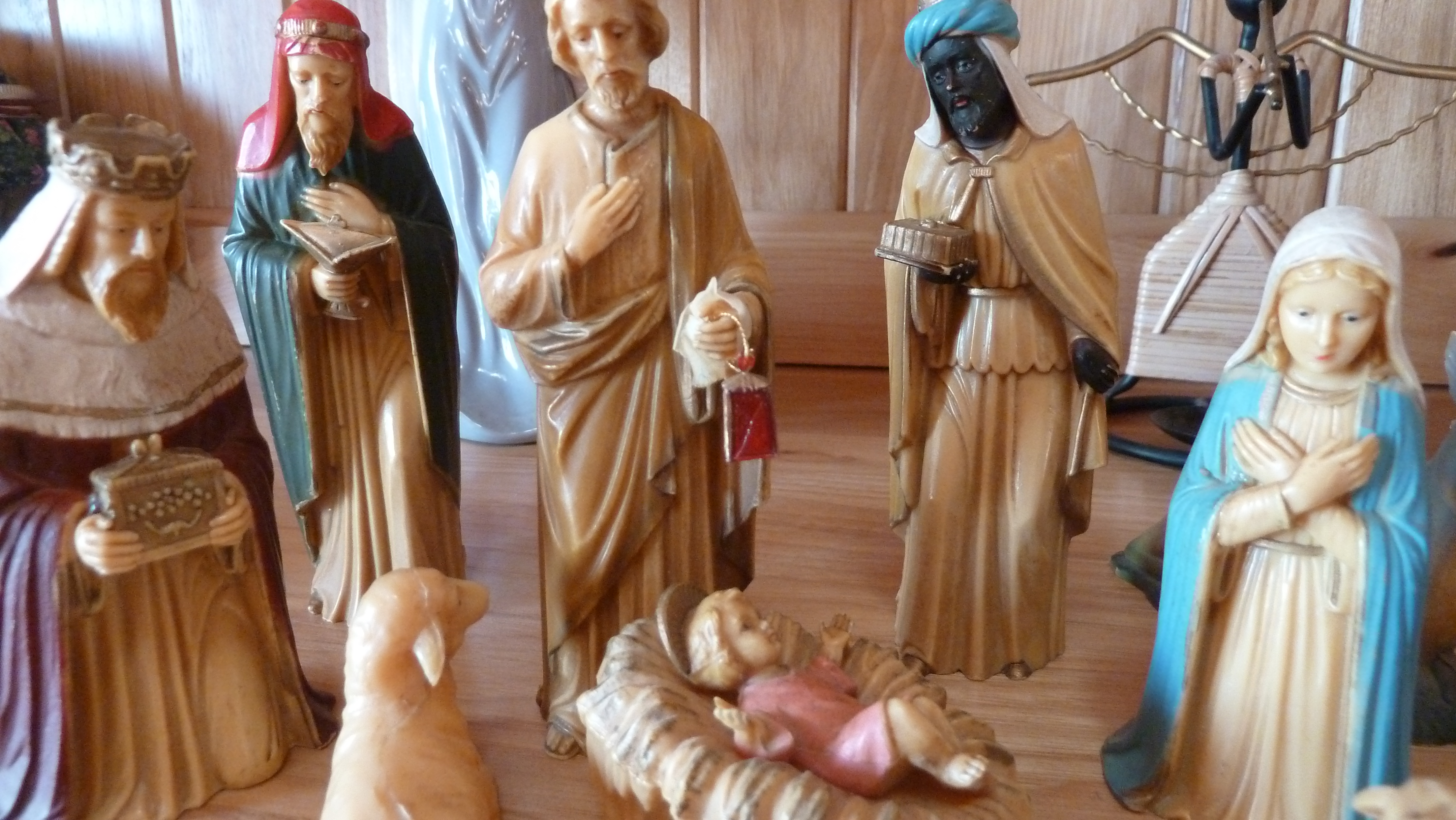
At Christmas we recall the birth of baby Jesus many many years ago. Too often we forget—and certainly pop culture forgets or doesn’t know the beauty of the man who baby Jesus grew up to be. We focus on the surroundings of his birth: the dramatic story of his family’s last minute trip to Bethlehem for a census, not finding any decent overnight lodging, being forced to settle for shelter in a cave or stable for animals, snuggling a newborn in a manger, and angels announcing the birth to common shepherds.
Jesus of course grew up to be a loving and caring man who went about doing good, the Bible tells us in Acts 10:38. He spoke to crowds, fed them, healed the sick and reached out to outcasts. He had no use for religious hypocrisy and confronted leaders with no words minced. He took children on his knee and blessed them, took time to engage women in theological conversation (unheard of in those days) and didn’t worry about the religious rituals with stringent cleansing requirements for followers at that time. He ate with “sinners” and was criticized and questioned for it (Matthew 15).
Several months ago a seminary intern in our congregation, Rebekah, led a devotional for a meeting I participated in. That I still remember it three months later is an indicator of its impact, which is no mean feat. A devotional may move us at the time, and then we can’t recall it later. Indeed I don’t remember the specific Bible passage she used but it had stories like in the first chapter of the Gospel of Mark, such as Jesus’s compassion for a man afflicted with an evil spirit (probably a mental illness), touching a man with leprosy in order to cure him (also unheard of). Jesus was soon confronted by some teachers of the law ready to condemn him for ignoring religious laws. Rebekah had us write some descriptions on a folded up piece of paper, reflecting on the nature of the man Jesus as he went about his three years of ministry.

Then Rebekah had us take our folded paper (like a brochure) and write on the cover one word which described the ministry of Jesus—what he was like as a person. I chose the word compassion and wrote that on my cover.
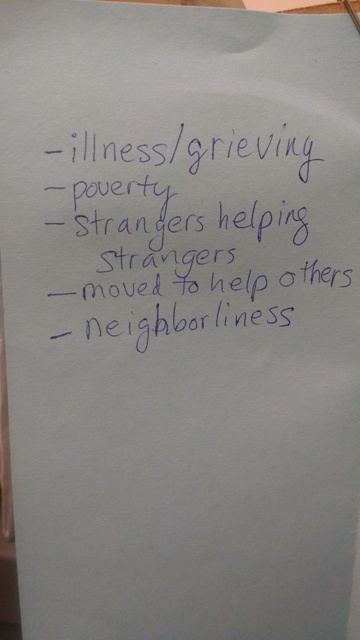
On the inside flap, she had us write a few words describing the characteristics we read or knew about Jesus that related to the word we’d written on the front. I wrote down:
–moved by the illness or grief of others
–helped those who suffered in poverty
–emphasized strangers helping strangers (as in the story of the Good Samaritan)
–neighborliness
–motivated to generally help others
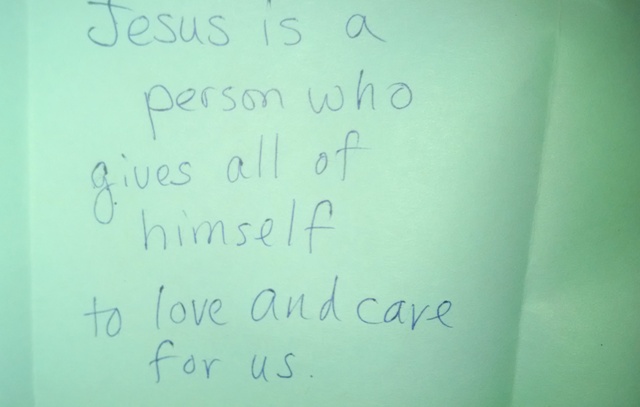
On the next panel she had us write a descriptive statement capsulizing Jesus in the Bible passage we’d read. I wrote: “Jesus is a person who gives all of himself to love and care for us.”
Have you met that kind of Jesus in the Bible and through the teachings and stories you’ve heard over the years?
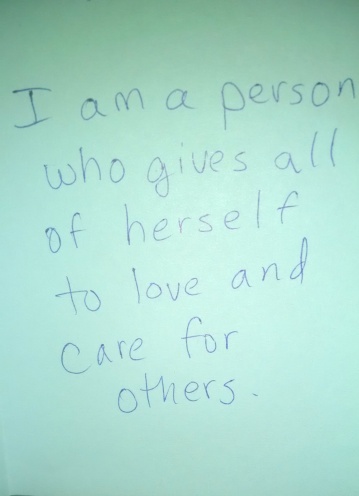
Finally, Rebekah asked us to write on the last panel that same line we’d written about Jesus, but substituting the pronoun “I” in place of the name of Jesus in that sentence. So my sentence read: “I am a person who gives all of herself to love and care for others.”
I am still moved and challenged by the words of that sentence—which I in no way truly live up to, I will hasten to say. I’m almost embarrassed to share this statement here on the blog. Those who know me know it is not totally true. I am also self-centered and miserly at times. But the point of the exercise was to remind us how beloved we are in Christ, and that we are to aspire to be like the Jesus who walked on this earth over 2000 years ago. We are to be “little Christs” which is what the word Christian means.
Readers, I kept that little “brochure” we’d created as a reminder of this profound challenge: to live each day in the way Jesus demonstrated and taught—loving and caring for others.
That’s my Christmas story for this year, and I’m sticking to it! A blessed Christmas to one and all.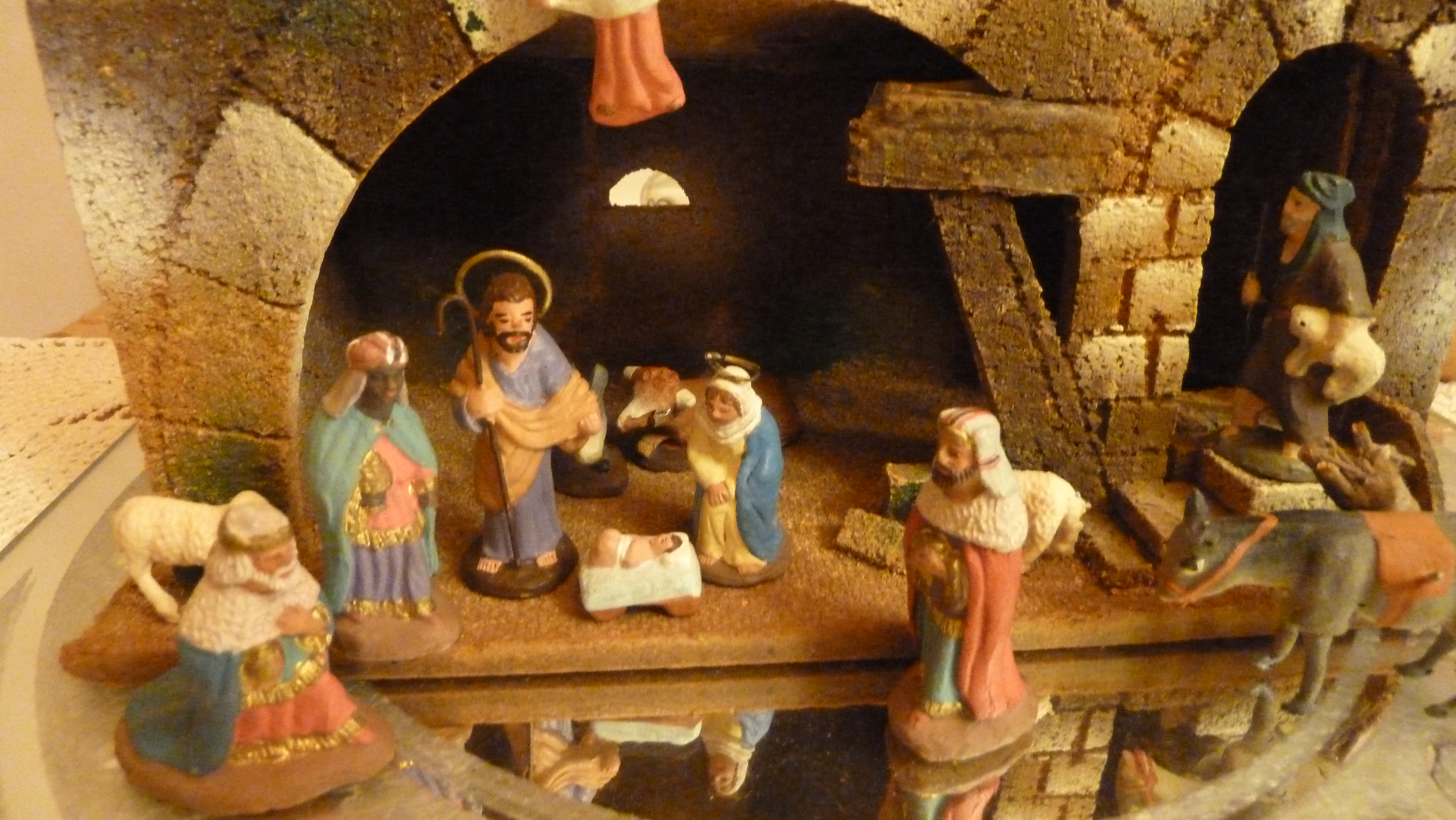
***
I’d love to hear about any special moment this Christmas when the story of Christ’s birth came to life for you.
Or a memorable devotional time you’ve had in a group, or personally.
***
Rebekah Nolt, a seminary student at Eastern Mennonite Seminary, generously gave me permission to share this beautiful devotional here.
My Christmas gift to all readers this year is a small 2018 lighthouse-themed monthly planning calendar, suitable for purse or pocket. Request it by mail from Another Way Media, Box 363, Singers Glen, VA 22850 or email me at anotherwaymedia@yahoo.com.
Another Way is a column © by Melodie Davis, in syndication since 1987. Columns are posted at http://www.FindingHarmonyBlog.com a week after newspaper publication.
Another Way for week of December 8, 2017
When Old Wounds Afflict Us Again
I watched a boy maybe 9 or 10 get off his bus on a street in the city. He dashed down a hill in jubilation for it being a Friday afternoon.
I understood his joy in getting out of school for the week, but oh I sucked in my breath that he not fall head first as he scrambled pell-mell down the street. It reminded me of the day I ran to my bus as a first or second grader and in my haste, stumbled and broke a tooth on the steps of the bus. That haste still can be seen in my not-perfect smile. A small but lasting injury.
When we’re young, our bodies heal well; we think a broken arm or ankle or torn ACL will keep us out of school or resting a few days, and will normally heal in a few weeks. And that’s the end of it, right? Athletes especially are tempted back to the court or field too soon.
As someone who’s turned another year older this week, I hate to break this news: old injuries have a way of coming back and haunting us in our 50s, 60s and 70s.
A fall, sports injury or car accident that happened to us in our teens or twenties often crops back up in arthritis, stiffness and pain in later years. Both my husband and I had injuries and accidents that are now showing repercussions as we have edged over 60. I think the osteoporosis in my spine and the mild pain I experience now stems from a fall from scaffolding I had in my early 40s. I know I was extremely fortunate to not have any actual breaks from that fall. But now as I try to move or roll over in bed, I can feel those parts complaining and speaking to me. That’s life.
When we are young we think we are invincible and indeed the body God planned and gave us is amazing in its ability to heal. I wrote about that not long ago in terms of a skinned finger I had in late summer. Now as I look at my finger tip on that hand, I cannot see any trace of a scar.
But I’m also thinking here of the emotional wounds and scars we often carry which may flare up in unexpected ways.
Family relationships are often a source of deepest pain. Divorce, abuse, drugs, alcohol: all these cause severed relationships. Or it could just be something mean a brother or sister said or did when we were ten or in our teens, gnawing at our soul and spirit. Outright abuse, whether verbal or physical, is of course the worst kind of wound and takes years of counseling and emotional work to cope and heal.
Holidays bring families together—and along with great memories and stories—sometimes offhand comments or attitudes still have the ability to get under our skin. When these things keep relatives apart, I find that immeasurably sad. That’s also life, but there are ways to work toward healing, even many years later.
When an accident or serious illness happens, people usually surround the person or family with extra attention and care: cards, emails, visits, meals brought in. Those around the injured or ill person pull together to help the person who is healing. The acts of kindness help to cover the rawness of our wounds. This can be similar to new skin stretching to cover over the raw flesh of a cut or wound. But doctors warn we can become emotionally maimed if others are allowed to take over things we need to do for ourselves in this process.
Time can help heal emotional wounds as well, and we need to open ourselves to that possibility in order for it to take place. The wound can be deep and the grieving process may last over many years. But arduous and perhaps extended group or individual therapy can bring insight, healing, and even forgiveness. So I’m encouraged by those I know who have gone through horrible abuse and have gone on to become beautiful people. They often have the kind of skills and compassion which helps others.
I admire those who dig deep within themselves to keep going—after major surgery on a limb or back, through therapy (physical or emotional), trudging through pain. We all know strong examples of people who keep plugging away well into their 90s. Old wounds—emotional or physical—don’t always cripple or keep us from becoming the fun loving and caring creatures God planned for us to be.
***
In our local area, the Family Life Resource Center is a great resource for help dealing with these kinds of issues and more.
***
My Christmas column will appear December 26, 2017. Until then, I hope you have a beautiful and meaningful Christmas.
***
My Christmas gift to readers is a small 2018 lighthouse-themed monthly planning calendar, suitable for purse or pocket. Request it by mail from Another Way Media, Box 363, Singers Glen, VA 22850 or email me at anotherwaymedia@yahoo.com.
Another Way is a column © by Melodie Davis, in syndication since 1987. Columns are posted at http://www.FindingHarmonyBlog.com a week after newspaper publication.
Another Way for week of December 1, 2017
City Girl, Country Girl
I hear the roar of a bus, a fire engine, feel the crisp autumn air. I walk past a coffee shop, a pizza shop, a newly opened Middle Eastern café; I go by a bike shop, walk past my two banks. I learn I need to watch for pigeon poop on the walk between the rows of cars in the parking deck, which button to push to make the light change, discover that I’ll need to allow at least 5-10 extra minutes to walk from my car to my new office.
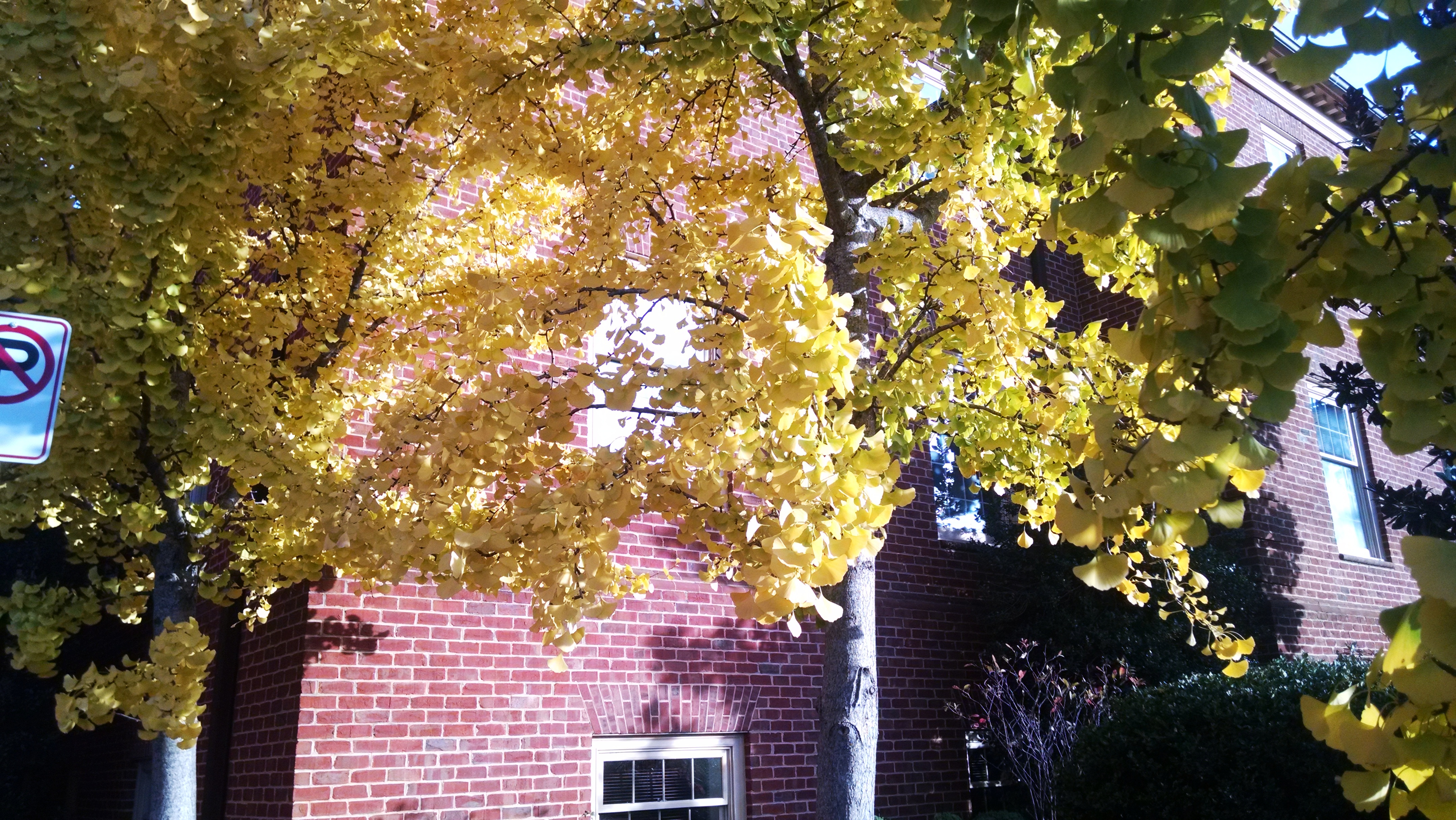
Ginko trees beside my new downtown office. We went from fall to winter when the ginkos lost all their leaves in one windy day.
In mid-November my office sold the building I have worked in since 1975. I have spent more years in that space that any home I’ve lived in, including the house my family called home for 30 years. I was just 23 when I started working there. A lifetime ago. So it was a transition not without its moments of melancholy and nostalgia, but as I’ve told many, it was easier walking out of that long occupied space with 11 others, rather than by myself.
Now walking the downtown streets, I feel like I am back in the city of Barcelona, Spain, where I lived as a student for nearly a year. That year I discovered I really enjoyed city life in spite of having grown up on a farm, which I also adored.
At lunch I run an errand, and decide to try out a different (free) parking deck for the afternoon when I return to downtown, and then realize I have walked an extra block out of the way back to my new office. I don’t feel as safe on that particular street—not as many shops, it is mostly the back end of buildings, someone could easily corner me, pull my purse off, knock me down. I wonder about the man with the big coat slowly walking the street. He looks cold.
Leaving work when the clock is nearing 4:30, I whiff the delicious scent of fresh dough rising from the pizza shop, sniff sizzling burgers from the nearby fast food, walk past a ballet dance studio where children and parents are waiting in a lobby, a free clinic, inviting restaurants with fancy schmancy names, a bakery that also sells gelato and offers samples. Now I feel back in Italy!
When I get back to my afternoon parking deck, I discover this one—which is actually closer to everything—has fewer 10 hour parking spaces. It is now full.
Twenty years ago, our downtown was dead, killed by the local mall which had been built and welcomed so eagerly back in the late 70s. Now a revitalized and lively downtown attracts the young: students, young adults, young couples, a few with babies. The mall area is far less lively. Not dead as in some areas, but harder to walk to places. I am SO glad our office did not move to that pricey area which is all streets and few sidewalks, and not very walker-friendly.
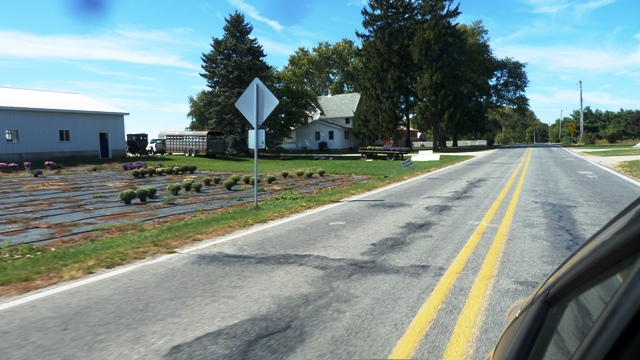
The farm I lived on the first 17 years of my life near Middlebury, Ind.
As a farm child, I wished I could live in town like my friends who were able to walk home for lunch. Does anyone still do that these days? Or maybe I’m just imagining they walked home at lunch. At any rate, I envied them walking to and from school. When I was in 5th or 6th grade, I screwed up the courage and stamina to at least ride my bike to school, which was about four miles away. I felt almost like a town kid. Whee.
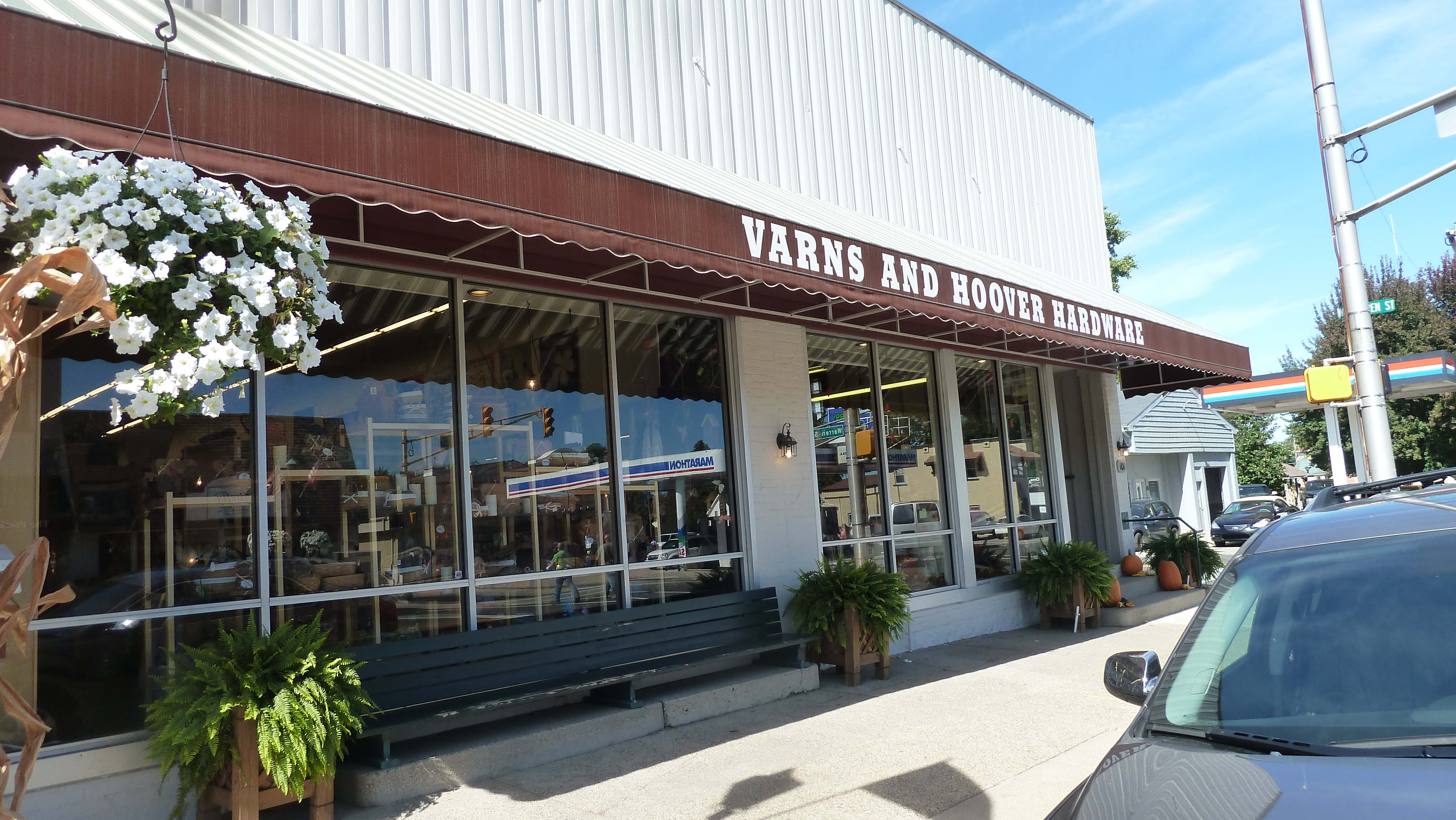
Downtown Middlebury, Ind. This Varns and Hoover hardware was there in the 50s when I went to school in Middlebury.
Now at the end of my work day, I am happy to drive out to the country for the restful atmosphere, the hills, and the bright bright stars at night.
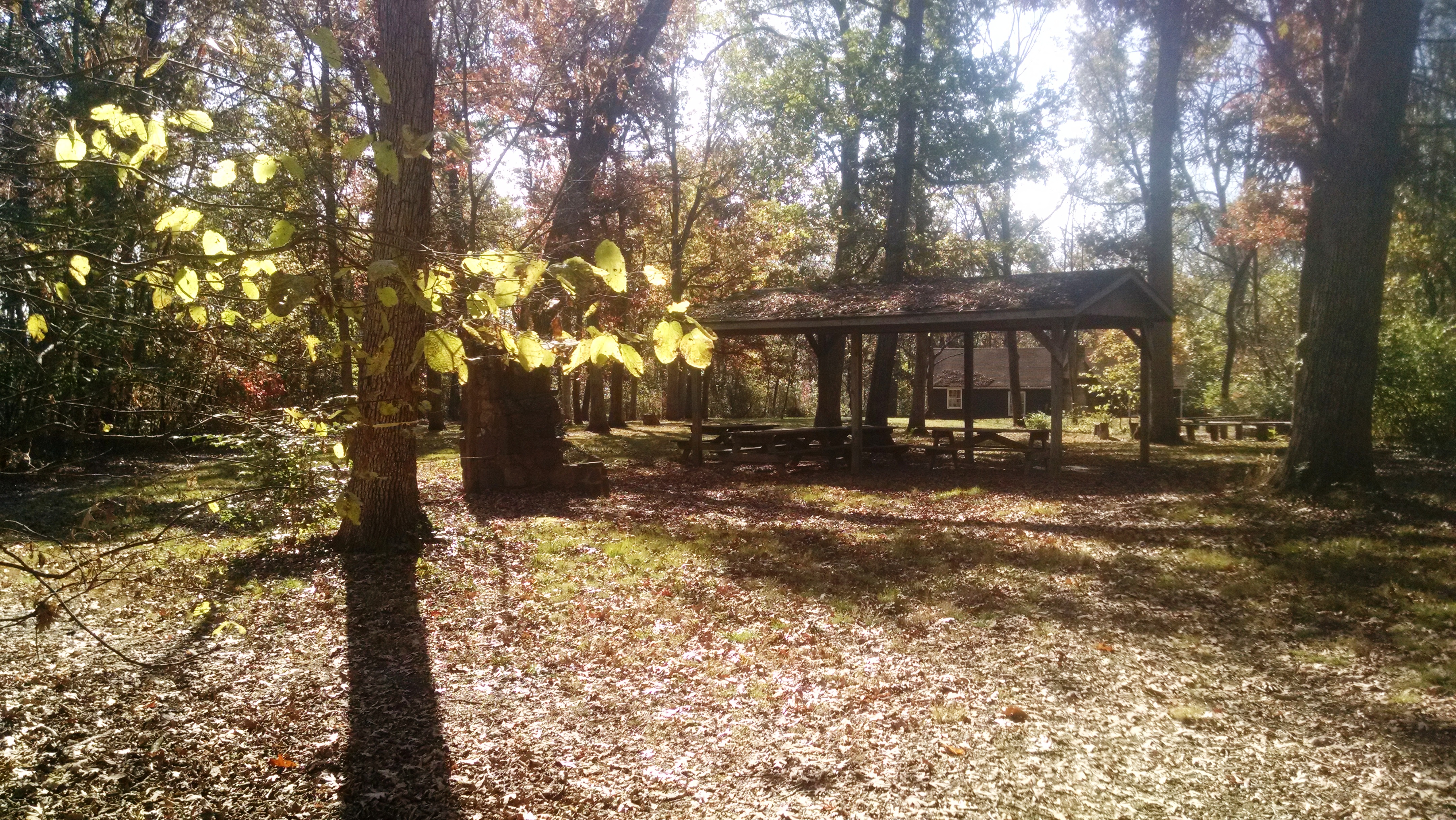
I will miss this woods close to my former office where I enjoyed noon time walks for many years.
The going-home traffic is intense in places, in this formerly small town now a city edging 53,000 in population, (80,000 when the college students are in town) but it has nothing like the crazy traffic where my daughters live. Once one of my daughters observed that her normally shy and quiet college roommate became an aggressive type driver when she was back home in her metropolis. You have to, she said, to get anywhere.

The sixteen file drawers I got rid of. Purged most of it, sent some files to Mennonite Church USA archives.
I’m happy to make this adjustment to new space—greatly downsized where I had to reduce my “file imprint” from 16 drawers to two—knowing that just as I’ve gotten through the last several months of downsizing and change, I trust that my husband and I can manage more change as we get older.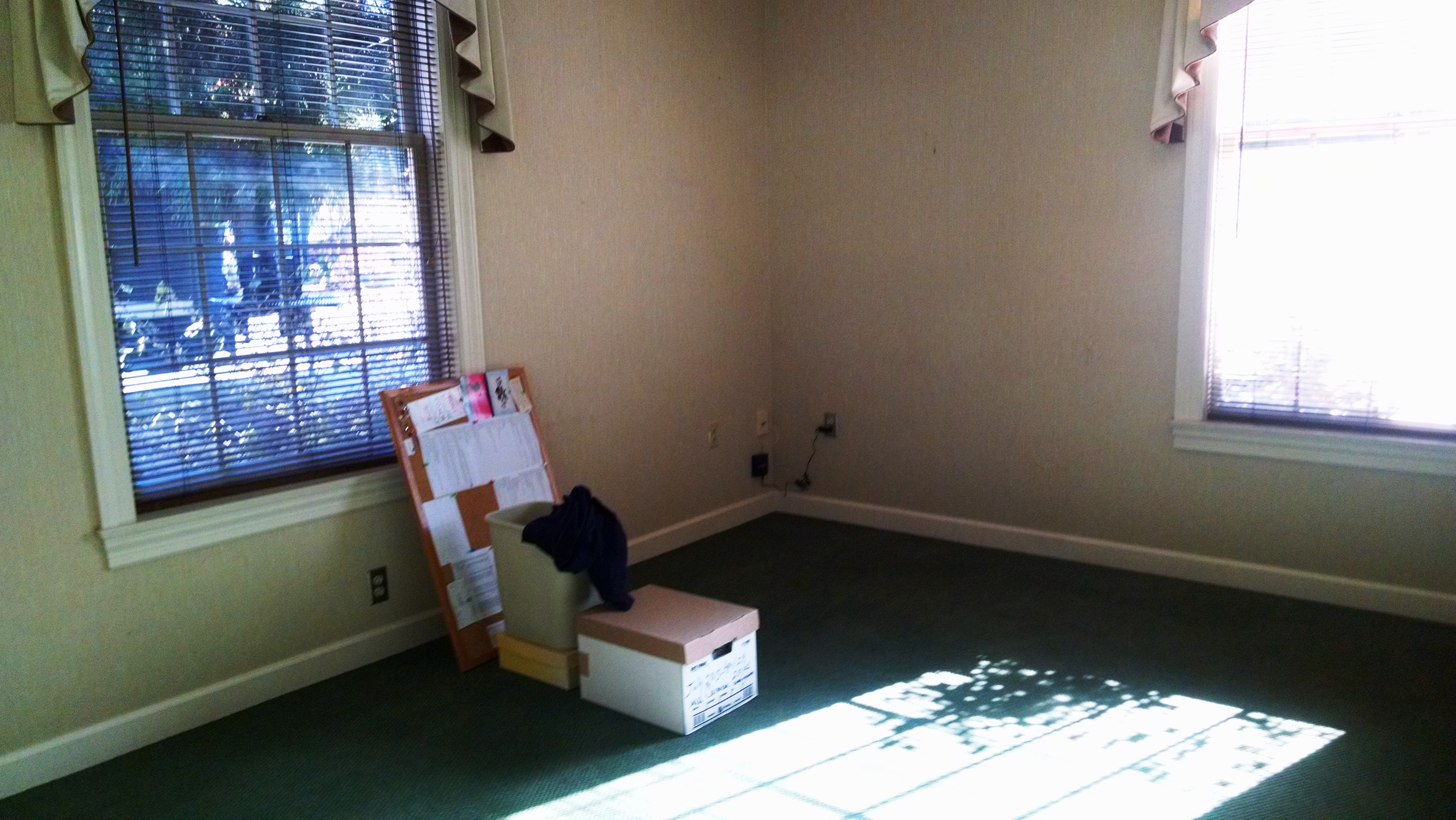
My thank you gift to all readers this year is a small 2018 lighthouse-themed monthly planning calendar, suitable for purse or pocket. Request it by mail from Another Way Media, Box 363, Singers Glen, VA 22850 or email me at anotherwaymedia@yahoo.com.

Me settled into my new space (on a Saturday).
***
Do you favor city or country living? Small town or suburb?
Mountains, plains, farmland, or oceans?
If you could live anywhere in the world for a year, what place/country would you like to try?
Comment here or by email!
Another Way is a column © by Melodie Davis, in syndication since 1987. Columns are posted at http://www.FindingHarmonyBlog.com a week after newspaper publication.

 findingharmonyblog