


This past year I loved working with Marianne Jantzi, a young Amish mother near Kitchener, Ontario, to publish her first book, Simple Pleasures: Stories from My Life as an Amish Mother.
It was especially enjoyable for me because she is about the age of one of my daughters and while a little ahead of them in the number of children she has (four), her youngest child is sandwiched between my grandchildren in age. So I felt a little like a grandma-at-a-distance in hearing her aside about promising a popsicle if they were good while she talked to me on the phone.
I also felt like maybe a mentor in helping her figure out how to take magazine columns for The Connection she’d written over the past five years and synthesize them into a book. Which is exactly what I have done 4-5 times in the books I’ve been able to have published over the last 30 something years. (You can read two shorter excerpts from Marianne’s book here, download an entire free chapter here, read more about the publishing process with an Amish author who writes her work by hand, and an exclusive interview with Marianne by Ardell Stauffer on our company blog, Mennobytes. (Scroll to the end for the interview.)
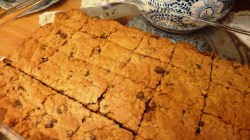
I would love to meet her family someday, but meanwhile her oldest daughter Alyssa first baked one of the recipes shared in Marianne’s book, a simple four-ingredient recipe for chocolate chip bars. Everyone has a recipe for chocolate chip cookies or bars, but I am dumbfounded as I look at this simple recipe and wonder how many other cookies or bars could be streamlined to this simplicity.
Alyssa’s Chocolate Chip Bars
1 cup butter
1 cup brown sugar
2 cups flour
1 cup chocolate chips
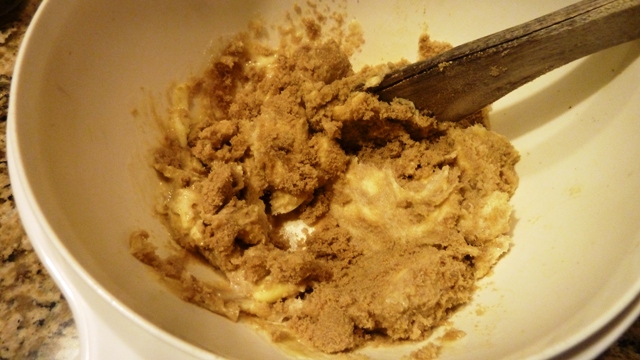
Cream butter and brown sugar.
Add flour and chips.
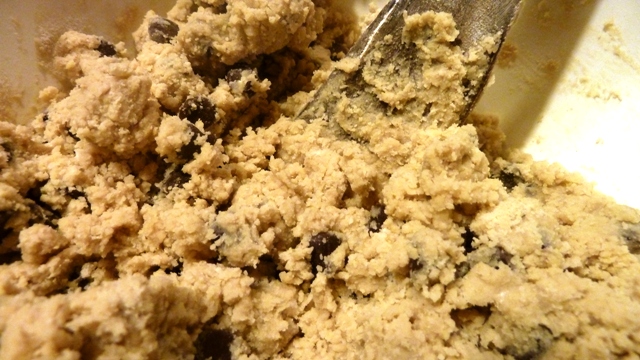
Mix well. Spread in greased 9 x 12 pan.

Bake at 350 degrees until golden brown, about 25 minutes. Cut into bars after 10-15 minutes. Makes about 32 bars.

Of course I “tested” these at the MennoMedia/Herald Press office. One man emailed his thanks: “Yum. How can you go wrong with flour, sugar, chocolate and butter?”
They are rich and buttery good—and delicious warm right out of the oven. In defense of the other ingredients most of us usually add to a bar type cookie like this, I think the normal eggs, baking soda/powder and vanilla added help keep the bars a little moister as time goes on. But in an Amish family of 7-10 children, leftover bars wouldn’t last that long anyway.

So for a simple recipe the kids or grandkids can almost master themselves, this is an awesome find! Thanks, Marianne and Alyssa!

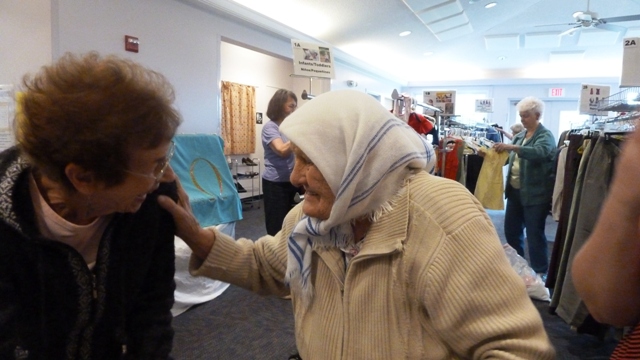
The bent over, diminutive elderly woman with a headscarf, lifted her hands to the heavens and with a grateful spark in her eye, murmured some words in Russian.
She had gathered infant and toddler clothes from our clothing racks at the Trinity Clothes Closet, along with some dresses, sweaters and tops for women. We carefully folded and placed the clothing in three large white kitchen type garbage bags.
Her companion, a younger woman in her 30s commented in perfect English, “This is her work. She says it is a miracle.”
Her work? A miracle? Clothes donated which we in turn make available free to those in need?
Sometimes we wonder where all the clothes go and this night—because the two women seemed open to chat, I asked if the young woman had a baby—often a good conversational opening especially if the clients have gathered baby clothes.
“Oh, no, she sends these to an orphanage in Ukraine where the children are deaf—or blind, I’m not sure” the younger woman replied, adding “And some to her friends and family over there.”
I said appreciatively, “Oh, wow, that can get expensive.” She responded that the older woman uses her “retirement” to send the clothes.
Suddenly a book I’m reading about the horrible suffering and starvation experienced by people in the Ukraine during and after World War I in the early 1920s comes to life. Here was a woman—likely at least as old as my mother (91) who had been born into that misery in Ukraine about that time, the early 20s. The book is a biography (which I plan to review) of Orie O Miller, a Mennonite born in the late 1800s who was also moved as a young man by that torment and went on to be instrumental in founding the world wide Mennonite Central Committee (relief organization). How can it be that 100 years later humans are still inflicting such wretchedness on each other?
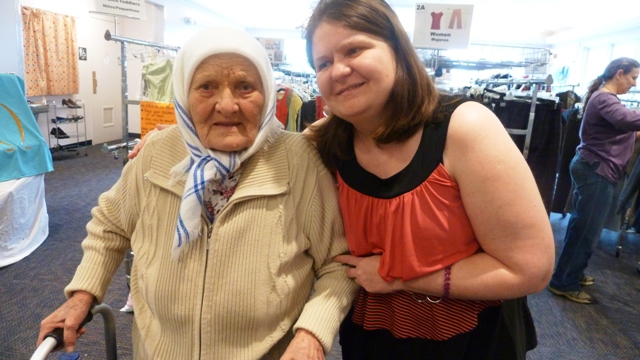
Nadezhda, age 93, and her granddaughter Natalya
I had to know more. I asked the younger woman for their names, if I could take pictures, and share the story online. She translated to the older woman who immediately pulled from her purse a bent brochure about her orphanage mission—which turns out to be for deaf children.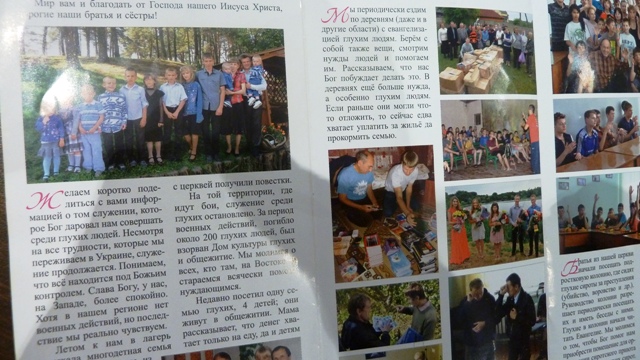

Natalya Zotov is the granddaughter of the older woman, Nadezhda Zotova, who is actually 93 years old. I didn’t find out how long ago she came to the U.S. but her granddaughter speaks great English so I’m guessing the family emigrated sometime after the opening of the Soviet Union in the early 90s when so many came to the U.S. as political refugees.
At the Clothes Closet our church, Trinity Presbyterian, operates, (with the generous help of volunteers from Muhlenberg Lutheran Church and a youth group from Harrisonburg Baptist Church), we have seen various waves of immigrants over the decades access the donated clothes—a supply which seems unending thanks to the shopping habits of (mostly) North American women. We had many visitors from the former Soviet Union in the 90s, folks from Mexico and Central American heavily in the early 2000s, and Iraqi and middle eastern refugees from 2005 on. (Of course there are many U.S. born and bred clients.) Some of these help us by donating clothing back to the closet and also volunteering—sometimes in order to get references for job seeking. In the past we have also been the recipient especially of Russian and Middle Eastern pastries. It’s been one way to stay in touch with and learn from other cultures without leaving home.
Sometimes we learn, like we did this night, that we are also partners in the “work” or ministry of women like Nadezhda, who come to the U.S., experience the bounty we have here, and so desperately want to share it with friends and family and ministries back in their home countries that they send clothing with folks traveling back (stuffed in extra luggage), load it in cars heading to Central America, or pay the hefty postage to mail or ship it. Nadezhda praises God for us, because to her it is a “miracle” that we give the clothes out free.
Yes, we know we are sometimes shafted—people who get clothes and turn around and sell them at yard sales. Not much of a way to get rich, but if it helps them pay rent or buy groceries, and as long as we North Americans go through as much clothing as we do, we don’t have a problem with it, as the supply seems endless. It also keeps the clothing out of landfills. (We do run short on infant and children’s clothing sometimes, especially for little boys. Wonder why?!)
The opportunity to share freely reminds us of one of the theme verses for our ministry from Isaiah 55:
“… you who have no money, come, buy and eat! Come, buy wine and milk without money and without cost.” Which in turn is a reminder of the beautiful and costly gift God gave to us—which we receive without money and no price.

Some of the faithful Trinity volunteers at the Clothes Closet.
***
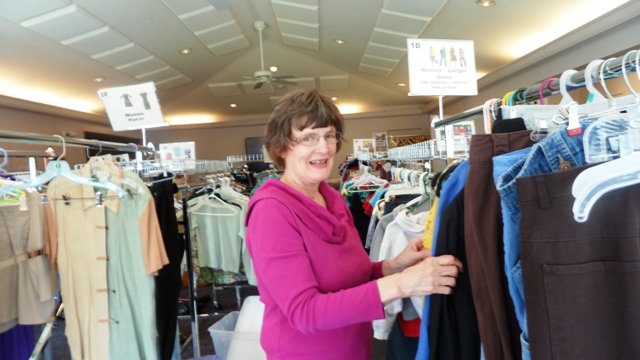
Yours truly on a recent Saturday morning hanging up clothing.
I’d love to hear of others who have unusual outreach ministries like that of Nadezhda–at whatever age!
***
Harrisonburg area folks, we invite you to share news of the Trinity free clothes closet with your church, and always welcome infant and children’s clothing! Here’s another post with additional stories.

I first made tortillas out of More-with-Less Cookbook and was somewhat astounded to learn how easy they were. (Well, not as easy as sliding them out of a package, but significantly better. Homemade.) They’re so easy to make you can stir them up anytime you run out of store-bought tortillas (and don’t want to run to the store), or when you are in the mood for a nice cheese or egg quesadilla.
I also recommended these as an easy recipe out of Whatever Happened to Dinner book and included it in the 10 Easy Recipe PDF I mentioned last week. Although I do admit rolling out a thin tortilla may be a bit stretching or daunting if you’re a 93 year old guy trying to cook much of anything for the first time in your life (as he indicated when he first wrote to me).

Rolling them out thinly is indeed the challenge, but they are forgiving. These were a little on the tough or too-much-flour side, because I ended up using a bit more wheat flour than I probably should of.
Carmen Wyse, one of the food editors for Whatever Happened to Dinner, tells how she first discovered how easy tortillas were to make, with the recipe she included in the book:
Tortillas
Carmen Wyse
On one camping trip, I tried making breakfast tacos out of store-bought tortillas. They were crumbly and weren’t working well. A camping companion said she always makes her own tortillas. I figured if she could, I could too, and I have been making them ever since. I usually make a double batch and keep the leftovers for snacks throughout the week. I can always count on a big hug from my twelve-year-old son when he sees me starting to make these.
3 cups / 750 ml flour (Carmen uses up to 1 cup whole wheat*)
1 teaspoon salt
½–1 teaspoon baking powder
1/3 cup / 75 ml vegetable oil
1 cup / 250 ml warm water
Mix the dry ingredients together. Add the vegetable oil, and mix with pastry cutter or forks until crumbly like cornmeal. Add 1 cup warm water.  Kneed a bit to bring it together, cover with plastic wrap, and let it sit for 30 minutes to several hours. Form into 12 balls.

I halved the recipe for this small batch.
Heat a cast-iron (or whatever you have) skillet to medium high. Roll each tortilla out as thin as you can, and plop it in the hot skillet.
 When it starts blistering, turn it over for about 30 seconds. Sometimes I [Carmen] hold the edges down some to keep the tortilla from puffing up. Put it in a tortilla warmer or under several kitchen towels.

Tortilla with egg and cheese omelet and chive garnish.
*I added an asterisk here to explain that Carmen grinds her own wheat berries, which means she is able to use very fresh flour, which tends to result in lighter and fluffier tortillas (or whatever you’re making), I’m told. Not to mention healthier. That may account for why mine turned out a little pasty.
Below are the original ingredient quantities I used from More-with-Less Cookbook—which by the way, is coming out with a 40th Anniversary Edition later this year including yummy photos of some favorite or intriguing dishes! Can’t wait to see it in print. (And if you like the “More-with-Less 40th Anniversary Edition” Facebook page, you will be find fun testimonials for the next couple of months from dozens of cooks who have grown up with or used the book for years and years.)
Tortillas in More-with-Less
2 cups flour
1 teaspoon salt
¼ cup large or shortening
½ cup lukewarm water
(Mix and cook as in directions above.)
***
I love Carmen’s camping story. What’s the best or your favorite recipe received from a friend?
***
Do you grind your own flour? I know grinders are expensive (Carmen got one for a birthday, Christmas, Mother’s Day, all-in-one gift one year, I think). But so worth it, according to Carmen. There are alternatives to wheat grinders (coffee grinders work, some say). I’d love to hear your ideas.
***
Never owned a copy of MWL? This classic edition of More-with-Less by Doris Janzen Longacre will stay in print (I’m told) even after the 40th anniversary edition comes out later in 2016.
More-with-Less Cookbook

Whatever Happened to Dinner?


I doubt that we’re the only family with children and grandchildren who didn’t quite manage to get an Easter photo of all the family members.
I have learned that if a group photo happens, it’s great, and if it doesn’t happen, well, like my friend Martha always used to say, “That’s life.” She used to say it, not because she’s physically gone, but because her great mind is now gone. I’m very sad, but that too is life.
With toddlers and babies in tow—naps, feedings, wanting to change out of sometimes uncomfortable or chilly Easter outfits as soon as possible, mild tantrums—these things can all get in the way of managing an Easter family photo when together.
That’s ok. That’s life. Because after all, we know that a beloved but controversial religious leader being crucified on a cross and then experiencing an amazing resurrection is all about getting a beautiful Easter picture with everybody in suits and smiles.
The important thing about life is not the perfect family photo, as my kids are teaching me, but that you truly live it—every, every minute, (as another great mind used to say—Thorton Wilder, in his play, “Our Town.”)
We actually managed to all gather together quickly outside the church building while waiting for the Easter egg hunt and posed for a picture. I grabbed a dear man, Mark, (and he’ll feel terrible if he reads this, but it is SO NOT his fault), and I neglected to turn the camera switch to “take photos” instead of “view photos.” I never realized this until it was far too late for a do over. So. No Easter Family Photo for 2016. We didn’t get one either in 2015 or 14, but I felt ok about 2014 because we had planned a professional family photo shoot a few weeks later.
Instead, I do have various not-group photographs and bushels of sweet memories that no one quite managed to grab on camera, but that’s ok. We lived the moments, like visiting my brother-in-law who just had knee surgery a week and a half earlier, and little Sam being asked by a second cousin,“Sam, did you bring me any Easter eggs” and while he/we had NOT, the quick little thinker, though just two-and-a-half-years-old—ran to a little shopping cart he’d been given to play with which was filled with colorful plastic eggs, grabbed an egg, and took it smiling (like he knew he’d pulled a good trick) to cousin Anna.

Or, tracking behind another grandson, future track star James, who, while we were waiting for the Knights of Columbus Saturday morning egg hunt to begin, decided to make like Forrest Gump and just took off running and running and running all around the park with father following him, uncle following him, and even Grandma following him. No one got pictures of that, but on Sunday at the Trinity egg hunt, I managed to get one of my daughter Doreen chasing little James.
I have no photos of Sam watching out the car window every where we went that weekend in the lovely Shenandoah Valley countryside exclaiming “Moo cow!” with delight when he’d spot them. Upon seeing a brown cow he’d launch into “How now, brown cow?” from a storybook someone has read him.

Michelle on wedding day, 2008.

Michelle and Brian’s son James, Easter 2016.
And I have this lovely mother-son duo of shots, standing in the exact same doorway at our church which meets in an antebellum old house. The photos were taken eight years apart. Was the bride contemplating a future little man standing there? How about many years hence—will the little man wait there for his own bride? I don’t even want to think that far into the future! (Note: no one asked James to pose for this, it just happened.)

I also have scattered unposed photos of spring blooms and outfits,

Knights of Columbus egg hunt moments (can you find two month old Henry??)

and dyeing a few Easter eggs (but how did I fail to get a photo of Sam with his prize bunny at one hunt?).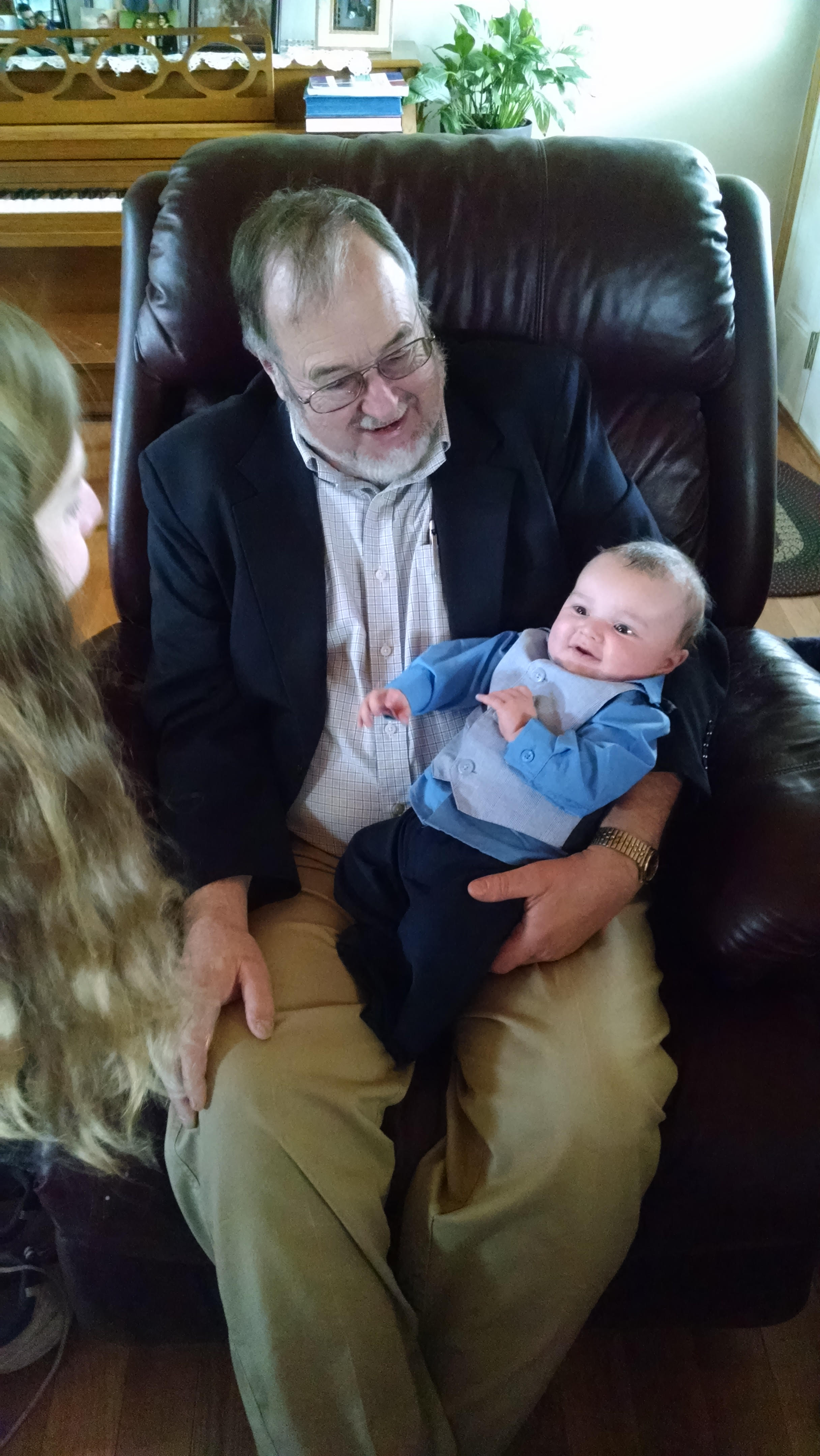
And Grandpa Stuart rocking the newest addition to the tribe, young Henry Stuart who is smiling at Aunt Doreen.
The photos I have are enough. My heart is full. For all these gifts I am so very thankful.
***
How do you work at combining Easter customs with the meaning behind them?
Do you have any tried and true methods for organizing a quick family photo that doesn’t have the toddlers in tantrums and the teens rolling their eyes?? And no cheesy smiles?
***
This part is mainly for my Trinity friends:

I’m thankful for those who took the time and energy to pose this group shot of Trinity members and attendees in the fall of 1985. (Click to enlarge.) It includes pastor Dan and Pat Grandstaff (upper far left), our two oldest daughters (Tanya and Michelle in center of front row, next to Joannie in her wheelchair) along with Stuart (gray shirt by upper left white column) and I (maroon maternity jumper near the center of the photo, with Doreen just “on the way”). The photo is also full of so many dear departed saints. Below is a photo of the egg hunters from 2016, this one taken and shared by John Henderson.

Front row left to right: Michelle, me, grandson James, grandson Sam, Tanya. Our new pastor, Stephanie Sorge Wing and her older son Isaac are right behind us. Click the link on Stephanie’s name to get to our newly restored and relaunched website for Trinity! (I will work on updating other links to Trinity’s website on my blog in the near future, they mostly don’t work right now.)

This is a recipe from my hippie days. Hippie, not hipster. As in 1972-73, when I lived in an “intentional community” which means in addition to being allowed to have guys and girls in one house at my rather conservative Christian college (before very many co-ed dorms were around), we shared food expenses and agreed to have household “community” meetings as the need arose.
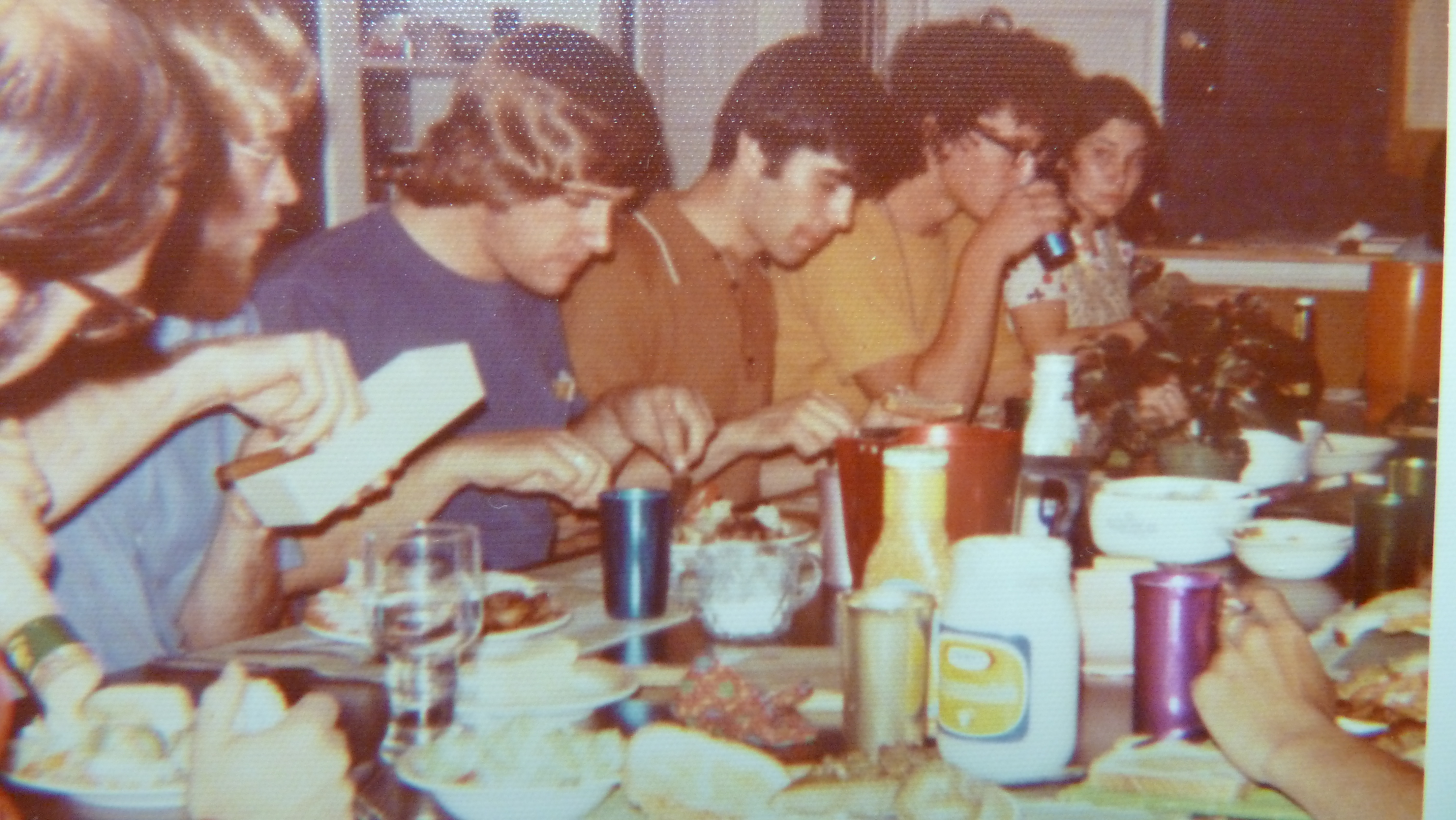
From left: Clair Mellinger, Vic Buckwalter, the late Chet Wenger, random unnamed guest, Tim Brenneman, Ruthi Detwiler.
We also took turns cooking the evening meal and ate together as often as possible. It was the highlight of most days at “Arborvitae,” named for the shrubbery outside our group home.
 Eldon Miller, Mamie Mellinger, and Clair Mellinger, watching the evening news in the Mellinger apartment part of the house.
The biology professor Clair Mellinger (who, with his wife Mamie, nursing professor, were kind of our “house parents” to make things all legal-beagle with aforementioned conservative Christian administration), especially loved the other Latin connection of “Arborvitae” which can be translated to mean “Tree of Life” and also refers to the cellular white matter in the brain when spelled arbor vitae.
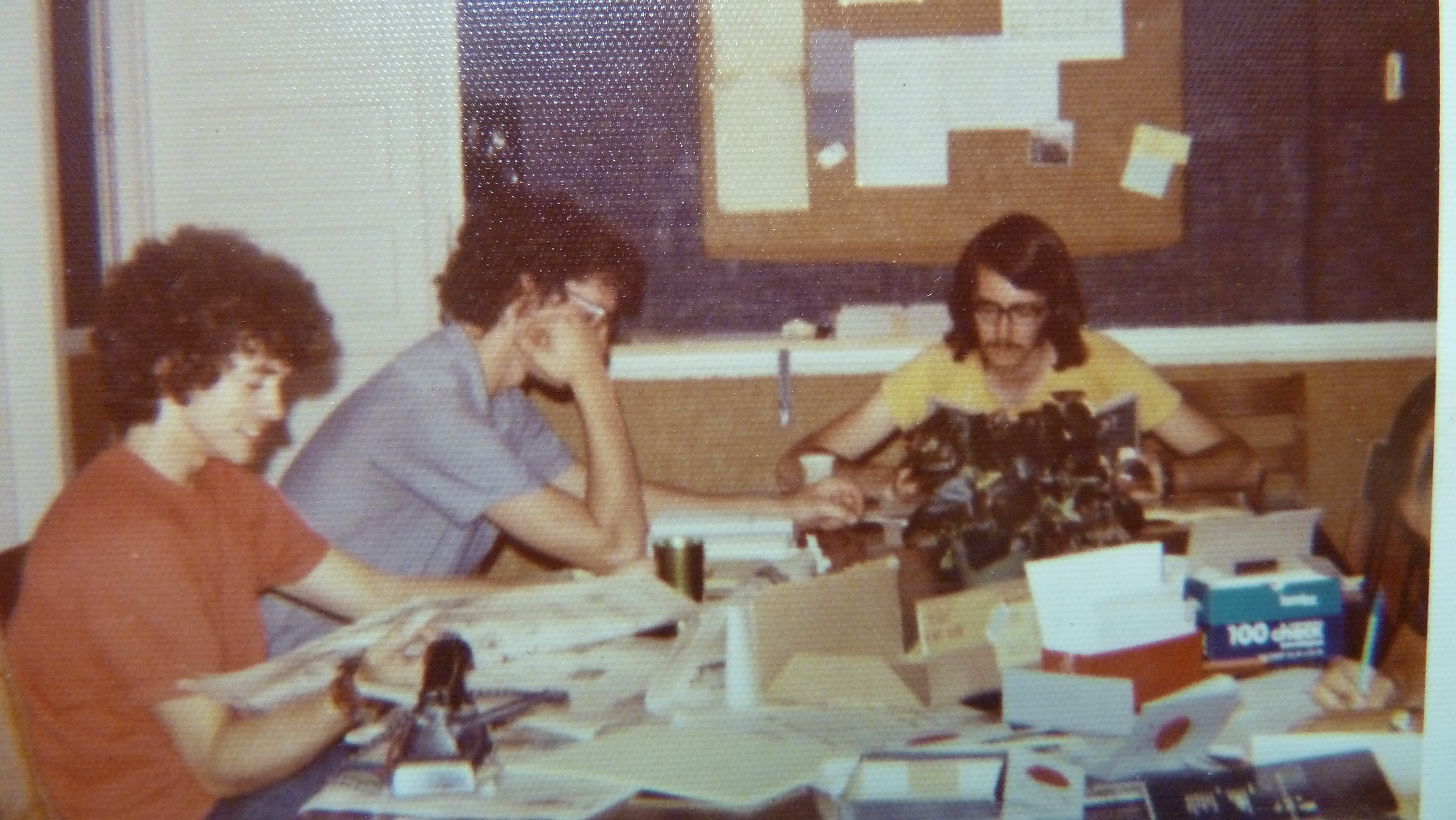
Our long dining room table also doubled as a study table. Eldon Miller, Tim Brenneman, and Bob Mast shown.
But more about that another time. This is a recipe included in my book but I’ve never shared it here, along with a few food prep photos. I made it for the “10 Easiest Recipes PDF” I prepared especially for the 93-year-old guy wrote to me after I shared a condensed version of my “Cooking with Lizzy” series last this fall in the Another Way newspaper column, saying if 12 year old Lizzy could cook, maybe there was hope for him to learn to make a few dishes now that his wife of many years could no longer cook for them. I plan to feature more of those recipes and prep steps here on my blog.

Dave Schrock in our pantry scoping out a possible recipe in a cookbook. From the 1973 Shen EMU Yearbook.
It’s called Dave Schrock’s Tuna/Egg Skillet Dinner because when it was Dave’s turn to cook (we usually had two cooks working together), he would often make this simple and CHEAP dish filled with the protein goodness of tuna and eggs. And no, this is not a variation on tuna casserole at all (or at least not any tuna casserole I’ve ever eaten) but rather a stir fry or fried rice without any veggies. I suppose you could creatively add veggies like chopped broccoli or carrots if you want more complete nutrition and a little more color. I adapted it to fix quickly sometimes when my husband was away and I needed something for just the kids and me. They enjoyed the dish (hubby, not so much).
Dave was one of my high school friends at Bethany Christian High School so we also had our Indiana roots in common. Dave was a good friend of Chuck Kaufman who grew up with me at North Goshen Mennonite; Chuck was probably most influential in urging me to go to Eastern Mennonite University. (And Harrisonburg is of course where I met my husband so … there you go. The rest is history. Forgive my serious recipe digression.)
Onward. (Additional description below as printed in Whatever Happened to Dinner.)
Dave Schrock’s Tuna/Egg Skillet Dinner
This is a one- or two-person meal that I adapted from one of the guys who made it (greatly multiplied) for a houseful of students who lived in a big old house during my sophomore year at Eastern Mennonite University. That year of sharing one-dish meals with a long table of twelve to fourteen people was a glimpse of true community. This recipe serves one or two. So simple, but hearty and tasty, it is basically a variation of fried rice.
1 can tuna, drained
2 eggs
2 teaspoons margarine or olive oil
1 cup / 250 ml cooked brown or white rice (fix according to package directions)
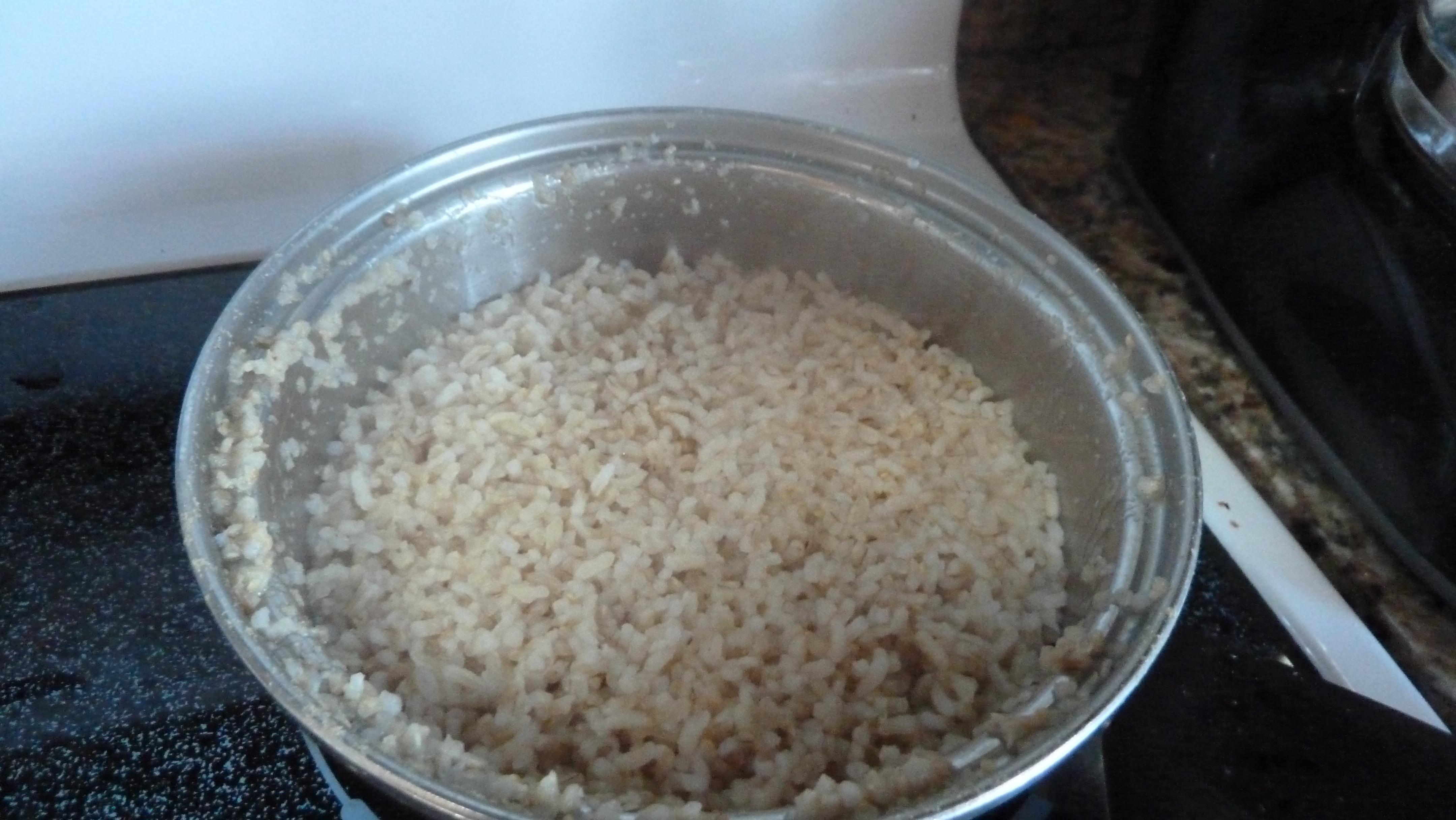
Sauté eggs in a skillet over medium heat, gently chopping them up with the side of a spatula so that the eggs are mixed and chopped (but not scrambled). Push eggs to the side of the skillet, so they won’t get overly brown, while you brown tuna for 2–3 minutes, stirring.
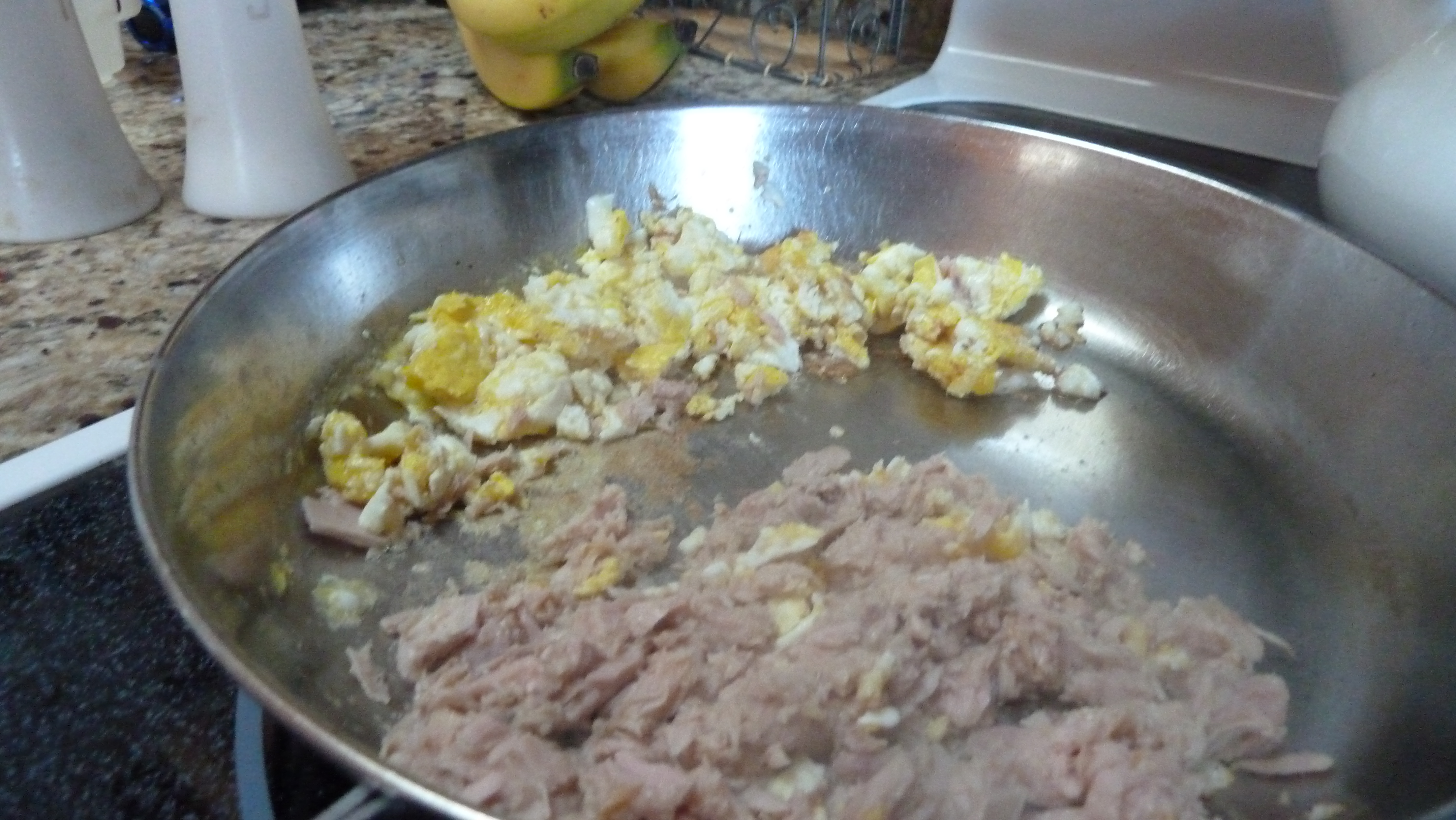
Add cooked rice. Stir tuna, eggs, and rice together, and brown several more minutes. Serve with soy sauce, if desired.
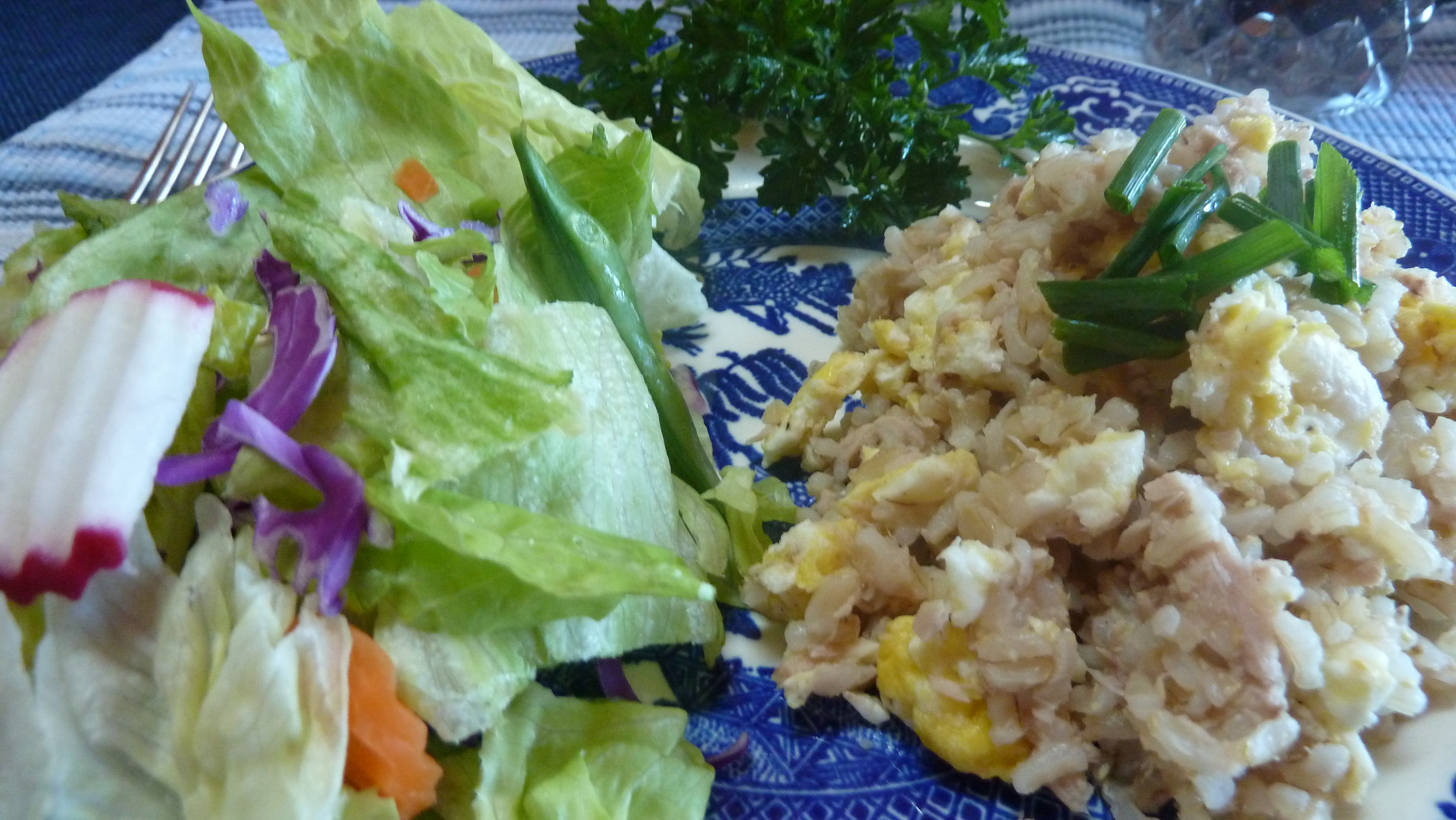
Additional variation ideas to add, not listed in Whatever Happened to Dinner:
- Sauté onions or garlic clove
- Add chopped broccoli, carrots, or peas
- Add mushrooms
- Top with fresh cilantro or parsley
***
Most of us have recipes that came from other people, and every time we cook that dish, we remember that person. Who or what story do you strongly associate with a particular person in your past? Stories? I’d love to hear.
***
Did you ever have roommates or a community where you share or shared meals, either regularly or occasionally? What is a fond memory?
***
If you’re new here, check out my book Whatever Happened to Dinner? which includes over 100 recipes, mostly from Mennonite cooks, if that matters. 🙂 Recipes tested and collected by Jodi Nisly Hertzler and Carmen Wyse, two foodies who (mostly) loved doing it and shared their dishes between families as they cooked.
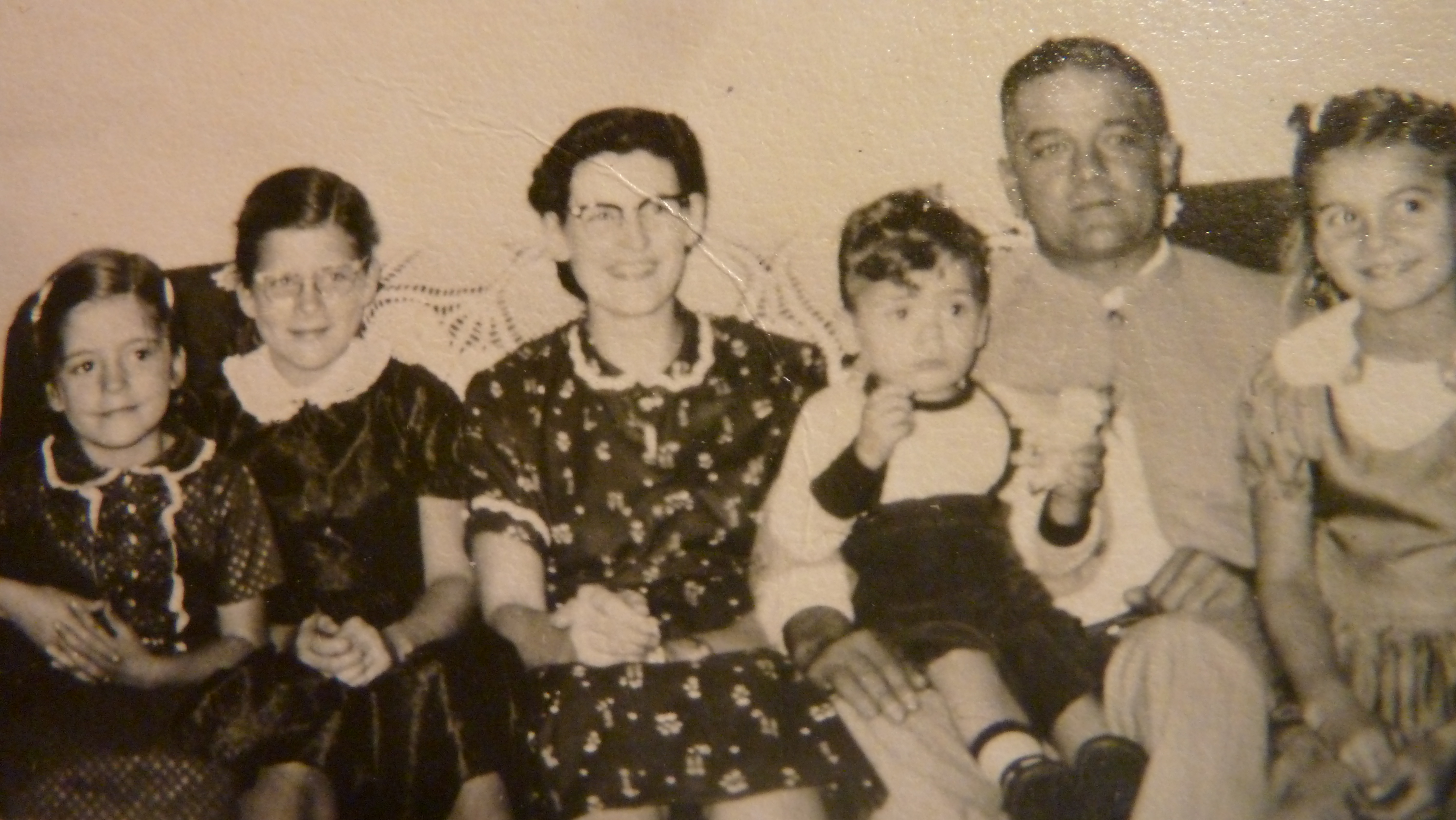
My family circa 1956. Far left: me, oldest sister Nancy, Mother, little bro Terry, Dad, next oldest sister, Linda (Pert).
Ten years ago today my father threw away his cane. He began walking again (if souls walk in heaven) and he promised he would even be dancing.
Imagine, a somewhat straight-laced Mennonite farmer, dancing. That was part of his vision of what it would mean for him to finally be rid of the earthly limitations brought on by diabetic neuropathy where he ended up in a wheelchair for a few years, then fought his way back to a walker, and finally a cane. Pretty good for a man in his high eighties. My biggest regret of that last year is that we didn’t gather to celebrate their 60th wedding anniversary on January 1.
Instead we gathered to say goodbye to his body in late March and honor his memory and all that he stood for and accomplished in his 89 years. During March, there were also some days and weeks when all of us were able to visit Dad while he was in the hospital and even an amazing last Sunday—the week before he died—when he could be present at his home church, North Goshen Mennonite, when he whispered to Mom he was hoping he could maybe have a hot dog for lunch.
It’s not too hard to believe he might dance in heaven since as a Mennonite deacon (who often served earlier in an assistant pastor capacity, especially when it came to visitation and helping lead worship and perform baptisms) he had given his senior pastor a bow tie, encouraging him to give up the old Mennonite straight coat or plain jacket. I wish we still had Dad’s old straight coat. Daddy had begun wearing the bow tie himself and thought it was time to move away from the straight coat. Yay Dad.
As with many young Mennonite fellows of the time, his formal education stopped around eighth grade—eager to help instead on the farm. But he never never stopped learning. He read the church papers from cover to cover, farm magazines, Sunday School lessons, books published by the church publisher Herald Press, the newspaper, and more. He would often—TOO OFTEN—push a magazine or article under my nose and urge me to read it. Soon.
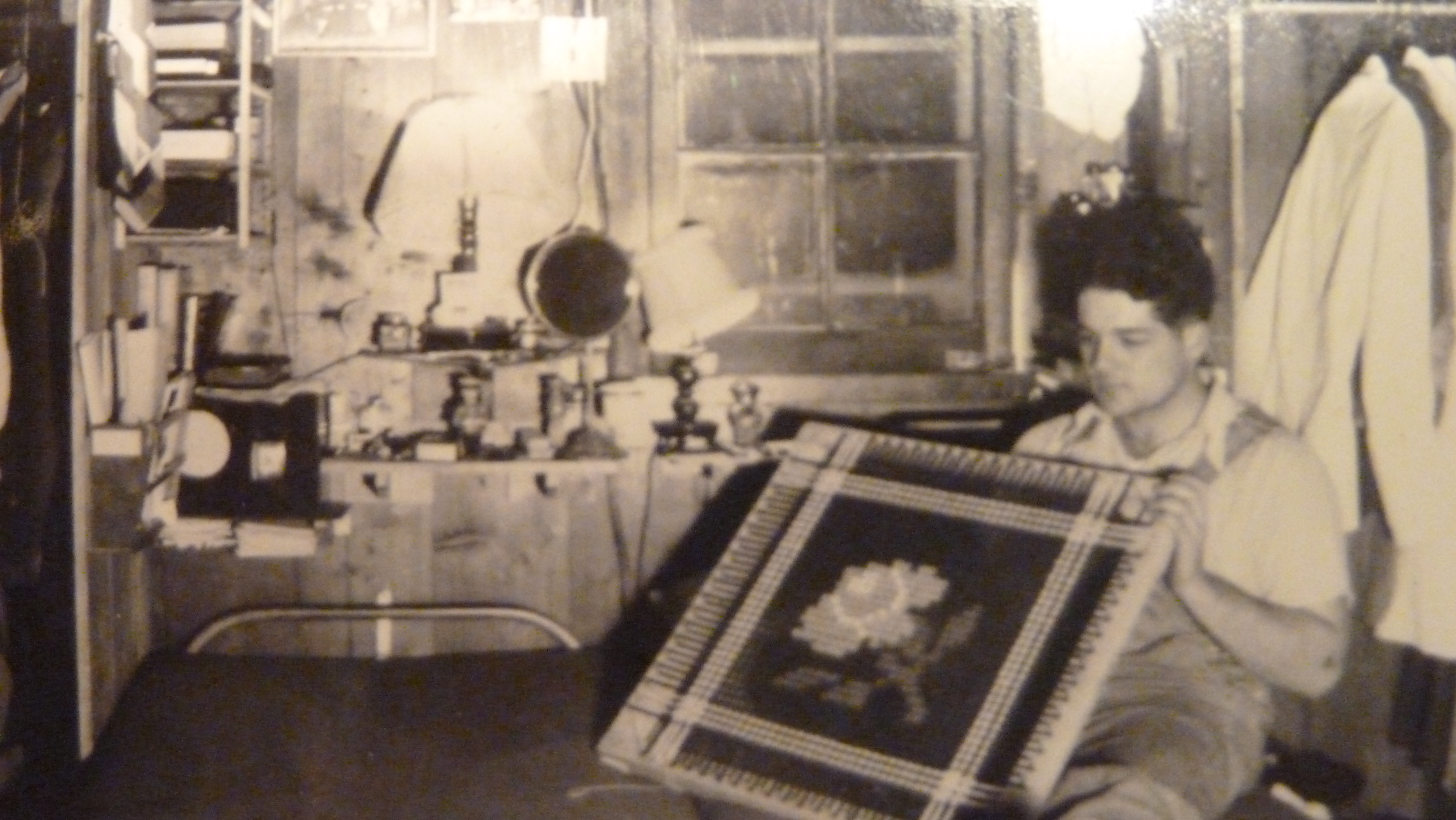
Dad working on crafts in his spare time during Civilian Public Service, circa early 1940s.
He wished to impart his deepest values and the Christian teachings he had come to embrace so fully as he served during World War II as a conscientious objector in a mental hospital and other civilian work of national importance. His four years of service equated to his college education as key Mennonite and other Christian leaders visited the camps where he lived, to instruct and educate the young men—who were taunted as “yellow” by their peers—on why they were doing what they were doing.
I’ve often written about him here on my blog, in my newspaper column and in my books. While he was not a perfect man or dad, I honor his memory and his long example of Christian love put in action. Here are some of my other favorite posts about him: 1. 2. and a commemorative post I did last year.
I won’t say RIP. Instead, dance on, dear Dad, kick up those heels celebrating your joy of the Lord. In the lives of those of us who loved Dad, Husband, Grandpa, Great Grandpa, Great Great Grandpa, Uncle, Great Uncle, Cousin and more, let us pay him and his memory our greatest respect in the ways we choose to live our lives.

Dad slicing apples real thin for the grandchildren: my oldest two daughters, Michelle at 4 years, left, and Tanya, 2, right.
HAPPY EASTER, DADDY.

Easter Sunday, circa 1954. We never wore hats any other time. Dad with his beloved hat and his straight coat.
Did I expect to find chicken nuggets in the exquisitely beautiful Mennonite Girls Can Cook Celebrations cookbook?
Can you see chicken nuggets on the menu at a White House dinner? At a state dinner in Ottawa? Or 10 Downing Street?
That’s how surprised I was to find this simple and savory recipe in the second volume of the Mennonite-cooks-with-a-flair-for-the-fancy “girls” cookbook, Mennonite Girls Can Cook Celebrations.
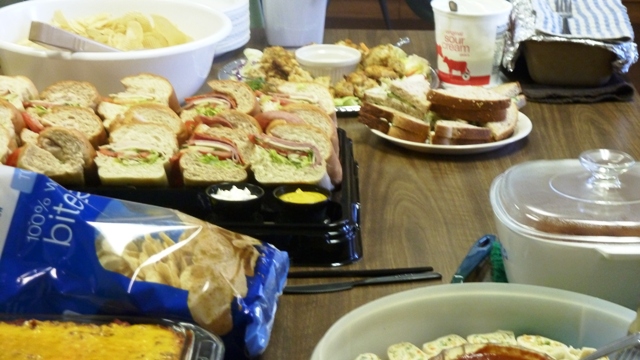
Our MennoMedia monthly office potluck with zany themes for March was “fingerfoods.” Where else to go but to my copy of Mennonite Girls Can Cook Celebrations offering lots of finger foods and party fare. Of course. My oldest daughter even proofread that particular volume for Herald Press (my only technical connection to the book) so I happened to still have on my computer desktop a copy she’d saved there as she worked on proofing it one weekend while home back in 2012. (Which reminds me, did you know that “Mennonite Girls” have a new devotional volume coming out late this summer in honor of a comedy play named for them premiering at Blue Gate Theater for “Amish country tourists” in Shipshewana Ind. and Ohio Star Theater in Sugarcreek Ohio, “MENNONITE GIRLS CAN COOK!”? How cool—and lighthearted—is that? Storyline: a small town cable TV cooking show, hosted by two Mennonite women, attracts the attention of a Hollywood producer.)
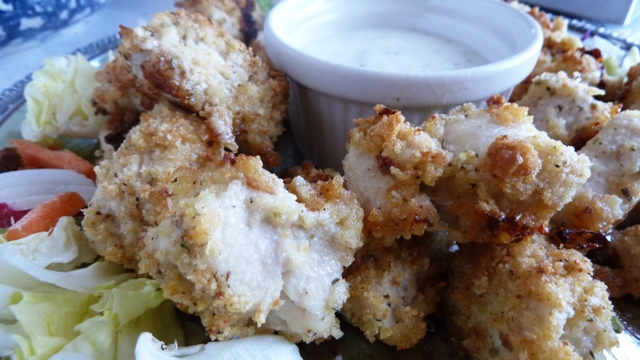
At any rate, there on p. 49 in Celebrations is Betty Reimer’s stab at turning fast food into “slow” homemade Mennonite food—and still turn out amazingly fast and yummy! Baked, not fried, so there’s that. And at this potluck at least, I only heard raves and positive comments.

Cindy Miller, Barbara Finnegan, Merrill Miller, Neal Weaver
and Reuben Graham line up for fingerfood potluck.
When I made more a few days later at home, my husband also ate them with relish. Well not literally, but you know. And he’s not that big of fan of the processed chicken nuggets—unless they’re the less-processed kind at the chain whose logo lady cow tries to get you to eat more chicken. I think the Italian seasoning/Parmesan cheese gives these nuggets a nice twist and difference.
So here goes, straight from Mennonite Girls Can Cook Celebrations, perhaps for an Easter brunch or get together next weekend? (My tips in brackets)
Yield: 30 nuggets
3 chicken breasts [skinless, boneless]
¾ cup / 175 ml dry bread crumbs
1/3 cup / 75 ml Parmesan cheese, grated
¼ teaspoon salt / 1 ml salt
½ teaspoon / 2 ml Italian seasoning
¼ teaspoon / 1 ml pepper
1/3 cup / 75 ml butter, melted
- Preheat oven to 400 degrees F / 205 degrees C.
- Cut chicken into pieces the size of small nuggets [aim for some rough uniformity of size as it helps them get done at the same time]
- Combine dry ingredients in a bowl to make crumbs.
- Dip nuggets into butter and then into crumb mixture.
- Place in a single layer on a parchment-lined baking sheet.
- Bake for 30 minutes until golden brown. [No need to turn these little suckers]
Serve with or without a dip of your choice.
Another “Girls” variation: Chicken Tenders. Or this variation: Garlic Chicken. Also reminds me of my sister-in-law’s Barbara’s Cheesy Chicken.
***
What’s your favorite “finger food” that doesn’t take forever to make?
Do have an Easter brunch at your church? What’s sure to be on the menu?

Nuggets, broccoli and oven fried potatoes make an easy meal.
***
Buy Mennonite Girls Can Cook Celebrations here!

My book, Whatever Happened to Dinner? has some family favorites in it, but also recipes from a wider group of families from my office.

I happen to think that all children are creative. It’s a gift from our creator God.
This is mostly for local readers in the Shenandoah Valley who have children or grandchildren or students or friends ages 4-12 who enjoy coloring or other creative artwork.
The magazine for which I’ve served as editor for many years, Valley Living, is sponsoring an art contest with some great prizes—especially the grand prize donated by the wonderful folks at Take Them a Meal. Many folks use the Take Them a Meal great website to coordinate meals for folks when someone is in special need of TLC—like after a new baby, or when serious illness strikes, or the new pastor’s family has just moved to town! Only recently did I learn that it was started up right here in the Shenandoah Valley by two creative young people that went to the same church, Adina Bailey and Scott Rodgers, and you can read all about that here!

But our Valley Living art contest—the idea for that is to involve more young families and readers in this magazine dedicated to improving family living. The winning artwork will be published in the magazine! Hurry fast–the deadline is March 18, midnight!
We have two awesome judges standing by ready to judge the artwork:
- Ashley Sauder Miller
- Brandy Somers
Here’s all the info and the contest rules!
Art Contest For Kids
Celebrating 25 years publishing Valley Living!
Theme: “What I Like About Living in The Shenandoah Valley”
Who: Children ages 4-12 who love to draw, color, paint, make collages and more!
Contest to be judged in three different age categories (4-6, 7-9 and 10-12), and winners announced with the winner’s artwork published in the Summer issue of Valley Living.
Prizes!
One overall Grand prize Winner: An engaging Kids Activity Set (above) donated byTakeThemAMeal.com, an online meal scheduling tool and service.

First prize for each age category: A supply of decorative paper, artfoam, thick cardboard and special markers—all sure to help keep a budding artist busy for days.

Second prize for each age category: Box of age-appropriate markers.
Rules:
1. Entry should be created on either 8 ½ x 11 or 9 x 12 paper and submitted by March 18.
2. Winners will be announced on valleyliving.org by March 28, and on the Valley Living Facebook page. Like the page so you’ll see announcements of our winners! Decisions of judges are final.
3. All submissions will be available for pick-up after April 1 at Red Front Supermarket.
4. All entries not picked up by Apr. 11 will be discarded.
How to enter:
By mail: Send artwork and entry form (download below) to Art Contest, Valley Living, 1251 Virginia Avenue, Harrisonburg, VA 22802. Entry must be postmarked by March 18.
By email: Artwork can be photographed/scanned, saved as a high resolution (300 dpi) JPEG, and emailed as an attachment to info@valleyliving.org. Entry form (download below and photograph/scan) should be included. Entry must be received by midnight March 18.
In person: Artwork and entry form (download here) can be dropped off at Red Front Supermarket in Harrisonburg by March 18.
***
When your kids or grandkids ask for something to do today, tell them to draw a picture illustrating what they like about living in the Shenandoah Valley and they might win a prize, or have their art published in Valley Living! And they just might have fun doing it. We can’t wait to see what they come up with!
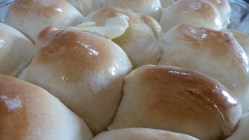
I was a little surprised to find, in scouring my blog, that I had not yet featured my all-time go-to recipe for homemade rolls—whether enjoyed as dinner rolls or cinnamon sweet rolls for breakfast. I probably started making them when I was 14 or younger from a Co-Ed Magazine recipe.
If you’ve never heard of Co-Ed Magazine you are likely not AARP age (or its equivalent in Canada). And yes, you can find and view Co-Ed’s nostalgia online, here! I think, if memory serves me correctly, that our subscription was purchased through our high school, Bethany Christian, and it either came to my older sisters through school or to our home. At any rate, I loved it. Ate. It. Up. Sometimes literally. It had recipes, fashions, teen advice, fun quizzes (which I loved!)—all very proper and home-ec ish. It was teacher and parent approved of course. Not like Seventeen or the other more Madison Avenue-ish mags.

Eventually I could make this recipe without even looking at it. I made it for bake sales, for friends with sick moms, for potlucks I suppose—and eventually my mother and I supplied “Mennonite Homemade Sweet Rolls” to the small Carpenter’s Steak House Restaurant in north Florida after we moved there in 1969 where I waited tables the summer after high school. The rolls were a great hit at the restaurant—people stopped by to enjoy them with their morning coffee—a shift I rarely worked, but I was told it was a treat for as long as they lasted.

Mom used them for extra income for awhile—she was always looking for ways to earn “homemaker” money—to buy the little extras or splurges the normal farmer family budget didn’t cover. I wonder what they sold for at the restaurant—I’m guessing no more than 25-35 cents a piece in 1970—given that a complete entre of chopped steak with trimmings could be had for $1.99.
At any rate, these are some of the things I think about as I stir up this old recipe—which can easily be given more texture and fiber with the addition of a cup or so of whole wheat flour.
At one point I increased this recipe by 1/3 to make more at a time. I’ll give the amounts for both a full recipe and a smaller recipe.*

Melodie Davis Favorite Homemade Rolls and Sweet Rolls
Roll Dough (My variation from Co-Ed Magazine.)
1 ½ cup milk (scaled)
½ cup sugar (dissolve in milk while warm)
2 teaspoons salt (dissolve in milk while warm)
¾ stick butter or margarine (dissolve in milk while warm)
¾ cup warm water
3 packages yeast (dissolve yeast in warm water in a large bowl)
3 eggs beaten
7 ¾ cups flour (approx.) added a little at a time
When water with yeast has started to rise and activate, add about one cup of the flour to yeast mixture and stir by hand. Add eggs to milk mixture, and then add those to the yeast, water, and flour in the large bowl. Begin stirring all together. If using stand mixer, you should be able to use the standard beater and then switch to dough hook when it gets stiff.
Beat for 4-5 minutes. Remove from bowl and knead it 2-3 minutes on flour covered surface. A slightly sticky dough makes the best rolls, but it should not stick to your hands.
Place in greased bowl, cover with cloth, and allow to rise in warm place (under hood light of stove usually works) or in oven with only the oven light turned on, til double in bulk (1-hour). Punch down, let rise again til double, another hour or so.
Punch down and form into small balls size of large walnuts or small tennis balls for dinner rolls, or take half of dough and roll it out to ½ inch thick to make cinnamon rolls. Place in greased pan. Let rise until double in size.
Bake at 350-375 for 15-20 minutes. Watch closely so they don’t get too brown. Remove from oven and immediately spread butter over tops.
Makes approximately 18-24 dinner rolls plus one 9 x 12 pan of cinnamon rolls.
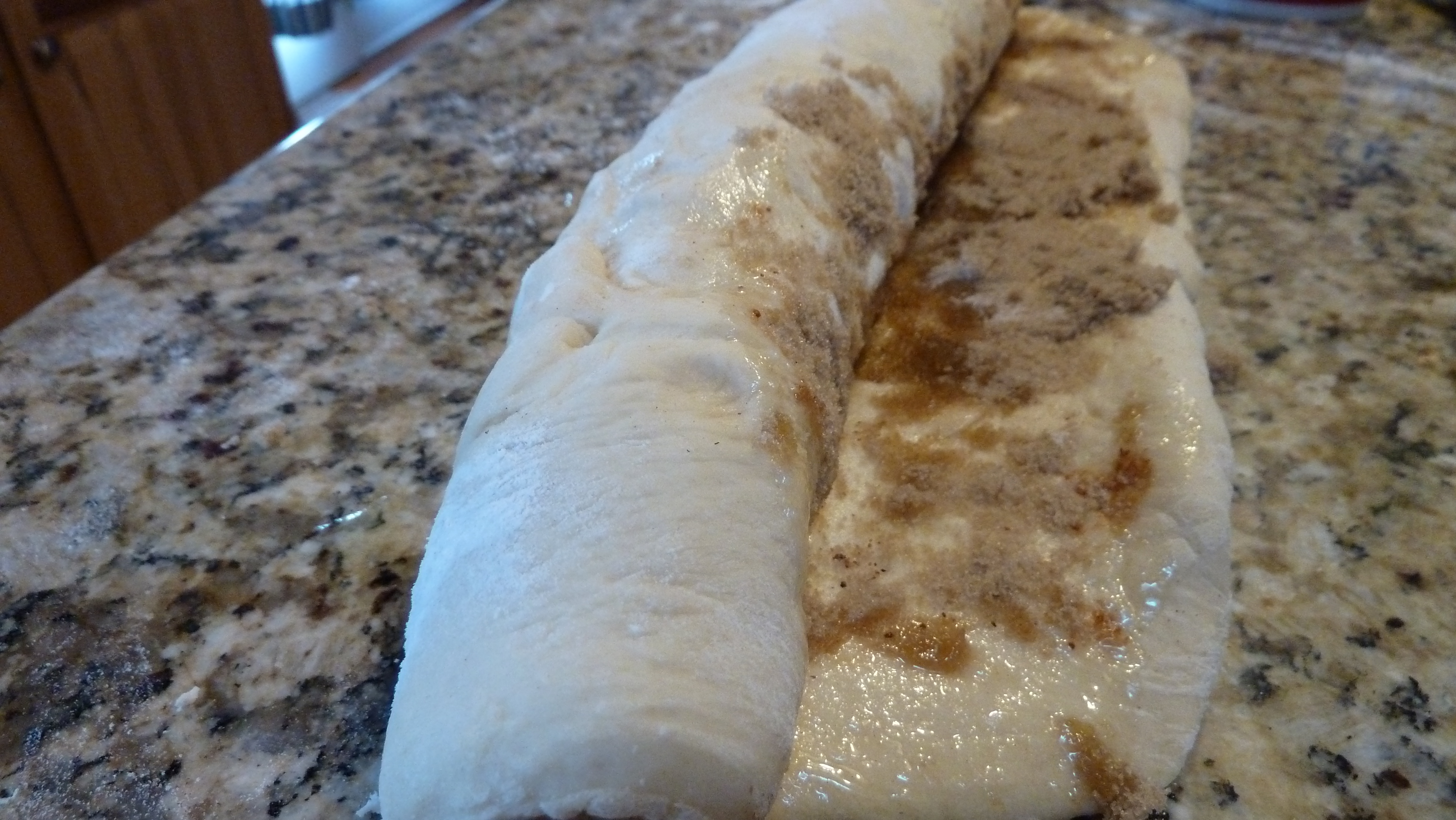
(See my post on how to make cinnamon rolls here, which also includes my roll frosting recipe.)
*Smaller quantities here. (I KNOW you could do the math, but since they’re on my recipe card, I’ll share them for free!):
1 cup milk
1/3 cup sugar
1 1/3 teaspoons salt
½ stick butter
½ cup warm water
2 packages yeast
2 eggs
4 ½ to 5 cups flour
***
Do you remember Co-Ed Magazine? Did you take Home-Ec and did you enjoy it or not?
What was the first recipe you made and claimed as “your” recipe or you became known for it?
***
If you don’t know about my recipe book (that has at least 75-80 percent from other cooks), here it is!

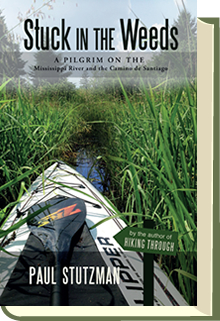
Writer Wednesday: Book review of Stuck in the Weeds
Paul Stutzman is the writer of Hiking Through, about hiking the entire Appalachian Trail (AT) in five months, Biking Across America, two Amish novels in his “Wandering” series, and now, Stuck in the Weeds.
I read Hiking Through soon after it was published and enjoyed it immensely as it tells the compelling story of his heartbreak and grief from his wife dying of cancer, and how the tremendous discipline and strength (physical and mental) to hike the tough AT in one swoop (OK, with numerous off trail respites in B&Bs), helps him to heal and move on from his distressing, life-altering loss.

I’m sure my enjoyment of Hiking Through was heightened because we live so close to the famous trail and have crossed or hiked portions of it over the years in frequent forays to Shenandoah National Park. (For the best virtual AT through-hike re-creation, I still like my friend Kevin Gallagher’s photo collection that flips through in five minutes, here.)
When I realized Stuck in the Weeds was about more than just apparently a somewhat failed adventure along the Mississippi River and would take me, vicariously, along the now famed Camino de Santiago across the entire northern half of Spain, I was more eager to dig in. Faithful readers here will know why the Spain part of the book drew me in, having lived there a year as a college student in 1973-74 and authoring my own “travel memoir” published by Herald Press in 1992, Departure. (My boss at the time, who otherwise was a big fan and supporter of my writing efforts, never did quite get why anyone would want to read someone else’s glorified journal, as he considered my books On Troublesome Creek and Departure to be. I forgave him his opinion!)
At first I found myself kind of wondering the same thing about Stuck in the Weeds, especially the title (Stutzman could have used some help maybe finding a better title—maybe something along the lines of “From Peril on the Mississippi to Plodding Spain’s Camino”). I quibbled with the true stuff I knew about life in Spain that Paul glossed over or didn’t get quite right, such as the inference that all Spaniards take a nap from roughly 2 to 5 p.m. Siesta time lasts that long but it includes the family gathering for a leisurely main meal of the day around 2 p.m., and then napping or respite before heading back to work or school for a second stint from 5-7 or 8 p.m. At least that’s how it was when I was there in the 70s. But things change and I don’t claim to be up to date on life in Spain now!
I also thought a former restaurant manager such as Stutzman, well versed in foods, would have described the thinly sliced and cured “jamón serrano” ham (very much like the country ham we enjoy here in Virginia, and also a little like the prosciutto delicacy from Italy) as something other than “tough, almost like jerky, and sliced so thin it had only one side.” I’m also not quite ready to let his description of coastal Spain’s beloved paella dish as a “rice and vegetable dish with rice and more rice” go unchallenged. He adds that sometimes it includes chicken or seafood. Um, no. In my experience chicken or sea food is almost always present but perhaps it is now more frequently offered as a vegetarian offering. In any case, it was one of my favorite dishes in Spain, even though I’d heard that Spanish cooks often use up the leftovers in their fridge by throwing the week’s scraps in the paella. Maybe that’s what he didn’t like. Sorry, Paul.
But eventually I was drawn into the daily-ness of the pilgrimage trail, and the community spirit and bonds developed by the hikers. I was transported back to similar experiences I had, especially in the rural parts of northern Spain, particularly the unforgettable meal I had with my Spanish roommate and her friends on a trip back from skiing (they skied; me, not so much) in the Pyrenees mountain area, in an inn she had described as “muy encantadora y typico” (very enchanting and typical) of the area. As I read a little each evening, I began to look forward to traveling the pilgrimage with Stutzman, since at this point in my life I doubt I’ll ever have the opportunity to hike the Camino in person, although I certainly do hope to get back to Spain. Camino, by the way, is Spanish for road.
Stutzman does a good job writing descriptive action while holding you in a moderate amount of suspense for what is to come. Through a casual read you absorb snippets of the history of Spain, the biblical background of St. James (for whom the 491 mile Camino de Santiago is named), and a feel for the atmosphere of Spain’s centuries’ old monasteries and inns-turned-hostels, dedicated mostly to cheap lodging ($15-30 a night for pilgrims). Many of these serve communal meals of authentic Spanish fare.
Those on pilgrimage learn to sleep with the noises of 100 others in the same room (snoring, flatulence), and without seeming necessities like towels. Stutzman didn’t take along a bath towel and ends up using a T-shirt to dry off most of his trip. Stutzman felt that thankfully there has not been much commercialization along the Camino, even though the hostels and cafes mainly serve the needs of pilgrims in the tiny picturesque villages—and indeed thrive because of the many hikers.
Stutzman takes me back with lines like “scenes from the life of a town that had existed for centuries” as he scans Spain’s horizon, and descriptions of brightly colored geraniums in village window boxes brightening stone walls.
Hiking the Camino has long been a profoundly religious pilgrimage for the majority of hikers, which has rebounded in popularity in just the past 25 years; it is that for Paul. As a formerly conservative Mennonite who now considers himself somewhat of an outcast among certain religious persons while still deeply Christian, he longs to be invited to the communion table in the cathedrals they frequent in their trek, but understands the doctrines that prohibit him as a non-Catholic. He explains the historical roots of the pilgrimage going back to the time of the apostles after Christ’s death, including how the bones of the disciple James end up in the magnificent cathedral in Santiago—a high point for most on the spiritual pilgrimage. Weaving back and forth between a Camino journal that anyone (non-religious) would enjoy, to chapters that focus more on faith applications or narrative may seem like an incongruent leap for some. Paul’s faith shines keenest in the Mississippi River portion of the journal where he has a turn of heart about the trip and experiences the Providence of God in a pretty amazing way.
I must confess I skimmed parts of the Mississippi River adventure portion of the book. I’m sure if I had ever tried a similar expedition—or even a Mississippi River cruise which does sort of sound like an interesting adventure—I would have identified more with that portion. Although it did bring to mind various river trips my husband and family have done: rafting, fishing, and canoeing–and memories of how miserable you can become in too-long of day on an almost-dried up river … (Miller family—remember the Cumberland??)
Bottom line: this is a great read for anyone planning or even dreaming of a pilgrimage like Camino de Santiago or elsewhere. It is also a cautionary tale for anyone who thinks a lazy float down the Mississippi sounds like a fun Tom Sawyer kind of thing to do. I have nothing but admiration for a writer and adventure lover to have undertaken the kinds of trips Stutzman has tackled since his mid 50’s. What will he try next?! I’ll be along for the journey—at least in the book that is sure to come.
***
Have you read any of Paul’s books or heard him speak? Your favorite?
***
I like the main question on Paul’s blog:
Have you ever wanted to walk away from life?
He says, “I did; and in the process, I walked to new life.”
Your comments? Stories?

 findingharmonyblog
