Skip to content

ccblogs-badge

Caroline: Young ballerina in New York City

Working hard and living a dream …

WithDianaPaulaParedesWeb

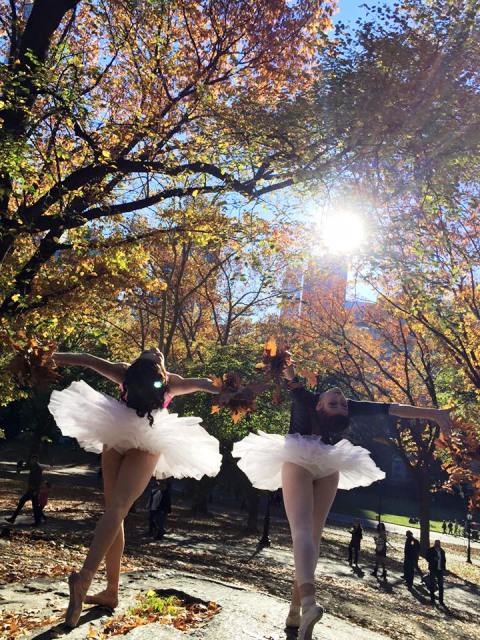
Caroline and friend Diana in Central Park. Photo courtesy of Jon Catherine Dolittle.

Today I’d like to tell you about Caroline, a young woman who is currently studying ballet in New York City. Just to write that sentence is a WOW. She’s really there, after years of doing what she loves most, dancing.

I knew Caroline as a young girl and member of our church. My youngest daughter “babysat” for her a time or two when she was old enough and Caroline thrived on creative, imaginative play. Her father is an engineer but her mother, Mary Jean, has mostly worked on their mini-farm to help with family income, as well as giving horseback riding lessons—mostly on a donation basis because they couldn’t afford the liability insurance to cover a riding program.

CarolineRiding

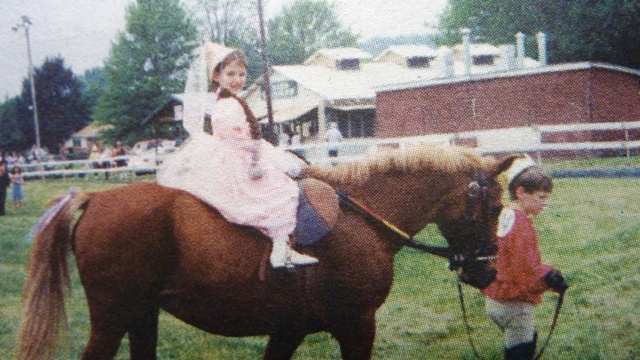
Caroline as a “princess” in a horseback riding competition.

But the horseback riding—another love for Caroline—not unrelated to the grace of ballet, inspired Caroline and her mother to help out at a nearby therapeutic stable and camp for children and adults with disabilities. One year they even planned a fundraiser birthday party for Mary Jean’s elderly pony, Trixie, to raise money to help build an amazing wheelchair accessible tree house for the nonprofit therapeutic program at Camp Still Meadows.

CarolineAndMom

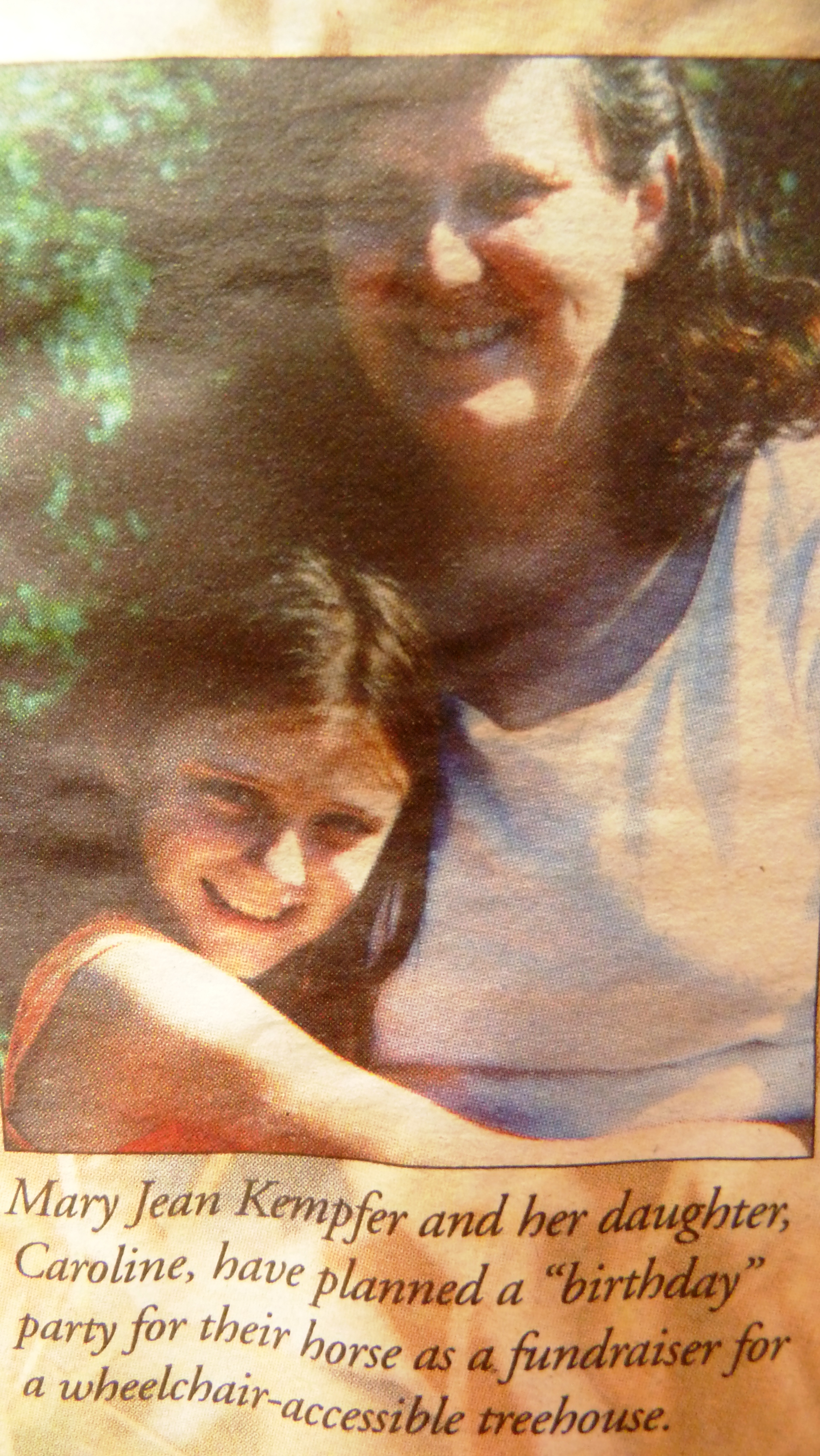
Newspaper clipping of Caroline and her mother when they planned a fundraiser for a wheelchair-accessible treehouse.

I knew her mother and grandparents even longer—her grandfather was the pastor who married me and my husband almost 40 years ago. So the ties are long and special. And the whole family is that kind of family—always responding to help others as needed.

JoffreyClassWeb

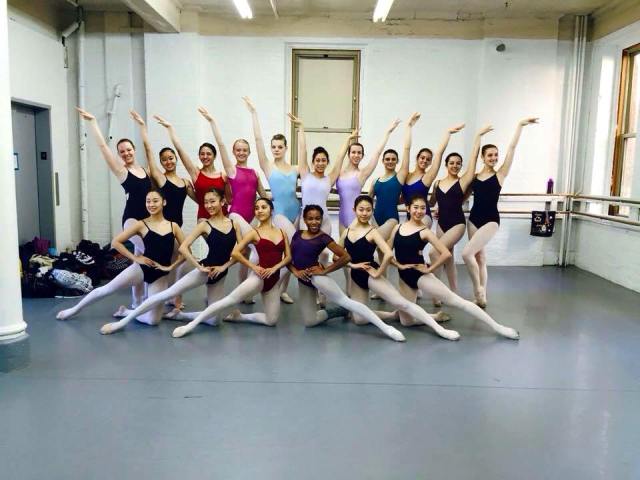
Caroline’s class at Joffrey Ballet.

Caroline is currently studying ballet at the renowned Joffrey Ballet School in New York City. I know she is working hard. I was amused at one quote from an instructor she shared on her Facebook page, “I want to see a LINE, Caroline. Your name even has “line” in it.”

SubwayStationWeb

Posing in a subway station.

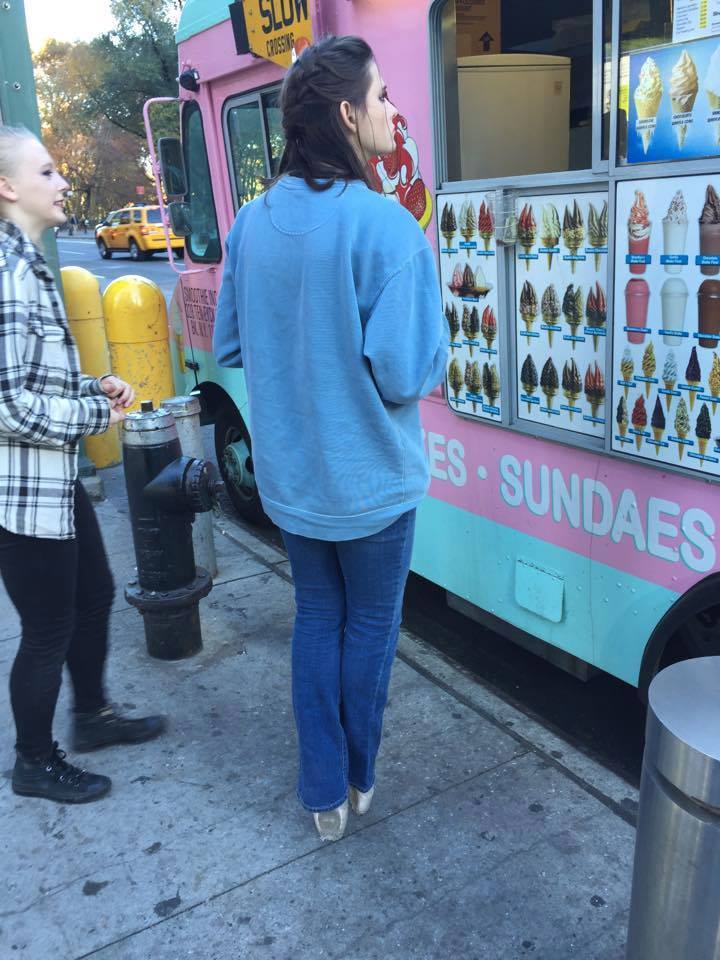
BuyingIceCreamWeb

Enjoying sidewalk eats (notice the pink slippers at the bottom of the jeans).

MetropolitanMuseumOfArt+CarolineWeb

At the Metropolitan Museum of Art.

This fall Caroline has enjoyed all the city has to offer, but mainly because it is bringing her closer to her dream. Here she shares some of her experience and the hard work:

“Everyday I’m here is one step closer to my dream of getting a job as a professional ballet dancer. Not only am I getting the training I need but the city itself is such an opportunity for young artists. Everywhere I look there’s inspiration and such respect for the arts! Being here is such an amazing opportunity that I’ll do almost anything to stay here for the rest of the school year.

It means the world to me that people believe in me enough to donate. It blows my mind sometimes. But having that support does more than help me financially. On those days where I’m having an off day, feel like I’ve got three left feet, and when I’m in the middle of four hour rehearsals and my body’s just like “Nope, I’m done now,” I look myself in the mirror and say to myself: “Pull yourself together Caroline. There are people out there who believe in you enough to give you their hard earned money. If they can believe in you enough to give you this chance, you can do the waltz of the flowers one more time.”

Caroline very much wanted to come home for Thanksgiving, but no one could really afford to buy the train ticket for her, especially since she gets to come home for Christmas. Her grandfather, Don, suggested, “All your life you’ve watched the Macy Parade on Thanksgiving Day. Millions of people would love to be where you are and able to watch the parade in person, and here you are, living in the city. Maybe this year is the year for you to see it!”

MacyParade1

Macy’s Parade, 2001

Caroline, according to her grandfather, thought about it and decided he was right, and she could stay in the city with some of her new friends from abroad and other places too far to go home. She calls her ballet group her “Joffrey family.” Still, I know her parents and family will miss her greatly.

CarolineandMotherWeb

Caroline and her mother, Mary Jean.

I’m proud to know a young ballerina following her dream in New York City, but mainly because she’s not just star struck. She has said she wants to study ballet until she is able to land a job with a company in any midsize city that offers that opportunity closer to her home, such as Richmond, Va.—it doesn’t have to be New York!

HammingUpWeb

Caroline hamming it up outside a theater marque.

Perhaps you too are inspired to join me in helping Caroline in her dream. Scholarships for Joffrey School of Ballet where Caroline is enrolled are not commonly offered, so students are left to find family funding or anyway they can. She is trying to raise money one semester at a time.

Here’s the link to the Go Fund Me page for Caroline. I know she would appreciate any amount you can spare.

***

You can also leave your good wishes, prayers, or comments/stories for Caroline here and I’ll be sure she sees them.

***

Here’s one of my own favorite posts about some dreams fulfilled for our daughters, including our trip to the Macy’s Thanksgiving Day Parade in 2001.

 ***

A blessed and happy Thanksgiving to all. And now I’ll take a mini-blog vacation, thank you very much! There are children and grandchildren to feed, love & hug!

Easiest Cranberry Salad


DishedUp

My mother and grandmother’s recipe and process for making cranberry salad was long and complicated. But it was one of the traditions of our Thanksgiving that I loved. It involved getting out Momma’s hand cranked grinder, which had to be attached to the edge of a table with a clamp. Then you poured cranberries (we bought them frozen) into the chute of the grinder, and cranked that handle. Yeah. I loved it then: it was like making Christmas cookies or dyeing Easter eggs or carving pumpkins: you loved it because it was a tradition, and you could make a mess.

After grinding the cranberries, which became my special job, mother chopped up oranges, apples, celery, and nuts. This recipe doesn’t eliminate those steps, but for many years as an adult, not having a way to grind up cranberries kept me from enjoying the lovely tang and twist cranberry adds to the Thanksgiving taste palette. And I wasn’t about to buy a grinder to use once or twice a year.

So, once we stopped driving the 1200 round-trip miles in crazy Thanksgiving traffic to my parents’ house, I greatly missed my mother’s cranberry salad (and home, of course!). But I would satisfy part of my craving by just buying expensive cranberry salad from delis for years.

Finally, a few years back, I got this much easier recipe from my church friend, Alisa Hillary. Alisa has since gone on to enjoy her Thanksgiving and all holidays with our Creator, so I will make this again with a toast to Alisa for not only simplifying my Thanksgiving cooking, but almost giving me back my mother’s cranberry salad, save the grinding.

Easy Cranberry Salad

1 small box orange jello (notice, orange, not red)
1 can whole cranberries in sauce (I used Ocean Spray “whole berry” sauce)
1 cup / 250 ml chopped celery
¾ cup / 175 ml chopped nuts (pecan or walnut)
1 cup / 250 ml chopped apple pieces
1 cup / 250 ml chopped orange pieces

Make Jello according to package instructions. Let Jello cool a half hour or so in refrigerator, then add all the other ingredients. Let jell in refrigerator 3–4 hours.

***

To be honest, most of my family are not big fans. So I make this mainly for me. Is there any holiday food you make or enjoy just because it is your tradition? 

***

This recipe is found in Whatever Happened to Dinner: Recipes and Reflections for Family Mealtime. Win a free copy from Amish Wisdom blog (offer good until Nov. 27, 2015).

The Word That Renders Evil Powerless: The Mighty Fortress Who Is

FalconOverGrandCanyon

At our church we observed Reformation Sunday in late October. Along with probably most Protestant churches which follow the liturgical church year, we sang the majestic “A Mighty Fortress is Our God,” written by reformer Martin Luther. It’s a favorite of mine anyway, partly because my born-and-bred Lutheran husband always enjoys and sings it with great gusto. He would be the first to tell you he is not the greatest singer in the world but, like my father always did, booms out with heartfelt enthusiasm on a familiar song.

I don’t think the words ever spoke to me as powerfully as that Sunday. So old fashioned with its eths and doths and images of trembling before a prince of darkness grim. Here are the words to all but the second verse:

A mighty fortress is our God
A bulwark never failing
Our helper he amid the flood
Of mortal ills prevailing
For still our ancient foe
Doth seek to work us woe;
his craft and power are great,
and armed with cruel hate,
on earth is not his equal.

And though this world, with devils filled,
Should threaten to undo us.
We will not fear, for God hath willed
His truth to triumph through us.
The prince of darkness grim,
We tremble not for him;
His rage we can endure,
For lo! His doom is sure,
One little word shall fell him.

That word above all earthly powers,
No thanks to them, abideth.
The Spirit and the gifts are ours
Through Him who with us sideth;
Let goods and kindred go,
This mortal life also;
The body they may kill,
God’s truth abideth still,
His kingdom is forever.

Our interim pastor, Sally Robinson, used the story of Job in the Old Testament to address the oft debated topic of “where is God with so much suffering in the world” but with a twist. It is human nature to lament and rage against the heavens when bad, horrible things happen, as they did again this week, and indeed happen every week somewhere in the world. But that’s another topic and my heart goes out to all affected personally.


CourtOfThePatriarchs

The Court of the Patriarchs, Zion National Park, Utah.

The question Sally asked was “why don’t we also question God when good things happen?” Sally has many years of ministry and life experience, including the good, the bad, and the boring.Looking at Job (as I did in three posts on this blog, a condensed version which later appeared in The Mennonite) we wonder how one human could bear so much grief as he loses all his riches and his family. But when his blessings are restored many times over, we don’t wonder any more. We don’t question God when blessings flow.

Pastor Sally pointed out that part of living means accepting and acknowledging our blessings—in humility—and accepting the risks. For instance, when we fall in love (or grow into it) and marry, we accept the risk that one day we will lose our beloved—or they will lose us (and perhaps some pass on together—a blessing for them but a double grief for their families). To love and be loved in this life—we agree to pain and suffering. The alternative—to hibernate or withdraw from friends, loved ones and society is to lead an incredibly lonely life—a grief and loss of another kind.

In that context, “A Mighty Fortress” takes on an even richer significance. Essentially if we take it to heart, it frees us to look the risks—even the rage of the evil one— straight in the eye and say as Jesus said to the tempter in the wilderness, “You have no power over me.” (I can think of more profane ways to say that but I won’t here.) With Luther we can rest in the stronghold God provides and belt out, “God’s truth abideth still.”

SequoiaTree

Abide—even without the eth on the end—is a wonderful, out of date word, in common usage only as a negative thing, as in: “I cannot abide that!” In the Bible abide is far richer, evoking comforting, big arms enveloping us—but also a responsibility to stay put and not stray from God’s side.

Those words offer out-of-this-world comfort, and a place to draw the strength to carry on.

One final thought. Four lines in this great hymn left me greatly perplexed for awhile, where the thought carries over from one verse to the next (the parentheses inserted below are mine):

For lo! His doom is sure,
One little word shall fell him.

That word above all earthly powers,
(No thanks to them), abideth.

Luther is almost satirically saying the earthly powers have nothing, NOTHING, when it comes to the might of the Fortress (God). One commentator says that word is love.

Even when the way seems dark and full of sorrow and fear, love trumps the evil powers of this world.

SanFranciscoBay

***

How does this hymn speak to you? Or not? How do you interpret those perplexing lines I called out above?

Here are some conservative Mennonites with an a cappella arrangement of A Mighty Fortress is Our God.

https://youtu.be/wIqwW8mSiyI

***

For some additional, but different thoughts on Reformation Sunday, here’s theologian Stanley Hauerwas.

***

P1040572

We need a Lutheran Hymnal in our collection, don’t you think??

***

All photos mine.

Roast Pork and Two Pulled Pork Options: Three Delicious Meals

PorkBBQSlawChives

This is the time of year when I don’t want to make roast turkey, chicken, or ham for a special meal, because, well, the holidays are coming when I will be making at least turkey and ham.

That’s when I think about pork: as the pork producers say, the other white meat we sometimes forget about.

RoastInCrockPot

Roast or pulled pork is another dish or meat that is incredibly easy to pop in the crock pot before you go to work or church and chop up into “pulled pork” for sandwiches or serve as roast pork wedges.

A must with pulled pork or plain old BBQ pork sandwiches? The cole slaw. I didn’t grow up that way (in fact I doubt I ever ate a BBQ pork sandwich until I moved to Virginia), but once here, the slaw—even on top of Sloppy Jo’s (made with ground beef of course) is a favorite! That nudges in vitamins through the cabbage, carrots and green or red peppers if you add those.

Roast Rubbed Pork (adapted from the National Pork Board)

1 3-5 pound boneless pork butt (shoulder)
1 ½ teaspoons smoked paprika
2 teaspoons black pepper
1 teaspoon cayenne or chili
1 teaspoon dried thyme (leaves)
1 teaspoon garlic powder
1 tablespoon rosemary leaves (optional)
½ teaspoon salt
1 cup water

SpicesRubbedOn

Raw pork, rubbed with seasonings. (Be sure to keep hands washed handing raw pork.) 

Combine seasonings in a small bowl, rub evenly over all sides of roast. Place meat in a 4-6 quart slow cooker (depending on the size of your roast). Add water. Cover and cook on low 6-8 hours or high for 4-5 hours or until pork is very tender.

CabbagePlusPork

Remove pork to a large cutting board or platter and let rest for 10-15 minutes. Make slaw or other finishing touches for dinner. Then pull off, slice, or chop to serve. Can be served in buns with barbecue sauce.

Serves 12-15 if you use a 5 pound butt.

Since I usually only have two of us to feed anymore, I use the pork for multiple meals as follows:

RoastPorkWCenterpiece

Roast pork, sliced, with all the trimmings.

PorkBBQSlawChives

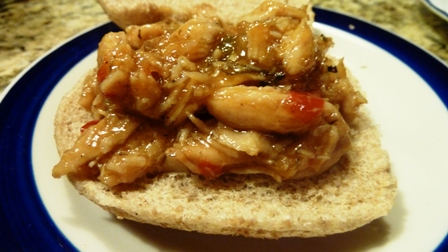
Pulled pork sandwiches with cole slaw, oven baked potato wedges. Optional to add a BBQ sauce on top of the pulled pork.

PorkBBQWHabeneroSauce

Pork sandwiches mixed and heated with Pineapple habanera sauce for an extra kick; served with pork and beans, rice, or mac and cheese.

I hope to make a lentil soup using the pork broth and maybe some still left over pork pieces.

***

Did you grow up eating cole slaw on Sloppy Jo’s or pork BBQ? Is that a southern thing?

Do you have a good and easy recipe for cole slaw, or do you buy yours?

***

If you’re a newcomer here, check out my book with over 100 recipes (not all mine) Whatever Happened to Dinner, with plenty of inspiration for keeping or starting a regular family meal tradition in your home.

Racism: Working at Harmony Across the Great Divides

Freedom of expression is a wonderful gift we have in this country and Canada as well (a tip ‘o the hat to my Canadian followers). With the ease of instant world wide communication when anyone, including me, can publish an opinion—or hundreds of them all day long through places like Twitter—freedom of expression is not only a gift, it quickly becomes a threat, a goad in the side, a source of much discord. The opposite of harmony, the underlying theme of this blog.

PaintbrushedCarCropped

Ever since the Confederate flag came down in the wake of the despicable killings at the Wednesday night Bible Study in Charleston, S.C., many of us have noted an uptick in the number of Confederate flags flown on trucks, cars and front yards. On that dreadful Thursday morning as full news of the horror of that shooting rolled out, I listened on the radio feeling the precious spirit of an ordinary Wednesday night Bible study fellowship shattered forever. That could have been my church, my small Wednesday night group.

I will always remember how and when I first became aware that the Civil War was not over. It was 1969. My family moved from the north to the deep south and I was a senior in a high school that had been forced to fully integrate that year for the first time. I was teased because I was a “Yankee” which did not really hurt, because I was white. But my jaw dropped when one kid added “Damn” in front of his taunt and uttered the line that still shocks me to this day: “If we could fight ‘cha again, we’d win this time.”

Huh? What?

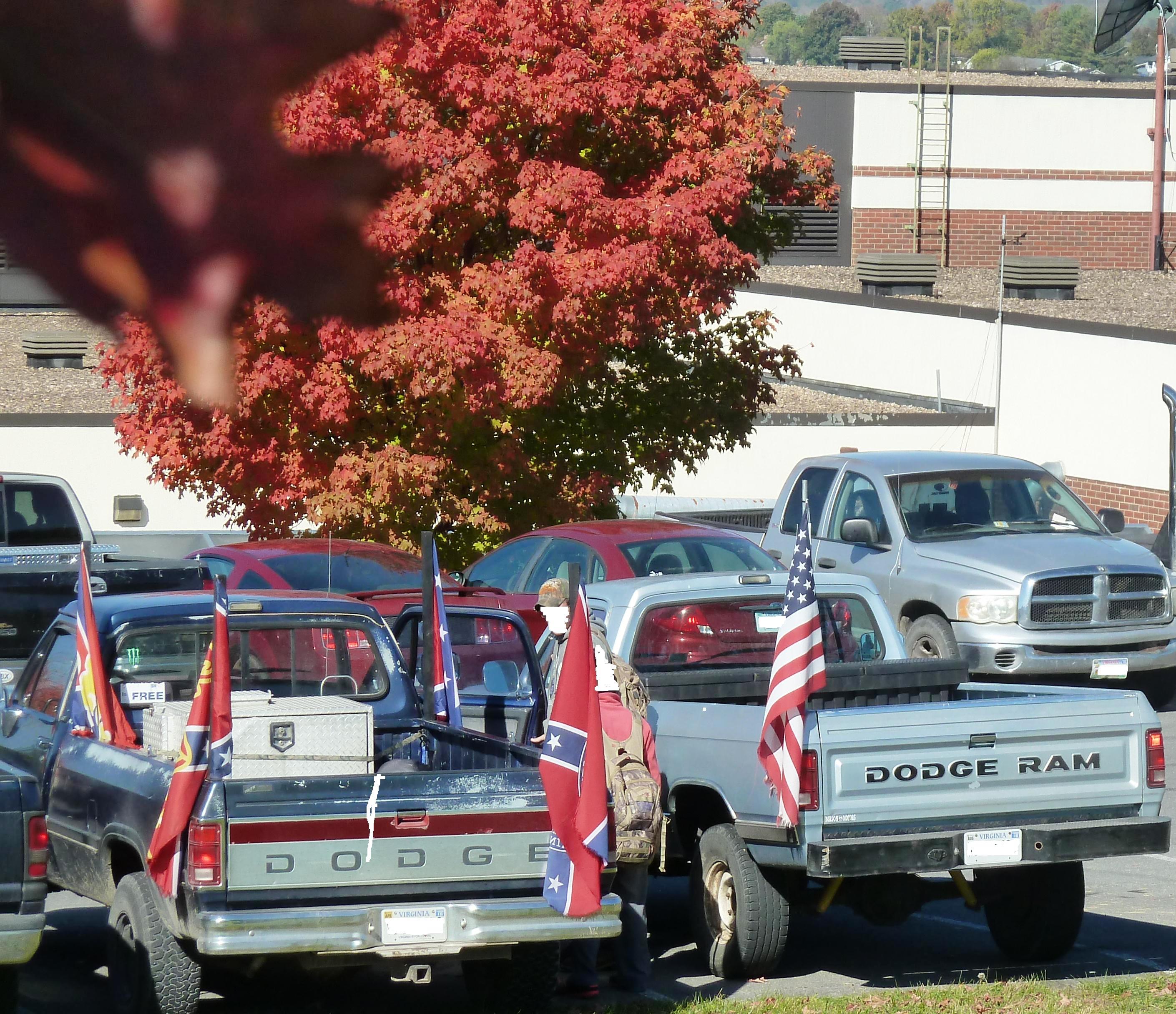
Yeah. That was 1969. Fast forward to a high school parking lot in 2015 in Virginia.

FlagCropped

This is a recent photo I took at my kids’ former high school. My mother, living in Indiana, talks about seeing loyal Confederate flags from lawns and trucks there in “Yankeeland.” And I get that for many, the old flag is history, a piece of cultural and family heritage, reminiscent even of a certain elegance—the mansions, the parties on the lawn, the Gone with the Wind era genteel society. As whites.

People say it is freedom of expression to display the Confederate flag. But no matter how loudly people remind us that the Civil War was more generally about “state rights,” it was, fundamentally, the right to own slaves that people fought and died for.

As the old saying goes, “My freedom of expression ends where your nose begins.” And the painful, deeply divisive cut of racism through our country’s heritage sometimes means leaving history and cultural heritage for museums, books and films. We need to continue the painful, ongoing reconstruction of a better society. We must reach across history, misunderstanding, war, murder, and mistreatment to build new relationships. The good families of Emanuel African Methodist Episcopal Church in downtown Charleston have already shown the way in their early, amazing expressions of forgiveness.

My father and mother did a wonderful thing in moving our family 900 miles to a new culture. I’m grateful for that difficult year—difficult not only because of new awareness of how blind I’d been to the deep continuing discord of racism, but also because I was simply lonely as a new girl my final year of high school.

My friends and family in the south still live every day in a more racially mixed culture than I currently do. We have to make an effort to step across racial boundaries in my part of Virginia (not so much in Richmond, Hampton, Newport News, and points south, with much larger African American populations). Our churches in the Shenandoah Valley are still largely segregated places. Many of our work places are not racially mixed. Perhaps our factories and fast food joints and nursing homes are the places where black and white and brown rub shoulders, working together, today. Our challenges to get along as long time immigrants (mostly from European countries), forced historical immigrants (mostly African), and recent economic immigrants (mostly from Central and South America) are huge. We are all, except for native indigenous peoples, immigrants here.

We know Jesus reached across cultural and racial boundaries. The times he lived in were no less prejudiced and racially divided than we have today. The conversation Jesus had with the Samaritan woman (racially despised by Jews) at the well (John 4) continues to give me hope today. As we go about our daily lives we can work to get to know just one individual at a time on a human level. We need to converse and find out what makes them tick—or ticked off. These are simple ways each of us can begin to change and maybe heal the scars that slavery brought upon our dear land. And don’t expect smooth sailing. I will get into that in future blog posts.

***

I’ve used one of my freedoms to open my heart on a tough subject. I’d love to hear from you, even if you don’t quite agree. Stories? Your own experiences?

True Love in a World Gone Nutty

The world was at war. My father was in Civilian Public Service working as an orderly at Ypsilanti State Hospital in Michigan where patients with mental difficulties were treated.

And he was a young man in love.

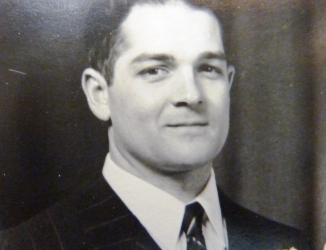
DadVernonMillerMarriage

My father Vernon U. Miller on his wedding day. I have his eyebrows, and maybe the square jaw.

On a recent spin through White Pigeon, Michigan, I knew I would have to stop again at a store where Dad used to buy gifts as he was courting my mother, just to pay tribute to their long lives and enduring love.

As I entered the Tasty Nut Shop in White Pigeon, Michigan, I tried to imagine my Dad, young and dapper, unhitched and childless, long before any of us came on the scene.

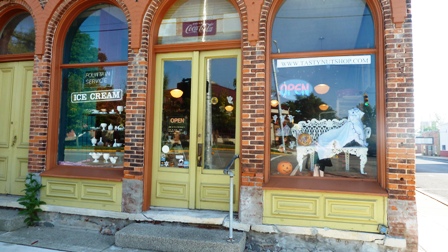
TastyNutShopOutside

Tasty Nut Shop in White Pigeon, Michigan.

The store still has its creaky wooden floors and a working old-fashioned soda and ice cream counter at the back of the store. This old timey nugget of a store has survived since 1921, even through the Depression and depressing urban sprawl and malls.

Up front, a glass display case still offers nuts “from all over the world” at decent prices. Containers tempt children with a huge selection of penny candy. An article I wrote at the time of my original visit reminds me that my daughters enjoyed watching a woman make fresh peanut clusters.

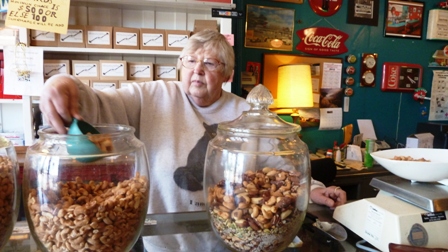
TastyNutShopOwner

Store owner Marjorie Hamminga measuring out my cashew nuts.

When I first stood in this store with my Dad and Mom (married 47 years when I went there with my three daughters), I tried to imagine the dreams and fantasies he, in his late twenties, held of my mother, of what life would bring. His father lost their farm in the Depression and they were all enduring the long and uncertain years of World War II. They did not know yet about Hiroshima and all that was to follow. Working in a mental hospital in those days was not war, but was still a certain kind of hell.

On my first visit, I had gone to Indiana for a business meeting during late summer with my three daughters in tow (at the time ages 12, 10, and 7); of course I had to buy some nuts from the store to take home to my husband who was waiting for us to return. Maybe it would buy some luck or some love.

On this visit 22 years later—our daughters long sprung from the nest—I had to pick up a treat for my husband, who once again was home waiting for my return.

Cashews

Stuart’s cashews.

My husband enjoyed his small bag of cashews, from which I sneaked only a few on the long train trip back home.

If the store still stands, maybe some day our grandchildren too will have the chance to step back in time and hear the story of how their great-grandfather—in a world gone nutty—used to stop here to buy nuts for his sweetheart.

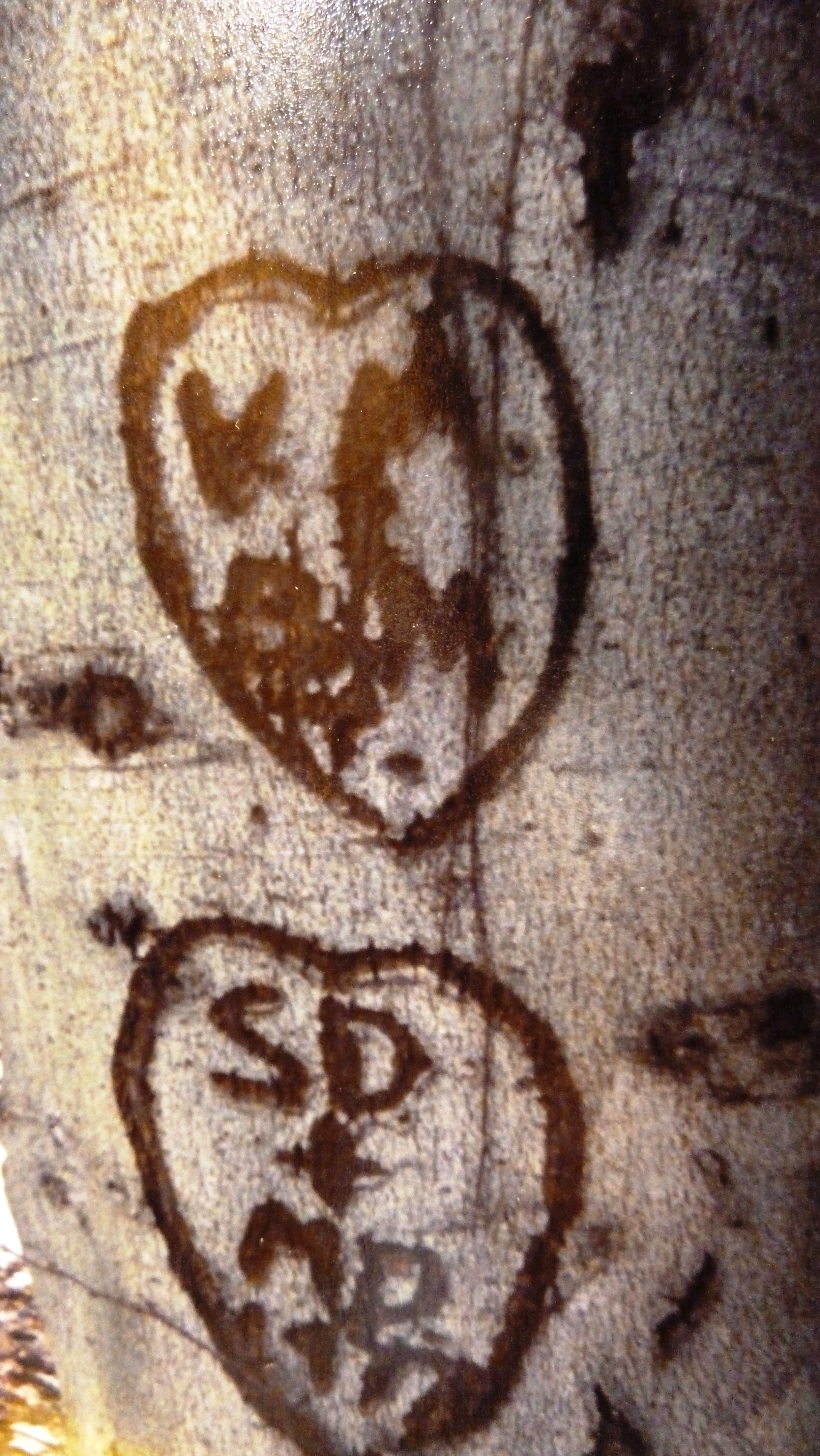
VerticalInitials

Daddy carved the initials VM + BM in a heart on a tree in the woods on their farm. In 1977, one year after we were married, my husband also carved our own initials on the same tree.

***

What stories of love–for nuts, your parents romance, your own love story, OR for great old-timey stores still around–does this bring to mind?

***

Parts of this post were previously published in Purpose magazine (how do you like that alliteration?), available by subscription from MennoMedia.The editor there is also always looking for great inspirational stories and writers. Check the writer guidelines here. (A paying gig!)

Baking My First Shoo Fly Pie

Reblogged and adapted from Mennonite Community Cookbook blog where it was first published.

Mennonite Community Cookbook’s Vanilla Pie (Better than Shoo Fly?)

P1080528

I recently made my very first shoo fly pie. The recipe is actually called Vanilla Pie, because it makes a milder version than the traditional, robust, molasses-based pie. (If you’re wondering where molasses come from, Wikipedia definitely had stuff I didn’t know!)

That shoo fly pie is associated with Mennonites, Amish, and in general plain people, is undeniable. What’s not so clear is how widespread is the love? (No pun intended.)

Pennsylvanians from Mennonite, Amish and other backgrounds from Anabaptist-related groups are frequent fans. But growing up in Indiana in a Mennonite home and church, I never tasted shoo fly pie until I went into Mennonite Voluntary Service with three Pennsylvanians in my unit/housing. Then I became a fan of the milder versions of shoo fly pie.

As I looked for a recipe I might like, a Facebook fan for Mennonite Community Cookbook Facebook’s page mentioned Mennonite Community Cookbook’s recipe for vanilla pie. Vanilla pie? I had heard of wet bottomed shoo fly and dry bottomed shoo fly, but vanilla pie? What was that?

Eureka. There on page 382 of most editions is a recipe for this pie. I’ll also include my tweaks and additional directions in italics, because these older cookbooks–even as good as Mennonite Community Cookbook is, are kind of lacking in the “extra” comments and directions that some of us love and need.

P1080522

I think the only reason this is called Vanilla Pie and not Shoo Fly is because this uses vanilla! Otherwise, they are very similar.* There is also flour, egg, and brown sugar in the gooey part for this recipe, which softens the strong taste of the pure molasses, sorghum, or dark Karo or (or whatever you use). Someone also suggested King Syrup is less bold and more agreeable for newbies. (I also suggest reading the whole recipe plus directions before beginning.)

SHOO FLY/VANILLA PIE

Bottom part:
1/2 cup brown sugar
1/2 cup molasses (I used 1/4 cup molasses and 1/4 cup light corn syrup)
1 tablespoon flour
1 egg
1 cup water
1 teaspoon vanilla

Top part:

1 cup flour
1/2 cup brown sugar
1/4 cup shortening (butter)
1/2 teaspoon soda
1/2 teaspoon baking powder

Pastry for 1 (9 inch) crust

P1080521
Thickening the gooey part.

Combine ingredients for bottom part and cook until thickened. [The thickening took awhile! Stir almost constantly. Also, a blog post at Our Heritage of Health recommends making your crumbs first–see directions below–so that the molasses part doesn’t lose frothiness while you mess with the crumbs.)

Pour into unbaked pie shell.

P1080518
Pastry cutter to make crumb topping.

Top with crumbs made by combining sugar, flour, soda, baking powder, and melted shortening. (I did not melt the shortening. That didn’t sound right. I cut it in with a pastry cutter–or use two knives–to make a traditional crumb type topping.)

Bake at 375 degrees for 40-45 minutes.  (I wish I had taken mine out at no more than 40 minutes, it looked a little brown, but it depends on your oven.)

P1080526

Makes 1 (9 inch) pie.

From: Mrs. Amos Leis, Wellesley, Ontario, Mrs. Noah Hunsberger, St Jacobs, Ontario, Mrs. M. C. Showalter, Broadway, Va. [no doubt a relative of Mary Emma’s. Can anyone confirm?]

I shared with our office staff who seemed to enjoy it–especially those who were accustomed to the strong taste of molasses. One said, “I don’t usually like shoo fly pie, but this is good.”

P1080530

That’s good enough for me. I did not have one crumb to take home.

Back in the day, this was also considered a poor man’s pie. It didn’t require any fruit, no pecans, no fancy ingredients (other than the corn syrup or molasses which would have been a staple longer ago).

One more thing: I love it served with vanilla ice cream. Some folks pour milk over their shoo fly. I have a feeling if you threw pecans in it, it would also make a fine pecan pie. Hmmm. But now I’m getting fancy.

***

Do you like Shoo Fly Pie, or are you a Shoo Fly virgin? If you make Shoo Fly, what recipe do you follow?

***

Shame on me for not remembering a whole blog built around Katie Boyt’s “The Shoofly Project,” in honor of her great grandmother, Keturah (the blog is no longer active, but check it out here!)

***

*If you have an older version of Mennonite Community Cookbook, I noticed the ingredient list for Shoo Fly Pie changed fairly significantly somewhere between 1950 (my copy) and 2015, the current edition. Does anyone know when??

mennonite community cookbook

To buy a copy of Mennonite Community Cookbook 65th Anniversary Edition, check here. It includes a fascinating 12-page historical section.


Allume: Being Inspired by Other Women

BreakfastAllume

Upper: Keynoter Austin Channing Brown; Lower: Hotel breakfast in Greenville, SC, including my favorite, glorious cheese grits!

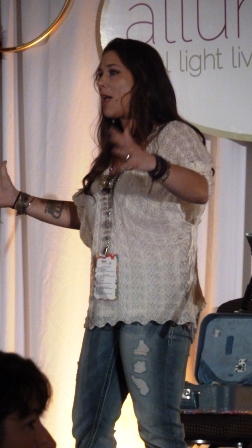
My office sent me to Allume for business reasons–a women’s conference for bloggers, publishers, authors, speakers, and agents. But I got much more.

It was like a women’s spiritual retreat. On steroids. A girl’s weekend, but deeper. It was a spiritual reawakening to my faith that is sometimes just bedrock, but brought a reminder of my ultimate purpose in writing and even living. And even though at first I felt older than most with a not-orthodontic-perfect smile and more grandma than stylin’ in my wardrobe, in the end none of that truly mattered.

I met God again in women whose life and faith and even belief experiences were perhaps different than mine (i.e. I’m never called a “lady” at my church) but with a common denominator of deep faith in Christ and love for God. The pronouns we may use for God in our worship or even our writing may be different, our politics at varied places on a spectrum, but if we can’t look past and be enriched by differences, then our faith doesn’t do much for us.

LoganWolfram

Logan Wolfram

The key conference coordinator of Allume, Logan Wolfram, got things going by reflecting briefly on this past year’s traumatic and tragic turmoil around racial issues here in the U.S. and her home state of South Carolina. The Allume team chose an overall theme of “Together” and Logan was determined to nudge the Allume conference to wider diversity. She reminded us of a simple truism, “If you want to change the world, you have to change your world first.” She is author of the forthcoming Curious Faith from David C. Cook Publishers.

I was most moved and inspired by several powerful, pointed, and anointed African American women who addressed us, who you will hear more from in this blog in the future.

AustinChanning

Austin Channing Brown

Austin Channing Brown spoke at an 8 a.m. (!) breakfast on Saturday morning and told her story of a three-day, life changing learning tour while in college through the deep south. The purpose was to learn first hand about why this country has the history it does around racial issues. As a busload of students (half white, half black) learned about: lynchings and the party barbecues that sometimes accompanied the “festivities;” slave babies swaddled in empty water troughs; and more, she reminded us we can distance ourselves from that past by saying “Well it wasn’t me or my family who kept or supported slavery—why keep bringing up the past?” or “Well, what about Hitler and the Jews?” She called for us as writers and bloggers to take steps to do something to work toward better racial understanding and reconciliation. (You can also be inspired by Austin’s whole speech right here along with several other main speakers. More to be posted later. Free!)

I was touched. Shouldn’t my blog calling itself “Finding Harmony” and venturing to share how more harmony can be achieved —deal more frequently with that very topic? You think? Look for new stories on this blog under a tab called “Racial Reconciliation.”

I’m not sure where I’m going with this but I want to continue a journey begun by my parents—even growing up on a farm near Goshen, Ind.—where there were whispers of unspoken laws which made it a sundown town. A sundown town was or is “any organized jurisdiction that for decades kept African Americans or other groups from living in it” according to Dan Shenk, who researched and wrote about the topic. He maintains that this kind of policy was operational for at least the first two thirds of the 20th century, or until about the time I would have come to awareness of such things in the 60s.

P1040227

My home congregation in Goshen, Ind.

And all the while when I was living there we (I) thought Goshen was starkly white just because no blacks moved there. We were left to believe that racism was just a problem in the south.

Oh my. I’m grateful to my boss, to the planners of Allume, and most of all to the three women by whom I was most blown away, Austin (who I’ve already mentioned and linked to), Chrystal Evans Hurst, and Amena Brown, for lighting a fire under my butt to do something more with this space—and loyal readers—than share recipes, memories and cute grandkid pictures.

There’s lots more to unpack here than my grandma outfits and hairbrush.

It’s been a long time—a long time—since I was to a mostly-women’s conference of any kind. I hope I can share some of the inspiration and the gathered perspiration here, because I hope we all will benefit and grow closer to God’s call for our lives and understanding of others.

***

Where or how have you been recently inspired? I’d love to hear about it.

Do you have suggestions or leads for more stories as I journey this path?

***

Visit the links above for more on the women mentioned. 

Remembering the Days

WestVaColor

West Virginia color from an Amtrak train window.

These have been busy, glorious, late September and October days, with no time to blog amid celebrating our oldest grandchild’s second birthday, visiting my 91-year-old mother (tied to a business trip), participation in the intense work of finding a new pastor for our church, and much more.

Sam2BirthdayCake

Sam’s second birthday.

MCUSAOffices

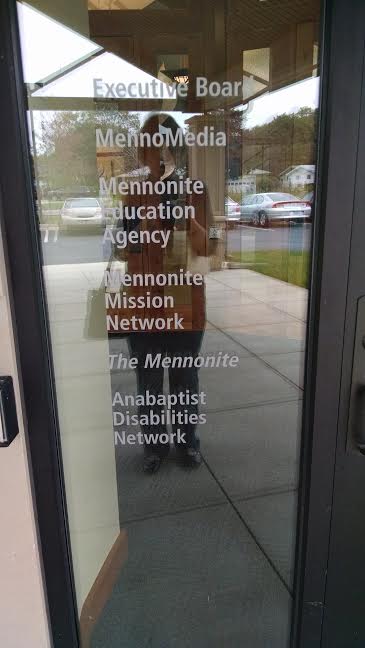
MCUSA offices, Elkhart, Ind.

I had considered declaring a blog sabbatical or vacation or something, but I’m back. I like having this blog/journal because I like to remember things and too often, things that are not written down do get forgotten, reshaped, or remembered differently by diverse people.

Our pastor emeritus, Don Allen, preached in late summer and a note I took during his sermon reminds me of his chosen theme of remembering: “If things are forgotten, it’s like they didn’t happen. What we remember corporately determines what and who we are.” (And if I had not made this note to myself, I would never have remembered his sermon from three months ago, sorry to say.)

Do you believe when things are forgotten, it’s like they didn’t happen?

Increasingly, I find myself the oldest—or among the oldest in a group. In a meeting, I hang out with younger people who don’t know names of well-known—to me—people of the church, community, or organization. And then I think, oh, they were just babies when that icon was a leader in the church. Or consider that most teenagers today have no personal memory of events like September 11, 2001, whereas for many of us, it was a pivotal moment in our personal and national/international history.

Inside, I am still 24 (my age when I got married). Outside, my face and arms have wrinkles, and you don’t even want to know about my thighs. I can’t bear to share a close up selfie of my face. I look at my mother’s frail frame which was once strong and robust. I encourage her to not let her weight fall below a certain number, figuring I’ll probably be as frail and light as her someday too, if I last that long.

BerthaAndMarthaLaughing

Dear friend Martha, left, in earlier days, with Mom.

Is it lucky to live to be in your 90s? Mom says, “I’m afraid I’ll live to be one hundred.” Somehow that no longer seems like the grand milestone everyone aims for, when friends, family and even younger loved ones have already passed to the great beyond. I hope she sticks around until 100 and more if she is healthy. But not being able to hear—and having maxed out the capabilities of hearing aids—is no fun either.

Her statement makes me think of Ecclesiastes 12:1, “Remember your Creator in the days of your youth, before the days of trouble come and the years approach when you will say, ‘I find no pleasure in them.’”

But Mom still takes obvious pleasure in:

MomShoeStore

Mom at Yoder’s Department Store

  • An afternoon jaunt to Amish-Mennonite tourist mecca Shipshewana, Ind. to browse at Yoder’s Department store for shoes, the fabric and hobby department, and kitchen wares, even if she didn’t find what she was looking for. (Not too big of surprise—that.)

BerthaMillerReading

  • Reading for those who can no longer read for themselves in her retirement complex.

RiseNRollBakery

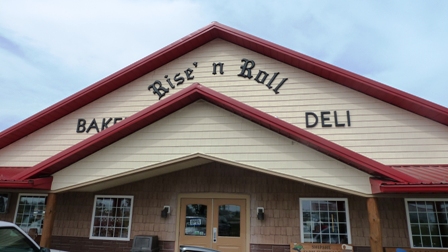
  • Popping in to a favorite bakery/deli near my hometown of Middlebury, Rise’ n Roll, for another round of those famous cinnamon and carmel donut holes, which I first fell in love with and wrote about here.
EliPizzaNight

Great nephew Eli, who just celebrated his first birthday.

PizzaNight

Nephew Christopher, great niece Lucy, and more.

  • Pizza night with several members of my extended family. Yes, Mother got her Mountain Dew and Pizza Hut pizza. And I got to meet new great nephew Eli, about a year younger than my grandsons.

For me personally, the highlight of these recent autumn days and weeks was hearing both grandsons finally saying the beautiful words every grandparent longs to hear: Grandpa! Grandma! Grammy!

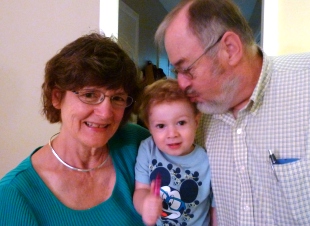
StuMelSamKissEdited

Bye bye to Sam

I will remember these days and savor all the sweetness—far sweeter than the momentary high of those marvelous but addictive doughnut holes.

Where people really do still sit in rocking chairs outside of stores.

Yoder’s Department Store, Shipshewana, Ind.: Where people really do still sit in chairs outside of stores and read, rock, and remember.

Do you believe when things are forgotten, it’s like they didn’t happen?

***

Is it lucky to live to be in your 90s?

***

You can also sign up for my weekly Another Way newspaper column, appearing each Friday on ThirdWay.com/aw, or let me know if there is a newspaper near you which may be interested in using the column. Thanks!

Teaching Children to Cook: Four Terrible Family Secrets and One Marvelous Outcome

Teaching My Own Children to Cook

Four Terrible Family Secrets and One Marvelous Outcome

In honor of CASA* Family Dinner Day, September 28.

The Family Dinner Project helps promote an annual day in the U.S. to draw attention to statistics on how eating together as a family accomplishes much more than just filling tummies. Faithful followers of this blog are well aware of the book I wrote tying into the research conducted by *Columbia University’s Center for Addiction and Substance Abuse, titled Whatever Happened to Dinner? Recipes and Reflections on Family Mealtime, but may sometimes wonder did she/does she practice what she preaches? Did she pass on a passion for cooking to her kids? Here I bare a few family secrets on the topic.

I was cleaning a shelf recently when an old and odd notebook fell out.

DavisCookbook

My folder of cooking instructions for my daughters, from a recycled office binder.

DavisLasagnaInstructions

Oh my. It was my lengthy, detailed notebook of instructions for our daughters’ first forays into cooking once they got old enough to try to put meals on the table whenever I went away on business.

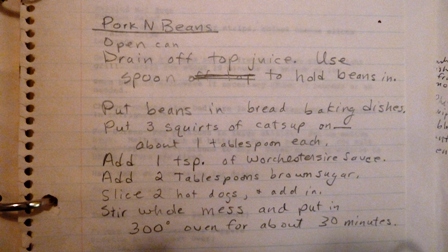
DavisPorkAndBeans

Terrible Family Secret #1. My kids’ greatest cooking lessons came when I was out of the house. Gone. Away on business. Yes, I was a working mother (half time when they were preschoolers) and that included business travel, which I not-so-secretly enjoyed.
DavisSpaghettiInstructions

Terrible Family Secret #2. My husband, bless him, was not much of a cook except for grilling which he enjoys when he has the time. Before we married, he lived in a small mobile home on his own. I knew he survived mainly on peanut butter and jelly sandwiches, fast food, and by warming up pork and beans and maybe hot dogs in an electric popcorn popper. When I traveled, especially with all three of them pitching in and figuring things out, they began the art of Putting a Whole Meal on the Table. (You can see why I was in awe of my young church friend, Lizzy, just 12, about whom I recently wrote a three-part series [here] on how she cooks real food and complicated menus for their family almost every night.)
DavisInstructions1

Terrible Family Secret #3. I’m not a very patient or good role model in the kitchen. Our tradition of eating together at home as a family was so strong that I would not have dreamed of leaving them without carefully planned meals before flying the coop. Instinctively I knew, though, that it was incredibly valuable for them to step up and try their own wings.

I’m not sure why I didn’t do a better job of truly teaching them—hands on—when I was at home. Perhaps because I was more inclined to Do Things Myself because it was faster, neater, cleaner, and safer. My daughters would probably tell you I got antsy watching them knowing I could get something done faster.

I also didn’t have a great role model in that regard.

Terrible Family Secret #4. My mother—bless her—will tell you quickly that she never liked cooking all that much and did not dote on mixing up wonderful dishes alongside of us. Oh we were called upon to pitch in and she enjoyed and appreciated our help, but as a farmer’s wife, cooking was quite basic. It was just a part of the chores she did: peeling (almost) daily potatoes. Popping a meatloaf or roast or ham in the oven. Frying hamburgers or boiling hot dogs on the stove. Once she found out I grooved on messing with fancier desserts, I remember she often put me in charge of making things like real whipped cream at the last minute for her rich and special date pudding or other specialties for company.

So, our daughters were kind of on their own, too in the cooking department, after they learned basics of measuring, kitchen safety, and working together to make things like cookies, cakes and vegetable stew.

Marvelous Outcomes Anyway. Guess what. My daughters have all turned out to be quite fine cooks in their own right, and in their own styles. And I guess I turned out to be an okay cook. When our oldest daughter got married, she took a wonderful cooking class which introduced her to making things like scallops and bananas flambé—enough culinary know-how that she soon took off flying, much to her husband’s glee, (who in exchange does most of their cleaning at their house. Nice set up!).
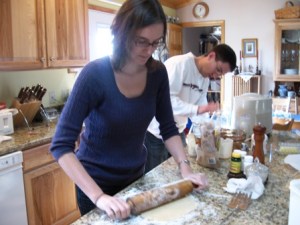
DavisMichelleSinclairPie

Michelle making pie in our kitchen with her husband helping.

My second daughter has learned from her mother-in-law some of her husband’s favorite dishes, picked up things on her own that she’s enjoyed in restaurants and found online—and her husband pitches in as well when both of them are home.

TanyaCookingStromboli

Tanya working on favorite Stromboli, the eager Lab “Ike” at her side.

I would say my third daughter learned the most at my side in the kitchen as she lived at home for four years after college, while employed in town at a bank. She hung out with me in the kitchen because she wanted to 1) be helpful; 2) learn how I did things. But now she has way surpassed me in coming up with her own lentil concoctions as well as following recipes for more adventuresome cooking like crepes, beef Bourguignonne, French onion soup, pot pie, and more.
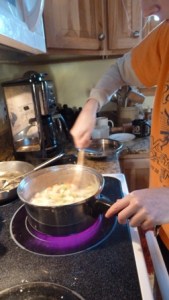
DoreenMakingPotPie

Doreen stirring filling for chicken pot pie, shown below.
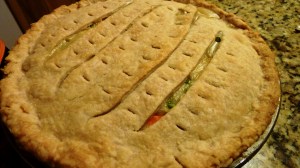
DavisDoreenPotpie

Call me a happy and blessed mom, in spite of myself and in spite of my mother. Eating together almost every evening was important to us as a family, although I don’t know I thought about it that much back then: it was just what we did. Like brushing teeth and reading stories before bed.

DavisFamily1993ish

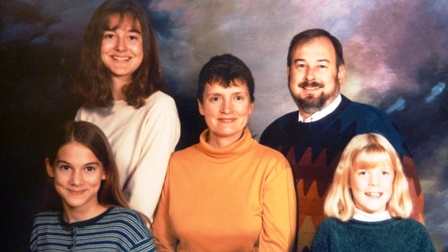
Our daughters at about the ages when I could rely on them to put dinner on the table when I went away. L to R: Tanya, Michelle, yours truly, Stuart, Doreen.

***

How did you teach your children to cook? Or not?

***

Whatever Happened to Dinner?

If you’re new here, learn more about my book, Whatever Happened to Dinner? Recipes and Reflections on Family Mealtime

***

Make plans for your Family Dinner Day, September 28 (February dates in Canada), originally launched from CASA, which encourages eating together as a family as one way to fight the societal influences that sometimes lead to addictions in youth.

There’s much more on this topic at The Family Dinner Project, a website with ongoing resources, ideas and stories to promote the strengths of eating together.

From their website:
The Family Dinner Project is a growing movement of food, fun and conversation about things that matter. We are a nonprofit organization currently operating from the offices of Project Zero at Harvard University. Over the past 15 years, research has shown what parents have known for a long time: Sharing a fun family meal is good for the spirit, brain and health of all family members. Recent studies link regular family meals with the kinds of behaviors that parents want for their children: higher grade-point averages, resilience and self-esteem. Additionally, family meals are linked to lower rates of substance abuse, teen pregnancy, eating disorders and depression. We also believe in the power of family dinners to nourish ethical thinking.

Kana's Chronicles

Life in Kana-text (er... CONtext)

Carla's Book Crush

Kisses-only romances you can crush on.

Storyshucker

A blog full of humorous and poignant observations.

Jennifer Murch

Art is the only way to run away without leaving home. -Twyla Tharp

Trisha Faye

Cherishing the Past while Celebrating the Present

Traipse

To walk or tramp about; to gad, wander. < Old French - trapasser (to trespass).

Hickory Hill Farm

Blueberries, grapes, vegetables, and more

The Centrality and Supremacy of Jesus Christ

The Website & Blog of David D. Flowers

Cynthia's Communique

Navigating careers, the media and life

the practical mystic

spiritual adventures in the real world

Osheta Moore

Shalom in the City

Shirley Hershey Showalter

writing and reading memoir

Mennonite Girls Can Cook

Harmony, grace and wisdom for family living.
mama congo

Harmony, grace and wisdom for family living.
Irreverin

Harmony, grace and wisdom for family living.