

When I think of people who can teach us volumes about suffering, I think of Laura from our congregation.
Laura was a beautiful young woman, inside and out, who died of cancer four years ago this spring. I think of her particularly in these weeks before Easter, because she died on Palm Sunday.
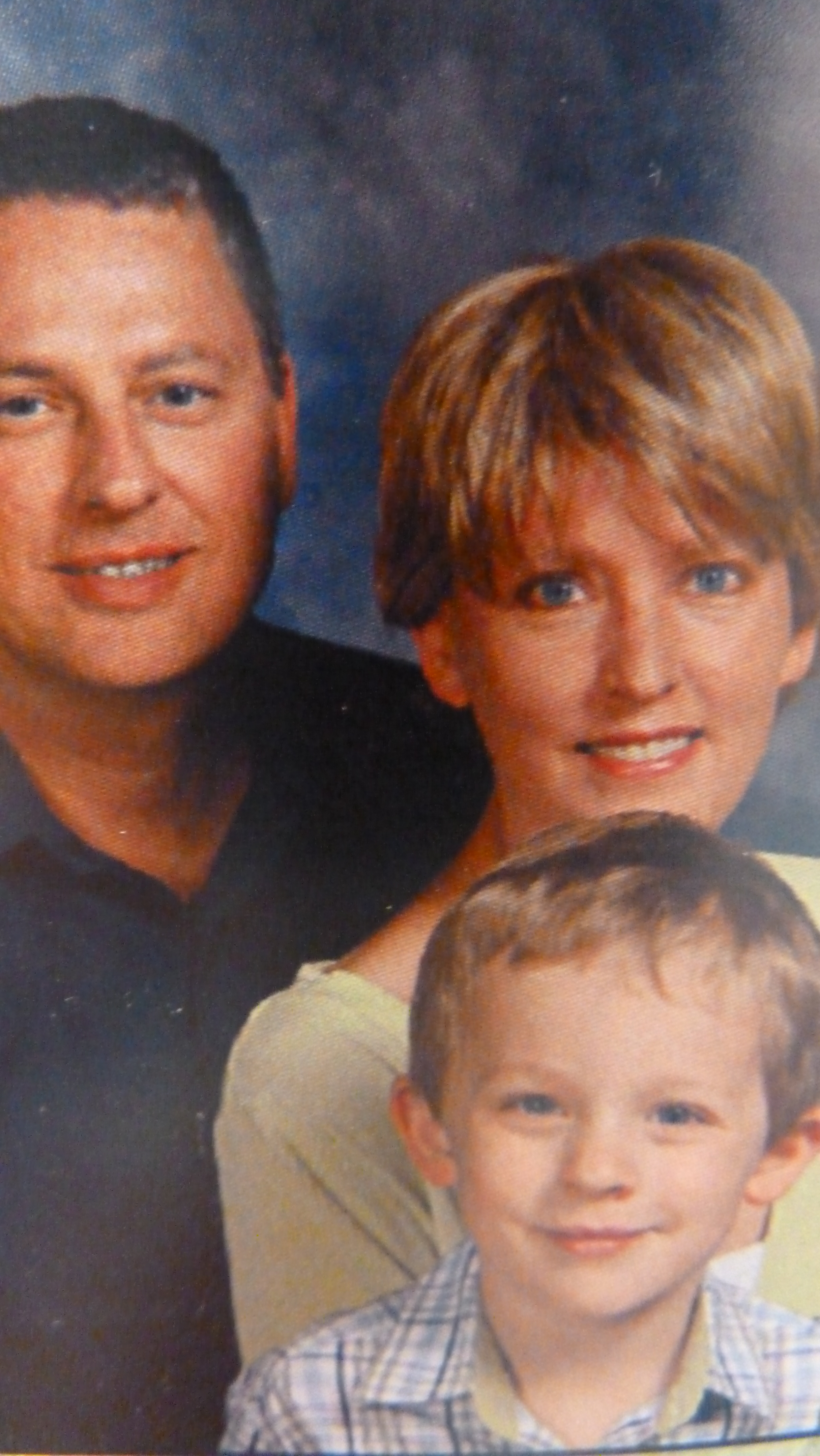
She had a young son and a dear husband. I was privileged to interview her for a radio program I was helping produce at the time, Shaping Families, and you can still hear her lovely voice and fuller story here. Her story aired the weekend she died (we worked about 3 months ahead producing programs).
Many people suffer from pain, illness, accidents and emotional turmoil over many years. Most of us will deal with acute suffering at some point in our lives so we are wise to listen to the voices of those who travel the road before us.
I know many women who have died from breast cancer (and thankfully, many who’ve survived) but Laura’s story and testimony will always turn my head around.
The day she first learned of her rather dim prognosis, she said she spent approximately one half day locked in the bathroom—“my fists clenched, feeling something that the word anger can’t even describe. It was rage.” Her husband urged her to come out, and when she finally did later that evening, she found him trying to read to their almost-four-year-old son but struggling greatly. She knew she didn’t have time for despair or depression, and that she must carry on, for them. And for herself.
Instead of dwelling on asking “why me,” she said “the answer very quickly was obvious: why not me? You know, the world is full of suffering and obviously all of us are going to die,” she went on. “This is a condition of being alive. There are so many others in the world who deal with much greater suffering than I have experienced. It has nothing to do with who deserves it and who doesn’t. It would be arrogant of me to assume that I should somehow be immune to this,” Laura said.
Between treatments and while in remission, she spent her last years on some amazing travel opportunities—to the middle east to visit her brother involved in mission work there, and to Alaska with her son so they could experience the wild wonders of our 49th state together and he would have that as a memory. And she kept singing—often blessing our small congregation with her rich and lilting soprano solos or simply as another voice in the choir. Chills ran down our backs as Laura sang, especially as her tall and always trim frame gravitated toward gaunt.
I thought of Laura this week as I read a devotional in Rejoice!, written by pastor, author and blogger April Yamasaki. She wrote about Psalm 31 which includes both prayers for deliverance and prayers of rejoicing, cries for help and cries of thanksgiving. April notes that this particular psalm, while seemingly inconsistent or perhaps contradictory in its message, issues a call to commitment, “to pray, to remain faithful in all the ups and downs of life, and to trust God.”
April goes on:
“Our lives are like this psalm—not easily categorized as just one thing, but rather a composite of ups and downs, affliction and wonder, lament and praise. Through this glorious tapestry of life, God is faithful and calls us to commitment.”
What an apt description of Laura’s life and witness. She mixed affliction and wonder into her last years like no one I’d ever seen: enjoying the first graders she taught until she no longer had the strength—or rather wanting to conserve such strength as she had for the considerable intellectual and physical demands of her young son (he could ask questions like no kid could ask, in addition to being a typical four to six-year-old boy through her illness).
I remember Christmas caroling with Laura and her son in our group when she really didn’t have the strength to be tramping in and out of cars on a cold night as we traveled to several retirement homes. She said Ethan wanted to go caroling, so she came too. Laura demonstrated her commitments—to God first of all, to her husband and child and broader family and friends, but perhaps most of all to herself—to not spend the final years and months of her life wallowing in despair and self-pity, no matter how much she deserved to do that if she had chosen that path. No, she just kept on being Laura: wife, mother, valiant woman of God.

Jesus said to her, “I am the resurrection and the life. Those who believe in me, even though they die, will live… John 11:25.
***
This article is part of a MennoNerds Synchro-Blog reflecting on suffering during the Lent season of 2015. To read more articles in this series, go to http://mennonerds.com/tag/mennonerds-lent-2015/. For more on MennoNerds, go to http://mennonerds.com/about.
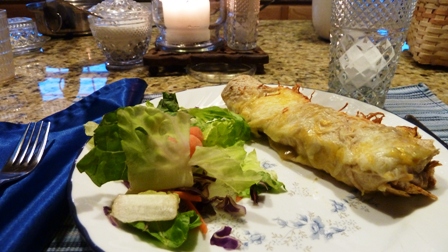

My oldest daughter first made these for the extended family when we were enjoying a summer vacation together at Lake Cumberland State Park, Kentucky. (If you go, beware that the campground and the resort part with cabins are in TWO DIFFERENT TIME ZONES!) Since some of the family was camping and some in cabins, that made for some interesting calculations the whole time.

Bertha Miller front; children, in-laws, grands and great grands, Lure Lodge, Kentucky, July 4, 2012.
Anyway, it was our family’s turn to cook for everyone so Michelle volunteered, brave child, to make enchiladas. Some weren’t even sure whether they would like them but as far as I know, they were a hit with everyone. Michelle did not get her cooking chops from me—but from a gourmet cooking class she enrolled in soon after she and her husband got married. It gave her the nudge she needed to branch out and experiment far from the basics she grew up with: my Indiana-Mennonite farm fare and her father’s family’s Virginia cooking traditions.
Here is the recipe Michelle used, adapted from a recipe called Black Bean Veggie Enchiladas from Taste of Home, but she added chicken. I believe she quadrupled it for this crowd. She picked this recipe because it included some slightly healthier options.

Black Bean Chicken Enchiladas
1 small onion
1 small green pepper
1/2 cup sliced fresh mushrooms
2 teaspoons olive oil
1 garlic clove
1 can 15 ounce black beans (drained)
¾ cup corn (frozen or canned)
1 can (4 ounces) chopped hot chilies (or as desired)
2 Tablespoons reduced sodium Taco seasoning
2 Tablespoons fresh cilantro chopped or 1 teaspoon flakes
8 whole wheat 8-inch tortillas
½ cup canned enchilada sauce (or may use salsa)
¾ cup shredded reduced fat Mexican cheese blend
1-2 cups shredded chicken (canned or cooked)

In skillet, saute the onion, green pepper (in this case I was using sweet red pepper) and mushrooms in oil until tender. Add garlic; cook 1 minute longer. Add the beans, corn, chilies, taco seasoning and cilantro; cook for 2-3 minutes or until heated through.

Stir in shredded chicken to mix thoroughly.

Spoon 1/2 cup bean/chicken mixture down the center of each tortilla. Roll up and place seam side down in a greased 13-in. x 9-in. baking dish. (In this case I was using one larger and one smaller pan; the larger dish to share with another couple, and the smaller dish for my husband and me.)

Top with enchilada sauce and cheese.
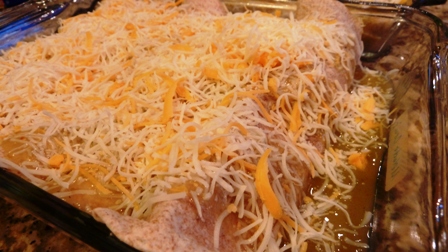
Bake, uncovered, at 350° for 25-30 minutes or until heated through. Yield: 8 enchiladas.
Commenters at Taste of Home said they used sour cream and more cilantro on top.
Originally published as Black Bean Veggie Enchiladas in Healthy Cooking October/November 2008, p55
***
There’s also a recipe for Enchiladas in my book, Whatever Happened to Dinner, using a homemade ranchero sauce instead of canned enchilada sauce I need to try sometime. Buy the book here!

My husband is an awesome gift giver. Over 38 years of marriage, he has frequently surprised me with gifts that have not only delighted me, but served me year after year. We aren’t jewelry kind of people so it is not diamonds and pearls I’m celebrating today. He got me one diamond; that was enough (and more than I wanted—not growing up in a tradition of diamonds). But he grew up that way. Before we got engaged and I argued against an engagement ring (most of my Mennonite engaged/married friends at the time did not have them), he countered, “I always imagined my wife with a diamond on her finger.” So that was that. He has gotten me maybe one or two necklaces that I expressed an interest in, but I’m the world’s best (or worst) necklace loser, so he has wisely steered clear of other jewelry. No, he gets me what men are not supposed to get their sweethearts: I should have seen it coming when, on my birthday right after we got engaged, he began buying me kitchen appliances: a blender (the only one I still use); a marvelous Sunbeam mixer for our first Christmas (which my daughter still happily uses); a surprise washing machine when we moved to our first home could not have been more appreciated; the following year, he got a dryer for us (not such a surprise, but just as welcome). One year he even purchased a battery powered weed eater for Mother’s Day. I’m serious. It was what I wanted, so I could trim where and when I wanted. (He still has and uses his bigger gas powered weed eater for the bigger stuff and places.) This past Sunday a friend at church asked me where I got my beautiful fuchsia winter coat and I was pleased to reply that my husband got it for me (L.L. Bean): a down coat that I knew was pricey, but it was his attempt to keep me warm since I (like the woman who asked me) am frequently cold. Stuart doesn’t steer clear of getting me clothes, but usually takes along a daughter for help, or corners a sales woman, or finds something on a mannequin he likes and then has a clerk help him find the outfit. Score Stuart!
But two of the gifts that meant the most to me over the years were briefcases. The first one is long gone (and I’m sorry I don’t even have a picture of it), but I’m still toting the second one. I think he hopes it will last me until retirement.

Oh the tales it could tell. Oh the places it has gone! You think the deep crevices of a woman’s pocketbook are a scary place you don’t want to visit? You don’t want to dig too deeply into my briefcase!

The briefcases have meant a lot because, you see, I’m a traveler at heart. A real wanderlust. I take after my mother. In addition to family travels and trips as a couple, I have loved traveling on business for the organization I’ve worked for. I always came back with a zillion ideas to write about, absorbed from the talks I’ve heard, the people I’ve met, the new scenery. People are the same no matter where you go, but also so delightfully different! It has been a lifeblood for a “new vistas” craving writer. Unfortunately, shrinking budgets and more video conferencing have greatly cut down on my current business travel.
While Stuart would much rather have me at home, he has always been so supportive of everything I’ve been able to do that when he got me my first briefcase while our children were still quite small and business trips were few and far between, it was an indicator to me that he believed in me and my future. The briefcase said to me: “Honey, I know you love to travel and even though you are pretty much tied to babies and preschoolers right now, here is something you might use in the future.” I felt like it was his blessing on my aspirations. I have a most unusual souvenir, too, on the bottom of my current briefcase. It is looking very worn, very road weary.  My briefcase decoration is a string of sticky letters originally meant to be put on our minivan after a friend did some great bodywork for us. They languished on a desk for a long time and I must have put my briefcase on top of them and without my realizing it, the gum on the strip of letters attached itself to the leather.
  I’m still waiting for some TSA worker to question the meaning of my secret message: D.O.D.G.E. Of course that’s not really funny. Actually these days if I have the chance to travel, I usually carry much lighter cloth bags with just the papers or folders I need for that particular trip. You wouldn’t likely suspect my down-home-Virginia-born-husband who is into tractors, engines, welding, woodworking and all things traditionally “guy,” to have such an eye and heart for what might please his wife. Now you know. You could say at heart D.O.D.G.E stands for Dear Old Dad Goes Emotional. My husband, like my old bag, is a keeper.
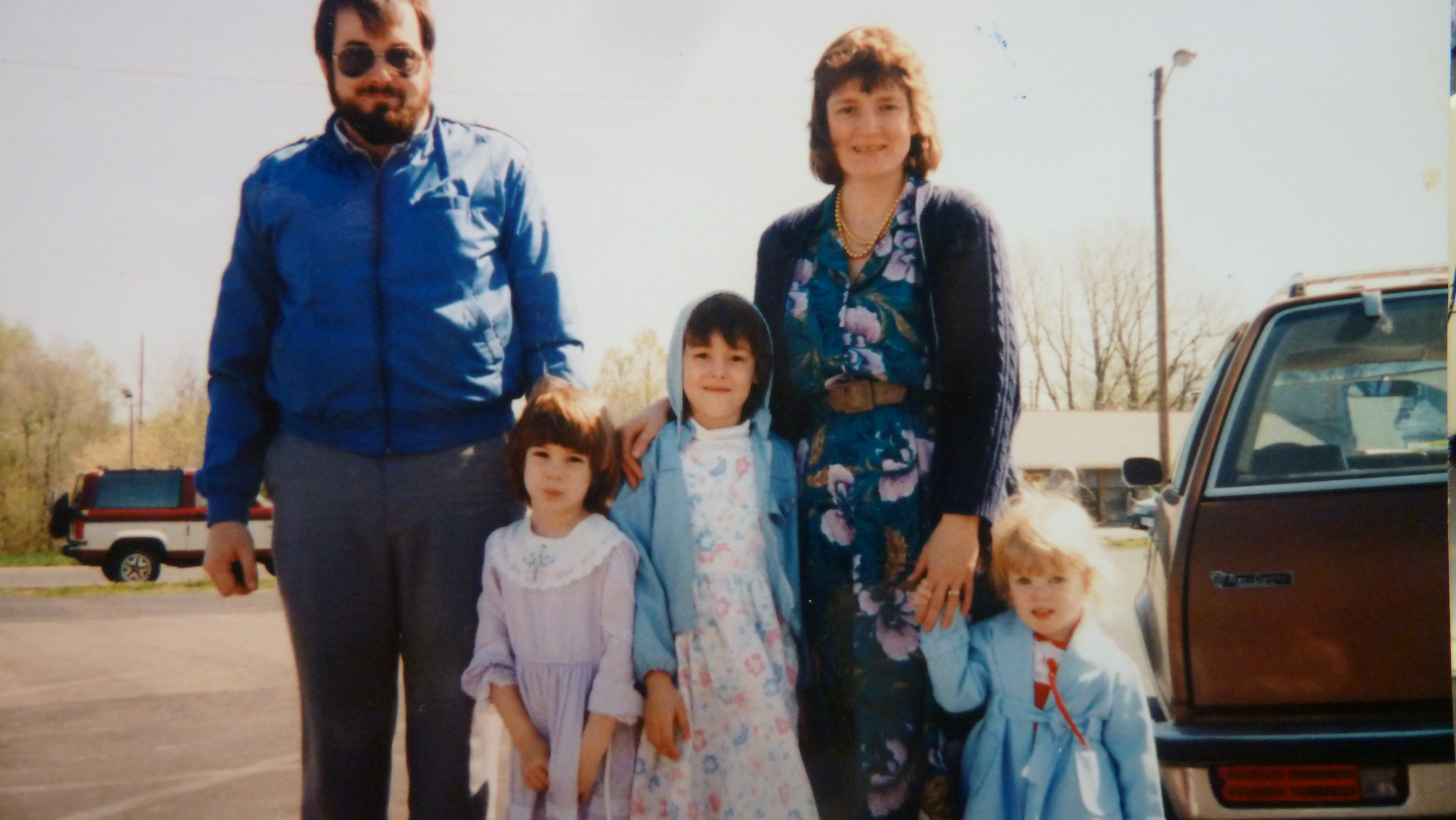 An early business trip with the family for a Sunday speaking gig.
I know I wasn’t the only Mennonite girl whose very first movie seen in a theater was The Sound of Music. No Saturday afternoons watching comics and westerns for this child of the 50s, no way.
From the Oscars this past Sunday night, I learn that the endearing classic movie is now 50 years old. And if hip Lady Gaga can sing (so beautifully) that medley of favorites from the movie in the year 2015 and still be cool, maybe I can reflect a bit on what “Climb Every Mountain”—the message of the movie—has meant to me over the years.
I was 14 when I went to that first movie. I mostly remember being blown away by how huge and big the film and screen were. Amazing! And fell in love with the movie and Julie Andrews. But I also guiltily recalled revival preachers who had pounded into my brain, “Would you want Jesus to find you at the movies?” More liberal preachers said that “good movies” may be okay to see but the next movie would not be quite so clean and next thing you’d know you’d be going to X-rated movies. I am not making schputt (as we used to say in Indiana, is that Pennsylvania Dutch?) of being raised in a home that was careful about exposure to “worldly” entertainments. There are definitely plenty of movies that I would not want in my memory bank, but thank goodness most Christians, even Mennonites, are trusted with making our own decisions about what is worth viewing, what is not. (See my daughter’s review at Third Way website about a movie she now wishes she hadn’t seen.)
But especially the song “Climb Every Mountain” is so spiritually inspiring that, like Maria, it has moved and stirred me often through the years. What girl hasn’t pretended she was Maria out enjoying a solitary walk or hike and belted out her best soprano solo beginning with “The Hills are Alive” and ending with “Climb Every Mountain”? (Lucky are the countless young teens who had the opportunity to play the Mother Abbess—or Maria—in so many high school musicals!)

Austria’s Alps, image courtesy of meepoohfoto at FreeDigitalPhotos.net
The Rodgers and Hammerstein lyrics are really quite simple and the song repetitive, and one could now say, almost cliché (I’ll just excerpt my favorite parts):
“Climb every mountain,
Search high and low……Follow every rainbow,
‘Till you find your dream.A dream that will need
All the love you can give,
Every day of your life
For as long as you live.”
What’s not to love about a song and a movie that encourages people to yes, find their dream, and give all the love you can muster. Who doesn’t need a push like that sometimes?
I think of the mountains I have climbed, both literally and figuratively, starting right there on the farm where I lived when I was allowed to see my first movie:
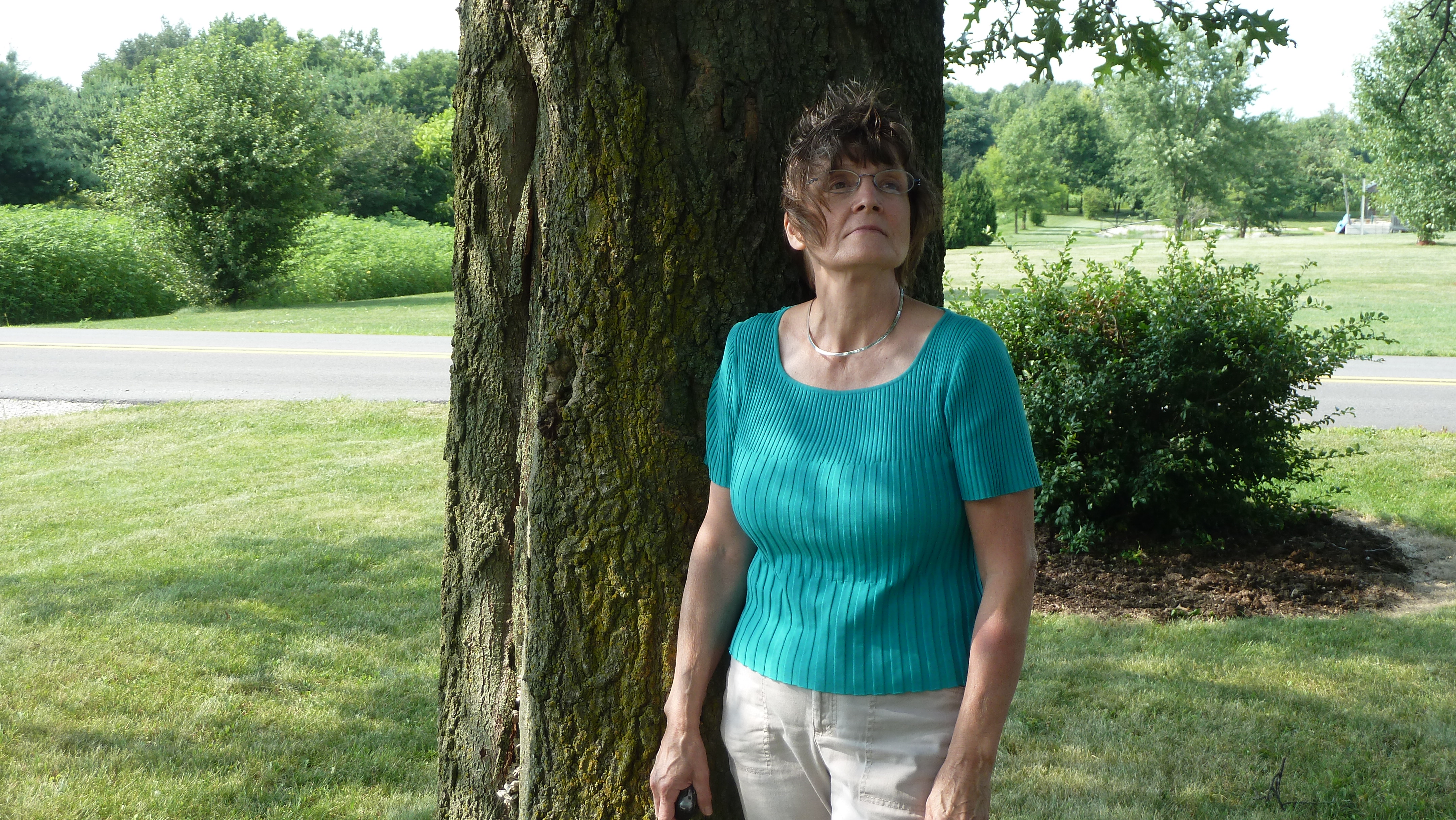 On our old Indiana farm
**The gently rolling hills (they hardly look like hills to me now) of our northern Indiana farm pasture where I would fling my arms wide to the sky, warble this or another song if I was getting over a failed crush or romance.
 Our north Florida home, and the VW in which I learned to drive stick shift.
**Roaming the flatlands of north Florida when I lived there—or a deserted beach even better—mourning my homesickness, or lack of friends, or lack of direction for the future.
 Me the “teacher” in Appalachia, heading to my classroom, with the Kentucky hills in the background.
**Exploring the mountains of Appalachia in the year I spent in the Mennonite church’s Voluntary Service program, pondering whether and when I should go to college, and why.
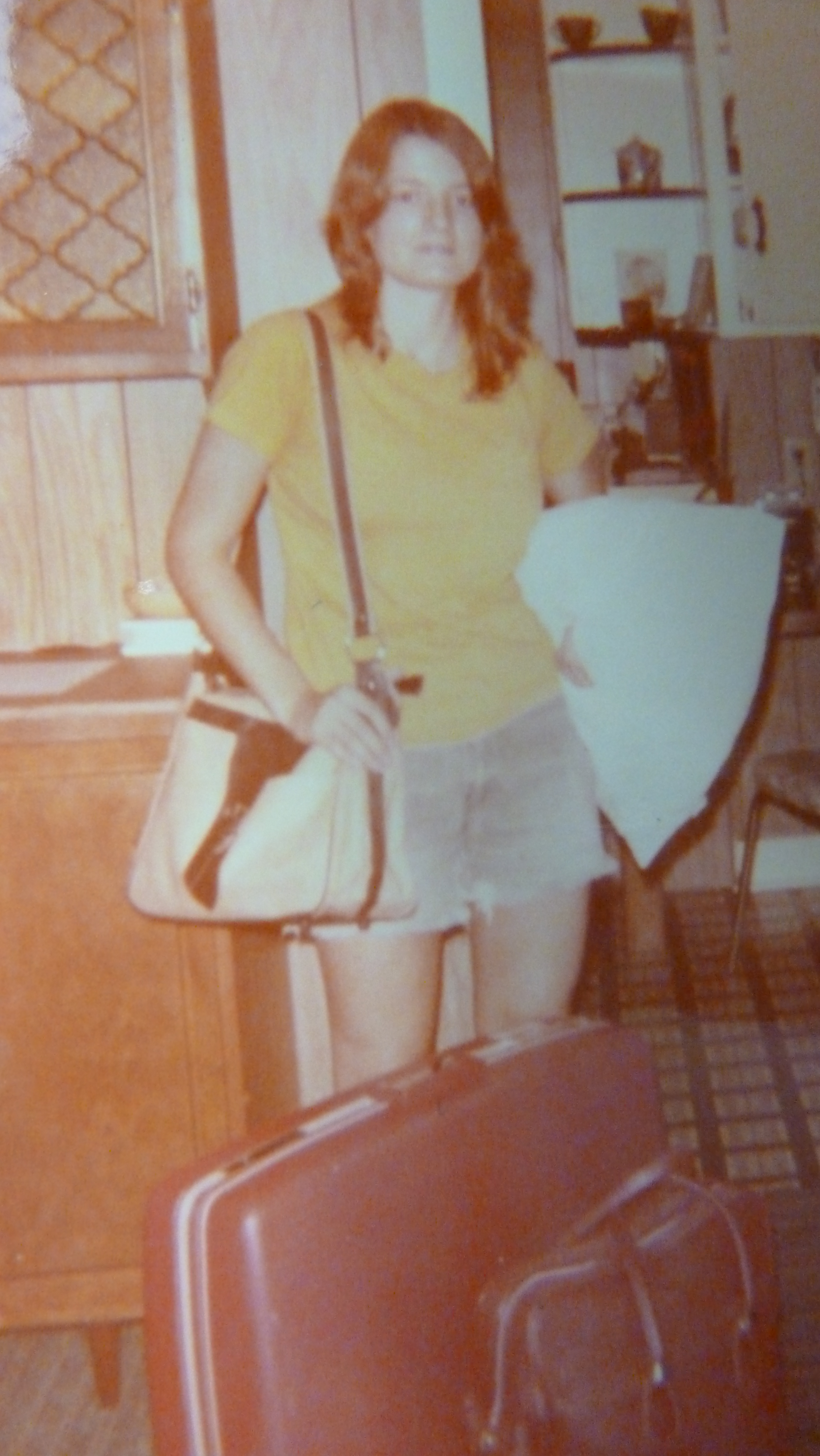 The night before beginning a long journey to Spain.
**The magical year I was able to spend as a student in Spain, and actually wandered the meadows between the Alps of Austria over Christmas break. You can bet I couldn’t help but break out in Sound of Music songs as I spent a somewhat lonely Christmas day at a genuine castle (Schloss Mittersill) there.
 The hill behind Eastern Mennonite University, senior pictures.
**When I finally met the man I would marry, of course that also required some element of risk and pondering: is this my dream? I climbed the hills behind Eastern Mennonite University and weighed the future. Did we have what it takes to go the distance? Was this my rainbow?
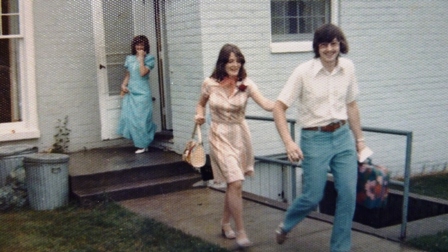 Stuart and I leaving on our honeymoon from the backdoor kitchen at Trinity Presbyterian Church, my roommate watching us head out.
**Then when the little ones started coming along, I truly discovered the need to give “all the love you can give.” During those years, I didn’t have a lot of time to go out to the hills and sing by myself.
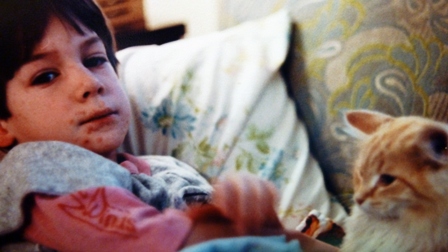
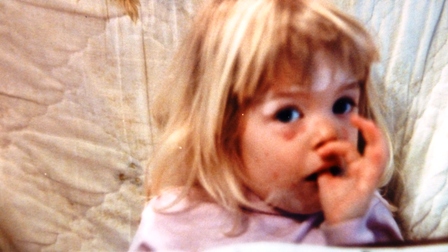 Miserable February when all the children got chicken pox.
**If I could grab a few minutes of peace in the shower, you might have heard me warbling about climbing that everlasting mountain between poor-me-sniffles and outright boo-hooing.
 Exploring the hills of Highland County, Virginia.
**When the husband blew out his knee and spent weeks in a full cast way up his thigh and he needed help doing almost everything—but yet I knew things could be so much worse—I just tried to get through each day. There was not a lot of singing or mountain climbing going on. As he got better and was able to actually provide childcare for the youngest not yet in school, it proved to be a blessing in disguise as I went off to my part time job.

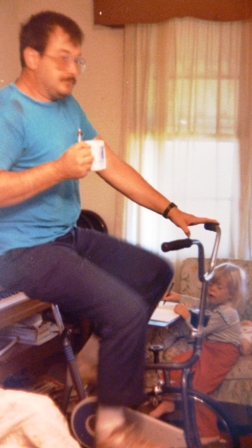 Upper, Stuart and dog Wendy commiserating after he had knee surgery with a cast to his hip. We set up a bed in the living room. Lower, as he recovered, he did therapy at home and took care of three-year-old Doreen.
From this distance, with three daughters through college (one through grad school), two adorable grandsons (and sons-in-law), and nearing 39 years of married life where we’ve been able to follow many of our dreams for travel, involvement in the kids’ lives, having a close and committed church community and much more, it has been a sometimes bumpy journey (aren’t they all) but one filled with love, laughter and tears.
 The lines may feel cliché but oh so true:
A dream that will need
All the love you can give,
Every day of your life
For as long as you live.
I feel very fortunate, and I thank God: not only for my strict and wise upbringing, but the faith community that has mostly shaped me and my family in the last 40 years, Trinity Presbyterian, and the extended family on both sides that supports us, no matter what.
 http://bradleystriebig.zenfolio.com/portraiture
I feel richer than any pop star or the most famous “red carpet” Hollywood walker.
***
If you missed it like I did, here’s Lady Gaga’s lovely medley from Sound of Music.
***
What was the first movie you remember seeing? What do you remember about it?
***
What have you learned from the mountains you’ve climbed?

These sound fancier than they are. What’s a “pioneer woman” doing making French pastry, anyway? (I love that she explains it’s an old mimeographed recipe she picked up in high school French class. Love!)
They are basically disguised muffins. However, they are super simple, delicious, and like she points out, they nuke well, so what’s not to love about some muffins rolled in a butter/cinnamon sugar mix where you can freeze the leftovers and then warm them up any day you want a fresh French pastry with your morning brew?
I suppose one could pick on the fact these use all white flour and sub in some wheat. And the true taste secret is the ample toss in luxurious butter, and then the leisurely roll through the sugar and cinnamon. As Ree explains, rolling them slowly in the butter and sugar while warm forms a gentle crust. They are rich and tasty enough while eating that you don’t need to butter them like you would normal muffins. So that’s where you can cut back–by not slathering them with additional butter.
I started by halving the recipe, not sure if I would like them that well. Some recipes don’t work so well when halved, but this did very well, so I’ll share this version making 6 nice sized puffs.
French Breakfast Puffs (adapted for 6)
1 ½ cup flour
1 ½ teaspoons baking powder
½ teaspoon salt
¼ teaspoon nutmeg
½ cup sugar
1/3 cup shortening (Crisco type)
1 egg
½ cup milk

Mixture to roll them in
1 stick butter, melted
¾ cup sugar
1 ½ teaspoon cinnamon
Preheat oven to 350 degrees. Lightly grease 6 muffin cups.
In a large bowl stir together flour, baking powder, salt, and nutmeg. Set aside.
In a different bowl, cream together 1 cup sugar and shortening. Then add eggs and mix again. Add flour mixture and milk alternately to creamed mixture, beating well after each addition.
Fill prepared muffin cups 2/3 full. Bake at 350 degrees for 20-25 minutes or until golden.

In a bowl, melt 1 stick butter. In a separate bowl combine remaining sugar and cinnamon. Dip baked muffins in butter, coating thoroughly, then coat with cinnamon-sugar mixture.

And if you want to SEE Ms. Drummond making these easy goodies, check here.
***
If you have my book, Whatever Happened to Dinner? here is a list of other breakfast breads and pastries in it, with the page number. I’ve also provide links below to those featured on this blog.
 Cinnamon rolls 92
Cornmeal whole wheat waffles 41
Cranberry orange bread 42
Morning glory muffins 39
Oatmeal bread 36- We love this toasted.
Quick honey wheat bread 43
Whole wheat rolls 38
Christmas morning French toast 114
Funnel cakes 136
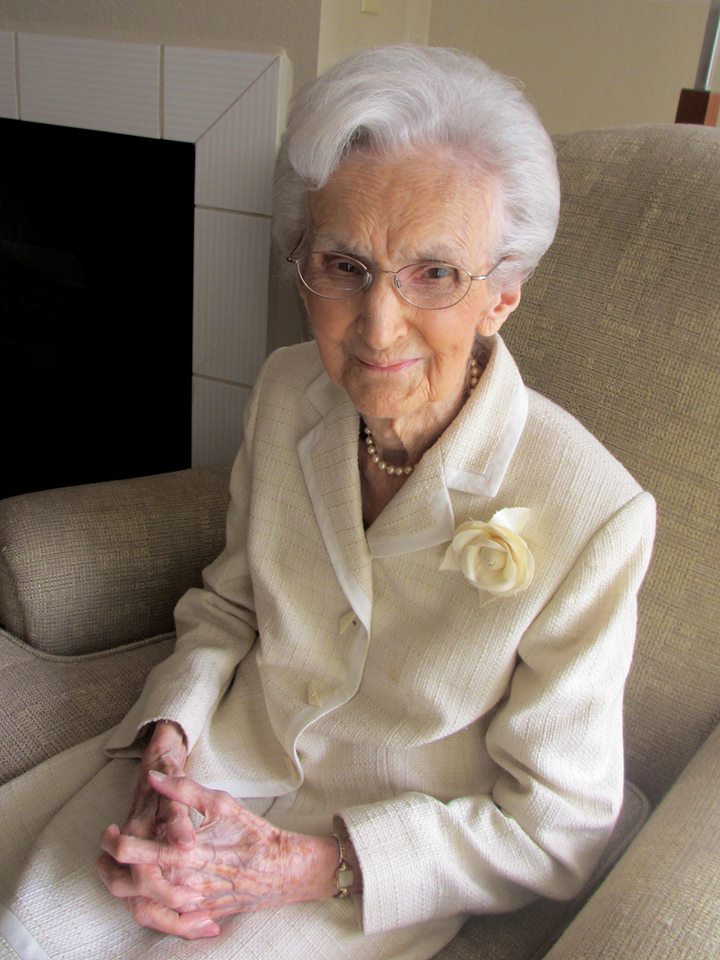 Martha Elizabeth Hiestand Krabill (1919-2014)
Photos provided by Mary Ann Hollinger
Today I pay tribute to a woman who, without realizing it, helped to launch and encourage my career as a writer.
Martha Krabill was our pastor’s wife and also my piano teacher. She patiently sat as I stumbled through three or four years of Schaum Piano books (remember those?). Perhaps she knew I’d never make it as a musician and so it was a blessing that an idea of hers, shared with her son, James, led to my very first regular column in print. Martha died this past November at the rich age of 95.
James was searching for staff members as editor of our high school paper at Bethany Christian High School, The Reflector. He wanted to profile selected members of the senior class throughout the year, and he needed someone to interview them and write a short, interesting sketch of what made them tick and what they hoped to do in life, as I remember it. Martha suggested he ask me, on the basis of short features for our church newsletter at North Goshen Mennonite on youth group activities where I tried to be more creative than just a straight up report like “The MYF (Mennonite Youth Fellowship) enjoyed the hayride and Halloween party at the Miller barn the other week…” (how boring).
I understand that on the basis of Martha’s idea and recommendation, James asked me about writing the column; we also shared a creative writing class together my sophomore year, so it wasn’t that the idea was completely foreign. (Miss Hoover, our teacher, frequently read some of my writings aloud to the class, which was always an occasion for red cheeks and squirming to have my private thoughts shared out loud, while secretly enjoying the fact she had picked something I wrote so she must have thought it was good.)
As a pastor’s wife, Martha was ever the gracious and outstanding hostess. We loved going to their home for a meal, and it was there I learned the art of setting a beautiful table. The dishes she prepared were, in my memory, always delicious and frequently from her Pennsylvania Mennonite background, artfully presented, and perfect in every way. My father would tease her that like Martha, Jesus’ beloved friend in the Bible, she’d spent too much time on the meal, but I personally drank it all in. It was fun to be pampered and sit at a table that looked like something from my mother’s beloved Good Housekeeping magazines.
 Martha and daughter Mary Ann
But it was a recent comment by Martha’s daughter and oldest child, Mary Ann Hollinger, that helped me see more of Martha’s deeper spirit and attitude that created a home and family atmosphere where a teenage son would actually take his mother’s advice or idea to heart and go with it.
In the tribute Mary Ann wrote for her mother’s “celebration of life” service, she noted that Martha gave them as children a wonderful gift that carried them far—“a trusting belief that we could take care of ourselves and that we were in God’s hands. I’m so thankful that she not only gave us roots, but wings.” Mary Ann and James have both lived and traveled in a variety of settings around the world as they’ve followed God’s leading for work and witness to Christ’s love and example.
Mary Ann also sent me a Facebook message noting that Martha “was always so affirming of us children. Not making us feel so much that she was proud of us, as that she just believed in us and believed we could do whatever we set our minds and hearts to.”
In her tribute, Mary Ann recalled that as a youngster, “By age 4, I was sent down the street selling my first wagon full of vegetables from our garden; for years after, James and I sold vegetables door-to-door across North Goshen.”
Of course those were different times. We can’t imagine or recommend that today. But the principle of apron strings and love that stretch far can still apply: “Somehow mother just believed we could handle whatever situation we encountered—be they mangy dogs or inebriated residents,” noted Mary Ann.
Without knowing it or intending to, Martha gave me some wings, too, that set me on a path I’ve written about before, here.
Her husband Russell had a deep influence on my Christian faith as well, as my first pastor who worked closely with my father as deacon. But I have to wonder in how many other pastorates does a congregation often get a great two-for-one deal: a spouse, male or female, who has their own informal or formal ministry walking alongside the ordained one. That was true for my own children who benefited in so many ways from our pastor Ann Held’s spouse, John, and his love and dedication to music and children, which I also wrote about, here. The appreciation I gleaned from Martha for music—especially piano, in spite of my awkward ways and infrequent practicing—benefited my own children in our willingness to pay for music lessons in their instruments of choice, and for one, a career choice.
Call me twice or thrice blessed, and so very thankful for all the gifts of those who’ve gone before us.
***
Who influenced you or your life, who may not even know they did?
***
I’m excited to share that the Harrisonburg District of United Methodist Women invited me to address their “Women Evening Together” program this Thursday night, Feb. 19 at Bridgewater United Methodist Church at 7 p.m. The United Methodist Women’s national 2015 reading program selected my most recent book, Whatever Happened to Dinner: Recipes and Reflections on Family Mealtime, which I’ll talk about at the event. Open to all. Door prizes. Snow/inclement weather date for this is Feb. 26. I’d love to speak to your group, too. See here for more info.
A Kitty Living Will
I wrote this for our daughter 15 years ago when she was a freshman at College of William & Mary and her beloved cat, Boots, had already had one surgery for a malignant lump on her back; Michelle helped pay for one operation and we paid for the second, but beyond the money, I began to feel like too much treatment for animals bordered on inhumane and there comes a point at which you just have to let go … and I hoped this would help Michelle deal with her pain and grief.
If cats could speak (or write) for themselves, maybe they would say something like this. Michelle recently ran across this in her files and emailed it to me, sniffling some tears.
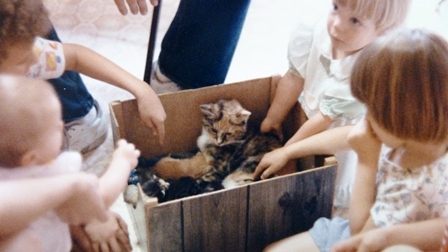

Bottom left: Boots at birth with her mother Shelly. Upper right: Shelly with her litter of five kittens including Boots, admired by sisters Doreen and Tanya, right, and first cousins Cathy and baby Robin, left.
A Kitty Living Will
I, Boots, having just gone through a second major operation in three months, being of relatively sound body and slightly peeved mind, do hereby state that I do not wish to be subjected to any more such ordeals.
Everyone has been most kind; I’ve been handled lovingly, gently, cooed at, admired, praised for being so gentle. But that can’t make up for the fact that, as a cat, my very catness has been invaded.
I’ve been made to go to bed without any supper, made to stay inside against my will, even when I had to GO all because I had this stupid appointment at the veterinarian’s. Moreover I had to get up and not have any breakfast: you humans can be told what is going on, but all I could do was guess: okay, what’s up with this? Are they just being mean, or are they planning to sneak me off to the hospital again. It can’t be that, not again, so soon. I don’t ever want to go back to that place.
The indignity! Going to a place that serves … dogs! In the same place. I know I’m not supposed to be prejudiced, but come on, dogs? Our arch enemies?
Being put in a cage, like a wild animal? Oh sure, I hiss with the best of ‘em, but I am meek and gentle of heart. A genuine lap cat, even if I still like a little roaming and hunting now and then to keep me young.
At the hospital someone pokes me, sticks me, shaves me.

Well, soon after that, I don’t feel anything, but buddy when I wake up, it is hangover city, staggering around like someone who’s drank too much. (I think they drugged me.) I don’t feel too bad, just look like …. a cat out of you know where. Then I have to retch. The mortification!
Well at least I got to go home by evening this time and not stay overnight in that dark and smelly place in a cage while all the nice people go home. No one to tuck me in. No one to talk to, except other cats meowing madly and dogs yelping like wimps.
Even now I face a daily ordeal of swallowing pills morning and night, – count em! Why do they keep choking those things down my throat? And for what? Then I will have to go back to the doctor where he pinches and hurts me to remove my stitches.
No, a true cat, a real cat, just lives his or her nine lives as they come, none of this pussyfooting in and out of vet offices, getting poked, pilled, puked and “puffed” (to use Aunt Debbe’s term).


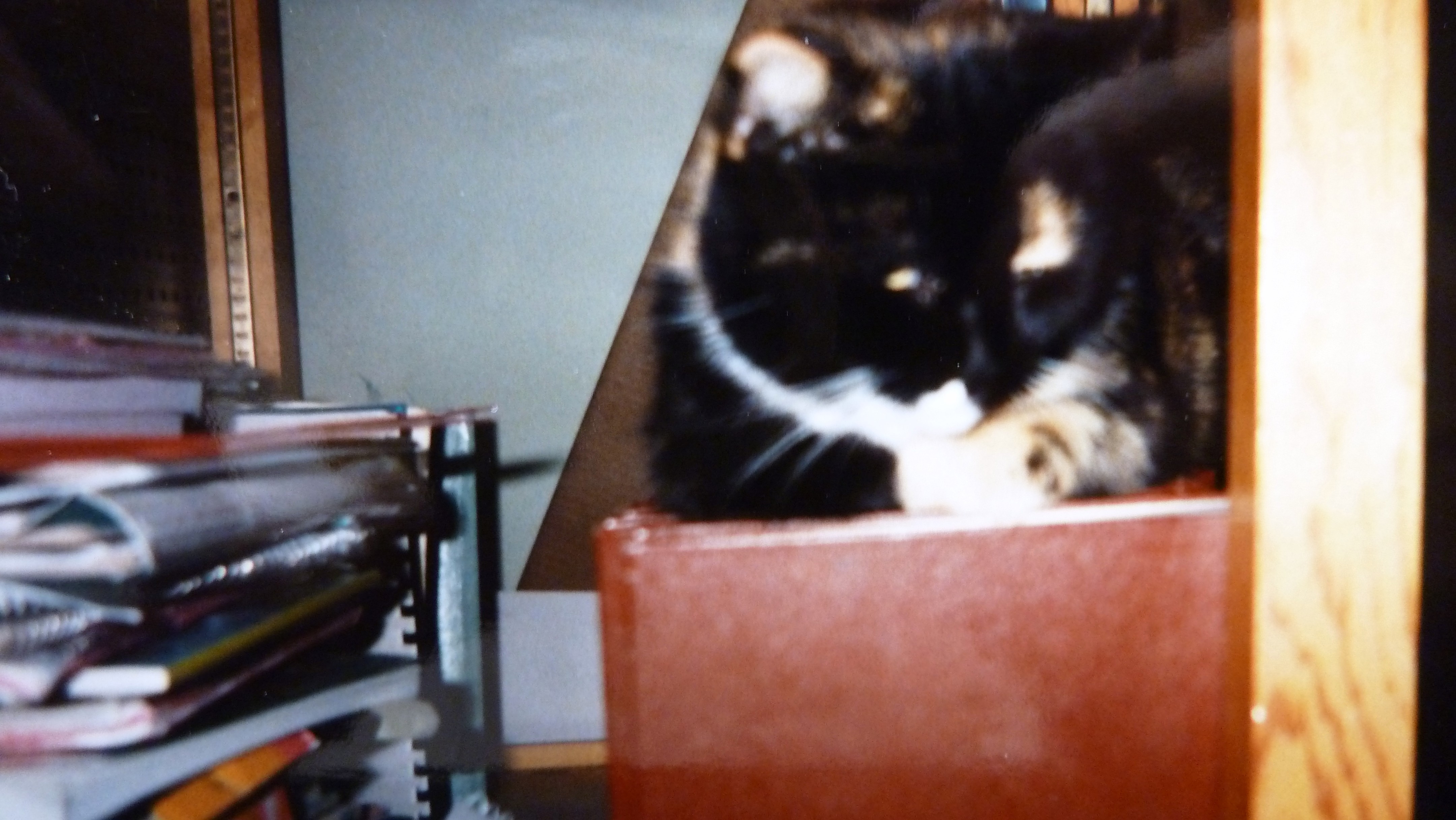
Therefore, as a true brave cat, who has been more loved than most cats in this world and better than I probably deserve, I do humbly request that you just let me be; if the growth comes back, I’ll just take my lumps and with a little bit of luck maybe it’ll just go into remission for awhile. Maybe my nine lives are about up. I don’t know.
I do know this: I’ve been a lucky lucky kitten to have you for my mistress all these wonderful years, far longer than anyone ever dreamed a cat could live at the Davis house. Remember how I broke that spell of bad luck, and taught every kitten after me the wonderful Art of Skillfully Dodging Cars While Fearlessly Hunting Mice Across the Road? Rats, that was fun! Remember how you used to dress me up like I was a living doll? Hey, I kind of like that name, living doll.
Oh, don’t get me started, I’ll have you crying, and you need to be at your best right now, going through your first major exams of your college career.
Speaking of which, don’t feel badly; we both knew this time was coming, when you would go off to college; but would I have traded all those years of being “most loved cat?” I think not.
 Boots and her special box of Kitten Chow she
received from Michelle every Christmas.
In fact, that fact of being “most loved cat” gets me through this tough time even now. Knowing you are happy (except when thinking about me) makes me feel very smug and perfect: I sure did a good job of raising you.
I do not delude myself. After all, I am a cat. I’m quite happy with what I am, and that means cats stay home and girls go to college. And since I am a cat, please, please don’t worry too much about not doing all you can for me in my sickness. After all, they shoot horses, don’t they, not to coin a phrase. And don’t cry, except for tears of joy, maybe, because you have made me probably the happiest cat in the world!
Or maybe go ahead and have a good cry, it seems to be what humans do. You will feel better then. Just don’t worry. I’ll be just fine, whatever happens. –“Hakuna ma ta ta.”
Your loving cat,
Boots, “Bootie,” whatever.

Boots and Michelle after Boots’ first surgery.
***
I’m sure there are situations under which others are compelled to make different choices regarding invasive procedures for much-loved pets, but this is what felt proper for us and Boots. Two years ago we faced similar dilemmas with our beloved dog, Fable.
***
Dedicated to dear Dr. Kathy, an A+ veterinarian at Waterway Animal Hospital,
who would be ours if she didn’t live in another state.
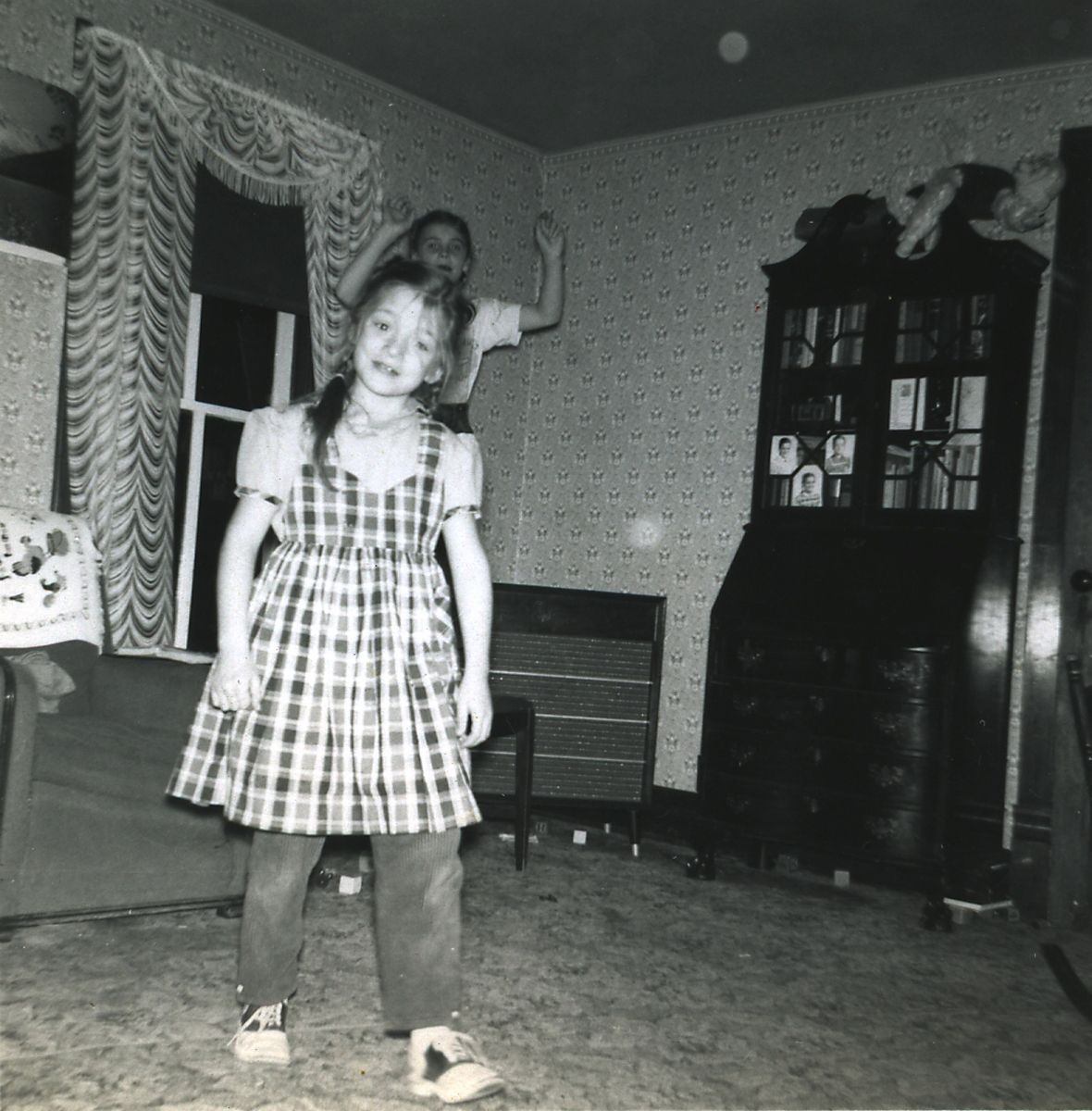
I love this picture even though I am ditzy-looking and have on a horrible outfit. It shows how we used to wear pants under our dresses for warmth even when not allowed to wear them (unless helping with heavy-duty farm work). I love the throwback wallpaper, hi-fi, the plastic curtains. I especially love seeing my saddle shoes again. This calls up so many good memories and if you are a child of the 50s or 60s, I hope it does for you, too. I think the year was 1958.
So what is going on? Just one of our favorite activities when Mom and Dad would go away for an evening. When they went away to a banquet or program of some kind related to the farm or church organizations they belonged to, we would crank up the hi-fi in the corner of the room. My middle sister would stand on a chair and conduct an imaginary orchestra. My little brother and I would stroll around “dancing” to the music. My older sister may have waltzed like this too but she would have been in junior high by this time and likely had too much homework to do silly kid stuff like this. And she likely snapped the photo—she was the first of us to have a real camera. (And my grandparents lived in attached in-law quarters so it wasn’t like we were totally on our own.)
Indulge me to take apart the photo some more.
- My dress: homemade (absolutely) and a pretty tricky pattern at that; mom must have sewed a blouse type top into a jumper-looking dress—all in one, I’m pretty sure. Mom made most of our dresses, which we wore to school and church. We bought some skirts, blouses and sweaters; the “bought” clothes were always my favorite items.
- My hair: What a mess. End-of-the-day pigtails, is all I can say. No bangs—we were not yet allowed to have cut hair.
- My expression: Loopy lane, I believe. My best imitation of waltzy and dreamy actresses and dancers on TV or in the movies. This was before we had TV, circa 1960, before I ever went to a movie, but had seen TV shows at neighbor’s or friend’s houses—when hour-long music/dancing/comedy shows like Jack Benny or Bob Hope were popular and acceptable family fare.
- My middle sister: You can’t see her outfit here, but it was a T-shirt tucked into jeans (sans the dress), which marked her status as Dad’s farm helper—allowed to wear jeans out on the farm as she worked in the barn or drove tractor or whatever.
- The “secretary” desk: The tall hutchy-looking thing with bookshelves was one of my mother’s favorite pieces of furniture: it moved with us to Florida, back to Indiana, and eventually to mom’s apartment in the retirement complex. She still writes cards and letters sitting at that desk with a front leaf folded down. Our school pictures from that year are stuck in the windows of the cabinet doors.
- The living room: Pre-remodeling and the advent of modern storm windows, old timey carpet. Looking back, it was a rather simple and spare living room.
But this photo also says exercise, enjoyment of music, making our own entertainment, interaction with siblings. If we fought, we also had to live with each other or were punished later. We all remember the time Dad went away to a committee meeting or something and one of us got into that precious desk and left crayon shavings in his pencil sharpener in the desk. Crayon shavings! No one would admit to it. We three youngest were severely scolded and sent upstairs to kneel down by our beds and ask God to forgive us for lying. I remember crying as I prayed, “God, I ask you to forgive me, but I didn’t do it.”
But those were mostly carefree times for those of us lucky enough to live in a home where yes, we were punished, sometimes harsher than we deserved, but also loved and respected and made to listen and work hard. We were never abused nor went hungry. I never had to deal with an alcoholic parent. Dad never touched the stuff, nor cigarettes, to my knowledge.
 L to r: Linda (Pert), Terry, Vernon (Dad), Nancy, me, Bertha (Mom).
We played together, vacationed together, read the Bible every morning together as this other picture shows from a similar era (although note we have cut bangs here, and my oldest sister Nancy has shorter hair). While this photo was very posed for a Christmas card one year, it reminds me of how much Dad and Mom invested in fun times for the family. The photo was taken in the log cabin Dad built by a pond in our pasture field. Dad chopped the logs for the cabin and mortared the space between the logs. It had a loft so there was space for 8-9 kids on floors for sleepovers and such. We’d retreat there on summer evenings for a picnic, a swim, a little fishing, horsing around rowing a pontoon raft, or a bigger party with chicken BBQ for groups from church or extended family.
We were not perfect, nor were our parents, but how grateful I am for the childhood I had.
Happy Birthday Poppa. He would have been 98 years old today.

What will your children remember about their childhood days?
Do you have a photo that takes you back to your childhood?

Barbara and Anna’s Cheesy Chicken
I’m not sure if I can legitimately name this chicken recipe for my sister-in-law Barbara who made the first batch I ever tasted, or for her youngest daughter who loves it too. It came out of an unnamed magazine and I enjoyed it because:
- it is super easy
- my husband could eat chicken every day of the week while I get tired of the same old
- anything with lots of cheese and butter is going to be tasty
Okay, so it won’t win any awards from the health department. But if you round out the meal with freshly steamed broccoli or carrots or a California mix, your favorite vegetable or fruit salad, and maybe a rice pilaf, it moves up on the nutritional scale. I have made the cheesy chicken twice for large groups. I wanted to have plenty of a main meat dish, so I also prepared baked chicken tenderloins covered simply with an Italian type dressing for those who preferred something lighter and not breaded.
So that makes an easy menu alternative to offer alongside the cheesy chicken when serving a larger group. People seemed to like having a choice, and both were eagerly consumed, with a few leftovers from each choice.
Cheesy Chicken
1 sleeve Ritz (or other) crackers, crushed
6 oz. sharp grated cheese (we swear by Extra Sharp Cracker Barrel Cheese)
Salt and pepper to taste
6-8 boneless skinless chicken tenderloin or breast pieces
4 Tablespoons melted butter

Mix crushed crackers and grated cheese together. Melt butter, place in bowl that you can dip chicken pieces in. Dip each tenderloin first in butter, and then cracker/cheese mixture. Place in lightly sprayed 9 x 12 baking dish. 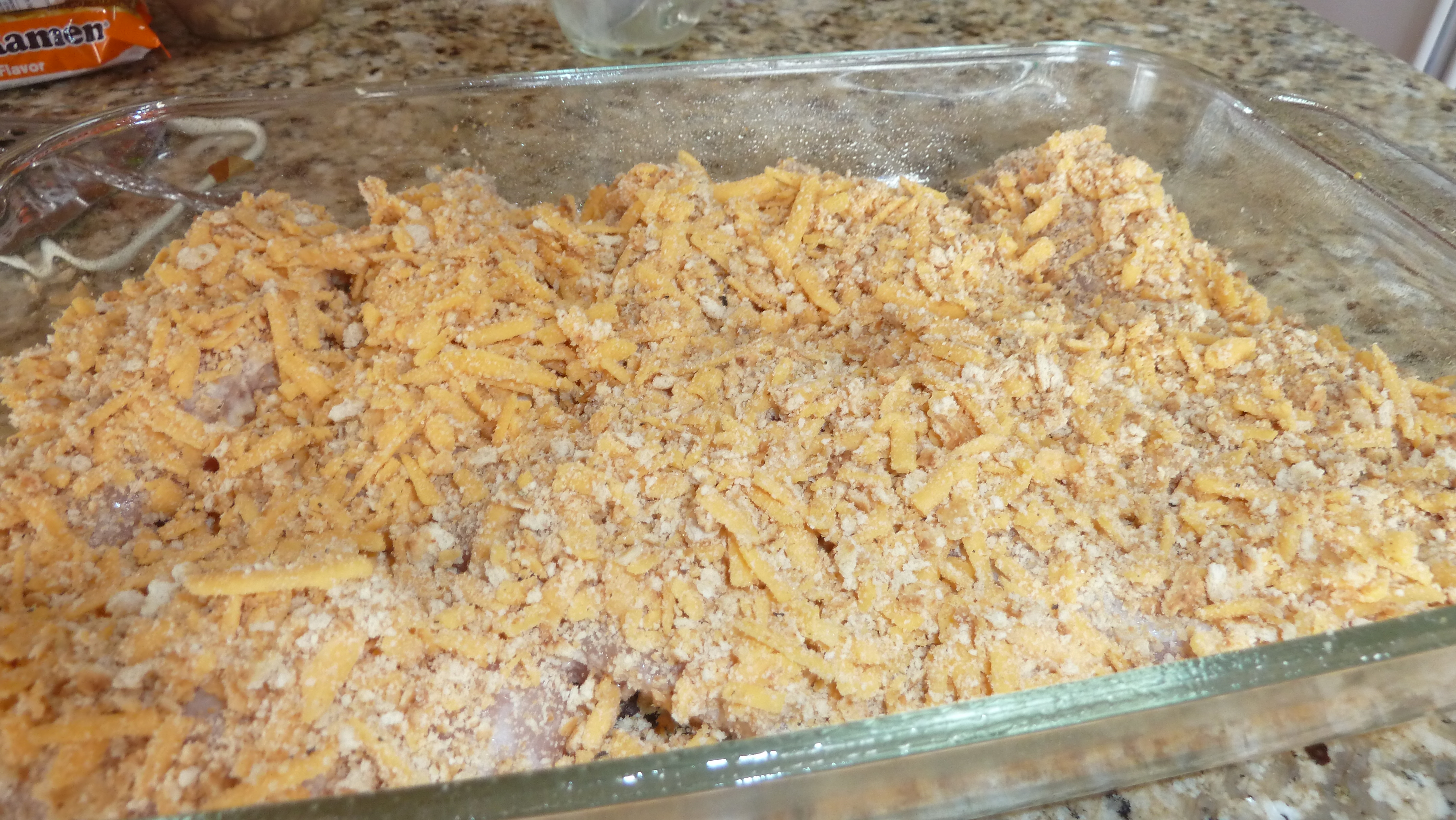 Cover with remaining crumbs, as desired. You may end up with extra crumbs, depending on how big your chicken pieces are.
Bake for 30-40 minutes in 350 degree oven.
Two tips:
1) As easy as this is, don’t screw it up the way I did one time, mixing the butter with the crackers and cheese. Globby mess. Don’t do it.
2) If your chicken pieces are frozen, the melted butter congeals very quickly on the frozen meat; better to use pieces that have thawed in the fridge and aren’t so cold.
***
I also wrote about Barbara recently in an Another Way newspaper column, here. One of these days I’ll get one of her talented children to video her as she makes her oft-requested Shenandoah Valley Renowned Macaroni and Cheese.
***
My book, Whatever Happened to Dinner? has some family favorites in it, but also recipes from a wider group of families from my office.
WRITER WEDNESDAY: A BOOK REVIEW 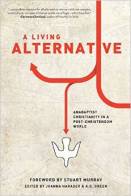 A Living Alternative: Anabaptist Christianity in a Post-Christendom World is a big book. Edited by Joanna Harader and A.O. Green, it squeezes in much with narrow margins and almost 300 pages. So this is a book to pick up and savor when you want to read a chapter at a time from one of the 20 authors on spiritual pilgrimages, experiments and experiences in being church, heavier stuff on our post-Christendom world, and living out faith. It is not a book best crammed through hurriedly for a class, or to write a review in a short amount of time!
Which is what I felt I needed to do, since I accepted the offer of a free copy in exchange for a review! Especially when I had about four other books of this nature (mostly Mennonite-written) ahead of it in line. The book functions as a “reader” in contemporary Anabaptism by a variety of current writers, pastors and theologians who speak, blog and engage in conversation about such things. It is not comprehensive in terms of who contributed—I think an invitation went out broadly to and through the MennoNerds network of bloggers. I suspect many passed feeling that they didn’t have the time or had other projects looming.
In an anthology such as this, you tend to first read the chapters from those you know personally, or by whose lives have somehow intersected (online or real life) with your own. So I first turned to Donald Clymer, an author for whom I recently served as editor for a book on spirituality he co-wrote with one of his sisters, Sharon Clymer Landis, The Spacious Heart (Herald Press, Sept, 2014). In The Spacious Heart they both touch frequently on their spiritual pilgrimages but in this anthology, Don fills in the missing pieces while adding his particular take on post-Christendom Christianity. His chapter is called “Conversion from Ethnic Mennonite to a Convinced Anabaptist” and follows the path of many others who grew up culturally and ethnically Mennonite, but not really understanding what the Anabaptist faith was all about.
Brian Gumm, who also lived in Harrisonburg a number of years, now “telecommutes” from Iowa for his main bread and butter doing online educational programming for Eastern Mennonite University. I first took the plunge into blogging after hearing him speak convincingly about his own experiences blogging. His chapter titled “Seeking the Peace of the Farm Town: Anabaptist Mission and Ministry in the Midwest” speaks of his vision as a bi-vocational pastor for Church of the Brethren. The approach he describes is sometimes called “slow church” or more broadly “missional,” where you emphasize getting to know the community, neighbors, and becoming an everyday part of it. This approach bears in mind that God is already at work in a given community, so there is less of parachuting into a situation attempting to change or fix things that don’t work culturally.
I’ve never met this next author, Jamie Arpin‑Ricci, writing “What Anabaptists can learn from St. Francis of Assisi” but I was intrigued to learn more of his background and thinking. The first time I encountered Jamie was when he first contacted Third Way website, for which I also work, as he did social media contacts asking websites for links to The Naked Anabaptist book (Herald Press) by Stuart Murray after it first came out. Jamie leans towards a Franciscan spirituality—that is following the example of St. Francis of Assisi—even to the extend that when he and others first started Little Flowers Community in Winnipeg, Manitoba, he wished to call it “St. Francis Mennonite Church.” No one thought that would go over too well so they settled on Little Flowers—probably one of the more unusual names for a Mennonite church—as tribute to the flowers and animals that we associate with the nature-loving St. Francis. Jamie’s chapter is fascinating and one of the easier reads in the book, and he has numerous books of his own including a forthcoming title: “Vulnerable Faith: Missional Living in the Radical Way of St. Patrick.”
From my work curating content for Third Way website and hearing from many folks interested in Mennonite or Anabaptist churches over the years, I know that many people live in areas where they desperately wish there was a local Mennonite church. So it is insightful to hear from some of these writers who are pastors or lay persons in underserved communities. Justin Hiebert addresses this need directly, a Mennonite Brethren pastor who says he realizes he does not wish to pastor a church plant per se, but rather to be in a congregation being planted. In a chapter called “The ministry of availability and community transformation,” he notes that the Mennonite Brethren denomination set a goal (like many denominations) several years ago to plant six new and stable churches a year. Hiebert terms it a practical goal aiming “to create and reproduce more incarnational-missional churches in local communities to disciple more people under the lordship of Jesus” (p. 151). Justin includes great ideas for involving ourselves more intentionally in whatever neighborhood we live in, and notes the first step: get to know your neighbors.  I also resonated with the chapter from Chris Nickels exploring the concept of Table Fellowship – not the food or cooking but the practice of gathering around tables to just talk, hang out, and fellowship. As a pastor, he notes “the table’s effectiveness as a tool for ministry is that it helps theory become practice.… Sitting down at a table invites us to break from our regular activity and shift our focus. It is a place where we intentionally choose to slow down and really be present with other people” (p. 157). He tells how his congregation, Spring Mount Mennonite Church in suburban Philadelphia, tried a table church liturgy for an experiment. A member who works in construction came across some handsome but well used round tables being discarded from a work site, and asked Chris if the congregation wanted them. They did and the result was that they’ve used the tables in a variety of settings, including a once-a-month worship liturgy incorporating a meal—making use of the particular gifts in the congregation more towards cooking than professional music, for instance. Their “potluck theology” also helps members think about the home table as a place for fellowship and spiritual growth and discipleship. This chapter beautifully provides theological and philosophical framework for the book I called Whatever Happened to Dinner: Recipes and Reflections for Family Mealtime. His thoughts take this kind of approach a step further for worshipping communities.
Drew Hart is another Philadelphia pastor, young and hard at work on many fronts—which means he is a man to watch in the years ahead as he cuts through the make-nice racial conversations to face down ongoing prejudice and systemic racism even when people know better. Did he coin the word he uses to pinpoint his vision?: Anablacktivism. In his chapter he recounts how he stumbled upon Anabaptists, has researched black theology and Anabaptism, and is currently working on a Ph.D on that topic, along with a more popular-level book. His chapter is much too in depth to summarize here other than to use his own appeal at the end, “Those who desire to find inspiration from the Anabaptist legacy, ought to consider and pursue this by also engaging the Black church and Black theology, all while joining the struggle against white supremacy and the systemic racial violence that continues to disproportionately devastate Black life in America” (p. 215).
The book includes some of the brightest new voices emerging from and about the Anabaptist tradition. Hannah Heinzekehr and Deborah-Ruth Ferber and editor Joanna Harader are the lone female voices but I can hardly criticize the collection for that because other women (including yours truly) had the opportunity and invitation to contribute but either didn’t find the time or didn’t feel they had something worthwhile to add on the topic. Of these I found Deborah-Ruth’s on singleness most engaging—probably because I gravitate towards personal journeys and stories and recall experiencing while age 23 and still single, many of the same feelings myself.
The endorsers and foreword writer are all names known to me as an editor/writer working in this general field: whew: Greg Boyd, Stuart Murrary, Sarah Bessey, Shane Claiborne, Christena Clevland. Good job, editors Joanna Harader and A.O. Green in tagging this book with this depth of Anabaptist-related thinkers. Published by indie house Ettelloc – one might wish for a more winning cover, but that’s a weak criticism, knowing how difficult cover decisions can be. With the diligent study questions closing each chapter and ample bibliographies provided by the authors offering additional resources, any Sunday school class or small group or book discussion group could cherry pick this rich volume and create a study tailor-made for your group’s particular interests and issues.
***
How do you live your own faith in our current society? What are you guiding principles?
***
Have you read this book? Comments?
This book is available on Amazon and other locations and at the MennoNerds collective.

 findingharmonyblog
