

December 18, 2024
“Girls, girls, GIRLS!”
No, this is not a dance, nor a bawdy house of women entertaining men, or the other way around. I’ll get to that in a minute.
Christmas is coming and things are getting wild in many a household where children are getting excited and think they can’t wait for the big day, or days.
Here at our house, the Christmas tree is finally up, the various manger scenes are staged around the house, our biggest manger scene decorates the entire top of our piano. Thanks to our dear neighbor Barbara who made clay figurines and gave them to me one Christmas, which I was drafted (and happy) to paint, however we wanted, by the following Christmas. Those figurines have been going strong 40 some years.

Going back 40 years, my oldest daughter reminded me today of how I used to calm our daughters down when things started getting wild. Not just at Christmas but anytime in the year.
We owned only a few videos that we played and one of their favorites was the old classic “Cinderella.” If you recall, the ugly stepsisters in that story or movie were frequently found clashing with each other, tearing clothing or objects on their jealous days.
Well, recently my oldest daughter was having one of those days with her three sons, ages 11, 9 and 6, heating up for Christmas. They were bickering loudly in the back seats of the minivan. My daughter said she was reminded of how I would sometimes say “girls, girls, GIRLS” in an operatic overly-dramatic voice like the stepmother in Cinderella when I wanted their attention or cooperation.
But my daughter didn’t say that. Instead she started chuckling to herself, which was so weird for the boys to hear her laughing in the middle of their squabbling that they stopped their wrangling and asked what was so funny.
Thus my old reminder for our three daughters, (then ages roughly 6, 9, and 11) came circling or gushing back to her at just the right moment, and she relaxed. And she couldn’t help laughing, because they did settle down and changed course a bit.
Another line I used to use with our daughters also came from the Cinderella video. If our daughters were all lazing around their rooms like say on a Saturday morning when they were supposed to be picking up books and toys and dolls and stuff, I had another Cinderella classic line to dig up. As in, when the wicked stepmother would get that mean look on her face and scold her poor young Cinderella with “Oh, I see we have timmmme…. on our hands,” she’d look Cinderella crossly in the face and dragged out the word “time.” Which of course was a reminder to Cinderella to get busy with her endless chores, and kinda worked for my poor little Cinderellas too. It also kind of worked when they were complaining about being bored…
So if things are getting a little upshtona (a Pennsylvania Dutch word, I think, for a big mess, correct me if I’m wrong, dear sisters), which MY mother used to use if indeed our house was messy with Christmas doings–just take a big breath or so, sit down in your favorite chair, look around the house, and treasure each and every minute you have with those little ones … and the bigger 11 or 16-year-olds too.
It’s almost Christmas.
Mary and Joseph didn’t have a great time either juggling along a dusty road to their destination in Bethlehem to pay taxes (of course our local property taxes come this time of year, too). And Mary, greatly bloated with the precious baby still inside her, had to ride jostling on the donkey.
Enjoy. Savor. Gather your kids or grown-ups around as you can, and cherish the moments.
Merry Christmas.

Travels through Spain – Part 4 – Final
Back to Barcelona and Parts South
I was interested in touring the various parts of Spain that I hadn’t seen when I lived there 1973-74, where I had only visited several key parts. [When my friends and I had opportunity for week long vacations or holidays that year, some of us were more inclined to explore other parts of Europe (France, Scotland, England, Austria, Italy) than visit important parts of Spain.]
I was excited that this trip with my hubby would take us to the massive and beautiful Alhambra complex in the Granada area of southern Spain, the Costa del Sol (Sunny coast), Ma’laga, and more. We went through an area where people walk a “pilgrimage for miles and miles” on the “Camino de Santiago,” and also Pamplona, where they enthusiastically “run the bulls” every year, risking broken bones and even death.
But I was especially eager to get back to Barcelona where I lived for about ten months in a large brick/cement residence (“Residencia” in Spanish), where the caretaker’s family lived in the basement. The mother of the house made our breakfast, and also served dinner in early afternoon before “siesta” time.) A small group of Catholic nuns also lived in the basement, and kept a garden for fresh veggies.
Most of our fellow students were from the U.S., and ended up living with local families in Barcelona, the better to hone their ability to learn and use Spanish in the families they lived with. But our professor/organizer ran out of willing families to host us, and instead he asked for four volunteers to live in the residencia. I felt disappointed about not living with a family, but maybe a little bit noble in accepting “dorm” lodging instead. That turned out to be fun and educational also, especially when several Spanish roommates joined us in our rooms for second semester. (The University was closed for first semester after protesting students and others had forced the shut down because of Generalissimo Franco’s strict leadership running Spain at the time. Our leader lined up local professors to conduct private classes instead of official courses.)
I remembered that the University of Barcelona had grown exponentially of course over 47 years and our tour bus passed by those modern buildings, out near a large hospital complex. Several miles later, I saw what had to be the very building where I had most of my classes in 1973-74. I had come “home”!

I did not get a decent current photo, but here is one from my files from 1973 (notice those older cars!). Very near the university was a metro stop, and we could also easily walk from the university to Plaza Catalonia where people and pigeons met up and old men (especially) played checkers or chess. (Today it is called Plaça de Catalunya in the local language, “Catalunya.”)

I was also not able to take a metro to the residencia where I had lived, and for awhile I had hoped that maybe one of our tours would take us by that building. But it was not to be. I was a little disappointed but not crushed.
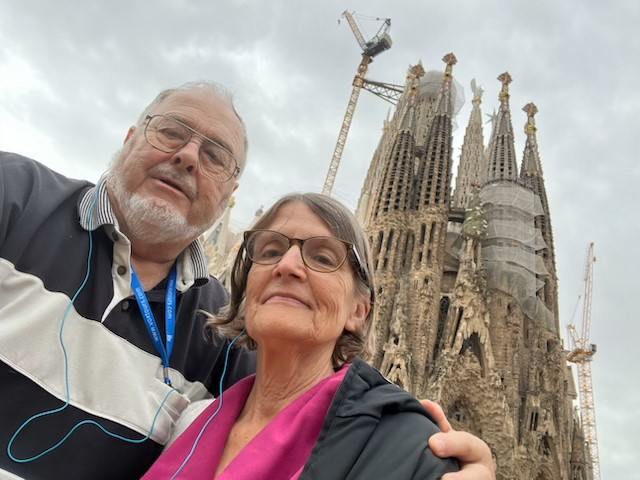
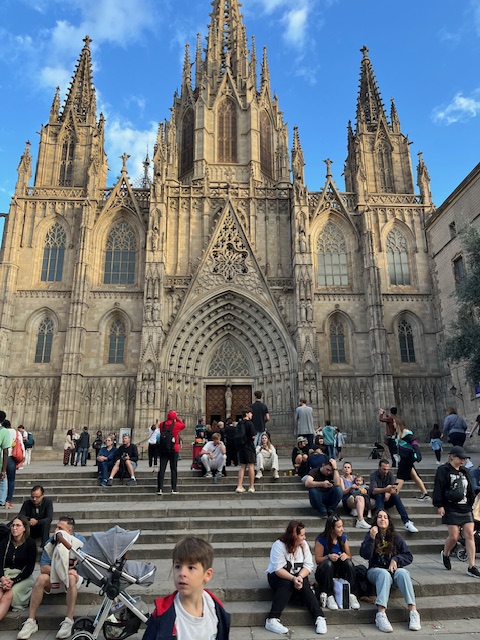
The main highlight of this part of the tour was seeing the greatly expanded and nearing completion Sagrada Familia Cathedral (The Sacred Family—meaning Mary and Joseph and their little ones). I had seen some soaring steeples of the place in the 1970s and pondered whether the interior would ever be finished. For awhile their finish date was set as 2026, but I understand it has been moved back some additional years. Interestingly, the construction of the church was carried out illegally for 137 years, until 2019, “when a building permit was finally issued by Barcelona’s city council.” Authorities only discovered the “anomaly” in 2016 that it had never been granted a building permit!
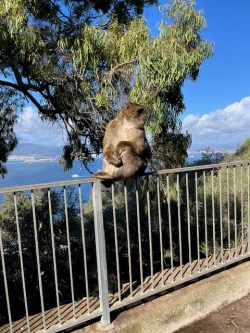
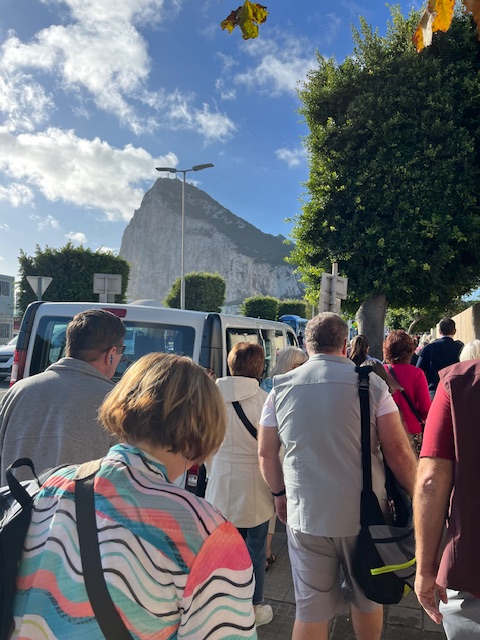
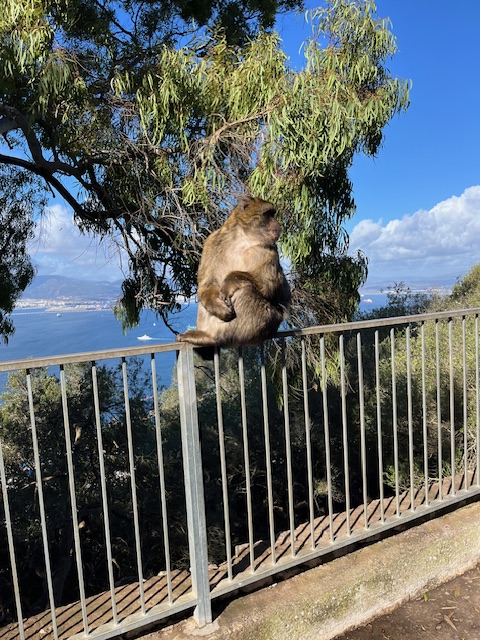
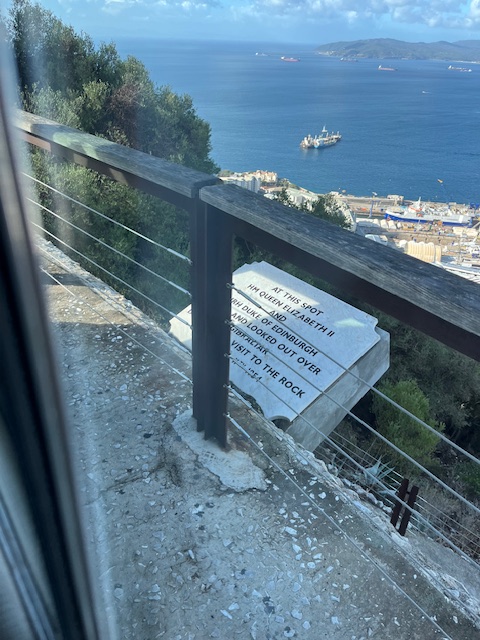
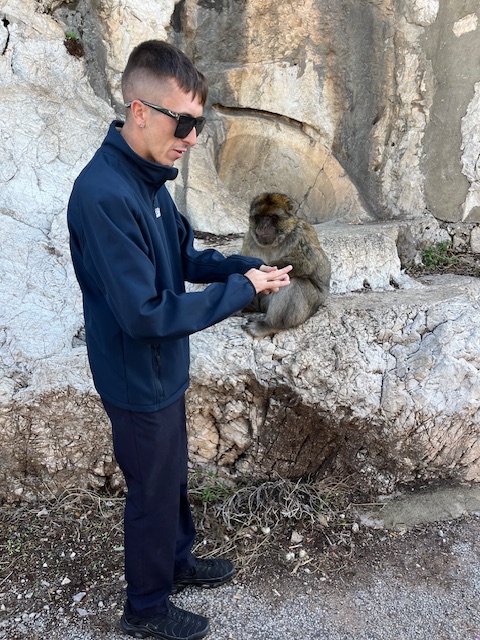
But my biggest thrill of this trip was being able to visit Gibraltar, which is near Seville. I had no idea of the size of the rock or the views we would be able to see of Morocco and Africa from Gibraltar. The weather was perfect that day. We had a great and funny guide who introduced us to the Barbary macaques, which are monkeys, and the history of Gibraltar goes back and forth from Europe (and England) to Spanish control and back to England. I’m thinking that my mother used to say something like “that’s as hard as the Rock of Gibraltar” when she was spouting off about something.


I so wanted to visit the residencia where I lived, and I’m 99% sure it is still there, for over 100 years and launched by one Dr. Andreu. Here’s the bread boy dropping off wonderful Spanish bread or croissants for the day for all the residents.


Studying and keeping warm in our room: no turning on heat until Nov. 1. My roommate was a student at Bridgewater College, Va., and the program we both used for study abroad is called Brethren Colleges Abroad.
Will I go back? I doubt it, there are way too many other places around the U.S., Canada, and the world to spend time or money going again. But I very much appreciated renewing my acquaintance with this fascinating, friendly country and history. Before we went, we were warned by various visitors from the U.S. who said Spanish folks were sometimes mocking tourists who are flocking to Airbnbs in Spain, making rent or housing purchase costs too expensive for local families. And we did not experience any pick pocketers, as we were usually walking fairly close together in groups.
***
I must add that we were also so sorry to hear the news of the terrible flooding in the city of Valencia we visited soon after our two-night stop in Barcelona. If you recall, flooding happened about October 29 (less than 10 days after we’d been in the city of Valencia); 220 or more persons died in the flood waters and aftermath. Our tour director always kept a sharp look out on weather reports for us, and when I got home I emailed him about Valencia and he indicated they left Valencia early on October 29, which was a smart thing for them to do, before it got really bad.
***
I must admit the travel bug came from my parents and we were able to take our children to a number of places in the U.S., and later they were able to travel some on their own too, to various countries, including South Africa and more. My husband has been an enthusiastic traveler for the most part, and we hope to enjoy that in our 70s, for as long as we are able. There is much to see, learn and experience in these explorations of new places, and becoming more aware of history and older times and other fascinating people!

And the nice thing about traveling with a bus driver? You can take a very long nap!
Speaking of Rocks:
Bible readers may reflect on a passage in Matthew 16: 13-20 where Jesus asked his disciples what people were saying about him, and then Jesus asked directly what they thought of him. Simon Peter replied, “You are the Christ, the Son of the living God.” Jesus answered him, “Blessed are you, Simon Peter! … I tell you, you are Peter, and on this rock I will build my church, and the gates of hell shall not prevail against it.”
Of course he was not talking about Gibraltar, but I like the “rock” foundation that we can all hang on.
***
Who or what is your rock?
What was your best trip ever? Why?
What was your worst one? Why?
Another “Lost Boy” True Story
Some of you will remember the “lost boy” story I shared this past summer about my 5-year-old grandson getting lost (and found) at a North Carolina beach.
Recently I was a little surprised to see a boy, probably 5-7 years old, shopping (playing?) around all by himself with some bicycles outside one of our local Walmart stores. It was Dec. 1 and it was cold.
I pondered, where was his mother? Or father? Surely they were not far away.
I was hunting for an item my husband wanted/needed and he had asked me to find it since I was in town and he wasn’t. I finally found the item on a shelf—also outside. It seems funny to have items stored outside on a freezing day—and with no clerk or helper around. I was getting ready to go back inside the store to check out when I decided to ask the boy if he was lost.
To somewhat of a surprise, he nodded yes. I said “Oh, you don’t know where your mom or dad are?
He shook his head. He had dark black hair, huge beautiful black eyes, but he looked—well, lost. He looked sad but was not crying.
I said, “Would you like me to help find your mom?” He said yes. He spoke very clear English.
So we went inside, I was carrying the item my husband wanted, and then we got to another toy aisle. He looked happier, being among lots of toys, but when I asked if he thought he could find his mommy, he shook his head no. He looked somewhat puzzled and like he was still open for some help.
So we walked to a bigger wider aisle and at that point I saw a Walmart employee, probably more than someone who just sorts or straightens up clothes. She was six steps or so ahead of me so I called out “There’s a lost boy here.” She stopped, looked at us, and called over another employee and asked the other woman to take charge.
I was relieved. I didn’t really want to be responsible for him, and I needed to hurry home. And it looked like he was in the hands of professionals.
I hope. And pray. And wonder how many other kids get lost in a large department store. I pray none are misused or abused or, God forbid, kidnapped. My children got lost among clothing racks a time or two, but we were mostly nearby.
At any rate, as the season wears on, God help us all to watch out for the children. And call on staff to take over as needed. I thought of the song our family used to sing that we had on a record telling children that if they got lost, “Look for a grandma or mother with children.”

This is not a real boy. AI helped create this picture.
Here is more help: https://www.safewise.com/blog/what-to-do-when-your-child-goes-missing/
Travels Through Spain – Part 3
You want to hear about the fun, the fabulous, the unforgettable.
But the truth is, bad or disappointing things happen on trips too. Right? Break downs, illness, accidents, arguments.
For instance. In Spain many small shops close down for siesta time in the afternoon, and don’t open back up for meals til 7 or 8 in the evening.
So there was one evening when Stuart and I walked and walked and walked to find an open restaurant or coffee place or anywhere—and were getting pretty ticked off at each other and tired that in a large large city, where we knew there were plenty of restaurants etc., they just weren’t near our hotel. Our neck of the woods had apartments and grocery stores where we could have easily found plenty of eats, but we wanted a warm meal (but not a $50-75 extravaganza). We finally found a small place where the owner was preparing some BBQ chicken—yes, just like we make (or pretty close to) our Lions’ Club BBQ chicken. We had to wait a while on that, but it was very tasty and filling. We truly had a hard time finding anyplace to eat our supper that night, without going out to eat from 9 – 11 p.m.
These are things that you don’t usually get photos of, right?
Then there was this. I was most alarmed when our bus driver—who was sweet, an excellent experienced driver, very cautious and safe—suddenly, right outside our bus window, almost got into a fight with a taxi driver. They were both vying for space, both trying to get through a narrow passage. I have a feeling the taxi driver (reminiscent of taxi drivers in New York City) was getting anxious about pleasing his passenger who was probably needing to hurry somewhere—perhaps to the airport? I don’t know. Anyway, it looked dangerous and ugly. Our bus driver was trying to unload luggage for us. Then he gave the taxi guy some space, so it worked out, more or less.
A more serious altercation took place another day on a lovely, fairly large plaza where we had sat down on some park benches to enjoy some ice cream. A Spanish artist (at least he looked like he was likely Spanish) was engaging in some painting on the plaza, the better to illustrate to passersby his excellent work and perhaps propel someone to pause and get a painting made. Then another artist of a different kind—musical—claimed part of the plaza space and began to serenade us with delightful Spanish guitar music. However, it looked like the painting artist was not a bit happy and looked threateningly at the guitarist who appeared to be just wanting a space to practice his art as well—(and collect euros in his guitar case). Then things got lively—the painter taking a whop at the guitarist with a board which actually broke the guitar. The guitarist got out of the way and we kept watching if he was going to call some police, which he did and finally one arrived to handle the dispute. We didn’t hang around much longer, and the artist drove away on his bicycle toting his bag, supplies, and backpack. I was not taking pictures, of course!!
In the city of Pamploma, there was a festival of some kind going on, with religious overtones, and all of a sudden two women approached Stuart and me and put strands of Rosemary (spice) into our hands and then spoke a blessing. Stuart told the woman who approached him he didn’t know Spanish, and while I got the gist of what the woman who approached me said, when she put her hand in mine and asked for money, I said no, sorry! And then she got angry and plucked the Rosemary wisp back into her hand and frowned at me and she and her partner went to their next “blessing.” But that was all of that encounter. Thankfully.
Finally, this last item makes me mad at myself. I took some notes about the places and palaces we were visiting, but it is really hard just a month later to keep track of what you did when, and in what city or countryside. Luckily most photos on my iPhone bear the names of cities or towns we visited, and sometimes reveal what building we were looking at. But I wish I had done a better job of keeping notes. (I’m still an avid writer!) Next time I’ll try to do like one of our friends on the bus did every day—took out her iPad and jotted down what she had seen or done. Great plan.
I’ll wrap up this travelogue next time. Meanwhile, some random-ish favorite photos or sites.
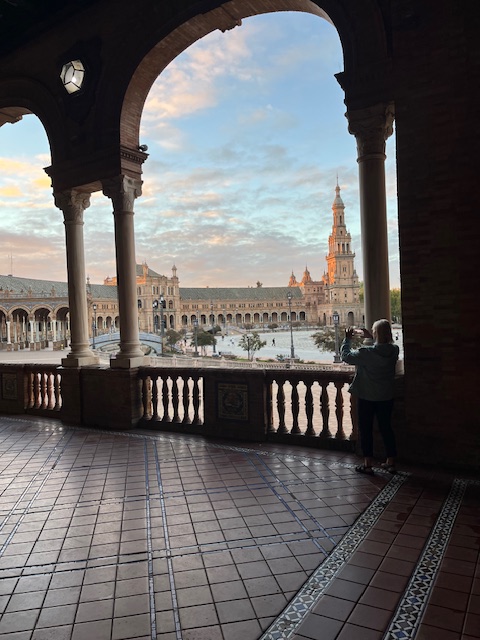


alaga, Spain hearing secrets from yours truly.


Do you take notes or notebooks or keep a diary on your adventures? What works best?
Have you traveled as a group with family members? Does that work out for you?
I’d love to hear your adventures and advice, good or bad!
Travels through Spain
November 6, 2024
Have “a coffee”? Or bacon that hasn’t been fried?
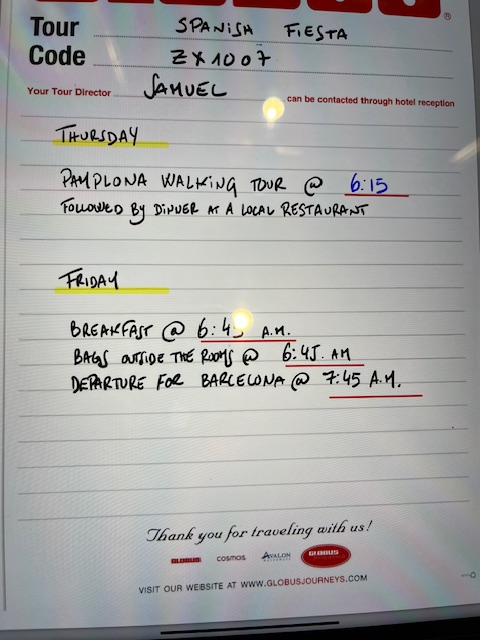
Our guide for the trip around most of Spain was a man named Samuel. He was probably in his mid-40s and had done this kind of work for at least a decade, I’m guessing—very experienced and well-traveled both in Europe, the U.S., Canada, and likely South America—but I’m not sure he ever leads tours there.
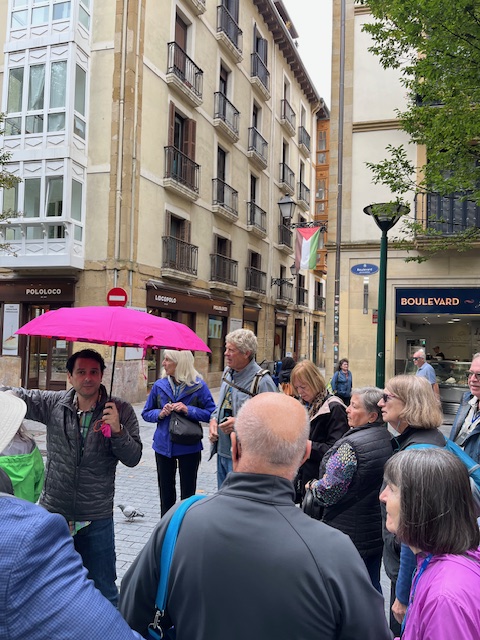
He says his work pattern is to lead a week, ten days, two weeks or more tour, and then takes a 4 or 5 day break in between such tours. He lives somewhere near where his parents do towards southern Spain, but in an apartment. He was pleasant and good looking but not married, although we were sure he was talking to friends on his phone from time to time. He had energy and was well-organized for what his job called for.
In addition to a salary he gets from the tour company, most travelers, if they’ve had a good experience, pony up and give a pretty generous tip at the end: ours was about 196 euros as a couple, at the advice of our travel agent. Multiplied by 40 travelers or so, that makes a pretty nice bonus (around $4,000 U.S.). But also pretty exhausting for the leader, who had to coordinate our arrivals to locations so they were pretty much on time and to meet up with additional local tour guides who went into more depth than one single overall tour guide could ever manage. Hard but interesting and fun work. He also had to coach us to get our suitcases outside of our rooms by 6:45 a.m. or 7 a.m., before eating our breakfast, and getting on the road again. (Hotel staff picked the suitcases up and took them to the bus. IF we wanted to brush teeth AFTER breakfast, we had to carry our toothbrushes and paste in our backpacks.)

When Samuel would tell us we were having a bathroom break where everyone needed to get off the bus, and we could take time to go into a large cafeteria and sit down and “have a coffee”—at first that was a little strange to my ears. Yes, I’ll have coffee, thank you,—but A coffee? It sounds pretty British but I do remember my friends in Spain talking that way. Of course in Spanish the correct word for coffee is technically café. Such as what we in the U.S. call places where we drink coffee.
And that reminds me. I learned to not look at a Spanish breakfast buffet and think ewwww, that bacon has not even been cooked! Well, the custom is not to “cook” bacon as such. But it is seasoned well over time, and you get used to eating a “bocadillo” (sandwich) made from delicious freshly made bread, with one tasty but thin piece of jamón.

More about Spanish bacon: There is “jamón iberico” and “jamón serrano”cut thinly and usually eaten at room temperature, not fried. It is salt-cured. The taste is delicate and salty, with varying soft textures. Jamón slices are enjoyed on their own as a snack or “tapa,” or eaten with bread or cheese. My husband loves salt-cured ham which we know here in Virginia as “country ham,” which we soak in water before dipping it in flour and then frying it in a frying pan for just a couple of minutes. I eat such too, but it is not my favorite way to fix ham. (And you pronounce jamón as ha-món. The serrano ham is a little like prosciutto, but not the same either. It has to do with what the pigs have been fed. For more info try here.)
Next time, I’ll get back to more of the sightseeing we enjoyed throughout a country that is a bit smaller than the state of Texas.


***
What have been your surprises or learnings when you’ve traveled to a new place or new people?
Globus Tours can be found at www.globusjourneys.com
October 24, 2024
Travels through Ancient and Modern Spain – Part 1
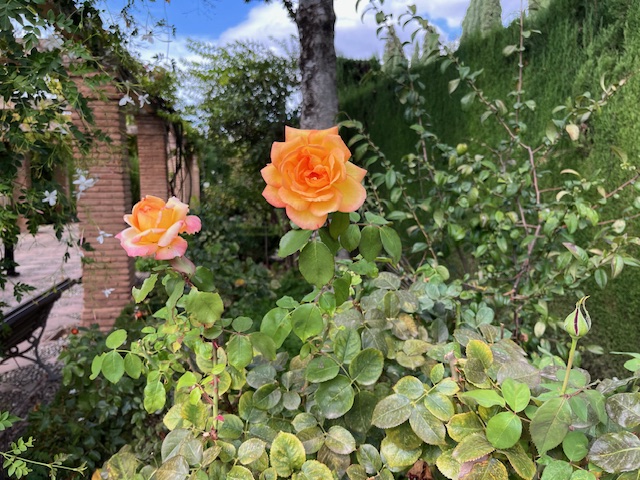
We just got home from traveling two weeks abroad in Spain. Boy am I out of practice of the simple acts of cooking. I’ve forgotten how I make homemade macaroni and cheese from scratch, but finally figured it out, etc. Two weeks off kitchen duty—after having yummy delicious breakfasts made for us each morning at gorgeous hotels, well, I’m spoiled. And of course it takes our bodies several days to overcome the six hour time change. But it’s worth it. We waited some 48 years for this trip.
***
Long long ago as I was wrapping up my sophomore year of college, I saw a notice on an Eastern Mennonite College bulletin board that piqued my interest. It offered information on spending a year studying abroad in Europe such as Germany, Spain, and France through Brethren Colleges Abroad.
The cost was little more than a typical year of college at that time ($2500), and my parents had already been around the world themselves on a six-week spin. I knew Daddy would be very supportive. I was excited. After all, I had spent a year in voluntary service in Eastern Kentucky and it had been an interesting (and wonderful) growing experience.
So in 1973, in spite of not knowing a single other person in the group (even though some were students at Bridgewater College about 10 miles south of my own college), I flew on my own from Indiana to New York City to meet up with the other students planning to study in Spain. We spent an evening getting to know what to expect, and flew to Madrid the next day.

My goal at the time: learn Spanish better, meet new people, have adventures, maybe figure out what occupation was calling me.
In mid-October of this year, my husband and I boarded a United flight and again, not knowing a soul in the group we would be traveling with, got a two-week replay of life in Spain.
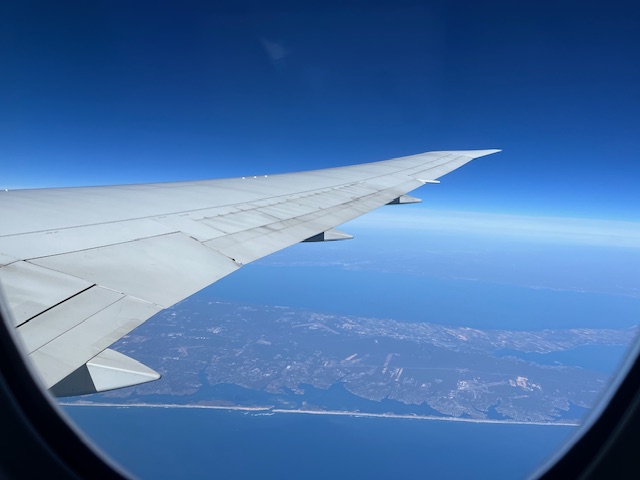
It was Spain on steroids—a huge airport at Madrid, and before we landed, miles of watching Spaniards driving to their jobs in the early morning darkness from way out in the countryside. It was almost like watching the commuter traffic flow into the Washington D.C. area where two of our daughters and four of our grandchildren live. (While Saudi Arabia airports win the “largest airports in the world” prize, Madrid’s airport had mushroomed in the 48 years since I’d landed there as a very green novice in Europe. Dubbed “Adolfo Suárez Madrid-Barajas Airport,” the 7,500 acres makes it the second-largest airport in Europe by physical size, right behind Paris’ Charles de Gaulle Airport.) It also has the privilege of being located pretty much in the center of Spain which makes it great for flying to other locations. To compare, Texas has 678,052 square miles (biggest state after Alaska) and Spain has 505,370 square miles.
***
Most of my readers here are people of faith, mostly Christian.
How amazing it was to go back centuries, to just a couple hundred years after the time that Jesus walked on earth, and to see with our own eyes aqueducts, palaces, basilicas, cathedrals, chapels and majestic gardens (The Alhambra) that were begun way back when. I was impressed with the fact that Muslims and Christians could share the same cathedral space, taking turns. Jewish quarters going back centuries were acceptable neighborhoods close to cathedrals.


In the city of Valencia, in one of the cathedrals we toured, I picked up a small newsletter in Spanish and (partly in French) that described the activities of that group. For instance, it gave news of an international youth gathering in Seoul, Korea, coming up in 2027 for interested teens and sponsors or escorts. It showed the logo for the event—just like an event for Presbyterians or Mennonites or whatever. I was surprised and impressed. The news sheet described long ago Saints, such as one called St. Virginia Centurione, who lived from 1587-1651. That was when some of the Catholic church was undergoing reform, etc. The saint’s story included a scripture passage from 1 John 3:18, “My little children, let us not love in word or in tongue, but in deed and in truth.”
Wow: something that we all need to take to heart in this time of anguish and troubles.

(For more on the differences between basilicas, cathedrals and the like, check this out. For more on other reformers of the time check out a little of my religious upbringing.)
***
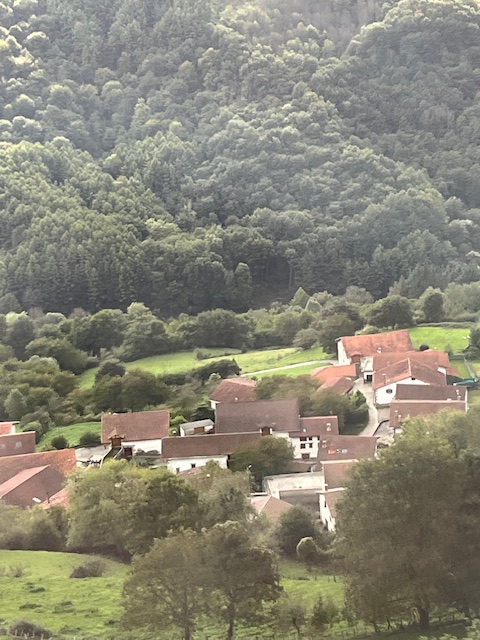
The trip my husband and I were fortunate to take covered numerous cities and many miles of Spanish countryside, some pleasantly green but much of it drab and dusty brown. There were many miles to walk in some cities and towns, such as Toledo and Segovia, two of my favorite villages where ancient aqueducts still hold a trickle of water! More coming in the next few weeks on my blog.

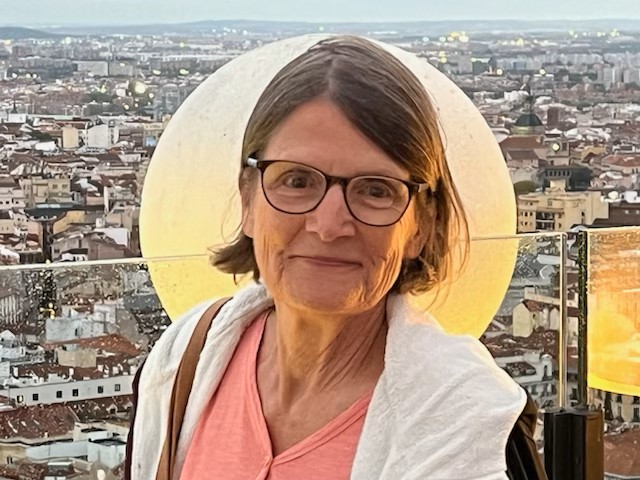
The trip was planned through Charlie Turner’s Turner Travel Agency here in Harrisonburg, Va., with arrangements made through Globus Vacations.
Do You Know What a Townie Is?
October 1, 2024
Townie.
I hadn’t heard that word in quite a while. But I remember well when I overheard the conversation one of my acquaintances—not a close friend—said something that kind of hurt. She was a good student at the same college I went to and at some point she said this to one of my friends, something like “Why does she [Melodie] go out with a townie?” Or, she may have used the term, “local yokel.”
That hurt a little, but why did it matter?
Townies, or local yokels, in this part of the good old U.S.A., were kids who didn’t go to college but after high school worked locally somewhere, sometimes in a factory or mechanic shop or McDonald’s, and hung around downtown (or elsewhere) after work, enjoying the presence of many good looking girls. And guys, I suppose.
Maybe I shouldn’t write about this now, it truly has not impacted my life in any way and my townie/local yokel is now my husband. He’s a country man who presides over our eight acre “farmette” where a local man harvests our hay on seven of the acres for his cows and pays us a little for the privilege. My husband enjoys nothing more than cutting wood for our basement woodstove (which heats us all winter) and we don’t pay a cent for any of it anymore. (So many trees have fallen everywhere, and they need chopping up.)

Urban dictionary says the townie word has negative connotations. Townie guy: “Things haven’t been the same around here since they built that hotel where the old hardware store used to be …” a townie guy might say, wishing for good old days.
My townie guy and I have raised three delightful and almost brilliant daughters who have given us six delightful and almost brilliant grandchildren, Townie or not. Their parents are teaching them to be good if not great kids, and of course along the way, we and they all have bumps along the road.
But trade in my townie guy, nah.
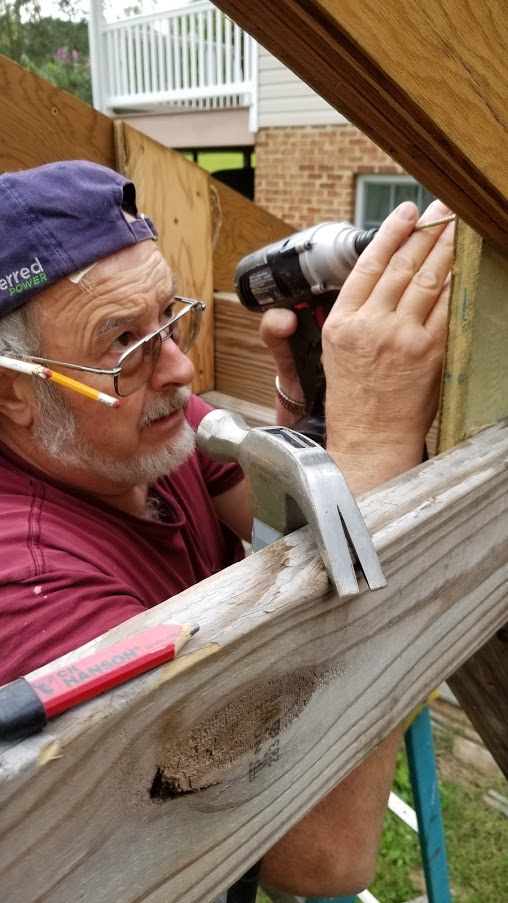
He’s a good man, saved his/our money and while not perfect (and I’m not either) we’re still together after meeting almost 50 years ago.
My townie guy at that time had a second job that he loved because he worked for a skating rink on some evenings as a “floor guard,” keeping kids safe. He also enjoyed the presence of many good looking girls at the rink at times. He even thought I was good looking and his first line to me was “If you bend your knees a little more, you’ll skate better.”
What a pick up line, telling me what to do.
He still tells me what to do. And I tell him sometimes.
Our brilliant daughters seem to love us.
Our well-loved grandchildren know and love us too.
That’s what my townie guy got me—five grandsons and now one granddaughter!
And I love him and all of them.
Usually. Yes we get mad, we shout, we cry, we make up.
We plan to go the distance. Hard times will come, we’ve had a few of those already.
And the words of that acquaintance long ago? It doesn’t matter anymore. She’s fine, she’s got a good husband.

My Dad was a farmer, and Mother loved him. They raised us well, even with the ups and downs.
I’m one lucky woman and I know my townie man thinks he’s one lucky man.

Do you have or know a townie guy or gal?
Or a local yokel?
Or? I’d love to hear from you!
What are You Especially Thankful for Today?
September 23, 2024
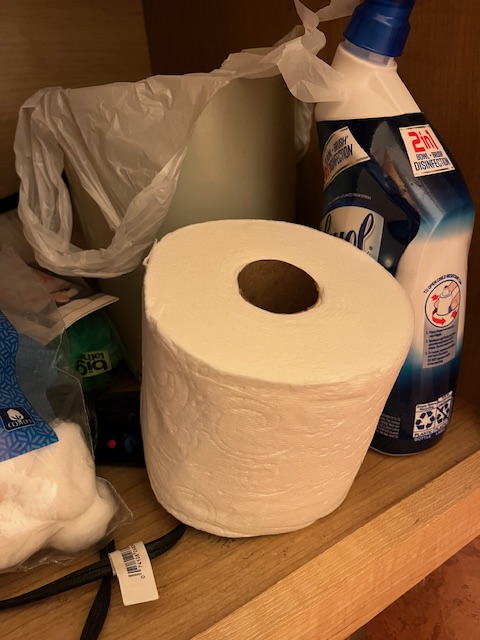
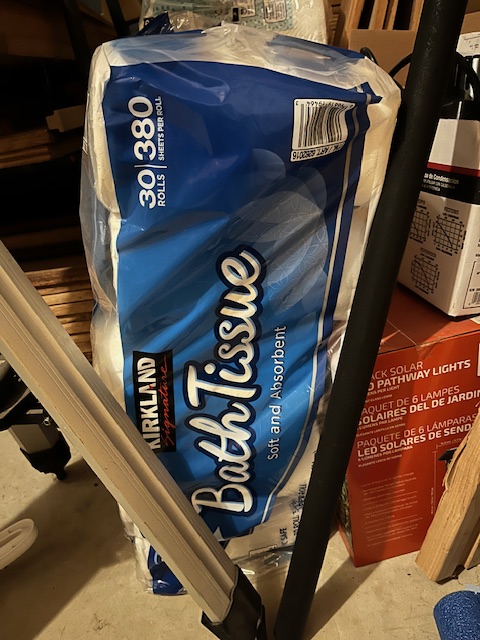
The other day I awakened and pondered how thankful we can be for toilet paper. That may be a weird thought to wake up with, but really, what a luxury toilet paper is, for some people.
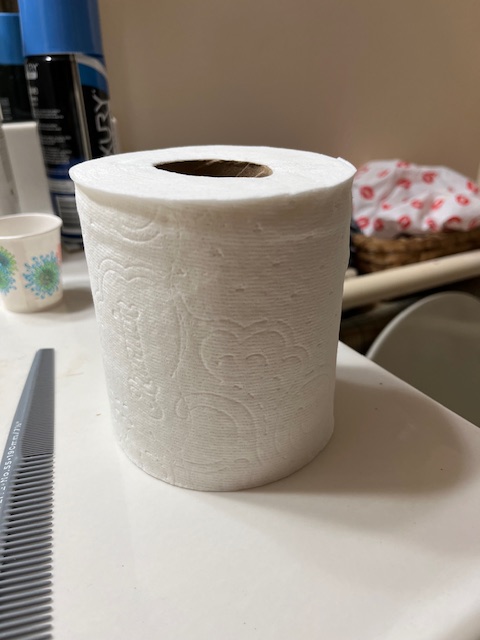
I know, that’s not a polite topic, but we all deal with it, and can be very happy we live (many of us) where toilet paper is not an issue. Remember the Covid-sparked rushes in 2020 which cleaned out (no pun intended) the toilet paper supplies in many big box or grocery stores? Gradually those necessities returned to the shelves and we didn’t have to hoard them.
In the old old days, (I’m dating myself), I do remember visiting friends who only had an outdoor johnny house. I remember using newspaper or pages from old catalogs in order to clean up. I was pretty young. This also may have happened when camping.
If some of these things make you say or think ewww, that’s the way it was for some homes even in the good old USA.
From the rest of the world, these are shocking numbers:
- In 2022, over 1.5 billion people still do not have basic sanitation services, such as private toilets or latrines, according to the World Health Organization (www.who.int).
- Of these, 419 million have to defecate in the open: in street gutters, behind bushes or into open bodies of water. http://www.who.int.
How very very sad.
This stat is interesting though: 57% of the global population (4.6 billion people) use a safely managed sanitation service. Fortunate indeed. Remind you and your family to be grateful.
As fall arrives, we have so much to be thankful for. And we can turn “the good luck of where we were born” into opportunities to help others who aren’t as fortunate. Many many “Relief sales” (as some are called, particularly among Mennonite groups) are held to raise money and goods for people all over the world. Through many organizations, people are blessed with the gift of toilet paper, bottled water, bags of rice or flour, canned meat, clothing donated and shipped around the world by freight.
But that’s not everywhere, lest we forget.
Food banks abound here in many parts of North America. Good citizens join hands to see that families where parents can barely manage to pay their rent, receive a free weekly food bag from a school-centered food bank. Lion and Rotary type clubs and others raise money to help feed hungry people. Organizations like Habitat for Humanity, Heifer International, Women for Women International, UNICEF, Dave Thomas Foundation, hundreds and oodles of other organizations I cannot name here, do their best to help others. For instance, I love that many grocery stores solicit us to donate $2.50 on our grocery bill to help families receive free tasty apples in this fall season.
I know that many readers do this and more, to help others. May God bless you every one!

***
What are you especially thankful for today?
What charities do you choose? (We get many many solicitations but focus on just several to be able to offer more.)
Did you know those statistics about the millions and even 1.5 billion lacking basic sanitation?
How many toilets did your house have growing up?
Bringing Back Beverly
September 10, 2024
A solid, long-term member of our church died recently. I knew she was ready to go, was in hospice care, and was surrounded by the love and dedication of her family. I saw her as a pillar of our church, who frequently spoke up with prayers, pertinent questions at church business meetings, and sweet smiles for all. For most of us at our church, Beverly was someone who made a point of warmly greeting newcomers and welcoming them to our smallish congregation.

I had volunteered to help with ushering for her memorial service. It was Saturday afternoon and we arrived early: my husband to help park cars, and me serving as an usher.
But I did not expect to cry as soon as I walked in the door of the church.
There, lined up on a table were dozens of small glass jars of party-mix, topped by a lovely golden lid.

And just like that, Beverly was there with us in our midst, and, if memories hold, she will be there/here for years to come.
Others in attendance that day were also gob-smacked with welling tears and the instant memory those jars brought back of Beverly.
You see, every December, several weeks before Christmas, there were sweet little jars filled with yummy party mix in our church mailboxes. She didn’t need to tell us they were from her. It was a tradition as sure as singing carols or opening presents.
Our family usually munched on that special treat on our way home from church, and saved the rest to enjoy closer to Christmas. It was not Christmas without those jars. And dutifully, we all (mostly) returned the empty jars to Beverly, so she would have them to use the following year.
We will miss her, but not because of the party mix.
Beverly was quite a bit more than that. She took care of her mother in her mother’s last years. She graduated from Madison College, with a degree in biology, and earned a Master’s and PhD from two additional universities. She was a professor of biology until 1997 when she retired, and enjoyed exploring the world with friends. She also took care of her grandsons five days a week for their first five years, till they went off to school. You can read more here.
About a year ago, Beverly approached me with a suggestion along the lines of “Wouldn’t it be nice if we had more than members’ names and birth/death dates on the wooden plaques which line the walls of our hall at church?” I think she was approaching me as a writer (she read my blog regularly, until managing a computer got too difficult). At a church retreat, we began brainstorming some of the epitaphs which might tell generations to come who someone was and what they did with their lives or what they were known for. We have a long way to go in creating such a book or manual where pages can be added, but I like the idea and will continue to plug away.
Beverly’s son-in-law gave a beautiful and comprehensive description of much that Beverly was to our congregation and her family. Mike ended his tribute talking about her passion for life and generosity. “Since we will all die someday,” he encouraged us to live life now to the fullest. Then he closed with a good reminder, “Let’s live it up.”

A “cookie cutter” gift from Beverly years ago for my daughters.
What special memories do you have of persons in your family, church, or community? Post them here!
How can we remember our loved ones?
August 27, 2024
The Biggest Scare
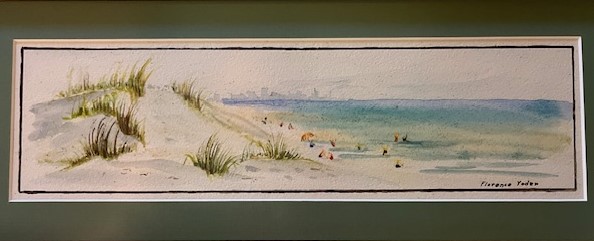
This summer we had the biggest scare we ever want to have at the beach. This being Labor Day weekend with plenty of beach activity occurring on both sides of our country, I want to share what was a recent nightmare for our family. One of our young grandsons slipped away and disappeared.

We share this difficult story to maybe help someone else avoid the drama we lived through for something like 40-45 minutes.
Our hearts seemed to stop beating as we hurriedly looked for him, each of about 10 adults in our party spreading out in various directions, plus some of the older grandsons.
One of the child’s brothers was crying his eyes out and needless to say, the child’s mother could barely talk she was so panic stricken. I could hardly breathe.
There were/are no lifeguards at this beach, although there were beach police keeping watch up and down the beach in Jeeps. I finally spotted one of the Jeeps coming our way, quite a way down the beach. Finally, I waved to her and was able to pull her attention to us as she came to stop for us. I quickly spelled out our dilemma, close to tears.
She began by asking the basic questions: What’s the child’s name, what color swimsuit was he wearing, how old is he? My other grandson knew the exact colors and shared them with the woman in the Jeep. She called one of the other beach patrols who apparently also had found a child who was lost, who matched our swimsuit color description and couldn’t find his family. This at first made us breathe a bit easier, surely they had found our grandson. Hope, hope, hope.
But several minutes later, as the Jeep driver tried to get help, she learned that the other child was twelve years old, much older than our five-year-old, which tore my daughter—the mother—even more. We began to fear the worst. Had he somehow slipped by his father who had been keeping very close watch, and slipped out to sea? The five-year-old was only a beginning swimmer and we knew he could easily panic under such a situation.
We had all tried to do our best to keep our eyes on all the kiddos, but so many waves tend to move unsuspecting children down the beach, and too quickly out of eyesight. There wasn’t really a riptide going, yet it was very hard to see sometimes with the sun beating down.
Another mother who went through a similar situation says they’ve been helped by always appointing one adult at a time to focus on a child as in: “You’ve got Frank now.” (Not his real name.)
Also we noticed a great idea another family utilized: a flag pole with a college-related flag flying on it, and having a dedicated space where a child should head if they become lost. And the child needs to remember that rule!

Finally, our young man’s other grandmother called my phone, saying she’d found him at their rented beach house! Apparently, when he got turned around and couldn’t find our cabana, he’d taken it upon himself to trot away from the beach sand, up over the boardwalk, and over the main street to get back to his beach house. He, five years old, crossed the street all by himself, searching for “the pink beach house.” He later told us he’d spotted one pink house that was the wrong shade, and kept going until he found the right pink house. Shortly after, this grandmother and another kind woman helping with the search found him on the family’s screened porch, safe and sound.
Years ago, my husband and I had spent a couple days at a different beach with my sister’s children when they were small. And one of them, the younger, disappeared for way too long. But at last he was found. My sister was just as emotional, just as relieved.
May you and yours find ways to keep track of the littles on the awesome beaches around our country, and may you have as happy of ending as we did. Both times.
Tell your story here, or of someone you know?
What do you enjoy about the beach? Or not?


