

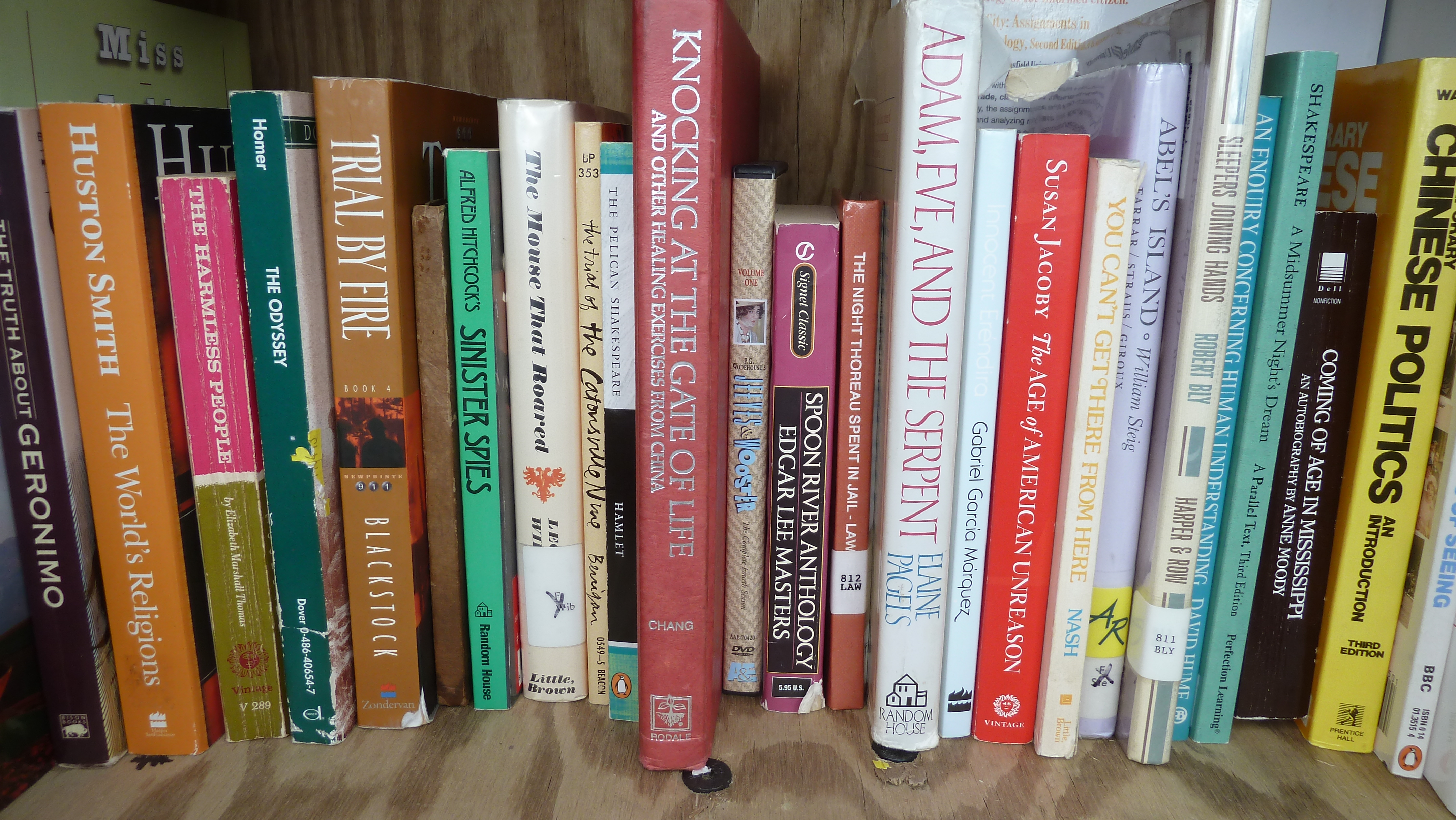
I never imagined that writing about the little book shed recently at a nearby bustop on the campus of Eastern Mennonite University would result in finding a heartwarming backstory. Last week I sat down and interviewed the shed’s builder, which I’ll get to in a second.
I called it a shed because it reminded me of one and I didn’t know what to call it; one website called them “dollhouses for books.” After I wrote about the one on the EMU campus, people commenting on my Facebook page or here on the blog such as Claire DeBerg told me there is a whole string of “Little Free Libraries” as they are properly called. (Earlier I didn’t know what to search for online.) But the first one was build in 2009 in Wisconsin by Todd Bol, who made it as a one room schoolhouse as a tribute to his mother who was a teacher. I immediately thought of the little one room schoolhouse my own father built—a model of “Poynter School” in Indiana, which my mother still has. An avid dollhouse and toy barn builder, how Dad would have taken to building little libraries!
But the concept is quickly spreading across North America and around the world (with hundreds of stories in the media. Where have I been?)* People can take a book or leave a book at an outside small receptacle (people build them in all sorts of creative styles). There are no due dates, no fines.
 Lee Jankowski
The builder of that little library at EMU is Lee Jankowski, a brick mason for 35 years. Over the years, Lee has also donated his labor weeks or months at a time at various homeless shelter/Catholic Worker houses. The Catholic Worker house/movement as founded by Dorothy Day is a simple living community where all live off of what is donated each day—in other words, they scrape by. There is usually no extra money for house repair or hiring professional labor to fix things.
So Lee would contact a house, bring his tools, and show up and say “What needs to be done here?”
While working at one such home in Duluth, Minnesota, he came across the “Little Free Libraries.” He loved reading, loved the concept of sharing books freely especially for those without ready access, and built and launched two Little Libraries in Duluth near homeless shelters.

So how did Lee get to EMU? Last fall he enrolled in EMU’s graduate school in counseling (after 35 years out of school), which he choose out of Google searches for a program where “your soul is considered,” he noted. He wanted a program that had an emphasis on experiential and person-centered learning.
Lee had always enjoyed talking and hanging out with those in the shelters as he worked, and had decided to seek training and a degree in counseling. Then his father was diagnosed with multiple myeloma, and the plan to go to grad school was put on the back burner as he helped care for his father until he died last year. As Lee resumed a search for grad school, EMU was really the only place he found expressing the values he was looking for.
After a few weeks on campus he started asking around to see whether he could build one of the Little Free Libraries. “No one quite knew who to ask,” Lee recalls. But Eldon Kurtz, Director of Physical Plant at EMU, contacted the EMU library. They didn’t have a problem with it so Eldon gave Lee permission to move forward, including giving him access to the EMU shop, tools, Plexiglas for a see-through door, and a pressure treated post from Eldon’s own supply of leftovers at home. Lee also bought a broken bag of shingles at a discount, a sliding door handle at a thrift shop, and one store donated odds and ends of lumber.

Lee restocks about once a week from books he buys in local thrift stores (one store offers a whole bag of books for $5, he says). He peruses the books to make sure they are fitting and tries to supply an array including some for children. “It takes about 3-4 months before other people start leaving books,” he says.
Is vandalism a problem? When he first asked the homeless shelter in Duluth about permission to construct a library there, the first response was, “It won’t last the night.” But, Lee says, no one ever touched it [to deface it] and people have really embraced and used it.” I did find at least one story where a little library was burned but the local community quickly rallied to rebuild it.
Lee’s goal in the EMU graduate program is to go into hospice work, out of his father’s wrenching experience with that difficult form of cancer. Thus Lee is currently during a practicum at a local retirement community, Virginia Mennonite Retirement Community, in order to work among the elderly. For income he works for a local security company on weekends.
Lee is allowing his story to be shared as a seed for others. Which is pretty cool. Of course, many stores, libraries, coffee shops, professional offices, and churches have their own free library boxes or shelves–it doesn’t have to be a cute little shed.
Thanks, Lee, and thanks EMU (my alma mater), for allowing this story to be told.
More on the Little Free Libraries
A children’s book is forthcoming about Little Free Libraries.
And here are some cool audio blips promoting the Little Free Libraries.
* Little Free Libraries (LFL), once it got organized, set a goal of building 2,509 free libraries in honor of Andrew Carnegie’s build of 2509 free libraries around the U.S. at the beginning of the 1900s. The LFL goal was reached in August of 2012, and by this January 2014, the website estimated there are between 10-12,000 registered Little Free Libraries, with more built all the time.
The EMU Little Library is not yet registered with the Little Free Library website and mapping system because, according to Lee, you need to send in a photo of people using it etc. which is a few more hoops to jump through (camera, loading it onto a computer etc.) than he wants and as you might expect he is not out for the publicity but warmly agreed to an interview to inspire others.
A version of this will appear in my syndicated newspaper column Another Way, in a few weeks.
 One-Dish “Magic” Cookie Bars
I like these cookie bars because you only dirty one pan making them and that is the pan you bake them in. My husband loves these cookie bars because they are, when made right, just scrumptiously delicious and satisfying.
Usually I only make them once a year but recently I decided why make them only at Christmas (them being oh-so-calorie-laden might be one reason to limit them to once a year.)
But if you need a quick one dish wonder to take to small group, a potluck, or if company is coming over and you have these supplies in your pantry, go at it: graham crackers, chocolate chips, nuts, coconut, butter and sweetened condensed milk.
You probably already have a recipe like this, I found it once on a can of sweetened condensed milk (SCM) although my smudgy card says I got it from Good Housekeeping and Home Ec. class, which I’ve adapted over the years. I thought it was a never-fail recipe until this last Christmas.
I opened a can of the above named milk which had been in my pantry all year and it looked funny. Not creamy, it was more the color of caramel. I didn’t think it had actually spoiled, and it had not, just changed consistency. But I was desperate and already had all the other ingredients in the pan so I thought I would see if it would work. Baked at 350 degrees, even if it had spoiled, it wouldn’t kill anybody. Right?
Meanwhile, I had bought a fresh can of SCM in early December, thinking I would make another batch if those didn’t go over so well. But my husband ate them without complaining even though they were less than stellar. I didn’t have the nerve to take them to a party.
So this week (learning from my mistake that SCM eventually changes its consistency) I made another batch for some impromptu Monday night company. Still warmish from the oven, they were so rich and satisfying you could eat just one and be happy.
One Dish “Magic” Cookie Bars
1 stick butter or margarine
1 ½ cups graham cracker crumbs
1 cup chopped nuts (I use pecans)
1 cup chocolate chips (or butterscotch)
1 cup shredded coconut (I buy it in a bag)
1 15 oz can sweetened condensed milk.
Melt butter in a 9 x 12 “ cake pan in a 350 degree oven, watching carefully so it doesn’t brown. Meanwhile, crush about ¾ of one package of graham crackers in an old bread bag with a rolling pin until you have 1 ½ cups of crumbs; spread this into the melted butter in the pan, smoothing out to make a nice crumb crust.

Sprinkle nuts over crumb/butter mixture, then chocolate chips, then coconut, and top by drizzling the sweetened condensed milk over it (honestly this is the hardest part, pour slowly, and spread lightly with spatula or knife if necessary. It also melts and spreads on its own in the oven).
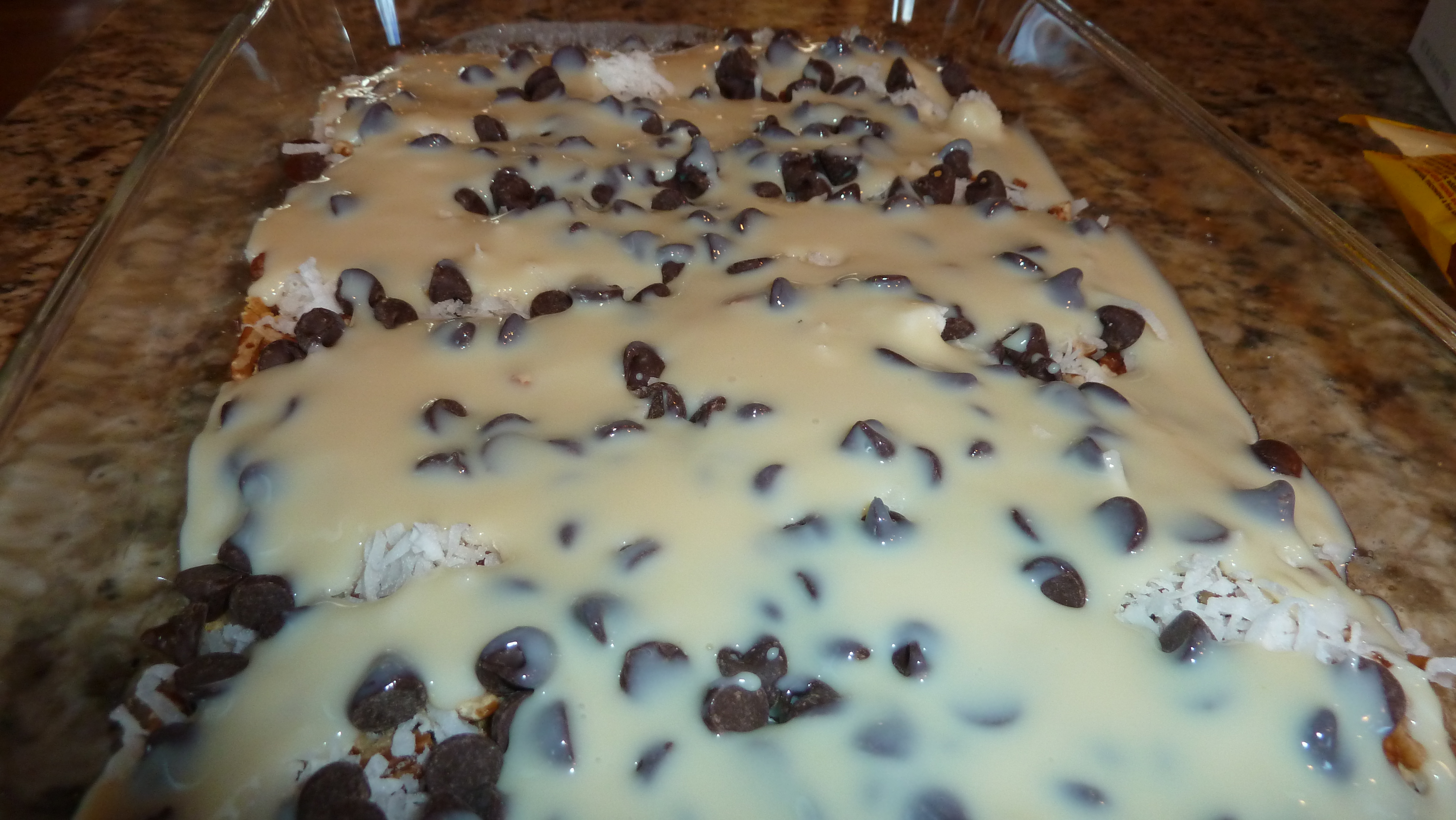
Bake for 25 minutes. Cool for 15 minutes, then cut into bars. Be sure to cut and remove within15 minutes or they stick badly to pan.

Do you make these? What are your variations? What is your favorite one-dirty-dish creation?
***
You can follow my weekly newspaper column too: sign up for free subscription at www.thirdway.com/aw under “Subscriptions.”

The Christmas tree is down and hauled to the woods (or curb or landfill). Epiphany symbols (wisemen, Baby Jesus) are all put away.
There is still one Christmasy thing sitting on my dining room table (besides the poinsettia which I can’t bear to part with until it is totally bedraggled).
A sleigh full of Christmas cards and greetings.
This is one of my new favorite after-Christmas tradition, that I began when I realized we never really took much time to read and savor the messages of friends and family who had bothered to send Christmas cards. We still appreciate and participate in that custom ourselves, sending a lighthearted picture-filled letter called The Davis Gazette—that always has at least a short line of handwritten personal greeting.
 The Davis Gazette, 2013
Pre-Christmas days find me decorating and shopping and wrapping and baking and barely having time to give cards we receive a quick once over before mounting them intertwined with ribbon around the front doorway.
So one year in January we began taking time to read the cards again right before our evening meal, and then including whoever sent the card in our mealtime prayer—asking God to be especially with them and mentioning any particular needs if we are aware of them.
I love the way this simple pause carries the love and beauty of the season into the long and sometimes lonesome days of winter, connecting us with friends and far flung family.
 Some of the cards are truly beautiful works of art. Some of the cards include lovely new family photos.
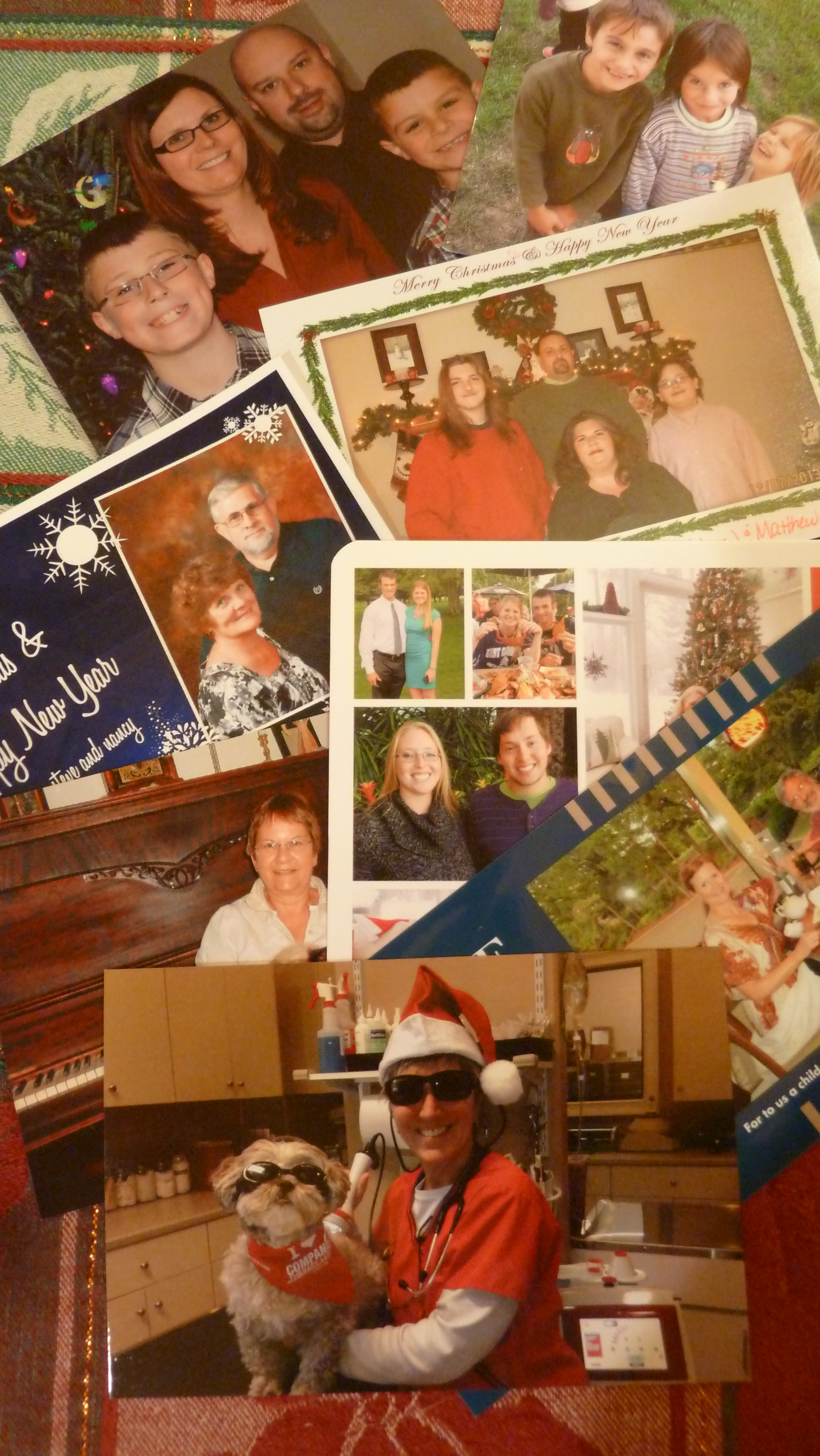 All are great to linger over just a bit and then tuck away in the sleigh where they await recycling in a later year.
So, if you sent us a card, you will be prayed for and thought of sometime in the next 30-40 days. And if you haven’t put your cards away yet, you can still start this little “tradition.”
“Every time I think of you, I give thanks to my God. I always pray for you, and I make my requests with a heart full of joy.” Philippians 1:3-4
What do you do to carry the joys of the Christmas season through January?

Harmony. Balance. Center. Agreement. Accord. Synchronization. Bringing Together.
These are all words we use to talk about a principle that is bedrock for my life and this blog.
Recently I ran across a Bible reference that stood up and said “That could be a theme verse for your blog if you need one.”
“May the God of steadfastness and encouragement grant you to live in harmony with one another, in accordance with Christ Jesus, so that together you may with one voice glorify the God and Father of our Lord Jesus Christ.” Romans 15:5, 6
As I reflect on this verse and think about harmony seekers in my life, the world, or history, I realize that those who stand up for justice and peace do not always arrive at these goals through inner-peace-producing methods. I was reminded of us this hearing Dr. David Evans of Eastern Mennonite Seminary speak convincingly on our local news broadcast saying that Dr. Martin Luther King Jr. was not just a nice black preacher with a poetic dream. He reminded us that we’ve “domesticated” the legacy of King into a nice story forgetting that at the time, King, obviously, angered and upset many people.
Jesus also said he did not come to bring peace but a sword:
“Do not think that I came to bring peace on earth. I did not come to bring peace but a sword. For I have come to ‘set a man against his father, a daughter against her mother, and a daughter-in-law against her mother-in-law’; and ‘a man’s enemies will be those of his own household.’[a] He who loves father or mother more than Me is not worthy of Me. And he who loves son or daughter more than Me is not worthy of Me. And he who does not take his cross and follow after Me is not worthy of Me.” Matthew 10: 34-37
The quote within the quote here is referencing the origins of Jesus’ line from Micah 7:6.
Jesus and Dr. King er, uh, both were assassinated by the way. Nothing too harmonious there. Many of the early Christians and Anabaptist leaders of my own faith heritage were tortured and killed for standing up for their beliefs. They did not gain peace and harmony with authorities. They left their families in grief and discord, but followed the difficult way of God’s call.
These are not things we often hear about in sermons and especially not on Martin Luther King Jr. Sunday weekends.
The larger goal for both these men, though, were ultimately bringing about inner peace and justice with God, and between humans.
So how and why should we seek harmony?
1. To keep ourselves together.
2. To keep our families together.
3. To cross fences and build bridges in communities.
4. To reach across great ideological (political, theological) gaps for whatever common threads of similarity we can find.
However, we can’t do these things with just a kiss and a patch. No lasting fence or bridge or treaty holds without getting to bedrock to deal with the very real differences between us, to listen to each other and find understanding. That takes a commitment to love that goes beyond differences.
It is the principle for which both these men, and many other men and women throughout history, have given their lives.

Who or what brings harmony in your life? How do you seek peace?
For more on where I get some of my genes leaning toward harmony and peace, read this on my dad.
What do you like with your chili?
I grew up eating chili soup with crackers—lots of crackers when I was little. There were so many crackers in the soup you could barely find the kidney beans or the liquid. I really liked crackers.
But I think I also always liked the soup, the way my mother made it, which is nothing like I make chili today. I like her soup—er, I don’t think I’ve ever met a chili I didn’t like unless it is just too stinkin’ hot, as in spicy. Mama’s soup was mostly hamburger, (chunkier than mine,) tomato juice, kidney beans, onion, and chili powder. No garlic. It was a thin, juicy soup that I sopped up by applying crackers, probably 8-10. That was my thickener. I also ate buttered crackers as my side dish.
Then I grew up and moved away and discovered there was a whole world of chili soup out there, and at least 50 different ways to make it. Host a chili cook off, which our office did, (below) and there were at 5 or so distinctively different tastes, all of them delish.
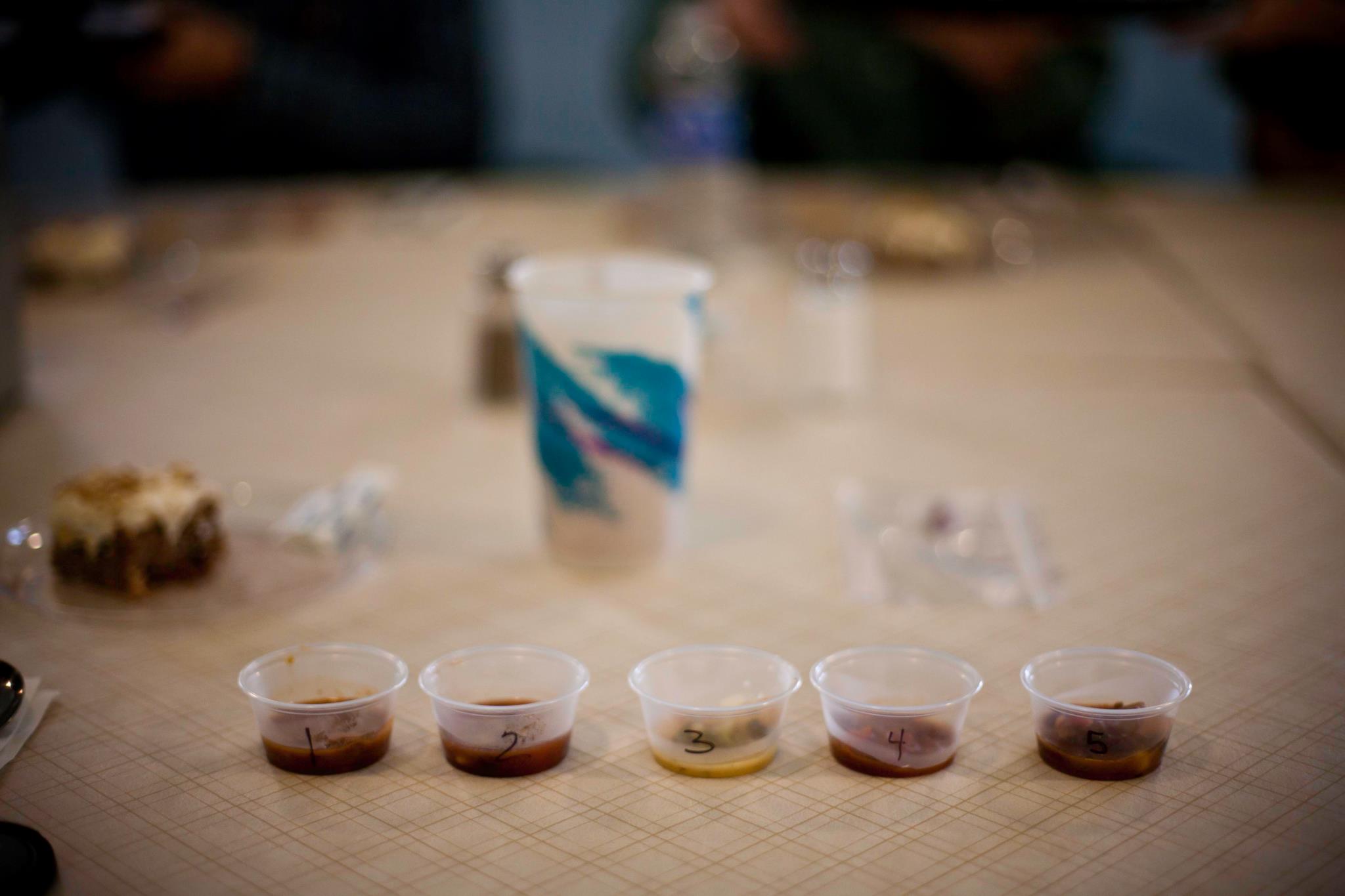
But my standard “go to” for home is this basic recipe: (and it seems like when I offer people a choice of dishes when my church friends take food to people after surgery or family illness, they frequently choose chili and cornbread, especially in the winter).
Chili Soup (my recipe)
2 cloves garlic, minced
½ large onion, chopped
1 lb. ground beef, finely chopped as you cook it*
1 scant tsp. salt
½ tsp. black pepper
1 ½ tsp. chili powder
1 ½ quart canned tomatoes
½ can 15 oz kidney beans
**1 tsp. chopped hot pepper

Sauté garlic and onion. Add ground beef.
Drain. Add tomatoes, salt, pepper, chili, and hot pepper if desired. Simmer at least ½ hour. Add kidney beans, with liquid, the last 5 minutes or so to heat through. (I always added the beans very last because of one picky child who didn’t want beans in her soup, so I always scooped out a serving for her before adding the beans. It also keeps the beans from getting mushy, unless you want that.)
*(I don’t really like big chunks of hamburger in my soup, I feel it then tastes like you are eating hamburger in your soup, and chopping the beef finely as it cooks up, results in a more finely melded soup and flavor, in my opinion. Below, mostly chopped fine.)
**(Last summer I added just a few pieces—a tsp. maybe–of chopped hot pepper ‘cuz people were giving them away at the office and it definitely added a nice extra dash I think I’m falling in love with.)
 Chili before it has simmered.
Next question: What do you serve with your chili?
Crackers? Cornbread? Tortilla chips? Other hot bread? Grilled cheese sandwiches?
Our tradition is cornbread. And I have a really really easy recipe that uses liquid shortening (vegetable oil or other) that you can easily whip together while the soup simmers. I will share it sometime.
(And I could kick myself for not getting a final picture of a bowl of soup. I whisked it off to the couple I made it for and plum forgot!)
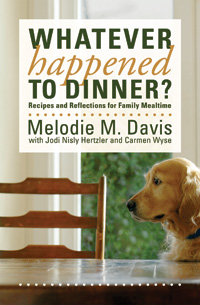
For more family recipes and from Shenandoah Valley cooks, check out my book,
Whatever Happened to Dinner: Recipes and Reflections on Family Mealtime.
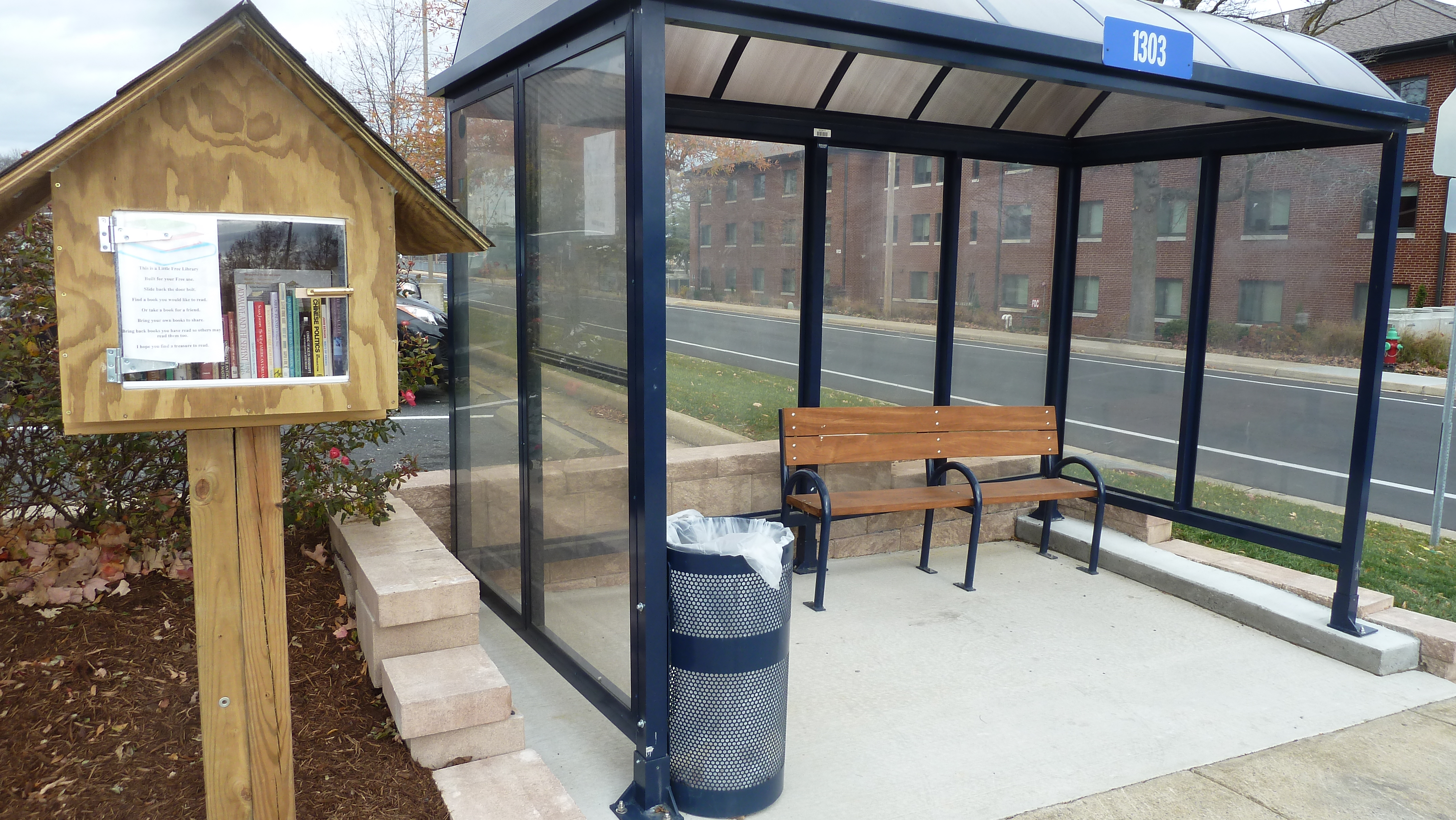
I walk frequently for exercise and fresh air on the campus of my alma mater, Eastern Mennonite University. One day I spied something new next to a bus stop.
It was a little shed for books. So cute! Such a perfect and great idea, I wonder who thought of it. Maybe this will help me find out.
An instantly accessible and amazingly trusting little library. With no due date.
Anyone can take or give a book. You can keep it as long as you like and return it or bring other books you no longer want on your own shelves.
It. Is. So. Cute. I just had to write about it.
I wonder if there are more around campus or town? Or have you ever seen anything like this near where you live?
So far I have taken three books, returned one, and put in four or five myself. I get lots of free books as a syndicated columnist, sent for possible review. A new home for the titles I can’t give away at the office.
The first book I took was a disappointment, so I took it back after a few weeks.
My favorite book so far, is an absolutely stunningly written story, Abel’s Island by William Steig, with drawings. It’s stamped as removed from the Moorefield (WV) High School Library, so maybe it shows up on high school English class reading lists, but it is a great book to read to younger children. It received the 1970 Caldecott Medal and Newberry Award.

Just one sentence gives a little of the great literary style of the writer:
“Heaven knows how far he was hustled in this manner, or how many rocks he caromed off on his way.”
The plot revolves around a mouse who gets swept away from a picnic in a rain storm to an island, away from his beloved wife, Amanda, and how he tries, and tries, and tries to escape and return home.
That the writer can make you care so much for a little mouse, a little guy who would send shivers up most of our spines if we happen to see him darting through the kitchen or a corner of the basement, is a testament to the power of good fiction. You can read a sample (and even hear a great long! excerpt here.)
A book I’m reading now, that I would never never never have found or ordered anywhere else, is an obscure older book from the 50s written about the “Bushmen” of of the Kalahari desert in Botswana and South-West Africa by Elizabeth Marshall Thomas called The Harmless People. I’m always fascinated by the idea that there are people on this planet who live without all of the “necessities” of modern life and have no electricity, running water, cell service, and don’t know or care that Obama is President of the U.S. So even though the book describes that culture as written in 1958, I have no doubt that there are still people living much as the author describes from her time living among the Bushmen.
A blurb from Amazon: “Her account of these nomadic hunter-gatherers, whose way of life had remained unchanged for thousands of years, is a ground-breaking work of anthropology, remarkable not only for its scholarship but for its novelistic grasp of character.”
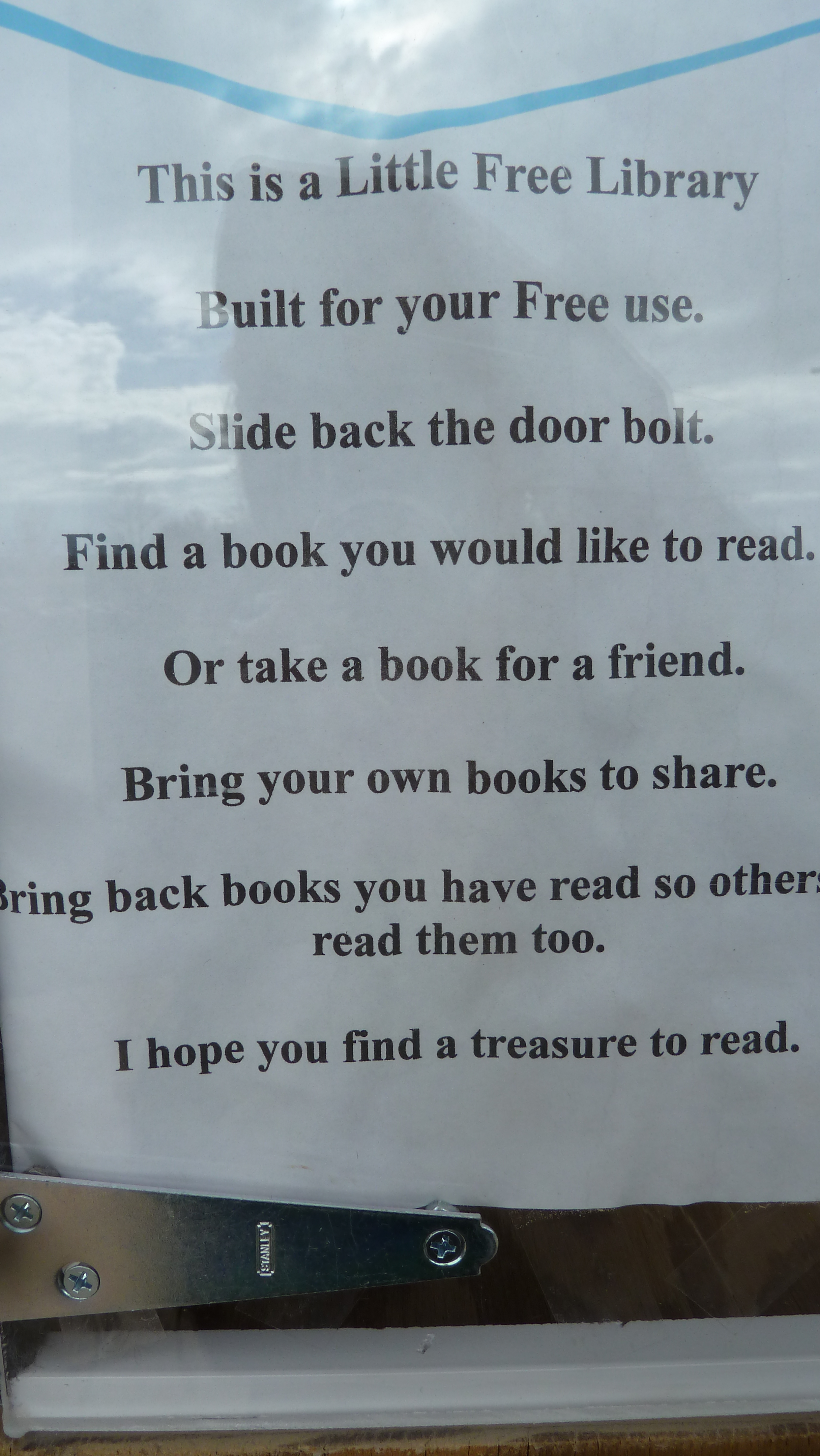
Books can help you travel the world—or just inside the marvelous imagination of another writer or illustrator. Like the sign says, “just slide back the bolt on the door.” Your mind can be opened to new experiences, thoughts, places, dreams.
And now I can get a free trip anytime I pop by the little book shed. Looks like something my husband could have come up with.
Thank you, creative minds.
***
Do you have a source for free or very low cost books?
(I mean of course besides your local library, duh.)
I also like to visit the local Booksavers shop just a short walk away, where I can get rid of or buy books cheap (and the money goes to support the world wide relief and development efforts of Mennonite Central Committee); but anyone can hop into the Booksavers online store here.
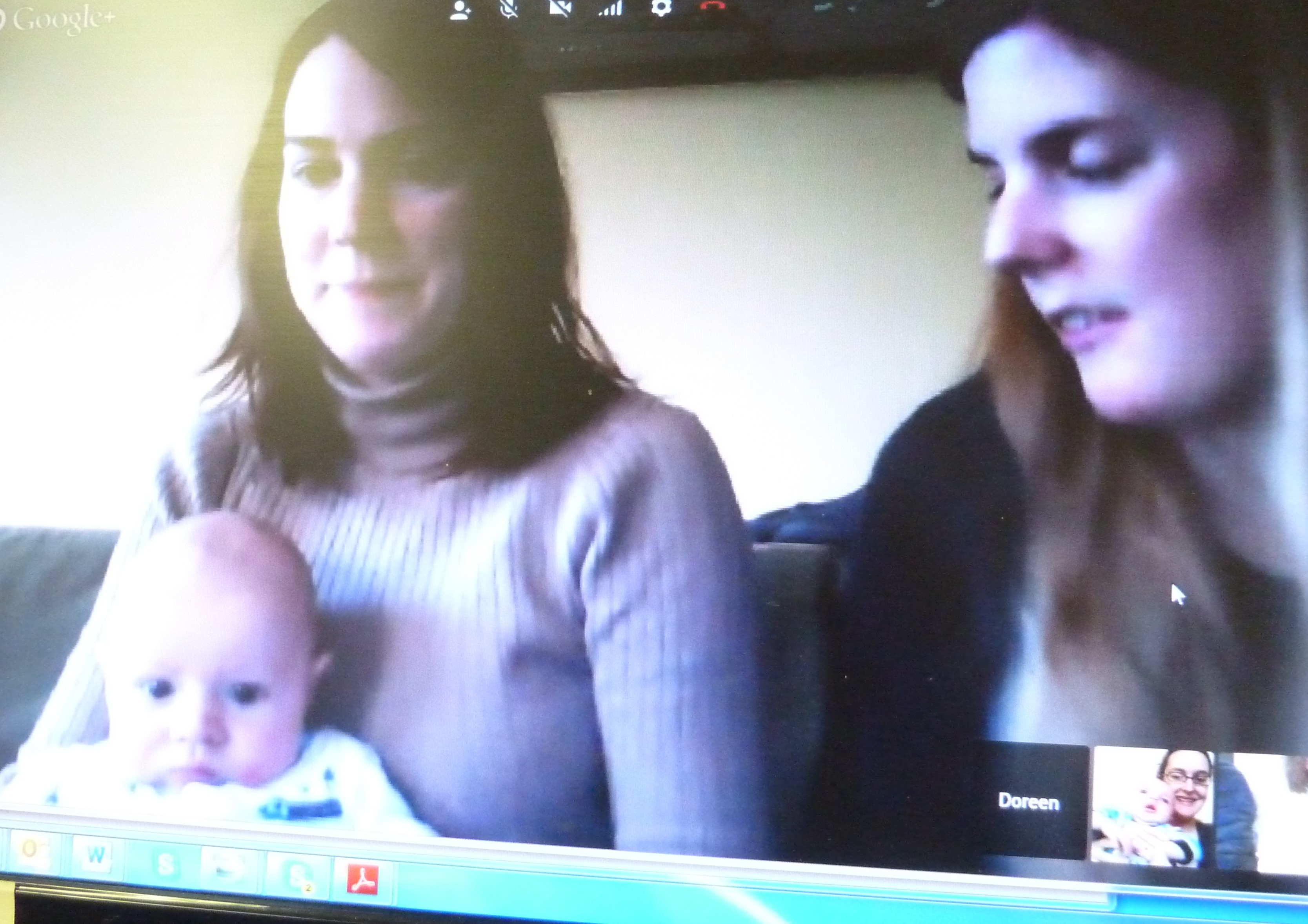
So instead of having the kids and grandkids come over on Sunday afternoon, we have to chat on Google.
Instead of nuzzling soft cheeks and planting grandma kisses, we admire new smiles and don’t mind when the one who needs a nap finally succumbs.
Instead of a hug and Sunday dinner, we content ourselves with the fact that we can be in one visual/virtual space at the same time.
What’s my point?
Gathering by Google chat is way better than not having that option. Especially if you have two really newish grandbabies who are in different cities that you long to see and touch and cuddle.
My daughters are doing a great job of sending random photos, forwarded from Daddy at home to Mommy at work to Grandmas and Grandpas hungry for any glimpse.
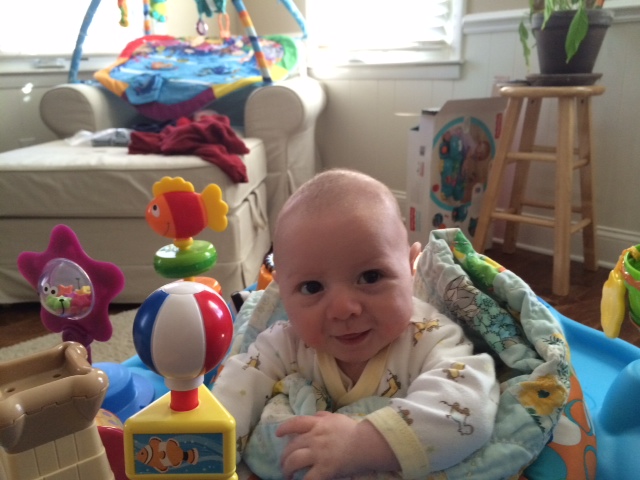
 Sam, top; James, bottom.
They send short videos of coos and “tummy/play time” which also helps.
About once a month, if no personal visit is planned, we aim to gather by Skype video connection if there are just two hook ups involved, or Google Chat if there are three or more. Since my daughter in grad school is in the same town as one family, that helps.

This past Sunday was the first time we all got together from three locations which isn’t easy to schedule, even then. For one, we don’t have a fast enough Internet connection at home for reasonable video hook up so we have to be in town at my office. The hitch on the other end is babies who are not nursing, not napping, and in a relatively happy mood.
So what do we get by Google Chat that is better than phone? (and no this is not a paid advertisement).
- I am reminded of all the ways that babies are so good at communicating their various needs to their parents, if you can figure out the wahs. Do short firm wahs mean I’m tired, I’m hungry, I’m wet, I just need to suck on something, I’m bored, I’m lonely, or what?

Baby Sam, getting wah-y. Also observe Mommy’s face.
- I get to see my other (currently-in-grad-school) daughter who has just spent two evenings babysitting her little nephew, who is getting great baby practice and love: Sam will likely think SHE is the grandma. No, just a great loving aunt. What every baby needs plenty of in addition to grandparents.
- I get to watch them watch a playoff game in which they have mild, not passionate interest.

- I get to watch James, the six-week-old happily gazing around his world, securely cradled by his mom. He lays back, stares, his eyes settle on something else, he wiggles, he listens to his grandparents’ and aunties’ voices. We understand he probably doesn’t see much of us on the screen. Does he hear grandpa say, “Is that my grandson? This is grandpa” etc., brilliant lines like that.

- We get to watch James’ interest pick up greatly when his daddy comes in the room and talks to him a few seconds and coaxes a little smile out of his son.
- When Sam’s wah’s get more intense and I worry he will wake his daddy who has to sleep because of his work shift, Mommy reassures me the wah’s don’t really waft up to the master bedroom.
- I get to watch a fussy baby, who has just come in from a nice long snuggle walk through the neighborhood, go from being normal fussy and tired, to sucking his pacifier, to falling asleep in his mother’s arms.
Later, I email my thanks for the get together (it still takes some arranging, like I said) and doesn’t take the place of long telephone chats where you can talk about complicated frustrations and hassles, or even long ago real letters where spilling one’s true guts is the medium of choice.
A visit, or cup of tea together, or having everyone over for Sunday dinner would be the best, but when that’s not possible, this will have to do. Thank you, ye gods of Google Chat.
Thank you more, ye God of the universe for these wonderful gifts of family, children and grandchildren.
***
What is your favorite or best way to communicate and connect with family members who live at a distance?
 Our office has themed potlucks for lunch once a month. Most of us love them because it beats the old brown bag and for me, gives me an excuse to experiment with making something I’ve never maybe made before. My “Easy Stromboli Sandwiches” post a few months back was one of those.
Our theme this month was “Italian” (and yes I could have repeated the Stromboli but what’s the fun in that). I figured there would be plenty of lasagna (vegetable and regular, check) and while my family always loves mine, (featured in Whatever Happened to Dinner?) I wanted to make a dish I enjoyed when my youngest daughter lived at home and made it for a couple years after college, Chicken Alfredo. She always used a jar of prepared Alfredo sauce which is yummy but I wanted to make my own. Kind of.
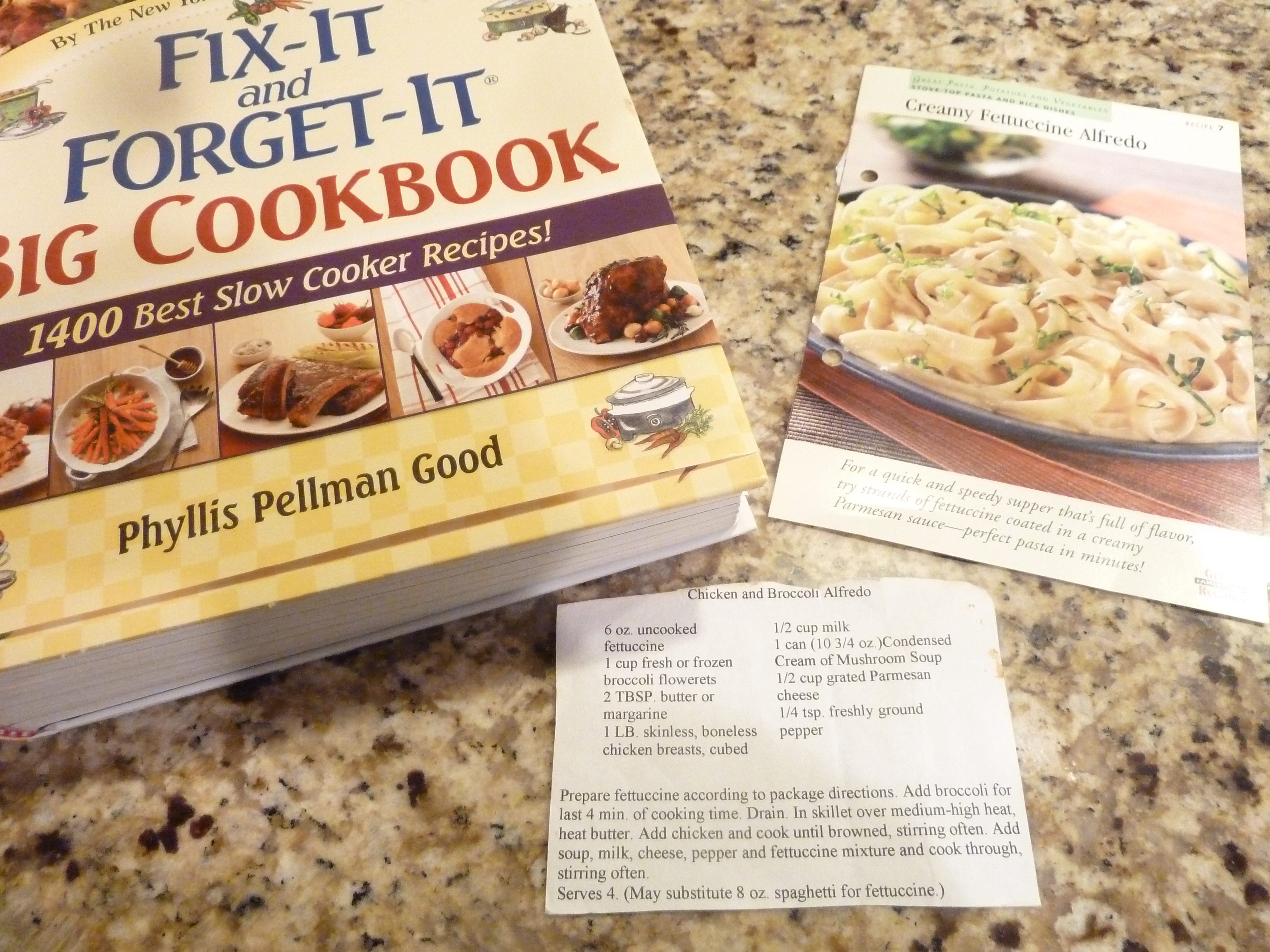
So I checked three sources: Fix It and Forget It Big Cookbook; an unidentified print out (which I probably got online at some point) called Chicken and Broccoli Alfredo; and one of those “Great American Recipe” gorgeous huge recipe cards for “Creamy Fettuccine Alfredo” they send you free in the mail trying to get you to subscribe for more cards. That one called for 2 sticks butter, 2 cups whipping cream and 2 cups grated Parmesan cheese, and 1 lb. box of fettuccine. It weighed in at a whopping 1,467 calories per serving (the recipe said it would serve 4). ‘Nuff said. More on that later.*
The Fix It and Forget It recipe called for a 16 oz. jar of Alfredo sauce, 4-6 boneless chicken breast pieces, 8 oz. fettuccine noodles (or other), 4 oz. can of mushroom pieces and stems, and 1 cup shredded mozzarella or ½ cup grated Parmesan. In a slow cooker. I nixed that one since I didn’t have the Alfredo sauce.
The unidentified source called for a cup of fresh or frozen broccoli flowerets, 1 lb. skinless boneless chicken breasts cubed, ½ c. milk, 1 can of cream of condensed mushroom soup, ½ cup grated Parmesan cheese, and 6 oz. fettuccine noodles. While some cooks steer clear of any condensed soups, I figured if I didn’t add any salt and I had it on hand, it couldn’t be any worse or more caloric than the jar of Alfredo sauce or 2 sticks butter PLUS whipping cream PLUS 2 cups cheese.
So …. being a make-do-mama who is inclined to use the things I have on hand and comfortable with invention, here is the combined recipe I used. At least one potluck goer pronounced it “delicious.” It seemed to warm quite a few bellies that day that started out near 0 degrees F. Note there was no garlic in any of these recipes, nor in mine. It could probably use a nice clove or two but with an otherwise highly seasoned potluck, for me it was a nice respite since garlic and spice sometimes sets me off into a headache.

Chicken Alfredo Fettuccine – Melodie Davis original
2 cups chopped chicken tender pieces
1 cup Vermont aged cheddar cheese (any white-ish cheese will do, I happened to have some on hand)
8 oz. fettuccine noodles
½ cup half and half (or milk)
½ cup grated Romano and Parmesan cheese (or just Parmesan)
8 oz. frozen broccoli pieces
1 10 oz can condensed cream of mushroom soup
2 Tb butter
1 Tb olive oil
Salt and pepper to taste
Fresh chopped basil or dried, as desired
Boil noodles according to package directions; add broccoli for last 4 minutes to lightly cook.
Sauté chicken in butter and olive oil until lightly browned and cooked through. Remove from heat. Add cheeses, half and half (or milk), condensed soup. Stir lightly.
Drain water from noodles/broccoli. Add the noodles and broccoli to chicken/cheeses/soup mixture. Garnish with basil as desired.
Bake in 2 1/2 quart greased casserole dish for 30 minutes at 350 degrees or until heated through. Serves about 8.
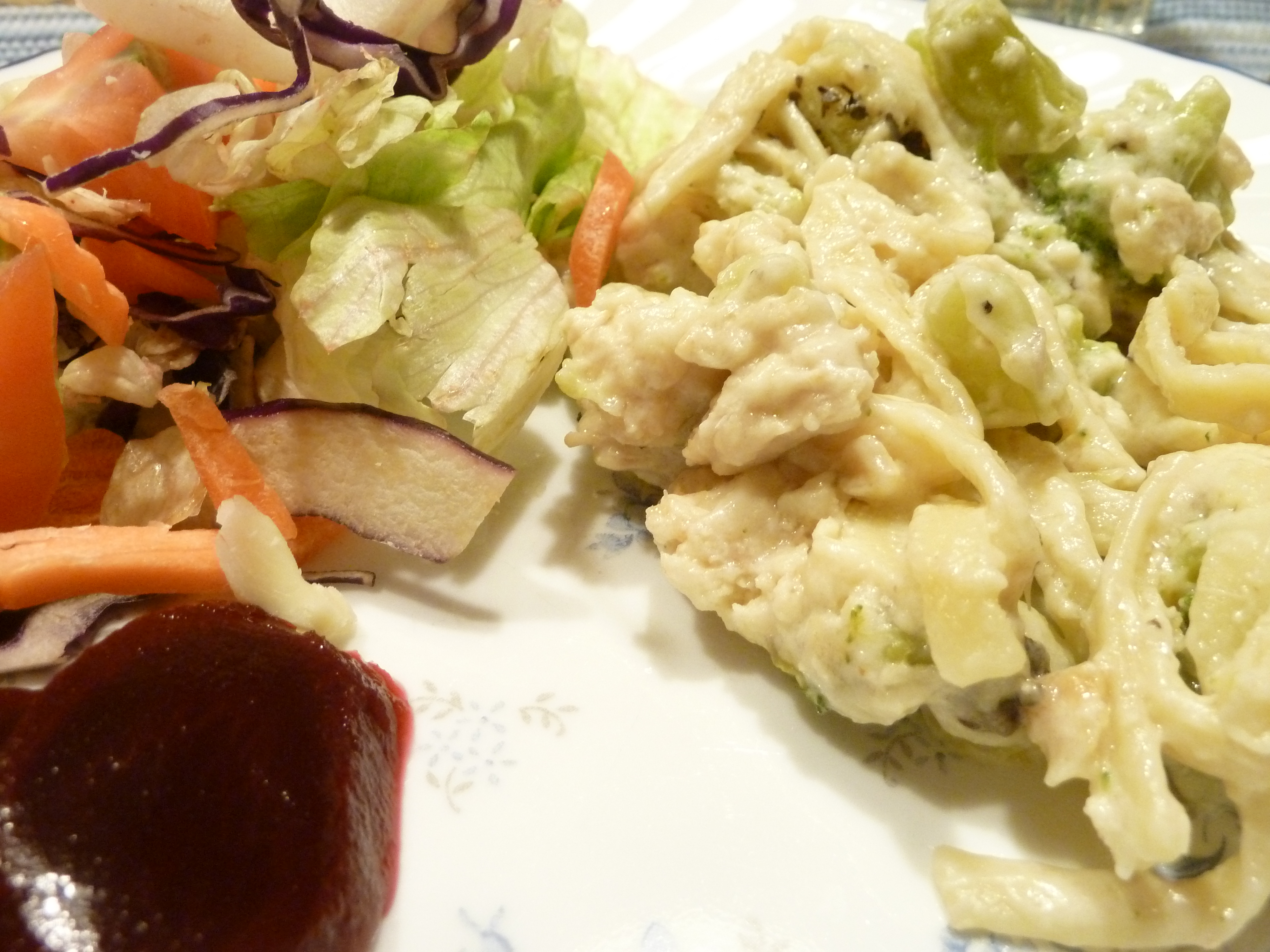
You might guess I’m a little pleased with my concoction, but not so proud of the pictures I didn’t get (potluck not a great environment for getting great pictures of servings), but here’s a photo of my plate when I enjoyed leftovers that night at home.

It’s real food, not faked up by a food artist.
*It’s also quite high in calories, do I need to mention? You’ll only want about a one cup serving of this baby to not wreck your diet, weighing in at about 371 calories per one cup serving.
Yeah, that’s not so bad, unless you eat the whole 4 cup serving of a typical, generous restaurant dish. Just saying.
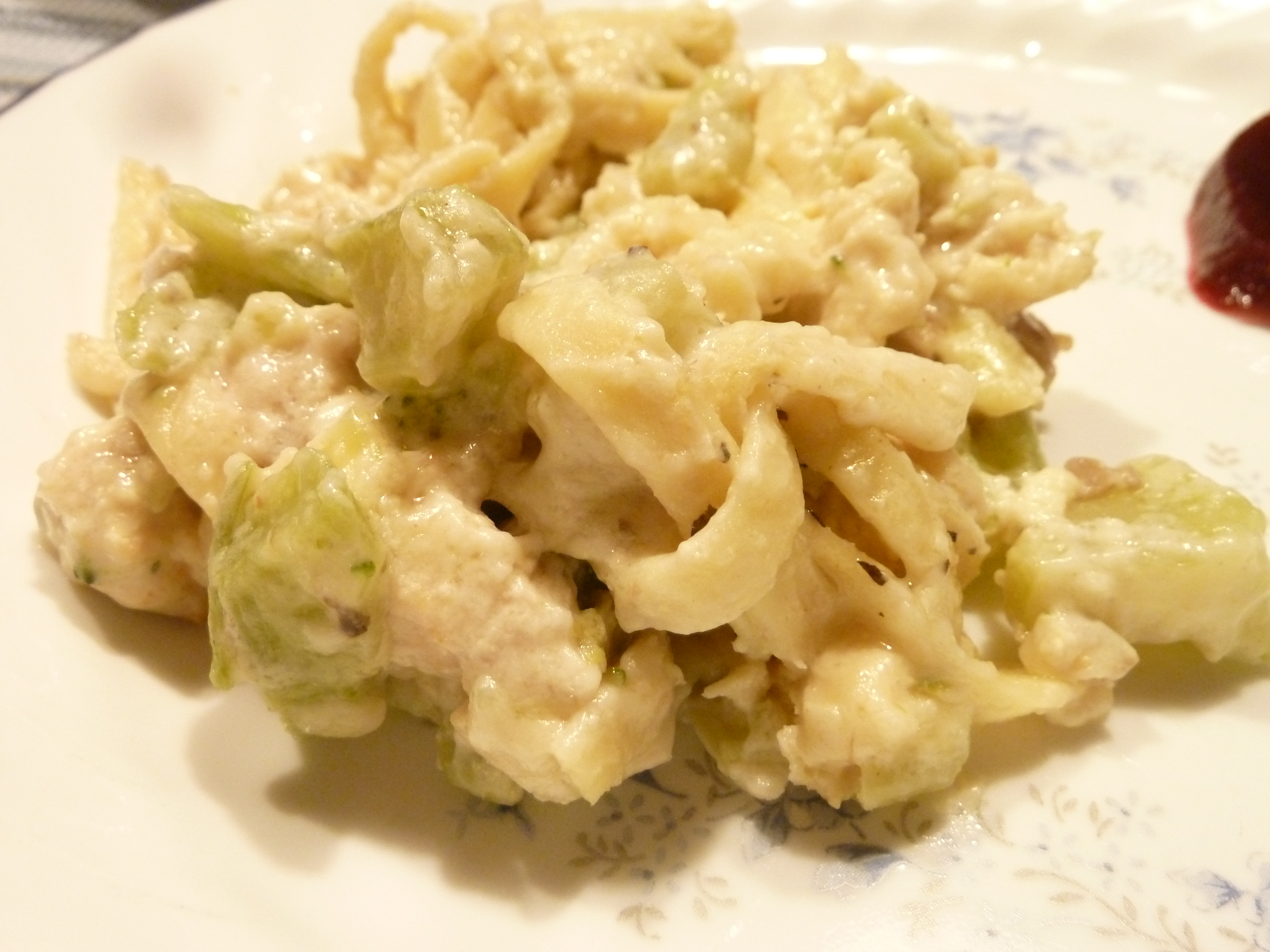 This is about a one cup serving.
And in case you wonder, like I did, what “Alfredo” refers to, (I wondered if it was Italian for “with cheese” or something), it apparently was just named for a chef who made it for his pregnant wife. It was subsequently Americanized with the “unnecessary addition of heavy cream” according to the above website.
So there you go. Now we know why the dish is crammed with milk and cheese and so high in calories.
***
What’s your favorite winter comfort food?
Do you stick to recipes or combine and invent as you go?
I’d love to share a recipe you’ve concocted, if it was successful! Make the dish, send the recipe and a photo, and allow me to post it as guest post here, and I’ll send you a FREE copy of Whatever Happened to Dinner? Contact me by email if you have a recipe to share. melodiemillerdavis at gmail dot com
Stay tuned next weekend when I hope to bring you another great winter comfort food: our traditional basic chili soup.
Do you have very many photos of your kids doing real work? Not just photo ops?
In the basement near our wood stove, I keep a pair of gloves that reminds me every day (during the winter) of how our children grew up knowing that work—real work—not just the photo op kind, was expected of them. (I know, and here is where I tell you how they had to walk to school every day two miles over snow, barefoot.)
These 0 degree days are the kind of times that bring out old codger stories like that.
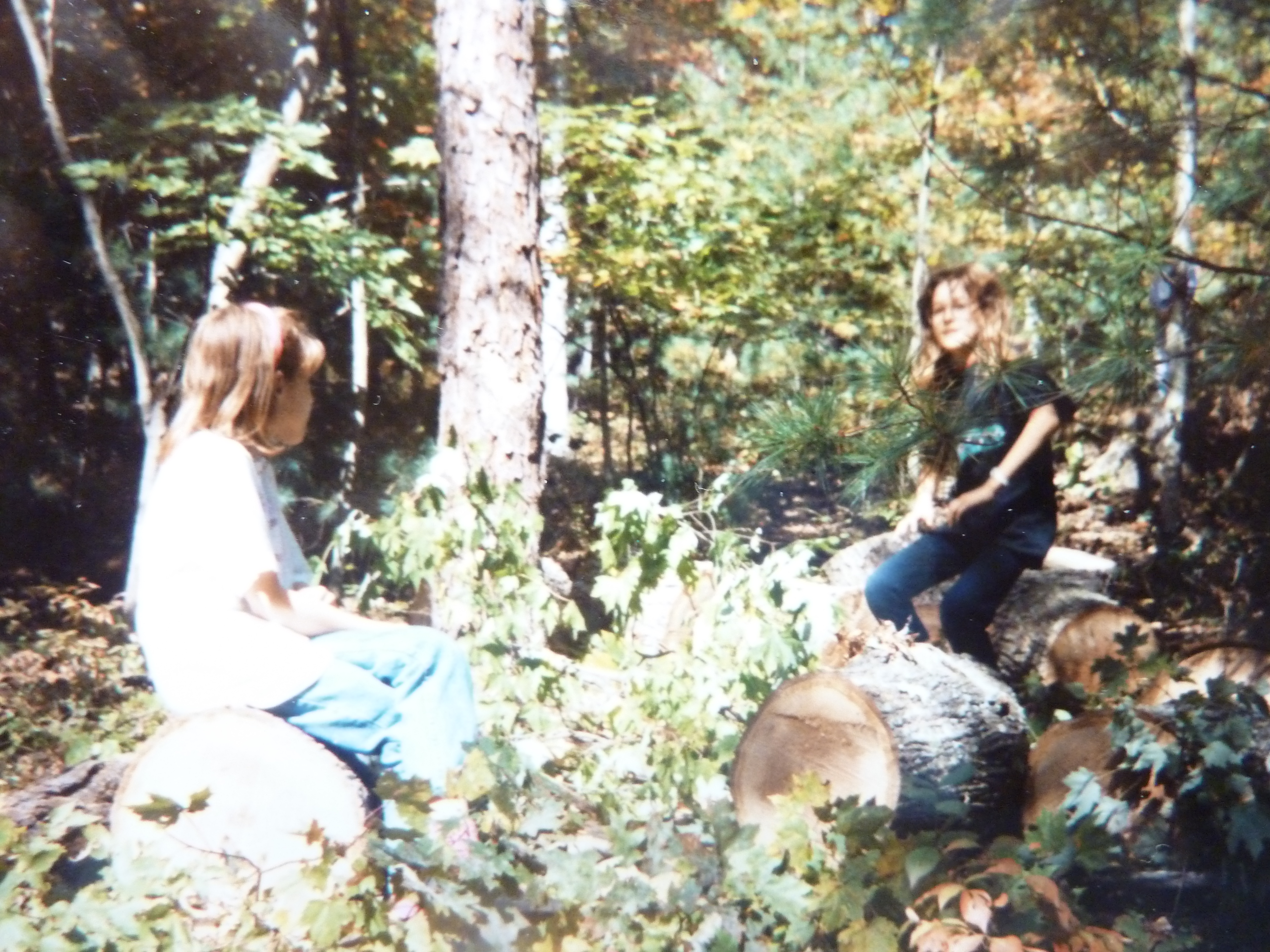 (Pausing while helping cut wood; they usually enjoyed our excursions to the woods for this chore.)
I’m not an old codger, (am I?) but I do think that expecting our kids to help cut firewood (well, of course they only did the carrying and stacking of wood part, but they know how to hold a limb so my husband can quickly make kindling out of it), help rewire the house one summer, work in the garden, can and freeze vegetables, and wash dishes and clean sinks has helped them know you don’t get through life without lifting a finger. You know?

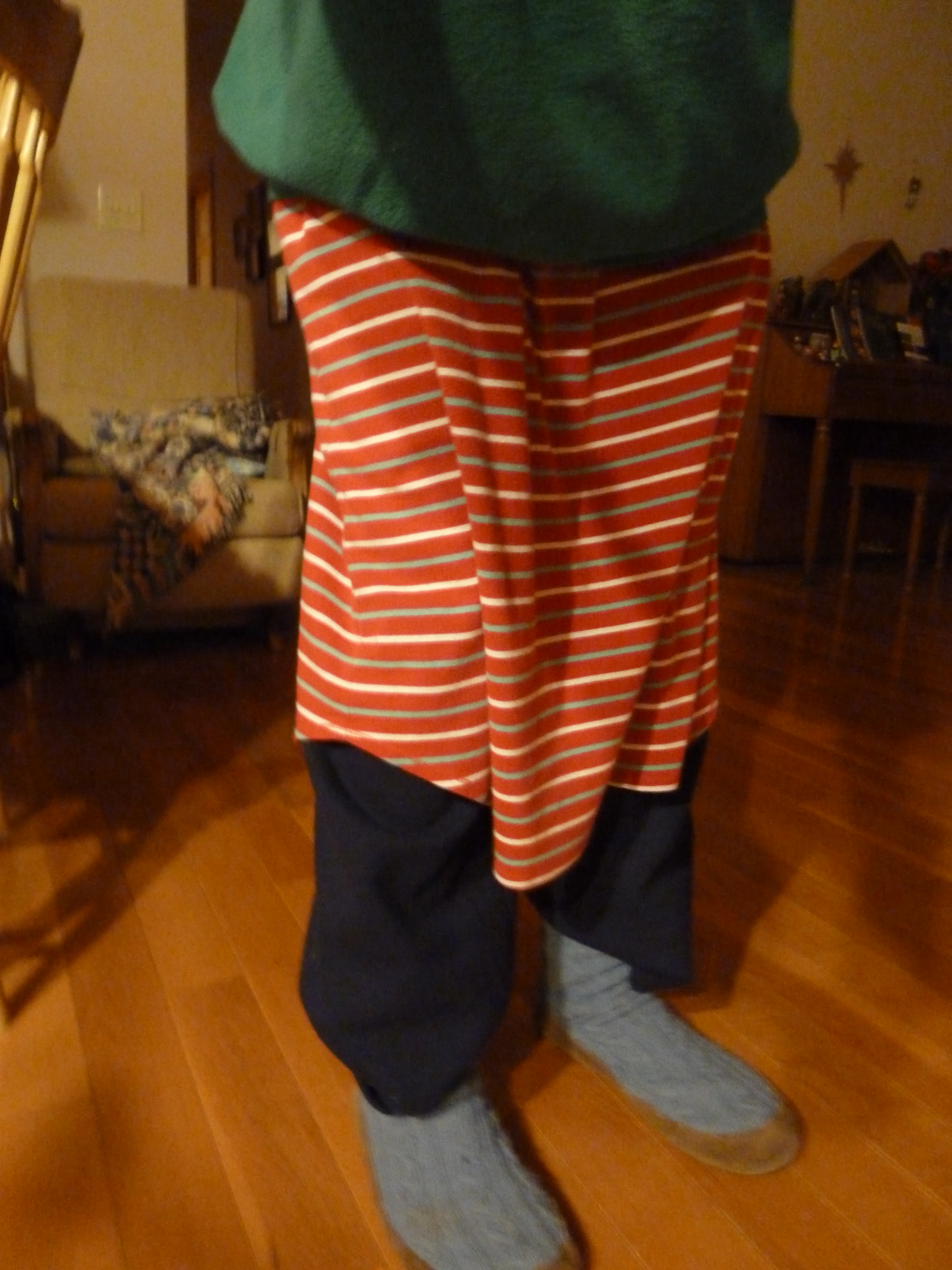
I just don’t have a lot of pictures to prove it. What you see in this blog post is pretty much the extent of “work” pictures. (I think most of us don’t have “work” pictures, especially of ourselves, because these are not generally moments we grab the camera or phone to make a selfie. Like this one I took of how I was dressed yesterday morning to tend the fire when we were 1 degree below zero.)
Other bloggers (Hannah Heinzekehr at The Femonite, for one) have talked about this not unusual phenomena of only picturing the happy fun and entertaining parts of our lives.
One year our daughters each got their own pair of real work gloves—like daddy’s—particularly for helping with the unending chore of carrying in wood.

They were to write their names on their gloves.

What’s amazing to me is that this particular pair survived the fate of most gloves around our house: separation until a pair is deemed irreparably separated for ever and lost. This pair, at least 15 years old, fits my hands quite nicely so I try to hang on to them.
They help me be thankful for having our kids grow up knowing how to work, and being very diligent about applying themselves today to whatever their tasks.
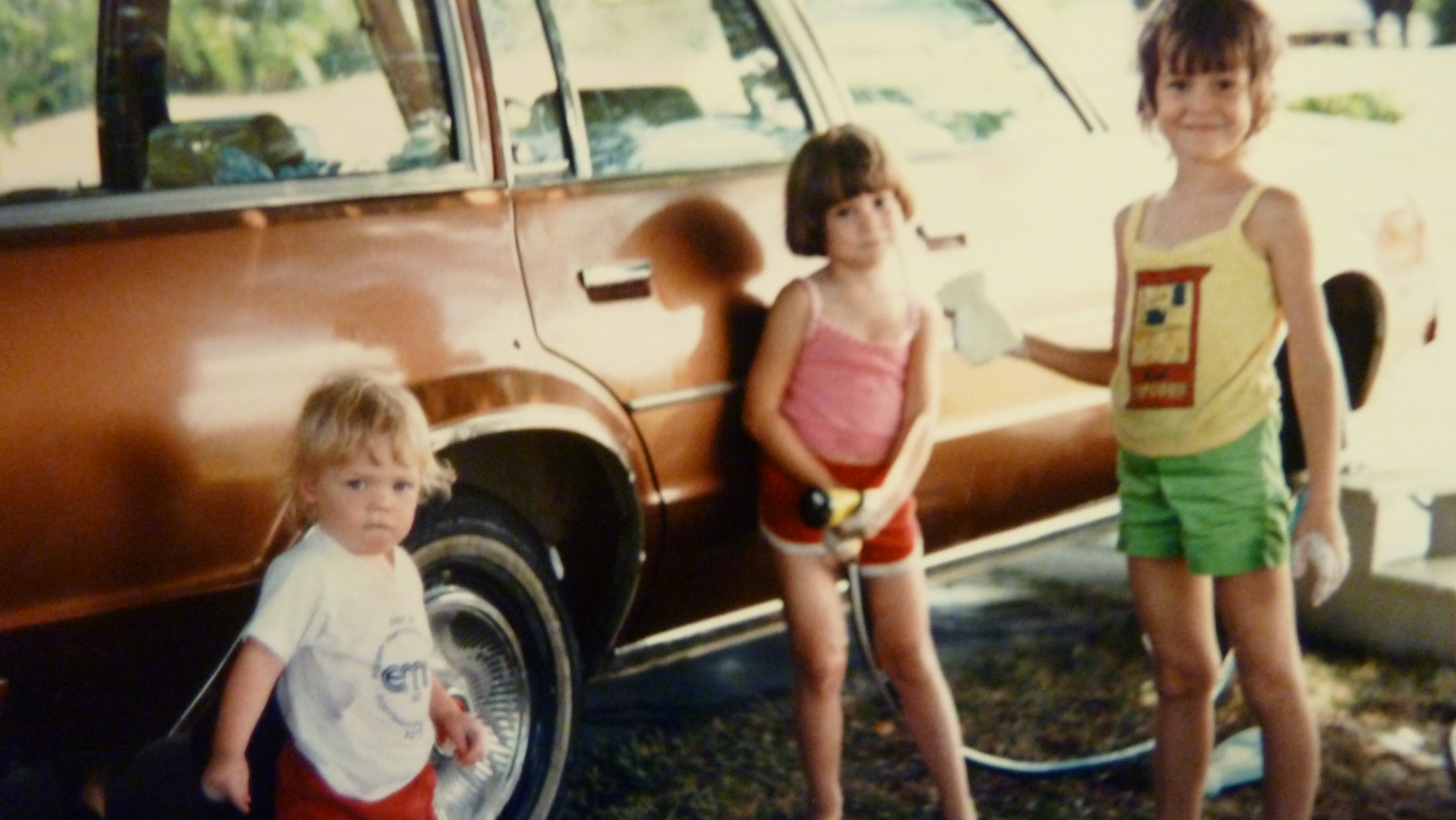 Washing the car, for real.
“Make it your goal to live a quiet life, minding your own business and working with your hands, just as we instructed you before. Then people … will respect the way you live.” 1 Thessalonians 4:11-12
Do you have pictures of your kids working?
I’ve been blogging a little over a year. Ring the bell.

Finding Harmony was launched January 1, 2013. I remember the giddiness I felt when I pushed “publish” for the first time—like I somehow was more in control of my own destiny instead of a distant editor or publisher or company. I could be as brash or as personal as I wanted to be, no one editing over my shoulder. (Wherein of course lies the danger in personal blogs—no one editing.)
I’ve discovered I enjoy it more than I thought I would, like a hobby, instead of knitting or just reading in my free time. It is a new world. I’ve made new cyber friends, received at least one phone call out of the blue from a reader (who it turns out works at the same place as my second cousin, who I only knew in childhood), and am learning the importance of connecting with other bloggers to make even more connections.
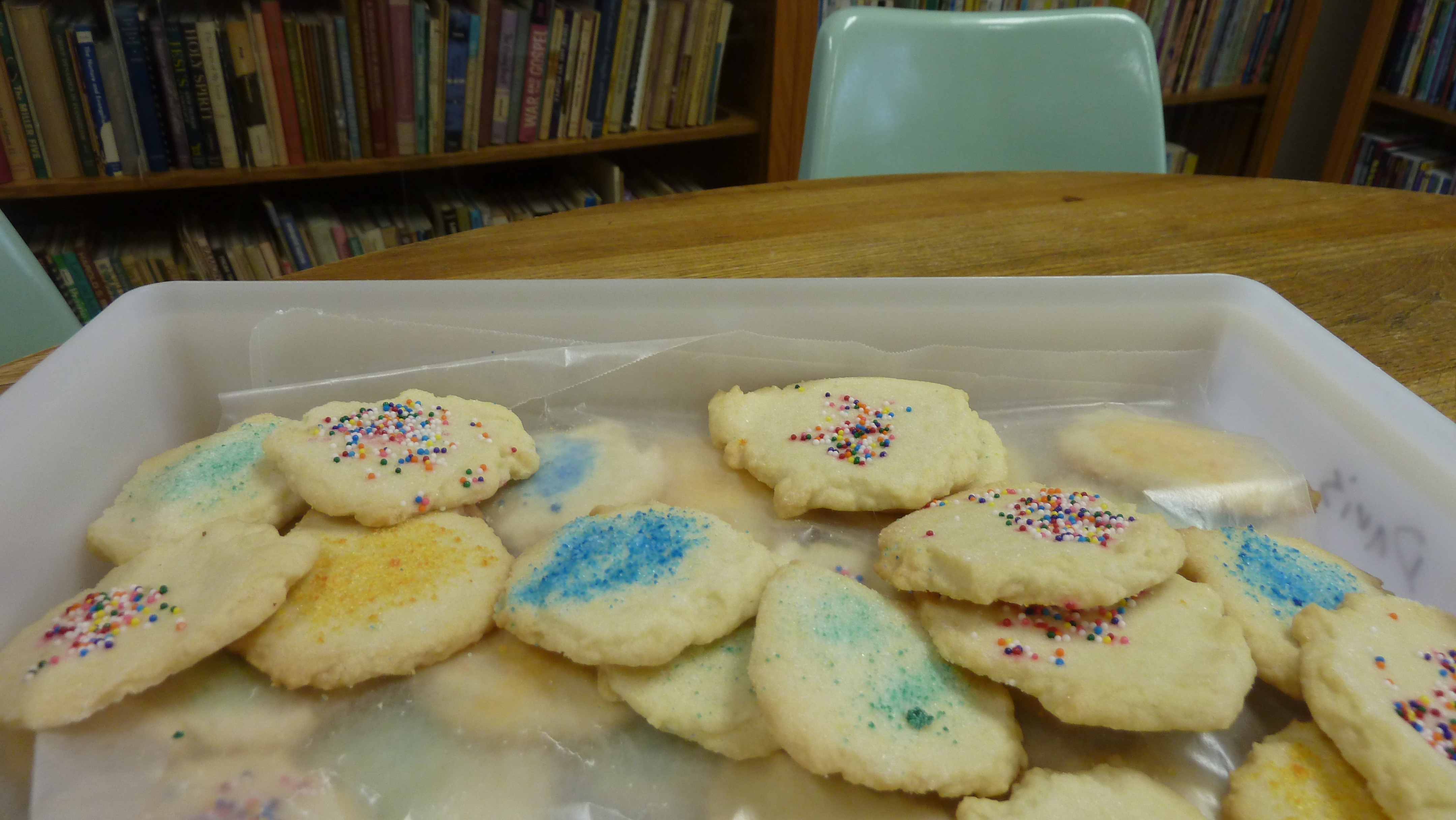
One of the things I’ve enjoyed the most are looking at the stats or statistics, which can stroke the ego or dash one into despair, if you take them too seriously. Occasionally there is a wild surprise, and you hit 10 times your average views in a day, and you never know when one of those days will hit. My top post of the year, not such a surprise and not good news, was one about the suicide of Rick Warren’s son (it was picked up by Mennonite World Review). On a happier note, the ones about the births of my first two grandsons (here and here) were of course popular. The biggest “high hit” surprise for me was a recipe for homemade sugar cookies that mentioned my Mennonite/Amish connections as well as Presbyterian.
Occasionally a stat takes you to another world … to the other side of the world, to be exact. One day, three hits from Northern Mariana Islands showed up, as one of the countries from where someone had viewed/read my blog. What? I’d never even heard of that as a country. A quick look at Wikipedia fills me in as it being a group of islands in the Pacific, where over 90 percent live on the island of Saipan, where my father-in-law served in World War II. A personal connection.
In all visitors from something like 89 countries have dropped by. Most of those visitors probably bounced quickly elsewhere.
The stats climbed steadily and nicely throughout the year, helped of course by my two blog devotional series, one for Lent and one for Advent. Hmm, do I go for another Lent series? Can I keep them original and fresh?
It is also fascinating to see what people use for search terms and end up at my blog. Two posts last winter have brought frequent visitors all year: one was about soaking up the gorgeous and unusual flowers at the U.S. Botanic Gardens (I used the words “endangered plants,” which brought numerous seekers during the year). Another post on a sad farewell to our dear dog, (for whom we fretted many weeks about “how to know when to put a pet down”) turns out to be a frequent question of many other web surfers. It was sad but reassuring to feel that camaraderie.
The top search terms at my blog were:
- Endangered plants (link above)
- Amish homemade noodles (and numerous variations of that, about which I wrote 3 times)
- Stayman apple pie recipe (and variations)
Some search terms I love that were used often enough to show up in year long summary of frequently used terms:
- Why do my homemade noodles fall apart
- Mennonite New Years Cookies (I never wrote on this)
- I am the rose of Sharon and the lily of the valley Mennonite (don’t ask, I have no idea!)
Regarding content, this blog is a mix of family stories, devotional reflections, family type recipes, occasional book reviews, exploration of faith roots (Mennonite, Presbyterian), and, occasionally, tips and inside stories for other writers (from my perspective as an editor myself).
Overall, I’ve found that here, recipes tend to bring the most hits. From my own experience reading other blogs, I feel that blogs that give us useful information (or just help us know there’s another soul out there going through the same thing) are what many of us look for.
So what do you like at Finding Harmony Blog? Take a second to check my simple poll. Or not. I may or may not do more of whatever people like, or I may get rid of things people don’t like.
***
Thanks for following along, whenever and however you do. Subscribing (free) is one of the best ways to keep in touch. Or shoot me an email or leave a comment.
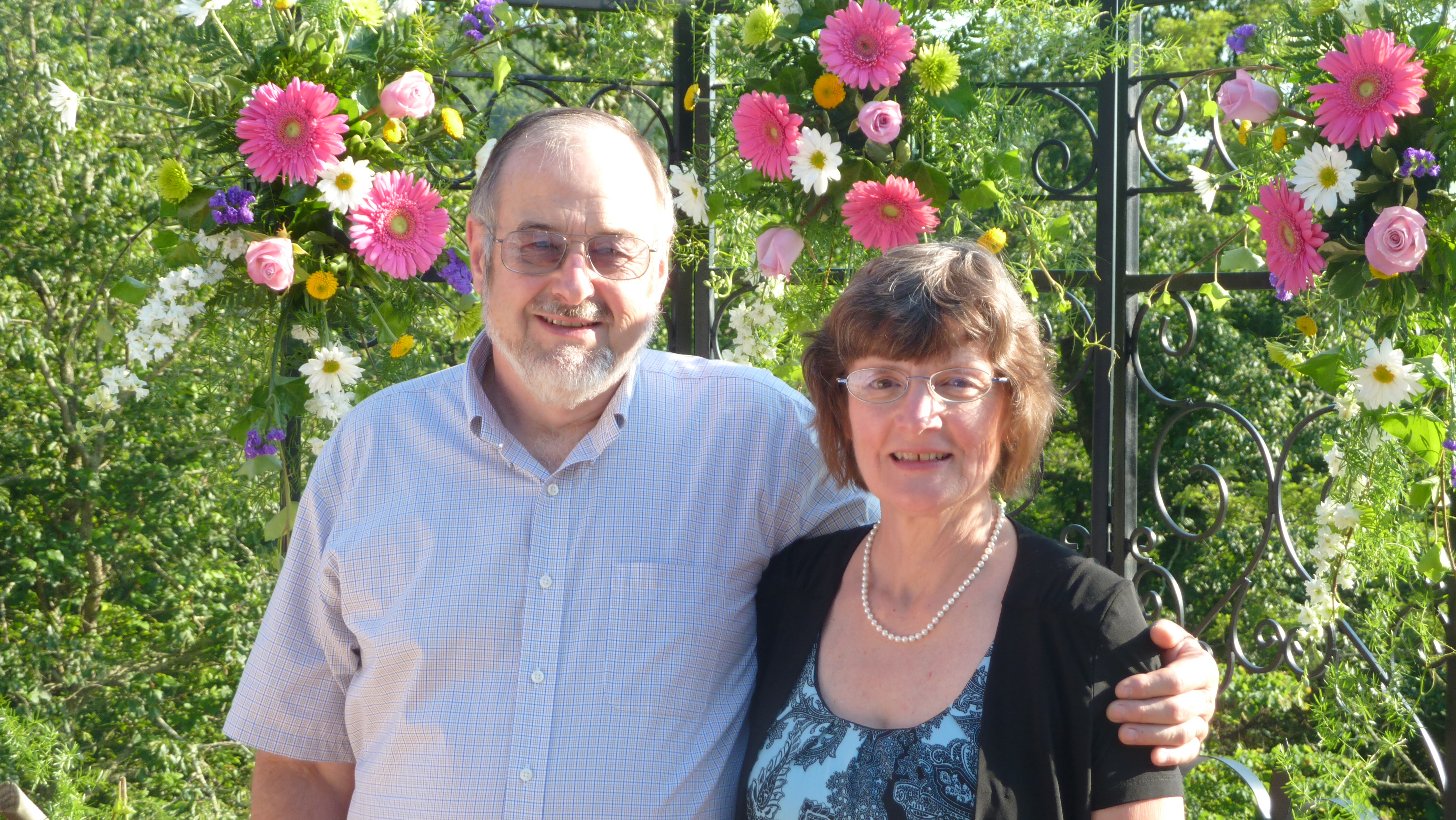
A rare personal appearance on this blog: my husband and me at a summer wedding.
Thanks, Stuart, for supporting me as I share of our lives in this way.

 findingharmonyblog