


How do you decide how many children to have? Many families settle on two, some leave it at one, and we—well I’ll be honest. We really were going for a boy so after having two daughters, we went for the third child.
And ended up with three daughters. Three sisters. It’s a marvelous number, although there are times when I wouldn’t have minded having four. But when there are three, it always makes life more interesting.
My father and mother likewise had three girls, and tried one more time and got their boy. Dad always said it was because he started eating sunflower seeds that he finally got a boy. Did not work for us.
But growing up with two other playmates of your own gender is not a bad way to grow up. A boy and a girl are supposed to be the perfect family configuration but you take the cards you are dealt, right? And if today we had any other configuration: 2 boys, 1 girl; 2 girls, 1 boy; three boys; two girls, one boy; one girl—yada yada yada, I would be writing about what a nice family configuration it turned out to be.
They were and are good girls—now young adult women—and they too treasure their childhood. They recall many hours of creative, inventive play, where they made up their own games and play acting.


Who needs kites on a windy day when you can just use plastic grocery bags? Or scramble higher than the boys climbing trees at church?
But the story that inspired this post is this 1988 picture of the kids diving into one of those fast food ball pits after hurriedly chowing down a burger and fries.

A few years after this photo, when the oldest had grown too tall to actually get into the pit (she was probably barely getting by in this picture), the youngest one was getting bullied by another kid in the pit—lightly pummeled with balls, that kind of thing. We were inside the restaurant and didn’t really see what was going on. But Michelle was standing by and did see. She sauntered over, unfolding her long lean body straight and tall, probably all five feet of her young self. The bully boy stammered upon seeing Big Sister standing by: “uh … er … I didn’t know you had a sister THAT big!” And that was the end of that small annoyance.
I loved it then and love it still.

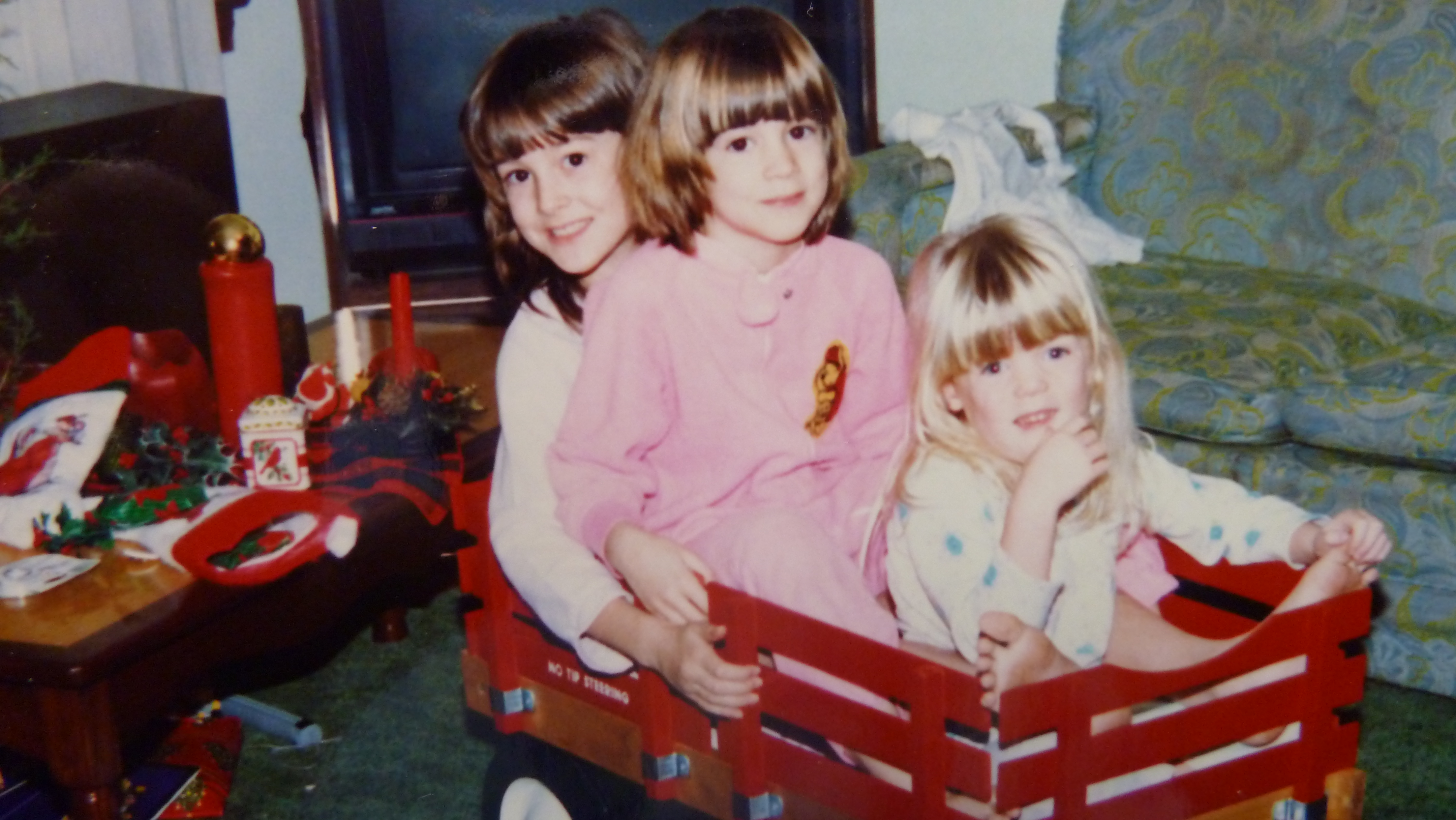

Top: They had to try out new the new toy/book shelves. Middle: Three fit nicely in the new Christmas wagon. Bottom: And even making dorky tourist photos is more fun with three.


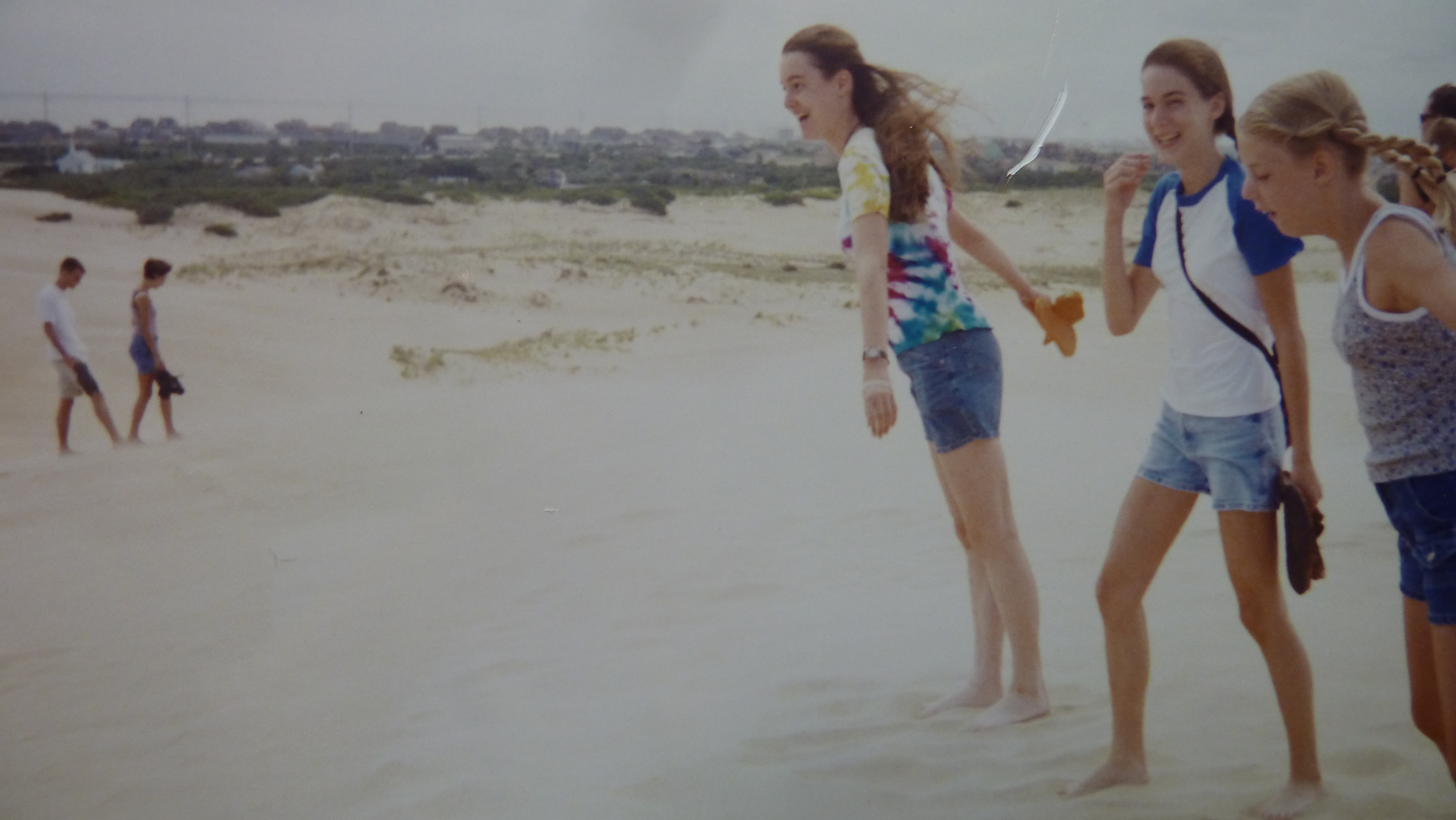
Of course they had their fights, their jealousies, their annoyances. All three rode the same bus, #51, only one year to their elementary school. Bottom: Leaning in to hurricane force gales near Kitty Hawk, NC.
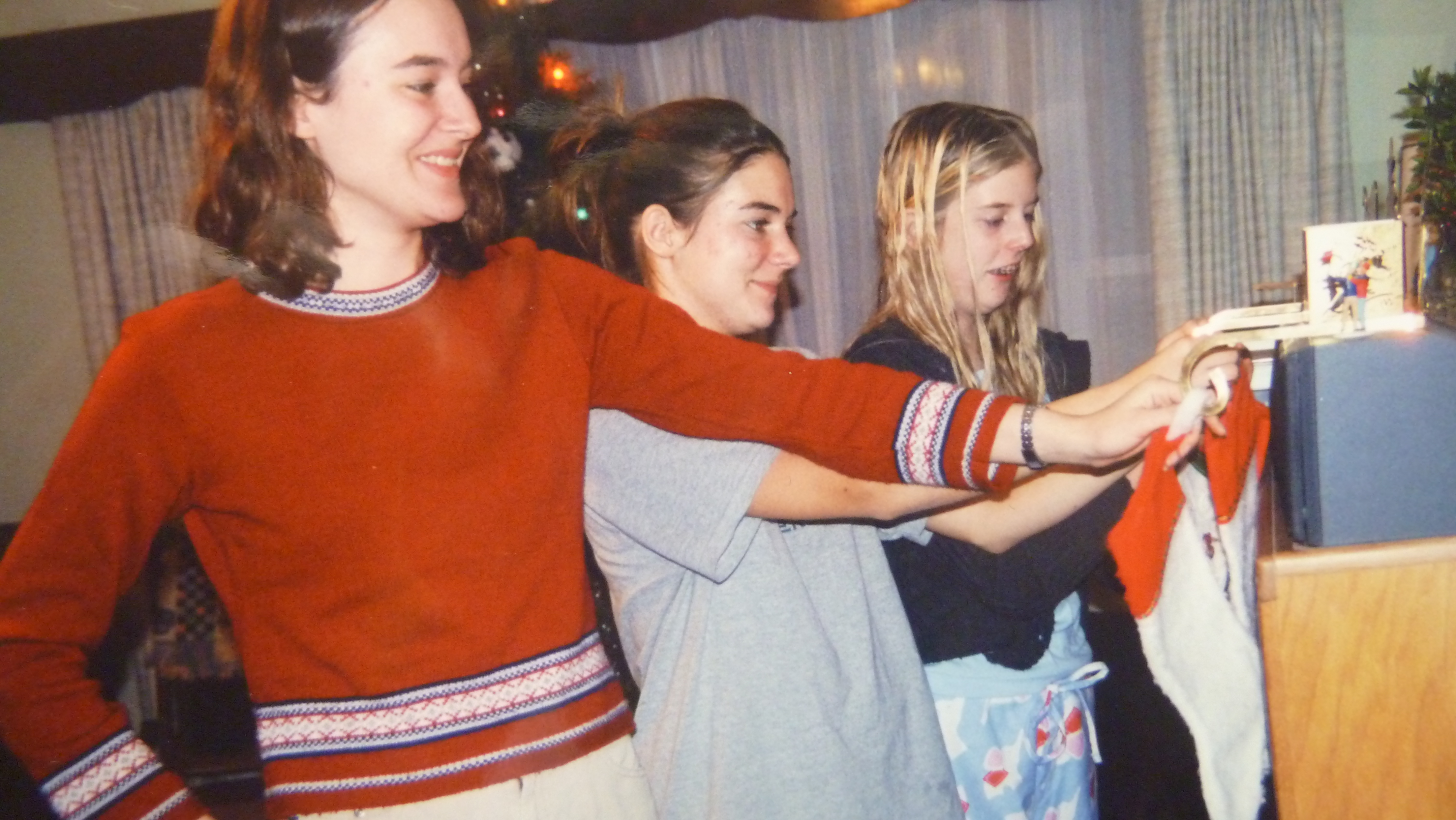

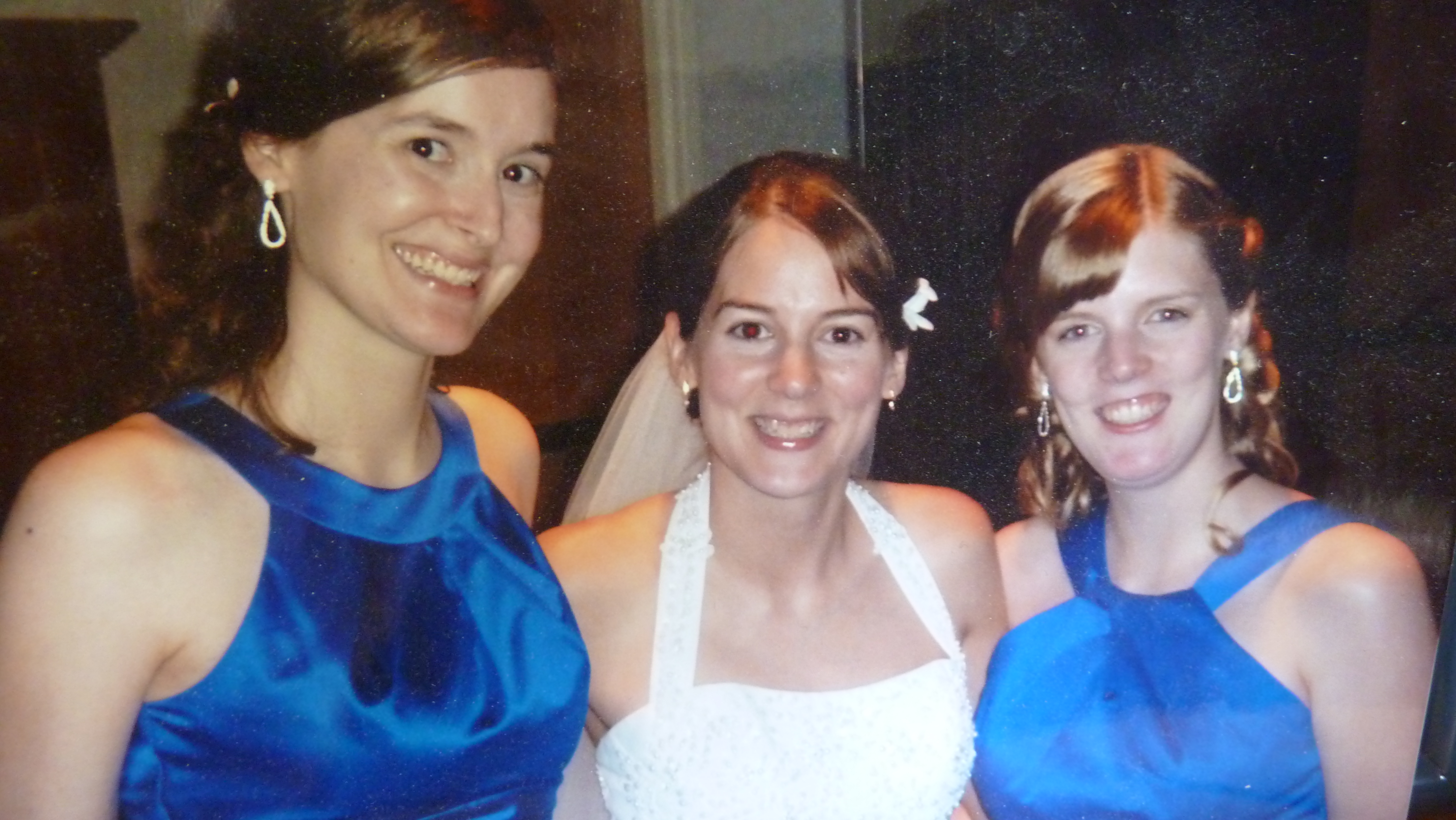
Hanging Christmas stockings is more fun with three. T-shirts found at the Shipshe Flea Market. All grown up at middle sister’s wedding, 2011. Wedding photo courtesy of Richard Davis. (Note how many of my photos have the daughters in the same oldest, middle, youngest sequence.)
So what’s the best size of family and gender mix? I’m glad we didn’t have the chance to choose gender. It’s nice to leave that in All Knowing hands, to Whom we are most grateful.
***
Did you know the gender of your kids before they were born? Would you want to know? Why or why not?
Also check out one family’s extensive photo collection of four daughters and how they recreated dozens of childhood photos as adults.

I once started a wonderful novel. My novelist-daughter-in-search-of-a-publisher kept telling me, “Why don’t you write books people want to read?” To her that means fiction instead of nonfiction. (And if you check her blog, she’s been too busy writing and revising novels in progress that she hasn’t posted in awhile.)

A few of the nonfiction books I’ve written.
I did research, wrote an engaging first chapter (I thought), a fairly decent outline, completed parts of numerous chapters, an ending, a suspense-raising title, a satisfying one sentence summary.
Here was my opening for a story about a wife impulsively leaving her husband and disappearing:
“The thought of just driving off without him was so unthinkable, so bizarre at first, that she really was only bluffing when she put the car in reverse and backed it up. Maybe he would see her back-up lights come on and get the message her patience had once again run out.”
I even received an initial letter of interest from a publisher. Notice I said “letter.” The old fashioned stamp-in-the-corner kind. Deliciously waiting in your mailbox. Heart-racing excitement with the potential for Jubilant Joy or Utter Dejection all rolled into one.
Today we get emails. I told my office buddies recently that I enjoy shutting down my email box for an hour or two in order to have focused work time because then you get to open it back up and see everything that cascades in and you never know when there is going to be Really Good News pouring in.
Mostly not, but you never know … the same way that there used to be potential for an Important Piece of Mail from a Publisher or Editor mixed in with all your junk mail.
But the “letter” referenced above should give you a clue that I started the novel in another era. Then I put it on the back burner while pursuing other projects and eventually I realized my plot was entirely totally implausible because of one thing.
The ubiquitous omnipresent cell phone that everyone everywhere has on them all the time. Rendering the rest of my story as unmarketable as a rotary phone. Unless you completely rethought and rewrote the entire plot (which you do A LOT when you write a novel) and then I’m not even sure it would have been possible for me.
This of course is not a new issue. 8-track and cassette tape references being a well known example.
But this is just the tip of the iceberg and there’s a whole lot more I would need to learn about novel writing than a strong opening paragraph.
Moral, if you have a wonderful idea for a book or story that feels like 2013, don’t wait until 2014 to get it done. Or do like my daughter, set your stories in an era of your own choosing, a world of you own creation. Or write something historical.
The same mantra relates though to any writing for publication. I get many submissions to Living that have been published before (and no, we don’t use any fiction). Knowing a piece has been previously published always speaks to an editor (seriously): Wowsie, if five magazines already thought this was good enough to publish, perhaps I should give it serious consideration. However, if the publication dates are 1975, 1988, 1991 … it is most likely going to feel stale unless it’s been given a severe update.
Of course there’s help galore out there for novel writing, now more than ever, if I ever decide to get around to it.
Probably the only thing out of my novel that will ever be published is the opening paragraph in my own blog. Impressive. The End.



Will she ever keyboard the great American novel? Shelves of some of my favorite books.
If you are a writer, do you have a novel-in-progress? Have you ever run into an unfix-able deadend?

I’m taking a much-deserved (I hope) post-Lent-Easter recess but will be back with a post for Writer Wednesday and Bake Something Saturday. And who knows what else.
Even my grandmother, Ruth Stauffer, sat down for a rest now and then.

Catching my breath,
Melodie
Verse for reflection: “Impress them [God’s commandments] on your children. Talk about them when you sit at home and when you walk along the road, when you lie down and when you get up.” Deuteronomy 6:7
Are you like me in that you always think other families are so original and creative in coming up with traditions and rituals that are theirs alone?
When I hear about families, for instance, who have a traditions of no TV on Saturday morning, and they sit around in bathrobes playing Scrabble and Monopoly drinking hot chocolate—it makes me feel my family would qualify for Disintegrated Family of the Year Award. When, I wonder, do such families do their cleaning or other chores? Or, don’t their kids play soccer?
I admire families from my church who use a special red plate for dinner for anyone in the family who brought their grades up, had a birthday, won an election, got promoted, but we never quite got around to adopting that.
My mom always served the same meal for Saturday night supper: hamburgers, celery, chips and ice cream. We rarely went out or had company that night. It was always hamburgers. And we loved it! Once in a while maybe sloppy joes, if we had eaten hamburgers in the middle of the week. That may sound boring, but the memory still stirs wonderful, family-togetherness feelings. I used to lament that I couldn’t quite get our own family into that routine, because with both my husband and me working, we would often go to town Saturday night or have company, because that is when it suited us.
Counselors say that family traditions help to create a healthy family—they give us an identity separate from other families and help us feel good about our own family. It doesn’t matter what it is—someone else’s tradition may not work for you, but naming things you are already doing as “our tradition” can end up being something special for your family.
For instance, I’m not sure when I started it, but it may very well have been for Easter that I concocted quickie sweet rolls (below) by using a can of prepared plain refrigerator biscuits. Some people stick up their nose at using this kind of convenience food, but this has become something my children (and now two sons-in-law), look forward to at our house.
Some traditions make Paska buns. I love the Mennonite Girls Can Cook (mostly Russian Mennonite) tradition. And this week I read a delightful story about how one of the women used to barter out homemade biscuit sweet rolls (similar to mine below, except the biscuits are homemade if you like that idea better) out of her lunch box! Love it!
Easter is certainly one of those times when we treasure rituals and traditions—dying eggs, hiding and hunting them. Just remember to name them and talk about them with your children and they become “your tradition.”

Davis quick sweet rolls
1 small can (5) biscuits
3 Tb. melted butter or margarine (use about 2 Tb for rolls, reserve 1 Tb for frosting)
½ c. brown sugar
1 tsp. cinnamon or to taste
Frosting
2/3 c. powdered sugar
1 ½ tsp. milk or half & half
1 Tb melted butter (left over from rolls)
Spread the biscuits out flat with your fingers.

On a cutting board or bread board, make one big flat piece of dough by pinching the edges of the biscuits together.

Spread melted butter, brown sugar, and cinnamon on the dough.

Roll up the dough, slice into 5-7 pieces. Place close together in pan, even if you only use half the pan, so the rolls rise up together and keep their sides from becoming baked and hard.

Bake for about 10 minutes, watching closely. Remove from oven and take them out of the pan right away (or the brown sugar goo gets hard in the pan.) Put them on a serving plate. Top them with a simple frosting.

Frosting is best if it is on the runny side, to drizzle over the warm rolls. Serve warm.
For the two of us, I use a small can with 5 biscuits, but for more in the family, use a can with 10. When our family of five was all home, that was plenty without being too much. They are best eaten warm—they are not so good made ahead or served later.
***
For more recipes from my kitchen see Whatever Happened to Dinner: Recipes and Reflections for Family Meal Time; the publisher has a sale going right now of 30 % off on this book (almost 100 recipes) and all Mennonite cookbooks until May 8, 2013, including both of the Mennonite Girls Can Cook cookbooks.
Verse for reflection: “God is actually not far from any one of us; as someone has said, ‘In him we live and move and exist.’ It is as some of your poets have said, ‘We too are God’s children.’ “Acts 17:27b-28
It was Easter. Our minister, Ann Held, gathered the children for the children’s sermon. Sometimes grown ups—even those of us who should know better, ask some awfully dumb questions of children in such settings.
And then sometimes the children surprise you, even children you taught in Sunday school who had to be put in the hall because they didn’t want to cooperate.
The minister asked, “What is a symbol of being a Christian?”
Steve, one of my former hall-sitters, had a good answer. “The cross.”
The minister went on, “And why is the cross a symbol of being a Christian?”
Steve came right back. “Jesus died on it.”
“That’s right, to show us God’s love, Steve,” the minister added.
“And now he lives in our hearts,” Steve added brightly.
The minister was clearly taken back. “Well, there’s the sermon,” she said smiling. “That’s very good. We can all go home.”
I felt myself tear up. After all of the times I had sat with Steve out in the hall when he was not behaving “appropriately,” somehow Steve had learned—from his mother or father probably, but also from us at the church, the heart of the Bible teachings.
My husband and I taught a Sunday school class of 10 third through fifth graders one year. We studied some of the stories Jesus told as recorded in the book of Luke. They may be stories or parables, but they are not necessarily easy to understand. In this story (Luke 20:9-19) a landowner planted a vineyard, rented it out, and then went away for a long time. The owner first sent a servant to the vineyard to get some of the fruit; he got beat up. The owner sent another servant, who was beaten, and another, and finally the owner sends his son. The tenants kill the son. I asked the children, “So what do you think this story means?”
To which wise William quipped, “Don’t rent out your vineyard.”

Children in one of my church school classes act out a scene from the Bible.
The answer I was probing for was of course the Easter story. The landowner represents God and the servants represent the prophets through the Old Testament period, and the son is Jesus. It was a story or parable told by Jesus which enraged the leaders of the day and they began to look for a reason to arrest him. This directly led to his death which we commemorate on Good Friday. The moral of the story is that even though Jesus was sent to a specific land and people, his message is for everyone who will believe.
Sadly, too many of us today hardly know these stories or their meaning. Our children are shockingly illiterate when it comes to the Bible (and I’m sorry to say I have to include my own. We didn’t do as good of job teaching them the Bible stories as we could have).
But in spite of us, or maybe because of our church’s efforts, and the teachers and youth group leaders and choir directors and grandparents who sacrificed their precious time to be there for them, or the grace of God, their faith survived intact.
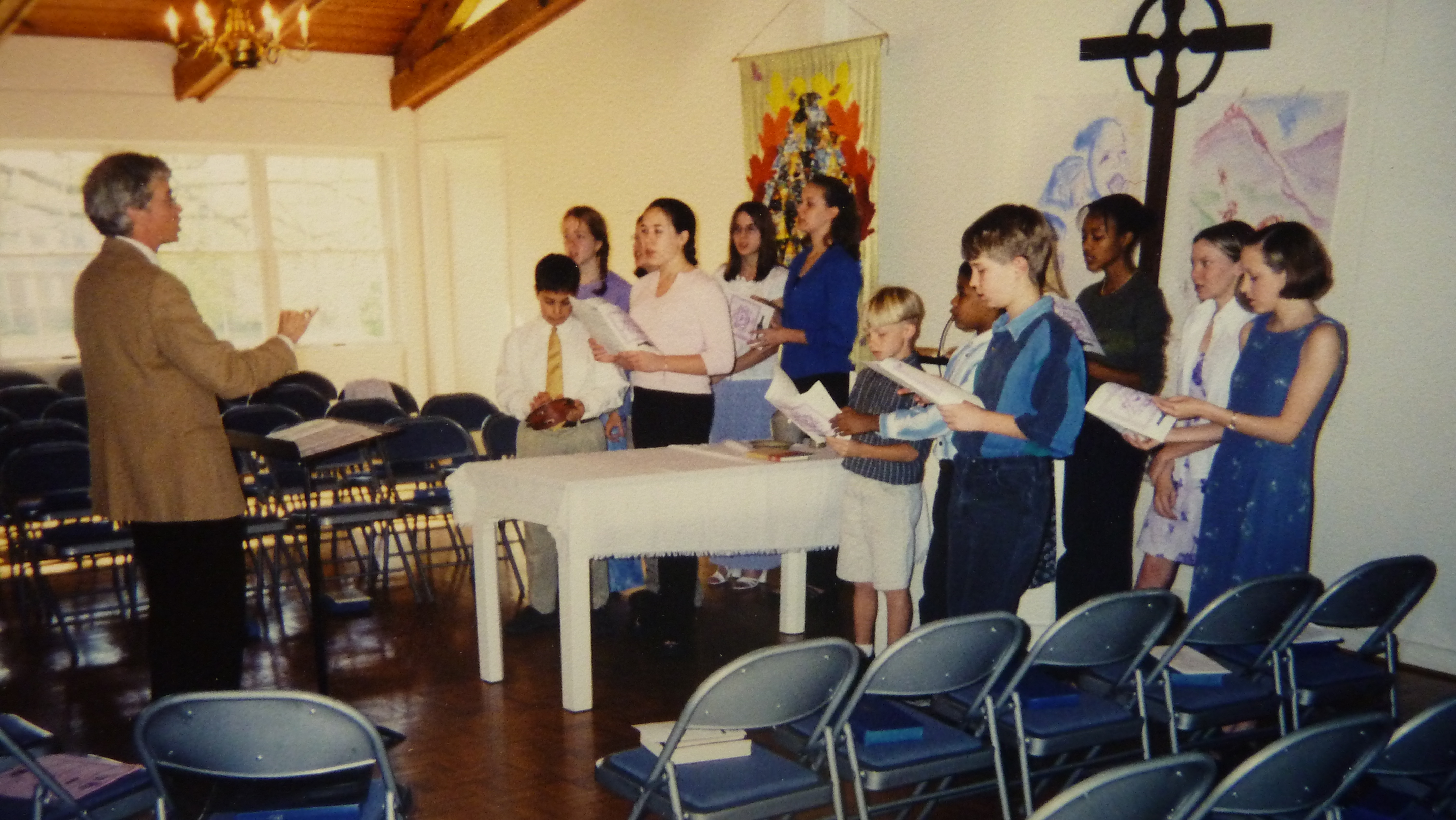


Scenes from our church’s ministry with children: youth choir/youth Sunday, house church meeting , the annual Easter egg hunt at church
I will call or text them on Sunday morning, “Christ is Risen!” And they’ll say/text back, “He is risen indeed!” Thanks be to God.

(Yes, I have too many saved messages on my phone. Only the special ones.)
***
Adapted from the Another Way newspaper column, a ministry of MennoMedia, which also produces awesome children’s curricular materials, used by Mennonites, Church of the Brethren, United Church of Christ Canada, Cumberland Presbyterian (denomination), Episcopalian, Lutherans.
Verse for reflection: Jesus said to Judas, “Hurry and do what you must!” None of the others at the table understood why Jesus said this to him. Since Judas was in charge of the money bag, some of the disciples thought that Jesus had told him to go buy what they needed for the festival, or to give something to the poor. Judas … went out at once. It was night. John 13: 27 b – 30.
Do you remember the 1971 rock opera, Jesus Christ, Superstar? I got to see it in London, 1974, on a spring break while on my junior year in Spain. But I hadn’t really listened to the music much until driving three hour jaunts to pick up my daughters at college; it became a favorite CD.
I recalled that some churches criticized the musical/opera in the 70s because it doesn’t include the resurrection of Jesus, and because of worries that Jesus’ relationship with Mary Magdalene was hinted to be more than that of a good friend. Indeed, I had forgotten that it was deemed so controversial at first that only a recording was made; later it went to stage and then finally to movie.
But the music masterfully brings the life and thought of Jesus into public thought, confronting people with the facts of Jesus’ life. This is a service in itself, given our times when many folks know too little biblical history. It also allows viewers to make up their own minds about Jesus—which is what has to happen anyway in matters of the heart.

The opera focuses on the last seven days of Jesus’ life as seen by one of his followers, Judas Iscariot. Judas is the ultimate bad guy: rarely do you hear of anyone today who has named his or her child “Judas” or “Iscariot.” On the surface, Judas betrayed a friend and a good—even sinless—man, Jesus. What a loser Judas was; he deserves our scorn.
Yet I’m afraid many of us would have been just like Judas—a little mixed up and confused about who Jesus was and what he was trying to do. Judas was, after all, a disciple; he was part of the gang. He initially was attracted to Jesus and his teachings, and loved him enough to be one of Jesus’ faithful 12 followers.
I think that Judas sincerely thought that Jesus was making a big mistake and was trying to stop him. I wrote a little about that disillusionment here. The fact that Judas gave back the 30 pieces of silver that he received for betraying Jesus, and then took his own life, shows us the depths of the remorse and anguish that he felt.
The conflict as portrayed in Jesus Christ, Superstar is of course purely the imagination of the writer, but lyricist Tim Rice has Judas sing:
“Listen Jesus, do you care for your race?
Don’t you see we must keep in our place?
We are occupied
Have you forgotten how put down we are?
I am frightened by the crowd
For we are getting much too loud
And they’ll crush us if we go too far …”
Put yourself in the disciples’ shoes. A teacher you respect and admire because he is so wise and warm and who helps everyone he comes in contact with, slowly lets you in on a bigger secret: he is also the Messiah, the son of God. Who of us wouldn’t jump back and say whoa, you have illusions of grandeur. You’re starting to believe your own press. Maybe you’ve been running around in the desert too long. Who is this guy, anyway? Cult leader? Maybe I’ve been mistaken in hanging around with him.
And here we are, almost 2,000 years after Jesus’ death, still pondering the meaning of it all. People today still have trouble with the Son of God part. We are still thinking like Judas. We are still thinking like Peter, who, when it counted, swore he didn’t know Jesus.
Action: Forgive me, Lord.
***
Third Way Cafe website has some pages of different ways of looking at Jesus, or for more facts on the historical Jesus.
Photo acting out crucifixion courtesy of Stuart Miles FreeDigitalPhotos.net
Verses for reflection: Happy are those … who find joy in obeying the Law of the Lord, and they study it day and night. They are like trees that grow beside a stream, that bear fruit at the right time, and whose leaves do not dry up. They succeed in everything they do. (Psalms 1: 1a, 3.)*
In the middle of winter, 2002, I walked into my office. The philodendron plant that I loved and nurtured for 30 years had totally withered. It looked completely dead. It wasn’t just wilted. The leaves had turned brown and wrinkled: grave-yard dead.
I was pretty upset. This was a plant that, a day before, had been vibrant, probably full of hundreds of leaves and myriad vines. I know it is just a plant, but when you’ve had something for 30 years, and it as alive and growing, it is almost a part of your life. My father bought it for my very vacant dorm room when I began college because he thought the room needed a “homey touch.” Those were the days when you arrived at college with only a trunkful of belongings.
The plant had gone through a previous “molt” or “almost-dead” time. But this time it was especially ominous to me because a couple days earlier, my mom had called at 7:30 a.m. and said, “I don’t have good news.” You wake up fast when your mom starts off a phone call like that. But Dad was just in the hospital, and they thought he would be okay if they put in a pacemaker. I’m not superstitious, but the timing with the plant looking limp seemed a little unusual; a little like E.T.
The housekeeper for our building, Doris, who usually waters our plants, was equally bewildered and upset about my plant. She had not changed anything in its care. We debated: too much sun, not enough, too much heat, too much water? I delayed taking off the dead leaves for a couple days, wondering if they would rejuvenate. Finally, sadly, I started cutting all the dead leaves away. I removed everything but two small leaves that still appeared to be a little green. The other vines I cut back to stumps. They looked dead.
But you can guess the rest of the story: soon new leaves appeared, and then one day I noticed fresh green shoots out of the brown little stumps. It was exciting! Doris and I rejoiced together. The new shoots seemed to grow a quarter of an inch overnight. I also found a very gross fungusy-looking thing, and wondered if it could have caused my plant’s sudden near-death episode.
It was great watching my plant sprout new life. The plant had been stripped of everything superfluous: I could see shoots and leaves I never saw before in the thick undergrowth. Its new life gave me hope.
It made me think of the legend of the phoenix, or the not so legendary butterfly, which goes through a similar cycle. A lowly caterpillar lives out its existence, plodding along the earth. Then one day it spins a chrysalis. For all practical purposes, it dies. Then another fine day, it emerges from the chrysalis to become a gorgeous butterfly, freed from its humdrum, plodding, earthbound existence.
We also think ahead to Easter. If the caterpillar can change its form from worm to butterfly, why is it so farfetched to believe in the resurrection? Why can’t there be a real heaven, where we will surely have changed body forms? Why is it so hard to imagine ourselves flitting about like butterflies or angels? Who knows?
P.S. The pacemaker kept Dad nicely ticking another four years. And now he lives in a much better place. And the plant, well take a look.

The philodendron from Harrisonburg’s Woolworth store, originally purchased in 1971!
Action: Never give up hope. When all is brown and withered and depressed, maybe we just need to prune our lives back to the essentials.
***
*Psalm 1 was always one of Dad’s favorite Psalms. I can hear him reciting it from memory.
Verse for reflection: [James and John asked Jesus]: “When you sit on your throne in your glorious Kingdom, we want you to let us sit with you, one at your right and one at your left.” (Mark 10: 37)
Several years ago traveling to Newton, Kansas for some meetings in the Mennonite offices there, I stayed for two nights in the home of a former colleague whose son, Ethan, was four years old at the time. While his mom and dad were upstairs getting ready for their job, Ethan and I were finding our own breakfast.
Ethan proceeded to show me the cupboard with various boxes of cereal in it. There he found a new box of cereal with blueberries featured in the attractive bowl of cereal on the front.
“Ooh, this cereal has bwo-berries.” We both thought that sounded good so we got our bowls and carried them to the table.

Of course, when we opened the box, there were no dried up little blueberries (as I thought there might be). “No bwo-berries,” he said disappointed. I felt badly. Here I was the adult with how many years of experience with all kinds of boxes that pictured much more than they ever delivered, and I hadn’t prepared or warned him. To Ethan’s (and his parents’) credit, he got over his disappointment quickly and ate the cereal anyway, and I was reminded of how literally children take things and how often it sets them up for disappointment.
I remember one of my big disappointments as a child. I had two sisters and one brother. Mom and Dad announced there was going to be a surprise for everyone.
My two older sisters shared one bedroom; I slept in a room that served as the hallway, and my brother a separate room. When a furniture truck drove up with a brand new bedroom suite, we were all very excited. The deliverymen proceeded to carry the items up our stairway–all going into my sisters’ room. What was there for me? Or my brother?
I remember finally spying a momentarily-forgotten thin box in the stairway, waiting to be taken upstairs. I told my little brother, “Maybe this box is for us.”
But no. A quick peek revealed it was the mirror for my sisters’ bedroom suite.

Eventually, of course, the bedroom suite was “mine” too after the oldest went off to college, and eventually it was all mine when the second one left. The lesson that stuck with me was never try to tell your kids that a surprise would be for them if it isn’t.
So what does this have to do with Palm Sunday and the week leading up to Easter?
On Palm Sunday, Jesus was greeted as a king after a great victory. His disciples must have thought he was finally getting ready to step forth and lead a revolution (some hoped) against the crushing oppression of the ruling Roman empire in their country. The day before the triumphal entry into Jerusalem they were arguing about who was going to sit on Christ’s right or left in the Kingdom, and while Jesus answered talking about his heavenly Kingdom, clearly the disciples did not yet understand what lay ahead for Jesus or themselves.
By Thursday when Jesus ended up being betrayed and arrested, then tried and crucified, we know his followers were not only devastated and horrified by this sudden, violent turn of events, but deeply disappointed for all their own hopes and dreams for the future.
Thank God the story doesn’t stop there! The masterful preacher S. M. Lockridge once said in an eloquent sermon, “It may be Friday, but Sunday’s coming!”
As we begin this Holy Week, walking alongside (in our imaginations) through the tragic and difficult experiences of Christ’s final week of life on earth, we can keep in mind the God who offers consolation, hope and victory over all of life’s disappointments, big and small. Even death has lost its sting when we know that ultimately there is life beyond the grave.
Action: When disappointments and discouragement loom large this week, focus on Christ’s heavy walk toward the cross. Allow the power and love of God lift you to peace and joy.
***
Adapted from Another Way newspaper column, first published March 2008; archives of columns here.
Verse for reflection: In the beginning was the Word, and the Word was with God, and the Word was God. He was with God in the beginning. John 1:1
It was one of those statements that seem wise and psychologically sound but when you stop and think about them are just plain silly.
Our two-year-old needed tubes in her ears for chronic ear infections. For a child, this requires an outpatient hospital procedure under anesthesia. While coming out of the anesthesia she was crying, moaning, feeling awful like you feel when caught in that land between consciousness and unconsciousness.

“She’ll be all right, Momma,” said a kind and well-meaning nurse as I attempted to comfort Doreen. Doreen kept on crying. “She’s just mad; she mostly feels insulted; the only one she feels safe to take her anger out on is you, Momma,” the nurse continued. She implied that once Doreen got the anger out of her system, she’d be all right.
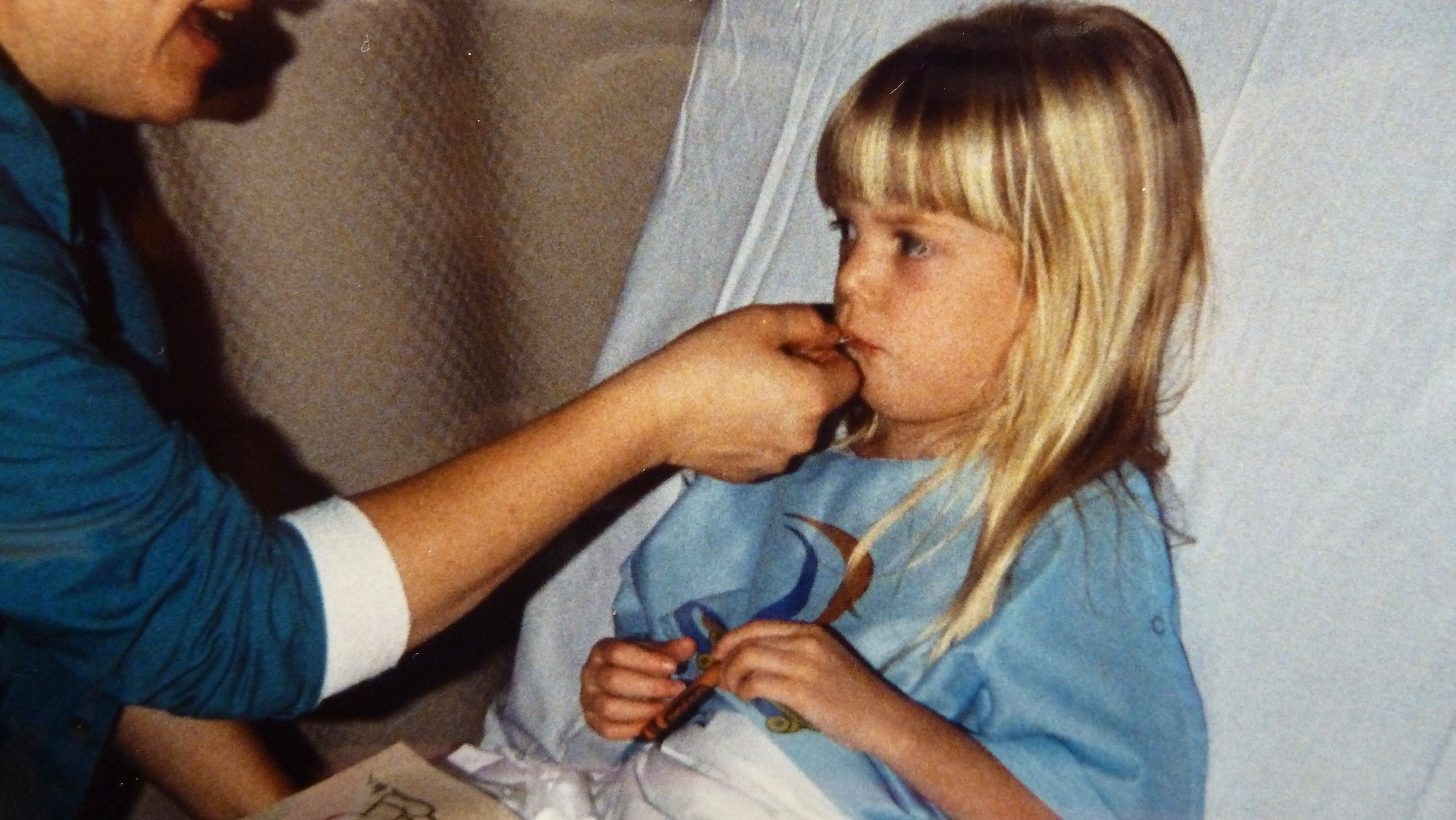
(These photos are actually a 2nd eartube event when Doreen was four, not two.)
I wished this woman who was old enough to be my mother would stop calling me “Momma.” But aside from that, I smiled vaguely, recognizing the “anger” idea from some ancient psychology text I’d studied.
After Doreen had thrown up and felt good enough to start eating dry crackers, I started realizing how inane the advice really was. Doreen wasn’t angry—at Momma, the doctor, or anyone else. She was just feeling rotten because of the anesthesia. Once she got that out of her system, she was soon as good as new.
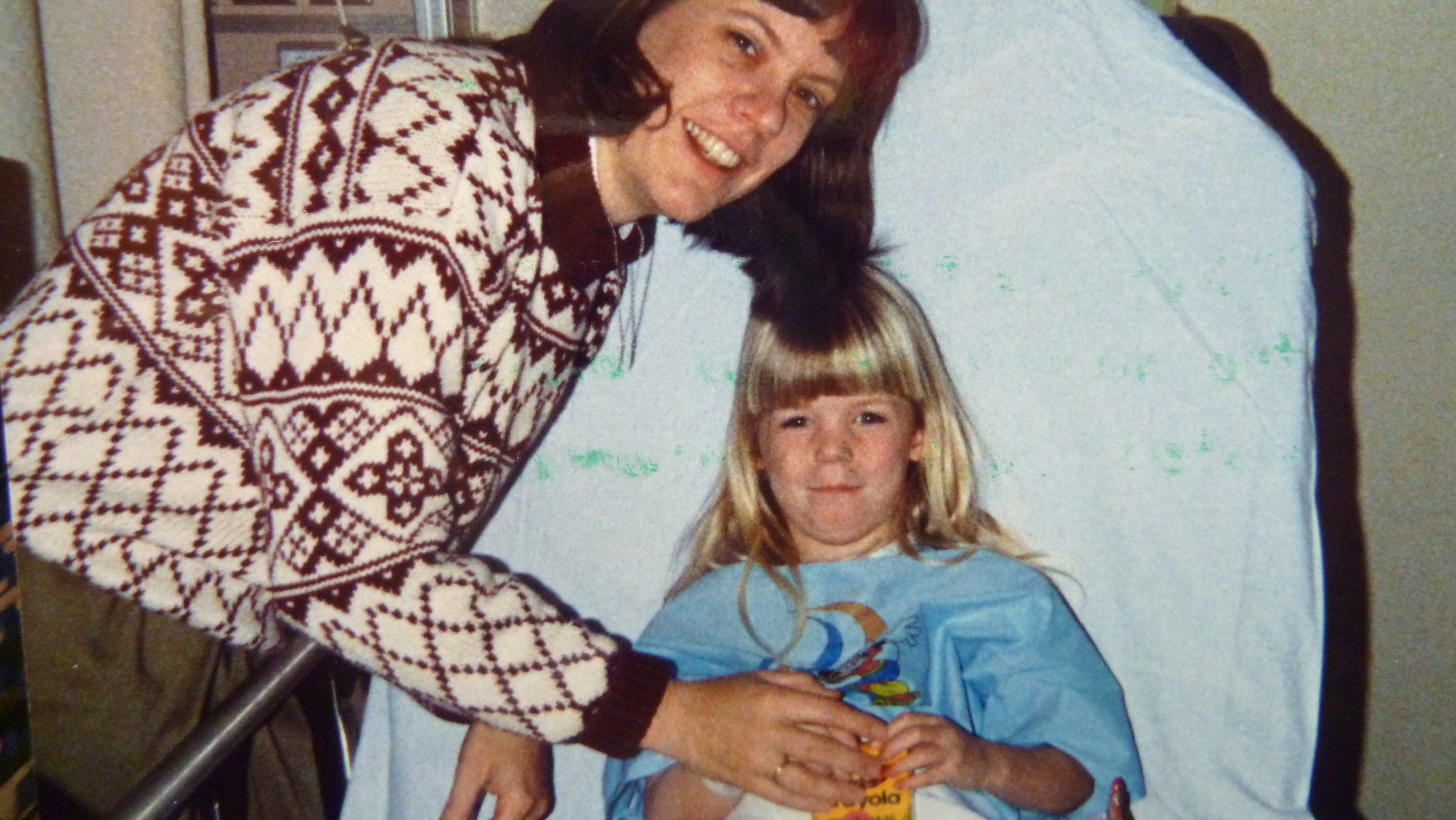
(Our pastor, Ann Held, checks out the happy patient–before surgery.)
How quickly we succumb to the god of the latest trend. And I’m the worst of the lot. If somebody tells me playing Beethoven for my child in the womb will make her a musician, I rush to plant headphones on my abdomen. (No, I didn’t but I’ve done things just as outrageous, and I ended up with a musician anyway, and a couple of real music lovers, thank you very much.)
If career advisers tell us we’ve got to network to advance our careers, get on Linked in, we join up. If the trend is spiritual retreats with a spiritual adviser, we schedule them in our appointment books, forgetting that a good old-fashioned day in the woods or a hike up a mountain could serve the same purpose.

One family counselor said she can always tell what has been discussed on TV talk shows in a particular week because her patients bring up whatever problems were featured—the malady of the week.
I’m not knocking good psychology or listening to classical music while pregnant or networking or spiritual retreats. It’s just that too often we rush to adopt the latest trend without saying, “Wait a minute, what is really going on here?”
“Vanity, vanity,” sighed the writer of Ecclesiastes long ago. “All is vanity. There is nothing new under the sun.” (Eccles. 1:2-9, paraphrased.)
It’s comforting to know that God is not exactly trendy. God just is.
Action: No special action required today. Just be and plan to enjoy your weekend.

Mom and daughter doing just fine.
Verse for reflection: The fear of the Lord is the beginning of wisdom, and knowledge of the Holy One is understanding. For through me your days will be many, and years will be added to your life. Proverbs 9:10-11
A number of retired people used to volunteer in our office basement to assemble by hand the tens of thousands of colorful desk calendars Mennonite Media sold every year for churches to distribute in their communities.
One volunteer was going slowly up the stairs. I was coming up the stairs behind him. He paused with his hand on the rail to let me pass and quipped, “You’ll have to excuse me, I’m in the truck lane these days.”
He was God’s special messenger to me that day, making me think about my life and how I was living it. His smile seemed to say he was enjoying life in the truck lane, but I know that is not the case with all retirees.
When I first shared this story (written for my newspaper column, then included in my Why Didn’t I Just Raise Radishes book, 1994) retirement stretched in the distant future. I was in the midst of raising three daughters.

The name for that book, in case you’ve wondered and don’t know, comes from a Sesame Street book where Cookie Monster frustrates another character so severely that at one point the character just exclaims, “Oh why didn’t I just raise radishes!”

These days my siblings, in-laws and friends are certainly talking about retiring, and some have already moved over to that lane. I frankly have very mixed feelings about it, and part of my mixed feelings come from our culture’s emphasis on youth and staying young. Think about it: if we grew up envying those able to enjoy life from a “slower” lane, moving to retired status wouldn’t be so difficult. If we weren’t so wrapped up in our jobs as part of our identity, than maybe getting to the stage of moving on from paid employment wouldn’t be so difficult.
Instead of the volunteer apologizing for slowing me down on the stairway, I should have been apologizing to him for rushing by him, lost in my own busyness.
Not all retirees live at a slower pace, for sure. Dene Peterson, founder of a co-housing community in Abingdon, Va., calls it the production model of aging: “We think, ‘I’ll never get old; I can keep doing everything I’ve always done.’ It’s not a model for old age, it’s a model to stay middle-aged the rest of your life!” She says that what happens with that model is that you stay healthy, which is good, but you’re not ready for the dysfunction when it occurs. (From MennoMedia’s Embracing Aging documentary.)

(Although retired from farming and partially disabled, my Dad always found a way to get things done.)
Certainly there are financial worries, and it is good to have good help preparing for the financial end. They are worries about physical and mental limitations. A simple thing like not being able to drive at night curtails many activities and meaningful involvements.
I suppose part of the human condition is always envying others. As I rush to work, part of me wishes very much to be in the truck lane of retirement. Another part of me knows that when I’m seventy-five, I’ll look wistfully at people hurrying to work or harried mothers shopping with their little “radishes” and wish I could go back in time.
As the Proverb implies, there is no virtue in just adding years to your life; add life to your years.

Action: This 35th day of Lent, focus on enjoying your life in the present. Jesus says tomorrow’s worries will take care of themselves. Or, if you’re really not enjoying your life, look at ways you can make even small changes so that you can.

 findingharmonyblog