

February 20, 2024
Papa’s Precious Philodendron
Someone else’s post (online) dredged up a long-ago memory that today still holds office in my laundry room. More on that in a few minutes.

In our family, Dad was the flower lover. He was not only a farmer but a flower and plant person who would bring in flowers and urge mom to put them in a vase, or, when I was old enough, he’d hint for me to do that. Usually, you think of women or Moms or grandmas going to the trouble to cut and arrange flowers in a pretty vase. Oh, Mom did it occasionally, but when I got old enough, either me or one of my siblings were entrusted with the fun of surprising mama with a pretty bouquet on her table. From Dad.
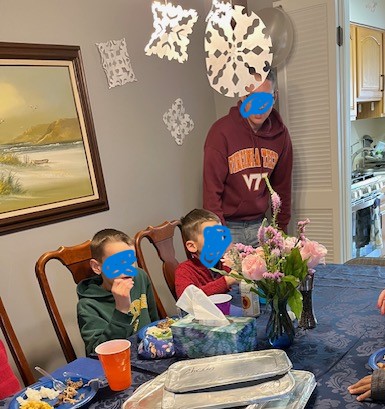
Dad might have gotten that yen from his Dad, my Grandpa Uriah Miller, who was known for cultivating beautiful roses, and also putting them in Grandma’s hands when she finally lay in her casket. In Indiana, it is common to have at least two days for friends and family to take time for funeral home visitations. There were fresh flowers in her hand each day. She died several years before Grandpa did, who passed in 1967.
Mom and Dad moved to north Florida in 1969. When I went off to college in 1971, Mom and Dad drove me from Florida to my college in Harrisonburg, Virginia, by way of visiting our relatives in northern Indiana. (I know, a long but precious path together.) I had done only barest bone packing: clothing; a few books; pictures; a coffee pot (the kind you boiled on a stove); toiletries and a little make up; a pillow and sheets (I think); a new blanket and maybe a fan. Probably shampoo and some towels and washcloths. That was about it, folks. (And I have exactly no pictures of my Freshman dorm room. Amazing, huh?)
Daddy looked around the small two-person dorm room and must have been thinking, “This room is lacking something.” My roommate had a radio but I didn’t really want one so Papa picked out a lovely philodendron at Woolworth’s in downtown Harrisonburg. (We didn’t have much in the way of shopping centers or Walmarts in those long long long ago days.) I was smitten with his sweet purchase; he didn’t have a lot of money but I still have that gift with me to me this day. Of course it went through some ups and downs, trimmings, and many moves, and finally found its forever home in a large old fashioned brown/beige earthenware pot.
When I lived in Spain for a year as a college junior, one of my friends in the U.S. promised to keep the plant in good shape, which she did. Thank you, Ruthie! It grew and grew from a small pot to a large leafy philodendron. When I moved to an apartment with another friend, Mary Ellen, it went with me.
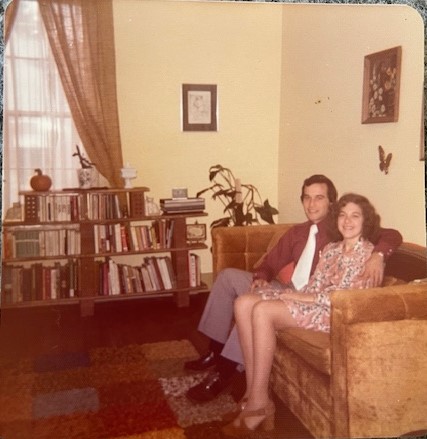
When I married my husband, we lived in the smallest of mobile homes (a mere 45 feet long); it took prominence in our living room.
When I got my first real job working in an office and eventually had my own private space, I always made sure there was a place for it. When I retired 43 years later, it came home with me, to its humble place in our laundry/half bathroom.
This past winter, I decided to re-pot most of my house plants. None of them were looking very healthy. Three of them had the nerve to go and die on me after the repotting. I did not mess with Dad’s philodendron. It is still greening our laundry/half bath room.
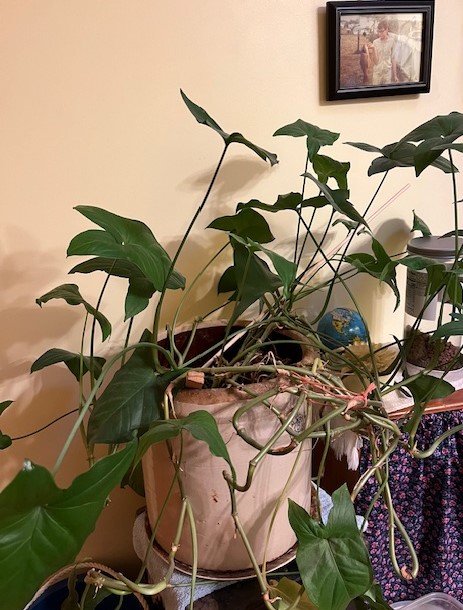
Dear Dad! Thank you for this long prospering plant and the reminder that green things are important for purer air in our homes. It’s also a prompt to thank God for my dear parents and the love they taught us all their lives.
***
Any special gifts your Dad or Mom gave you long ago … that you still have?
Or stories this brings to mind?
What’s your best advice for how to handle repotting of plants without killing them?
You might enjoy the book my siblings and I wrote recently called Cultivating Fields, Faith, and Family: Mom and Dad’s Memorable Mennonite Life, available on Amazon, here.

Sometimes you want to go
Where everybody knows your name…
This week I want you to meet a gal who works long shifts in a small restaurant and pizza place, cheerfully bringing your favorite drink or sandwich to tables. She has a memory that all of us over 60 would love to have.

I’ll call her Molly. I can’t even remember her name at the moment but she’ll greet a table of regulars with an exact description of each person’s usual pizza, sandwich, or drink order, or if by chance someone at the table yearns for something different that night, she quickly alters her notes to include a switch out. Many of the regulars like to sit at what the restaurant considers “Table 18” just off of the busy, friendly kitchen. (In case you’re wondering, most restaurants give their tables numbers.)
When Covid was beginning to close down everything in 2020, even the special little places where everyone knows your name, this dear gal was, of course, out of a job. I’m not sure how long it was until Bob-a-rea’s Pizza and Subs got its Covid cleaning and distancing of tables and mask-wearing all lined up to reopen. Several months, if I’m remembering correctly.
We knew Molly was a young single mom and missing her work, salary, and tips. One day while we were yearning for Bob’s pizza, we got one to go, ordering through the outside pick up window, and put a special much-larger-than-usual tip into an envelope and asked that Bob, the owner, give it to our favorite waitress.
Sometimes this young woman wears a t-shirt that testifies to her faith but overwhelmingly, she demonstrates through her cheerful behavior and gratefulness to the patrons that her name is written in the Big Book of life. She is now married and has a second child. Those children are lucky little kids who can be tremendously proud of their mother, juggling the raising of a family with long shifts at a place like yesteryear’s “Cheers.”
And if anyone is interested in some of the best pizza in Virginia, or even buying this small business from the owner who longs to retire, or if you’re willing to work hard serving up some great sandwiches, pizza, breakfast, lunch, or supper, you can find it on Facebook. Just look for “Bob-a-Rea’s Pizza and Subs.” It is found in Bridgewater, Va., in business since 1975.
Do you have a Molly who shines as waitstaff somewhere? I’d love to hear!
Comment here!
February 5, 2024
Dietrich Bonhoeffer: Two books to not miss
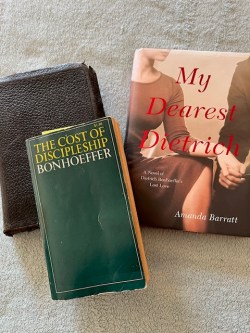
Yesterday, February 4, was Dietrich Bonhoeffer’s birthday. Recently I was lucky to happen on to a copy of the book My Dearest Dietrich from one of the many “Little Library” stands we have around our county and towns. A free book without needing to worry about overdue library books! And the knowledge that you won’t have to make space on your bookshelves. You keep it as long as you like and then pass it on.

The book is part romance but soon gets into the nitty gritty of World War 2 and the horrible consequences of Hitler’s reign.
It caught my eye because in the 1970s, students at my college, Eastern Mennonite, were encouraged to read The Cost of Discipleship by Dietrich Bonhoeffer, a lengthy text of some 350 pages. I still have my copy because of its message. (One of the few college texts that managed to survive my weeding out of precious, favorite books.)
When I started reading My Dearest Dietrich, (published 2019) basically I knew that the end story would be sad and tragic, but Bonhoeffer and the author Amanda Barratt offer a well-written true story (but fictionalized) that gives courage to all of us in these uncertain and difficult times. The world has too many wars going on in too many places.
Bonhoeffer was a Lutheran pastor and also a committed pacifist who believed and lived Christ’s words regarding killing others. Actually, they were first God’s words to Moses way back when God commanded “You shall not kill.” (Exodus 20: 13).
Bonhoeffer was also a deep thinker, exploring various aspects of Christ’s teachings and helping those who are trying to live out God’s way for our lives. Bonhoeffer’s classic line quoted often in various places “When Christ calls a man [today we’d say person], he bids him come and die.” So how does that work in times of war? During World War 2, Bonhoeffer took the road of working against the Hitler regime as an underground conspirator against Hitler.
There is a short history/memoir of Bonhoeffer’s life that is included in my copy of The Cost of Discipleship by George Leibholz, brother-in-law of Bonhoeffer. Leibholz writes that when war seemed inevitable in the 1930s, some of Bonhoeffer’s friends and followers urged him to leave Germany to perhaps save his life since he was totally “opposed to serving in the Army in an aggressive war.” At an ecumenical conference in Denmark in 1934, someone asked Bonhoeffer what he would do when war came. He answered, “I shall pray to Christ to give me the power not to take up arms.” By June of 1934, American friends who knew him (from an earlier year he spent at Union Theological Seminary in New York City), got him out of Germany.
“But soon he felt that he could not stay there, he had to return to his country. When he got to England on his return from the U.S., his friends quickly realized that Bonhoeffer’s heart “belonged to his oppressed and persecuted fellow Christians in Germany and that he would not desert them at a time when they needed him most. … I shall have no right to participate in the reconstruction of Christian life in Germany after the war if I do not share the trials of this time with my people. … I cannot choose security.” [From Leibholz’s memoir on Bonhoeffer.]
This gives us one picture of how dedicated and faithful Dietrich was. I won’t spoil the reading of either The Cost of Discipleship or My Dearest Dietrich but as difficult as his life became, the real Dietrich does not disappoint. When incarcerated, he was instrumental in helping other prisoners cope with their ghastly circumstances, including helping care for those who were sick or about to die, or sharing his own pathetic food.
These are a couple of books very worth reading and studying in these times. A friend and former colleague of mine, Jerry L. Holsopple at Eastern Mennonite University (EMU) created a multimedia play with Justin Poole which opened in 2022, was produced again in January 2024, and promises to come back to EMU stage and theater again. I will try not to miss it next time!
Are you familiar with the writings of Dietrich Bonhoeffer? What have you learned?
I’d love to hear your thoughts.
February 1, 2024
It’s That Season
We have to take our dog out in the middle of the night because she is getting older. Like us. You know, so she doesn’t leak.
The other day I took her out behind the house about 2:45 a.m. and was breathing in the lovely night air, looking for my favorite stars, waiting for Velvet to squat (she drags out her excursion awhile, surveying the countryside with me).
All of a sudden she dashes across the driveway, out into the front yard in hot pursuit of something, maybe a deer. We generally praise her for her deer runs: she gets good exercise and fun, and during summer, it keeps deer mostly away from our garden.
That morning I turned to see that there was a small creature about six feet away from her. I figured it was a rabbit and quickly turned on my flashlight, And froze.

Velvet was glaring at a skunk, a large one at that, likely male, standing stock-still facing the dog. I panicked thinking the skunk had already sprayed her. My heart sunk. A sprayed dog, in the middle of the night. Would we have to both get up and give her a bath, or let her smell up the house or basement? Already I dreaded the drama.
This is skunk season of course, we’ve seen numerous skunks on our country roads, flattened out and dead. The groundhog may come out on February 2 but I found this interesting analysis on Scienceing.com:
“Milder winter will bring out males in early February. Harsher winter may postpone the emergence of males a few weeks toward March. Yearling female skunks that were born during the last year will not be ready to mate in February; yearlings wait until March or April before they will accept a mate. Females who are not interested in mating will spray the male to let him know to get away.”
We get skunks occasionally in our garden in summer, grabbing our goodies. One year my husband decided to buy a no-kill trap to catch one. Tricky business, because of course what do you do with the guy after you trap him (or her). Our dear neighbor, in his 90s, gave Stuart this piece of advice: “Whatever you do, approach one very slowly in the cage, backing up, and he might not spray you.” We lucked out and my husband was able to open the door, slowly backed away, and left the skunk alone, who later in the day had vacated the trap. Yay! Thank goodness for wise older neighbors who know these things.
On my morning potty escapade with the dog, I quickly called Velvet to come, which she did, and I could detect no nasty smell or spray on dear Velvet. My thanks ascended to the God of the skies and earth for this small favor. No middle of the night bath for the dog, or for us. I praised and petted our mature pup (going on nine years) for finally learning this lesson. This time. There is no guarantee about next time. I have learned over the years when skunk season began, to make a raucous noise of some kind when we come out of the garage in the morning or night so the skunk has a chance to run away without spraying the dog.
Your science hint for the day!
What have you learned about dealing with skunks around your house?
Any tricks or advice?
Share your story here!
Blog Post January 27, 2024
So What’s in a Name?
Do you like your name? Does it fit you? Did your parents do well when they named you?

I’m pondering this right now because I’m reading a journal I kept in the years 1970-71 when I was taking a “gap year” (like they call it now), where I was doing church-related voluntary service, teaching nursery schoolers in Kentucky. (That was over 50 years ago, good grief!) I lived with five others, (we had 3 women and 3 men in our unit), and initially they were all strangers to me.
It is fascinating to read that journal because I was only 18 at the time and my faith was at a different point (a good point, but I used different religious language in my prayers and Sunday school classes etc. Perhaps you’ve changed too from when you were 18 going on 19.
What shocked me a little was finding an entry saying I thought my name Melodie didn’t fit me. I was at home (for Christmas vacation) when I wrote it and reflecting a bit on relationships and names.
Here’s what I wrote then. See what you think:
“Sometimes the me I present to other people isn’t me. For instance, the name Mel. Mel fits me so much better than Melodie. Mel is short, maybe ugly, bare, blunt. Melodie is pretty, long, and sweet sounding. To people who don’t know me well, I may seem like a Melodie, but those who know the mud of me call me Mel. Without all the nice sounding thoughts and writings, I’m just Mel. Maybe someday I’ll be a real, genuine Melodie, although I doubt it.”
Ok, I was 19 when I wrote that on Christmas Day. (Thank you, young Mel, for writing down dates!) I should add that in elementary and junior high, my friends usually referred to me as Mel, with some adding “Smelly” (stemming from names my sisters called me from being a late bed wetter) and also because I and my sisters all smelled bad when coming in from gathering eggs in our chicken houses.
Happy to say I’ve grown up a bit and no longer dislike my name. So many people gush over what a nice name it is. And I honor the name because my mother read a book with a sweet character she really liked and decided to call her third daughter by that same name with this spelling: Melodie Ann. (I’ve not always appreciated the ie on the end because I have to correct people so many times, but that’s not a big deal.)
And a shortened name never stuck with me after I married my husband Stuart. In his family, nicknames were forbidden. His parents never used them, tried to keep their three sons as Richard, Nolan, and Stuart, spelled this way and NOT Stewart. And NEVER Dick, Nol, or Stu. Yikes!

I feel sorry for children who are given monstrously long names. Imagine correcting a spelling like Natalia. Brynleigh. Aubrielle. (I even had to look at the name Brynleigh THREE times to get my spelling right here!). I have a great niece named Karleigh (who is adorbs like her other sisters!) but I bet when she is older she’ll give her mom fits for this spelling instead of, you know, Karly. Or something shorter. My granddaughter’s name could be pronounced about three different ways but she is adorable too and we wouldn’t trade her for all the names in China. I can finally say her name without stumbling.
Kids today are changing their names more often when they get to be a certain age and that may be fine, except for the long learning curve their family members go through.
Did I ever consider changing my name? No way.
And of course, I’ll never be a Shakespeare, if you’re trying to remember when my title came from.
***
So, do you like your name? Have you always appreciated it or were there times you wished to have another name?
How have your religious leanings and expressions grown or changed? Or not?
Comment here! Join a conversation ….
***
As you might have guessed, I turned my Voluntary Service journal into a book, still available here as used copies. It is called On Troublesome Creek: A True Story about Christian Service in the Mountains of Kentucky.

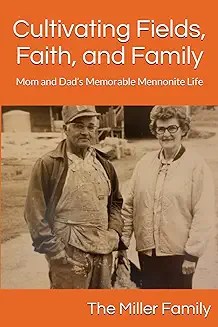
My siblings and I also enjoyed putting together a new small book this past year, Cultivating Fields, Faith and Family: Mom and Dad’s Memorable Mennonite Life, available on Amazon.
Blog
January 14, 2024 How to Live a Thousand Lives
“I write so I can live a thousand lives.”
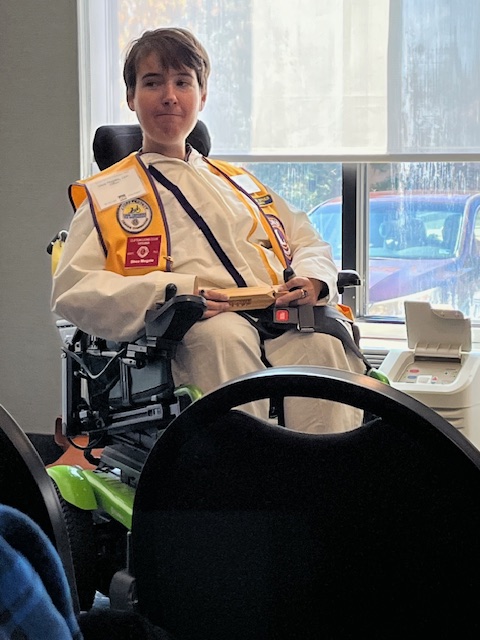
A young woman named Shea Megale wrote this which, as a fellow writer, I loved. She is one of the most daring and amazing persons I’ve had the opportunity to meet.
Shea shared parts of her life story so far (she’s 29) at our Lions Club fall conference in Fredericksburg Va. Her third service dog matches her for his remarkable job as a trained and loving companion. Her second service dog helped her graduate from the University of Virginia (even crossing the stage with her if I understand correctly, a school which is no whiz to get into, founded by Thomas Jefferson in 1819). She also managed to live on the university campus without special helpers, except for her dog. She is an author of numerous books and began writing real publishable books at the age of 13, starring her first service dog Mercer.

But let’s begin at the beginning. She is an ambassador for those everywhere who were born with or have experienced huge difficulties and challenges. But, she is not letting the difficulties stop her. She and her family support an organization called “Canine Companions for Independence,” for people who need the help of a dog to get around and to survive independently.
Shea was born with spinal muscular atrophy, which is a genetic “neuromuscular” condition. She is quite short and is confined to a motorized wheelchair, but she is one of the most entertaining and uplifting speakers I’ve ever heard. She has traveled all over the world, organizing her own itineraries and transportation with drivers that she lines up.
She tells stories both amusing and remarkable. She told how she and her service dog were on a beach somewhere (I think Australia) and something slid off her lap and onto some sand. She reached for it rather than give a command to her dog, and began to slide out of her electric wheelchair. The dog was ready for her, and pushed his body to her legs to keep her from slipping further. I forget (and it’s not in my notes) how she got out of that dilemma but I know she was very thankful for the quick action of the dog.
Another story I loved was about her helping write and produce a short historical film in the Czech Republic. In addition to the assistance of her service dog, she had a helper who didn’t speak English at all, and Shea did not speak Czechoslovak. This woman was helping her take a shower but the water was way too cold for Shea’s comfort. To communicate, she made her teeth chatter and demonstrated shivering, which finally connected! Her finished film also connected: won the President’s Award from the Film Academy of Miroslav Ondricek. The academy is named for Ondricek as a prolific Czech cinematographer who had also worked in the U.S. on films such as Amadeus and Hair.
Shea has been invited to ring the opening bell on Wall Street for NASDAQ, was the youngest ever member of the National Press Club in Washington, D.C., spoke on the USS Intrepid, appeared on The Today Show, launched a partnership with Build-A-Bear and FAO Schwarz, and, most importantly for Shea, “speaking at schools all over the country” which she loves doing.
Shea’s family was and is very close, but they experienced what way too many families have gone through. In a 2018 article for a UVA publication, I learned that Shea’s older brother Matt struggled with opioid addiction for years eventually dying from it. After he died, Shea wrote a memoir of their close relationship, telling people he was much more than his addiction. “He played a huge role in her life, as a brother and a caregiver, and he encouraged and helped her pursue all sorts of adventures, from ziplining to skiing to traveling the world,” the article explained.
Opioid addiction “is like cancer now,” Shea noted. “Everyone knows someone that is affected by it. There have been more deaths from opioids than deaths from the entire Vietnam War.”
Shea writes novels, especially young adult fiction, science fiction, and fantasy–which may or may not be your thing; her blog notes that “consciously and unconsciously, nearly every character she creates has an element of disability: physical, emotional, or mental.”
I wouldn’t mind hearing her speak again. Just three of the leadership lessons she left with us as Lions Club leaders were these:
- Show up. Even if you don’t know what to say or do when you get there (a funeral, a friend’s recital, an interview, etc.), you’ve already done half the work and your presence tells others that this event or person is important to you.
- Make an effort to remember things. Important dates for others (anniversary of a death, birthdays, etc., details of their lives they share with you, their favorite things and their dreams. This is hard, but it is done by really listening.
- Never ask others to do something you won’t do right alongside them.
–Shea C. Megale. Find her blog at S. C. Megale – Home (scmegale.com)
You can find out more about Canine Companions for Independence here.
Lions Clubs International are known for their training of leader dogs especially for those with blind or other vision issues.
January 5, 2024
When Your Car Gets Towed on Christmas Morning
It wasn’t Santa Claus causing commotion in the sleepy townhouse community where our daughter, husband, and granddaughter live. But what happens when a local tow truck operator—maybe cruising for a little extra cash—comes ruining your sleep and sanity on Christmas morning?
Ok, the story. We were visiting overnight on Christmas Eve and our daughter had carefully made sure we parked in their designated space with our slim Toyota, while she used a guest space. We were suddenly awakened on Christmas morning about 5:30 a.m. with our daughter knocking on the bedroom door (where we’d been sleeping). Then she dashed in, citing some emergency outside. An accident? A fire? A robber?
“I need to get some papers,” she quietly explained, hoping desperately their 10-month-old daughter wouldn’t wake up. She dipped hurriedly into her well-organized file cabinet and then dashed out again, clothed only in pjs and slippers. This was December of course. What was going on?
When she returned, she said she had been awakened by flashing truck lights backing up in front of our parking space and shining into their bedroom window. Alarmed, she had rushed out just as she saw the tow truck—and our car—going around the corner and heading out to the street. She kept running and then saw the driver had stopped, maybe to make a call or whatever. Relieved to catch up, she knocked on his window and asked why he was towing the car that had been correctly parked in her parking space.
Ah, but it had no parking pass in it, the operator explained. He was to remove anything that didn’t have a pass. (Home Owner Association rules of course.) Our daughter was distraught and showed him her paperwork proving they were owners of the townhouse with rights to the parking space.
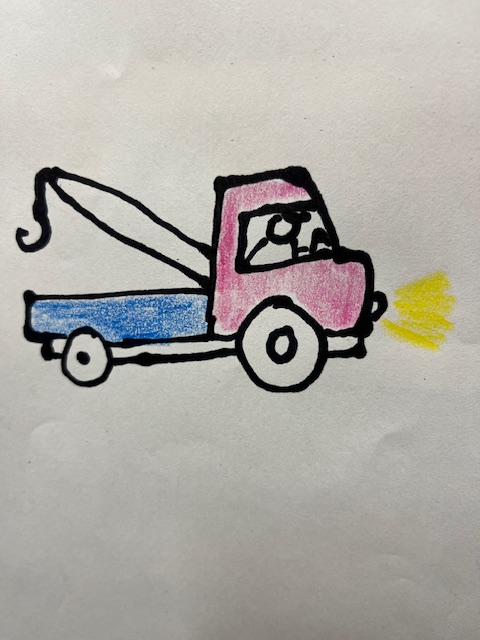
So he unloaded our car and said she owed him $50.
At which she was relieved and luckily had $50 in cash (in the house) to pay him. As she began to mentally process the near mess it would have been to get our car out of an impound lot—likely locked up solid for the Christmas holiday—she began to breathe easier. We had planned to drive the 120 miles back home later in the day. Our Christmas Day was “saved.”
It reminded me of the mess I found myself in about 15 years ago at a senior citizen complex doing filming in New York City with work colleagues. We had parked our van on a busy street which was clearly marked that vehicles had to be moved from that side of the street when the commuters-going-home rush started at about 4 p.m. As my colleagues packed up their boxes etc. with cameras and filming paraphernalia, I told them I’d go get the van before it got towed. It wasn’t quite 4 p.m. and in my rural head, I was sure it would still be sitting there.
But it was nowhere to be seen. Long story short, with guidance from a bored building greeter, I tracked down the van’s location in an impound lot close to Pier 76 on the Hudson River. Inside the building it looked like there should be mafia guys hiding around every corner. But when the clerk finally gave me a pass with our company information on it marked “Redeemed,” it felt like God was watching out for us that day.
I had to think of that as our daughter doled out a $50 bill she just happened to have on hand (no one under 60 uses cash anymore, right?).
Our Christmas in the suburbs was not ruined. Hallelujah!
And that New York impound lot? I just learned it has been moved and now contains a nice riverside park.
***
Impound lot stories? Were you ever towed against your will?
***
I’m no longer writing my newspaper column but as my husband AND daughter noted, “Everything is an article (now blog post) with our mother isn’t it?” 🙂 But no deadlines! No regular posts! Although right now I’m writing devotionals for a week of Rejoice! magazine devos, which is a good exercise (and pays decent). Find the magazine here.
.
Another Way for December 29, 2023
Time to Say Farewell to This Column

For 36 years I have written Another Way newspaper columns. Let’s do the math. That’s 1872 columns by my count, and something like 1,235,520 words. Of course, I had help sometimes from occasional substitute writers such as readers and relatives. The hardest part of writing a column (and many other columnists or pastors will agree) is coming up with original, interesting, and engaging thoughts and experiences to share.
I have written about everything under the sun from gardening to traveling to cooking to world or local news, to losing Dad, Mom, co-workers, and so many others. I’ve often told people that I write because it helps me process life and record memories, experiences and thoughts. I have watched other writers as they do the same (whether it be newsy, spiritual, or family oriented). I feel the time has come for someone else to have this space. I remember one well-known Mennonite writer, Robert Baker, who wrote in various weekly or monthly religious papers or magazines. At some point he did this same thing: moved over so someone else could share their thoughts, experiences and hopes. I went to high school with one of his daughters.
Radio speaker and friend Margaret Foth is to be credited with giving me this opportunity to write in local newspapers. After writing it for ten years as a spin off from her radio program, “Your Time,” in one meeting before she closed out her program, she suggested that I pick up the print column since I helped edit it for her. I should also flag Paul Yoder for bringing the idea to us at Mennonite Media at the time. He had many contacts in the small newspaper field, which was helpful! At its most prolific, the Another Way column was used by around 20 papers in the U.S., Canada, and India.
My first column in 1987 told the story of a Florida couple I cleaned house for one summer in the late ‘70s. The husband was a judge for the county, who later was tragically killed by a disgruntled and dangerous local man. My most-read column was another heartbreaking story of a teenager of a well-known TV pastor at the time. The teen died of a drug overdose.
Some of my personal favorites from over the years include one that I wrote about beautiful Tangier Island off the coast of Maryland and Virginia, and dozens of readers responded to their particular plight (continually losing their shoreline). I finally got to visit there. I wrote about the Gulf War, and again received many letters affirming a call for peace. Professors and pastors responded to that one.
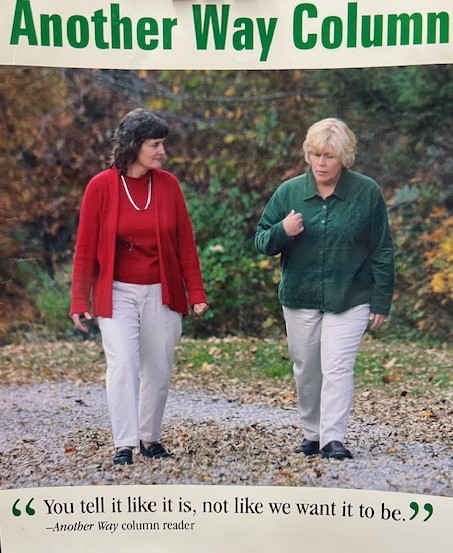
What kept me going? Hearing from readers, including many letters and emails, most from women but many men too. Debbie Judy lives in the nearby state of West Virginia and she was one such reader—who I actually got to meet! We spent part of a Sunday afternoon strolling her hills, chatting and connecting in a personal way. She and her husband invited our family to use their cabin in those mountains, which we did on a snowy April weekend. I’ve since learned that her husband has now entered the heavenly realms, so prayers extend to the Judy family.
The two longest running papers were The Daily American in Somerset Pa. and a gig my Dad arranged at The Goshen News, (Ind.) almost 20 years ago. I salute these two generous and faithful papers for staying on board so long. If you are curious, these last two papers were paying me $45 a month and $20 a month, so I didn’t do it to get rich. We all know the newspaper print industry is gradually diminishing and shrinking. But I thank the editors who hung on as long as they could.
Now it is time for another trip around the sun (and hopefully other travels) and new hobbies, entertainment, and engagement with six grandchildren and their parents. I feel like I’m retiring “again” because indeed the column gave me a weekly deadline that I met and enjoyed.
For 36 years, I’ve appreciated sitting down and sharing our adventures, ups and downs, and above all, reaching out in love. Prayers and best wishes to all.
***
You can still follow my blog at www.findingharmonyblog.com sharing recipes, thoughts and yes, escapades. My husband says I’ll always be a writer …. Check out the blog or write to me at Another Way, P.O. Box 363, Singers Glen, VA 22834, or email anotherwaymedia@yahoo.com. The yahoo email account and P.O. Box will be closing down at some point.
Another Way was a column by Melodie Davis, in syndication since 1987.
** And remember that photos or advertisements appearing here are put there by WordPress, not by this writer; I get no income from the ads.
Another Way for week of December 22, 2023
Why Can’t We See God?
Last in this five-week series on Biblical women—and their babies.
It was a few weeks before Christmas. Santa Clauses were everywhere: on the street, at the mall, in the yard, on porches or roofs.
This was back in the day when I shuttled nursery-schoolers back and forth to school, taking turns with other moms.
On their ride home, out of the blue a boy named Brian announced, “I don’t believe in Santa Claus.” I began preparing my speech or response. But before I could propose an answer, Brian settled the matter for himself: “’Cause how could he come down a chimney?”
But Brian wasn’t done, and before I could come up with a viable response, his wonderful mind had linked this problem with another. Pausing, he looked at me with big, black, beautiful eyes. “Why doesn’t God come down?”
“You mean to earth?” I asked.
“Yeah,” said Brian.
“You mean, why can’t we see God?” At that, Brian solemnly nodded. This daycare was held in a church basement and I had just come from a long meeting at my office talking about the shape of Christian education and its future. Here was a teaching moment more valuable than the best planned Sunday school lesson. Here was a bright four-year-old asking the question of the ages, a question theologians and philosophers have pondered and debated.
We were already at his stop. I put my van in “park” and gave him a big smile. “That’s a wonderful question, Brian, one that lots of people think about.”
Then I tried to put into brief, simple words that God did come down to earth in the form of baby, Jesus. But Jesus had to go back to live with God and that now, we can’t see Jesus anymore, except in the form of loving, sharing things people do for each other. That seemed to satisfy him as he hopped out of the van.
***

When the angel Gabriel popped in at Mary’s home over 2000 years ago, her questions must have gone way beyond a four-year-old’s musings. Indeed, the first question she asked was “How will this happen?” She knew her own life to that point and the angel assured her that “With God, nothing is impossible.”
***
Many of us have questions like Brian. As we reflect briefly on the mysterious appearance of an angel, and how and why Jesus came to earth, we wonder, why Mary? Why, of all the hundreds of thousands or maybe millions (population estimates vary from 170,000,000 to 300,000,000 people in the world when Jesus was born), why was Mary picked to give birth to the baby Jesus?
Everyone in the Jewish community knew full well that a Messiah had been promised to come among them. They knew from scriptures that God had promised this, and every young woman growing up (and her parents) wondered if she would be the one to birth this promised baby. I like the way Matthew 1:23 puts it in the New Life Version, quoting the prophet Isaiah: “The young woman, who has never had a man, will give birth to a son. They will give him the name Immanuel. This means God with us.”
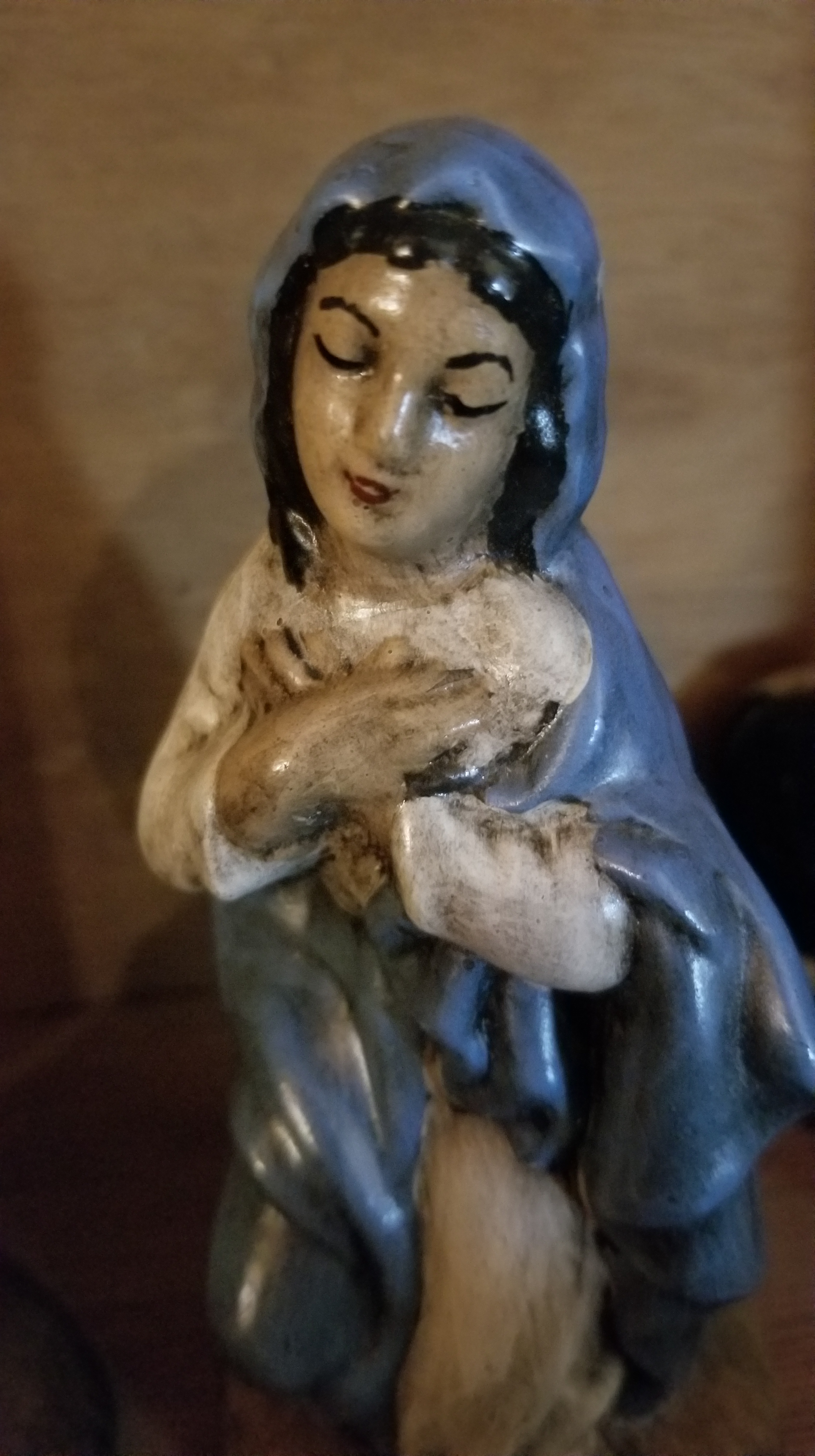
God is a mystery and we do not understand how the very special person who grew up to be Jesus came into being, but Mary was chosen for whatever reason. And the world has never been the same.
I hope you and yours had a blessed Christmas. God is with us! And our prayers go out to all those suffering illness, war, famine. This Christmas season (which goes to January 6), let us share with others and pray for an end to all war.
Amen.
***
Share your thoughts! Contact me at Another Way, P.O. Box 363, Singers Glen, VA 22834, or email anotherwaymedia@yahoo.com.
Get ready for an announcement early next week.
Another Way is a column by Melodie Davis, in syndication since 1987. She is the author of ten books, most recently Memoir of an Unimagined Career. Another Way columns are posted at FindingHarmonyBlog.com a week after newspaper publication.
Another Way for week of December 15, 2023
How Smart Women Saved a Future Religious Leader
Editor’s note: Fourth in a five-week series on Biblical women—and their babies.
Of all the stories of babies and mothers in the Bible (and even siblings as we’ll see in a minute), the mother of Moses and his sister is one of my favorite stories. We don’t usually think of it as a Christmas story at all, but there’s a link to the birth of Jesus and the insecurity that leaders feel when they sense or hear of a challenge coming from ordinary folk.
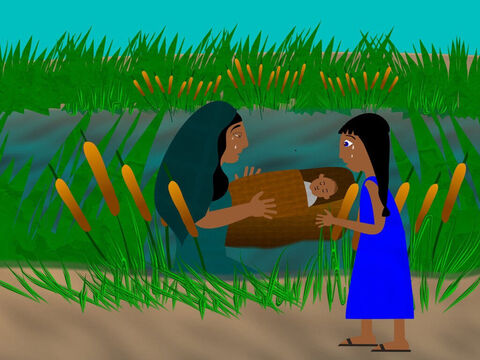
Baby Moses is one of the stories I recall and relish from my early childhood. We probably romanticized baby Moses’ predicament, coloring pictures of the baby floating in his little basket on the river while his big sister kept watch.
When I grew up, I learned more about the midwives named Shiphrah and Puah who helped save little Moses’ life. These women were not only dedicated to helping birth babies at the time, but pretty ingenious—and it is remarkable that this part of the story got recorded in the Bible at some point. Various writers of course wrote the text we know as Exodus. I’m skipping much background here but the upshot is that Joseph and his relatives (in the book of Genesis) settled in Egypt because of famine elsewhere. After that generation died, a new Pharaoh came into power who didn’t know the history and began to worry that the Hebrew peoples would become so numerous they might overtake the locals, and fight against them.
At the time, there were at least four women (one of them still a girl) whose response to the Pharaoh’s edict that all boy babies be killed (how absolutely horrible!) was “No!”
According to Exodus 1, the Pharaoh said to the Hebrew midwives, “When you help the Hebrew women in childbirth and see evidence of whether it is a boy or girl, if it is a boy, kill him. But if it is a girl, let her live.”
We learn in verses 17-18 that the midwives, however, believed in God, and did not do what Pharaoh had told them; they let the boys live. Later he summons the midwives and asks, “Why have you done this? Why have you let the boys live?”
The midwives coyly answer Pharaoh, “Hebrew women are not like Egyptian women; they have their babies so quickly that we can’t get there in time.”
The story wraps up by saying “So God was kind to the midwives, and the population of Hebrews increased.” And the Pharaoh’s edict continued to drown boy babies, but girl babies could live.
When one woman, Jochebed, got pregnant and gave birth to a son, she tried her best to hide him—imagine keeping an infant from crying!

As he grew, after three months she waterproofed a basket the best she could. She put her little boy in the basket and placed it in the river. She directed her daughter (presumed to be Miriam), to hide at a distance to see what would happen. Then Pharaoh’s daughter goes to the Nile for a bath and sees the basket; her heart goes out to the little boy in the basket. Miriam quickly comes forward and volunteers to find a nursemaid for the baby (and sends her mother, Jochebed).
I do not claim to be a biblical scholar but the connection to the baby Jesus comes in the genealogy listed in Luke 3 which ends up with another Joseph, who married Mary the mother of Jesus.
We also know that Joseph and Mary faced the same kind of terrible terror as Jochabed, almost 1400 years later. King Herod in Jerusalem was a threat to the baby Jesus for many of the same reasons. (The Pharaoh had feared an expanding population of people different than themselves.)
This year, the biblical story of baby Jesus seems particularly real and close as we get news every day of the terror currently going on in that promised land. I have read that there will be no Christmas celebrated in Bethlehem this year, due to current atrocities and fighting. I’m pleased to learn of a movement called Mennonite Action in North America which is trying to send messages and make a stand working for peace and justice.
May all this horror soon cease as we prayerfully lean on our faith in God who knows the future.
***
Reach Another Way at P.O. Box 363, Singers Glen, VA 22834, or email anotherwaymedia@yahoo.com.
Another Way is a column by Melodie Davis, in syndication since 1987. Another Way columns are posted at FindingHarmonyBlog.com a week after newspaper publication.
Please note that I do not approve of any of the “sponsored” content that appears on my blog.


