

Another Way for week of July 8 2022
A Pretend Beaver, West African Dancing, and Playing Veterinarian
This year we hosted our five grandsons for a week of Cousin Camp. Yes. Five. We have three daughters, and now they’ve given us five grandsons to love. So, it is interesting to see how raising girls differs from raising boys. Unfortunately, we don’t get to see nearly enough of them because of how far apart we live, but we get together as we can. If you’re wondering what Cousin Camp is, some call it Kid Camp or Grandparent Camp.
We held our first cousin camp three summers ago, before Covid. The three oldest boys came, and we planned a variety of activities. The parents helped us negotiate who was “old enough” to come, and who would do better staying at home (because of age). Now the two oldest grandsons are eight-and-a-half, there is a six-and-a-half-year-old, an “almost-six” year-old, and an “almost-four” year-old.
The thought of hosting a number of grandchildren for a week can be a bit daunting and scary. What if they don’t behave? What if they get hurt? What if they are getting to the age where … you know, Grandma and Grandpa aren’t so wonderful anymore. Babies love anyone, right? Adolescents are a little pickier. (And none of these are adolescents, yet!)
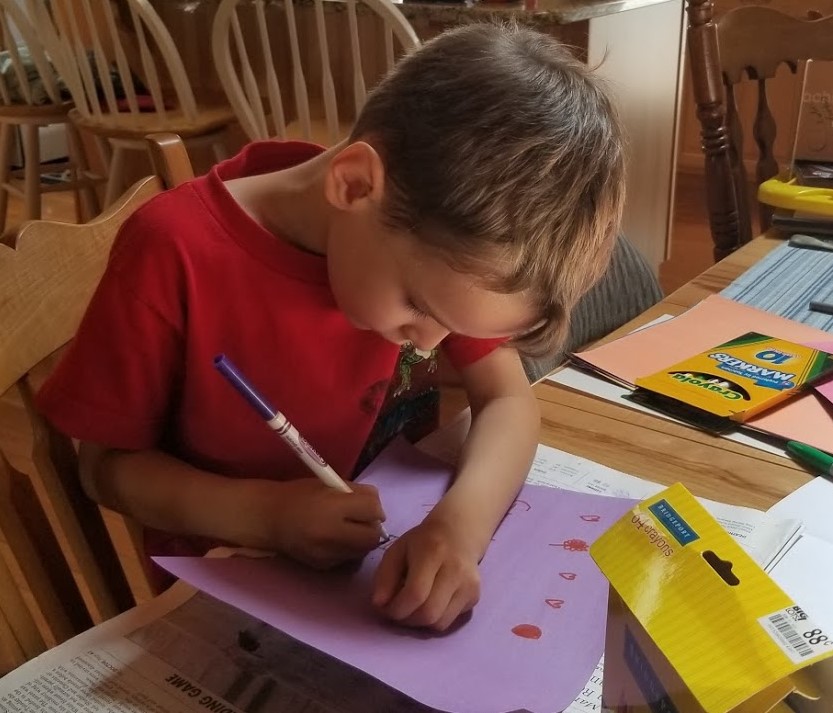
Planning is key. Of course I planned menus for each day. I also looked online for ideas for various art or craft ideas, went shopping, organized a shelf in one bedroom where I could keep the supplies (out of kids’ reach), scrounged to resurrect some older toys my girls enjoyed such as a veterinarian kit. We already had old puzzles, Legos, a medieval castle, and airport on hand for their play. One brought his beloved Pokémon cards which the older boys enjoyed but many of us elders just don’t “get”.
We set aside one day for an excursion to Frontier Culture Museum (20 miles away) which is an outside museum showing what life was like for early immigrants from countries such as Germany, Ireland, England, and even West African countries.
The boys listened well and especially enjoyed a chance to beat drums from West Africa and also learned a few dance moves. The man who spoke to us pointed out their dancing often arose from ordinary cooking, serving, or sweeping maneuvers. And of course, there was the always popular “chicken dance” to move to.
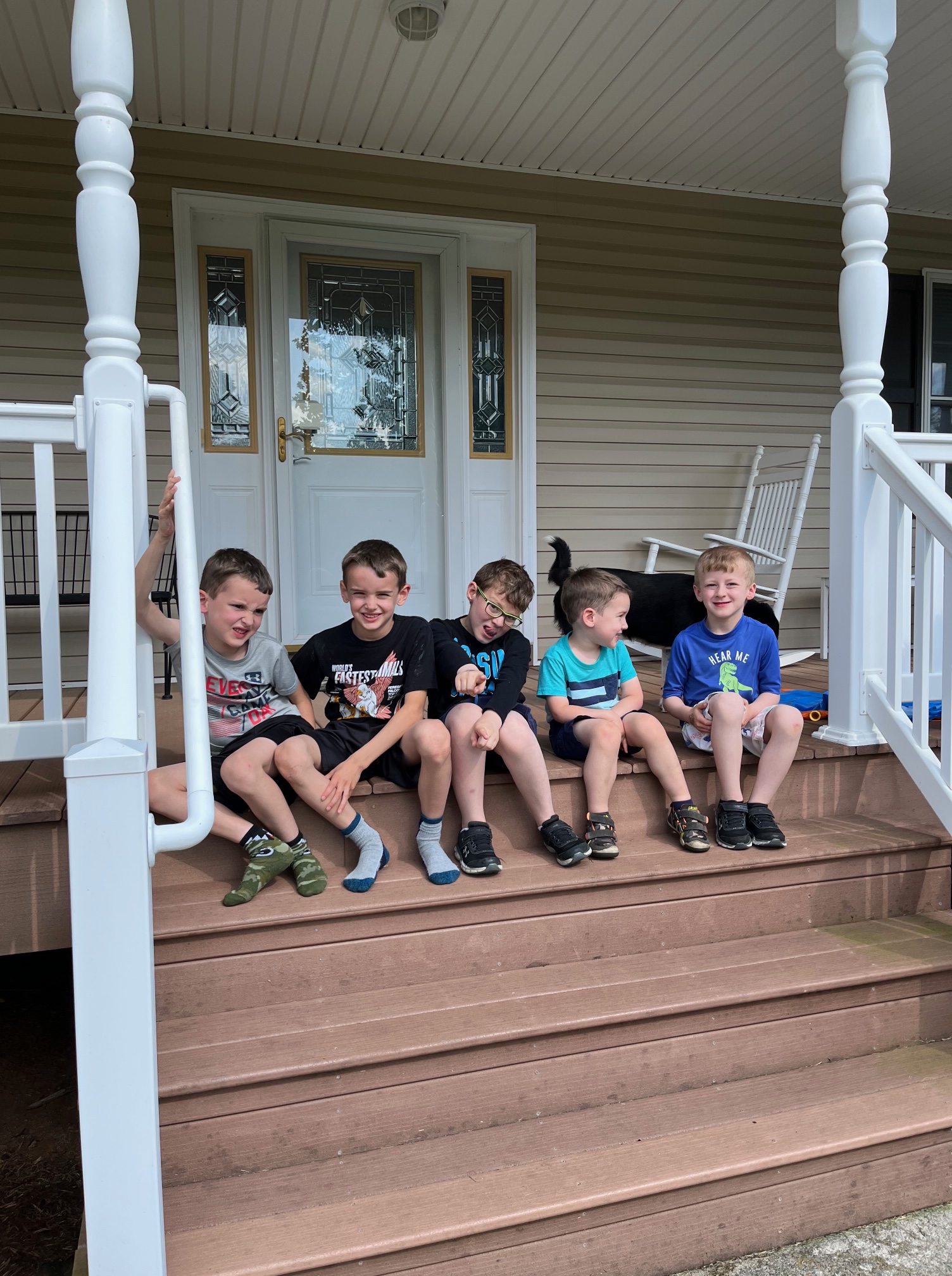
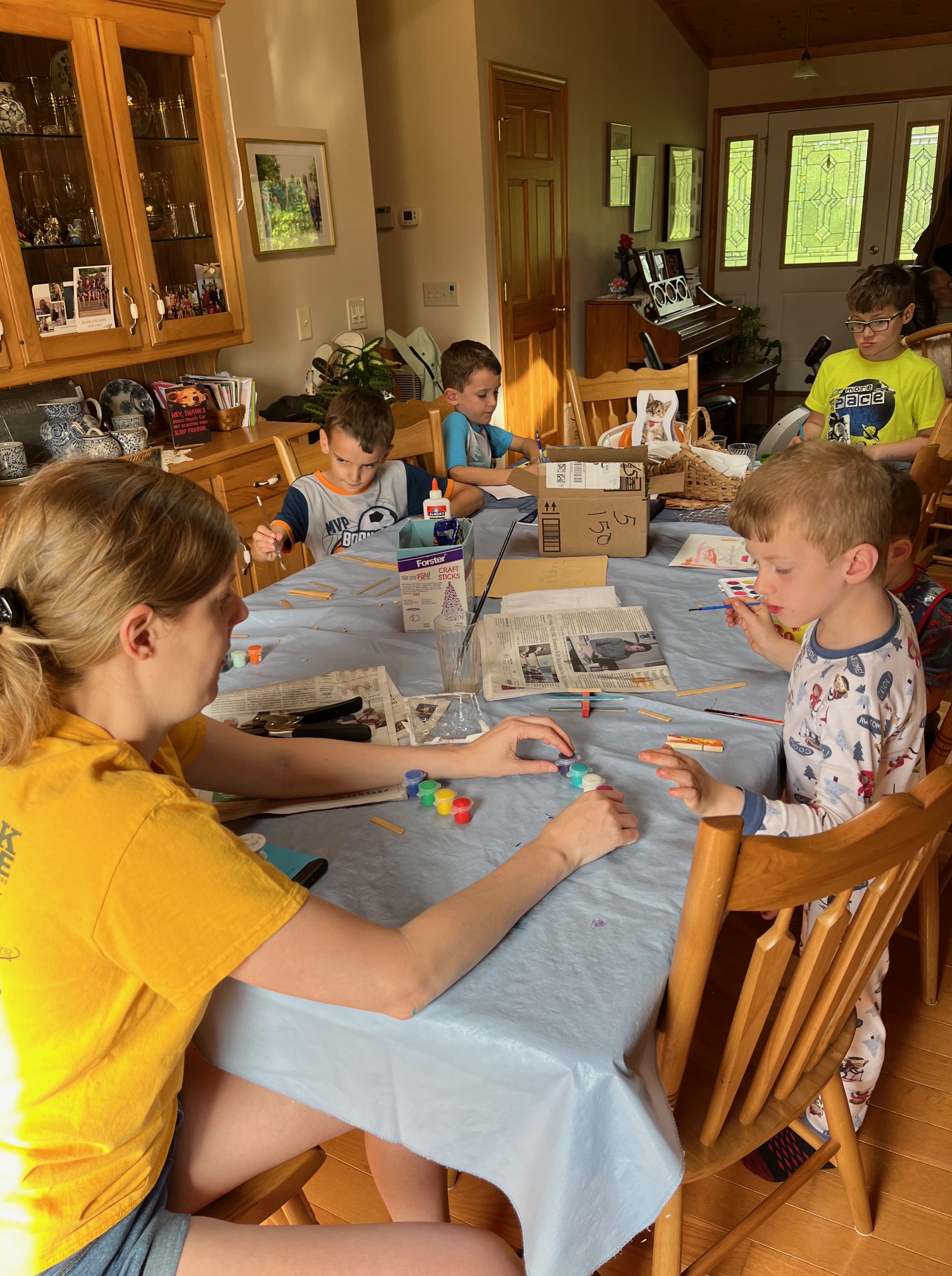


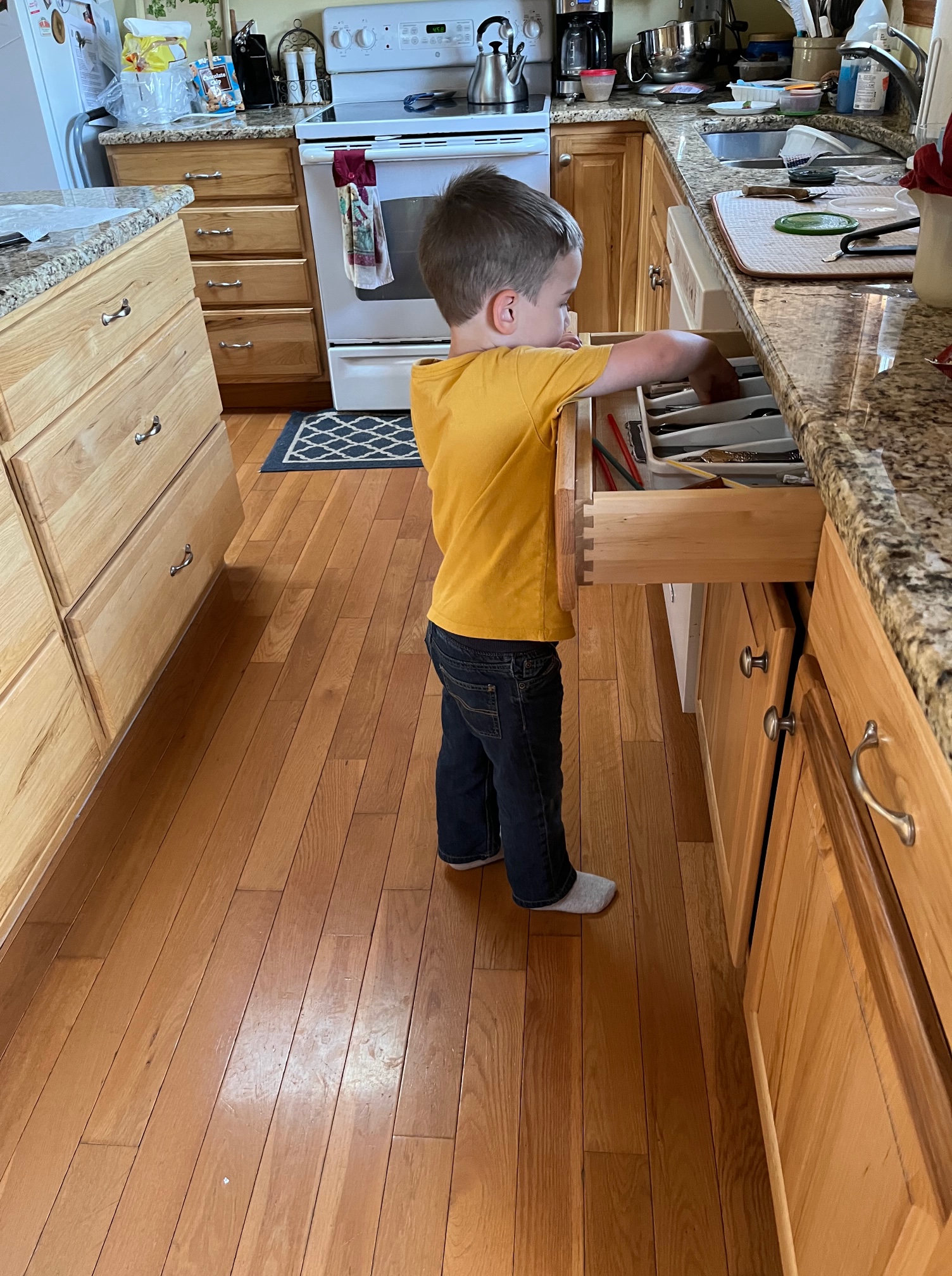
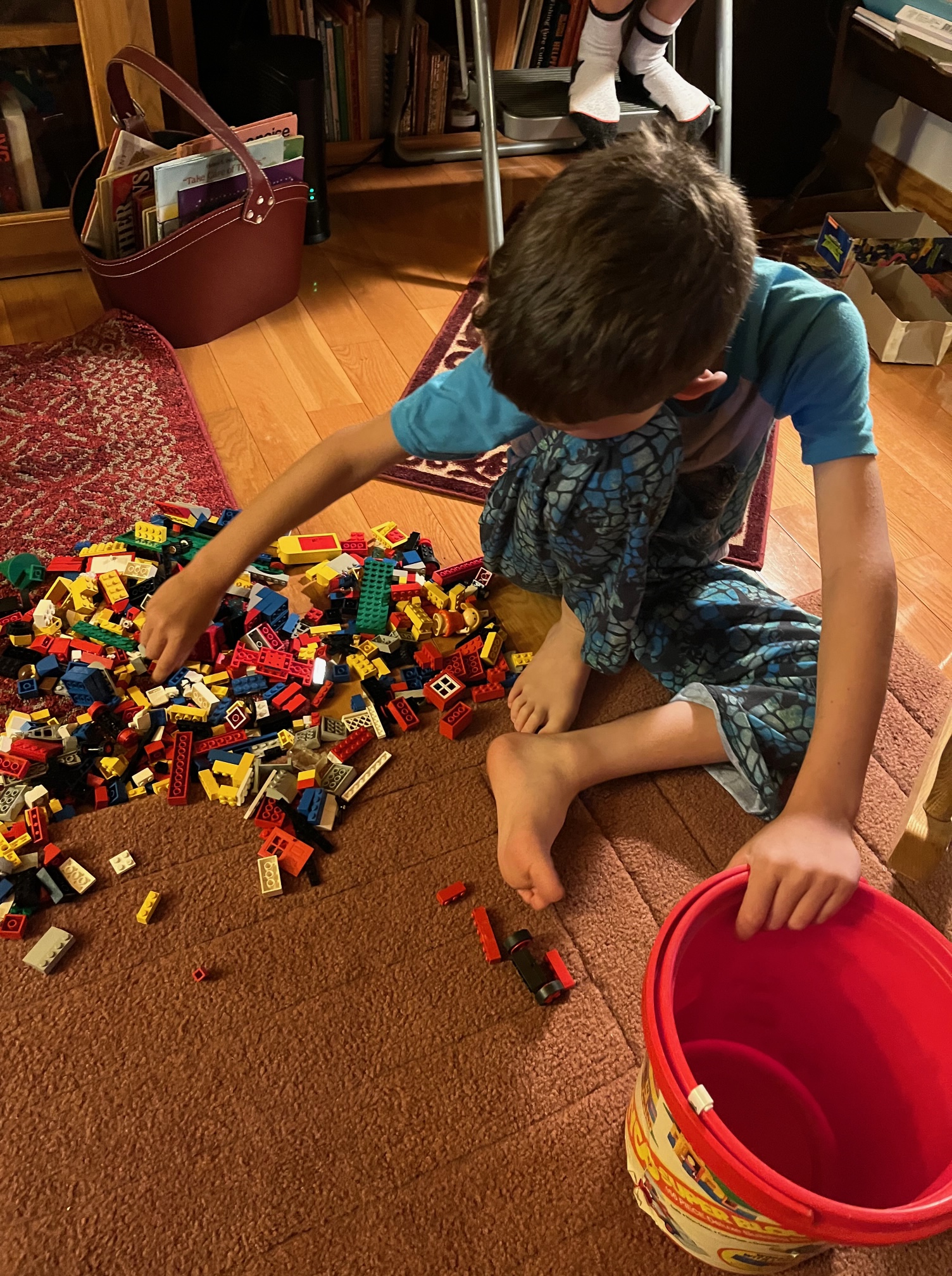
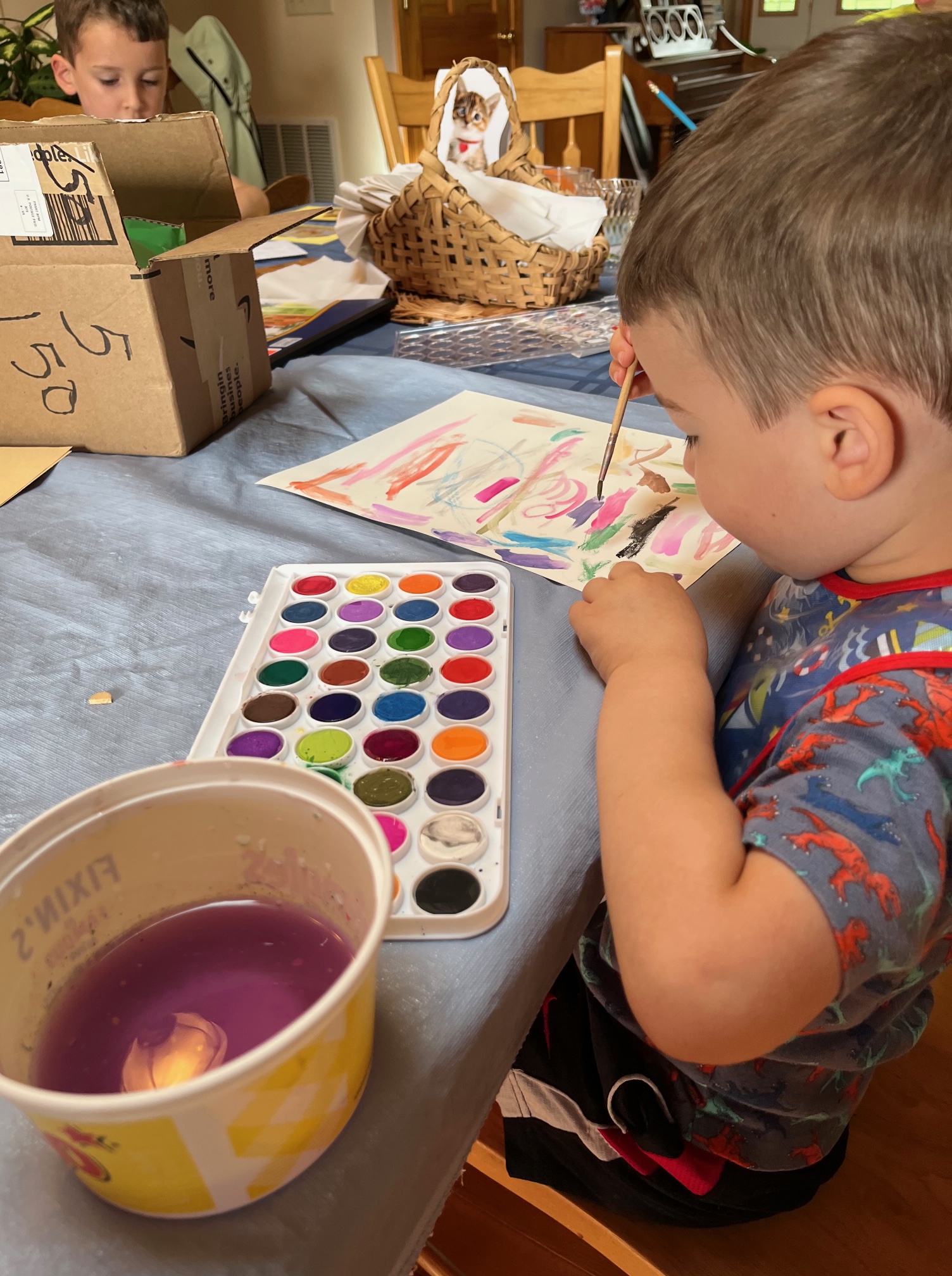

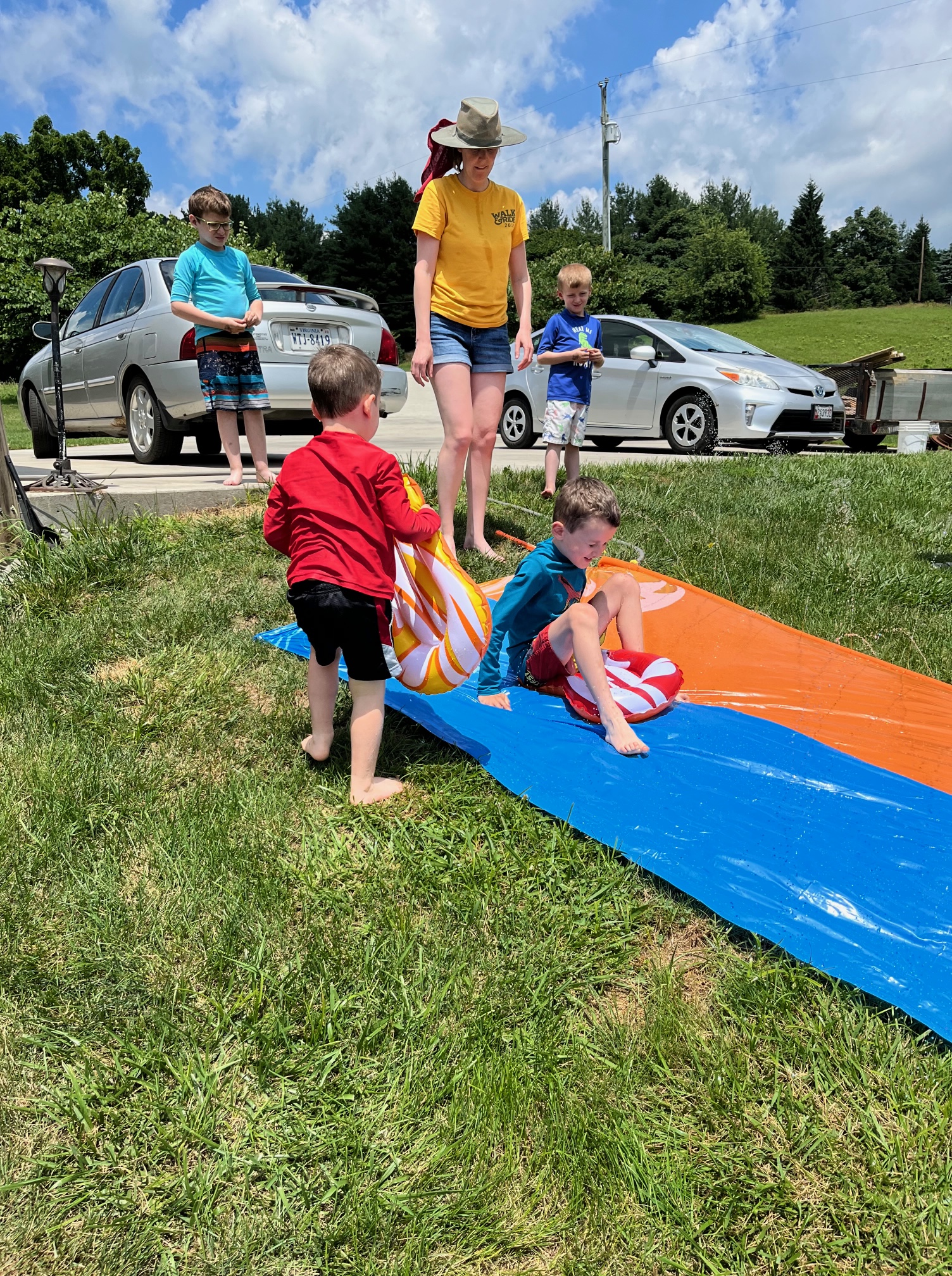

On another day we went fishing at a friend’s pond where I stood guard over the three-year-old so he wouldn’t fall in the pond; one boy wanted to pretend being a beaver chewing on wood. Grandma called a stop to that and his mother later discussed with him the better plan of just pretending to put dirty sticks in his mouth! The boys also played baseball, cooled off down a slip-and-slide, and played fast
food restaurant in our little playhouse which one grandson dubbed “The Food House.”
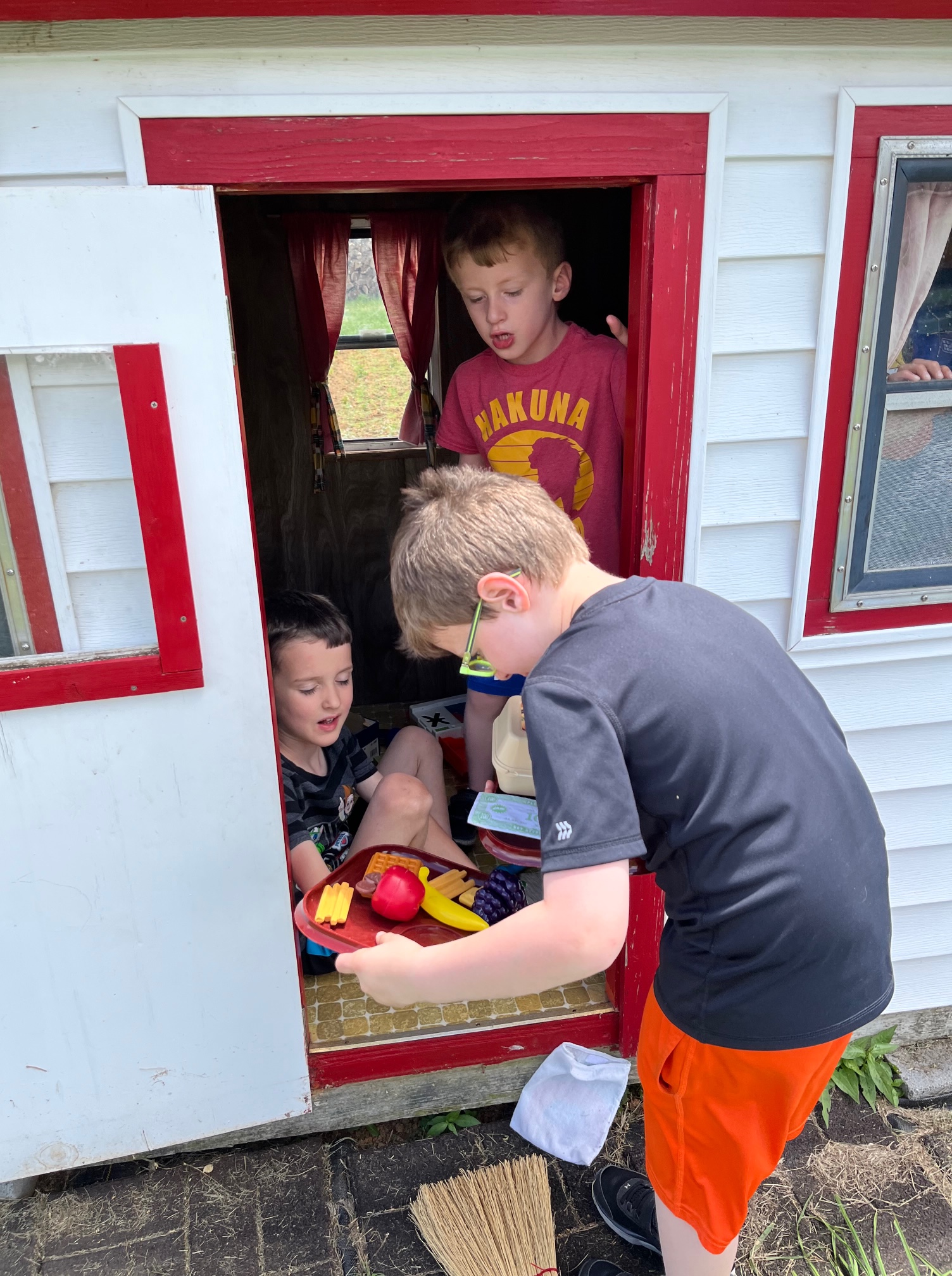
Not counting Chick-fil-A, we ate all our meals at home which were the most hectic times for me as chief cook. One grandson has Celiac and can’t eat any gluten—or come near it. Our youngest daughter was able to join us for two-and-a-half days to help out with all this—which was a real blessing. I’m not sure we could have survived—at least not in good spirits—without her help.
We muscled through a few hairy times of kid skirmishes, but taking care of the grandchildren can give their parents some much needed “down time,” a quiet meal at home, or out. Or even a chance for a little getaway whether camping, at a cabin, or a Stay Cation (at home). And I kept thinking about grandparents who provide full or part time care for their grandchildren. Now that’s a challenge!
It does take some planning and organizing to keep older children interested and involved and not bored. Yes, we heard the “bored” word but we also heard “I wish Cousin Camp was two weeks.”
I treasured those words, implying that he was loving cousin time. And we did too.
***
What treasures have your children or grandchildren given you this summer? Or in the past? I’d love to hear!
Comment here or send to address below.
For a wide variety of ideas with grandchildren, check out the book I mentioned last week: The Mindful Grandparent: The Art of Loving Our Children’s Children written by Shirley Showalter and Marilyn McEntyre. Or write to me at anotherwaymedia@yahoo.com or Another Way Media, P.O. Box 363, Singers Glen, VA 22834.
Another Way is a column by Melodie Davis, in syndication since 1987. She is the author of nine books. Another Way columns are posted at FindingHarmonyBlog.com a week after newspaper publication.
Another Way for week of July 1, 2022
The Art of Loving our Children’s Children
“The Family Circus” (by Bil Keane) had a great cartoon recently with big sister telling little brother, “When you and I have children, Mommy and Daddy will be promoted to grandparents.”
Ah yes, and a great promotion it is—and one never to be taken for granted.
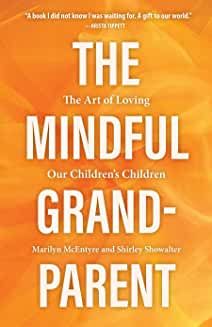
It made me think of the book I’m reading right now, The Mindful Grandparent: The Art of Loving Our Children’s Children (Broadleaf Books, 2022), written by the duo Shirley Showalter and Marilyn McEntyre. Shirley lived in our city (Harrisonburg, Va.) a number of years (besides going to college here where she met her husband Stuart—with the same spelling as my husband’s name!). Shirley is an award-winning educator, author, speaker and grandmother, who earlier served as president of Goshen College in Indiana where I grew up. Marilyn lives on the west coast and is also an award-winning spiritual writer, speaker and professor. Together they have a total of 12 grandchildren.
After my husband and I held our first “cousin camp” three years ago and I wrote about our adventures in my column/blog, Shirley invited me to come over to her house for tea and discussion about the art of grandparenting. She was exploring writing a book about such things. I enjoyed our conversation, and sharing stories and experiences—but at that point I was writing a work memoir and I told her I needed to focus on that. (Which you will hear more about in a few weeks!)
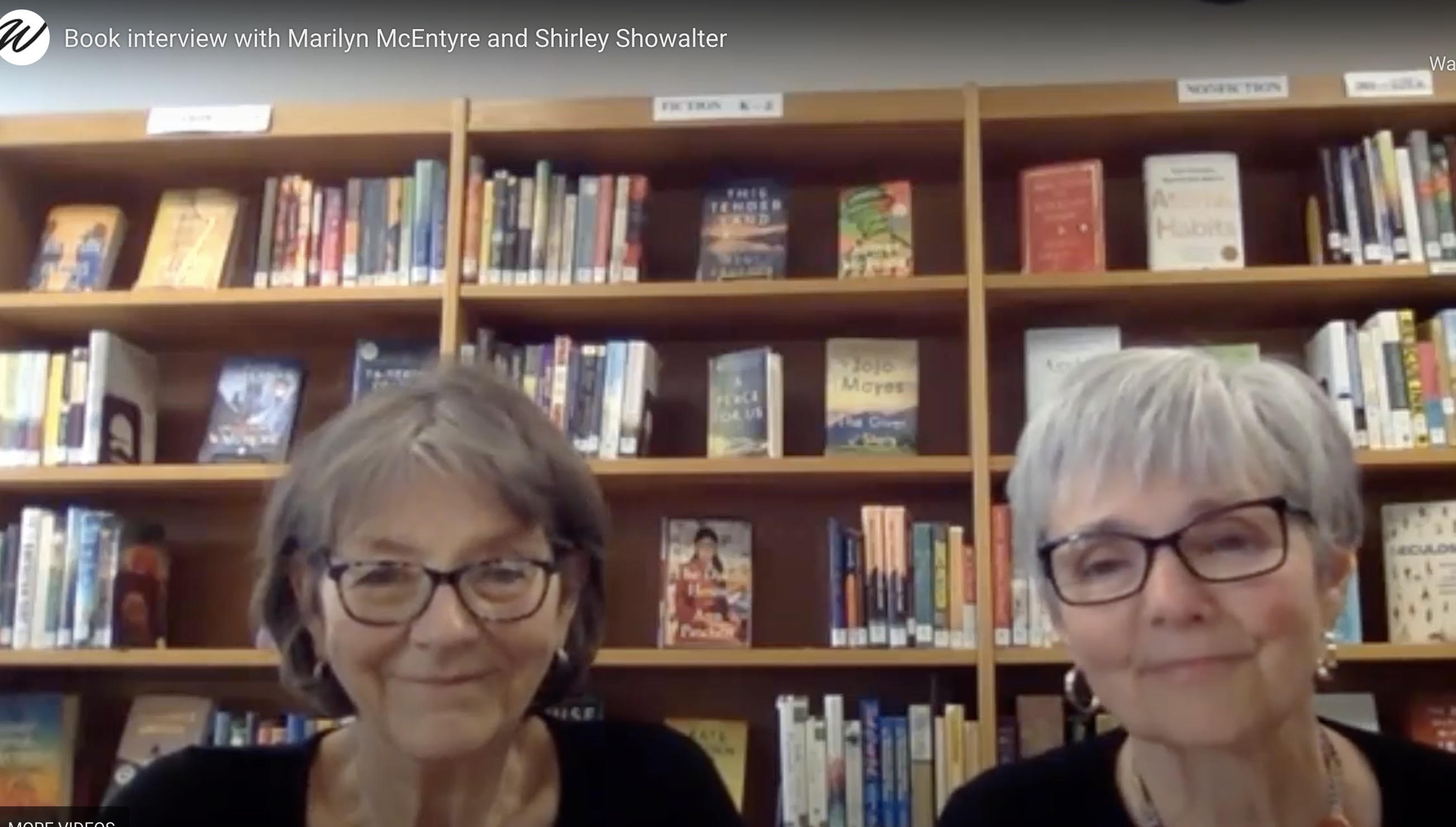
Krista Tippett, radio host of the “On Being” NPR program and podcast exclaimed of The Mindful Grandparent, “A book I did not know I was waiting for. A gift to our world.” That endorsement caught my attention.
The authors proclaim that “loving our children’s children well is an art—one we keep learning as they grow.” I can see how that is true. I relate to our eight-year-old grandsons much differently now than I did seven or eight years ago. The early baby days are so sweet and fun but the middle years of their childhood offer opportunities to see the world in new ways—with them.
Marilyn and Shirley’s book kicks off the grandparent journey by first covering pregnancy and labor and delivery (and how much do grandparents participate if invited?); how to decide on a name for your new role that suits you and that the little ones can say; how to have meaningful rituals included in baby showers; serving as a “grand nanny,” which Shirley did for a year in New York City; discovering the larger world through play, books, art, and nature; exploring feelings and difficult times with a death in the family or when a child has special needs. Altogether the book addresses 52 different themes and challenges of grandparenting: many many more topics I would never have thought of unless I had diligently sat down to think through the available angles for such a book.
The authors conclude each chapter with a dandy list of suggested resources if you want to find more help or information on a given topic. Those informative helps and ideas are a great addition to this easy-reading book.
I especially like the chapter titled “Simple Gifts” where Marilyn delves in to how to give gifts to our beloved grands in a culture where “companies are targeting the ‘two-year-old market’ and small children are asking for iPads, video games, and things that squeak and ding and provide instant feedback.” Marilyn signals that grandchildren may learn to look forward to experiences with grandparents, rather than receiving more “stuff” to sit on a shelf on languish in the toy room.
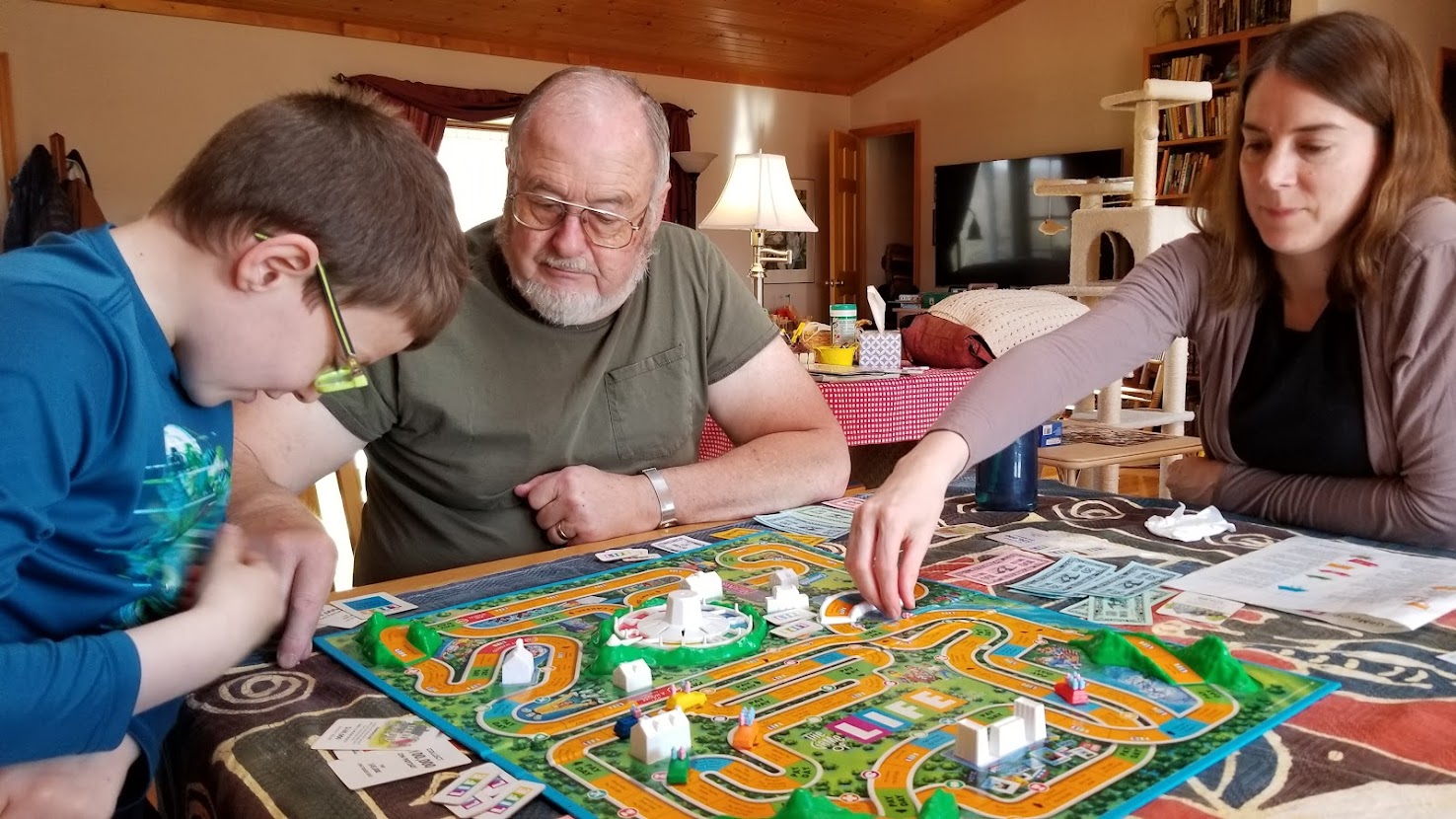
I had to think of the call to share experiences together as we spent time with our five grandsons recently. Next week I’ll share our experiences with our second Cousin Camp with all five grandsons held in late June. Meanwhile check out The Mindful Grandparent (inquire at a bookstore or on Amazon) to put it on your own must-read list!
***
If you’ve already read or seen The Mindful Grandparent, what parts did you connect with most?
If you had time to write your own grandparenting recommendations, what would you include?
***
Comment here or write to me at anotherwaymedia@yahoo.com or Another Way Media, P.O. Box 363, Singers Glen, VA 22834.
Another Way is a column by Melodie Davis, in syndication since 1987. She is the author of nine books. Another Way columns are posted at FindingHarmonyBlog.com a week after newspaper publication.
Another Way for week of June 24, 2022
Don’t Forget to Take Notes!
My dad and mom gave us kids one of the best gifts any family could ever have—at least if you enjoy travel. The summer of 1964 we had a six-week adventure from our home state of Indiana to the West Coast and back, hitting 17 states and 12 National Parks on our particular itinerary.
After my Mom died last fall, us kids went through all her stuff. We uncovered her small notebook of highlights of our trip. I drank it in.

Mom’s diary of the trip starts out: “Left July 11 at 2 p.m. Forgot pillows, soap, comb. Spent night in Illinois in pouring rain. Quite a mess to get supper with six in one place.” See, we had rented a very very small travel trailer for $2 a day. It slept five and we had six in our family. My brother ended up sleeping in a pup tent or the back seat of the car for most of the trip.
Not too great of start—like many camping trips. We also suffered one major breakdown when a spring broke and a wheel came up through the floor of the trailer, if I have the facts correct. Dad had to work hard to find a place to fix it (and remember, no cell phones). I think someone finally stopped to ask us if we needed help and drove Dad to a town somewhere. Long story short, we got to stay in a motel that night on good beds and mother was elated because she could spend the morning washing and ironing our clothes. (Iron, on a camping trip?? Yep!)
Dad always tried to visit people or families he knew, especially in the Midwest. We parked the trailer at the homes of about 10 different families or couples Dad and Mom knew. Some were relatives but most were guys Dad knew when he worked at Glacier National Park for alternative service during World War II. He so wanted us to see the things he had seen out west.
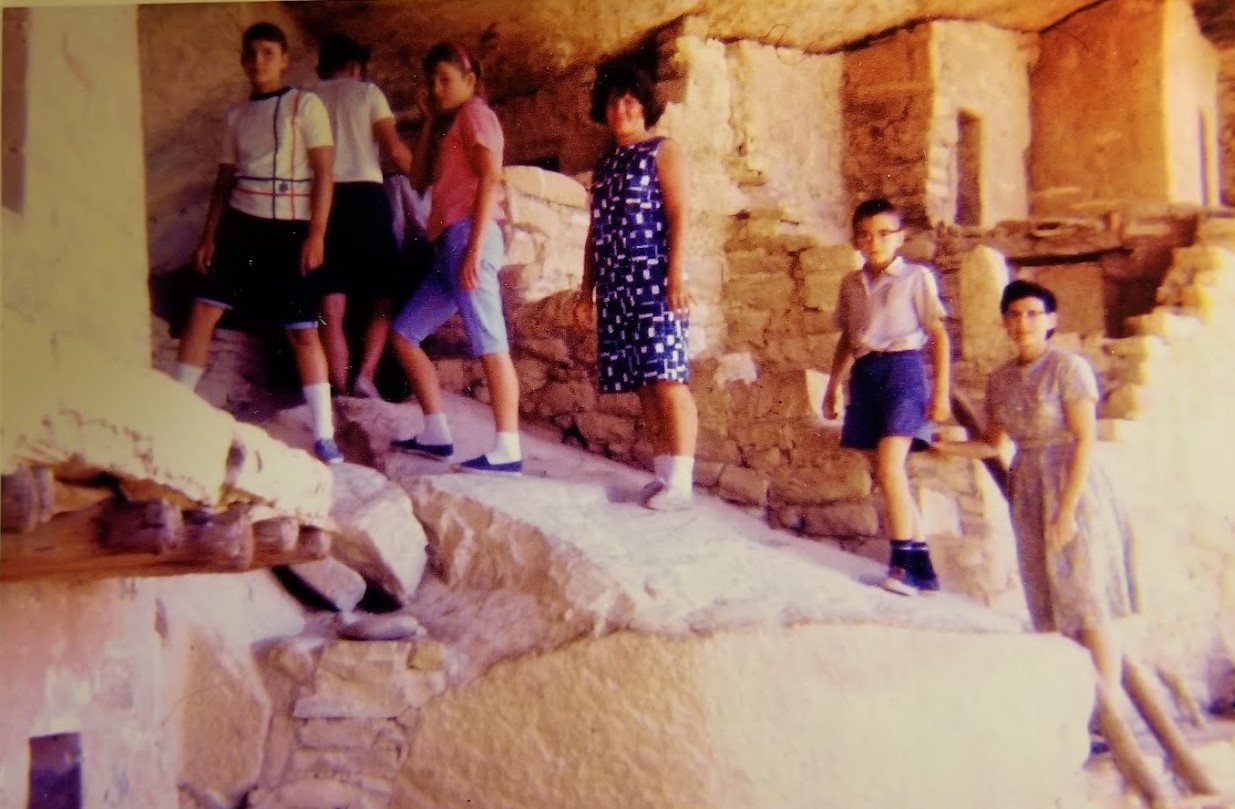
Camping in backyards saved a bushel of money of course. In 1964 gas was only about 30 cents a gallon so we squeezed through spending on average, $20 a day for a family of 6. That’s “eats, camping fees, entertainment, sightseeing, and gas,” Dad was proud to tell folks.
When we drove up Pikes’ Peak with that 1960 Chevrolet, (leaving the trailer at a camp) the Chevy had to take a rest, like many other vehicles. My dad and mom were extremely grateful when after a brief stop—where we kids crawled around some rocks—the Chev started up again as we completed the 14,115 feet elevation in our drive up the mountain.
Toward the end of the trip, according to Mom’s diary, Daddy was very anxious (as we all were) to get home as quickly as possible. We even decided to forego the Tetons. By late August the weather was getting chilly in the mountains and we hit snow a couple of times. We did stop in South Dakota at Mt. Rushmore.
The trip was planned five years in advance, set for the year my oldest sister graduated from high school. Some of us younger kids belly-ached that we would be too old to enjoy such a trip if we waited five years. I was just eight (the age of two of my grandsons now) when we began planning it. But it did give us time to save up our money (and Dad and Mom too). We purchased many a souvenir from the places we visited.
I love the note Mom inscribed on the little Penrite Memo Book where she kept track of our adventures. In 2016, she did a follow-up note on the cover, “You kids will want to read this many years later. Ha.”
I’m not sure why she added the “Ha.” I will be forever grateful for her little trip diary, because without it, so much history—and memories—would be gone forever.
Thanks Mom and Dad for one of the best trips of our lives.

***
I would love to hear about any great trip you were able to make! What made it special?
Comment here or write to me at anotherwaymedia@yahoo.com or Another Way Media, P.O. Box 363, Singers Glen, VA 22834.
Another Way is a column by Melodie Davis, in syndication since 1987. She is the author of nine books. Another Way columns are posted at FindingHarmonyBlog.com a week after newspaper publication.
Another Way for week of June 17, 2022
Summer Sun and My Vintage Grandma
What are your memories of your grandmother? Grandmas hold a special place in our hearts, for grandmothers are usually with us from our earliest days. Some children of course have been raised by a grandmother/grandfather.
My mother’s mother, Ruth Loucks Stauffer, was born May 21, 1896 and died June 24, 1991. Grandma lived 95 full years and I’m a little bit proud that I had grandparents from the 1800s! My mother lived 97 years and died last October.
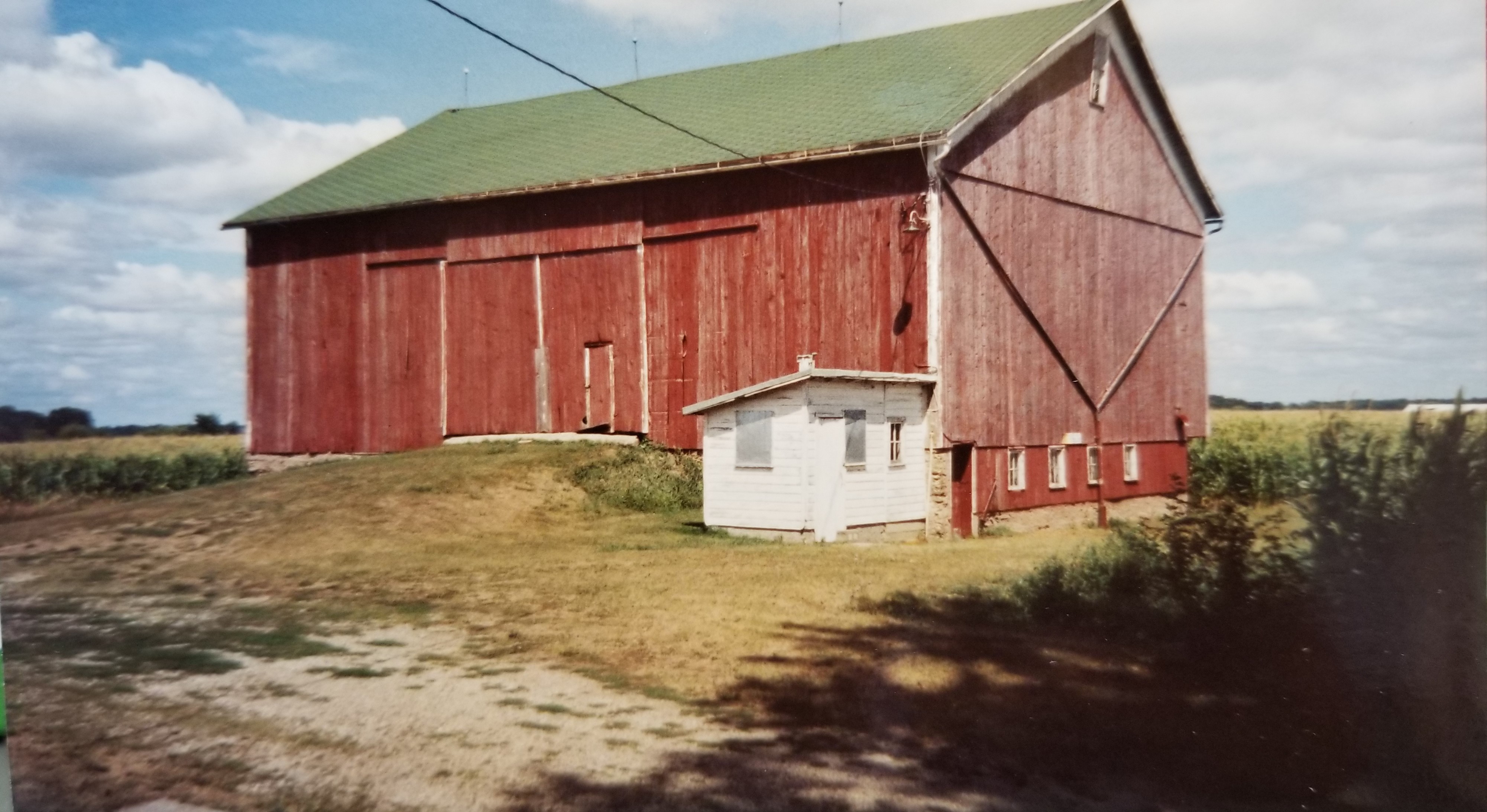
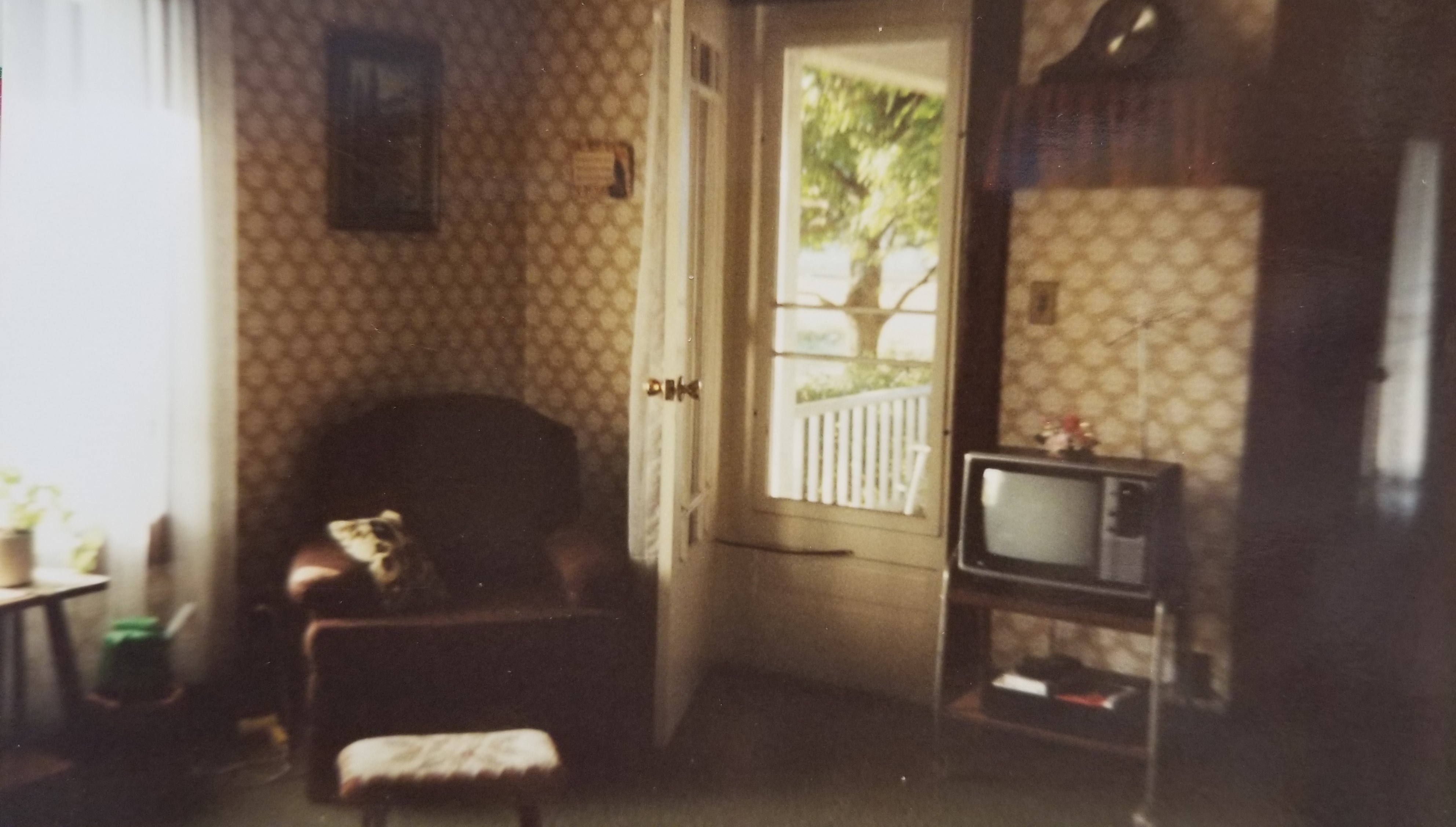
I will call Grandma Stauffer a vintage grandma because her house, her clothing, her barn hill, her pump on a well just fit the mid-1950s grandma description. We loved to go visit her, the food was always yummy, and we enjoyed exploring her barn and toys and what have you. We loved her cookies, pies and delicious smelling ham when we arrived on Christmas Day or for a Sunday dinner.
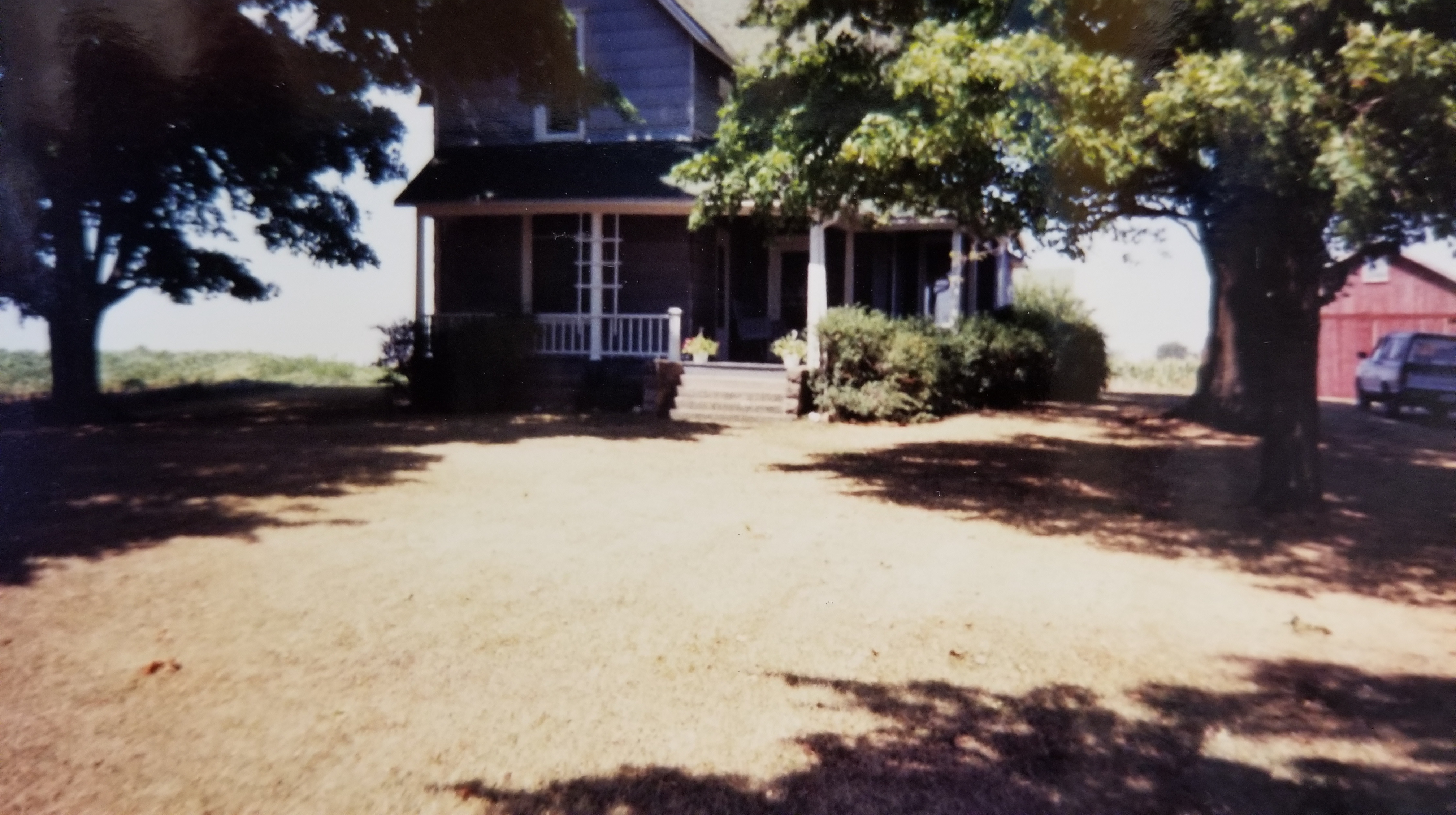
While we were always excited to go visit Grandma (she lived about 15 miles away), I must say I don’t remember spending the night there as a child more than once or twice. I think it made her a little nervous to have children around; my cousins who lived within walking distance of her house were over there a lot more—understandably. They probably knew her better.
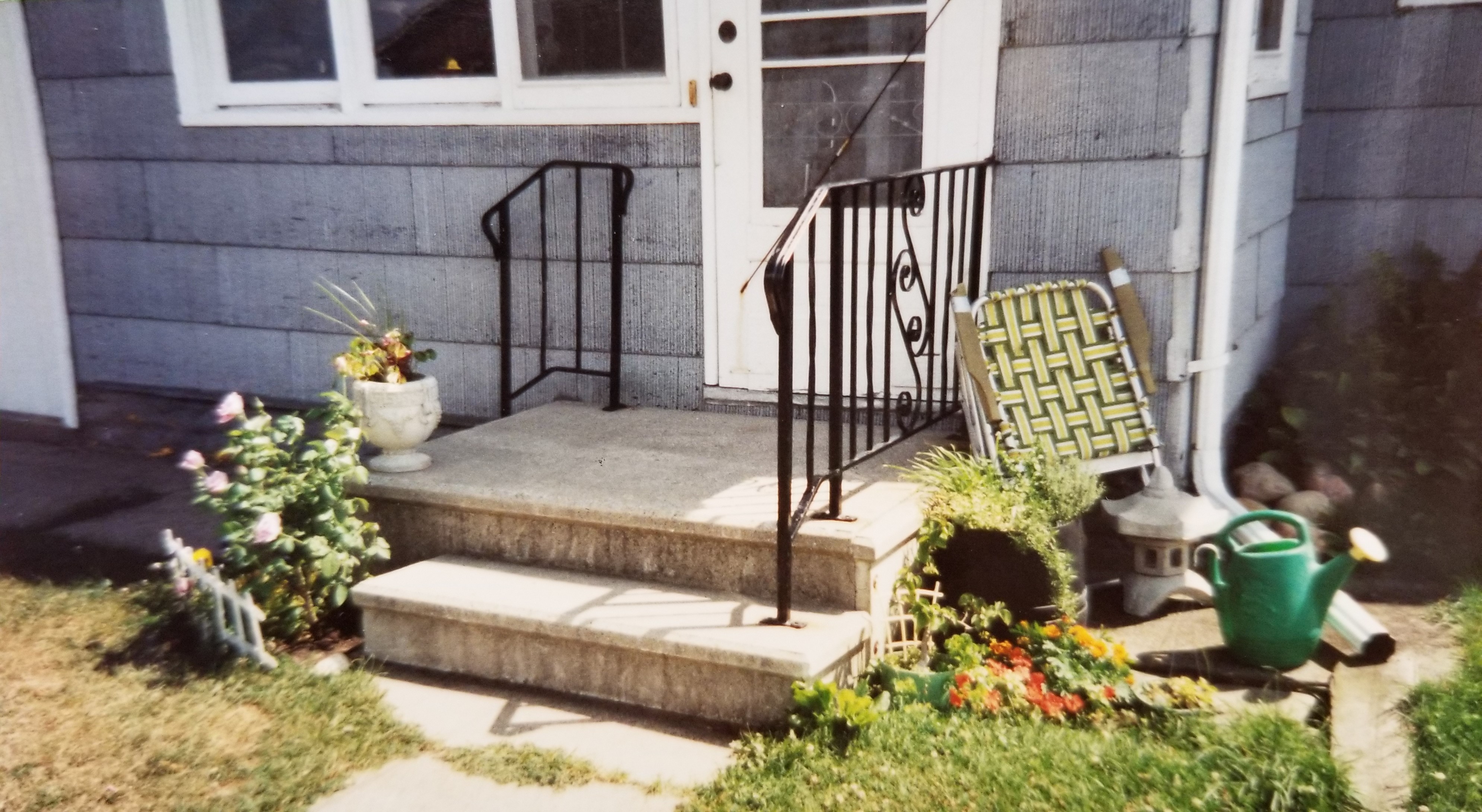
Grandma lost her husband when he was pretty young in an auto accident. She supported herself the rest of her years by renting out acres on her farm, and taking in alterations and sewing projects. She also sewed exquisite coverings—if you know Mennonites, you know the little hat-like nets that most Mennonite women wore—at least to church. Some wore them full time at home except in bed. The reasoning on that: the Bible says pray without ceasing, and Mennonites at that time felt that women should wear a head covering when praying—which could be anytime and always! So Grandma probably made hundreds if not more of these religious coverings in her day, and charged a few dollars.
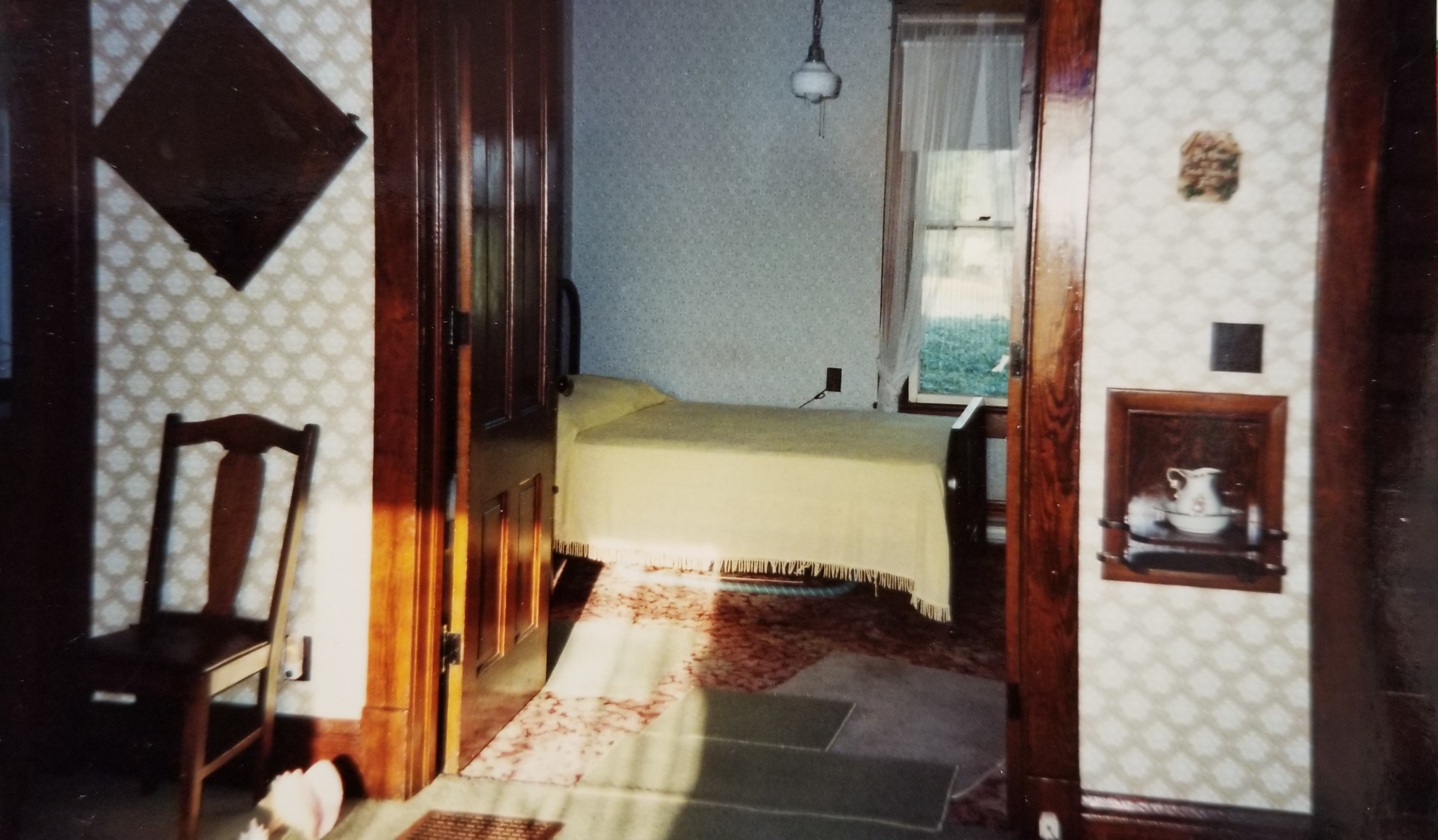
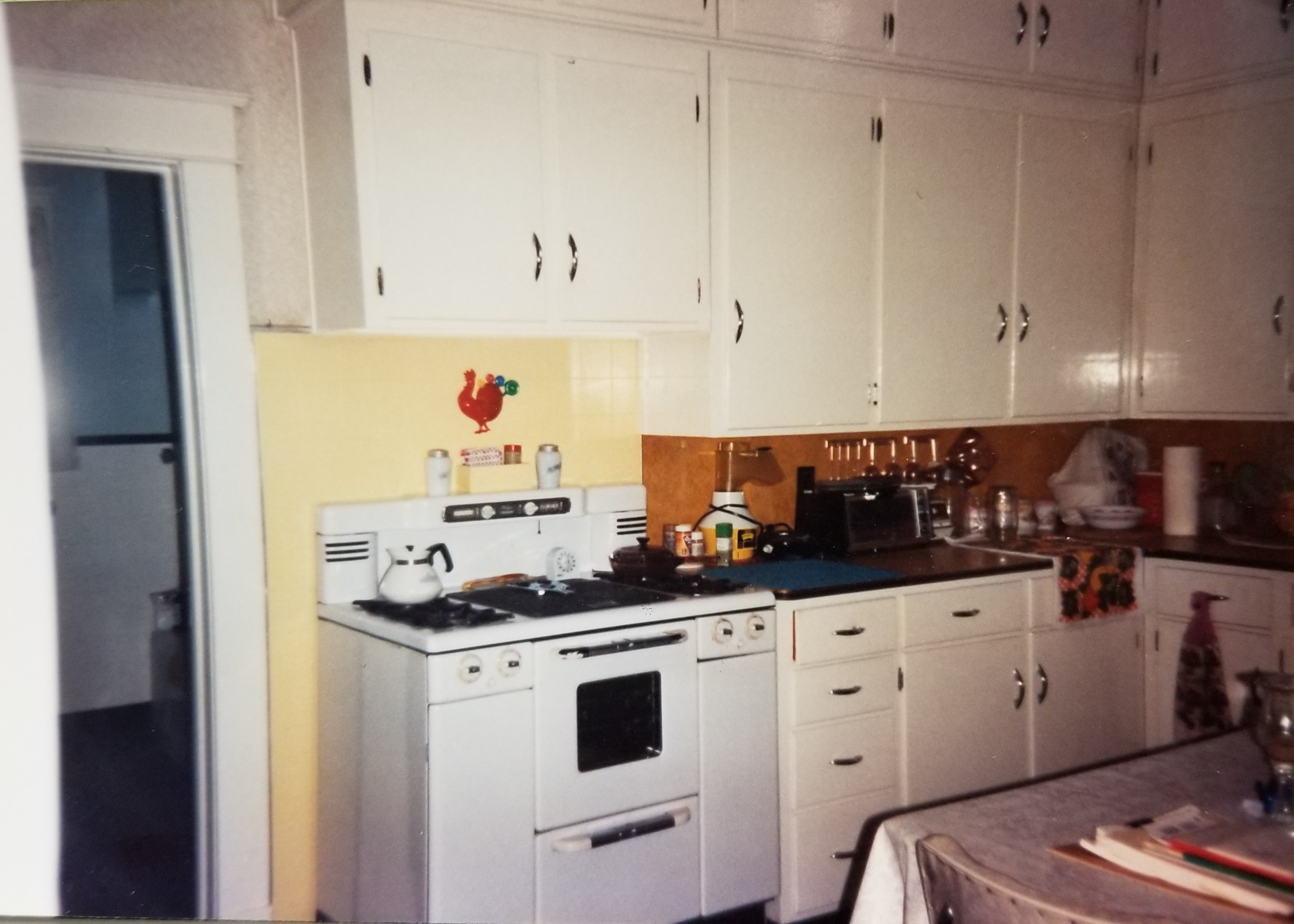
Photos of Grandma’s house now look like a model house from the early 1940s. My cousin Marilyn Yoder took a series of photos when she stayed at Grandma’s house when Grandma had to move to a nursing home for her last six months. Marilyn wanted to remember Grandma Stauffer’s house the way it was.
We once visited the Laura Ingalls Wilder home in Mansfield, Missouri and it looked a lot like Grandma Stauffer’s house, especially the kitchen.
Grandma Stauffer once wrote down a page full of memories and connections regarding her family and I’m so glad to have it now. One of the things she wrote was how girls/women in those times did not want to have tanned skin, because it made them look like they were farm workers who had to work in the sun. They covered up their arms with stockings (toes cut out) to keep from getting tanned. Way to go, Grandma and your generation—I’m sure you didn’t have as much skin cancer to deal with as our current generation, or the wrinkled skin of someone who has practiced sunbathing or visiting tanning salons. Thankfully many are getting the message to cover up skin or at least use lotion. (My grandsons all wear UV blocking shirts and hats when they are out playing in the sun or go to the beach.)
The irony in our family was that my mom, while taught to cover up her skin when she was a child, went on to love sporting a tan while she lived in north Florida for eight years. We frequently went to nearby beaches. She, too, had to pay for her sun-loving ways, and had to have several basil cell carcinomas removed from her head or back. I now wear a white shirt that bounces sunrays off, and a sunhat to work in the garden on summer days.
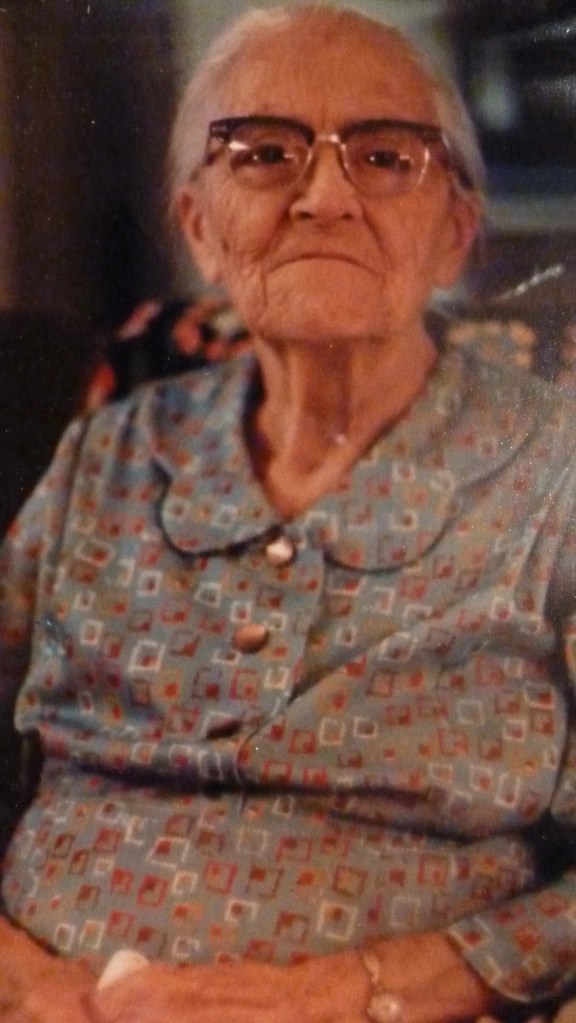
I’m grateful for all three grandparents I was privileged to know and just hope and pray that our grandchildren will feel the same way about us! And thankful to my cousin Marilyn for sharing these memories through photos.
***
Did you happen to have a grandma with a kitchen similar to the one above? I’d love to hear about it! Or memories from any other similar pictures!
Comment here or send to anotherwaymedia@yahoo.com or Another Way Media, P.O. Box 363, Singers Glen, VA 22834.
Another Way is a column by Melodie Davis, in syndication since 1987. She is the author of nine books. Another Way columns are posted 78at FindingHarmonyBlog.com a week after newspaper publication.
Another Way for week of June 10, 2022
So God Made a Factory Guy
(With apologies to Paul Harvey, radio commentator, who wrote “So God Made a Farmer.” And if you’re not old enough to remember Paul Harvey, Google or Wikipedia him.)
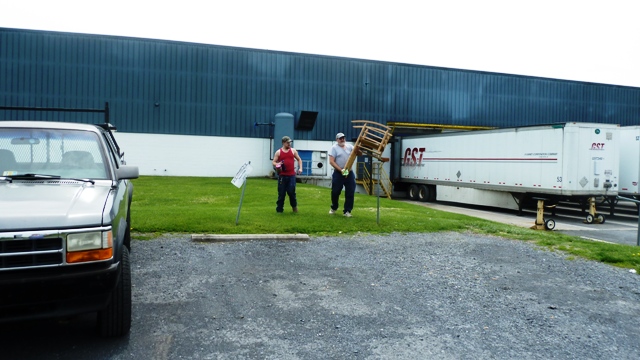
God knew someone would need to do the work not everyone wanted to do, so God made a factory worker. The worker would often get up at 3 a.m. to be able to take his time in the bathroom in a place that was clean and off the clock, and then drive 45 minutes to work to make sure he was there by 5 a.m. Thus, God created the faithful factory worker.
This worker-Dad would put in his 40 or 45-hour week and then sometimes be asked to also work Saturday and even Sunday if they were very busy, so God made a strong and dedicated factory worker.
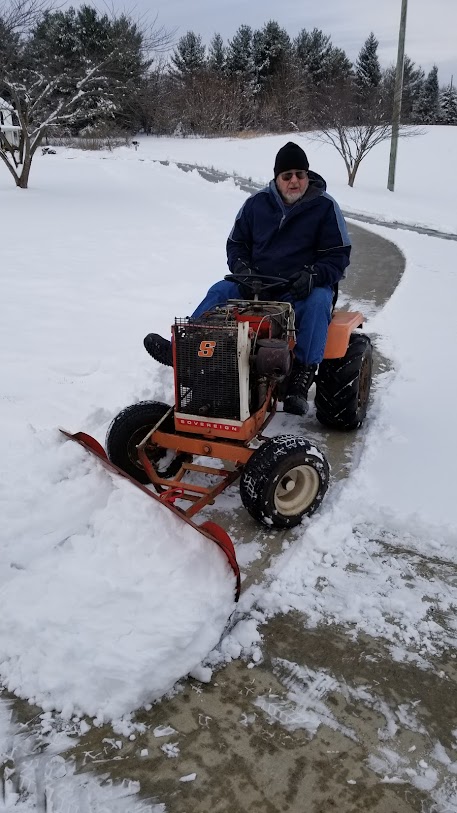
And on snow days when it seemed like every other business courteously closed to keep workers off treacherous and curvy mountain roads and Interstates, he would call the factory’s “snow alert” line only to hear the same broken message: “Our plant will be open today for work, but be safe. Use your own judgment.” And the factory guy wearily plowed or shoveled him/herself out at 2 a.m. to be able to arrive at the plant on time.
God knew the world would need men and women willing to run machines, drive skid loaders, keep track of inventory, apply noxious glazes or paint, and basically do anything the powers that be asked them to. So God made humble women and men whose shoulders slumped as they drove home and then sat in their cars or trucks for 5 to 10 minutes to get the energy to place their sore tired feet onto the sidewalk and go into their house or house trailer.
And on Friday nights when the worker came home he’d tell his kids or wife to PLEASE not answer the phone because he never knew (from experience) when his lead man/boss would call and ask him to come in to work the next day, especially if something special—like a birthday party or a trip to a zoo had been planned by the family. So God made a worker who sometimes kept the phone (before cell phones) off the hook.

The factory worker sometimes missed his child’s softball, baseball or basketball games because of work, but went when he could and sometimes felt sad and bitter that he couldn’t always get there on time.
The worker God made got used to gobbling his lunch down at work in ten minutes or less, so he’d have time to get back to his station in the huge warehouse. Thus God helped factory workers eat very fast and not take time to use the shabby and sometimes soiled bathroom stalls before hurrying back to work. Or if asking if he or she could go to the restroom, the response may have been “You can go when you get far enough ahead of your work load.”
Oh, and heat, or cold? The factory guy or gal has to live with sweat-inducing temperatures nearing 90 degrees inside the workplace in summer, and freezing fingers in winter. There may be some fans, but no air conditioning or adequate heating in those large spaces.
The man or woman sometimes felt stigmatized for not having the greatest grammar in the world, and for not knowing how to pronounce certain words, and having a southern or Spanish or other accent.
God nudged the factory worker to always remind his children to study hard in school and take it seriously so they wouldn’t have to spend their working years in a factory—unless they chose to.

Afterall, God knows the world needs factory workers who are happy to help make or process the things people need and want: cars, clothes, cupboards, china, candy, coffee, you name it.
So, God made a factory worker, or two or twenty million, to whom everyone owes their unending thanks, appreciation, and respect.
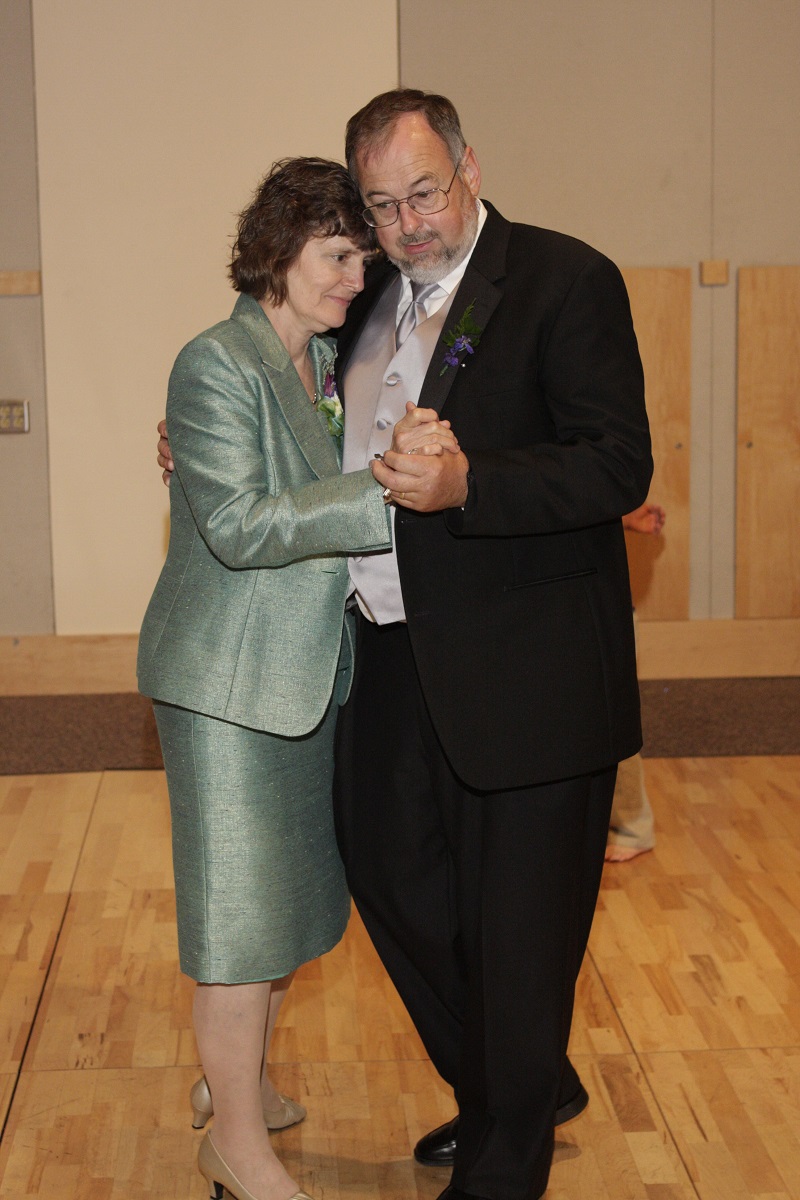
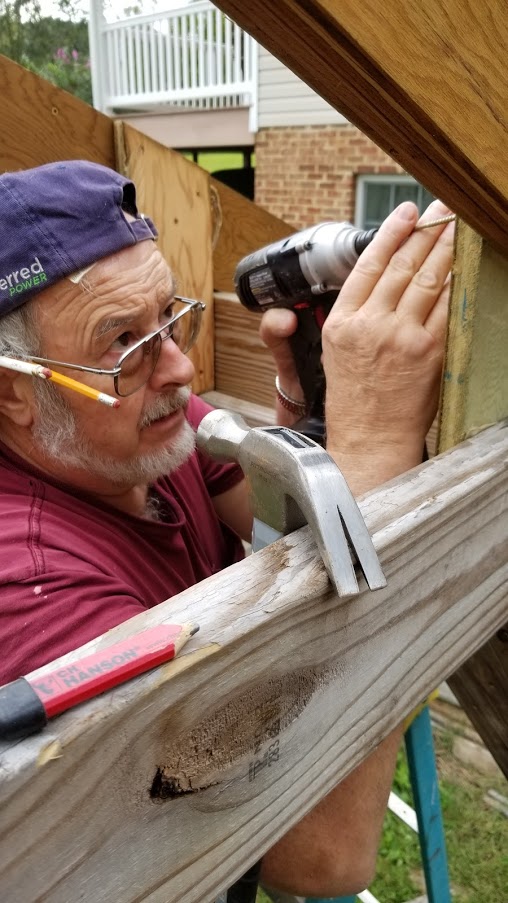
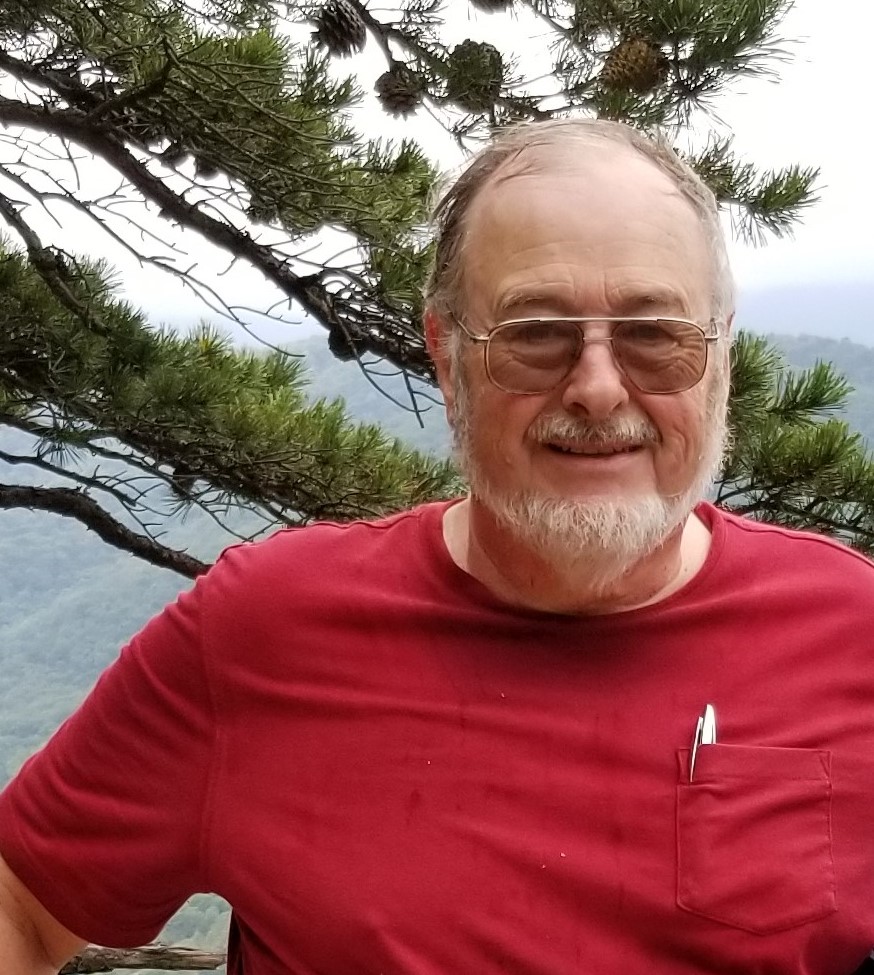
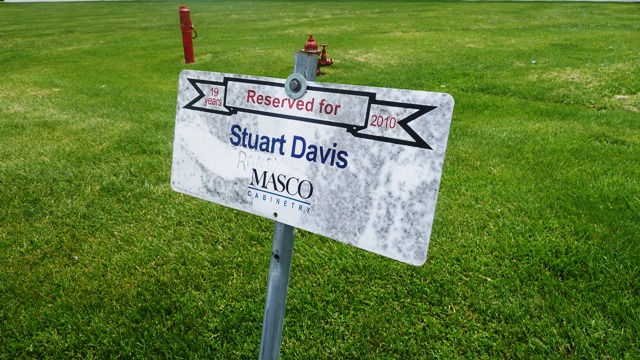
Happy Father’s Day to my hard working husband (photo from 2008).
***
Comments? Who have been the industrious, amazing men or women in your life!
We’d love to hear, here!
Or write to me at anotherwaymedia@yahoo.com or Another Way Media, P.O. Box 363, Singers Glen, VA 22834.
Another Way is a column by Melodie Davis, in syndication since 1987. She is the author of nine books. Another Way columns are posted at FindingHarmonyBlog.com a week after newspaper publication.
Another Way for week of June 3, 2022
The Column I Never Want to Write Again
I do not want to write this column.
None of us—Republican, Democrat, Libertarian, or “Whatevers”—ever want to get the kind of news again we got on May 24 out of Uvalde, Texas. It was a place most of us never heard of.
My heart—and all good hearts—break for the children, their friends, their families, and their teachers whose lives will be forever stained and stricken. And not just Uvalde. Everywhere.
You may have noticed I rarely take sides here or get into politics or write about too controversial of topics.
But on this we should all agree: no more shootings. And that takes guts for me to write. Other countries of the world do not have this same problem to the same degree that the U.S. has experienced for the past 10-20 years. Too many kids have died. Too many college students. Too many police officers. Too many teachers. Too many first responders. Too many families have had their lives and hearts ripped apart.
What can we do? We can ask that school doors are locked and supervised. That parents (or grandparents raising grandchildren) demand unlocked bedrooms for the children. That guns in homes, if any, are locked, secured, put away. That gun shops and gun shows which sell guns live up to their citizenship and make sure all buyers go through background checks, even wait periods. Other countries have extremely tough gun laws—and have very few shoot outs like the ones we’ve become way too accustomed to. We can ask that gun shop owners do right by their position in the community, and put the holds on sales until backgrounds are checked thoroughly.
We can be more vigilant about reporting kids or grown-ups who are acting—or announcing on their phones and other electronic media—their hatred, instability, intentions. We can urge that they get mental health help if that is the problem. We can beg Congress people, too worried about re-election to save the lives of innocent children, to pass stricter gun laws. Until recently I had not realized that the second amendment was put there essentially by the Founders because some Southern states refused to join the fledging new country in order to keep “militias to protect against uprisings by enslaved Africans,” according to columnist Leonard Pitts, Jr. and other historians.
We need to work to ban assault rifles for ordinary citizens: who needs an assault rifle except soldiers, police officers working to protect us, or perhaps bodyguards if you’re the president? With fewer weapons of that type floating around, gangs and drug cartels will perhaps have fewer weapons to turn to. What 18-year-old should have the right to buy an A-15 semi-automatic rifle? They’re not even allowed to buy alcohol, as it should be.

The problems are big and I don’t claim to have answers but we must work at reducing and eliminating active shooters at our schools. Right? We must stand up for children. We must come together or we will come apart as a country.
My grandfather was born on June 3, 1872. He was a good and decent man who I loved dearly. We were very close in his last years. My father was a good and decent man who I loved dearly. Mother and grandmothers too. I assume most of us had good and decent families. Let us unite as good, loving, people to do what we must do to end the carnage, to end the war over our children.
This is perhaps more controversial than usual. I am sorry/not sorry. My heart is bleeding, yes. Is yours?
P.S. I’m sending this to a few congress people, as one step. Feel free to copy or use.
Comments are welcome here or write to me at anotherwaymedia@yahoo.com or Another Way Media, P.O. Box 363, Singers Glen, VA 22834.
Another Way is a column by Melodie Davis, in syndication since 1987. She is the author of nine books. Another Way columns are posted at FindingHarmonyBlog.com a week after newspaper publication.
Another Way for week of May 27, 2022
Up for a Swim?
How did you learn to swim? In a pool? A river or lake? Did you take lessons or learn on your own? Or perhaps you’ve never learned.
I keenly remember my experience. We had a pond near a creek in one of our hillier fields on our Indiana farm. Over time, Dad built us a cute log cabin, added a brick grill, a picnic table and: a raft for the pond. That raft was the crowning touch for us kids and we loved to use paddles and poles to push ourselves around the pond. The pond also held bloodsuckers in the muck but that’s another story.
My older two sisters took to the water like fish and soon were not just swimming but jumping carefully off of the raft into the water. I watched with a certain amount of envy, fear, and desire. I got down into the water but couldn’t make myself let go of an innertube (for floating) or the edge of the raft. Daddy was an excellent swimmer and dared me, encouraged me, illustrated the moves, and probably inwardly prayed that I wouldn’t drown in the pond. Momma couldn’t swim either, and he so wanted me to learn.
One day when discussing the same old issue, he gently pushed me off the raft into the water. Abruptly I had to sink or swim. With some shock, surprise, and maybe a little anger, I started paddling—knowing my dad wouldn’t let me drown and getting more surprised by the second that I was staying up in the water. I wasn’t going under!
So “doggie paddling” came first and I began to finesse some arm strokes. Finally in college at a small school without a pool, the college arranged for us to participate in swimming classes at the neighboring state school, then named Madison College. This introduced me to the finer skills of side, back, and breast strokes, and even the butterfly stroke (never mastered). I would not ever recommend my Dad’s method of teaching me to swim but I’m thankful he truly launched me into the swimmer’s world. I think floating on my back in some quiet water is my favorite thing.
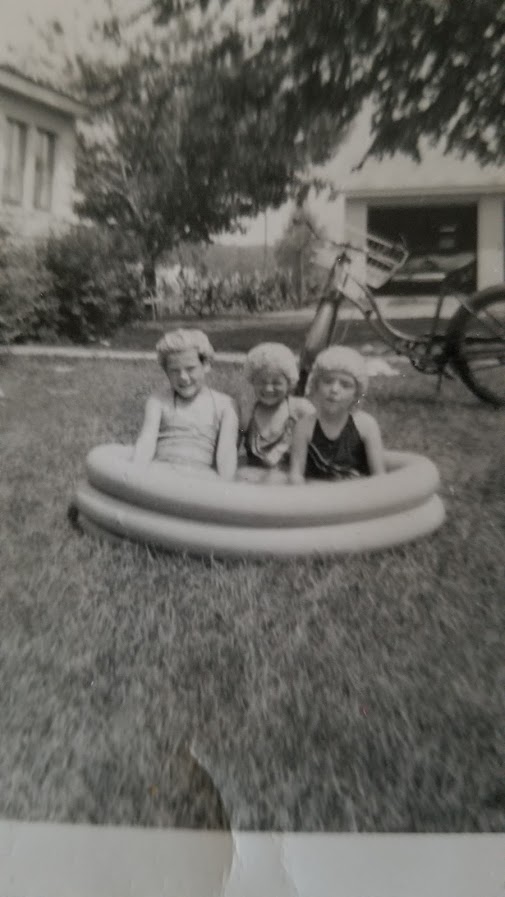
And I’m hugely grateful for a nearby retirement center’s pool and my husband’s push for us both to belong—mainly for exercise. We both have developed friendships and countless connections with the folks there. I used to hate the rigamarole of changing clothes, getting out of wet suits, rinsing out suits and so on, but it has now become a routine like brushing your teeth.
As young parents, we knew the importance of teaching our children to swim early in life. They all participated in the “Charlie Arnold Swim School” at the same college where I refined my strokes, which is now James Madison University. Since Covid, I don’t think the swim classes have been offered and other swim schools have been similarly curtailed. Unfortunately.
My Mom had a push too: not literally but a deep desire to learn to swim. So she took swimming classes at a nearby pool sometime after the age of 50. She enjoyed finally joining all of us in the water. I don’t think she advanced beyond doggie paddling, but she helped children get water exercise as well, as a volunteer during winters spent in south Texas. She and Dad helped children with mobility issues get in and out of the pool, and to play. We were all so proud of her and even though her legs became too weak in the wavy water of the ocean as she headed into her 90s, I know she was humbly proud of her earlier efforts as well.
Sometimes we need just a little nudge to move us in a good new direction. Jump in and try something new whether it is a hobby, a job, a position at church or in a club, or a class with other newbies doing something you’ve always wanted to try. You might surprise yourself!

Memories, stories, comments?
Share here or send to anotherwaymedia@yahoo.com or Another Way Media, P.O. Box 363, Singers Glen, VA 22834.
Another Way is a column by Melodie Davis, in syndication since 1987. She is the author of nine books. Another Way columns are posted at FindingHarmonyBlog.com a week after newspaper publication.
Another Way for week of May 20, 2022
Are Your Children Headed to a Summer Camp?
Summer is not far away. While some camps may be at capacity, I know that many church camps for children were covid-curtailed in recent years so it may not be too late to sign up children or grandchildren for a marvelous/challenging/astonishing week out in nature.
Yes, camps can be expensive but if it is a church camp, many have support programs through local congregations for reduced pricing.

That aside, what does camping do for children? Or families? Day camps for younger children are a good way to introduce children to the fun, learning, and friendships that can happen in that setting. There are many varieties to chose from: sport camps, drama, music, art, and birding camps abound in many communities. A week or even three days away from Mom and Dad can help kids learn and mature from nature, new relationships, and loving, teaching adults.
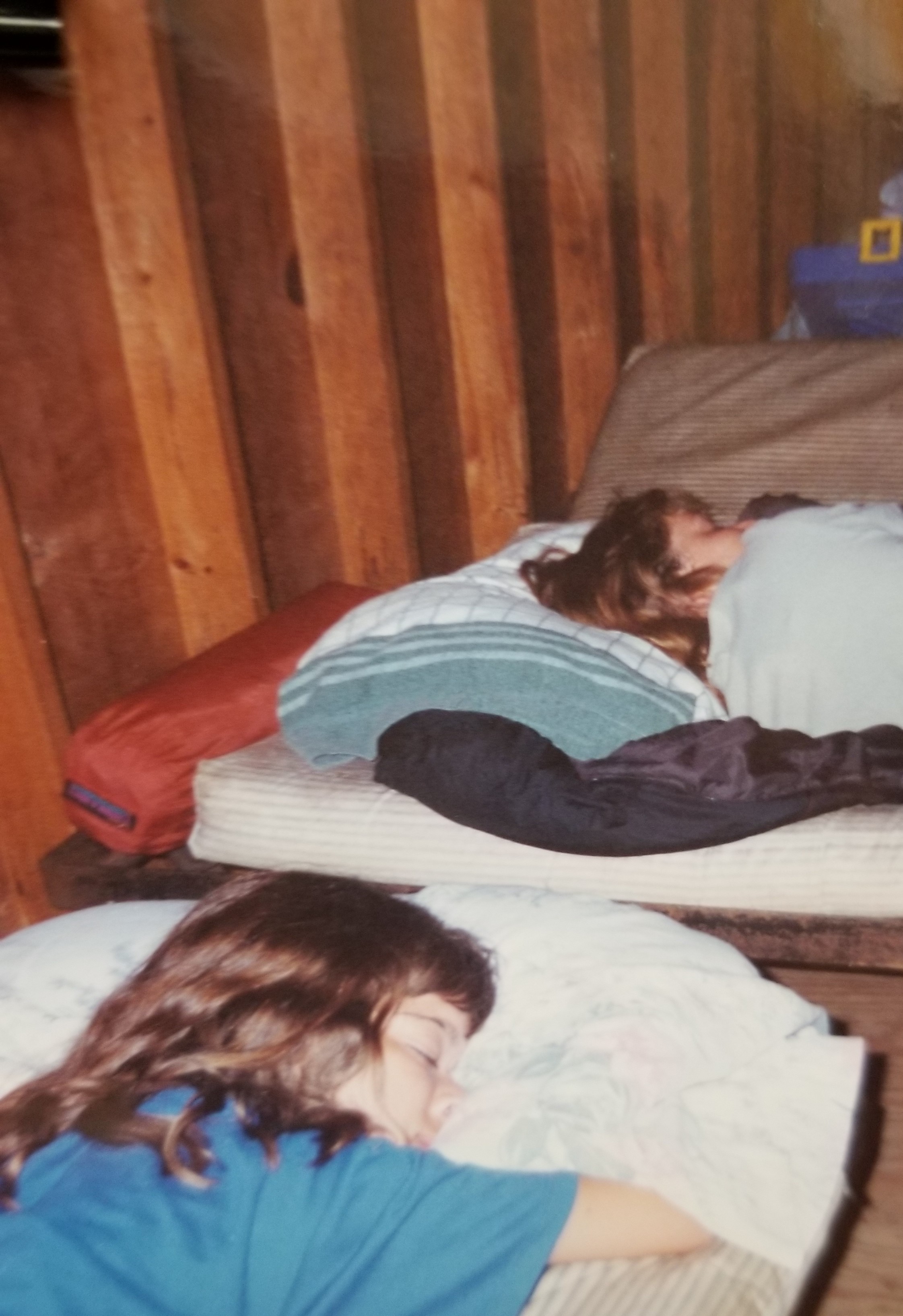
As a bit of history of camps for children, I was fascinated to learn that camps began in the 1870s—mainly for boys. By 1900 when my grandpa would have been a child, there were just under 100 camps known in the U.S. By 1918, there were more than 1000. (Google the history of summer camps.) In Indiana where I lived, church-related camps started spouting up in the late 40s and early 50s.
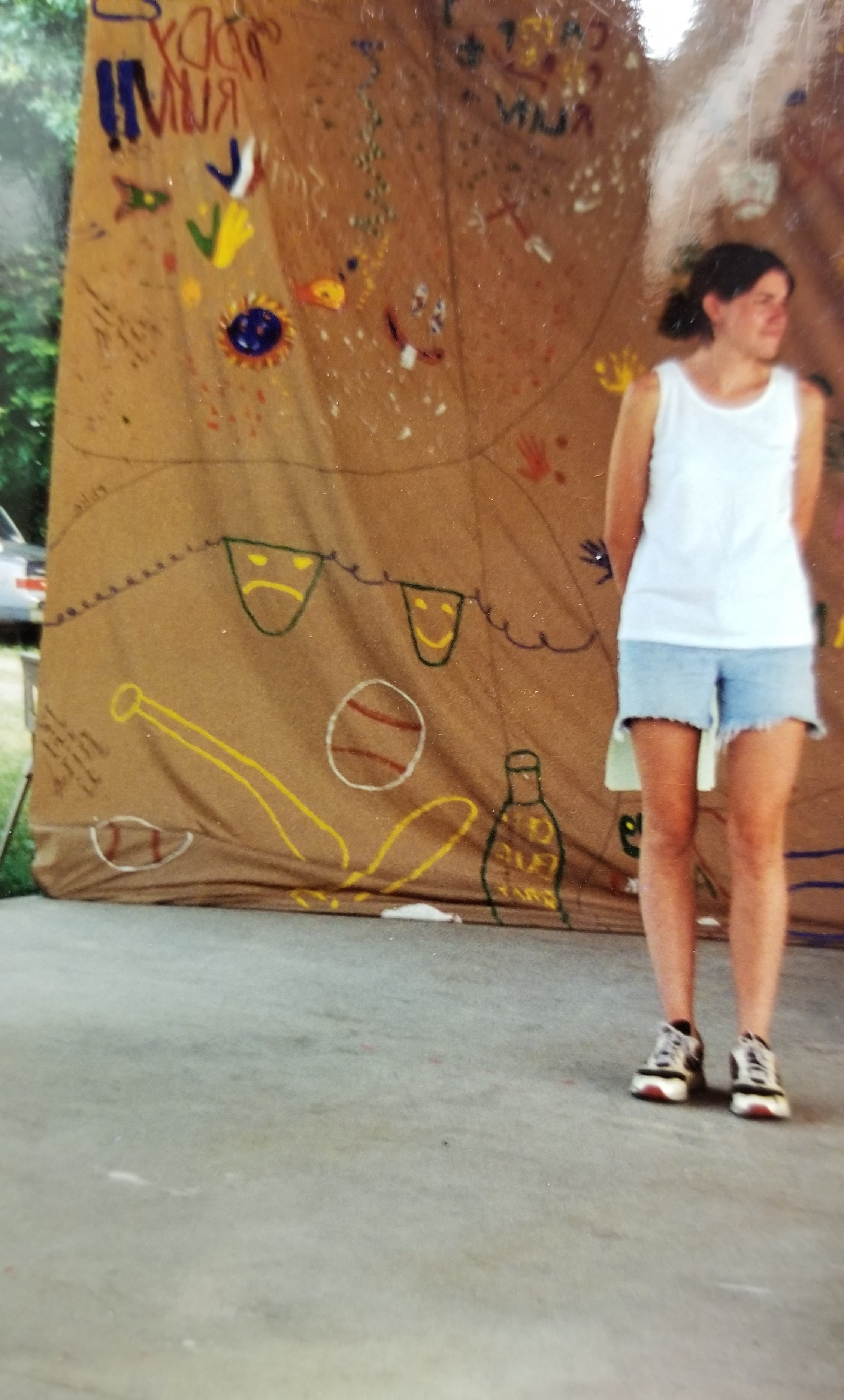
My camp experiences as a child were church camps. When I was very young, my parents took our family to several week-long family camps—one near Lake Michigan and one in Ontario—which was pretty exciting for all of us. Dad was a deacon at our church so it may have paid for part of our participation to help strengthen Dad’s gifts and leadership skills. Little Eden in Michigan held yearly “farmer’s family camp.” Dad and all of us enjoyed the fellowship and new friends made. Dad even talked me into leaving my precious pacifier behind in our cabin!
These early camping experiences prepared me for going to my first full-week away from Mom and Dad as a nine-year-old. I was excited to spread my wings and be like my older sisters. But a week can feel incredibly long at the outset when you’re nine. I was put into a cabin where I didn’t have any of my church friends. A camper in my cabin was experiencing extreme homesickness and kind of “attached” herself to me. Together we made other friends and survived (especially for the homesick girl) the week.
And with our own daughters, it was not my oldest daughter who got to go to camp first. Because of the way the camp scheduled their weeks, my second daughter was able to do “something first” before her big sister. She grew a little apprehensive (and we did too, I’ll admit) as the time neared. But she braved up and while we as parents were a little worried for her, I think she had a fine week and was happy to tell her sisters all about it when she got home. The dynamics of a family change when one member is away, and especially younger children may get to experience what it is like to be the “oldest sibling” for a change.
As I think back on the spiritual nurture and Christian education of our daughters, I give much credit to the experiences they had at our church camp. They came home eager to share songs they learned such as “Pharaoh, Pharaoh, we gotta go” to the old rock tune of “Louie, Louie.” They would boogey to the song in front of our whole congregation, producing smiles and wiggling bodies. They also participated in a music and worship camp in the wonderful Smoky Mountains, where they learned to sing beautiful choral music which they also shared with our congregation.

If you can’t tell, I highly recommend camping experiences for children if you can at all afford it. Choose carefully of course, and listen to the interests and goals of the children.
What memories does this stir for you?
Did you or your children/grandchildren get homesick the first time away at camp?
What did you or your children learn?
Comment here or share with me at anotherwaymedia@yahoo.com or Another Way Media, P.O. Box 363, Singers Glen, VA 22834.
Another Way is a column by Melodie Davis, in syndication since 1987. She is the author of nine books. Another Way columns are posted at FindingHarmonyBlog.com a week after newspaper publication.
Messing with Memoir – Cover reveal time!
May 23, 2022
Oh, heart be still! Today I received—by United States Priority Mail—the cover (and contents) of my memoir to be released this summer. (I have to proof the contents one more time.)
An author always holds her or his breath to receive the book cover—and in most cases, authors have little to no voice in what the artist or designer or publisher decides on. I was able to feed in some ideas, of course, and that’s normal, but the cover was in her hands.
And I like it!! I know my siblings will like it even if the egg basket we used on the farm is nothing like the fancy fun basket used on this cover.
And ta da: Here it is.

I told the designer at the publishing house that I was good with it!
Plus, the young woman on the front is about 40 years younger so: no wrinkles! And if you peer closely, you may nod and say “Oh yes, I used to use a regular typewriter like that!”
And now, it’s your turn to say what you think. Love it or not, I think this will be the final cover.
What do you think of it? Does it communicate?
Does it look interesting? Do the eggs make you wonder—what?
Comment on Facebook or right here if you prefer! I’d love to hear from you.
Another Way for week of May 13, 2022
Some Ancient Ink and Chocolate Cake
Two Sundays after Easter we went to a very small burial and memorial service for a 99-year-old man from our church. He wanted to make it to 100, but that was not to be.
Three women (sounds Biblical, yes?) came from a distance to help bury their beloved friend’s ashes. None of them were blood kin of the man we were remembering and honoring. He had an unusual name, Bolling Nalle. One of these women brought—not ointment as in the days of Jesus’ burial, but chocolate cake: Bolling’s favorite treat.
Bolling and his wife Daisy had no children, no living relatives at this point except his wife’s cousin who lived too far to attend. Bolling and Daisy were founding members of our church in 1963.
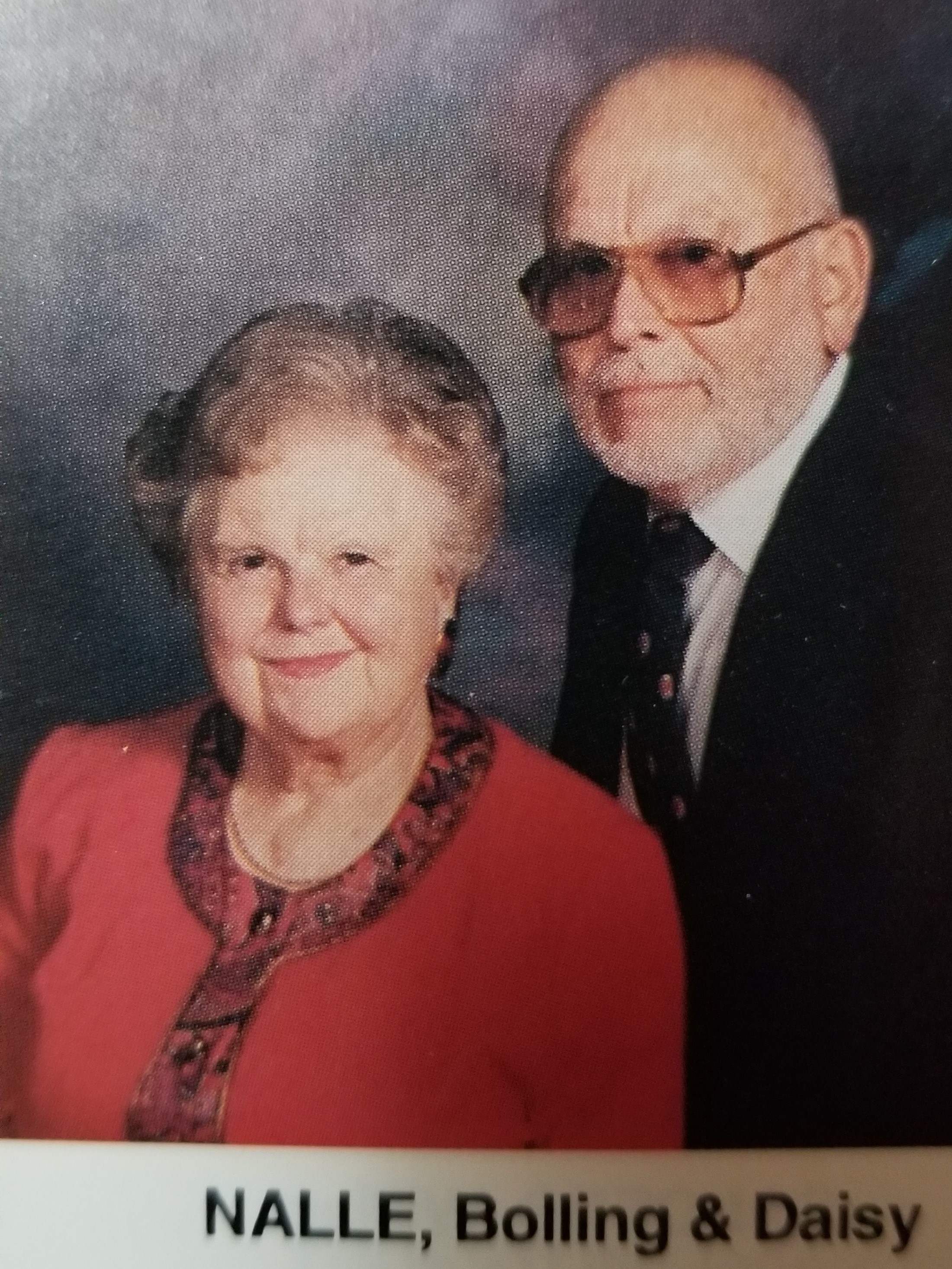
Bolling married Daisy later in life, so they never had children, but he enjoyed sharing his beloved horse (who was kept in a large fenced backyard) with young friends from church and the neighborhood. The Nalles also enjoyed traveling the world including all seven continents. They were not young when they visited Antarctica and I remember being a bit blown away by photos at church from that exotic part of the world. Bolling, after serving in the Navy in World War II, worked for a company that tested dairy products. Daisy was a pro at writing and following by-laws for organizations, and served 31 years as deputy clerk for the U.S. Federal Court (Western District of Virginia).
Altogether 13 of us gathered, including our pastor, who led us in a short service of committal and sharing our stories about this almost-centenarian who had touched our lives in one way or another. Bolling would have been happy with those who showed up. We were 12 women and one man, my husband. So many of Bolling’s other male friends at church were already deceased, or unable to get around, or dealing with memory issues.
After Bolling’s wife died and he could no longer come to church, my husband Stuart and I went to share communion with Bolling every couple months. The men enjoyed teasing each other about their beards, their bellies, their old times at church. Then Bolling and we would get down to the other purpose of our visit: informally but reverently participating in a short Lord’s Supper service of scripture, prayer, bread and grape juice. It was a special time.
The last time we visited was late on a Sunday afternoon in January, and the residents at his very lovely and caring nursing facility had already begun wheeling out of their rooms to gather for supper around a beautiful long wooden dining table. The aide on duty gave Bolling a hug and offered drinks for both us and Bolling. He wanted hot chocolate.
Years earlier when Bolling and Daisy were moving out of their spacious, perfectly kept home in town—they opened their doors to church friends and neighbors to stop by, look over the things they were not able to move with them to their apartment at Virginia Mennonite Retirement Community—things we could maybe use or remember them by.

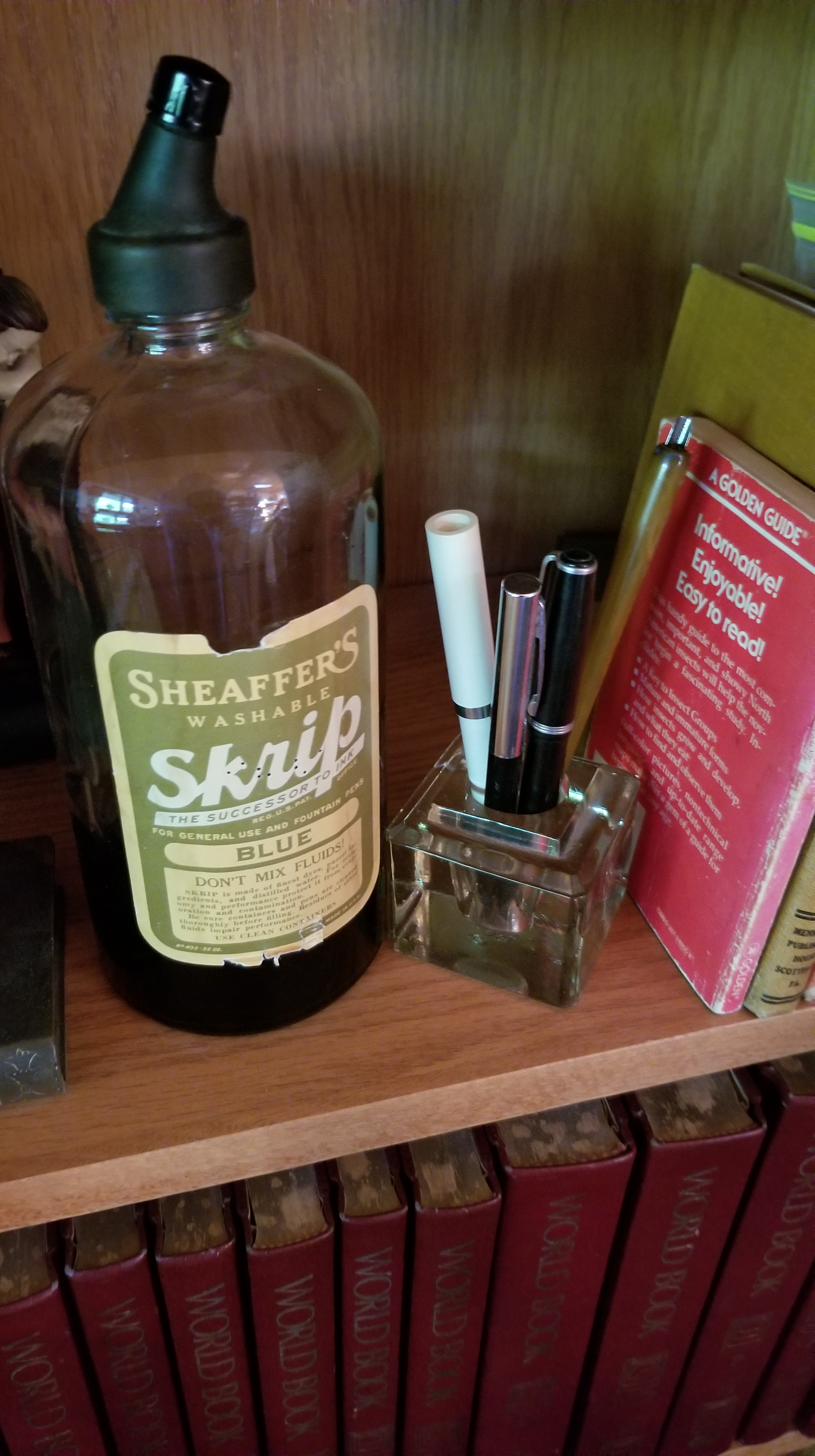
My special gifts were an antique bottle of Sheaffer’s Script Blue ink, a glass inkwell, and three fountain pens that I’ll probably never use but love admiring them. Bolling and Daisy knew I was a writer and I think that’s why they set aside those items for me. My husband got several well-organized containers of shop gadgets and supplies such as hose spigots—that he’s actually used.
Everyone needs at least a small memorial service or gathering recognizing the quirks and hard work and love they shared. Everyone needs a community of folks to remember them, honor them. Topped off with homemade chocolate cake!
What are any unusual treats, dishes, or desserts–that a loved one has loved–that you ate or shared at a funeral, memorial, or celebration of life service?
Other stories or memories or rituals? Share here!
Or send to anotherwaymedia@yahoo.com or Another Way Media, P.O. Box 363, Singers Glen, VA 22834.
Another Way is a column by Melodie Davis, in syndication since 1987. She is the author of nine books. Another Way columns are posted at FindingHarmonyBlog.com a week after newspaper publication.


