

Another Way for week of July 23, 2021
The Extreme Challenges of Nursing Care for the Elderly
(Editor’s note: Second of a two-part series on nursing care reform.)
I do not pretend—heaven forbid—to be an expert, or even that I’ve read widely. I don’t have time to research this topic in depth. But I do know that “distant family members showing up to visit their loved one” at nursing care facilities is one of the headaches of aides, nurses, therapists and social workers everywhere. Workers often dread when out of town family come to town.
Back in 2007 I helped produce a TV documentary called Embracing Aging and that’s what the nursing home employees told us. Family members throw out a stream of complaints ending with something like “We expect better care for all the money that goes into his/her care.” And it is, definitely extremely expensive.
Family members may be feeling guilt (that they can’t visit more often), grief (to find their dad this way), and a great deal of confused unknowns. Throw in the pandemic, and you’ve got a recipe for difficult sea-changing times.
We (my sisters and I) recently had a heart-to-heart meeting on mom’s behalf with the head social worker at a beautiful and widely respected retirement facility. Last week I wrote about the new major fall Mom had this year that put her in this situation in both 2020 and 2021.
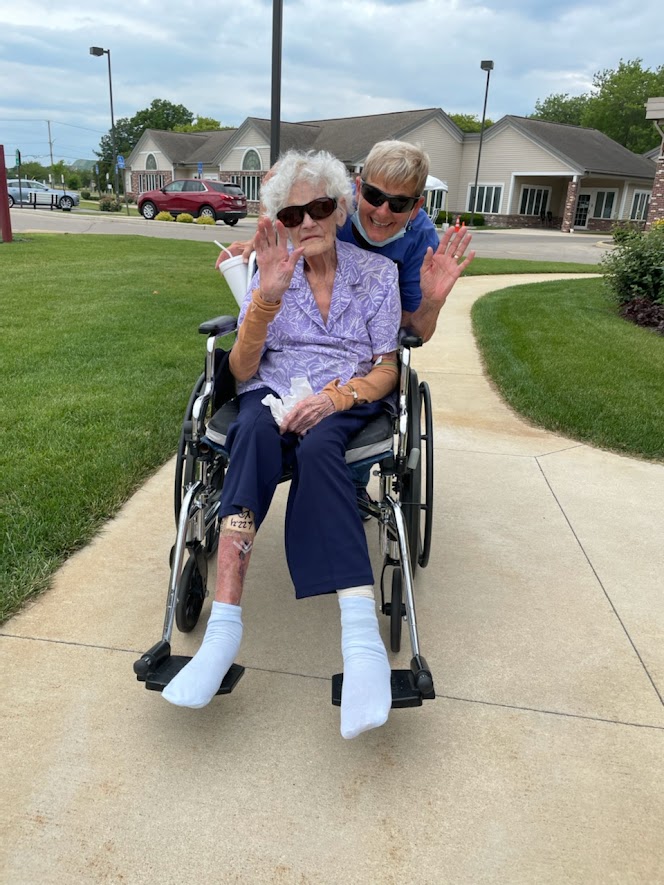
This social worker emphasized that their facility was totally at the mercy of the federal CDC (Centers for Disease Control) mandates and guidelines—some of which were of course very necessary and understandable. But as she emphasized, “The care of our aging population needs an overhaul in terms of what works in these settings. A nursing center is not a restaurant or a sports stadium or a school – and needs different authorities managing or feeding in to the care guidelines for those in nursing care.”
She stated that “The isolation our patients have gone through has been devastating.” Patients who lived independently all their lives suddenly lost all control of their lives and their loved ones.
What is more, caretakers have been brought in from medical staffing agencies. These workers go wherever they are sent or have an opportunity to go. They are often usually young, not married, at the beginning of a career. They are well trained and dedicated—but when workers are moved around a lot within facilities, they simply don’t learn to know the special needs and moods and favorite things of individual patients. Plus they are not permanent staff.
The head social worker also talked about how difficult it has been to keep their own staff—which is a new reality all across the country. To be so short staffed and unable to find and hire new permanent staff has placed workers at all levels, including administrators like herself, under extreme stress. She expressed that there needs to be change at the governmental level of caring for the aged in advance of future pandemics, which are certain to come.
Earlier, NBC news made the statement that “America now knows that nursing homes are broken.” Residents were pretty much locked in (certain exceptions); they stated that over 170,000 long-term care residents and caregivers lost their lives to Covid 19. (March 7, 2021 website report).
The NBC report said that the chief problem (besides the pandemic restrictions) is that not enough money is invested in the caregiving itself. The hands-on care that our moms and dads and grandparents receive is often spotty at best. More and more families are opting for in-home healthcare themselves, or supplementing with visiting healthcare workers. Some of it is quite affordable, even round-the-clock. That of course is not without problems as well. Some of our parents do not wish to live with family members.
A volunteer who was welcoming guests at the nursing facility where my mother is currently living was telling a visitor, “Tell your friends to visit the people they know. Our patients have been so isolated [from the pandemic], they need their families.”
Talk about these issues with your friends and loved ones—and like I encouraged last week, there is probably someone waiting and longing for a visitor in your vicinity.
***
You can now watch the full documentary Embracing Aging:Families Facing Change on YouTube here. The documentary was filmed in 2007.
For a free booklet “Praying When You are Depressed,” by Mildred Tengbom, write to anotherwaymedia@yahoo.com or Another Way Media, P.O. Box 363, Singers Glen, VA 22834.
Another Way is a column by Melodie Davis, in syndication since 1987. She is the author of nine books. Another Way columns are posted at FindingHarmonyBlog.com a week after newspaper publication.
Another Way for week of July 16, 2021
Losing Independence
As I watch my almost-97-year-old mother’s aging process, I am reminded again and again: we all go down this road. In not too many years it will be me and my siblings facing the challenges she is facing, unless we die younger.
Throw a world-wide pandemic into the picture and you’ve got misery. You’ve got loved ones who need and want to be surrounded by lifelong friends and family—and what they get too often is isolation. If they must live in a nursing care or retirement facility, we all have to follow Centers for Disease Control (CDC) rules which are imposed for our own safety of course. Many have experienced being prisoners in their own rooms. Some are forced to greet friends and families through glass windows where rain, snow or sun make the visiting difficult. They gesture and hold up signs to communicate, if they are unable to hear on phones.
Here’s an update on my dear mom, who many readers may recall first had a fall in February last year (2020), right before the Covid close down. She broke her femur. It healed well and she made it through months of physical therapy with flying colors. We were able to visit her several times in her independent apartment and took her to a service at her church (outdoors); to a flea market; to a delicious Amish-cooked “sloppy joes and potato salad” lunch (her choice); and even to a nephew’s home. My cousin and his wife set up canopies for another outside get together they were hosting the next day, so we visited with several cousins in the open air.
Mom didn’t like the rules and close downs and masks. Who does? Plus, she doesn’t read or watch TV as much as she once did, due to eyes that get very tired, so at first it was hard for her to grasp the vast reaches of this pandemic.
Then came winter. Another February, 2021. Another middle of the night fall, this time breaking her shoulder. Much harder to heal. Much harder to do any physical or even occupational therapy involving the upper body because you can only move one arm and hand. The rules say 100 days of Medicare-paid residency in a rehab facility, and you’re out. You have to start paying your own way, unless you are lucky enough to have long term health care insurance.

As vaccines became possible, we all (in Mom’s family) got vaccinated, but still there were sporadic close downs for the facility for mandatory two weeks due to outbreaks—including workers, some of whom refused or were unable to get vaccinated. We visited in March, May and planned to visit in June. Then, wham, another close down. However, it was lifted again by the time we arrived June 22, which was a blessing.
It was also extremely helpful to talk to the social worker in charge of her building, who helped my sisters and I understand a few of the ramifications of the pandemic on staffing, volunteering, and continuity of care when much staffing is done through medical staffing agencies. These are trained workers but they come in completely new with many pages of notes and care directions to read and absorb for each of their patients. And then, if one wing of the entire operation needs a worker because others are out sick, they get shifted to a new section of the facility with new patients who have different, particular needs.
Although workers did their best with Mom’s needs, it is difficult for a continual parade of different CNAs (nurse aides) to be as punctual and precise as Mom always was with applying her own eye drops and eye compresses. Or to get her hearing aid in just right.

Our family appreciates the prayers and care given to Mom. I will write more next time about the challenges our healthcare system—especially for those who have reached their 90s—face. The issues are widespread.

If you have friends, relatives, or church members in healthcare, do reach out to them. Go and visit if it’s allowed, and keep visits short. Your friends and the patient’s family will bless you!
***
What has been your experience with nursing care for a relative or close friend?
How did she/he cope? How did you cope?
For a free booklet “Praying When You are Depressed,” by Mildred Tengbom, write to anotherwaymedia@yahoo.com or Another Way Media, P.O. Box 363, Singers Glen, VA 22834.
Another Way is a column by Melodie Davis, in syndication since 1987. She is the author of nine books. Another Way columns are posted at FindingHarmonyBlog.com a week after newspaper publication.
Another Way for week of July 9, 2021
Opening Up to Faith Conversations
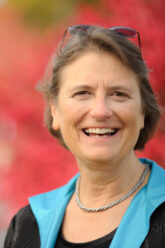
One of my college roommates, Sara Wenger Shenk, has written a new book called Tongue Tied: Learning the Lost Art of Talking About Faith (Herald Press, 2021). Sara is a prolific and elegant writer. In this book she explores how in the last 30 years so many of us have lost the ability to be open about our faith in God—indeed if we have faith at all. We shy away from talking about religion perhaps because we’re afraid of offending others, or it doesn’t come as naturally as talking about the weather or health.
I found the most meaningful parts of her book included personal stories—either her own or from others. The stories help us connect with her premise, that “We need a language of faith that is authentic, candid, and robust.” Here’s one sad but powerful story from Sara:
“When I was particularly distraught by a double tragedy affecting people in our community—my dear friend’s husband and her daughter’s husband, both killed within ten days of each other in separate horrific accidents—I sat at the piano, tears streaming down my face, wondering what in the world there was to sing that might assuage the confusion, anger, and grief. I happened onto the song “Halle, Halle, Hallelujah!” (a traditional Caribbean song arranged by John Bell). As I began singing, my rational brain kept vetoing the song. Wrong song! Wrong song! Who sings hallelujahs when experiencing such loss? Where’s the mad, sad, angry song I should really be singing? Yet as I pounded the keys, the song began to possess me. I played and sang on and on and on, louder and louder, with no desire to stop. In the process I found that I was transported to another place. A place where God is God, no matter what. The change happened inexplicably. Without expectation. And it was real.” (p. 146)
Singing our way into a better framework has happened to me also—in my car. Sara is a scholar and served as president of a seminary for almost a decade. I appreciate this book because it makes us think about how faith conversations can be reinstituted into our lives without taking offense at what others believe or share. Even writing about faith here in a daily newspaper should be as non-controversial as saying your like such and such baseball or football team.
In her book Sara talks about how religious arguments and even some of the old hymns we may still enjoy singing, come up short in terms of communicating a faith that is vibrant but open to listening to the experiences and viewpoints of others.
Beautifully, Sara reminds us: “Listening well, leaning into mystery, talking about what we love, and holding our convictions in gentle tension with others’ convictions, while standing on storied, holy ground, will restore a greater sense of our shared humanity and desire to know and be known by God. Our children and grandchildren will be blessed—as will the watching world” (p. 117).

Back to the double tragedy of the opening story above, told by Sara. I also knew and mourned the families and the horrible sadness it produced. Sara’s recollection brings me to the terrible condo collapse down in Miami in June with so many innocent victims. In such situations, we may be tempted (or think it is helpful) to tell families the oft-repeated truisms: “He or she is in a better place.” “God knows best.” “God wanted another angel.” (I find that last one particularly sad and not helpful for those in mourning to hear.) Instead, perhaps it is more reassuring to communicate that God grieves too, and longs to comfort us. A woman who lost her father when a gun accidentally went off, put it this way: “I never blamed God. I ever said God took my father away from me. I’ve always believed that God has been as grieved as me and put arms me and comforted me.” May it be so. And may we more naturally share the experiences of our own faith without putting down others.
***
You can find Sara’s newest book here.
Do you engage in faith conversations or are “religious” conversations not for you?
For more questions you can access the study guide I was asked to write for this book here.
Send other comments or stories to anotherwaymedia@yahoo.com or Another Way Media, P.O. Box 363, Singers Glen, VA 22834. For more info on Sara’s book see https://heraldpress.com/books/tongue-tied/
Another Way is a column by Melodie Davis, in syndication since 1987. She is the author of nine books. Another Way columns are posted at FindingHarmonyBlog.com a week after newspaper publication.
Another Way for week of July 2, 2021
Co-working: Clean, Cool, Quiet, and Connected!
I got to go back and work in an office the other day. I guess you could call it “Take your old self to work day.”
It was kind of fun. A woman who rents space in what is frequently called a co-working place, offered to let me use her space because she would be out of town. I needed to attend a church-related Zoom meeting for about two and a half hours. Long committee meetings like that using our own internet connection at our home in the country can put us over our monthly limit of gigabytes—and then we have to pay extra. So, she made arrangements for me to get into her co-working space.
It was super nice: clean, cool (on a 90-degree day), quiet, with places to get coffee (I brought my own) and an awesome internet connection that never once told me that my hook-up was “unstable.” I had a large conference room all to myself and the time flew by.
Before I retired in 2019, I was lucky to have a job where I enjoyed my work immensely. I also liked dressing nice and driving off to work.

my then current office near downtown Harrisonburg.
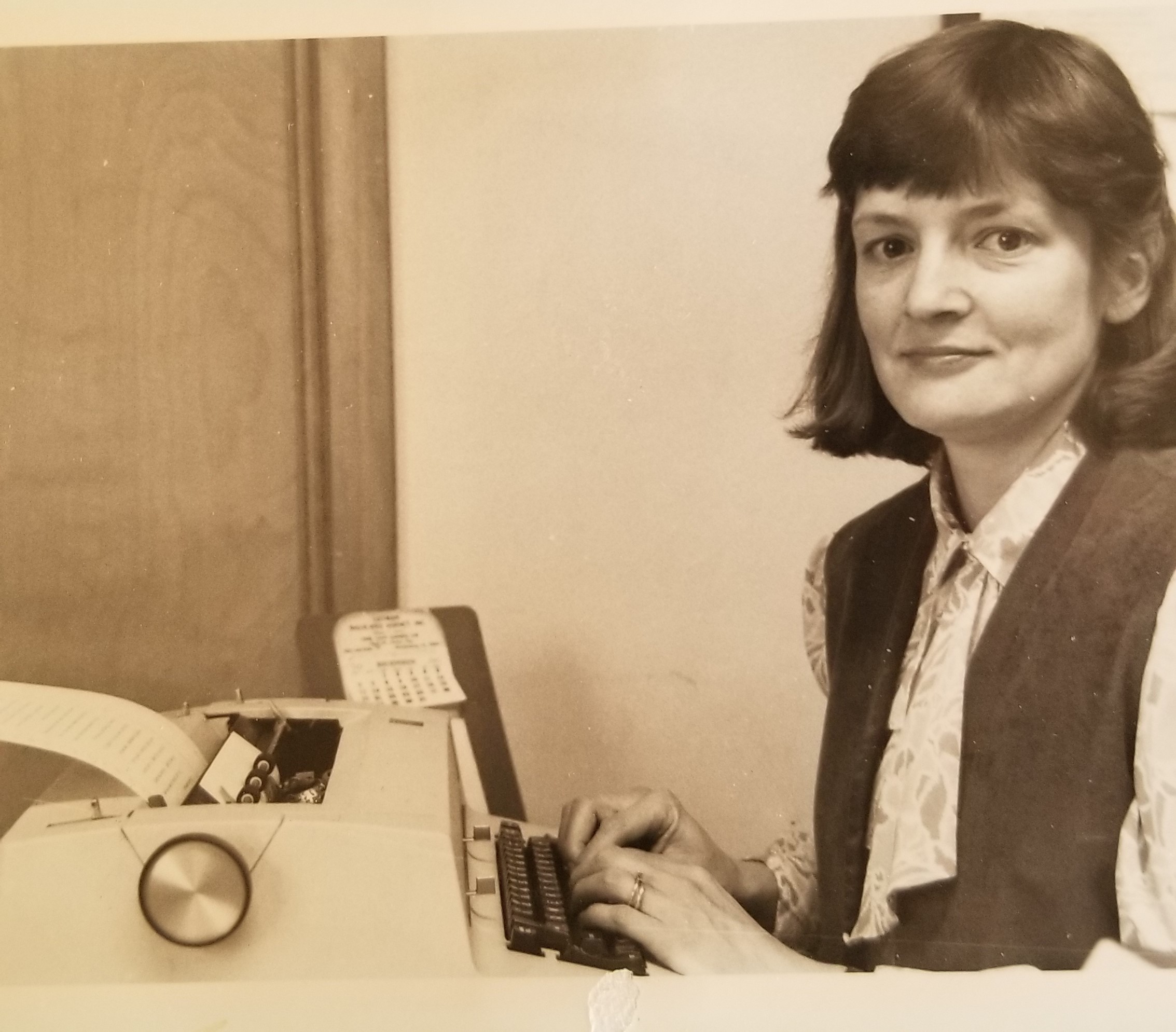
I had to think of my mother. Her dream job when she was a teen was to work as a secretary in an office. After high school graduation, she went to a business school, learned shorthand and typing, and then got a job in a downtown office in a semi-large city near where she lived.
Our three daughters all work in an office setting—especially before covid. My husband always told our daughters to “work hard in school so you don’t have to work in a factory like me.” So I guess they took his advice and I find it interesting that none of them went into fields like teaching or healthcare.
During the bleakest days of covid, they worked mainly from their homes and managed to juggle lots of tasks like helping little ones with school work (also online), making meals, and getting their office work done, sometimes after normal work hours.
now an elementary school.
I’m currently reliving some of my more than 43 years working in an office. How and why? I’m working on a memoir from those years about our adventures and misadventures producing media messages on behalf of the Mennonite churches. This is writing I need to do even if no one ever buys the book or reads it. My work as a writer is often processing things—so I guess you could say I’m reliving the ups and downs of those years. I have mostly great memories of work that I felt called to. When I was a teen, I wrote down that my dream job would be working as a Christian writer. That is mostly what I was able to do.
This July 4th holiday* I’ve been reflecting (and processing) how fortunate I am to be alive, still of decent mind (!), and thankful to live in relative freedom with a wide array of opportunities—for those who take advantage of them. Right now, our country and many others are suffering from an upended healthcare system especially for the elderly and all those in long-term nursing care. Some of the suffering comes from lack of trained healthcare workers—those who’ve had to quit their jobs because of illness and taking care of their own families. Some have found that drawing unemployment brings in more household money than working. I will write more about the crisis in caring for the elderly in weeks to come, including an update on my own mom.
Meanwhile, I hope you have a good holiday weekend, and time to pause and be thankful for your many blessings.
For more information on the Broadway Co-working space visit broadwaycoworking.net.
Stories or comments? Send to anotherwaymedia@yahoo.com or Another Way Media, P.O. Box 363, Singers Glen, VA 22834.
If you want to keep up with news and developments in writing/publishing the memoir I mentioned above, check here.
Another Way is a column by Melodie Davis, in syndication since 1987. She is the author of nine books. Another Way columns are posted at FindingHarmonyBlog.com a week after newspaper publication.
* I always post my columns, as stated in the note above, a week after newspapers have had time to publish it.
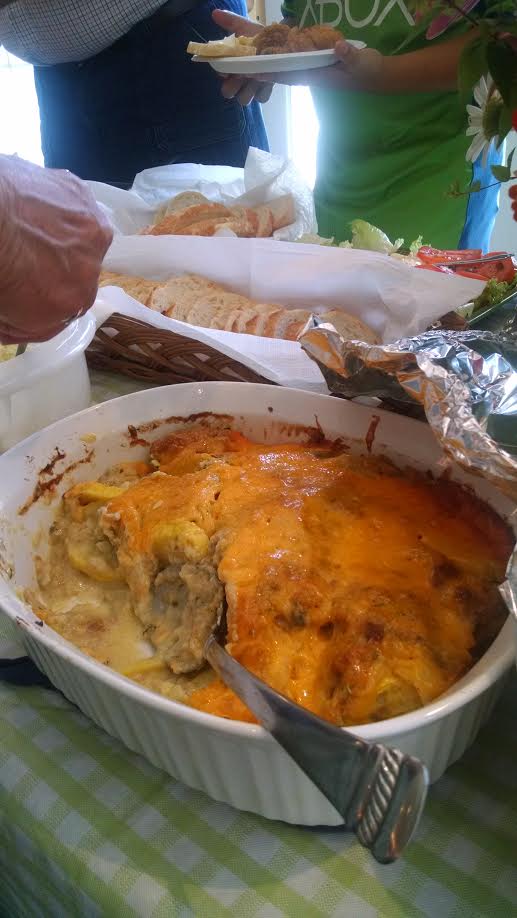
I got this recipe from a dear woman, Vivivan Knepper, whose husband belongs to the same Lions Club we’re in. Almost every summer they invite the club to their home or their cabin and we enjoy a potluck with Lion John usually sharing some of his exquisite smoked Salmon brought home from his almost annual fishing trip to Alaska. (Yes, he had to miss last year because of covid lockdowns.)
I asked Vivian if I could share this recipe and she gave me her blessings. She’s an avid gardener and farmer and they call their farm Green Acres! This is an easy recipe and for many, squash always abound in gardens and growers are happy to give theirs away. Enjoy!
Vivian Knepper’s Squash Stuffing Casserole
¾ cup water
¼ teaspoon salt
6 cups sliced yellow summer squash (1/4 in thick)
1 small onion, halved and sliced
1 can 10 ¾ oz condensed cream of mushroom soup, undiluted
1 cup (8 ounces) sour cream
1 pkg (6 oz) instant corn bread stuffing mix
1 can (4 oz) green chilies, chopped – optional
Salt and pepper to taste
1 cup (4 oz) shredded cheddar cheese
Directions: In a large saucepan, bring water and salt to a boil. Add squash and onion. Reduce heat, cover and cook until squash is crisp-tender, about 6 minutes. Drain well; set aside. In a bowl, combine soup, sour cream, stuffing and the contents of seasoning packet (or if the stuffing mix already has seasonings mixed in that’s fine), chilies, salt and pepper; mix well. Fold in squash mixture. Pour into a greased, shallow 2 qt. baking dish. Sprinkle with cheese. Bake, uncovered, at 350 for 25-30 minutes or until heated through. Yield 8-10 servings.
Originally from Quick Cooking Magazine, March April 1999.
–Vivian adds, “I use more cheese on top because I love cheese.”
The recipe writer, Tara Kay Cottingham, Munday, Texas, says “She often freezes the leftovers for another day.“
Another Way for week of June 25, 2021
Four Quick True Stories
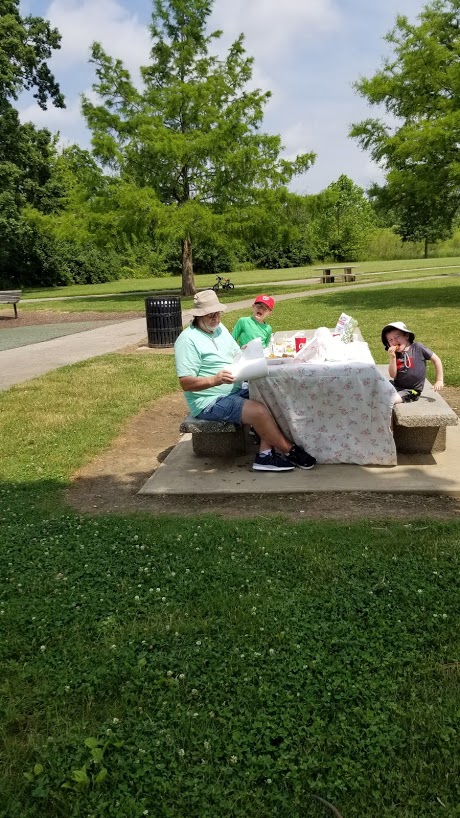
I was quite amused—and pleased, if the truth be known. We were taking care of two of our grandsons for a couple days and their mother had left some ideas for activities for us to enjoy. She’s also quite an avid planner, with a job which entails thinking through things ahead of time, making lists, schedules, and then following through.
The boys and my husband and I had decided that on the first day, we would go do one of their very favorite things: visit a nearby Petsmart store where they loved watching the cats, dogs (in for grooming), fish and snakes in tanks, birds in cages, and other small creatures. We also needed to buy and eat lunch somewhere, preferably in a park with a playground.
The four-year-old (almost five) sat me down and said “You need a plan.” I almost coughed and swallowed my deep smile. Oh this little boy was his mother’s son, for sure.
I asked “What should the plan be?”
Owen said, “Well, let’s first do lunch, and then go to the pet store.”
Again I almost choked. It sounded like an excellent plan to me. He was obviously saving what he thought would be the best for last. That always suits me fine!
***
A guy from our church ran into us (not literally) in a parking lot. We were talking about aging and our parents.
Our friend said he recently needed to hide the keys for his dad’s vehicle. His dad is in his upper 90s, and of great mind, but there were increasing stories floating around about his dad’s driving. Reflecting, this son said, “I’m not sure if it’s better to have your right mind as you get older, or if it’s better to be sorta confused and not know what’s going on,” he paused. “Then you don’t know who to be mad at. My dad is mad at me and not my sisters for taking away his keys.”
***
Along the same lines regarding aging, another church friend was reflecting on the death of a longtime church member. The man had died unexpectedly overnight and we found out right at the close of our morning worship. Bill, in his mid-90s, told us his own doctors were encouraging him to check out an issue with his heart. Bill said reflectively, “I’m thinking that all of us are going to go through this someday. I mean, I’ve got a tumor in my brain, cancer on my scalp, cancer on my back. I’m just not sure at this stage whether I should worry about my ticker.”
***
Our friend Charles, lying on his bed at the nursing home, was dying. I watched his breathing, somewhat labored, his heart visibly beating in his tightly drawn chest. Charles had always been thin but durable, his small size and frozen knee making him appear weaker than he was. His knee had a steel rod in it, a procedure more common longer ago before knee replacement surgeries were as common as they are today. At any rate, at age 92, his heart had proved to be incredibly strong, surviving episodes of palpitations, not being able to breathe well, falls, setbacks: a hard physical life. But now he was approaching the end. I felt honored to sit with him for a spell. We will never forget him and his deep friendship. I know he is now in a better place.
***
Four true stories and memories (in my mind), from opposite ends of life. Whatever happens this summer, whether vacationing, working, or spending time with your children, grandchildren, or friends, take time to jot down a quick story or quip you hear. You’ll grow to treasure these quotes and stories as much as the photos that stuff your phone. Whatever media you use to preserve stories and memories, just get it done.

***
What is a strong memory, quote, or incident from this summer? I’d love to hear!
Comment here, or send your memories and stories to anotherwaymedia@yahoo.com or Another Way Media, P.O. Box 363, Singers Glen, VA 22834. Let me know if I have your permission to share them in a future column.
Another Way is a column by Melodie Davis, in syndication since 1987. She is the author of nine books. Another Way columns are posted at FindingHarmonyBlog.com a week after newspaper publication.
Another way for week of June 18, 2021
Following the Foggy Blue Ridge Parkway

My husband was able to (mostly) check one item off his bucket list over our recent 45th anniversary weekend. He has long talked about driving the Blue Ridge Parkway from end to end. It runs 469 miles from Waynesboro, Virginia (not far from us) to the Great Smoky Mountains National Park in North Carolina.
He had an aunt and uncle who married late in life who made the trip on their honeymoon and reported it as “something you need to do sometime.” It was so local and under our noses that it always got overlooked in favor of maybe more exciting adventures. Like the Atlantic Coast beaches or the Rockies or California and eventually Alaska. My parents had the travel bug and so do I and I’m happy to say it also resides in my husband.
So, even though the thought of driving some 380 miles (we didn’t drive all the way to the Smokys, where we’ve been before) at or below 45 miles per hour sounded a little tiring, it was fascinating! There were splendid views and enough interesting stops and side adventures to placate my pandemic-starved (read: homebody) self. Yes, we’d made several trips to Indiana during the last 15 months but they were necessitated by two falls my Mom had, one in early 2020 and also 2021.
This latest trek had some bumps and less than ideal traveling along the way: two detours that we knew nothing about that took us off the Parkway for about 40 miles into Roanoke city traffic at one stretch, and another for 10ish miles in rural backroads. (He thinks we should go back and do those 50 miles sometime. Would you?)
But the worst conditions were the first two hours when morning rain, mist, fog and clouds made driving extremely precarious. The lights on vehicles or motorcycles in front of us were very hard to see and it took all four of our eyes doing their best to stay alert. The rain itself was not such a big deal. We reminded ourselves that it rained on our wedding day too, and we had to change plans at the last minute and have an indoor ceremony. But the fog and mist on the Parkway for miles on end made us nervous and a bit stressed.
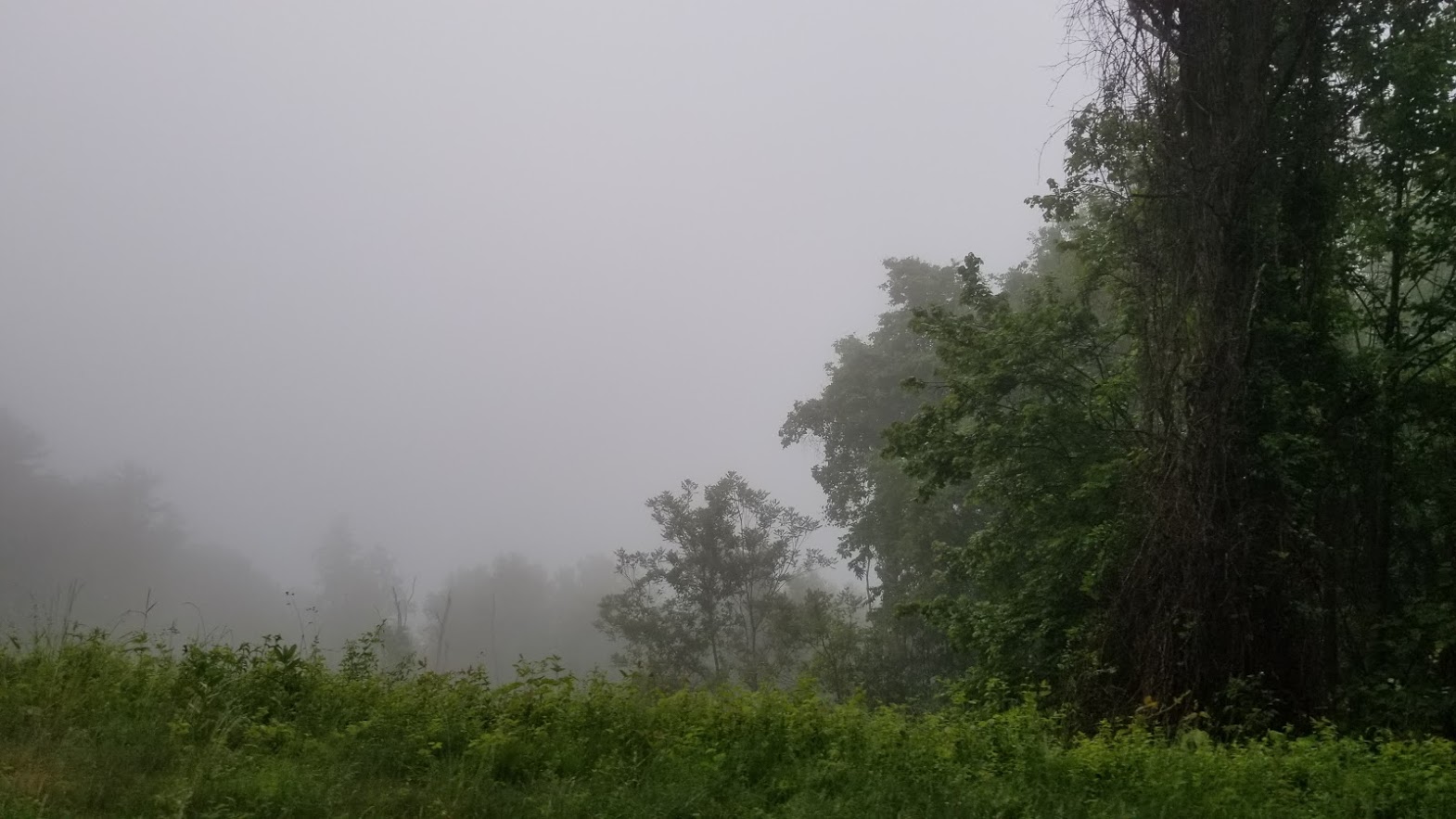
Along the way there were more than enough parks, visitor centers, waterfalls, trading posts, overlook knobs, and cultural stops (recalling the mountain culture of the past) to keep us more than entertained. We were grateful we’d ventured out, rain and mist or not.
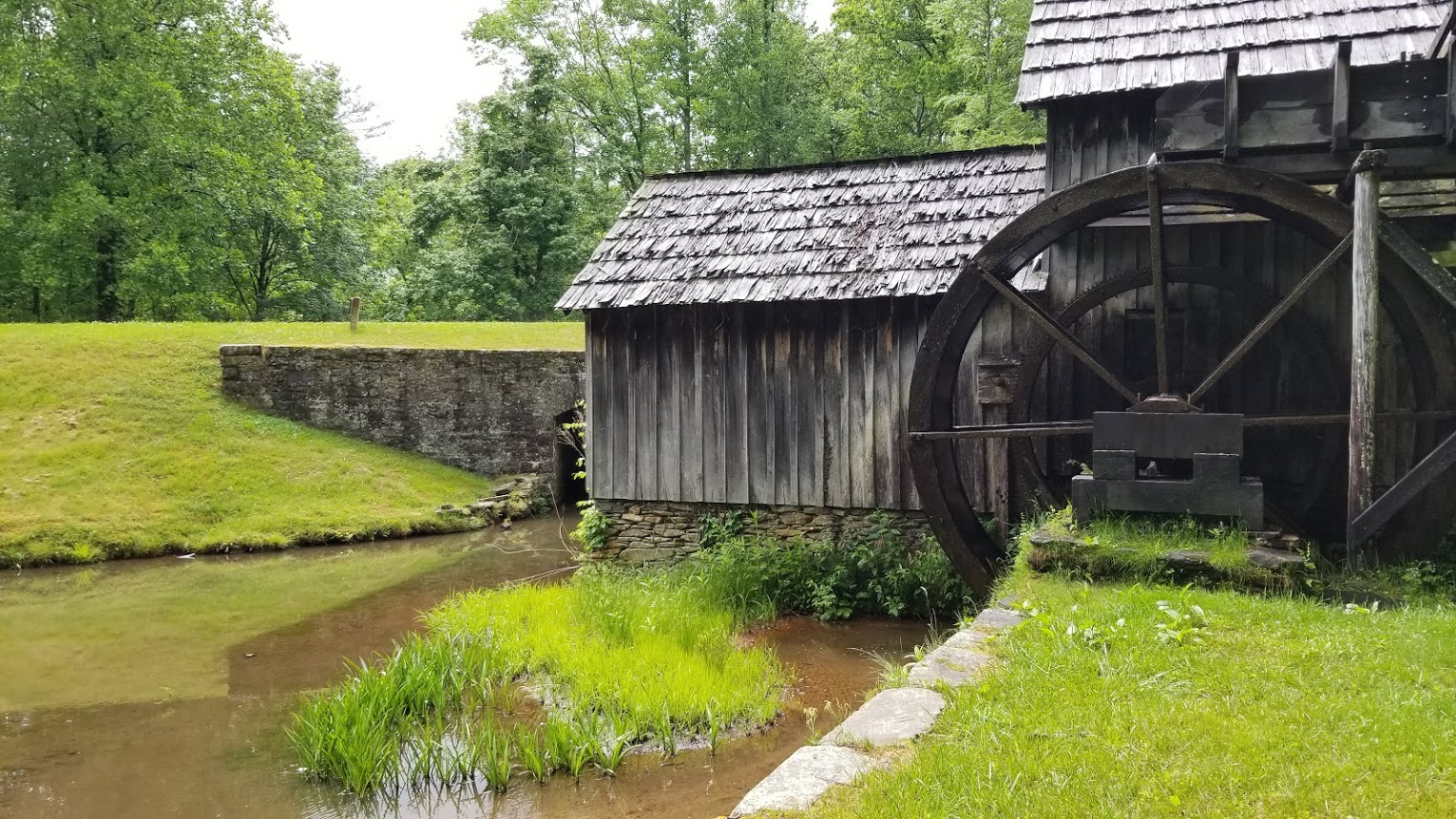
My favorite stops were walking down to the James River which threads through much of Virginia—a delightful place to stretch; the old Mabry Mill with waterwheel for power to grind wheat and make flour—which is one of the most photographed spots along the Parkway, they say. The water still flows but no grinding is currently done although in full summer tourist mode, you might see some demonstrations of old timey work.
Peaks of Otter, a beautiful spot especially in fall, boasts lovely lodgings and a rustic restaurant where we were able to look out over the small dammed up lake.

And finally, in North Carolina we enjoyed, Mt. Mitchell, because you can drive almost to the top. We hiked the final short quarter of a mile to the summit. In spite of the mostly rainy morning, at each of these spots the fog and rain lifted enough for us to enjoy some views and snap photos. You see a lot of scenery, flowers, and mountains without exerting a lot of energy (perfect for some less-mobile senior citizens) but there were also children with families out enjoying the sights and small hikes. It’s all free (except for gas) and you can get on and off whenever you wish. We were also able to finally visit a cousin and his wife again near Gastonia, NC.

When my daughters were younger, after a trip or outing, I would usually ask, “What was your favorite part?” I suppose they got tired of that question but it helps to cement in our minds a special memory or happening that we hang on to. Whatever you get to do this summer, find a way to savor the experience.
***
What are places you would love to go back to?
Where have you been that you don’t really need or want to return to?
Best vacation ever?
***
Comment here or send stories to anotherwaymedia@yahoo.com or Another Way Media, P.O. Box 363, Singers Glen, VA 22834.
Another Way is a column by Melodie Davis, in syndication since 1987. She is the author of nine books. Another Way columns are posted at FindingHarmonyBlog.com a week after newspaper publication.
Another Way for week of June 11, 2021
Take Me Out
I’ve never been much of a baseball or softball fan. Games are long. Slow. Often hot, or on the other end of seasons, freezing. Or let’s talk about rain delays. Fun.
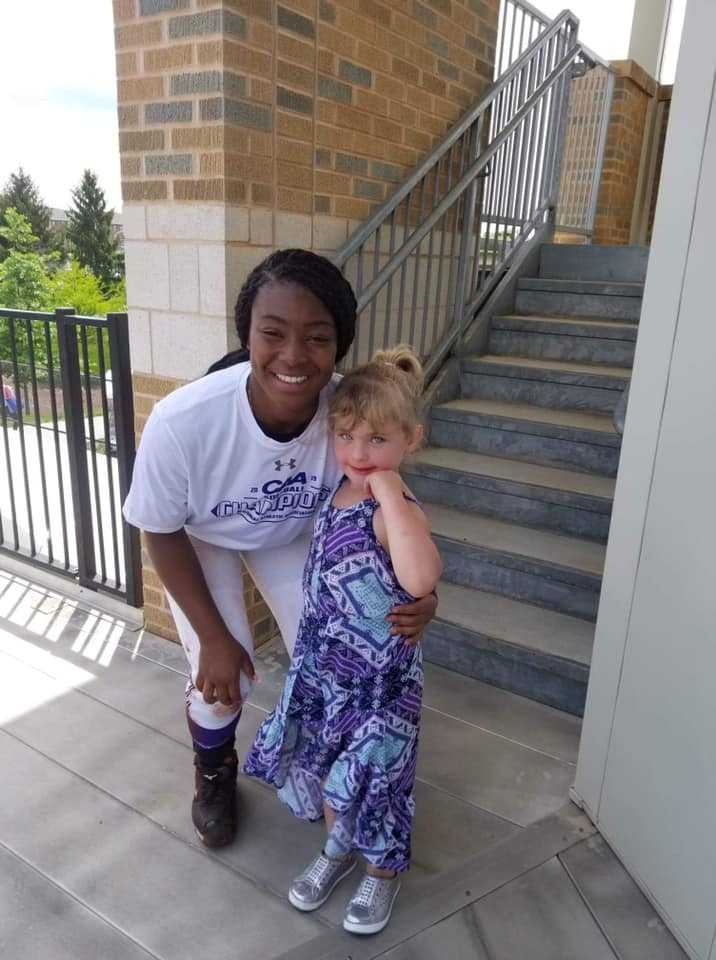
As a kid I didn’t mind playing softball in the backyard or at school. But I didn’t like being on a team once I reached high school, and lasted only one season. I played that year because my best friend loved the game and wanted me to play too. I, on the other hand, lived for basketball at that point.
So when I was on the high school team with my friend, I was glad for any outfield position where I wouldn’t have to deal with the ball much. It made me nervous to be in the spotlight like pitcher or first base. I was so scared of getting hit by the ball at short ranges.
I wrote earlier about how my interest in the game began to grow during the 2019 Major League Baseball playoff season when our “local” Washington Nationals went on to win the World Series in 2019. My daughters who live near Washington, D.C. have been faithful fans, and we began watching the Nationals during the playoffs. I learned a lot about the game, funky baseball traditions, and “Baby Shark.”
This year one of our local universities, James Madison, in a covid-shortened season, nevertheless sent its women’s softball team to the Women’s World Series National (WWSN) playoffs in Oklahoma. I was surprised to learn that both of Oklahoma’s state schools, Oklahoma University and Oklahoma State were long running successful teams on that “world series” stage and earned the right to host those playoffs in their own city.
The games were hot, loud, and competitively, the best softball I’ve seen played anywhere (and many coaches/commentators agree about that). It was a thrill to watch the women on all the teams supporting each other so enthusiastically. And it really isn’t boring, when you study and watch the pitchers, coaches, catchers and in our case, a player holding down third base like it was a fortress. Our pitcher, Odicci Alexander, from a very small town in southern Virginia had wowed fans throughout the season. Then they started beating ranked teams as they eventually earned the opportunity to bat in the WWSN playoffs. Eight schools made it to that level and JMU players were able to defeat their first two opponents and go on to additional games.
Alexander was not only a pro at pitching fastballs and racking up strikeouts and shutouts, but polite. She didn’t appear to let the fame she was earning go to her head. It doesn’t hurt that Alexander not only has a beautiful face, but she gave the games her all, especially after a bunt where she was able to stretch in a long reach as she fell and tapped a player out on home base. A huge tribute for her playing and demeanor was given as she was finally removed by her coach from the last playoff game when she was visibly tiring and letting too many hits get by. The whole stadium appeared to stand and applaud, including opponents. A nice touch for those of us in the Shenandoah Valley was nearby Page County’s Kate Gordon, an excellent starting hitter who holds the program’s “career home runs” record. Another fan favorite was the third base player, junior Lynsey Meeks, a 4’11 dynamo who was a live wire covering the home stretch, while also serving as a spark plus for other players. And all of us. She caught my attention the first time I saw face: focused like a determined fighter as she went to bat. Finally, the look of concern and empathy on her face as she greeted senior pitcher Alexander leaving the field for the pitchers last time still makes me tear up.
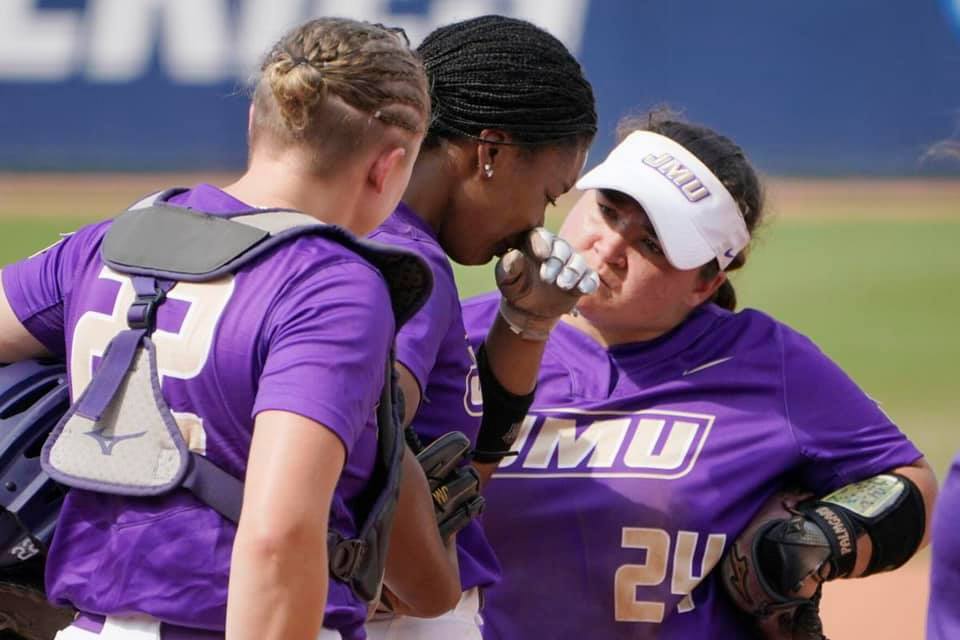
Little girls were surrounding these players for autographs when they got back to our town (below). I think I’m in love with a new sport and this brand of noteworthy sportsmanship.

Your favorite sport? Stories? Send comments to anotherwaymedia@yahoo.com or Another Way Media, P.O. Box 363, Singers Glen, VA 22834.
Another Way is a column by Melodie Davis, in syndication since 1987. She is the author of nine books. Another Way columns are posted at FindingHarmonyBlog.com a week after newspaper publication.
Footnote for first photo: “Payton originally picked CiCi as her “person” as they had the same number on their jerseys. Payton was playing t-ball and CiCi playing college level both had the number 3 and from that moment, we cheered her on as our “person” as well. From getting her autograph and waiting till after her interviews for hugs from her, to seeing her in Chick-fil-A with the whole team. She has always had a smile and enjoyed seeing her biggest, little fan waiting for her.” –Footnote by her mother, Ashley.

Another Way for week of June 4, 2021
A Rock (or two) and a Hard Place
Two weeks ago we were betwixt and between, frustrated and at sea. How could we get ourselves out of the pickle that we’d gotten ourselves into?
If you follow this column, you know we’re gardeners with a fairly large space for a couple of retired empty nesters. We enjoy canning and freezing and sharing vegetables with friends and relatives and so we continue to plant much more than we can consume ourselves.
The soil was getting worn out, frankly, by 17 years of production. We finally found a guy this year selling topsoil at an affordable price. We went to see the topsoil—didn’t want a lot of rocks. He had a pile of sifted dirt that looked gorgeous. We ordered 5 loads and the delivery—after much waiting and leaving messages and wondering—took place over a couple of days. The wait delayed the start of our gardening this summer by weeks.

Three of the five dirt piles. Sorry the photo is so dark. Matched our moods.
The young man promised to come back and spread the dirt around—no charge—as part of his delivery. We understood he was busy. Over-committed, I decided. Stretched way thin on what he could accomplish. We began shoveling it ourselves and Stuart used his ramshackle garden tractor with a snow plow on front to shove the dirt piles around.
A neighbor usually used a tractor tiller to prep our garden patch for us but that looked iffy this year due to health concerns for his family. They also make hay and it was high haying season. We hated to ask him. We debated renting equipment and Stuart was toying with the idea of how to make or repurpose a device to spread the soil around. He wished for an old metal mattress spring like he’d seen someone use. Maybe he could use an old trailer frame that sat under our deck? It was nearing Memorial Day weekend when we’d hoped to take a long weekend trip to the mountains, celebrating our 45th wedding anniversary. Perhaps we’d work all weekend instead.
On Friday morning our neighbor’s retired son asked if we needed help with the garden soil. An elderly aunt had died the previous week so their family obligations impacted his life of course. We were overjoyed at his offer, even though we knew their own spring work was also behind. But nevertheless he was willing to bring over their box blade implement which smoothed things out, and then he also tilled it with their tractor tiller.
It was like a miracle, an answer to prayer we hadn’t dared to pray. That night before our weekend getaway, I hurriedly planted some of the plants that were waiting patiently to be put in the real dirt. We were so very thankful and breathed a thank you to God.
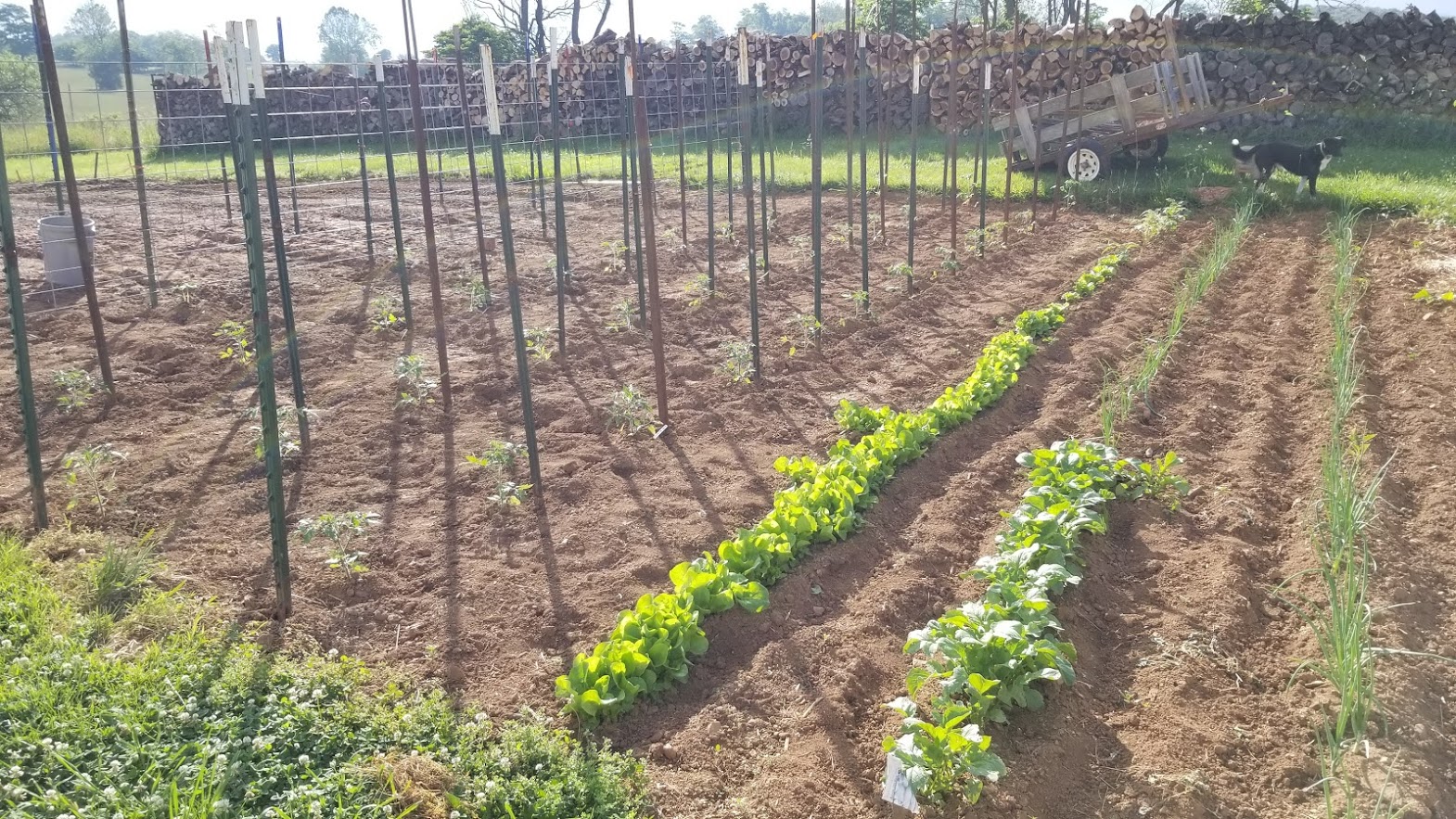
Garden now, 2 weeks later. (Lettuce, radishes, and onions had been planted earlier, before the new soil delivery.)
The young man never did show up with a device for spreading the dirt around, and neither did he bother to respond to messages left on his phone. Suffice it to say we do not plan to buy any more topsoil from him. Lesson learned.
The moral of this story? We need each other. Neighbors who reach out and help when you are in a difficult situation whether it is illness, poor planning, a car breakdown, or getting locked out of your truck. There are always debts of gratitude to repay.
We still have more rocks than we wanted but many of them are round, smooth rocks from the great river bottom area of our county, reminding me of the richness of this soil that many years ago lined the river bed. I will use some to mark the edges of flower beds and a sloped mulch patch at one corner of the house.

A smooth garden (yes there are rocks) but the corn is now up and potatoes pushing through.
Let us always be grateful for the kind deeds done for us. I hope I will also be reminded of the generous help of our neighbor and vow to “go and do likewise.”
***
When did someone last help you out of a pinch? Or returned a favor?
I’d love to hear your stories and lessons learned!
***
Comment here or send to anotherwaymedia@yahoo.com or Another Way Media, P.O. Box 363, Singers Glen, VA 22834.
Another Way is a column by Melodie Davis, in syndication since 1987. She is the author of nine books. Another Way columns are posted at FindingHarmonyBlog.com a week after newspaper publication.
Another Way for week of May 28, 2021
Look at the Ants!
I was just weedeating the thick grass at the edge of our cement driveway. But apparently I was the disruption of an entire community.
As I walked back along the weedeated surface, I noticed bits of brown sand and thousands if not millions (most likely!) of busy wiggling ants, all aghast and probably angry (surely!) about the loud weedeater that had hurricaned its way through their slice of earth and sidewalk edge.
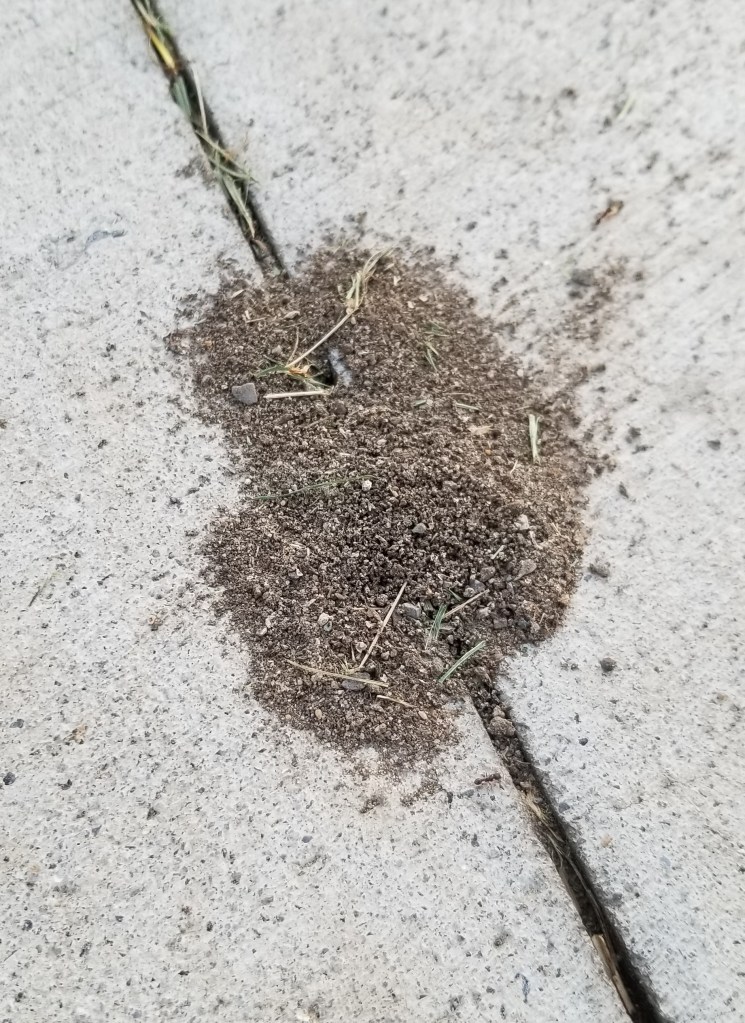
Ant hill on our driveway.
But, perhaps I didn’t need to feel too guilty about my disruption: ants are the busy organizers of clean-up and rebuilding. Before I even had much of a chance to feel badly, within an hour or two I noticed the disturbance was pretty well abated—the ants had scurried back to their homes under the sand. What do ants do besides rush around when we see them?
If you haven’t googled “ants” lately to find out what their role in the environment is, stop reading this and do some googling yourself. If you’re not online, I’ll include a summary here. If we don’t love ants, they at least deserve our fascination. We can educate ourselves about their many virtues.
If you’ve forgotten your biology classes, ants are amazing. A website called “Harvard Forest” says among the work they do is gardening: turning and aerating the soil which helps water and oxygen reach plants.

Lonely ant …
They help spread plants around too—taking seeds into their burrows and chomping on parts of seeds that have protein and lipids, thereby opening the seeds which sprout into new growth. Okay, sometimes the plants are weeds.
They eat pesty bugs such as termites, chew away at dead animals, and help wood and logs decay into richer soil for the forest floor. And in turn, in “the cycle of life,” ants supply food for birds, mammals and even some plants!
But to me the most fascinating part of these little ant societies is the role of the queen ant. There are three “genders” of ants: queens, males, and worker ants. Workers are female, but cannot reproduce. Only the queen ants can lay eggs making new ants. Mostly the queen lays eggs that become worker ants (hmmm, how nice, I hear my female readers saying), and the males, after mating in the air with the queen, go off and die (how not nice, male readers might say).
Even wise King Solomon’s attention was riveted by ants. A paraphrase about ants in Proverbs (chapter 6: verses 6-8) goes like this:
You lazy fellow, look at an ant.
Watch it closely; let it teach you a thing or two.
Nobody has to tell it what to do.
All summer it stores up food;
at harvest it stockpiles provisions.
So how long are you going to laze around doing nothing?
Now, ants are not all fascination. They are a lot of frustration. Each year I get them in my kitchen. Grrr. As another website, “thoughtco.com” puts it, “If you live in an area where stinging, imported red ants are common, you might despise them, ,,, [but] entomologists and ecologists argue that we literally can’t live without them.”
Antblog website says “Over their lifespan, which can be as long as 15 years, a queen ant may lay millions of eggs, more than enough to populate their own colony and found others.” A 15-year lifespan! I found another website that says they may live 30 years. Who knew?
Isn’t creation amazing? This year, my grandsons who live in an area where constant cicada serenades have joined their lives, are teaching me about these bugs. They are utterly fascinated. The two year calls them “bug-caidas.” The five year old informed me that the red ones are “boys … males, and the orange ones are …. are …. are [he was obviously searching for the right word] …. they’re females.” So, they’re learning not only about bugs, but the peculiarities of language!
As summer launches (I usually think of Memorial Day weekend as the beginning of summer), get out in nature as much as you can. Enjoy cool evenings on a porch, patio, or backyard. Or better yet, by a lake, creek, or beach. Thank God for our remarkable earth and the gift of life God has given you—and remember God’s commands for humans to not only take care of and love each other, but to tend and take care of the earth. And now you know that ants also help tend the earth.
What insects have you enjoyed observing? What have you learned from ants?
Which would you rather not see, ever?
Ever have drama with an ant colony?
Comment here or send to anotherwaymedia@yahoo.com or Another Way Media, P.O. Box 363, Singers Glen, VA 22834.
Another Way is a column by Melodie Davis, in syndication since 1987. She is the author of nine books. Another Way columns are posted at FindingHarmonyBlog.com a week after newspaper publication.

 findingharmonyblog