

Another Way for week of February 19, 2021
Two Examples of Great Customer Service
Working at Walmart is generally not thought of as a great job but we found a woman who deserves high praise—and I’m sure there are thousands (millions?) more like her.
My husband, bless his heart, still loves an old-fashioned wristwatch. Yes, he has a smart phone and carries it with him almost constantly, but he says a watch is so much easier to glance at, especially if your hands are tied up with something else, which his are frequently. Doing a project, timing an exercise, driving along (now that our state has finally made a law against holding any cell phone while driving). Yes, our vehicles have clocks, but keep them up to date with time changes every six months? It doesn’t happen.
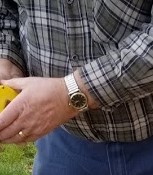
So, recently a watch he bought for $8.88 at Walmart last September suffered a broken watchband. Clock is fine, band has succumbed to it’s cheap manufacturing process. What good is a watch with a broken band?
One of our local Walmarts has an actual clerk who fixes watch bands. She is not young, and her fingers looked gnarled with arthritis. After we asked her about fixing it, she protested briefly citing difficulty, and my husband said he didn’t know where else he could get it repaired. (Do you know a local store that fixes watch bands?)
She looked busy but resigned, pulling out her tools. And yes, we could have bought another watch for $8.88 if necessary, but it was still under warranty. I noticed with some amusement a nearby collection of wedding and engagement bands selling from the same counter: yep, you guessed it, $8.88 for both rings.
The woman with graying hair mostly concealed by a shade of brown, bent over the counter and worked. She fiddled hard with the small gizmos on each piece of the watchband that had broken. Repeatedly they fell from position, and she pushed the small pliers to pick up each small piece. She worked probably close to 15 minutes and I almost said, “Oh let’s just buy a new one.” But then I got intrigued and fascinated with her diligence. Standing all day, bent over a counter, and perhaps 70 years old, maybe older. I looked for her to shove it back to him at any moment saying “It can’t be fixed. Buy a new one.” Her 15 minutes of work was probably worth only $4.
She finally straightened up her back and handed the repaired watch back to my husband, with some pleasure in her face, hidden of course by her mask. We praised and thanked her repeatedly, my husband querying whether she could take a tip. I didn’t catch the answer but I know it was no.
What a joy it was to see a woman who cared about her work—of giving a customer the value he had invested in a watch. How many others would have shrugged and said “We don’t do that anymore” and left us to our own frustrations. How many others instead of toiling hard and bent over a repair counter would have walked away from any job that was so taxing?

I have a feeling she’s not alone in dedication. Kudos and may their kind increase!
We were also pleased with another demonstration of great customer service. There’s a longtime bakery in the town where my mother lives and as I stated in this column recently, cooking and baking is getting to be a big burden or chore for Mom. I had ordered some plain sugar cookies from this bakery for Thanksgiving and she loved and savored them for weeks, from her freezer. I ordered another two dozen in early February but there was a mix up of some kind and the wrong kind was delivered, which my mother had trouble chewing. I called the bakery and the owner sent over a new batch the following week, completely on him. I was astounded. If you’re ever in Goshen Indiana, stop in at Dutch Maid Bakery!

Share you recent “great customer service” story! Comment here or send to anotherwaymedia@yahoo.com or Another Way Media, P.O. Box 363, Singers Glen, VA 22834.
Another Way is a column by Melodie Davis, in syndication since 1987. She is the author of nine books. Another Way columns are posted at FindingHarmonyBlog.com a week after newspaper publication.
Another Way for week of February 12, 2021
All God’s Critters Got a Place in the Choir
Are you a dog person? Cat person? A no-animals-in-the-house person?
I just finished a book that has opened my eyes to the inside workings of a pretty amazing dog, Merle, as seen by the human he adopted. Just in case there’s a question, in this case the dog did adopt the human and not the other way around after a rather rough start in the deserts of southwestern United States where he was most likely mistreated. The book is called Merle: Lessons from a Freethinking Dog by Ted Kerasote (2007). It spent months on the New York Times bestseller list but I found it recently in a “Little Free Library.”

This author has written numerous books on the relationship between humans and animals, many articles longer ago for magazines such as Audubon and Outdoor Life, and now focuses on book writing. He lives a pretty idyllic life if you like mountains, rivers, hunting, and skiing in Kelly, (population 135 in 2007), Wyoming, on the edge of Grand Tetons National Park. In Kelly, dogs run free as long as they are well behaved. Merle made the rounds of his village almost every day, tall and proud, wagging his tail in greeting and nicknamed “Mayor” by the neighborly residents.
One reviewer said “Kerasote’s penchant for translating Merle’s subtle tail wags and facial tics into English is one of the book’s many great joys” (The Oregonian, Portland). For instance, I never thought about a dog’s panting sounding like “Ha ha ha,” but it does! So overall, “ha ha ha” means a dog is happy—usually panting after running or playing. What dog doesn’t love that?
We feel lucky to live in the country. When we are working outside, our dog Velvet, an Australian shepherd mixed breed, gets to run free on seven acres of hayfield and woods, and sticks pretty close to the boundaries. It did take a while for her to learn them. She loves digging, running, and herding—mainly us, her two humans. She hates the sound of equipment: the lawn mower, snowblower, chain saw, vacuum. When we’re inside, she barks loudly when someone knocks at the door. But she also complains “woof, woof” loudly if we hug or kiss.
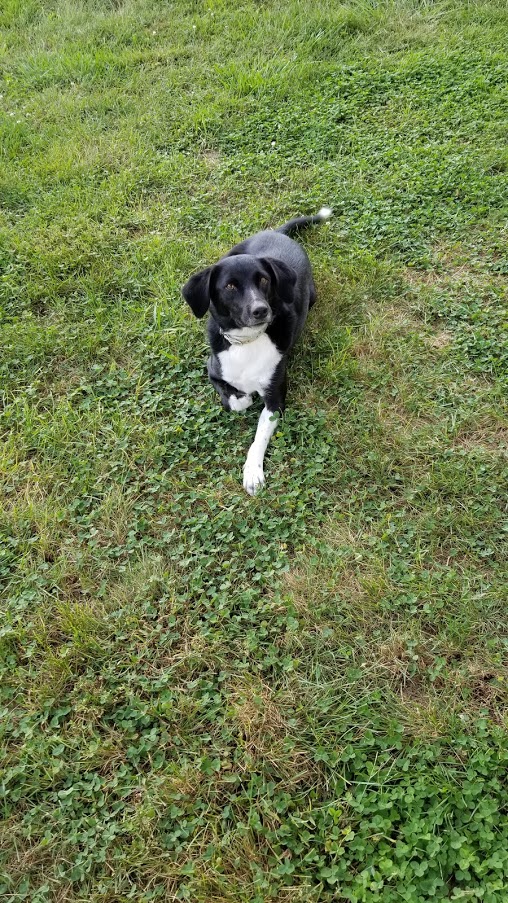
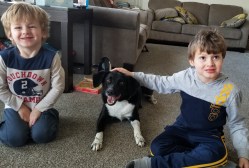
When visitors come, we’ve worked hard training her not to jump up on them. She does well except if our friend Joe comes over (he’s in our bubble). Joe loves her greeting him with her paws on his shirt. I think Velvet understands the rules about not jumping on anyone else. She is a bit anxious or skittish when our grandchildren come to visit. She loves them, loves to play with them and be tenderly petted. Yet she has had to learn—and they too—that they MUST not pet her if they have crumbs on their hands. They’ve learned that lesson especially well now with Covid to wash hands immediately after eating. She used to try to lick their hands clean of any drippings which sometimes felt like she was nipping them. But she’s done better now that they’re old enough to understand they’ve got to wash their hands.

Velvet irritates us when she wakes us up with “woof woof” (time to take me outside you sleepyheads!). After that, there’s no sleeping, we might as well both get up. Better, is a much softer “Buh, Buh” which is a milder form of barking for her. Then one of us can usually slide out of the bedroom without waking the other one.
But all the way down our hall, she wiggles her backside, so happy I’m up, and looks over her shoulder to make sure I’m coming behind her. “Shush,” I scold quietly, so she doesn’t wake my husband. We’ve tried to train her to sit down and wait for her dinner, or else she gobbles it down. Stuart makes her wait for him to go to the basement, and not make us fall by trying to run in front.
Velvet has been a challenge for us as older adults now, but the marvelous thing about books is how we can learn from other people how to do better, whatever the topic. Whether it’s taking care of dogs or a marriage or a child. Do I get a woof woof? If you want to learn more about dogs, you might enjoy this book, available from many libraries.
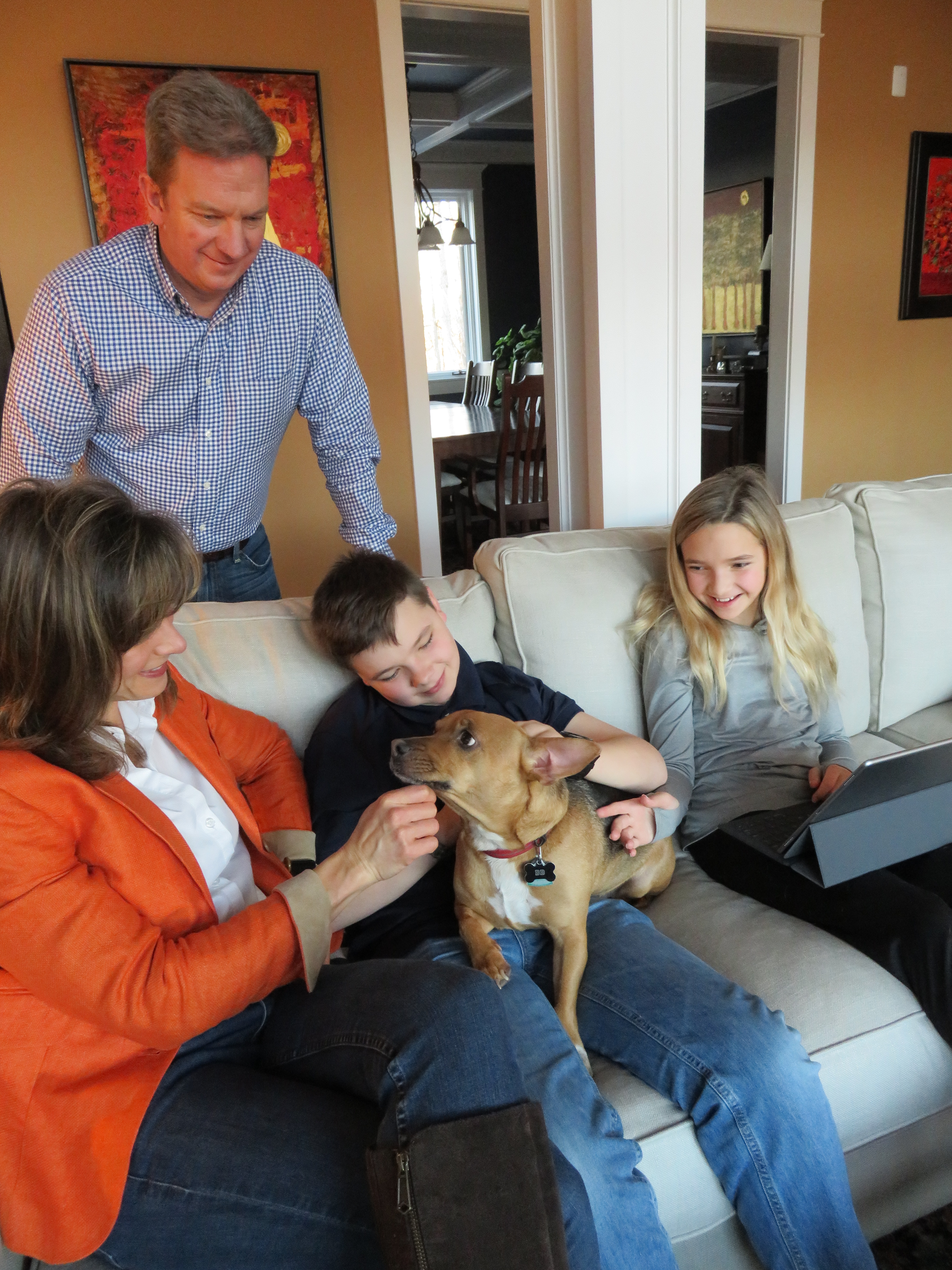
A blogger friend and neighbor, Sharon Landis, has written her own wonderful children’s dog story, Who Will Come for Pup. I love her tales on Facebook of training her three dogs!
Dog lover? Not so much? I’d love to hear your stories.
For dog lovers, how many dogs have you owned–either at one time, or over the years? Velvet is our fourth dog as a couple.
Comments here or send to anotherwaymedia@yahoo.com or Another Way Media, P.O. Box 363, Singers Glen, VA 22834.
Another Way is a column by Melodie Davis, in syndication since 1987. She is the author of nine books. Another Way columns are posted at FindingHarmonyBlog.com a week after newspaper publication.

Another Way for week of February 5, 2021
Are We Tired of Cooking Yet?
So, when the pandemic slammed most of us back into being more “homebodies” than we were before, that also meant cooking more. And at first some reveled in it. Time to make exotic international dishes or complete menus, time to bake that sourdough bread (sorry to disappoint, but I haven’t tried to make any yet; other homemade bread—yes, a couple times), nice tossed salads almost every night for supper, you get the picture.
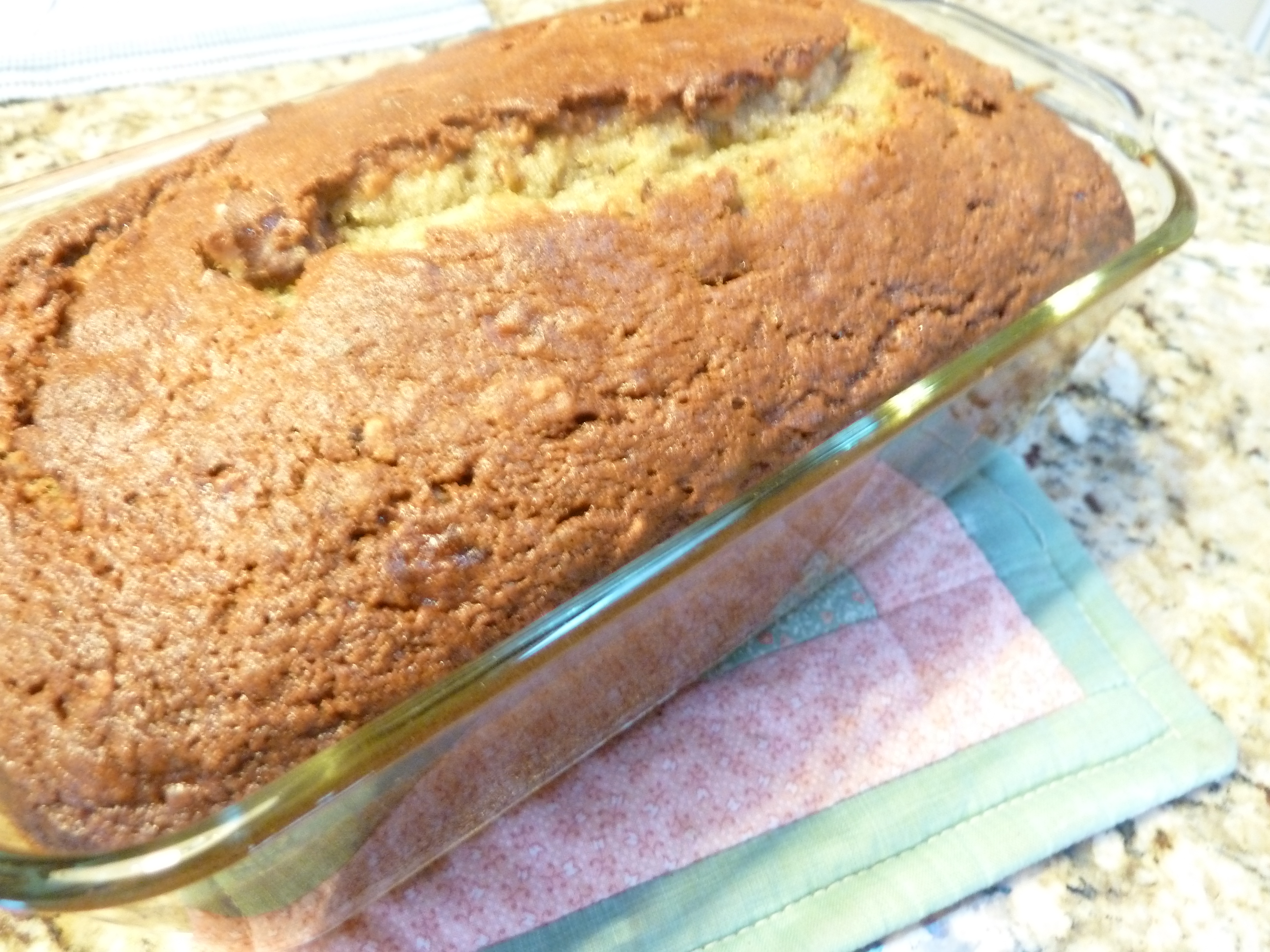
I wish I could say my husband has taken up cooking. He did improvise grilling things in batches so that we can freeze extra meat and have a meal almost at the ready. He helps clear the table and makes our morning coffee and gets out our cereals ever since he retired a couple years ago. And in his defense, I perhaps would invite him to do more cooking (insist?) but frankly he makes more mess than I do and I’m lazy that way. He needs more utensils, more plates, more potholders, more grilling instruments, fixing up lights outside to grill, you get the picture. Like mother used to say, it is easier to just do it myself. If I die first, he’ll probably go back to living on peanut butter and jelly/banana sandwiches, or warming up pork and beans with hotdogs in an old electric popcorn popper like he did before we were married. Anyone else raising their hand?
I enjoy cooking for groups of people and family—but hello? No groups have darkened our door much, due to you know what. We have enjoyed a little extended family time, but mostly outside.
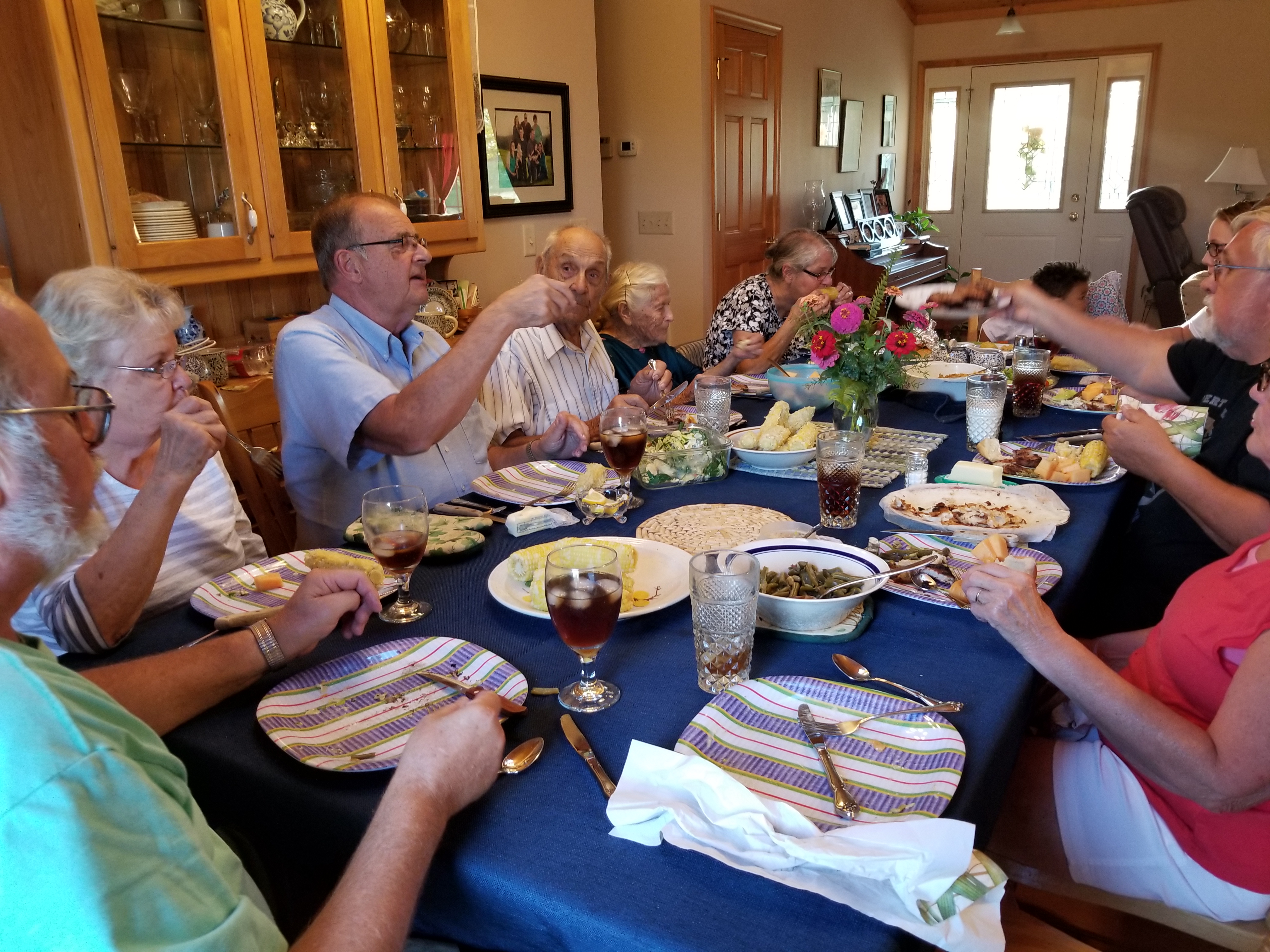
So it’s the hub and me. Meat for him is the basic and once I get that decided, my day feels like it runs much smoother. Not hard to build a meal once you’ve got the main course, the sides and the dessert (plain ice cream almost every night). I’ve started making an idea sheet so that if my eyes glaze for one more time worrying about what we’ll have for supper, I can check the list and at least get an idea going.
As many readers know my mother lives in a retirement facility where she normally gets a hot cooked meal each noon. She has to pay for it, but at 96, she’s just happy to pay rather than cook. Cooking truly gets to be harder and harder, she’s convinced me: not being able to open jars, cans, boxes, chop up veggies or fruits, clean skillets or cookie sheets. You have to be on your toes even microwaving things, so things don’t get overdone. Microwaving often ends up a mess, she says, and hard to scrub, and then there’s running out of ingredients when you can no longer drive (as she frequently reminds us). So no, it is not easy.
Then there are leftovers. My daughter’s oldest son helped them improvise a way to keep track of leftovers in the refrigerator. They simply write on the calendar what they had for dinner, and if there are leftovers to put in the frig, it serves as reminder to use it up before it gets too old. My daughter has particular meal challenges I shudder at: two different food allergies or sensitivities in her family—including one with outright celiac requiring all foods to be gluten free. If she reads this, I can imagine her shaking her head: if we only knew the half of it.
I also know that many many families on limited incomes or out of work have to put together a meal with stuff from a food drive or pantry: canned peas or spaghetti-o’s or boxed mac and cheese. Maybe a can of fruit or even some fresh fruits or veggies, but overall the fixin’s from Salvation Army or another food pantry are not super exciting.

This takes me back to my father who prayed almost every day that there would be food “for all the hungry peoples of the world.” As a farmer, he did what he could and organized crop raising events to that end.
Yes, I’ll cook supper again. Happily!
What’s your favorite meal planning method? This mother had her daughter begin planning and cooking menus from an early age!
Do you agree that it gets harder to cook as we get older? Why or why not? What is harder for you?
Does or did your children have a favorite meal they want or wanted almost every week?
Valentine’s Day Weekend menu ideas? You may want to visit my blogger friend Marian Beaman’s post featuring a cookbook especially for guys, Mennonite Men Can Cook, Too by my former colleague, Willard Roth.
***
Comment here, or send to anotherwaymedia@yahoo.com or Another Way Media, P.O. Box 363, Singers Glen, VA 22834.
Another Way is a column by Melodie Davis, in syndication since 1987. She is the author of nine books. Another Way columns are posted at FindingHarmonyBlog.com a week after newspaper publication.

Another Way for week of January 29, 2021
They Got Married in a Pandemic
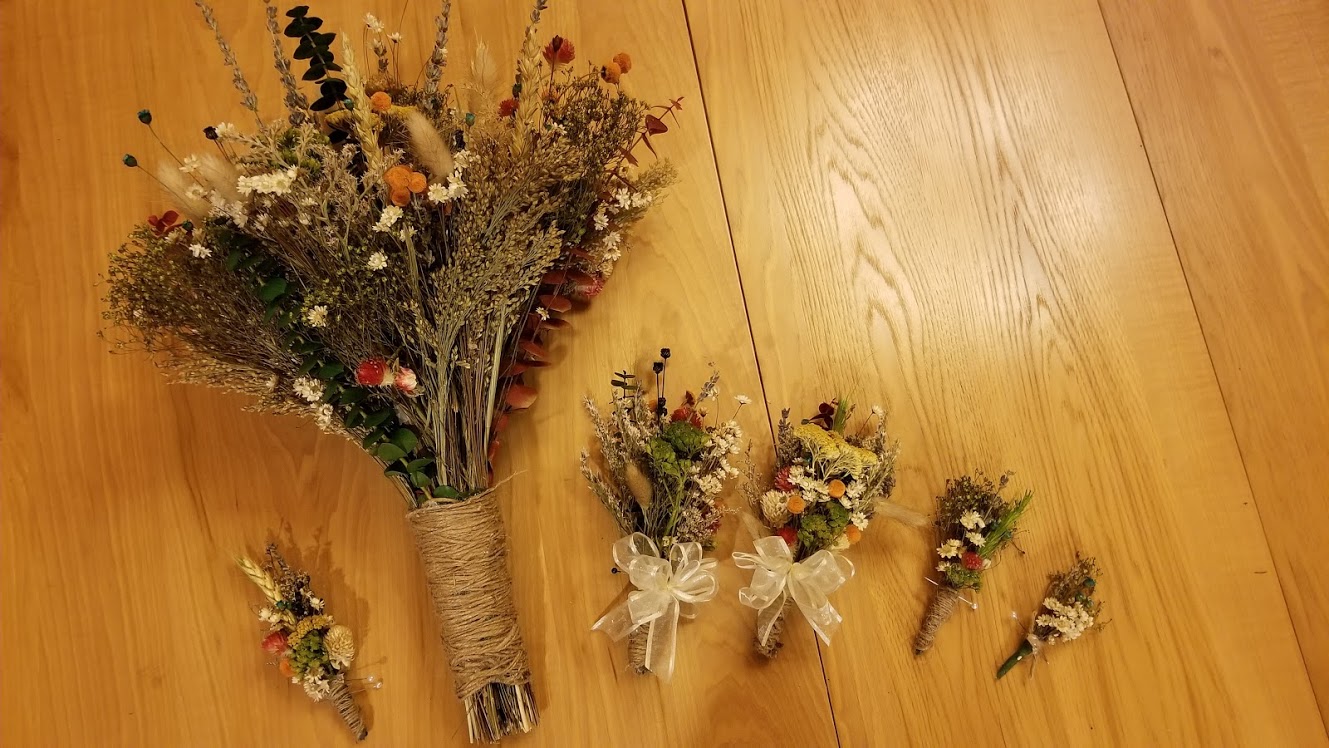
and bridal bouquet out of dried flowers.
[Second of two posts on our daughter’s wedding. All photos here taken by family; we don’t yet have official photography.]
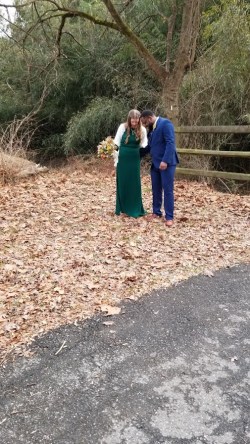
As the days counted down to our youngest daughter’s wedding, I kept humming the song Johnny Cash made famous, “Jackson,” which starts: “We got married in a feve-ah,” and changing up the last words to “We got married in a pan-dem-ic.” Here’s how the outdoor wedding went down.
Parts of their wedding ceremony were what you could expect with any wedding: discombobulation by either the bride, the groom, the bride’s mother, or assorted relatives close to the couple. Add a pandemic to the occasion, and yeah, there’s gonna be befuddlement.

The wedding was just outside Washington D.C. in Silver Spring, Maryland. My husband and I arrived a bit early, so we stopped at a nearby Costco to use their excellent bathroom facilities. But Costco on a busy Saturday of a holiday weekend in a pandemic in any modern city is a pretty crowded place to be. My daughter’s future mother-in-law had warned her, “Never go there on a Saturday.” We got out as quickly as we could, picking up a slice of pizza for lunch in our vehicle.

I was glad we did that when we got a last-minute distress call from the bride saying she had forgotten her concealer (make-up). Could I run to the Target on the other side of Costco and pick some up? I found it after texting her photos to make sure I was getting the right thing.

When we arrived at the church where our daughter was getting dressed, we couldn’t find my husband’s dress shoes anywhere in our minivan. Finally I said he should just wear his bright white tennis shoes (with navy suit). Doreen assured us that NO ONE would be looking at his shoes anyway.

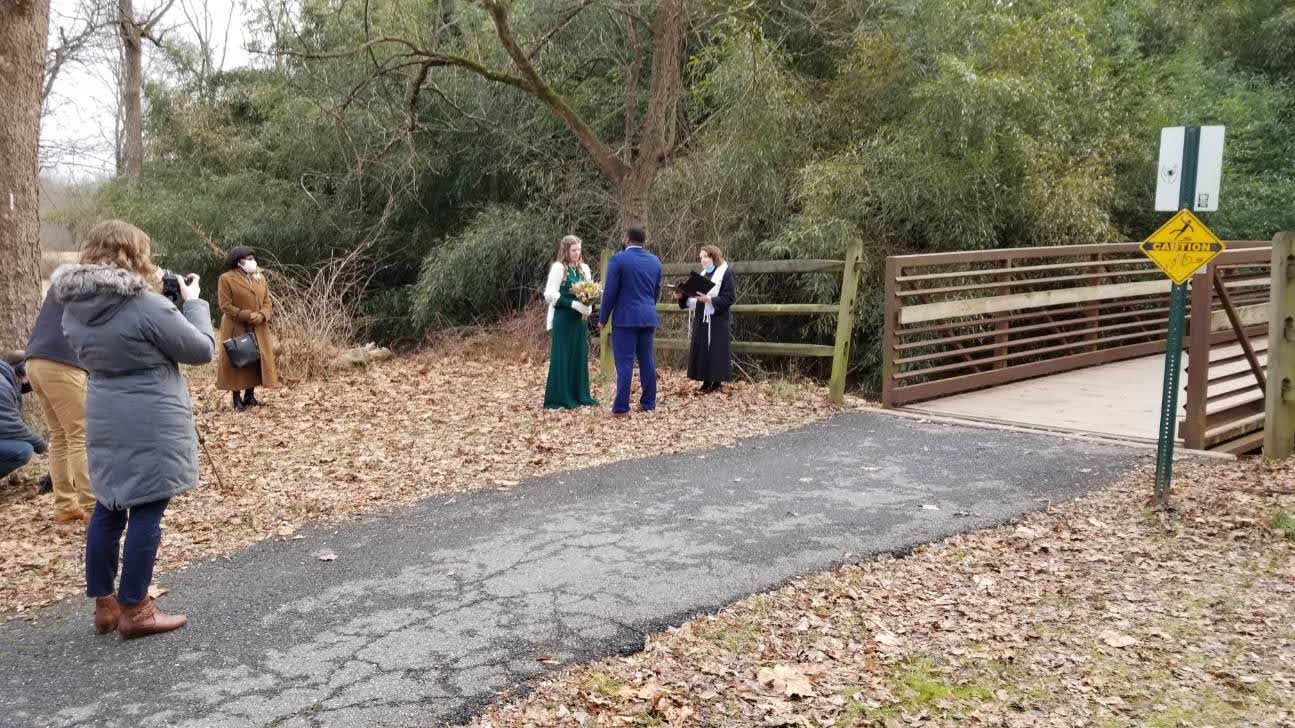
It was a small crowd, just 20, including pastor, photographer/videographer, and immediate family members and their loves. The temperature was hovering near 48 degrees at 3 p.m., start time. Our daughter had picked a small creek and bridge near her church, where we gathered in family bubbles, masked, and at least six feet apart. I was missing the help of my sister-in-law who did the flowers for all our daughters’ weddings, but was not there to take care of pinning on the lovely corsages and boutonnieres she’d made. She had also made a beautiful dried bridal bouquet.

The day went very well, all things considered, if you don’t count a cute but tearful two-year-old ring bearer who didn’t quite understand his job, a lost key lob by a harried mother of the bride—who also dropped her glasses in the leaves—still thick in that park. I didn’t even realize they had fallen from my neckline, but I must have lodged them there temporarily to get the fog off. I was also trying to talk by phone to my sister in Indiana who was trying to join the scheduled Zoom meeting so she and my 96-year-old mother could watch.
When I got back to our van after the ceremony, I could not find my glasses there. My middle daughter launched a search in the park. Praise be, my new son-in-law found them, one lens squished out of the frame which I popped back in. He won points for that one! And I looked again for the van’s key lob and found it in a small bag. I had no memory of placing it there. Wedding discombobulation, my middle daughter said, not dementia. Let’s hope so. I hurriedly passed out the wrapped gluten free cupcakes I’d made for folks to enjoy on their way home, or for supper. You have to have cake celebrating a wedding, right?

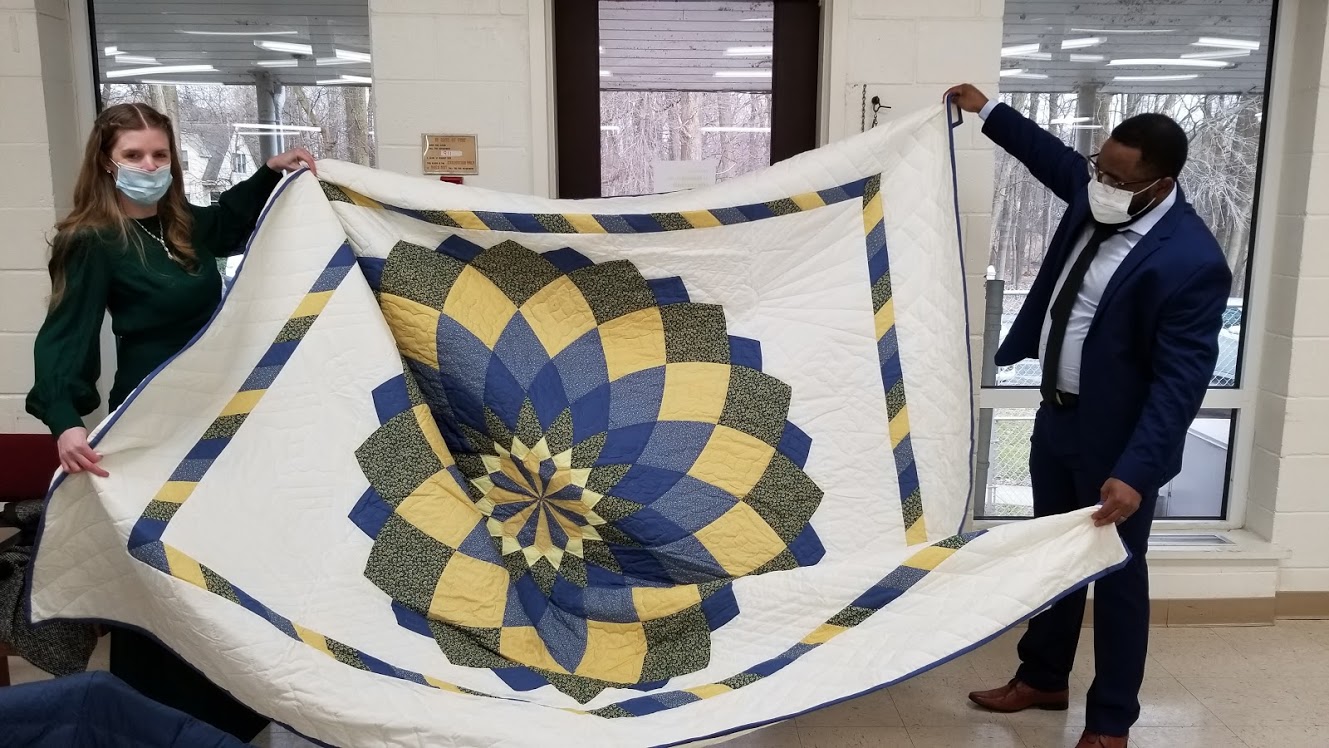
Finally, I was able to present our daughter and her husband the beautiful handmade quilt her grandmother had made—a task she’d completed for all nine of her grandchildren. It sat covered in our closet for years. My mother is no longer able to quilt, and we’re glad she finished it when she did—with help from others. May it wrap this young couple in love, memories, and connections many years after this pandemic is in the history books.

Comments or your own story? Comment here or send to anotherwaymedia@yahoo.com or Another Way Media, P.O. Box 363, Singers Glen, VA 22834.
Another Way is a column by Melodie Davis, in syndication since 1987. She is the author of nine books. Another Way columns are posted at FindingHarmonyBlog.com a week after newspaper publication.
Another Way for week of January 23, 2021
Getting Married Amid the Pandemic
[First of two parts]
My youngest daughter is getting married today (written January 16). Yes, I’m a little old and she’s no 20-something herself anymore. But we are overjoyed that she and her mate have found each other and are preparing to spend the rest of their lives together. This gives us joy and satisfaction that they will be there for each other in years to come, even as we move up in years.
But getting married in this pandemic? A little bit crazy but also a bit saner, perhaps, because they were forced to strip back to the essentials: who must be there? Who will we have to forego inviting? No dress rehearsals, no bridal tea, no bridal or wedding showers even. No tuxes. No special music to worry about. But, instead, wondering whether the technology side of attending “by Zoom” will just be too complicated for some friends and relatives who would otherwise be joining us in person.
As mother-of-the-bride I scurried about cleaning the house, but other years when our older daughters got married, we prepared for a major influx of family visitors, housing as many as we could. Some slept on a mattress on the floor. But with only one small family of four visiting us post-wedding, the pre-wedding clean-up was really no big deal.

Yes, there was a photographer, a videographer, and minister to line up. But outside in mid-January!? In Maryland. Let’s see, that’s technically a northern state. Yes, cold, but it could be worse according to the weather records: today it should be around 44 when the vows are repeated.
But there will be cupcakes, and a ring bearer, something old, something new, something borrowed, something blue. There will be parents and siblings and spouses/significant others, all keeping the total under Maryland’s limits for outside gatherings at this stage of lock down: no more than 25, all wearing masks. At least masks tend to keep your face warm. Does anyone else think so too? One advantage.

I don’t feel as nostalgic as if she were just now leaving home: she’s been independent for about ten years, managing her own finances (including grad school), first job in a strange city and all alone (with one sister living about 45 minutes away, which is nice). She has been launched, so it was very sweet and welcome when her beau sat down with us on our porch this summer the old-fashioned way, to “ask” for our daughter’s hand in marriage, or maybe “tell” us that’s what he intended to do. I don’t know if they do this in the country he is from originally or not: Benin. A small country in western Africa. We’ve known him now over two years and are very impressed with the love and joy they have shown for each other and we hope and pray they’ll know many years of happiness together.
Anyone who gets married during a pandemic that seems currently to be worsening (but thankfully with vaccines soon available for more of us)—has got to be optimistic. We hope to have a larger celebration later when it is safe for such. That’s anyone’s guess about when that will be. We’d love for it to happen this fall.
I think I’ve written down these wedding day thoughts for each of my daughters and the thing I want to say is love and marriage are difficult but worth it. The companionship, the being there for each other, the long years of history together—that’s what we all want, isn’t it? Many are not so lucky whether because of divorce or death, but that’s the goal and that’s what brings us to this day, rejoicing.
Let the dance begin! And I’ll let you know next week how it all went down.

Wedding preparation stories? What went well or caused panic at your wedding?
***
Other comments or stories? Send to anotherwaymedia@yahoo.com or Another Way Media, P.O. Box 363, Singers Glen, VA 22834.
Another Way is a column by Melodie Davis, in syndication since 1987. She is the author of nine books. Another Way columns are posted at FindingHarmonyBlog.com a week after newspaper publication.
Another Way for week of January 15, 2021
What I Learned from a Favorite Professor
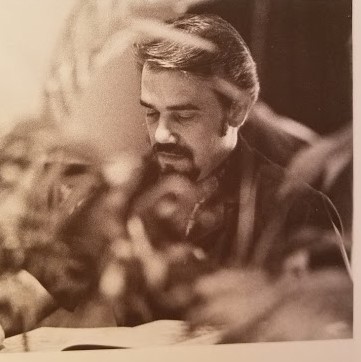
He was known to mutter words like “rubbish!” and “horrors!” when analyzing a piece of writing.
One of my favorite professors at Eastern Mennonite College (now EMU) died recently. Not of COVID-19, but after a long battle with vascular dementia—which sometimes comes about after a stroke, I’m told. Omar Eby taught English literature and writing courses during my time at EMU.
Omar (we usually called our professors by their first names, a practice he was fine with) was perhaps the single most influential person guiding me into the occupation I’ve loved: writer.
He was not one to mince words regarding what he thought of our writing. More than once I stiffened as he’d huff out the word “rubbish” in response to a piece of writing. But he was not rude, nor rough, just honest and not afraid to let you know how and where your writing needed improving. As a writer, you have to be ready for critique, editing, refining, putting in the most perfect word.

According to his obit, Eby was a friend and mentor to many aspiring young writers. Eby’s life of 85 years was impacted greatly by serving six years as an English teacher in east and central Africa. It was there, I’m thinking, that he learned to speak with a bit of a British English accent and flair. As he returned to the U.S. teaching at the college level, he frequently shared what he’d learned from the cultures of Somalia, Tanzania, and Zambia. He also wrote several novels and other books, some centered in Africa: How Full the River (published while I was under his tutelage).
I never saw much of him after leaving EMU, until he moved to Virginia Mennonite Retirement Community, which offers full nursing care in a non-institutional, homelike setting. A group from my church would usually go there to carol at Christmas. I remember the first time I saw him with a huge bib at the large dining room table, and almost nonverbal. I drew in my breath. Could that be the professor who was always dressed neatly, always had a witty and incisive remark about a piece of writing, who had no patience for mediocrity. It was hard to see him there and as I approached him to say hello, he seemed to remember me. But I wasn’t sure.
But what counts is the instruction he gave me, mostly affirming and positive or suggesting other words or approaches. He read and graded carefully, catching the smallest misspelling and encouraging us to submit articles that he deemed outstanding to various magazines. I still laugh when I read a note on one of my papers when I tried to coin a word, “poetize.” “Horrors!” he wrote, “what a term.” I think I thought it meant to “wax poetic.” Another time I used a word, “silented.” He wrote simply, “No!” The paper got a C+. That paper ended up being a chapter in my first book—carefully fixed and expanded.
Once Omar shared how he had written a long essay on assignment for Saturday Evening Post about returning to the continent of Africa and the feelings that overwhelmed him as he flew over the western coast. He quietly told us it had been accepted for publication. Then came the bad news. They ended up paying him a kill fee—and if that sounds brutal, it is to any author/writer. It was substantial for those days, somewhere between $500 and $1000, but he said he would have been much happier to be published in the magazine and foregone the payment.
So he was human. And now has left us, like so many others. These times give us opportunity to reflect more fully on what various people have meant to us, and, I hope, give us pause to decide to invest ourselves more fully in bringing meaning and joy and instruction to the lives of others.

What did you learn from a favorite teacher, pastor, family member, friend?
***
After I wrote this, I discovered thoughts and memories regarding Omar by other English majors, and colleagues here. His memorial service is being conducted today (Jan. 23, 2021) and streaming is available here.
Your own thoughts and observations? Send to anotherwaymedia@yahoo.com or Another Way Media, P.O. Box 363, Singers Glen, VA 22834.
Another Way is a column by Melodie Davis, in syndication since 1987. She is the author of nine books. Another Way columns are posted at FindingHarmonyBlog.com a week after newspaper publication.
Another Way for week of January 8, 2021
What I Learned from an Older Friend
I was blessed to develop a friendship later in life with a dear woman named Martha Stoops.
I first met Martha after the funeral of her daughter-in-law, Liz. My daughter Tanya was very close friends with Liz’s daughter, Edie. They had been friends through middle school. Liz died in late fall their freshman year of high school. At that time we only knew the family as fellow band parents. I’ll never forget the band’s piercing rendition of “Amazing Grace” playing out over the gravestones that chill day.
On the last day of 2020, my friend Martha was reunited not only with her husband who died three years ago, but her daughter-in-law, sister, and many who Martha took care of over the years. She was a LPN in nursing homes and hospitals. Later, she cared for elderly persons in her home. When she told me of her experiences she would say, “You come to understand that dying is just a part of life” and dismissed it as that. So I wasn’t surprised when her son Edward repeated his mother’s mantra when he called to let me know she had gone on: “Mom always said, ‘Well death is just a part of life.’”
We had great times together and that’s what I want to remember. We sat with them at football games when the girls (her granddaughter) were in high school and later at college games. We all went on a band trip to Gatlinburg, Tennessee. We’d go out for dessert after games and invited each other for Christmas parties and birthdays.
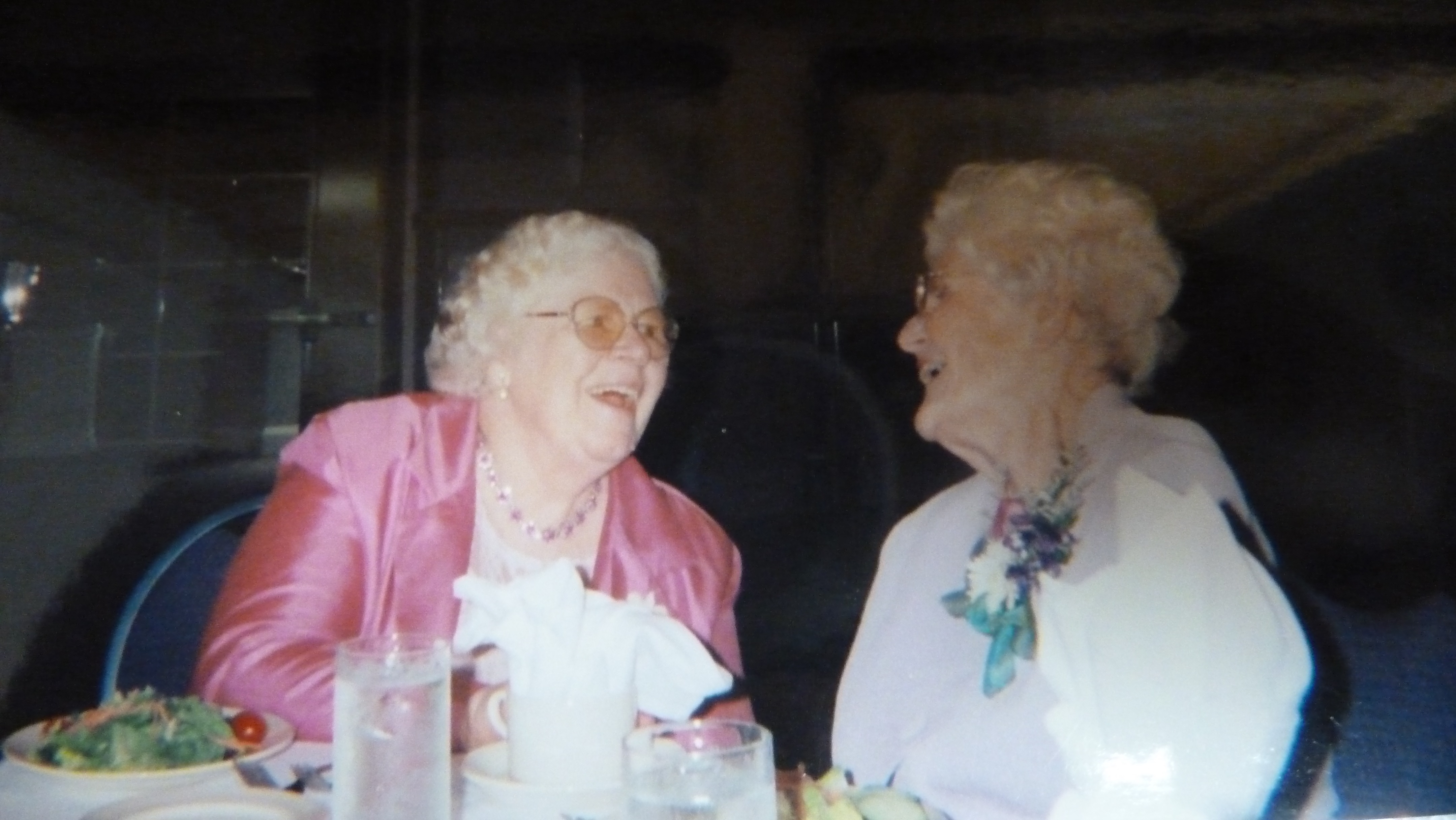
She gave me lots of good and welcome advice. About marriage. And children, and letting things roll off your shoulders. By example, she also taught me when to stay out of arguments. When a group of 12 of us traveled together to Macy’s Thanksgiving parade in New York City, we had trouble keeping together. Finally, late in the evening, my husband and I took off on our own, and said we’d take a bus back to our motel in New Jersey just west of NYC. Martha’s husband was distraught that we wouldn’t find our way back. We almost didn’t, but that’s another story. Elmer Sr. blessed us out for not adequately communicating and causing them much stress. Wisely, Martha kept out of that tiff.
The trip I’m always glad we took was to their earlier stomping grounds in Pittsburgh, Pennsylvania. They loved the old-timey amusement park there, Kennywood, and said we had to go. We finally made the trip with them in 2011. We had a wonderful time, like kids. It wasn’t too many years after that their health started failing.
Perhaps it was unusual to have such a good friend who was almost 20 years older. She taught me about aging. When I would call to set up a time for getting together, nailing down a date or time, she would ask her husband to get on the phone so she wouldn’t forget the details. Eventually I asked her about that over dinner—whether she was afraid of not remembering. “Yes,” she told me, and I lamented what we both had suspected to be true. I loved her honesty and openness, even though her beautiful mind was beginning to fail her. Most times our conversation would flow like normal but if asked about a specific detail of a recent event or about the family, she’d gloss over or laugh off an answer, because she couldn’t remember. After she moved into a nursing home when her husband could no longer care for her because of his own health issues, she couldn’t open her eyes. Sometimes I would get a few brief words out of her—and when my husband also visited, she clasped his hand tightly. She gave me many creative keepsakes over the years, some she made herself, and a ribbon bookmark she ordered for attendees at their “surprise” 50th wedding anniversary celebration.
The pastor who officiated at the brief graveside service, Peggy Packard, said Martha took special joy in the verse from John 11: 5, “Now Jesus loved Martha.” The verse of course add that Jesus also loved Mary her sister and their brother Lazarus. But my Martha felt blessed seeing the words “Jesus loved Martha” in the Bible. The same is true for all of us. Insert your own name there. Of course, Jesus later scolded Martha for being too concerned with fixing food and straightening the house when he visited.
Martha, Martha: rest in peace. Enter into the joy of our Lord.
***
What have you learned from an older person? Someone you loved and respected but was a year, or many years older than you?
***
In many countries of the world, the wisdom and lives and examples of elders are highly honored. How can we do better in North America?
Send comments or stories and perhaps I’ll share in a future column. Send to anotherwaymedia@yahoo.com or Another Way Media, P.O. Box 363, Singers Glen, VA 22834.
Another Way is a column by Melodie Davis, in syndication since 1987. She is the author of nine books. Another Way columns are posted at FindingHarmonyBlog.com a week after newspaper publication.

Another Way for week of January 1, 2021
The Legacy We Leave
I would never make a farmer, but I like to be busy like my father.
Instead of cleaning our house for company this Christmas (since none of the children were coming, as in many other families), I cleaned a house my father built over 25 years ago.

The backstory: he was not a carpenter, but he enjoyed working with wood. After he could no longer farm and had difficulty walking, his busy mind got to work on projects which kept him inspired and helped to chase away cabin fever.
As he tinkered often in a wheelchair, he sometimes copied the things he saw in other people’s yards like trellises, wooden tulips, or wooden ducks. Then he branched into building toy barns because, as a farmer, it was what he knew. He took joy in keeping his own barns freshly painted “barn red.”
So he began to make and sell toy barns, and often donated them for charitable sales, especially Mennonite Relief Sales, well-known throughout the U.S.
He also built life-size outdoor playhouses (tall enough for small children to stand in) on order. But where his creativity and love truly came out was in building doll houses, or as my one grandson requested for this Christmas, a “toy house.” You don’t have to play with dolls to enjoy the fun of running cars and trucks through a house and into a garage, or putting flowers in tiny window boxes.

So I loved cleaning up the toy house that had sat in our basement for over 15 years. The work made me remember my dad in ways that I do not think about on a daily basis any longer. The concentration and small smile on his face as he worked. How he designed various patterns for the doll houses and kept a notebook of those patterns and gave them names, such as the “Melodie house.” The way he tidied up his workshop at the end of each day. The look of joy and satisfaction on his face as he told us about his latest project.

As he neared the end of his life with increasing dementia, he began to have trouble remembering exactly how to put them together. That was sad for all of us to watch. My husband tried to help him when we visited but Dad made the same mistake over and over. Then one time when our oldest daughter Michelle was along, she found this very toy house had a broken porch roof from something falling on it. Using the tools and supplies her grandpa could no longer manage, she repaired the house herself, excited to present the finished product to her grandpa.

I have a feeling this toy house will be visited by superhero characters and dinosaurs and little astronauts as Michelle’s boys live in the made-up stories of their imaginations. In fact, on Christmas morning, as we watched the boys playing via Zoom with the new “toy house,” the oldest, James, told us, “the Transformers are all friends who own a farm and this is their house.” His mother told me later that even the Deceptions, who are the “bad guy” Transformers, are part of this friendly farm family.

My father, the peacemaking farmer, would love this newly established friendly house.
So, I enjoyed cleaning up the house destined for my grandsons, even though we lamented—greatly—that we couldn’t spend more than a few passing minutes with them—dropping off the toy house at their neighbors to hide until Christmas. We spent time together with all our children and grandchildren, spouses and a fiancé on Zoom on Christmas morning, and felt their love and excitement articulated in packages and “love you.”

As I think about this, somehow my Dad’s—and my husband’s legacy was passed down to at least two of my daughters who don’t mind tinkering and fixing things way beyond my skill set. If I can leave a legacy like Dad and Mom for our grandchildren, we hope to look back on this Christmas as the year that was not much fun, but bearable through innovation, hard work and love expressed. How is it in your family?
***
If you have stories to share, comment here and I will consider them for a future column. Or send to anotherwaymedia@yahoo.com or Another Way Media, P.O. Box 363, Singers Glen, VA 22834.
Another Way is a column by Melodie Davis, in syndication since 1987. She is the author of nine books. Another Way columns are posted at FindingHarmonyBlog.com a week after newspaper publication.
Another Way for week of December 25, 2020
The Unimaginable
Recently I wrote about “The Unexpected.” This week I’ll tackle the unimaginable. Yep: the pandemic.

I was standing in line at the grocery store the other day when the masks all around (thank goodness) put me in pause mode. I thought about how unimaginable the scene would have been to me last year at this time. To all of us. It would have been science fiction. A medical disaster movie.
We remember the first weeks of mask wearing, and the long long lines outside of Costco and Walmart, standing six feet apart. What country were we in? It felt like an old eastern European regime maybe.

At our grocery store at first, no more than half of the people were wearing masks. I would glance at others, hoping to not catch any droplets, stiffening at someone sneezing, someone crowding too close. There were few children in stores at that time, which was wise, but so different. As children gradually started coming back out, wearing masks, the kiddos looked proud to be so grown up. I remember my four-year-old grandson telling his mommy as they waited in their van to pick up groceries, “Mommy, I need a mask.”
On a personal level, my husband had knee surgery just four days before the major U.S. lockdown the weekend of March 13. When we went to his second rehab session at a retirement wellness facility, we were stunned to find out he could not receive any more rehab there. We had been working with them for months anticipating the surgery, and now, oops, sorry, we don’t want you anymore. I don’t really blame them, they needed to protect their retirement community—and we don’t actually live there. But, what were we to do?
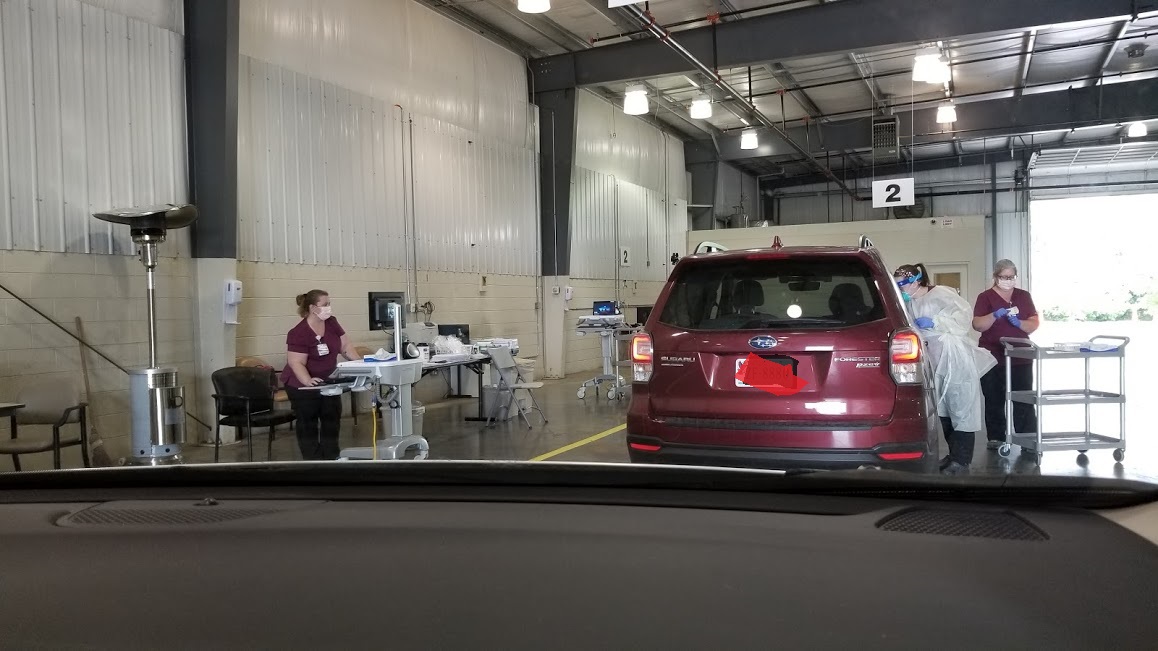
A local fellow writer and photographer/blogger suggested another rehab place we’d never heard of, and Stuart went on to successful rehabilitation there.
And my mother—who had unexpected surgery after a fall breaking her femur on February 20—was suddenly locked away from seeing my sister who lives nearby, or anyone other than healthcare workers. Unimaginable, of course. These things are routine now, we know the restrictions.
My two older grandsons—who grew up with tight family restrictions on screen time—were gradually shifted into screen overload: online learning over Zoom (but not without major hiccups in one school system where the technical networks were simply not up to speed for thousands of connections). These days, the two first graders are eager to get away from their computers at the end of “school” hours.
The day I went shopping for groceries and found nearly empty shelves in many aisles of the store, I wept silently. It seemed so unbelievable. My mind flashed back to the Russian guest in our home in the early 90s, who marveled at our full grocery store shelves. She picked up products and studied them.
A year ago, I couldn’t have imagined big tough smart well-paid football coaches standing on the sidelines of huge almost-empty stadiums wearing masks. What a sight, now commonplace.
If you had told me I would not attend services in my church building for ten for months, I would have said no way. That doesn’t mean we haven’t worshipped, prayed, reached out to others, fellowshipped the best we can. Certainly, this tests our faith and our faithfulness, but in spite of it all, I find my heart drawing nearer to the God of the universe, and the Jesus that I still follow and love. Mary and Joseph could not have imagined the trials that were ahead for them, either.

We are lonely for loved ones this unimaginable holiday season, but as others have pointed out, those who serve in the military or Christian service and ministry around the world—they do not usually get to go home for the holidays. It is a surprise and an unusual year if they get that privilege.

And so it goes. May you find hope and joy in the year ahead.
***
High point of your Christmas holidays? Low point?
How are friends and loved ones doing? Unload here, if you care to.
Comment here or send to anotherwaymedia@yahoo.com or Another Way Media, P.O. Box 363, Singers Glen, VA 22834.
Another Way is a column by Melodie Davis, in syndication since 1987. She is the author of nine books. Another Way columns are posted at FindingHarmonyBlog.com a week after newspaper publication.
Another Way for week of December 13, 2020
A Good Time to Read
[With apologies to my blog readers; I got ahead of myself and posted the wrong newspaper column last week: this is the one that should have appeared last week.]
Time for my almost annual encouragement to read more books. I will not be the first columnist to point out that with the pandemic making most of us staying home more than normal, is a great time to read more books than normal. At least if you’re not ill. This year I have enjoyed reading each afternoon and evening—although I can never read for hours on end. Finish a book in one day? Not me. I would feel guilty and lazy and like I wasn’t “getting things done.” Instead, reading quiets me down for naps or bedtime.

My most recent long read was The Reckoning by lawyer/crime writer John Grisham (Random House, 2018). Grisham lives not far from here in Charlottesville, and has a home also in Mississippi. Occasionally he comes to our local university to conduct seminars called “Writers Hour.” I hope to go sometime.
In general, I found this book hard to read mainly because of a long middle throwback section where we follow main character Pete’s service in the Philippines in World War II. He ends up on the Bataan Death March which was known for terrible cruelty and random killings. Soldiers who fell while marching (because they were weak from illness or starving) were shot which was accompanied by laughter from enemy bystanders. I found the characters hard to identify with.
But I love novels set in the deep south (apparently so does Grisham) where I lived for a short portion of my life. One reviewer, Gregory Hunter, says “This book is a TRAGEDY, staged in small-town Mississippi immediately following WW II … Grisham is an expert at depicting the conflicting ways of the South’s ethics, politics, ethnic differences … I found it so much more than just another well-written legal thriller, and told by one of the best of America’s authors.” In the end, the novel makes the valuable point that forgiveness and love is crucial in family life.

The World War II setting brings me to another book I helped manage through the publishing process called Love in a Time of Hate: The Story of Magda and André Trocomé and the Village that Said No to the Nazis by Hanna Schott (Herald Press, 2017). The story of the Trocomés, who led efforts in one community in France to hide more than 3000 Jewish children and adults fleeing the Nazis, has been told in other books. But journalist Schott, from Germany, (who is also fluent in French and English) wrote this book for new audiences. Andre was a Christian pastor and both he and Magda offer shining examples of how some have been able to respond to injustice, hate, and horrible treatment with love and humanity. Basically, I love true stories over fiction, and powerful testimonies of those who’ve chosen a way other than hate and horror.

Speaking of true stories, I have another completely different book on my shelf I love to recommend. Simple Pleasures: Stories from My Life as an Amish Mother was written by Marianne Jantzi as one of the books in the Plainspoken series from Herald Press. Published in 2016, the book winsomely shares the ups and downs of true family life in her very conservative Amish home in a community in eastern Canada. Marianne is an accomplished writer and their adventures are endearing but not always easy. A great gift for those interested in true Amish stories—not a romantic book about the Amish.

Finally, allow me to mention a book of seven fictional Christmas stories by a prolific author and blogger friend which I’m looking forward to reading: 100 Years of Christmas by Trisha Faye. Trisha is from Texas and her stories revolve around women and the ups and downs we all experience. You should be able to find it on Amazon.
Books are a great gift. Anytime!
[Again, I apologize that this is late for Christmas. But the long month of January is ahead and books are a great way to spend that gift card or Christmas cash you perhaps received.]
Comments? Post here or send to anotherwaymedia@yahoo.com or Another Way Media, P.O. Box 363, Singers Glen, VA 22834.
Another Way is a column by Melodie Davis, in syndication since 1987. She is the author of nine books. Another Way columns are posted at FindingHarmonyBlog.com a week after newspaper publication.

 findingharmonyblog