

Zucchini Bread
Still drowning in zucchini? Either that you raised or given to you by a so-called friend? (I say so-called because of the old keep-your-car-locked-in-summer-at-church joke so no one gifts you with the zukes.)
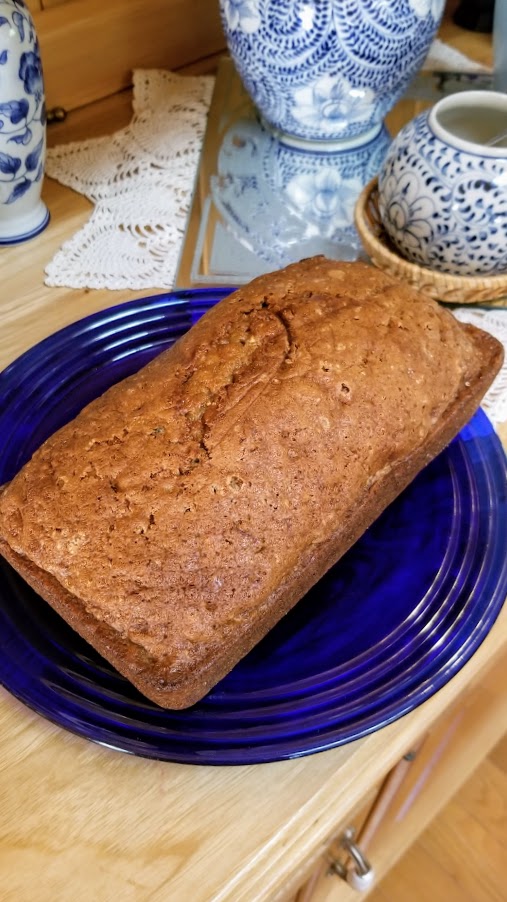
I’m making some to give away: zucchini bread is one of my mother’s favorite breads with her huge breakfast of coffee and 1 roll or slice of bread. At 96, we don’t set the rules on what she should eat. I don’t raise zucchini because of—my opening sentence—we have plenty offered to us. I want to take Mom some the next time we visit. (One of my nieces has already promised zucchini bread and pickles for Christmas presents.)
I’m sharing this recipe because:
1) I have decided to go back to posting recipes aiming for every week or two. I’ve had an increasing realization that recipes are the bread and butter (so to speak) of my blog. That tells me that if I want the traffic to continue, I better pony up with regular recipe posts again;
2) recipes for this common snack bread aren’t found in a lot of my cookbooks, surprisingly enough;
3) while the bread has a long list of ingredients, you likely have everything in your cupboard;
4) someone gave me a box of 18 eggs and a zucchini, all in one week;
5) I love writing recipe posts because they allow me to be breezy and not heavy and not preachy like I perhaps sometimes am in my columns.
And remember, if you don’t like pre-recipe stories and rationale for sharing, please roll right down to the recipe itself.
This recipe appears in the masterful collection, Mennonite Country-Style

Recipes and Kitchen Secrets: The Prized Collection of a Shenandoah Valley Cook, written a number of years ago now (1987) by Esther H. Shank from here in the Shenandoah Valley, for her daughters. She was sweet enough to endorse and write a blurb for my own book, Whatever Happened to Dinner.
Zucchini Bread (with an additional option of making cake)
2 cups grated raw zucchini
3 eggs, well beaten
2 cups sugar (I used one cup brown sugar instead of 2 white)
1 cup vegetable oil
2 teaspoons vanilla
3 cups flour
1 teaspoon baking powder
1 teaspoon salt
1 teaspoon ground cinnamon
½ teaspoon nutmeg
1 cup pecans (or divide ½ cup pecans and ½ cup optional raisins)
Directions:
Grate zucchini, set aside. Beat next five ingredients until fluffy. Sift together flour and next five dry ingredients. Add to wet ingredients and mix all together. Stir in grated zucchini plus nuts or raisins. Pour into 2 greased 9 x 5 inch loaf pans, and bake at 350 degrees for 55-60 minutes.
To make cake: fold in 1 cup undrained crushed pineapple along with nuts and raisins; bake in 9 x 13 inch cake pan for 35-40 minutes. –Marie Shank
To buy Esther’s cookbook, go here or your favorite bookstore.

To buy my cookbook and reflections on keeping family mealtime, go here or ask at your favorite bookstore.
Another Way for week of September 4, 2020
The Work You Don’t Enjoy
Last week I wrote kind of a rhapsody on work—especially gardening or house work. As I’ve reflected more on the nature of work, I decided to launch this into a short series exploring additional aspects of work. As we “celebrate” Labor Day this coming weekend, I admit that there is lots of work I don’t enjoy.
Our lot in life is to work. In Genesis the creation story says “Cursed is the ground because of [Adam and Eve’s sin]; through painful toil you will eat food from it all the days of your life. It will produce thorns and thistles for you, and you will eat the plants of the field. By the sweat of your brow you will eat your food.” (Genesis 3: 17b-19a).
This summer I would personally add: “Fighting off raccoons, skunks, and bean beetles, you will eat the fruit of your labor.”
No matter how you read Genesis or what you believe about creation, the result is the same: life involves work—some of it we enjoy and some of it feels like a curse.

We had a late summer rainstorm in which the wind whipped down three rows of corn: the corn I hoped to freeze for the winter. We plant our corn in about four plantings—much of it to eat fresh, but trying to harvest several rows for freezing. So Monday morning found me down on my knees in the garden mud, trying to make the stalks stand straighter again. I pushed mud and straw up on all sides of the stalks. Shoring the stalks up like that helps, although nothing can restore the corn to its full productivity. That work felt like a curse.

But it made me think of the heartsick farmers in the Midwest who watched their crops destroyed when the “derecho” went through a wide area August 10-11. (We were hit by a similar storm the summer of 2012.) As I worked, I thought of women in rice paddies on the other side of the world working in mud, and all those who must start each day carrying their day’s water supply many miles (approximately 11 percent of the world’s population according to the Centers for Disease Control).
Many of us groove to one type of work over other types. Office or factory or outdoors? Outdoors sounds great until you think about heat or nasty weather. Do you like head work or working with your hands and body? Working in hospitals, doctors’ offices, and nursing homes in this pandemic has even been a life and death matter. We continue to pray for protection and strength for all those working in such places whether it is cleaning or managing their jobs under difficult sanitation protocols, and all “first responders”.
I grew up more as mother’s helper rather than dad’s. Both my older sisters did more outdoor and farm work than I did, mainly because they were, well, older. My second oldest sister eventually fell into the pattern of being dad’s helper because she liked it more than she did housework. And she was so adept at it, although she and my younger brother will tell you (now that Dad is gone), that sometimes his demands as a boss fell heavy on kid ears.
This leads me to another confession. I don’t love helping my husband with his projects. I usually find the wrong tool for him, or mix up something.
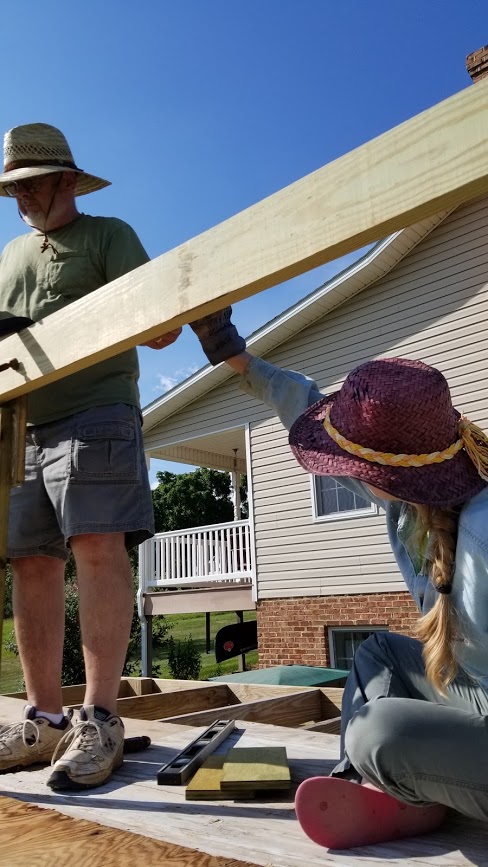
But my husband and I are building a woodshed where I learned a lot and helped enough that I began to enjoy it. I finally knew what tool he wanted or needed next. Like an assistant helping a dentist or in surgery, I would sometimes hand him the tool before he asked. I helped him put up the poles, structural joists, and side supports. It is currently waiting on rafters and roof, but as life happens, other projects have edged in.
So I guess what I’m saying is we all have work we don’t love: cleaning toilets anyone?
***
What’s your most hated chore?
What did you not enjoy doing as a child?
Were you/are you a mommy’s helper or a daddy’s helper? Or maybe these are outdated terms/concepts. How about “Family Helper”?
For a free small booklet called “Work Therapy” with 35 succinct tips on enjoying our work, write to anotherwaymedia@yahoo.com or Another Way Media, P.O. Box 363, Singers Glen, VA 22834.
Another Way is a column by Melodie Davis, in syndication since 1987. She is the author of nine books. Another Way columns are posted at FindingHarmonyBlog.com a week after newspaper publication.
Another Way for week of August 28, 2020
Mulling Things Over: The Holiness of Work
I love doing mindless work like canning tomatoes, snapping beans. My brain goes into overdrive thinking, processing, figuring things out. In my youth I didn’t even mind gathering thousands of eggs in the chicken house because my head was free to explore, remember, plan, dream, and get things thunk out. (Yes, I know that’s not a word but it works for me.)
Of course I will be glad to wrap up garden work this fall, but there is something about it that calms my mind: going out in the cool of the evening and just pulling weeds or picking bugs off green bean leaves or even pulling the watering hose around. It is quiet and restful work, when your soul can communicate with God and maybe vice versa.
For our church service the other week (pastor was on vacation), we watched a worship service by video from the Island of Iona off the west coast of Scotland. The island is just three miles long by one mile wide. One of my daughters went there a few years ago for a week of thinking, exploring, praying and processing. She stayed in an ancient abbey there used originally by Catholic monks.

In the year 563 a man named St. Columba brought Christianity to Scotland. After the Reformation in 1560 the abbey was not used for centuries. Part of the ruins there are an ancient nunnery and cemetery. Many Scottish kings, and the real Macbeth are buried there. Then in the late 1800s restoration work began and around 1938, Christians began using the partially restored abbey and grounds for worship. Today an ecumenical group calling itself simply the Iona Community (not all members live there) holds worship twice a day year-round. They also host visitors and volunteers who desire to experience the “thin space” of the island and grounds, where most people feel incredibly close to God.

When you think about island countries like Scotland and Ireland you might have heard of “Celtic spirituality” which typically focuses on worship, prayer, study, and work as part of the Christian life. “Work” is an interesting element for one’s religious life. Everyone who stays at the Iona Abbey participates in some of the daily chores of keeping it going. Guests help with cooking, setting tables, washing dishes, washing linens, cleaning bathrooms, and so on. While our daughter was there, in addition to rotating meal prep/clean up duties, she signed up for what might have seemed like a “fluff” chore: making sure the tea supplies were kept up with clean dishes at the ready. But keep in mind: tea time is six times a day in Scotland.

If you are older, perhaps you also recall that one of the hallmarks of a “vacation” at Grandma and Grandpa’s involved pitching in to do the work, whatever was needed and you were old enough to do. I didn’t spend a lot of overnights at my Grandma’s house—I think it made her nervous—but if we went for the day we were sure to get in on whatever work or activities she had going that day. I’m glad my grandsons are learning to do house and yard work and love the letter that one wrote about doing chores at his home. In careful kindergarten printing, it says “Dear Grandma and Grandpa, I cleaned up and I had fun cleaning up. I love you. James.”

Is it too much of a stretch to think of our daily work routines as part of our spiritual experience? Washing dishes or wiping tables after a meal should bring thankfulness that you had food to eat. Certainly, preparing food and serving it should make us mindful of the source of our food. In making beds, we can thank God for rest and restoration—or pray for a good’s night sleep to come!
May it be so in your life today. And enjoy your Labor Day holiday!

***
How often do you think of your work as holy therapy?
What would you like to change in your approach to your work life?
We’ll continue this theme on working for a few weeks and I would welcome your stories or comments on any of these angles:
–The life cycle of work, starting with work babies do
–The work of young adulting
–Paid work/jobs
–Volunteer work as a retired person
–When your work is just “staying alive”
***
For a free small booklet called “Work Therapy” with 35 succinct tips on enjoying our work, write to anotherwaymedia@yahoo.com or Another Way Media, P.O. Box 363, Singers Glen, VA 22834.
All photos courtesy of Doreen Davis, except for James’ letter.
Another Way is a column by Melodie Davis, in syndication since 1987. She is the author of nine books. Another Way columns are posted at FindingHarmonyBlog.com a week after newspaper publication.
After all our company left the other week, I had some leftovers (rice, taco filling, refried beans) in my freezer that I wanted to use up but knew my husband was not a big fan of burritos. (I know, what is he thinking? Well, he doesn’t like the messy mess—and he has trouble enough keeping his front clean when chowing down. But he loves taco salad, because the mess is on his plate and he can fork it up rather than try to eat a taco in his hand with taco toppings coming out all over.)
So, I had some leftover taco filling, 3 leftover large tortillas, some rice and yes corn, because we’re harvesting that in the garden right now. I also have plenty of tomatoes, green/yellow peppers, onions.
I followed blogger Jennifer Murch’s suggestion here and watched this video on what makes a good burrito. Then I googled for a more precise burrito recipe, found here from The Seasoned Mom. I liked that they were freezer friendly so I could use up all the tortillas and other leftovers and have enough ready-made burritos for 6 lunches for myself, (because I agree that for a “mature” woman like me, a whole burrito for lunch is just too big).

I’m sharing my adaption of The Seasoned Mom’s list of ingredients if you happen to have on hand the four ingredients I shared above. And yes, most of us like to add a salsa on the side with the burrito, so I just quickly chop up some tomatoes, a little lettuce or cilantro, some onion, green pepper for a side of instant homemade salsa (but without any hot peppers, which don’t agree with me).

What do you think?
Ingredients for 3 tortillas, which you can eat whole, or halve into 6 half servings, and freeze for the future. All amounts are approximate: add or subtract according to your likes.
1 cup leftover taco filling
3/4 cup refried beans
1 ½ cups rice, cooked
1/2 cup kernels of corn, cooked
3 large tortillas
1 cup shredded cheese
Optional salsa—any of these: finely diced red onion; lettuce; diced tomato or salsa; sour cream; fresh cilantro; avocado or guacamole.
To prepare:
- Lightly brown tortilla in skillet on stove, both sides.
- To make 1 burrito: spread ¼ cup beans down center of tortillas; top with ½ cup rice; 1/3 cup taco-flavored ground beef; 2 tablespoons corn; and 1/3 cup cheese.
2. Fold in opposite sides of each tortilla, then roll up, burrito style. Place, seam-sides down, in dish. Repeat with remaining ingredients to prepare 6 total burritos. Freeze. To serve, unthaw and heat in microwave about 1 minute. Try first at 30 seconds and then increase time if needed.
****
I’ll remind you of another classic cookbook from Herald Press for even more late summer great ideas for using up garden goodies.

To purchase, head here: https://heraldpress.com/books/simply-in-season-tenth-anniversary-edition/
Another Way for week of August 21, 2020
Precious Family Times + Homemade Ice Cream Recipe
Back in July I was checking out a a scad of groceries at Walmart. An older employee helping people having issues noticed I accidentally scanned something twice. She came over and took the extra charge off my register. I thanked her profusely and then I felt a need to share my pending joy at my grandchildren coming for a visit.
“I bought so much stuff because our grandchildren and their parents are coming for a visit for the first time in six months,” I blubbered. I could barely get the words out without choking up.
“Gotta stock up on snacks and stuff,” she agreed, even though I had not really purchased snacky things.

I’m sure I wasn’t the only grandparent this summer feeling emotional. On Facebook I’ve watched others who’ve been lucky enough to finally see their grandchildren. Our daughters and their loved ones held their breath and decided a careful visit might be safe out here on our eight acres, far from any city and most people. There would be no pool, no playgrounds or children’s museum, just old-fashioned fun we could find fishing at a secluded pond, hiking to a brother’s cabin in the woods, and enjoying a tent and playhouse on our own land.
It was a combination of the second Cousin Camp at our house (I wrote about last year) and replacement for a hoped-for lake vacation at a large cabin in western Maryland for the whole crew. We had to cancel those plans when the owners pulled their cabin off the rental market. Just one of many disappointments for millions this year.

I can’t even bear to look now at the schedule my daughter sent on February 21 for her kids’ summer. She had carefully lined up weeks of daycamps with various activities for the oldest. This was to be his “daycare” while she and her husband worked—including a week at our house and with their other grandmother.
By mid-March, all of those plans were upended, as the initial close downs of schools, restaurants, churches and more began to go into effect. I’m sure many of you could say the same thing, and feel similar anguish.
Tears have been just under my smile so often in the last six months. I’ve cried more in this half year than I have for many years. And we’ve had it good, comparatively speaking—and knocking on wood with both fists. But I think it is a sign of the times—and very normal—to have our emotions so thin as we read and hear about so many deaths, so many older folks suffering alone in nursing homes not able to see their loved ones, so many funerals that haven’t even been held, so much bad news.

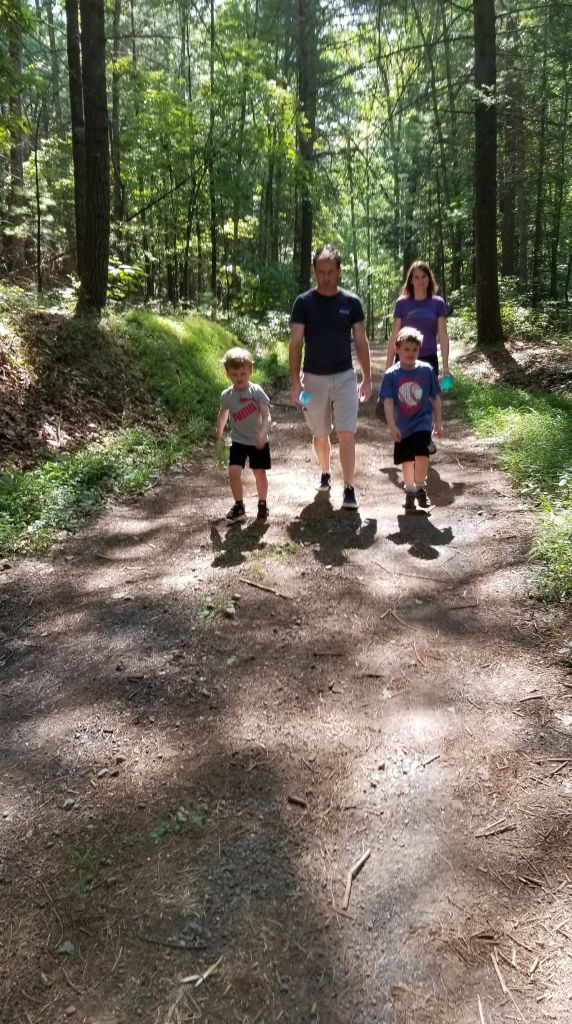
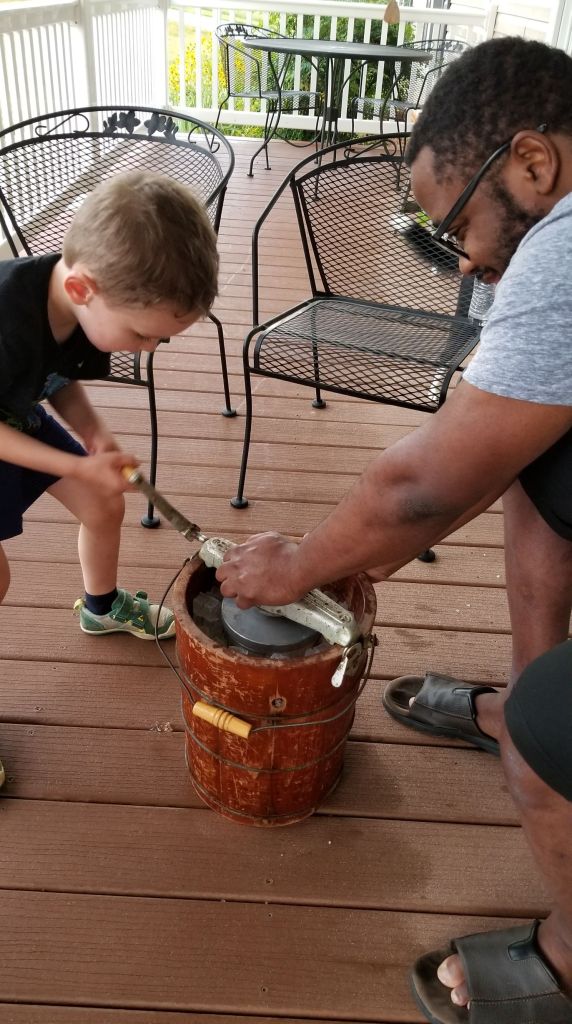
But back to the good stuff, what we have been able to enjoy and savor in these sometimes somber but precious days where we maybe have learned to appreciate family and friends more than ever. I will remember grandsons eagerly cranking the old ice cream freezer, which we had not used in years. I scoured the city for our usual ice cream mix, which made making ice cream so easy. The store that used to carry it has now closed. When I asked at other stores, no one seems to carry it anymore, or maybe shortages?
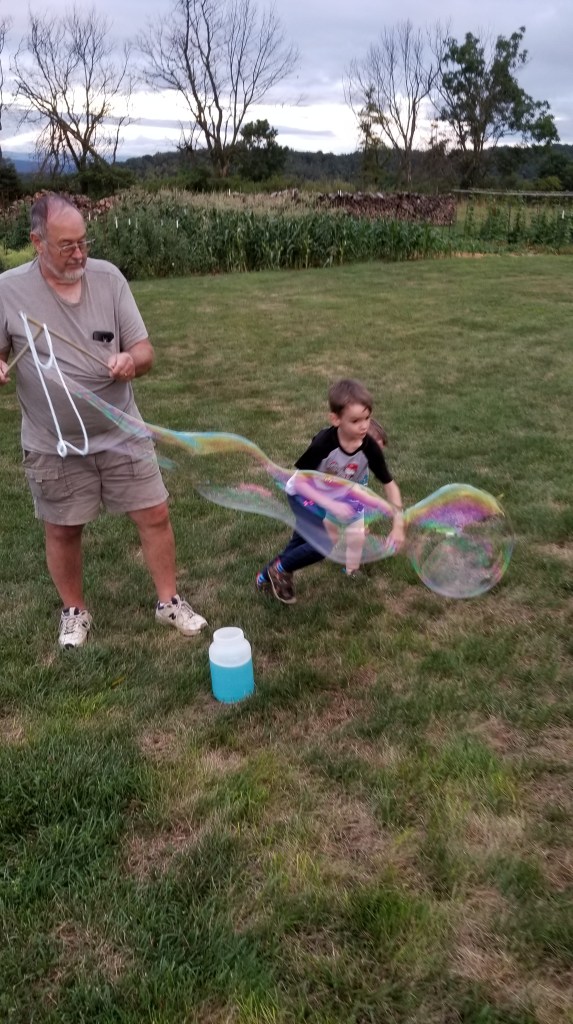
Then I rediscovered my friend Sheri Hartzler’s recipe for homemade ice cream right in my own book, Whatever Happened to Dinner. I got the ingredients and all of us luxuriated in the most delicious ice cream we’d had in a long time, pumped by eager five and six-year-olds until they couldn’t go anymore. What fun. Blowing bubbles. Playing in a sprinkler. Putting puzzles together. Coloring. Learning to cast a fishing line. Sleeping in a tent with your family (not me, but one of our visiting families) and hearing night howls. “What’s that?” my daughter whispered to her husband. “I … don’t … know,” her husband responded uneasily, before they both slipped back to sleep.
A quiet summer mostly at home filled with love and yes some stolen side hugs, mouths turned carefully the other direction. Precious times.

***
What has been your favorite thing, event, happening, or blessing this summer?
Bonus: Here is Sheri’s super easy ice cream recipe!
Homemade Ice Cream
1 can sweetened condensed milk
1 can evaporated milk
1 cup white sugar
1 8 0z container of Cool Whip
1 pint half and half
2 teaspoons vanilla
Put all ingredients in 2 quart ice cream freezer. Fill to 2/3 full or the fill line. Then make ice cream according to your freezer’s directions.
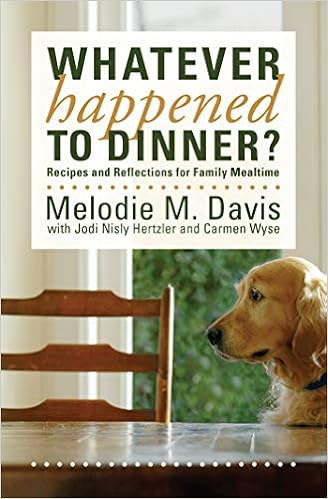
Reprinted from Whatever Happened to Dinner: Recipes and Reflections for Family Mealtime, Herald Press, 2010, p. 107. Available for purchase here.
I’m also happy to send this by email or mail. Request from anotherwaymedia@yahoo.com or Another Way Media, P.O. Box 363, Singers Glen, VA 22834.
Another Way is a column by Melodie Davis, in syndication since 1987. She is the author of nine books. Another Way columns are posted at FindingHarmonyBlog.com a week after newspaper publication.
Another Way for week of August 14, 2020
Pandemic Pings: Are You into Canning?
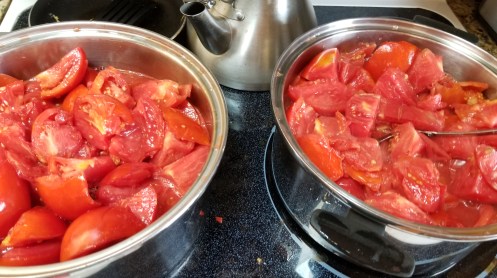
I get our pressure canner out that my brother-in-law gave us for Christmas when we first started a garden. What a great, long lasting gift. It has served us forty-plus years now.
What would August be without canning vegetables to have on hand for the winter? (I don’t can fruits but well remember when mother and grandma did.)
I gather up other items I need for the rather massive and messy project: canning jars, lids, strainer and pestle for squeezing out the tomato juice, scores of large pans or Tupperware, my largest popcorn bowl, salt, a small pot for boiling lids and keeping them hot, digging up the propane fired burner we use outside. Too much to name here.
Making tomato juice is kind of fun (especially for kids) and easier than canning tomatoes themselves. When canning quartered tomatoes, you of course have to get the skins off the ‘maters which involves dipping them in boiling water for 30 seconds or so, then cooling them quickly in ice water (in a spanking clean container), then taking a knife and sliding off the skin or peeling, then cutting them up in quarters to be placed in the sanitized quart jars.
All of this is much easier now that I don’t have to can at the end of a busy and tiring work day. Or doing so with wee ones underfoot.

This year I’ve read that more people have tried their hand at growing their own vegetables, especially in light of the pandemic. I also heard an amusing aside regarding a woman who asked at a store if they had canning jars and the young clerk looked puzzled and said she’d never heard of canning jars.
I hunted widely (by phone and in person) for canning lids on shelves of hardware and grocery stores. Finally, I landed some oddly packed regular sized blue canning lids made by Ball in a store called Jon Henry’s General Store (as old fashioned as it sounds). The canning lids were in little bags, not boxes: I speculate that perhaps some manufacturer was able to produce the lids but didn’t have boxes on hand to meet the demands? Anyone have insights or info on that? Later I did land some traditionally boxed wide-mouth lids at our local hardware store.
Once the jars of juice are lifted from the canner and allowed to cool, the lids give me the satisfaction of a pleasing ping, telling me my efforts panned out: they all sealed, always cause of deep satisfaction.
A niggling unease, though, rises in my psyche: what might we face in years to come in terms of shortages, rising prices, lower incomes. A pandemic of this scope was normally only the territory of doomsday or dystopian novels—and a few epidemiologists (those with expertise on disease epidemics). A worldwide reckoning with a virus was never seriously on my horizon. So what will our children and grandchildren face and experience?
That’s when the legacy of family traditions—like the labor of late summer canning and freezing vegetables and fruits can feel like a source of strength and pressing on. If my parents and grandparents got through the Depression—and even the flu of 1918, World War 1 and 2, Vietnam, Korea and more, it gives us courage to face our fears and doubts. The strength of faith, community, and family remind us that we are not alone. Even if confined to a room in a nursing home. As time goes by in this time of fighting covid infection, some of the early examples of caring for each other (such as the daily music from apartment balconies in cities in support of health workers) fade away with the sheer dailiness of pandemic reality.
My worried wondering can rest in the arms of a God who cares for us all, who reaches eternal arms around us to comfort and sustain us for all time, even when human or medical efforts fail.
I have two free pamphlets I’d love to share with anyone who needs them, “Journeying Through Loneliness” and “Losing Someone Close.” Request for yourself or a friend. Write to anotherwaymedia@yahoo.com or Another Way Media, P.O. Box 363, Singers Glen, VA 22834, or comment on the blog.
Another Way is a column by Melodie Davis, in syndication since 1987. She is the author of nine books. Another Way columns are posted at FindingHarmonyBlog.com a week after newspaper publication.

Yummy and versatile Bread and Butter Pickles
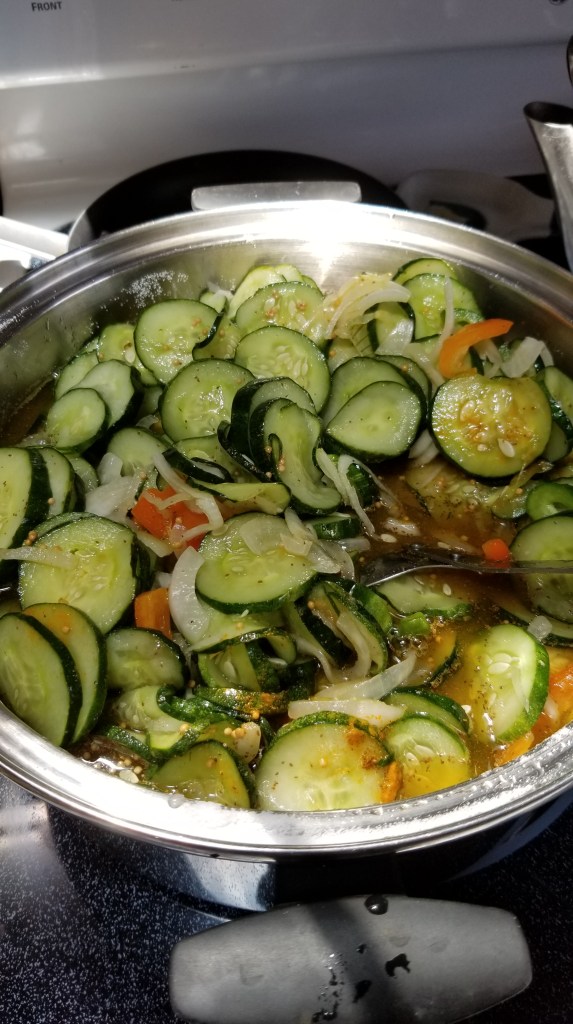
I could have sworn (but that wouldn’t have made my mother happy) that I had shared my husband’s Aunt Edith Mitchell’s awesome recipe for making a particular kind of bread and butter pickles that include onions plus sliced green and red peppers in the mix. It’s the one pickle that I make almost every year, to keep my shelves stocked with a go-to base which I must have in making both potato salad and deviled eggs.
So I searched my blog and it was nowhere to be found.
Here we’ll correct that oversight. And by the way, another pickle canning recipe for Sweet Midget Pickles on my blog is currently the most popular blog post here. It brings scores of new visitors to my blog every day and is keeping my stats up all summer long. In fact, recipes are my bread and butter for this site—the top 7 or 8 view-getters here. Not that you really care. But it (and they) make me happy. (And see my background story for this recipe at the end.)
Aunt Edith’s Bread and Butter Pickles
1 gallon medium size cucumbers
8 small white onions
1 green pepper
1 sweet red pepper
½ cup salt
cracked or crushed ice (about 4-6 cups)
3-4 cups sugar
1 ½ teaspoons turmeric
½ teaspoon ground cloves
2 Tablespoons mustard seed
2 teaspoons celery seed
3 cups apple cider vinegar
Slice cukes (just leave peeling on), onions, and peppers (in strips). Cover with cracked ice and salt in large stainless steel bowl (could be ceramic or glass, not plastic). To make cracked ice, I put ice cubes in a pillow case or sturdy plastic bag and put on garage floor (or other cement surface) and beat with a hammer to make cracked ice. Let stand for 3 hours. Drain off salt water. Put all other ingredients (the spices) over cukes. Put in 5 quart pot and bring to a boil, turn down heat and cook till the mixture and cukes turn color (brighter green/yellow). Pack in jars (not too full) and put on sealing lids. These will seal themselves, they don’t need to cook again or go in a pressure canner. Do wipe off the the syrupy stuff from the tops of your jars before you put on the lids and rings.
Makes about 10 pints. Enjoy more history below.*
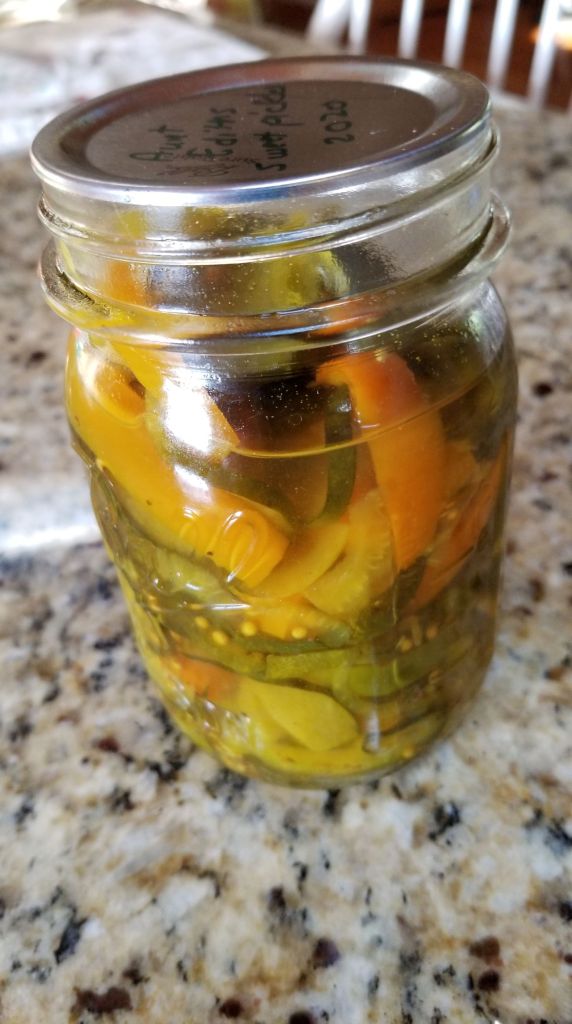
To use these pickles in a potato salad or deviled egg recipe where relish is called for, I take a small amount of pickles (juice, onion, pepper strips and all) and chop them in a chopper and add to whatever I am making.
And there you have a bread and butter pickle recipe for the section of my blog that is its traffic “bread and butter.”
Hint: Last year I made the mistake of peeling the cucumbers. Meh. Just don’t. The peelings add healthy vitamins and after I opened the first jar of these pickles last year, I realized that peeling them weakens their structure and makes them limp in the jar of pickles. But still useable.
*Deep background for this recipe:
Aunt Edith was like a second mother for my husband, because his own mother had severe rheumatoid arthritis, crippling her at far too early of age. She and another aunt, Ressie Robinson, would take turns going to the Davis household to help Estella with cooking, cleaning, and certain major chores—like making pickles, canning tomatoes, beans, and much more. I never had the privilege of knowing my husband’s mother: no mother-in-law, ever. My loss. But my husband tells me that this may have actually been his mother’s recipe. [Cousins: do you know??] Whatever the case, it is my favorite pickle recipe, even more than the aforementioned Midget Sweet Pickles.
***
What’s your favorite kind of pickles? I would love to hear! Or share a recipe.
Or do you like raw only?
Another Way for week of August 7, 2020
Is the Bible Better than a Novel?
I’ve read several books by Walt Wangerin Jr. He is a notable and excellent writer in many genres from children’s literature, to marriage helps, to Bible and theology. Back in early 2001, for a documentary my office did called “Journey Toward Forgiveness,” I helped line him up to share a true story of how one dear woman coped with her anger regarding her husband’s cancer.
So I was anxious to dig into this book titled The Book of God: The Bible as a Novel, published in 1996 that I found at a Gift and Thrift shop.

I would recommend it highly to anyone wanting a great overview of the whole Bible: as much drama, great characters, gore of war, romance, torture and ultimately humor and glorious triumph as any novel on a bestseller list. No matter what you believe or don’t believe about God, the Bible and its characters and stories are still a book all should be familiar with, to be well read and informed.
Wangerin took the basic stories of Bible times, dug deep into background and details to help us understand the setting, traditions, and geography, and makes it all come brilliantly alive and personal. I’ve read the Bible through several times but not for a number of years (I know, shame on me). But this reading rejuvenated and restored my faith in God and Jesus—especially during these difficult days of 2020. The book was a page turner in its own right. Currently, Wangerin teaches literature and creative writing at Valparaiso University, Indiana.
Several snippets are worth the price of the book and tackling the very long 850 pages.
–Wangerin’s wonderfully fictionalized version of the birth of baby Jesus: very real, touching, a marvelous snapshot of what it might have been like for Mary and Joseph. I also loved Wangerin’s rendering of their courtship, about which the Bible doesn’t say much.
–In a similar vein, Wangerin gives a very human and down-home description of how the childless and elderly Zechariah and Elizabeth might have conceived the baby whom the angel Gabriel predicted (John the Baptist). I won’t spoil Wangerin’s version by sharing it here (p. 574).
–Some of the lines are poetically powerful as he describes the southern kingdom of Judah (think King David, Solomon, and more). Wangerin writes (personifying the country as a male), “[Judah] had always been poorer than the northern kingdom, his living more austere; but that which impoverished him also preserved him” (italics mine). That can speak to all of us no matter where or how we live (p. 439).
–On the stomach-wrenching side is the story of King Zedekiah who reigned over Judah and was forced to watch his sons’ executions (p. 485). Cruel and horrible yes: I could barely read it.
In this novel as in the regular Bible, the New Testament is where God’s overall plan to send a Messiah to the world soars to inspiring fruition. Jesus and his disciples almost literally step out of the book and become real men and women. Wangerin gives good play to the significant female disciples who were not counted in the “twelve” but nevertheless played key roles in the stories that are described. The conversations between forlorn disciples in the Upper Room after Jesus has died are again worth the price of the book (if you can’t find it in a library).
Wangerin is careful to point out that “This is not the Bible. It is a novel featuring many of the Bible’s most dramatic characters.” I will add that it does not attempt to be a complete paraphrase like Eugene H. Peterson’s The Messenger, another very readable text. Again, The Book of God is quite gruesome in some descriptions, so it may not be appreciated by some.
But the overall spirit of the book was just what I needed during this difficult time of doubt, anxiety, and current worries. It left me surer than ever that the God and Jesus story—I should say bonafide history—is something to stake your life on.
***
Have you read any books by Walt Wangerin Jr.? Which is a favorite?
What is your favorite book of the Bible overall? Why?
Comment here or send to anotherwaymedia@yahoo.com or Another Way Media, P.O. Box 363, Singers Glen, VA 22834.
Another Way is a column by Melodie Davis, in syndication since 1987. She is the author of nine books. Another Way columns are posted at FindingHarmonyBlog.com a week after newspaper publication.
Another Way for week of July 31, 2020
People: Not Disposable
I remember a term from my days growing up on a poultry farm: “culls.” Those were very small or sickly hens that Daddy would put aside and actually butcher for our own use.
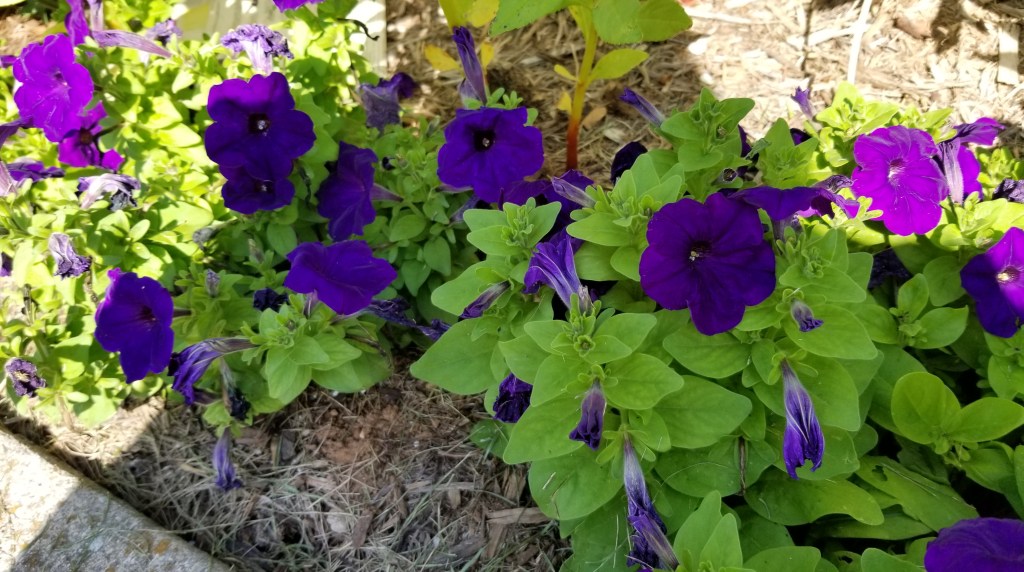
Recently I faced a silly but still difficult decision for me: culling out the volunteer petunias from pots of petunias I had on my deck. Somewhere in early May, I noticed hundreds of volunteers sprouting: simply too many to grow well. I knew I had to get rid of some of them in order for the rest to thrive. And of course, it is very difficult to transplant just a tiny seedling.
Facebook friends gave helpful feedback about what to do with my plentiful petunias. They didn’t agree on whether to just “let them be,” or be proactive and make room for the healthiest plants to mature rather than letting them all get pot bound. But I hated the idea of tossing so many delightful plants.

I tried pulling out the tiniest starts, no bigger than a trimmed fingernail. I also took the larger and hardier looking plants and with a small digger, moved them to a flower bed in front of my house. After transplanting about a dozen, the pots on our deck were still fairly full. I probably threw away a hundred teensy starts. I was not happy.
But pruning and culling can be a healthy thing for a flock of chickens as well as a basket of volunteer petunias. In several places, the Bible reminds us of the need to practice the art of self-pruning.
Gardening often makes me reflect on life and growing things, especially so this summer. I guess culling is hard because for too many in the world, people are dispensable whether they are sick, old, unborn, the wrong color, the wrong abilities, brain injured, even the wrong occupation. Each precious life deserves their place in the sun to grow and be pruned and nurtured into all that God meant them to be.
We have been at another difficult reckoning this summer on the racism that continues to infect and affect so many. I was interested to read about folks at Landis Homes in Lancaster, Pa., (a retirement facility) who wanted to make sure their hearts and minds were represented on the issue of working to become an anti-racist world. Back in June, my friend Larry Guengerich, shared a post relating how a number of senior residents desired to find a way to join a public vigil in support of George Floyd’s family and in recognition of others who’ve died unjustly. But because of pandemic restrictions, they couldn’t. So they put out word that a silent vigil was to take place at the same time at an outdoor space on their own campus. Around 80 residents and staff gathered, (keeping physical distance of course), for nine minutes of silent reflection, witness, and resolve. They also signed a card for the family of George Floyd.
“The purpose was to silently express anguish about what is currently happening in our country, in solidarity with those who were gathering in Lancaster,” the post noted. In addition to the silent time of reflection and prayer, this event also elicited heartfelt comments from other residents at the retirement center. One resident, Don Tyrell, said he participated because he believes in what the Declaration of Independence, the Constitution, and the Bill of Rights say about equality, life, liberty, and freedom. “I’m protesting because I see these values being ignored, reviled and cast aside by too many of my fellow Americans.”
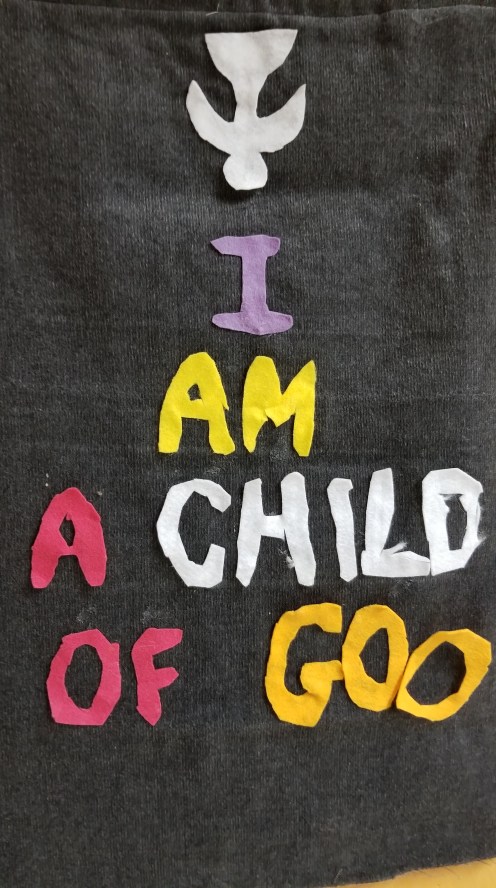
Each and every person is precious in God’s sight. Rather than culling out persons and demeaning them or even hurting and killing them, practice looking at each person you see or meet as a child of God. They may not be Christian or believe like you do, but God created and allowed them to be brought into existence. Let us nourish each other as young plants. Let us do rigorous self-pruning—weeding out the bad thoughts and attitudes in our mind, and the prejudice and racial hatred that is still lurking in and around us. We each have room to grow.
***
What have you had a hard time pruning in your life?
How do you work at considering each person as a child of God?
***
Comments here or write to anotherwaymedia@yahoo.com or Another Way Media, P.O. Box 363, Singers Glen, VA 22834.
Another Way is a column by Melodie Davis, in syndication since 1987. She is the author of nine books. Another Way columns are posted at FindingHarmonyBlog.com a week after newspaper publication.
Another Way for week of July 24, 2020
Thoughts on this Summer of the Pandemic
What are you missing this summer?
I miss the lawn parties. The savory fried chicken, a freshly cooked hamburger and fries, and playing a round or two of Bingo while listening to mostly country or blue grass or even bad karaoke. In our community, a different civic group, rescue squad, or fire department take turns putting on an annual “lawn party” almost every weekend all summer. The events function as huge fundraisers but also entertainment. We usually are regulars and enjoy yakking with friends and neighbors.

I will miss going to local fairs, admiring and comparing the garden and canned goods, browsing through the photo, craft or art entries by kids and teens who’ve done prize-winning work, cruising through the animal barns, ending the evening enjoying a freshly made funnel cake or melting ice cream cone.

We will miss a summer family reunion, the potluck lunch, the catching up and comparing babies while running after toddlers playing in the church gym where the meet up is usually held.

I miss visiting my friend Martha in the nursing home where we used to play Bingo many Friday mornings. Well, she sat there, I played. She is now quarantined along with everyone else: no guests, no visitors, can’t even send flowers. I write cards and pray for her. But I’m glad Jackie and Charles are no longer suffering in that same institution. Oh. So. Glad. Lock down would have killed Charles anyway.

I miss not feeling free to take a plane or train and go visit my mother or sightsee; but at least we can drive to Mom’s, being careful about restrooms and gas pump handles.
I miss going to our favorite restaurant. Sitting in your car in a hot parking lot eating Wendy’s carry out is just not the same as sliding onto a cool restaurant seat, ordering, waiting, being served water or drinks, and not having to clean up your table and kitchen afterwards.
I miss going to church: the weekly ritual of dressing up a bit, driving to church, greeting folks, singing, shaking hands during the passing of the peace, enjoying coffee and snacks together. (Will we ever shake hands again?) I’m glad our church emphasizes still being the church even though at this time we don’t worship in our building.

I miss seeing friends and family; we have seen both on a limited basis, but always with masks.
Many are missing outdoor summer music concerts—just too many people gathered in one place together. What a shame. Will there be football and marching bands this fall?
I miss carefree shopping. I hate feeling alarmed and anxious and judg-y when people aren’t wearing masks in stores. Or, are standing too close behind me in the checkout line, or when I absentmindedly go the wrong way on a one-way aisle. Mask or aisle battles are not something I want to get into.
These may sound like trivial things and they are, at least compared to losing a loved one to the virus or any of numerous diseases. We have missed so many funerals and memorials and our kids have missed weddings and other celebrations with friends.
But we have learned patience and making do. To be more aware that yes, we can survive this time and hold on to hope that the virus will someday be contained, be vaccinated for, a time we will look back marveling at this sad and impossible period. We are learning that we are not immune to terrible pandemics. It is a humbling, horrid experience, and with God’s help, billions will survive and maybe, maybe learn to make this planet a safer and better place. More filled with love and care for other persons.
I’m just finishing reading a book I’m loving (and will write about soon) but it has been a profound reminder of Christ’s dying wish and counsel to his dear disciples and all of us: “Love one another.” How we can put that into practice on a daily basis is the urgent call we all need to respond to in this time of suffering for so many.
***
What special and specific things you are missing—or enjoying! I’d love to hear from you either way.
Comment here or write to me at address below.
***
Write to anotherwaymedia@yahoo.com or Another Way Media, P.O. Box 363, Singers Glen, VA 22834, or comment on the blog.
And don’t forget to enter my summer giveaway:
Two copies to be given away: A beautiful free adult coloring book, “Beloved Mennonite and Amish Quilts.” Deadline to enter: August 7, 2020. I will also put your name on a mailing list to receive information about my work memoir when published.

Another Way is a column by Melodie Davis, in syndication since 1987. She is the author of nine books. Another Way columns are posted at FindingHarmonyBlog.com a week after newspaper publication.


