

Another Way for week of March 15, 2019
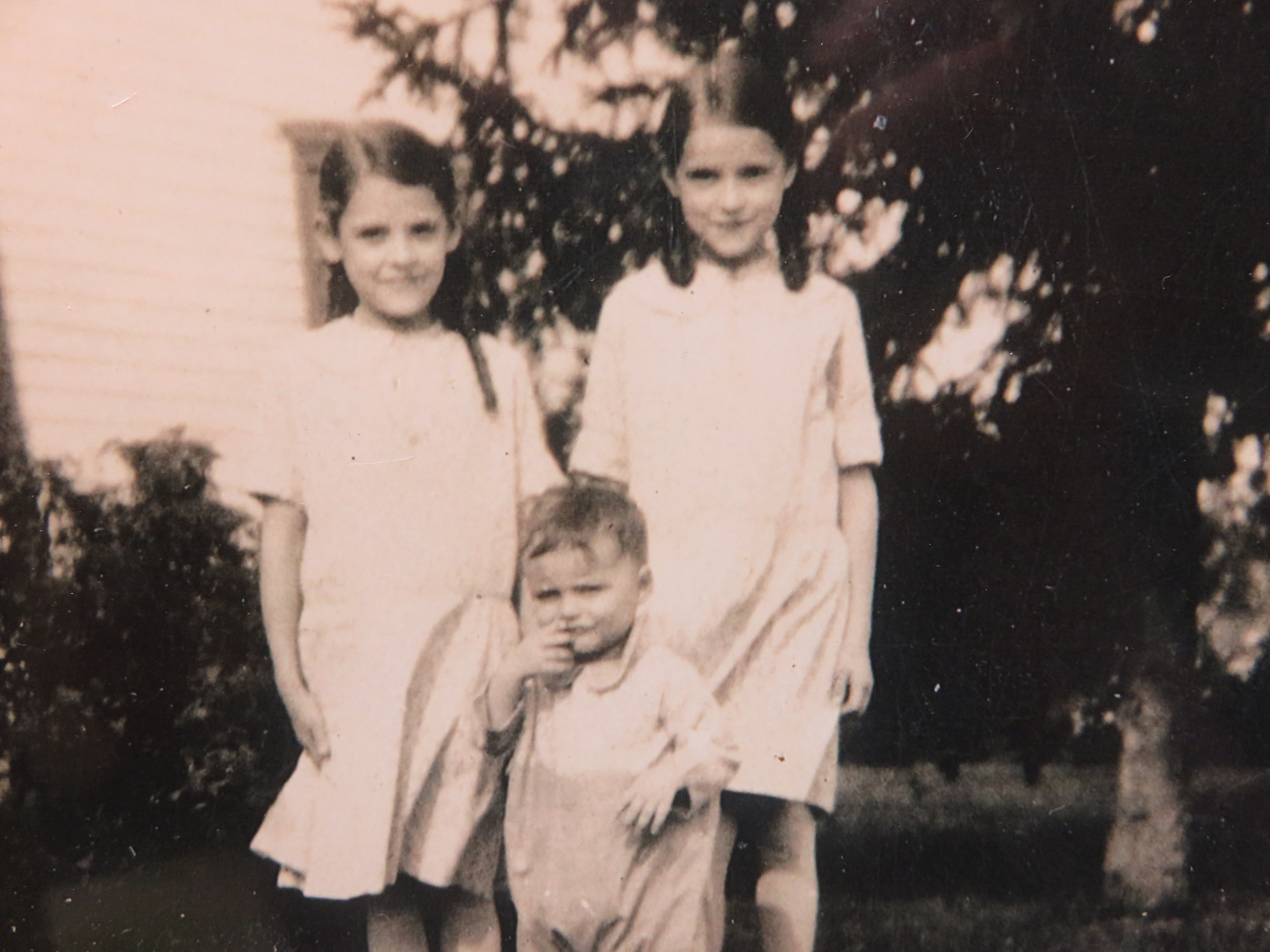
No, this photo is not from Marge’s family, but a picture of my mother and her siblings from approximately the same era. Can we imagine dropping such tykes off at an orphanage?
My Father Left Us at the Orphanage
Guest Column by Marge Thompson
Editor’s note: Marge Thompson, 87, reads Another Way in The Goshen News, Ind., and wanted to share her story to help other struggling teens or families.
All was quiet as we rode down the dirt road not knowing where my Dad was taking my three brothers, my two sisters, and me, Marge. As we grew closer to the orphanage, I knew something wasn’t right. I sat in the back with my brothers and sisters, holding back tears and hoping we’d go right past the orphanage. He began to slow down. I knew all hope was gone. My brothers and sisters had no idea what was happening. I was the oldest, 11, and my sister, the youngest, was just two. As we got out, I felt as if a ton of weight was on my shoulders. At home I took care of my brothers and sisters and did lots of chores, but I didn’t mind.
As I watched him pull away, I felt more than anger or even hatred. I wanted to kill my parents, but I looked at my brothers and sisters and thought, “I’ve got to be strong.” I was so young, asking, “Why me? Oh, God, why me?”
The nuns at the orphanage gave us clothes and showed us where to change and get washed up. The boys were in another part of the orphanage. When we came downstairs, I walked towards the boys and a nun stopped me and said, “No. You stay over here. They will be taken care of.”
I was so angry I just wanted to cry; no—kill. I just stood there in a daze, wondering, what did I do wrong? Is this my fault? My mom had lots of problems. She was basically insane and she might have hurt us. My dad was always gone drinking and a very handsome man.
The next day at the orphanage a girl was bugging my brothers. So I yelled at her to stop but she didn’t. I ran over and started hitting and saying, “How do you like it? How does it feel?” When I looked up, there were two nuns standing over me. I knew I was in BIG trouble. As one leaned down to grab my arm, I started to run. There was nowhere to go. I was trapped like an animal in a cage. I felt sick, and wanted to get away. I wanted to go home to my mom. The nun came closer and closer. I did what any normal kid would do. I started to scream and cry. She grabbed my arm and pulled me to my feet. Then she took me to my room and said “There will be no supper for you. Now think about what you’ve done.” So I thought about how I was going to get out of there—every day.
One winter when I was 13 or 14, I wanted to go ice skating; I got my skates and went out. I wasn’t supposed to, but did anyhow. When I was skating, I felt so free. I could have skated for hours, but it wasn’t long before one of the “penguins” as we called the nuns, came and dragged me into a huge room where the nuns dined and said, “Okay, you don’t want to listen, then we’ll play your way. You start scrubbing the dining room.” They decided I was getting older so they put me in an actual convent at 16.
I worked there for a year but one day got on a bus to South Bend where my mother lived, and stayed with her. I was trying to go to Riley High School and my mom became abusive. When I came home from school, she was gone. Someone had taken her to a mental hospital. The people she rented from told me and said I had to go back to the orphanage. I began to cry. Her landlords went to court to get custody of me. I was a sophomore in high school and worked at Bonnie Doon’s on weekends as a car hop. The woman made me give her ten dollars a week and I had to clean the house and pay for everything myself.
At Bonnie Doon’s I met my future husband at the age of 17. The lady told me I couldn’t go out with him because he was 24 and too old for me. She had a daughter she thought would be better for him. One night I came in at 1:30 and the lady told me I had to move. So I quit school to work full time. My future husband wanted to marry me, but I didn’t want him to marry me out of pity so I said no.
So we waited a year. We got married in 1950 when I was 18, almost 19, and Paul was 26. I’m 87 now and never forgot my background. There’s much more to my story but I’m thankful for my granddaughter who wrote this down for a class project. I’ve always wanted to help other troubled teens, and let them know: you can survive.
***
If you wish to respond to Marge’s story, send letters or email and I will see that she gets them. Send to anotherwaymedia@yahoo.com or Another Way Media, P.O. Box 363, Singers Glen, VA 22834.
Another Way is a column by Melodie Davis, in syndication since 1987. She is the author of nine books. Another Way columns are posted at FindingHarmonyBlog.com a week after newspaper publication.
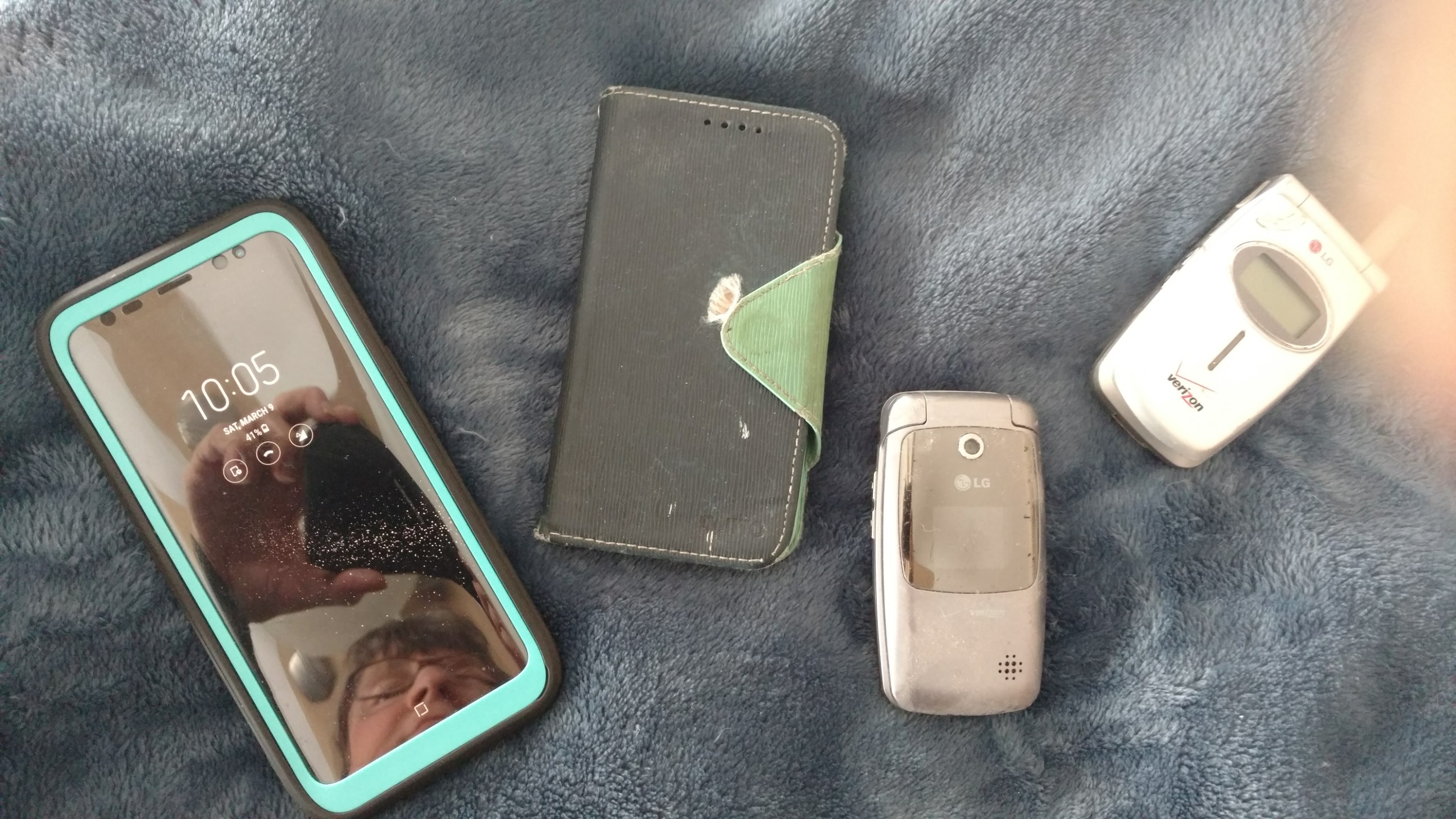
My cell phone history in brief from l to r: Current Samsung Galaxy 8, 2 months old; Motorla X, 2015-2019; LG, 2008-2015; first flip phone, LG, circa 2003-2008. And yes, that’s me snapping the picture reflected in my new phone.
Another Way for week of March 8, 2019
When Keeping Up Gets You Down
My husband bought me a new smart phone this past Christmas. It was beautiful but it took me until the end of January before I could finish activating it. I won’t go into details but I’ve got the shiny new one working now—mostly. There are things I need to change and settings to adjust, but I’m mostly rolling. The old one’s battery—my very first “smart” phone—was slowly becoming unable to maintain a charge.
But this morning I accidentally slipped my old phone in the pocket of my bathrobe as I went about getting ready for the day. The old one still works—not for phone or internet use but I can use the calculator, flashlight, and clock. When I took the phone out of my pocket to check something, I realized I had grabbed the old one. I ran my fingers tenderly over its used and worn case. It was almost like part of my body for these last 4+ years. It went everywhere I did and on occasions when I forgot and left it at home, it was panic and then, “Ok, yes, I can make it through the day … I’ll just email my daughters from my office computer, so they know,” etc.
Indeed, the several times I lost that phone were days of desperation. You may recall me writing about the time my husband was going having surgery and I had to run an errand and left my phone (stupidly) outside a door at my church. A friend found it and someone figured out how to get in touch with me.
The most recent time I lost it was traveling to Indiana. We made a rest stop at a roadside park. I took the phone in with me, as usual. After our break, we resumed driving and maybe 6-7 miles down the road I began to look for my phone. My heart sank. Could I have left it back at the rest stop? I started calling it with my husband’s phone. Nothing. Again. Nope. If it was there and someone was hearing it, they weren’t answering. We had to drive to the next exit to turn around to go back. So it was probably at least a half hour until we got back to the rest stop. My heart was thudding dully. I was so mad at myself. My husband, bless him, was not really angry at me for misplacing it yet again. Just worried and hoping against hope and praying like me.
I walked into the stall I had used. It was gone. Then I heard it ringing! Where?? My one deaf ear makes it very difficult for me to catch directional sound. I called out in the nearly empty restroom: “Anyone know where that phone is?” Someone called out, “Check the bench in the entry.” I hurried there, and laying on the arm of the bench, was my beautiful old blue-green case and phone. I don’t remember when I’ve been so grateful, so overwhelmed with joy. I went running to the car to tell my husband. He had been ringing for it. We couldn’t believe it was still there. Someone had taken it from the stall and put it in a more obvious place—but a place where someone could easily have walked off with a free phone—a phone I never locked.
Whew. I suppose someone could write a book of lost phone rescues. I could also write a complete book using past columns dealing with technology changes. Learning to use a computer. The office getting a fax machine and we stood around marveling. Going online at home with dear old America Old Line and listening to the buzzy sound as the phone line made the connection. When we were first “allowed” to use the Internet as part of our ordinary work day. If you remember some of these things you are probably as old as I am.
A reader wrote recently saying she wished she had a laptop; she’s only 55, has a disability, and can’t afford the technology. She said “Not being able to use technology makes me feel more isolated than my disability.” I’m sure that is true for so many, especially as we get older and “age out” of even hoping to keep up. So for as long as I continue this column, I plan to continue sharing a postal address where you can reach me in addition to email. I try to be mindful of others who simply can’t afford or choose not to use the latest technology.
***
Do you love to have the latest technology, or are you a slower adopter?
Or perhaps you’ve opted not to do the smart phone thing at all, which may be very smart! Tell us here!
I’d love to hear your stories or comments. Send to anotherwaymedia@yahoo.com or Another Way Media, P.O. Box 363, Singers Glen, VA 22834.
Another Way is a column by Melodie Davis, in syndication since 1987. She is the author of nine books. Another Way columns are posted at FindingHarmonyBlog.com a week after newspaper publication.
***
Speaking of technology, here’s a thoughtful and informative book from a Christian viewpoint on what’s coming in technology, published by Herald Press, where I serve as a managing editor, including for this book. Great grist for small group and S.S. class discussions. Find it here.

Inward Journey: How God Loves Us
If you’re a regular reader here, you know that I believe in God. I’ve never seen God, never touched or shook God’s hand, never hugged that Being, yet still I believe. As we begin again the Christian season of Lent, how can we grow in faith, love, and devotion to God?
How is it that we can feel the emotion of love towards a being that has no physical presence with us—not even in the past, like our loved ones who’ve died? Perhaps we can find metaphors and examples, thinking of those we love and how love is communicated.

Michelle when she was about 18-20 months.
When I was pregnant with our second child, our oldest daughter Michelle was probably about 20 months old and could talk a fair amount. One night—when I no longer rocked her to sleep—she wanted me to rock her. She was having trouble falling asleep, which wasn’t too surprising in light of the fact she had two naps that day, and usually she only had one. As we rocked, she sprawled on my lap; I began to stroke her little face to soothe her, round and round, lightly with my fingertips. An expression of pleasure and relaxation came over her face, like she was feeling tingly-good-all-over. I knew she was just loving it.
Later I wrote about this experience in my journal and said that as I looked down at her, I felt such love too—that there wasn’t anything I wouldn’t do for her. Of course there were things I didn’t do for her (give her cookies all day, or rock her every night). There were things I wouldn’t let her do, (crawl way up on a dresser, or sofa back, or kitchen counter)—things that I judged weren’t good or safe for her overall being. And there were things I did to her or for her I wished I wouldn’t have to: like cleaning her drippy nose, or shampooing her hair. She dreaded shampoos and shook her head pathetically when she knew what was coming.
I think Psalm 103:13 says that God, too, wants to do good things for us, but life includes things like shampoos and nose wipes and worse. “As a father has compassion for his children, so the Lord has compassion for those who fear him.” God doesn’t want us to do things that are not good for us, like smoke, overeat, play loose with our bodies and affection, overwork or overplay.
On the positive side, what is the new thing God wants to do with me this Lent? Grow in love, spend more time in relaxed and mindful meditation: prayer, reading, reflection? Perhaps I can give up the late afternoon snacking when temptation is strongest, nibbling on things that aren’t good for me. Another verse in Psalm 103 is a good one to remember: “God fills my life with good things, so that I stay young and strong like an eagle” (verse 3, Good News Version).
As a young mother, I certainly felt like I had too little time to focus on my inner life—to take time to meditate and pray. When I was in high school and college, I went for long walks and reflected in solitude on God as my creator, and focused on where I felt God was leading or pulling me: lots of time for journaling and reflection. Yet, those times could be depressing and frustrating too, bordering at times on too much navel gazing: thinking more of myself—and not looking outward to others.
So whatever our season in life, we can aim for balance: take time for God, take time for others, take time for ourselves. We can strive for true knowledge, better judgement. Perhaps the last verse of Psalm 103 is apropos here: “The steadfast love of the Lord is from everlasting to everlasting” (verse 17). I want to stand on that promise.
***
What moments do you enjoy most with your children, grandchildren, or nieces and nephews?
***
What have you learned about God’s love as you’ve been around children?
***
Any special disciplines or habits you want to take up during Lent?
You can download a free PDF of 7 Lenten devotionals that I shared two years ago online at https://findingharmonyblog.com/wp-content/uploads/2017/04/lenten-conversations-pdf.pdf.
Another Way for week of February 22, 2019

Photo from dailymail.co.uk
Do You Still Watch the Evening News?
Dear David Muir: I want to like you, I really do. Maybe I ought to say I like you but I have not actually liked your evening newscast for some time. Yet still we watch.
We are longtime ABC Evening News watchers. We loved your predecessor, Peter Jennings. Years ago, I once got to tour the ABC World News Washington D.C. studio, and actually saw a previous predecessor, Frank Reynolds, in the elevator. For a writer/editor/scriptwriter junkie like me, that pretty much makes a lifetime fan, when you’ve been in the actual studio. (When my group saw Reynolds, afterwords we all said, he’s so short!) But I digress.
The best thing on your newscast comes at the very end, where you share the good, the soul-stirring, the inspiring: moments of people being kind and strong. Your “Made in America” campaigns and frequent stories of factory workers who do just that is also marvelous—and always feels good for my husband who spent most of his working life in one factory or another including 30 years on a warehouse floor. You seem to genuinely appreciate and enjoy holding up the values and people who do make up the backbone of our country—and manufacture the things we use and wear every day.
But. You sell us short and I’m not blaming you for this—when your news shows are produced in such a way that all we really get is quick bites and pieces of stories—often strung out over three days or more, and repeated ad nauseum. Your producers constantly use teasers almost the whole broadcast, where brief “click bait” sentences keep viewers coming back after commercials. And then the “story” is nothing but a short clip of 10 seconds or less. Really?
Speaking of commercials, the first 16 minutes of the show without a commercial break is great. Brilliant innovation. But then we slog through endless (six to eight—really!) commercials and looooongg minutes of dealing with psoriasis, incontinence, high blood pressure, diabetes. I guess your colleagues have already given up on the under 50 crowd as viewers. And yes, someone has to pay for TV programming: the advertisers.
So why do I hear that even friends my age (I’m absolutely elderly) are no longer watching the news? That’s a shame. We want to be informed. But what we get mostly is video bait.
Which brings me to the constant use of home videos. Where are the professionals sent out on assignment? Where is the true investigative reporting? Rarely done anymore. Perhaps it saves money, and sure, usually a weather reporter is sent to cover the latest major weather story, always “affecting millions” in “20-35 states.” We get almost nothing of news from around the world—unless it is breaking (does

Photo by Jerry L. Holsopple
every show HAVE to start with “breaking news” said so breathlessly—with a rush of words it’s hard to catch everything?). The days of deliberate deliveries by bespectacled Walter Cronkite’s are gone forever I guess. Maybe there’s a speed between breathless and belabored.
The relentless pace almost makes me tired before the program is begun. I know: if I want world news, I can watch PBS, listen to NPR, or read the Washington Post or New York Times. And find it all online. There are many ways to be informed these days.
I’ve endeavored to see if the other major network newscasts are structured similarly and wasn’t too surprised to see that the answer is mostly yes. And yes, I know there are a lot of people who decide and tell you how to do news. Like a pastor or preacher, you get critiqued for how you wear your hair, your clothes, whether you’re too fat, too thin, or the wrong race or gender.
I guess I’m writing because I do like you, and I care about a better-informed public. On tonight’s broadcast, right after you shook hands with a 100-year-old World War II veteran from right across town in Brooklyn, New York, you adlibbed (I think), “… And that’s why I love my job.” I guess it is such moments that keep us coming back, too.
And that’s the way it is. Your mostly loyal watchers, Melodie and Stuart Davis
***
Do you watch evening news on TV? What is your go-to news source?
***
If you could change one thing about the evening news, what would it be?
***
Is it time for the evening news TV broadcasts to go away and everyone get their news online or …. ?
***
Comment here or send to anotherwaymedia@yahoo.com or Another Way Media, P.O. Box 363, Singers Glen, VA 22834.
Another Way is a column by Melodie Davis, in syndication since 1987. She is the author of nine books. Another Way columns are posted at FindingHarmonyBlog.com a week after newspaper publication.
Another Way for week of February 8, 2019
Piggy Love: Tales of My Dad
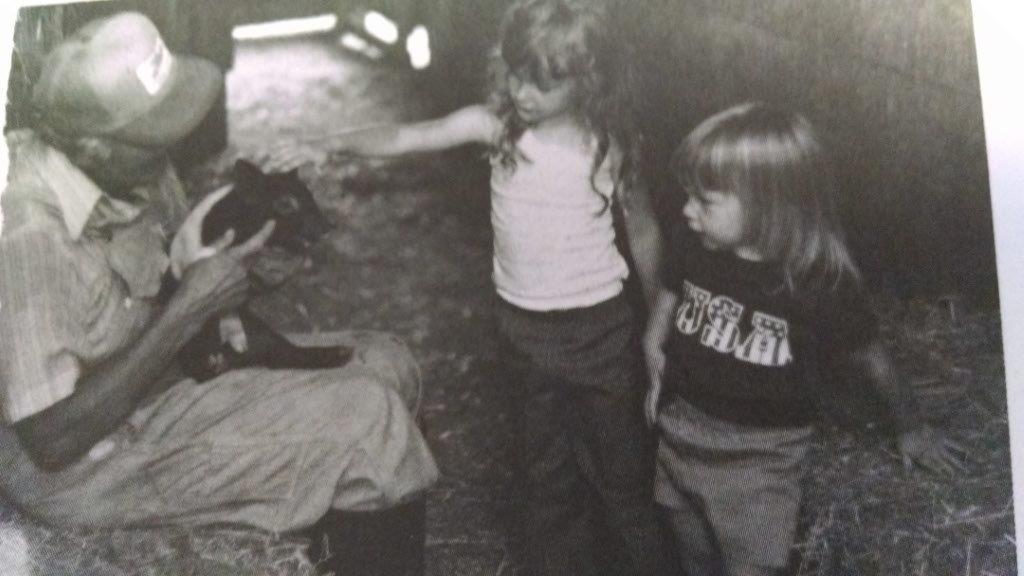
Dad, holding a baby pig for Michelle, center, and Tanya, right, to pet.
My father would have celebrated his 102 birthday this week. He died in 2006. I ran across a treasured photo of Dad recently, where he was showing one of his darling piglets to my two oldest daughters. (Our third wasn’t born yet.) My younger child is hanging back from the piggy while the oldest one is reaching out with the look that she and my husband always get on their faces while petting a beloved cat. It’s a mixture of adoration (their love for the cat) and soothing relaxation (which the cat gives back to them, at least if the cat is in a petting mood). I wonder if anyone else sees that kind of love-look on the faces of the deep pet adorers in their family?
Dad was a farmer and over the years raised and tended beef cows, milk cows, pigs, sheep, goats (well, one goat, that’s enough), a pony or two, geese, chickens, and turkeys. Of this list, the pigs were his favorite: beloved I might say, and my mother would agree. She was never jealous of another woman but sometimes she’d complain about all the time Dad would spend in the barn with his mama pigs when they were farrowing—giving birth to baby pigs. Of course he was there to help in the rare instance that he was required—mainly to keep a heavy mama pig from accidentally rolling on or squashing one of her new little ones. And oh my goodness, the cuteness factor: they were delightful. In my mind I can see/hear them squealing and looking a bit bewildered while “rutching” (or in real German, “rutschen”) around under the heat lamps for a nipple. Piggies are adorable until they grow up and started loving mud and garbage.
I raised one mama pig until I sold her at auction when my family moved to Florida. Raising a pig was mainly under Dad’s watchful eye but if I fed and took care of her, he would let me have the money from her sale. Originally the idea was that I would have piggies to profit from but we moved before that happened, I think. So he taught me the business end too, subtracting an amount for the feed that was invested raising her. I would never have been found cuddling piggies in their pen however, as my sister could occasionally be found doing. My statement about that: she did so to escape other chores in the house—a standing joke in our family with a certain amount of truth.

I inherited one of Dad’s “piggy paraphernalia” gifts.
Dad’s love for his pigs resulted in all things “piggy” being given to him for every gift-giving occasion: Christmas, Father’s Day, birthday. There were kitchen towels, potholders, figurines, hats, posters, piggy banks (of course), all decorated with delightful pudgy pigs. I googled “what do you call people who collect pig paraphernalia” and of course I found a “Happy Pig Collectors Club.” Lest you think this is just a lowbrow American thing, I found an event in Quebec called Festival du Cochon (French for pig). Now, cochon can also refer to a dirty old man or slut, and my parents were neither! Dad may have come in filthy from cleaning the hog pen or smelly from tending new litters of piggies, but he was always an honorable and dedicated father and husband.
Dad’s love for living things certainly extended to all of us children, grandchildren and great grands. Especially after he had to retire from farming for health reasons, he built endless toys and kid entertainment: playhouses, elevated “treehouses,” doll houses, play barns, playfences, and dollhouse furniture. He also built wooden decorative tulips for the yard, trellises, and more. He needed to stay busy.
Still missing Dad, but I will say, I’m glad no one showers me (or Mom) with piggy paraphernalia for every gift giving occasion!
The dedication he had for his animals—and even more for his family—is something to savor and appreciate, realizing the love he gave to us all provided the foundation we needed to become solid citizens and persons of faith.
What memories does this bring to mind?
***
Do you like animals? Favorites?
***
After I posted this, my mother reminded me she raised baby pigs too, when we lived in north Florida and Daddy was helping run a mobile home factory. But she could never get them fat enough to sell well at auction!
***
And I thank my Facebook friends who responded to my inquiry about spellings for “rutching” (or in real German, “rutschen”)
***
Comment here or send stories to anotherwaymedia@yahoo.com or Another Way Media, P.O. Box 363, Singers Glen, VA 22834.
Another Way is a column by Melodie Davis, in syndication since 1987. She is the author of nine books. Another Way columns are posted at FindingHarmonyBlog.com a week after newspaper publication.
 By the Numbers: Blog Posts and Newspaper Columns
This is my 500th blog post. It took me six years to get here, about 83 posts a year. It was not a race at all, just stating facts.
But for a gal who has written over 1600 newspaper columns over the course of about 32 years, that is a good deal more than the 52 columns per year I averaged writing for Another Way. I wrote just about all of those 1600 columns, (only using guest writers maybe 40 or 50 times) for vacation or just because I think readers enjoy hearing other voices from time to time. For some of those writers, it was their first time being published, and I liked that.
For most of 2018, I shared only the newspaper columns on my Finding Harmony Bog, not posts written specifically for the blog. How do those differ?
 When I’m writing a newspaper column, I try to keep in mind the wide audience of a typical daily or weekly newspaper: usually a range of political persuasions, and an array of religious bents from nothing and agnostic to deeply Protestant, Catholic, Jewish, and Evangelical. I suspect there are Muslim and Hindu or Buddhist readers but I don’t hear from these very often. I usually try to include some faith aspect but not always—and always strive to contain a solid takeaway or thought to carry with you. I want readers to feel like it is worth their time to engage.
 But the main difference between what I share on the blog and in the several papers (4) which Another Way is still in, is recipes. My column is not a cooking column. So on the blog, especially from 2013-2017 or so, I shared over 113 recipes—every week for a short while! And while I enjoy cooking and trying new recipes and photographing them, that takes time and effort and expense—investing in new spices or sauces or various flours (such as for gluten free items for my grandson with Celiac). I would say what draws new people to the blog are recipes: they go searching for recipes online and stumble across my site; what draws people to Another Way is its more inspirational focus.
Over the years, the most popular blog posts are either recipes or those with compelling titles. Of these five most popular titles over the years, four contain a recipe.
- Rise ‘n Roll “Amish Crack” Donuts: My Hunt for a Top-Secret Recipe
- Feeding the Multitude: Quantity Cooking: Sausage Gravy
- How to Plan a Different 60th Birthday Party
- How to Barbecue Chicken: Shenandoah Valley Chicken BBQ
- Why Did My Angel Food Cake Fall?
Another frequently viewed recipe, especially in summer: Midget Sweet Pickles: Pure Paradise in a Pickle.
Looking ahead. Like many other bloggers, I also blog to attract an audience especially for any future books that I may still write. They used to say writing a book is one half inspiration and one half perspiration. But successfully publishing a book these days is almost 100 percent platform or marketing: how many readers do you have, how many can you draw, how many reviews can you get on Amazon within the first couple months of publishing. Does the cover and title grab people either online or in the store? Can you attract big name endorsers or a worthy foreword writer? How many “influencers” do you have—that will share info about your book online—in social media to their friends and so on. So not only do you need to write beautifully, correctly, movingly—but you must market diligently, intelligently, and perfectly—if you want to make money or at least pay for your efforts.
Knowing all this, I intend to forge ahead writing a memoir with stories from working for the Mennonite church in its communication efforts for the general public for the last 40 some years. Most of my years in that work has been in outreach media—radio broadcasts, TV documentaries, radio spots, and print efforts—not internal church communication. Who would buy or read a book like that? I’m not sure, but I know that storytelling, done well, is what I will aim for.
So, I also hope to continue writing the Another Way newspaper column for as long as newspapers pay me for it, and work on this memoir thing.
I invite your feedback and comments on any of the above! Thanks for reading and please respond to the poll.
Another Way for week of February 1, 2019 – Before the Parade Passes By
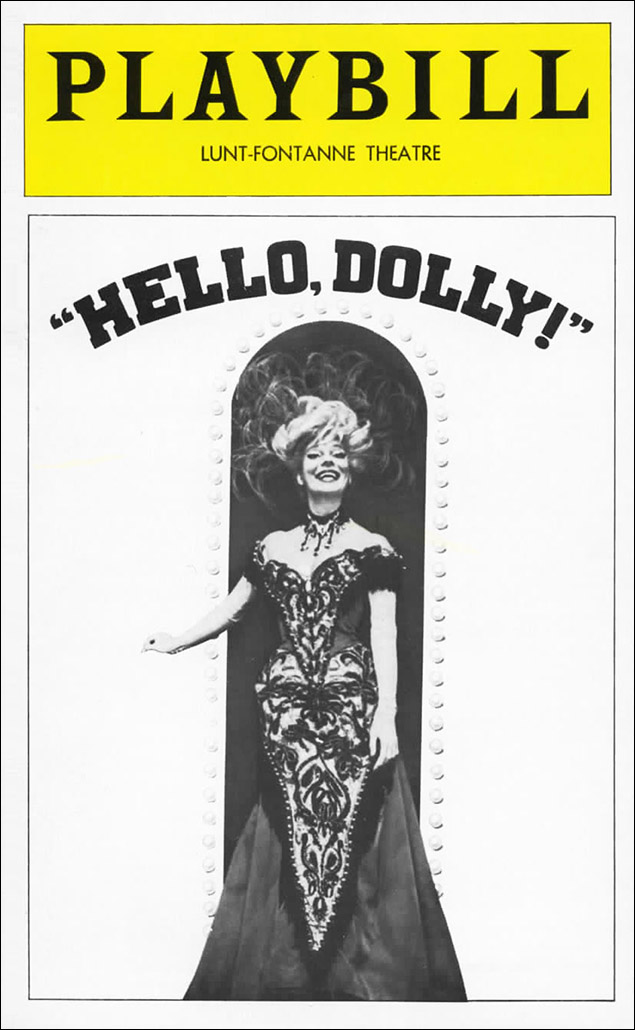
The Playbill when I saw Carol Channing on Broadway.
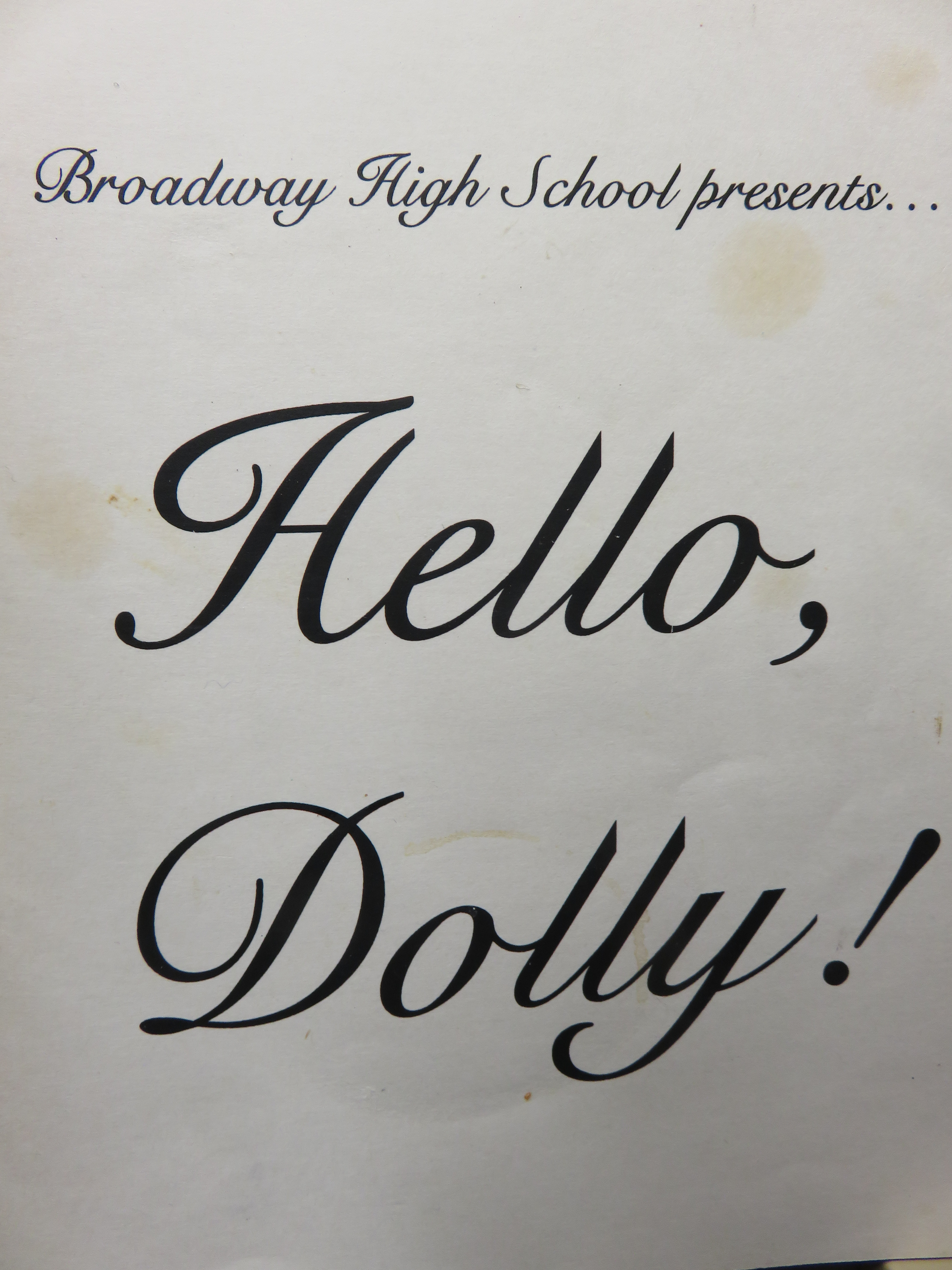
Playbill for Broadway High School, Va.’s production of the beloved musical.
The news that Carol Channing died last month brought to my mind seeing her wonderful performance in “Hello Dolly” which I enjoyed with several colleagues in New York City around 1979 or 80.
When she came down a sweeping stairway onto the stage, she not only owned the stage, but the whole theater, captured by her charisma, charm and beauty. Doing some math, I figured out that she was the same age then that I am now. I was born 30 years after her. At 5 foot 9 inches tall and with spikey heels, no wonder her presence and name, enthralled us all. A 67-year-old woman (when I saw Channing) captivating a crowd—night after night and year after year—is pretty amazing. She reprised her role in the 1990s for a final run on Broadway.
I fell further in love with “Hello Dolly” as a musical when my oldest daughter was in the primary company of dancers for our local high school’s production of the long running Dolly. Our middle daughter also played flute for long evenings of rehearsal and production. Their high school, fittingly named Broadway, was among the first in our area to put on stellar quality productions that rivaled the real Broadway in many ways: set, programs, costumes, acting and singing.
I was just as mesmerized with my daughters and their friends for the opportunity they had to participate in such a fun and beautiful production. For all the years of their high school experiences, we looked forward to musical weekend as if we were heading to the real “42nd Street.” I must also add that the town and high school were not named for New York City’s Broadway theater reputation, but its own long ago past as a slightly rowdy town, i.e., the “broad” or easy way of life that leads to destruction.
The storyline of the musical concerns one Dolly Gallagher Levi who is a widow, a strong willed and opinionated matchmaker still mourning the loss of her beloved husband. She is hired to find a mate for one wealthy Horace Vandergelder (don’t you love these names) and travels to nearby Yonkers, New York to meet the eligible bachelor. In the process of many plot turns and surprises, she falls in love with him herself and decides she needs to get on with her life, “before the parade passes by” as she sings in one song. “I’ve gotta get in step while there’s still time left. … I wanna feel my heart come alive again …” All the while, she looks for a “sign” from her departed husband, Ephram, that this will be okay with him.
Meanwhile, in real life, the same week Carol Channing died, a 40-something young widow friend shared on Facebook, that to her amazement she was feeling ready to get married again, something she never, ever thought she would do. Her departed husband, Russ, a former close colleague of mine, totally felt she would eventually do just that. They discussed this as a couple while his battle with cancer appeared to be nearing an end. To his everlasting credit, Russ himself laid the groundwork for Kendra to be able to move on.
Now she and a new soulmate are preparing to marry and in anticipation of that, she and her children are moving to a different house. Her first husband’s parents and her own parents came to clean out Russ’s shop in the garage, which I’m sure brought back many memories for all of them. But I know this new couple feel God’s hand in this love they’ve found for each other, after both lost their mates to illness.
Let your hearts come alive again, friends. That thought can apply of course to many situations: those making a fresh start at a new school, job, community, church, or retirement facility. It can also apply to new goals and aspirations: taking up a new hobby, pastime, or friendship—or reviving an old one that you seldom take time for anymore. Take time—before the parade passes you by.
***
Did you or your children participate in musicals or other theater memories? I’d love to hear your highlights and stories here.
***
How are you feeling the need to “join the parade” — or not! Comments also welcome on this theme.
For a free booklet, “Walking Through Grief and Loss,” send your request to anotherwaymedia@yahoo.com or Another Way Media, P.O. Box 363, Singers Glen, VA 22834.
Another Way is a column by Melodie Davis, in syndication since 1987. She is the author of nine books. Another Way columns are posted at FindingHarmonyBlog.com a week after newspaper publication.
Another Way for week of January 25, 2019
The Life of an Amish Boy, 1945 (part 2)
Guest column by Merle Headings
Editor’s Note: This is part 2 of a guest column by Merle Headings, a long-ago friend of columnist Melodie Davis, whose family went to her church when she lived in north Florida. Last week he wrote (dictated to Deven Eileen Lewis) about a month his family spent in Sarasota as a boy, and this week about his normal life in Amish country of Ohio.
When we got back from Florida, it was time for my younger brother Chester and I to go back to school. Surely leaving Florida was the worst idea my family ever had.
School did not go well for me. I had missed a lot of school and got behind in my work, plus I made it worse by not doing my work right to begin with. My third grade teacher, Miss Greaser at Canaan School, had us doing some coloring and I did not take the time to be neat. Miss Greaser asked me, “Is this the way they did it in Florida?” I looked up at her stubbornly and said, “Yes.” Boy was that the wrong answer!
School wasn’t the only thing I had to come back to after my tropical paradise. I was milking cows again both morning and evening in the bitter cold. I can still remember laying my head against the warm cows as I milked in that freezing cold barn.
That spring, Mom and Dad started talking about moving from our farm in Plain City, and we would no longer have cows to milk. Dad found farm land for rent on the south edge of Columbus, and an old gas station no longer in use. Dad told us that we were going to fix up the gas station and live in it. This was outside the Amish/Mennonite area and it meant traveling 18 miles every Sunday to the Beachy Amish Church.
Dad fixed up the gas station which consisted of one bedroom that, to my nine-year-old eyes, did not look like much. Dad told us he would build us boys a nice bedroom. Well, that nice bedroom turned out to be a 10 by 20 foot chicken house that he built on wooden skids so that later he could move it to use as an actual chicken house. He pulled it up to the station’s back door. That was our new bedroom with no insulation and no heat. We woke up some mornings to find snow had blown through the cracks and settled on our beds.
For two winters, we all slept in that that cold bedroom and according to Mom, no one ever got the flu or even a cold. They slept at one end of the chicken coop and Chester and I slept at the other end, with three-year-old Elton in the middle to stay warm.
Chester and I were happy since we no longer had chores to do mornings and evenings. Our happiness, however, was tempered with a fair amount of anxiety since we had to go to a new school. That first day of school as Chester and I walked just 1000 feet to the school building, the increasing feeling of dread that came over me with every step became almost palpable by the time we reached the entrance. I had never excelled at my old school. I had myself in such a state that morning that it was a wonder that I made it to school at all.
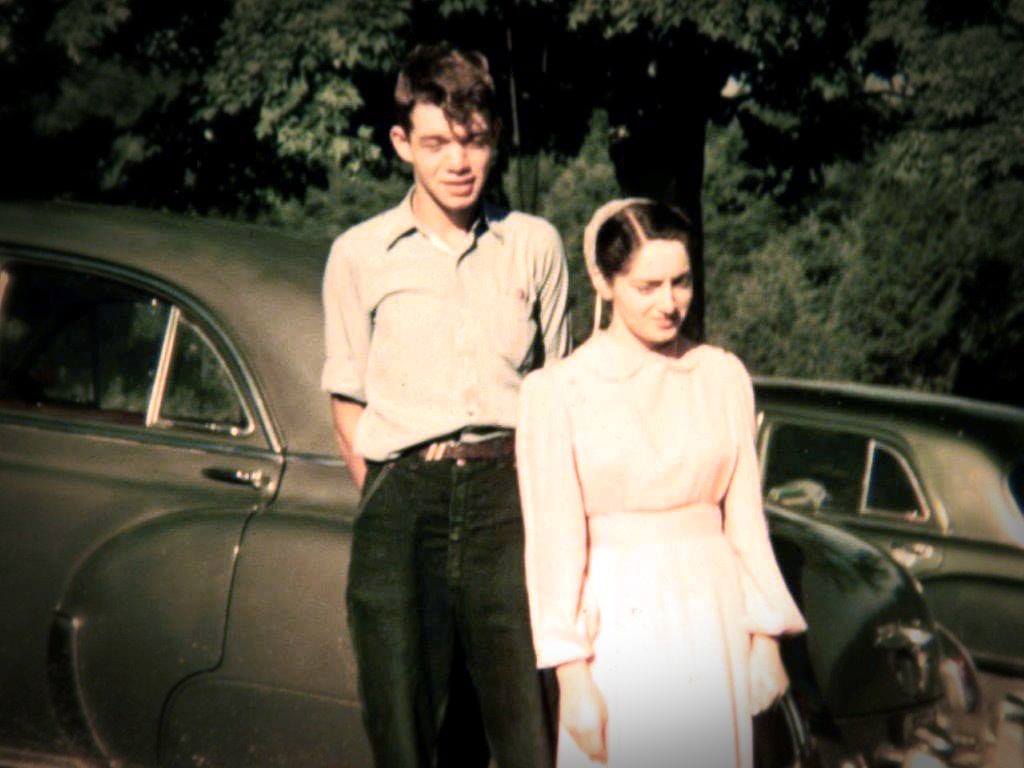
Merle and his eventual wife, Verna.
But my anxiety quickly transformed into excitement! It turned out that my old school back in Plain City was far more advanced than this new school. It wasn’t long until I was number one in my class. This gave me a sense of pride and accomplishment that I never felt before. It lit a fire under me and I stayed number one for the entirety of my days at that school.
We did help drive the tractor in the fields my Dad farmed. It just so happened that this field bordered my school and one day after school my teacher, Mrs. Bishop, saw me driving the tractor. Well, this chance encounter could’ve gone a couple of different ways, but Mrs. Bishop said, “Is there anything you can’t do?” Those six little words lifted me up and I’ve never forgotten them!
***
What a great reminder of how much a few words of praise can mean to a child–or anyone!
Try it!
***
What are your memories of praise from a teacher?
Comment, here, or send stories to me at anotherwaymedia@yahoo.com or Another Way Media, P.O. Box 363, Singers Glen, VA 22834.
Another Way is a column by Melodie Davis, in syndication since 1987. She is the author of nine books. Another Way columns are posted at FindingHarmonyBlog.com a week after newspaper publication.
Another Way for week of January 18, 2019
Amish Boy’s First Trip to Florida, 1944
Guest column by Merle Headings
Columnist’s note: Many northern Amish spend the holidays or coldest months of a northern winter in the south. My friend Merle Headings (no longer Amish) remembers how excited he and his family were to make their first trip. This is the first of a 2-part guest column as told by Merle to Deven Eileen Lewis.
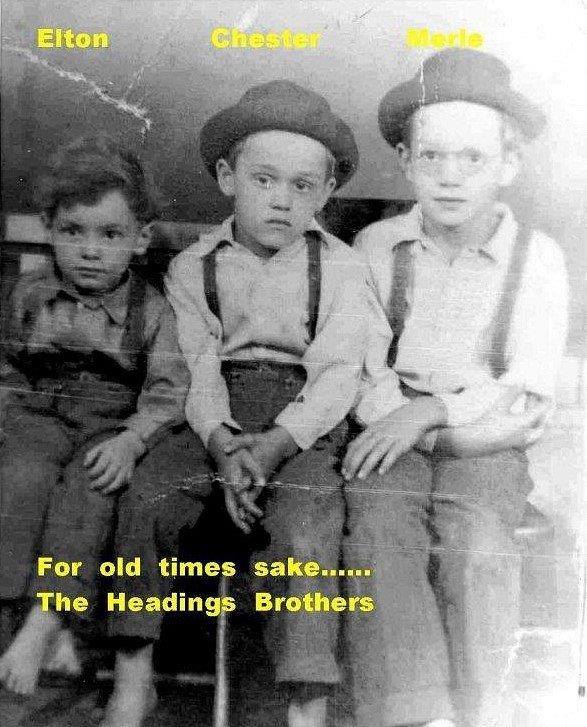
Photo taken the same year as the trip to Florida. Thanks to Merle Headings for this precious photo.
It was 1944 and I was nine years old. My family and I lived in an Amish community in Plain City, Ohio. My parents, Abe and Orpha Headings, were farmers who had three boys; me, Merle, nine; Chester, seven; and Elton, three.
We had five churches in our community. Three were horse and buggy Amish, one was Mennonite, and our church was Beachy Amish. Preaching and singing during church was in High German, which meant I understood very little. Our church was like horse and buggy Amish churches except we were allowed to have cars, (as long as they were painted black) and we used electricity. I remember when Dad bought a 1939 green Dodge and the bishop gave Dad two weeks to get the car painted black.
At home I got up early every morning before school and headed to the barn to milk cows, and then again every evening after school. That was my life until my parents began to grow restless. Some of the Amish within our community were beginning to travel to a small town in Florida called Sarasota. I was ecstatic when my parents announced that we were going to Sarasota for a month.
There were plenty of obstacles: we were in the middle of World War II, and all gasoline was rationed. You had to have government stamps in order to buy gas. Second, you were not supposed to go out of state in your car, so we couldn’t drive our car to Sarasota.
This did not deter Dad. He soon found we could travel by train, which we could get 100 miles away in Cincinnati, Ohio. My mother’s brother agreed to do our chores and even drove us to Cincinnati in our “black” two-door car.
We boarded the train while it was still dark. The train was noticeably warmer than our black Dodge. My eyes first fell on the seats, which were covered in red velvet with a delicate design etched into the fabric. I ran my fingers softly across the top of the chairs. The windows were big and we could soak up all there was to see.
There was no sleeping that first day on the train, except for my little brother Elton. We were simply too excited and looking forward to warmer weather in the south. With our eyes glued to beautiful mountain scenery, we quickly found that when the train went around a curve, we could see the steam engine ahead and smoke. Traveling through Georgia, we saw shack houses with smoke billowing out of chimneys, and began to smell the pine trees! We had never smelled anything so fresh and clean.
We arrived in Sarasota late in the evening, the final leg traveled by bus. We didn’t really know anyone. The first time we went to the beach, I was amazed when I saw the pristine white sand, and looked out over the water that had seemingly no end in sight. There were oranges and grapefruit aplenty that you could buy with very little money! Back in Ohio, they cost too much and were nothing compared to the oranges that we picked right off the trees.
During our stay in Florida we ate a lot of oranges and went to the beach as often as we could. Back then Sarasota was not very big, with only two traffic lights compared to the hundreds today. So when we weren’t lazing about on the sand or cooling off in the water, we were having a grand time driving from Sarasota to the muck farms east of town. Once there, we bought the best celery and other veggies.
I was so happy to be in Florida where there seemed enough sunshine to warm up the whole of Ohio. [More from Merle to be continued next week.]
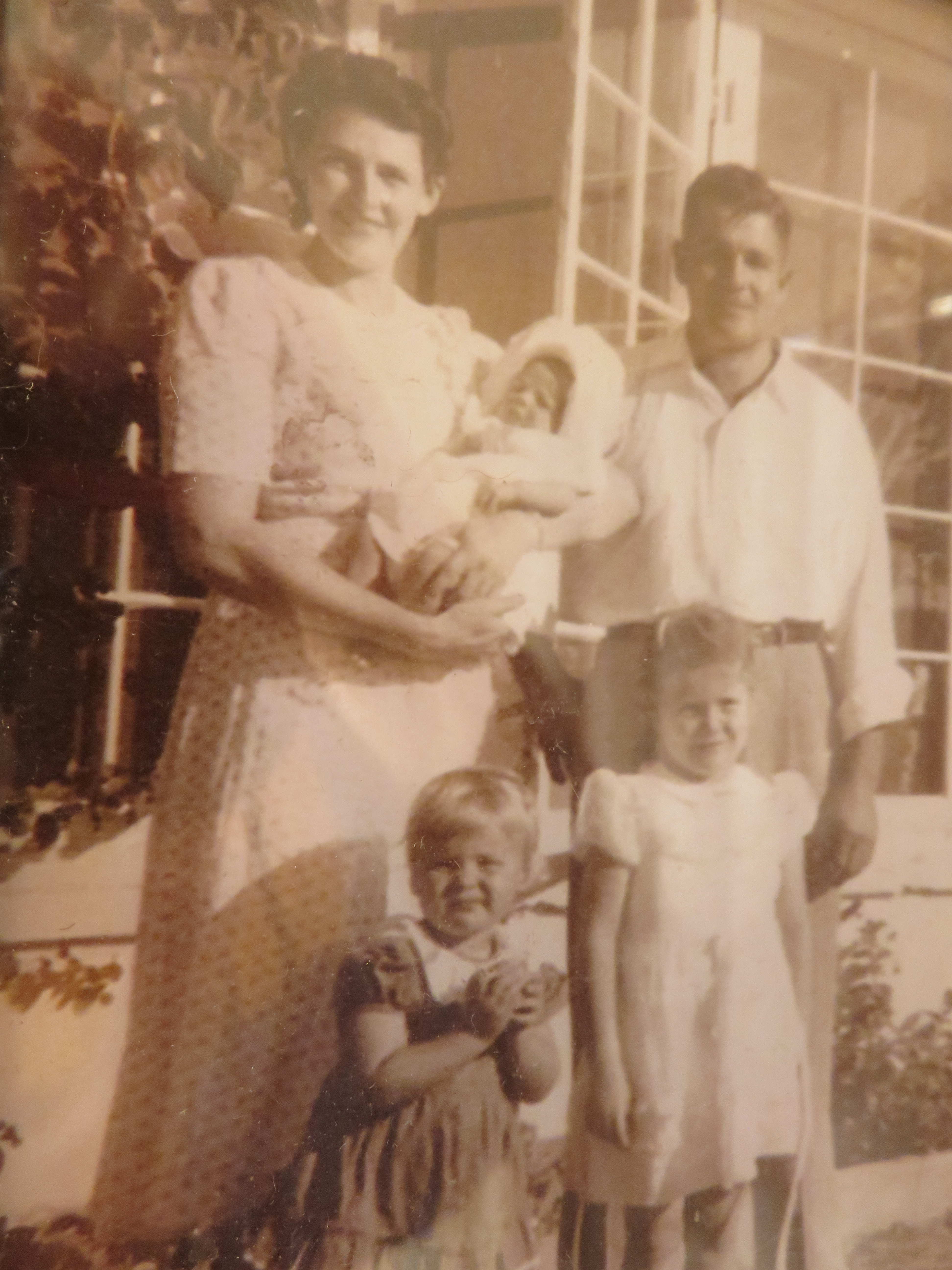
My mother, Bertha, holding me as an infant, probably on a Sunday dressed up for church. My Dad, Vernon plus big sisters Linda (Pert) and Nancy, l to r. My little brother, Terry, was born four years later and lives in north Florida.
***
One reason I (Melodie) loved Merle’s description of their trip to Florida in 1944 is that my own parents followed the trend among certain Mennonites and Amish and went to Sarasota for their honeymoon in January of 1946. Five years later, I was born there when they spent six months back in their beloved paradise.
***
The interest in starting Mennonite communities and churches in the southeast continued for many years, and is described in Roots & Branches: A Narrative History of the Amish and Mennonites in Southeast U.S. 1892-1992 by Martin W. Lehman, Cascadia Press.
***
Any early trips you recall as a child? Send to me at anotherwaymedia@yahoo.com or Another Way Media, P.O. Box 363, Singers Glen, VA 22834.
Another Way is a column by Melodie Davis, in syndication since 1987. She is the author of nine books. Another Way columns are posted at FindingHarmonyBlog.com a week after newspaper publication.

 findingharmonyblog