


Another Way for week of January 4, 2019
Starting the New Year Well
Do any of your goals for the New Year include drawing closer to God, or deepening your walk of discipleship?
Perhaps “disciple” isn’t in your active vocabulary of how you think of or describe your faith life. The early disciples who followed Jesus were kind of like students of a favorite professor or of a certain school of philosophy. Our learning should be lifelong, including actively following the teachings of Jesus.
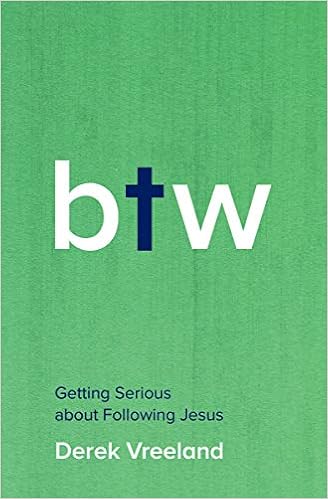
Two books have helped me ponder these ideas, and look freshly at desires for my own life. One book is not published yet but that I had the opportunity to edit, called By The Way: Getting Serious about Following Jesus. The author’s name is Derek Vreeland, and while he has self-published a number of books, this is his first book by a regular trade book publisher which means getting the book out more widely.
The book is designed to help new believers or young people joining a church to be grounded in some basics—including things (as I told the author) that I have kind of forgotten or left by the wayside, even though I’ve gone to church faithfully all my life (well, there was that year or two in college where I wasn’t so faithful, like many others).
But even today, I tend to let good habits slide: reading the Bible, praying authentically, serving others, living what I believe.
One of my faith habits of the last several years has been participating in a very small group with “Morning prayers” at the office, begun by my former boss and supported fervently by my current one. So it’s not “time off” or letting our work slide, but it has become an important part of our work praying for other staff members, our board, authors, people who do contract work for us (editors and proofeaders), readers, and website visitors. It is also a chance to breathe deeply and focus on being in the presence of God. We use a book called Take Our Moments and Our Days compiled a number of years ago; it is patterned like an Anglican prayer book which gives you readings for every day and then steps you through various prayers.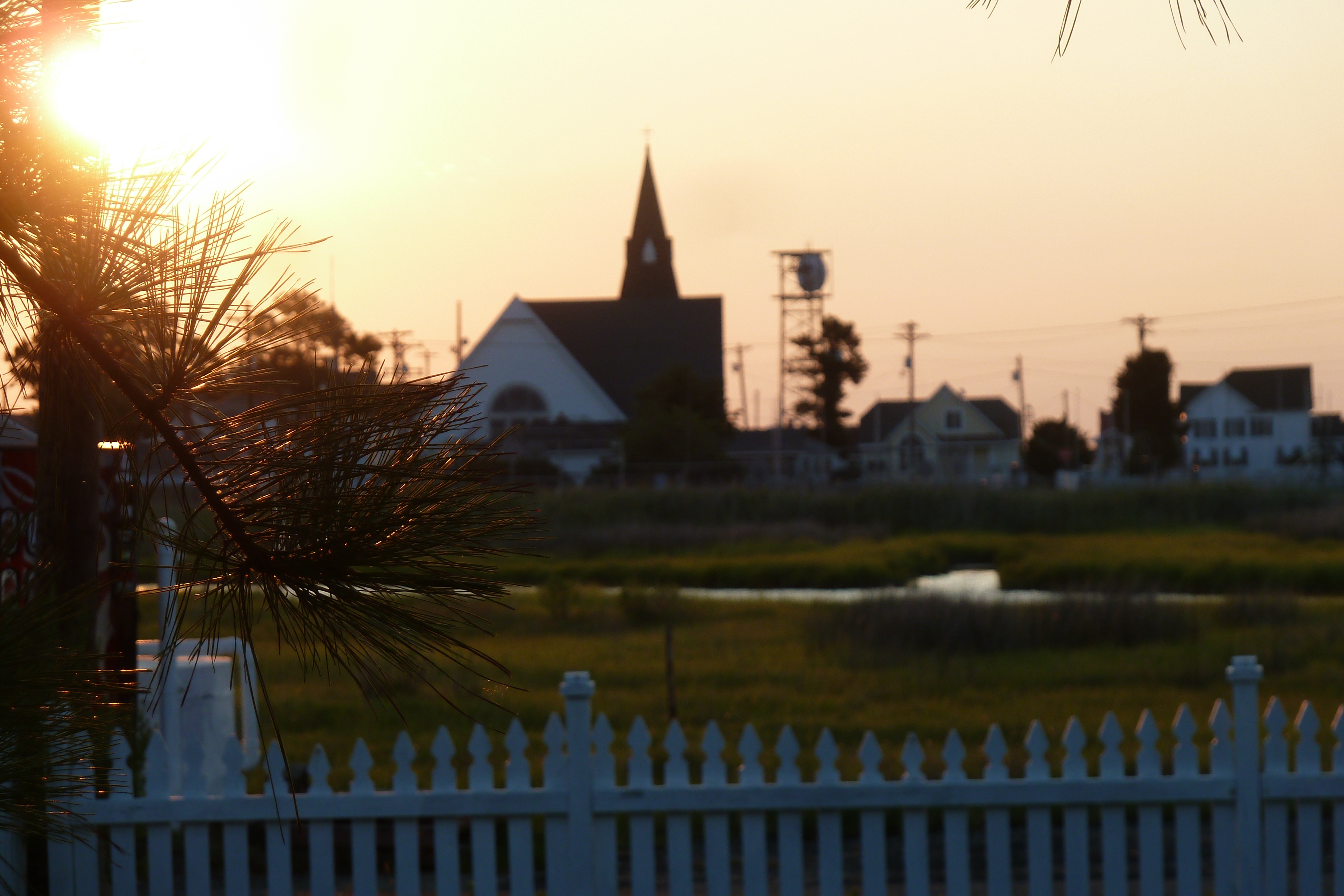
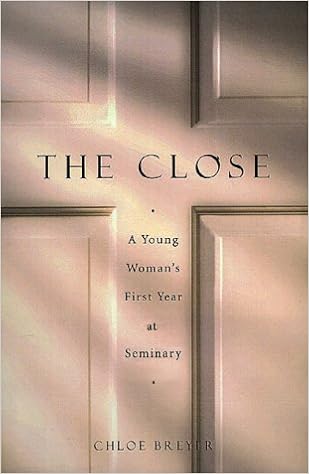
I picked up a memoir that has helped me appreciate this prayer book and this practice even more, titled The Close: A Young Woman’s First Year at Seminary. It is written by Chloe Breyer, who went to a small Episcopal seminary in New York City known as General Theological Seminary. The word Close in her title referred to a part of campus that was like a cloister, a garden-y space in the city set aside for reflection and prayer.
Being Episcopal, the seminarians were expected to participate in prayer meetings at least five times a day: morning and evening prayer in a chapel with others, and then various prayers and sometimes communion or Eucharist, depending on the day of the week. She struggled at first with trying to keep track of the hymnal and multiple other books in the pew rack, as many as six. Finding the collects and readings and recitations and songs was at first distracting from actual prayer, but she wrote, “As my historical understanding [of Christianity] grows, I feel the power of a prayer spoken by centuries of Christian worshippers. Although I still doubt that God would find a lovely hymn more pleasing than an act of charity, more often now, I leave evening prayer feeling refreshed” (p. 107, Basic Books, Perseus Books Group, NY, 2000).
Her comment compares to my own experience with written prayers passed down through centuries, at first having almost zero appreciation and wondering how any could appreciate prayers that can become mere ritual or rote and not thought about at all. I grew up with spontaneous—always unwritten prayers.
Wherever you find yourself on this spectrum of prayer, know that God is as close as our most intimate, hidden thoughts and needs. God wants us to draw closer, however we experience both the Maker of the universe, and our soul friend who knows us better than we do ourselves. May it be so in the coming year.
***
 I’d love to hear your thoughts, experiences of faith, and stories. Or what you’re reading in the new year! Comment here.
Take Our Moments and Our Days: Prayerbook
Or contact me at anotherwaymedia@yahoo.com or Another Way Media, P.O. Box 363, Singers Glen, VA 22834.
Another Way is a column by Melodie Davis, in syndication since 1987. She is the author of nine books. Another Way columns are posted at FindingHarmonyBlog.com a week after newspaper publication.

Some surprise bookends a daughter bought for me a couple years ago, which I love.
Another Way for week of December 28, 2018
Looking Towards Retirement
It feels weird to be sitting here thinking back on my career, rapidly coming to a close. It is almost as scary of transition as getting out of college and sending out résumés looking for my first real job, which is what I began doing some 43 years ago on my Christmas vacation from college.
If I’m lucky, my life will be bookended with something like the 20-24 years I spent preparing to enter the work world, with (I hope) another two decades tacked on after leaving the old nine to five. But that very thought—that that’s all I might have left: 20 years, is bewildering, scary, undoing. Knowing how fast 20 years can pass is part of it.
Preparing for retirement has been a little overwhelming in terms of the paperwork, the legalese, the understanding how things work or don’t work, the jumping through the Medicare hoops, understanding donut holes and supplements, figuring out when it is best to start drawing Social Security, will I lose too much money if I don’t wait until I’m 71 (which you hear a lot of “experts” recommending these days).
First let’s clarify two things:
- I’m planning to officially retire from full time work the end of March 2019.
- I’m planning to keep writing this column for the foreseeable future, as long as papers keep using it. It was a very small side gig for me these last two years. So, no retiring from that at this point: with a sincere and grateful thank you to papers and readers!
I’m writing about retirement because so many of us baby boomers and beyond are here (are we the only ones reading print newspapers anymore?) and the struggles and aging issues are real.
My husband and I started going to retirement seminars and consultations about handling retirement money a few years ago and I felt like I was in first grade. What are they talking about? What language is this? How will I ever learn all this? Forget seminars: I need to go back to school! Will we do the right thing or get ourselves in trouble?
Two years back when my husband hung up his work shoes we faced a worrisome money decision with some of his retirement money. It was one of the most stressful couple of days we went through in recent years. I knew then and there I wasn’t cut out to play the stock market.
Now that I’ve announced my pending retirement, I’ve had all the feels: do coworkers think I’m treading water? Dare I even write about this? Am I losing my creativity, word skills, ability to think on my feet? Am I keeping up with the thirty and forty-year-olds? Are my slacks too wide-legged and over the hill?
It will be nice not worrying about these things and having more freedom to spend time with grandchildren, travel, visit my mother and siblings. But will I dry up?
And now I sound and feel like the mythical J. Alfred Prufrock (what a great name) fretting and stewing about minutia in some favorite lines of my pet poet, T.S. Eliot:
“I have measured out my life with coffee spoons …
I grow old … I grow old … I shall wear my trousers rolled. Shall I part my hair behind? Do I dare to eat a peach?” (From “The Love Song of J. Alfred Prufrock” by T.S. Eliot.)
And oh yeah: now I remember another thing I want to do as I enter a different era; I hope to resume reading poetry in the English literature textbooks I saved and have mostly never cracked.
I will also not soon forget the words of one of my four bosses after he took early retirement: “Don’t wait to retire. Retirement is wonderful, just great! You can do what you want to do.”
I’m looking forward to it but not without lots of questions, wonderings and worries. I know one thing for now, I will continue writing, because that helps me think things out. I will continue a life of faith, with God who has been faithful through so many other bewildering and happy transitions.
***
If you’re retired, how do you like your life? I’d love to hear advice and encouragement.
If you’re just starting out in a career or life, what do you hope to be or do in 40 years?
This is the last week to request the bookmark “Top 35 Books for Children” compiled by friends and readers. Or send your comments or retirement advice and stories to anotherwaymedia@yahoo.com or Another Way Media, P.O. Box 363, Singers Glen, VA 22834.
Another Way is a column by Melodie Davis, in syndication since 1987. She is the author of nine books. Another Way columns are posted at FindingHarmonyBlog.com a week after newspaper publication.
Another Way for week of December 21, 2019
Mom’s Pecan Pie for Christmas
Counting down the days? Many of us indulge at Christmas in once-a-year pies. My father always loved my mother’s pecan pies and I love making them and eating them, because they are so delicious and easy.
But did you ever wonder how pies were first created? I never really thought about it until a great young chef at my church shared some research he had done on the history of pie.
Early pies began with meat pies, according to the American Pie Council and other history of pie websites. My Mom was also famous for her mince pie, and still loves it to this day, and I’m still not a fan. Sorry Mom! But I get that meat pies are how pie came to be. Early pies may have been around with ancient Egyptians using reeds to hold the filling and not eaten (of course). Romans spread the custom of pies to Europe and we usually think of England as being famous for its meat pies of all kinds (think shepherd’s pie, where sometimes the legs of whatever fowl was in the pie hung over the edges of the pie). Ewww. To each their own.
The American Pie Council people remind us that pies became so popular in the U.S. that people even say, “As American as apple pie.” (And do we really need a “council” or association to remind us to eat pie?) Oh and of course there was that 50s song about American pie. But I digress.

Signs of well-worn favorite cookbooks.
Do you enjoy eating the crust of a pie? Probably if it is yummy, and not so much if it is tough and hard. I’ve had (and made) both kinds. The website “What’s Cooking America?” says, “The purpose of a pastry shell was mainly to serve as a baking dish, storage container, and serving vessel, and these were often too hard to actually eat. For hundreds of years, it was the only form of baking container used.” I’m guessing it was hard like homemade playdough. While the royalty or well to do would have eaten the inside of the pie, the hard crust (which would have soaked up some of the yummy filling) might have been given to the servants or those clamoring for food outside their gates. I’m told that when settlers (our immigrant predecessors) sailed to America, pies in long rectangular shapes encasing meat and other veggies were made to hold food for the travelers and stored in the ship’s hold. No wonder people got sick and died on those long trips.
I’ll share my favorite recipe but source it back to a half dozen women who contributed their favorite versions to my first and long time favorite cookbooks, Mennonite Community Cookbook and Fellowship Cooking created by women of North Goshen Mennonite Church where I grew up. The names on the recipes (four different recipes altogether) include Jean Kauffman, Clara Blucker, Lizzie Weaver, Alberta Troyer, Pauline Beachy, Mrs. J.D. Graber and Mrs. John Martin. (Sorry about the names from ye olde Mennonite Community Cookbook which used women’s husband’s names!) I share the names because I know some readers will surely remember the cooks, as I do. And I call this my mother’s recipe because it was her favorite.
Mom’s Pecan Pie

A sign of often-used favorite recipes, adapated and adapted again over time.
3 eggs
1 cup corn syrup (I use half dark, half light)
¼ cup white sugar (or brown, your preference)
1/8 teaspoon salt
1 tablespoon flour
¼ cup water
¾ cup pecans, chopped
Pastry for 1 9-inch crust
Combine sugar, flour and salt. Add beaten eggs. Add water and syrup to egg mixture. Stir.
Add nuts. Pour mixture into the unbaked pie shell. Bake at 425 degrees for 10 minutes, then reduce temperature to 350 to bake 35 minutes longer. (I recommend using a crust shield to prevent over-browning.) Makes 1 9-inch pie. Some of these recipes call for 2 tablespoons cream or butter but the recipe is rich enough without the extra fat.
Have yourselves a Merry Christmas and don’t forget those clamoring outside our gates, including recent immigrants. Thanks for the birth of a baby who still longs to bring us all together some day in a peaceable kingdom.
***
Do you have a cookbook that looks like either of the above? Did your church women compile cookbooks and do they still?
What’s your favorite must-have Christmas dessert?
***
The Mennonite Community Cookbook 2015 edition can be purchased here, and has a history section that I wrote, giving the history of the cookbook. Loved doing that, I was happy to have had the opportunity.
As a gift, I’d love to send you the bookmark I created “Top 35 Books for Children” compiled by friends and readers, to save for ideas for birthdays and more. Or send your comments or pie stories to anotherwaymedia@yahoo.com or Another Way Media, P.O. Box 363, Singers Glen, VA 22834.
Another Way is a column by Melodie Davis, in syndication since 1987. She is the author of nine books. Another Way columns are posted at FindingHarmonyBlog.com a week after newspaper publication.

Another Way for week of December 14, 2018

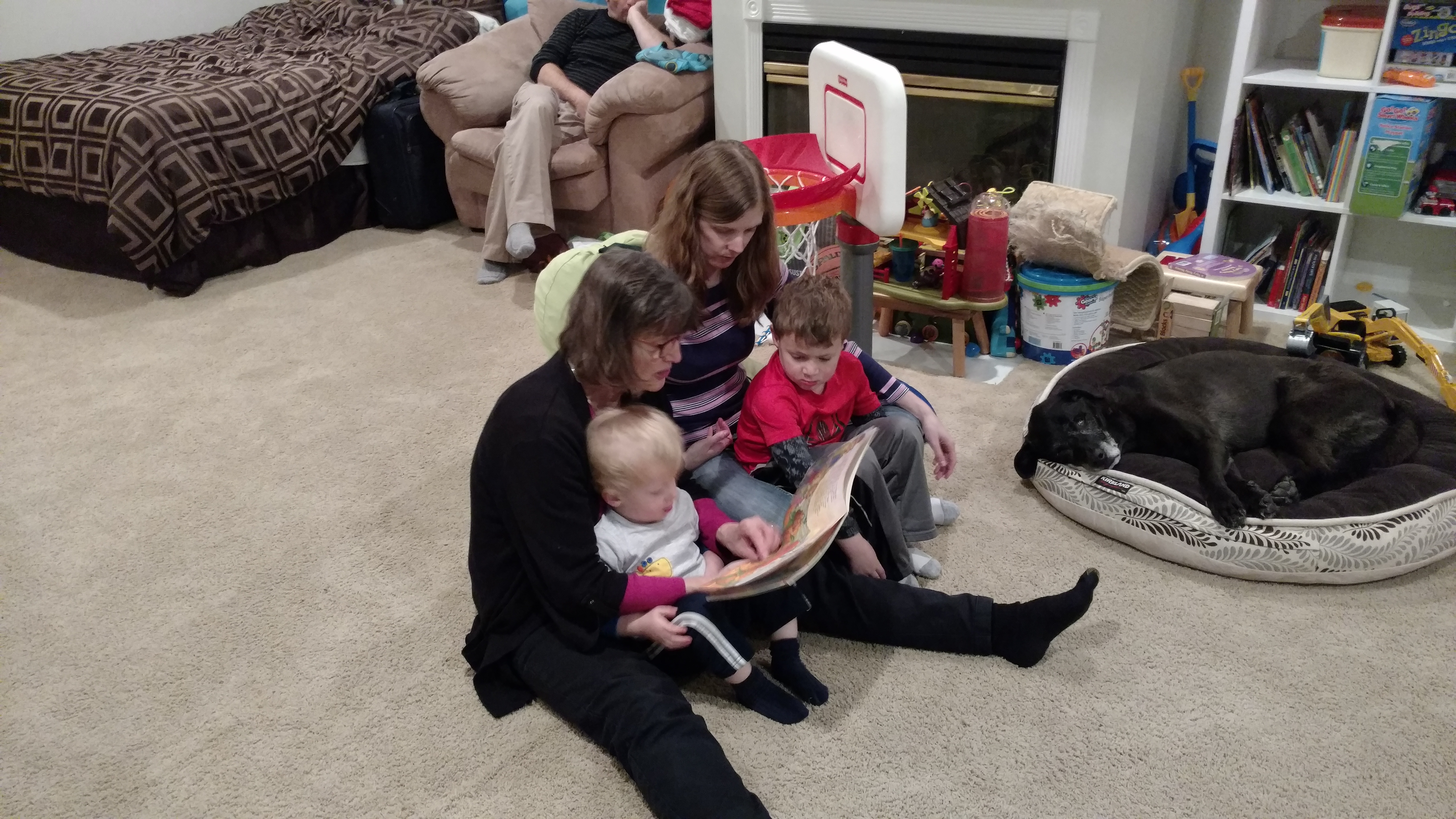
Grandma Davis reading to some little folks.
Another Way for week of December 7, 2018 – And a free bookmark.
Our Top 35 Books for Young Children
Some of my grandsons are growing up just like I did: in a home with no TV. My grandsons do see some videos at nursery school and daycare, and their parents share special events with them streaming on a laptop.
But some children grow up in a home without books—or at least no books beyond what they might get with a fast food kid’s meal. Now that is sad.
Our boys love books—all five of them in two families—and yes, I’m including the two-month-old who heard books all nine months inside his mommy. The five-year-olds, although not in kindergarten yet, know many words by sight and by hearing certain books over and over.
If you have children on your Christmas list, books are among the finest gifts you can give. Here, in no particular order, is my top 35 list from my grandsons, and the children and grandkids of friends, starting with books for younger children (0-2), and then for 2-4 year olds. Some of these books are totally new to me! You should be able to find them on Amazon or at any bookstore with a children’s section, staff should be able to help you. Friends and family who created this list: I am very grateful for your help.
Top 35 books for young children
Younger children 0-2:
- Snowmen at Night by Caralyn and Mark Buehner (five hidden objects on each page)
- Hippos Go Berserk by Sandra Boynton
- Goodnight Moon by Margaret Wise Brown and Clement Hurd
- Pete the Cat by James Dean
- Chicka Chicka Boom Boom by Bill Martin Jr. and John Archambault
- Runaway Bunny by Margaret Wise Brown and Clement Hurd
- Brown Bear, Brown Bear What Do You See? by Bill Martin Jr. and Eric Carle

Yet another favorite book for grandson James.
- Are You My Mother? by P.D. Eastman
- Twinkle Twinkle Little Star by Caroline Jayne Church

Older children 2-4: (many of these are series)
- No David by David Shannon
- The Nut Family by Eric Litwin and Scott Magoon
- Richard Scarry’s Best Word Book Ever
- If You Give a Mouse a Cookie by Laura Numeroff and Felicia Bond
- Little Critter books by Mercer Mayer
- Berenstain Bears by Stan and Jan Berenstain
- Clifford the Big Red Dog by Norman Bridwell
- Moonshot by Brian Floca
- Oh Were They Ever Happy by Peter Spier
- I Went Walking by Sue Williams and Julie Vivas
- Chu’s Day by Neil Gaiman and Adam Rex
- The Gruffalo by Julia Donaldson
- Llama Llama Who’s Your Mama by Anna Dewdney
- We’re Going on a Bear Hunt by Helen Oxenbury and Michael Rosen
- The Giving Tree by Shel Silverstein
- What if Everybody Did? by Ellen Javernick
- Wind in the Willows by Kenneth Grahame
- Winnie the Pooh by A. A. Milne
- Seuss books, numerous
- The Monster at the End of This Book by Jon Stone and Michael Smollin
- The Giant Jam Sandwich (old) by John Vernon Lord
- The Little Engine That Could (classic)

Listening to a book in story time.
- Grimms’ Fairy Tales (classic)
- Caps for Sale by Esphyr Slobodkina and Ann Marie Mulhearn Sayer
- Love You Forever by Robert Munsch and Sheila McGraw
- Don’t Let the Pigeon Drive the Bus (Gerald and Piggy series) by Mo Willems, a Sesame Street writer. One friend said, “Anything by Mo Willems is always a hit at our house.” Another said “My girls liked me to read these to them; then my oldest started reading them to her little sisters.” Sue, a grandmother, adds “I really like them, too. They’re quite funny.”

My friend Dennis Benson wrote about Dolly Parton’s Imagination Library program which gives each child born in her native Tennessee a free book each month for their first year. Niece JoAnn added it now operates as a nonprofit with people and businesses donating to help send more than one million books a month to children all around the world. Impressive!

Our oldest daughter Michelle, reading to her little sisters, Tanya, right and Doreen far left.
[Find Part 1 on reading and children here.]
***
Any of these books new to you? Which do you plan to check out?
***
I’m happy to send you this list as a bookmark to save for ideas for birthdays and more. Include a #10 self-addressed stamped envelope. Or send your comments or questions to anotherwaymedia@yahoo.com or Another Way Media, P.O. Box 363, Singers Glen, VA 22834.
Another Way is a column by Melodie Davis, in syndication since 1987. She is the author of nine books. Another Way columns are posted at FindingHarmonyBlog.com a week after newspaper publication.
Another Way for week of November 30, 2018
The Gift of Reading
Editor’s Note: First in a two-part series on reading, and the benefits of reading to children at a young age. Next week we’ll have a bookmark giveaway listing “Top 35 Books for Young Children.”
My first memories of books are the “Sally, Dick and Jane” early reader books my sisters brought home from school and read to me. I thought it was cool they could read, and couldn’t wait to go to school so I could learn to read too.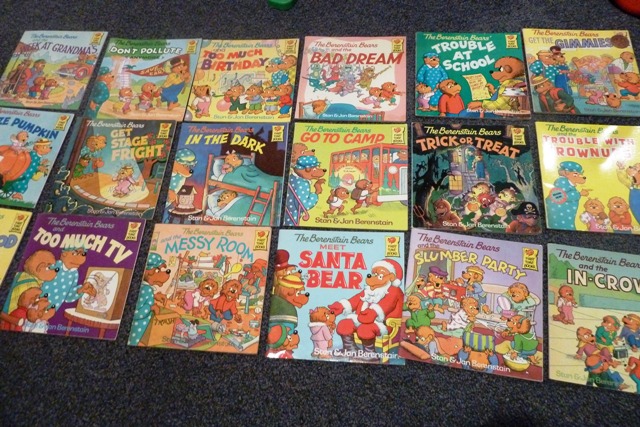
As I look now at the abundance of books my grandchildren have, and even back at the quite ample collection we had for our daughters, I’m somewhat shocked that we didn’t have more books than we did in my home growing up. We had a book of Bible stories that a salesman going door to door sold as a sample—I think—but Mom and Dad never bought the whole set. We also later got a complete set of Compton’s Encyclopedias. We devoured those books and wrote many a school assignment from them.
There was also a “Children’s Hour” story book with thick pages—simple fiction with morals that Mom would also use when she led children’s story time at church. We also had some Golden books, Black Beauty and of course, Pilgrim’s Progress.
My husband has fond memories from a set of books his parents bought their family called “My Book House,” (edited by Olive Beaupre Miller, England, 1920s), with archaic looking illustrations. He treasures those old books, some very mildewed.
I also have a heart wrenching book called Beautiful Joe: An Autobiography, written by “a dog” that was horribly mistreated. It was an early crusader book (1893) for the prevention of cruelty to animals, penned by Marshall Saunders.
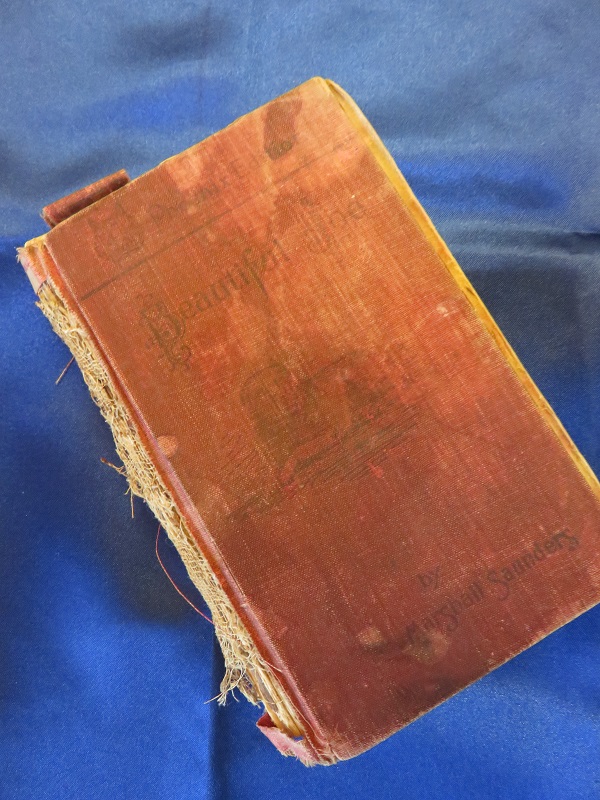 Beautiful Joe was a real dog who was rescued and given to a beautiful family. I don’t think I could bear to read the first part to my own grandchildren. This book was given to one of my aunts, Mabel Miller, from her teacher at Pointer School in LaGrange Indiana, Harold Stroman.
  Mabel had appendicitis when she was 11 and I’m guessing that the teacher gave this as a get-well gift. Mabel later died at the age of 18 from the flu epidemic of 1918.
Those were different times but from a Washington Post article by Amy Joyce, I learned that even in today’s U.S., “fewer than half of children under the age of 5 are read to daily by a parent.” Regina Wenger, a doctoral student in history at Baylor, recently wrote a moving and inspiring essay, “Why Read” published in The Mennonite and online. She points out that reading is not only crucial for survival and succeeding in life (indeed, longevity increases in places where illiteracy rates are coming down), but reading “cultivates empathy and perspective.” My picture of the peoples in those places and other times has expanded monumentally from fiction based in South Africa, India, the former Yugoslavia, France and Belgium during World War II, even ordinary life during the Civil War here in Virginia.
Wenger also reminds us that reading slows us down and requires deeper cognition: “Especially in a world that communicates in 280-character statements, books compel us to take the long view and remember that words have power.”
Nancy Myers is a woman who I mainly know through Facebook and her blog, although she went to the same high school I did about six years ahead of me. I admire her work in Congo, Africa, helping women learn to read. She was involved helping train Congolese women as literacy workers so they can train others. The women’s enthusiasm for their work is truly exemplary—walking miles and risking personal safety to get to the trainings. This literacy work means that women and girls in this part of Africa will have options besides an early marriage and remaining uneducated their whole lives. The world’s literacy rate is gradually growing but there are still between 600-700 million in the world who cannot read. (Find Nancy’s blog at The Practical Mystic.)
Next week I will share a great list of favorite books for children collected by some of my readers and friends on Facebook, just in time for Christmas shopping for kids you know.
***
What do you do with books you no longer have room for on your shelves? One friend from church invited many of us to take things–free–from her overloaded shelves as she downsized a few years ago. I treasure this book, and this note!

What were your favorite books as a child? Comment here, or send memories to anotherwaymedia@yahoo.com or Another Way Media, P.O. Box 363, Singers Glen, VA 22834.
Another Way is a column by Melodie Davis, in syndication since 1987. She is the author of nine books. Another Way columns are posted at FindingHarmonyBlog.com a week after newspaper publication.
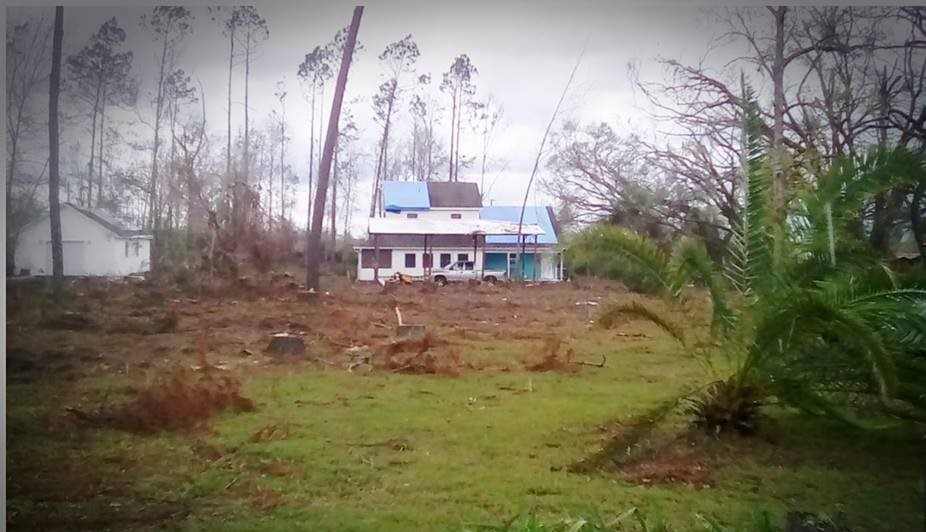
The author’s house, in the weeks following the storm. Dorcas writes: “The vista that we see now is affecting us. Our feelings are not the greatest at this time. It is stripped and bare, brown and dying, nothing looks right. our whole area will be this way for a while.” Photo courtesy of the author’s father, Merle.
Another Way for week of November 23, 2018
It’s Just Stuff!
Guest column by Dorcas Headings Beachy
Editor’s Note: In the weeks immediately following Hurricane Michael in north Florida, Dorcas Beachy, a friend from Melodie Davis’s Florida days, wrote about surviving the storm and aftermath.
“I am 63 years young and throughout my years I have heard the material things of this world described as ‘just stuff.’ Naked I came into this world, and naked I will depart, goes the scripture.
“Our days before the storm were like this: Day 1—A strong storm is coming our way. Day 2—I get ready, as I always do, with food, water, batteries, books. Day 3—The path towards us hasn’t changed and I along with my parents, husband, and sister-in-law go thru Hurricane Michael. A category 5 storm (worst possible) at the coast and category 3 at our homes.
“I headed into Day 3 thinking it won’t be bad, it never has been. We live too far from the coast to be scared. Somewhere along 1 p.m. I saw the first tree fall. It missed our house, then the dominoes of falling trees began: endless wind and cracking of wood. We could smell the pine inside as it broke outside. I suddenly understood, my life as I enjoyed it was going to be changed. I removed myself to a quiet place and cried. BAM! went a tree as it tore through our attic roof. I cried some more and prayed it would stop. It didn’t stop until 4:30.
“Seeing the aftermath of Michael that afternoon is something I and others will never forget. The crisscrossing of huge trees on our driveway, three trees angling out of roofs, my parents seeing the damage to their place, my sister-in-law borrowing my husband’s bicycle to try to ride to her home and see if it was still there, finding part of our neighbor’s roof in our woods.
“Now it’s been a few days. We have tried to contain all the damaged areas. We have a building that’s two-thirds a shop for Milton and one-third a playroom for our grandchildren. It is filled with our kid’s stuff from their growing up years. Milton had to tell me the tree sticking through the roof damaged the whole building and I need to empty out the playroom before the next rain.
“I have tried to not even look at the outside, tried to sleep in the heat with ringing in my ears. I have forgotten to eat and haven’t bathed in five days. I decided it was easier to “GO” outside then dealing with “GOING” inside. I worry about my parents and the damage they sustained. I search for yet another towel to clean, mop, or dry wet things with. I bag up household trash, spoiled food, dirty laundry and put the bags in the back of the pick-up and watch as the pile gets bigger.
“Is it just stuff? NO! It is my life and while I can live without a lot and scale down if I have to, my stuff is important to me. I, we, will be okay. Family, friends and strangers help us all.
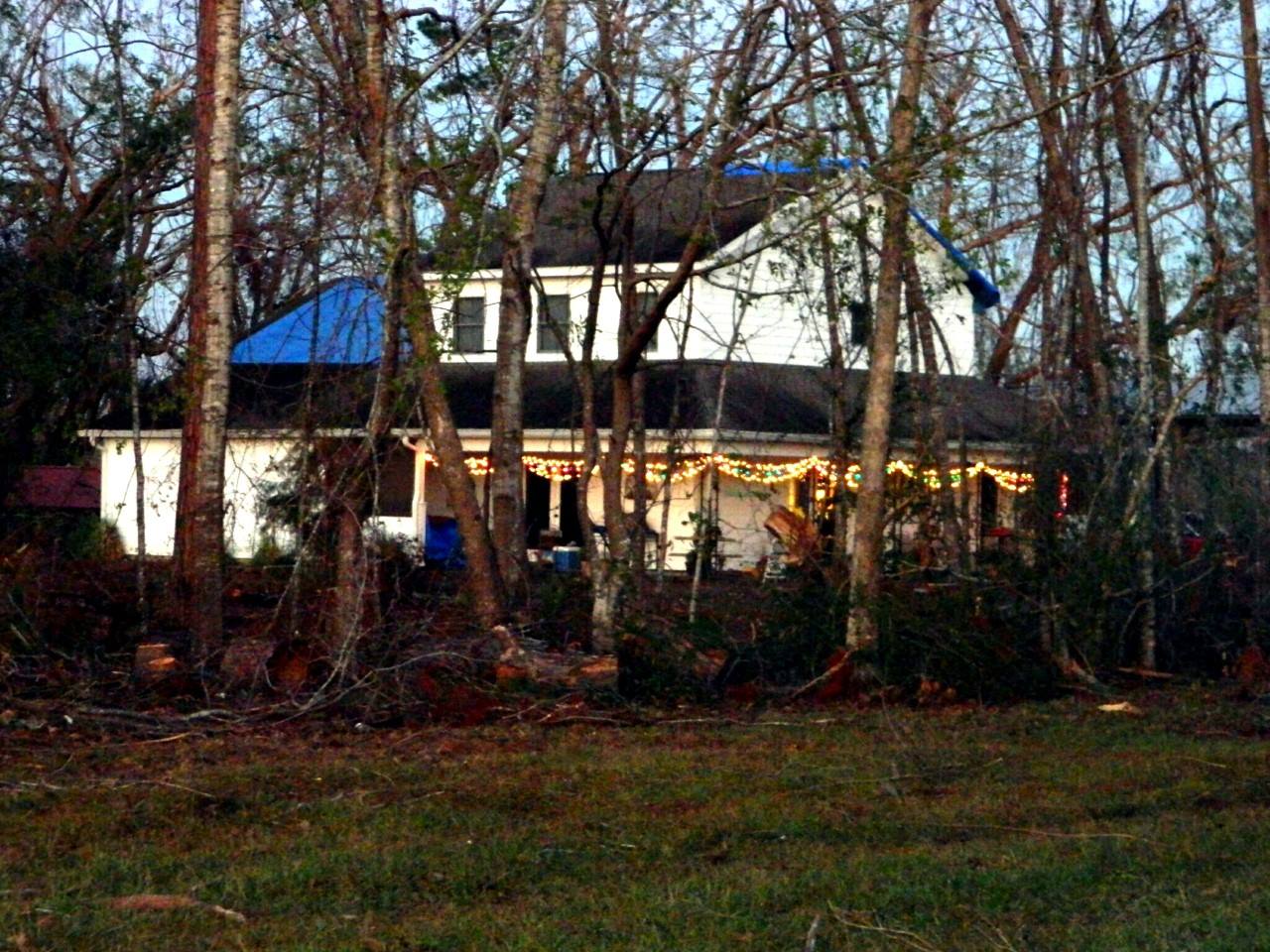
The backside of the author’s home, now decorating for Christmas even while they await a new roof. (Photo courtesy of the author’s father, Merle.)
“In week 4 post-storm, the combat-boot-camp-of-living has changed to electricity-is-good!-but-I-still-don’t-want-to-look-outside. Things are better. Our driveway was impassible, so that is what we addressed the first morning. My husband Milton, began cutting up massive amounts of tangled pines with a chainsaw while Dad and I were supposed to move the logs to the side. We started with an overwhelming feeling: we can’t do this alone, it will take we three a long time! Suddenly a John Deere mini-tractor came down the road. On it were Mattie and her husband; complete strangers to us. They stopped at our drive and said, “We hear you need some help.” They proceeded to push with their tractor’s front-end loader all the way back to Dad’s house, around 600 feet. We still don’t know how they knew to come our way.
“My sister-in-law, Pam, who rode out the storm with us, lives nearby in a trailer. She and we thought there was no way her home could have lasted the blast of Michael. She made her way there by bicycle and returned to tell us her trees were down and a terrible mess but her home was okay except for some roof damage. The stuff in our 10 by 20’ outbuilding playroom was not damaged and filled with toys for kids. I decided to go through all those memories and keep some, give some to our children, and donate the rest. I was in the grocery store and heard a lady talk of the local Kid’s Kingdom daycare. It had been damaged and they needed kid things. I asked where the place was and went the next day with a miniature wooden kitchen set, puzzles, kid-sized table and chairs and more. It turned out to be the former Oak Terrace Mennonite Church, the church I attended from cradle to 18 years old. What I thought I couldn’t give up is now being used daily by children in a place that holds lots of wonderful memories for me.”
***
I was touched by Dorcas’s story—especially the mention of the church where I too was deeply influenced the year and several summers I lived there. All those recovering from this disaster—along with hundreds of thousands around the world at various stages—have been helped by numerous outpourings of help from friends, family and strangers. Recovery takes years. We pray for all going through turmoil at this time of year.
***
Update: Many families are waiting for new roofs or repairs–reliable contractors have long lists, and church-related disaster relief organizations are not allowed to help those receiving insurance for their damage. So patience and faith keep folks going. Please join me in praying for patience and love for so many families!
***
Your own storm stories from recent times or longer ago? Send to anotherwaymedia@yahoo.com or Another Way Media, P.O. Box 363, Singers Glen, VA 22834.
Another Way is a column by Melodie Davis, in syndication since 1987. She is the author of nine books. Another Way columns are posted at FindingHarmonyBlog.com a week after newspaper publication.
Another Way for November 16, 2018
Never Give Up
Videos on YouTube or Facebook range from crazy and hilarious, to tear tugging. A recent viral video of a young bear cub climbing an almost vertical mountain face spells courage and persistence like no other. Some viewers said they almost couldn’t watch.
First we see the mother bear struggling across a snowy precipice, her cub trying to follow and mostly failing. Mama has her own troubles navigating, sliding backwards down the slope for awhile. Finally she reaches an angle that must have been slightly less steep, because once she gets going on it, she endures until she reaches the top.
Most of us as mothers or parents would be frantic up there at the top of the mountain watching our cub struggle to make it; she must be strongly tempted to venture back down. She paces, checking over the edge, and we even see her swing out one paw. Perhaps the bear likely knows from instinct or experience that if she went down to help the cub, she would be helpless, really. She barely made it up herself.
And indeed the young cub, after a long long backward slide even further down, gets back up to where his mother has left some pretty good tracks, and proceeds to conquer that mountain and rejoin his mother. Mama quickly moves on, with the cub trouncing behind. The video was reportedly taken by a drone in some remote Russian mountains. An article in The Atlantic (online) indicated that from the behavior of the bears, scientists are pretty sure the bears were fearful of the drone flying so near. They speculate that the mama bear’s paw swipe was likely at the noisy drone, not for her cub. This revelation made me just plain sad. (Search online for “Little bear slipping down the hill.”)
But a larger theme of “never give up” pulls through the video, reminding me of the unforgettable “Climb Every Mountain,” rousing solo by Mother Superior in the Sound of Music musical. It was the first movie I ever went to see—because our church at the time didn’t permit going to theaters. But the movie was deemed a spiritual experience of sorts and a group of us girls went. Even though the words of the song may be cliché, when you’re facing a mountain in your life, it can certainly be a nudge to keep going, like the cub.
The applications to human life are obvious. Struggles with grief, employment, finding direction for life, or difficult relationships, come to mind. I know a young man struggling with drug addiction, after trying multiple times to go through treatment programs. I would call this the mountain of many in our culture today and around the world, and it is so very difficult and sad. The various pulls of drugs are both mental and physical—in this young man’s case a struggle with bipolar; other mental or physical illnesses may be involved in some addictions. Again I think of that cub, going determinedly for his goal, and wish and pray with all my heart that my friend could get to the top of his difficulty as well—and stay there.
 In a different vein, I remember a tough professional mountain I had to climb. In the early 2000’s our organization bit off a huge project, and I was called on to serve as writer for a string of documentaries that aired on national TV. The first one was called Journey Toward Forgiveness. I felt intimidated but wanted to try. While I had written many scripts, books, columns and an assortment of TV and radio spots before, it was a new experience to help research and interview potential documentary participants, rough out a preliminary direction, and then follow up putting a script together out of dozens of video interviews and hundreds of pages of conversation.
Looking up at the mountain, it looked insurmountable. But as with many projects, you put one foot in front of another and keep plugging away and you get there—sometimes with the help and feedback of others. Challenging? Yes. But I wouldn’t have missed that mountain for an easier job.
This reminds me also of the tremendous journeys the various persons in our documentaries were on—such as forgiveness, family survivors after suicide, dealing with mental illness or drug addiction—and their courage in telling those stories. I’ve kept up with a few of those persons on Facebook and am overjoyed that at least the ones on Facebook have not slid back down the mountains they encountered. Their stories changed me also. Amazing courage.
***
How does the little bear and mama video make you feel?
What mountain(s) are you facing?
I’d love to hear.
Comment here or send your story to anotherwaymedia@yahoo.com .
Another Way is a column by Melodie Davis, in syndication since 1987. She is the author of nine books. Another Way columns are posted at FindingHarmonyBlog.com a week after newspaper publication.
 Another Way for week of November 9, 2018
A Gathering of Sisters
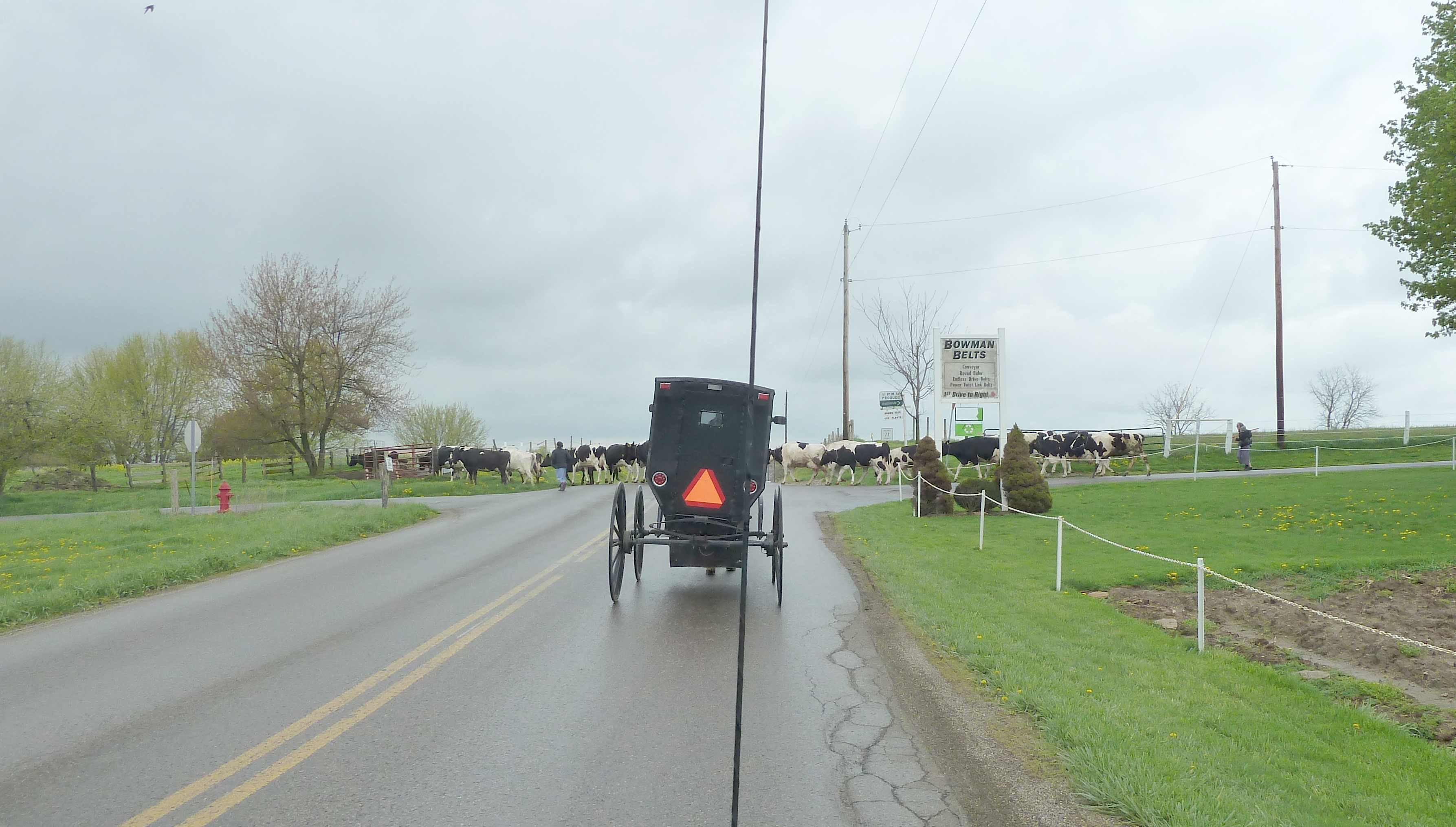
Darla Weaver is an Old Order wife, mother, expert gardener, and author. She and her husband have three children, but she grew up in a family of five sisters and four brothers. The sisters all live in the hills of southeastern Ohio near her parents’ house where they grew up.
Darla and her sisters have the marvelous tradition of spending each Tuesday with their mother (their father joins them for lunch, from his work in their home-based greenhouse). And the little ones of these sisters absolutely love Tuesdays before they begin formal education (usually from age six through grade eight in typical Old Order or Amish parochial schools), playing on the farm with cousins, eating, and “reading” books in their grandmother’s “library.”
I had edited a previous book of Darla’s, a devotional called Water My Soul. When she happened to mention this unusual gathering to me—spending all day each Tuesday with her sisters, mother, and their younger children—what came to my mind was Mitch Albom’s unforgettable book Tuesdays with Morrie. What if Darla would write something like “Tuesdays with Mom.” She pretty much jumped at the chance—while also presenting the idea to her mother and sisters. Would they be willing to be put under a microscope and have their weekly conversations, activities, joys, triumphs, as well as the skirmishes of their children shared with the entire world?
 I think it took some processing with her family—especially the spouses—but Darla has now produced a delightful new book. Eventually the Herald Press team decided on Gathering of Sisters: A Year with My Old Order Mennonite Family as the title, and it is an inside, detailed look at the daily Old Order life of one extended family.
Darla uses a typewriter to write, so we took her pages and used special software to scan them into files the computer could read. Darla writes with a self-deprecating bent, with jokes about her cooking, and consternation over the new silicon cupcake “papers” that are lovely until it comes time to individually wash those modern cupcake holders, which frequently seem to turn up when it’s Darla’s turn to wash. And oh yes, no one can remember who washed the dishes last Tuesday. The children get into tangles the mothers try to sort out, and there’s an extended thread about a brother getting married in another state and chartering a bus to get the whole family there.
In September of the year her youngest son Matthan starts school, Darla reflects on the near universal ache parents feel as their children first scamper off to school: “When Cody (oldest son) went to the store to buy a pair of shoes, he came home with elevens. What’s more, they were the right size. Those were not the feet that fit so snug into the palm of my hand, or when I helped him begin to walk, just the day before yesterday or so. Now even Matthan had grown up and gone to school. The last lingering bits of babyhood always vanish forever in that first-grade aura.”
So Darla arrives at her mom’s on Matthan’s first day of school, no children in tow. She has to kick open a stubborn door. Her mother teases her that she “looked so old, coming up the hill without any children along. One sister chimed in smiling, ‘You looked almost like a grandma with your children all in school.’ They were all smiling so I smiled too—so wonderful is the consolation of sisterly sympathy that I cheered right up” (p. 199-200, Herald Press).
I grew up with two sisters and a little brother and even though our “modern” Mennonite family was much smaller, the community of siblings and especially sisters is something to treasure—even when we tease each other or become downright irked at times. Darla’s strong faith runs through her book, bringing moments of reflection amid both momentous and ordinary days.
Perhaps someone you know would enjoy this book for a Christmas gift or anytime. I’m snagging several for loved ones as well!
***
Many of us wish we lived close enough to loved ones to gather weekly like Darla and her sisters and family. What traditions for gathering have you managed, even if not as often as you would wish?
***
For more about Darla’s new book Gathering of Sisters, check here, or write to me and I’ll send you information by regular mail. Send your request to anotherwaymedia@yahoo.com or Another Way Media, P.O. Box 363, Singers Glen, VA 22834.
Another Way is a column by Melodie Davis, in syndication since 1987. She is the author of nine books. Another Way columns are posted at FindingHarmonyBlog.com a week after newspaper publication.
Another Way for week of October 26, 2018

My sister Pert and I riding waves at Mexico Beach circa 1970.
Beloved Memories of Mexico Beach
To be honest it wasn’t that much of a beach to begin with but it was “our” beach, only 38 miles or so from my home in the panhandle of Florida back in 1969. We could whip down there on a Saturday afternoon after chores were finished or even after church on Sunday and enjoy a few hours relaxing, swimming, jumping waves, walking the beach, enjoying a sunset.
For a girl from landlocked Indiana (except for Indiana dunes on Lake Michigan, another lovely spot), it was a dream come true, and one of the main reasons, truth be told, I was willing to move to Florida for my senior year of high school. My parents had offered several times to let me finish out high school at Bethany Christian school I had gone to in northern Indiana for three years, where I had the best of friends. There would have been aunts I could have lived with. But I was gung ho to move, and the beach had a lot to do with it. An early visit there the spring of 1969 drew me with the constancy of waves lapping on sand. My grandmother went with us on that trip and burned her ankles (the only space exposed to the sun with her long dress) as we walked the shore.
I now live five hours from the beaches in Virginia distance-wise, but we’ve never attempted to make a day trip out of it—always overnight, always heavy heavy traffic (especially in recent years) getting there. Getting to Mexico Beach was an easy drive on back roads straight and smooth—the biggest danger going home was drifting off to sleep after a half day of the warm and beautiful Gulf of Mexico.
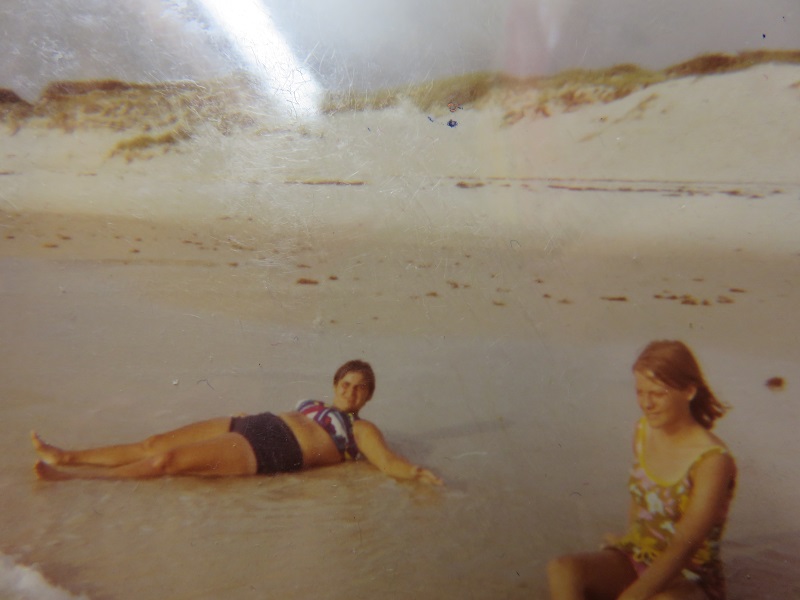
My friend Deb and sister Pert at Mexico Beach 1970.
So we loved it and had many a family picnic there on Fourth of July or Labor Day or anytime we needed a getaway. The original facilities were a simple Florida wayside park with sturdy cement picnic tables, benches, and shelters, and a place to change and shower off. We sometimes set up makeshift tents with poles and sheets in the sand, long before canopies for such purposes came on the scene. Eventually a brother-in-law owned a small catamaran sailboat on which we had plenty of adventures. A close friend from my class in Indiana visited after we both graduated high school and we spent several days relaxing and sunning on the secluded beachfront which midweek was almost empty. I remember one nearby store where one could get snacks, drinks, suntan lotion.

A small local restaurant at a north Florida beach in Feb. 2010. My mother, brother Terry, and sister Nancy. They’re laughing because my brother was carrying Mom’s purse for her.
In the last 40 years Mexico Beach (year-round population still only around 1000) has of course been built up with hotels, beach stores, condominiums, beach houses, the works. All these things supplied much needed jobs and opportunities for folks living in nearby counties, where making a living has always been a lot of hard work and long commutes to either Tallahassee or Panama City for better paying openings. As a college student, one summer I drove one hour to work at a restaurant on the Panama City beach, sometimes staying over at a home where an elderly man had advertised a room in exchange for help cooking as he cared for his wife dying of cancer.
The videos, photos and aerial shots from Mexico Beach after Hurricane Michael are devastating and shocking. Sure, hurricanes hit every year, somewhere, and this was ground zero. My brother, who lives in a nearby county, said it was disorienting to drive around because you couldn’t recognize things. They rode out the storm but would have evacuated if the upgrading of the storm to a “4” instead of a “3” had come earlier.

My brother and some of his family on the beach, Feb. 2010.
Recovery from massive storms and floods takes patience, time, and lots of help from all around. Help can never be distributed evenly or fairly—but as my brother said, with neighbors and family, they’re getting by. The downed trees and devastated homes and businesses will take months and years to clean up. If you can help, check out opportunities from Mennonite Disaster Service, Brethren Disaster Service, Presbyterian Disaster Service being three I know about first hand. They funnel volunteers, supplies and monetary gifts to those in need—rebuilding for years after storms. God bless and guide and grant safety to all those helping their neighbors, and strangers helping strangers.
Update: I was pleased to hear at least one local school resumed having classes just yesterday (Nov. 1) even though many homes do not yet have electricity restored. You can follow a Facebook group, Calhoun Strong for photos and updates and information regarding recovery efforts and indeed—neighbors telling neighbors where they can find help.
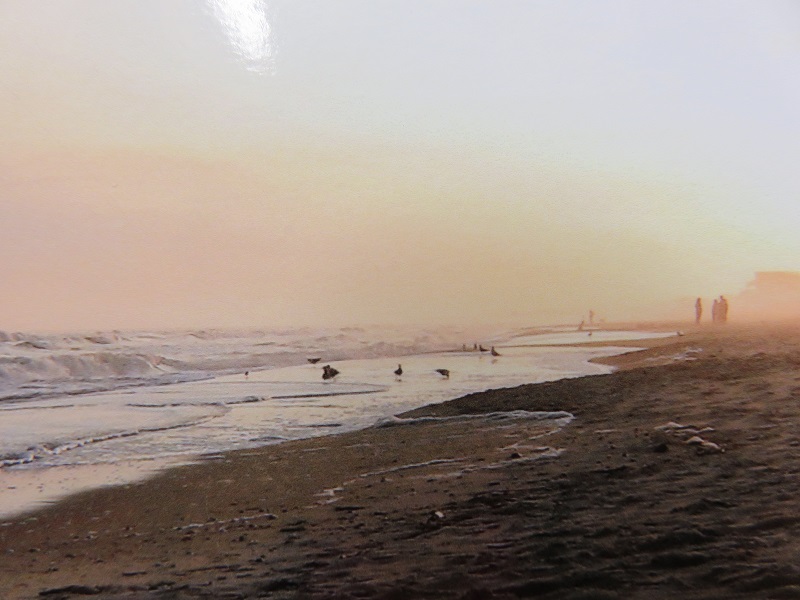
Mexico Beach, 2010.
***
If you want to help out as rebuilding goes on for years, here are three church organizations which will likely be sending workers, and they can always use funds:
Mennonite Disaster Service at https://mds.mennonite.net/ or this address: 583 Airport Road, Lititz PA 17543.
Brethren Disaster Ministries, www.brethrendisasterministries.org or here: Church of the Brethren, 1451 Dundee Avenue, Elgin IL 60120.
Presbyterian Disaster Assistance https://pda.pcusa.org/situation/hurricane-michael/ , or here: P.O. Box 643700, Pittsburgh, PA, 15264-3700.
My email is anotherwaymedia@yahoo.com or Another Way Media, P.O. Box 363, Singers Glen, VA 22834. Another Way is a column by Melodie Davis, in syndication since 1987. She is the author of nine books. Another Way columns are posted at FindingHarmonyBlog.com a week after newspaper publication.

 findingharmonyblog