

Another Way for week of December 30, 2017
What We Leave Behind
So, what do you ship family members the day or week after Christmas or New Years and all the children have gone home?
Last year after Christmas, I saw my boss and his wife boxing up something in our shipping department when his wife said with some chagrin, “This is called shipping your kids the stuff they left at your house for Christmas.”
I blushed and drew my hands to my cheeks. “Oh dear, my mother is shipping stuff to me today, too.”
And I don’t need to remind you how old I am.
“So, it never ends,” said my boss.
This year we took a trip between Thanksgiving and Christmas to visit my mother. I took along my own breakfast cereal that I like for fiber reasons. Of course I left it in her cupboard! Mom has always willingly shipped (or saved for a future visit) our left-behinds.
And I don’t really mind doing that for my kids and grandkids either. If you show me a household where Mums and Dads willingly ship the left-behinds of their offspring, I’ll show you a family where the kids WANT to come home on holidays and at other times. Especially if they don’t hear too many reminders of “You never did remember to pick up all your stuff” or other snide, unhelpful remarks.
Taking care of what family members or other guests leave behind is just part of getting together. Perhaps more important is what feelings are left in our wake? Resentment? Exhaustion? Misunderstandings? Worse?
Read any advice column online or in the newspaper and it doesn’t take long to hear about the spiteful ways family members treat each other. Some of it might be in jest, but even good families with loving relationships who have good times together, accidentally push buttons (and sometimes not accidentally). Most of us know how to get under someone’s skin. Try to be mindful of what may be motivating someone’s behavior or putdowns—often insecurity, or feeling “less than.”
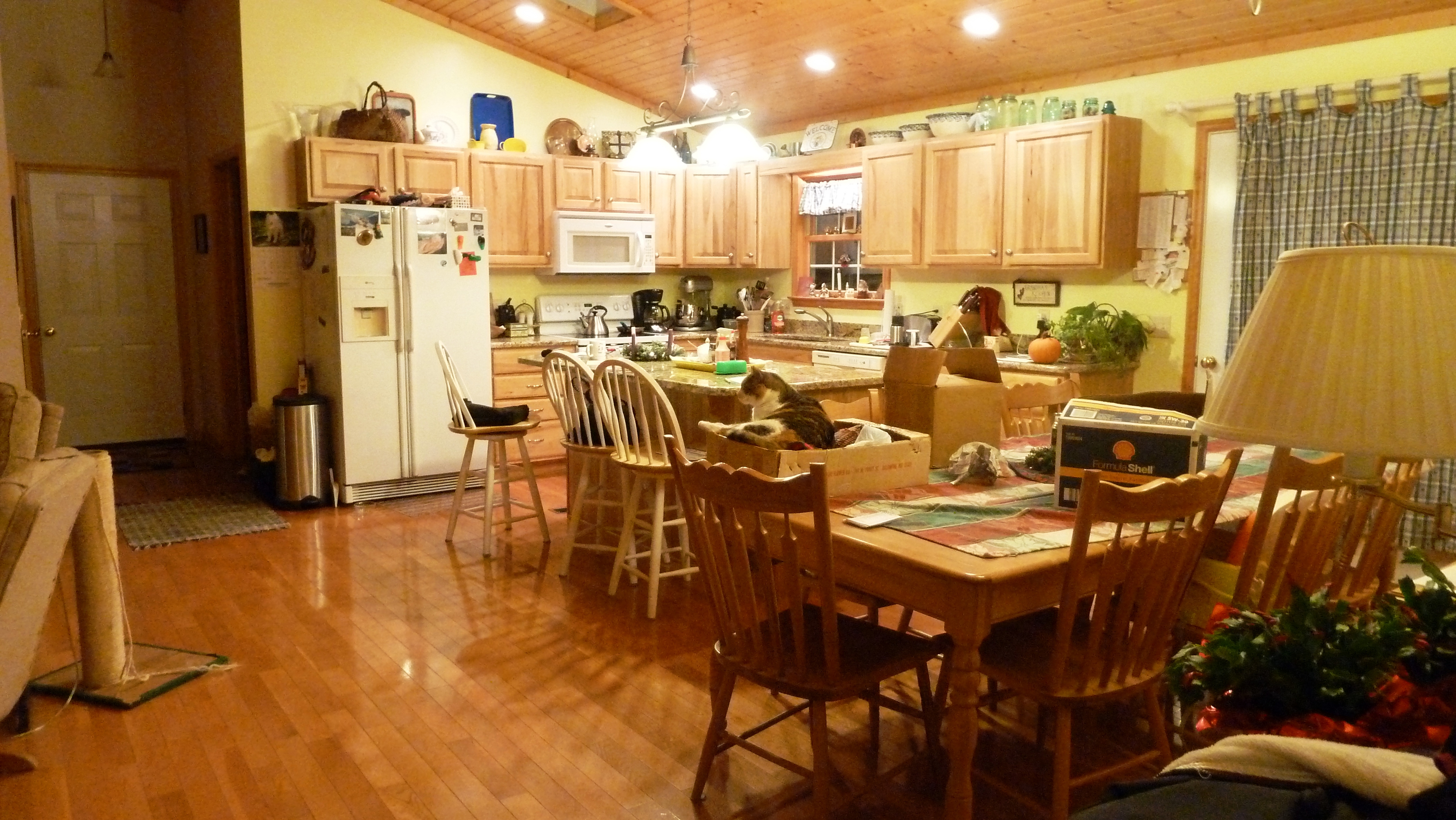 Other issues that may arise include whoever is in charge of cooking, often ends up feeling they have spent most of their time in the kitchen over holidays. I’m grateful for our large “great room” where the kitchen includes our dining and living room space as well. So at least the kitchen isn’t closed off. I’m grateful to our daughters who after a big meal, kick me out of the sink and say “Mom, we’ll clean up.” That did not exactly happen when they were ten.
Depending on how many bathrooms you have in your home, sharing bathroom space often requires extra grace. There we don’t want to leave behind reminders from our visit—or our personal shampoo!
What do we want to leave behind?
- Memories of stories told and laughter shared
- Good impressions and examples of manners, grace, and love
- If sharp words have erupted, leave behind apologies and hugs
- Leftovers so the chief cook won’t have to cook for the next two days
- Rooms even neater than when we arrived
- Beds stripped and blankets neatly folded at the edge of the bed
- Small messy fingerprints left on windows are fine.
Finally, always go back for one more peek under beds, behind shower curtains, and in refrigerators for items you might have overlooked. And—one last hug or peck on the cheek. In our family, one outstanding memory is the time our oldest daughter had not had a chance to hug her 88-year-old grandfather goodbye when we left, because he was still in bed. A mile or two down the road, she said as much: she hadn’t had a chance to say goodbye to Dad. We did go back—and she was very grateful, especially when Dad died eight months later.
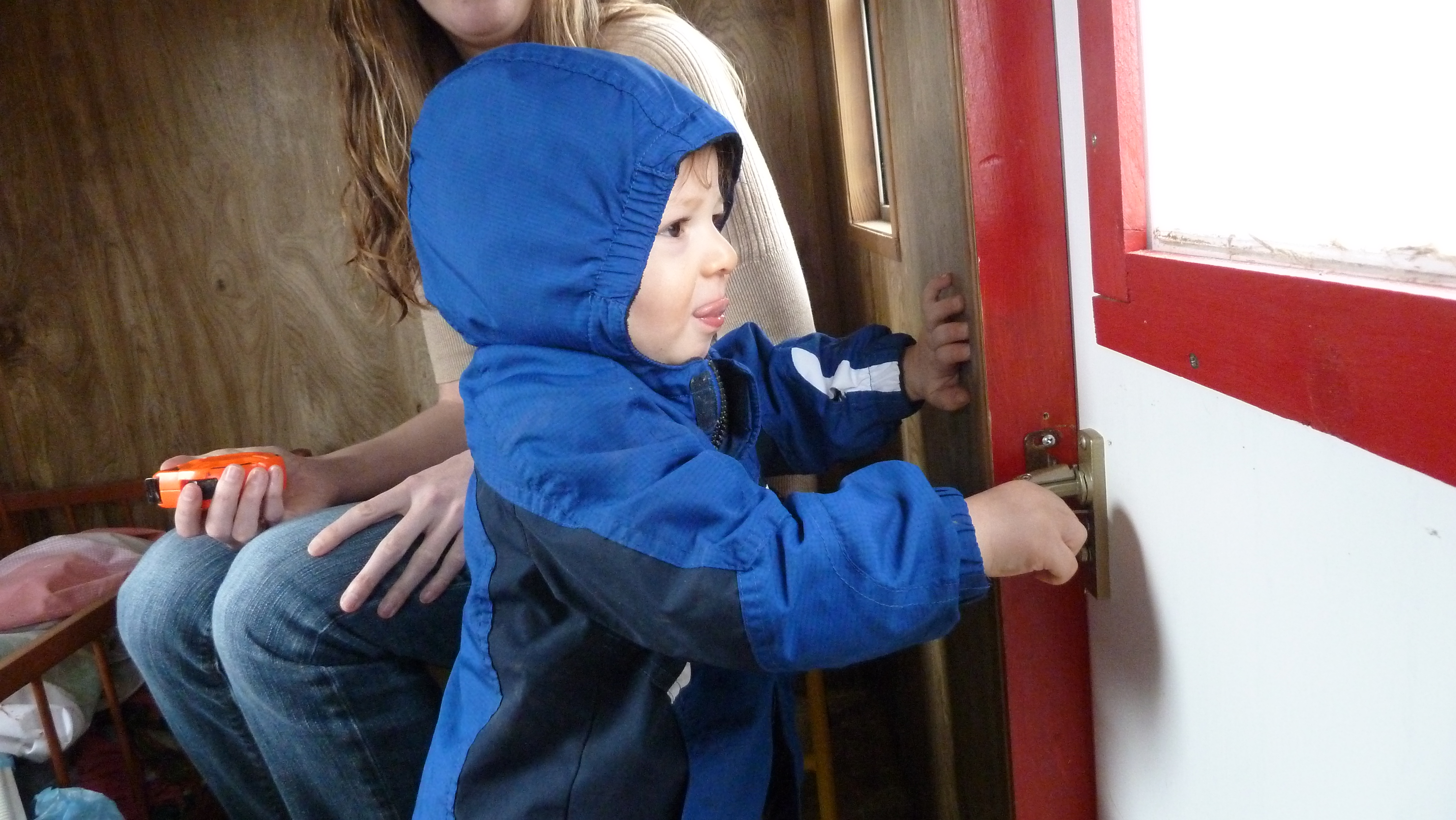 I wish you and yours happy and blessed comings and goings in this New Year.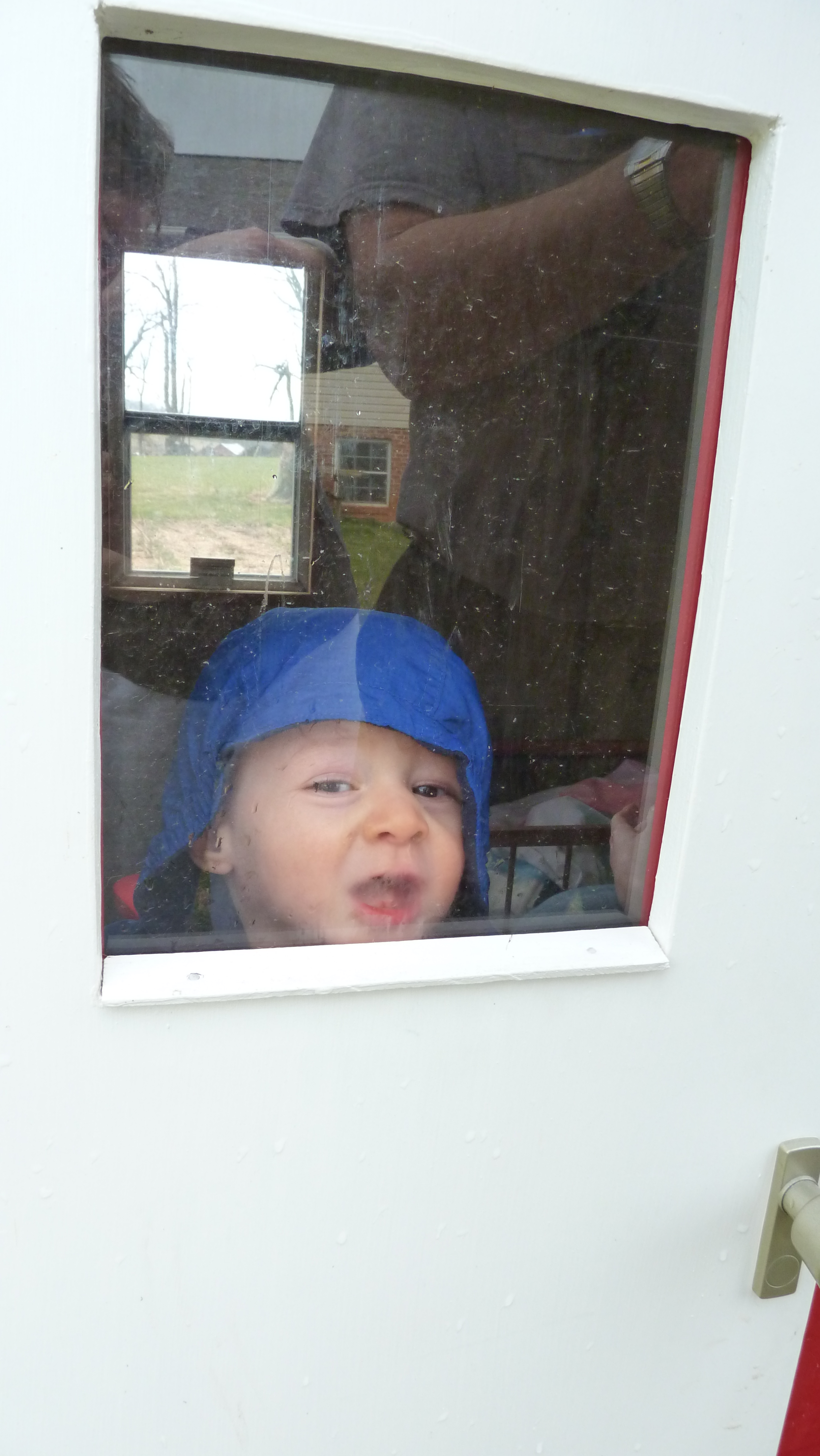
***
What was the most important/crucial thing you’ve left behind on your travels?
***
Any tales of memories you’re glad you made? We’d love to hear your stories, whether sad or glad.
***
There is still time to request your small 2018 lighthouse-themed monthly planning calendar, suitable for purse or pocket. Email me at anotherwaymedia@yahoo.com or request by mail from Another Way Media, Box 363, Singers Glen, VA 22850.
Another Way is a column © by Melodie Davis, in syndication since 1987. Columns are posted at http://www.FindingHarmonyBlog.com a week after newspaper publication.
Because of my three-part blog entry about Katharine Graham, I’m reposting my daughter’s review of The Post from over at Third Way website. Sign up for weekly media reviews from five excellent writers who tackle new topics each week!
The Post
How the press, and the Pentagon Papers changed history
By Michelle Davis Sinclair
Streep. Hanks. Spielberg. With Oscar-bait like that, The Post could have rested on its headlining laurels and cranked out a movie that would have made money and won recognition regardless.
Fortunately for history, the film is every bit as good as advertised. The classic book and movie All the President’s Men immortalized the most infamous event of the Nixon years, but the lesser known scandal that preceded it and positioned The Washington Post as a newspaper powerful enough to take on the president has faded from common knowledge. This is the story of the Pentagon Papers–both an indictment of five presidents lying to the public about the Vietnam War, and an exploration of the importance of a free press in sustaining democracy.
It’s 1971, and Katharine Graham (Meryl Streep) is about to take The Washington Post from being a local, family-owned newspaper to a publicly-traded company. She’s understandably nervous–she inherited the company from her late husband, who inherited it from her father–and wants nothing to jeopardize the company she has loved her entire life. Meanwhile, the New York Times has obtained a top secret government study of the Vietnam War that taints the legacy of every administration since Truman. When the Times begins to publish the papers, Post editor Ben Bradlee (Tom Hanks) practically froths at the mouth over getting his hands on some of these documents.
The movie doesn’t shy away from illustrating the tectonic shift in gender roles taking place in this era. In fact, Tom Hanks said the film could have been called “Katharine” and been just as fitting. In the movie, Kay Graham starts out as very much a woman of her time, deferring to the men in the room, the male advisors and businessmen who have so much more experience in this world than she does. But the indignity of it all–men talking at, talking over, and talking for her–has a transformative effect. Streep does a masterful job of taking Kay on this journey. Watching this woman come into her own as the pressure inches higher and the voices around her grow louder is nothing short of thrilling.

The entrance to the old and historic Washington Post building, with my daughter, Michelle, pointing out memorabilia to my then-83-year-old mother touring at Christmastime, 2007. Daughters Tanya and Doreen at far left.
It wasn’t possible to film The Post at the old Washington Post building because it was torn down at the beginning of 2016 (I am a thirteen-year Post employee myself–my review is my personal opinion and does not represent the views of The Washington Post), but the filmmakers did a superb job of recreating the essence of the place. Several times, my heart skipped a beat at the pans of the building exterior before my eyes clocked the differences. And just like they distilled the hallmarks of the old building well enough to recreate the place, Meryl Streep and Tom Hanks strike the right notes in recreating two larger-than-life figures in newspaper history. I didn’t know Katharine Graham, but I interacted with the late Ben Bradlee enough times to recognize the mannerisms in Hanks’ performance. Does Hanks look like Bradlee? Not really, and Meryl Streep resembles Mrs. Graham not at all, but between the excellent costuming, hair, and of course world-class acting, they embody the stellar working chemistry between Mrs. Graham and her “pirate” of an editor.
Spielberg sets a blistering pace, refusing to let his story wallow through a few days of American history. Even at that pace, the movie uses careful brushstrokes to paint the characters while also raising existential questions that resonate today: What exactly is the role of the press? How can the press, which depends on reporters gathering information and standing witness to events, do their jobs while also risking alienating the very people who give them access? And at what point does keeping information top secret stop serving the needs of the country, and start protecting the interests of the powerful?
Streep’s Katharine Graham uses an old quote of her husband’s (a quip that remains popular among us Post employees), referring to the newspaper as the “first rough draft of history.” Movies exist to entertain, and this one is more interested in telling Kay’s story than getting every bit of history onscreen (the New York Times people have some legitimate gripes about being presented as supporting players in this story). Overall, though The Post is an excellent polish of that first draft, ready for presenting to a new generation.
The Post is rated PG-13 for language and brief war violence. The film is on limited release until its national release January 12.
Reposted from Third Way Media Matters pages.
 Another Way for week of December 23, 2017
The Compassionate Jesus
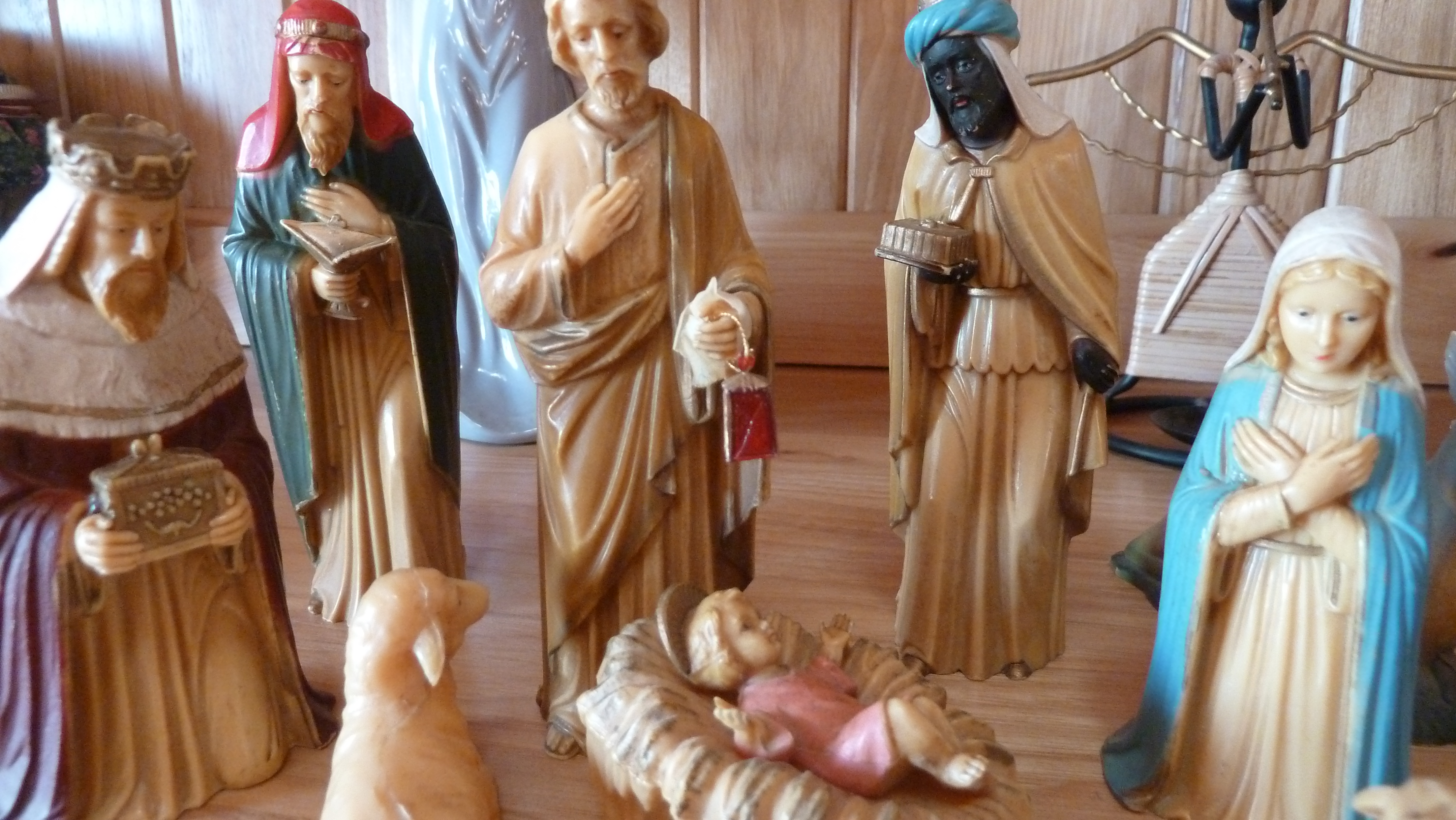
At Christmas we recall the birth of baby Jesus many many years ago. Too often we forget—and certainly pop culture forgets or doesn’t know the beauty of the man who baby Jesus grew up to be. We focus on the surroundings of his birth: the dramatic story of his family’s last minute trip to Bethlehem for a census, not finding any decent overnight lodging, being forced to settle for shelter in a cave or stable for animals, snuggling a newborn in a manger, and angels announcing the birth to common shepherds.
Jesus of course grew up to be a loving and caring man who went about doing good, the Bible tells us in Acts 10:38. He spoke to crowds, fed them, healed the sick and reached out to outcasts. He had no use for religious hypocrisy and confronted leaders with no words minced. He took children on his knee and blessed them, took time to engage women in theological conversation (unheard of in those days) and didn’t worry about the religious rituals with stringent cleansing requirements for followers at that time. He ate with “sinners” and was criticized and questioned for it (Matthew 15).
Several months ago a seminary intern in our congregation, Rebekah, led a devotional for a meeting I participated in. That I still remember it three months later is an indicator of its impact, which is no mean feat. A devotional may move us at the time, and then we can’t recall it later. Indeed I don’t remember the specific Bible passage she used but it had stories like in the first chapter of the Gospel of Mark, such as Jesus’s compassion for a man afflicted with an evil spirit (probably a mental illness), touching a man with leprosy in order to cure him (also unheard of). Jesus was soon confronted by some teachers of the law ready to condemn him for ignoring religious laws. Rebekah had us write some descriptions on a folded up piece of paper, reflecting on the nature of the man Jesus as he went about his three years of ministry.

Then Rebekah had us take our folded paper (like a brochure) and write on the cover one word which described the ministry of Jesus—what he was like as a person. I chose the word compassion and wrote that on my cover.
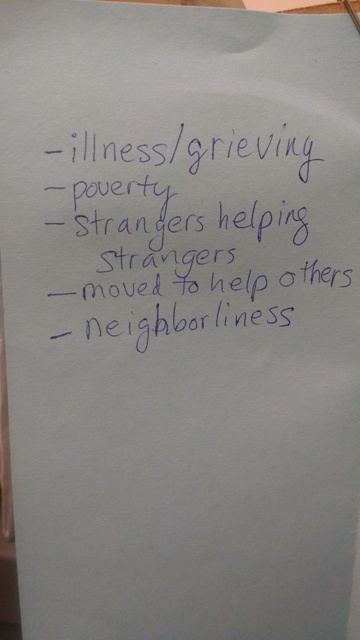
On the inside flap, she had us write a few words describing the characteristics we read or knew about Jesus that related to the word we’d written on the front. I wrote down:
–moved by the illness or grief of others
–helped those who suffered in poverty
–emphasized strangers helping strangers (as in the story of the Good Samaritan)
–neighborliness
–motivated to generally help others
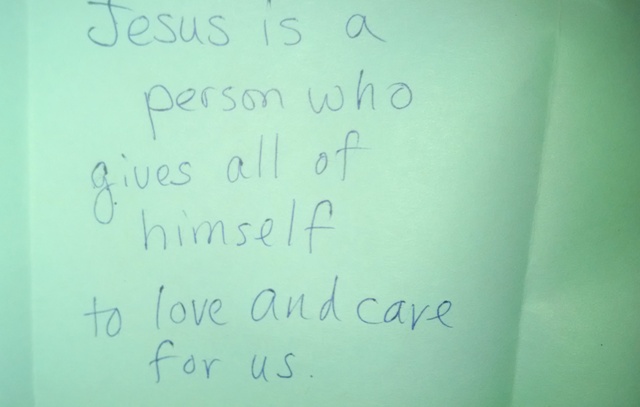
On the next panel she had us write a descriptive statement capsulizing Jesus in the Bible passage we’d read. I wrote: “Jesus is a person who gives all of himself to love and care for us.”
Have you met that kind of Jesus in the Bible and through the teachings and stories you’ve heard over the years?
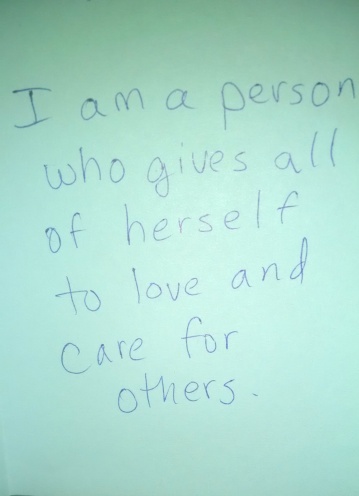
Finally, Rebekah asked us to write on the last panel that same line we’d written about Jesus, but substituting the pronoun “I” in place of the name of Jesus in that sentence. So my sentence read: “I am a person who gives all of herself to love and care for others.”
I am still moved and challenged by the words of that sentence—which I in no way truly live up to, I will hasten to say. I’m almost embarrassed to share this statement here on the blog. Those who know me know it is not totally true. I am also self-centered and miserly at times. But the point of the exercise was to remind us how beloved we are in Christ, and that we are to aspire to be like the Jesus who walked on this earth over 2000 years ago. We are to be “little Christs” which is what the word Christian means.
Readers, I kept that little “brochure” we’d created as a reminder of this profound challenge: to live each day in the way Jesus demonstrated and taught—loving and caring for others.
That’s my Christmas story for this year, and I’m sticking to it! A blessed Christmas to one and all.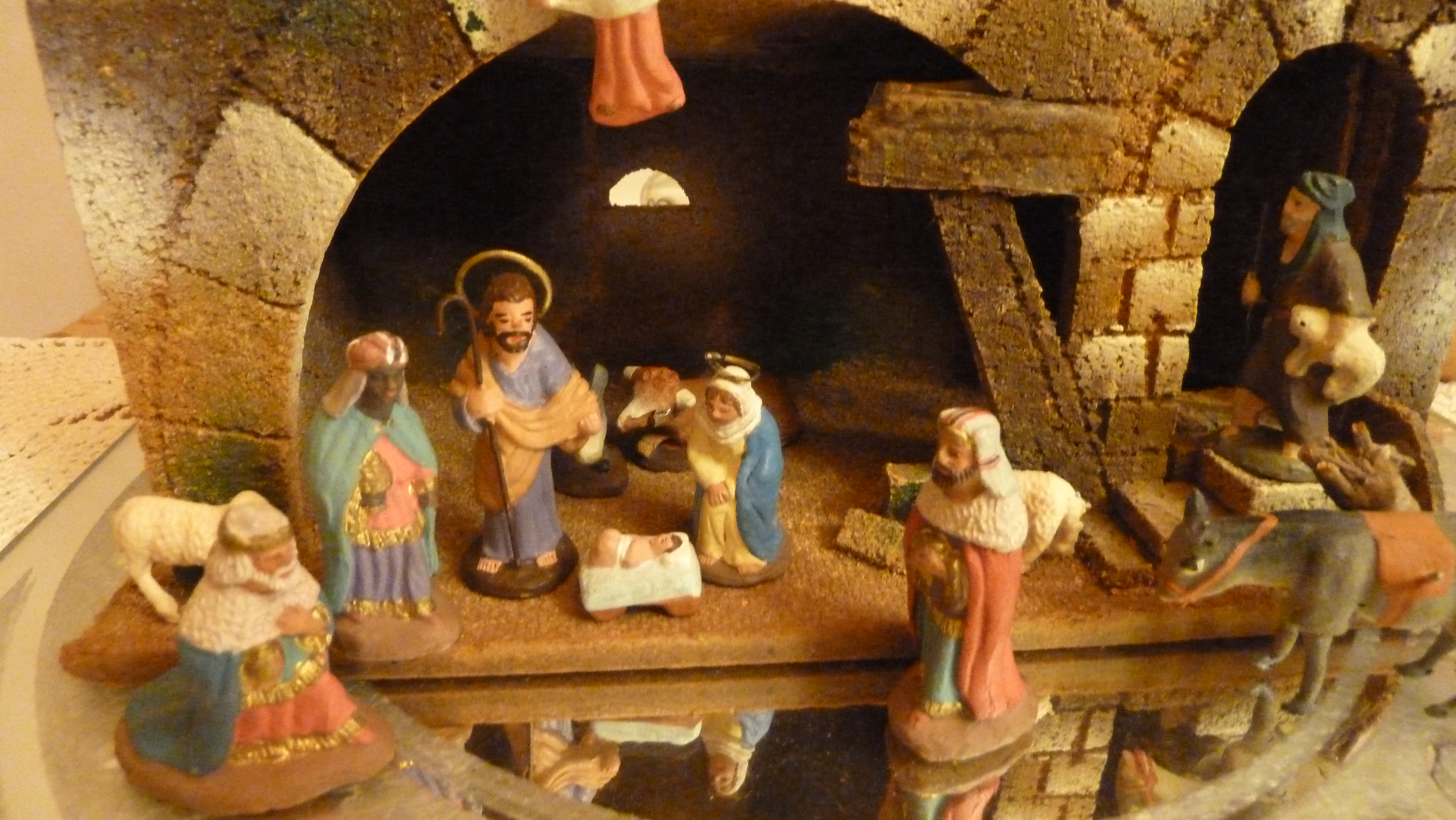
***
I’d love to hear about any special moment this Christmas when the story of Christ’s birth came to life for you.
Or a memorable devotional time you’ve had in a group, or personally.
***
Rebekah Nolt, a seminary student at Eastern Mennonite Seminary, generously gave me permission to share this beautiful devotional here.
My Christmas gift to all readers this year is a small 2018 lighthouse-themed monthly planning calendar, suitable for purse or pocket. Request it by mail from Another Way Media, Box 363, Singers Glen, VA 22850 or email me at anotherwaymedia@yahoo.com.
Another Way is a column © by Melodie Davis, in syndication since 1987. Columns are posted at http://www.FindingHarmonyBlog.com a week after newspaper publication.
Another Way for week of December 8, 2017
When Old Wounds Afflict Us Again
I watched a boy maybe 9 or 10 get off his bus on a street in the city. He dashed down a hill in jubilation for it being a Friday afternoon.
I understood his joy in getting out of school for the week, but oh I sucked in my breath that he not fall head first as he scrambled pell-mell down the street. It reminded me of the day I ran to my bus as a first or second grader and in my haste, stumbled and broke a tooth on the steps of the bus. That haste still can be seen in my not-perfect smile. A small but lasting injury.
When we’re young, our bodies heal well; we think a broken arm or ankle or torn ACL will keep us out of school or resting a few days, and will normally heal in a few weeks. And that’s the end of it, right? Athletes especially are tempted back to the court or field too soon.
As someone who’s turned another year older this week, I hate to break this news: old injuries have a way of coming back and haunting us in our 50s, 60s and 70s.
A fall, sports injury or car accident that happened to us in our teens or twenties often crops back up in arthritis, stiffness and pain in later years. Both my husband and I had injuries and accidents that are now showing repercussions as we have edged over 60. I think the osteoporosis in my spine and the mild pain I experience now stems from a fall from scaffolding I had in my early 40s. I know I was extremely fortunate to not have any actual breaks from that fall. But now as I try to move or roll over in bed, I can feel those parts complaining and speaking to me. That’s life.
When we are young we think we are invincible and indeed the body God planned and gave us is amazing in its ability to heal. I wrote about that not long ago in terms of a skinned finger I had in late summer. Now as I look at my finger tip on that hand, I cannot see any trace of a scar.
But I’m also thinking here of the emotional wounds and scars we often carry which may flare up in unexpected ways.
Family relationships are often a source of deepest pain. Divorce, abuse, drugs, alcohol: all these cause severed relationships. Or it could just be something mean a brother or sister said or did when we were ten or in our teens, gnawing at our soul and spirit. Outright abuse, whether verbal or physical, is of course the worst kind of wound and takes years of counseling and emotional work to cope and heal.
Holidays bring families together—and along with great memories and stories—sometimes offhand comments or attitudes still have the ability to get under our skin. When these things keep relatives apart, I find that immeasurably sad. That’s also life, but there are ways to work toward healing, even many years later.
When an accident or serious illness happens, people usually surround the person or family with extra attention and care: cards, emails, visits, meals brought in. Those around the injured or ill person pull together to help the person who is healing. The acts of kindness help to cover the rawness of our wounds. This can be similar to new skin stretching to cover over the raw flesh of a cut or wound. But doctors warn we can become emotionally maimed if others are allowed to take over things we need to do for ourselves in this process.
Time can help heal emotional wounds as well, and we need to open ourselves to that possibility in order for it to take place. The wound can be deep and the grieving process may last over many years. But arduous and perhaps extended group or individual therapy can bring insight, healing, and even forgiveness. So I’m encouraged by those I know who have gone through horrible abuse and have gone on to become beautiful people. They often have the kind of skills and compassion which helps others.
I admire those who dig deep within themselves to keep going—after major surgery on a limb or back, through therapy (physical or emotional), trudging through pain. We all know strong examples of people who keep plugging away well into their 90s. Old wounds—emotional or physical—don’t always cripple or keep us from becoming the fun loving and caring creatures God planned for us to be.
***
In our local area, the Family Life Resource Center is a great resource for help dealing with these kinds of issues and more.
***
My Christmas column will appear December 26, 2017. Until then, I hope you have a beautiful and meaningful Christmas.
***
My Christmas gift to readers is a small 2018 lighthouse-themed monthly planning calendar, suitable for purse or pocket. Request it by mail from Another Way Media, Box 363, Singers Glen, VA 22850 or email me at anotherwaymedia@yahoo.com.
Another Way is a column © by Melodie Davis, in syndication since 1987. Columns are posted at http://www.FindingHarmonyBlog.com a week after newspaper publication.
Another Way for week of December 1, 2017
City Girl, Country Girl
I hear the roar of a bus, a fire engine, feel the crisp autumn air. I walk past a coffee shop, a pizza shop, a newly opened Middle Eastern café; I go by a bike shop, walk past my two banks. I learn I need to watch for pigeon poop on the walk between the rows of cars in the parking deck, which button to push to make the light change, discover that I’ll need to allow at least 5-10 extra minutes to walk from my car to my new office.
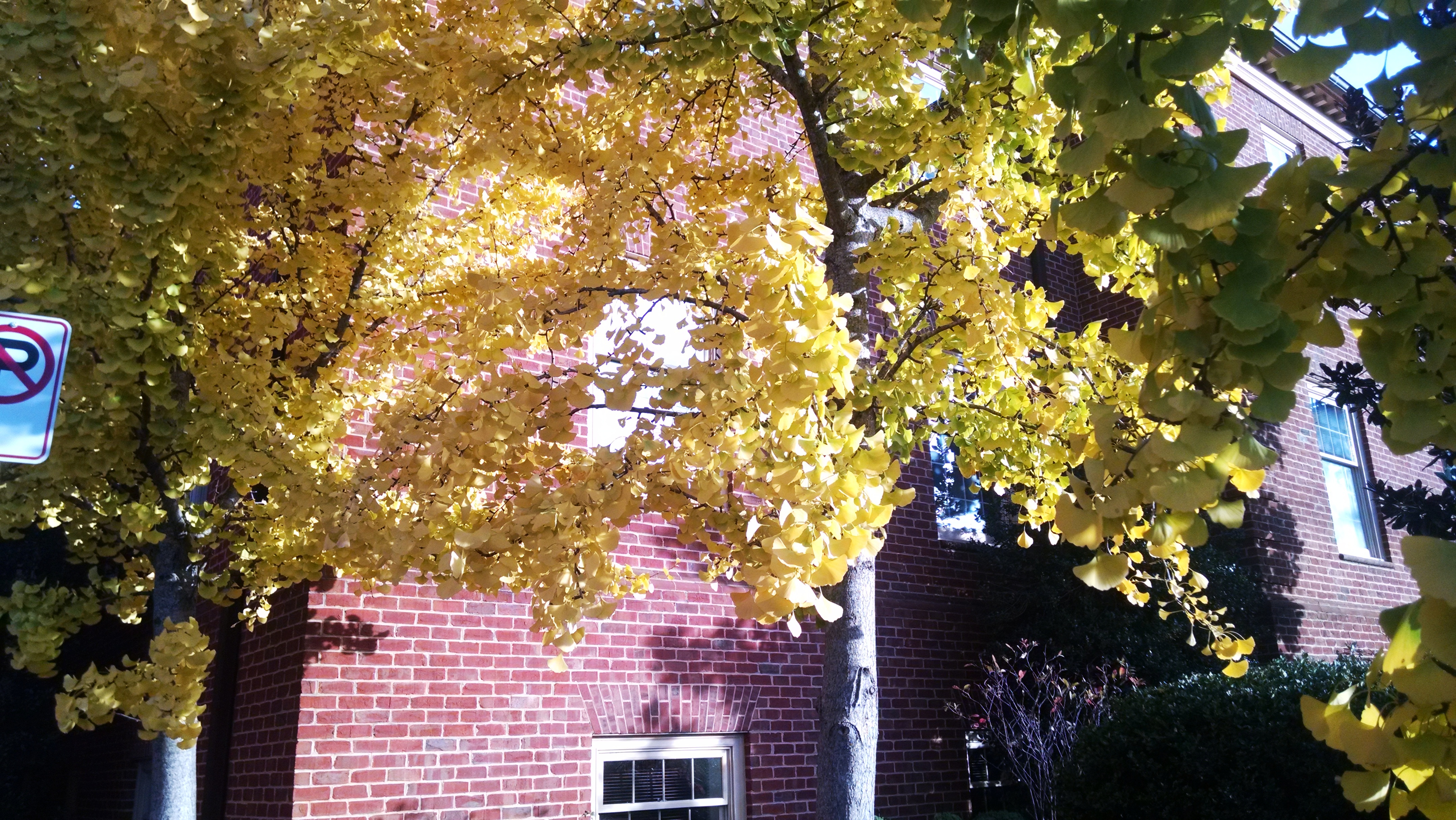
Ginko trees beside my new downtown office. We went from fall to winter when the ginkos lost all their leaves in one windy day.
In mid-November my office sold the building I have worked in since 1975. I have spent more years in that space that any home I’ve lived in, including the house my family called home for 30 years. I was just 23 when I started working there. A lifetime ago. So it was a transition not without its moments of melancholy and nostalgia, but as I’ve told many, it was easier walking out of that long occupied space with 11 others, rather than by myself.
Now walking the downtown streets, I feel like I am back in the city of Barcelona, Spain, where I lived as a student for nearly a year. That year I discovered I really enjoyed city life in spite of having grown up on a farm, which I also adored.
At lunch I run an errand, and decide to try out a different (free) parking deck for the afternoon when I return to downtown, and then realize I have walked an extra block out of the way back to my new office. I don’t feel as safe on that particular street—not as many shops, it is mostly the back end of buildings, someone could easily corner me, pull my purse off, knock me down. I wonder about the man with the big coat slowly walking the street. He looks cold.
Leaving work when the clock is nearing 4:30, I whiff the delicious scent of fresh dough rising from the pizza shop, sniff sizzling burgers from the nearby fast food, walk past a ballet dance studio where children and parents are waiting in a lobby, a free clinic, inviting restaurants with fancy schmancy names, a bakery that also sells gelato and offers samples. Now I feel back in Italy!
When I get back to my afternoon parking deck, I discover this one—which is actually closer to everything—has fewer 10 hour parking spaces. It is now full.
Twenty years ago, our downtown was dead, killed by the local mall which had been built and welcomed so eagerly back in the late 70s. Now a revitalized and lively downtown attracts the young: students, young adults, young couples, a few with babies. The mall area is far less lively. Not dead as in some areas, but harder to walk to places. I am SO glad our office did not move to that pricey area which is all streets and few sidewalks, and not very walker-friendly.
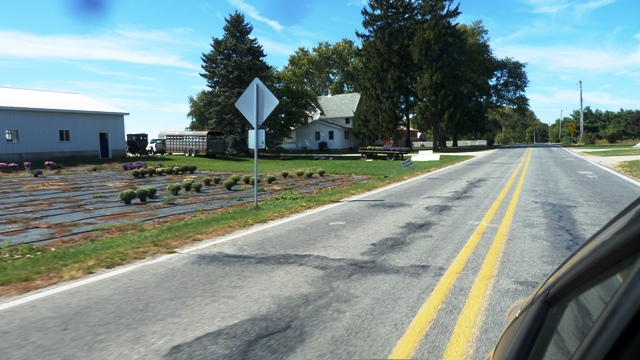
The farm I lived on the first 17 years of my life near Middlebury, Ind.
As a farm child, I wished I could live in town like my friends who were able to walk home for lunch. Does anyone still do that these days? Or maybe I’m just imagining they walked home at lunch. At any rate, I envied them walking to and from school. When I was in 5th or 6th grade, I screwed up the courage and stamina to at least ride my bike to school, which was about four miles away. I felt almost like a town kid. Whee.
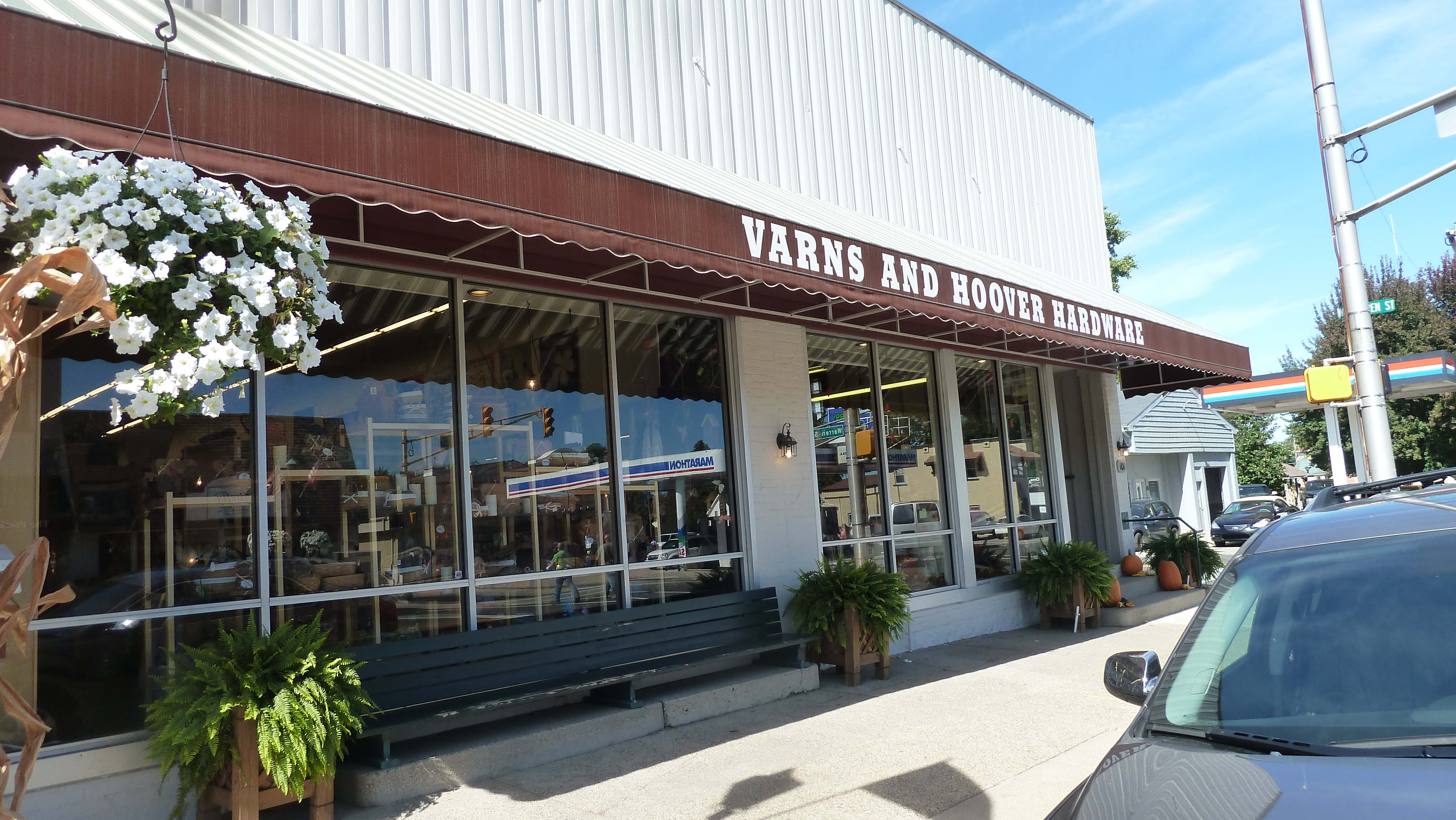
Downtown Middlebury, Ind. This Varns and Hoover hardware was there in the 50s when I went to school in Middlebury.
Now at the end of my work day, I am happy to drive out to the country for the restful atmosphere, the hills, and the bright bright stars at night.
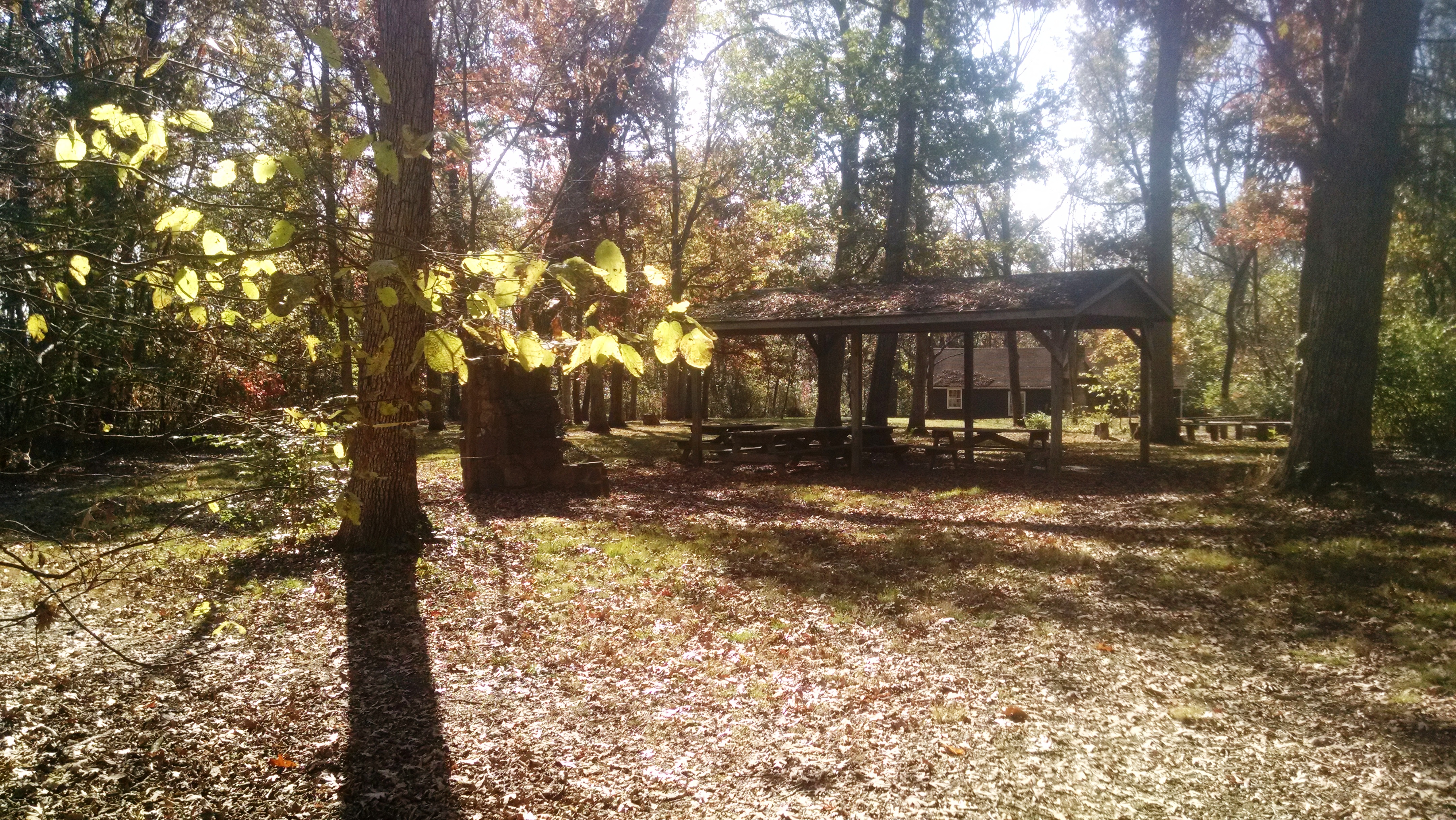
I will miss this woods close to my former office where I enjoyed noon time walks for many years.
The going-home traffic is intense in places, in this formerly small town now a city edging 53,000 in population, (80,000 when the college students are in town) but it has nothing like the crazy traffic where my daughters live. Once one of my daughters observed that her normally shy and quiet college roommate became an aggressive type driver when she was back home in her metropolis. You have to, she said, to get anywhere.

The sixteen file drawers I got rid of. Purged most of it, sent some files to Mennonite Church USA archives.
I’m happy to make this adjustment to new space—greatly downsized where I had to reduce my “file imprint” from 16 drawers to two—knowing that just as I’ve gotten through the last several months of downsizing and change, I trust that my husband and I can manage more change as we get older.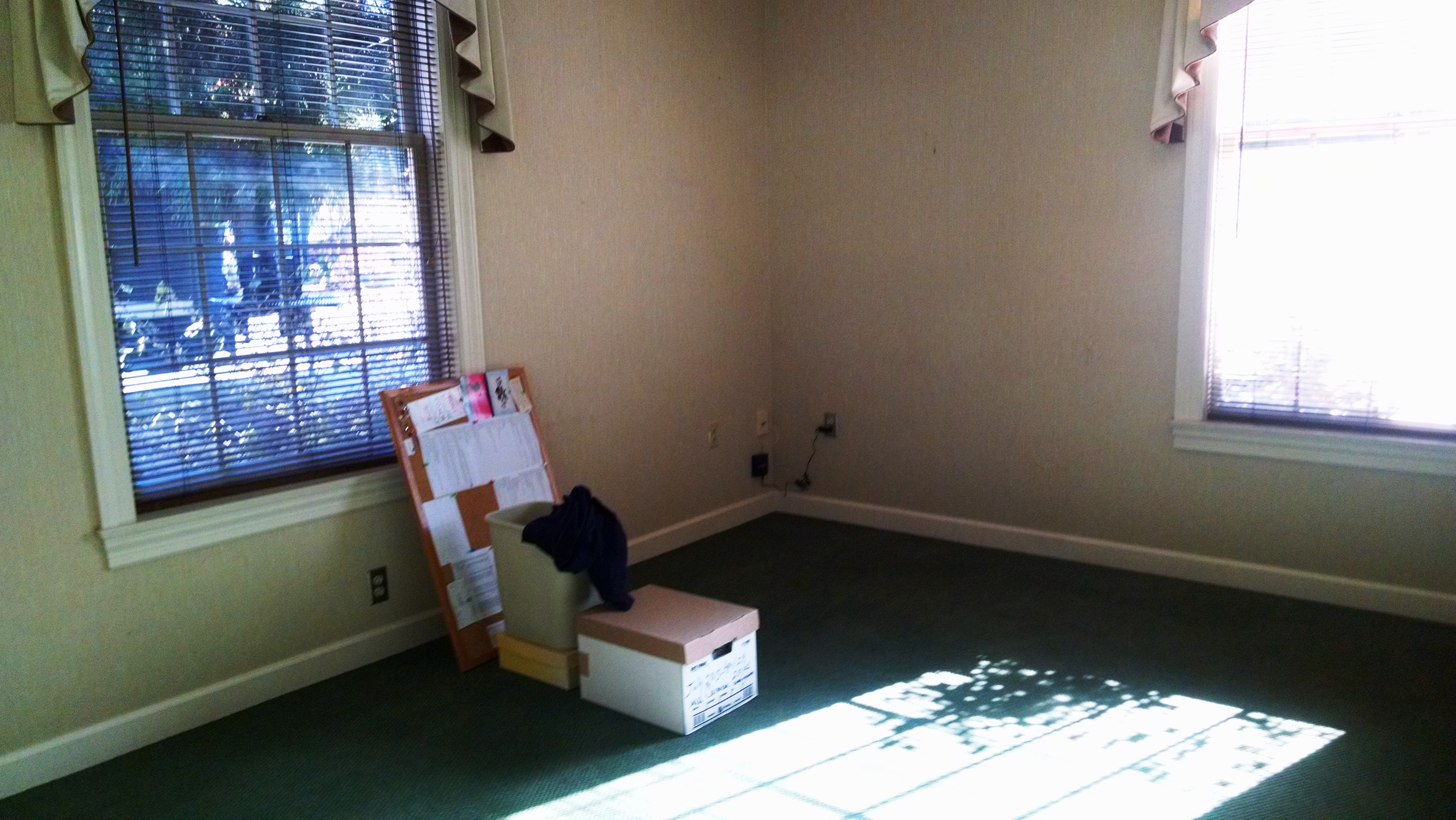
My thank you gift to all readers this year is a small 2018 lighthouse-themed monthly planning calendar, suitable for purse or pocket. Request it by mail from Another Way Media, Box 363, Singers Glen, VA 22850 or email me at anotherwaymedia@yahoo.com.

Me settled into my new space (on a Saturday).
***
Do you favor city or country living? Small town or suburb?
Mountains, plains, farmland, or oceans?
If you could live anywhere in the world for a year, what place/country would you like to try?
Comment here or by email!
Another Way is a column © by Melodie Davis, in syndication since 1987. Columns are posted at http://www.FindingHarmonyBlog.com a week after newspaper publication.

Another Way for week of November 24, 2017
Enchanted: Story Circles Across Generations
After spending time with my grandsons in two different storytime circles, I am pretty amazed. Not by my grandsons (hey, all grandmas think their grandkids are amazing, right?), but by the storytellers!
Circle 1: Northern Virginia
Talk about energy. I wasn’t sure who was more keyed up: the two and three-year-olds who circled me, or the young librarian in charge of story hour at a library near my oldest daughter’s house.
I had my then-two-year-old grandson James with me, and it was the first time for both of us (well, the first time in 30 some years for me, since the time his own mother was a preschooler). I felt new along with James.

James enjoying This is a Moose read by his grandpa.
First the storyteller: short with jet-black dyed hair with edges of red, a small tattoo running up her arm, and wearing old style sailor blue jeans (wide legged). She looked in her 20s and practically bounced as she valiantly charmed about 18 little minions mostly with her voice, hand motions, and electric smile.
Each child came with a parent or caretaker, although we were a kaleidoscope of Asian, Arabic, Indian, Latina, and plain old beige like me.
My grandson was mesmerized too, so much so that I had to nudge him to go up to participate in the group type activities. He preferred just watching the others from my lap.

Owen mesmerized by a storyteller at a Thomas the Tank Engine Day.
Circle 2: Spencer, North Carolina
More recently I was able to watch the faces of another daughter’s two boys at a Thomas the Tank Engine excursion and surrounding activities at the North Carolina Transportation Museum in Spencer.
We had enjoyed the main “event,” a brief train ride with hundreds of other eager and excited mostly preschoolers, parents and grandparents. We browsed the gift shops and each boy picked out what they wanted in the way of new Thomas paraphernalia. We posed with trains for photos, played with wooden tracks and train cars and engines at various train tables. There were kiddie-car-sized trains to ride on going in small circles which Sam, the oldest grandson, could operate by pushing a button. There were huge model railroad train layouts to admire and point out the tiny figurines and flag men waving and signaling, lights flashing, and engines chugging away. And more!
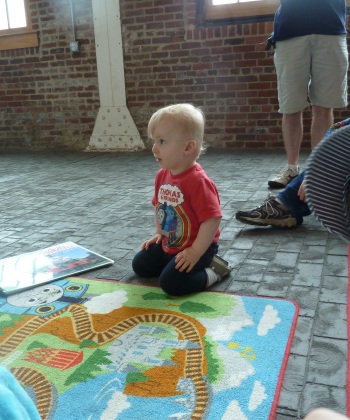
Then I spied a large rug with a handful of children and parents or grandparents sitting cross-legged on the floor in a far corner of the warehouse, which also functioned as an antique train restoration facility. Another energetic woman, this time maybe in her late 40s or early 50s, was reading huge Thomas the Tank Engine books to the small gathered fans. Ah, a chance to sit down, rest, and regroup from the super stimulation of taking in so much fun.
She mostly told rather than read from the poster-sized storybooks, pausing to answer questions from the tykes if they just couldn’t wait until the end, and drew my two grandsons in like she was the original pied piper. Ms. Piper’s smile, eyes and enthusiasm were captivating and I was especially fascinated by how my 14-month-old grandson drank her in like she was his fairy godmother. His eyes barely left her as we sat there through three tales from Thomas land. It wasn’t great literature (many hero-themed books fail in that department) but it was a book, not animation, not a video, not a movie, not a play. We talked to her after the reading—and indeed she is a teacher in “real life” too. How lucky her students!
Both of these women reminded me how great is the power of a face and voice, spurred on by deep love for children, plus commitment to engage a kid’s powerful imagination and brain. The readers were educators, actors, and drama queens who adored children—in the very best sense of being drama queens!
I love the way my grandchildren are helping me see life through new eyes—and indeed it was that way with when I had my own children—and even a “little sister” (and little brother for my husband) in the Big Brother/Big Sister program before we had children. I so remember going to the mall and the toy store and county fair with her and enjoying everything through younger eyes. And I know my husband felt the same way as he enjoyed childhood activities with his “little.”
How thankful I am in this season to have been blessed with both children and grands—something none of us should ever take for granted. And to relearn the wonderful gifts children are endowed with by their Creator.
But back to the magic of stories and books: don’t overlook these old standby Christmas gifts in your shopping!

***
What are some of your favorite books for small children? Here are two we discovered this year:
Moonshot: The Flight of Apollo 11
My thank you gift to all readers this year is a small 2018 lighthouse-themed monthly planning calendar, suitable for purse or pocket. Request it at anotherwaymedia @ yahoo.com.
***
Another Way is a column © by Melodie Davis, in syndication since 1987. Columns are posted at http://www.FindingHarmonyBlog.com a week after newspaper publication.
Another Way for week of November 10, 2017
Yearning for a Better Life
Several weeks I wrote about how South Africa became one of the countries about which my ears perk up. All three of my daughters (but not us as parents) have been there—they each spent three weeks on church “mission” trips. I use air quotes because they were the ones ministered too, as is the case with most mission trips, but the experience helped form them and their outlook while they were teens.
We owe that to a South African pastor Maake Masango and our own pastor at the time, Ann Reed Held, who although she gulped at the audacity of what the youth had inspired the rest of our church to take on, she was also down deep, moved and amazed. This in turn nudged me—years later—to begin reading more books about South Africa, including the autobiography Kaffir Boy: The True Story of a Black Youth’s Coming of Age in Apartheid South Africa by Mark Mathabane.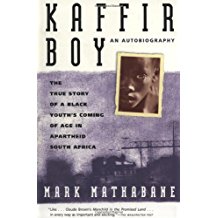
Mark does a superb job in the opening of his autobiography describing his life from the perspective of a five year old boy, keeping his words and language mostly simple and straightforward. We feel the terror with him when the Peri-Urban or (black Alexandra Police Squad) conduct their frequent raids into homes of sleeping citizens to examine whether residents have their passes or other paperwork in order. They seek to exert their control, can be bought off with bribes, and make life in a rat infested, crawling-with-lice shack which often reeks of urine or worse, that much more miserable.
The “pass laws” which required them to carry at all times their “papers” were what controlled all of life for the blacks and “colored” in South Africa. Little Johannes was born shortly before an incident known as the Sharpeville massacre, when 69 unarmed protestors were killed by the South African police during a peaceful demonstration against the pass laws.
Many days little Johannes (he changed his name to Mark later in life) has nothing to eat all day other than a little pap (porridge) for breakfast. The child copes with hunger and lightheadedness as he helps his mother clean their hovel, watch over his younger siblings, and run around with friends who seem destined for an early street life. That any child survived that kind of existence is made more horrifying by the realization that children today also must struggle with malnutrition, rats, and the endless paperwork of refugees holding out for a better life somewhere, anywhere. This awfulness has not gone away with the end of apartheid or war in so many places around the globe.

Johannes’ mother, Magdalene, desperately wants her son to go to school, even though they barely have enough money for food, let alone school fees. Much paperwork needs to be completed. The task is complicated by Magdalene being from one tribe, Tsonga, and the father another, Venda. She finally wins the paperwork battle (after trying over a year in endless lines) to get Johannes registered. She then has the equally trying test of convincing young Johannes he needs to go to school, rather than become a gang or street kid.
His father scorns education and drinks most of his earnings, but at one point takes Johannes to the tribal reserve for a visit. The boy is terrified he will be left there. As Johannes grows into his adolescent and teen years, their relationship is extremely tense so they mostly don’t talk or interact, to keep the peace. Not unlike other fathers and sons around the world.
Johannes’s father believed in tribal witch doctors and their powers. His mother also believes in some folk ways and tells stories from those traditions, but there are quack Christian evangelists who come to the “yard” (neighborhood) by whom Johannes is completely turned off from an early age. Eventually, his mother begins going to a Christian church that seems to have solid teachings and joins that group. She prays faithfully, adding some prayers to ancestors for good measure.
Johannes turns out to be an excellent student, and even though children at his school are commonly beaten for not paying fees or having a clean uniform, he studies hard, learns English, Afrikaans, and other tribal languages. Although he fears and hates whites because of his early experiences with the brutality of apartheid, through his granny he meets whites (her employers) and his world begins to open. He learns that not all whites are evil and they give him precious books—and comic books—which he loves. They also give him what becomes his eventual ticket out of South Africa—a tennis racket.

The book is spellbinding at turns and horrifically graphic at others. While I have not yet read Mathabane’s other books, including one about his mother Magdalene’s own life and her eventual move to the U.S., the truths that she manages to impart to him even in the squalor and hopelessness of a Soweto ghetto are soul-stirring. Mark and Magdalene somehow give me hope that we in the U.S. can strive to overcome the racism that has so long infected our shores and our being.
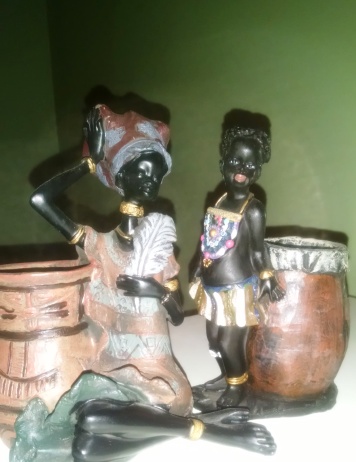
In 2008, Elizabeth Makoto Moleko and Mary Motau from Tembisa, South Africa, came on a group mission trip to our church; we were happy to have them stay in our home. As is the custom, they gave us these beautiful handcarved gifts from their country.
***
Comments or questions? Your own insights of life there from reading, your experience, or from friends? I’d love to hear from you. Comment here or email me at anotherwaymedia@yahoo.com.
Another Way is a column by Melodie Davis, in syndication since 1987. Another Way columns are posted at FindingHarmonyBlog.com a week after newspaper publication.
Exhale: Towards Better Understanding
Another Way for week of November 17, 2017
I exhale a bit at my desk and a rumpled tissue and paper two feet away wiggle with the puff of breath from my slightly opened mouth. It somewhat startles me, but reminds me that in this world, what we do, say, hear, and believe affects others around us even when we don’t realize it.
As I write this it is Election Day in the U.S. I stay pretty far away from politics in this space largely because I get so tired of the rhetoric and the attack ads and the disappointments that come with every election that I don’t want to add to the pontificating. Plus this column appears in a variety of communities and until this year, also appeared in Canada so I’ve not been inclined to get too local or specific. And readers are often split in their viewpoints as well.
But. But, because we all live on the same planet (except those on the space station) what we do, say, hear and believe affects others around us.
Centuries ago an oft-quoted poet said it this way: “No man is an island.” If John Donne were writing that today, I’m sure he would say no one is an island, and that is just one way we are affected by others. Our language and expressions and way of looking at the world are impacted by the winds of change.
Here’s an excerpt from the poem, edited just a whit for the times:
No one is an island entire of itself; every person
is a piece of the continent, a part of the main;
… any one’s death diminishes me,
because I am involved with humanity.
Therefore never send to know for whom
the bell tolls; it tolls for thee. –John Donne, 1624
As I write this we are also just days away from the latest mass killing, the latest huffing and puffing of politics and “was it this, was it that” and latest vigils, prayers for families, and weeping for those we do not know but know the bell could be for us or our families next.
How do we live like this? Why do I write this in the lead up to Thanksgiving? All of us who live should be so very grateful for the breath that puffs from our mouths or noses. I am alive for another day, to continue to try to think about things “another way” and influence as I am able, all of us to dream of better ways. Better ways than war, than misunderstandings, than just hand wringing after the latest horrifying event. We can start by trying to understand where others are coming from.
Retired editor Richard A. Kauffman wrote recently on Facebook of an experience sitting down with a men’s group which had a civil conversation about the Texas church shooting of early November. He gave me permission to share it here:
Today we talked about responses to mass shootings in our country. We don’t all agree on that topic, but we had a very civil, respectful conversation. I got this fantasy: that we would serve as a fishbowl for a broader conversation around that topic, demonstrating that difference can be generative and can be dealt with constructively rather than in a contentious and polarized manner. The conversation reinforced for me also that most of the knotty problems our society is dealing with are moral and that political tactics get in the way of finding real and durable solutions to them.
As we approach Thanksgiving, for the sake of happier family gatherings, many of us draw in our breaths and cut off any conversation that hints of controversy. Perhaps respectful conversation is truly not possible in families where “irregular people” (Joyce Landorf’s memorable term decades ago for those who are just plain complicated or twisted in their personality or way of thinking) make that difficult.
But if we try to keep in mind respect and love for each other—especially in families—and try to really listen to each other and hear where the other is coming from, that can be at least a start to having those constructive conversations and action toward new solutions. On whatever the issue. Keep love for each other and God foremost in those dialogues. Do it for your mother or father, for your children or grandchildren, or for me.
And then exhale after a good Thanksgiving Day spent with loved ones.

***
What do you wish for most during this season of remembering blessings, even as we go through difficulties?
***
Name one deep gratitude you wish to share.
My thank you gift to all readers this year is a small 2018 lighthouse-themed monthly planning calendar, suitable for purse or pocket. Request it by mail from Another Way Media, Box 363, Singers Glen, VA 22850 or email me at anotherwaymedia@yahoo.com.
Another Way is a column © by Melodie Davis, in syndication since 1987. Columns are posted at http://www.FindingHarmonyBlog.com a week after newspaper publication.

Another Way for week of November 3, 2017
What South Africa Can Still Teach North America
I am blown away. I just finished a book by Mark Mathabane, Kaffir Boy, about growing up in apartheid South Africa in the 60s. It is unforgettable. I’ve mentioned it several times in this column recently and now that I’ve finished the book, I’ll share some thoughts in these next two columns.
I knew about apartheid as a system of laws in the beautiful country of South Africa which mandated segregation. I never knew or understood what that meant on a daily basis for those living out their lives under such strict racial divides. It was modern slavery and degradation combined with poverty and utter squalor.
In the summer of 1997, our oldest daughter went to a large youth conference at Montreat Conference Center in the Smoky Mountains, North Carolina. Everyone there (according to her and others in her youth group) was extremely moved by the words of Maake Masango, a pastor from Johannesburg, South Africa (now professor emeritus in theology and Christian education at the University of Pretoria).

Artist Jerome Lawrence of Atlanta, Ga., painted this picture of a woman in Liberia voting for the first time, 2005. Getting the right to vote for South Africa was a similiar high point for many South Africans.
This was just three years after all citizens of South Africa were finally allowed to vote in an election in 1994, something many blacks in South Africa never thought they would live to see. Nelson Mandela, released from 27 years of prison, was elected president. Apartheid had been the official policy since 1948, and its end in 1991 was astoundingly fresh.
Back then, those of us from other countries also pretty much figured apartheid would never end—but not some citizens of that fine country, including a boy named Johannes Mathabane. We’ll get to that in my next column.
I have by my computer a photo of our oldest daughter and our pastor’s oldest daughter on the stage at Montreat Conference Center. My daughter is at the podium, and even though I was not there and did not take the photo, to me it is rich with poignancy and meaning. It was a pivotal point in the life of our whole congregation when the youth came home from their summer conference all fired up by a single speaker who had invited them to visit his newly freed and beloved country, South Africa.
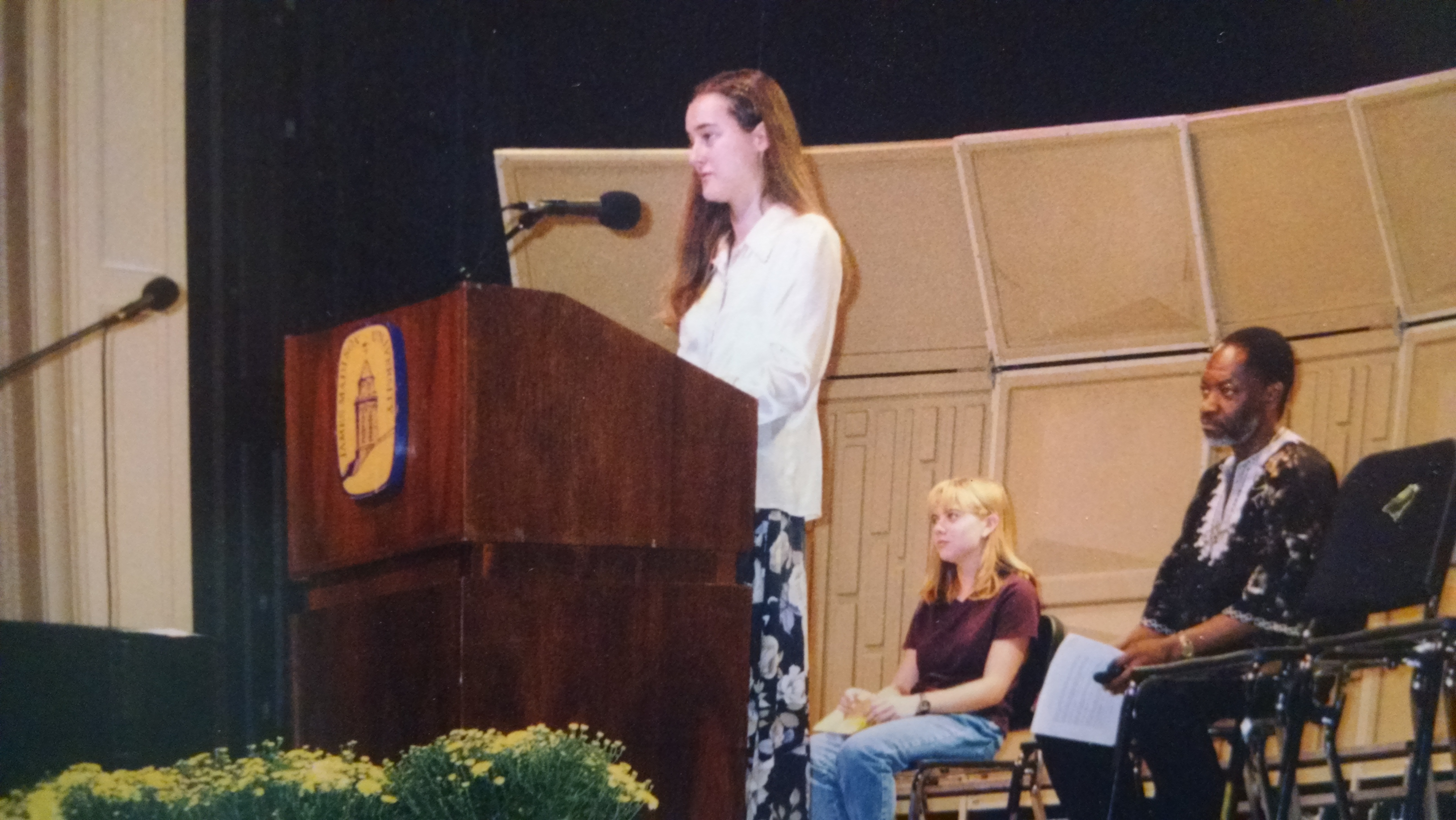
Michelle Davis and Rebecca Held on stage with Montreat conference speaker, Maake Masango, far right.
That my daughter got to be on stage with this amazing speaker still moves me—particularly in how it came about. This daughter is sometimes, shall we say, a little scatterbrained, or to put it more positively, has so many ideas going on in her brain that she forgets some things. On that particular day, our pastor, Ann Reed Held (and sponsor for the youth group), had wrangled a dinner date with the exciting conference speaker, Maake. Our youth were to arrive on time at a special dining room and they would get their own private audience with him.
Michelle had completely forgotten about the dinner and was enjoying a walk on the opposite side of the conference center when she remembered. She sprinted across the campus and blew into the dining room—breathless, late, and looking straight at our dear pastor, who was scowling. When she apologized profusely Maake laughed and said she could make it up to him by saying the opening prayer before his sermon that night. How could she refuse? She was charmed into agreeing and faced over one thousand youth, pastors, and sponsors that night in Montreat’s auditorium.
The youth from our church ended up being quite moved by Maake’s stories of suffering, and South Africa’s newly adopted policy of official forgiveness for those who had perpetrated atrocities under the reign of apartheid. They felt led to respond to another compelling invitation from Maake: “Come to South Africa, see for yourself. Our church will host you.”
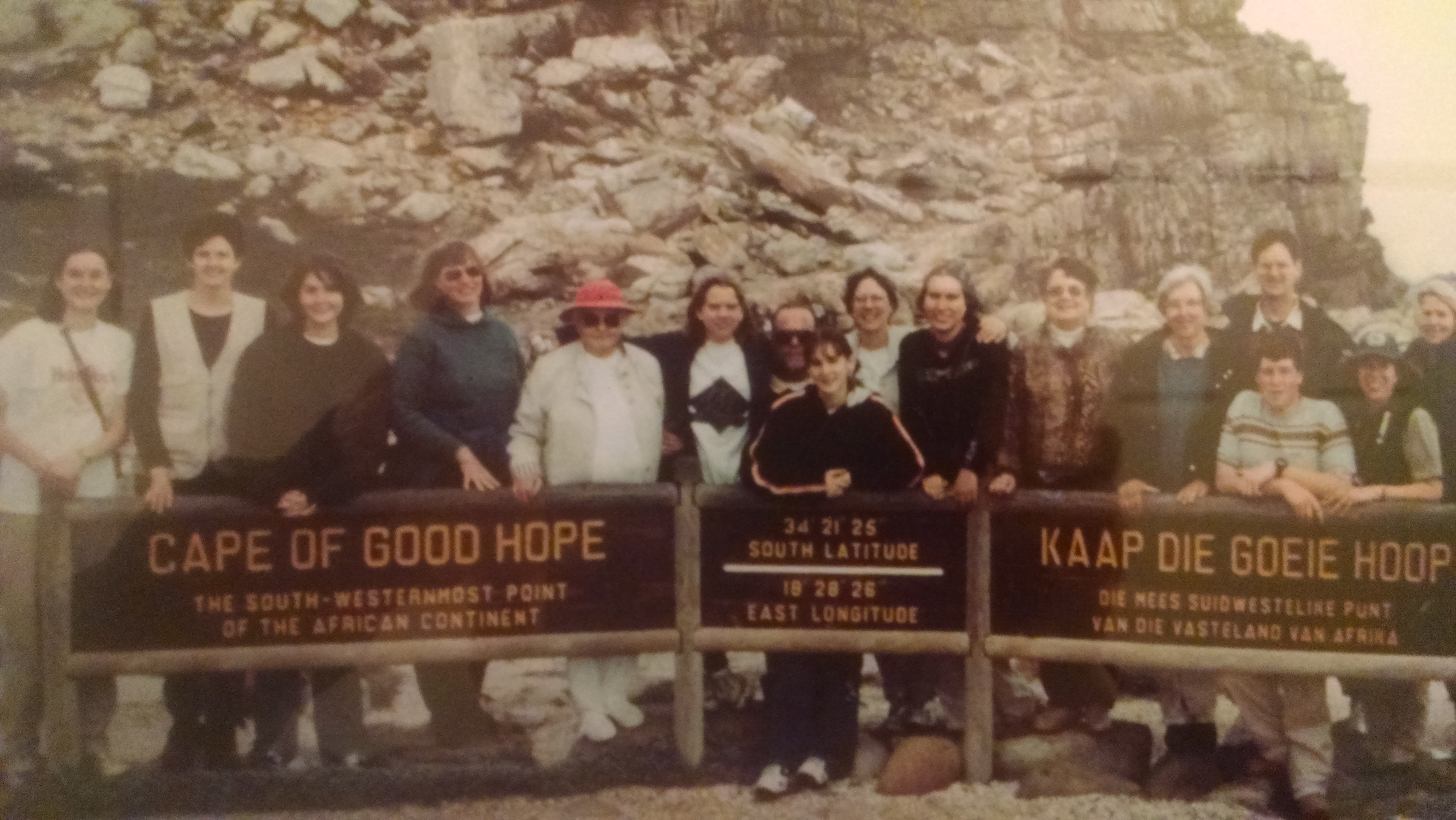
Trinity Presbyterian Church group first trip to South Africa, here at Cape of Good Hope. From left: Michelle Davis, Lisa Hammet, Ellen Chappel, Nancy Hopkins-Garriss, Isabelle Dotson, Rebecca Held, Ken Bahn, Tanya Davis, Ann Held, Julie Radloff, Ann Rutherford, Pat Churchman, ___, Kevin Gallagher, Maureen Gallagher McLeod, ___. (Your help filling in any names appreciated!)
They came home energized by Maake’s invitation and went about, with the pastor’s help, organizing an ongoing mission relationship with two different churches in South Africa and our church, Trinity Presbyterian. It changed the lives of our youth for the better—and educated the rest of us, even those who didn’t go. Our two older daughters got to go on the first trip, and our youngest daughter was able to go a half dozen years later. We also helped host a group from those churches as they visited our church, taught us rich South African music in various tribal languages, and ministered beautifully among us. Two women stayed in our home and my eyes were further opened in numerous ways.
Come back next week for more on how apartheid impacted the life and future (and lack of it) for one young boy, and so many others in South Africa.
***
Mission trips and mission partnerships with churches around the globe are common experiences for many Christians. Do you have any stories or perspectives to share: what you learned and loved?
Find more artwork by Jerome Lawrence, who painted the beautiful painting above, “Building Hope.” I once did a pre-interview with Mr. Lawrence by phone in advance of the TV documentary, Shadow Voices: Finding Hope in Mental Illness, which aired on ABC-TV and others. We have two of his wonderful paintings. You can see him painting in this brief trailer for the documentary.
Comment here or email to Another Way Media, Box 363, Singers Glen, Va. 22850, or anotherwaymedia@yahoo.com, or post on Another Way Newspaper Column’s Facebook page.
Another Way is a column © by Melodie Davis, in syndication since 1987. Another Way columns are posted at FindingHarmonyBlog.com a week after newspaper publication.
Another Way for week of October 27, 2017
The Paper Trail
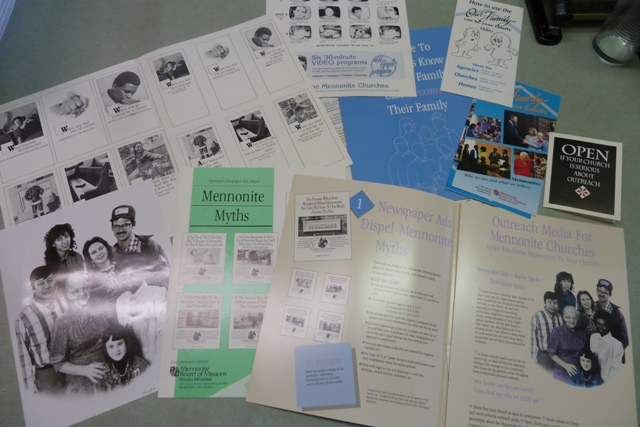
In the past several months, I have thrown away or recycled reams of paper. Our office is moving to a new location and we’ve been instructed to greatly “purge” or downsize our paper/file footprint.
I was amused by my 30-something colleague, who works totally on the computer and has very little in the way of paper files and folders. He’s a designer, not a writer, so he majors in digital files. In a check-in session we were each to report on how purging was going and he laughingly said, “Oh, I’ve gotten rid of maybe a paper, or two.”
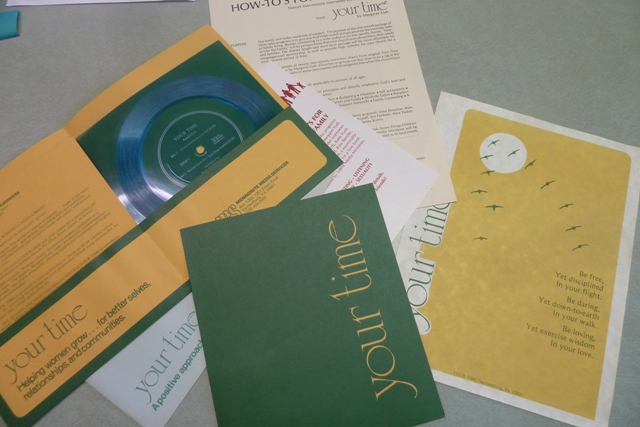
Scads of promotional materials I wrote for various radio programs and projects.
I envy that and I pledge to print out and save many fewer things in the future; but in my defense, a paper reminder is often my way of making sure I complete a task and don’t forget it buried in my computer.
And to be honest, I truly struggle with getting rid of the paper trail, especially from trips, meetings, speaking engagements—so much from my work life these past 40 plus years.
As I flip through them, there are so many triggers and I recall memories, people, stories—so many things that would be long forgotten if I didn’t still have those papers. Right? Do lost memories matter?
Truly I know the importance of decluttering our lives, especially as we get older. The experts talk about the three piles: everything should go into one pile or another: 1) Keep. 2) Giveaway or sell. 3) Throw away. Someone has said “Only keep the things that give you joy.”
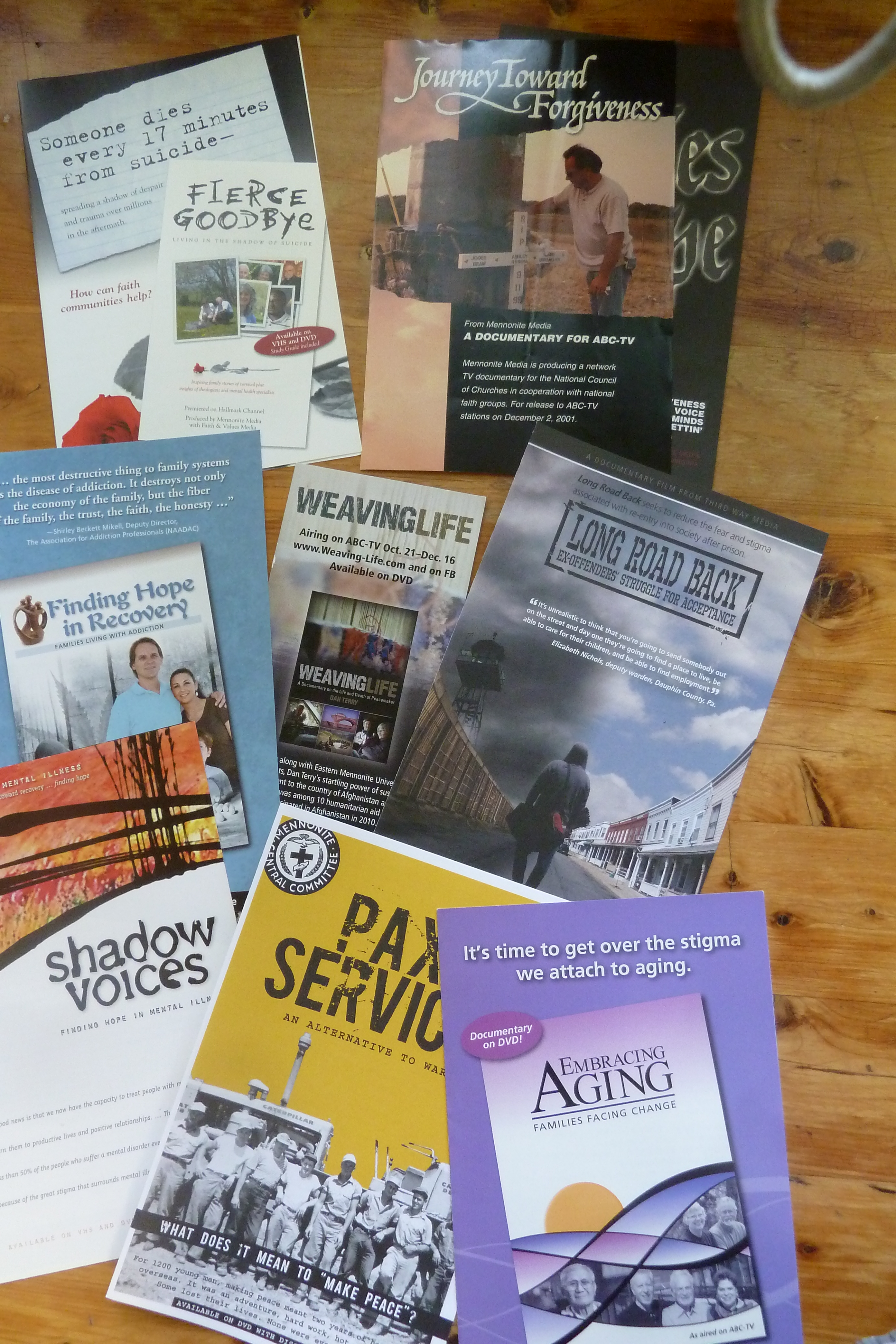
A decade of producing award-winning documentaries which aired on several networks.
At home, one of my rather brutal ways of facing the question of needing to pare down is to ask myself, “Will I be able to take this to my assisted living quarters?” We have no plans to move to a retirement community of any kind but I’m enough of a realist to know that downsizing is most likely somewhere in my future. And that can be a freeing step when you no longer have to take care of a home, yard, or garden.

Artwork: an acrylic painting by my daughter Tanya from her visit to Frontier Culture Museum in Staunton, Va.
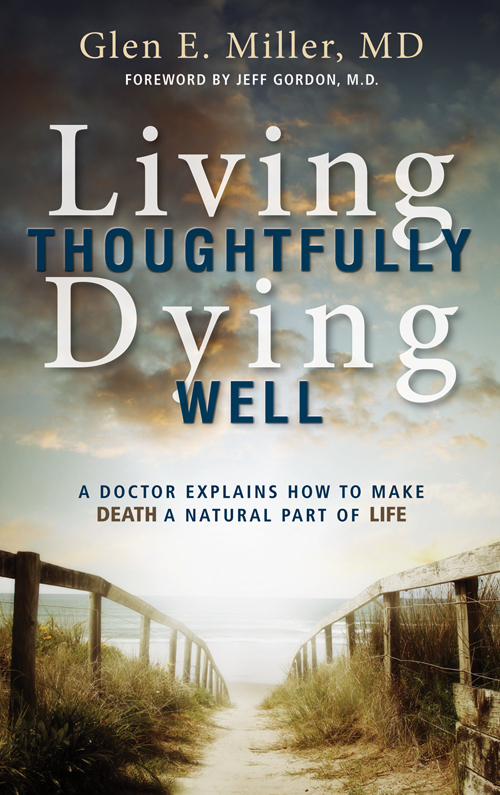
I’ve added a fourth way to handle some things, which I first heard suggested by a doctor/author friend Glen Miller, who wrote a book which I edited, Living Thoughtfully, Dying Well. Take a photo of your mementos, and file them on your computer in carefully named files (so that doesn’t also become an unmanageable slush pile). This works for such things as certificates given to you over the years, name badges from special meetings or conferences, items you created or had a hand in making that no longer serve a useful purpose, and artwork. That way you can remember the item, but not have it take up precious space in a closet or file drawer or shelf in your home. It also works for beloved books that you think you may want to re-read in the future, but don’t have room to keep. Take a photo, file it electronically, and then if you want to read old books (I can barely keep up now with new books I want to read), flick through your electronic library and check it out of a physical library. Or you may find the complete book, or used copies available online.
I like the title of Dr. Miller’s book because it points to the need to be more thoughtful in how we spend our days and our living space on this earth. No one wants their home to become as cluttered and unhealthy to live in as that of a true hoarder.
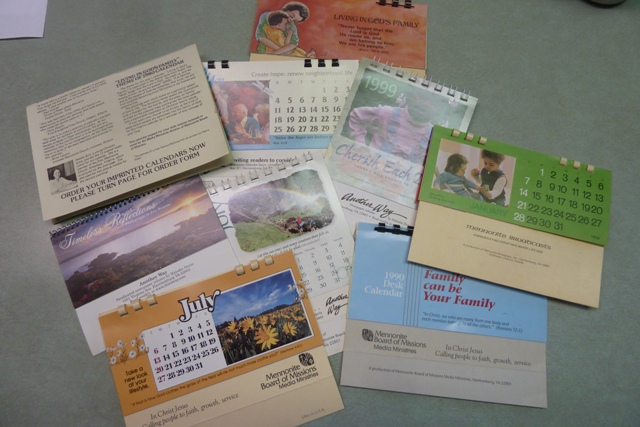
Thematic desk calendars produced by our office over many years, personalized and purchased by congregations to give to church members.
I was going to add that writers are particularly prone to keeping various papers as idea triggers for future projects. But my husband, who is truly a creative soul in other realms, has a hard time throwing away or taking to the dump any piece of wood or metal that might be useful in a project someday. I know knitters and quilters and fabric lovers who have vast collections of yarn or fabric. Or cookbooks.
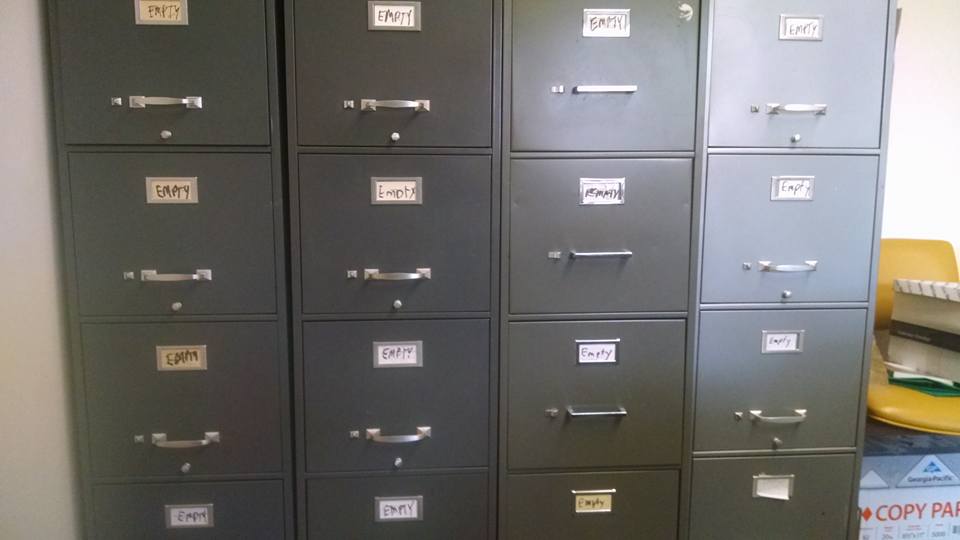
16 file drawers, now gloriously empty.
So it’s not just paper piles we have to tame. What is your nemesis or doom? Scripture reminds us: “Do not store up for yourselves treasures on earth, where moth and rust corrupt and where thieves break in and steal; but store up for yourselves treasures in heaven … For where your treasure is, there your heart will be also” (Matthew 6:19-21).
I think I’ll post that on my new office door. Or maybe just file it electronically.
***
I’d love to hear what you’re tempted to collect too much of.
What is your nemesis or material you have a tendency to collect and save ?
Comment here or send to anotherwaymedia@yahoo.com, or tell me on the Facebook page for Another Way Newspaper Column.
To see more or purchase Dr. Miller’s Living Thoughtfully, Dying Well, check here.
Another Way is a column by Melodie Davis, in syndication since 1987. Another Way columns are posted at FindingHarmonyBlog.com a week after newspaper publication.


