

Another Way for week of May 5, 2017
Motherhood as Desperate Innovation
Any memories of spit baths, anyone? Either giving them to your own kids, or being on the receiving end of the quick attempt by (usually) a mother to remove some stubborn dirt or remains of breakfast from your face? Or perhaps your kids hate or run from any face scrubbing, including with a nice washcloth?
A mother named Alex shared on Facebook how she dealt with her small boy’s dislike of such episodes: “Because he hates his face being washed I would pretend to be the mommy doggy or kitty and ‘lick’ him clean with a cloth. He thought it was hilarious with the sound effects.” My daughter’s friend, Kelly Gilbert, after reading this illustration from Alex, named this the “desperate innovation” of motherhood. Kelly gave me permission to use her line and this story. (Thanks!)
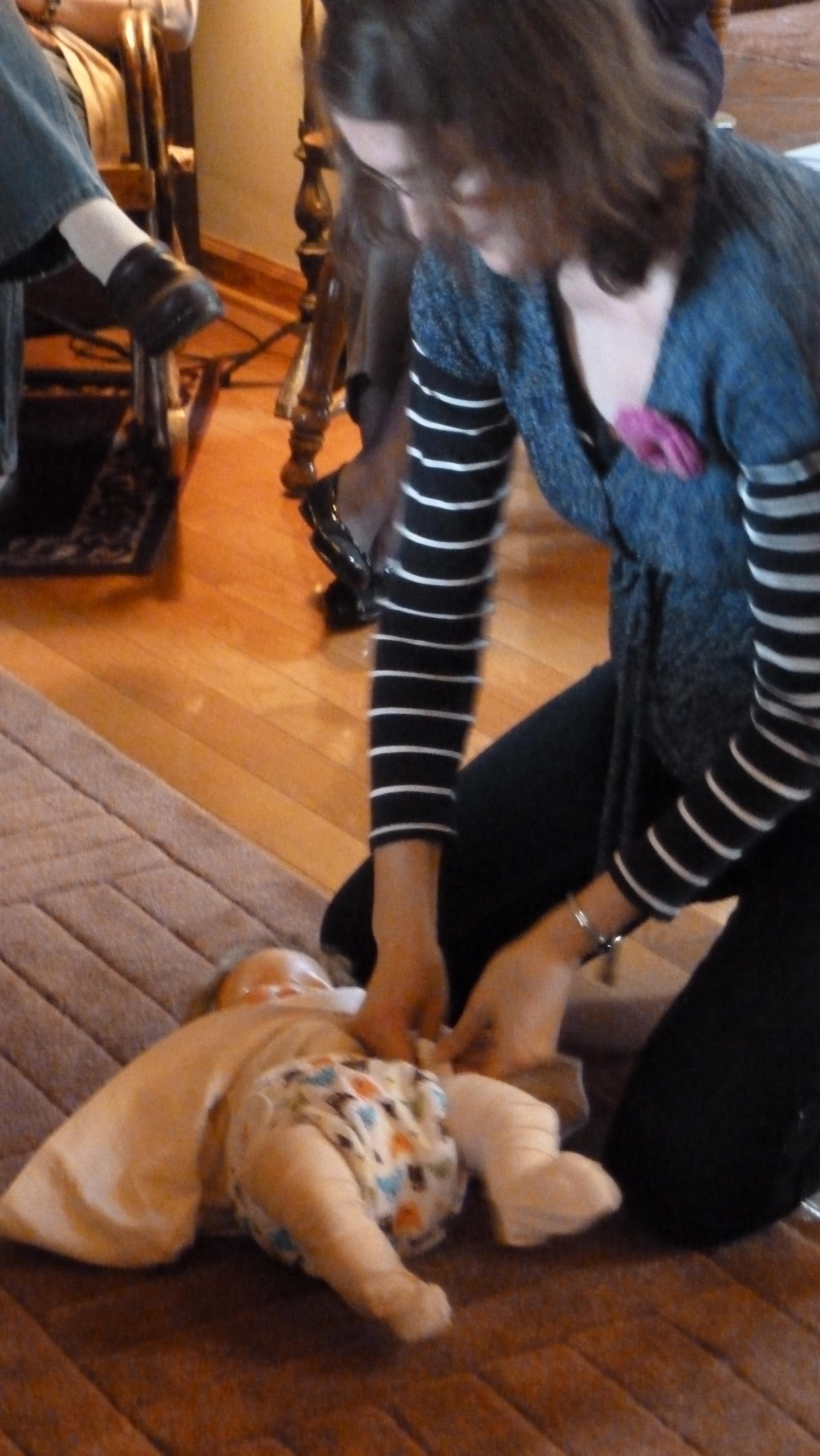
My oldest daughter illustrates diapering a doll while at a baby shower. She has plenty of experience now, of course.
My elementary school friend, Ruby who I love getting to know again on Facebook, added some examples of innovation involving getting a child to finish his food. “Open up the garage door for the truck to come in!” was a ploy which worked with her children many times. Another hurdle was teaching little boys to aim (in potty training) by having them try to hit a Cheerio in the toilet! She adds she never tried that with her boys, but she knows some who have. These qualify for “desperate innovations”!
Our oldest daughter’s son was diagnosed with Celiac disease last fall and his parents are trying to be very faithful in following a gluten free diet. So the day before Easter we were at a park for an egg hunt. The sponsors generously also provide a very simple grilled hot dog lunch immediately after. The hot dogs even turned out to be gluten free, according to the package label one of the men inspected for my daughter when she inquired. So she asked for a hot dog before it was put into a bun.
The problem turned out to be there were no forks or plastic utensils available to cut the hotdog in small, bite-sized slices. My daughter innovated very quickly: found an unused little tool in the infant manicure set she kept in her diaper bag, washed it off at a park fountain, and cut the hot dog into slices. Her son was then able to use the tiny tool to pick up each piece of hot dog and dip it into ketchup. Such a small thing, but sometimes as parents you are just desperate for any innovation that keeps a pleasant outing from dissolving into unhappy tears.
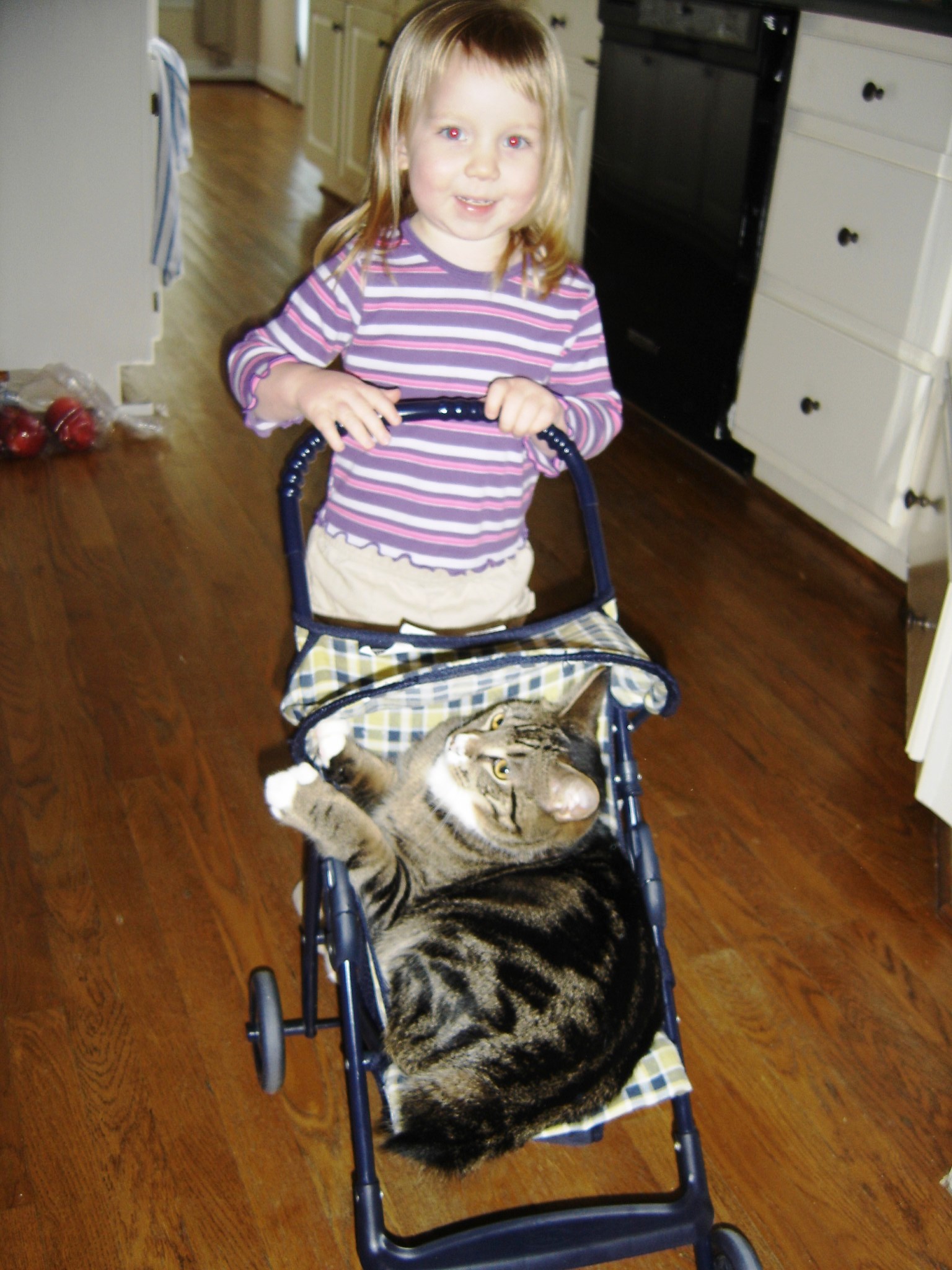
Photo from Donna Coffman, of her granddaughter “innovating” motherhood.
The frantic need for innovation often starts when the second child comes along. It comes with such basic necessities as needing to visit the throne room. I wrote about that in one of my early books, You Know You’re a Mother When… (Zondervan,1984), after we had our second child. The baby was fussy and our oldest daughter was only two and demanding a lot of attention. Rather than let the baby scream in a crib or infant seat, I took both of them into the bathroom with me, holding the baby on my lap while Michelle showed me her latest art drawing. I doubt I’m the only mother who has held her baby on her lap while taking care of bathroom business.
As I looked through that book I found another time when I was urgently innovating while visiting a large church to speak briefly at the Sunday morning worship about the dilemmas of parenting. We had traveled to Florida so the children were off schedule and tired—and there I was in the back row trying heroically to keep the two-year-old quiet using my usual diversionary tacks: books, toys, raisins, even chewing gum. When I went up to speak, leaving my husband alone with the kids, he soon tried a different tactic as he tried to help them behave: he marched them out of the service and told them in no uncertain terms that if they wanted to go back in and see Mommy they would need to be quiet and stop whining. The toddler was quiet and mannerly the rest of the service, and the preschooler nodded off to sleep with her head on one of our laps.
This story reminds us that different parents employ different tactics. Today, both these daughters have their own little ones who (yes), manage to disturb the worship services at their own churches from time to time.
This reminds me of one of the best stories in the Bible about Jesus and the children. The disciples are the ones concerned about the disturbances of children as Jesus talks to the crowds in Luke 18: “People were also bringing babies to Jesus for him to place his hands on them. When the disciples saw this, they rebuked them. But Jesus called the children to him and said, ‘Let the little children come to me and do not hinder them! For the kingdom of God belongs to such as these.’”
***
I’d love to hear more examples from your own life or a friend, of something fun, crazy, or wacko you did in a moment of desperate innovation?? Such as did you ever have to come up with a substitute diaper?
At any rate, let’s hear it for mothers who are able to pull bunny rabbits out of their hats on command!
***
Send stories or comments to anotherwaymedia@yahoo.com or contact me at Another Way Media, Box 363 , Singers Glen, Va. 22850.
Another Way is a column by Melodie Davis, in syndication since 1987. She is the author of nine books, most recently Whatever Happened to Dinner. Another Way columns are posted at FindingHarmonyBlog.com a week after newspaper publication.
Another Way for week of April 29, 2017
What is Middle-aged? What is Old?
I remember going to the 40th reunion of my high school class where I attended my first three years of high school. I took a look around at the gray hair and wrinkles and tried to see in their faces my high school chums. I couldn’t recognize some of those I hadn’t seen in 40 years. Did I look equally different to others? I truly wondered if I looked as old as them. This is a common experience for most of us.
I began writing this newspaper column in 1987 (not this specific column, but the weekly editions), which was a year after we gave birth to our youngest daughter. So I was still a fairly young mom at the time, (or older mom, depending on your viewpoint, to be having babies from age 30 to 35). At any rate, we ended up with three kids age five and under after that final blessed birth event.
This helps to explain why as I approached my 40th birthday with my youngest child just starting kindergarten, I definitely did NOT feel middle-aged. Who said 40 was middle age anyway? If you are unlucky enough to drop over from a heart attack in your 50s, then 40 is downright elderly. If you live to be 100 or 105, which is more and more common, then at 40 you’re just getting started.
But the good Lord provided that we truly don’t know these things—unless we draw the terminal-illness-at-an-early-age-card, which too many, tragically and sadly, do.

Jennifer Grant

So along comes Jennifer Grant, a former columnist for the Chicago Tribune and a funny and prolific writer for magazines and blogs, and with books popping out like rapid babies. Her newest book births May 2 from our office called When Did Everybody Else Get So Old: Indignities, Compromises, and the Unexpected Grace of Midlife (Herald Press). I’ve been blessed to work with Jen on the editing end of her book, passing her baby from copyeditor to designer and through first and second proofreaders, and so on.
Jennifer writes funny—not weird funny, but laugh out loud funny. If you’re anywhere near 40 and up, you’ll love her looks at the transitions of middle age such as the children growing up, feeling inadequate and not as successful as others in your field, going through hormonal swings, and your teenager being embarrassed by something you’re wearing. Been there, done all that.
Here’s one of my favorite stories from Jen:
According to my teenage daughter, I look not only old but also weird in my new glasses. I admit that the woman at the optometrist’s office did mention that not everyone can wear these particular frames, but she assured me that I could. And I quote: “Not everyone call pull off those frames, but you? You’re rocking them!” I walked out of that office with a little spring in my step.
A few days later, unbespectacled at the time, I drive my daughter and one of her friends to Starbucks. They sit together in the back seat of the car, looking down at the screens on their phones.
“My mom has ‘new glasses,’” my daughter announces, apropos of nothing. She speaks the words “new glasses” in gigantic air quotes to underscore her disdain (Grant, p. 85).
She also writes oh so poignantly about an absentee father, her sister who she and a brother often had to rescue after evictions or hospitalizations; the sister ended up dying young of cancer. She writes of an 11-year-itch when she and her husband decide to have marital counseling.
If you’ve ever pondered “Who have I become?” “Is this all there is to life?” “How do I relate to a God I understand less now than I used to?” or ever asked “Now wherever did I put my reading glasses?” you might enjoy Jen’s book.
And if you go looking for the book: look for a book with funky glasses on the cover and title in really big print.
The serendipitous thing about this book is that since we are all aging, Jennifer points to the confidence and grace that this season of life can also bring. She reminds us that midlife is the time to leave regrets behind. It “isn’t the time to make excuses or ruminate. It’s time to move on, with hope” (p. 173). She quotes Solomon in her last paragraph, “What we can do is eat and drink and enjoy the fruits of our labor, knowing them to be gifts from God” (p. 178).
***
Send your comments to anotherwaymedia@yahoo.com or Another Way Media, Box 363, Singers Glen, Va. 22850. Or, find more about the book at store.mennomedia.org.
Another Way is a column by Melodie Davis, in syndication since 1987. She is the author of nine books, most recently Whatever Happened to Dinner. Another Way columns are posted at FindingHarmonyBlog.com a week after newspaper publication.
Another Way for week of April 22, 2017
The Gift of Walking
My daughter shared a wonderful image from her 14-month-old’s life recently as they walked to a nearby playground. It was the first time he’d been to the playground since he had started to walk; he is pretty solid but still falls occasionally.
Her husband and their older son took off quickly for a favorite amusement. Michelle took the toddler out of the stroller and instead of taking him and putting him on the nearest slide or swing, she thought she’d let him choose where he wanted to go first. But instead of making a beeline anywhere, he just stood there, taking it all in.
She imagined him weighing the delicious choices in his very young brain. Where should he go? Did he really have the option to choose? What new freedom did he have? And in a minute, he happily walked toward the swings.
But what struck me about her story was thinking about the process of getting from newborn-infant-helplessness to walking-upright-over-uneven-ground and choosing your own play.

Does cruising count as walking?
We’ve been so fortunate to have four grandsons since 2013. I have been marveling at the wonderful process of learning to walk—even if from afar. When our daughters were learning to walk, I was with them many hours a day (I worked about three days a week while they were small). The learning-to-walk process seemed to take forever. In fact, as a new mom, I remember being somewhat astounded about how unclear a process it was. What was actual walking? Is taking one step while holding on to furniture considered walking? Or just cruising? Is standing and stepping and then falling considered a first step? What counts? What if she takes one step one evening, immediately falls, and then doesn’t try for another week or two? What date do you put in the baby book?
The developmental steps involved start with the baby’s first wobbly attempts at just holding up his own head which weighs proportionally so much more than the rest of his body. Next comes increasing the upper arm and shoulder strength that enables babies to turn over. The current sleeping patterns of infants in North America, where pediatricians encourage parents to always place infants on their backs to sleep (which has greatly reduced death rates from Sudden Infant Death Syndrome), can slow the rate at which they begin holding their heads up off the mattress or floor.
So “tummy time” spent regularly on the floor helps make up that loss. Rolling over and getting into the crouching position and ready to crawl comes over the next few months. Sitting up and then shifting weight onto one hand or another is another step which leads to the walking process. Finally, pulling into a kneeling or standing position with the use of crib rails or furniture—and they’re almost there! But it can still take weeks and months for the actual first step or two to happen.
 Do animals have to labor through any of this? They would appear not to. The difference between human and animal babies is explained at least in part by the relatively undeveloped brain of an infant at birth—where human babies do much less for themselves than the offspring of animals.
We have neighbors with sheep and I always enjoy this time of year when frequently some new baby lambs make an appearance. The lambs love gamboling about in the field down the road from our house. This is like a day or two after they are born. What would we think if a tiny infant would get up and frolic in two days? We’d call the national media! Lambs actually are usually standing within the first hour.
The same with a young baby calf: they are typically on their rather shaky legs within 30 minutes of being born. If they aren’t up and about within two hours veterinarians say humans should intervene. It must be said however that walking on all fours is infinitely easier than standing upright to walk on just two limbs. That’s why we first learn to crawl.
These days, most often grandparents do not see a grandchild’s first steps in person—unless they live nearby or baby sit every day or frequently. We may get a video or do a Facetime video session with them, and oooh and praise their first steps that way. I love the Proverb that goes “Children’s children are a crown to the aged” (Proverbs 17:6).
What fun watching new lambs, calves or babies exploring their world. What a shame that too soon we take for granted the wonderful gift of walking and navigating on our own. We newly appreciate the gift of walking as we get older and watch our friends and relatives lose mobility—temporarily or not. We don’t often remember the second part of Proverbs 17:6, which adds a different slant on aging: “And parents are the pride of their children.” In some cultures, the aged hold places of high respect and honor. In North America, we often could do better in that department—to honor and visit and appreciate the aging among us—whether related or not.
Send any comments to anotherwaymedia@yahoo.com or contact me at Another Way Media, Box 363, Singers Glen, Va. 22850.
Another Way is a column by Melodie Davis, in syndication since 1987. She is the author of nine books, most recently Whatever Happened to Dinner. Another Way columns are posted at FindingHarmonyBlog.com a week after newspaper publication.
Part 3: Katharine Graham and the Pentagon Papers, Watergate, and the Pressmen’s Strike
Note: (Part 3 in a 3-part series on Katharine’s Graham’s memoir, Personal History. Find Part 1 here and 2 here. Page numbers refer to the Vintage Books paperback edition of 1998, not the original hardcover from Knopf.)
President Kennedy’s tragic assassination occurs about halfway through this book. Even though Kay Graham had so recently lost her husband Phil in a violent way, Kay said she felt at a total loss as to how to be of help to Mrs. Kennedy. This was followed, of course, not too long after, by the deaths of Robert Kennedy and Martin Luther King, Jr. Oh how short our memories are—or how young some are—to not truly know and understand the difficult days, months, and years we’ve had as a nation, racially and many other ways, over decades and centuries.
On a personal level Kay grew greatly in her ability to run an organization as huge as what The Washington Post Company became (purchased television and radio stations, etc.), including gathering within herself the chutzpah needed to fire a great friend from his job at the Post. She knew she had to do it for the good of the company (p. 385).
Historically, the Post had a huge role in shaping the second half of the U.S. 20tth century. I had forgotten the actual facts surrounding the publishing of the Pentagon Papers. It’s the kind of thing you remember happening if you’re old enough, but don’t quite remember the whys or wherefores. By the Post defending The New York Times in their decision to go against the government in making the controversial papers public, it catapulted the Post evermore into the category of world class paper—no longer just a city paper. And a long way from the day Kay’s father purchased the ownership of the Post at a bankruptcy auction.
The Pentagon Papers era also laid the groundwork for the Post’s Pulitzer Prize winning work investigating the break-in at the Democratic National Committee’s offices in the Watergate complex related to Nixon’s 1972 presidential election. Graham’s replay of those events as publisher, deciding at every turn whether to keep publishing the findings of Bob Woodward and Carl Bernstein, is also fascinating. She does not tell or rewrite their story which they did ably enough in their book, All the President’s Men. (I was living in Spain in 1973-74 as things fell apart for Nixon, leading to his resignation in August of 1974, so many of the facts of his final year in office were very muddy to me. We rarely believed the Spanish press in that era.)
What I had never followed either were the Post’s internal struggles with the various trade unions which worked on the production side of the paper—the Pressmen’s union and associated labor groups. In some ways this chapter was the least interesting to me personally. But it was incredibly educational about the function and foibles of labor unions of the time—the later ‘70s. Graham, a labor reporter herself in her beginning days, believed fervently in the rights of workers to organize in order to protect themselves and promote livable wages. But when it came to violence and the physical destruction of the presses (the workers set fire to the presses) which first halted the printing of the paper (missing actual publication for only one day), the executives and Kay teamed together for workarounds to keep publishing their paper until the presses were restored (more than a month). They pulled together to do the hard sweaty work through the wee hours of many mornings to get the paper out. That Graham could get messy in the trenches in spite of her pampered and privileged aristocratic upbringing spoke volumes to me about her personal integrity.
Kay died at age 84 after a head injury from a fall walking to a bridge game at Sun Valley, Idaho. Her funeral was held at the National Cathedral in Washington, D.C. A number of times while reading her book, I was struck by her claims that she was not a religious person. References to faith are all but missing in her book except for talking about the history of her parents. But that may also be because for so many, religious beliefs are relegated to the private realm. Her obituary in the New York Times indicated that her parents had a pew at St. John’s Episcopal Church in Washington, “the church of presidents.” Her father, who was Jewish, later gave liberally to many Jewish organizations; her mother was a Lutheran. The named pew was likely, in part, because that’s what rich people did—gave money and had a pew named after them.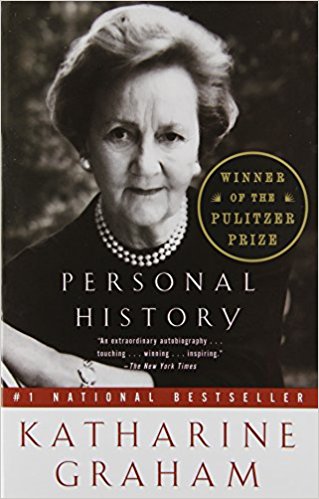
So why read this book? It has a great sweep of 20th century history from the viewpoint of a woman privileged to sit at the helm of a mighty newspaper in what some call the most powerful country in the world. By now my fascination with history should be obvious in the three long biographies I’ve read and shared here. The faith commitments and lives well-lived of Mennonite leaders Harold S. Bender and Orie O. Miller (and even both my father and mother who I’ve often written about), are to me even more noteworthy for what they accomplished without the position and power of a Katharine Graham. So many of our forebears teach such valuable history lessons.
It was also mesmerizing to read this prize winning memoir during what sometimes feels like dramatic times in U.S. history: the election and inauguration of Donald Trump. What it did for me during this time is assure me that our country has been through other extreme leadership crises in our history, and will likely do so again.
May we learn the lessons of history that power and privilege are sometimes abused. In my opinion and in this telling, Katharine Graham lived up to the opportunities which, through no action of her own, befell her. (Perhaps now I need to read a more objective biography.) But she went a step or two further in forging new ground not only for both women and men in her position of power, to behave in morally respectable ways—even if she was not technically a diehard person of faith.
For many of us, prayer and faith are the bedrock that keep us living fruitfully no matter who the leaders are. Our sometimes small acts of faithfulness, prayer, and laboring for better lives are the glue which keep plain (unionized or not) folks going.
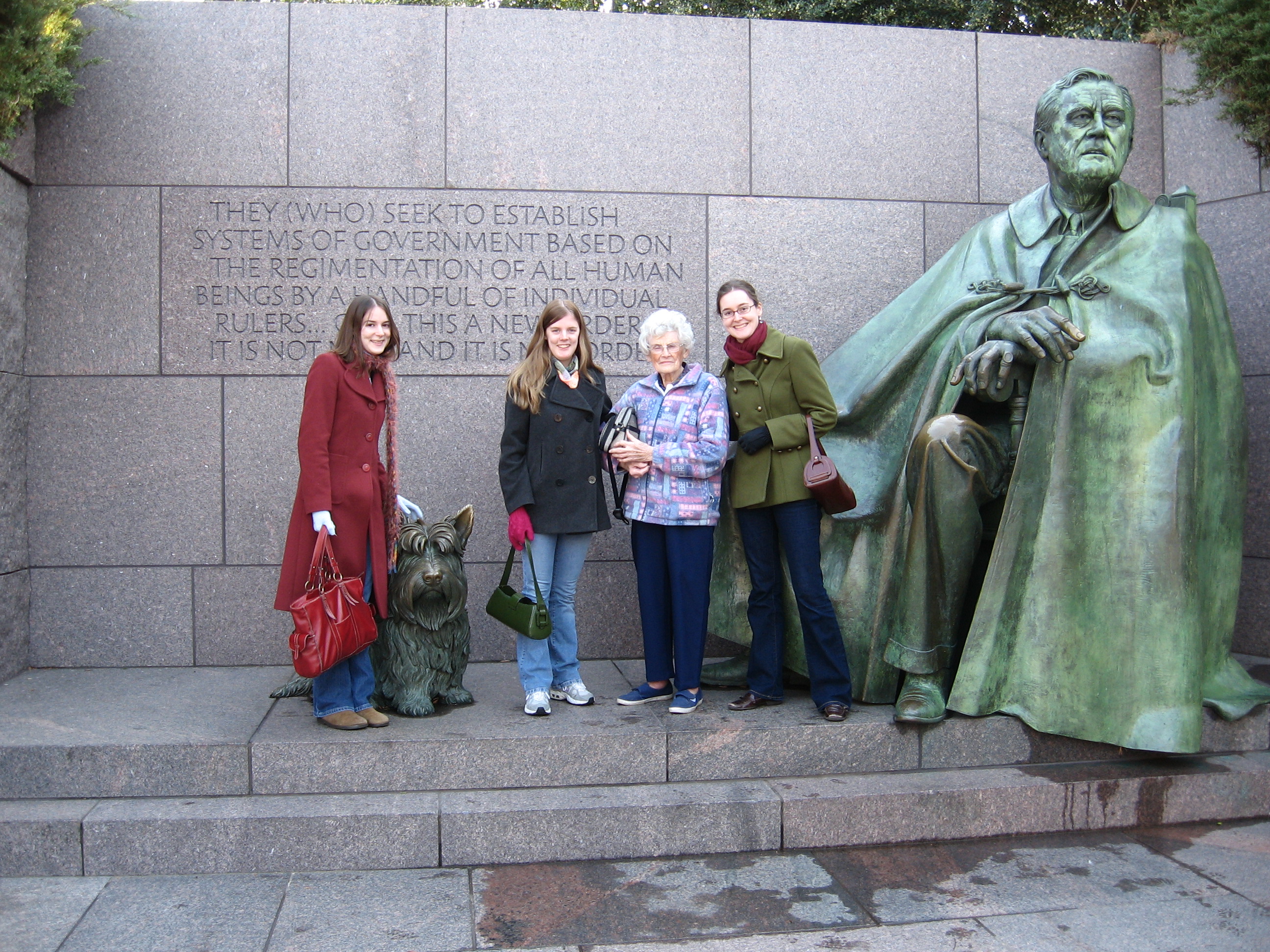
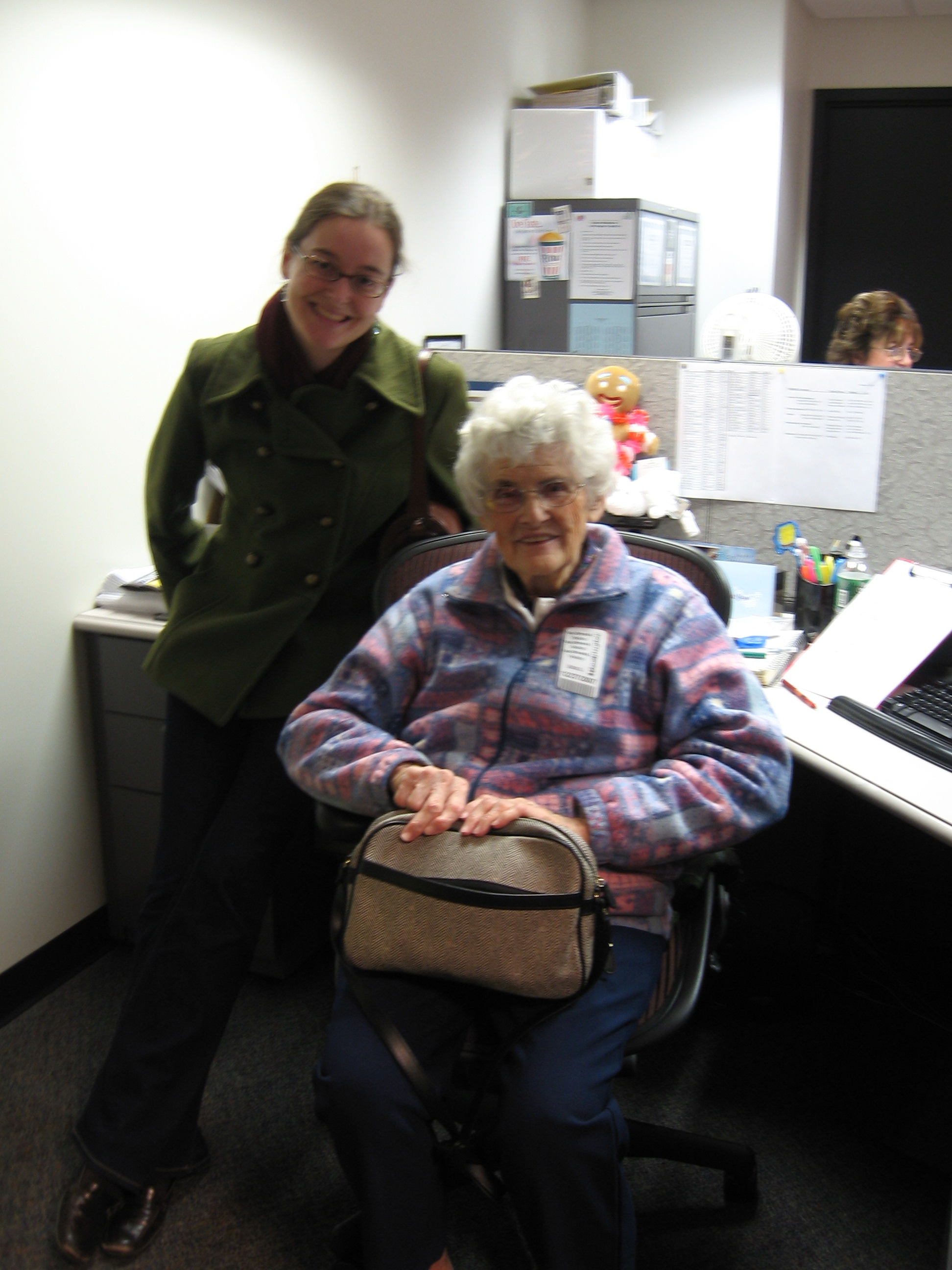
My daughters Tanya, Doreen, and Michelle, with my mother, Bertha at the Franklin D. Roosevelt memorial in Washington D.C., 2007, after touring the Washington Post offices with Michelle (shown below left at her desk).
***
The Roosevelt quote behind my daughters and mothers says: “They (who) seek to establish systems of government based on the regimentation of all human beings by a handful of individual rulers. . . call this a new order. It is not new and it is not order.”
***
I’d love to hear any further reflections you have on Kay Graham’s life, Roosevelt’s quote, or my conclusion that sometimes “small acts of faithfulness, prayer, and laboring for better lives are the glue which can keep us going.”

Washington D.C. at Christmas. Personal photo.
Part 2: Katharine Graham: Privilege and Power
Note: (Part 2 in a 3-part series on Katharine’s Graham’s memoir, Personal History. Find Part I here. If you plan to read the book, be warned that in this blog post, I start to reveal some spoilers. Also, the page numbers refer to the Vintage Books paperback edition of 1998, not the original hardcover from Knopf.)
Katharine Graham led an extremely privileged life—both the family into which she was born, and the marriage she made with her husband Phil. Together they not only met and were invited to White House dinners with presidents and their wives, but frolicked with them on ranches (Lyndon Johnson), yachts (the Kennedys of course), and got front row seats or backstage passes to the national political conventions of both major parties every four years.
The Grahams exerted the kind of political power that most of us only dream about—both financially (yes they personally supported their favorite candidates, i.e. Kennedy, p. 269) and influence-wise: Phil had a great deal to do with Lyndon Johnson becoming vice president with Kennedy (p. 270). The Kennedy/Nixon contest in 1960 was the closest election since 1916; as I was reading this book through the throes of the fall 2016 election, I was reminded that our nation had been through this type of drama so many times.
Two underlying themes run through this book: family and work. The second half definitely focuses more on Kay Graham’s increasing role at the newspaper, which came about through a tragic death.
Kay portrays her husband Phil Graham in her book lovingly—he apparently was brilliant, funny, dashing, and ambitious to the point of sometimes working all night or days on end. Later they would find out he was no doubt bipolar—so classic with his characteristics. He self-medicated with alcohol which was usually kept under control but in his later years, drinking was increasingly a source of great worry for Kay. Through hospitalizations, she was his confidant, caregiver and enabler.
Phil also had an affair which rocked the foundations of Kay’s love and devotion to her husband. At one point he planned to marry Robin Webb, a younger woman who worked as a correspondent for Newsweek from Paris. (The Washington Post Company purchased Newsweek in 1961).
Close friends noted Phil’s increasingly erratic behavior. Kay’s world finally blew apart when Phil went by himself to their country estate, took his hunting rifle, and ended his life. The suicide was as devastating as any. As Kay slowly began to piece her life and family back together, she was thrust into figuring out who and how leadership would evolve (who would be publisher of the Post, or chair of the board for the Washington Post Company? Her children would not be old enough for those positions for years.) She had been a wife and a mother and a socialite. Even though she had worked right out of college as a reporter and walked closely alongside Phil as he ran the day to day operations of the business, she did not go to the office every day or take the worries home.
It was a huge change. She became an employed, working mother, even though financially, she would not have needed to work. But there was a family company to keep running. She was horribly green in the actual management of a huge multi-faceted organization and felt it at every turn. She was also not the first widow to step into such a role, but she often found herself the only woman in a room of managers or board members or in meetings with executives from other companies. Culturally North America was also going through its first waves of the feminist movement; Kay lived the change rather than led in that regard, and was around men who generally considered women too air-headed to be real partners in anything more than a sexual, social, or family relationship. One of her stories on the topic is too telling not to use almost verbatim:
President Kennedy’s charm was powerful. His intense concentration and gently teasing humor, and his habit of vacuum-cleaning your brain to see what you knew and thought, were irresistible. The Kennedy men were also unabashed chauvinists, as were the great majority of men at the time, including Phil. They liked other bright men, and they liked girls, but they didn’t really know how to relate to middle-aged women, in whom they didn’t have a whole lot of interest. … One notable exception to the chauvinist tradition was Adlai Stevenson. Women enjoyed Adlai. In the end, my mother, my daughter, and I all had close friendships with him. … The president [John Kennedy] told Clayton Fritchey [deputy for Adlai as ambassador to the United Nations] he didn’t understand the hold Adlai had over women, commenting on how much Jackie liked and admired him and confessing that he himself didn’t have the ease with women that Adlai had.
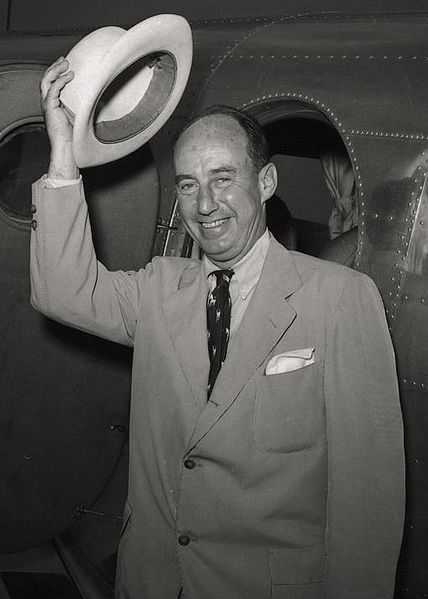
Adlai Stevenson, Wikimedia Commons, free media repository
Kennedy went on about Adlai’s being half bald, having a paunch, and not being a very sharp dresser. “What’s he got that I haven’t got?” Kennedy asked Clayton with real curiosity.
Clayton responded saying, “While you both love women, Adlai also likes them, and women know the difference.”
Bingo, Mr. Fritchey. I’ve never heard of you before but I like you too.
Katharine Graham was fortunate to marry the love of her life and she stuck with him through extraordinarily difficult times for one so affluent and acclaimed. Her most complicated tests were still to come.
I’ll finish up this review in Part 3, next week.
***
What can we learn from a life like Katharine Graham’s, who lived on such a pendulum? What is your takeaway at this point?
Another Way for week of April 7, 2017
A Monologue: The Rooster’s Crow
Me and my big mouth.
My mom always said I got it from Dad’s side. My dad always said I got it from Mom’s side. It doesn’t matter whose side I got it from, but my mouth could sure get me in trouble. You might know me as the disciple Peter, in the Bible.
But you have to understand, I didn’t really know then what I know now.
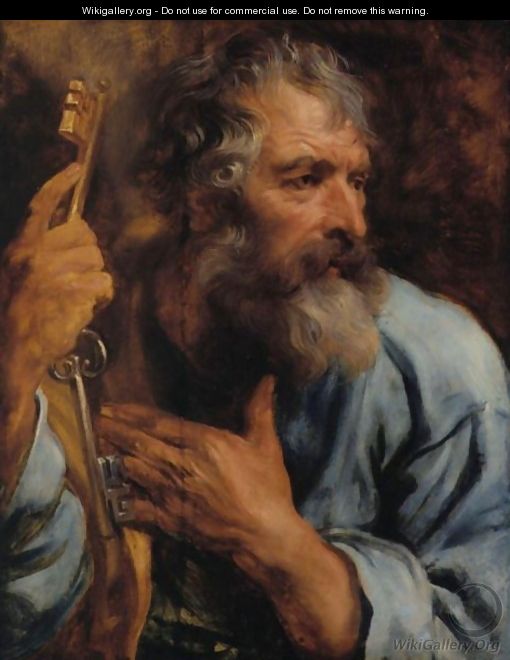
Bust of Apostle Peter, from WikiGallery.org, by Sir Anthony Van Dyck
Even when I lucked out when Jesus asked who we thought he really was and I responded, “You are the Christ!,” he praised my answer but I don’t think I really understood what I’d said. I mean I felt that I spoke the truth, but didn’t really grasp it. That’s why I messed up so soon right after, scolding our master for talking about how he was going to be killed and he rebuked me, “Get behind me, Satan.” That was the lowest I ever felt—until the crow of the cock.
But the really bad part was he said I was gonna do it. And if you’ve ever known someone like me, the worst thing you can do is tell me I’m going to react a certain way. He said we would all fall away and old big-mouth-Peter had to say, “Nope, not me.”
“I tell you the truth,” Jesus answered with a kind, knowing, motherly face, “that tonight before the rooster crows, you’ll disown me three times.”
And we all swore we never would, like a bunch of silly sheep.
Then we had that awful episode in the Garden—I mean, here was our best friend, and leader, who meant everything to us, and we all kept zonking out on him. It was like trying to keep awake in synagogue, and we felt so guilty but just couldn’t help it. (In our defense, he did keep a pretty demanding schedule.)
And then his arrest, and everything happened so fast, and our dream was just falling apart—it was like a nightmare, everything all confused, we didn’t know what was happening.
And then that servant girl by the fire. As soon as I saw her there watching me, I knew she’d start grilling me, and it would be all over town, and I just wanted to get her off my back. I said, “I don’t understand what you’re talking about!” And then someone said we sounded like we were from his part of the country and another said surely we were Jesus’ disciples.
“Man!” I swore. “I do not know that man!”
And then came the piercing crow of the cock.
Ohhhh….
The previous three years passed before my eyes like I was dying. I was dying inside. I thought of the day my brother and I first met Jesus. And the day he came to my mother-in-law’s house, and healed her! And the night we thought we were all dying on the lake, or the times we’d all end up at someone’s house and have those wonderful all-night talks around a fire.
The stories! What a way with words. And the way he put those Pharisees in their place—and anyone, really; even his family and friends, if the occasion called for it. A master of words. And kindness. His way with children. The mountain top with Elijah and Moses! That day at Caesarea Philippi. Sigh. The best three years of my life.
To deny all that, that was about as low as a friend could go. But then you wouldn’t know anything about that, would you? You’re better than that. But I’m so glad I didn’t do what Judas did. I was tempted though, you know, to do myself in rather than see the pained look in his eyes after my denial.
I’ll make it up to him. This big old mouth will make it up to him, or die trying. I will make it up to him. Just you see. Easter’s coming!
Biblical references: Matthew 16: verses 16 and 23; 26:34; Luke 22:54-62
***
Do you think of Peter more as the guy with the “keys to heaven” as portrayed in so many paintings of this beloved though perhaps big-mouthed disciple?
Or do you think of his denial?
For a free booklet with six Lenten Conversations, including this monologue by Peter, download by clicking on the link: Lenten Conversations PDF Or send your name, address, and two U.S. postage stamps and I’ll mail you a copy in booklet form. Mail to Another Way Media, Box 363, Singers Glen, Va. 22850.
Another Way is a column by Melodie Davis, in syndication since 1987. She is the author of nine books, most recently Whatever Happened to Dinner. Another Way columns are posted at FindingHarmonyBlog.com a week after newspaper publication.
Personal History
Three part review of Katharine Graham’s 1998 memoir: Personal History
Part I: A woman I’ve admired: Katharine Graham
Last fall I picked up a copy of Katharine Graham’s Pulitzer Prize winning memoir in a nearby “Little Library” for free.
Somehow if she were alive, I think she would love the international free network of “take one give one” sharing libraries that have sprung up over the last dozen years.
I was anxious to read the book because as a minor journalist and editor, I had long admired Katharine Graham’s seat at the center of so much history in the 60s through 80s. Then in the early 2000s, I got to see the board room of The Washington Post where Katharine Graham had sat many many times. I was thrilled to be in the renowned newspaper’s offices immortalized in both the book and movie, All the President’s Men. My daughter had worked a number of years directly under Graham’s granddaughter, Katharine Weymouth, who was vice president of advertising for the Post at that time. Renowned and astute editor Ben Bradlee used to say hi and chat with Michelle in the elevator, halls or cafeteria the same as he greeted any staff person.

The entrance to the old and historic Washington Post building, with my daughters and mother touring at Christmastime, 2007.
Ever since my own college days living just two hours away from Washington D.C., I have enjoyed superb writing in the Post, especially my favorite part, it’s weekly Sunday magazine, The Washington Post Magazine. There long long articles that take months to develop are allowed to run for the number of pages it takes to tell the stories.
Speaking of long, the book is so long (625 very crammed pages with fairly small type) that when I began it, I promised myself I didn’t have to finish it if it bogged down. And while some parts were more interesting to me personally than others, I was soon caught up in the characters. When I got whiff of her husband Phil’s problems with mental illness and alcoholism, and from other sources saw spoilers alerting me to the fact that their romance and remarkable partnership owning the Post from a young age (Phil was 31) was not going to end well, I was gradually hooked on the story line. In fact, the plot could have been a novel (one of those novels that if her life had been fictionalized, we would have critiqued the writer for not being very realistic). This was a hallmark I noted too in a biography of one of the most well known Mennonites in the 20th century, Orie O. Miller, which I blogged about here. Once again, some things are too good to make up.
So I was not quite prepared for the sweep of history her life and work covers; Katharine was born the same year as my father but in a world so foreign they might as well have been on different planets. Mrs. Graham (and indeed she would have gone by that title for a number of years) was friends with and hung out with presidents and their wives: John and Jacqueline Kennedy, Lyndon Johnson, Ronald and Nancy Reagan (some are surprised by that, coming from the liberal Post, but both Grahams, like Katharine’s father before her, endeavored to keep the paper from endorsing specific candidates). She knew and dined with folks like Robert Kennedy, Robert McNamara, Henry Kissinger, Adlai Stevenson, Princess Diana, Bill Gates, Warren Buffet and many more notables. The book doesn’t say this, but dinner invitations to her home were truly the hottest ticket in the spiffy section of Washington D.C. known as Georgetown.
Her parents were also jet setters in a time before jets, and she spends a great deal of the first part of her memoir sharing and exploring how intimidated and put down she was by her mother. Not a “Mommie Dearest” kind of relationship, but neither would her mother ever have qualified for a “Mother of the Year” award. Graham’s mother, Agnes Ernst Meyer, is portrayed as distant, “strikingly beautiful,” and often critical. She was a connoisseur of European life and finery, and had friendships with the artist Rodin, scientists Marie Curie and Albert Einstein, Eleanor Roosevelt and many more. But Katharine was blessed to have a much-loved governess. Neither of her parents even attended her graduation from Vassar in 1938. The times were different then, but STILL! Her father’s fortune came from Wall Street.
As I waded further into Katharine’s autobiography, I encountered the first photo section, where I finally better realized what circles Kay (what most people called her) moved in even as a child. The photos show grand mansions her family owned not just in Washington, but their getaway estate in Mt. Kisco, New York (now owned, interestingly, by President Trump).
Even as a college student, Katharine learned what cachet having the name of the U.S. capital “Washington” in its name lent the paper. At one point in California, simply saying she was from a newspaper in Washington (her father’s paper, very small and not so known then) got her inside a plant undergoing labor problems, and served as an introduction to labor unions and relations, an issue that would bedevil her as she was head of The Washington Post many years later. (Just look at who Trump called when his recent proposed health care bill failed to come to a vote in the House. He personally called reporter Robert Costa’s cell phone at the Post, like he called him every day. Robert said he almost didn’t answer it because the number appeared as a blocked number!)
After cutting her teeth as a reporter on labor stories in California, Katharine began to be assigned what she called “sob sister stories,” a new term for me, but the tear-jerking stories of tragedy or mishap—such as a little girl’s Christmas tree burning.
She writes of the 1940s when black citizens and black crime were not considered news—not worthy of coverage. The night city editor had a map of D.C. in his head and if something bad happened in an area where many blacks lived, no one was sent to cover it (p. 148). You might think that is the opposite of what happens today in news coverage yet quite often if a black drug dealer kills a junkie—there’s no chance of that being covered except in a two liner somewhere.
In the Dewey-Truman election of 1948 (p. 197), the Post held to its policy of not endorsing specific candidates, a policy which began with Kay’s father. They did comment and criticize certain positions or statements by both major candidates, but if you recall your history, Truman was predicted to lose that election in the final polls. People were as shocked as in the recent Clinton-Trump election the next morning. I loved this passage because of Phil Graham’s post-election stunt which Kay described thus:
When it became clear that Truman had indeed fooled the pundits and pulled off a political miracle, Phil [Kay’s husband] sent off a tongue-in-cheek telegram to the president, which Phil printed on page one of the morning-after paper:
You are hereby invited to attend a “crow banquet” to which this newspaper proposes to invite newspaper editorial writers, political reporters and editors, including our own, along with pollsters ….The main course will consist of breast of tough old crow. (You will eat turkey.)
Truman responded with a telegram written in a similar vein but turning down the invitation and sweetly reminding Mr. Graham he had no desire to see anyone eating crow and suggesting they all “get together now and make a country in which everybody can eat turkey whenever he pleases.”
Today, such messages might have been delivered via Twitter, but not with such elegance or good sportsmanship.
***
What can we learn from history, even recent history such as this? To disagree with good humor and style?
Stay tuned for Parts 2 & 3.
***
Who is a woman you’ve admired and why? (not your mother or grandmother).
Another Way for week of March 31, 2017
Lenten Conversations: Almeda Wright on Helping Teens Live Faith
Editor’s note: Last in a six-week Lenten series of interviews Melodie Davis conducted with influential Christians over several years.
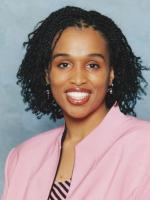
Dr. Almeda Wright, courtesy photo of Yale Divinity School
Almeda Wright is the youngest of the influential Christians we’re hearing from in this series for Lent. So likely you have not heard of her yet but her influence and vision for helping us understand teens and faith in our culture today will spread as she teaches religion at Yale Divinity School .
I did write briefly about Dr. Wright in an earlier column comparing her upbringing to my own, which in some ways was remarkably similar in spite of her African American family. She too was the daughter of a deacon (Baptist) who also checked on his daughter’s religious life while she was in college by asking during Sunday evening phone calls, “How was church?” A huge additional difference between us is she loved math and engineering and went to Massachusetts Institute of Technology (MIT) while I would have totally flunked out there!
Her academic work for her doctorate included extensive study and research on faith and youth. I met and interviewed her at a conference now called Faith Forward. She was reporting on studies she did over three summers with youth leaders who participated in a faith based leadership development camp.
She had asked these youth—admittedly a group inclined to be much more religious than average—how they have experienced God in their personal lives. Over 90 percent said they had personally experienced the presence of God: sometimes in things such as a test in school (her favorite answer) but also in worship, nature, and personal prayer. They recognized God’s blessing in their lives. They were also the kind of kids who were active and involved in service projects and helping others.
But, and this is the kicker for Dr. Wright, these youth rarely if at all connected their personal faith to problems in the larger culture like racism or drugs or poverty. Her hunch was they hadn’t been empowered or encouraged to make those connections and to figure out what Christians should or could be doing to make a difference. She further suspected that too often in our churches, the personal relationship with Jesus is seen as what’s important. Wright believes absolutely that a personal bond and belief is important, but wants people to take their faith further into the world.
Today’s youth (in contrast to earlier times) have parents whose major creed may be translated as “play nice in the sandbox,” Wright half joked. The religious beliefs of the youth are separated from their experiences of an evil like racism, or they absorb that religious faith is just private. She believes churches and parents can help teach teens the link between a personal faith and making positive changes in the world.
What gave Wright her tremendous sense of the importance of faith in all of life? It was her family, and we’re not just talking her nuclear family, but the whole extended family where her cousins, aunts, and uncles were all part of her church. “So on Sunday we were going to church and on Wednesday Bible study, and on Saturday there was youth group or choir or an usher meeting,” she described. “I remember singing and leading worship as early as five.”
She went to a Catholic school for awhile and there religion was taught across the curriculum, including making crosses out of straws or macaroni, things like that, and was immersed in many religious traditions and rituals.
Yet her path to teaching in the field of religion was not clear cut. She was studying engineering at MIT because she’d always been good at math, but took a semester off from her major to study art, history, and religions broadly (Christianity and Islam) in Spain. When she got back to MIT, she finished her degree in engineering, but wasn’t sure what to do after.
Because of her strong beliefs, she considered ministry, but two things were holding her back. “I’m a Baptist and I’m black and I’m from the south and that means that there were not women in ministry in my tradition. It wasn’t even something that I could foresee as an option.” Of course in Massachusetts she did see women in ministry, and “all of these things came together” to give Wright a new idea of how to serve God with her life. She did end up being ordained for teaching and pastoral ministry.
Most of us don’t have firm ideas while younger of how to put together personal faith with a path of serving God in our communities and world, but over time it becomes clearer. But it won’t if kids are not exposed to these ideas from an early age.
“Start children off on the way they should go, and even when they are old they will not turn from it” the old Proverb goes (22:6, NIV). While that does not always happen, we can use the traditions of Lent and Easter and other religious holidays to “teach your children young” as the old Crosby , Stills and Nash lyrics go. Another line from that song echoes Wright’s message, “You … must have a code that you can live by.”
***
For a free booklet, “Talking to Your Kids about God and Faith,” send two U.S. postage stamps and write to Another Way Media, Box 363, Singers Glen, Va. 22850.
Hear a presentation by Dr. Wright given at the Children and Youth New Kind of Christianity (now called Faith Forward) conference. Dr. Wright also has a forthcoming book due out Summer, 2017, The Spiritual Lives of Young African Americans, Oxford University Press.
Another Way is a column by Melodie Davis, in syndication since 1987. She is the author of nine books, most recently Whatever Happened to Dinner. Another Way columns are posted at FindingHarmonyBlog.com a week after newspaper publication.

Vera Mae Perkins and John Perkins, being videotaped for the Journey Toward Forgiveness TV documentary, 2000. Photo by Jerry L. Holsopple. Videographer, Jim. L. Bowman.
Another Way for week of March 24, 2017
Lenten Conversations: John Perkins on Forgiveness
Editor’s note: Fifth in a six-week Lenten series of interviews Melodie Davis conducted with influential Christians over several years.
He had one of the most terrifying opening lines ever for a story: “One of the sheriffs took a … pistol and cocked it to the side of my head and pulled the trigger. … in my mind I was a dead person.”
Speaking was John Perkins, a well known champion of social justice and reconciliation—who dealt in a personal way with racial brutality in Mississippi in the 1960s.
I did several phone interviews with John Perkins preparing a producer for a 2001 documentary which aired on ABC-TV, Journey toward Forgiveness. But I felt like I knew John, too, after hearing him speak at an American Bible Society meeting and then sharing a taxi ride with him to the airport.
John grew up in the south where his brother, Clyde, was killed by a town marshall after a disturbance in a movie theater line. Clyde had fought in World War II and had a difficult time readjusting to life in Mississippi where, as a black, he was expected to conform and stay quiet. John was devastated and angry after his brother was killed. His parents, who had been sharecroppers in the 30s, wisely encouraged him to move to California; eventually he served with the military in Korea, became a Christian, and then married Vera Mae back home in Mendenhall, Mississippi, and became a pastor.
John believed strongly in encouraging people to help themselves and in such a role, helped to organize an economic boycott. He was briefly jailed in Mendenhall, and then some students were arrested for organizing a similar boycott in a nearby city. John drove to the jailhouse to help the students make bond and the sheriff “couldn’t believe that I would come back to make bond,” John recalled. “I didn’t have any understanding of the hostility that these people had.”
The guards started beating John and the two others who were trying to post bond. “They started beating us … the sheriff began to curse us and say, ‘This is that smart _____. This is a new ball game [here]. This is not Mendenhall. You are in my county now.’”
The sheriff had cocked the gun at John’s head and at one point a fork was shoved up his nose. He was kicked repeatedly in the groin. In the eyes of his tormentors, John saw hatred.
“That hatred frightened me. You get just a little glimpse of it and say, ‘I don’t want that dark place in my own life.’ I made a bargain with God that night, I was so fearful. I was thinking I was gonna be killed. And I said, ‘God, if you’ll let me out of this jail, I really want to preach a Gospel that is stronger than my race, stronger than my economic interest. I wanna preach a Gospel that can reconcile black and whites together in the body of Christ.’”
What I admire so very much is that out of this experience, John started a foundation which still works at reconciliation between races, justice, and development for all.
John explained further, “Reconciliation to me is not so much for the white people I encountered. It is really for myself. I saw that hate in the eyes of the people that tortured me and I could feel myself needing to hate them back.” He went on, “I felt a weight on me. I began to recognize that and really hear the Scripture that says, ‘Unless you can forgive those who trespass against you, how do you expect your heavenly Father to forgive you?’”
John emphasized that forgiveness was his way to shed hatred from his own life. “Forgiveness frees me,” he said. “Not only have I been loved by God, but I’ve been loved by God’s people.” John used his nightmare to help others latch onto the freeing experience of forgiveness.
After hearing John’s story, it restored my hope and faith that people could get along across the many boundaries that divide us. He went beyond reconciliation to preach that unless people are empowered to pursue economic development, they will continue to struggle in many realms. John never received a college degree, but I could see he had the wisdom of a Solomon.
I still grieve and stress over the racial injustice we find in our world, and work to reach across boundaries for better understanding and more harmony. In this Lenten season as we move closer to the special time of remembering Christ’s death on the cross, we can reflect on how Jesus also turned to those who tortured him and forgave them. It’s a way to find new freedom and love.
Find out more about the John and Vera Mae Perkins Foundation at https://jvmpf.org/
These Lenten Conversations are available as a free small booklet by clicking here: (Lenten Conversations PDF). Or for a printed version send your name, address, and two U.S. postage stamps and I’ll mail you a copy. Send to anotherwaymedia@yahoo.com or Another Way Media, Box 363 , Singers Glen, Va. 22850.
Another Way is a column by Melodie Davis, in syndication since 1987. She is the author of nine books, most recently Whatever Happened to Dinner. Another Way columns are posted at FindingHarmonyBlog.com a week after newspaper publication.
Another Way for week of March 17, 2017
Lenten Conversations: Ken Medema on Really Listening
Editor’s note: Fourth in a six-week Lenten series of interviews Melodie Davis conducted with influential Christians over several years.
I first heard Ken Medema’s incredible music and stories at a Mennonite Church convention but I’m not sure where or when. I say incredible because I don’t know of another excellent musician who can listen to someone telling a story and then make up meaningful lyrics and simple tunes while singing in front of a crowd and have them turn out so very well. Plus there’s the blind thing but he’s never let that stop him.
Now in his 70’s, Ken performs piano and voice concerts across the U.S. and Canada, and has recorded many albums. One of my close friends used to be a booking agent for a comedy duo at similar venues and through her connections and assistance, I was able to record an interview with Ken. He broke into a number of on-the-spot made up songs even during our interview, which I loved! My oldest daughter also sang in a teen choir at a youth convention and got to share a story with Ken while he listened, and then created a song from her story. Classic Ken Medema.
 But I was especially charmed when he explained how that act of listening so intently until he caught the “nub” of a story is also a helpful and practical skill in relationships: with a spouse, children, friends, and even enemies. I dare say it was also a gift that Jesus possessed in spades—something to remind ourselves as we journey through Lent
For example, Ken and his wife Jane have greatly differing personalities. Ken is basically an introvert who, while he enjoys people immensely, after leaving a concert or crowd, needs to retreat into his own skin. He said Jane, on the other hand, is such a talkative people-person that she doesn’t know “what she thinks until she says it.” Jane needs people around with a lot of interaction, because that’s how she thrives. “And I can’t thrive unless I have lots of time alone,” Ken described.
So if Jane, for example (or either spouse in a marriage) is dishing out “a catalog of the ‘you don’ts,’ such as ‘You don’t send me flowers, you don’t seem to have interest in some of the things I talk about, you don’t seem to like the books I read,’ –how do I respond?” asks Ken.
Suddenly in that conversation, Ken said he hears an undertone of “I feel kind of second rate.” He said to look for a key like that in any discussion or disagreement. “I feel second rate” or “less than” or “not appreciated.”
Ken went on: “Rather than responding to her with ‘Oh yes I love your cooking, I love the books you read’—I can respond with ‘I feel kind of overwhelmed, because you are so full of energy and ideas and my mind is so slow sometimes, I feel overwhelmed.’” Those kinds of words—overwhelmed, second rate, can be keys to turning a brewing fight into a conversation “and then we can work together at figuring out what’s going on rather than just making accusations,” Ken noted.
 Ken shared how he listens to people and their stories the same way. “I hear a nub, I hear a little phrase, I hear the central focus of what the person is trying to say.” And that gives him a key phrase out of which to make a song!
In 2010, Ken and his wife were invited to move in with the family of one of their children. In this setting of living with loved ones but needing to work out some of the kinks of three generations in a household, he enumerated the advantages. “Kids are hard to raise,” Ken stated. “But when you’ve got four adults who basically agree on how to raise a kid, when one adult gets tired, another can take over” which is a huge help. In this setting he and Jane would say to the adult children, “You guys get out of here, go see a movie. We’ll take care of the kids.” Ken remarked, “The relief is palpable. It’s amazing how that works.”
He added, “When differences crawl all over us, we both can find our satisfaction being together among the kids and grandkids, and it brings us together in better ways.”
Ken and his wife have enjoyed many years together even though there were rough times. Their central focus has been serving God and the church. I can think of no better scripture for this little Lenten meditation than John 13:34 where Jesus says, “A new commandment I give to you, that you love one another: just as I have loved you, you also are to love one another.” Or as Ken sung at this point in our conversation:
“We’re such different people, but we’ve so much to share.
Sometimes I’m frightened, and sometimes it’s more than I can bear.
And yet I belong to you, and you belong to me,
And we both belong to Jesus, so let’s learn how to be a family.”
***
Have you met or heard Ken Medema? Stories or impressions?
***
Ken Medema’s music and concert schedule can be found at kenmedema.com. For a free booklet I’ve written called “Secrets of Long Marriage,” write to anotherwaymedia@yahoo.com or Another Way Media, Box 363, Singers Glen, Va. 22850.
Parts of this interview appeared earlier on the Shaping Families radio program and website. You can hear the interview here and hear Ken’s snatches of songs!
***
Another Way is a column by Melodie Davis, in syndication since 1987. She is the author of nine books, most recently Whatever Happened to Dinner. Another Way columns are posted at FindingHarmonyBlog.com a week after newspaper publication.

 findingharmonyblog