


At the beginning of Lent, the same lectionary passage of the temptation of Jesus from Luke 4 was read two times at our church because we had two services that day, one being an afternoon installation of our new pastor, Stephanie Sorge Wing.
As it happened, I was lay leader during the morning worship and anytime that happens, I find it more difficult to actually enter into a state of worship because of having too many things on my mind. When do I get up next? Do I stand or sit for the next reading or song? Will I stumble or mispronounce a word?
So at the afternoon service the scripture passages, read by Stephanie’s father, who is also a minister, spoke to me in totally new ways.
When Sheldon Sorge read aloud the story of “The Temptation of Jesus” in Luke 4: 1-13, he lingered over the words “…When the devil had finished every test, he departed from him until an opportune time (v. 13, NRSV).
Dr. Sorge pointed out we sometimes forget that Jesus’ temptations were not once and done. In that very passage, the scripture says Jesus was “tempted in every way,” and elsewhere we read that Christ was tempted in all ways and is therefore able to help us as we are tempted. That’s something we forget as we struggle along and often end up confessing the same old tired sins Sunday after Sunday: pride, arrogance, thinking bad thoughts (or however you fill in those blanks).
So Jesus was tempted many times after his well known wilderness temptations. Now of course Jesus did not sin, but he was tempted. There’s a difference.
Jesus struggled with his mission on earth right up to the end, where he wrestled in the Garden of Gethsemane. This was not drama, or an act. Jesus must have been torn at the heart not wanting to go through with what he knew lay ahead. Now Jesus was also God, so there was internal warring with himself and with God’s overall plan for the world. If the human/divine Christ had not gone to the cross … would there have been a plan B?
Never mind. Jesus took plan A, and that has made all the difference for the millions who profess faith in Christ.
I am moved and reassured in my faith as I learn from scholars, theologians and pastors whose education, intelligence and IQs go far beyond mine, to hear and know that they have explored and plumbed the scriptures in original languages, read the great philosophers and biblical historians, and proclaim with the beloved but oh so human disciple, Peter, “You are the Messiah.” Peter, of course would be tempted to deny that he ever knew Jesus a short time later, and sinned as he succumbed to powerful self-protective urges by swearing that he never knew Jesus. Yet still later, the early Christian church was built upon the faith, preaching and servanthood of Peter.
So if we worry that we’ll mess up (on things greater than sneaking some chocolate or a donut), we can look at both Jesus and Peter and know that Jesus did not mess up, even though the great tempter continued to jab and belittle and attempt to veer Jesus as he “set his face like flint” to Jerusalem, and the cross.
As we struggle through these days of Lent aware in new ways of the many small ways we fail, thanks be to God for the love, forgiveness and redemption we receive through Christ!
***
As you reflect on the ongoing temptations of Jesus, what thoughts come to mind? Is it helpful or not helpful to look at Christ’s life this way?
***
What helps you overcome the ways you are tempted?
***
During my first year blogging, I offered a meditation for each weekday of Lent (ambitious!). They began here.
Baked Virginia Apples
I’ve lived in Virginia over 45 years (counting college) and have never ever made baked apples that I can remember.
What is wrong with this woman?
Baked apples are as Virginian as well, a beloved dish at Massanetta Springs Camp and Conference Center (Presbyterian), a traditional standby for Thanksgiving and other holiday or festive meals, potlucks, a homey side dish at Cracker Barrel restaurants, and as simple as throwing cinnamon candy hearts in a baking dish with apples cut in half. Bingo. Dessert. Somewhat healthy.
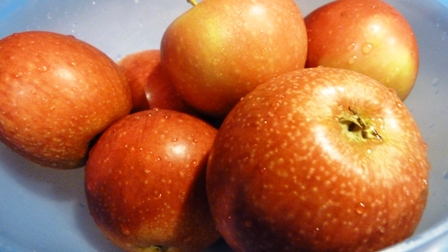
I guess if I have fresh great baking apples on hand I’d rather have an apple pie, and my hub is kind of the same way. Even though it is a whole lot more work.
Once again this year our church is providing meals and workers for the emergency homeless shelter (Valley Open Doors) that many congregations help with, including the local mosque. And once again I used this (is that shameful?) as an opportunity to make a different dish with this blog in mind. So here goes.
And okay, I didn’t get to taste the final result (but I should’ve made a side dish with one or two to do so) but I know the sugary-buttery-cinnamon-y syrup was, yum, just lovely. I may have to try it again.
For my batch, I did NOT want to use candy hearts because I didn’t have any on hand plus, well, candy. Is brown sugar and butter healthier? I don’t know but here’s an adapted recipe from a PBS Foods recipe. I didn’t have time to slice the apples so I made them as halves. You can mix this dish up ahead of time and pop it in the oven about 45 minutes before dinner. Serve warm with ice cream, whipped cream, or just plain.
Baked Apples
8 large tart apples (I used Stayman; any good baking apple)
juice of one lemon (optional, to keep apples from turning brown, and adds vitamin C)
½ cup brown sugar
½ cup melted butter
3 teaspoons cinnamon
¾ cup water
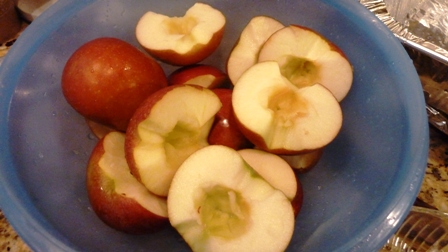
Wash and slice apples in half, and cut out core. Do not peel or slice.
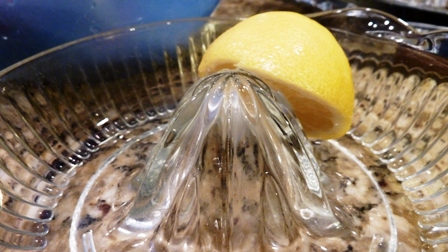
Mix lemon juice thoroughly (stir) with apple halves in large bowl. Add the rest of the ingredients and stir some more.
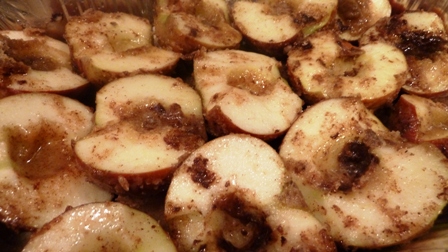
Place apple halves with peeling side down in greased 9 x 12 baking dish. Bake at 375 degrees for 35-45 minutes, depending on the type of apples you use. Pierce with fork to determine when apples are soft. Serve warm. Serves 16.

For more great Virginia recipes from cooks associated with the Mennonite Media offices in Harrisonburg, Va., of 2010, check out my part cookbook, part inspiration for keeping family mealtime: Whatever Happened to Dinner?

About 250 years ago in the 1750s, lived a young man, Joseph Hochstetler, a very early and distant relative of mine (and of thousands born into that Mennonite “tribe”). His family was tragically attacked by original occupants of lands “settled” by some of my original tribe. Joseph’s mother and young sister were scalped and killed, and he, his father and one brother were taken into captivity by Native Americans during the French and Indian War in eastern Pennsylvania.
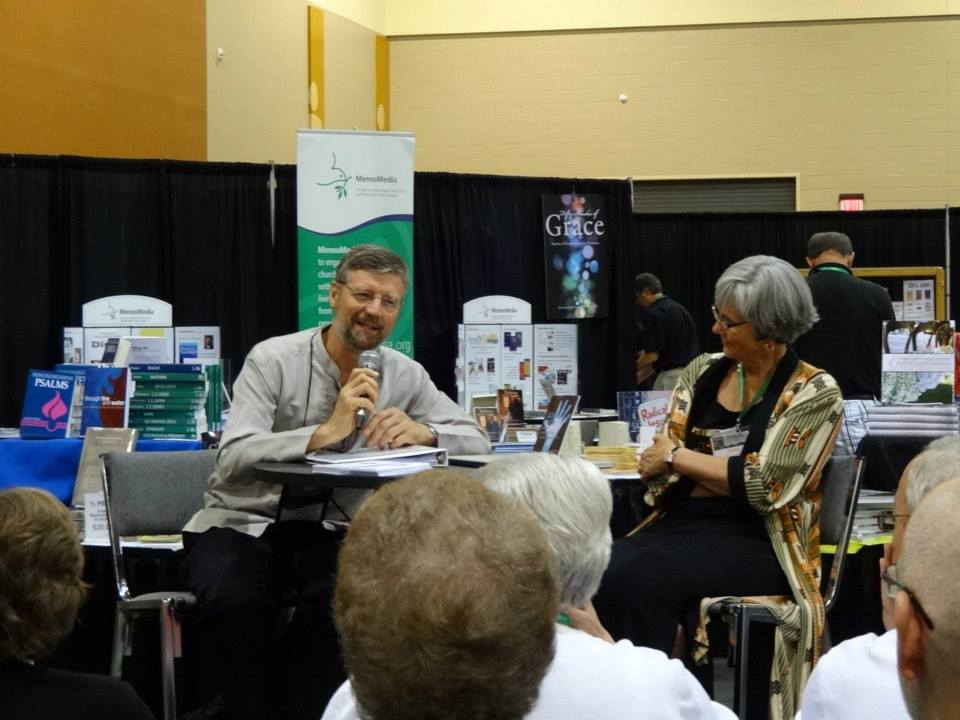
Ervin Stutzman, left, and Shirley Showalter, right, talk about their books at the 2013 Phoenix Mennonite Church USA convention.
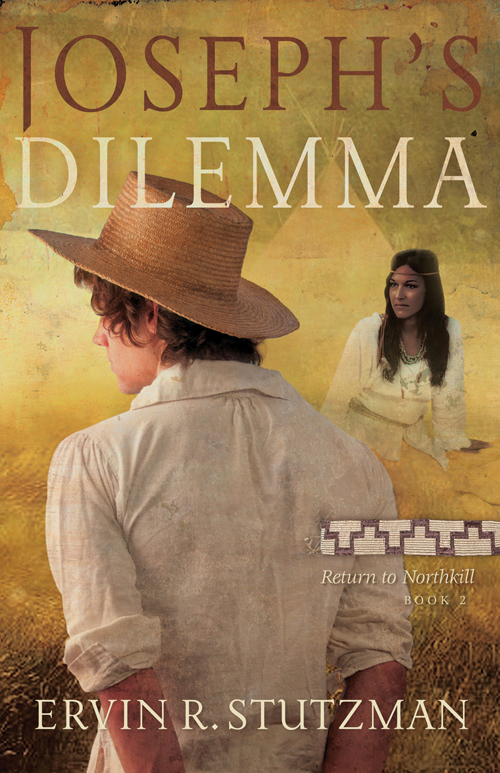
Another distant relative, Ervin Stutzman has been imagining, researching, and laboriously writing three fictional accounts of what might have transpired after such a tragic scenario. Joseph’s Dilemma (published May 2015) weds historical fiction—and romance, if you will. I admire Stutzman tremendously for writing the whole Return to Northkill trilogy; the first book called Jacob’s Choice (about the father) was published in 2013 which I wrote about here. The final book is set to come out this October 2016, titled Christian’s Hope, the story of Joseph’s other brother. Over the last 10-15 years, Stutzman’s ability to doggedly research and churn out prose all the while holding down other jobs as Eastern Mennonite Seminary dean (earlier) and now executive director of Mennonite Church USA is amazing and can be motivating for other writers who must keep a “day job.”
Fiction writing is not easy in my opinion. Stutzman is improving greatly in the genre. Here he does a reasonable job of showing us the action in progress rather than just telling us what happens. He gives us surprising plot turns, even when the main dilemma is set up by the cover artwork, depicting the basic premise of the novel. Through the fiction we are allowed to enter a different and realistically portrayed reality: we meet a Delaware Indian mother who longs for a son to ease the emotional and physical woes of a widow and single mom (someone to hunt meat for her and her young daughter), after losing both a son and a husband in hostilities. The main points of view shift between young Joseph and his eventual adoptive mother, Touching Sky. Another Amish romance author, Adina Senft, calls Stutzman’s prose “spare” (that’s a good thing in my book!) and recognizes “a tour de force of research.”

In an email, Stutzman allows that other readers have also told him that his fiction writing skills have grown, and in person, he gets a glint in the eye and promises that the new book, Christian’s Hope, will be his best yet. I doubt that is just writer hope or advertising hype. In his first book in this series, Jacob’s Choice, I felt Stutzman almost got bogged down in trying to write a fictionalized version of true history with too much detail. In this volume about Joseph, since much less is known about this main character and real life historical person, Stutzman takes freer reign (within the bounds of accurately portraying his research) to imagine what it could have been like for a young captive like Joseph. The awakening of a young man’s interest in the opposite gender over the course of six years of captivity is particularly winsome and played with just the right touch.
So it was pleasurable* to finally sit down and crack the pages of Joseph’s Dilemma. Yes, I’m behind, and have a large stack of books I continue to plow through.
My mother and I ended up reading the book at the same time. She too was impressed by the insights the book offers about Native American customs of the 1700s, and the turmoil brought about after being captured by an “enemy;” how could one ever grow to like and love those enemies, and then what happens when as part of a treaty, you are forced to go back to your original people?
In the first book in the series (and of course it’s best to read this trilogy in order), we meet young Joseph as a teen who picked up a gun to try to defend his family against the attackers but is ordered by his father not to shoot. While loving his father, he does not understand why his father’s religious beliefs do not allow him to protect his family. One of the first books I ever owned (but got rid of long ago), was Captive of the Delaware, a book of fiction for children published by Herald Press, using some of these same themes.
Joseph learns to speak in Delaware and eventually finds himself dreaming in his new language—a definite sign that he is acclimating. Joseph explores the faith of his adopted mother as expressed by the Delaware (also known as Lenape) tribe, and Stutzman steps back enough from his own deep seated Anabaptist Christian convictions regarding the power of forgiveness and the ultimate futility of weapons of war, to help us also better understand some of the beliefs original peoples share with many people of Christian faith. But he doesn’t gloss over the sharp distinctions, either. As the book’s ending nears, the reader is as torn as Joseph—a sure sign also that as a fiction writer, Stutzman has done an excellent job of engaging us.
I’m also happily anticipating reading Christian’s Hope for what I hope is a satisfying end to the stories of these three men—cousins by both blood and faith!

Author Ervin Stutzman
***
[Disclosure: While I work as one of several managing editors for Herald Press, I have not been involved in editing or marketing Stutzman’s books other than to help do news releases and social media; for the entire Northkill series, I also had the opportunity to weigh in on the models chosen for the cover shoots for the series and what was the right clothing for that period? Great fun!]
***
* One of the things I enjoy so much about books is just opening one up, no electronics, and turning one page after the other as I drift off to sleep. No, I don’t have or want an ebook reader (but I’m happy for those who do. We authors love readers however we can get them!) But with a plain old book, I don’t have to worry about a charged battery, having yet more screen time in my day, losing a cord (if I travel with it), spilling water or coffee on it, or cracking the screen. And really, one less electronic thing in my life is a good thing.
***

You can buy Joseph’s Dilemma here, (paper or ebook) or through your favorite local bookstore and other online retailers.
***
Are you part of the Hostetler/Hochstetler clan? Let me know or visit the official Hochstetler website, or join the Facebook group “Descendants of Jacob Hochstetler.”
***
Do you enjoy an ebook reader? Which one? Or are you a hold out like me?
***
How does the story of Joseph compare to hostages today who begin to identify strongly with their captors?
What was the first place like which you and your spouse lived in as a married couple? Your love nest, the place you came home to after your honeymoon? Why do we remember those pathetic first places with such rose colored glasses?
I was telling someone the other day we lived in a 10 by 45 foot trailer, which included the outside length of the trailer hitch. Roughly 400 square feet inside. Even that is bigger than today’s “tiny houses” that run from 100 to 400 well-arranged square feet.
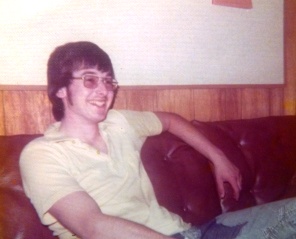
Stuart’s bachelor pad, before.
I worked very hard with my fiancé to turn his bachelor pad (above) into a suitable honeymoon haven. The interior walls of the mobile home were covered, as were most, in the typical faux wood paneling of the day.
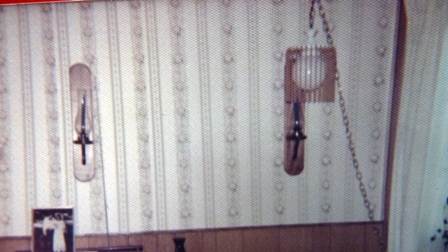
Same wall after I supplied some homey touches.
I brightened the living room with stripped wall paper and new drapery, both ordered from Sears of course. (I had almost forgotten about the hip bangle light there!)

Kitchen in our mobile home.
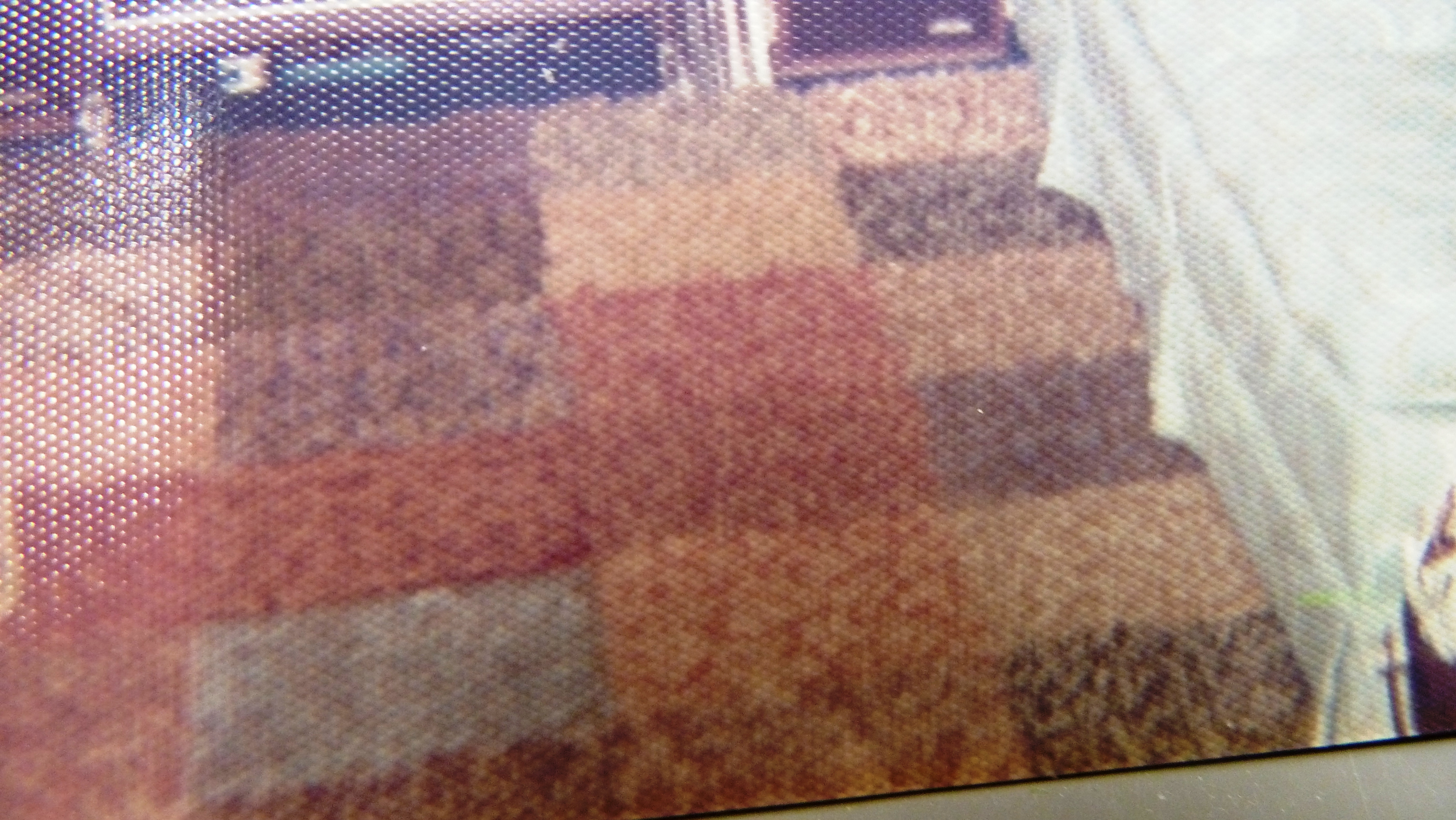
I made cute little curtains for the kitchen. Stuart installed blue carpeting throughout which helped warm the nondescript beige vinyl flooring tremendously. In the living room we also used a mod 5 x 6 foot area rug which I duck taped together in college (shag multi-colored samples from a carpet store, but I can’t remember if I got them free).
Shag! carpet.
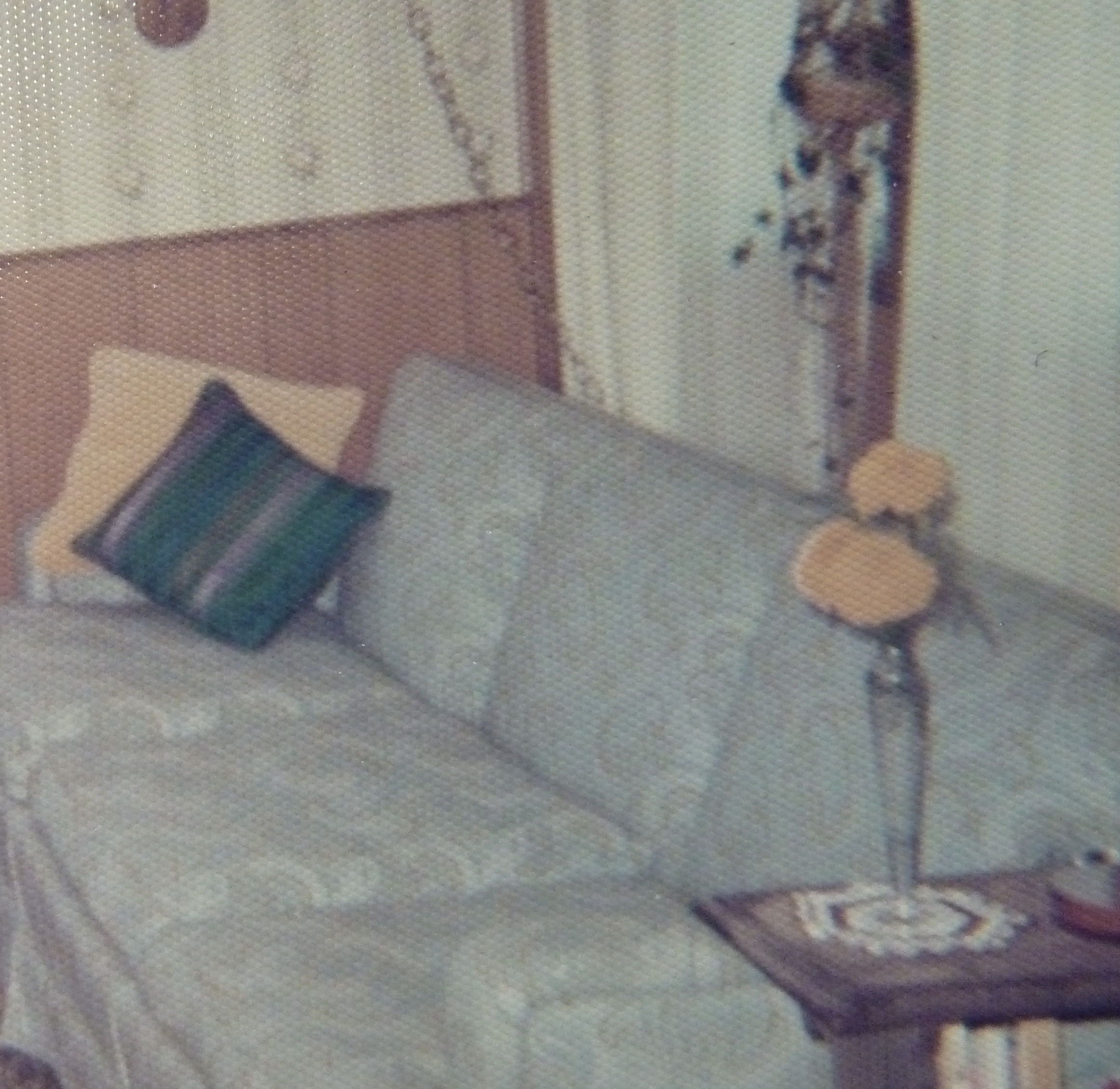
But I loved the high dollar sofa we were able to have (blue and green floral). Somewhere along the line while engaged I won or received a $150 gift certificate to a small custom home decorating/furniture place called Mary Glick’s (long since out of business). The sofa, originally in the $300-400 range (1976 prices) had been marked down to maybe $190 and thus our first sofa was low cost but well made. We kept that sofa when we eventually moved to a much bigger abode in 1977, and it lasted through the first 10-15 years or so of raising our family.
Sofa.
But more than the space, it was special because it was ours (paid off), and we only had to pay $45 or 50 a month in lot rent. Cheapest living year ever. And yes, we used that opportunity to save up for a down payment on our first home.
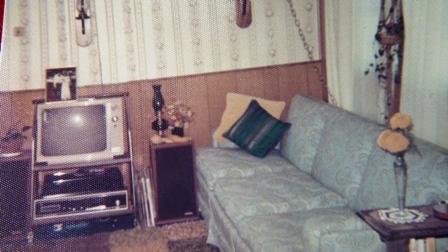
Living area. The trailer also had 2 bedrooms.
I think that those first apartments, trailers/mobile homes, basements, or houses most of us occupy the first year or two of married life feel special because for many of us (especially when we hang on to that partner for 30, 40, 50 or more years), it is the first time we ever truly had the opportunity to make a space our own. The memory of all those new household gifts from family and friends from showers and the wedding, add to the shiny memories.

Contented husband and cat, with a throw protecting the new sofa.
As children many of us “played house” endlessly, creating homes out of blankets tossed over tables, or among sticks gathered and stacked in the woods, or on stones using leaves and nuts for “food,” or forts of snow and ice, or playhouses if we were lucky.
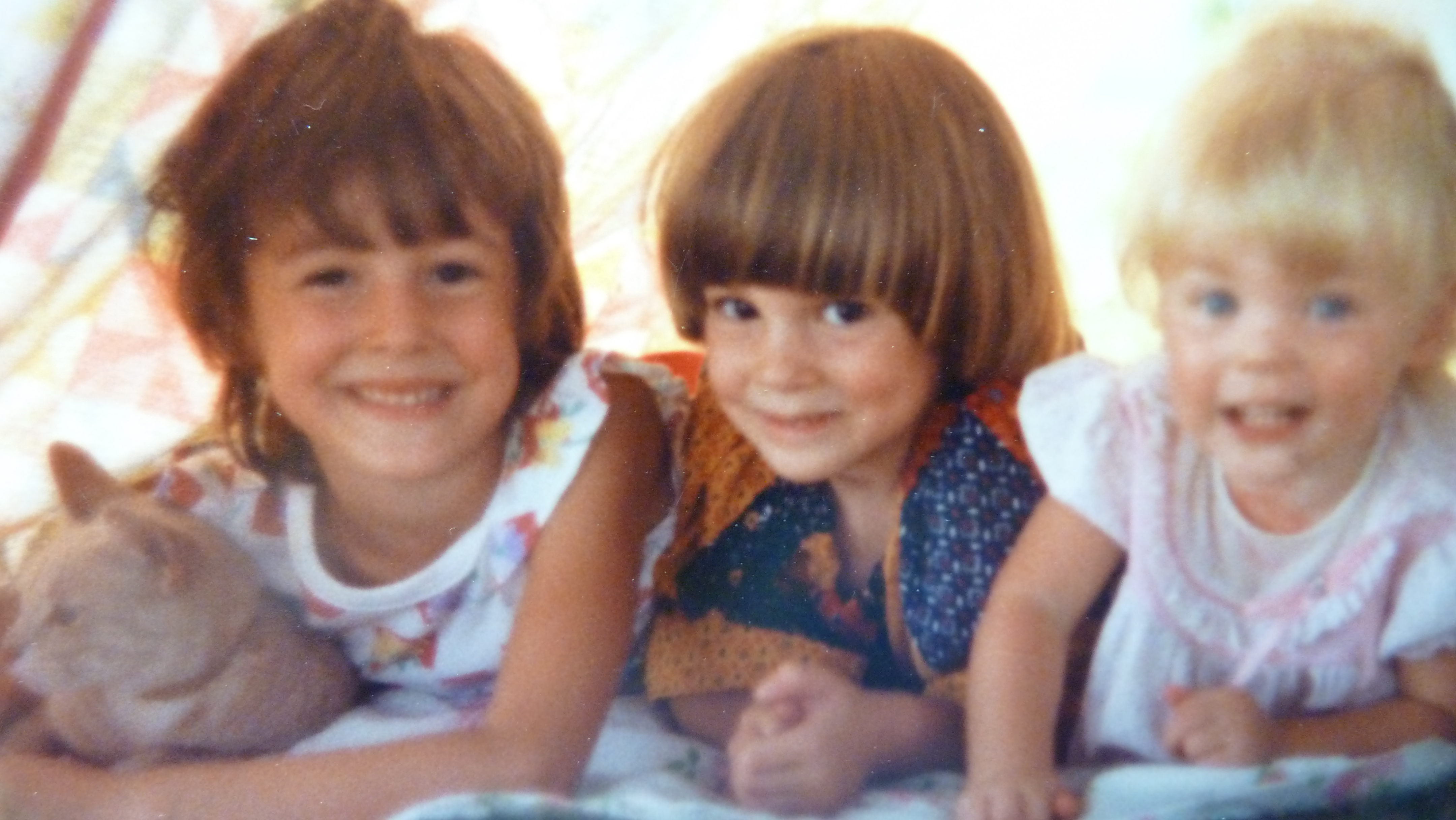
Our three daughters playing house years later. Notice the design of the now faded throw.
Thus it is not only the romance of new love that makes our memories special, but the move from playing house to establishing a new real home that lingers in our memories.
That first place is also often where we have our first arguments and marital disappointments, when we burn the dinner and discover their (or our own) major flaws.
Those of us with enduring and loving marriages (hanging on in times of disillusionment and apologizing after driving off in a huff) look back on our first home, no matter how humble, cramped or miserable, as the tender incubator of young love.
Many of us need this reminder from 1 Peter 4:8: frequently throughout marriage: “Above all, love each other deeply, because love covers a multitude of sins.”
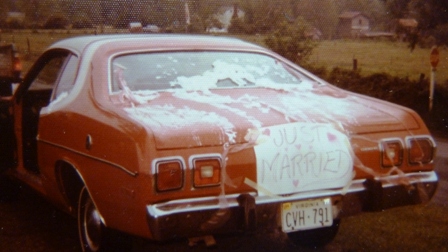
Our honeymoon car, a 1974 Dodge Dart.
***
What was your first space like after you got married?
What do you think helps us treasure those memories?
For my regular weekly newspaper column, Another Way, click here. Or to subscribe to receive it each Friday, here’s the subscribe option.
Busy days mean you hear less from bloggers. (Maybe that’s a good thing.) I feel like I’ve been AWOL and here’s a little of why since the first of the year (not a complete list!):
- New grandson born!
- Blizzard of 2016 blew in.
- New pastor moved in and I helped paint her office.
- Lined up finances for a solar installation.
- Difficult decisions about retirement finances for my husband.
- And then the dog got hit by a skunk.
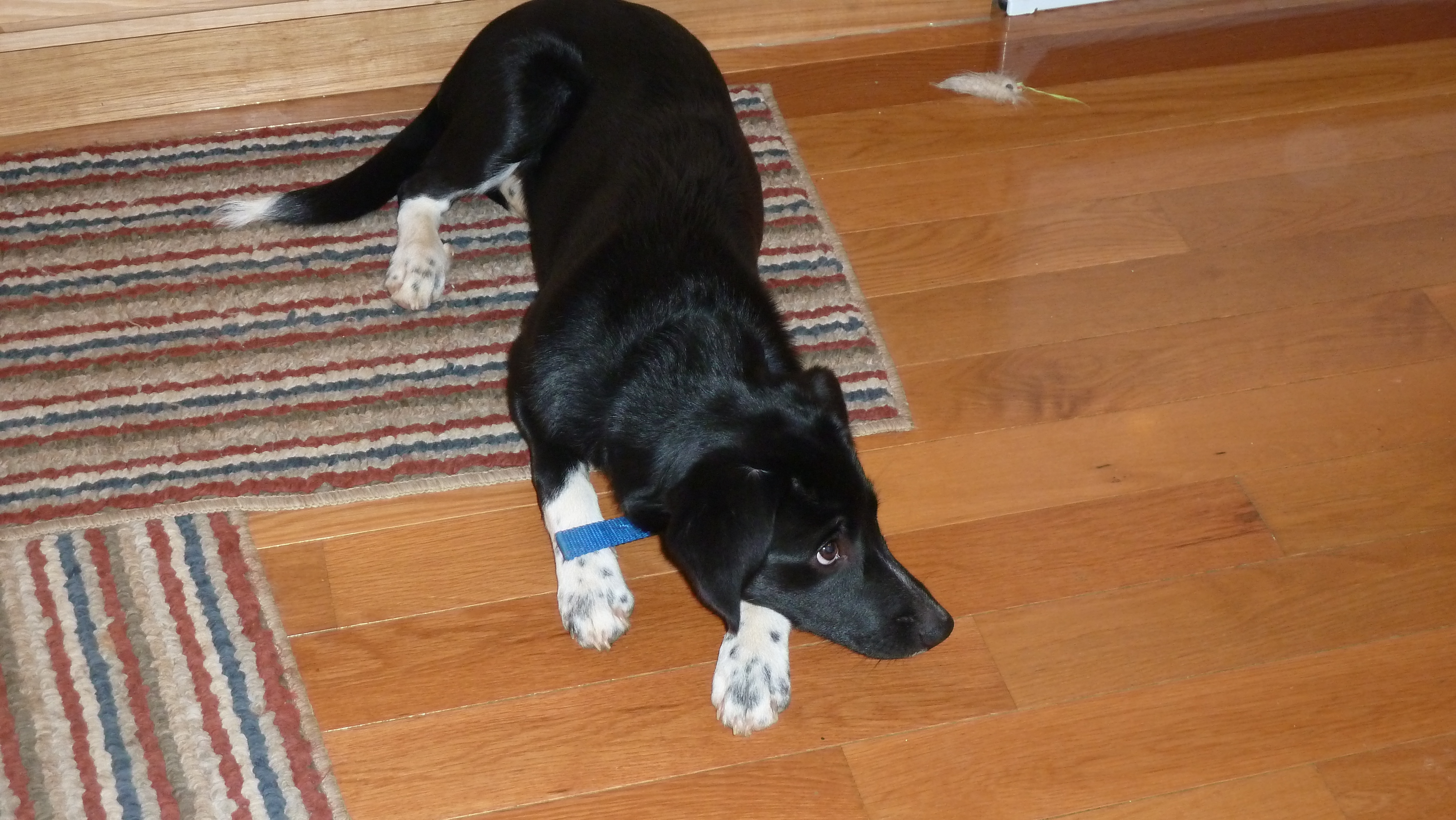
It was this last item, the SKUNK, that threatened to do me in.
The skunk episode reminded me of how overwhelmed I felt long ago when our two older girls brought home lice from school and we learned that they WOULD NOT BE ALLOWED TO GO BACK until they were cleared of lice, nits and all.
Three daughters, all with thick, longish beautiful hair, with hundreds of miniscule nits (lice eggs) that you literally had to scoot off each shaft of hair with your fingers. Endless work.
Oh yes nit combs helped some, and we shampooed multiple times with special lice shampoo that you have to wait forever to rinse out, and finally got shorter haircuts for the two hit worst. I’m told that now over-the-counter shampoos are not even effective.
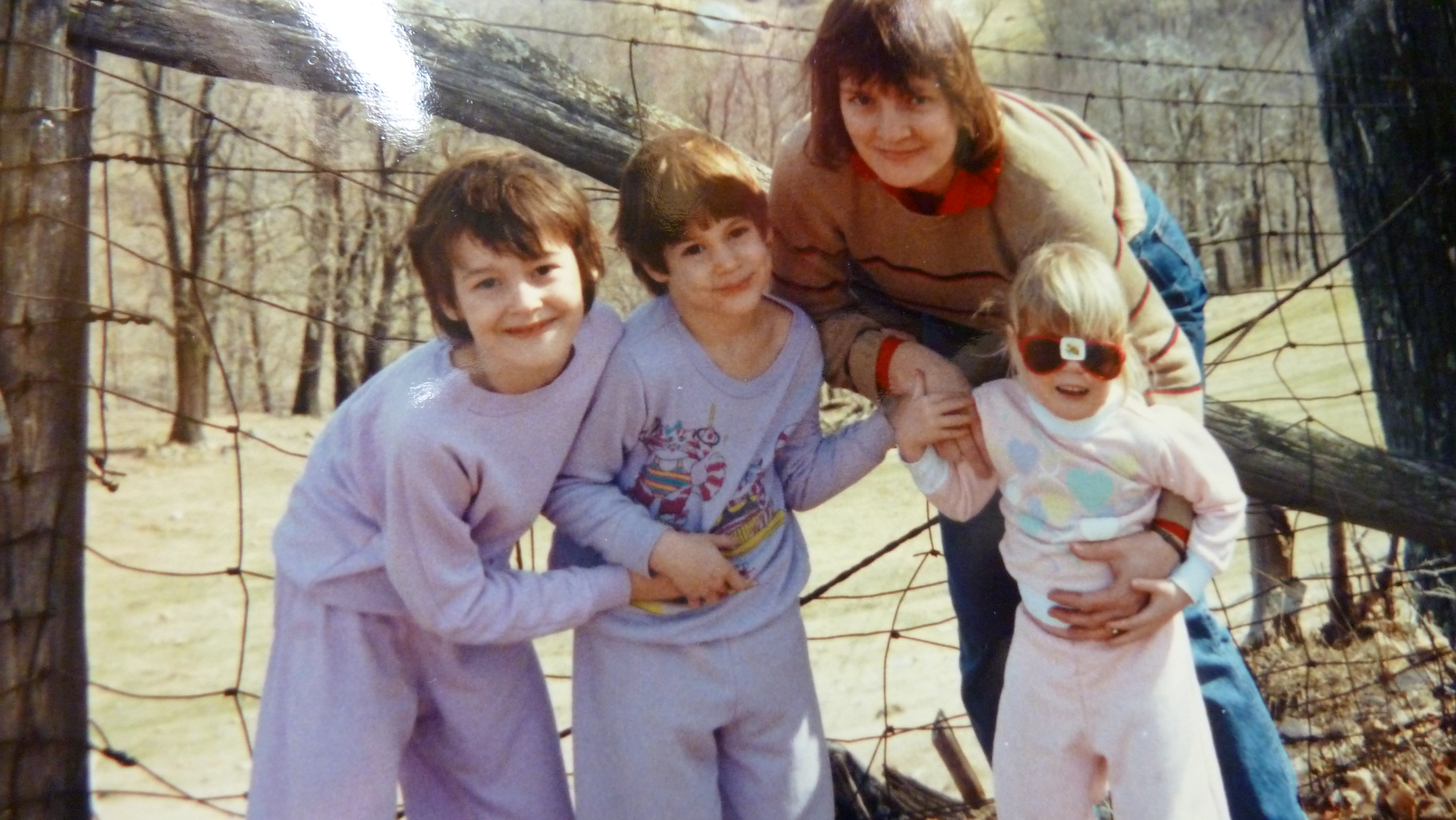
A photo soon after their lice-induced haircuts, at Highland County Maple Syrup Festival. Rockin’ those sweat pants outfits.
If they had been boys I would have just shaved all their hair off.
Doing endless laundry: sheets, blankets, mattress pads, and mounds of clothing had to all be washed. Heaps of stuffed animals and pillows had to be stuffed into garbage bags and closed tightly for two weeks so the darn things would DIE (I mean the lice, not the stuffed animals).
Plus the shame. Lice are not only despicable and a bother, but tend to make your children into pariahs too. Dare they go to a birthday party if they’re not allowed back in school yet? Should I tell the haircutter at the beauty school about the lice? (Yes!)
It was probably one of our lowest periods in parenting.
But when you put it in perspective, well, I had not even thought of it in years. Years! On the grand scale of things, lice and getting spewed by a skunk are not cancer, not a bad accident, not a brain injury, not rapidly progressing macular degeneration! Nothing to really cry about. I thought of these things as I shampooed the dog, washed rugs and dog blankets, set out dishes of vinegar to absorb odors, and mopped the entire basement floor with Lysol, then cleansed the washing machine with several loads of Clorox water.
Frustrating and time consuming yes, but a reminder to be oh so thankful. (Plus, friends noted there are so many dead skunks on our roads right now with February-March being skunk mating season. Who knew?)
Most of the things on my list above are more or less happy and exciting occasions. The new grandson makes us heady with happiness and while his parents are cautious about oversharing (a valid concern!) you can bet we are pleased and proud.
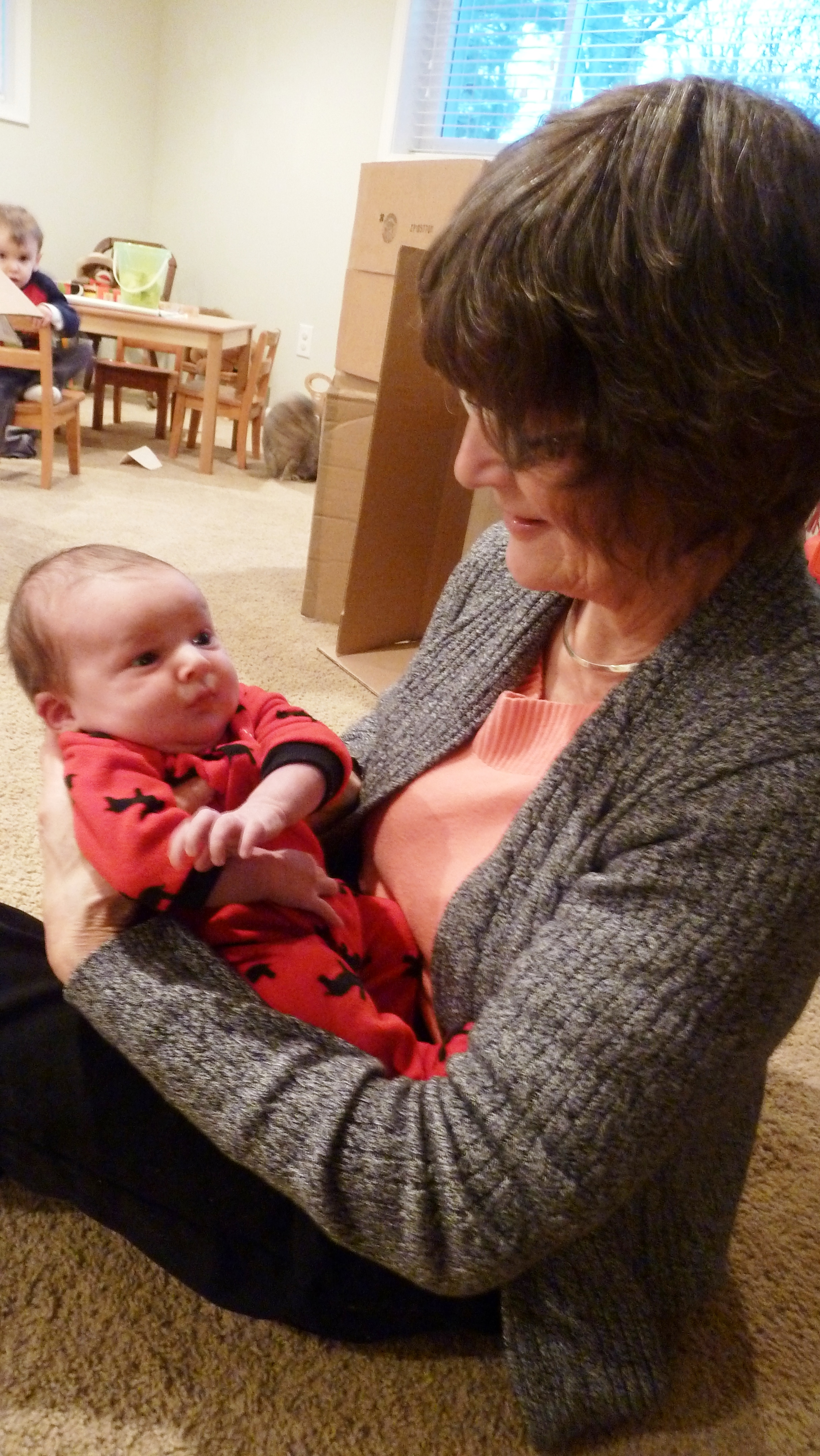
There were other distressing events and while blizzards never bring about happy dances any more at our house, it definitely could have been worse.
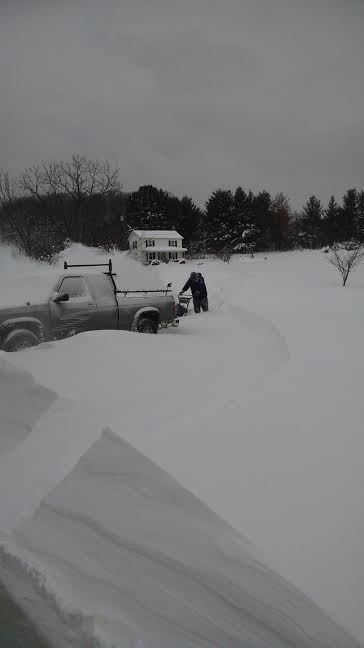
Plowing out: note, this is not a black and white photo.
Our electricity stayed on the whole time! Yay—just a few blink outs which sent me scurrying to set aside clean water in big stainless steel kettles and extra pitchers, just in case.
We feel blessed, unworthy, and ever thankful, even when going through crazy stressful times.
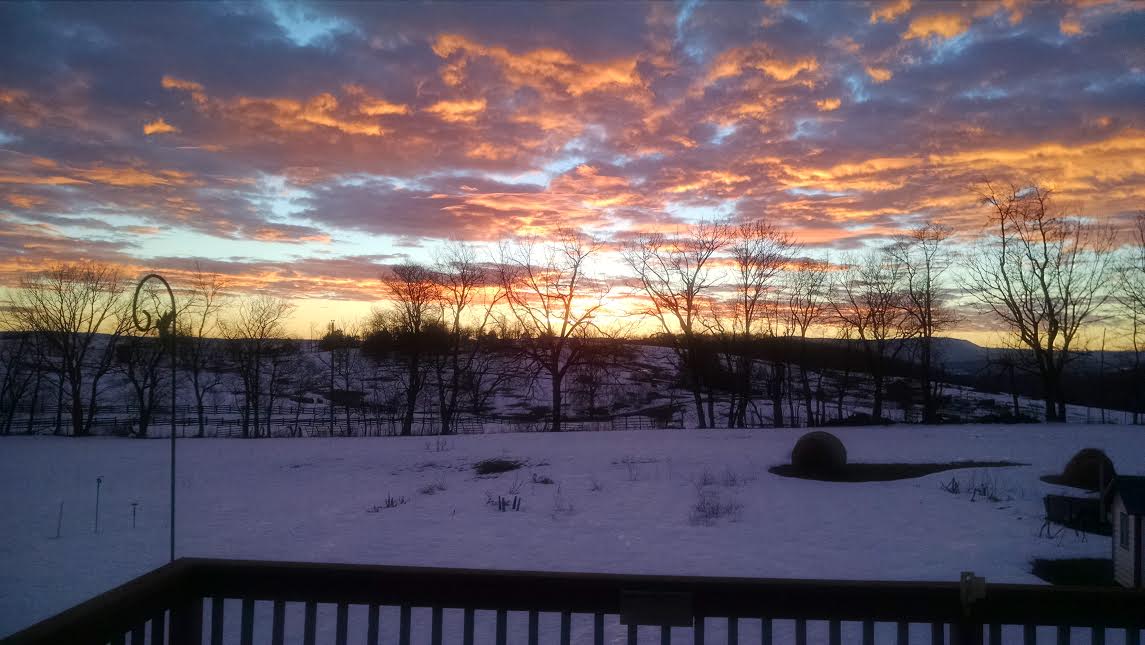
Do not be anxious about anything, but in everything by prayer and supplication with thanksgiving let your requests be made known to God. (Phil 4:6)
***
What was a difficult (shareable) time you recall in raising children?
***
When you are overwhelmed or depressed by situations, (not clinical depression) how do you cope?
When my husband and I left the movie Star Wars: The Force Awakens recently, I sent a text to my oldest daughter who writes movie reviews for ThirdWay.com.
“Great fun and sad,” I wrote.
She texted back: “Good succinct review.”
Maybe that’s enough said, but if you want to know the back story, I have one.
I’m sure many other baby boomers like my husband and I were touched, stunned and ultimately heartened by this movie showing again the characters we came to love back in the 70s.
I had to dig out a review I wrote which was actually published in a magazine of the day, WITH, a Mennonite denominational publication for youth. It has sadly gone the way of so many print publications, but the force still lives! (Frankly I was surprised that then editor Richard Kauffman paid MONEY for my review—but I think he was just anxious for hot topics for his teen readers. Kauffman went on to serve as an editor at Christian Century for many years, and just retired in January. WITH, and editors like Kauffman, nourished my writing career.)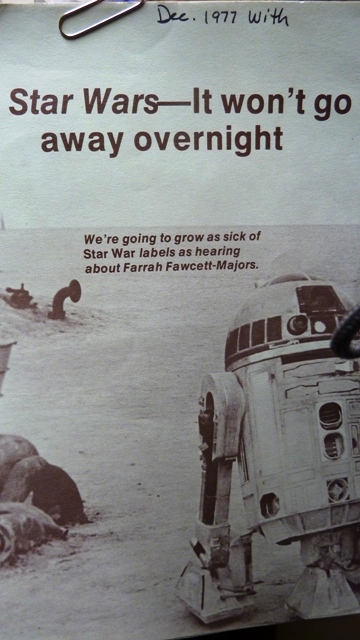
The article in WITH was titled “Star Wars—It Won’t Go Away Overnight.” I wasn’t being prophetic—just reading articles in a magazine I kept up with at the time, Advertising Age. They pointed out the long list of spin offs envisioned by original director George Lucas for “toys, games, crafts, T-shirts, posters, Halloween costumes, bedspreads, sleeping bags …” almost as if franchising a movie was something relatively new then. The spacecraft and characters were designed in part with toys in mind, according to published interviews with Lucas at the time. Now that’s a duh.
Star Wars gained popularity on the basis of a good story and memorable characters and the special effects that now look so ho hum. According to my review then, it had brought in one hundred million ($100,000,000) at the box office four months after its release (at the time I wrote that review). In contrast, Star Wars The Force Awakens made one quarter of that in just its first opening weekend, 247 million. We paid $2.50 then, and $8.50 now with discount tickets.)
In my earlier review I noted my husband and I saw it before it was a household word or on any T-shirts, and thus had a crack at “unprejudiced viewing,” to form my own opinion. In fact, we selected it as the lesser of several evils on the marquee in a small town while visiting my parents in 1977; my husband always loved science fiction and especially Star Trek so he wanted to see what Star Wars was like; I went with low expectations and feared the movie would offer “… blood and gore at worst, boredom at best.”
I reported that I was pleasantly entertained, and “surprised that it wasn’t as bad as I expected.” I called it clean: no four letter words, no sex, no real blood. Those three elements still mark the 2015 release! Oh I found the 1977 Darth Vader a “gruesome representation of evil and maybe even a science-fictionized Satan; … his wheezing and omen-like presence made me shudder every time he came on the scene.”

Darth Vader Humidifer
Speaking of shudders, after we saw The Force Awakens, we stopped by Lowes and the first thing that I saw in the store was a Darth Vader humidifier for a children’s room. One two-year-old grandson has a “Choo Choo” humidifier that he adores but I don’t think Darth Vader would sooth him to sleep.

Newlyweds: 1976
Which gets me to this: my husband and I were practically newlyweds (married just over a year) when we saw the original Star Wars in 1977. Now I’m a grandmother. As a 60+ something who followed the Star Wars franchise through the years, you can’t watch this movie without being thrown back to your much younger self—in my 20’s!—with all the hopes and dreams and aspirations of those early years. You can’t help but ponder how you look compared to the actors and realize that if THEY look old, you do too. As I sat in the theater with my smart phone on vibrate just in case our oldest daughter went into labor—I thought how in 1977 I wouldn’t have dreamed of cell phones, let alone mini computers (smart phones) that we would carry with us keeping us in touch not only by phone, but by text, instant message, and email. I wouldn’t have known what any of those words even meant, except “phone.”
Stunning, when you dwell on it.
And its fun to see the movie getting mostly high marks.
- The Force Awakens, directed by Gen-Xer J.J. Abrams, has opened to universally strong notices, and, in the summary of Rotten Tomatoes, “successfully recalls the series’ former glory while injecting it with renewed energy.” http://reason.com/blog/2015/12/19/how-star-wars-unmasks-baby-boomers-as-am
- In The New Yorker we read movie critic Anthony Lane’s suggestion of weakness: “Is Abrams a chronic nostalgist, bowing so low to the fan base that his nose is rubbing against the floor? Or has he wisely concluded that, if it ain’t broke, he should not be fool enough to fix it?”
- After critiquing how The Force Awakens is a better film, overall, than the original, Lane writes, “The new movie, as an act of pure storytelling, streams by with fluency and zip. To sum up: “Star Wars” was broke, and it did need fixing. And here is the answer.” http://www.newyorker.com/culture/cultural-comment/star-wars-the-force-awakens-reviewed
- I looked for reviewers talking about the theme of aging in this movie. Here’s one hitting the reality head on: “There aren’t many boomer monoculture events like Star Wars left. After The Force Awakens, and boomers start to hit that age when people start to die for no reason, those events [throw back movies] will mostly be eulogies for boomer icons.” http://www.vice.com/read/the-force-awakens-is-the-last-great-monument-of-the-baby-boomers
- However, regarding Lucas bowing out of producer role for a new generation of Star Wars films, one snarky reviewer at Reason.com noted: “As aging boomers such as Hillary Clinton (aged 68), Donald Trump (69), and Jeb Bush (62) desperately try to become the next president, Lucas has abdicated his throne and graciously allowed younger generations to take control of his prized possession, the most beloved and valuable property in the history of popular culture.”
I noted some deep clefts or wrinkles in Harrison Ford, not unlike one I’ve been noticing on my own face. (How terribly young he looks here!)

I noticed how he ran like an older man—like my husband or me. I admired Carrie Fisher as Princess Leia’s (now General Leia) still classic good looks in a face with noticeable wrinkles setting in.

The normal response to such stark reminders of the passing of time which no one escapes (and other movies have shown us we don’t WANT to escape getting older) is either embrace it (even the stars age and people still love them) or denial (shall I do plastic surgery and Botox to avoid looking older as long as I can?).
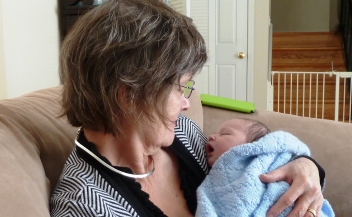
Newest grandson, 2016.
I hope I don’t have to tell you which choice I’ll take. I’m so glad for a husband who loves even the way I look now.
Not a bad take away on a pleasant Sunday afternoon.
***
Does seeing aging movie, TV, politicians, or music stars still rocking it–doing their thing–depress or impress you?
Have you followed the Star Wars movies? What did you think of The Force Awakens?
***
If you enjoy movies and movie reviews written from the perspective of various Mennonite/Anabaptist Christian critics, head over to ThirdWay.com and sign up for timely weekly reviews.
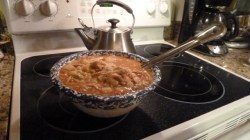
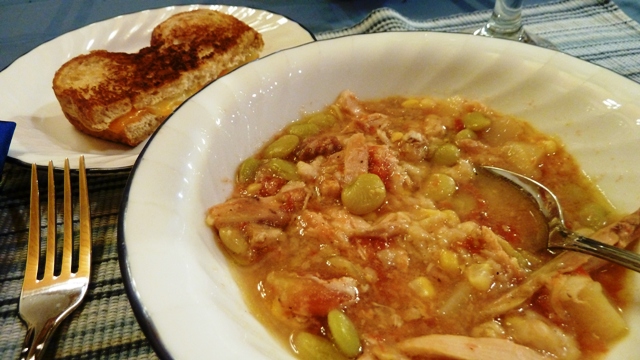
I’m reposting my recipe for Brunswick Stew published by Amish Wisdom yesterday, for my own blog followers who may not have seen it there, and just to have it in my recipe archives here. (For those who saw it on Amish Wisdom, you can scoot on to other things.) I have a few more cooking tips and tidbits to share here. If you didn’t see it there and would like a chance to win a copy of Whatever Happened to Dinner in their drawing, you can head over there (offer good until January 14 2016).
Brunswick Stew is versatile soup that can accommodate any veggies you choose; I stick with using potatoes, corn, baby lima beans, and diced tomatoes. Old timers will tell you that Brunswick Stew is a good way to use squirrel meat. I’m a big fan of Brunswick Stew but will forego the squirrel, thank you very much, and just use chicken! An interesting history debating whether it originated in Brunswick, Va., or Brunswick, Ga. can be found on Wikipedia.
It is a well-known dish in our parts of Virginia and popular at the annual Virginia Mennonite Relief Sale. G. Don Whitmore, feed salesman and treasurer for our congregation, introduced my family to this stew. He would make large quantities for our congregational meeting potlucks.
This recipe (my adaptation) comes from the collection of another Virginia cook, Martha Doughtie Cavanaugh, in Gather Round Our Table: A Southern Family Shares Recipes and Memories from the Doughtie Family and Friends (compiled by Edith Vick Farris, 2005, G & R Publishing).
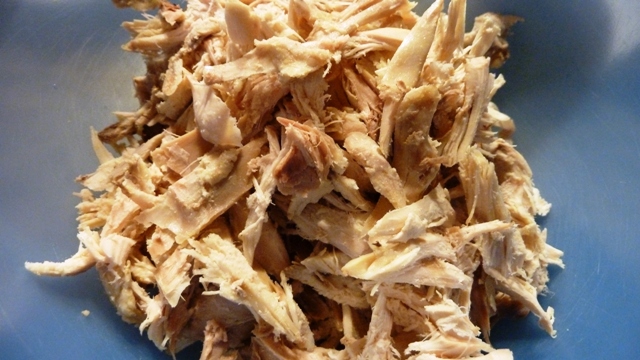
I like it because you can use up chicken picked off the bone from a roasted hen or any leftover chicken or turkey, and also odd bits of chicken or other broth stashed away in your freezer. If you buy one of those handy rotisserie (and cheap!) chickens at Costco, Sam’s or the grocery, and have leftovers, this is a perfect way to use those up.
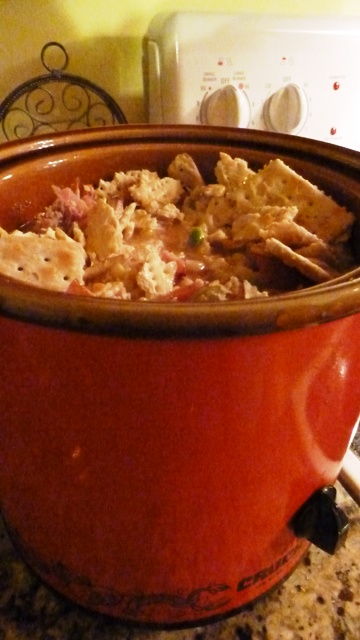
Made in a crock pot or large kettle, adjust quantities according to the size of your kettle and number of people. It freezes well; the food editors who tested it for my book Whatever Happened to Dinner? claimed it tasted even better after refrigeration and reheating.

Brunswick Stew with Chicken
Ingredients
1 4-pound whole chicken or 3 large frozen boneless/skinless breasts
1 14-ounce package frozen baby lima beans
1 10-ounce package or can of corn
1 quart diced tomatoes
1 egg, beaten
6 white potatoes, peeled and diced
1 sleeve saltine crackers, crushed
Lots of pepper (to taste)
Salt to taste
Optional: Pieces of ham seasoning (cooked ham bone, ham hock)
Instructions
Cover chicken with water and cook for one hour (if using chicken breasts, replacing some of the water with chicken stock gives it more flavor).
If using whole chicken, strain out the fat, then pull out the bones. Dice or shred all meat and return it to the broth.
If using breasts, the meat will come apart during further cooking and stirring. Do not pour out broth.
Add all remaining ingredients, cover, and simmer for 2–3 hours, stirring occasionally to avoid sticking. Or put the stew into a slow cooker and cook for 8–10 hours on low.
Serve immediately, or refrigerate and gently reheat when you’re ready to serve. Good served with cornbread, toasted cheese sandwiches, or just about any homemade or hearty bread!

What’s your favorite soup or stew in the winter?
Why–what makes a dish your favorite?
What memories does making, serving, or eating it evoke?
***
To purchase Whatever Happened to Dinner with over 100 recipes, go here.
I have a confession. I dislike scary movies and books; therefore I shy away from traditional murder mysteries. I read primarily to calm down into a restful state and fall asleep. That’s not to say I enjoy reading books that put me to sleep! But I don’t want a book to keep me on the edge of my mattress turning pages either.
So when a colleague and two of her friends—excellent writers all and educated with degrees in education, literature, and business—launched the Custer’s Mill Mystery Series loosely based on small town life in Broadway, Va. (where my daughters all went to high school), I thought, well that’s cool! It’s the kind of place where you find intriguing characters all over the place that MAKE you want to write a book.
As a senior in college, on Saturdays I tended a knitting store on Main Street in Broadway, so the owner could have off each Saturday. One gossipy townie in particular dropped by almost every Saturday just to have someone to talk to. She seemed like a character straight out of Gopher Prairie in Sinclair Lewis’s Main Street. My writer daughter is working on a novel (still seeking a publisher) based on high school drama in that small town.

Daughter Doreen marching in a parade on Main Street, Broadway, Va., in front of the building I worked in at one time.
So I wasn’t sure how I’d like my colleague’s mystery. Still, she and one of her writing partners are mothers of friends of two of my daughters. And as a fellow author, I had to buy the book, to support the author community, right? My husband is also distantly related to one of the authors through her husband’s Culler family. Of course. It happens in a small community.
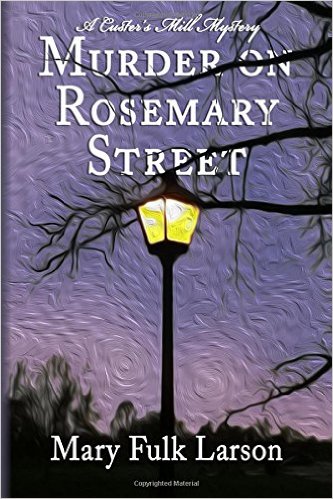
I was not disappointed. I bought a copy of Murder on Rosemary Street and had the three authors sign it: Mary M. Smith, Tammy Fulk Cullers, and Barbara Larson Finnegan. Their creative pen name is Mary Fulk Larson created out of one part of each of their names. Tammy added to her signature, “I hope you like the story.” I thought, “Oh, maybe there’s a story line beyond the murder.”
And there is. Oh there’s the who dun it, of course, and a few lines and maybe slightly implausible plot turns that felt a little cliché, but by the end I cared enough about the characters to actually tear up in a scene for which I will not reveal a spoiler: two key guys find a harmony of sorts. (Fitting fodder for my “finding harmony” blog, eh?)
The story line in this book is a librarian (two out of three of these authors have worked for libraries) and a new county detective (conveniently single and raising an elementary-aged daughter after the death of his wife), several chatty women making up a “Friends of the Library” committee, and various friends and family members of the same. The elderly town matriarch and wealthy spinster (and yes they use that term) knows something about the past and is on the verge of revealing it when, whoops, she is poisoned. This sets in motion the action for the book.
By the end there’s enough intrigue for me to imagine future books in this series (they’re already plotting) where they will develop certain key characters in new scenarios. Along the way, on a separate blog, they’re telling real stories of real history and people for Custer’s Mill, the town’s name before it was renamed “Broadway” as legend goes, because the people were so rowdy or maybe seedy on the biblical “broad way” to destruction (Matthew 7:13-14). Why thar’s a story raight thar, don’t cha’ think? Speaking of Virginia lingo/grammar, the authors play that with a light hand. Not in an annoying or hard-to-read way like my line above, but just enough with certain characters to make it feel genuinely Virginian.
The novel and concept reminds me a little of Jan Karom’s delightful series based on another made up town, Mitford, North Carolina, and the bachelor pastor in those books who captures our hearts. As yet I did not find this book as humorous as Karom’s, and hers are mostly not murder mysteries, but this first book by “Mary Fulk Larson” introduces a series that likely promises the same clean read, high moral standards, and no R rated language or scenes. I guess “cozy mystery” is the Amazon term for this kind of book. A book you could feel fine recommending to your mother—or your young son or daughter for that matter.
What intrigues me even more than a new murder mystery series is a writing partnership involving three people. You have to of course have a lot of creativity and imagination to write a novel, but in working with two other people, you also need a lot of give and take and compromise. And time! Yet I can see how it works beautifully here. Barbara Finnegan said they plot out the action and characters and then each write different chapters, and then all assist in editing the book at various stages. Their various writing styles and particular writer whims and angles meld well and I could not detect any signs of, oh, Barbara wrote that chapter, or Tammy wrote this, etc. It seems seamless.
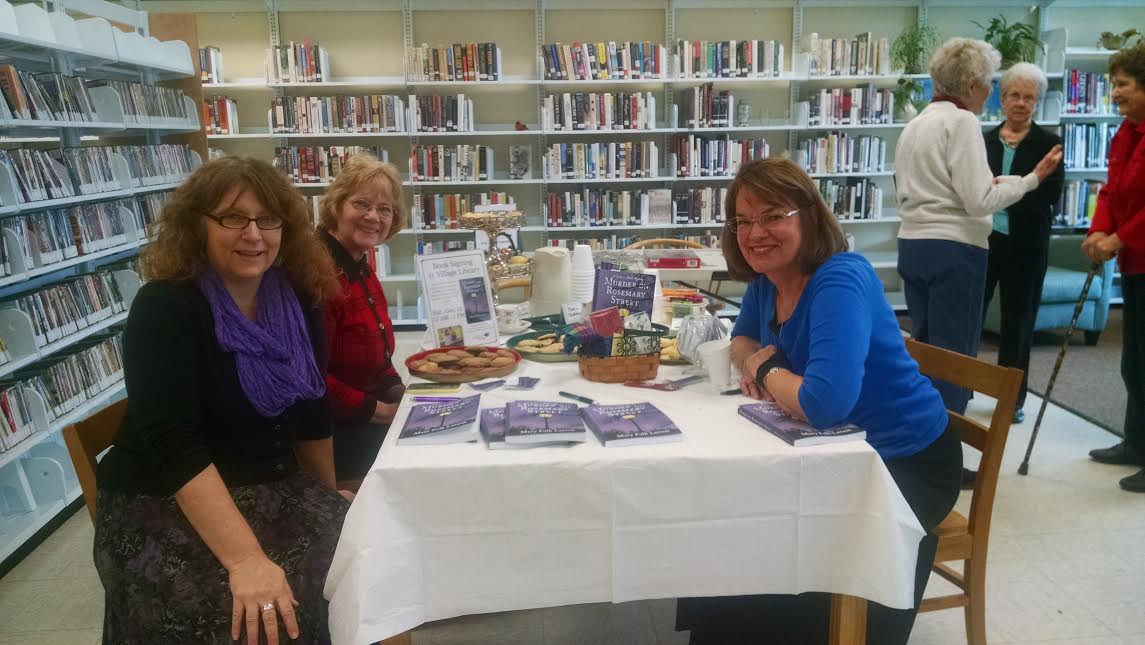
The authors: Tammy Fulk Cullers, Mary M. Smith, and Barbara Finnegan, who make up the penname: Mary Fulk Larson.
I’m fascinated by this partnership and the path they took to independent publishing because faithful readers of this blog might recall my confession a while back that in my files is an unfinished novel. (Doesn’t every wanna-be writer have one?) Perhaps I should buddy up with a writing partner. My daughter has used a writing partner to flesh out her unpublished novels. Michelle has also weighed going the indie publishing route (folks used to call that self-publishing or even, a little snobbishly, vanity publishing) but so far she’s holding out to find an agent and publisher (currently put on hold as she and her husband grow their family).
The world of publishing is changing. While every author, I think, aspires to be published by a bricks and mortar, deep-pocketed publisher with access to network TV gigs and funded book tours, gone are the days when traditional publishers are the only route.
I wish the writers of the Custer’s Mill Series well. Sometimes I wish I could find a way to revamp and finish my novel (and yes these writers had to totally restructure their novel when an agent recommended they put the murder first thing in the book, an arduous time consuming task). Meanwhile, I’ll stand in line for their next creatively composed story.
Unlike the stereotyped shush-y librarian in Sinclair Lewis’s Main Street, these literature loving writers would never discourage folks from reading library books in an effort to keep them clean.
***
Did you grow up or near a small town like Broadway or Gopher Prairie? What did you like or dislike? Any stories or memories of “town characters” everyone kind of knew? I’d love to read your glimpses here!
***
Do you like murder mysteries?
***
Purchase Murder on Rosemary Street here.
A ready made Tweet to share:
This first “cozy mystery” by 3 women offers a clean read, high moral standards, and no R rated stuff http://wp.me/p31taW-1lZ

… you make banana nut bread, ok? If you want my story, read on. If you want to skip to this rather easy and delicious recipe from Mennonite Recipes of the Shenandoah Valley, (Phyllis Pellman Good and Kate Good, Good Books), scroll down.
This is a story of travel and bananas and guilt and not throwing out $2.00 worth of perfectly decent food that traveled 1822 miles to get to your home in North America. The average American household wastes $640 worth of food a year. I think I’ve read other sources that puts the waste at over $1000 a year. My father was a great preacher on food waste and practiced what he preached, as I wrote about previously, here.
Ever since I read Barbara Kingsolver’s Animal, Vegetable, Miracle: A Year of Food Life (published 2007) and learned about eating more locally, I’ve felt guilty about my banana habit. We just about always have them on hand, or I panic. I’m afraid I taught my daughters if they get a headache in the middle of the night and need to take something, to eat at least half a banana so the meds don’t upset their tummies. Sometimes for me, just eating the banana makes the headache go away. For real, or maybe it’s in my head, I don’t care as long as it works. That’s why the panic.
My father had to have a banana every day and even if they went brown and mushy, he’d pile his banana on his cornflakes and just eat it like they were fresh off the tree.
Then my sister spent a semester in Tegucigalpa, Honduras through Goshen College’s early SST program, where she rhapsodized over the thrill of walking out of her home there to eat bananas right off the tree, and how wonderful they were, perfectly ripened and ate fresh and not shipped 1822 miles. (That’s the distance from Tegucigalpa to Washington D.C., by the way, which is just 110 miles from me.) She also put on about 10 pounds that semester, and she blamed the bananas and of course her “madre’s” wonderful Central American cooking. Believe me, her nanas didn’t look like this.
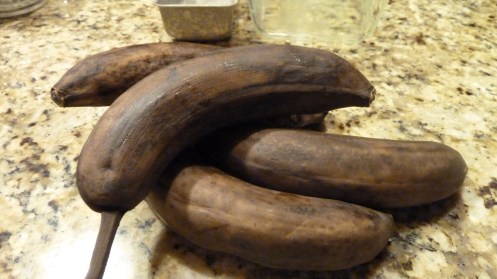
Back to how I ended up with four dreadful looking bananas and what I did with them. I had purchased a couple of bananas right before we went on a trip to visit my mother for New Year because I always like to travel with bananas because, you know, the headache issue. Mother had bought bananas for my husband and I because she thought my husband had to have bananas with his cereal like her husband always did. Not true, but you know how that goes too! Well, he’s cutting back on them because of sugar content (although I’d argue they’re quite ok in moderation), so he didn’t eat the overload of bananas either. I know Mom would worry about what to do with her bananas if I didn’t take them off her hand, so we headed home with some of these. And then I found another in my fridge at home wasting away, and I thought, banana nut bread time.
Which I took to the office for the post-holiday enjoyment of all. End of story. Next time I’ll shave 1/4 sugar off this recipe and I’m sure it will still be delish. It could probably handle some whole wheat flour or oatmeal in it, too. Honestly, the hardest thing about this bread is getting it out of the pan, so pay attention to the instructions at the end.
Banana Nut Bread
1 cup sugar
1/3 cup butter, softened
2 eggs
1 1/2 cups mashed bananas (3-4 medium sized bananas, can be overripe)
1/3 cup water
1 2/3 cups flour
1 tsp. baking soda
1/2 tsp. salt
1/4 tsp. baking powder
1/2 cup chopped nuts
- Cream together sugar and butter. Stir in eggs until well blended.
- Add bananas and water. Beat 30 seconds.
- Stir in flour, baking soda, salt and baking powder, mixing just until moistened.
- Fold in nuts.
- Pour into loaf pan which has been greased only on the bottom. Bake at 350 for 55-60 minutes, until wooden pick inserted in center comes out clean.
- Cool 5 minutes in pan. Loosen edges of loaf from pan, then remove from pan. Cool completely before slicing. This recipe made one large loaf and one mini-loaf for sampling!
Recipe by Jessica Babkirk, of Harrisonburg, Va.
***
I’m trying to waste less food this year. How about you? What food do you have to throw away most frequently? What is your best “save” for food past its prime?


Note: I intended to take a blog vacation over Christmas but some posts just write themselves. In fact, this post is being written by our Christmas tree, the one about which I asked two weeks ago, “Will this make it as a Christmas tree?”

Guest Post by Christmas Tree 2015
For the last several weeks, my owner gazed upon me with an appraising eye. I wondered what was up with that.
But let me start at the beginning. We were three white pines to begin with, just seedlings wrapped in little bags, given out for Arbor Day or some other tree promotion. I thought the people who brought me home were going to forget about us completely; we languished—no water, no soil, no nourishment, for days. Maybe even weeks. I thought I would die. The mother tree from which we came had said that might happen. That people often pick up a seedling with oh such great intentions and then the busyness of life impedes and oh, some of us just die without ever getting the chance to grow.
Finally one day—these people have a youngest daughter who especially LOVES trees and the earth—who nudged them along. They set about readying a small hole. That’s the thing about us as seedlings. We don’t need much of a hole, just prepared a bit with some peat or some good garden dirt, I’m not sure what all they put in my hole. Three of us they planted in a row near the edge of their yard at their home built in 2007. We joined a redbud seedling as well, given to our owners from some more tree lovers from their church. My owners aren’t much inclined to spend money on nursery trees, preferring instead to adopt seedlings others give them.
“These will grow quickly and you can replace them with hardier woods like the oaks or bright orange sugar maples you want some day,” the youngest daughter promised.
We did grow quickly for about seven years. They added an oak—yes, another seedling picked up somewhere and several years later another daughter and her husband got them the promised maples as a Christmas gift. Real trees already, some 7 feet tall. I knew those trees might one day rob us of our chance to grow tall and old and willowy, but glad to see other trees joining us to offer shade and make their lonely ranchy style house into a home.
Then last year it happened. The oak tree was growing much taller and was quite robust; clearly our sister pine was competing for and shaping—nay thwarting the development of the oak. They cut the first of us down without much fanfare. I did detect a little sentiment from the mother, who told Tree One she’d done a good job and now she could become nourishment for other trees and growing things in their little woods at the edge of their property. So that’s what would happen to me, I prepared myself. But they passed me by, with the mother taking a little clippers now and then to shape me up. With the attention, I grew ever taller and prouder. I was a pretty good looking tree, given my humble beginnings.
So this year as the days shortened and a few chilly spells brought us to winter, they received the reminder card they always get from their favorite tree buying place. Oops, the trees had gone up again by another couple dollars, enough to give my good frugal family pause. “Humph,” growled the pappa, “Pretty soon they’ll be so high we can’t afford to buy a Christmas tree.”
“I’ve been thinking,” replied the mamma. “With the little trimming I’ve been doing on our own pines, that one near the maple would make us a fine tree. Well, maybe not fine, but I’d rather use it then just cut it to get it out of the way of the maple, and waste it in the woods.”
Pappa was plainly a little surprised. It was Momma who had always pushed to buy prettier trees (after the cedars they always got free from an uncle or a neighbor grew too tall or unwieldy or misshapen to possibly use).
But first a farm back story.
Momma thought back to how her family used to cut their tree each year from the Christmas trees her daddy and mommy grew on their farm in Indiana. Ever the entrepreneur, her daddy planted maybe 20-30 seedlings (in a steep part of a field) that he too had probably gotten free, from the Farm Bureau or someplace. Her Daddy said they’d have trees to use each year and sell a few too: she thinks she remembers signage for $5 or possibly $8 trees, beautiful blue-green spruce.
But like most part-time tree farmers, her daddy soon discovered that trimming them and shaping them into saleable trees took a great deal of attention away from many other tasks that never let up. They sold a few—along with fresh eggs from their chicken house—and gradually the pickings from the trees that remained each year became woefully slim. Momma remembers bundling up all warm, getting out the sled with which to carry home the tree, and heading out with buoyant hope for a suitable tree. Invariably they’d settle for the least objectionable one, her mother opining that they could turn the tree’s big empty spot to the wall where no one would see it. Then they’d trudge happily up the hill, pulling or carrying the chosen one back to the house.
Oh how excited they always were to get their tree, and oh what a struggle to finally set it up in the living room, sometimes anchoring it with bailer twine to the drapery rods lest it fall over and smash those precious ornaments they pulled from always the same boxes in her mommy’s closet.
—
So that’s a little of why Momma suggested they use one of their two remaining white pines for Christmas this year. They wouldn’t be having a houseful of company for the holidays. Since one daughter was pregnant and due quite soon, that family wouldn’t make it home. Christmas would be held at that daughter’s house—a first! Less work for Momma to do at home, but still they’d need a Christmas tree. Afterall, one grandson (and his parents) would visit and spend the night enroute to his auntie’s home.

As my owners (and their dog) circled round me, checking out my full and empty spots, my forked top, my too long branches and my bushy bottom, I pulled up straighter, prouder. Would I be picked for the Davis tree of 2015, imperfect and simple that I am? Or would they head over the hills to the nearby tree farm to pick out a better tree, one truly groomed for the annual festivity?
At last I heard Momma say, let’s get the tree saw. Pappa rolled on the ground—the way he has to do whenever something has to be approached at ground level, he’s not much good at stooping anymore—until he could reach my trunk. The saw stung a little, but I was so elated to be deemed good enough to go inside the house and deck their halls for three shining weeks. I would be the best and most beautiful tree I could be, they’d see!

And I was. Just perfect. Momma said so and Pappa agreed. Easy to decorate and not so tall. Why, with the spare spots between my branches, their precious and beloved ornaments sparkled and stood out even more than when nestled up into tight, close, boughs.

Even the little boy who came and admired me in wonder and joy thought I was perfect; he hardly knows better though, this being the first Christmas he was old enough to figure out how to pull paper off of presents and grab for toys and let nice new pajamas settle forgotten beside him.
I’m happy as a tree can be, chosen to welcome the Christ child over at Bethlehem’s stable on the piano in their yearly ritual. God come to earth!
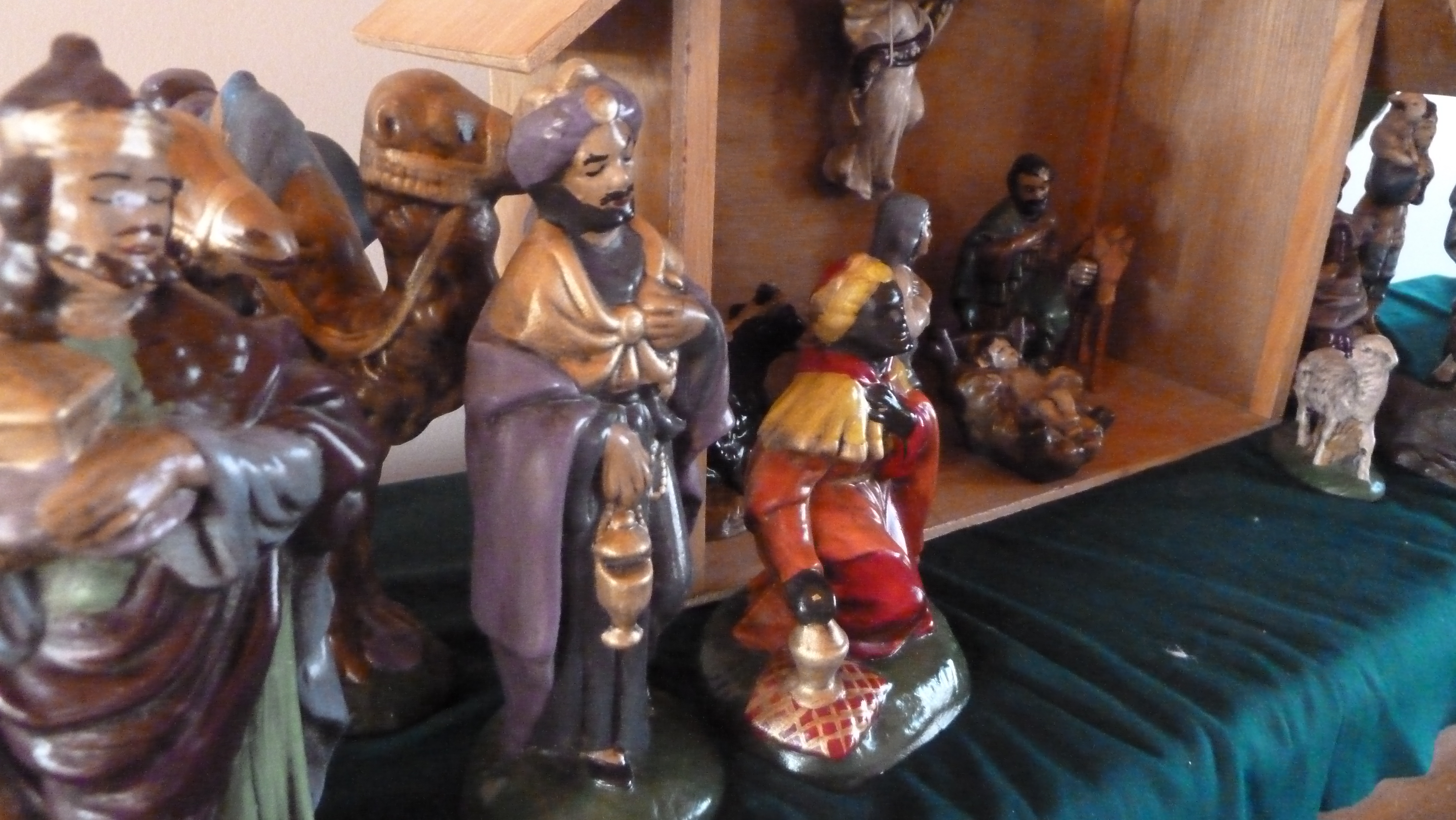
And when this Christmas season passes, as it must, I will be happy to join my sister tree out in the woods and slowly nourish the forest floor, a poignant reminder that they too—all of them—also return earth to earth, dust to dust.
Does my spirit—like theirs—live on through the gift of the Christ child sent to earth? I’ll let others decide that. I do know that we need each other—tree and human. We trees clean their air, beautify the earth, keep soil in place, provide shade, homes for wildlife, and so much more. God planned for us both, and I’m happy for my place in the choir.
So be it. I got the chance of a lifetime. We all do.
—Tree Two
***
What are your memories of bringing home a special Christmas tree? Did you ever talk to your tree?
How did you/do you feel as you say goodbye to it at the end of the season? When do you traditionally take your tree down? Do you wait until Epiphany, January 6?
Would love to hear your stories and thoughts!

 findingharmonyblog
