

 Two weeks ago we had a magical weekend celebrating my daughter’s graduation from grad school with her masters in earth sciences.
 She studied the impacts of changing human population densities on biodiversity in forest patches, especially between urban and suburban or forest areas. Specifically carabid beetles, who became her friends for the last two years.
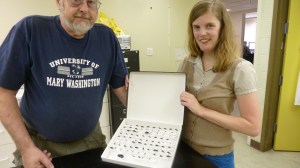 We also celebrated Mother’s day—the first mother’s day for our two daughters with babies. The obvious quip is two are working on their mother’s degrees, and one got her masters. Much much to be thankful for!

 So this took a special cake that I had never made before. Carrot cake. Blogging friend and nearby neighbor Jennifer over at Mama’s Minutia had shared HER mother’s never fail recipe here. I like carrot cake because it is probably the only cake that can claim to serve up a healthy amount of Vitamin A along with the sugar and carbs.

I knew that Doreen liked carrot cake and that she would enjoy it more than a store-bought decorated cake with tons of icing. So for her quick after-grad party lunch, we had homemade cake and store bought Jimmy John’s sandwiches, chips and veggies, shared in a motel suite. Easiest grad party ever, for me. And finished celebrating with dinner out that night at a fav spot Doreen had found with some friends.
I adapted Jennifer and Shirley’s cake only in the raisin and topping department: I knew Doreen didn’t like raisins much so I lowered that quantity to ¼ cup, and for frosting, put slivered almonds on top for a slightly festive look without lots of globby decorations. My main learning was that I think I should have left the cream cheese at refrigerator temperature than room temperature to whip it, because it was a little less firm than ideal.
But. It. Was. Good. So good I didn’t get great pictures of plated pieces, but oh well. (See Jennifer’s pretty pictures here.) I made the 2 cake layers at home, froze them, and put them in a picnic thermos for the 5 hour trip, then frosted them at my daughter’s house. TIP: I always freeze cake layers before frosting them as it makes that job go much easier in my opinion.

Carrot Cake with Cream Cheese Frosting (adapted from Jennifer Murch)
2 cups flour
1 3/4 cups sugar
2 teaspoons baking soda
2 teaspoons cinnamon
½ scant teaspoon salt
1 cup canola oil
4 eggs
3 cups grated carrots
¼ cup raisins (Jennifer says she prefers currants and used ¾ cup)
Mix together the dry ingredients. In a separate bowl, whisk together the oil and eggs. Whisk the egg-oil mixture into the dry ingredients. Stir in the carrots and raisins.
[Melodie’s addition: I cheated on grating the carrots. I bought one bag of grated carrots and chopped them finer with my very small food chopper. That worked great.]

Divide the batter between two greased and wax paper-lined 9-inch cake pans. Bake at 325 degrees for 50-55 minutes. Cool for 10 minutes before running a table knife around the edge of the pan and flipping the cakes out onto a cooling rack. Peel off the wax paper. When the cakes are completely cool, ice with cream cheese frosting.
Cream Cheese Frosting
8 ounces cream cheese
2 tablespoons butter
3 ½ cups confectioners’ sugar, sifted
1 teaspoon vanilla
Beat until creamy. Spread on cake.
***
For a podcast of a radio interview I did with Jennifer a few years ago, go here.
***
And a few more weekend photos here:
 Doreen’s cat, left at home, wonders why she can’t go to grad, too.
 Sam, Tanya, James and Doreen unwinding in the motel room.
 Sam has graduated to sitting up. Yay Sam!
Second of two parts on Dr. Peggy Shifflett’s book, The Red Flannel Rag. First part here.
 Part 2
Mennonites of Hopkins Gap get a mixed review in Dr. Peggy Shifflett’s book, The Red Flannel Rag. That is not too surprising, and it extends here generally to Appalachian practice of religion. But then, looking back, many of us grew up among religious beliefs that were well-intentioned but misguided at best, painful or abusive at worst.
Early on Shifflett signals a theme of her mountain culture clashing with mainstream American culture in a number of instances including “in church, when the Mennonites, at times not so subtly, let us know we were not ‘born Mennonites’ and would have to work especially hard to enter the kingdom of heaven.” (p. 12) She includes a reference to one uncle who laughingly said he made moonshine in one Old Order Mennonite home because they “liked to have it around for medicinal purposes.” (p. 107).
Mission work in the Hopkins Gap area started in 1886 but official “organized religion” she documents as arriving around 1907, when two Mennonites by the last names of Suter and Heatwole held Sunday school at the community school building, White Hall School. Two men donated one acre for a church and cemetery located right where you enter Hopkins Gap crossing Little North Mountain, which became known as Gospel Hill Mennonite Church. I was acquainted with it as an Eastern Mennonite College student only because it was near the turn off for “Long Run Road” which was a drive/excursion we loved to take. (For some photos, check here.)
Eventually J. Early Suter became the regular minister there and “the people in Hopkins Gap were very devoted to the church and admired Reverend Suter and his family; however they also viewed religion and the Bible in a very practical everyday manner. A person was judged by whether he read his Bible every night” (p. 251). A local man used an open bed truck with side rails to haul a boatload of children to Sunday school, according to Shifflett, including one picture of 34 kids in the back (p. 252). Great church and community picnics were a part of the social life of the Gap, and elsewhere in our Shenandoah Valley (as shown in some of my husband’s family pictures).

(My in-laws arriving at a family picnic in a nearby area to Hopkins Gap, Hershal, Richard and Estella Davis, 1949)
But Shifflett does not flinch when she writes about the efforts of young Mennonite men and women doing “their missionary work for two years in Hopkins Gap” making it sound like they were Mormon missionaries. “Some young people went to Africa, some went to Asia, and some went to Hopkins Gap” (p. 255). There were “messages, sometimes subtle and sometimes blatant that the ‘Hopkins Gappers’ were heathen and needed to be changed before they could be saved.’” The “Gappers” felt that times of illness and death were particularly used as crisis events to could convert them—when a funeral service focused more on conversion of the living than memorializing the one who died. I have heard the same kind of sermons, and felt the same messages during my time of service in the hills near Hazard, Kentucky.
One of the things that the young Peggy Shifflett pondered as a child were why the men and women at Gospel Hill sat on different sides of the church, and her mother would only tell her “that’s just the way things are done.” Childishly she wondered whether it was because the men had a better view of the pulpit. Her mother told her she asked too many questions. (p. 257).
As she grew older Shifflett noticed that a preacher’s attention was indeed mostly directed to the male side of the audience. Once when she was nine years old and tried to raise her hand in order to be given the floor to recite a Bible verse from memory like men on the other side were being called upon to do, the visiting evangelist in charge that day noticeably refused to recognize her hand until at the very end she just shouted out her favorite Bible verse, “Forgive them, for they know not what they do.” Her mother was appalled, jerked her hand down, and told her to “shut up.” Shifflett’s verse was probably the most appropriate of the day.
This brought the evangelist to visit their home, who asked the younger Shifflett point blank if she was a sinner. Well, with her mother sitting right here, she knew she couldn’t lie, of course she was a sinner. But that wasn’t good enough for this “Reverend.”
“What kinds of sins do you commit?” he queried. He should have been silenced right there—and he was—but not by a good answer. “It turned out that this was another occasion when I was glad to be a female and just started crying and the reverend moved on to another topic.” (p. 259).
But then came what Shifflett calls in her book “confirmation time” or technically in Mennonite circles, more often known as the age of accountability, when young people are growing in their ability to be accountable for choices and direction in life and deciding whether to be baptized and become followers of Jesus themselves (not just because of their parent’s influence).
Shifflett writes, “The Mennonites expected young people to join the church at twelve years of age. I was told again and again that up until the time that we joined the church, any sins we committed were the sins of our parents. I thought that was a pretty good deal. I could sin all day long and mom and dad would have to pay for it.” (p. 259). Peggy had observed friends crying as they went forward under the influence of the moving hymn, “Just as I Am” and thought they were crying because they would have to give up all their “fun,” and had vowed she would never go forward and cry “in front of the ‘born’ Mennonites.”

One of the most vivid and sad descriptions in the book came at the end of summer when she was 12 and she still had not “gone forward.” She thought about it, every Sunday, but she kept remembering her questions that had remained unanswered over the years: about difficult Bible stories, about why she had to keep quiet in church, about people who confessed their sins, took communion, and then went right back to doing what they’d be doing before. Her Dad, who she describes earlier as completely changed in an unhealthy way after he came back from World War II, drew back his fist as if to hit her one Sunday morning as he waited in the car just because she’d slipped and fell into the back seat of the car and the noise scared him as he was listening to a sermon on the radio. He called her a “speckle-faced son-of-a-bitch.” She was terribly wounded by that burst of anger. “I thought that was a pretty awful thing to say to your own child on the way to church. If that wasn’t a sin, I didn’t know what else would be. I never forgot that day.”
She recalled another time on the way to church they saw a woman lying in the ditch, but her parents lost any concern when they saw it was a local woman known as a lesbian. Later they learned that the woman had been raped and beaten and left in the ditch. Another time on the way to church four local men, some of them married, were having sex with a woman on the trunk of a car, drunk. Her mother also called her a dirty bitch. They drove on to church.
Shifflett also did not want to have to change the way she dressed to the long dresses and capes worn at the time, or the woman’s prayer covering worn by the “born Mennonites” at Gospel Hill.
All of these things rolled through Shifflett’s mind again and again and kept her from walking the aisle to the front of the church, a step necessary to be confirmed. On the last Sunday when she was expected to go forward (likely in order to join a new believer’s group), as “Just as I Am” started, her mother gave her a meaningful push to get up and walk to the front of the church. “I refused. I sat down and wrapped my feet around the pew in front of me. She pulled and pushed. I would not budge. Finally, after what seemed like a month, the song was over. I figured I would be in deep trouble when we got home.”
At home her mother asked why she refused to go forward. “I told her I did not want to wear that little bonnet on my head; why should I accept Jesus as my savior and be only a ‘converted’ Mennonite, and besides I was not allowed to talk in church because I was a female. She listened carefully and didn’t say much. Three months later, she stopped going to church and to this day has never gone back to that church or any other.”
Remarkably, later in life Shifflett came around to joining a Methodist church herself and eventually her mother’s body was buried in the Gospel Hill Mennonite cemetery, and I’m sure God’s grace is big enough to cover someone who stopped going to church because of her daughter’s grievances, but whose faith remained steadfast on a God greater than petty rules. Shifflett, her sisters, and sister-in-law managed—for five long years—to honor their mother’s desire that she be taken care of at home until she died. And she was—which says something about the true nature of family, faith and community—sacrificing one’s life and career for a period of time to take care of family members.
I was also moved by Shifflett’s compassion for the plight of the “field rabbit” children I referred to in my previous post (essentially homeless) where “broods” were fathered by a single men who “sowed their wild oats among the females of the community.” She says she would “often cry myself to sleep at nights worrying whether they were cold or hungry” and she wondered why their father or mother paid them such scant attention. Eventually as time went forward, social workers intervened in that predicament.
Isaac Risser, a later pastor gets high marks for changing the structures of the church to include local leadership of those who were not necessarily born Mennonite. This trend in Mennonite mission work the world over seems to be the key to transition to local, authentic church and mission. Today the congregation has a husband and wife team serving as ministers, J. Mark and Emma Frederick. I know one man who tells the story of visiting this congregation where he was just royally welcomed and embraced, even though all he had to wear that day in the way of dress clothes were his military dress blues. After he learned more about Mennonites and the typical stance of pacifism and not joining the military, he was doubly amazed by the welcome he was given. Times change.
My own journey bridging the Mennonite and wider church, the culture of north and south, of mountain and non-mountain through years spent in Kentucky, North Florida and now Virginia for 42 years has been a life exercise in finding harmony and seeking to understand others. My Virginia relatives (by marriage) have become my loving extended family who I know much better than my own who live at a distance. I don’t think you can’t usually have too many relatives and I sense that Shifflett immensely treasures her ongoing ties to her family in the Gap.
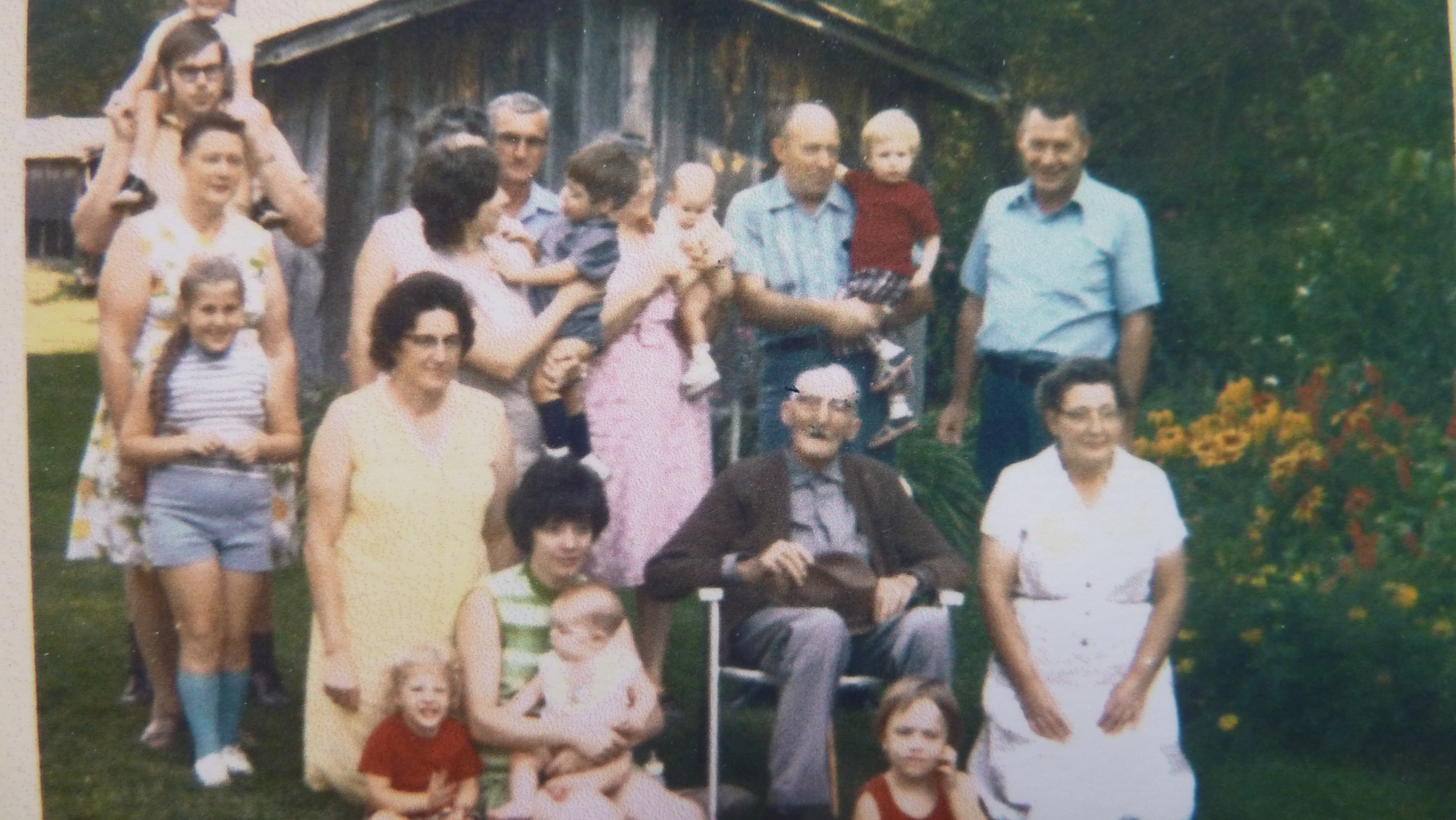 Family picnic from another era, 1973, at the “homeplace” near Bergton, Va.
***
Were you ever confused or frustrated when told “That’s just the way things are done”?
What are your good memories of “old time religion”? What are some of the bad? Most of us have a mixed bag.

My book about living in the hills of Kentucky for one year can be found as a used book on Amazon, On Troublesome Creek, Herald Press, 1983.
You can read more of Dr. Shifflett’s work with links to two other books she’s written here.

Did you ever feel so different from your peers it affected your life? Were you or your kids made fun of at school, workplace, at church?
In this two-part post I’m reviewing the highlights of what is to me a fascinating book because for the past 45 years my feet have also straddled several worlds, as did those of author and sociologist Peggy Ann Shifflett growing up in mountain gap very near my home called Hopkins Gap, at the edge of Little North Mountain.
To be sure, her “gap” and straddled world is different than mine but we can usually learn something about ourselves when we delve into the experiences and culture of others.

A church friend, Beverly Silver gave me the book as she was thinning out her bookshelves. It is titled The Red Flannel Rag: Memories of an Appalachian Childhood, a self-published book in 2004. The front of the book has a photo of a typical Virginia home from the 1930s or 40s which grabbed me immediately. Had I seen that home?
Shifflett is a retired professor of sociology at Radford University in southern Virginia and former chair of the Department of Sociology and Anthropology there. For anyone interested in or living in western or southern Virginia, and parts of West Virginia, Kentucky or Tennessee, it is fascinating covering folk medicine, moonshining, education, dating and marriage, childhood, hog butchering, employment, hunting, superstitions, and much more. These were days of almost “living off the land” as hunters, gatherers of wild berries, gardeners, farmers, and wood cutters.
When I got to the chapter on hog butchering—which my husband-to-be introduced me to while we were barely engaged (and I wasn’t sure whether I wanted to experience neat “olden” days still lived or quietly go puke somewhere), I was hooked. Shifflett’s book is memoir, family history, and Appalachian culture retrospective written by a woman with her doctorate, but with occasional extra words left in or completely missing, typical of a book not published by a major publisher. (As a book editor, these things just jump out.)
But this rich book of customs, folklore, “granny healers,” and growing up female in a family clan led by moonshine makers and runners, where any questions asked about the “why” of activities or behaviors received the response “that’s just the way it is,” helps me explore my own journey with this adopted Virginia culture. Reading that many families kept a fire burning year round—usually in a kitchen cookstove to keep warm water available helps me to understand why my neighbor’s woodstove still often burns into early summer and starts up again in late August—even though they and other homes have long since had hot water available at the turn of a handle.
Moonshining
If you want to know the particulars of making moonshine, this book pretty well covers it, short of a recipe, including why some brews could be lethal when the “mash” for the moonshine was run through car radiators or mixed in zinc-lined wash tubs. She describes how some moonshine makers kept their children out of school to help brew the stuff or to watch the roads for “revenuers” (the agents constantly seeking out the makers to arrest them), or the children watched from open windows at school for any strange or suspicious cars coming into the Gap. They’d leap out the schoolhouse window to dash on a secret path to tell their dads or uncles that a revenuer was on the way. And teachers, not having other recourse, would literally look the other way. Shifflett’s own father spent two terms in prison for his part in making and selling moonshine over the years. It was the way many families made a decent income.
 My father-in-law plowing his garden.
Hog butchering
I was never close to any relatives ever involved in moonshine trade, but Shifflett’s description of hog butchering brought back memories of several times I helped butcher with my husband’s family and friends. My father-in-law, Hershal Davis, had a small patch of land where he raised a hog or two every year on the edge of Bridgewater, Va. But my first day of helping—including cutting up the “wiggly” portion of hog fat typically assigned to a newbie according to Shifflett—and wanting to plug my ears when the shots killing the hogs went off—were dead on accurate to my experience. I did learn to appreciate how every part of the hog is used up in this old fashioned processing system, but I was not sad when Hershal gave up butchering and I no longer had to help. I didn’t mind though when my husband brought home some fresh prime tenderloin “fish” pieces or a aluminum foil pan filled with ponhoss for a day’s work when he helped on hog butchering day at the homes of friends.
Dating
I loved Shifflett’s description of how the whole family would go into Harrisonburg to shop on Saturdays and the young people would meet up and pair off for dates or courting, and then ride back home with their families. Kids got married as young as 14 – 16 with many babies born but not necessarily all reared (dying in infancy, or in desperately poor families, raised by others). Shifflett’s own brother at 20 married a bride 14 years of age, and “Mom finished raising Hilda and taught her how to cook, clean, preserve food, bake bread, and do all the things a mountain wife did for her family.” (p. 21). Years later when Shifflett’s mother was on her deathbed and all of the family came to say their goodbyes, Hilda had been called away to care for her own father. But they were so close that when Hilda returned to her mother-in-law’s bed, the older woman finally let go and passed on.
Infant mortality
So many babies died in fact that Shifflett spends several portions of the book talking about “cry baby lane” where a woman’s still born babies were said to be buried. Still born infants were usually buried without a name or bonding with family and consequently the superstition was that these infants could be heard crying for their families when conditions were right in the gap. She talks about other children known as “field rabbits” because they pretty much fended for themselves wandering from farm to farm for whoever would feed them a meal, offer a place to sleep, and show a little love. Children living like that is unimaginable for most of us but not unusual in earlier times or in many places of the world even today.

Mountain medicine/superstitions
Shifflett’s area of professional research and expertise is Appalachian folk lore and she includes all kinds of healing arts, from medical “granny women” to whom many would go for medical needs to the “red flannel rag” to heal pneumonia or protect from colds and sore throats. In my family, growing up in Indiana, we did not wear red flannel rags to school but
 What my mom put on us when we had a cold or sore throat.
I remember many a night when Mom would “Vicks” us—applying the commercial healing ointment by rubbing it into our necks and then tying one of Dad’s red handkerchiefs around it out of the belief that the cloth would not only keep Vicks from getting on our jammies but help it kind of “steam into” our necks—not so far off from the theory behind the red flannel rag, huh? One reviewer, Becky Mushko, notes Shifflett’s “red flannel rag” also appears in the book as a filter to cleanse the impurities from moonshine whiskey, to heal pneumonia, and tied to the mane of a mule to prevent a local “witch” from causing the animal to balk.
Work
As people began to give up moonshining for a major income source apart from their hunting and gathering, many began to build chicken houses to supplement their income, or take jobs in the poultry or sewing factories in or around Harrisonburg when they quit school or graduated. Shifflett notes as this shift to factory work occurred, the new employees carefully wrangled to be able to take off extended time during hunting season as part of the condition of their employment, which now helps me understand the widespread custom of kids not attending school the first day or week of hunting season and everyone being pretty much ok with that.
Education
When some of my own daughters were in middle school, they first ran into the tremendous cultural gap still felt in pockets of our Shenandoah Valley. Shifflett’s own feeling of being different came on the first cold day of school in first grade when her cousin had to wear a red flannel rag to school. When classmates asked why he was wearing it he answered that his mother put it on him because it was cold and it would help him from getting a sore throat or cold. Everyone laughed. “Virgil was silenced and humiliated, but he continued to wear his red flannel rag day after day because he trusted his mother’s opinion over the teacher’s” that colds came from germs. He “continued to tell the truth when his way of life was questioned …. And dropped out of school in the third grade.” (p. 9)
This is the tragedy of kids anywhere feeling so different from their peers they aren’t willing to put up with it, or fight back against this kind of prejudice. Early on, Shifflett decided she would never go to school with a red flannel rag around her neck. If her mother insisted she wear it, she took it off on the school bus before she got to school. Shifflett was born and raised in Appalachia, but went to school with “mainstream American children just a few miles outside that community.” (p. 9)
When three schools consolidated as she began high school, she got on her uncle’s old bus to ride out of the gap to Mt. Clinton Elementary school, and then transferred to another to ride to her new high school, Turner Ashby (where my husband went).
 The Turner Ashby High School of the 70s (now replaced).
“I didn’t know it yet, but I immediately lost my label ‘gapper’ and didn’t realize it until much later,” (p. 250). After doing much the same quality of school work as she had done earlier, all of a sudden she had three A’s and two B’s. She thought there had to be a mistake. She was on the honor roll for the first time in her life. Kids on the honor roll got their name in the school paper. Kids thought she was smart. “When I was identified by the school bus as a ‘gapper,’ I earned C’s and D’s.” Now the teachers and the system regarded her without that label and rewarded her differently. Shifflett was at first scared, not knowing how much it would change the trajectory of her life. She went on to earn her doctorate but has always kept her feet in both worlds by becoming a professor of sociology just two hours away, and going home for holidays, special occasions, wedding and funerals and enjoying the stories, memories, and tales from her youth.
Next time I’ll tackle the interesting dynamics of the faith environment Shifflett grew up in where the closest church they attended was a small mountain Mennonite church, in whose cemetery many of her family and her parents are buried today.
Did you ever feel so different from your peers it affected your life path? How did you cope? Have you seen this with others?
You can read more of Dr. Shifflett’s work with links to two other books she’s written here.
You can sign up for a free e-mail subscription to my Another Way newspaper column at www.thirdway.com/aw
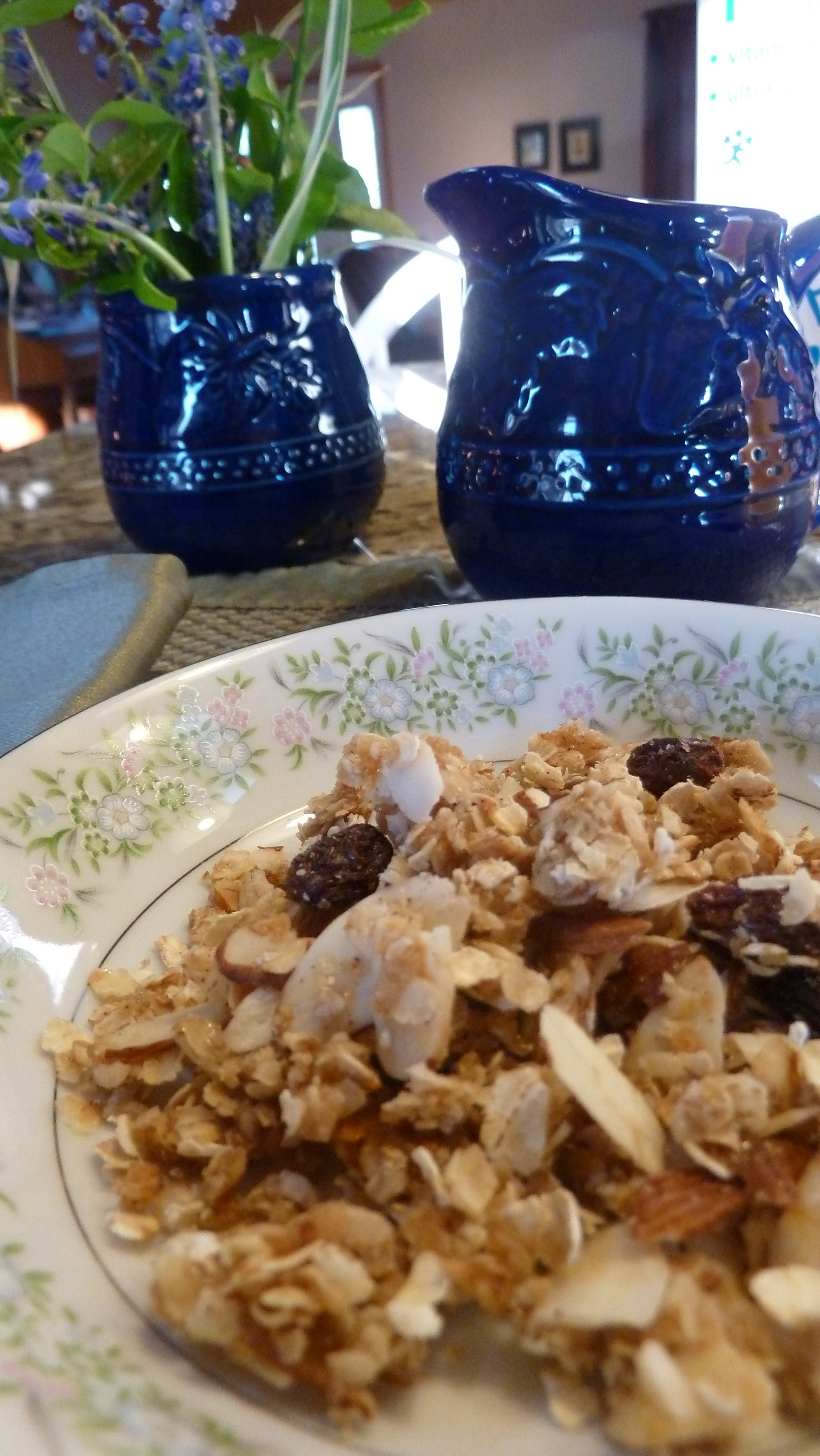
Spring just says granola, doesn’t it? Or muesli? Whatever you call it, however you make it, wherever you buy it, granola is all about crunchy and earthy goodness mixed with milk and not-too-sweet sweetness. Yum.
But I have a confession. I just made my first batch. I’m not a very good More-with-Less simply living Presbyterian/Mennonite am I?
During the years my youngest daughter lived at home after college, she made numerous batches which I relished. But never got around to making myself. It was easier to buy it. My go to right now is “Go Lean Crunch” by Kashi. (Not a commercial.)
My niece gave me some awesome local honey (thanks JoAnn) for Christmas and I knew I would no longer have the excuse, “but honey is so expensive.” (The honey container is upside down but says Mossy Creek Apiaries in Fishersville, Va.)

Sharp Shopper here in Harrisonburg, the go to place for all things bulk and natural, has sliced almonds for about $8.95 a pound (does anyone get them cheaper, truly wondering here?).
And now I know. This granola is so simple to make there just is no excuse. I whipped up half a batch Saturday while waiting for my husband to clean up and get ready to go to town. I whisked it out of the oven as we headed out the door, and popped it into the microwave to cool (out of the way of the cats).
It is just as good as I remembered, and says spring just as well.

I should do the math on which way (purchased or homemade) is cheaper.
And now I have a little surprise waiting for my daughter on her next visit. Pay back.
Thank you, Doreen, and all my daughters, for what you are teaching me about “modern” cooking (Tanya’s Stromboli) and baking and even preserving (Michelle, Apple pie filling)
Here is Doreen’s Granola, adapted slightly from Weight Watchers website. This is way simpler than any of the ones in my other fav books for this kind of recipe, More with Less or Mennonite Recipes of the Shenandoah Valley. Weight Watchers gave a serving size as one cup which may seem reasonable until you start actually counting calories. At my age, I try to limit myself to 1/2 cup which is plenty satisfying and makes the good stuff last longer.
Down to Earth Granola – Preheat oven to 300 degrees
4 cups old fashioned oats
1 ½ cups sliced almonds
½ cup packed light brown sugar (can use splenda)
½ teaspoon salt
½ teaspoon ground cinnamon
Warm up in sauce pan:
¼ cup honey
¼ cup cooking oil
Whisk 1 teaspoon vanilla into sauce pan once honey and oil are warmed through.
Carefully pour hot mixture onto dried mixture and stir gently or mix by hand. Spread into a 15 x 10 x 1 inch baking pan, lightly greased.
Bake 15-20 minutes, stirring carefully every 8 or so minutes. Cool completely Add raisins or dried cranberries as desired, after cooking. (Fun fact: I accidentally added my raisins before baking and it was so cute watching those little raisins plump right up into brown puffy oblongs, which kids might enjoy watching. They [the raisins, not kids] shrink after cooling.) Store in airtight container for a week or freeze for 3 months.
 1/2 cup serving granola in small dessert saucer
What have you learned to cook, bake or like because of your son’s or daughter’s example? I’d love to hear about their dishes.
***
In my book, Whatever Happened to Dinner: Recipes and Reflections for Family Mealtime, there’s a chapter that includes recipes my kids came up with themselves or enjoyed cooking early on. Almost 100 recipes in all. More on the book here.

Third of three parts in a Finding Harmony Blog series on Job. Part 1 here, Part 2 here.
I’m skipping a whole bunch of Job that is really really good to get to the last part as the drama builds to a fitting climax. We hear from a new voice, Elihu, regarding why Job, a seemingly innocent man, has suffered so.
Elihu, (chapter 32) is a new voice on the scene, who has apparently been biting his lips and as the youngest man hanging around, waiting for a chance to speak. And speak he does. He delivers some of the best “advice” reminding us all that when we feel God fails to speak to the problem of suffering, God does speak “again and again, no one pays attention to what he says.” (Job 33:14) Bingo.
In a recent book, The Book of Job: A Biography by Mark Larrimore (Princeton Press, 2013), the author summarizes the Elihu speech as reminding Job his case is not unusual: the innocent always suffer in our world. I like what Larrimore hints at in saying suffering happens, but God always offers some resources to help us (p. 3). That is the big takeaway for me in Job. Some suffering we can explain (war, famine, injustice) and we can work towards solutions (but often don’t). But when we can’t explain why the innocent suffer, we must also remind ourselves to be part of offering to help out: to be there, to stand alongside, to cry with, to be quiet and listen, to bring a casserole.
Then right after Elihu, we hear again from God. I love reading this part aloud in my best theatrical, thunderous, voice.
“Then out of the storm the Lord spoke to Job.
Who are you to question my wisdom …
Does either the rain or the dew have a father?
Who is the mother of the ice and the frost?
Can you tie the Pleiades together
Or loosen the bonds that hold Orion?
Do you know the laws that govern the skies, and can you make them apply to the earth?” Job 38:2-40:2
I could go on an on but read the passages here in whatever version you choose, and out loud if you dare.
The text hints at the wisdom and knowledge of the storyteller or writer, and the theological depth of their understanding (seminary degrees not even dreamed of). All of it fully God-inspired of course, but not dictated verbatim, in my book. I have no doubt that the writer in crafting these words did indeed feel like the Almighty was pulsing through and driving him (a him most likely). Like George Handel writing down chords and notes for The Messiah. Like Martin Luther King Jr. delivering “I have a dream…” Like Queen Esther taking on King Xerxes in pleading for the life of her people. On fire.
Job’s questions are not answered or even addressed, but we are left in awe and wonder about God. And Job’s health and good fortunes are restored. Like the end of any good fairy tale.
In the epilogue to the book of Job, it is worth noting that his friends are restored to grace by Job praying for them and then God asking that they present sacrifices for themselves. “I will answer his prayer and not disgrace you the way you deserve,” the Lord says. “You did not speak the truth about me as he did” (Job 42:7) So Job is commended for his questions, his outbursts, his truth seeking. And we ponder whether or not we can be angry with God, ask questions, and doubt? The conclusion of Job would seem to say, “Ponder no longer. It’s ok to have doubts. I can take it. Just keep trusting, as Job did. I’ve got this.”
The friends obey these instructions of the Almighty, we are told. Job’s brothers and sisters and former friends—the fair-weather kind, who had not sat with him for seven days mourning nor examined the depths of their souls regarding the whys–are friends again and come and express sympathy and comfort.
I just have to add a footnote. In Job 19:23 we read “How I wish that someone would remember my words and record them in a book! Or with a chisel carve my words in stone and write them so that they would last forever.” The commentary I’m working with only pitches this as an indication that Job is frustrated with the response of his friends, that maybe someone in future generations will read about and understand his dilemma. How neat that we are doing just that.
But does it also helps in dating the writing? My sources say that’s not important to the text, because of its universal application. My thought was that two forms of preservation of thoughts are hinted at in the reference just cited above: a book, mentioned first and certainly occurring much later in the history of humanity, and chiseling in stone, taking place much earlier. And now here we are millennia later, not only remembering Job’s words, dissecting them, but sharing and preserving them with 0’s and 1’s (as my colleague Wayne is fond to remind us referring to the basis for all electronic/computer communication and transmittal).
However our communication occurs in the future, I have no doubt that God, Job, and his friends will still speak into eternity on the unending questions regarding suffering, human coping, and master plan. The universality of Job and its message reaches out through time and space like a lighting bolt to connect and illuminate again and again. That is the electric potency of God’s Word.
***
How does Job speak to you?
***
To read or subscribe to my weekly newspaper column, Another Way, check here.
 Last week I hinted that when I tasted a tiny sample of the cheesy white sauce for the scalloped potatoes I was making, I was near ecstasy. The elusive perfect recipe for broccoli-cheese soup that had eluded me for so long was in my sampling spoon.
Why had it taken me so long?
Okay, it is not quite as good as Panera’s or say McAlister’s and nobody’s paying me to say that. Love both those soups and here’s one of many online options if you want to try and copy Panera’s recipe (the use of nutmeg here look interesting).
Over the years I have tried at least 3 broccoli-cheese soup recipes and more wild stabs at making a white sauce and then adding broccoli and cheese, etc., which was hit or miss. Edible and quite tasty, but not to die for. And if you didn’t add the milk or cheese at the right time, gross curdling can result. Just sayin’.
Some attempts. Jennifer Murch over at mamas minutia has a recipe for Cheesy Broccoli Potato Soup which looked great and trustworthy (great Mennonite cook but not the plain kind). Her long long list of recipes on her blog is something I only aspire to. I was intrigued that she also noted problems with curdling when she tried hit or miss to come up with a concoction that always worked. You might want to try hers, link above.
I halved Jennifer’s recipe, but for myself, I didn’t see a reason to put in the chicken broth. Sometimes I have chicken broth, sometimes I don’t, and I didn’t want to be hamstrung by that.
Rabbit trail: I had also worked with a recipe from Marjorie Rohrer, an awesome plain Shenandoah Valley Mennonite cook who used to (I don’t know if she still does, but there are cooks like that in almost any plain Mennonite community, if you ask around) open her home to groups for special occasion dinners like wedding anniversaries or rehearsal dinners or retirement parties or even (!) the Sorensen Institute for Political Leadership from UVA, who knew?! See link for a small picture of a dinner in her home. Organizations I have worked for have gone to Marjorie’s (or similar) when we wanted a really really good homecooked meal for a small group of 10-40 ish. I could find online tracks of a cookbook by Marjorie but no place they are actually available anymore: a self published volume (or two?) called Country Home Cooking by Marjorie Rohrer Shank (2006, Spiral). Anyone know where one can be found? (Another Shenandoah Valley blogger shared one recipe to use up an abundance of garden cabbage in season, from Marjorie’s book, which looks interesting too!)
End of that rabbit trail.
Anyway, Marjorie’s recipe for Creamy Broccoli Soup (my copy is handwritten in her hand and photocopied) called for a quart of chopped broccoli, 5 cups milk and 2 ½ cups water and l lb. cubed Velveeta cheese (in addition to others things) so I’m not sure I ever actually made it verbatim but I certainly used it as the basis for adaptations in greatly reduced proportions (with cheddar cheese swapped in for the Velveeta). It called for 1 Tb. chicken base which I’ve never purchased but it must add the same idea as chicken broth.
All of that said, here’s my very own latest successful soup recipe for Cheesy- Broccoli Soup, adapted from the recipe for the cheesy white sauce for Scalloped Potatoes I shared last week.
Cheesy-Broccoli Soup base (you can easily half this recipe)
Based on Thelma Maust’s Scalloped Potato recipe in Mennonite Recipes from the Shenandoah Valley
6 Tablespoons butter
6 Tablespoons flour
1 ½ teaspoons salt
3 cups milk
1 ½ cup sharp cheese, grated
1 cup chopped and cooked broccoli
In saucepan, melt butter. Blend in flour and salt. Gradually heat, stirring in milk. Stir frequently, and keep stirring (!) as sauce thickens and becomes smooth. Add cheese, stirring, (it can scorch easily with all that milk).

Add cooked broccoli pieces. Heat through and serve.

More goodies in the soup: you can also add bits of chopped onion (sautéed or just added in), chopped carrots, cauliflower, potatoes (all of these cooked before you add them), more cheese, different cheeses, crumbled bacon, as desired.

***
Do you have a really good broccoli soup recipe (share link) of any description? I’d love to hear about more.
What is your most recent pleasant cooking surprise?
For another really great, comprehensive Mennonite recipe book from the Shenandoah Valley, don’t forget about Mennonite Country-Style Recipes and Kitchen Secrets: The Prize Collection of a Shenandoah Valley Cook, by Esther H. Shank, available here.


Job, Act 2: (Job 2:11 through chapter 7)
Job’s trials, in any event, are over the top (see prior post on Job) of what any one person should ever have to bear. Job’s friends think so too, and at first, they are exemplary friends. (Later on in the story we hear all of the “advice” they offer their friend, but in this section it struck me what great and close friends they truly must have been.)
After weeping and wailing like proper Hebrews in that time and setting, they also tore their clothes and threw dust into the air and on their heads. (We need a Rachel Held Evans type photo or illustration here as in from her fun but profound book, A Year of Biblical Womanhood: How a Liberated Woman Found Herself Sitting on Her Roof, Covering Her Head, and Calling Her Husband “Master”.)
That dust, one commentary tells me, would have come from the trash heap outside the town walls where dung and other rubbish was burnt and dogs hunted for carcases.

Heaping dust and ashes on your head. Sometimes I wish we dealt with grief and troubles in such a visible, visceral way. What awesome friends.
Then, the Bible says Job’s friends “sat there on the ground with [Job] for seven days and night without saying a word, [emphasis mine] because they saw how much he was suffering.”
Most of us have trouble listening to or sitting with a suffering friend for one even one hour without trying to offer advice or misguided consolation or telling the story of what happened when Grandma lost three children to the flu of 1918 in three weeks. Or whatever. We have an excruciatingly hard time staying quiet when a friend is suffering. It is not human nature. Here the friends sit and are depressed with Job for one solid week.
And it is finally Job who breaks the silence and curses the day he was born. I can imagine what a relief this breaking of silence is to all of them. Job is human. He doesn’t curse God, but begins to voice his frustrations and despair. And goes on a bit. When bad things happen, after the wailing and the throwing around of the figurative ashes or dust, we lash out in anger, otherwise knowing as processing things.
When Job’s done with his first outburst, I love the way the Good News Bible puts the beginning of one friend’s response: “Job, will you be annoyed if I speak? I can’t keep quiet any longer.” The NIV puts it: If someone ventures a word with you, will you be impatient? And the Shakespearean KJV goes: “If we assay to commune with thee, wilt thou be grieved? But who can withhold himself from speaking?” Later, in chapter 8, friend Bildad asks “Are you finally through with your windy speech?” If we fault the friends for piling on their critique, we maybe should also give them credit for their unflinching honesty.
The first friend, Eliphaz (Job 4) begins to present all of the typical questions and “explanations” we have for suffering, and some that we have thankfully mostly gotten rid of. And remember Job’s friends aren’t in on the secret revealed in the prologue, that indeed Job’s exemplary faith is so sincere that the Satan figure has brought all the mayhem to Job’s life as a “test.” Francis Davidson’s New Bible Commentary reminds us that Job’s sufferings are actually, in this telling, “evidence of the divine [God’s] confidence in him [Job].” Perhaps that’s where some people get the idea to say inane things like “when bad things happen, God must think we’re up to the test.” Thanks, but I’ll skip the test.
My overall reading of Job this time struck me with how remarkable it is that people in this relatively primitive time engaged in such deeply intellectual thinking and pondering. There are some references of course to the prevailing idea of the time that “someone sinned—either you or your parents—to have caused this great suffering” which we now profoundly reject, but the dialogue back and forth between Job and his friends contains:
- Poetic and crisp descriptions: “God hung the stars in the sky.” (9:9)
- Lovely metaphors: “A thing of dust that can be crushed like a moth.” (4:19); “The wicked roar and growl like lions.” (4:10)
- Vivid and homey illustrations: “What taste is there in the white of an egg?” (6:6). Really! So they enjoyed a good fried egg now and then?
- Thinking that plumbs the depths of their souls: “You see my fate and draw back in fear.” (6:21) This is what makes it so hard to deal with the suffering and illness and even death of close friends and family: we know that our time is coming.
- And o.k., an occasional misspeak, as in this contradiction from one verse almost to the next. In Chapter 7, Job complains “when I lie down to sleep, the hours drag, (v. 4), and then in verse 6, the hours are suddenly passing “faster than a weaver’s shuttle.” Maybe it is because the hours at night drag and the daytime hours go fast? Hmm. Editor was asleep.
Job then responds and ends his rejoinder by asking God the question we can’t blame him for asking: “Why use me for your target practice?” (Job 7: 20, Good News).
We’ll look at a wrap up and some conclusions next time but don’t look for anything neat and tidy.
Have you felt like you or your family was being targeted with a series of difficulties, illnesses, or misfortunes?
Have you ever had a “Job’s Comforter” who tried to give you sincere but misguided advice?
Or, have I been a Job’s Comforter to others?
***
Target image courtesy of BPlanet / FreeDigitalPhotos.net

I loved reading through the book of Job recently. You may recall I am slowly working myself through the Bible. (This will be a blog post in three parts and a little different from my normal posts, without a lot of photos. You may want to read Job 1 for more background.)
Job is a great book, one of the best in the Bible, in my opinion, and interesting from a number of viewpoints (poetically, philosophically and theologically). And I love the finish—not just when dear Job gets his life back, but the part right before when God finally “answers” Job, but more about another time.
I’m not a Biblical scholar or theologian nor have I read all the commentaries and expositions on the meaning of Job but I do know that the questions it wrestles with are the basic questions tripping up millions as a roadblock to faith in God.
The basic question being, if God is so good, how could God allow the suffering that goes on in our world?
I love the way Job starts out and I don’t know if this ever hit me particularly before. But the rhythm of how the story happens in threes makes you think that ok, this is set up by a great storyteller. (Even many jokes start in threes: A rabbi, a priest and a minister. Or, a barber, a bald man and an absent-minded professor—one example on Wikipedia).
My “is-this-a-fable-meter” rises as I read the very first line: “There was a man named Job, living in the land of Uz (and my Bible footnotes tell me Uz is “an area whose exact location is unknown.” Hmm. Is this where the writer of Wizard of Oz, L. Frank Baum got his idea? No, but according to Wikipedia, an Israeli translator in translating Wizard of Oz to Hebrew thought of the same thing and used Hebrew words for “Land of Uz” in that children’s novel. Uz is also related to Oz meaning East. Sounds reasonable. But the repetition of sevens and threes in the counts of sons, daughters, sheep, camels and the summary of “richest man in the East” sounds like a great way to begin a fairy tale. Not that I think it is. (A pretty good further explanation of this can be found here, and while I cannot vouch for the whole website, it looks pretty middle of the road in terms of theology and interpretation.) From my view, I believe Job was a real man who existed and suffered extensively, but the storytellers about him through the ages added their embellishments, like any good story based on a real character.
So the tests of Job start with the Lord asking Satan what he’s been doing and Satan goes ,“Well, I’ve been walking here and there roaming the earth” (1:7). Satan’s challenge to God sets off a horrible chain of events where Job’s children are having a feast when a messenger comes running to Job (not at the feast) and tells him that out among Job’s oxen and donkeys, a neighboring tribe destroys the animals and all of the servants except “I am the only one who escaped to tell you” (verse 15). This occurs a total of three times with more servants reporting a new attack even …“before he had finished speaking.” The storyteller in Job has got his art down beautifully. Which makes for a great read, even though the awfulness of losing all ten of his sons and daughters in one storm is just horrifying, beyond what anyone should ever bear.
Job thinks so too and goes into immense grief. He laments and grieves but responds with “The Lord gave, and now the Lord has taken away. Blessed be the name of the Lord” (Job 1:21).
In chapter 2, again Satan has been “walking here and there roaming the earth” and this time Satan gets permission to “attack” Job himself but not to kill the good man.
The drama is set up. Act 2 to be continued.
***
How do you read Job? What do you like about the book? What don’t you like? Does it matter what we like or don’t like about the Bible?
***
I wrote a little about Job in my Another Way column last fall, referencing a newish book about Job, The Book of Job: A Biography (Princeton University Press, 2013), written by Mark Larrimore.
Gone are the days when you can make a family photo by traipsing into Wal-Mart with some presentable clothes on and pose for 10 minutes and come out with a standard but decent shot of whatever everyone looked like in August, 2004, right before your youngest went off to college.
That’s exactly what we did to get this photo. Wal-Mart special.

Fast forward ten years. No, make that slow forward ten years. So. Much. Has. Happened. Our family almost doubled in size in the last ten!! And I didn’t have to have any more babies.

But my daughters and their husbands did and one of them said a few weeks before Christmas, hey, its been almost 10 years since we took a family photo and its about time we did. How about if we give the whole family a photo shoot for Christmas as our gift to all of you.
Well yes! And thank you. Wonderful idea!

Except, it took three acts of congress to pull it off. Wait, wrong example. It still wouldn’t have happened if we were waiting on congress.
After multiple tries of finding a weekend that would work for us and the photographer, the date was set for a week before Easter.
There were instructions from the patient and professional photographer, Bradley Striebig of Striebig Photography & Design.
Followed up by a raft of emails about what on earth we should wear that looked coordinated but not matchy matchy.
Then there were private photo albums on Facebook sharing some of the color scenarios we were imagining.

There was checking Pinterest boards to see what color combos others choose.
There were shopping trips, especially by grandma, to get the little ones something that looked coordinated but not matchy matchy.


One child decided to give up napping the week before the photo shoot, which meant a very worn out little boy who never the less soldiered through. And patient papas who soldiered through.

Not to mention an awesome down-on-the-ground photographer who wasn’t afraid to get his knees dirty or set up so many lights it looked like a film set, even if we were outside and shooting in bright sunlight.
It took some effort, but it WAS fun (except for fussy babies, who, by the way and to their credit, took things in stride like o.k., this is what families do). You do have to wonder what goes through their brains.
I do know that the little one who was so tuckered out finally fell asleep in his mother’s arms. At last, poor tyke.

The best advice Brad gave us (but hard to follow) was “Remember the job of you adults is to be looking at the camera and smiling no matter what. I’ll worry about capturing the babies at the right times.”


The three sisters, on our porch swing: Doreen, Tanya, and Michelle.

Now comes the hard part. What to purchase and print. I’m still very much of a print person.

My grandparents and great grandparents are preserved on prints from over 100 years ago. No matter what technology we have next, I hope my grandchildren and great great grandchildren children 100 years from now may handle real photos and marvel and figure out resemblances and treasure the family connections over the centuries.
So I’m glad for my prints. The one below hangs in our bedroom:
The original Davis Five, circa 1989.
 Tanya, Melodie, Doreen, Stuart, Michelle
This one will be very special for many years to come.
The original Davis Five 25 years later, 2014.
 Doreen, Stuart, Michelle, Melodie, Tanya
***
Do you print photos? Do you think people will still print photos 100 years from now (printing 3-D photos are next on the horizon). How do you store your photos?
***
When was the last time you had a family photo made? I know a good one!
Watermarked Professional photos courtesy of Bradley Striebig photos.
http://bradleystriebig.zenfolio.com/portraiture

We end every day like this. Ha. Our front porch swing, where we spend too little time.

It’s almost time to plant potatoes here and I’m happily trying to use up potatoes left from last year. We had buried a bushel of potatoes in the garden for over winter and recently retrieved them and they were in great shape: firm and no eyes on them yet and perfect.
So for a potluck at work, I planned to take a huge dish of scalloped potatoes. I got two bonuses out of the effort (no, not the money kind). And scalloped potatoes do take some effort, especially slicing the potatoes.
It had been years, YEARS since I tried to make a decent dish of scalloped potatoes, usually resorting to the boxed kind because they are so easy and usually great. My children and husband were never big fans of this type of potatoes so I usually just made them when I got really hungry for them or as a dish for a potluck somewhere.

My mom has an old tool she used for making thinly sliced potatoes, a grater of sorts with a row of blades perfect for the job. But I don’t have one, rarely needing one. So for this dish I alternated between using a chopping knife and a paring knife, trying to decide which was faster. In all it took me about a half hour to prepare the dish. Worth it in the end, but not as quick as a box.

This is slightly adapted from Thelma H. Maust’s recipe in Mennonite Recipes from the Shenandoah Valley (Good Books), and it is a keeper, with the first four ingredients as the basis for any white sauce.
Scalloped Potatoes
6 Tablespoons butter (or margarine)
6 Tablespoons flour
1 ½ teaspoons salt
3 cups milk
1 ½ cups grated sharp cheese
6 cups thinly sliced or grated raw potatoes
3 Tablespoons onion, chopped fine
1 teaspoon salt
½ teaspoon pepper
1. Slice potatoes, grate cheese.
 2. In saucepan, melt butter. Blend in flour and salt. Keep on heat and gradually stir in milk. Continue stirring until sauce thickens and becomes smooth. Stir almost constantly to keep from scorching.

3. Gradually add cheese, stirring until mixed in thoroughly and melted.

4. Layer half of potatoes, onion, salt, pepper and sauce into greased 9 x 12 inch baking dish. Repeat layers.

5. Sprinkle with paprika if desired. (I put a bit of the grated cheese on top).

6. Bake at 350 for 60 minutes or until potatoes are soft. Mine took about 1 hour 15 minutes due to thickness of some of the potatoes, and I had to up the temperature to about 400 for the last 15.
The surprise. I took one taste of the sauce with the cheese melted in and I said to myself (or my cats): Broccoli soup! I was so excited, I couldn’t wait to try making the white sauce part and adding ingredients for broccoli soup the next day. More about that next week. The other bonus was I had enough left over (there was plenty of food at the potluck) to serve my family who had all come home for a big photo shoot with a professional photographer (more about that next week too). I knew the scalloped potatoes were a hit with the family when that dish got gobbled up and one son-in-law, quietly in his understated way, said something like “I wouldn’t mind more scalloped potatoes.” Um yum. (Below, my very last serving in a ramekin. Good to the last time.)
***
Do you grow potatoes? By what date do you try to get your potatoes planted? Do you buy seed potatoes or use old potatoes from last year?
***
What are you favorite variations on scalloped potatoes? What do you add?
***
There are plenty of other good recipes from Shenandoah Valley Mennonite cooks in my recipe book, Whatever Happened to Dinner: Recipes and Reflections for Family Dinner.
***
Don’t miss any of my Friday (sometimes Saturday) Finding Harmony Recipes of the Week. Sign up to receive the blog to your email. Way down the right hand side of the home page, look for this visual (not clickable right here):

 findingharmonyblog
