

Verse for reflection: [James and John asked Jesus]: “When you sit on your throne in your glorious Kingdom, we want you to let us sit with you, one at your right and one at your left.” (Mark 10: 37)
Several years ago traveling to Newton, Kansas for some meetings in the Mennonite offices there, I stayed for two nights in the home of a former colleague whose son, Ethan, was four years old at the time. While his mom and dad were upstairs getting ready for their job, Ethan and I were finding our own breakfast.
Ethan proceeded to show me the cupboard with various boxes of cereal in it. There he found a new box of cereal with blueberries featured in the attractive bowl of cereal on the front.
“Ooh, this cereal has bwo-berries.” We both thought that sounded good so we got our bowls and carried them to the table.

Of course, when we opened the box, there were no dried up little blueberries (as I thought there might be). “No bwo-berries,” he said disappointed. I felt badly. Here I was the adult with how many years of experience with all kinds of boxes that pictured much more than they ever delivered, and I hadn’t prepared or warned him. To Ethan’s (and his parents’) credit, he got over his disappointment quickly and ate the cereal anyway, and I was reminded of how literally children take things and how often it sets them up for disappointment.
I remember one of my big disappointments as a child. I had two sisters and one brother. Mom and Dad announced there was going to be a surprise for everyone.
My two older sisters shared one bedroom; I slept in a room that served as the hallway, and my brother a separate room. When a furniture truck drove up with a brand new bedroom suite, we were all very excited. The deliverymen proceeded to carry the items up our stairway–all going into my sisters’ room. What was there for me? Or my brother?
I remember finally spying a momentarily-forgotten thin box in the stairway, waiting to be taken upstairs. I told my little brother, “Maybe this box is for us.”
But no. A quick peek revealed it was the mirror for my sisters’ bedroom suite.

Eventually, of course, the bedroom suite was “mine” too after the oldest went off to college, and eventually it was all mine when the second one left. The lesson that stuck with me was never try to tell your kids that a surprise would be for them if it isn’t.
So what does this have to do with Palm Sunday and the week leading up to Easter?
On Palm Sunday, Jesus was greeted as a king after a great victory. His disciples must have thought he was finally getting ready to step forth and lead a revolution (some hoped) against the crushing oppression of the ruling Roman empire in their country. The day before the triumphal entry into Jerusalem they were arguing about who was going to sit on Christ’s right or left in the Kingdom, and while Jesus answered talking about his heavenly Kingdom, clearly the disciples did not yet understand what lay ahead for Jesus or themselves.
By Thursday when Jesus ended up being betrayed and arrested, then tried and crucified, we know his followers were not only devastated and horrified by this sudden, violent turn of events, but deeply disappointed for all their own hopes and dreams for the future.
Thank God the story doesn’t stop there! The masterful preacher S. M. Lockridge once said in an eloquent sermon, “It may be Friday, but Sunday’s coming!”
As we begin this Holy Week, walking alongside (in our imaginations) through the tragic and difficult experiences of Christ’s final week of life on earth, we can keep in mind the God who offers consolation, hope and victory over all of life’s disappointments, big and small. Even death has lost its sting when we know that ultimately there is life beyond the grave.
Action: When disappointments and discouragement loom large this week, focus on Christ’s heavy walk toward the cross. Allow the power and love of God lift you to peace and joy.
***
Adapted from Another Way newspaper column, first published March 2008; archives of columns here.
Verse for reflection: In the beginning was the Word, and the Word was with God, and the Word was God. He was with God in the beginning. John 1:1
It was one of those statements that seem wise and psychologically sound but when you stop and think about them are just plain silly.
Our two-year-old needed tubes in her ears for chronic ear infections. For a child, this requires an outpatient hospital procedure under anesthesia. While coming out of the anesthesia she was crying, moaning, feeling awful like you feel when caught in that land between consciousness and unconsciousness.

“She’ll be all right, Momma,” said a kind and well-meaning nurse as I attempted to comfort Doreen. Doreen kept on crying. “She’s just mad; she mostly feels insulted; the only one she feels safe to take her anger out on is you, Momma,” the nurse continued. She implied that once Doreen got the anger out of her system, she’d be all right.
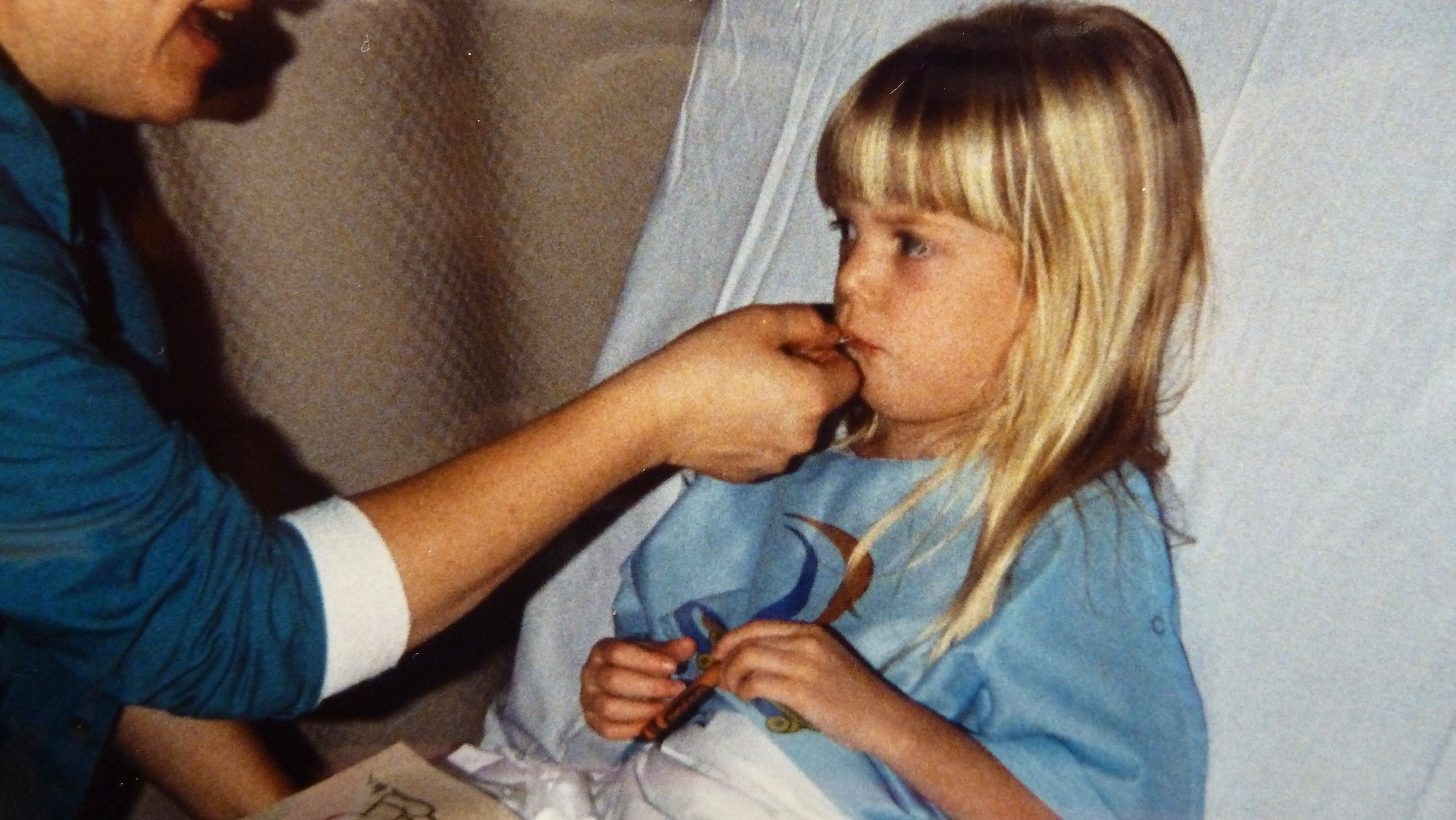
(These photos are actually a 2nd eartube event when Doreen was four, not two.)
I wished this woman who was old enough to be my mother would stop calling me “Momma.” But aside from that, I smiled vaguely, recognizing the “anger” idea from some ancient psychology text I’d studied.
After Doreen had thrown up and felt good enough to start eating dry crackers, I started realizing how inane the advice really was. Doreen wasn’t angry—at Momma, the doctor, or anyone else. She was just feeling rotten because of the anesthesia. Once she got that out of her system, she was soon as good as new.

(Our pastor, Ann Held, checks out the happy patient–before surgery.)
How quickly we succumb to the god of the latest trend. And I’m the worst of the lot. If somebody tells me playing Beethoven for my child in the womb will make her a musician, I rush to plant headphones on my abdomen. (No, I didn’t but I’ve done things just as outrageous, and I ended up with a musician anyway, and a couple of real music lovers, thank you very much.)
If career advisers tell us we’ve got to network to advance our careers, get on Linked in, we join up. If the trend is spiritual retreats with a spiritual adviser, we schedule them in our appointment books, forgetting that a good old-fashioned day in the woods or a hike up a mountain could serve the same purpose.

One family counselor said she can always tell what has been discussed on TV talk shows in a particular week because her patients bring up whatever problems were featured—the malady of the week.
I’m not knocking good psychology or listening to classical music while pregnant or networking or spiritual retreats. It’s just that too often we rush to adopt the latest trend without saying, “Wait a minute, what is really going on here?”
“Vanity, vanity,” sighed the writer of Ecclesiastes long ago. “All is vanity. There is nothing new under the sun.” (Eccles. 1:2-9, paraphrased.)
It’s comforting to know that God is not exactly trendy. God just is.
Action: No special action required today. Just be and plan to enjoy your weekend.

Mom and daughter doing just fine.
Verse for reflection: The fear of the Lord is the beginning of wisdom, and knowledge of the Holy One is understanding. For through me your days will be many, and years will be added to your life. Proverbs 9:10-11
A number of retired people used to volunteer in our office basement to assemble by hand the tens of thousands of colorful desk calendars Mennonite Media sold every year for churches to distribute in their communities.
One volunteer was going slowly up the stairs. I was coming up the stairs behind him. He paused with his hand on the rail to let me pass and quipped, “You’ll have to excuse me, I’m in the truck lane these days.”
He was God’s special messenger to me that day, making me think about my life and how I was living it. His smile seemed to say he was enjoying life in the truck lane, but I know that is not the case with all retirees.
When I first shared this story (written for my newspaper column, then included in my Why Didn’t I Just Raise Radishes book, 1994) retirement stretched in the distant future. I was in the midst of raising three daughters.


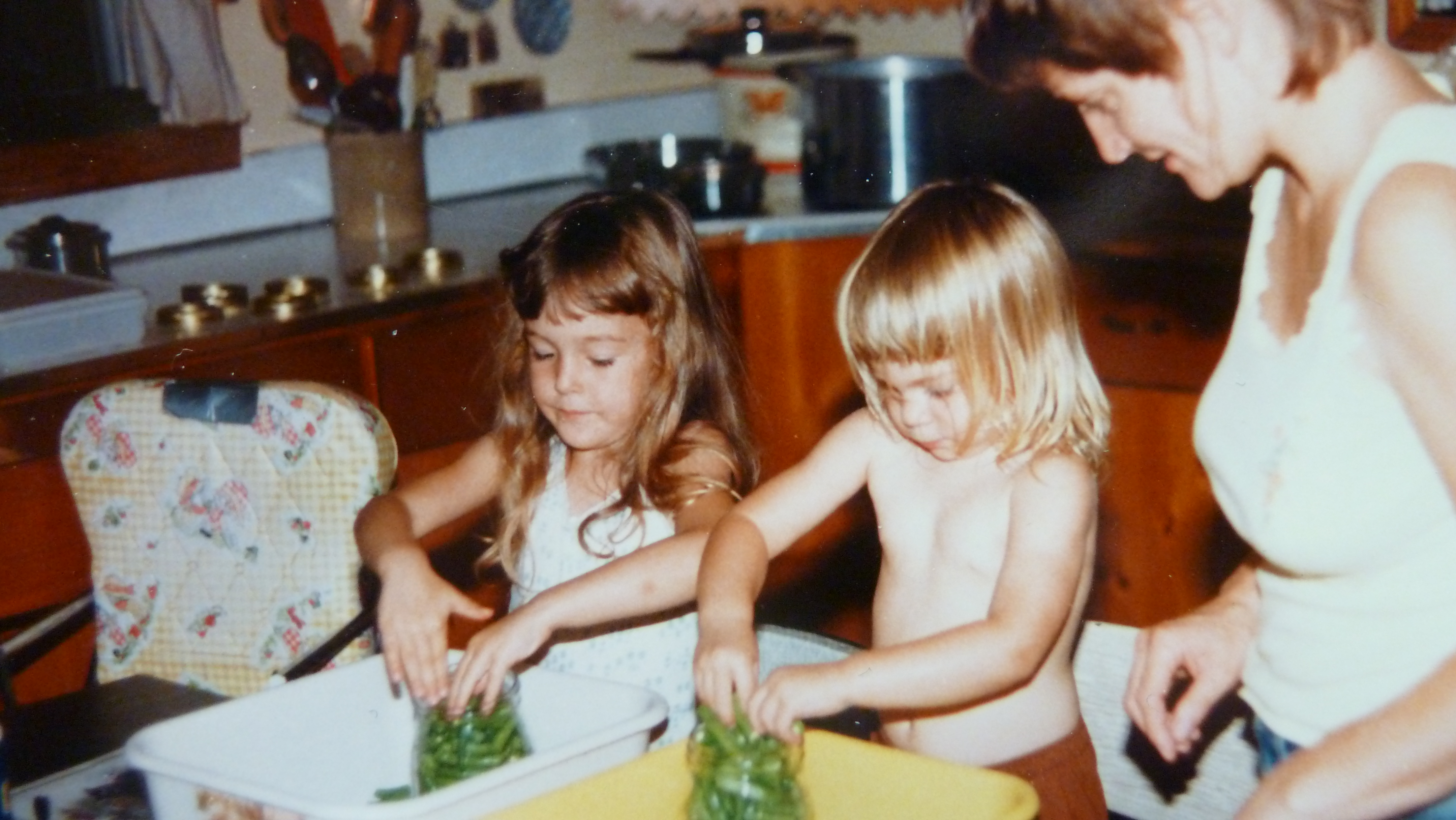
The name for that book, in case you’ve wondered and don’t know, comes from a Sesame Street book where Cookie Monster frustrates another character so severely that at one point the character just exclaims, “Oh why didn’t I just raise radishes!”

These days my siblings, in-laws and friends are certainly talking about retiring, and some have already moved over to that lane. I frankly have very mixed feelings about it, and part of my mixed feelings come from our culture’s emphasis on youth and staying young. Think about it: if we grew up envying those able to enjoy life from a “slower” lane, moving to retired status wouldn’t be so difficult. If we weren’t so wrapped up in our jobs as part of our identity, than maybe getting to the stage of moving on from paid employment wouldn’t be so difficult.
Instead of the volunteer apologizing for slowing me down on the stairway, I should have been apologizing to him for rushing by him, lost in my own busyness.
Not all retirees live at a slower pace, for sure. Dene Peterson, founder of a co-housing community in Abingdon, Va., calls it the production model of aging: “We think, ‘I’ll never get old; I can keep doing everything I’ve always done.’ It’s not a model for old age, it’s a model to stay middle-aged the rest of your life!” She says that what happens with that model is that you stay healthy, which is good, but you’re not ready for the dysfunction when it occurs. (From MennoMedia’s Embracing Aging documentary.)

(Although retired from farming and partially disabled, my Dad always found a way to get things done.)
Certainly there are financial worries, and it is good to have good help preparing for the financial end. They are worries about physical and mental limitations. A simple thing like not being able to drive at night curtails many activities and meaningful involvements.
I suppose part of the human condition is always envying others. As I rush to work, part of me wishes very much to be in the truck lane of retirement. Another part of me knows that when I’m seventy-five, I’ll look wistfully at people hurrying to work or harried mothers shopping with their little “radishes” and wish I could go back in time.
As the Proverb implies, there is no virtue in just adding years to your life; add life to your years.

Action: This 35th day of Lent, focus on enjoying your life in the present. Jesus says tomorrow’s worries will take care of themselves. Or, if you’re really not enjoying your life, look at ways you can make even small changes so that you can.
Verse for reflection: Who is wise and understanding among you? Let him show it by his good life, by deeds done in the humility that comes from wisdom. James 3:13
An interim pastor at our church, Davis Yuell, once told a wonderful story of a time when he was in Chicago for a meeting and U.S. vice-president Hubert Humphrey was schedule for a campaign speech at the same hotel. This pastor suddenly became aware that the presidential hopeful (1968) would soon enter through a nearby door. Around him was a great deal of official hubbub with lots of Secret Service men and people with clearance badges.
This pastor decided he would stick around until someone asked him to leave. He had on a detective style trench coat anyway. One guard nodded to him; the pastor nodded back. He just kept up an air of “I know what I’m doing here” and soon Humphrey passed within arm’s length.

“Look like you know what you’re doing,” is good advice but would maybe not work so well in 2013 around a presidential candidate. But it’s at least as valuable as all the rules your folks sent with you to kindergarten. I seem to recall saying the same thing when my friends and I would try something crazy at school or the mall.
The difference between kids and adults is that kids (at least until a certain age) think adults know what they’re doing. Doctors are nothing less than magicians, dispensing cures in bubble-gum flavored medicine. Clerks in an ordinary store are thought to own all those toys, which they give you in exchange for some drab green pieces of paper. Mom can always go to the bank to get more of those pieces of paper, and Dad (after repairing a simple broken toy) can fix anything!
The older I get the more I realize that all the people I once thought knew what they were doing are often guessing, hunching, even bumbling along. Now that I go to doctors much younger than I am, I can see their insecurities—the times they haven’t got a clue and rule out the possibilities like ruling out answers on a multiple choice test. Not that I don’t trust them—they still know more than I do about the human body, but I finally realize that they’re human, too.
All of us become experts at the things we do everyday. I can put one word after another pretty fast and I rarely stare at a blank piece of paper or screen. The school secretary or mom is an expert at sniffing out fake excuses. The farmer knows when the corn is ready to pick from the sight, smell and feel of the ear. It’s fun to reach the point in life where, no matter what your field, you feel like you really do have some expertise to offer.

(That’s a little how my husband and I felt steering a sailboat on Chesapeake Bay last fall.)
Though it’s not always possible to know God’s way on a given issue, it’s comforting to know that God knows. We humans are bound by all sorts of limitations. God is limitless, all-knowing, all-loving. We can rest in the comfort of that knowledge.

(Don Allen, who just happens to also be the pastor who married us, points the way.)
Action: In what ways are you still learning to trust God? What areas of your life are you inclined not to trust to the Almighty? Maybe this journey through Lent can bring us to trust even those areas to God.
Adapted from Why Didn’t I Just Raise Radishes, Herald Press, 1994
Verses for reflection: Large crowds were traveling with Jesus, and turning to them he said: “If anyone comes to me and does not hate father and mother, wife and children, brothers and sisters—yes, even their own life—such a person cannot be my disciple. And whoever does not carry their cross and follow me cannot be my disciple. Luke 14: 25-27
Have you ever witnessed a violent confrontation or loud argument that left you uncomfortable? Did you ever pass by a person with his hand out on the street and feel guilty for having so much?
We were traveling peacefully down an Interstate one day when suddenly the car in front of us pulled sharply onto the shoulder. The driver flung his door open wide and jumped on the pavement in an apparent rage. I could see there was also a passenger.
The driver reached into the car, pulled out something, and threw it on the blacktop. There was a puff of smoke. Then I could no longer see anything in the rear-view mirror.

You may not feel it is fair to leave the story hanging there but that is all I could see.
But I wondered whether we should have done something. If so, what? How much risk is reasonable when you have three small children in the car (as we did at that time)?
This leads me to a larger everyday question: in a world crying out with need, what can I do? When should I get involved? When should I respond to a panhandler on the street? When should I stick my neck out? Intervening could create an opportunity for more violence and possible crime (against us).
Jesus was considered crazy by his contemporaries and even his family. Mark 3:21 says “When his family heard about this, they went to take charge of him, for they said, ‘He is out of his mind.’”
When is helping foolhardy? When is it Christ-like? What is the likely outcome? Is there a way to reach out wisely—we AREN’T God, afterall.
I can no longer hide behind the excuse of “three small kids” but I still have excuses: a mortgage, we’re getting older, we’re (too) comfortable?
The “double dare” in my title is not just a childish taunt, but a nudge to (myself included) take responsible risks to help those in desperate need. If you have children at home, are there mission projects that can involve both children and parents?
My photo above is just an illustration for my “highway” story, but perhaps the signage can be applied to situations of getting involved without taking foolhardy risks. One sign says “Proceed with caution” and the other “Passage through tunnel by escort.” Helping through organized programs (such as a Clothes Closet my church runs) is one way to minimize risk and also to work as small communities to respond to issues whether it is violence, bullying, hunger or poverty.
College students and people from our church are sticking their necks out just a little to help hungry children through a back pack program, where kids who get free or reduced lunches through the week are sent home simple foods and meals for over the weekend, when they may not get much in the way of nutritional food.
Another way is by participating in community-wide thermal shelter program (or other shelters) for homeless persons through the winter months. This is probably a wiser way to help than giving guilt money on the street. Here is information on our local program.
Action: How will you stick your neck out in response to Christ’s call to “be my disciple.”
Verse for reflection: When Jesus saw this, he was indignant. He said to them, “Let the little children come to me, and do not hinder them, for the kingdom of God belongs to such as these. Mark 10:14
I remember one morning when our youngest was just approaching three. She woke up too early, so I put her at the kitchen table to eat while I continued the business of tidying up and getting ready to go to work.
“Sit there and watch me,” she requested with milk dribbling on her chin as I rushed through the kitchen.
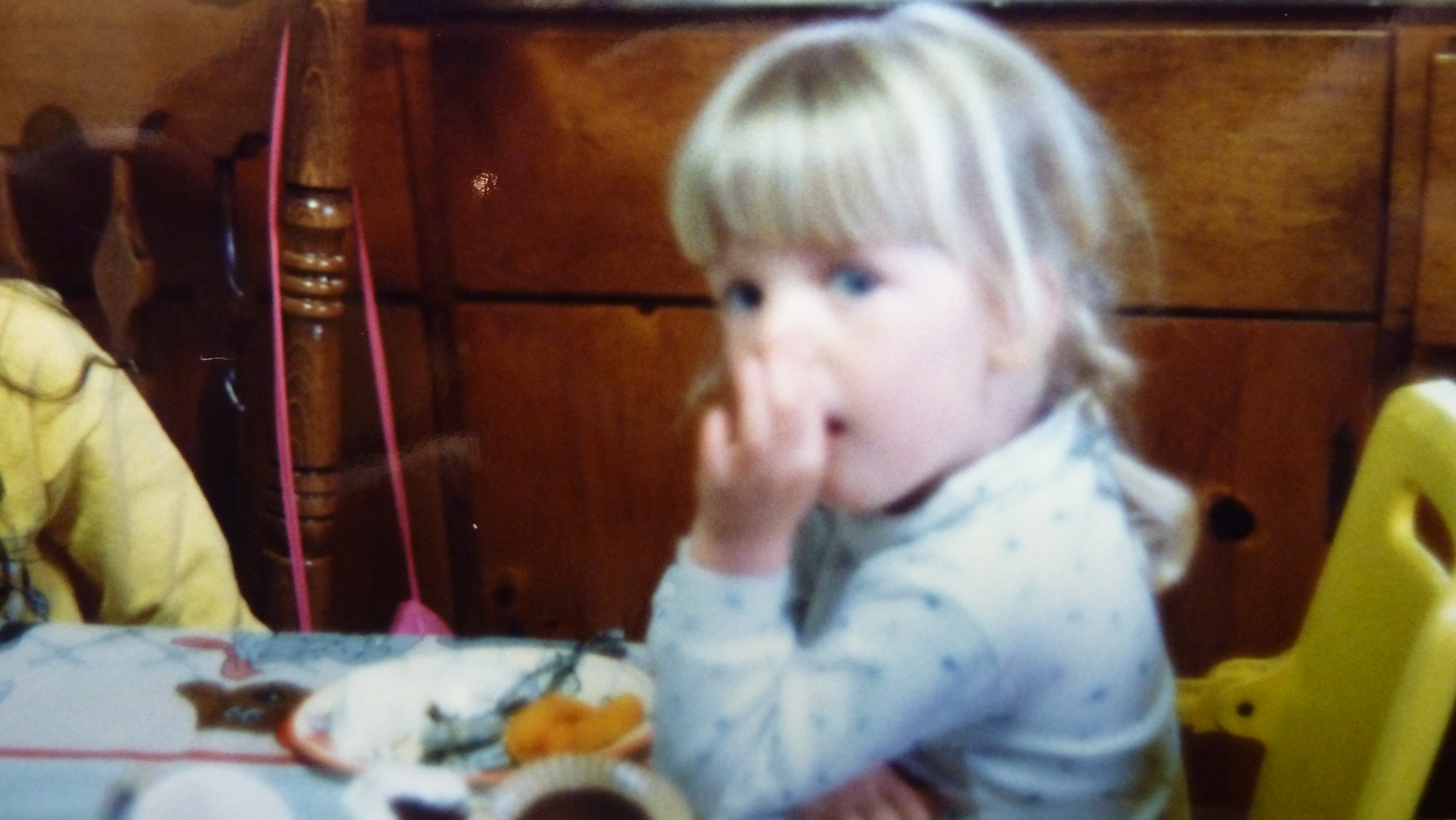
Again I was stopped in my tracks by a child, causing me to consider what is really important in life. Is it more crucial to wash the dishes before going to work, or to spend a few quiet moments with my child?
I’m convinced children are placed in our lives to remind us of priorities. They tug at our trousers. With their actions they say, “Pity me!” Children remind us, if we’ll listen, that we were children once too who needed attention, hugs and direction.
Consider the child Jesus. Mary and Joseph did for him all the things normal parents do. They wiped his nose, cleaned messes, fixed food, kissed hurts, mended toys, told stories, and patched squabbles with siblings. This was divine work for Mary and Joseph.
But parenting can be divine work for us, too, nurturing sons and daughters of God into beautiful men and women.
Just because Mary and Joseph were raising a divine child didn’t make it easy. Remember when Jesus was twelve and “got lost” from his parents? His parents expressed outright exasperation when they found him. And surely there were many other incidents we’ll never know about.
When one child spilled her cereal, another wanted help picking out yet another outfit, and the third needed help looking for a lost library book—thinking of parenting as divine work made my fuse a little longer. It is also helpful to think of mothers where tangles are not over spilled milk, arguments about clothes, or a missing book. Being aware of families living for endless years in refugee camps, or apartments without heat, or kids left to fend for themselves while moms get high—helped me slow down and be more present to dear moments with my children.
I do wonder though what Jesus would say to us who profess to follow and love him, about the indignities so many children suffer. … “When Jesus saw this, he was indignant.” Surely some of his forty days in the wilderness that we recall during Lent were spent pondering the great needs of his world—and ours too.
What do you think?
Action: Take time not only for a child, friend or loved one who needs your attention, but consider how God may be calling you/us to divine work caring for God’s children.
Verse for reflection: As a mother comforts her child, so will I comfort you; and you will be comforted over Jerusalem. Isaiah 66:13
I had to dash out during the middle of a day-log seminar on the future shape of Christian education, to carpool some nursery schoolers home.
“I don’t believe in Santa Claus,” Brian chattered (it was a few weeks before Christmas), “because how could he come down a chimney?”
I had not come up with a response by the time his busy, wonderful mind had linked this problem with another. Pausing, he looked at me with the biggest black eyes: “Why doesn’t God come down?”
“You mean to earth?”
“Yeah.”
“You mean why can’t we see God?”
Brian solemnly nodded.
In that instant, all the theorizing I had heard that morning about the shape of Christian education and the future came alive. Here was a teaching moment more valuable than the best planned Sunday school lesson. Here was a bright four-year-old asking the question of the ages, a question theologians and philosophers and popes have pondered and debated.

Brian, from nursery school.
We were already at his stop. I put the van in park and gave him a big smile. “That’s a wonderful question, Brian, one that lots of people think about.”
Then I tried to put into brief, simple words the idea that God did come down to earth in the form of baby Jesus. But Jesus had to go back to live with God. Now we can’t see Jesus or God anymore except in the loving, sharing things people do for each other.
Brian’s face changed from quizzical to satisfied-for-now and he hopped out of the van.
As I drove away, marveling at the ability of children to cut through verbiage, the conversation took me to a larger question. Why doesn’t God come down as people suffer, nations go to war, and natural disasters take their toll? How can a loving God sit back and allow all the terrible stuff to go on?
I find comfort in acknowledging that much of the terrible stuff is caused by people, and natural disasters are just that: disasters caused by forces in nature. I don’t believe God sits around pulling strings on hurricanes to make them hit one town and avoid the next.
So is God powerless to intervene? No. But God gave us free choice, which we learn in the story of Adam and Eve.
When we ask, “Where is God amid suffering?” we can know that God (whether we admit or recognize it) can be there giving us strength to go on. Someone put it this way: “God’s heart breaks with ours in tragedy or death and puts loving arms around us as we grieve.”
All of this becomes more real as the loving actions of friends, family and church help us in concrete ways. When we take someone a dish, share a cup of coffee, provide transportation, a hug—then God truly does come down!
Action: How can I show God to someone during this season of Lent?

Emma, one of many beautiful children I enjoyed getting to know better by teaching Sunday school.
Verse for reflection: For I will pour water on the thirsty land, and streams on the dry ground; I will pour out my Spirit on your offspring and my blessing on your descendants. Isaiah 44:3
When my daughter when to preschool, she hated to be the last one to be picked up. I tried not to be late but when you are working and need to leave in the middle of the day for a pick up, things happen.
“Mommy,” Doreen said one morning, “Remember, I don’t want to be last today.”
“Yes dear,” I had said, “I’ll try to be early. I can’t promise to be first, but I won’t be last.”
That morning at work I previewed an old video, “The Estate Sale” for an upcoming meeting. The gist of the video was the story of a couple who had been “too busy” with other priorities while their children were growing up; the father even cancelled out of a graduation celebration because of work. At an estate sale after their demise, many keepsake photos from the family were put up for sale, pawed over by strangers. The viewer is left to ponder their own values.
Suddenly I looked at my watch. Horrors! It was ten minutes to twelve. Would I be late?
I got to her classroom about two minutes to twelve. There was no way all the other children could have been picked up already. I looked in the door. There stood Doreen looking bereft. Then it hit me. Perhaps I wouldn’t think of canceling out of a child’s graduation ceremony, but to Doreen, my showing up on time was, at this moment in her life, just as important.

Then her face lit up. No, I hadn’t been the first, but at least there were still four other children waiting. Her hand felt better than usual tucked in mine as we walked toward the car. For once I didn’t hurry her, and we enjoyed the signs and smells of an early spring day.
If I’m never late to pick up the children at school, never miss a recital or a school play—will this guarantee kids who keep in touch as we get old? Of course not. But I think there are patterns to our lives that increase the odds of our children growing up to be a blessing. Do I worry more about things—about the next acquisition, than the happiness of friends and relatives? Do I take time for them when it counts, not just when it’s convenient for me? Surely a part of being more mindful of our actions, thoughts, and integrity during Lent can include evaluating our relationships with those we claim to love the most.
Action: If I’ve made choices in the past with my family that I now regret, can I reach out to someone even now?
***

I wrote about the many dilemmas of being an employed mother in one of my first books, Working, Mothering, and Other “Minor” Dilemmas published by Word Books in 1984. I have some really really cheap “out of print” copies I’m happy to give away, for the cost of postage and handling, about $3. Some of it is dated but many of the principles, as above, work in any era. Let me know if you’d like one and I’ll send you one or if you are local, you can pick one up.
Verse for reflection: Do not judge, and you will not be judged. Do not condemn, and you will not be condemned. Forgive, and you will be forgiven. Luke 6:37
It happened in second grade. I can still see Sandy bending by the shelves that stored our gym shoes at school, desperately trying to scrub mud off my pretty red sneakers with wet paper towels.

“It won’t come off!” she said, shaking her head and close to tears. She had borrowed them without asking and worn them at recess, out in the mud. “I’m sorry,” she said over and over. It was certainly a forgivable offense, but it seemed a large sin to second graders.
“Let’s all hate Sandy,” my friend Sharon conspired on my behalf. So we passed “hate” notes until Sandy was properly ostracized and punished.
Childhood can be a terribly lonely, cruel time. I’m still ashamed, even though we soon forgot about the muddy shoes and Sandy was our friend once again.
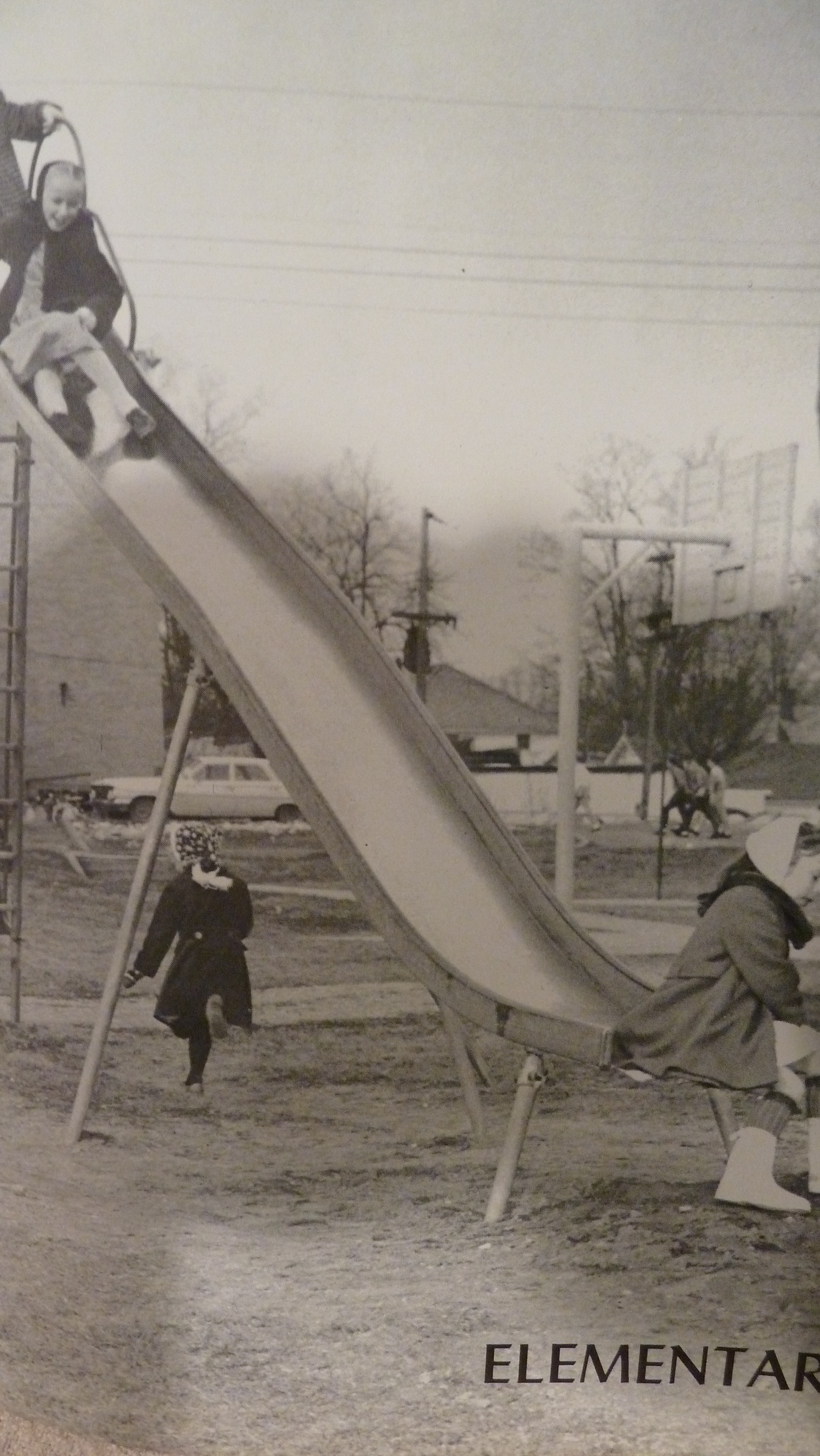
Recess on our school’s muddy playground in Middlebury, Ind.
In Matthew 18:23-25, we read the parable of the unmerciful servant who has a huge debt wiped clean, then refuses to go easy on a man who owes him a few dollars. When the king throws the unmerciful servant into prison we read that this is how God will treat us unless we forgive others.
This makes me realize again that forgiveness is not just something nice to do out of the bigness of our hearts. It’s not an extra, it is required of anyone who calls herself Christian.
That doesn’t mean it’s easy. Like second graders, we have a hard time coughing up the words and meaning them. We have a hard time asking, giving, and receiving forgiveness. Why is it so hard?
Granting forgiveness is something God does, so when we extend forgiveness, we’re behaving a little like God. So no wonder it’s hard to do. This doesn’t mean we put up with abuse or adultery: forgiveness can become too cheap—a “second grade” forgiveness. That’s not what Jesus was talking about in today’s verse. We seek forgiveness with others because we see God more clearly when our slates with God and other human beings are clean.
Action: During this season, may we ponder how much we’ve been forgiven, who we may need to forgive, or who we may need to ask for forgiveness.
***
Journey Toward Forgiveness is a documentary Mennonite Media produced in 2001 where I learned much about forgiveness in difficult circumstances working as scriptwriter.
A forthcoming book from Herald Press tells 50 stories of grace and forgiveness: FIFTY SHADES OF GRACE.
Photo credits: Sneakers from FreeDigitalPhotos.net Playground photo from Middlebury Elementary School (Ind.) Yearbook, 60s.
Verse for reflection: Hear my prayer, O Lord; let my cry for help come to you. Do not hide your face from me when I am in distress. Turn your ear to me; when I call, answer me quickly. Psalm 102:1-2
The runaround happens to all of us. We call a company and get tossed from department to department. We get so frustrated we resolve never to call them again.
But one day when it happened to me again, I just laughed. When the fifth person to handle my call asked whom I was trying to reach, it had become so ridiculous I just chuckled and thought about going for a record. I repeated my request. In an instant I was talking to the man I wanted.
Several of the people who handle the calls in our own organization discussed this one day at break. “I hate to get calls on line X because I never know whom to give the call to!” said one.
That helped me understand why I sometimes receive the runaround elsewhere. The inner workings of a company are often so complex that giving the wrong call to the wrong person can result in confusion and even reprimand.
It is helpful if we can be as specific as possible in explaining what we want. For instance, call one division of the office I work for and say, “I want to know about your books.” The receptionist needs to know whether you want to place an order or whether you want information on the philosophy of the organization. That can make a difference in who should receive the call.
That may be the problem with prayer, too. Sometimes we feel like we’re getting the royal runaround from God. Why aren’t our prayers answered? Or why do we seem to feel we’ve received one answer, but a week later, the door closes.
Maybe it’s because we don’t really know what we’re praying for. We haven’t defined our request, and so we’re not ready for an answer. We think we want to talk to the ordering department—when really we should back up and discuss life philosophy with the Almighty. Prayer is more about being in communication with God than giving God our want lists. We’re inclined to give God the runaround. We tell God, “Thy will be done,” and in the next breath we whisper “but not that way.”
One book I’ve studied, The Workbook of Living Prayer (Maxie Dunnam) encourages us if we’re stuck and don’t know how to pray, simply follow directions, as in the Lord’s prayer. We pray it so often that sometimes we fail to appreciate what Jesus was teaching—a pattern, for anytime.
Action: Dunnam suggests praying Matthew 6:9-13 and paraphrasing it in new words, if needed, which have more meaning for you. Perhaps that can bring you a step closer to truly getting through to the Almighty. Or God getting through to you.
***
Adapted from Why Didn’t I Just Raise Radishes: Finding God in the Everyday, Herald Press, 1994, p. 135, and originally for my newspaper column, Another Way, where you can sign up to get a free weekly email subscription, or daily “Stress Tips.”


