

Fat Tuesday. Day to use up all the “fat” or oil in the house and do without until Easter (or “feast days,” Sundays, if you practice that kind of Lent). I do plan to make pancakes tonight—what an easy supper. Every other year we have a pancake supper at church but not this year. Boo.
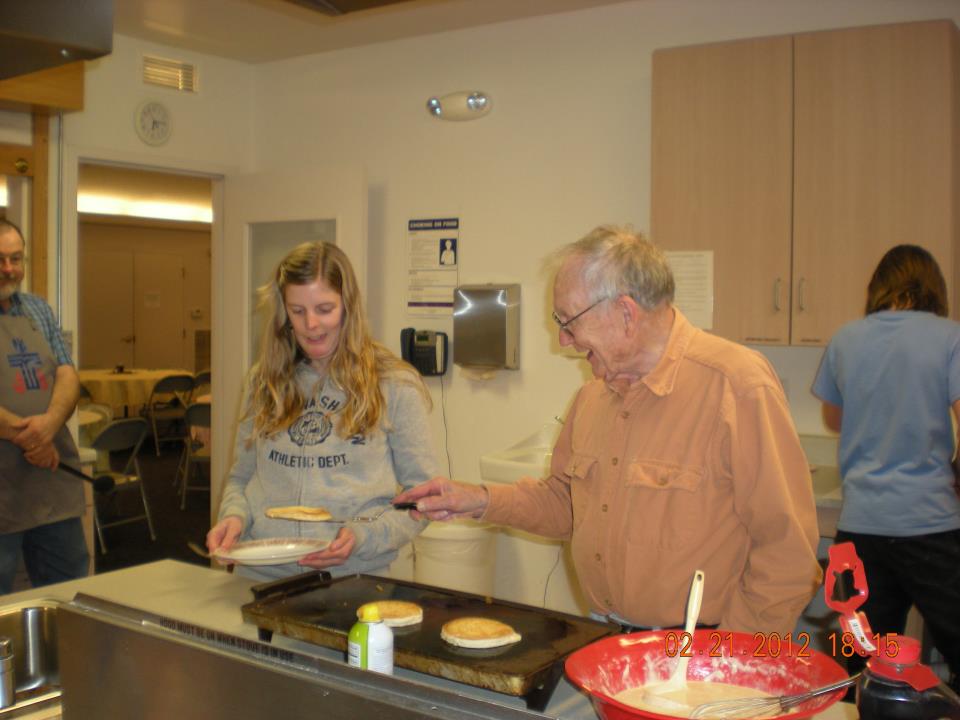
Daughter Doreen gets served up some pancakes at church
by Bill Sanders; husband Stuart watching from far left.
But even if you’ve never practiced any kind of Lenten fasting or sacrifice, I invite you to make this a time to focus on faith, your relationship with God, and growing or shaping up spiritually. In case you think that sounds like boy, Melodie is really going all spiritual on us, I am not playing better than thou. I often go too many days without any real meditation time or Bible reading. I’m as haphazard (not proud of this) as many mainstream Christians. I go in fits and starts. So I’m always a little startled when I find God speaking to me in fresh and new ways when I take the time.
As part of my discipline this Lent I hope to post a daily scripture with related short meditation and photo (each weekday, Monday through Friday) with a break on the weekends.
So party hard tonight if you must, and enjoy those pancakes (see here for my sausage gravy recipe.) And join me here tomorrow as we begin a journey toward “Finding Harmony Every Day of Lent.”
***
I invite you to join me on this journey (if you sign up to follow this blog it will be easier).
And as a thank you, I can send you a FREE booklet I wrote several years ago, 14 Days to a Better You, which is a look at the classic 7 Vices and 7 Virtues. It’s more fun than it sounds and small enough to slip into an envelope. No obligation—just my way of connecting with blog followers a little better. Leave a comment and I’ll be able to see your email and follow up.
I made my second batch of Amish Homemade Noodles, using 1 tiny teaspoon of lard.
I had to think of my friend Emily who once threw down a bag of Martin’s Gibbles potato chips, (a yummy brand made in Dutch country around Chambersburg, Pennsylvania; ask my kids about Martin’s BBQ chips). After she scrutinized the label she exclaimed “Lard!” like it was poison. Despicable, of course, unless you are making fine pie crusts or maybe homemade noodles.
Here’s the recipe I used this time, from Mennonite Community Cookbook (I appreciate the small quantity here for my experimenting, but real Amish or Mennonite cooks would have multiplied these many times over if they were making a batch.)
1 ½ c. flour
1 tsp. salt
1 tsp. fat
3 tbl. water
1 egg
Make a well in the flour and add egg, salt and fat.
Rub together and add water to form a stiff dough. Knead.
Divide dough into three parts and roll each as thin as possible.
Spread rolled dough on a cloth and allow to dry partially.
Then cut dough into strips about 1.5 inches wide and stack on top of each other. Then cut cross wise into fine shreds. Dry. (Mrs. Elo Synder, Breslau, Ontario.)
First I went to Red Front (local independent grocery) and bought the smallest container of lard I could find.
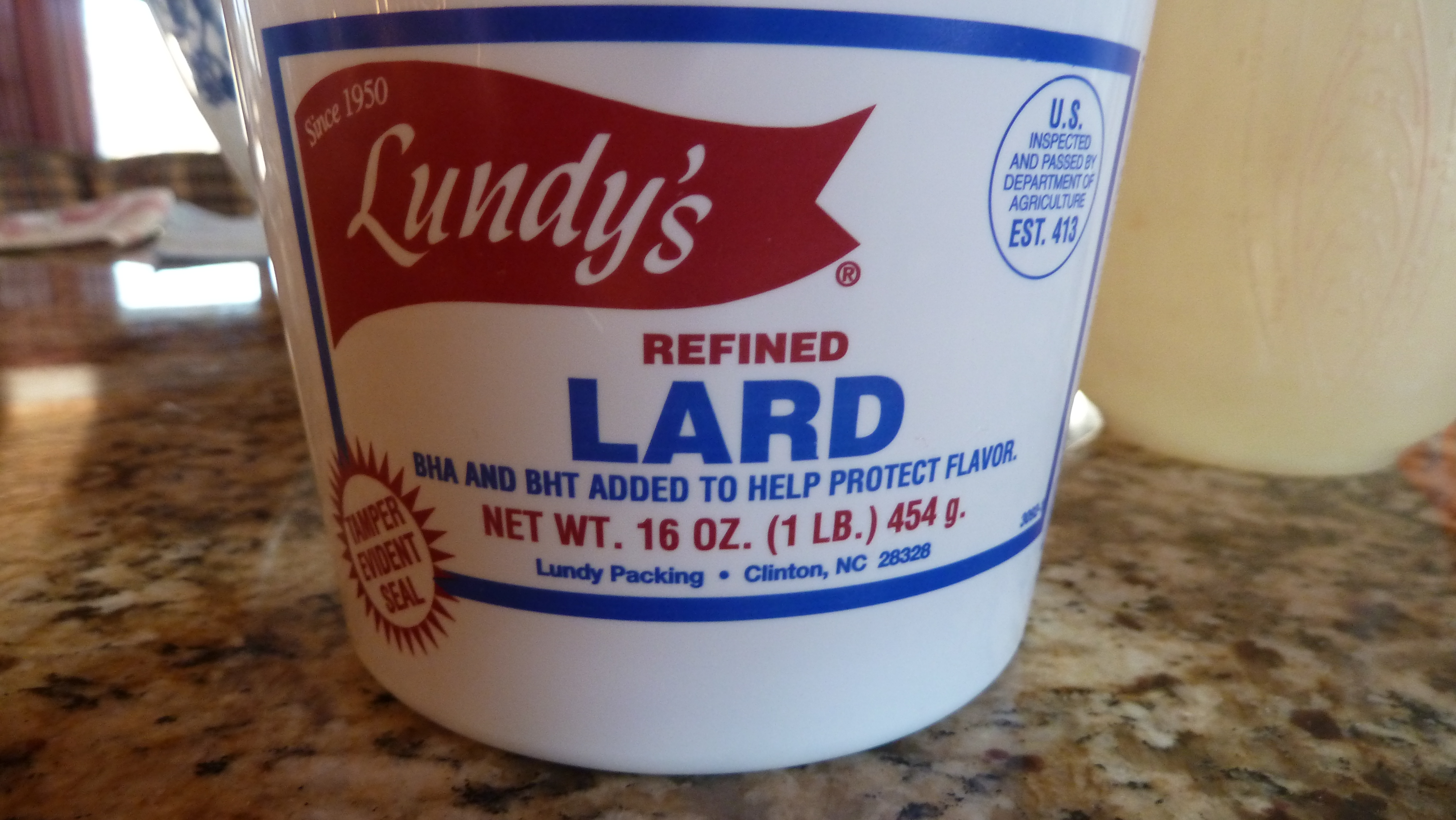
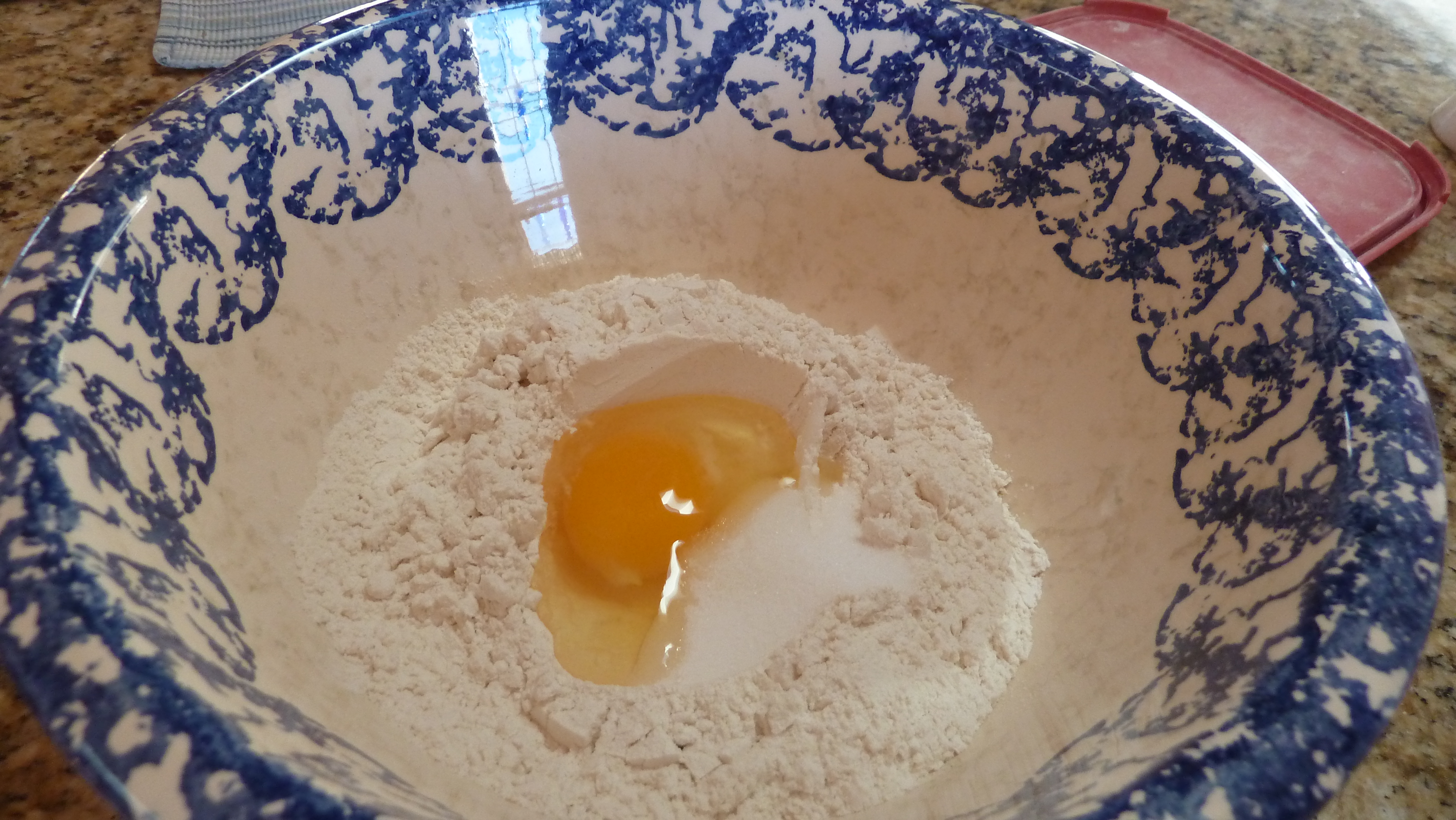
Then, I followed the steps exactly, making a well in the flour,
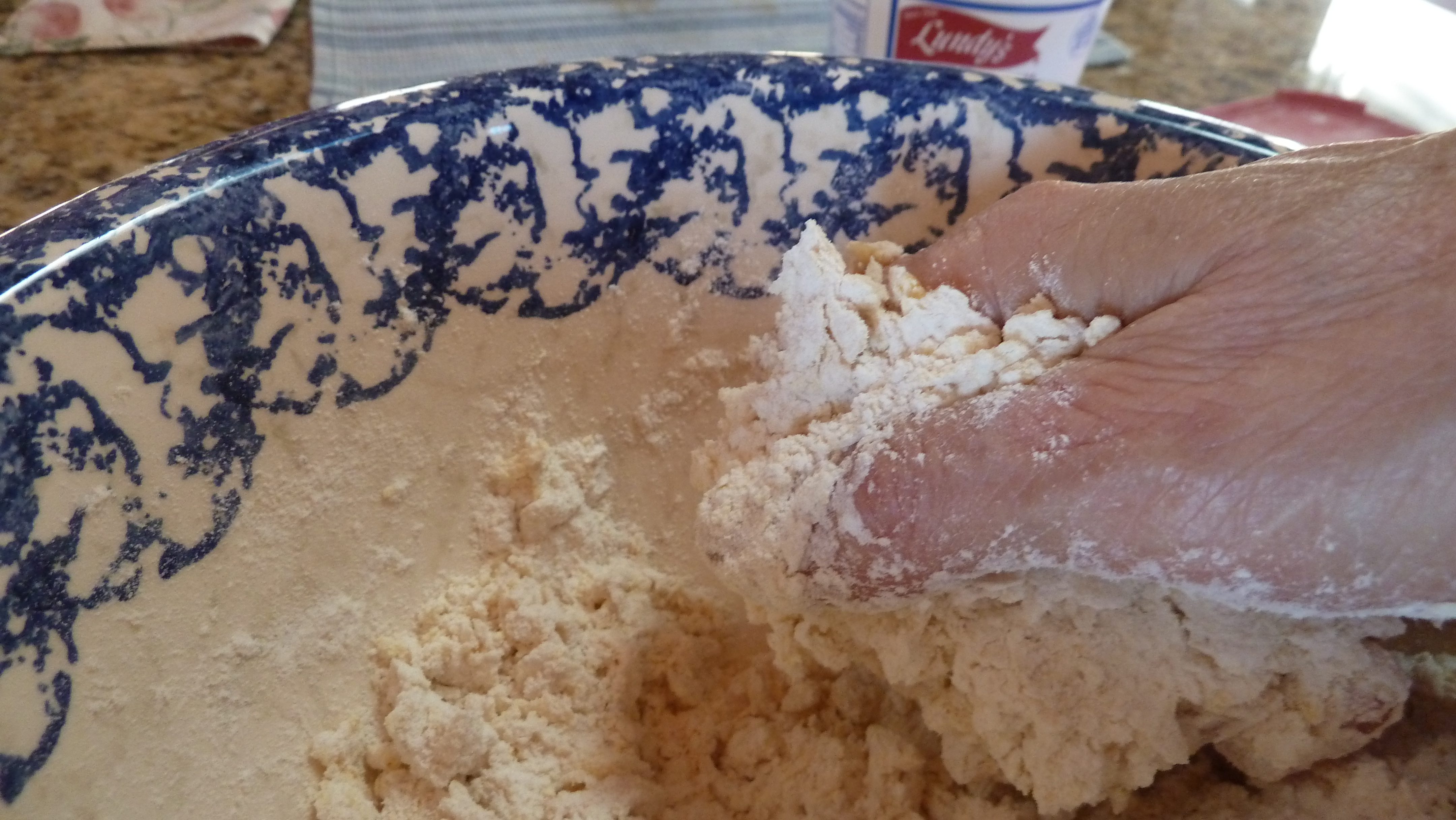
mixing up the dough with my hands.
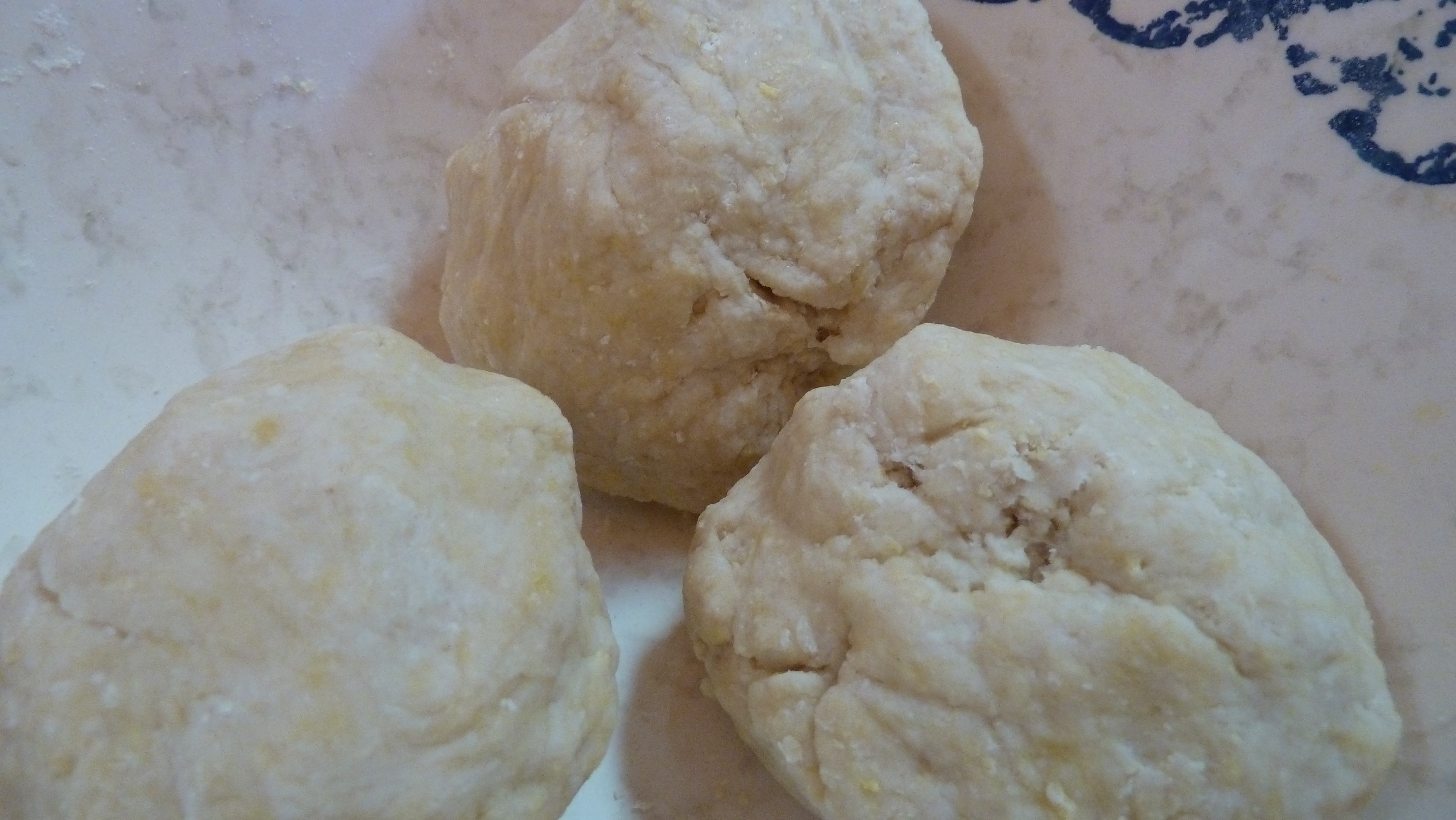
Kneading the dough, then dividing it into three balls.
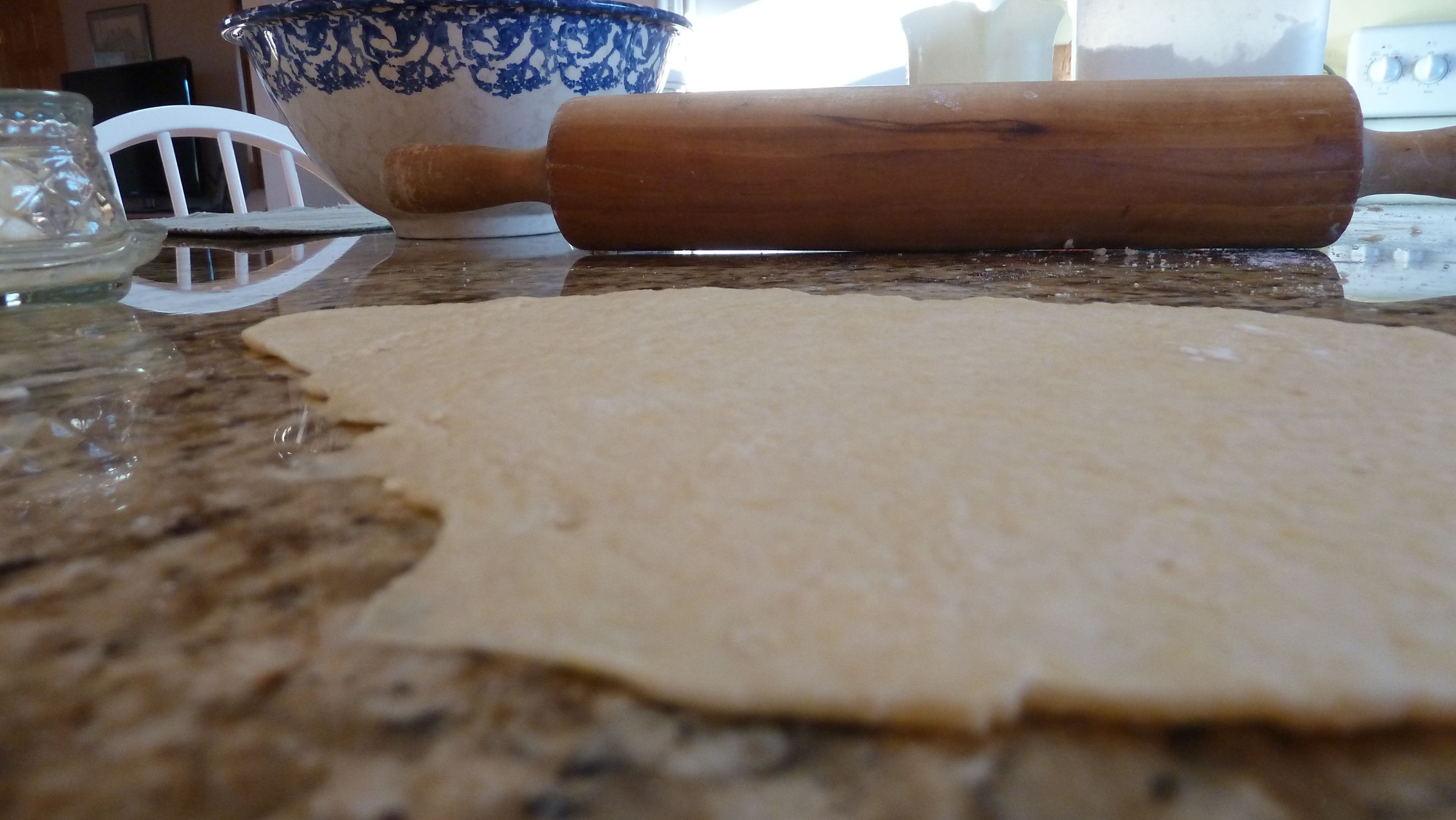
And finally, rolling them out as thin as I could get them.
The noodles tasted about the same though, in all honesty. I wasn’t sure how just one tiny teaspoon would make a flavorful difference. Noodles are not my husband’s favorite thing so I’ve been trying out my noodles by making lots of homemade chicken noodle soup. It is good weather for that. And good for ailing bodies. Check this recipe from Mennonite Girls Can Cook, from a wonderful cook, Lovella Schellenberg, who also describes how to make noodles, Russian-Mennonite style.
Here’s a photo essay of Lovella and her granddaughter making homemade noodles, just added 2/15/2013.
The more I researched this topic the less I know. You know how that goes.
***
In my previous blog post on this topic, my mother said the mention of homemade noodles instantly brought back the image of her mother’s noodles hanging over the ironing board to dry.
So she wrote a few more details, which I was happy for: “Looks like [my] Mom followed the recipe and instructions in Mennonite Community Cookbook, p. 124. The rolled dough would have been probably larger than a pie crust and very thin. Not too dry of dough or the noodles would get crumbly. She put them on the ironing board in the parlor with older dish towels underneath. I was sort of amazed that this cookbook stated stuff so much like Mom did. She did have a very ancient cookbook called Inglenook with a plain lady pictured on the cover with a covering on and stings! Boy would that be worth something now.”
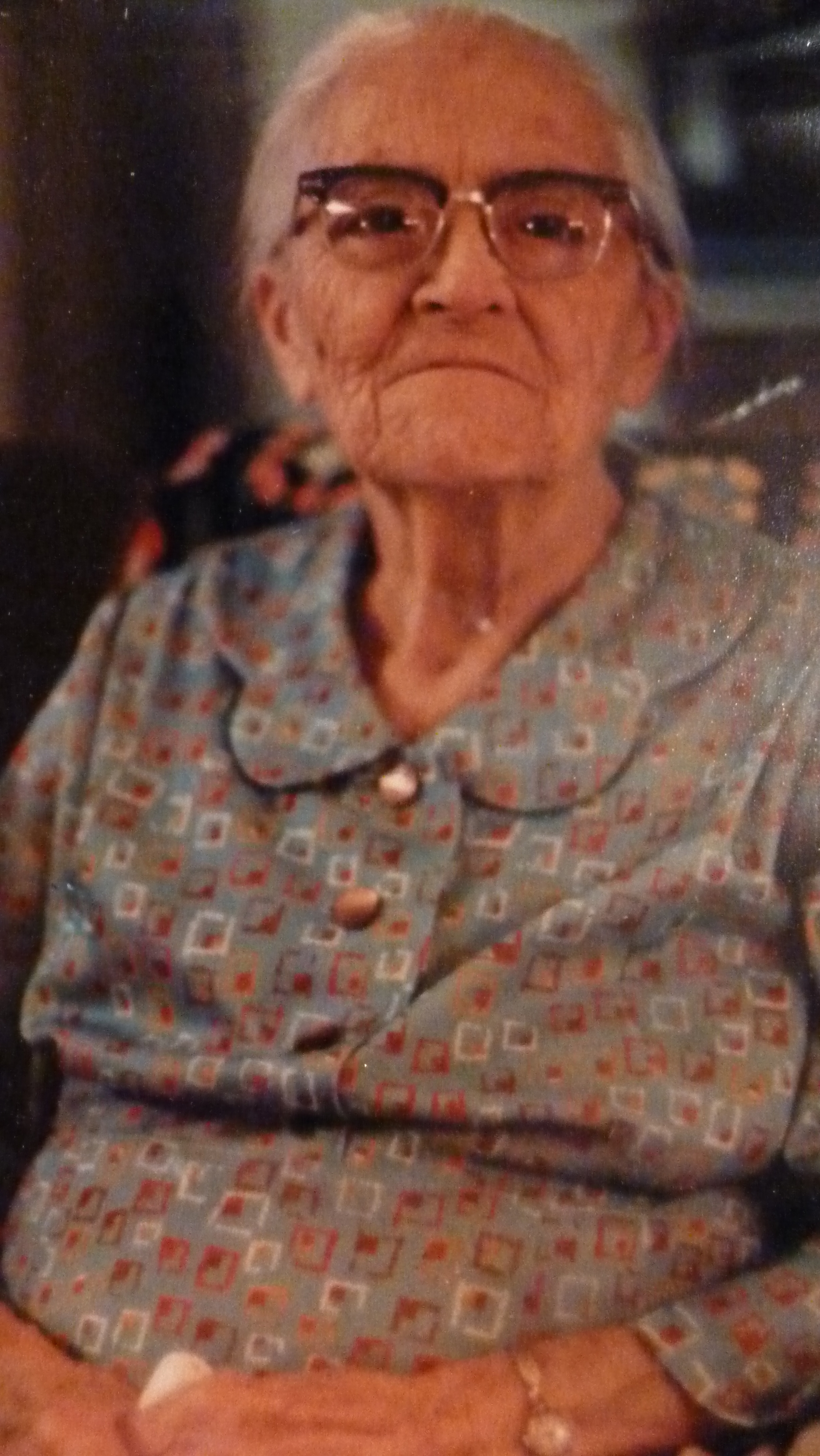
My grandmother Ruth Stauffer on my mother’s side.
Mother seemed to remember Grandma just using the egg yolks in her mother’s noodles to make them yellow but I haven’t found any recipe recommending that. More on yellow later.
I also consulted the book, The Amish Cook, by Elizabeth Coblentz, the wonderful cook and columnist from Ohio whose column appeared for years in our local paper, now written by her daughter, Lovina Eicher. Elizabeth died in 2002.
In Coblentz’s cookbook published in 2002 with Kevin Williams (Ten Spread Press), she says they rolled their noodles about 1/16 inch thick. That was helpful to find an actual dimension. And they used yellow food coloring (!) to make the dough a “nice yellow.” She also explained that noodles need to dry at least a week, rearranging the drying rack every day to ensure they dry evenly. Later, she says, they used a hand cranked noodle maker that “rolls out and cuts the dough … What used to take all day now just takes a couple hours. We can put 30 eggs, 30 tablespoons of water, and 30 cups of flour through the noodle maker in an hour.” (p. 87). Elizabeth’s actual recipe is much the same as the one I posted earlier, or the one above, except she did not use any lard or shortening in hers.)
That’s a lot of noodles. But like my mother said, “We used to probably always [love her nuances] feed thrashers noodles.” If you don’t know what thrashers are, my grandpa (on my father’s side) was one. They went around harvesting wheat and stuff with big equipment. So there would always be need for cheap filling food to feed workers on thrashing day.
Finally, I loved my daughter’s mother-in-law’s story shared on my last post on this topic. Sue wrote: “My aunt made homemade noodles for every holiday. They were so good. I tried making them once. I had them all rolled out, cut and spread on the counter to dry. I was doing something else and my oldest daughter came along and proceeded to clump them all back together again into one big dough ball!! I gave up!!”
And that’s about enough on homemade noodles, until I get learn from an Amish cook at Camp Amigo in September when I’m helping with a Road Scholar program on heritage of Mennonites and Amish. Check it out!
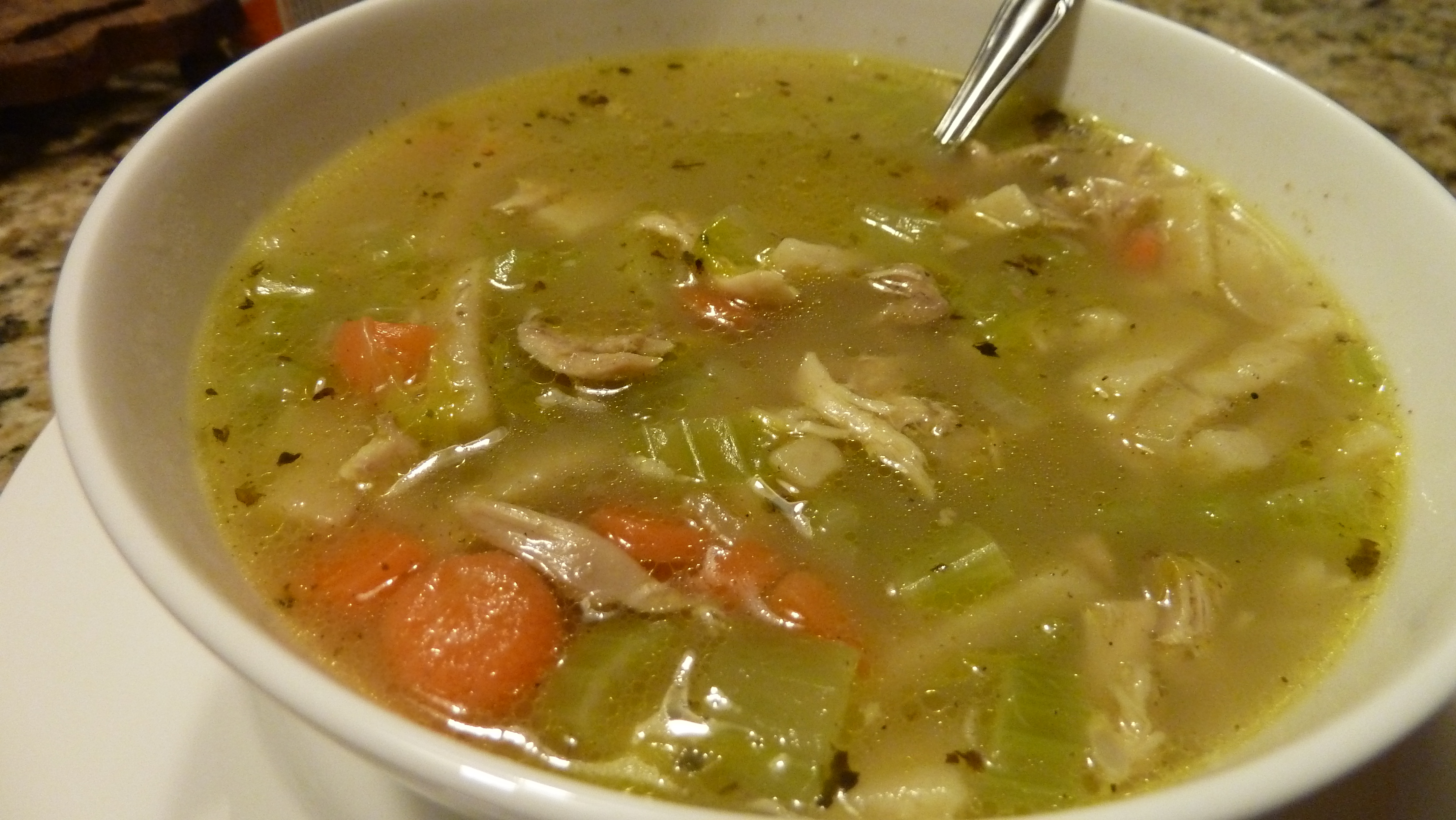
Chicken soup from my latest batch of noodles:
Here’s a guest blog I wrote this week for www.Mennobytes.com which is one window into what’s been keeping me from writing any other blog entries.
Excited to be working as compiler/editor on Fifty Shades of Grace for MennoMedia.

There will be stories to make you cry, laugh, connect, and remember the epic grace of God in your life.
Coming in April, we hope!
Or, come away with me, to a tropical island in the city.

The U.S. Botanic Gardens in Washington, D.C, (inside the conservatory), is:
An oasis of green and bright flora in a world of gray cold winter.

A tropical island in a concrete jungle of macadam and blocky beige Federal buildings.

Warm and moist air to nourish the skin and nasal passages dried out by too much North wind and icy frost.

They say that going out in a woods or tropical forest calms and quiets the spirit—something about the photosynthesis, light mixing with green things giving off oxygen which humans need. (I’m sure all the scientists will help correct that if I’ve way oversimplified it since I’ve always been scientifically fuzzy.) Someone once told me they thought a walk in the woods filled one with “rarefied air.” I like that. So did the botanical gardens.
It was a beautiful respite coming out of a long, hard January (ok, yes, we had just enjoyed a 70 degree day on Wed., which plummeted to 17 degrees F. by Sat.)
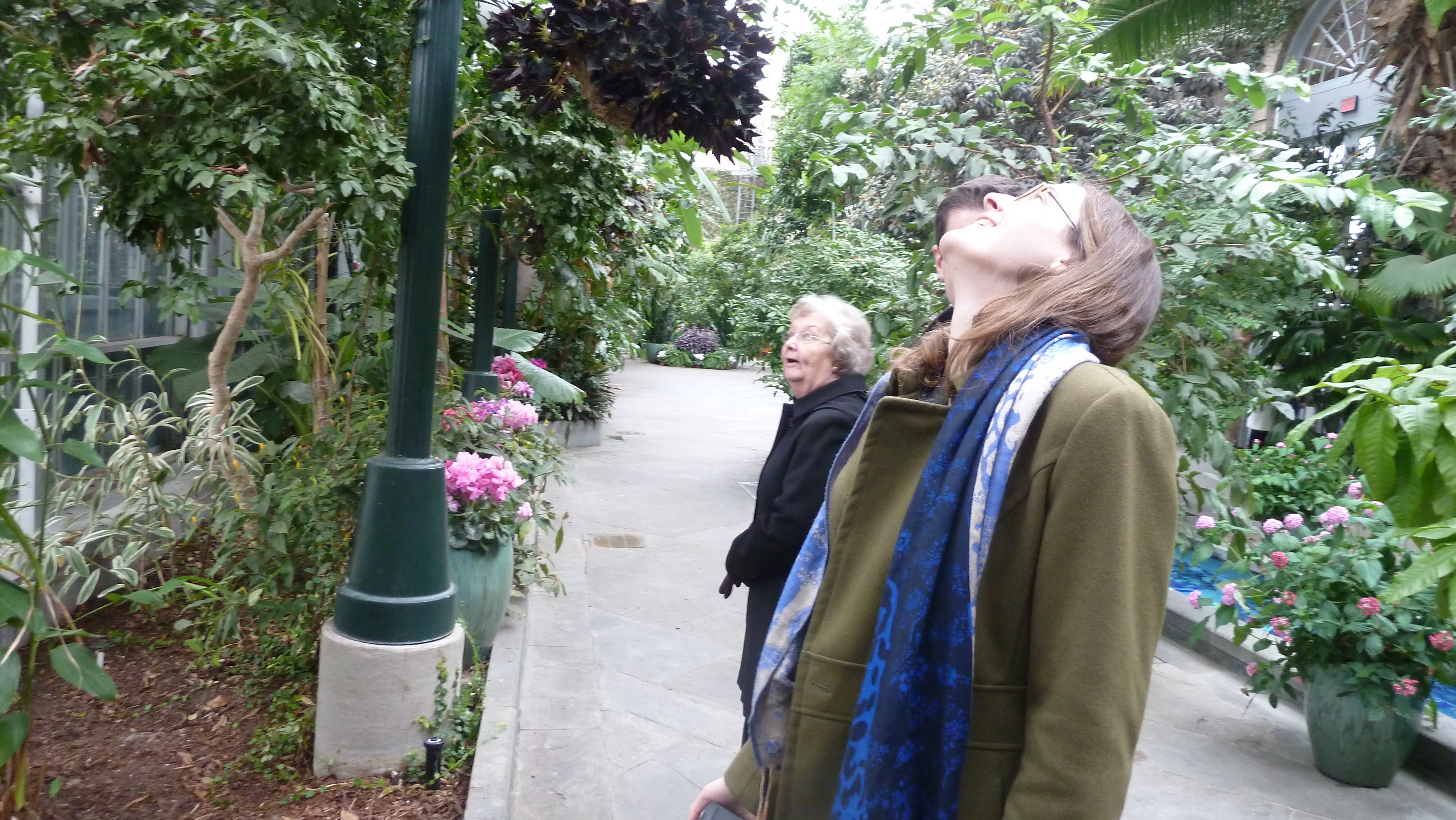
Never been? Me neither, in 40+ years of living just two hours away, in dozens of trips to the city for meetings, for touring, for museums. (It’s free, of course.)
Don’t ask me what all the names are of these gorgeous flowers blooming away to their hearts content, (but you can find more pictures and names in this Virtual Tour). We should do a naming contest.




I know there were rare plants, endangered plants, ancient plants, carnivorous plants! Yikes.

And they were just what I was needing. And you probably have something similar in a city near you.
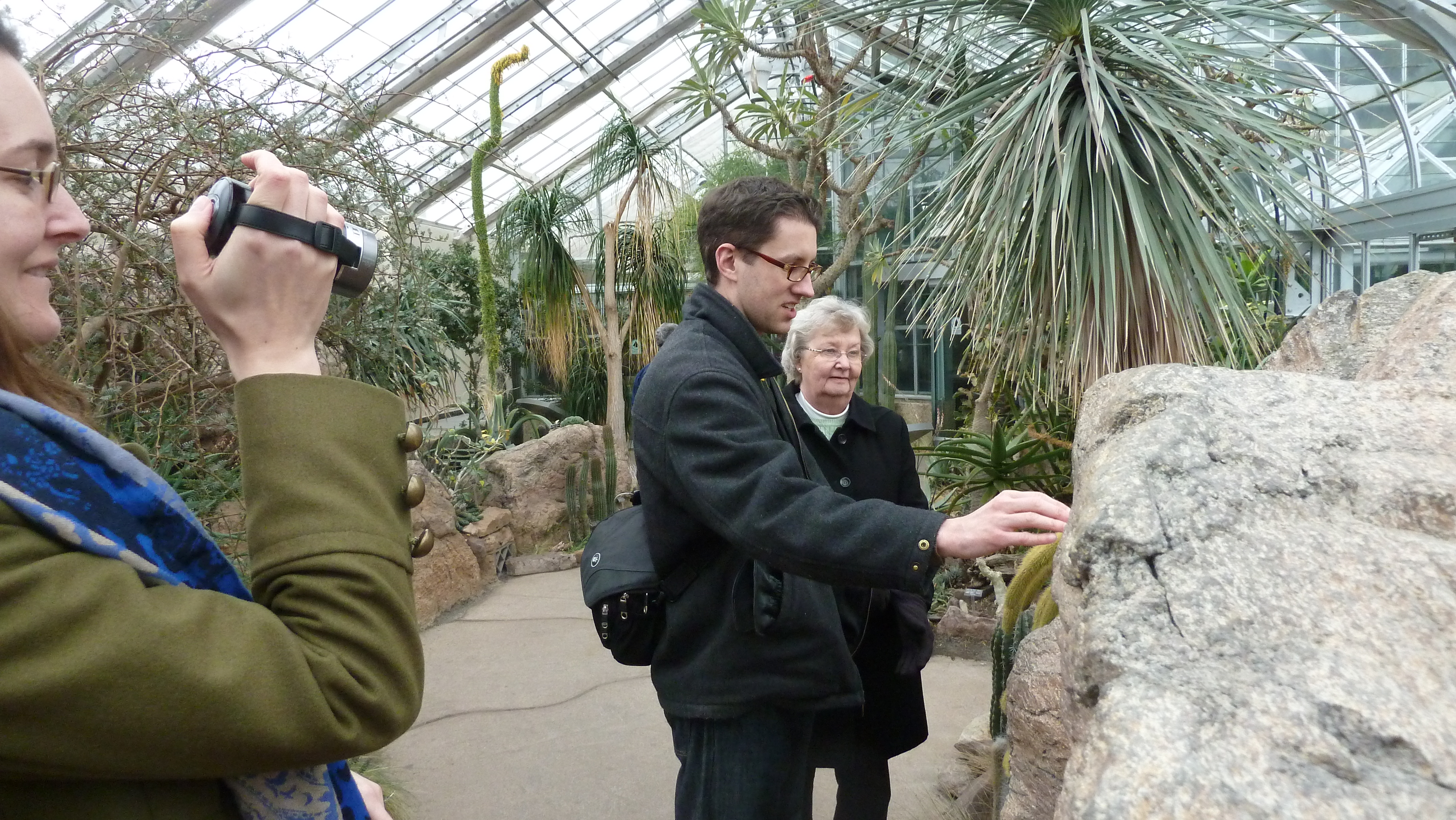
Oldest daughter Michelle, her husband Brian, his mother, Jeannie.
Some better poets/artists than me have said these lovely things of flowers:
“The earth laughs in flowers.”
― Ralph Waldo Emerson
“I will be the gladdest thing under the sun! I will touch a hundred flowers and not pick one.”
― Edna St. Vincent Millay
“Nobody sees a flower – really – it is so small it takes time – we haven’t time – and to see takes time, like to have a friend takes time.”
― Georgia O’Keeffe, Georgia O’Keeffe
“I must have flowers, always, and always.”
― Claude Monet
One of my favorite mentions of flowers in the Bible is this:
“Consider the lilies of the field, how they grow: they neither toil nor spin, yet I tell you, even Solomon in all his glory was not arrayed like one of these.” (Matthew 6: 28-29.)

Amen.
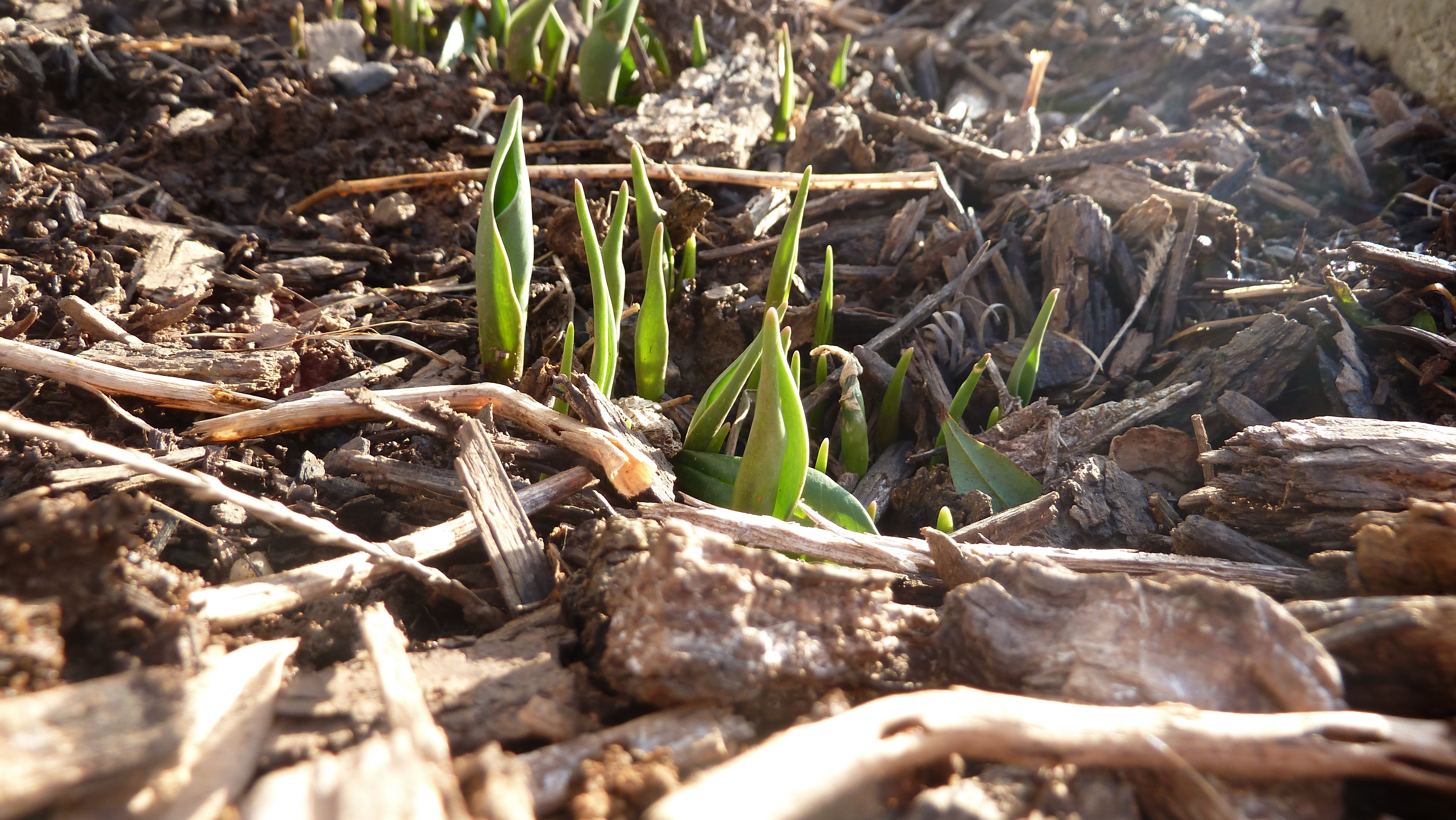
If winter comes, can spring be far behind?
The last Sunday in January is always “house church Sunday” in our congregation, when our small groups (house churches) plan and conduct their own worship services in homes.
Pastor Ann always says house church Sundays are her favorite because she doesn’t have to prepare a sermon! It happens roughly four times a year. One group is assigned to meet at the church house so there is something going on there for any visitors or those who aren’t in house churches.
My house church, Kara, which runs a free clothes closet, (each house church is organized around a specific mission), happens to have the pastor emeritus of the congregation in it, Don Allen. In fact, he founded the congregation. He was called to plant a church for Shenandoah Presbytery back in 1962-3 and wanted to do “a new thing.” We are celebrating our 50th anniversary all year.
Don also wrote a book about the launch of Trinity, and what he learned in researching the house church movement of the 60s and 70s. You can still find his book, Barefoot in the Church in Amazon used book stores (or at our church or from Shenandoah Presbytery Resource library).
So what is worship like on a house church Sunday?
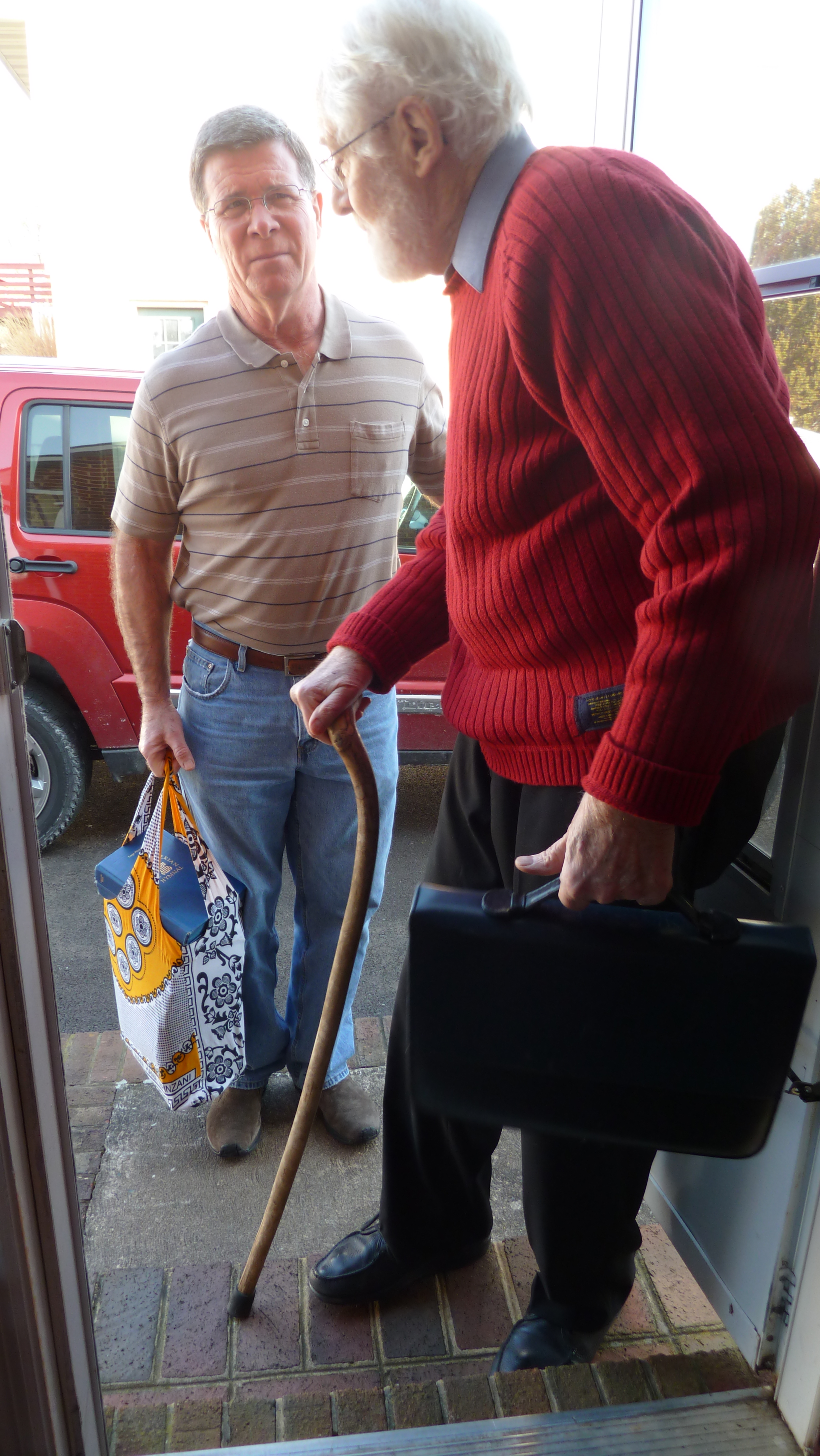
We come in the back door, by the kitchen.

We might sign a birthday card for someone having a birthday.
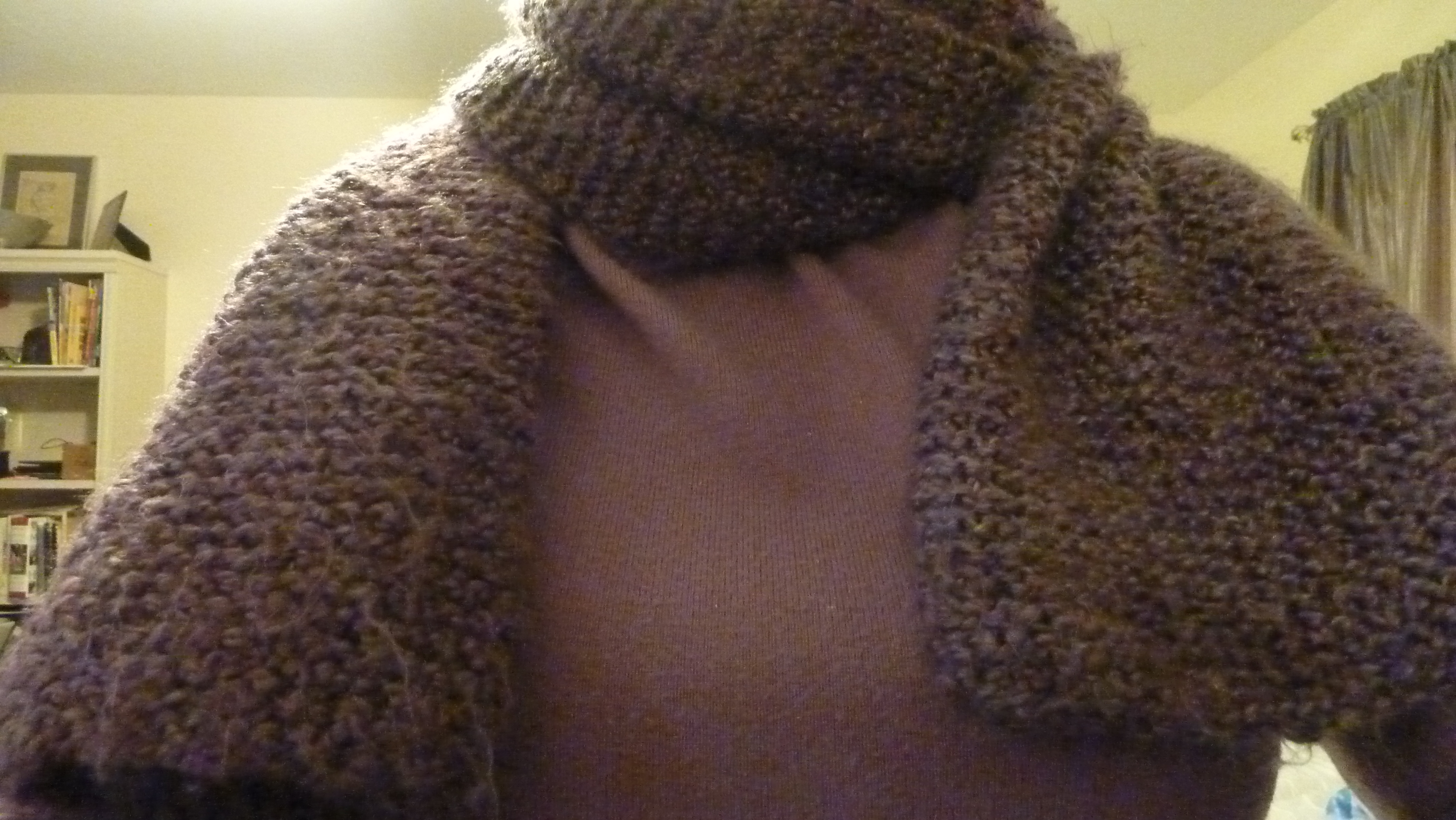
Everyone talks as we gather. We practice new ties for scarves.
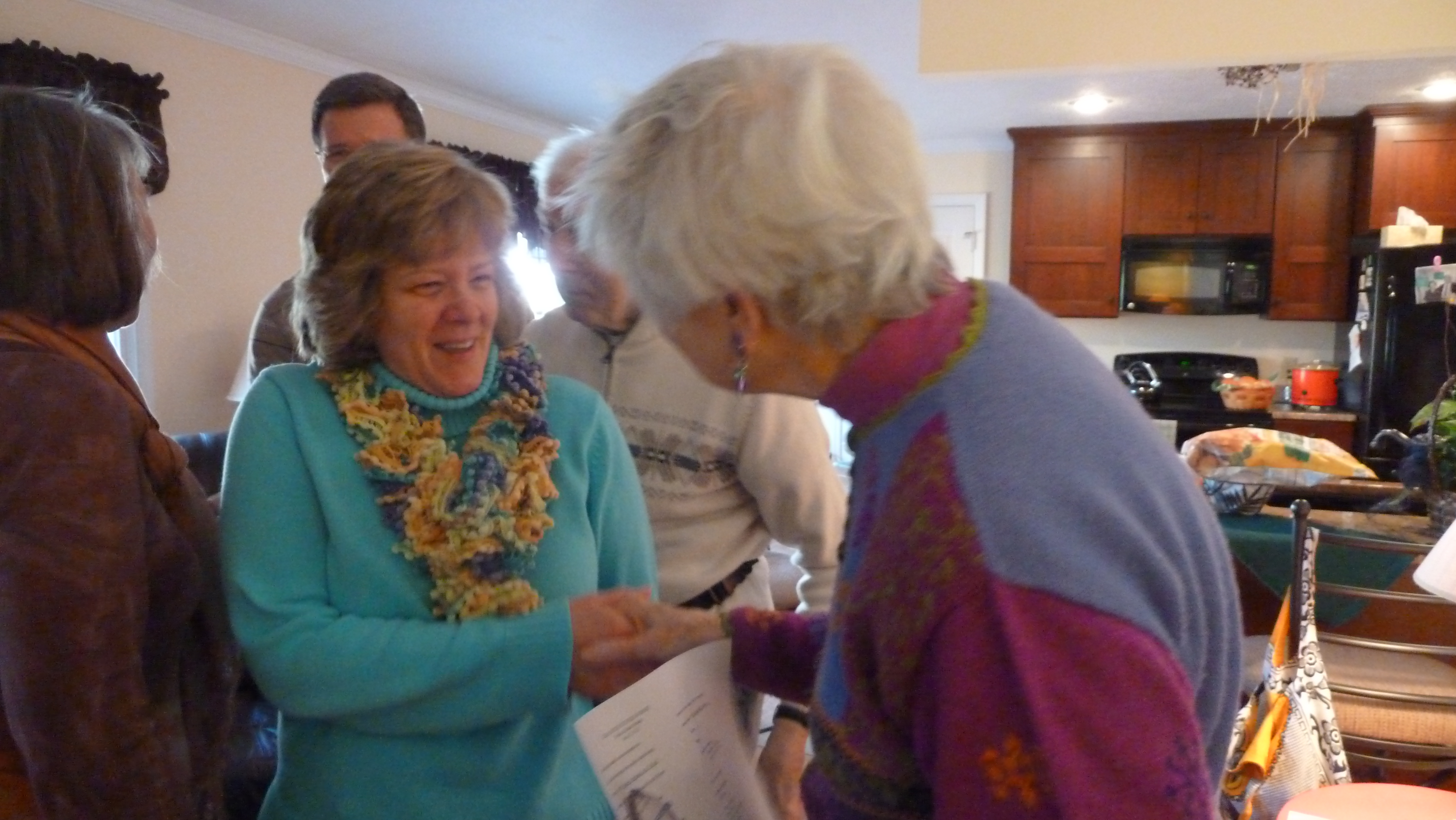
We sing, we have confession, we pass the peace of Christ to one another.
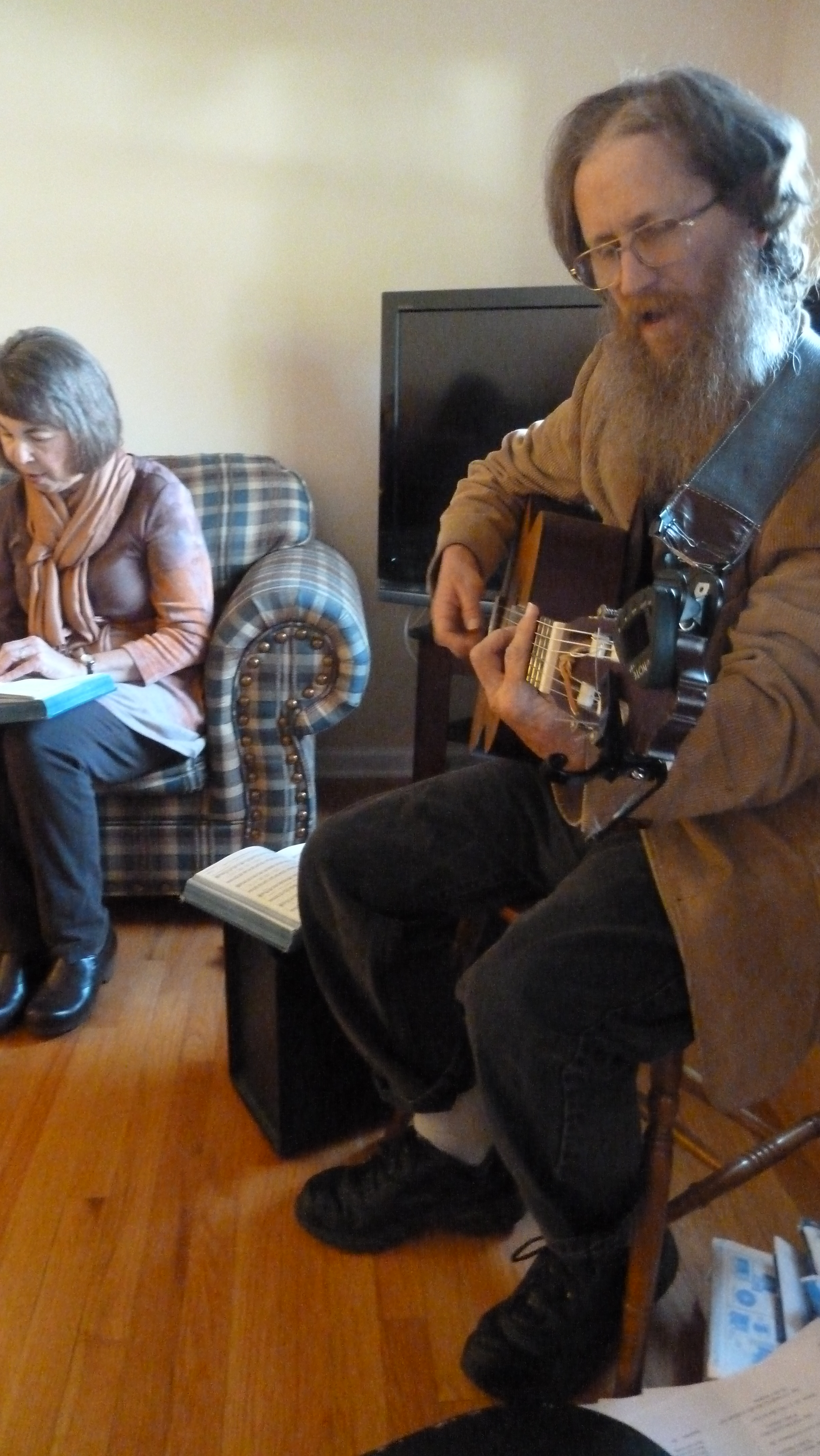
The “sermon” can be anything from a video to a panel discussion, to a simple dance by the whole group, to short stories or “testimonies” from two or three. This Sunday we had a “scripture and music” sermon led mostly by composer/singer John Henderson.
We are fortunate to have an ordained minister to lead communion in our small group. In groups that don’t have a minister as a member (and we have lots of retired ministers at our church), the installed pastor sometimes visits if communion is desired. Each person serves the next one. (In Presbyterian circles, a clergy person almost always leads the Lord’s Supper.)
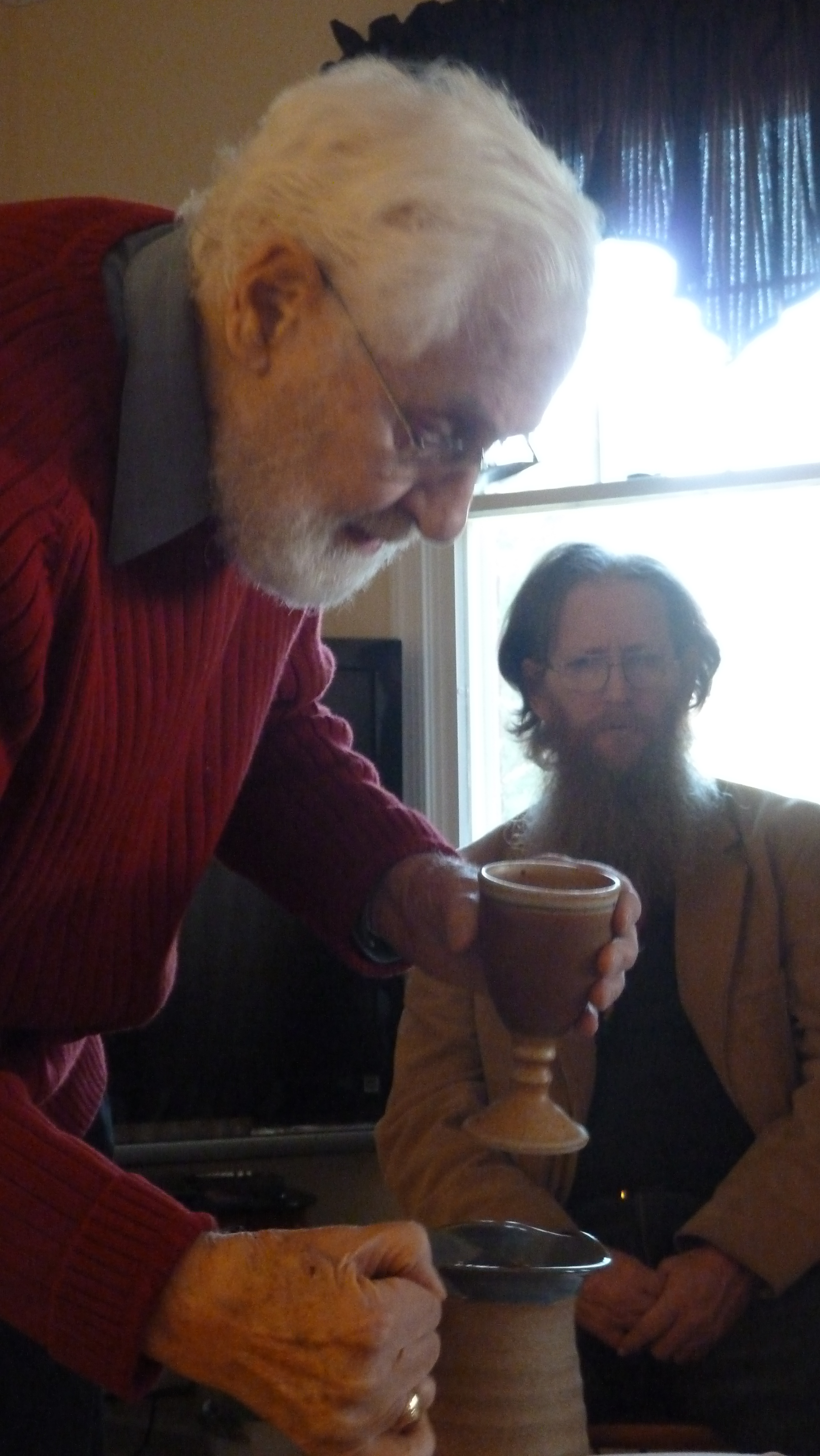
In today’s service, Don starts communion by recalling how when Trinity was first beginning and they began to practice communion in homes like the original disciples, he remembers how elderly Mrs. Funkhouser kept the communion leftovers on her table in her breakfast nook for a whole week before cleaning it up, because she was so awed by the idea of having that special meal in her home. Don reminded us that our simple table today is the same meal commemorated in huge cathedrals all around the world in much fancier surroundings, and the same meal Jesus served.


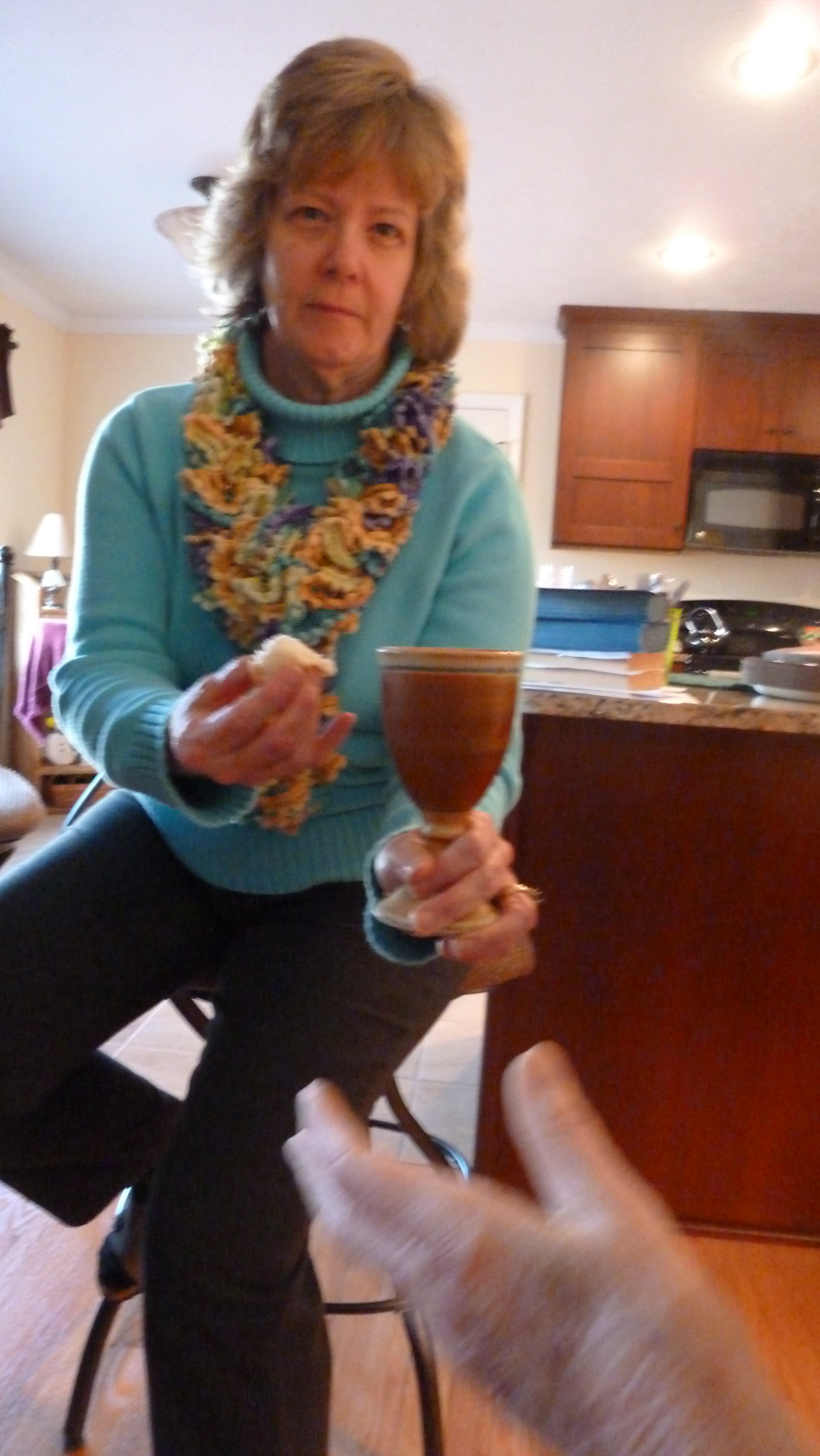
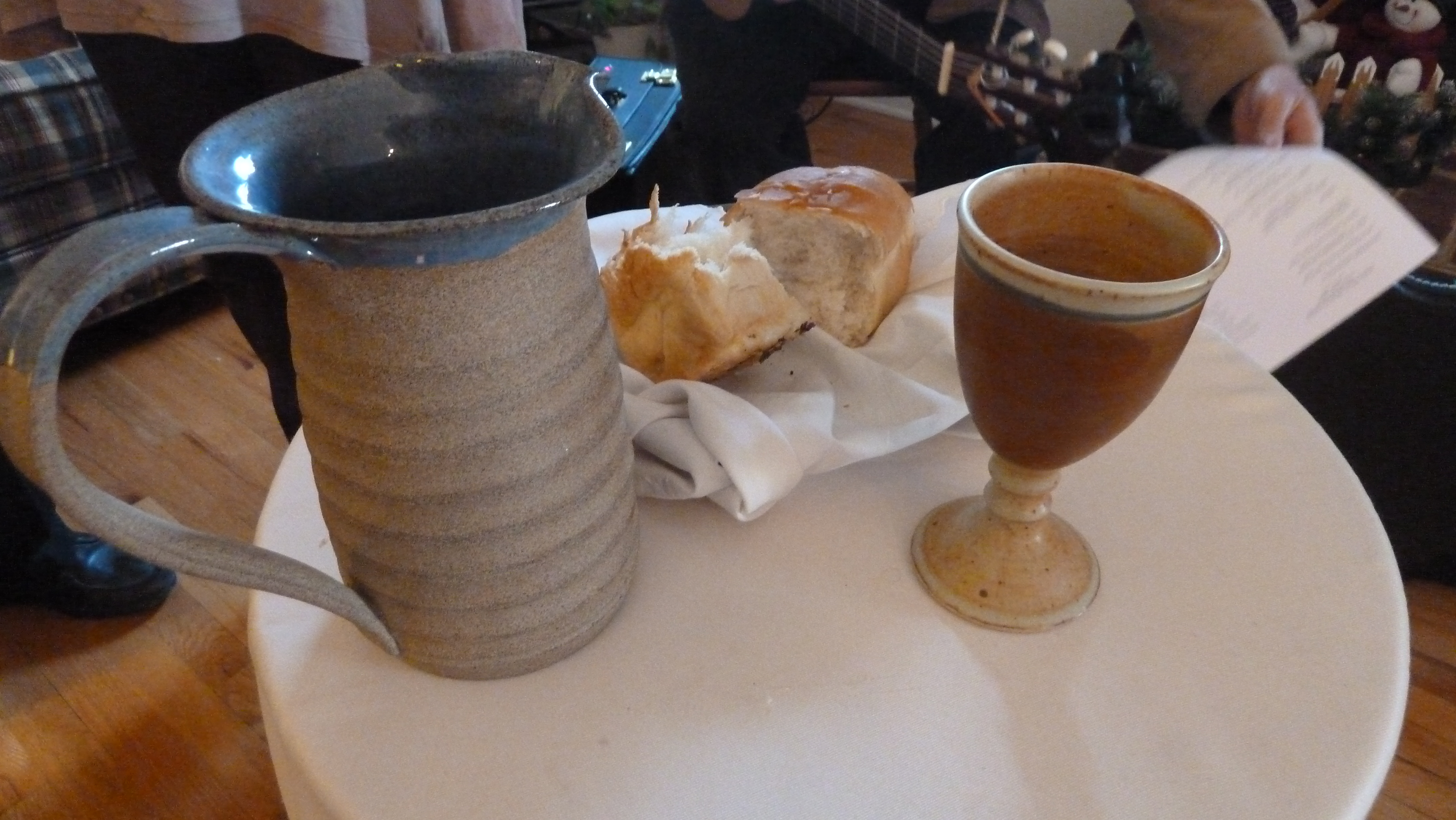
We usually close with a circle prayer. (No photo. I didn’t want to spoil the moment.)
Jim always does the benediction. Maybe because he’s the most senior and has the best position from which to pronounce blessing on the rest of us.
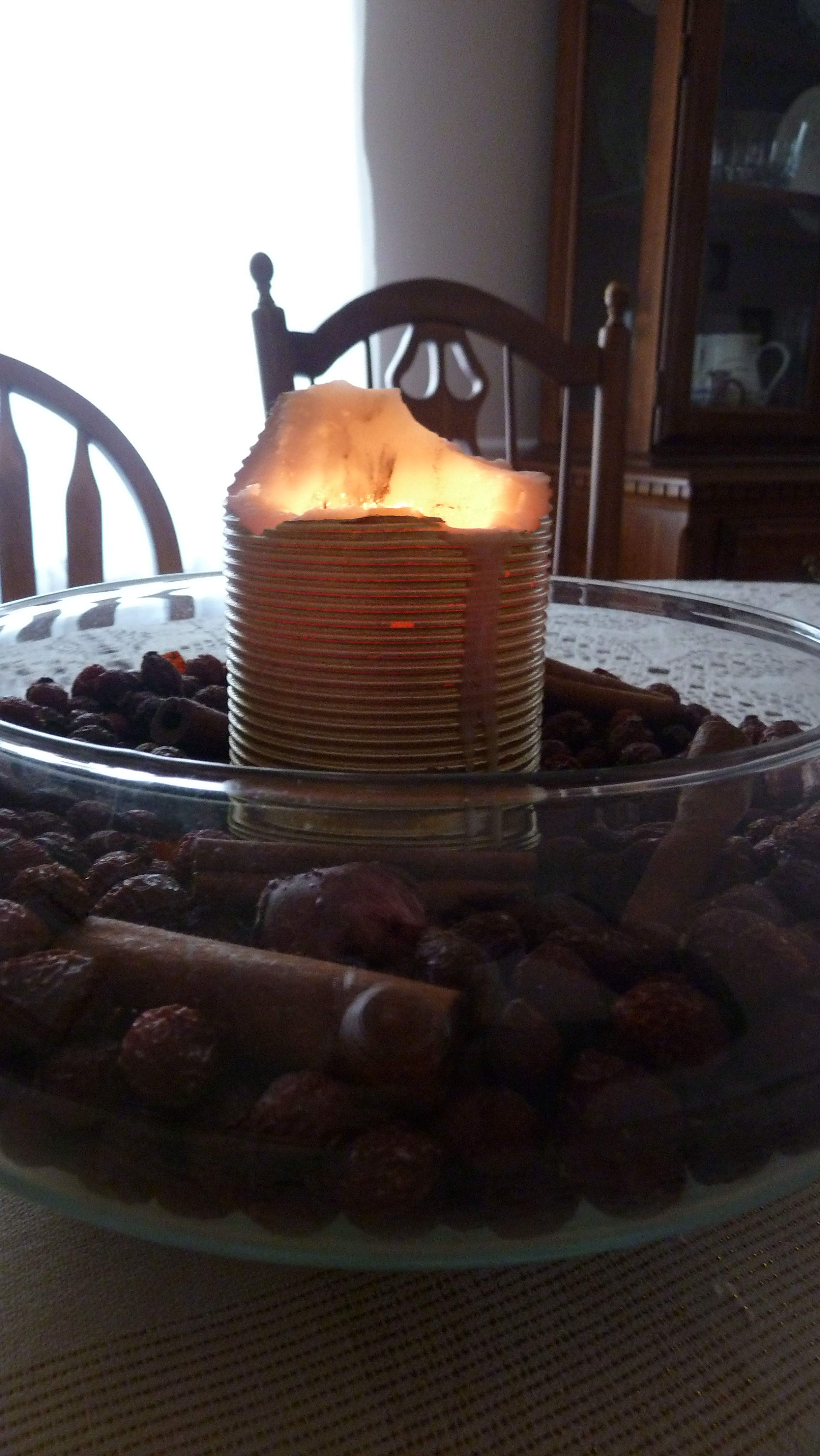
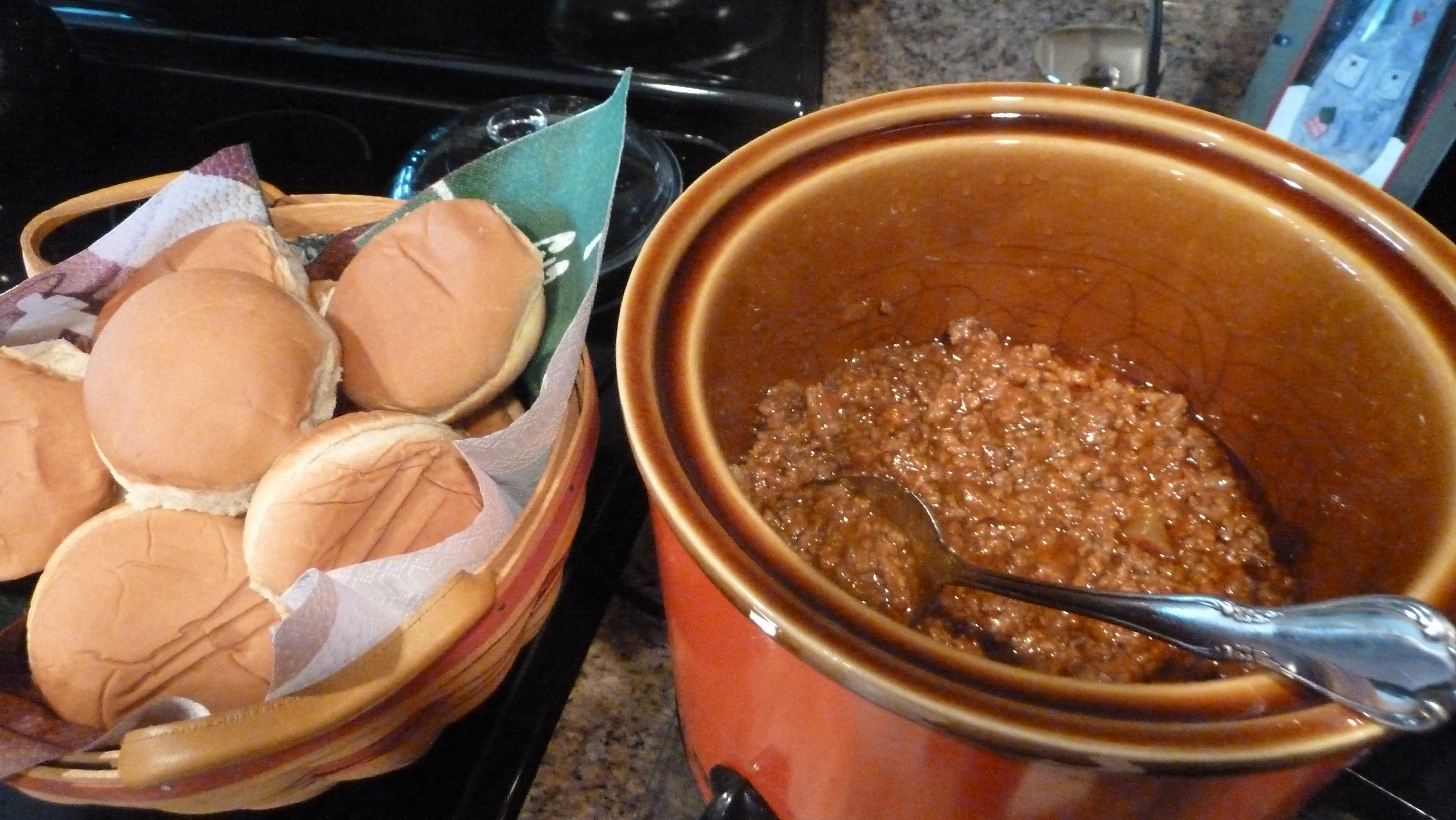
Then comes the real meal. Is that what makes house church Sunday so special? It was the house fellowships which first made my future husband and I decide to continue our faith journey with Trinity.
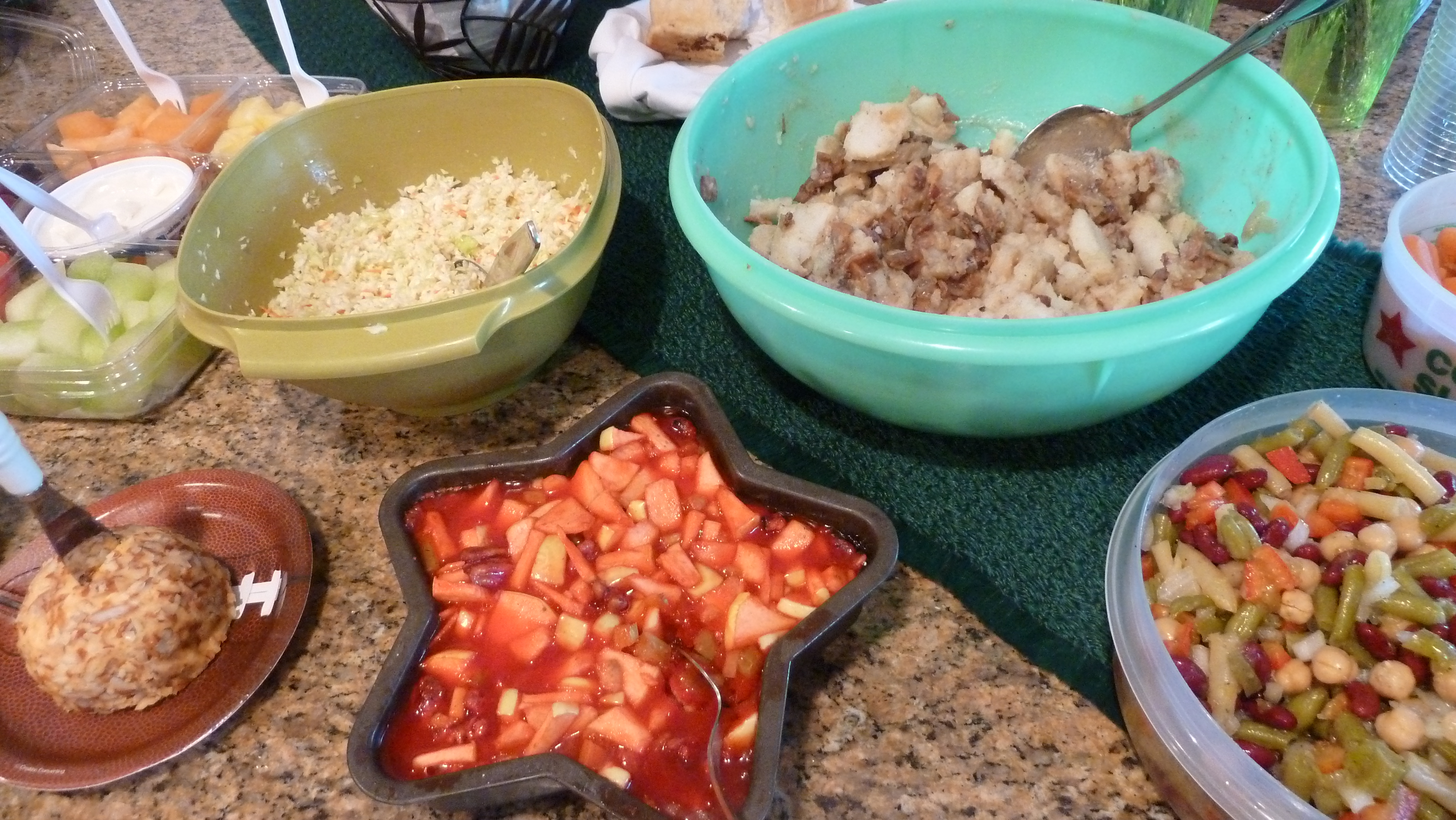
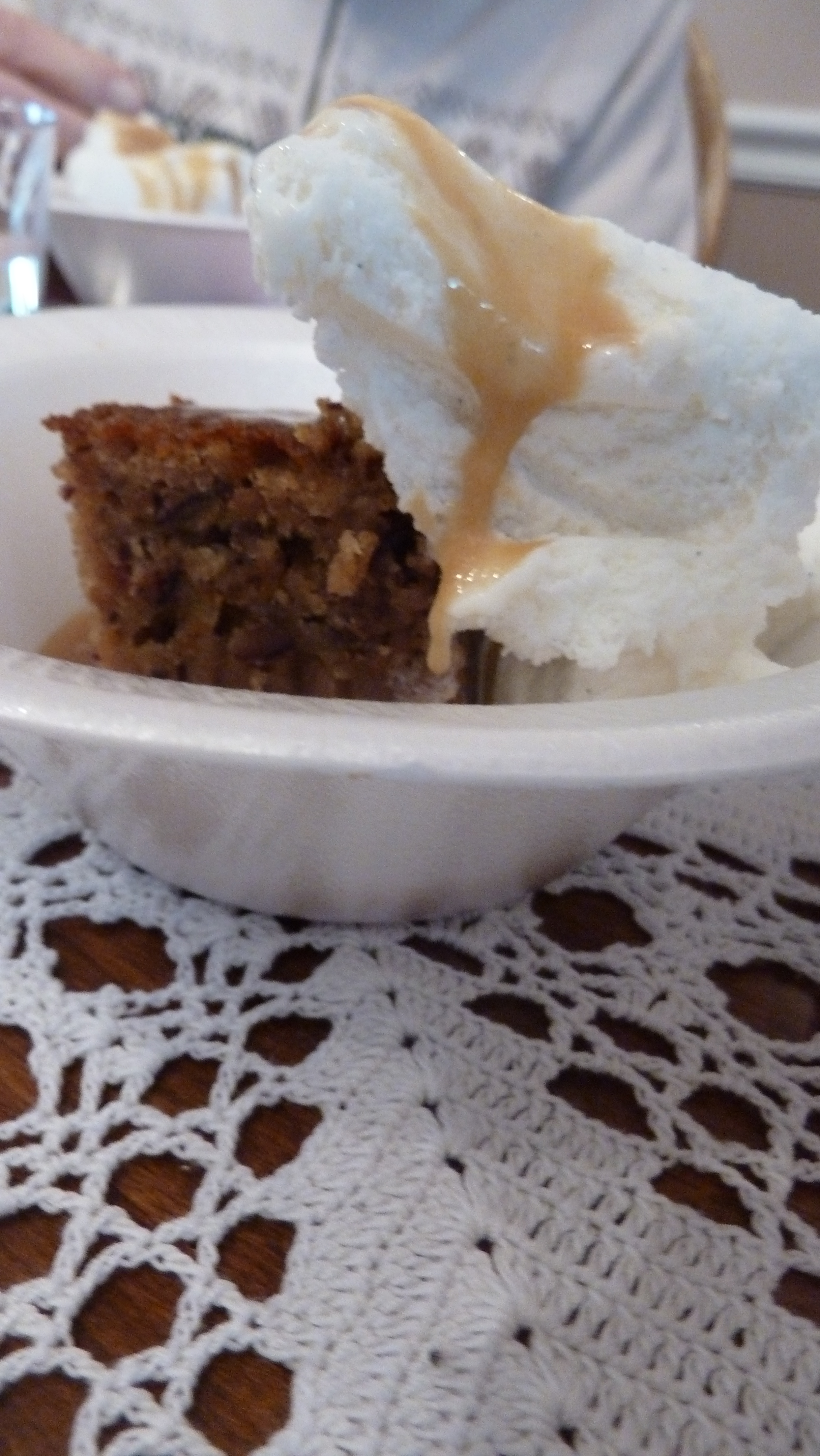
This time Sue has brought “Sticky Date Pudding” with Toffee Sauce and Ice Cream, a dessert she loved on a trip to Prince Edward Island. It wins wave reviews. (Dalvay By the Sea shares the recipe online!)
We sing Happy Birthday to Marjorie (second from right). Just like we used to do as children in Sunday school. Or like a family.
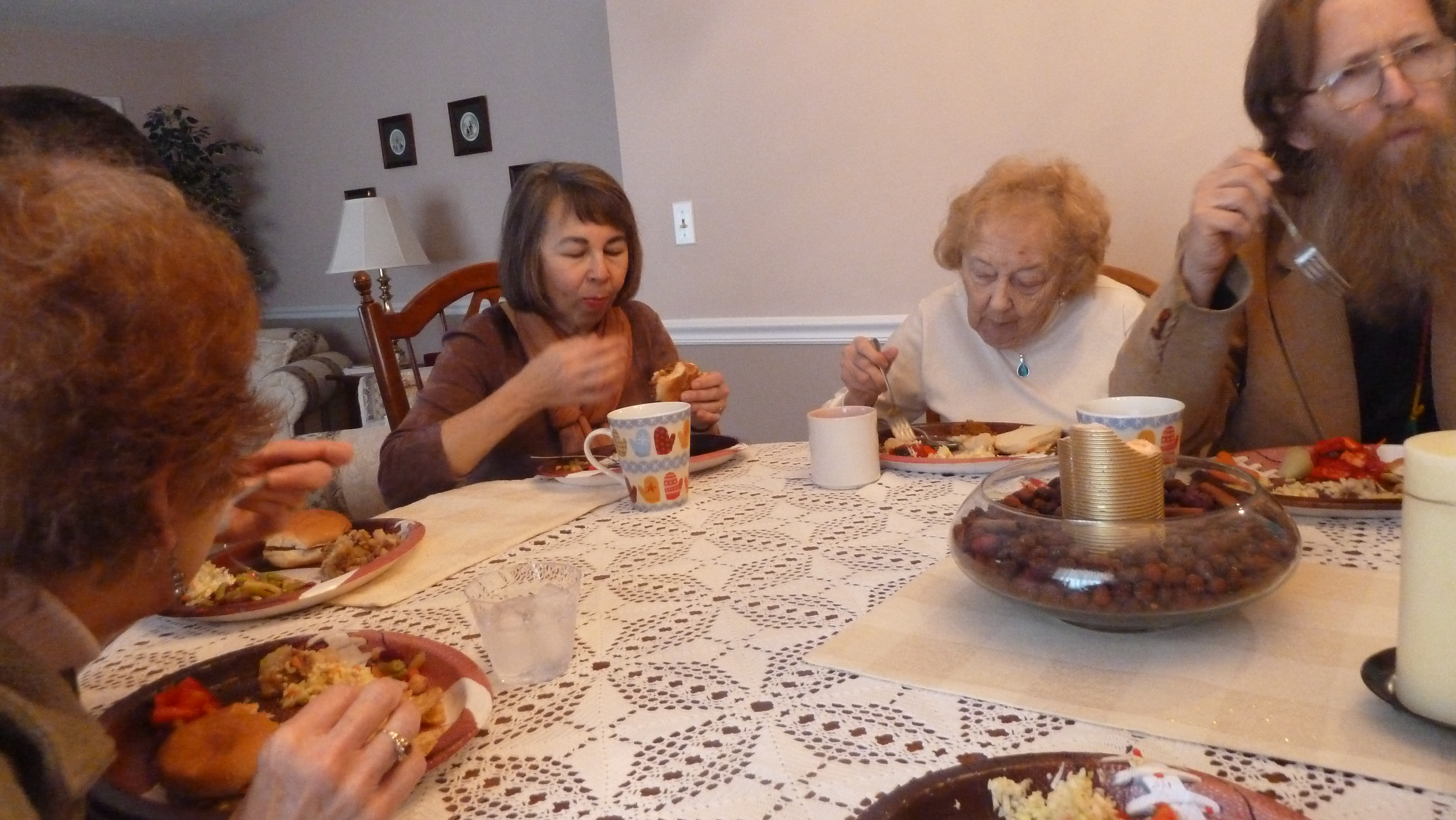
That’s what house church Sunday is like on a cold but bright January day. A house church, like any church, is made up of humans with faults, weaknesses, strengths and gifts. That humans can come together and find harmony and powerful connection with each other and God in spite of our quirks and differences is a profound witness to God’s ever present and beautiful Holy Spirit.

***
I enjoyed reading what another congregation has discovered about their decision to have something they call “Table Church” once a month.
No, this is not about how women who work or live in close proximity like in a dorm often end up with their monthly cycles in sync.
It is about the worst fight I ever had with my sis, God bless her.

Sister on left, me on right. Notice who is holding the dog. Always.
We were close and great friends, being only 26 months apart. Growing up, people thought we were twins at one stage when I was growing taller than her. I ended up about four inches taller but she charged ahead on the basketball court anyway, one of the best female players (I’ll say modestly) Goshen College (Ind.) ever had (she made it into the Elkhart County sports hall of fame, so it is not just me saying that).

Bethany girl’s GAA before we even had uniforms. That’s my sister Pert on far left, second row, long hair, flipped up, bangs. Short. That’s me on far right, last row (tall row, ahem), long hair, flipped up, bangs, Circa 1967.
But she had this infuriating way of laughing at me that pushed my buttons. She also knew that that would make me even madder, so that was even funnier, oh ha ha ha.
I have always been a kind of a middle-of-the-road-even-keel-type of person, trying to solve or stay out of conflicts rather than starting them, or at least trying to soothe them over, like my mother. Or maybe it was like my father, who often said “Kids, now you need to kiss and make up.” Overall Dad’s philosophy of life was probably the original “Why can’t everyone just get along?”
Neither one of us know what started the fight in the chicken house that day. But I do know it got me into a heap of … well, broken eggs.

We had 10,000 caged layers in those days (I know, it sounds terrible, but we didn’t know better back then, and the chickens didn’t either), and our job as kids on the farm was to gather the eggs each evening, pushing big carts down long rows and placing them on flats holding 2.5 dozen eggs each. (Mother and a hired neighbor woman gathered eggs in the morning when we were at school.)
When the chore was completed, we’d wheel the eggs into the large walk-in cooler, and place the flats into large egg cases holding 360 eggs to be shipped to our distributor. The egg cases were heavy but not unmanageable for kids raised on the farm. We were probably ages 12-15, something like that. We were not above throwing eggs into the wet soupy manure that lay stinking beneath the cages, in order to send a spray of poop onto the sibling gathering eggs in the next aisle.
Whatever my sister said that evening—in a laughing, menacing, “I know you’re mad” manner—sent me over the edge and next thing I knew, I was hefting that whole case of eggs in her direction to ram her as hard as I could just to get her to stop.

It felt so good.
Then I was shocked that I would do such a thing and wondered immediately how many eggs I’d broken.
She sobered up, I think we both apologized, and began to open up the case of eggs to survey the damage I’d done which she had provoked.
It was not pretty. But there’s no use crying over cracked eggs, right, so we immediately started cleaning up our mess.
The dog had a lot of broken eggs to eat that night. When dad found out (I have no idea who told) we of course had to pay for the eggs we’d broken. I do think we split the cost, because my sister knew that in spite of the fact that I had shoved her, she had pushed my buttons on purpose.
And that was the worst fight we ever had.
Love you, Pert. Her side of the story might be a little different.

(Notice who is still, always, holding an animal.)
Also love my big sis and little brother, with whom we all mostly got along, most of the time.

Me, big sis Nancy, Mom, little bro Terry, Dad, Linda aka Pert
***
P.S. I hope I don’t have to point out how this is actually a good clean way to fight:
1. State your issues
2. Try not to push buttons.
3. Apologize.
4. Clean up the mess (hurt feelings, etc.)
5. Pay for your damages.
This past Sunday in some Presbyterian circles, congregations observed a renewal of baptism service right after Epiphany. Presbyterians do not believe you ever need more than one baptism, but they allow for a liturgy that focuses on a reminder of your baptism, and the service is a time to reaffirm faith in Christ, turn away from evil, and an opportunity to go to the baptismal font (usually on a small pedestal at the back, front or middle of most worship spaces) and touch and finger the water therein. It can be very meaningful, or it can be another “out there” ritual that makes some feel uncomfortably compelled to go forward whether they feel like it or not.
My own baptismal anniversary is coming up January 30, (1966). While we don’t have photos of that, (none even taken after the service, to my knowledge, it was a different era!), I do treasure a grainy photo of a baptismal service reproduced in a simply printed/photocopied edition of my home congregation’s 50 Year Anniversary at North Goshen Mennonite, Indiana.
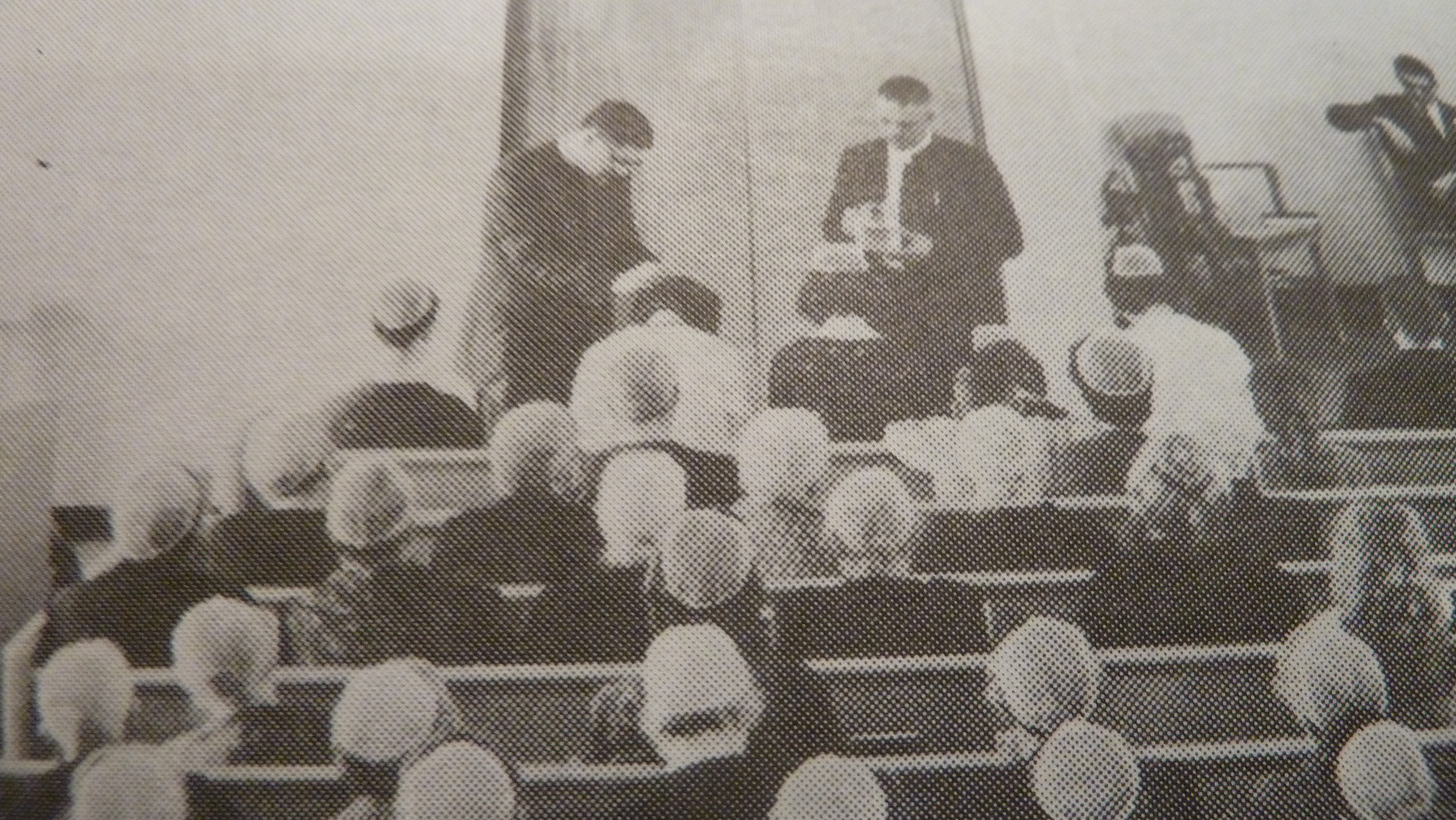
I treasure it because up front, (circa 1963,) holding the baptismal pitcher is my father, Vernon, who was a deacon, and that was one of his special jobs. He still wore a plain “Mennonite” suit at that time. We “poured” in our congregation—which is a good thing when you are baptized on Jan. 30 in northern Indiana.
For this baptism, you can spot me in the row directly behind the baptismal candidates, girl on the end, with a slightly messy (always) ponytail. My mother is next to me, and my brother, (I love this) is perched forward on the seat in front of us, as if to get an even better view of the proceedings. My other two sisters must have been sitting with the youth group in the youth corner. But my brother was probably also pitched forward because he knew what would come next: the “Holy Kiss” which was my mother’s job, as deacon’s wife, to go kiss the female baptismal candidates. (We’ll discuss some of the other fun jobs of a deacon’s wife in another blog sometime.)

I also treasure this photo because across the aisle is my 90-something-year-old grandfather Uriah, who lived at our house. He had pink wintergreens in his suit pocket for the kiddies after church; he always did. (Uriah is the little white head on far right of photo, second row.)
Nostalgia aside, how does a born and bred (and “reborn”) Anabaptist-Mennonite who later in life joined the Presbyterian church and had her own infants (gasp) baptized find harmony with that mix of theologies? My father, for instance, was not happy with me.
I knew without asking Dad would not want to come to the baptisms of our daughters. After all, when your forebears suffered, were tortured and died for the radical right to withhold state baptism of your kids, and to be “rebaptized” as adults, swallowing the idea of infant baptism as another form of dedicating your kids, practiced in most Mennonite congregations, didn’t quite cut it for him.

[Our oldest daughter with our interim pastor, Tempe Fussell. One of them looks really happy. It was the first baptism Tempe did out of seminary.]

[Our middle daughter with then pastor Dan Grandstaff.]

[My daughters and I on Easter Sunday, 1986; the babe in arms was baptized that year on Mother’s day (but I can’t find the photos. Isn’t that what happens to the youngest child?) but I’m happy to say my mother was able to come to that baptism. O happy day!]
I first wrote about my first daughter’s baptism here (In Presbyterians Today magazine) so I won’t repeat myself.
After my own father died, I felt freer to address some of my thought processing head on in Mennonite World Review.
Today I’m happy that, and my pastor made this point on Sunday, that Presbyterians practice infant, adult, teen and even child baptism at whatever stage parents want to make the claim of “this is my child and I will do everything in my ability to help him or her grow up to declare their faith on their own.” I’m glad there is more openness for parents to freely choose whether or not to have their children baptized, and not feel like people did at one time that a child who was not baptized soon after birth was not in the realm of God’s grace.
It is kind of a weird ritual, on the face of it, like the Lord’s Supper. If you were to be dropped into Protestant culture from the middle of Africa and not knowing anything about Christianity, observe either a river immersion, a “bathtub” emersion like those who have such fixtures in their churches, sprinkling—or watched a communion service, you would go—wow, wait a minute, these people are weird. What kind of cult is this?
But in the depth of it, baptism is a wonderful recognition that I am a recipient of God’s grace; that God loves me—amazing! That God claims me. What a way to start each day, as it was rumored that Martin Luther did, looking in the mirror and saying, “I am baptized!”
It is as weird, radical and wonderful as that.
***
A moving and transformational original “ana-baptist” (re-baptizing) re-enactment (10 min.) from the movie, “The Radicals”.
A fuller explanation of the Anabaptist view on baptism.
Who reads a 500+ page history/biography as recreational reading?
I’m not patting myself on the back, just somewhat amazed how engrossed I’ve been in Harold S. Bender 1897-1962, by Albert N. Keim [Herald Press, 1998] for the past couple months. It took me that long because I sometimes only read 2-3 pages at a time, before going to sleep.
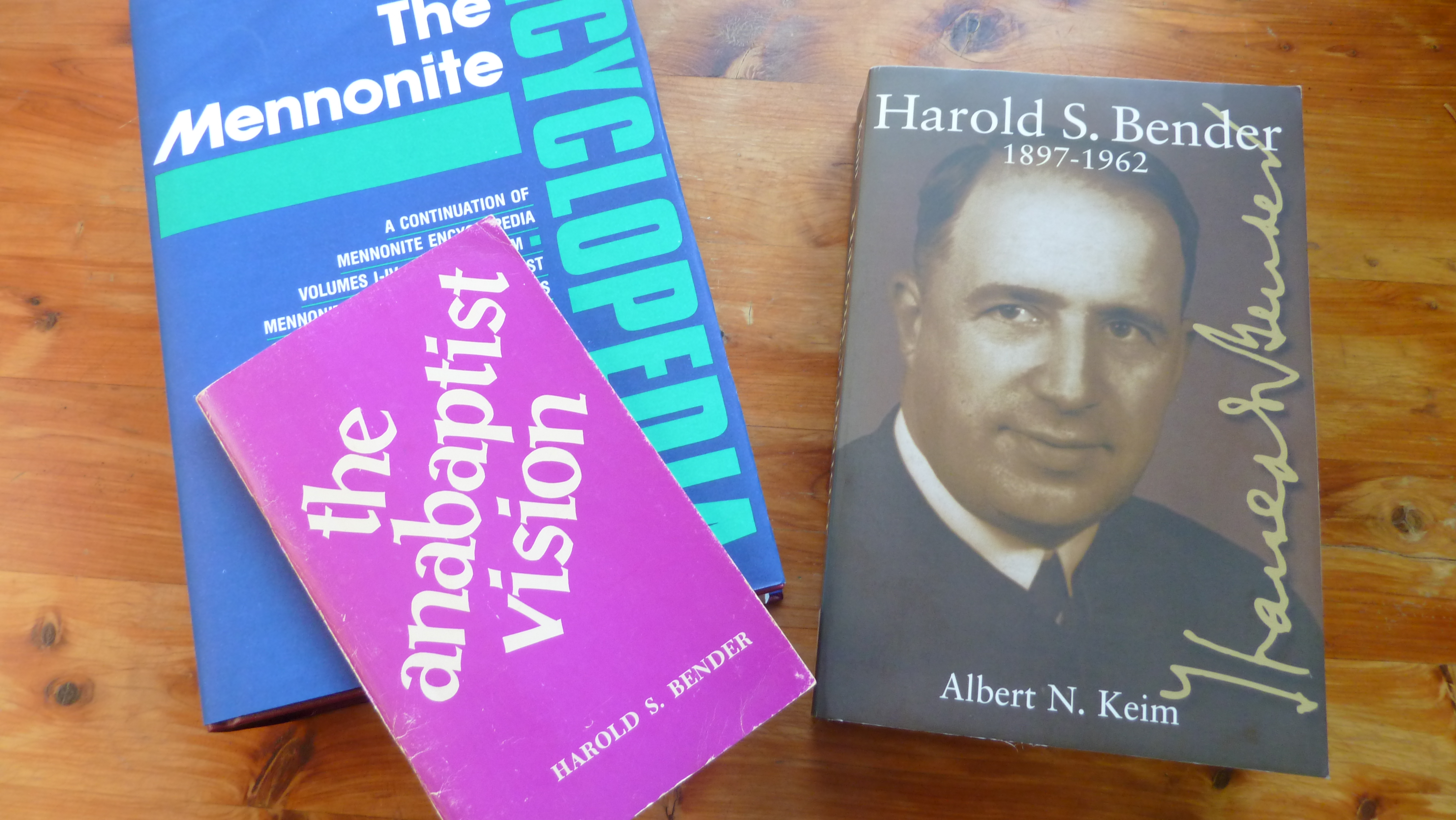
I first picked it up because as an Eastern Mennonite University student in the early 70s, one of our required readings was Bender’s short booklet, The Anabaptist Vision (I still have my first well-marked copy from my student days), which had grabbed me then and formed some of my thinking.


The second reason I picked up the biography of Bender was because it written by one of my favorite professors of all time, the late historian Al Keim. After I took my first course with him, I enrolled in whatever other courses he taught that I could fit in, just because I enjoyed them so much. He was mischievously full of good stories. And he had a daughter named Melody.
Keim begins the difficult job of chronicling Bender’s widespread influence by detailing as much as he could learn of Bender’s childhood home and family, and summarizes Bender’s father, George, as working in “Mennonite publishing and missions.”
Bam. That hit me between the eyes. I have spent my whole career so far, 37 years, working in Mennonite publishing and missions. Maybe this book would somehow connect to my life, I thought. The Bender family lived for awhile at 1711 Prairie Street in Elkhart, Ind., where I and many other Mennonite Voluntary Service orientees passed through (and ate many meals) on our way to service assignments. Later I stayed there when traveling to Elkhart for meetings. So Harold lived in that house while his dad worked as administrator of Mennonite Board of Missions there; there he overheard the beginnings for organizations like Mennonite Central Committee (Keim, p. 75).
I love the way this biography, like an octopus, sends out tentacles to so many aspects of Mennonite and Anabaptist history and links them, especially to the tumultuous first half of the 20th century (considering two world wars and their aftermath) and brings it all together so one can begin to glimpse the powerful ways the Mennonite church and its history were shaped during that time.*
Bender, for instance, was instrumental in setting up, with the U.S. government, the Civilian Public Service program providing conscientious objectors like my father a way to serve their country and God without taking up arms, which they felt went against the teachings of Jesus Christ. CPS was the pivotal experience of my father’s life. It was his college education (as a farm boy, never having gone past grade 8 in school) and his deeper introduction to Mennonite peace theology. He read books and literature and learned from the many speakers and leaders who passed through the camps where he served. Dad, in turn, always tried to teach and share these ideals with his children and grandchildren.
So when H.S. Bender came along and said Mennonites needed to send their kids to Mennonite high schools and colleges in order to insure that subsequent generations were given the opportunity to understand their Anabaptist heritage of suffering and dying for their faith, my pop stood right in line and came up with the money (by selling pigs, if necessary) to send his kids to a Mennonite high school (until we moved from the area).
I could go on, but blogs are brief and this book is not. I’ll try to wrap it up.
Keim critiques Bender in many places, not sidestepping how frenetically busy and involved Bender stayed throughout his life in so many endeavors (to the consternation of peers who frequently told him he was overcommitted, to put it mildly). If you need a reason to want to explore this book, or if you have ever been involved in any of these organizations, his list of assignments or jobs he was doing concurrently was astounding (and most of these institutions still operate today in one form or another; I’ve linked the existing organization, if found):
Dean of Goshen Biblical Seminary
Secretary of MCC Executive Committee
Chair of MCC Peace Section
Chair of Peace Problems Committee
Chair of Historical Committee
Executive Secretary of Bethany Christian High SchoolPresident, Mennonite Historical Society
Editor of Mennonite Quarterly Review
Chair of International Mennonite Peace Committee
President Mennonite World Conference
Editor of The Mennonite Encyclopedia
(And three other posts which have less general meaning or modern counterparts.)
Exhausted anyone? Was he power hungry? Maybe power-driven by personality, but humbleness kept him in line. Keim touches on those questions, not skirting comments by those who felt Bender overreached at times.
But mostly it was a different time, a smaller Mennonite world, when it often made sense to have one man (yes, his world was mostly male church leaders) wearing multiple hats because if you were sailing to Europe to do business, you might as plan the next Mennonite World Conference, consult on the encyclopedia project, work on establishing European headquarters for MCC etc. etc. AND be indulging in collecting obscure Anabaptist history books because that was one of your few hobbies/passions (even whisking them away from European scholars who also coveted them). And oh yes, there’s this pesky World War II thing breaking out so gotta worry about Hitler and visas and getting in and out of countries.
I didn’t know Bender led such an amazing life. Bender was a mentor to people like the brilliant young scholar John Howard Yoder, who would write The Politics of Jesus and many many other volumes and become a name known worldwide in peace theology circles. Eventually Bender, as generations changed, found himself defending a certain amount of orthodoxy, which he resisted as a younger man. But he was skilled in mediating and finding harmony among diverse thinkers and across generations.

In his epilogue, Keim notes that Peter Dyck, another giant of that era, noted that each evening when they traveled together Bender, without fail, would read a passage of scripture and kneel at his bedside for audible prayer. “Perhaps no ritual among Mennonites was more pervasive than the one Peter Dyck observed,” wrote Keim.
I can still see my Dad doing the same thing beside his bed if I happened to sneak in late and pass his open door. A strong precious memory.
I’m sorry I missed the book when it first came out, but historical biography never gets old. Plus it probably means more to me now after nearly 15 years of curating Mennonite information for the public at Third Way Café.
Call me a Menno-nerd. A Presbyterian-Anabaptist-Mennonite nerd. Or something.
***
*The book, because it primarily spans the time period of Bender’s life from 1897 to 1962 does not mention the exciting current era of how the Mennonite/Anabaptist world has changed and shifted to where today there are many more Mennonites south of the equator than north of it, many more Mennonites a color other than pasty beige. You could say Stuart Murray’s The Naked Anabaptist takes up The Anabaptist Vision today.
How do you decide? Do you put her away when she starts having too many accidents? When she can hardly get up and down the two steps going from your garage to your house? When she seems to have labored breathing? When she can hardly get up from the wood floor as her legs slide from under her? When she groans about 30 percent of the time you are around her? When she does this weird hacking thing like she was going to throw up but doesn’t even dry heave, just makes an awful noise? When you think about planning a vacation (or even just overnight) but feel you can’t leave her, not even with good pet care available? (The last time we went away she had a hard time and thanked us with some terrible messes when we came back.)
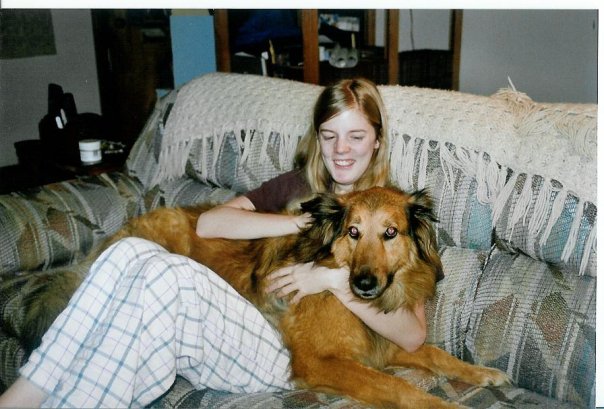
Fable, (named by our oldest daughter for one of Queen Elizabeth’s famed Corgis) still seems to enjoy life, most of the time, but there are times when she looks at you with that look of help me, I know I’m not the dog I used to be … can’t you do anything?

Our German Shepherd/collie mix, in her day a beautiful dog that any dog lover praised and commented on, is now 12 and a half years old, which is about 63 in human years, (not using the old formula of seven dog years for every human year, but using newer charts/calculators which factor in dogs reaching adulthood within their first couple years). About two years ago Fable got her first tumor, which the vet felt was cancerous, and eventually we had him remove it after struggling with indecision for months because our approach to paying for medical care for pets is we provide the minimal amount, feeling like for us it is unethical to overspend (ten thousands of dollars, like some do) on medical care and also unfair to the animal because they simply do not understand why they are being put through excessive interventions. We finally found a vet who quoted a price several hundred dollars lower than the vet we had been seeing. So we decided to go through one cancer removal operation, but not do any radiation or whatever they do for post cancer follow up on animals. While I worried about her healing (would she ever stop trying to lick the wound?) we lucked out and she recovered well. She had about nine good months.

Then a lump returned, but it looked different, and we decided to just see what would happen with it. It may have been just a cyst. Eventually it oozed and bled, but after a few days of wondering whether it was time to put her down, and cleaning up a few messes, she seemed to get it under control and after about two months of almost constantly licking it, it went away. Not kidding. It is totally healed. We didn’t consult the vet, knowing her months were numbered anyway. I said if I believed in praying for pet health, I would have said it was a miracle.
Now Fable is just doing all of the things I mentioned in the first paragraph. She has a good day one day, and the next day seems worse.
The dilemma and emotional toil can be difficult but nothing like you would face if you felt euthanasia or assisted suicide were an option for a loved but suffering human being.
We have walked closely alongside of several families or couples where a family member was dying of cancer. We listened as Durwood, in anguish the last week of his wife’s life, asked us to pray that Betty could go. He was up and down all night with her. Toileting, choking, swallowing—all these became daily and ongoing difficult issues. Hospice care helps, but only so much. Morphine helps, but only so much. Dry mouths, tissue-thin skin, rail thin/skeletal bodies, all of it so sad. Agitation and not being able to ever get comfortable. Those who walk alongside anyone dying of cancer go through a nightmare of care. I don’t know how/what I would do in that situation.
But yet, I cannot imagine making a decision to put someone out of their misery, even if you felt it was the humane thing to do. That’s why I mostly think it is better to not even have it as an option. It is taken off the table of choices. Someone much more experienced in this field than my poor knowledge is Dr. Ira Byock, author of Dying Well. I pre-interviewed him by phone and our producers at Mennonite Media have filmed two video interviews about his experiences and research in this area for two documentaries we did, including one on “Embracing Aging.” (See a clip here.)
But back to the dog. We have had to put down two cats and one dog. (Our other pets all succumbed of natural causes or from accidents on the road.) Eventually we did do the hard thing for those who needed to be helped in their misery and took them to the vet and lovingly, while by their sides, had the shots administered that finally helped them stop breathing (it took more than one for our first dog, Wendy). But even then, the days before and while driving to the vet, we pondered, are we wimping out? Is this for our convenience, or the comfort of the beloved pet? Is it the right thing? Eventually you just power through, never really knowing.
I have to think it would be the same excruciating question with a human, only much much much more so. (I hope you get that I’m not equating a person’s suffering with a pet’s.) I assume assisted suicide would only be at the loved one’s request, but so many people hate being a bother, hate putting their loved ones through all that difficult end stage care, (in addition to wanting to avoid suffering themselves), that I’m sure some people would request euthanasia more out of love and care for their caretakers than for themselves alone.
I wrote most of this post yesterday and pondered/rewrote some of it. Then my dear beloved Fable, for whom my Twitter handle is named (FableMom), died this morning, at home. She made the decision for us, or rather her body did. R.I.P., dear dog.
What do you think? Have you put a pet down? How did you know?
If you are a woman or girl (or anyone) who has ever loved a dog, you might love this.
Video of Fable playing her favorite game in better times.
“Grandmother … did not even dream that the day would come when one could go to a store and buy noodles.”
I’m on a hunt, and for a reason.
Last fall after a book signing at Das Essen Haus Restaurant in Middlebury, Indiana (where they have fantastic Amish noodles, by the way, a special love in the family I grew up in), the director of the Road Scholar program (used to be Elder Hostel, wonder why they changed the name ha ha) at Camp Amigo (Sturgis, Mich.) contacted me about coming to Camp Amigo’s Road Scholar week September 2013 dealing with Mennonite and Amish history, beliefs and customs. (I’ll share specific details here when info on this year’s program is posted.)
Mandy Yoder, adult program director, wanted me to talk about Mennonite cooking, traditions, cookbooks etc. (see my Sept. 2012 column series on Mennonite Cookbooks here). She also invited me to talk about my book, Whatever Happened to Dinner: Recipes and Reflections on Keeping Family Dinner and to help the participants make homemade noodles, thinking it would be a cooking project the participants could take home with them and not worry about spoilage etc.
That sounded great and exciting and fun, except for one biggish problem. I had never made noodles. I never even especially had a desire to make noodles when they’re so cheap and easy from a bag. So I ‘fessed up and Mandy offered to have a real Amish cook come and make noodles for the group. Which sounds great!
Yet I want to learn to make them ahead of time; I love the idea of knowing how to make more and more things from a few simple ingredients—not having to run to town if you are out of something.
So over Christmas vacation with my youngest daughter at home, we made a small batch using this recipe (Ready Nutrition website) from The Best of Amish Cooking by Phyllis Pellman Good. I cut the recipe in half since I wanted to experiment:
3 egg yolks
3 TB water
1 ½ c. flour
¼ t. salt
Beat egg yolks and water thoroughly. Stir in salt and flour. Knead together. Form 2 balls, Roll out. Dough will be very stiff.
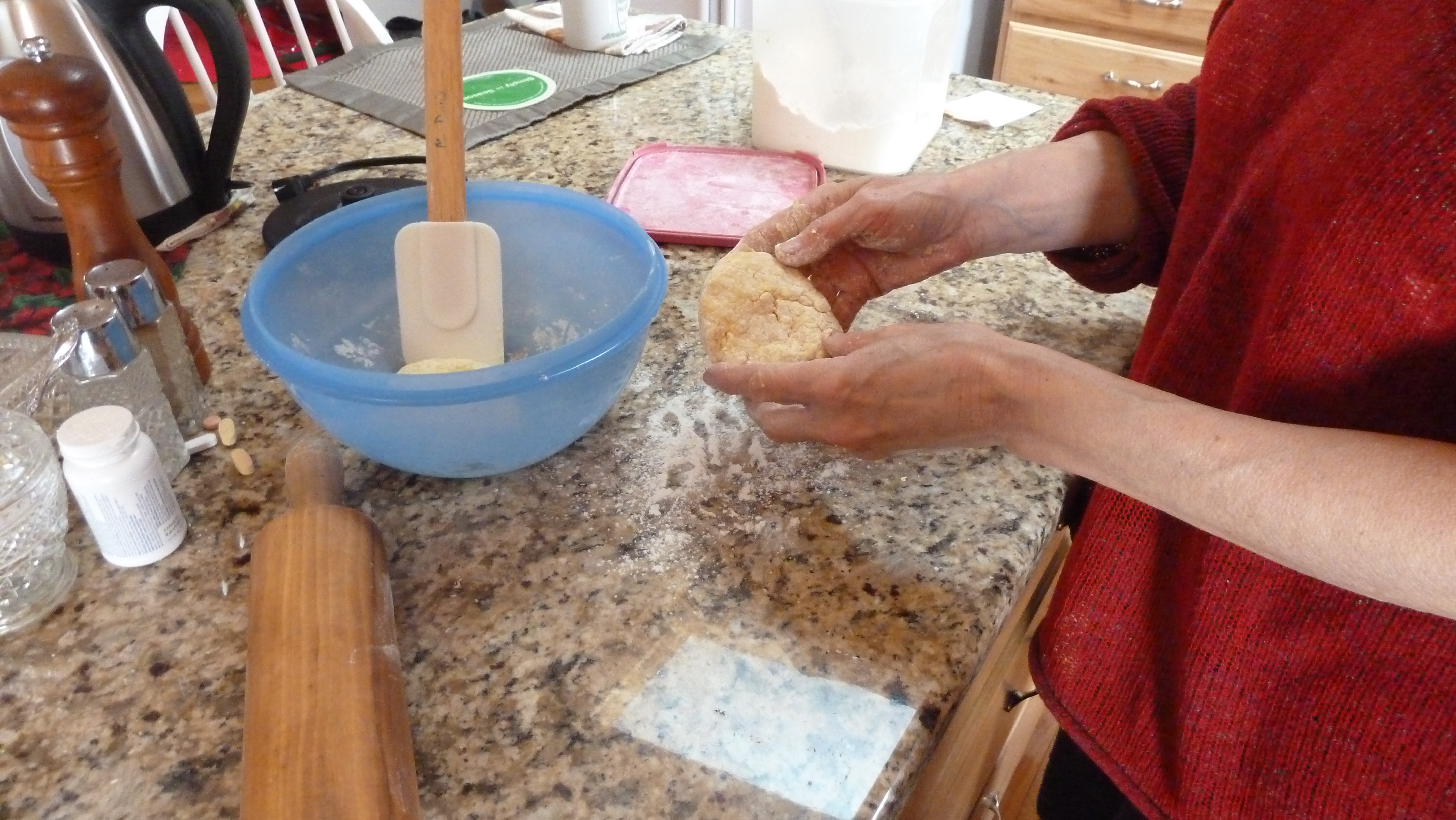
It is kind of like mixing up bread or pie dough, until you get to the rolling out part.
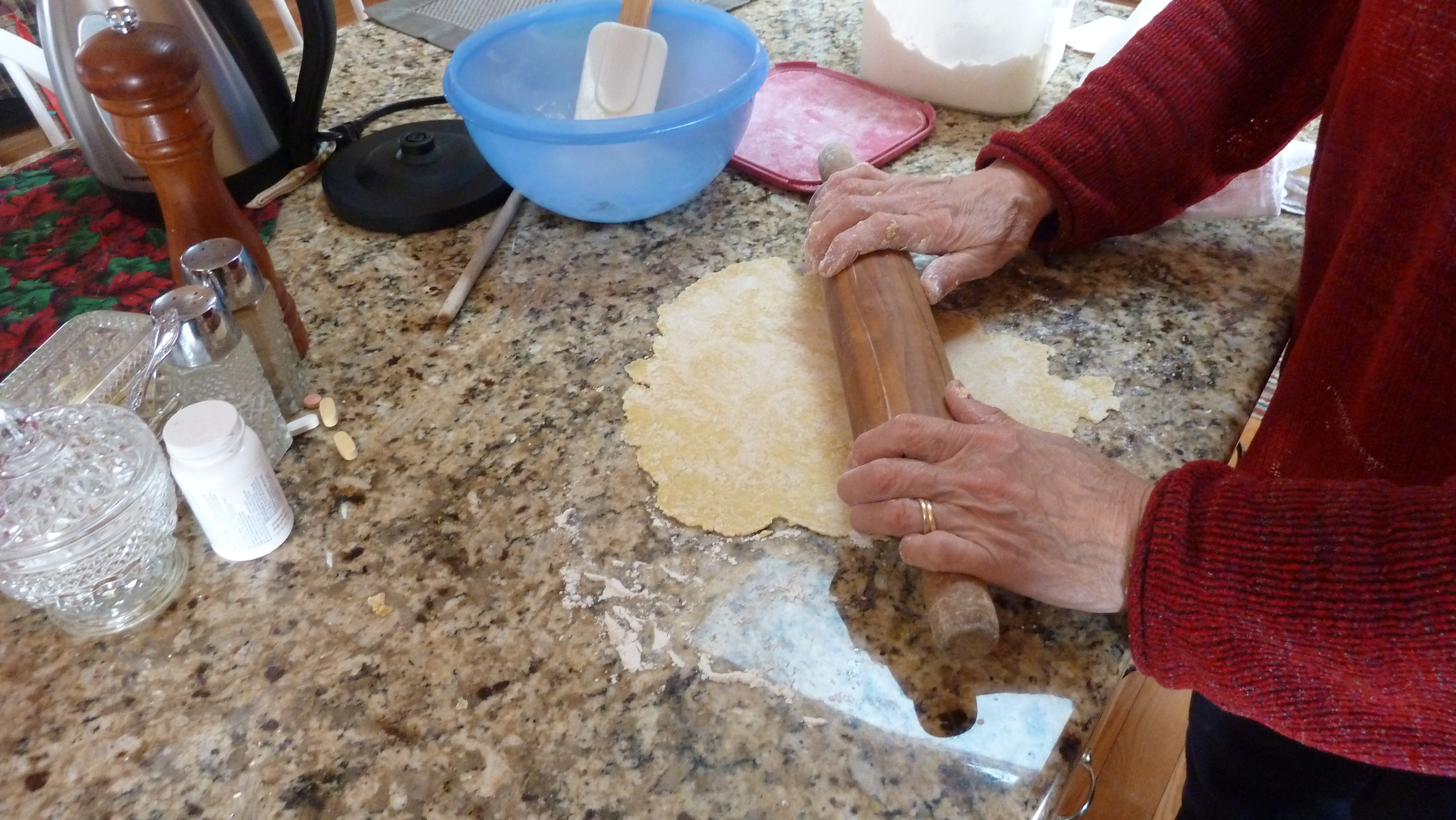
It was very very hard to roll out.
Oh, and don’t plan to make these and use them for a quick lunch or something. Of course they have to dry. At least a day, maybe more, depending on how thick or thin they are.

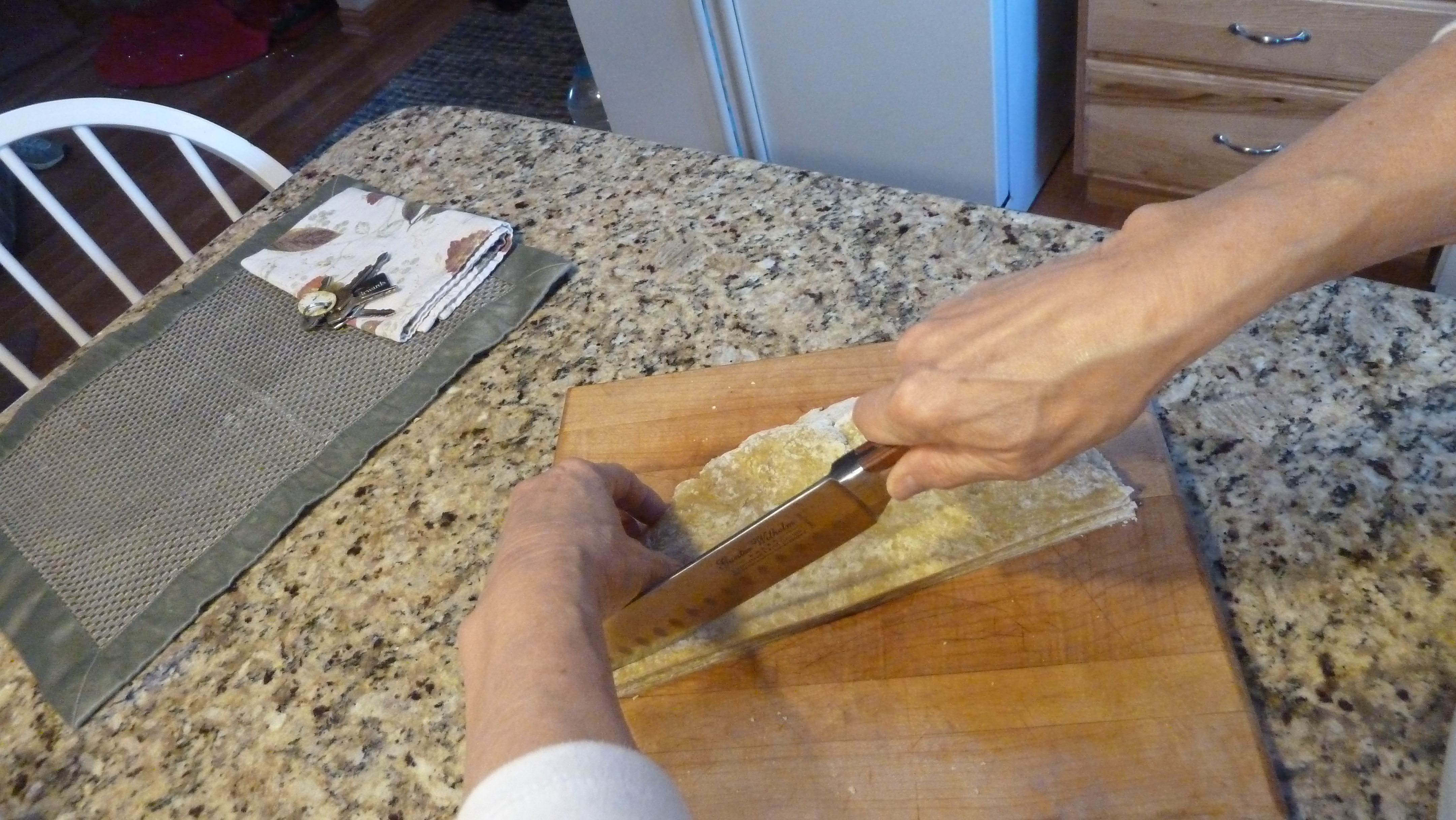
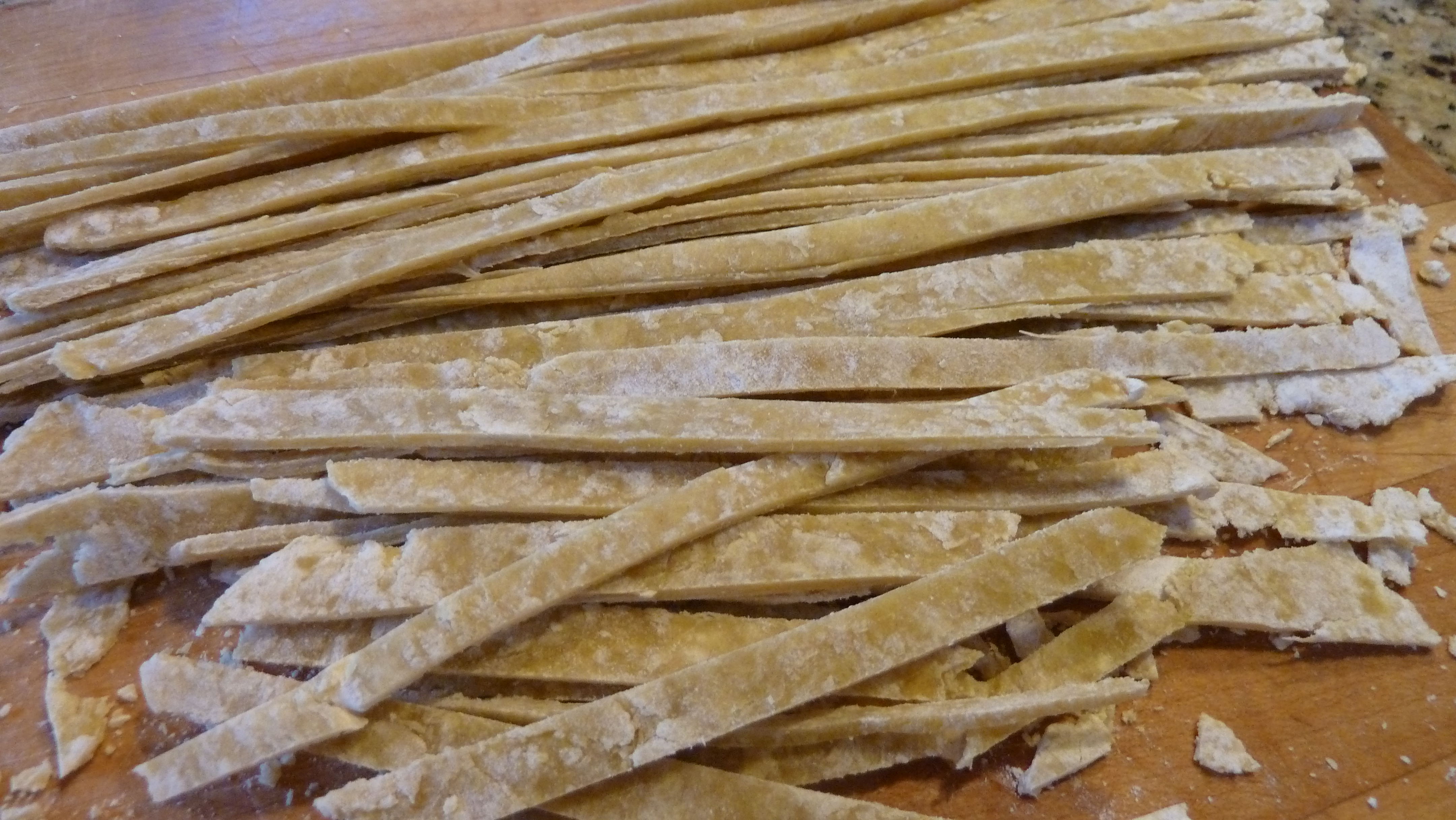

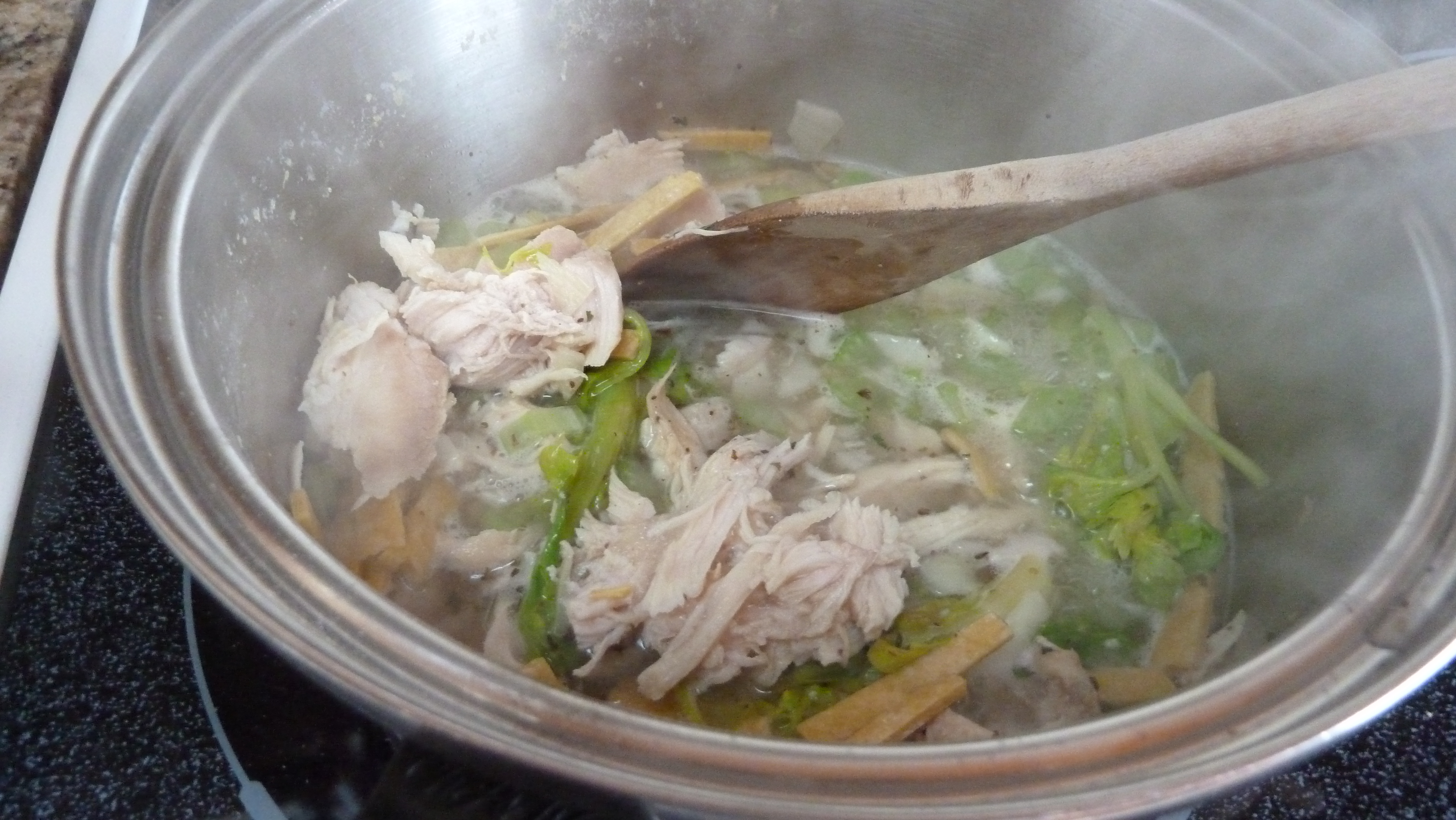
I did finally use them for a homemade lunch about a week later, using the things I had on hand, and That felt good: some cooked turkey and a little broth frozen after Thanksgiving, some water (since I didn’t have any other broth in the pantry or freezer, yikes); a stalk or two of celery, chopped; 2 Tablespoons chopped onion, and these spices (oops, the cumin name doesn’t show up on the maroon bottle):
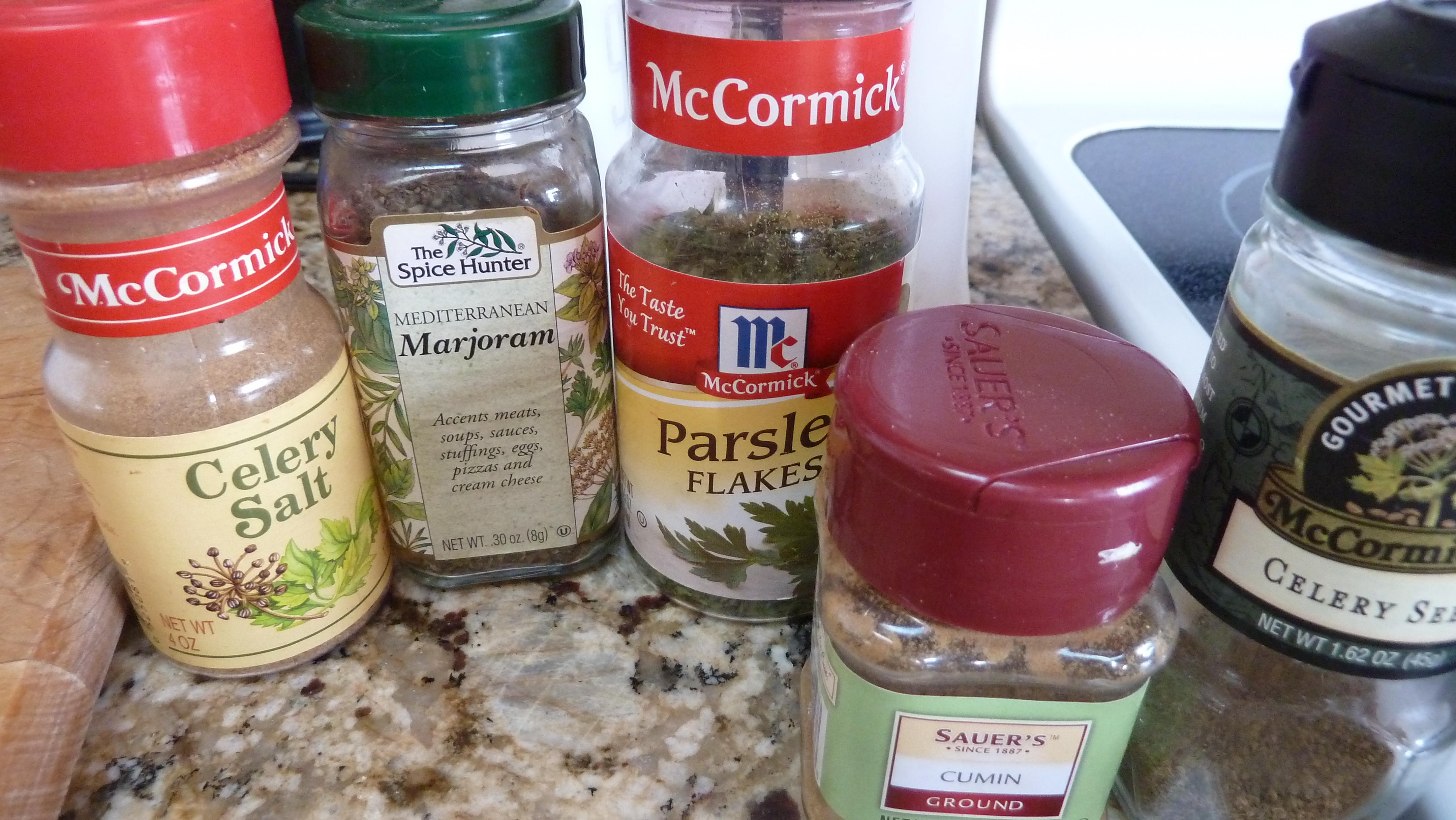
And it tasted good. Maybe a pinch too much salt, but tasty. The noodles were plenty thick and took a longer time to cook through, about a half hour. My daughter (who had went back home) asked “Did the noodles fall apart?” I had wondered too if flour, eggs, water, and salt wouldn’t just go all gooey and mushy, but they hung together fine. So they felt very substantial and warming on a cold January day.

***
When I told my mother I made homemade noodles she surprised me by saying with a gush of pleasure: “I can see my mother now stringing out noodles to dry over her ironing board!” The thought filled her with memories and I encouraged her to write them down for me … which I hope to share here. I didn’t know my grandmother made noodles. But I guess pretty much everyone did if they wanted them. Mary Emma Showalter said in Mennonite Community Cookbook, (the grandmother of most modern Mennonite cookbooks), “Grandmother … did not even dream that the day would come when one could go to a store and buy noodles.”
Next time I will add about 1 teaspoon of shortening as in the recipe in Mennonite Community Cookbook, to add a little richness (Grandma would have used lard, but I’ll probably use Crisco).
***
Making some homemade noodle soup soon (use whatever noodles you have in your pantry: linguine, spaghetti, etc.) might feel good for those suffering from the creeping crud & flu that is so widespread. Be well!


