

Another Way for week of October 28, 2022
How One Family Helps Feed the Hungry
A few years ago I had the honor and pleasure of interviewing one of the most giving persons in our community, Bucky Berry. When he was just five years old, he remembers living in a shack in our city. His family did not have enough money to put food on the table every day. He remembers, though, how the Salvation Army came and brought food bags and toys for Christmas.
Today Bucky is an entrepreneur with a heart of gold and the willingness to work hard. He says he would give away his last quarter. But he started earning quarters and dollars as a child—mowing lawns when he was just a boy— three to four yards a week. He started an official lawn mowing business in 1993, and you sometimes see a rig marked “Bucky Berry Landscaping” parked around town. He cuts 25 to 30 residential and commercial yards through the spring, summer and fall. His wife has worked as a clerk at Kroger over 32 years.

About 25 years ago the Berrys were thrilled to be expecting a child, who ended up being premature and weighed just 1.8 pounds. Little Brent struggled for his life at a children’s hospital for two months and was finally released. Today Brent loves helping with the food drives which are named in his honor.
Brent and Bucky are a team at the various collection sites they set up around town. Son Brent hands out a slip of paper to customers going into stores listing the various products that work well for the food drives. Bucky happily receives what the shoppers bring back out of the store to donate.
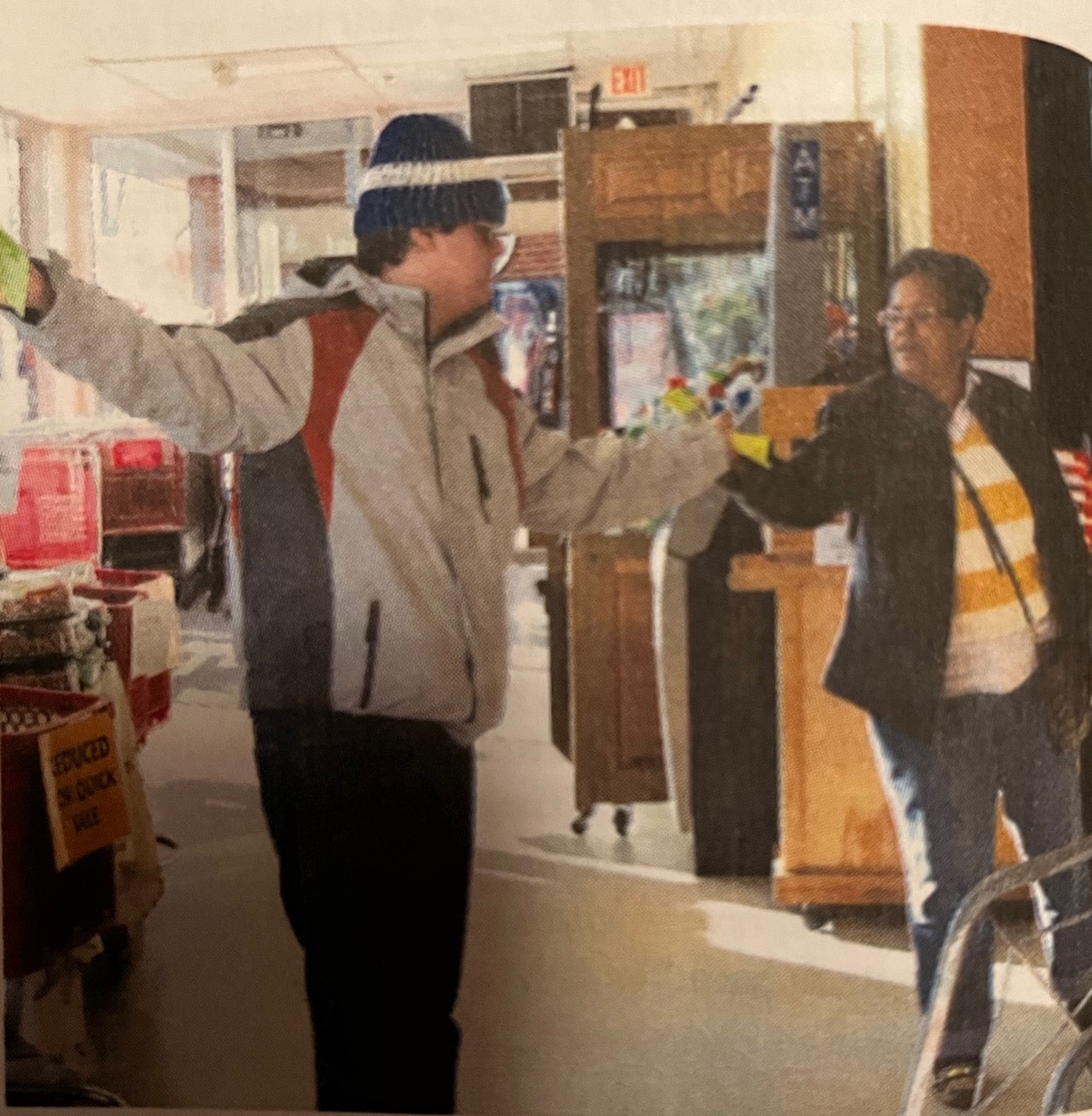
“This is a pretty giving community,” Bucky explains further. “We meet a lot of people, and businesses come and donate lunch or supper for us or the other volunteers,” notes Bucky. He also enjoys ringing the Salvation Army bell and has done so for 30 years straight. Locally, the Salvation Army food pantry also gets donated perishable food from the Blue Ridge Area Food Bank and other community donations.
“There are many who may be down on their luck and go to bed hungry. If the Salvation Army wasn’t here, they’d be up a creek,” Bucky points out. He notes that about 70 percent of our city children receive free or reduced price lunches and breakfast, which means their family has a low income and may go hungry on weekends or summers when they don’t get two meals a day at school.
Bucky describes the work involved in setting up the food drives, such as securing insurance, permits, banners that cost $700-800 which he arranges for sponsors to cover. “It takes weeks to plan it a big event like that,” he said. “You gotta get meals and drinks lined up for volunteers and 25 different sponsors; there’s a lot involved.”
His memories from childhood when his family was going through hard times drive him forward. “My family wondered where we would get our food, and the Salvation Army kept us from going hungry.” He adds that none of us know when a bad accident or illness means the loss of a job. Anyone can end up needing help.
The Berrys live in a humble house and do so much for our community. Bucky says, “We’re going to keep going at this until we die or Jesus comes back. We do it for the citizens of this community.”
As we get into the Thanksgiving and Christmas season and spirit, you can find a list of suggested items that work well to donate for community food drives, which Bucky put together. Go to http://www.findingharmonyblog.com. It will be posted November 4, 2022.
***
Send stories or comments to anotherwaymedia@yahoo.com or Another Way Media, P.O. Box 363, Singers Glen, VA 22834.
Another Way is a column by Melodie Davis, in syndication since 1987. She is the author of ten books. Another Way columns are posted at FindingHarmonyBlog.com a week after newspaper publication.
Sidebar: Brent Berry Food Drive suggested items:
Proteins: canned chili; canned stews; soups; canned tuna, chicken, meat, or beef; powdered eggs; peanut butter, baked beans; canned nuts.
Grains: Cereal (hot or cold), rice, pasta products, oatmeal, pancake mix, flour, dried beans, crackers, mashed potatoes, granola bars.
Fruits: Canned fruit/fruit cups, dried fruit (raisins, plums, cranberries), applesauce, 100% juice and juice boxes, jams/jellys.
Vegetables: Canned vegetables, tomato products – spaghetti sauce, etc. V-8 juice
Dairy: Dry milk, evaporated milk, instant breakfast drinks, canned or boxed pudding
Other: sugar, vegetable oil, syrup, homey, salad dressing
Baby products: diapers, wipes, formula, infant cereal, Ensure
Hygiene Items: feminize products, hand sanitizer, toothbrushes, soap, shaving items
Another Way for week of October 21, 2022
The Fruit of All Creation

Have you ever studied a pear?
Me neither. But at a recent church retreat at the lovely Massanetta Springs retreat grounds, besides enjoying fantastic October weather, gold and red trees, and an hour of creative enjoyment, we had a brief meditation service. We were told to focus on objects we had with us or creative projects various members had worked on.
We had just eaten lunch and the pear I grabbed for dessert was not ready to eat (they ripen so slowly!) so I studied my pear. How does a pear grow, anyway? From a blossom of course, on a tree, but what first spawned the tree? Did they grow in the “Garden of Eden”? Are they native in North America?
A nature website in Wisconsin says this of pears: “The ancient Greek author Homer described them as ‘gifts from the gods’ likely due to their sweet, juicy flavor.” Another gardening website, gardeningknowhow.com says the way you start a pear tree is to put just one pear seed in a pot. Then “put the pot or pots in a sunny place and keep the ground moist. The seeds should germinate and produce green growth in three months. After the pear trees grow one foot tall, you can place them in the ground.”
They make it sound unbelievably simple but I doubt mine would grow so easily. They may have first grown in China where they are extremely popular, according to one source.

As I studied my pear—wishing I could chomp into it—I noticed that a star shaped blossom remained imprinted on the bottom of the pear. At the top is the place where the pear had once hung from a branch on the tree. There were scuffs and bruised places on the pear, a hallmark on most pieces of this quick-to-rot fruit. Pears do not ripen on the tree, the experts tell us.
Since this was a church meeting, I especially enjoyed the song we sang following our meditation:
“For the fruit of all creation, thanks be to God….
For the plowing, sowing, reaping,
Silent growth while we are sleeping,
Future needs in earth’s safekeeping, thanks be to God.”
It is sung to an old Welsh tune, “Sleep, My Child and Peace Attend Thee, All Through the Night.” You may have heard that lullaby as a child or sung it to your own child or children.
Pears, apples and peaches are some of my favorite fruits, all grown on trees in much the same manner as written above. That reminds me of an apple story my oldest daughter shared recently.
She was a bit surprised when her just-turned-four youngest son asked her while watching one of his brother’s baseball games, “Mommy, can I have the apple I packed?” Her four-year-old had packed himself a snack? She said she was like, “What?!” but soon surmised that “When you’re the third child, you pack your own snack in Mom’s bag for big brother’s baseball game.”
And way to look out for yourself, Edward.
But back to the pear. One resource says “The early Romans developed 50 varieties of pear and planted them across Europe. Pears are not native to the United States. The first tree was planted in the U.S. in 1620.” I’m sure no actual pear survived the long journey to North America, so I’m guessing someone brought a seed or perhaps small plant in a pot.
My husband is not a big pear fan (he loves apples and peaches though) so I more often buy those fruits than pears. So I will enjoy my solitary pear. In a few days!
***
Studied an apple, or banana? Or an orange?? Let us hear thoughts on your favorite!
Or, did one of your children or grandchildren surprise you recently?
***
Comment here or Send to anotherwaymedia@yahoo.com or Another Way Media, P.O. Box 363, Singers Glen, VA 22834.
Another Way is a column by Melodie Davis, in syndication since 1987. She is the author of ten books. Another Way columns are posted at FindingHarmonyBlog.com a week after newspaper publication.
Another Way for week of October 14, 2022
A Family Reunion Back the “Holler”
How does his family become your family? Or hers–yours? How can people you never knew growing up, become as precious as the cousins and aunts and uncles you knew as a little tyke?
My husband’s cousin, Johnny owns a piece of heaven. He and his wife Judy were happy to share it with the broader family recently, for our first family reunion in three years if my calculations are correct. (I’ll only use first names here.)
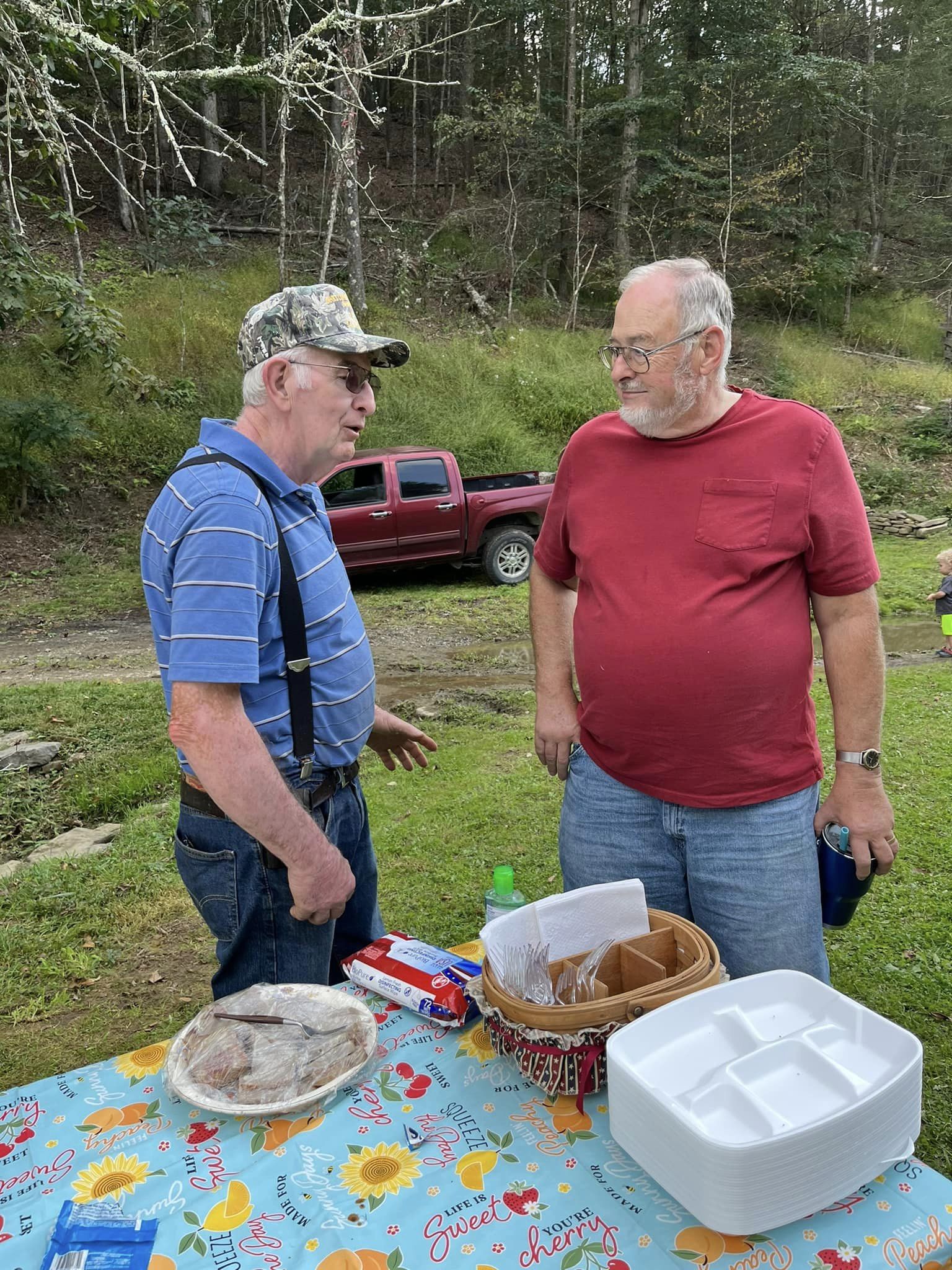

We headed out to the nearby Appalachian/Allegheny hills, and drove back a long long holler (holler: a small valley between some mountains or hills).
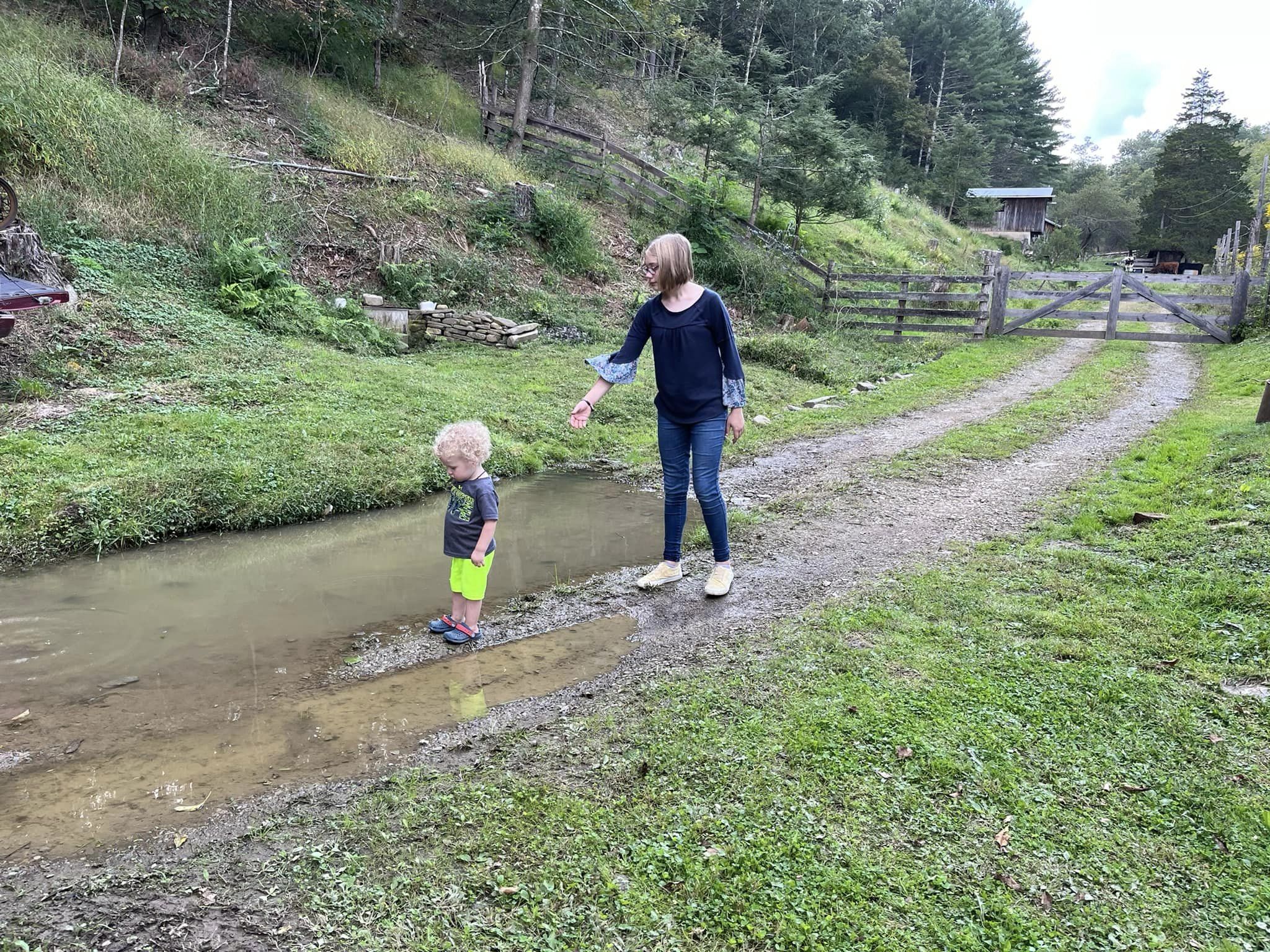
There’s a small creek and a still active spring of water near the old homestead. We packed our lawn chairs, our coolers, our old photos and bumped our way there on a beautiful September Sunday afternoon.

It was an emotional homecoming for me and even though I didn’t grow up playing in the creek back there or sipping from the spring, my husband’s family has become my wider family and I had to squeeze back some tears although I couldn’t have been much happier.

The other sentiment that surfaced for me was how my husband and I are now part of the older generation, because those older than us are all gone. Done with this life on earth, awaiting us in a better place. But I think they would have been emotional and happy too, to know we were gathering in the same space they did for so many years. Johnny’s father was named George and he and his wife Mae farmed there. George’s father, Perry lived there until Grandpa Perry needed to move to a daughter’s home near town for old age care. Stuart’s mother, Estella, grew up on the property there, though in a different house (which burned down) than the one shown in these photos.
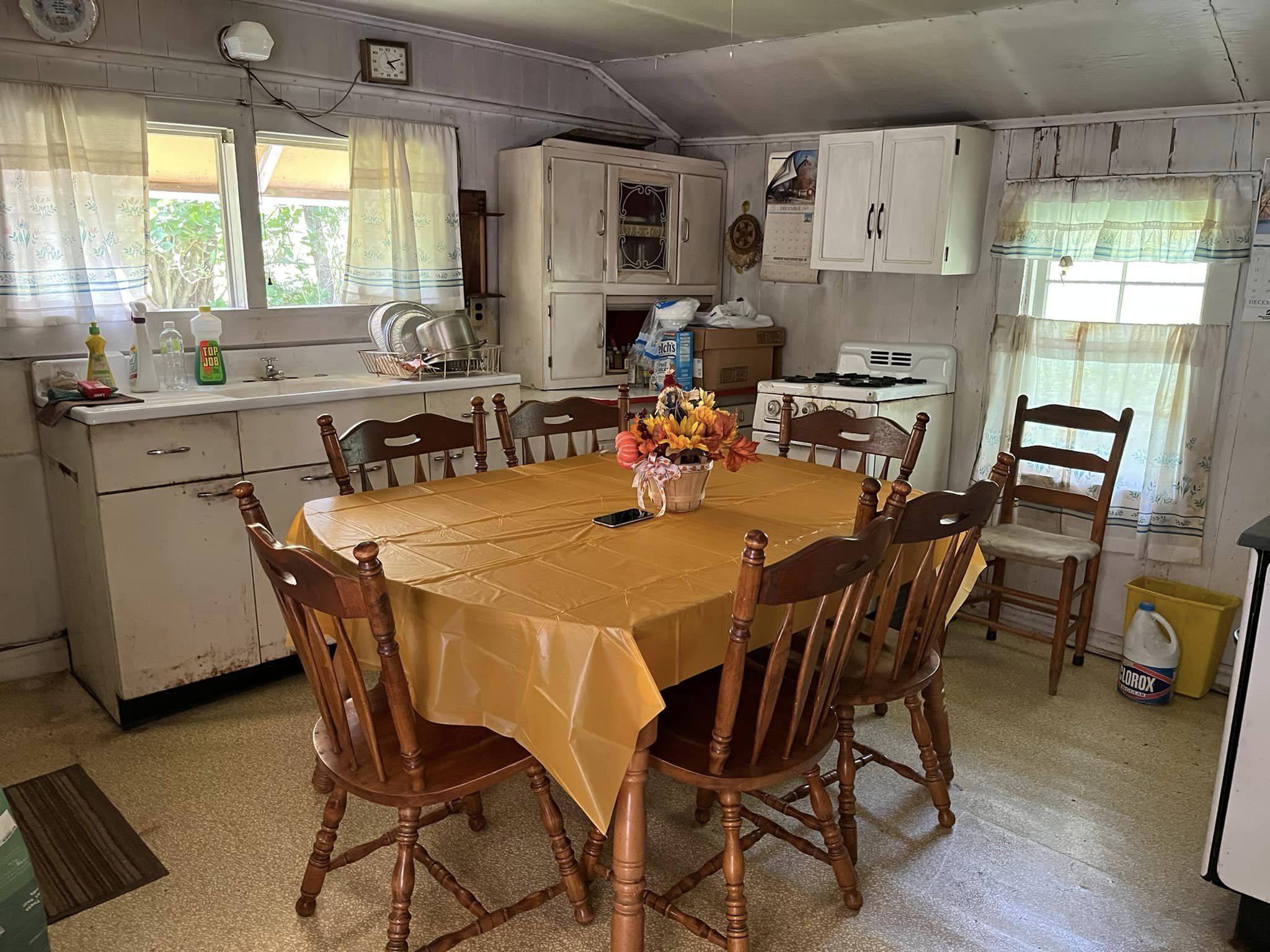
I once wrote about the dinnerplate-sized dahlias you could find at Aunt Mae’s house. No dahlias are grown there anymore but Johnny still raises a few awesome huge vegetables in that ground. The kitchen and cookstove were the same that he grew up with, the living room and its potbelly stove were the same, even though the flooring underneath is weakening with the passage of time.

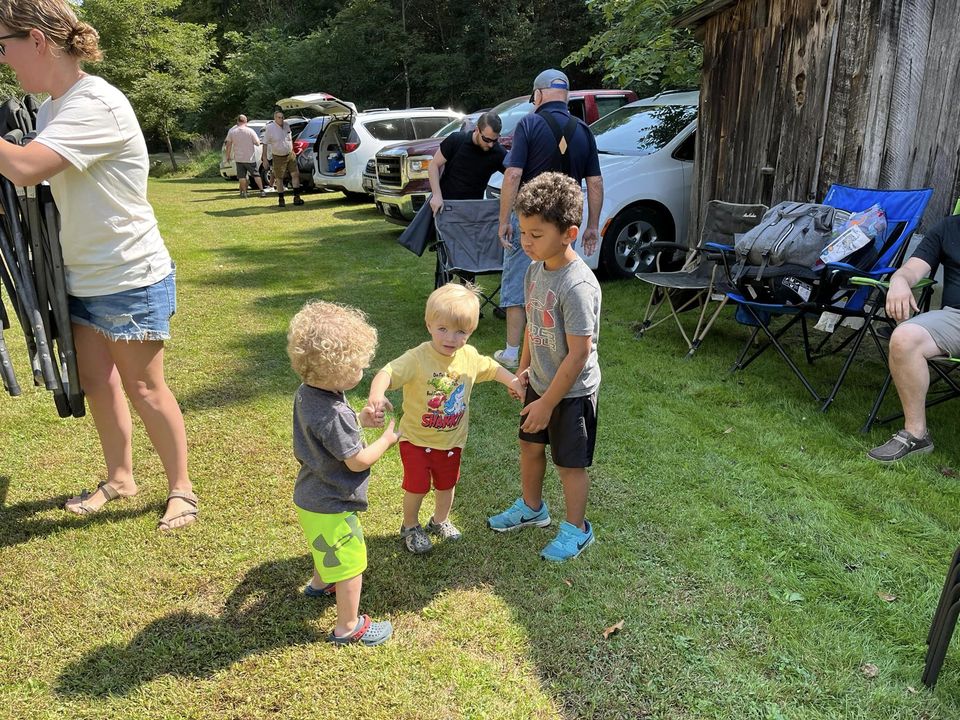
And so we were glad to watch the new little adorables toddling about, or cuddled napping in lawnchairs,

and racing down hillsides with plastic riding cars, or begging a 13-year-old cousin to wade in the somewhat muddy creek from recent rains.
My aunts and uncles are all gone now too, along with my mother who was the last surviving “aunt” for many in my “Indiana family.” The anniversary of her death last year, at the ripe age of 97, was October 11. She was seven years younger than my father, and he was the “baby” of his family, so there was considerable spread in the ages of the siblings in his family. (Below: George and May’s kitchen, cookstove, and potbellied stove in the living room.)


This year has brought a reckoning: how many years do my husband I have? Twenty years is a hope. Psalm 90:10 says most of us will live three score years and ten (about 70) or perhaps are lucky enough to live until 80. “But most of those years are filled with hard work and pain. They pass quickly and we fly away,” one Bible version puts it. However long or short the years may be, it is a time of summation. How many grandsons will I see graduate from high school, or marry, or have children of their own? Will we live to see great grandchildren, as many of my friends and relatives already have? (We began our family a bit late—not our fault but I would say by the mercy of God we finally had children.)
We all live because of the compassion of the Gracious One. I am thankful for the seventy years I’ve had and especially thankful for my extended family, both sides, scattered all over the U.S. Today we can connect by computer and Zoom, Facetime and Google. Nothing is better than a real live hug, but we’ll take the connections we can get!
***


Did you have family get togethers or reunions this year? What things stood out?
Are there special places you love for the memories?
Comment here or write to me at anotherwaymedia@yahoo.com or Another Way, P.O. Box 363, Singers Glen, VA 22834.
Another Way is a column by Melodie Davis, in syndication since 1987. She is the author of ten books, most recently Memoir of an Unimagined Career. Another Way columns are posted at FindingHarmonyBlog.com a week after newspaper publication.
Another Way for week of October 7, 2022
A Book for These Difficult Times
I recently read a most beautiful and unusual fiction book—a story about a blind girl, her father and uncle, and what happened to them during World War 2. A book about war that’s beautiful? Only in terms of how caring, giving, and faithful some folks are in the midst of such trauma. It is called All the Light that We Cannot See (Scribner, publisher).

It took the writer, Anthony Doerr, about ten years to write. If you read it you will see why in terms of the exacting research he did related to that dreadful period. The book, published in 2014, won a Pulitzer Prize.
The first unusual thing I spotted were short, short chapters, many only a page or even half a page long, some 3-4 pages. That makes for great bed-time reading because you can easily cut off your reading if you’re about to fall asleep. Doerr also doesn’t worry about complete sentences. He makes his sentences as short as he needs. So, you keep moving in the book.

But we also jump around a lot between main characters and then side characters in the book, so it was a little hard to keep track of who was what. The writer also zooms forward a time or two to the future, which didn’t help confusion. That was my biggest complaint, and maybe some of the dialogue—once we got among actual soldiers using language that you might expect of soldiers fighting a horrible war.
The book starts in 1944 with the sightless young Marie-Laure living with her uncle in Saint-Malo in the Brittany region of France. Named for a monk, Saint-Malo was built on a rock at a naturally defensive position near a river. The city goes back to before Roman times. In the introductory pages, Marie and her uncle are awaiting whatever comes next: annihilation? Death? Severe injuries?
Then we skip to 1934, and the back story where Marie-Laure is only six and her father works as locksmith for the Museum of Natural History in Paris. Her mother died giving birth to Marie-Laure. Eventually Marie completely loses her sight. But gradually dad and daughter adjust. He takes her along to work. He makes miniature wooden models of every house, store and apartment in their neighborhood of Paris, which Marie-Laure memorizes to help her navigate the city.
We also become acquainted with a German lad named Werner, seven, who in the 1930s, shows keen skills and interest in radio and short-wave technology. Werner and his sister are orphans who live in a children’s home. They look out for and love each other as siblings. We soon guess that Werner and Marie-Laure may eventually meet in this far-flung story.
As the book follows these characters through the difficult war years (rations, little to eat, keeping water in the bathtub to drink,) eventually Marie and her father move to live with her uncle at Saint-Malo which is deemed safer. Unfortunately, the war soon whisks her father off to prison leaving Marie bereft but always hoping he’ll be able to fulfill a promise that he will return.
In this year in which the world has experienced the outbreak of war and fighting in Ukraine, as I read this book my mind went to the thousands of children we saw (on TV) in warm winter jackets as they sought safety as refugees from the bombing and tanks and men being sent off to war. This time, instead of Germans advancing, we have Russia fighting for territory.

Reading this story of Marie-Laure, Werner, her father and uncle, I prayed anew for safety for children, mothers, and fathers involved in wars all over the world. We wonder: which children will lose a precious father or mother? How will everyone manage? Why oh why do good men (and women) have to fight for their country’s freedom? I cannot stomach war. We pray and pray. May it come to a quick and just end. And may women and men be as resilient and loving as Marie-Laure and her father and uncle.
***
Do you read books about war? Or not? And why or why not?
Other thoughts? I’d love to hear from you here, or write to me at Another Way, P.O. Box 363, Singers Glen, VA 22834, or email at anotherwaymedia@yahoo.com.
Another Way is a column by Melodie Davis, in syndication since 1987. She is the author of ten books. Another Way columns are posted at FindingHarmonyBlog.com a week after newspaper publication.
Another Way for week of September 30, 2022
Stepping Up
Verna, a great storyteller and enthusiastic leader of the local Valley Girls Red Hat Society, had a handful of us gathered around her as we waited for our water exercise class to begin.
She recalled missing out on the very first meeting of the Red Hat Society, but went to the second one. “I wanted to join, but with the intention of just being there.” She certainly didn’t have in mind volunteering to help with major events and projects since her goal was just to “be” in the club.
“Then they brought up that they planned to participate in a local parade as a club, but needed a red truck,” Verna recalled, (to go with great red hats of course). Verna rolled her eyes and kind of squinted at us. “I said to myself, I’m not saying anything. I’m not saying anything,” she repeated.
But the club members kept talking and no one seemed to have a red truck in that group. So yes, Verna finally opened her mouth, kind of mumbling that she and her husband had a red truck. And yes, she could drive it. She shrugged her shoulders. Oh well.
Then someone said they’d need a trailer to pull behind the truck. Verna sighed inwardly, and kept quiet again until she finally admitted they had a trailer that was red. So of course, Verna had to help decorate the truck and trailer. Beautifully, she added. With plenty of red and purple hats on it, of course.
The club was all set for the parade but the next day our area woke up to snow. The parade was called off. Of course Verna had to help un-decorate it. She said eventually, they had the parade and all had a great time. In spite of wanting to stay quiet, she is always up for a new adventure.
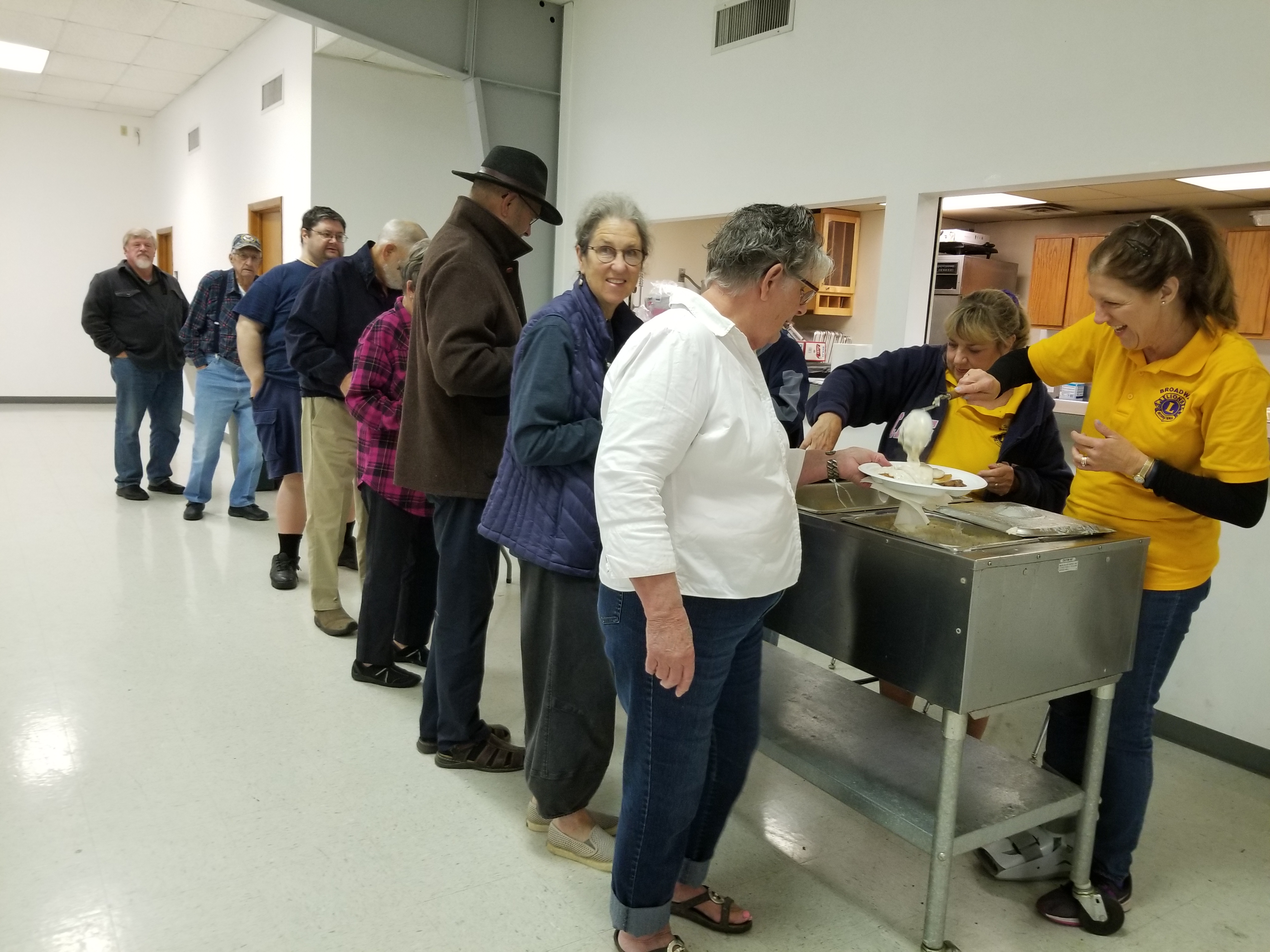
As we age into retirement, many of us would prefer a back seat and just go along for the ride. But volunteers are needed in so many places and ways. Groups at church need helpers for just about any project they undertake or assist with, such as “Backpack Programs” which provide food for children in homes where they may not get very nutritious meals on weekends or other times.
I still remember how stunned I was 20 years ago talking to a local high school class on the topic of eating together as a family. I asked a simple question, “Who does the cooking in your family?” Their responses were mostly along the lines of “it’s each one for himself or herself,” they claimed, and I believed it. Many had afterschool jobs or parents who worked late into the evening.
Some churches offer food pantries or clothes closets—a great way to not only help with a need, but to meet members of the community who might have special needs. Other volunteer opportunities: helping at Thrift shops, reading to those who can no longer see very well, volunteer receptionists at hospitals, retirement centers, and nursing homes.

Scout leaders can use help—even if you no longer have children that age—in leading troops, events or helping out with activities.

Which reminds me that so many civic clubs are aging out—and need new blood and younger participants. Some nonprofit agencies and organizations also need office helpers or those who are willing to help with one or two day projects—along with long term regular volunteers. Plus, there are always older folks who need rides to church, events, or the doctor— so drivers are in much demand.

My husband is quick to step up to help repair homes that have been devastated by flooding, hurricanes, or tornadoes. But he has also volunteered as a Big Brother, and as a buddy for children at a day camp for children on the autism spectrum.
As retirees, we often use the worn out phrase “give back” for all the opportunities we’ve been given. Ironically, giving back often succeeds in giving us more blessings than we can count. Amazing, isn’t it?
***
What volunteer opportunities have I forgotten here?
What are your favorite ways to “step up”?
Your stories or experiences? Send to anotherwaymedia@yahoo.com or Another Way Media, P.O. Box 363, Singers Glen, VA 22834.
Another Way is a column by Melodie Davis, in syndication since 1987. She is the author of ten books. Another Way columns are posted at FindingHarmonyBlog.com a week after newspaper publication.
Another Way for week of September 23, 2022
My Three Daughters’ Meal Planning Tips
Third in a three-part series on keeping family dinner. And don’t miss the cookbook giveaway offer at the end.
When I asked my oldest daughter how she does meal planning, she laughed and said it was like, “Oh dear, it’s 5 o’clock! I have no idea what we are having for supper.” She easily handed off the meal planning crown to her younger sisters, who we’ll hear from in a bit.
Michelle does have a “retroactive manner” of getting ideas for what to fix next. She faithfully keeps track of what she’s made recently on a calendar, which helps her dig back in the fridge to use up leftovers before they spoil. Plus, as she looks back over a month’s meals, she spies things that are timely to make again. They have three sons, ages 4, 6 and almost 9. “I basically shop for staples every week,” Michelle adds. She keeps black beans, rice, lentils and frozen veggies always in stock. Her husband Brian cooks breakfast for the boys and washes dishes. AND cleans the house.

Tanya, our middle daughter, and her husband have two boys, ages 9 and 6. She writes: “We have a three-week rotation of meals. I keep a notebook with shopping lists for a running calendar of dinner entrees. Sometimes I plan two weeks out (but only buy groceries for the immediate week). All I put in the notebook is the main course: Sun Aug 28 Lasagna; Mon Aug 29 Grilled Chicken; Tues Aug 30 Sloppy Joes, and so on. The notebook helps me make sure I buy necessary ingredients to make entrees, for things I don’t usually keep on hand. It also reminds me of how many/types of proteins to buy (ground beef, usually two packages, chicken tenders, cottage cheese, etc.). I can also look back and see, oh we haven’t had chili for three weeks, we’ll have that again this week. We generally grill something twice a week in the summer. We buy takeout pizza every other Friday night.”

She points out “a big factor in meal planning is thinking through the family schedule for the week. Since Jon gets home earlier, he can now cook about 30 percent of our repertoire and make a few entire meals, plus get started cutting chicken up or put things in the oven if it’s something I made early morning (meatloaf, chicken that has been marinating, etc.). If we have baseball, Scouts, or other activities in the evening and I have to commute, I schedule a meal that Jon can make all by himself or a frozen lasagna I made previously. More extensive/laborious meals I usually plan for Saturdays or Sundays when I have time for things like lasagna, fajitas, stuffed peppers. I generally keep a stock of side dishes like rice, pasta, frozen vegetables which I don’t plan in advance.”
Youngest daughter Doreen says she and her husband Ahmed have tried the meal app, “Eat This Much” which was originally designed for very strict portions and diet requirements. “It’s a good tool for meal planning—including shopping lists, but if you’re not good about sticking to it (by eating out or eating other things in your pantry because you’re ‘not in the mood’ for that food) then you end up with more groceries than you need. So I’ve utilized it more for meal ideas for the week and pick and choose which ones I do.” She also checks what’s on sale in weekly circulars. “Sometimes there are whole meals on sale: you buy a pound of ground beef, and get the taco shells, taco mix, lettuce, tomato and cheese for like a dollar each.” She also has a list of entrees she makes and checks occasionally for things they haven’t had in a while.
She adds, “I also enter oddball stuff on my phone that I don’t buy every week but don’t want to forget like toilet paper, salt, toothpaste, etc.” Michelle also uses a free app “Out of Milk” and appreciates that it saves what she’s put on the list in the past, “so sometimes I can just run through the old items and check them off as ‘yes, I need that.’”

I am happy that my daughters manage as much cooking as they do, and all working full time—and they mostly figured out their own preferred routines—with not much help from Mom. I do love it when they call with a cooking question—and I’m reminded of the busy busy lives they lead.

I’m giving away FREE copies (as long as they last) of my 2010 cookbook Whatever Happened to Dinner: Recipes and Reflections for Family Mealtime. Just pay shipping of $3.00. Send cash or check and your request to: Another Way, P.O. Box 363, Singers Glen, VA 22834. Or email me at anotherwaymedia@yahoo.com
Another Way for week of September 16, 2022
Figuring Out What to Have for Dinner
Second of a three-part series on organizing meal planning.
Perhaps you’ve seen the meme: “Who knew that the hardest part about being an adult is figuring out what to make for dinner every day for the rest of your life.” Yeah.
But if you’ve read my book Whatever Happened to Dinner you know I’m a big proponent of eating together as a family or couple. And I’m not just talking about holidays. I’m talking about the everyday.
My confession is I’ve never been much to plan ahead. I have frequently said I love meal planning, though, during the sweet corn days of August-September. We normally grow three to four plantings of sweet corn which spread out over those months and very often my meal planning is complete when I’ve settled on a meat for dinner—plus sweet corn and tomatoes or green peppers. How sweet it is. (I get tired of corn for supper quicker than my husband, but it does make meal planning a breeze.)

The rest of the year, I am never happy on a given day until I’ve settled on what to fix for supper. And while my husband is a happy griller and helps out that way, he doesn’t cook much else and I’m happy that way too. Truth be told, he messes with my way of doing things—wants a special pan or utensil for specific things and doesn’t know where to find them—and after all these years, I just prefer to cook.
But not plan. I did not teach my daughters good meal planning skills, I must admit. Next week you’ll hear from each of them!
However, this year, after becoming better acquainted with my cousin’s wife, Sharon, which I shared last week, I have been working on doing a better job of planning ahead. And I love it, when I do it!
My meal planning now still boils down to what meat or main dish to have. Stuart is a big meat eater (although he has cut back on servings) but a meal is not a meal for him if there is no visible meat. But, he readily enjoys dishes like spaghetti, taco salad, lasagna and some chicken and rice/noodle casseroles. So when I’ve settled on a meat or main dish, the rest is, shall we say, a piece of cake. (But not for dessert! Cake, cookies, or pie are saved for special occasions and usually we just have ice cream or fruit for dessert, or fruit on ice cream.)
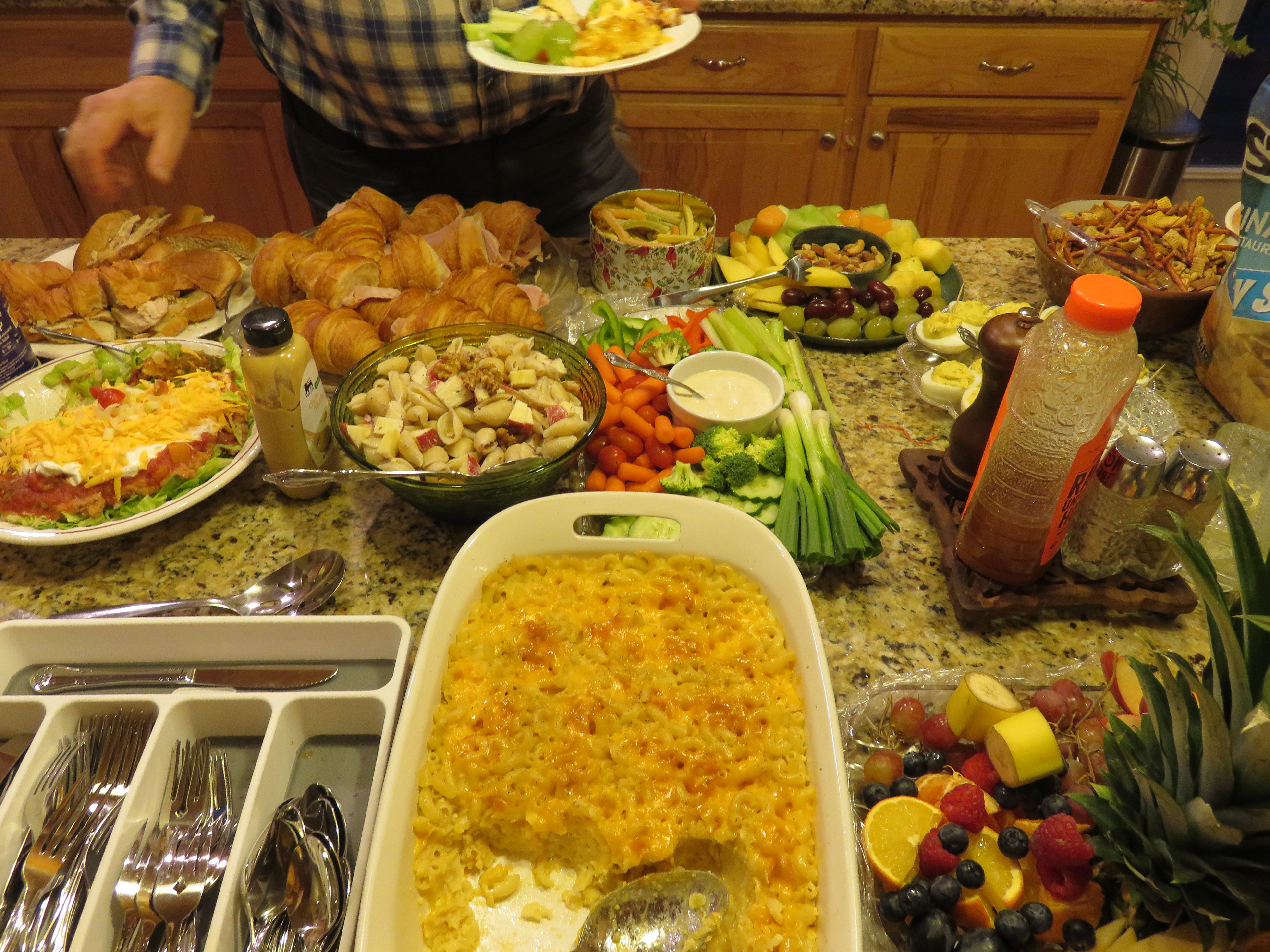
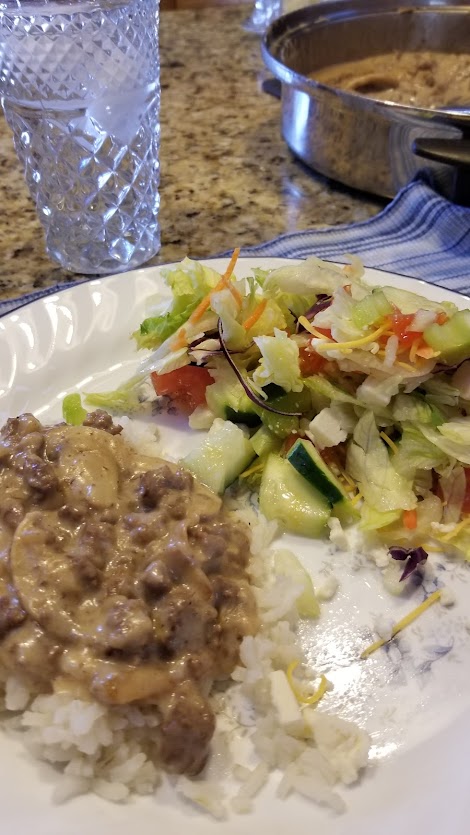
Here in no particular order are some of our go-to meat entrees: pork chops, grilled or baked; meatloaf; pork barbecue; sloppy joes; grilled hamburgers or hot dogs (sometimes he cooks a big batch of these at a time and we freeze for easy meals); country ham (the salty kind); steak or steak and cheese sandwiches; baked fish fillet; a bean and hamburger casserole; Costco roast chicken; BLTs; taco salad; beef roast; hamburger stroganoff; pizza; goulash. For sides we add various veggies or salads, macaroni and cheese, baked beans, mashed or baked potatoes, fried potatoes. I’m sure this sounds way too boring and meat centered for many readers but it works for us. The helpful thing about planning is making a list—which you then have to refer back to.
I must confess we do eat out a lot more now than when the children were home. Which is a pattern I observed in my parents and their siblings—they went out to eat much more often after we left home. Duh.
Speaking of the later years: if you are single or have lost your partner, what then?
Of course, that’s a way different story and I remember when my mother, widowed for 15 years, reverted to often just eating cheese and crackers for supper, saying that’s what she liked. Plus, a bite or two from her beloved chocolate bars. She had her healthy noon meal with others at her retirement facility and often saved entrees or dessert to eat for supper, and that was ok, but gradually she lost weight and became quite frail. Which led to two major falls. Plus, it was not much fun to eat alone in your room amidst the worst of the pandemic.
If you have a companion or friends to share meals with from time to time, that can make up for lack of family. And I hope you’ll look for my daughters’ meal planning helps next week! Bon Appetit!
***
I’m giving away FREE copies (as long as they last) of my 2010 cookbook Whatever Happened to Dinner: Recipes and Reflections for Family Mealtime. Just pay shipping of $3.00.
Send cash or check and your request to: Another Way, P.O. Box 363, Singers Glen, VA 22834.
What are your go-to meals? How do you do meal planning?
Comment here or send to anotherwaymedia@yahoo.com or Another Way Media, P.O. Box 363, Singers Glen, VA 22834.
Another Way is a column by Melodie Davis, in syndication since 1987. She is the author of ten books. Another Way columns are posted at FindingHarmonyBlog.com a week after newspaper publication.
Another Way for week of September 9, 2022
Thousands of Recipes Waiting to be Tried
First of a three-part series on keeping family dinner.
About 12 years ago, I wrote about the importance of keeping family dinner in a book we called Whatever Happened to Dinner?
Family Dinner Day (September 26, 2022) is a national effort to promote family dinners as an effective way to reduce youth substance abuse and other risky behaviors, as researched by The National Center on Addiction and Substance Abuse. I contend that keeping family dinner—at a table (or kitchen island)—is still a habit that older couples (like my husband and I) benefit from.
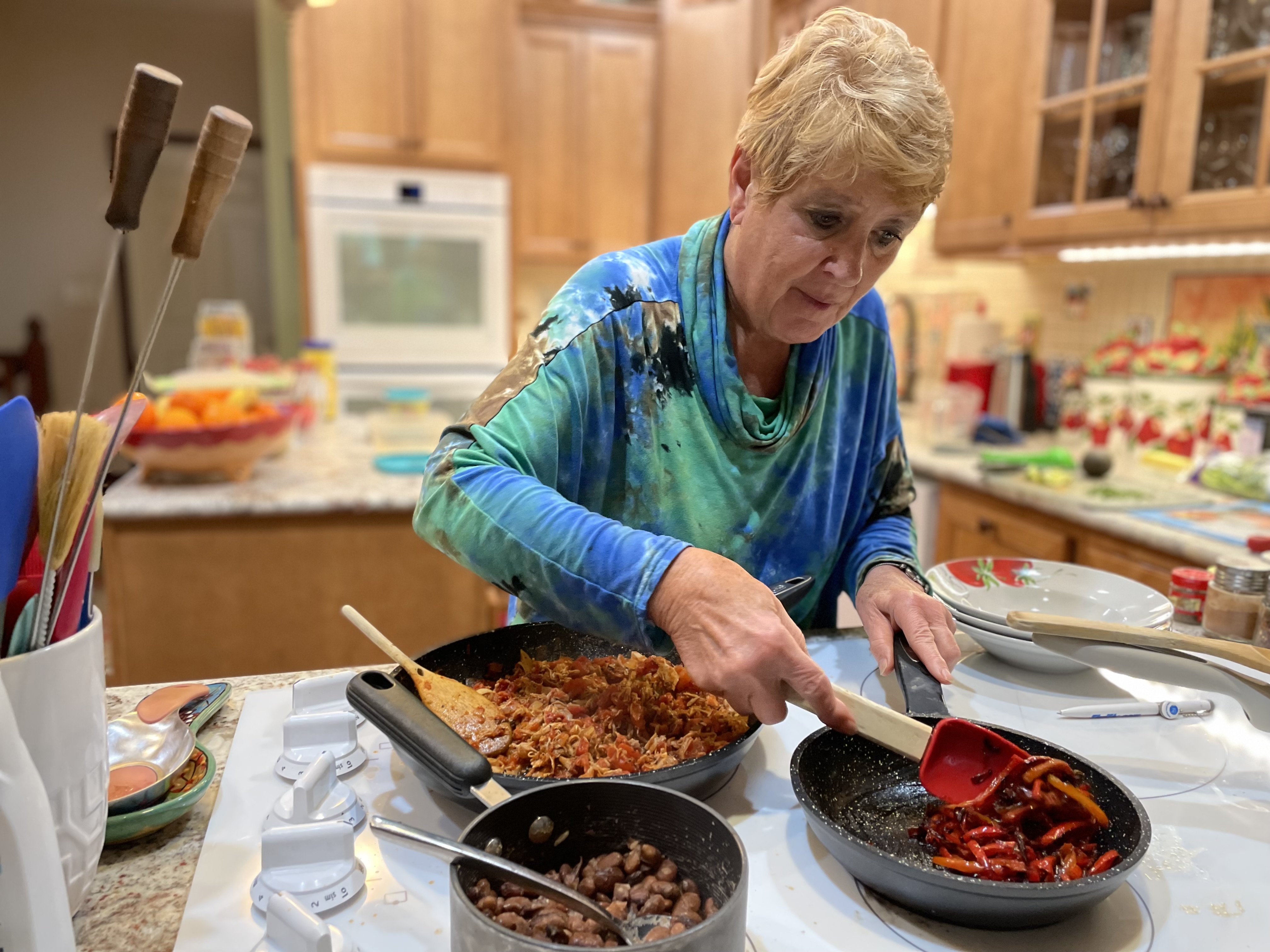
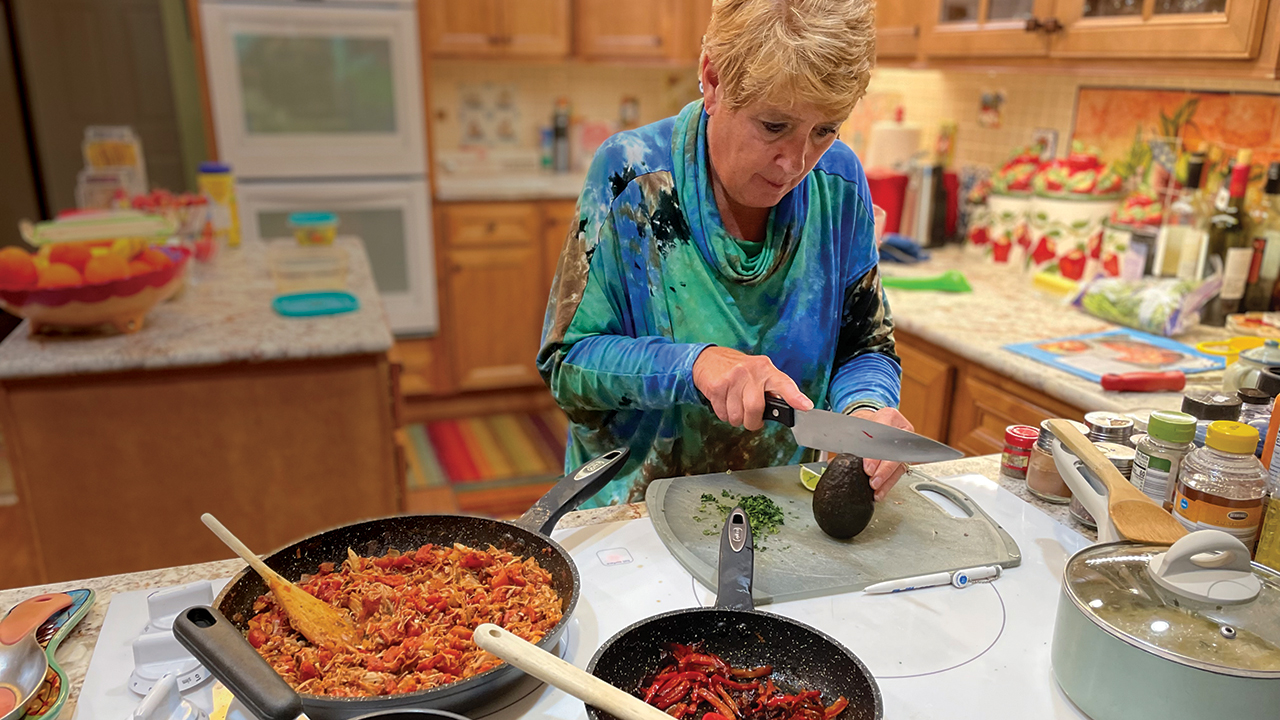
Last year I became better acquainted with my cousin’s wife, Sharon Risser. She allowed me to share her passion for cooking—a different meal or recipe six days a week—in a Mennonite magazine which I have written for occasionally, Anabaptist World. They published it this summer and I’m sharing a shorter version of her story here for column readers.
Sharon is married to my first cousin Doug, and is a former nurse. She is part-time manager of Waterford Crossing Condo Association, at a retirement facility she helped launch in 1999 in Goshen, Indiana. Doug and Sharon live in a condo on the campus and share meals almost every evening with Sharon’s 90-year-old father, Charles Shenk, who lives across the street. The Rissers have one son, Jay, and two grandchildren, Jaxon and Teagan. The Rissers opened their home to us for a place to stay as we visited my mother when she was in her last months.
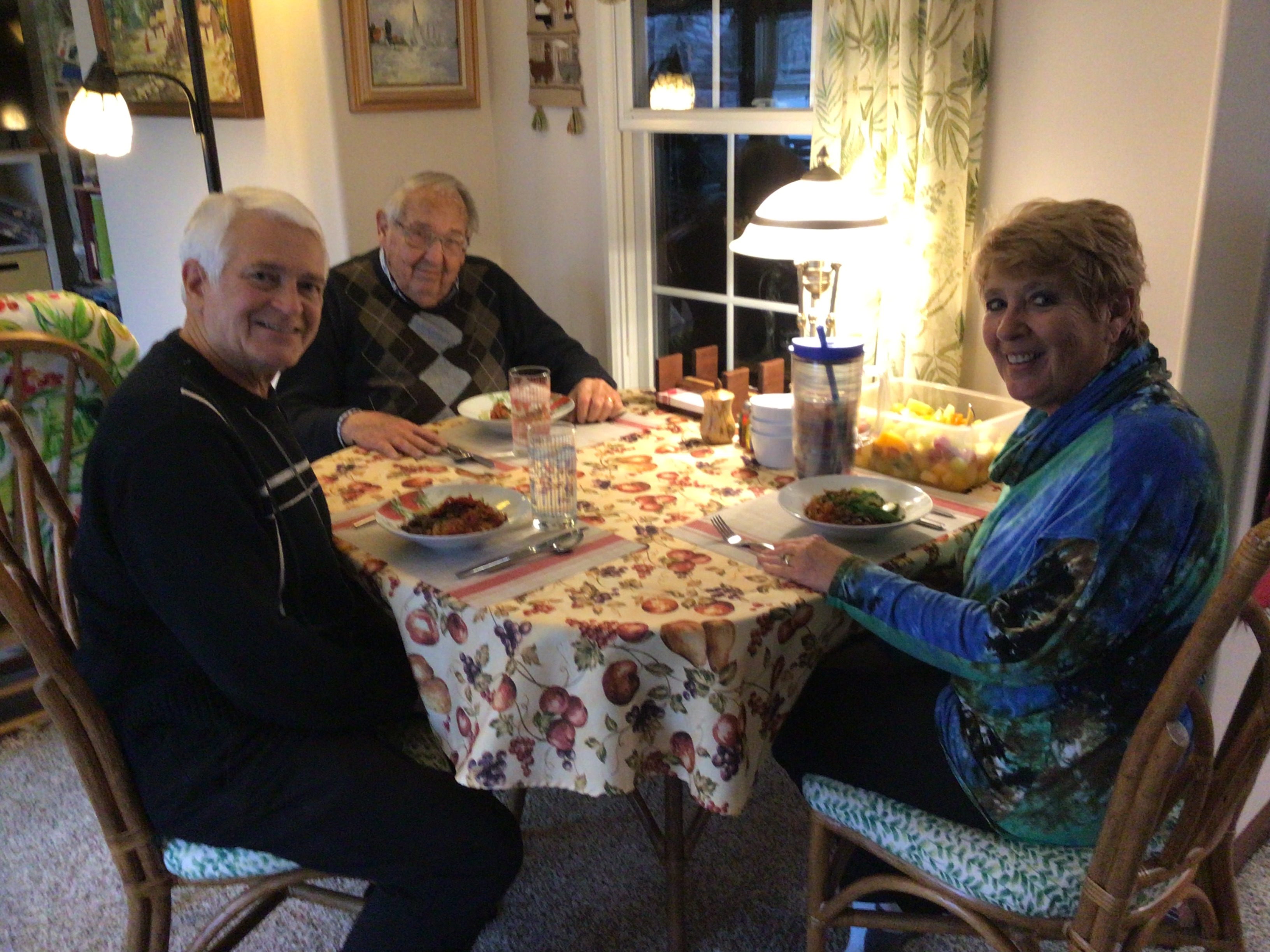
When Sharon showed me a stack of recipes roughly three inches tall which she was planning to try from various magazines, I was almost dumbfounded. She said she normally cooks a different recipe every time she cooks, usually six times a week.
Sharon’s adventures in cooking began when her mother offered her a “job” at the age of twelve, planning and cooking each evening meal, cleaning the house, doing the laundry, plus ironing. “I’ll pay you $20 a week,” her mom proposed, and Sharon thought that sounded like a lot of money, which it was, in those days.
Sharon wanted to go to college and become a nurse. While her parents encouraged this, they said she’d need to earn some money for college. Opportunities were scarce, of course, for a twelve-year-old to earn any real money. Her mother worked “pretty much full time at her own bridal business,” according to Sharon.
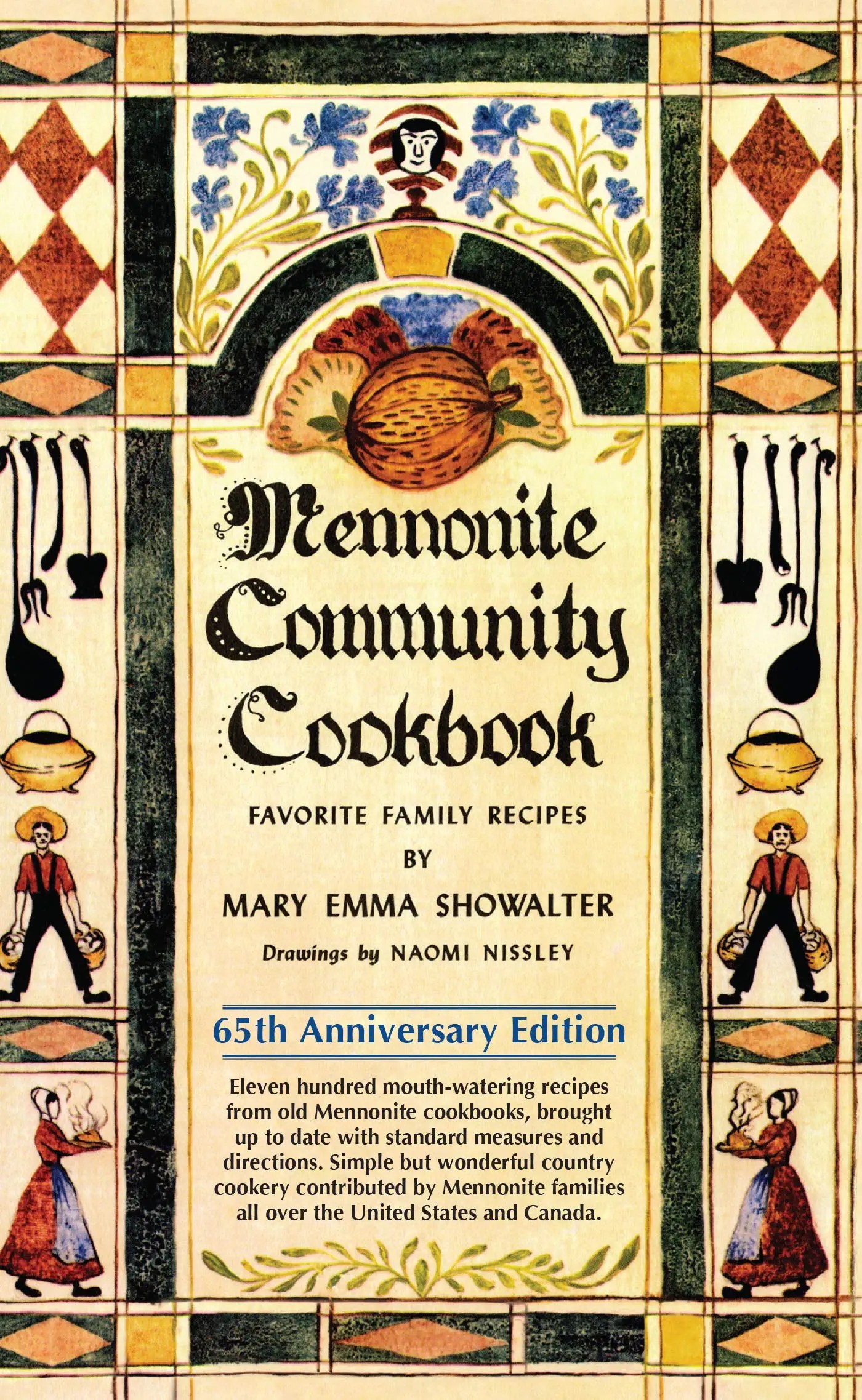
So, Sharon scanned her mother’s cookbooks such as Mennonite Community Cookbook, Good Housekeeping Cookbook, Betty Crocker, and others. “I liked the cookbooks with pictures in them so I could see what something looked like,” she recalls. She’d plan menus by Thursday evenings so her mother could get the needed groceries on Friday, which is how Sharon operates to this day. She’s a diehard menu maker with a kitchen full of spices and flavorings I’d never heard of.
She started out making things like meatloaf, sloppy joes, or spaghetti. She knew her brothers might complain if she made a casserole with “food all mixed together.” But Sharon has widely expanded her horizons and meals since those days!
Sharon throws away almost all the recipes she’s cooked: “If I kept everything, you’d call me a hoarder.” She estimates she has thousands of recipes she’s pulled from magazines she wants to try: “I have about 10 three-ring-binders holding the untried recipes!”
When I probed for her most favorite recipe or dish to make?
“The next one,” was her final answer. Here’s one recipe her family enjoyed for a fish dish (adapted slightly from Eating Well magazine).
Middle Eastern Spiced Tilapia (not pictured here)
Mix together ½ teaspoon each of: salt, ground coriander, turmeric.
Add 1/8 teaspoon ground cinnamon. Apply this mixture to one side of 4 (6 oz.) tilapia fillets.
Place the tilapia on a sprayed baking sheet.
Melt 1 tablespoon butter and add to it 1 tablespoon lime juice.
Drizzle the butter mixture over the tilapia.
Place in the oven under the broiler for 6 – 7 minutes until fish is flakey.
Garnish with cilantro leaves and sliced limes. Feeds two to four. One serving is 185 calories.
***
Do you plan menus? I’d love to hear about your practices! Comment here or share with me at anotherwaymedia@yahoo.com or Another Way Media, P.O. Box 363, Singers Glen, VA 22834.

Another Way is a column by Melodie Davis, in syndication since 1987. She is the author of ten books. Another Way columns are posted at FindingHarmonyBlog.com a week after newspaper publication.
Another Way for week of September 2, 2022
Some True Cat Tales
So, if you’re not a cat person, you may want to skip this and read about the weather. Or something.
But I loved the picture a friend painted of her two cats recently. Not literally, but she lives alone and is very fond of them, whose names I’m forgetting. Recently Glenda has been struggling with her 14-year-old feline who was fighting her as she attempted to give him his antibiotic for an ear infection. She showed me the bruises and scars on her arms—she is probably fifteen or so years older than me and as we age, such things show up so prominently.

The cat resists the medicine of course and since this friend lives alone, she has a hard time holding the cat wrapped in a towel in one arm, opening his mouth and inserting the medicine without him biting her and trying to get away. Yeah. Sounds like an armful. But her other cat makes up for it right now, who jumps in her lap and gently puts both paws on Glenda’s face: “It’s like she’s giving me a hug,” Glenda smiled. “And then she licks my face.” That part is not for me, but she loves it and I’m sure she finds great company with these cats—unless there is medicine involved!
It made me think of one time when my husband and I were just dating and he came down with flu. He was feeling lousy. He lived by himself in a small mobile home. At the time he had a huge male cat, Tanjo, who could be as fierce as the cat in the story I just related.
So I made some soup or something and took it over to Stuart’s trailer and knocked on his door. He called “Come in,” but when I opened the door, Tanjo instantly dashed to the door hissing, not about to let me enter. I slammed the door, scared! Tanjo did calm down, and looking back, he was probably just trying to protect his owner who was sick. Tanjo and I eventually made friends. [Sorry to say, we have no photos of the actual Tanjo.]

When our daughters were small, they all loved cats, especially baby kittens. So for a period of years, we had cats who spawned litters (I know, shame on us for not spaying them right away), but we were always able to find homes for the baby kittens when we advertised.
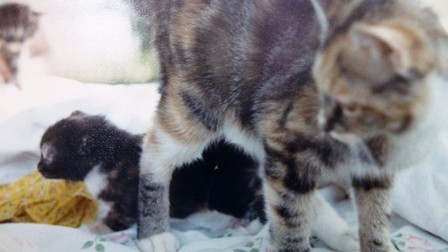
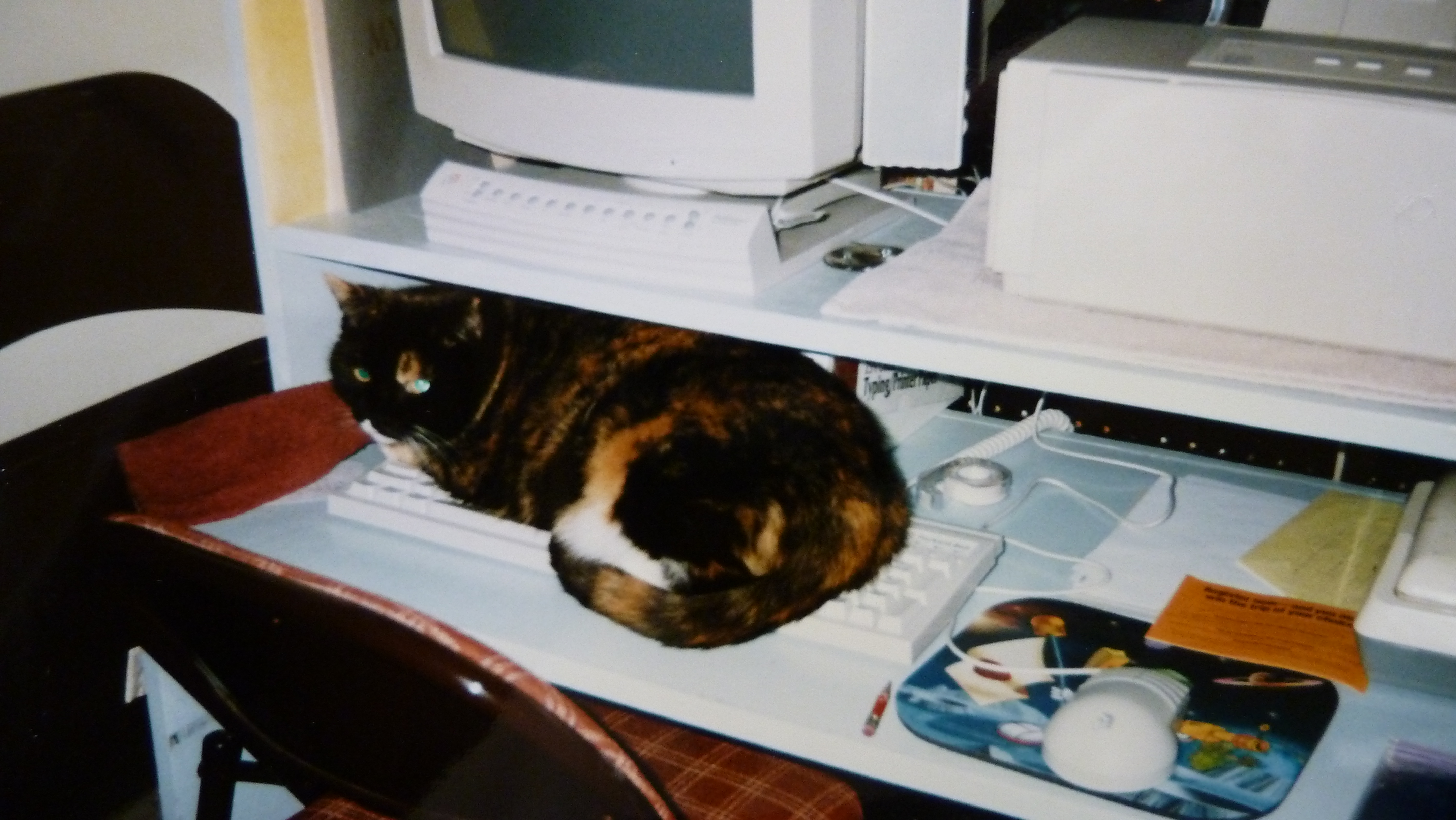
Eventually our daughters settled on one favorite cat each; my oldest daughter Michelle became very attached to one she named Boots. Boots was a calico cat and very loving and gentle, especially with Michelle.
Our middle daughter, Tanya, claimed a beautiful sealpoint cat, Bubbles. She had beige fur and black ears and looked almost Siamese, but with a better disposition.

Doreen’s favorite cat came much later when she was living with us after college and working at a bank. A friend of hers knew of an orphaned kitten that Doreen brought home and fed from a dropper. Doreen named her Paisley. When Doreen moved to another state to pursue a master’s degree, Paisley claimed my husband as her favorite, and loved riding around on his shoulder.

My true love in cats was a male cat named Riley, who also needed a home. He was about eight when we got him and I fell in love at first look: long white fur, beautiful blue eyes, and a gentle and loving disposition.
He was amazing but we couldn’t let him outside because the previous owner had him declawed. Late in his life and with health failing, we left him pad about the backyard one evening for fresh air.

The neighbor’s dog is peacefully next to Riley. We were astonished.
To my husband’s amazement, a neighboring dog who was visiting, completely held back and didn’t even try to chase him. Soon after that sweet Riley died at home from old age.

Those are my cat stories! I understand National Cat Day is October 29: not in celebration of Halloween, but as a reminder of so many cats needing homes—and a reminder for owners to get them spayed.
God surely enjoyed all the world’s amazing creatures!
***
I’d love to hear your cat or dog stories!
Or maybe your offspring wanted to have hamsters or fish or gerbils in their rooms. That’s fun too, ha! Getting up in the middle of the night to search for a missing hamster?? Your story?
Comment here or write to me at anotherwaymedia@yahoo.com or Another Way Media, P.O. Box 363, Singers Glen, VA 22834.
Another Way is a column by Melodie Davis, in syndication since 1987. She is the author of ten books. Another Way columns are posted at FindingHarmonyBlog.com a week after newspaper publication.
Another Way for week of August 26, 2022
The World is So Big, So Amazing: Nature Tidbits
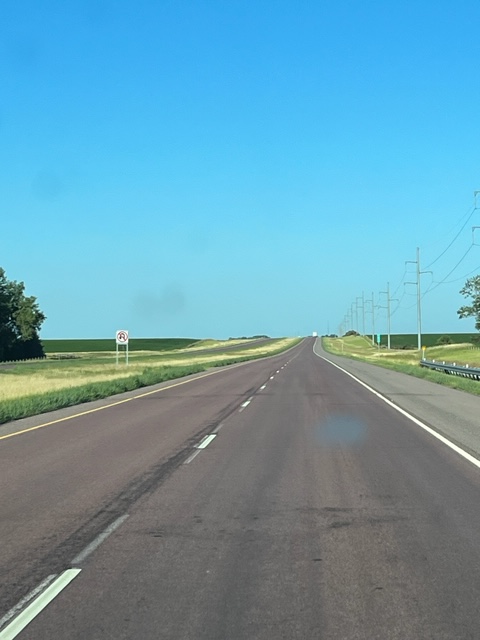
Recently I wrote about the almost-5,000 journey my husband and I took this summer. This column is not about the sights we marveled at. Perhaps you could say this is about the things we didn’t see.
We didn’t see nearly as much traffic as we see in the east. The west is so huge, the U.S. is so vast—and indeed the world beyond the U.S. is even more massive.
And remember this: the earth is covered by about 70 percent oceans/water. Land portions cover only 30 percent. What a planet we live on! I love exploring the small parts we have been able to visit.
The Bible tells us to take care of the earth. It’s fun to ponder why God created the world. My friend and former seminary president Sara Wenger Shenk writes in her recent book, Tongue-Tied: Learning the Lost Art of Talking about Faith, “Surely God didn’t create the world out of some sense of necessity.” Think about some of the wondrous things she mentions: The melodic bird music that fills the air on a spring morning, the clouds that “boil and throb with flame and darkness, the neon colors and frills of all manner of marine life flashing their iridescence through blue green waters.” Sara concludes, “I imagine that God made this all out of pure joy.” She says more but that is the gist (p. 231).

We may wonder what God thinks now of this creation and the difficulties we find ourselves in regarding how we are taking care (or not) of this earth.
A blogger—and a nearby neighbor—shared a story recently of how she was feeding good fresh milk to pigs. And why.
They have a mini-farm and were milking two cows because they enjoy fresh milk and Jennifer has learned to make buckets of cheese of various types and names—some I’ve never heard of or seen in a store. I should add they have refrigerators full of cheese as the cheese goes through its aging process.
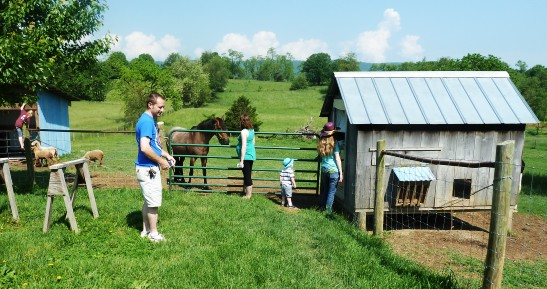
She writes: At first, feeding our fresh, wonderful milk to the pigs felt terribly wrong (it’s hard for me to silence the voice in my head that says I gotta make the most of everything), but it’s not actually a loss. Feeding the milk to the pigs saves on feed costs and goes towards our future sausage, and when I water plants with the whey (or milk!), the nutrients build up the soil. In other words, “dumping” the extra milk isn’t wasteful — it’s just a shift in perspective. Food production is cyclical, and sharing the milk with the animals (and land) is as valuable as using it up directly ourselves. (You can check out her interesting cheesemaking trials and tips at the YouTube channel: jennifermurch.com/youtube/). Eventually they sold the extra milk cow for someone else to have.
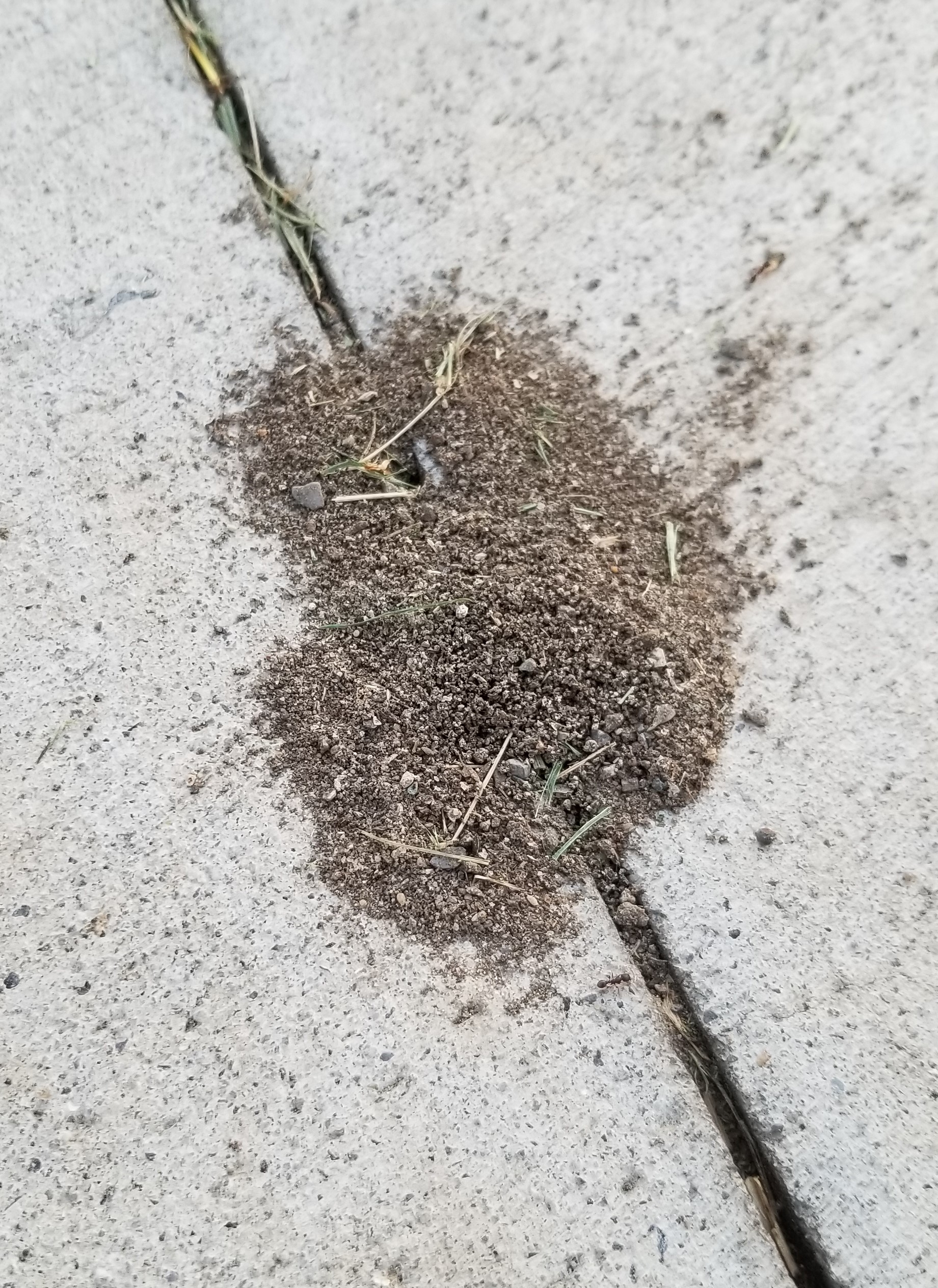
So, I stopped feeling guilty about composting some of our rotting cucumbers and tomatoes, because we can hardly keep up with picking, canning, and freezing everything. We’ve given lots away. But even giving things away becomes time/gas consuming. Composting waste helps replenish the critters that live in—and busily work the earth around and beneath us. The Compost Learning Center (online) put it this way: “Nutrients follow a cycle: soil provides nutrients to plants, plants provide nutrients to animals, plants and animals provide nutrients to decomposers in compost, and these decomposers return nutrients to the soil.”
One more nature story friends shared from a trip they took years ago to Phillip Island off of Melbourne, Australia . They enjoyed watching penguins, and there were bleachers set up near the ocean where visitors could watch the penguins after nightfall—if they (people) were quiet enough! The penguins apparently send out a penguin scout to check whether the human visitors are quiet enough for them to come up to the shore. “During nesting season, they have to return to their nests [in the sand] to feed their chicks,” says one website about the phenomenon. If the humans are too noisy, the penguins refrain from coming to shore for this important job.
How vast is our world! How awesome! I can imagine God smiling at these and many other quirks of creation.

***
What quirk of creation have you pondered?
What do you enjoy in this world?
What part of nature could you do without?
Comment here or write to anotherwaymedia@yahoo.com or Another Way Media, P.O. Box 363, Singers Glen, VA 22834. Deadline: September 2, 2022.
Another Way is a column by Melodie Davis, in syndication since 1987. She is the author of ten books. Another Way columns are posted at FindingHarmonyBlog.com a week after newspaper publication.

 findingharmonyblog