

Another Way for week of April 2, 2021
Let’s Hear it for Spring—and Shots!
(Editor’s Note: Third in an eight-week series on “Let’s Hear It” with thoughts on current trends.)
“Come here,” my husband asked gently, pausing at the side door of our garage. We were getting ready to make a short run to town. “See what’s here.” In spring he has a fit about the flies that hang around the east side of the house, and spends much time swatting flies. So I was expecting to see a swarm of flies.
I looked out the door and saw only a beautiful gray mourning dove turning her head, eyeing us, cocking her head from side to side as if to say, “Well, I’m back!”
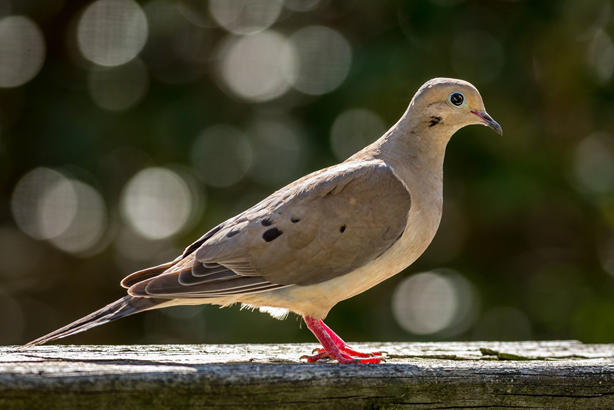
Mourning doves do migrate south in fall from our part of Virginia and return in March or April. She was right on time, a week before Easter. In the Bible, a dove attended the baptism of Jesus at the Jordan River at the beginning of his three-year ministry on earth. Christians consider the dove to be a symbol of the Holy Spirit which came to the disciples 50 days after the death and resurrection of Jesus.
Our dove sat there until we opened the door but I’m sure she will hang around and coo gently from her usual perches on the power line crossing our field, or our front porch. I can usually hear coos as I work in the flower beds and garden. So I was happy to see the dove instead of the flies—a less-welcome harbinger of spring.
This spring many of us are thrilled to be celebrating that the vaccines which we hope will bring Covid under control are more widely available, and to increasing age groups. When my husband and I got our first shots, availability was still rather tight—a month ago—and we’re both in the over-65 age group. So we had to hurry home from a trip to visit my mother in Indiana, in order to get shots after our daughters tag-teamed openings for us. This was at two different CVS pharmacies, about 40 miles apart. Michelle made the application for us online and by the time she tried to get the second reservation, that store had filled all their slots. So she snagged a second location for us.
As I sat in a waiting area for my husband (whose shot came first), I was struck by how those coming to this pharmacy did not appear to be locals. Sure, our communities here are somewhat diverse but not so prevalent in the small town of that pharmacy. I noticed there were Asian, Middle Eastern, African folks in line—some I could tell by the accent. A young woman, about the age of our daughters, had driven her parents—I’m guessing Nepalese or Indian—to this particular CVS from northern Virginia, a distance of about 60 miles. Northern Virginia is very diverse ethnically.
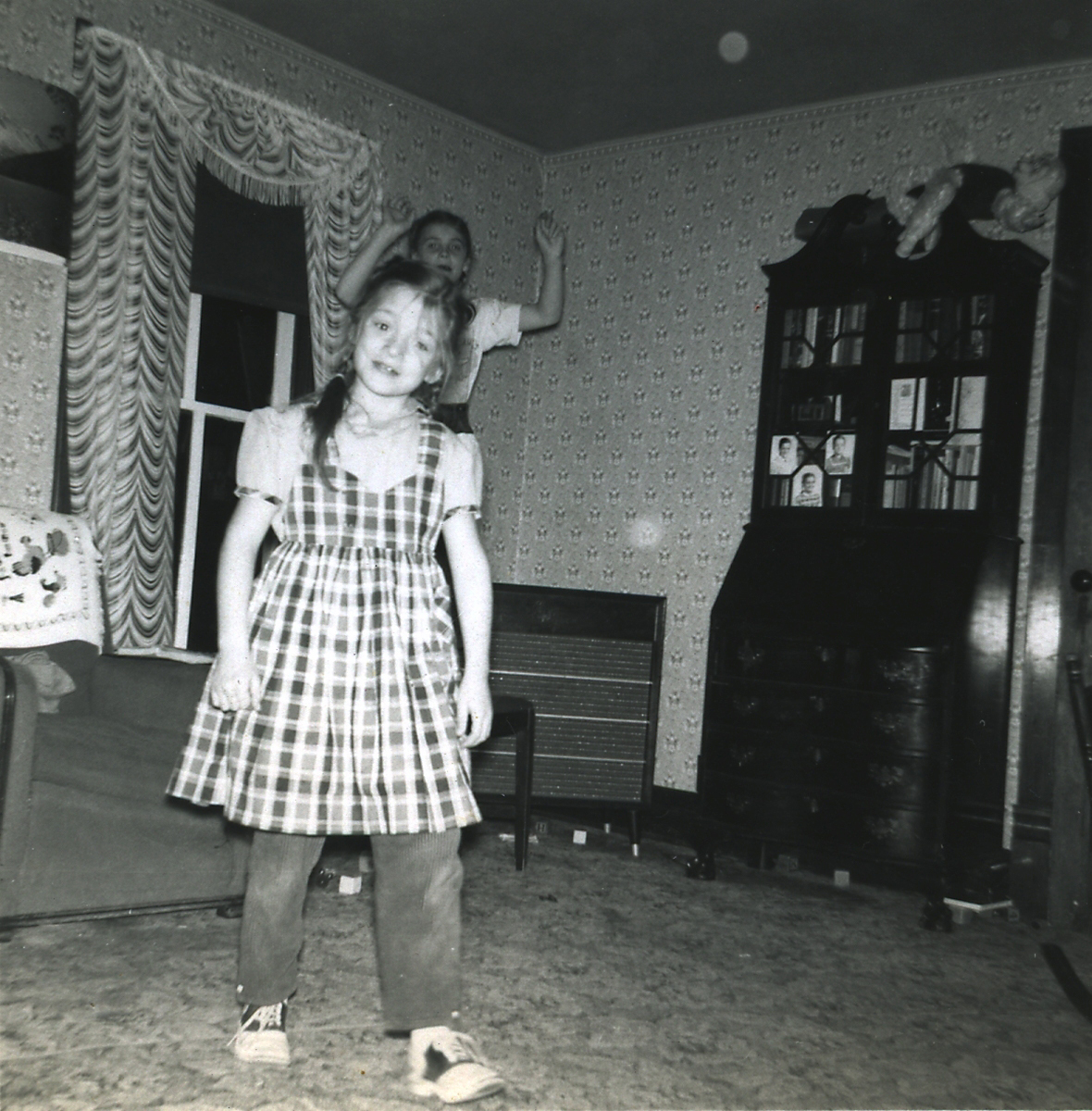
A wave of gratitude, joy, and amazement came over me as I sat there—and slowly a memory came to mind. I was transported back to the early 50s when as a young child I received the small pox vaccination that saved lives in those days. I remembered that shot because the aftereffects on my arm were ugly. It did not heal well and left a big scar for years, although I can’t even see it now!
I teared up as I thought of so many people all around the world lining up for these shots now—filled with hope and prayers for better years ahead as we continue to try and be careful, clean, and conscientious to keep everyone safer. I also thought of many millions of frontline workers who are still serving in dangerous roles taking care of the ill or providing essential services. I am saddened though to know that in less affluent countries, governments do not have the funds to buy the vaccines for their people.
May we celebrate Easter with new hope for life and love for our fellow human beings—sharing the love that God demonstrated in this beautiful season—and praying for those who will be waiting awhile.

***
Have you gotten a vaccine shot? Why or why not?
Your thoughts or experiences?
Comment here or send to anotherwaymedia@yahoo.com or Another Way Media, P.O. Box 363, Singers Glen, VA 22834.
Another Way is a column by Melodie Davis, in syndication since 1987. She is the author of nine books. Another Way columns are posted at FindingHarmonyBlog.com a week after newspaper publication.
Post 4: April 6, 2021
Rewriting things isn’t so bad. That’s where material brightens, comes alive, and gets purged of the dross, as the Bible says.
When I hovered over my word there, “dross” to check for synonyms and make sure I was using the right word, it brought up my writing professor’s favorite word for really poor writing, “rubbish.”
I like that word too. And I will pay tribute here to the unforgettable Omar Eby who truly steered me into better writing and perhaps this career I have loved so much. Maybe he wouldn’t want to own his influence, but for better or worse, he was absolutely one of my favorite professors for having the nerve to use strong words such as rubbish. Omar (as we called our profs by their first names), sadly, had dementia in his last years. At a nearby “cottage” type facility where my church caroled, he seemed to remember me but perhaps he was just being his polite self. He died earlier this year which I wrote about here.

When you reflect on the teachers who have steered you, who stands out? I could name many more: Mrs. Galt, a middle school teacher who submitted an early essay to our very small town paper–and they published it. Miss Hoover, a high school English teacher who frequently read my work aloud in class. Gretchen, an editor in college who said I was writing like I was still in high school, but she steered me well, I think. A magazine editor who said I wrote with “verve.” I loved that. Especially since he paid me frequently: small amounts, but the money wasn’t the important thing. An eventual boss who gave me a chance to …. oh, but I’m getting into my memoir here. We’ll save that for later!!
Any teachers or editors or bosses you want to name?
Sing their praises in the comments.
Another Way for week of March 26, 2021
Let’s Hear it for: Old, Used, Recycled
(Editor’s Note: Second in an eight-week series, “Let’s Hear It,” with thoughts on trends.)
Do you like old? Shabby chic? Vintage? If there’s an opposite to this perhaps its sleek, gray, upscale, modern.
They say Gen Xers and younger don’t go so much for old and antique and yard sale finds. What things are precious, and what things are just old?
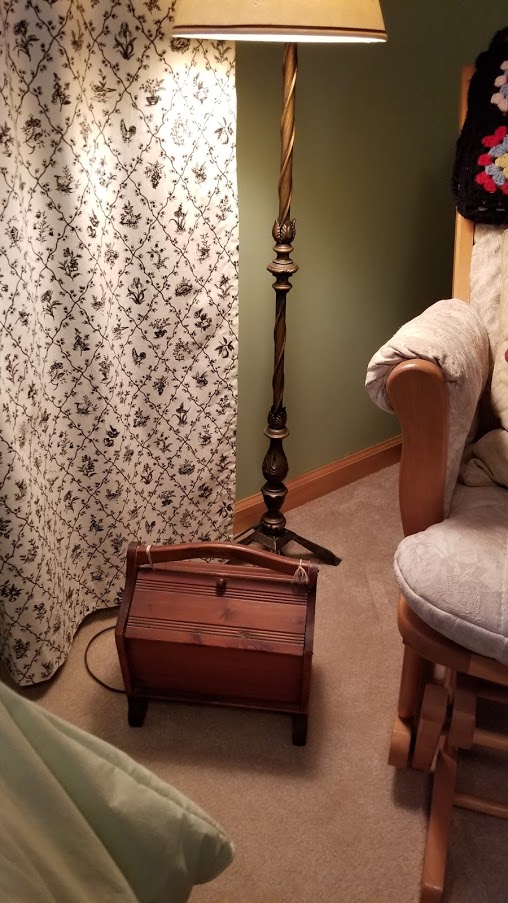
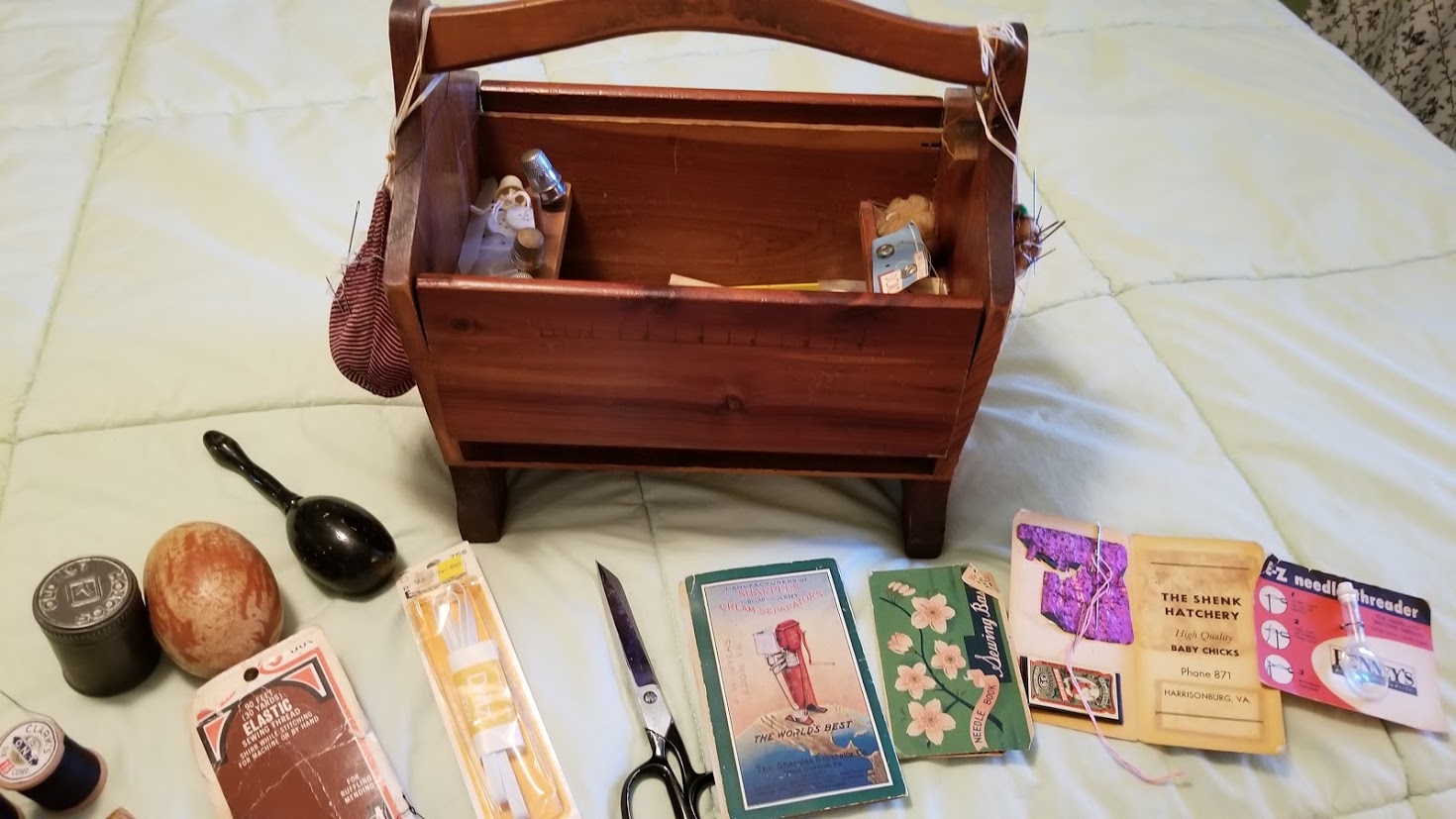
I have an old sewing box that is very cute, but I have absolutely no idea what to do with it other than keep it in the guest bedroom. It was a keepsake from my husband’s Aunt Ressie. We have a lot of those from Aunt Ressie because she married very late in life and had no children. The nieces and nephews—and then her great nieces and nephews—were her kids. She bought stuff for them every Christmas until they reached the age of maybe 10 or 12. The sewing box is beautiful and I’m guessing it was something that was passed down to her. It has old vintage wrappers of the tiniest needles, wooden spools, and darning eggs.
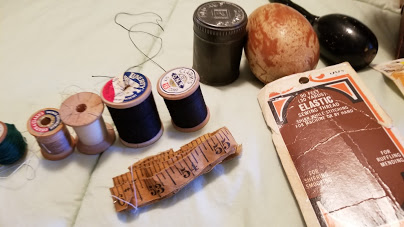
Things that bring memories are hard to let go of or pass on. A friend, Ronda, recently posted this comment on Facebook along with pictures of two cuckoo clocks. They moved to a different home last year in a rough year when she also lost her beloved mother.
“My dear Hubby hung two cuckoo clocks. The first one was my grandfather’s, my mother’s father’s clock. It’s old but I don’t know how much it’s worth. Priceless to me. The second one, is more valuable as it is handmade from the clock makers in the Black-forest, Germany. I watched my parents pick it out and I listened to them tell one another how much they liked the love birds. The trip down the Rhine River with my parents will always be a treasured memory and this clock represents that lovely memory. A few minutes ago, it cuckoo-ed eight o’clock for the first time in our home. I laughed out loud. Who knew I would love cuckoo clocks?”
We have a friend who had a piece of wood from an old buggy harness called a “wagon singletree.” He loves antiques. He asked my husband to use a drill press to make a hole in it to create a light fixture for his kitchen featuring upside down colanders. You may have seen such. It turned out pretty cool. Maybe I’ll think of a special use for the sewing box.
I remember interviewing a favorite professor for a radio program I worked for. I was probably in my late thirties. By that time he was in his early 60s, Something he said in that interview stuck with me. He wanted to get out of his rut as a college professor and wanted to see how different people lived. He took a sabbatical and worked in a Sears store in their stockroom. Some of the coworkers began to think he was a lackey for management. We were talking about acquiring things and he said what he was about in his sixties was getting rid of things, paring back, not buying more.
I feel like I’m somewhat at that stage of life. Especially this past year of the pandemic. New clothes seemed unimportant, especially in retirement. I’ve pondered how to cut back on what we have. I even hate to throw things away that have only been used one time—like the Styrofoam carryout boxes from a restaurant. If I can wash them and get a second use out of them, that makes it feel more worthwhile. Yet I don’t want to fill my cabinets and drawers with used Styrofoam containers. My favorite thing to do is fill them with food to pass on to my elderly neighbors.
P.S. May we all keep a sacred and holy Good Friday today. Blessings!
***
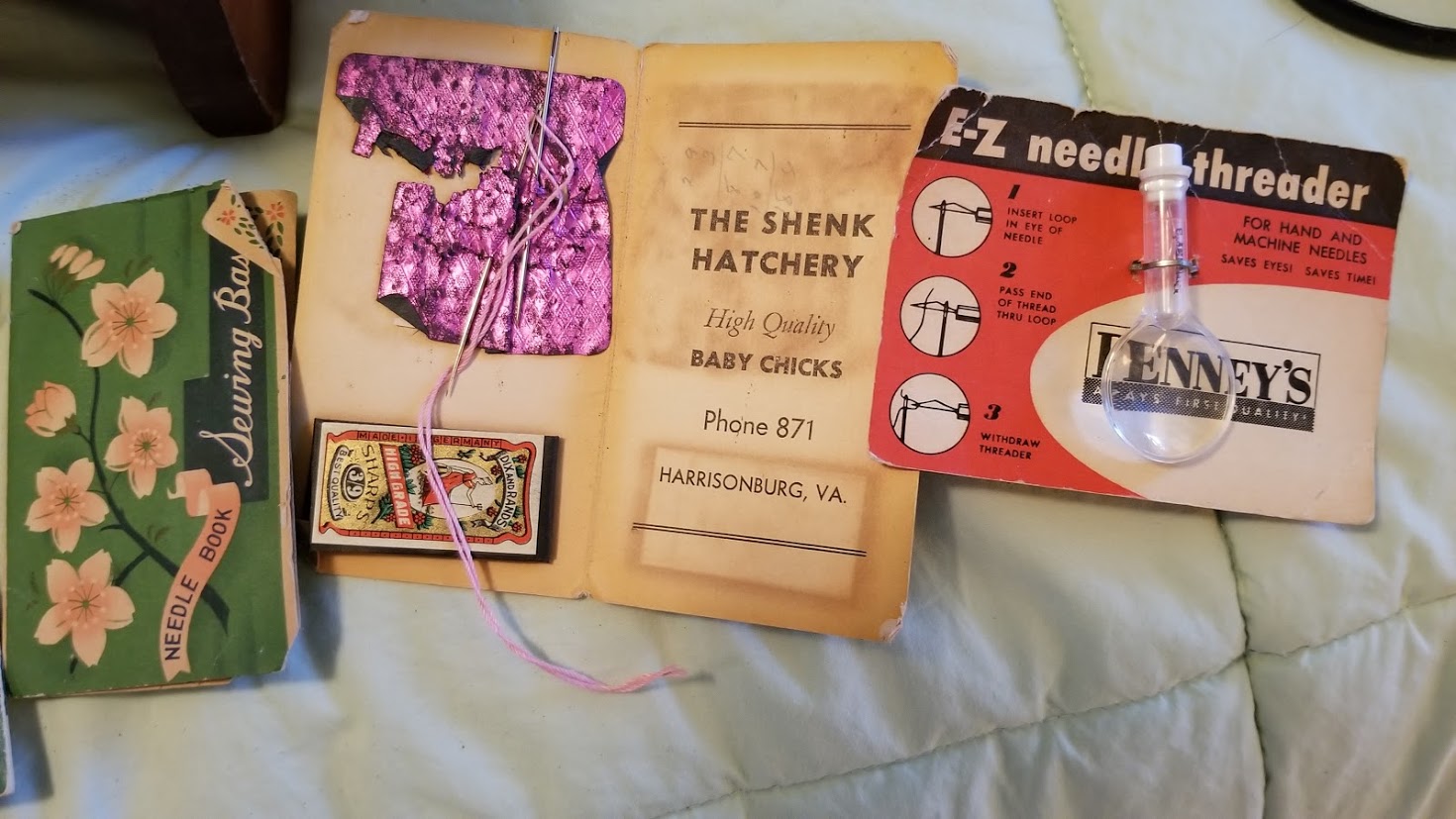
Do you like old things? Do your children or grandchildren?
Are they precious mementos, or junk?
Do you lean toward wanting to sell things, or just give them away to family?
I’d love to hear comments here or send your own stories to anotherwaymedia@yahoo.com or Another Way Media, P.O. Box 363, Singers Glen, VA 22834.
Another Way is a column by Melodie Davis, in syndication since 1987. She is the author of nine books. Another Way columns are posted at FindingHarmonyBlog.com a week after newspaper publication.
Messing with Memoir
March 28, 2021
Blog post 3
During this past year of mostly hibernation … um pandemic, I wondered if I could use some of my “social distancing” time to truly tackle this employment memoir. I decided to work on what is an unexciting part, the chapter by chapter description of what I hope to put in each chapter. I had set a goal of getting that basic proposal including chapter descriptions together by a certain deadline. How would I cram 43 years into say, 50,000 words—the current going number of words for nonfiction books of this type, according to my former boss.
And you know what? It was actually fun and stimulating to see that I could do this and wrote at least five chapter descriptions last night to keep me awake. Overall the project has kept me enthused and happy, a wonderful thing in these dark days of The Seclusion.
I think that knowing I have done this part before with modest success—writing chapter descriptions for book proposals—fuels my imagination and energy for this mundane part of nonfiction book writing.
In talking to a novelist recently, she expressed how amazing it would be to not have to have the book finished before submitting it to a publisher, as is more routine in novel writing.
So I will keep on my journey, one word, one sentence, and hopefully one catchy paragraph at a time.
In case you’re curious, here’s what I wrote for Chapter 4, see sample below. Keep in mind that outlines can always change.

Chapter 4 When Mennonites Almost Took on Charles Stanley
The Sunday morning program “The Mennonite Hour” went off the air in 1978, after seminary professor and pastor Art McPhee served as speaker for a couple years. We launched a 2 ½ minute radio program for weekday drive times, appealing to a younger and more diverse audience. The name we landed on was perfect and brilliant, until it wasn’t—and how that snafu came out. Also, Mennonites made good use of production dollars by repurposing and re-releasing numerous successful series of Choice radio spots. The spots were Dr. David Augsburger’s brainchild, delivered in his classic radio bass. His ongoing radio presence continued to help turn Augsburger’s books into bestsellers, some by non-Mennonite publishers like Moody Press.
Can you guess what happened?
Some secrets will wait for the book to launch and I hope to include lots of fun insider stuff.
Comment below!
Another Way for week of March 19, 2021
Let’s Hear it for: Small
(Editor’s Note: Another Way launches an eight-week series on “Let’s Hear It” with thoughts on trends.)
We were shopping for a different truck last year after my husband’s faithful 1992 Dodge Dakota pickup could no longer pass inspection. It had rusted out underneath and the body shop/mechanic who had earlier worked on it to keep it going another few years, said that this time he just wouldn’t risk it—it was not fixable.
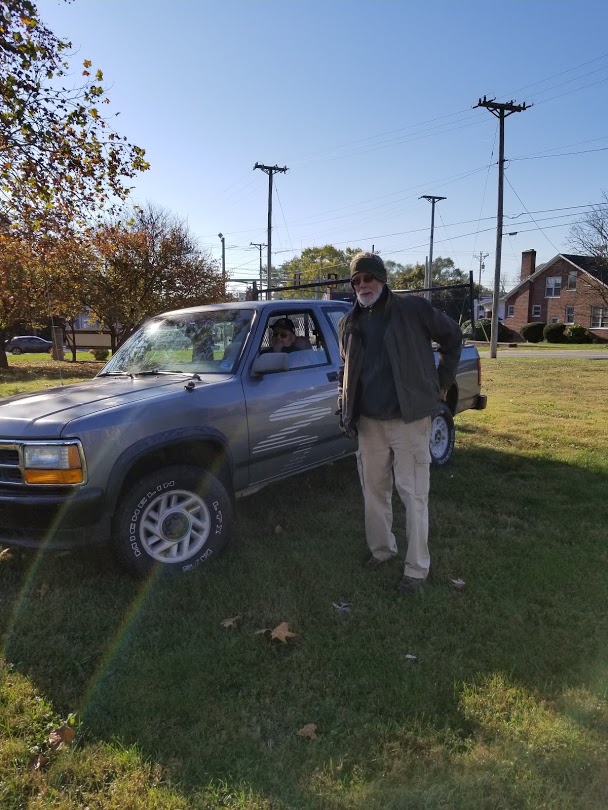
(While we’re at it, let’s hear it for state inspections of vehicles, which keep us all safer on the roads, right? I know some states have done away with these annoying, yet safer-vehicle measures.)
I basically hate shopping for vehicles because it is so overwhelming and you suffer from massive sticker shock at every dealer you visit. The fact that our roads in the rural area where we live had been pretty much taken over by ever-bigger monster trucks of the pickup variety had not really sunk in. Oh, I saw them around town and my husband growled at that from time to time, but as long as they stayed on their side of the ever-shrinking white or yellow road lines, I was ok. If they took off roaring from a stop light and dirtied our air with a bunch of extra diesel fumes, well, then I would get up in arms about that. But if a guy or gal wants to drop $75,000 on a huge pickup to pull a travel trailer or boat or whatever, well, that’s their business.
Yes. $50-75,000 was the going price—way more than we paid for our first home. I also remember the heart attack I had when we bought his old ’92 truck (in ’94). Used, they were asking around $12,000. I about coughed my way off the truck lot, but ultimately shrugged my shoulders and Stuart went for it. Suffice it to say we got our money’s worth—some 26 years’ worth. About $444 a year, or $37 a month, not counting repairs and maintenance.

Speaking of breaking down prices to monthly or yearly totals, who signs seven-year (84 months) car or truck loans? That’s almost a mortgage for a vehicle. Many financial experts say if you can’t pay for a vehicle in three years, you need to shop for something more affordable.
I was reading an article on the size of pickups, detailing how hard they are to park, you need a ladder to climb in, unsafe to see shorter pedestrians (wheelchairs or kids) crossing intersections, and noting that too many don’t seem to be actually used for pickup type activities. The ones that really get my husband’s goat are the ones that try to get by with “farm use” cheaper tags on them. For real!
Now, not to be all judge-y of the folks who actually need the large cab pickups (and we have a nice two row cab pickup now, which would easily have held our family of five). This time we got a used 2006 Dodge Dakota which was quite nice and within our budget.
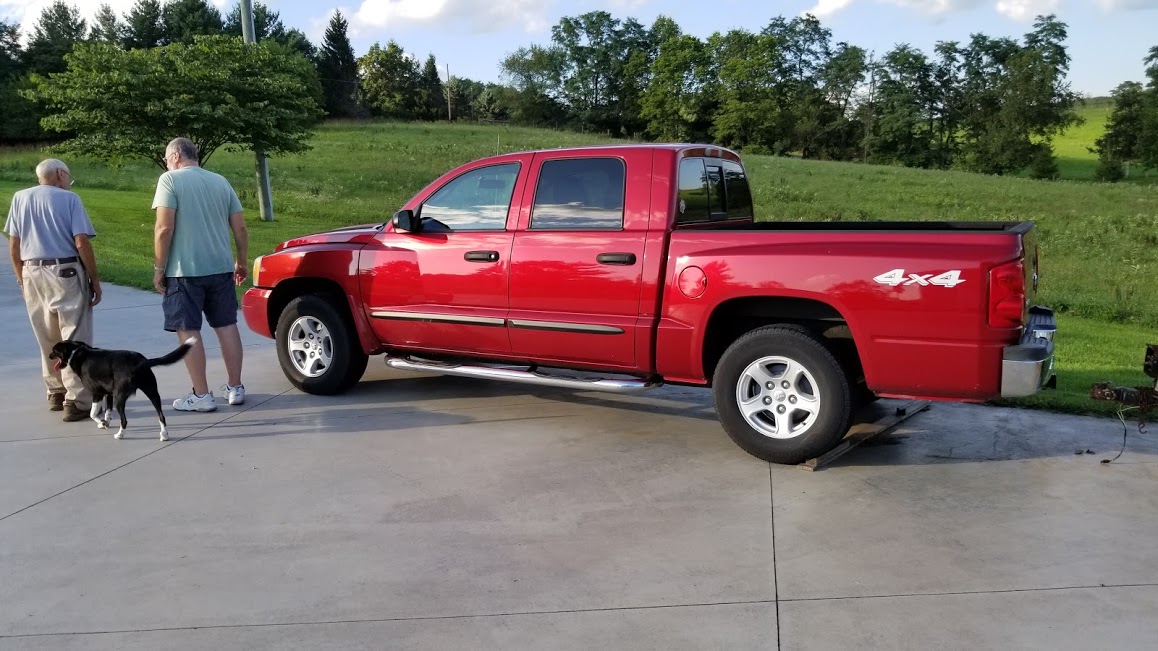
Other things that may have grown too big: I hear that houses have pulled back from the monster square footage that some had reached, especially as lumber and construction prices remain on a pandemic high.
Smaller plates make servings of food look larger and more plentiful—and may end up being just as satisfying. Small cans of pop (if you enjoy and still drink sodas) also stay fresher and bubblier than a big liter of sugary drink. If you go for diet drinks, don’t get me started on that. I drank diet sodas for years but when I realized I was paying good money for caffeine-free diet drinks, I realized I might as well just drink water. From my reading, diet sodas are very rarely helpful in trying to lose weight anyway.
To your health on the food front, and on our highways!
***
Any trends you want to praise—or put down? Comment here!
Or send to anotherwaymedia@yahoo.com or Another Way Media, P.O. Box 363, Singers Glen, VA 22834.
Another Way is a column by Melodie Davis, in syndication since 1987. She is the author of nine books. Another Way columns are posted at FindingHarmonyBlog.com a week after newspaper publication.
Post 2 – March 21, 2021
Arriving at a workable outline is often the first task of any major piece of writing whether it is a thesis, a theme paper, or a book. The bigger the task, the more you need an outline.
For a book, it can serve as your eventual table of contents if you have such. Even my first-grade grandson had to write an outline and table of contents for the booklet he was writing. What really shocked me was that the teacher even assigned them to edit their chapter titles—to tighten and improve them. First grade!
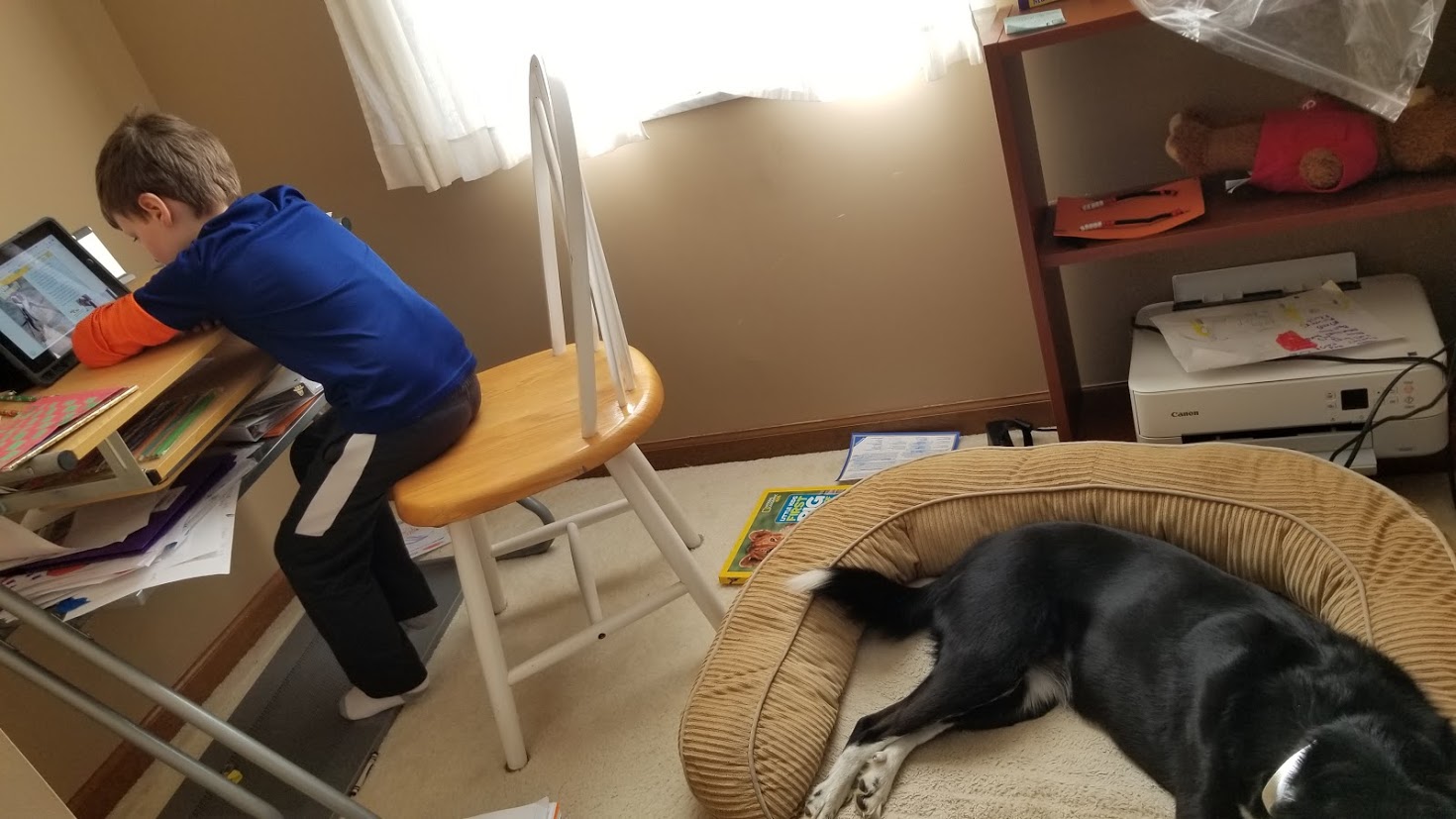
As I began this book, I struggled with bits and pieces of stories and narrative that I wanted to go into this memoir of my media life. I frequently hurried to jot them down as they came to me like spurts of memories from almost 44 years of work. Sometimes a memory came to me in the middle of the night, and then I had to get up and jot down or a note or else face forgetting the memory. And of course can’t get back to sleep after such a moment!
How do you even condense 43 years of energy put into hundreds if not thousands of separate projects whether they were hour-long TV documentary scripts, 30-second radio spots, metro transit messages, full page ads in Newsweek, board reports?
I can’t tell you how too good it feels, finally, to be working on another book, before I get too old. Before the memories don’t come, before I no longer need to make sense of it.
If you haven’t started on such a project yet but have dreams of doing so, now is the time.
An author I worked while I was an editor is Margot Starbuck, and she has come up with some marvelous tools to help writers and would be writers with outlines, proposals, and more. Check out her stuff here!
I also found this resource very helpful for me personally.
Happy first Sunday of Spring!
***
Do ideas or memories ever keep you up at night?
How many years was the longest job you held? Share highlights?
Comment here!
Another Way for week of March 12, 2021
Prepare to Learn about Daddy Penguins—and Immune Systems

Sometimes it takes children—grandchildren—yours, your neighbors, or anyone’s—to bring us more in touch with the natural world. Do you agree? At least on their good days! I love the things I’m being exposed to educationally as I watch or hear what my grandsons are learning and exploring. And they are teaching others!
First story. I guess I’ve always loved penguins just because they’re so cute and make us giggle when they toddle back and forth walking, but I was especially impressed when I learned about the active role the father penguins play caring for their offspring. I was “supervising” my oldest grandson, Sam, watching some of his virtual video instruction from a book called Little Penguin: Emperor of Antarctica. I definitely enjoyed it as much as Sam.

Did you know that father Emperor penguins on the continent of Antarctica carry the baby penguin still in its egg—almost as if in a womb. After the female lays the egg (almost five inches long), the father penguin tucks the egg under a flap of fur at the bottom of his legs, like a little insulated curtain, officially called a brood pouch. So the father carries the egg for about five months on his feet. After the baby penguin pecks its way out of its egg, it stays warm under that fluff of fur—very cozy as it grows bigger. When they can no longer fit under that flap, they are ready for the outside world and have enough fur of their own to stay warm.
Furthermore, penguin couples are pretty much monogamous, and even though the mother and father frequently spend months apart getting food for themselves and the little one, they usually come back to the same nesting area each year to mate. Videos show the male penguins gathering in a huge huddle, keeping each other warm and protected somewhat from the fiercely cold temperatures. And they take turns staying on the coldest outside ring. How much we can learn from our furry friends! Meanwhile, the mother penguin is “off duty” for about nine weeks, feeding and fattening herself up to share regurgitated food with her young penguin later.
The World Wildlife Federation notes that even their feet are adapted to the icy conditions, containing special fats that prevent the feet from freezing and strong claws for gripping the ice.

My second story is from my second oldest grandson, now seven. The boys were born only two months apart. Unfortunately, they don’t live near each other but were enjoying sending videos of themselves back and forth when we visited one family. We use the Marco Polo phone app, a video messaging program named after the swimming pool game. They were sharing things they had learned in school or from their own reading.
James gave us what his mother called “The Immune System Lecture” which apparently, he’d been sharing with anyone who’d listen, including neighbors as they took walks. In his words:
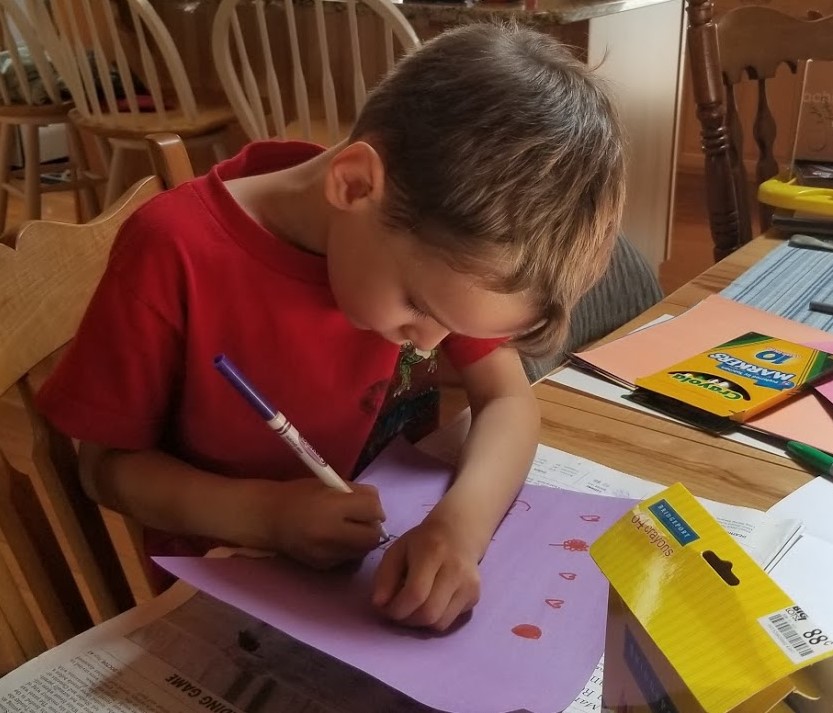
“There are many ways to fight germs. We have our five defenses, not just the immune system. First, when we breathe in a virus or a germ, some get trapped in the nose hairs. The ones that get past, get stuck in the nose. And the liquid in our nose, we swallow it and it goes down into our stomach which breaks down the germs. And the ones that get passed by the immune system, there is a type of white blood cells that shoot out antibodies that attach themselves to the viruses and germs. White blood cells come on to attack and eat them and some white blood cells devour them whole. Our skin acts like a suit of armor! And there are other ways to fight germs: washing our hands off lots of times, getting a vaccine, lots of exercise, sleeping a lot, and taking pills and medicines.”
Like one of my grown daughters said, “I’m not sure I knew all that!”
Children keep us young and our brains active, right? What a blessing they are in our lives!
What have you learned from children?
What things of science or nature fascinated you? Do you remember wondering about stuff?
As always, comment here or send your stories to anotherwaymedia@yahoo.com or Another Way Media, P.O. Box 363, Singers Glen, VA 22834.
Another Way is a column by Melodie Davis, in syndication since 1987. She is the author of nine books. Another Way columns are posted at FindingHarmonyBlog.com a week after newspaper publication.
Messing with Memoir
Post 1 – March 14, 2021
The Guardian (British paper) wrote this about the current popularity of memoir writing: “Autobiographies are generally reserved for famous people, although anyone can write one and have it be a success. The requirement for a strong autobiography is a life that’s out of the ordinary in some way, whereas a memoir can be about an ordinary existence told with profound insight.” (Here is one place I’ve read something like this.)
I know that some of my early books—even though not called that in the 80s—were actually memoirs. Or that’s how they’d be classified today. On Troublesome Creek – a year I spent in voluntary service in Appalachia. Departure – about a year I lived in Barcelona Spain as a junior in college. And even my books about raising children, such as You Know You’re a Mother When … could be called memoir.
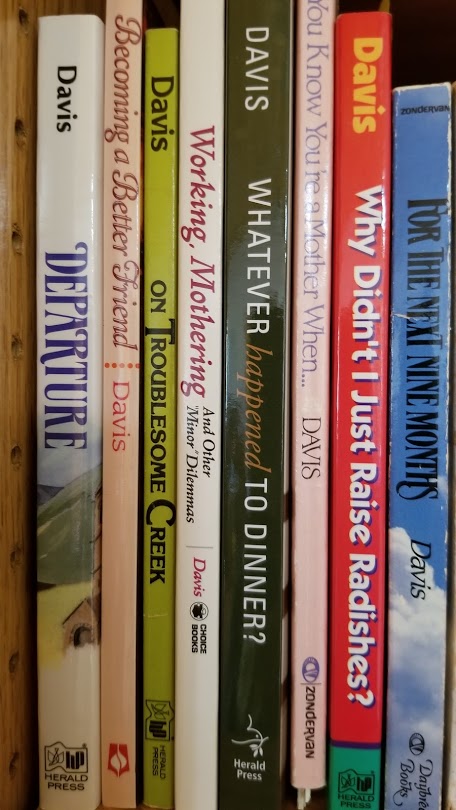
I don’t know if any of the above were told “with profound insight” but I’m glad I wrote them for myself if no one else: writing about things that happen to us help us understand ourselves better and, I hope, others to understand themselves better also. Not to mention having a clear journal or diary of things that happened. Because, folks, the stuff doesn’t stay retrievable in our gray matter after so many years and so many rich, splendid, life experiences.
I hope if you are interested in writing a nonfiction book, a memoir, or just want to ride along for the fun, jump onboard to catch some (mostly) really short posts with few embellishments (photo wise) as I embark on publicly letting others take a peek at my own process.
As I do this, I’m taken back many many years when I was a greenhorn, to a meeting when the director of the Choice Books rack program (you’ve surely seen their books all over in stores, Walmarts, airports, tourist shops, selling millions of religious books every year) inadvertently gave me insights regarding how to go about getting a nonfiction book published. I’ll share that story later sometime, but it is a process that still works in 2021 and beyond. And that, writing buddies or wannabes, is how I was able to be published by some of the bigger name religious publishing houses like Zondervan, Bethany, and Word Publishing back in the 80s, along with several published by Herald Press.
These posts will not appear on a specific schedule but as inspiration and perspiration lead. And P.S. I started writing the memoir over a year ago now so sharing my thoughts about the process lags somewhat behind the actual writing, which is creeping ahead and am loving doing it!
***
If you’re already signed up to receive my blog posts, you will likely get these by email. I’m indexing them under a tags I’m calling Writing Life or Memoir Writing. If you’ve just stumbled on to this blog, I would love to have you sign up for any or all posts, which you can do right above my photo. I don’t sell emails.
***
And I would love to hear your experiences writing, or about your favorite memoirs or anything about the writing life! Comments welcome!
P.S. Some of my older books are still available from used book stores and vendors on Amazon and elsewhere.
Another Way for week of March 5, 2021
Pandemic Gut Check
I look at the pictures or short videos of women (usually) and children sitting and staring in a refugee camp in some African or middle eastern country. Maybe I begin to feel just a hair of what they must feel like. They must think: Another day. Another day to somehow feed the family. Another day of waiting. Not really knowing what’s ahead.
Of course before you say wait a minute there are mammoth differences between a retired woman in the U.S. facing another day of the same old, and a desperate but patient woman or man somewhere “over there” waiting for a chance to move on, get out, find a new home, feel safer. I buy that.
But I—and maybe you too—have now felt the tedium, the frustration, the wondering. When will it end? Will it ever really end? Will one of my close family members die? We have lived with fear of these things, many of us, down deep.
It all helps me feel—in a way I’ve never been able to feel before (thank God) — the worry that thousands (millions?) around the world have felt for three, five, ten or more years in refugee camps. Can you imagine also dealing with the threat of Covid amidst all this?
Sigh. Okay, it’s been a year since the world shut down … since our lives changed here in North America where I live and write.
Ah: Writing. It’s been my salvation, my inspiration, my thing to do that keeps me going without falling into dark days of sleeping and situational depression and “I’m ready to scream” insides. I hope you have similar outlets, whether it is taking up piano or guitar again, finding time to knit, crochet or other needlework, projects long waiting you in the garage or shop, finding new movies and Netflix series to love, coming up with creative and delicious new menus. Or comfort food.
Those needing hospitalization for any of numerous ills are bearing the brunt of much suffering. Not only here, but around the world. If your spouse or family can’t visit you, how do you survive without going out of your mind?
An article I found online tells the story of a Roger Collins in Kansas City, Kan., hospitalized now for almost seven months. His wife has been visiting at his window every day since last July. Even in bad weather. She brings a two-person tent and is just trying to keep her dear husband’s spirits up, to keep fighting. The article said that their children and grandchildren also visited at the window. They leave love notes for their dad and granddad. His trachea has been damaged through some of his treatment, and he now needs reconstructive surgery to remove scar tissue. The next step will be transferring to a rehab facility, they hope.
Billie Collins hopes that after her husband has reconstructive surgery to remove scar tissue from his damaged trachea, he’ll be able to transfer to a rehab facility. How do people hang on to hope?
We are beginning to hope as one person after another who I know is managing to get a shot, the vaccine. My husband and I were able to get our first shots a week ago. What an emotional experience that was for me. We celebrate each and every one. We see some numbers going down. We suspect we will be wearing masks a long time yet.
I do know this: all of our family has had many many fewer colds or illness this past year, due to more sheltering at home, more washing of hands, more hand cleaner used, fewer person-to-person contacts. Knock on a lot of wood for all of us, ok?
And keep doing what keeps us all cleaner and healthier and we hope—more mindful of those struggling with difficult daily dramas that most of us in North America don’t know much about.
***
How has it been for you?
Comment here, or send stories to anotherwaymedia@yahoo.com or Another Way Media, P.O. Box 363, Singers Glen, VA 22834.
Another Way is a column by Melodie Davis, in syndication since 1987. She is the author of nine books. Another Way columns are posted at FindingHarmonyBlog.com a week after newspaper publication.
Another Way for week of February 26, 2021
Of Fingernails and Other Oddball Funnies
I trimmed my fingernails the other week, nice and neat. I don’t go for polish or long nails. But when I sat there gathering up the narrow slivers looking like very thin crescent moons, suddenly I was back as a child attending probably one of the first weddings I ever went to. I remember wondering why there were fingernails all over the porch and cement steps outside the front entrance of our church?!

What did you wonder as a child? What mistakes were common in the church songs you learned growing up? Some of my Facebook friends helped me out here.
Charlene recalls thinking that a driver of a car only had to turn and look back to make the car go backward! (Self-driving cars, anyone?) She says when you’re a child sitting in the back seat all the time, you don’t get a good idea of what it actually takes to make a car move, you know?
Charlene, who is about my age, also recalled how on long family trips, especially at night, “My dad would place a suitcase on each side of the hump on the back seat floor. One of us would make a bed there. One of us would get to sleep on regular seat, and the third sibling [likely the smallest one] would climb up on the third level ‘bed’ in the rear window.” She closes, “Yikes.” I remember the same scenario but with our younger brother (fourth child) tucked up between mom and dad in the front seat. I also seem to recall my older sisters vying for that middle position in front at times so that Dad would occasionally let them steer. Again, yikes!
A different kind of misunderstanding took place for Kenneth worrying that if he turned the car’s radio dial, that “we would never be able to find the same station again.” That still happens for me, especially traveling!
Misunderstood songs include Ginny wondering what a “roun’ John vurjun” was. Ginny also took a child to J.C. Penny’s. After they had walked around for a while, the girl asked, “Ginny, when are we going to chase pennies?”
Loren thought it strange at Easter that Jesus would come up out of gravy, singing “Up from the gravy he arose.” Ann wondered about singing “The world in Solomon stillness lay …” And Gloria says among the familiar words of “Jesus Loves Me,” they would sing “The Florida Bible tells me so.” On the secular side of Christmas songs, one reader of this column had a friend when he was young who was sure a line in Jingle Bells went “one horse, soap, and sleigh.”
Another misunderstanding of hymn texts came from Ellen in Waterloo, Iowa. Her husband had told their six-year-old son that Ford was one of the top three U.S. automakers. Several days later their family was singing the table grace, “Great God, the giver of all good … grace, health, and strength to us afford….” The six-year-old’s head popped up after the prayer: “No wonder Ford is in the top three!”
Too short swimming references: Florence in Minnesota wrote about her four-year-old chattering about her sister’s swimming lessons. “When I’m bigger, I’ll go swimming too,” she said proudly.
“What do you know about swimming,” her mother quizzed.
“Well, you wear a swimming suit, and your hair gets wet.” Yep, all you need to know.
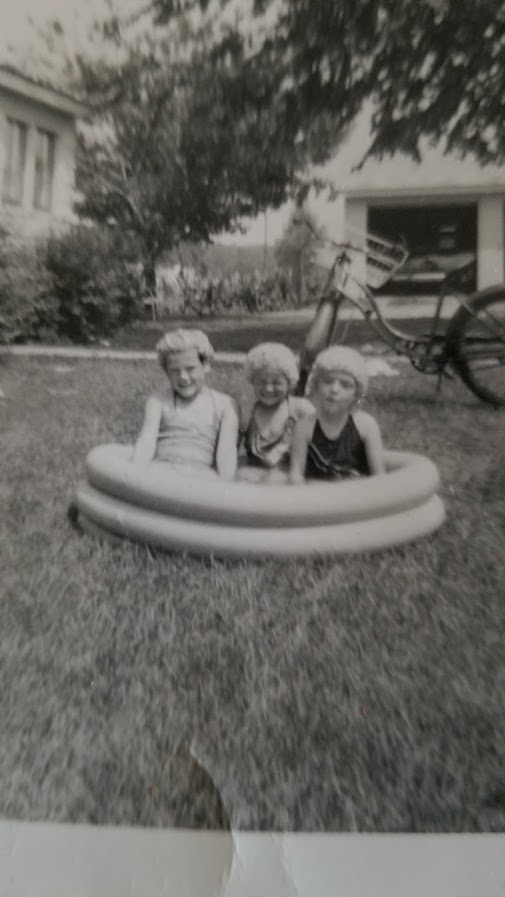
Nancy used to call a bathing suit “baling suit.” My own small friend would call it a “babbing” suit. The “th” in it is hard to hear!
One of the saints of our church, Henrietta, once told me this story. Her five-year-old great grandson loved birds, and was an avid bird watcher. They came upon a dead bird on a sidewalk, and naturally he was very upset. First he said, “I’ll just let it alone for a while,” as if he didn’t understand or recognize the finality of death. Finally, he inquired, “Does it need new batteries?”
I hope this has been a charge up of your batteries for another winter day. Spring is truly not far away!
***
Ok, I shared my young oddball misconception–what’s one of yours? Or off a friend or family member (if you have permission to share it or change up the name). We’d love to hear!
***
Or family memories from a road trip, like Charlene?
Comment here or send your fun misconceptions or stories to anotherwaymedia@yahoo.com or Another Way Media, P.O. Box 363, Singers Glen, VA 22834.
Another Way is a column by Melodie Davis, in syndication since 1987. She is the author of nine books. Another Way columns are posted at FindingHarmonyBlog.com a week after newspaper publication.

 findingharmonyblog