

Another Way for week of March 27, 2020
Help! I Can’t Get Up
So, in the middle of all the worry and response to news of the coronavirus spreading, what happens when you or someone you love needs to be hospitalized for routine health issues in the middle of a pandemic?
As I look back over the past month, the worldwide panic, fear, and pandemonium has spread so far and fast that it all swirls together in my mind and memory.
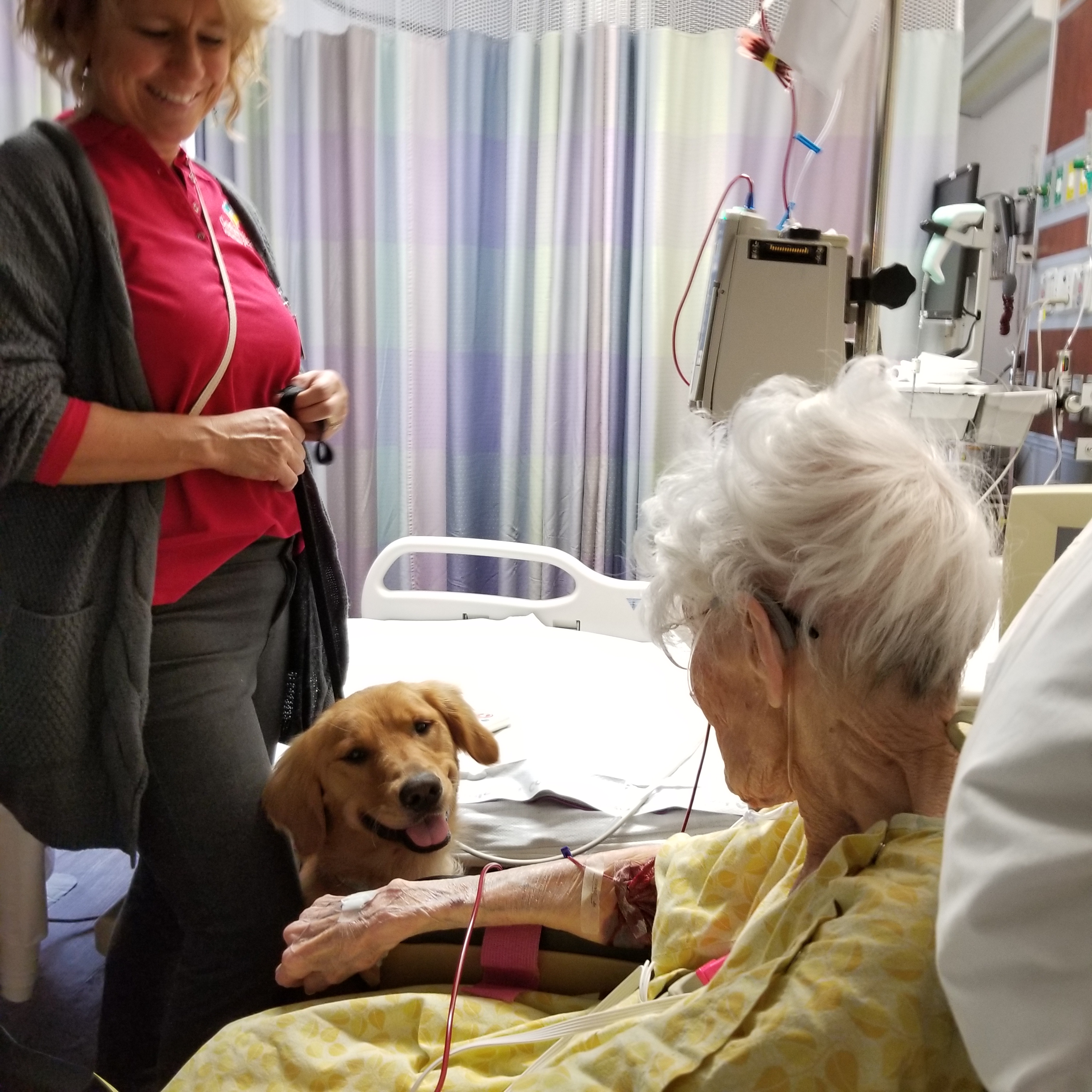
Mom having her spirits lifted by a therapy dog, the day after surgery while receiving a pint of blood.
About five weeks ago now we were called in the middle of the night with a message that many baby boomers fear regarding their parents: “Help, I’ve fallen, I can’t get up.”
Let me back up a second. My mother is 95, lives in a retirement complex in an independent apartment. Thanks to the good Lord and my sisters, Mom had recently gotten one of those arm “Mobile Help” callers (after the retirement complex quit including it in their package of services because of the expense). Mom fell in her bathroom around 12:30 a.m., realized she was in great pain and couldn’t get back up, and summoned help with the beeper. Within 20 minutes “there were men [rescue squad guys] all over me.” Helping of course.
My sister Nancy, a retired RN, called me about 3:30 a.m. with the news as she sat waiting with Mom in the emergency room. Her husband said, “Maybe you ought to wait until morning to call” but she responded, “If I’m up in the middle of the night, they can be too.” Honestly, I wouldn’t have wanted Nancy to wait. I began immediately plotting our next steps. How soon could we leave? My husband had an appointment that day with an orthopedic surgeon that we had waited months to get. We should surely keep that appointment. Who would take care of our dog? As I lay there worrying, I also held up my mother and sister in prayer for comfort and good decisions from medical staff. That was Feb. 19. The coronavirus was of course a concern to everyone but most of us had not yet begun to imagine the ramifications for our families and basically the whole connected world in terms of economy, travel, jobs, depression (monetary and mental).
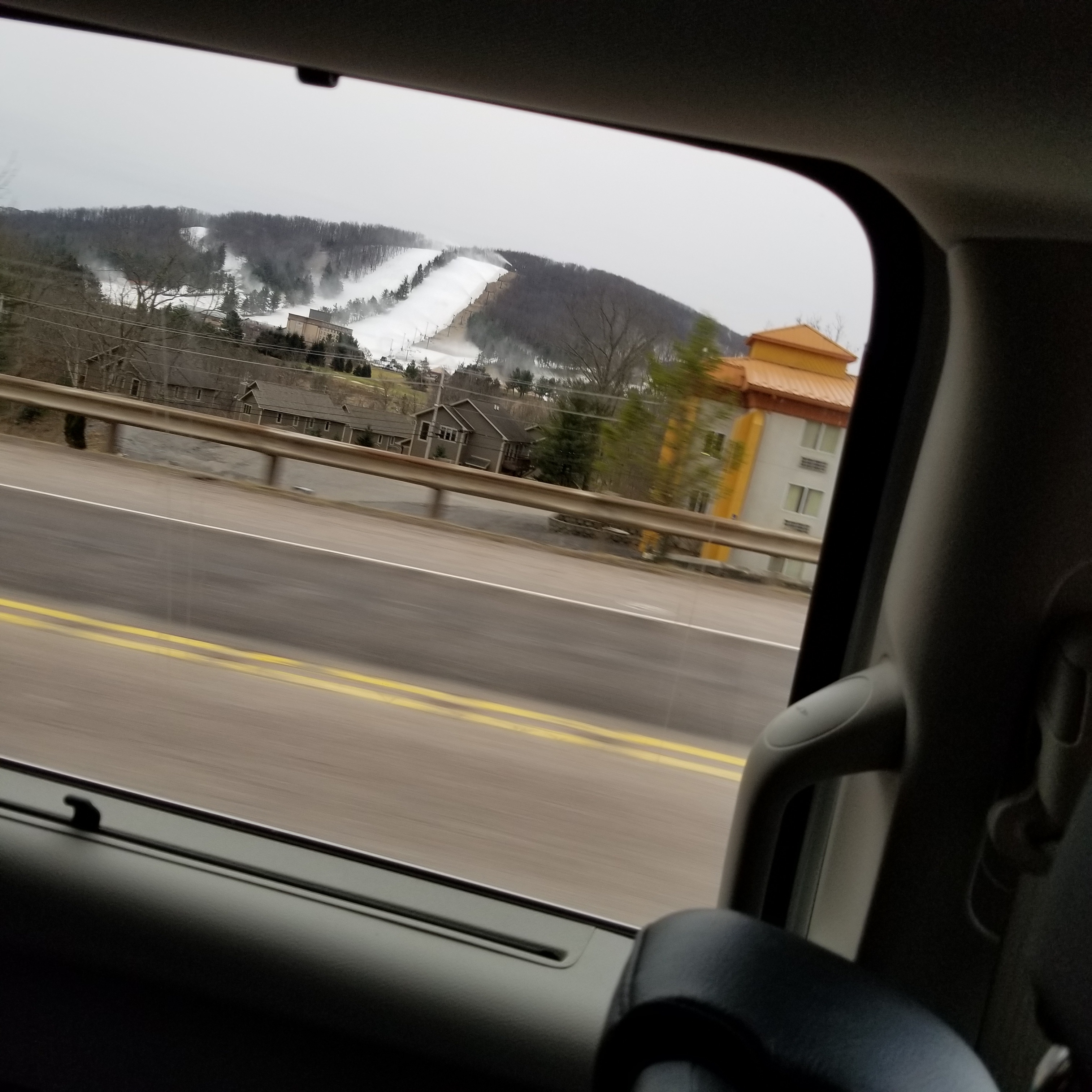
Heading through western Maryland, we pass a ski lift making snow.
My husband and I left for Indiana the next day. When we walked into Mom’s apartment and the bathroom where she had fallen, the sight of her shower door knocked completely off its track punched me in the gut. The reality of her lying on that floor in pain, panic, and darkness hit home.
We headed to the hospital. Mom’s surgery had gone well in spite of it being risky because of thickened valves (also known as severe aortic stenosis). The doctor used as little anesthesia as possible as he pinned her femur to her pelvic bone in less than 15 minutes.
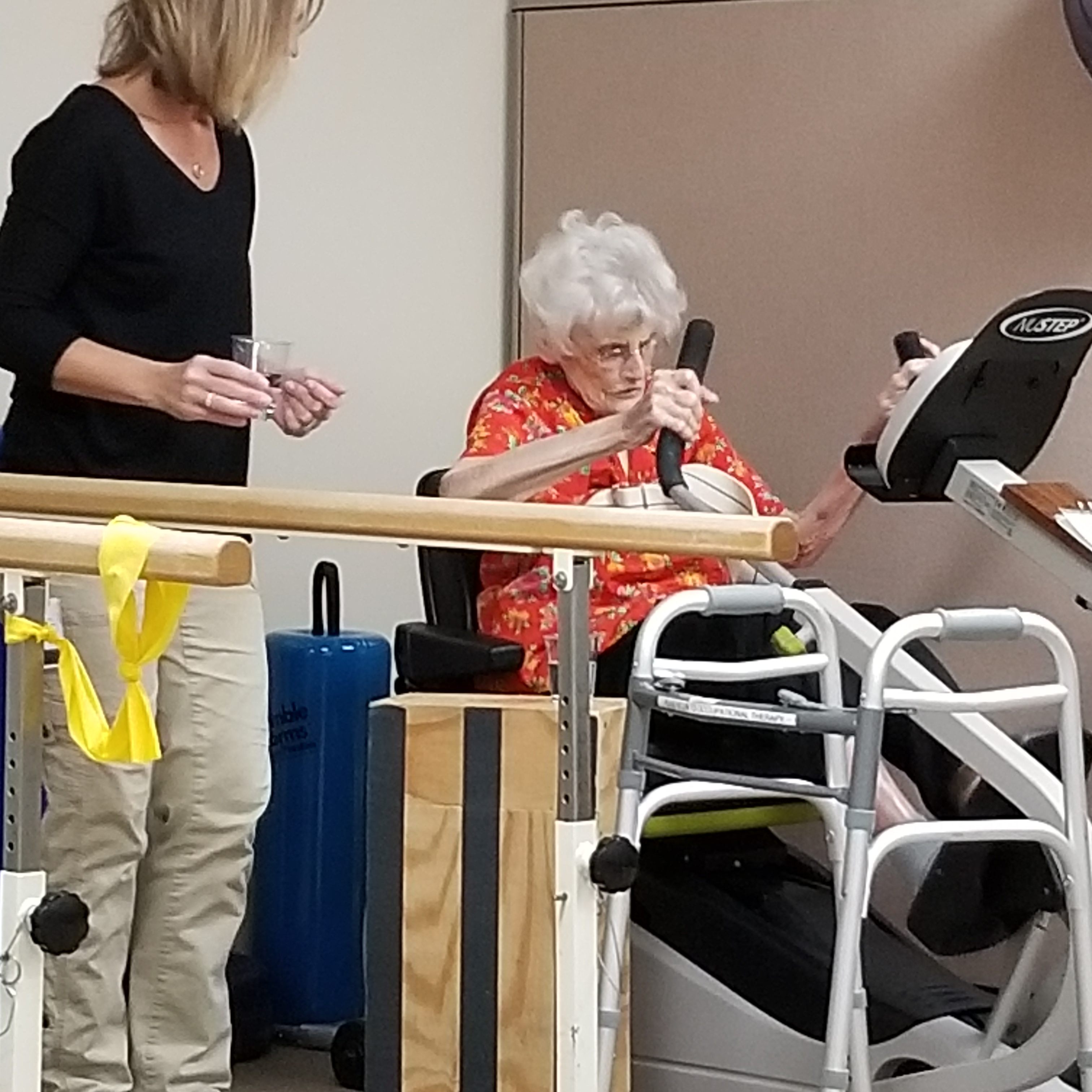
Mom doing well in physical therapy several days post-op.
She was in good spirits (still on pain killers from surgery) and I felt grateful we could travel so quickly. My other sister was unfortunately delayed because of ice at the Charlotte, N.C. airport, and had to return home to try again the next day.
When Pert finally got there late in the day, we caught up with each other visiting around Mom’s bed. By Saturday the doctors released Mom to the rehab unit of her retirement complex. We enjoyed helping settle Mom into her new temporary room.
On one of the days following Mom’s surgery, Pert and I took a walk 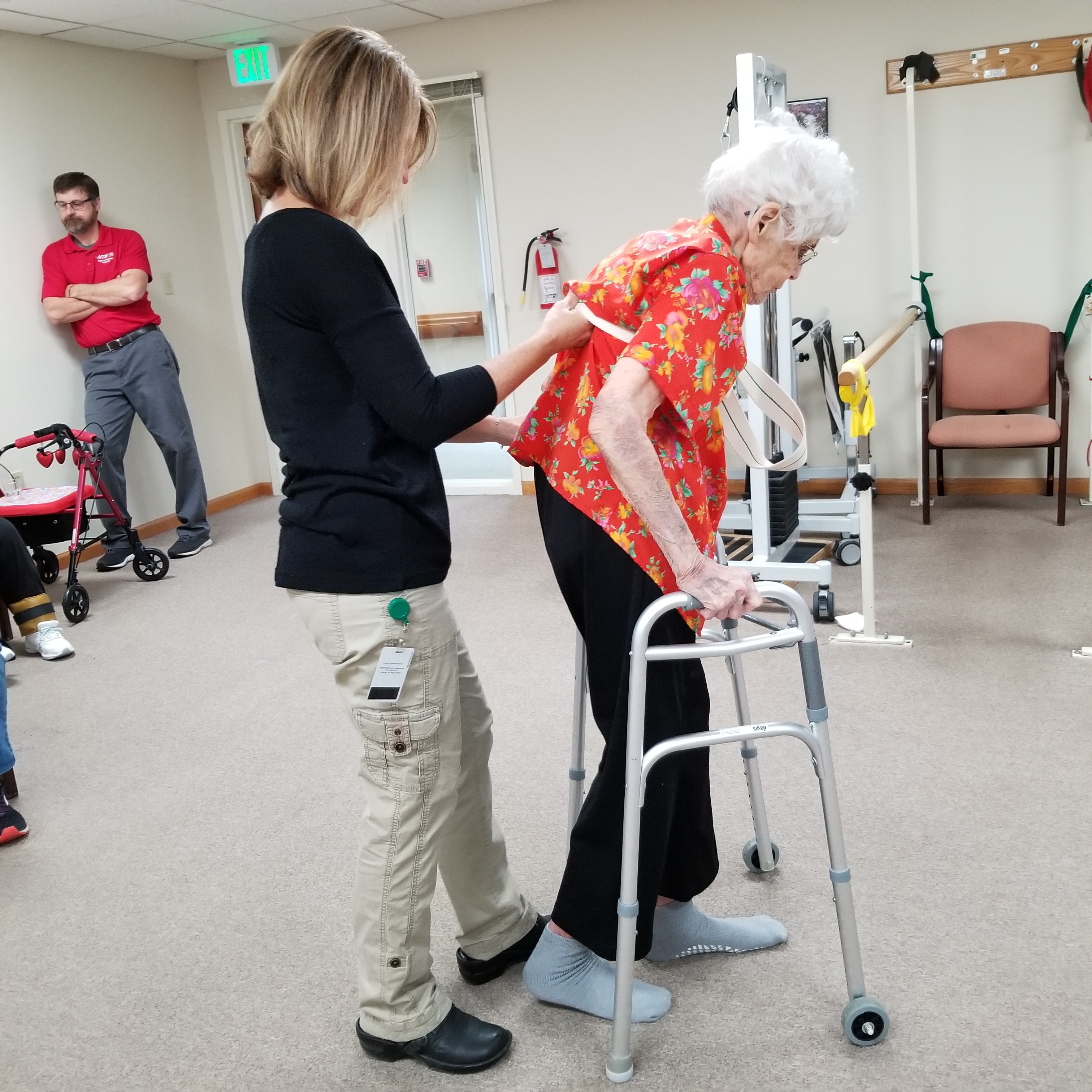 in the healthcare section (separate from rehab) to see remodeling and updating they’d done since we’d been there last. It looked amazing but apparently it was an unwise move on our part. We opened several closed doors. Even though we were generally very careful about using hand sanitizers, after we left to go home, a total of four family members were eventually struck with a stomach bug, with a lingering unsettled feeling for two to three days after. But we were lucky. No quarantine, no weeks of isolation at that point. Rather, we soon began to feel better with the simple comfort of chicken noodle soup, crackers, and ginger ale.
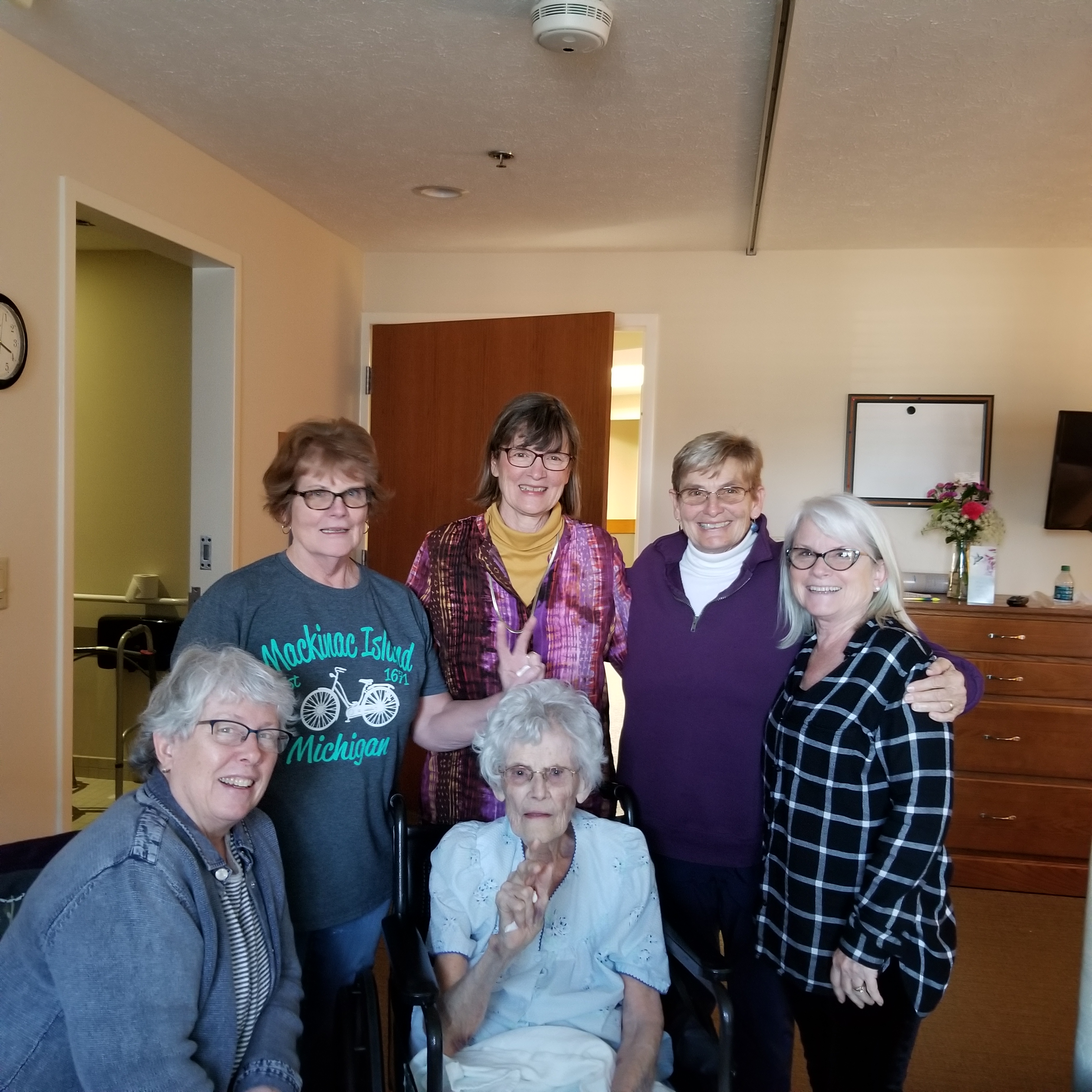 My heart goes out to all individuals and families dealing with seclusion, staying away from family, friends and normal routine—or worse, a scary illness and loss of a loved one. We also lost, in one week’s time, a dear cousin on my husband’s side, a church friend, and a former coworker—not to the virus, but other causes.
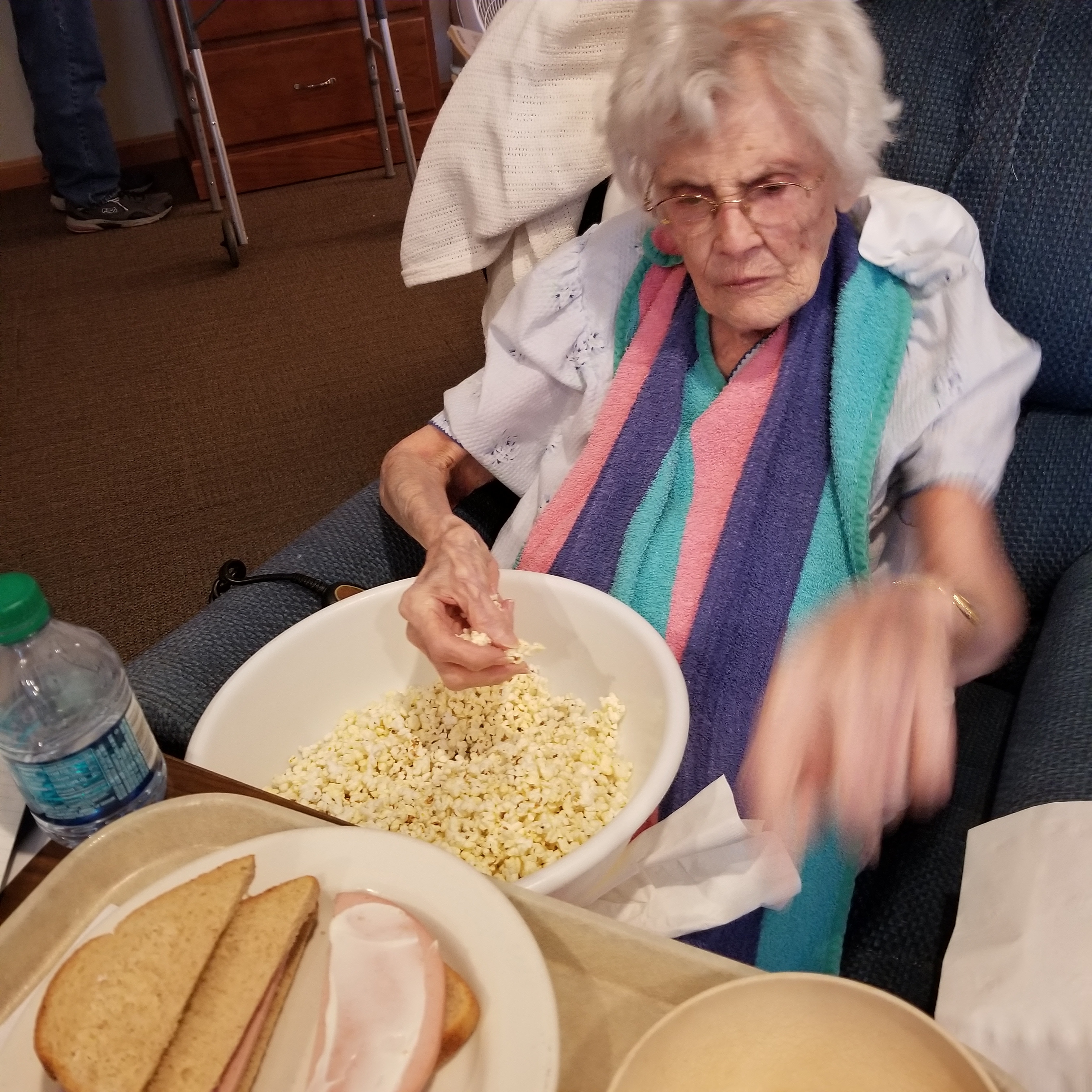
Mom requested our “normal” Sunday evening meal: popcorn and balony sandwich. She loved it!
We must pull together, share our resources, and hold each other up in love and prayer. World strong!
***
What food sounds good to you after being ill or post surgery?
***
Share your best “pick me ups” during this time of quarantine and keeping a friendly distance between humans!
For a free booklet, “Praying When You Are Depressed,” send your request to me at anotherwaymedia@yahoo.com or Another Way Media, P.O. Box 363, Singers Glen, VA 22834.
Another Way is a column by Melodie Davis, in syndication since 1987. She is the author of nine books. Another Way columns are posted at FindingHarmonyBlog.com a week after newspaper publication.
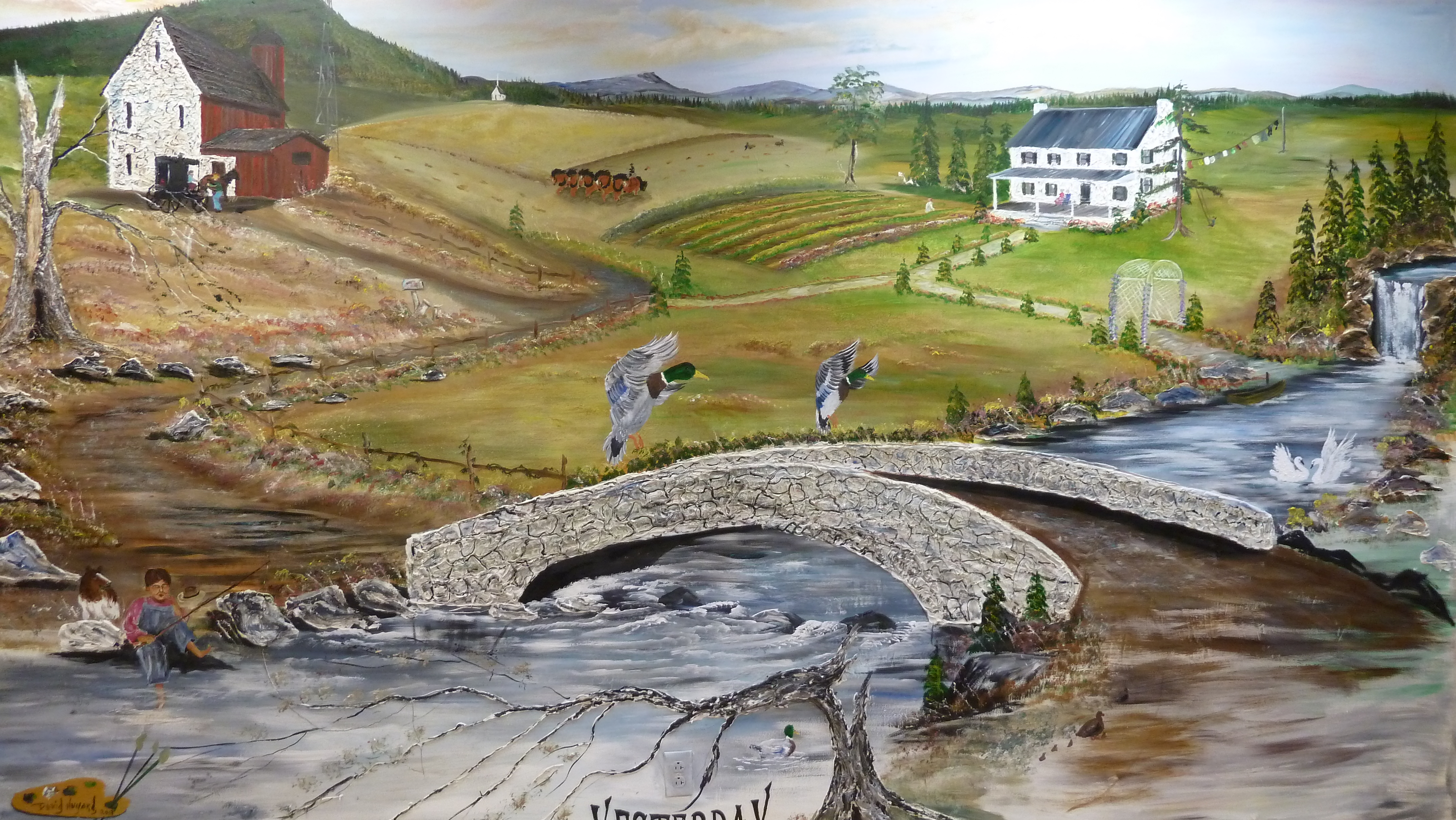
Painting of bygone days in rural Rockingham County, by David Huyard.
Another Way for week of March 20, 2020
When Should You Help?
I had been lost—bunches of times—on the very back roads we now live on—when my children were younger. They had friends who lived on back roads and when they were invited for birthday parties or overnights and the best navigation help we had at that time—no computer help at all—were directions usually given over the phone, well, the result was that I often ended up frustrated, anxious, and even wailing. I did my best to write out the directions, including watching for landmarks: if you come to a stop sign with a tree 30 feet off the road, you’ve gone too far. Really? How many crossroad descriptions does that match?
So, I had and have empathy for other lost folks. But of course, you’ve got to be careful. And wise.
Recently I was heading out to take my husband a vital piece of his chain saw at his friend’s wooded acreage. I noticed a woman in a car, with her emergency flashers on, at a crossroads. She looked about my age. What did she need? Mechanical help? Directions? She appeared to be looking down at her lap. But I knew my husband was waiting for his part. If she’s still there when I come back, I said to myself, (judging it would be no more than a five-minute errand), I would help her.
Didn’t she have a smart phone? Who ventures out to find a place without a phone or GPS these days? It looked like she was trying to call someone. Maybe help was on the way.
When I returned from completing my errand, she was still sitting there, but another woman, also similar in age to us both, was out on the road obviously trying to help her. I recognized the other woman, a neighbor who moved to this area about five years ago, who I knew through work connections and also a fellow blogger and Facebook friend. This made me feel safer in deciding to stop and help.
The “lost” woman said she was trying to find a new-to-her CPA who lived in a brick home for her tax appointment. She had some directions written on paper, but her phone was not working in our neighborhood. No surprise there.

Art by David Huyard.
The house was supposedly visible from a church not far down the road. I volunteered that I knew where that church was and she could follow me to the church and we’d see what we could see. So the other fellow blogger/Facebook friend—who I’m guessing was on her way to a dog training class—took that as a nod I could probably help better than she could.
But. When we got to that church, a house matching the description was not immediately visible. I plugged in the address she had on my phone. From my “Google Maps” it became obvious to me that the brick house was over across the hill and .3 miles away. Bingo. She also used my phone to call the CPA’s number. The woman was overjoyed and would be only a few minutes late to her appointment. She thanked me profusely before hurrying to the CPA’s house.
Would I have helped if the person lost would have been of a different race or language group than me? I hope so. I thought about our trip to Alaska last summer where we were told about the general practice that if it was below zero and there was a hitchhiker or someone needing help, they were obliged to stop and assist or else face a fine. I’ve been unable to document that it is a law, but the common understanding of locals is that you must help.
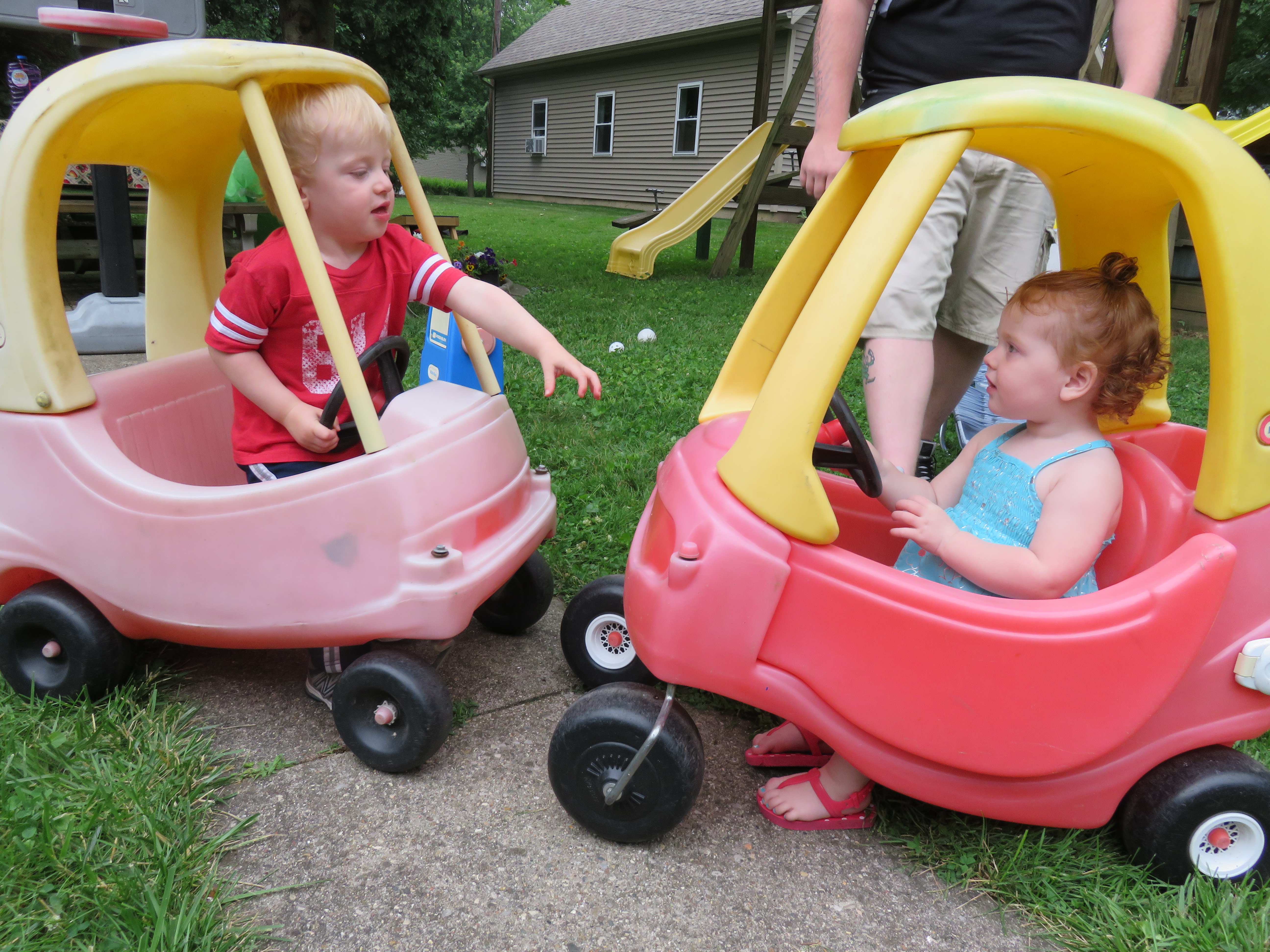
Second cousins at an impasse.
What if she had appeared drunk or unkempt or out of control? By what standards do we make quick judgments about whether it is safe to help? Time of day? Age of car? Is it safer just to call the police if you don’t know whether to help or not? I know that many have sat and waited an extended length of time when needing help and car after car passes you by. I think many of us assume that everyone has cell phone help at their fingertips, but we also know how those devices can fail us at just the wrong time.
Bottom line: be wise (I would not have stopped for a man) and maybe keep your distance from a car, or call for help from your own vehicle. I do know it is a great feeling to be of help when someone is in distress, and nice to still practice the Golden Rule.
***
What are your own safety rules of when you help or don’t?
How do you decide?
Your own stories?
***
Comment here or send to me at anotherwaymedia@yahoo.com or Another Way Media, P.O. Box 363, Singers Glen, VA 22834.
Another Way is a column by Melodie Davis, in syndication since 1987. She is the author of nine books. Another Way columns are posted at FindingHarmonyBlog.com a week after newspaper publication.
Another Way for week of March 13, 2020
How to Shine Every Day
(Editor’s note: Tenth and final in a series on physical, mental, relational, and spiritual health.)
Our last word in this ten-week series of dynamic action words found on my favorite cereal box is “Shine.” One of the first things to spring into my brain with the word shine is a song we used to sing in Sunday school: “Oh let the sun shine in, face it with a grin; smilers never lose, and frowners never win.”
Or this: “Heavenly sunshine, heavenly sunshine, flooding my soul with glory divine.”
Or this, from more recent years: “Shine, Jesus, shine, fill this land with our God’s great glory. Blaze, Spirit, blaze, set our hearts on fire.”
Each of these church songs are inspiring and uplifting to me but I doubt those were the images and lines the marketers for the Kashi cereal had in mind. But that’s ok. I hope the song snippets flow with you through this coming week as we all face challenges brought about by the world-wide virus crisis of 2020. [I actually wrote this about two weeks ago, before the U.S. got down to business in dealing with the coronavirus.]
Shine is a bright invigorating word that, especially if the sun is shining, gets most of us going in a very good way. It can be harder to crawl out of the covers on a dark, dismal, rainy (or snowy) day. We’ve heard, or know firsthand, about seasonal affective disorder and the depression and negativity that can settle over one’s spirit during a season of shorter, darkened days. In regions of the world where people experience very long nights (such as northern Arctic regions), they sometimes have increased issues with alcoholism or depression—just because of the dearth of sunshine in winter.
Throughout history, light from the sun has given life and hope and existence to not only humans, but animals, nature (think flowers, growing things), and indeed sets the pace for daily routines: for life itself. From the early stories of how the world came to be, in Genesis 1:3 we read, “And God said, ‘Let there be light,’ and there was light. God saw that the light was good, and he separated the light from the darkness.”
But what does it take to shine in our inner spirit and in our relationships with others [even as we practice social distance!]? We may not be as bright as the sun or stars but certainly some people radiate brightness with their very being.
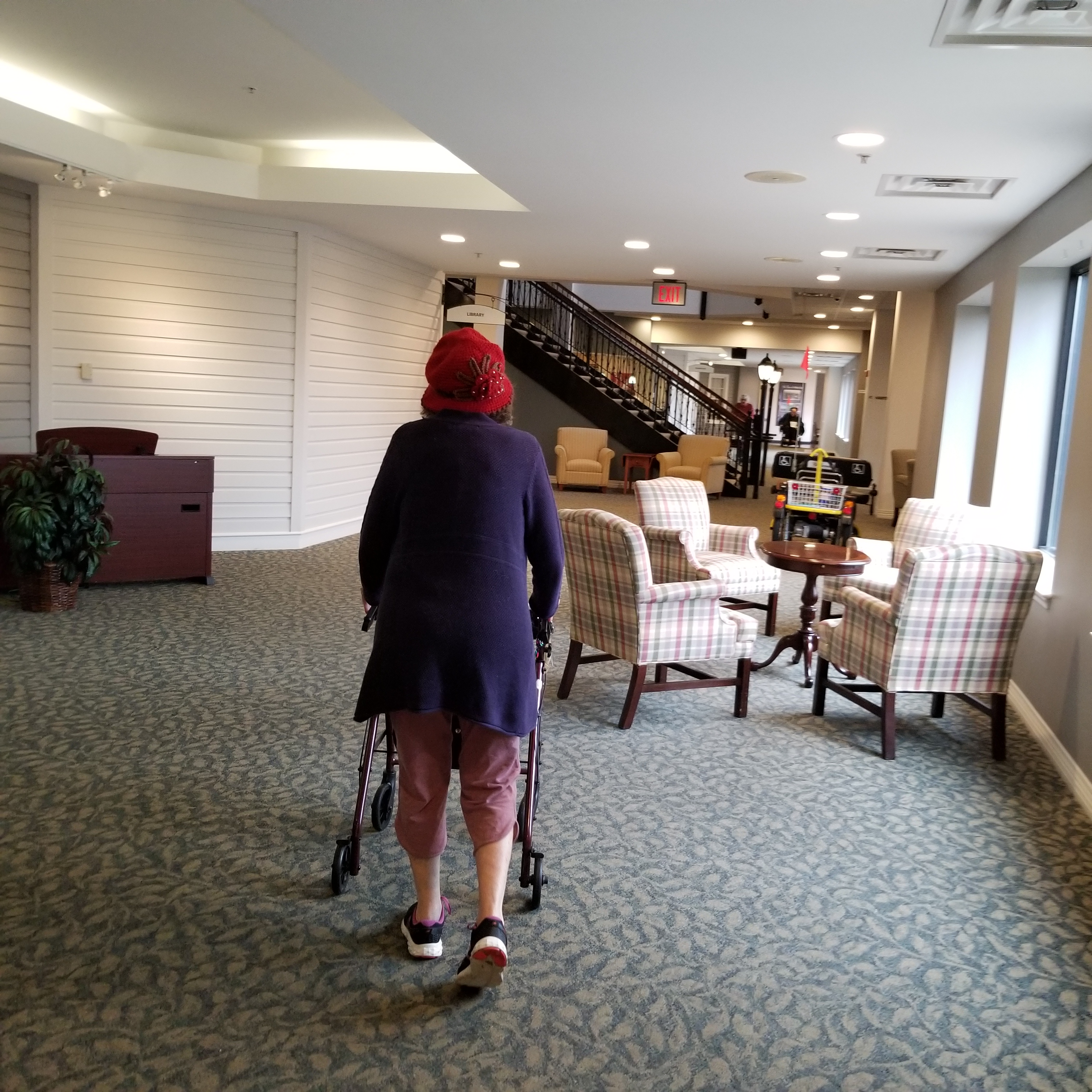
Betsy and her red hat given to by her friend, Jamie.
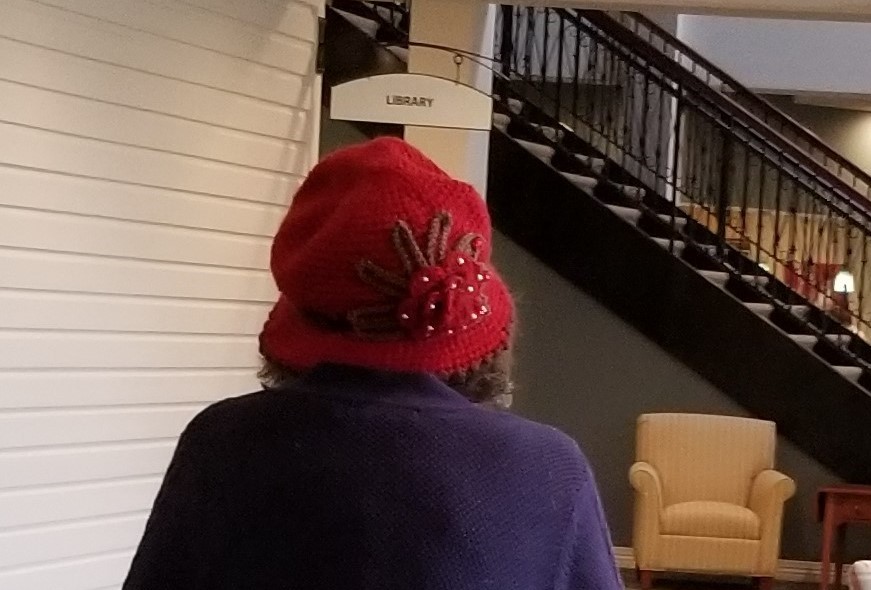
Isn’t the hat just too cute?
When I think of people who shine I must name Betsy, who is a new friend I’ve met since I retired. We met at a wellness center in a pool exercise class. Betsy is almost always smiling, a remarkable achievement I have never been able to manage, but I’m working on it. She almost glows. Her eyes sparkle and she has a beautiful smile whether with teeth showing or closed. She is in her 90s but still swims almost every day. She dons a bright red hat on a dull day and looks ready for Fifth Avenue shopping.
Betsy reminds me of another woman I knew decades ago at our church, Katherine. She almost always had a smile and it seemed genuine. Such folks lift my own spirits. She was one of the prime movers behind a robust Weekday Religious Education organization in our county, where children are still invited to come and learn from the stories of the Bible, which should be part of any well-rounded literary education. Obviously, parents and children can choose whether they participate in it, conducted off school grounds.
I also must give a plug here for a children’s Sunday school, nurture, or faith formation curriculum, Shine: Living in God’s Light, because of its name. Shine is under the auspices of the publishing/media organization I retired from last March, and is used and recommended by a number of Christian denominations, although published by Mennonites and Church of the Brethren. Find more at shinecurriculum.com.

I hope you’ve enjoyed this series. It has been both a challenge and helpful to have these word prompts for ten weeks sparking ideas. Thanks to many of you who have added your thoughts online. The secret to shining every day? Think positive thoughts no matter how glum your spirit or current situation, and as so many have said, take things one day at a time. Reach out to others if you are the one “standing in the need of prayer,” and return the favor when friends and loved ones are in need of your help, as many are in these difficult days. Keep the internal—and eternal light of love—shining.
***
How do you plan to keep shining, even when you are feeling bum or depressed or anxious? Share stories or comments here!
***
Please let me know what inspired you most through this series? Was it too long? About right? What was your favorite, or the most “meh” of the titles. I love to hear any feedback.
If you’ve missed some columns in this series, I can send you the complete series by email. If you don’t have email but would like a copy, I can print and send it for $2 Contact me at anotherwaymedia@yahoo.com or Another Way Media, P.O. Box 363, Singers Glen, VA 22834. Or download the entire series in this PDF: Go. Rise. Play.
Another Way is a column by Melodie Davis, in syndication since 1987. She is the author of nine books. Another Way columns are posted at FindingHarmonyBlog.com a week after newspaper publication.
Another Way for week of March 6, 2020
10 Ways to Learn to Love Someone You Have Trouble Loving
Or, What the World Needs Now
(Editor’s note: Ninth in a ten-part series on physical, mental, relational, and spiritual health.)
The people who compiled the list of ten inspiring action verbs found currently on my favorite cereal box, “Kashi,” put a really hard one on their list. At first glance it seems easy: well of course I actively love others. A no-brainer.
But this word is so often sung about, written about, talked about. So what new is there to say? Why would they include it on their list with words such as spark, play, rise, go, wander and more?
I think it is because the underlying purpose of the list is to get people not just enjoying love as a romantic state or divine love from God. Or family love that offers bonds of protection and stability. But rather to stretch ourselves and perhaps actively love where we haven’t tried to extend love before.
There’s the rub: love someone who isn’t very lovely or loving in return? Who is it that takes some effort for you to love? Of the opposite political persuasion? Perhaps it is someone you know at school or church or work who has a personality quirk and grates on your nerves? Maybe someone of a lower income group or hard-to-understand accent? An in-law that rubs you the wrong way? What would it take to actively love them?
- Decide you need to try.
- The second step is getting to know them better. Stereotypes and preconceived notions about the person often fall apart as you get to know him or her: why they are the way they are.
- List their good and positive traits.
- When you are having trouble loving them, think about their best feature.
- Ask God for help to truly love them.
- Recognize (perhaps make another list) your own negative habits or traits that might make it hard for someone to love you.
- When you find yourself looking judgmentally at someone, look at their face and recognize that some mother or father loved that person (at least we hope so).
- Those who have not been truly loved in their childhood often become very difficult to love as adults, but all the more in need of a loving friend.
- Sometimes it is hardest to truly love those closest to us, because of all the daily irritations that come from living together.
- If after all this you don’t find yourself liking that other person, perhaps you can still love them in a spiritual sense.
Perhaps you remember the singer and songwriter Burt Bacharach who wrote:
What the world needs now is love, sweet love
It’s the only thing that there’s just too little of …
No, not just for some but for everyone.
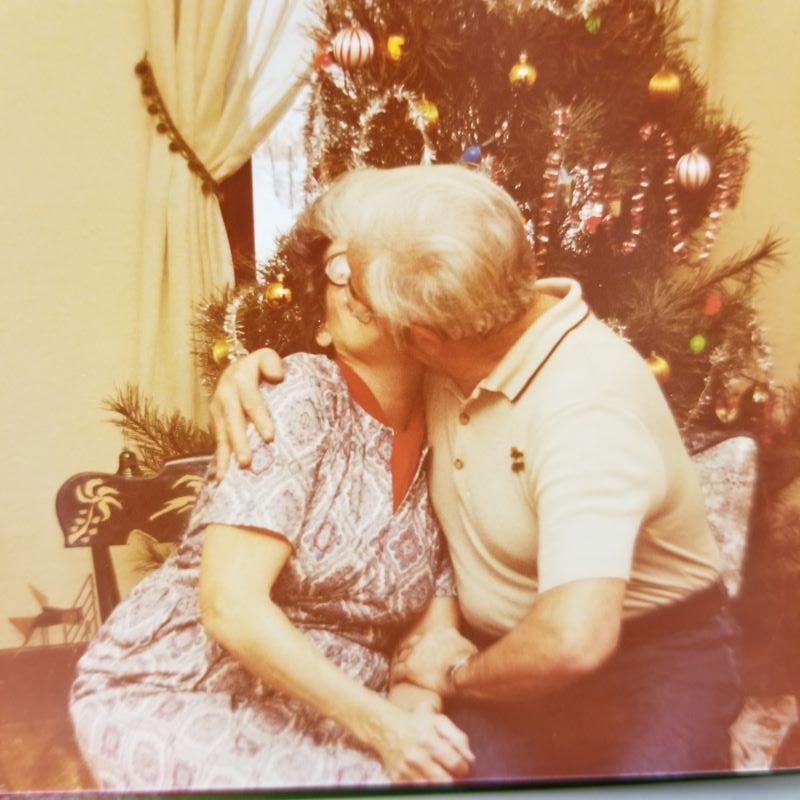
They were always game for a smooch.
That brings to mind my own father, who preached the doctrine of love: to kiss and make up after a fight, to love the unlovely. And of course, he not only preached it, but lived it: visiting literal orphans and widows as part of his (volunteer) job as a church deacon, or working to improve distribution of food to the “hungry peoples of the world,” inviting many international guests into our home. With an eighth-grade education, he sometimes got his words and especially the pronunciation of difficult Biblical words mixed up, but he longed to teach those around him to use the power of love to make a difference. “Why can’t we all live together in peace and harmony,” he would
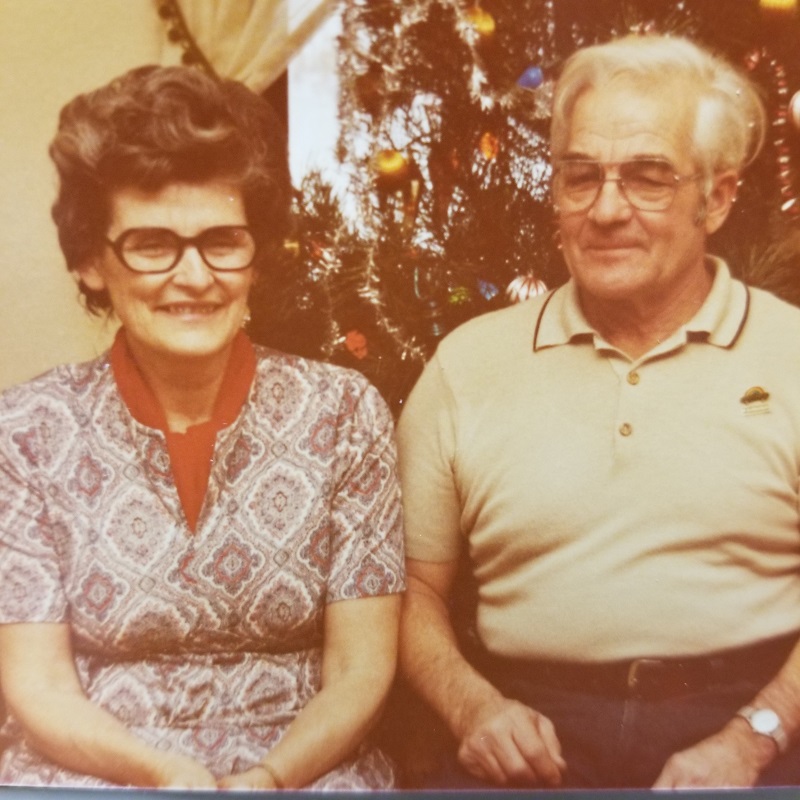
Mom and Dad looking all coy and innocent after their deep smooch.
say. Sometimes I thought he was being too simplistic or idealistic, but it’s a question to ask ourselves, at least with maybe that one person you have the most difficulty loving or appreciating.
Are you ready to try to expand your circle of those you love?
***
What have you learned about love in your years on this earth??
***
Send your comments or confessions or stories to me at anotherwaymedia@yahoo.com or Another Way Media, P.O. Box 363, Singers Glen, VA 22834. If you’ve missed some columns in this series, I will make them all available by email (and online as a PDF) at the series’ conclusion. Just let me know.
Another Way is a column by Melodie Davis, in syndication since 1987. She is the author of nine books. Another Way columns are posted at FindingHarmonyBlog.com a week after newspaper publication.
Another Way for week of February 29, 2020
Wandering Hodge Podge
[Editor’s note: Seventh in a ten-part series on physical, mental, relational, and spiritual health.]
I sent this out to newspapers for the fifth Friday in February. If you wonder how often five Fridays in the shortest month happen, it is only once every 28 years. You can find any little factoid wandering around online, or as we used to say, surfing the Internet, and that’s where I got this info.
Our word for this week is wander. I love the hint in that word of freedom and impetus to explore, to go beyond our usual routine or habits and comfort zones, to a brand-new place.
I think we typically think of nature as a place to wander, and I love it, either with a companion or alone. I began those wanderings as an early teenager—walking up a hill on our Indiana farm (my Virginia-born husband would scoff and call it a small rise)—where I would sit at the end of a day pondering my life, future, relationships, hopes, fears, and beliefs. So the physical act of wandering away from our house, barn, and chicken houses to a space where I didn’t go every day allowed me time and space to process life, and dream.
As a couple we enjoy hiking and Virginia is a splendid place to explore trails aplenty. We have not begun to visit all of our state parks—partly because our go-to place is Shenandoah National Park. Now that we have senior passes we can go to any national park for free. Just one of the many benefits of aging. (We landed those passes before the recent price hike, but well worth the investment even at $80 if you travel at all.)

Zion National Park, Utah
My father and mother introduced us to national parks on a six-week family journey to the west coast in 1964, visiting at least 12 parks: Yosemite, Glacier, Crater Lake, Yellowstone, Mt. Rainer, Sequoia, Redwood, Mesa Verde, Petrified Forrest, Grand Canyon, Rocky Mountain, and the Badlands. All are unusual places in which to wander and discover the many natural worlds out there. Since then I’ve checked off about seven additional national parks from my list.

Long ago: Sam’s mother, Tanya, left, showing one of our kittens to friends at school.
Wandering can also refer to just trying something new—without traveling one block or mile or kilometer. Maybe plant a back porch garden—as we’re nearing spring. Wander around a museum you’ve never bothered to visit. My grandson was recently rewarded for good behavior by a trip to a large pet store: not to buy anything, but to see and enjoy a variety of animals and reptiles. Sam would have loved a kitty but with allergies, he had to leave them in the store.
Or, this may seem like an unusual example of wander, but this past Christmas, I put “billfold” on my Christmas list when my husband begged me at the last minute for ideas. When I opened that gift, it was lovely, and had a multitude of pockets and card slots, but I was like, uh, this is so big! How will I ever put it in my purse? Or should I just use it as my purse? No, there are too many things I like to keep with me when I’m out and about. Hadn’t he noticed the size of my purse, and the billfold I had before? Could I change my habits and go lighter using the new billfold as purse? My mind wandered through many options as I deeply wanted to embrace this sweet gift from him.
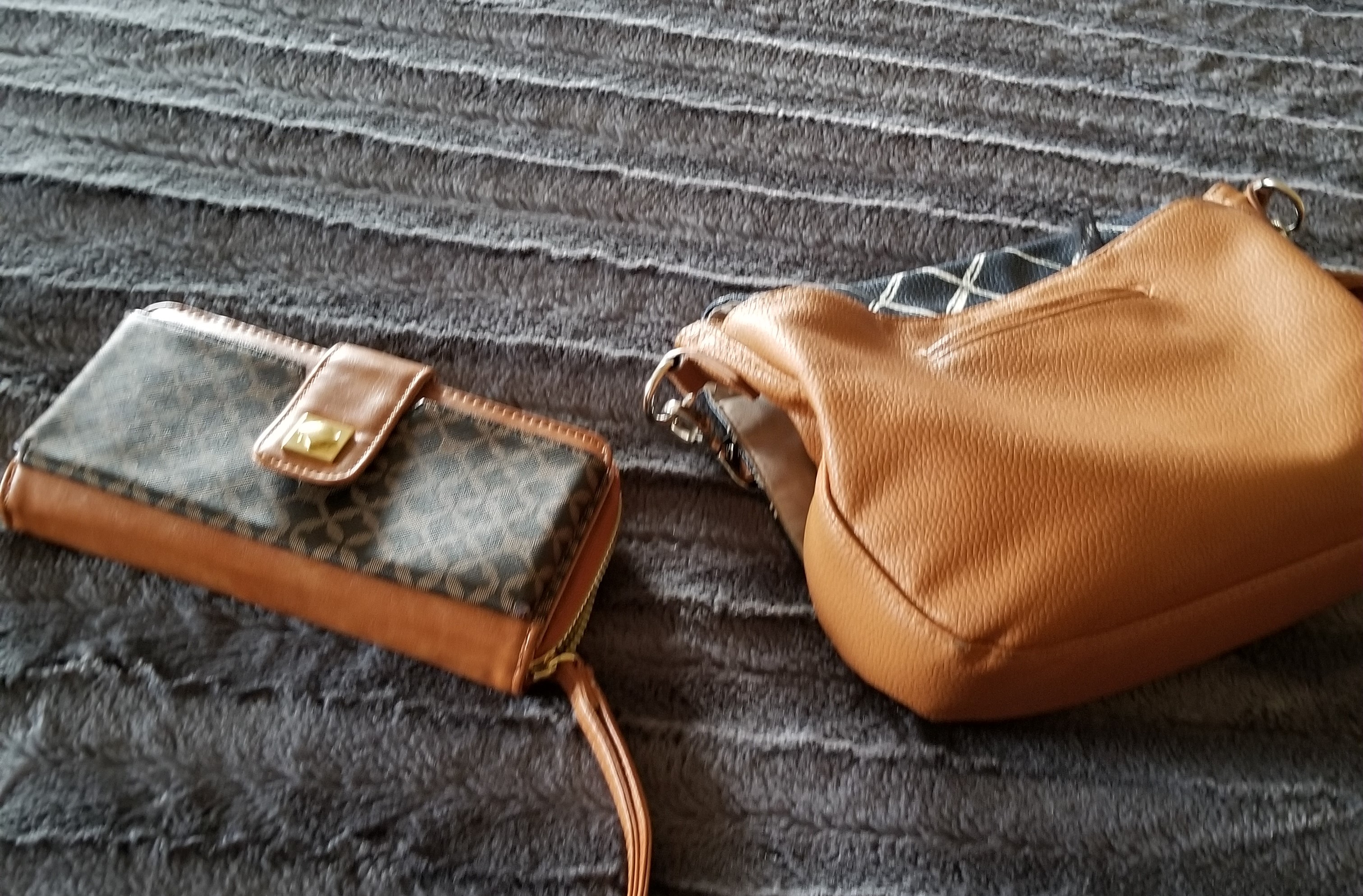
Could I fit this big billfold into my current purse??
Then I decided to just try it out. It was new territory for me. I went “wandering” into it, with a little trepidation in disappointing him over his gift if it didn’t work out. But now, I love it!
So you never know what a little experimenting and wandering around will bring about. Being open to the new and different can open up innovative options and even worlds.
I hope you feel compelled to spend a little time “wandering” today, even if you must work on an assembly line, in a restaurant kitchen, office, or are home with children. Pause and find something new to ponder or explore or celebrate. Maybe you’ll wander out to the kitchen and just cook up something different for supper. You might enjoy branching out.
***
How do you “wander”? Why?
What have you learned about yourself or others when allowing your mind, spirit, or body to go wandering (but not philandering!!)
***
Or, were you ever given a gift you weren’t sure you liked but came to love it?
I’d love to hear your comments here.
If you’ve missed some columns in this series, I will make them all available by email at the series’ conclusion. You can request it now and I’ll send it to you in a few weeks. Contact me at anotherwaymedia@yahoo.com or Another Way Media, P.O. Box 363, Singers Glen, VA 22834.
Another Way is a column by Melodie Davis, in syndication since 1987. She is the author of nine books. Another Way columns are posted at FindingHarmonyBlog.com a week after newspaper publication.
Another Way for week of February 21, 2020
Me Defy? Oh My!
(Seventh in a ten-part series on physical, mental, relational, and spiritual health.)
Our seventh action verb for this week is defy. That scares me. How am I going to write about defy?
I am not an in-your-face kind of person. I don’t recall ever participating in an outright protest about anything. Sorry folks. I have never wanted to make enemies on either side. I have strong beliefs and my family and friends mostly know them. I just don’t put them out there in public. I’ve signed some petitions, wrote plenty of letters, even sent opinions to editorial pages.
When I was younger, I wasn’t one to defy my parents or their wishes—unless it was in the area of marrying a man who was not of our faith denomination. Both Christian, I have never hidden the fact in my writing that he grew up Lutheran and I grew up Mennonite and we compromised by going Presbyterian. When we had all three daughters baptized as infants in our Presbyterian church, I maybe defied the wishes of my father. I know we disappointed him in that.
So I have to ponder, why and how is defy a good action word for us?
A hymn we sang recently gave me new inspiration. Based on the poem or writings of St. Francis of Assisi (or at least attributed to him), I loved these lyrics adapted by Sebastian Temple in 1967:
Make me a channel of your peace.
Where there is hatred, let me bring your love.
Where there is despair in life, let me bring hope,
Where there is darkness, only light,
And where there’s sadness, ever joy.
These approaches to life certainly defy the status quo. It is an ongoing struggle to face life with hope and joy when so much sadness, anger, evil, and misunderstanding seem to stain and drag down everyday life.
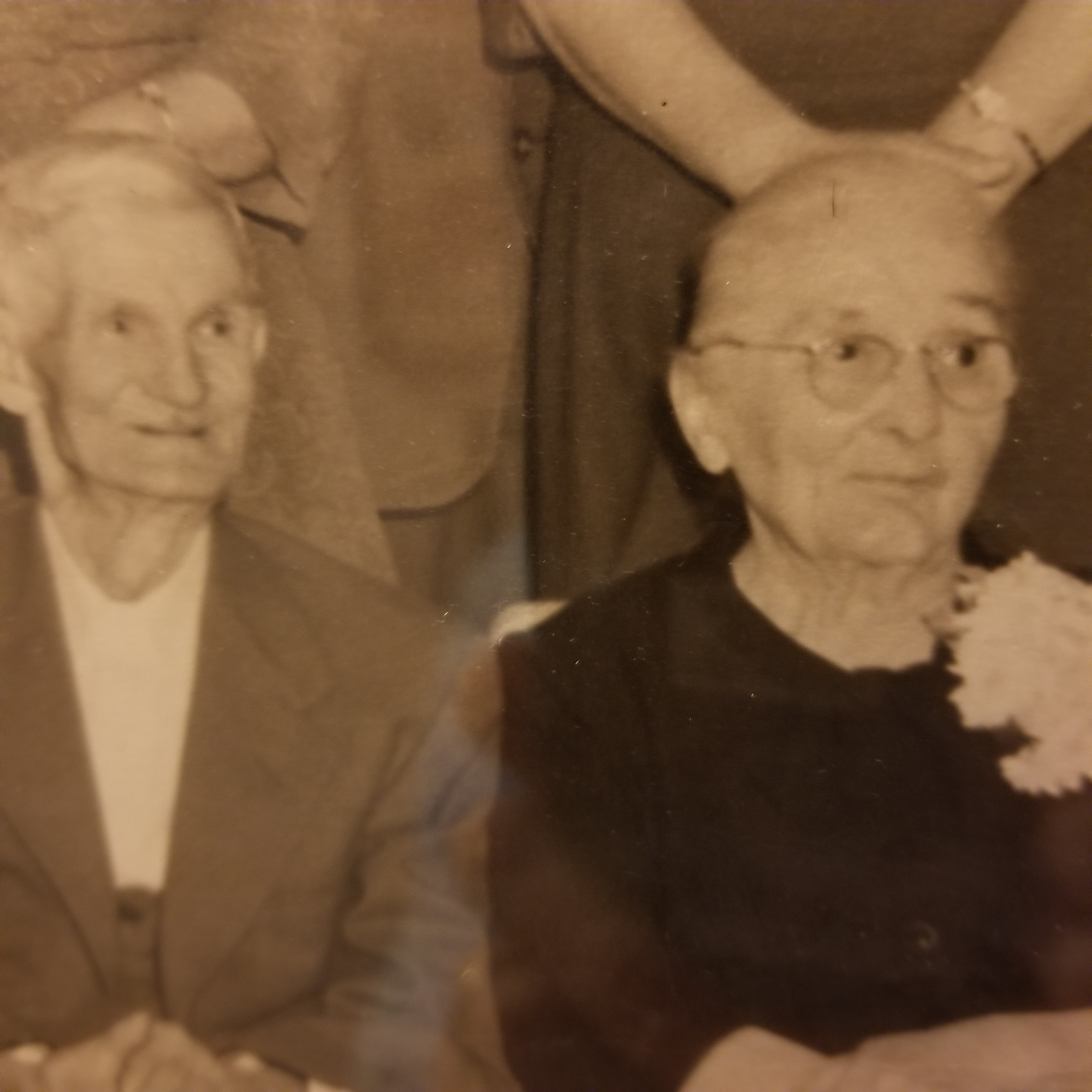
Grandma Miller, right; Grandpa Miller, left. This is the way I remember them. Probably on their 60th wedding anniversary, which I do not remember.
It takes defiance to forgive, to keep on giving when one you love does not give back, to pray when there do not seem to be any answers, to get up and go to chemo another day—even to send your littles out the door to school.
Another word for much the same thing is dare and here I think of my grandmother on my father’s side, who died when I was ten. Grandma Miller, as we called her, (her name was Barbara) lost two of her children, one at about 13 months and the other at age 22 of the Spanish flu epidemic. Grandpa and Grandma had nine children altogether, but I’m sure she grieved and missed these two daughters as any mother would.
As an infant, she also lost her own mother just hours after she was born. Then at the tender age of five, she lost her father, whom she remembered well. Like others in that era, she had to go live with relatives and was shuffled around—those families were always large, and it was hard to house and feed all the children.
So Grandma Miller was acquainted with sorrow, grief, and loss, yet she defied the odds she faced in the beginning, and raised a beautiful and loving family. Somewhere she and Grandpa instilled in my own father his deep and abiding passion to help others. I’m sure you have had parents, grandparents, aunts and uncles who have taught you these great lessons and alternative approaches to trial and sadness.
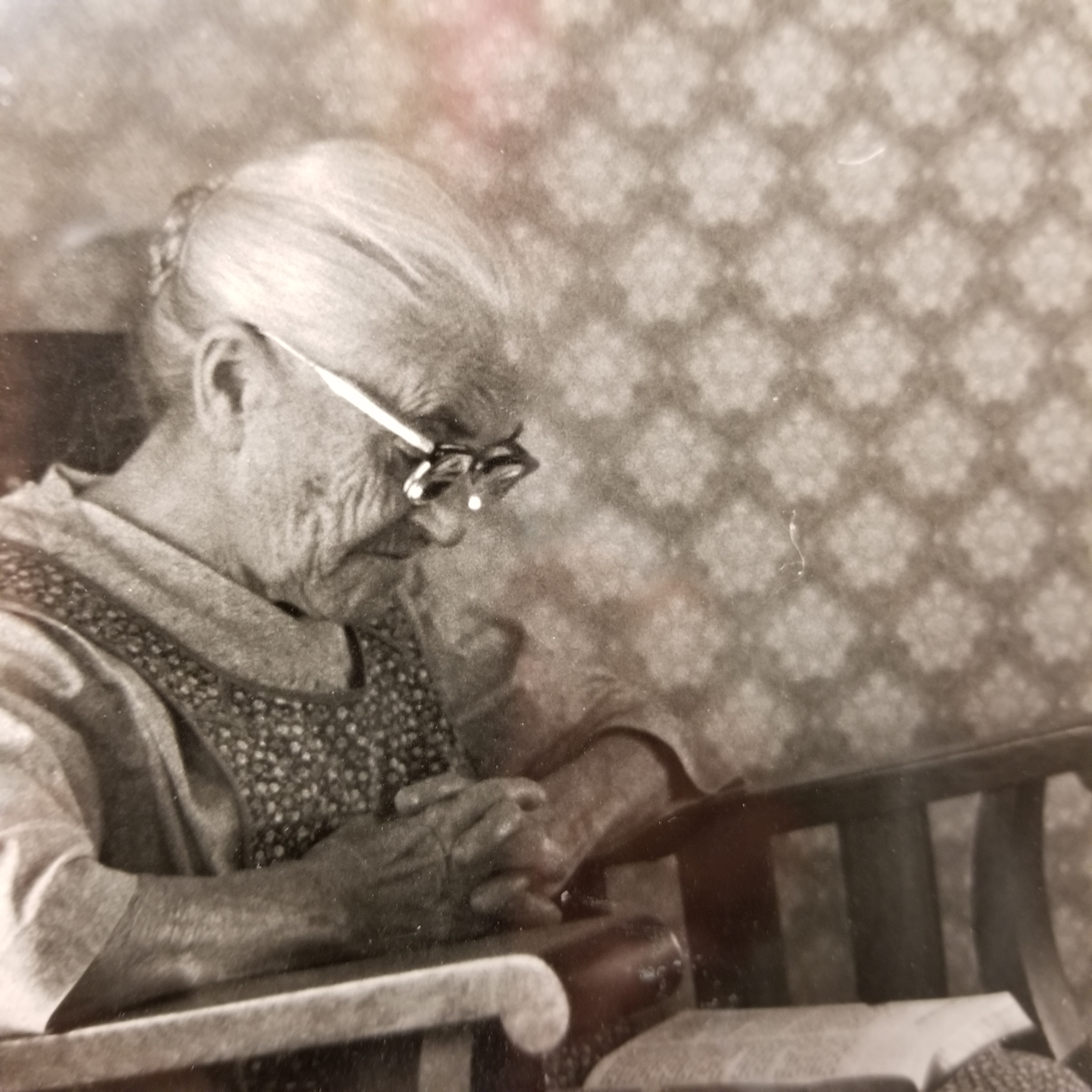
Grandma Stauffer whom I remember well, lived into her 90s and was able to hold and meet my children. Photo courtesy of Judy Yoder, my cousin.
My grandmother on my mother’s side lost her husband in a car accident when they were just in their 50s. She was a seamstress and supported herself the rest of her long life by doing sewing for others, especially alterations, using an old-fashioned treadle sewing machine (not electric).
So, defying can mean facing your life with grit and determination and a loving attitude in spite of grief, loss, hard times. Now that’s a defiance I’d like to take with me in life. Thanks, Grandma Miller and Grandma Stauffer.
Will you be that kind of role model for your children and grandchildren? God, make us a channel of your peace. May we defy odds and live with joy in our hearts.
More on Grandma Stauffer found here and here.
More on Grandma Miller found here.
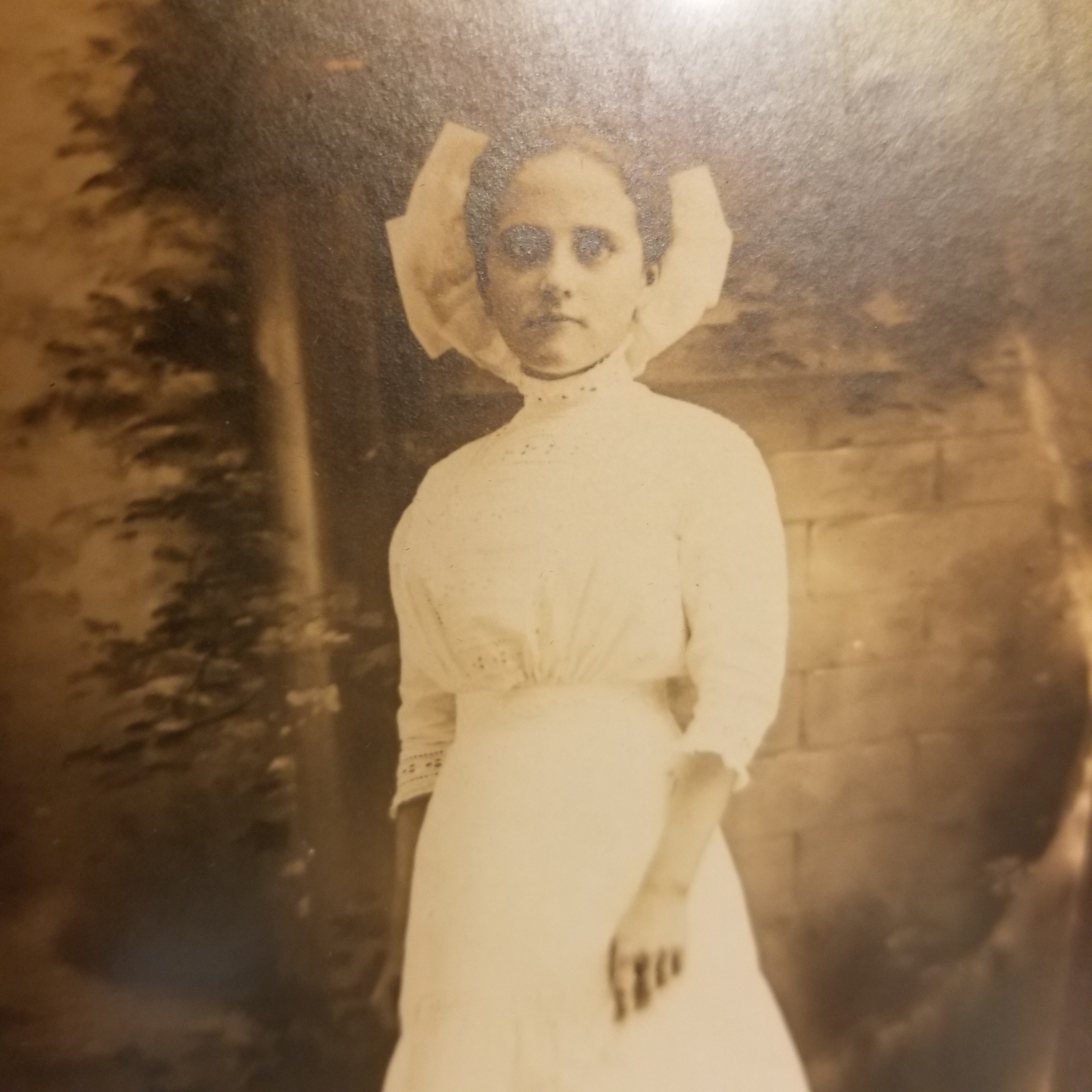
Grandma Ruth Stauffer as a young girl, probably 8th grade graduation. She was allowed to be “fancy” as shown here, before she joined the church.

Grandma Barbara Miller, on her wedding day.
***
How do you demonstrate defiance–in a good way??
What do you admire most about your grandparents if you had the privilege of knowing them?
What lessons did they teach with their lives?
What would you NOT do that they did?
Comment here!
Or send your stories or comments to me at anotherwaymedia@yahoo.com or Another Way Media, P.O. Box 363, Singers Glen, VA 22834.
I will make this series available in a PDF to send out by email at the series’ conclusion. You can request it now and I’ll send it to you in a few weeks.
Another Way is a column by Melodie Davis, in syndication since 1987. She is the author of nine books. Another Way columns are posted at FindingHarmonyBlog.com a week after newspaper publication.
Another Way for week of February 14, 2020
Crush: How We Play with Language
(Editor’s note: Sixth in a ten-part series on physical, mental, relational, and spiritual health.)
Crush used to be a downer word: “I was crushed when my son’s report card came out.” Perhaps you think of crush as smashing a pop can or stepping on a spider, or what happens to your clothes in a suitcase, or backing into someone else’s car in a parking lot, or the young one-way romance (since Valentine’s Day is here) most of us went through at one time. Well, time to step up your vocabulary!
In the last few years, a whole new meaning for the word “crush” has come into play. This is the 6th of great action verbs we’re exploring for several weeks, as found on my favorite cereal box, “Kashi.”
An online dictionary “The Free Dictionary” gives one current usage as “to succeed at something in a particularly impressive way. Often used in the past tense.” Example: “Wow she really crushed that exam.”
They give these other examples: “Her presentation for the CEO went really well. She totally crushed it!” Or, another: “That band always crushes it, so I’m not surprised their halftime performance was spectacular.”
Urban Dictionary (another online reference) defines the current usage of “crushed” as “Being in great shape, looking good, feeling positive, getting more done and generally being a better person.” Example: “She totally crushes that outfit!” Or maybe “Bryce so crushed that solo.”
I’ll confess I’m probably not young enough or hip enough (is “hip” even in anymore?) to use crush on a regular basis and not inclined to try to sound young by using such. Yet I kind of like the Urban Dictionary definition above: feeling positive, getting stuff done and done well.
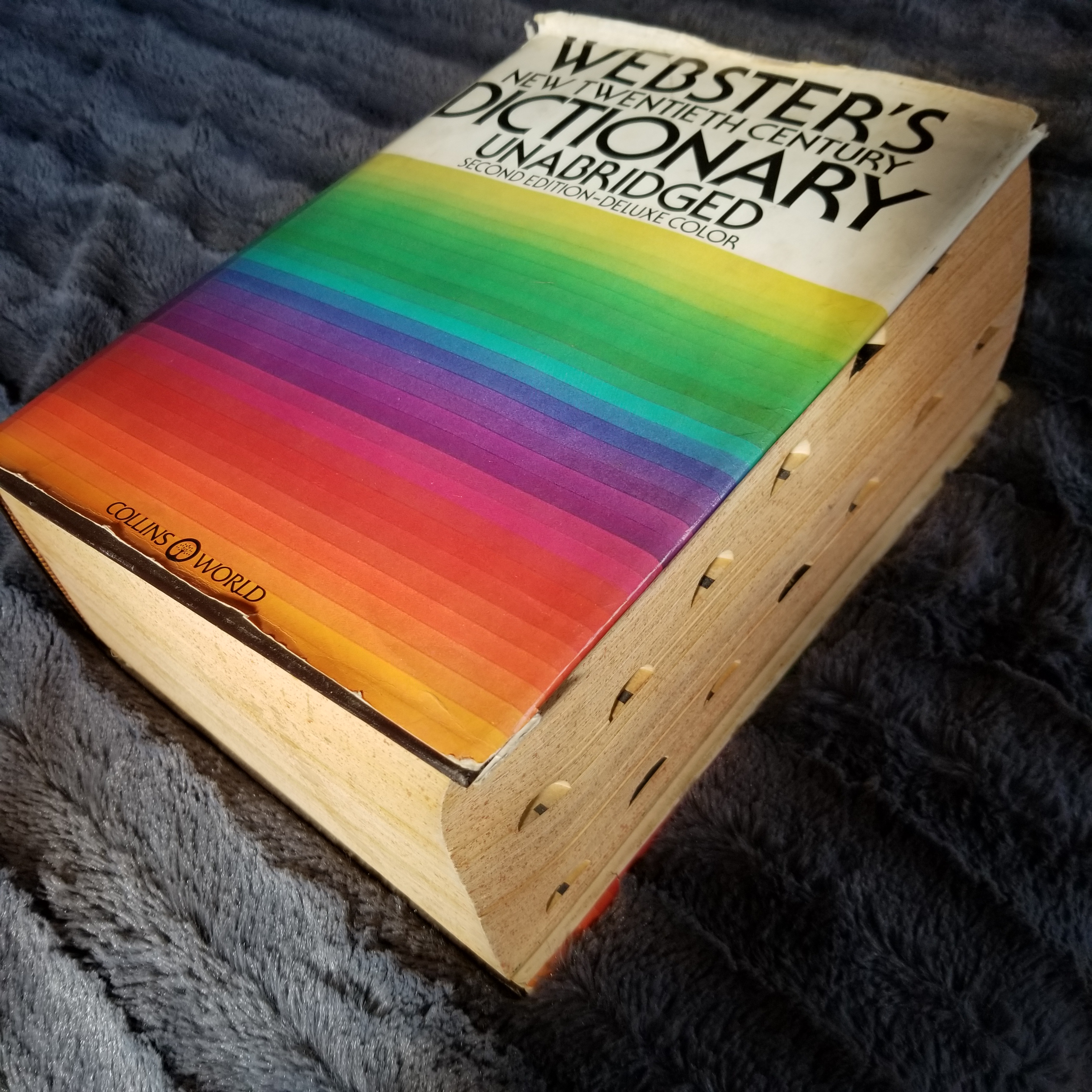
Do you still have one of these old behemoths? What should we do with ours? 1978 version.
Language changes. We used to refer to new words or uses as coining a phrase. Now, I see that that phrase itself is mostly used in a sarcastic fashion. The Cambridge Dictionary (again, online, sorry Mom), says that “to coin a phrase” is “something you say before using an expression that has been very popular or used too much.” Like this: “Well, to coin a phrase, she stopped me dead in my tracks.”
Some old words or expressions become archaic and new usages (such as turning nouns into verbs) is part of how we live in the 21st century. We’ll have to wait see whether “She crushed it” to describe a daughter’s role in a musical still works in 20 years. Or, thinking ahead to some early interests and recreation for our grandsons, “He totally crushed that 5k run” or “Wow, he crushed that pass!”
Some changes in language we resist, as we should. It’s good to keep up with changes, to be in the know, to be able to listen and communicate and relate. But we can choose or not choose to adopt new meanings or usages as we wish. Especially the vulgar.
Back to the best meanings of “crush” as positive feelings flowing, and knocking stuff off your to-do list. How will you rise to the task today or this week?
I’m definitely a list person. I’m the kind of woman who puts something on her list just so she gets the satisfaction of crossing it off. I like the old-fashioned paper and pencil (or pen) lists, although since those lists have a way of getting lost and buried, I have been known to take a picture of a list on my phone so that I’ll be sure to have it in the grocery store. I know I know, there are apps and functions on my phone where I can make notes to myself, but I’m a low app person.
Did I just coin a phrase? Nah, probably not.
But set out to enjoy your day. Rain in the forecast or not, set your goals high and you just might find yourself crushing through that list!
***
Did I “crush” this column? You tell me! I’m game whether positive or negative.
What’s your favorite “newish” word?
What is a word you could live the rest of your life and never hear again??
Comment here!
Or send stories or comments to me at anotherwaymedia@yahoo.com or Another Way Media, P.O. Box 363, Singers Glen, VA 22834.
Another Way is a column by Melodie Davis, in syndication since 1987. She is the author of nine books. Another Way columns are posted at FindingHarmonyBlog.com a week after newspaper publication.
Another Way for week of February 7, 2020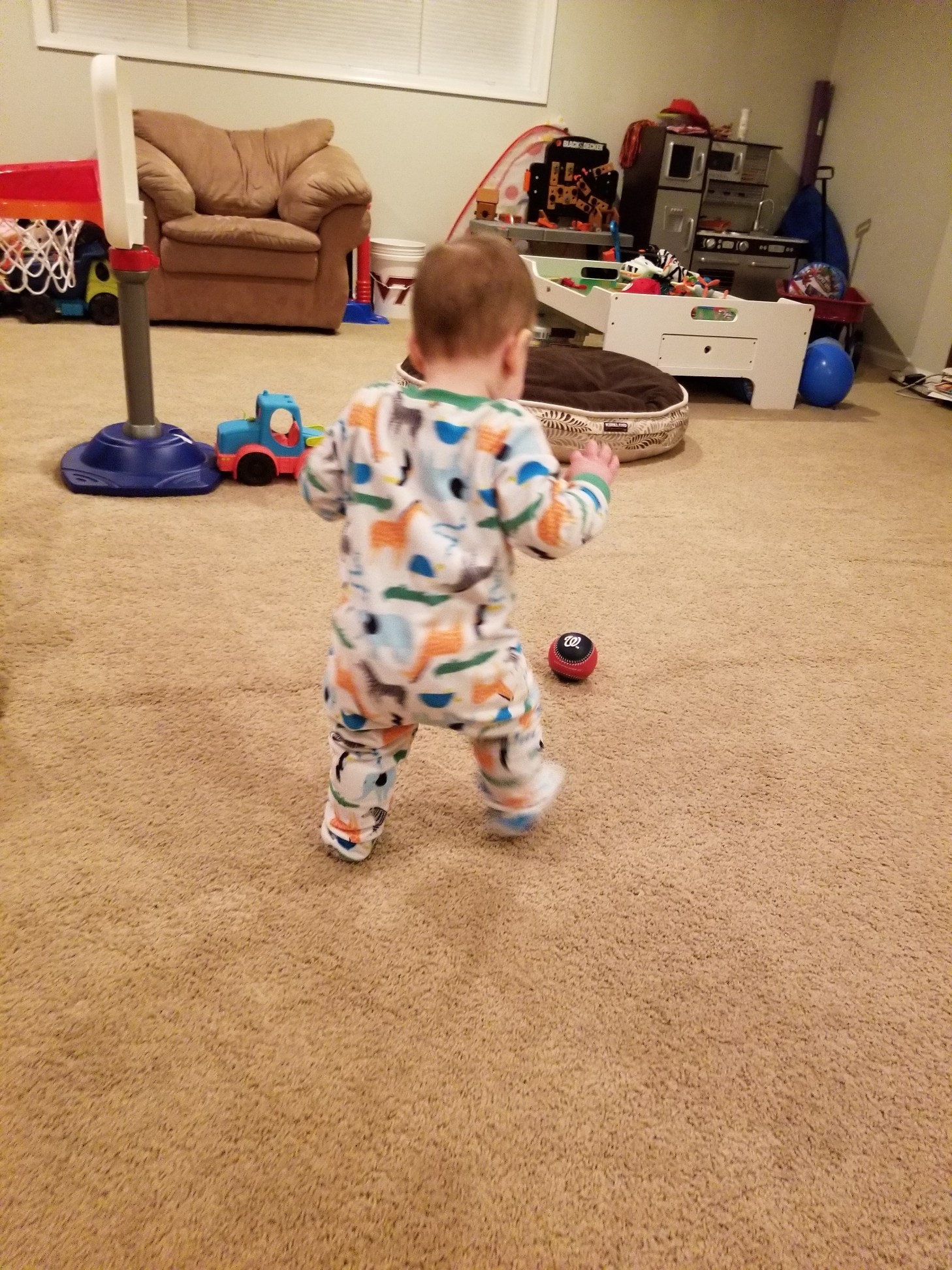
Just Go!
(Editor’s note: Fifth in a ten-part series on physical, mental, relational, and spiritual health.)
Our youngest grandson turned one last September and has been perfecting his locomotion skills all along the way. From almost day one, he had watched his older brothers walk and run and tussle and play ball.
Like many babies, he went through a very plump phase when he mostly got to lay around and then sit, enjoying generous helpings of mother’s milk. So he didn’t break any records learning to walk. But never fear, slow and steady gets most little ones there! A healthy infant is born with the urge to go (and I don’t mean here the filling of diapers).
Last fall he began crawling at around one year: I loved seeing him GO and go fast with his army crawl, and finally mastering the true crawl up on his knees.
Then just before Christmas, Edward began standing very well by himself, and launched into a few toddling steps, which inevitably landed him on the floor. Did he give up? Of course not.
At Christmas, towards the end of his five-day visit at both grandparent houses, he showed off his new walking triumphs, looking almost giddy producing great smiles and cheers from us. He seemed to love the attention. But I noticed he did his best walking when people were not cheering him on—donning a face of tremendous focus and putting himself all in with careful balance and forward movement.
Edward–focusing on his walking.
Finally, several weeks later, at his brother’s birthday party, he nails early walking. I observe that he raises up his husky little shoulders—and pushes his elbows out ever so slightly from his sides, which I guess helps him balance. He commences to walk the complete circuit from his living room, through their dining area, into the kitchen, and then back to the living room.
My daughter says she has read that babies and toddlers often do best at developing a new task when they concentrate on one thing at a time: crawling, talking, walking, running. They may not get into much vocabulary as they put great effort into standing up, balancing, going forward. Go Edward!
It is amazing, isn’t it? When you look at animals, many somehow begin walking (maybe falling too) their very first day on earth, longish awkward legs and all.
My husband and I both had fathers who had to learn to walk again. When Stuart’s father was just a young boy and barely started school, he had a debilitating illness. After months in bed, he was able to relearn the steps of walking. And my dad, much later in life, experienced extensive diabetic neuropathy in his legs. It landed him in a wheelchair, with experts at Mayo Clinic saying he would likely never walk again. That was like saying “sic ‘em” to a dog. Through prayer, therapy and faithful exercise at home, Dad was eventually able to walk again with just a cane (or two). My youngest daughter Doreen was mastering walking at the same time and she enjoyed playing on his walker.
This series where we are using action words to inspire us (prompted by my cereal box compels me to take a walk—every day if I can, even if sometimes it is pretty short. My mother started me on this habit and I’m very thankful she did. My sister-in-law also inspires me. Walking is not always an easy thing for her given various physical issues and demands on her time. But she keeps going too.
If you haven’t caught on yet, this week our word is go. As I was writing this early morning, I looked up and noticed the sun spreading beautiful color across the whole sky. I don’t think I need to tell you I quickly left my computer to GO out and enjoy the rising sun. Neither camera nor words do it justice, so just GO if you can and enjoy a glimpse or a walk, even if it to just the nearest window.
***
Any stories of your children or grandchildren learning to walk? What do you remember or observe?
***
What or who gets you going–compels you to be active?
I’d love to hear from you. Comment here or send to me at anotherwaymedia@yahoo.com or Another Way Media, P.O. Box 363, Singers Glen, VA 22834.
Another Way is a column by Melodie Davis, in syndication since 1987. She is the author of nine books. Another Way columns are posted at FindingHarmonyBlog.com a week after newspaper publication.
Another Way for week of January 31, 2020
Getting into the Flow
(Editor’s note: Fourth in a ten-part series on physical, mental, relational, and spiritual health. #KashiCereal)
What does the word “flow” bring to mind? Is it a good word? Does it make you think of someone who doesn’t like to cause ruffles and perhaps not stand up for what he or she believes?
Or do you think of a beautiful river or endless ocean where waves flow on and on, carrying you to new adventures?
When you are in traffic or a parking lot, are you patient to go with the flow of traffic, or always in a hurry to get where you are going?
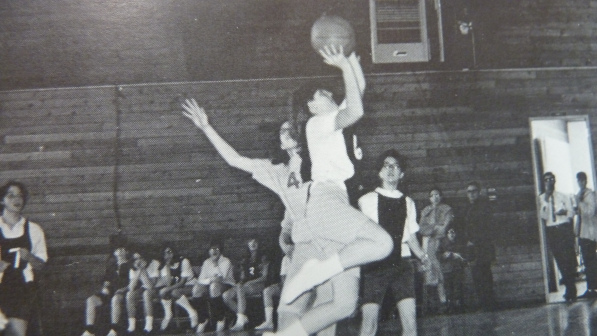
Sister “Pert” flowing up for a layup, circa 1966.
Flow can bring to mind all of these things and more. I picture a couple waltzing effortlessly on a dance floor. A basketball player dribbling in for a layup and she just flows up near the basket and it beautifully goes in. (That would be my sister. Short, but very good.)
But then I pondered: why did the marketing people for my Kashi cereal include Flow in their list of “Go” words as something to aspire to (such as the others we’ve explored so far: rise, play, spark). Was there a meaning I wasn’t currently aware of?
Wikipedia comes to the rescue, from the field of psychology: “Flow, also known as the ‘zone,’ is the mental state of operation in which a person performing an activity is fully immersed in a feeling of energized focus, full involvement, and enjoyment in the process of the activity.” This flow state is also called being “in the zone.” Or I’m sure you’ve heard the expression, “she’s in her element.”
When writing flows, I definitely get in that zone and I know several fiction writers who would identify with that. But again, it doesn’t just have to be a creative enterprise like writing or painting that gets you there. My other sister (not the ball player) used to work in an operating room and was in her element in that setting. A preacher like Martin Luther King Jr. was certainly in his zone in his famous “I have a dream speech.” People describe this kind of flow as total concentration, feeling like you know what you’re doing and happy to be doing it, effortlessness, even an altered perception of time—like time doesn’t matter. A person kneading bread dough might be lost in a flow of rhythmic punches.
For another angle on the word and what thoughts it brings, are you familiar with the beautiful hymn, “My Life Flows On.” Many of us—though longtime Christians—have only learned this hymn in the last 30 or 40 years. It likely wasn’t a hymn of your childhood if you’re my age or thereabouts. The author/composer, Robert Wadsworth Lowry, was a Baptist minister. Even though it was written and first published back in 1869, it was not included in many hymnals for decades. In fact, it only appeared in one hymnal between 1900 and 1966, according to Wikipedia. (Also known by the title “How can I keep from singing,” the song was popularized by folk singer Pete Seeger who changed some of the lyrics in his version so they weren’t specifically Christian.)
But now it is an oft-sung favorite hymn especially at funerals or memorial services where people are looking for comfort and hope. The strong words of the refrain, “No storm can shake my inmost calm while to that Rock I’m clinging” easily draw tears from many of us.
The first verse starts out:
“My life flows on, in endless song,
Above earth’s lamentation.
I catch the sweet, though far off hymn,
That hails a new creation.”
These words are precious as we perhaps lament and grieve the loss of a loved one. We can cling to the solid rock of faith in a loving God. We keep going. Our loved one is no longer experiencing the lamentations we have on earth. And that is a precious promise.

Stained glass windows in Scotland, photo by Doreen Davis
***
If you are currently down and not “in the flow,” I hope and pray this lifts your spirits and that you will feel God’s arms wrapped around you in endless love. And if you’re just facing an ordinary day, perhaps you’ll find your flow in something you love to do.
***
What is your all time favorite hymn, or maybe the top three?
***
Is there a funeral or memorial service song you especially love or relate to?
***
You may want to check out the new Mennonite hymnal Voices Together coming later in 2020 from Herald Press.
***
For a free booklet, “Losing Someone Close,” comment here, or write to me at anotherwaymedia@yahoo.com or Another Way Media, P.O. Box 363, Singers Glen, VA 22834.
Another Way is a column by Melodie Davis, in syndication since 1987. She is the author of nine books. Another Way columns are posted at FindingHarmonyBlog.com a week after newspaper publication.
Another Way for week of January 24, 2020
That Creative Spark Within
[Editor’s note: Third in a ten-part series on physical, mental, relational, and spiritual health. #Kashi]
Do you remember arguing or fighting over who got to read which cereal box as a kid? (And kudos to those parents who keep the TV or other screens off during meals or morning routines.)
I was amused and gladdened recently when our visiting grandson, Owen, eagerly grabbed for my cereal box of “Kashi Honey Almond Flax Crunch” (I know, quite a long name). The box on its edge has a large print list of great invigorating words I’m using for this series of columns. Spark is our word this week. Owen is only three, so he cannot read but certainly recognizes letters. I think he was studying this box because of the letters he knew.
One of the most frequent questions I have been asked as a columnist over the years is “Where do you get your ideas of what to write about?” Teachers and writing instructors sometimes give word prompts to start students’ minds churning and perhaps unclog a writer’s block. That list of action words on the cereal box serves as a source of helpful prompts or thought starters. A spark.
In general, anything that stirs my interest or strikes me as an interesting thought or statement, or an incident that happens—whether good or bad—can serve as an idea or prompt for my writing. And yes, staying fresh and finding new ideas is sometimes hard—especially when you’ve been at it at least 50 years (counting my upper high school years when we did a lot of writing).
A former pastor said she liked planning sermon series for her summer messages because pastors, like columnists, sometimes scrounge for topics. Many pastors use the Common Lectionary of scripture passages as a guide to their subjects. Of course, a single scripture or verse can point one in multiple directions for an actual sermon focus, so again, sometimes a structure or series is healthy for the weekly anxiety of “what shall I write (or speak) about this week?” Anything that sparks a direction is a gift.
How does that apply to those who are not pastors or writers? How is your imagination sparked to tackle a new direction?

Grandpa and grandsons, “creatively” putting together a wooden racing car (kit).
My husband is not a writer or pastor (and he would laugh and shake his head at that comment), but he is very creative and likes to make stuff. He does welding, wood working, minor construction, improvising, fixing up jigs or ways to approach something that make the outcome easier. Especially now that he has some mobility issues that make it hard to get up from the floor (as in the garage), he’s frequently inspired to build props or rolling carts or use an old-fashioned fulcrum to lift a heavy item. If he gets stuck trying to solve a given problem or next step, he has to ruminate on it for a while. Eventually sparks fly and an idea is conceived. The point is, sparks of creativity hit us all—or they should—whether we’re trying a new recipe, painting a picture, composing a song, dealing with a child’s problem, or a difficult customer. You get the idea.
A spark is like an epiphany that hits your brain and probably literally lights it up, according to those who study such things. God gave us our brains and the ability to imagine solutions or responses to the dilemmas that face us. I think of Michelangelo’s painting on the Sistine Chapel ceiling in Rome. The painting shows the creator of the universe reaching out to give life to the first human. A spark!
If words are your thing, think of James Weldon Johnson’s memorable and moving poem about creation you may have memorized back in high school, like I did. “And God stepped out on space, and he looked around and said, “I’m lonely, I’ll make me a world.” A spark!
Thanks be to God for the world and life given us, our brains, our creative impulses, and how we can continue to spark new ideas, activity, love, and life.
***
What sparks your imagination?
What is your favorite creative activity?
What do you wish you could do?
Have you ever launched out on a new hobby or skill or sport, and how did it go?
***
Share here, or send to me at anotherwaymedia@yahoo.com or Another Way Media, P.O. Box 363, Singers Glen, VA 22834.
Another Way is a column by Melodie Davis, in syndication since 1987. She is the author of nine books. Another Way columns are posted at FindingHarmonyBlog.com a week after newspaper publication.
The author has received no remuneration for this series of columns on “Go” words inspired by the Kashi cereal campaign.

 findingharmonyblog