

(Parts of this reblogged from my post over on Mennobytes Blog on October 11, 2013.)
For one and a half days in September, I was invited to speak at Amigo Centre near Sturgis, Michigan on Mennonite cooking. I’ve been looking forward to it all year and boning up on how to make homemade noodles which I shared in posts here and here and here.
But at Amigo Centre I would learn from a real Amish cook. More on that below. And I did learn a lot. Such as today’s Amish cooks use noodle cutters and dough flatteners like everyone else, to make the job go much easier than in the experiments I tried above.

The highlight of my time with these Road Scholars was a session arranged by Mandy Yoder, adult program director at Amigo Centre. She invited a local Amish mother, Maggie, to help the participants learn how to make homemade noodles. So we all got to make our own batch, cut, and dry them—using a beautiful mini-drying rack made for us by an Amish woodworking shop.

Maggie stirring a big batch of dough.
Maggie is a petite young woman with two toddlers at home—who I think was happy to send them off with her husband for the morning. She seemed to enjoy interacting with us and gave permission for us to photograph the process including herself, as long as she did not pose. She and Mandy made up a huge batch of homemade noodles for us to enjoy at lunch that day, and then helped us make smaller batches to roll out and take home. There was even one batch of gluten-free noodles for a participant with that allergy.

Maggie, center, helping Road Scholar participants manage their dough.
It was a little like 7th or 8th grade home economics all over again (I know, few schools still offer these basic classes), with overgrown “kids” wandering around with their batches of dough asking questions:

Did it need more water?
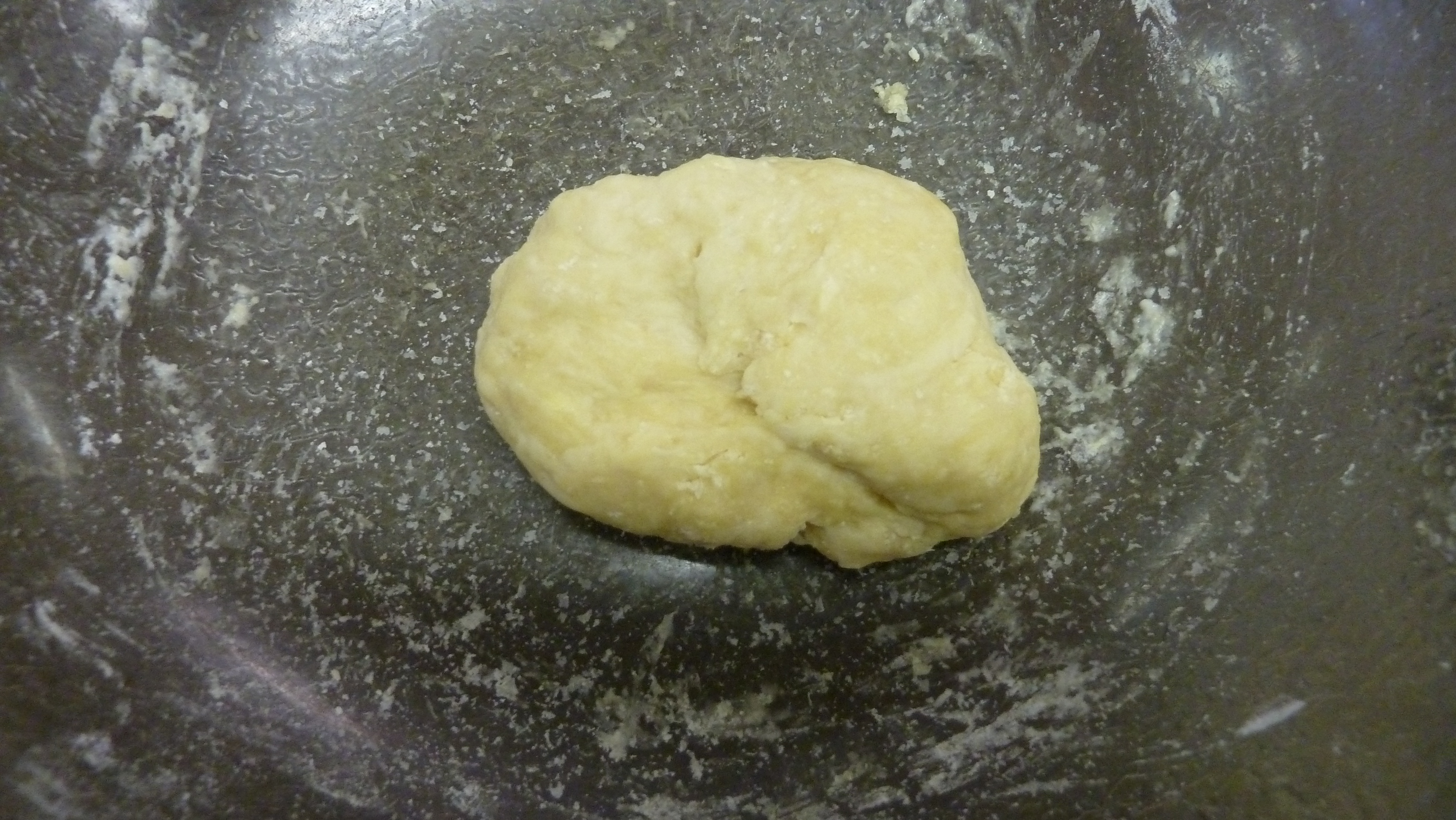
Does it have enough flour?

Is my dough too sticky?
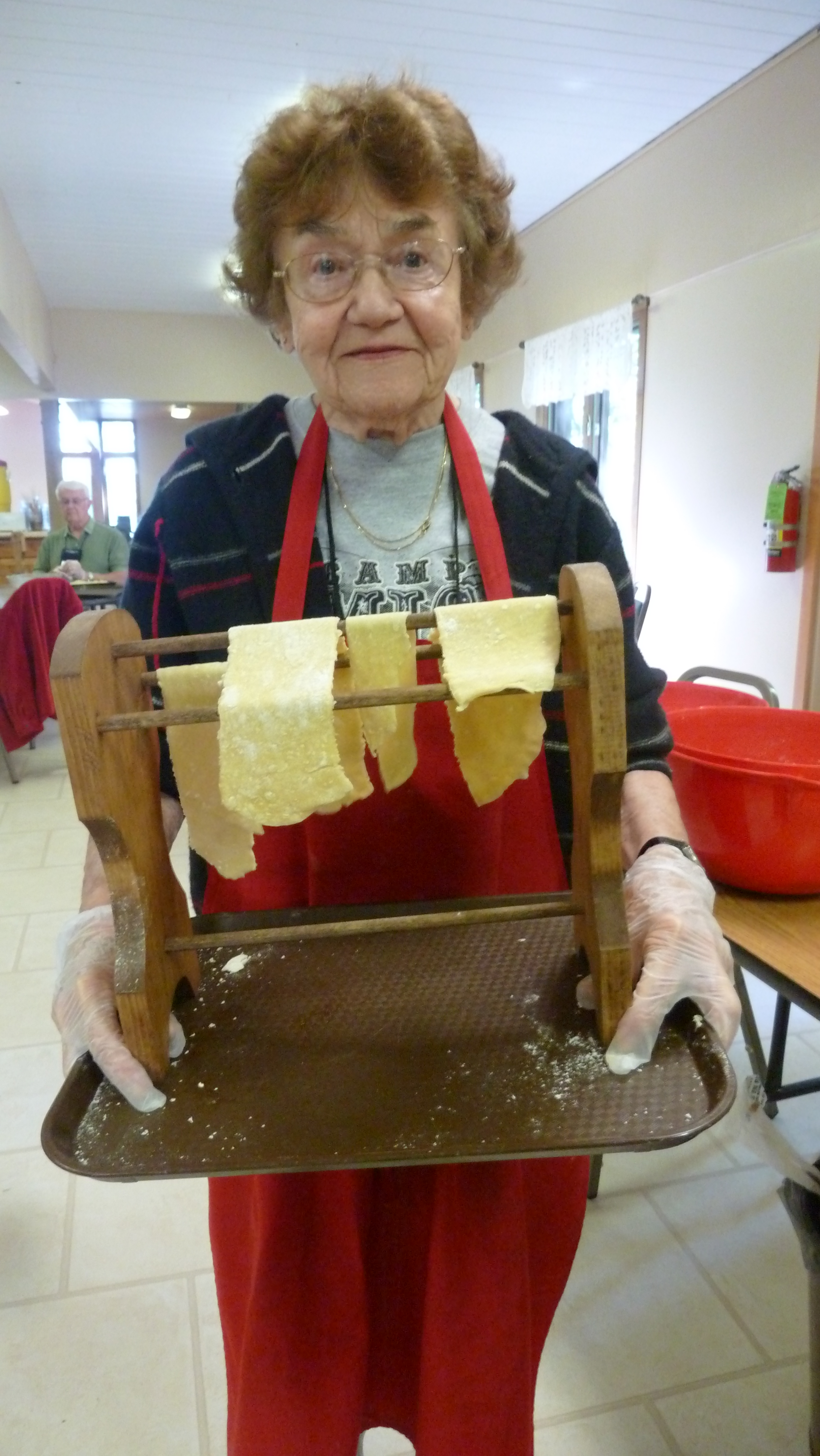
Are mine dry enough to run through the cutters?
Some chopped up their noodles; some choose finely cut settings, others a wider noodle.

Will any of us ever make homemade noodles again?

Yours truly, learning from better cooks.
Without the roller and cutters, it is a little daunting. In preparation for this session. I made two batches including one using lard and I’ll have to say Maggie’s recipe was even better than the one I tried, and she didn’t use any lard. So if economic conditions get really tough, it is nice to know that you can still make food-that-will-stick-to-your-ribs using just flour, water, eggs and a dash of salt!
Here are the basic proportions we used:
3 egg yolks
3 TB water
1 ½ c. flour
¼ t. salt
Beat egg yolks and water thoroughly. Stir in salt and flour. Knead together. Form a small ball or two, Roll out. Dough will be very stiff.
Someone asked what is different about Amish noodles. I can’t find now where this was posted or written (if someone knows, please help me out!), but here is what someone said: “Doing a little research it appears to be a difference of [using] eggs and the type of flour [used] and the part of Italy you are from for pasta. Amish noodles made mostly by descendents of German or Swiss use eggs and all purpose flour. Pasta, depending on where it originates in Italy, will sometimes use olive oil or eggs or Semolina flour with the all purpose flour. Amish noodles are very doughy and tend to be cooked until soft, and not al dente.”
To muddy the waters even further, here is someone going on about the differences between Chinese noodles, Italian pasta, etc.
And a small caution: since there are no preservatives in these, eventually the noodles can get, er, buggy if just kept in your pantry. You might want to try freezing the dry noodles if you will be shelving them longer than 2-3 months.
***
The setting was a second part of a week-long “Study in Shared Heritage: The Amish and Mennonites,” with 24 participants in the international Road Scholar program (formerly ElderHostel), which combines learning and tourism. They had lectures, looked at videos, visited an Amish home and woodworking shop, and other Amish businesses, and were treated to an Amish “thresher’s” dinner. None of the participants were Mennonite, but all were interested enough in everything Mennonite that they spent a week learning and absorbing Mennonite and Amish faith and culture. Some of them already owned More with Less Cookbook.
***
Camp Amigo/Amigo Centre is (almost) world-known for its Baked Oatmeal (if the World Wide Web counts.) Seriously, I was surprised to find their famous baked oatmeal at the awesome “Calories Count” website giving a complete nutritional breakdown.
Waaahhhh … pause … repeat … waaahhh …. Wimper wimper …. Waaaahhhhh!!
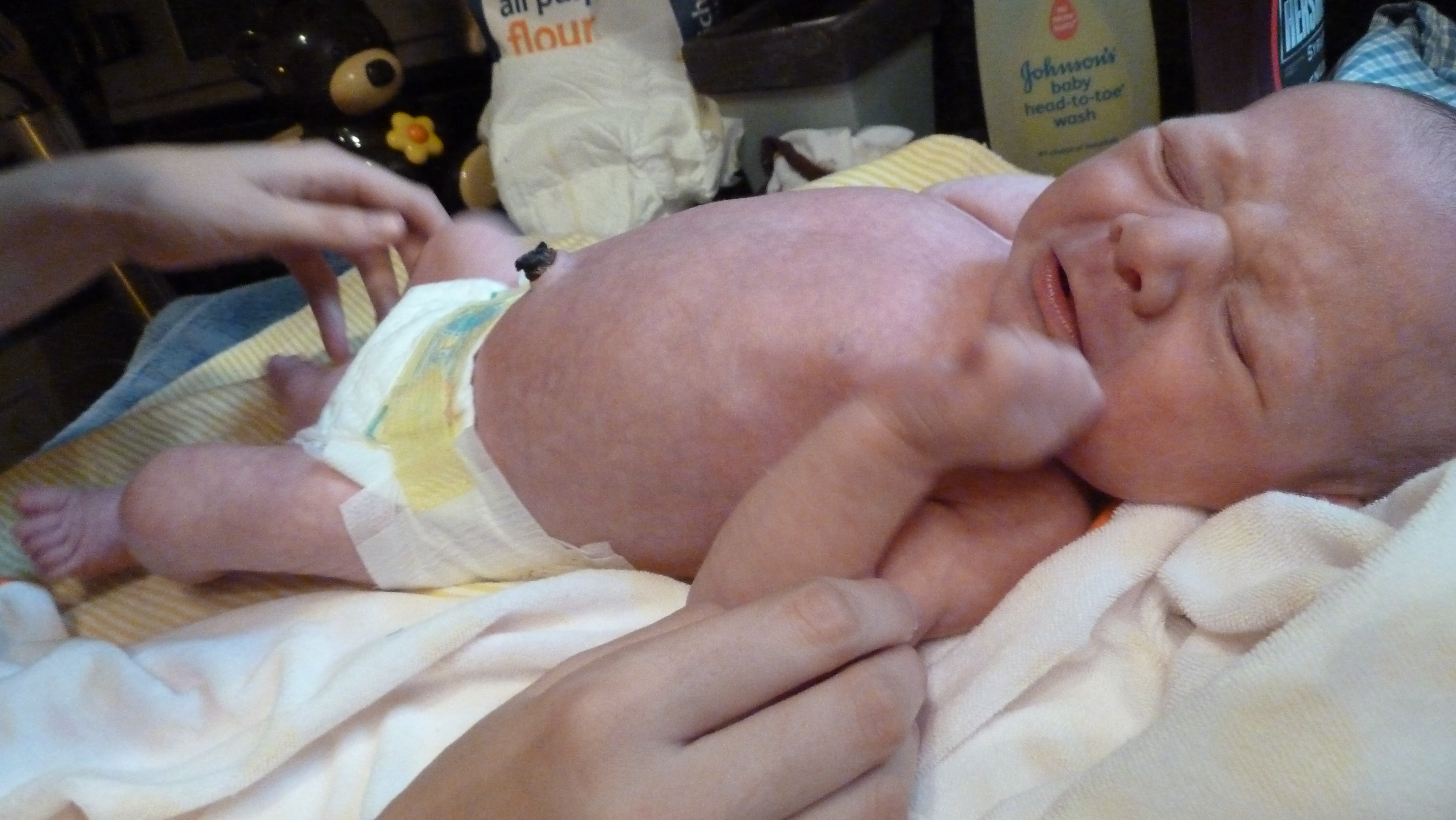
A newborn’s hunger cry is piercing, plaintive, pathetic. He looks at you between wails with “Well, aren’t you going to do something for crying out loud? Waaah!! Did I say I wanted a bath right now??! Waah!”
I heard plenty of this the last few days as I returned to help out the new parents of Sam, our first grandchild, a few days. Soon Sam, after announcing his sharp hunger pains, is happily nursing from his mother.
Sam’s cries hit home for me when we were able to go to worship at my daughter’s church on Sunday morning and it was Walk for CROP day. The youth of her church were collecting donations for their participation in the annual walk, raising funds especially for hungry children around the world.
The reason this particular walk is so near to my heart is my father’s own deep involvement—not in CROP walks, but in a forerunner activity for CROP and Church World Service which eventually led to the walks and perhaps (not sure here) the advent of “walks” as a powerful community way to raise money for myriad causes. (Does anyone know or remember having a walk to raise money before 1969? The history of one of, if not the biggest CROP walk in the U.S., in Charlotte, NC gives the beginning date of any CROP walks as 1969 in Bismarck, ND.)
As a Mennonite farmer in Indiana, Dad always preached to us about the “hungry children of the world.” He was far from alone in that. Isn’t that what dads and moms everywhere remind their kids when they don’t want to eat what’s on their plate? Early on Dad became one of Elkhart County, Indiana’s “Friendship Acre” organizers going farmer to farmer to sign them up to contribute each year, either a portion of their actual crop, or the money one acre grew, for Christian Rural Overseas Program.

Dad (Vernon U. Miller) in front of our garage displaying a “Friendship Acres” sign.
Then one year, circa 1962 or 63, he discussed with others the idea of “couldn’t we do a much bigger thing if we got together a planted a whole farm for CROP?” They got local grain and fertilizer companies to donate grain and fertilizer for the effort, and Dad also talked banks into helping rent an entire farm for charity “to feed hungry people,” in my dad’s parlance.
The media were invited and sent reporters out to the farm on “planting day.”

This is the picture of my father (middle) and sister, Pert, and Marvin Mishler, far left (and some of the most crooked rows in the whole project, my dad groaned) that made it onto the cover of Indiana Farmer magazine. My mom helped organize a wonderful potluck dinner that day, like at an old fashioned barn raising. When the plowing and planting ceased long enough for a few speeches as the TV cameras rolled, and then all the men removed their hats for the blessing before the meal, I was probably never prouder (in a humble Mennonite way) of my Dad than in that moment.
So that’s why I’m a sucker for church youth who are walking for CROP.

Can you imagine how sad and difficult it would be to have an infant and not be able to really ever satisfy its hunger cry? To put it to nurse and perhaps have a few drops come out but not really fill the child because you are so hungry yourself and your food or milk has gone to feed other children? I can hardly imagine it but such images are what motivate me to write out another check in hopes of helping at least a few folks, either locally or around the world (CROP walks typically divide their funds between local and international efforts).
I know some international relief programs come under scrutiny from time to time for waste and squandering funds. One of the things my Dad also did was sell a few pigs one year and invest in a trip for he and mom to visit many sites overseas where the CROP monies had gone, to see whether the program was reaching the people they intended to reach. Dad came back very satisfied that the program was indeed, for the most part, reaching hungry people. One of his stories involved watching a man come and sweep up the remaining grain spilled from a loading platform and sack up a small bag of the “waste” to be used by his family. Mom and Dad came back from their trip and shared that story and many others all around northern Indiana.
Most of us have forgotten what it feels like to truly experience hunger’s sharp pains. An infant doesn’t know what is attacking his or her insides, he just feels pain. Her tummy doesn’t hold very much food. The pain returns. “Waaahhhh! Aren’t you going to do something, for crying out loud?”
***
For more, or to donate to CROP, go here.
 Me with my sister-in-law Barbara, on left, along the New Hampshire coast a couple years ago.
My sister-in-law Barbara is an awesome cook. I don’t know of anyone who would disagree with me on that. She MAKES THE BEST MACARONI AND CHEESE IN THE WORLD and I can’t come near her dish even though I’ve tried for some 37 years. Sometime, maybe we’ll do a tutorial with her on the mac and cheese.
Much of what I’ve learned about Virginia-style cooking I’ve learned from her example, who learned from her mother. Plus my brothers-in-law, who aren’t bad in the kitchen. (Don’t know why that gene skipped my husband, except that the older boys learned to cook because their mother was greatly hampered by rheumatoid arthritis through all of their childhood and they had to help get supper on the table.) They all make great fried chicken, southern ice tea, green beans, oysters, gravy and more.
 Thanksgiving dinner at Barbara’s house last year. I’m hungry already.
So one evening years ago when Barbara served up some pork spareribs cooked in a barbecue sauce in the oven, I wanted her recipe. She may have gotten it from a magazine, I don’t know. It is pretty basic but it is easy and makes a delectable dish out of ordinary pork tenderloin or spareribs, and using ingredients that practically everyone has in their kitchen. I usually make them with oven roasted potato wedges since the oven is on anyway.
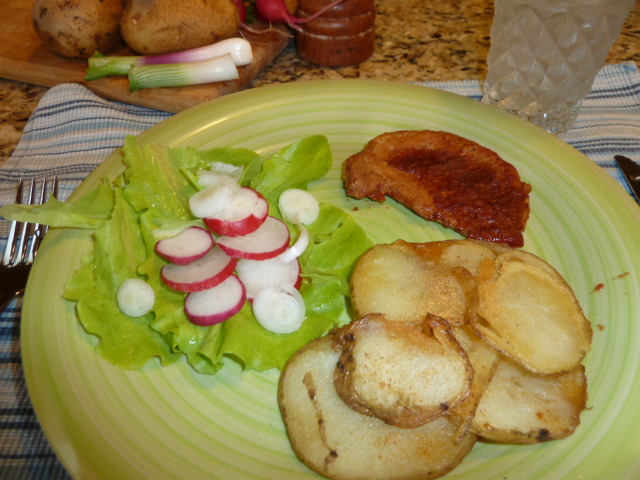
My husband loves cleaning off the sparerib bones so if that’s what’s on sale, that’s what I get. The nice thing about leftovers is they can be chopped by knife (coarsely) or blender (if you like it finer) into barbecue sandwiches for a second meal. Blended even more finely, they can make a dip with crackers. Top with an olive or pickle and you’ve got an hors d’oeuvre. (Sorry, no pictures.)
Here’s Barbara’s recipe:
Barbecue Spareribs
6 pork spareribs or tenderloin
3/4 cup ketchup
3/4 cup water
2 Table. Worcestershire Sauce
1/2 tea. pepper
1 tea. paprika
2 Table. vinegar
1 tea. chili powder
Salt to taste
Cook spareribs in boiling salted water until half done, about 15 minutes. Mix all other ingredients together and heat in small pan. Put ribs in 13 x 9 inch baking dish. Spoon sauce over top of ribs and extra into pan. Bake at 350 degrees for about 1/2 hour. I usually turn them over half way through and redistribute the sauce.

Part of the Davis clan, a couple years ago.
***
My 2010 book, Whatever Happened to Dinner? has some Davis Virginia specialties in it, but also recipes from a wider group of families from my office.

(Yes, I was a college student once too. Here Dorcas Kraybill and I
were working on our college literary magazine at Eastern Mennonite University, the Phoenix, which is still published.)
A student from James Madison University interviewed me this week for a class assignment because of my role as editor for Living. I enjoy having the tables turned and sitting down with anyone to talk shop: how to prepare for a job like this, what to do or not do, what do you do in a typical day, what is the best part of the job or why do you like it, what are the drawbacks?
I’ve done this with middle schoolers, high schoolers, college kids and occasionally beyond.
However, the media environment has changed so much that I have had to change up my spiel. Of course.
Even if you are still interested in going into old fashioned books, magazines, and newspapers–producing a printed product on paper–half of your energies need to go into the e-end–social media, blogging, websites. No longer can you just write a book or publish a magazine and put it out there for publication. You have to have to be multi-present. Here is just one blog which focuses on how to create a writer platform.
The young woman who talked to me this week, needs to get at least one thing accepted for publication as part of her class assignment by the end of the semester. That’s a pretty tall order. I didn’t ask her (but should have) whether it needed to be in print or if it could be electronic–online. Anyone can publish anything themselves on a blog. If I were the teacher, that wouldn’t count. But getting something published on say, HuffPost online, or any of many other respectable forums, should count as credit towards a class assignment, in this day.
I used to depend on the Writer’s Market and would invest in buying one every couple years. No more, since I’m more on the editing end and not actively seeking new markets. I still keep an old one on my shelf, but if I need to do occasional research to find up-to-date information, I do so online. I’m thrilled to see Writer’s Market is still published, though. It has lots of great information and hints and insights for any beginning writer seeking publication. A worthy investment for any would-be writer.
 (Ok, this is from the 80s.)
But what do I tell kids hoping to get into this field?
- Write for your student newspaper in high school and college.
- Do any internship you can get your hands on, for hands on experience.
- Try to get published: a publishing portfolio is usually impressive to any employer.
- Do consider a blog, but only if you plan to keep it going on a regular basis. Find a niche and pursue it. The regular writing practice–and trying to hone each post–is good discipline and you may just stumble onto a winner like my writing colleague Hannah Heinzekehr, who began The Femonite as a seminary class assignment. It is now a respected and well-followed blog although I don’t know her numbers.
I sometimes add: don’t expect to get rich. Don’t even expect to make a living at freelancing. It can be a side job, or be o.k. if you spouse is well-employed, or if you can live on $50 here, $75 there, and a couple of freebies thrown in.
The best part of the job? Not seeing my name in print–which maybe was what I enjoyed just starting out, but now it is the contacts and people I’ve met through the years as I’ve interviewed and written about them. I’ll write about that sometime. Some amazing and big names; others very ordinary folks with extraordinary stories.
Now editing, that’s a different ballgame, and maybe I’ll write about that too. It may pay better, but takes different gifts and skills.
If you dream of becoming a writer and enjoy writing (and of course have some gift for it–which means that someone beside your mother and your best friend have told you write well), you can probably find a way to get published and get paid doing it. Aim high, and market well.

***
If you’re a writer, how did you get your start? What do you tell other aspiring writers/editors?
***
I work both for Living, and for MennoMedia which you can find more about through the links.
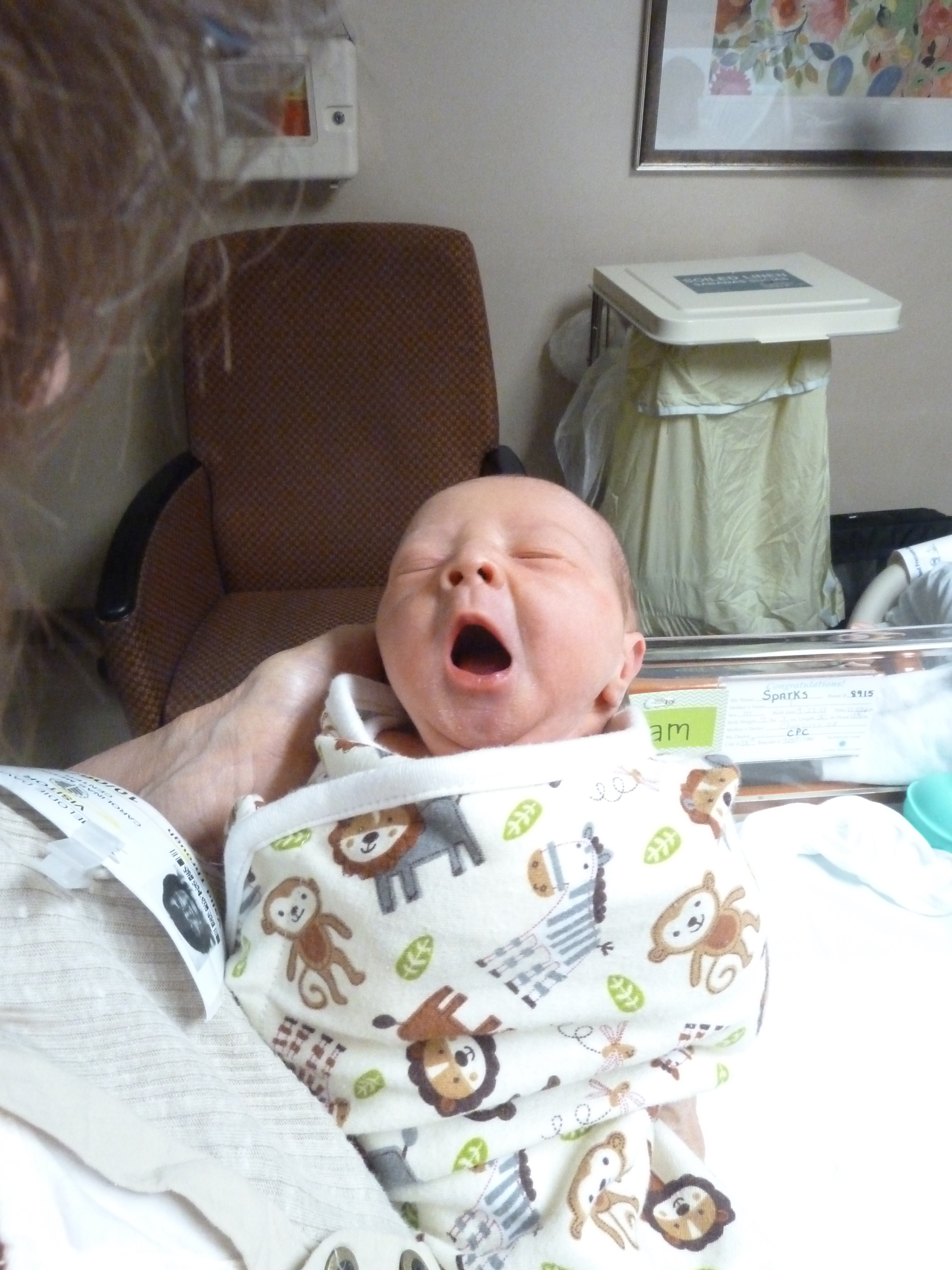
For anyone who has been wondering, or happens to remember my earlier posts about becoming a grandmother, yes, our first grandbaby has arrived!

Everyone says how much better it is to be grandparents because you can kiss ‘em and love ‘em and send them home and not be getting up at nights with them.
But I’m not sure how to be happy doing that when my daughter and her husband are in that new baby fog of wondering if they will ever sleep clear through a night again.
I had to leave this baby much too soon – after three days of yes, enjoying snuggling new born cheeks and adorable finger wraps – and even though I get to return to help out a little with those sleepless nights, I wish he lived five minutes away instead of five hours.
Then there are many of my grandparenting colleagues who live 1,000, 3,000 even 5,000 miles away from their grands. And while people used to live closer to their children and grandchildren, I also think of the settler and immigrant families of old who moved across the ocean and in some cases never saw their parents or grandparents again. Of course, I have lived 600-some miles from my parents all my married life and I feel like our children grew to have great love and connections with these grandparents.
So this is how it went down: While I was enjoying swans and hiking through wetlands early on the final day of my speaking commitment (made long before we knew anything about this baby!), my daughter’s labor was being induced. That evening, while I was wandering around the Indiana Michigan Mennonite Relief Sale with my mother and sister, Tanya’s labor kicked into high gear and became so intense she had to go with an epidural. Yes, I was on pins and needles. Yes, I wanted to be there with her, but I would just get there as soon as I could. I hoped and prayed she wouldn’t have to labor all night. I knew I wouldn’t sleep much either.
At 11:30 p.m. the call came as I had just dropped off to sleep. “We have a boy! We’ve named him Sam” said Tanya happily; she sounded a bit smoothed out by the medications.
Immediately I loved the name and the child. I loved that he was finally here, and all appeared to be well, my daughter and her husband were swooning in the early aftermath of bonding time with their new son. I told her she could break the news to her dad, anxiously awaiting news back in Virginia.
I tried to go back to sleep. Funny joke. But I didn’t mind. The labor was over. Thank God.
The next day I couldn’t get there fast enough, through a circuitous route when you end up driving west to fly east and drive south. We arrived at the hospital about 7:15 p.m. Oh happy day.

Sam was and is beautiful, a handful of hungry tummy and increasing lung strength, who did everything babies are supposed to do: squirm, grimace, make wonderful faces, yawn, sleep, nurse (open tiny mouth wide!), wet and dirty his diapers, snuggle, wake his parents too much at night. Suddenly I was thrust back into early nursing woes and pain and feeling like you’ll never get enough sleep again.
His father, after a night or two at home, said “I knew they were supposed to wake up every three hours or so to eat but I didn’t know they stayed awake between times!” My daughter said, with appreciation, “Parenting is hard.” (So much for labor being over.)
Something you can never fully prepare for ahead of time. But amid these struggles I see and hear wonderful bonds of love and commitment strengthening and I trust they too will get through these groggy days and long nights.
 With Grandma Sue.
Welcome to the world Sam. You are loved!

Ike meets Sam.
***
What have been your surprises in grandparenting? Parenting? How do you work at keeping connections from a distance?

Swans gliding on a calm Michigan lake in early fall.
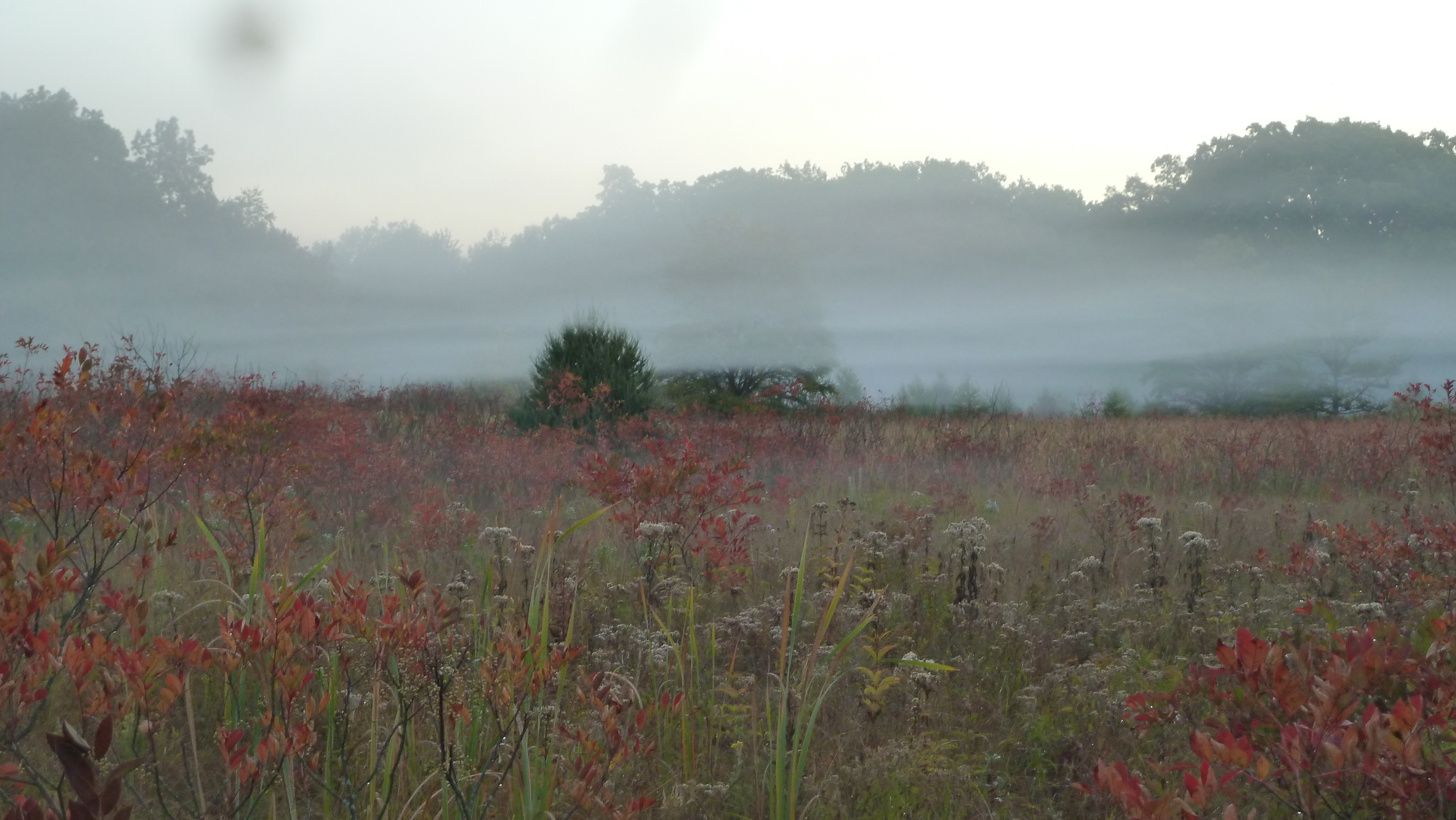
Early morning mist shrouding wetland.

Poison sumac warning us to stay away with its bright fall colors.

Dew lacing a spider web in the dawning new day. In the woods, dark wet ground sports four or five different mosses, said our guide. Hmm. I knew mosses sometimes looked different, but didn’t know they had different names. How rich and varied is the natural world when we take time to truly notice.

Finally, brilliant sun beaming through the woods, warming our slightly chilly walk.

And much more that I can’t name now.
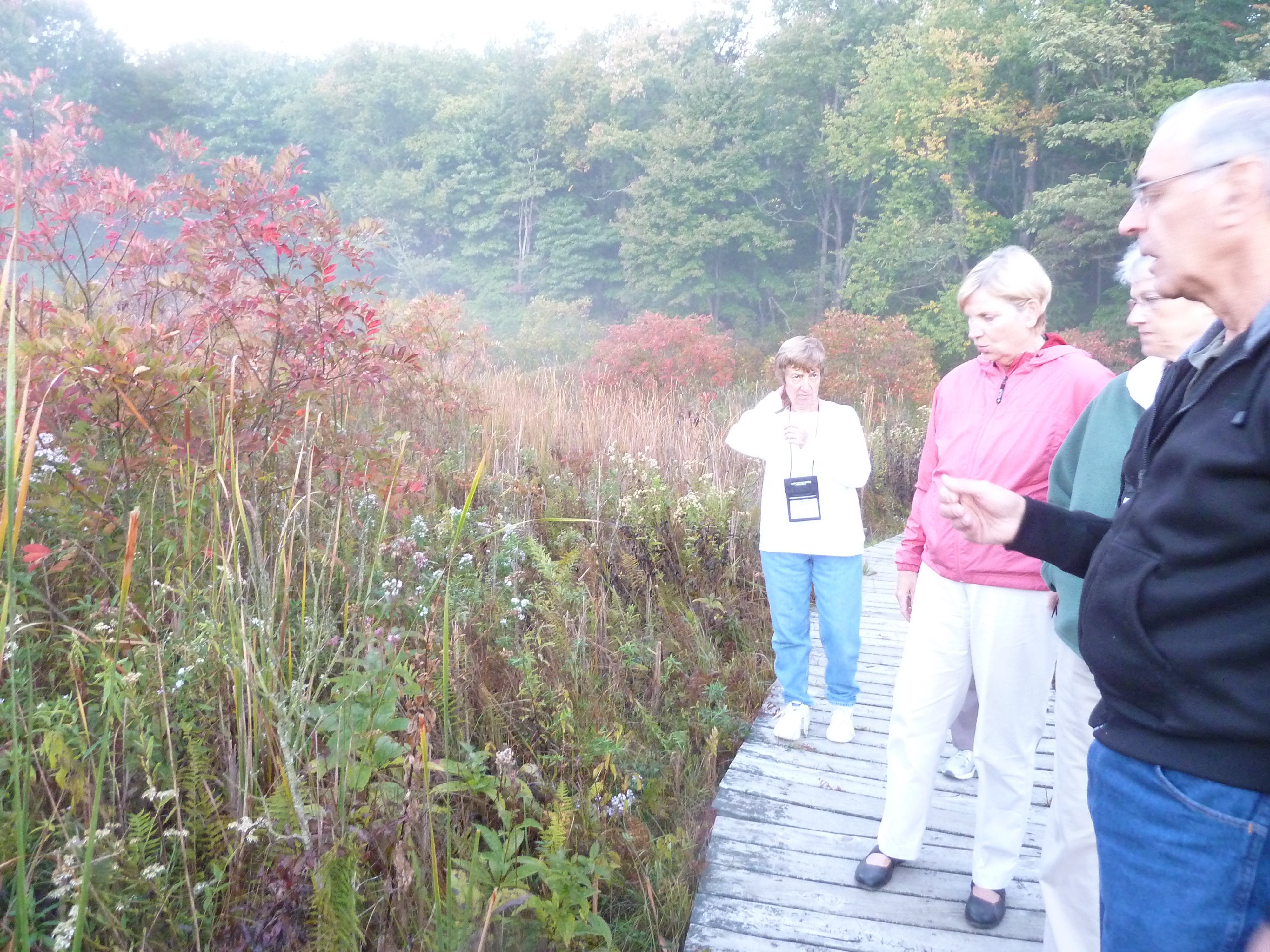
It had been a long time since I’d been on a true nature hike with a naturalist (far right, Jim Gascho).
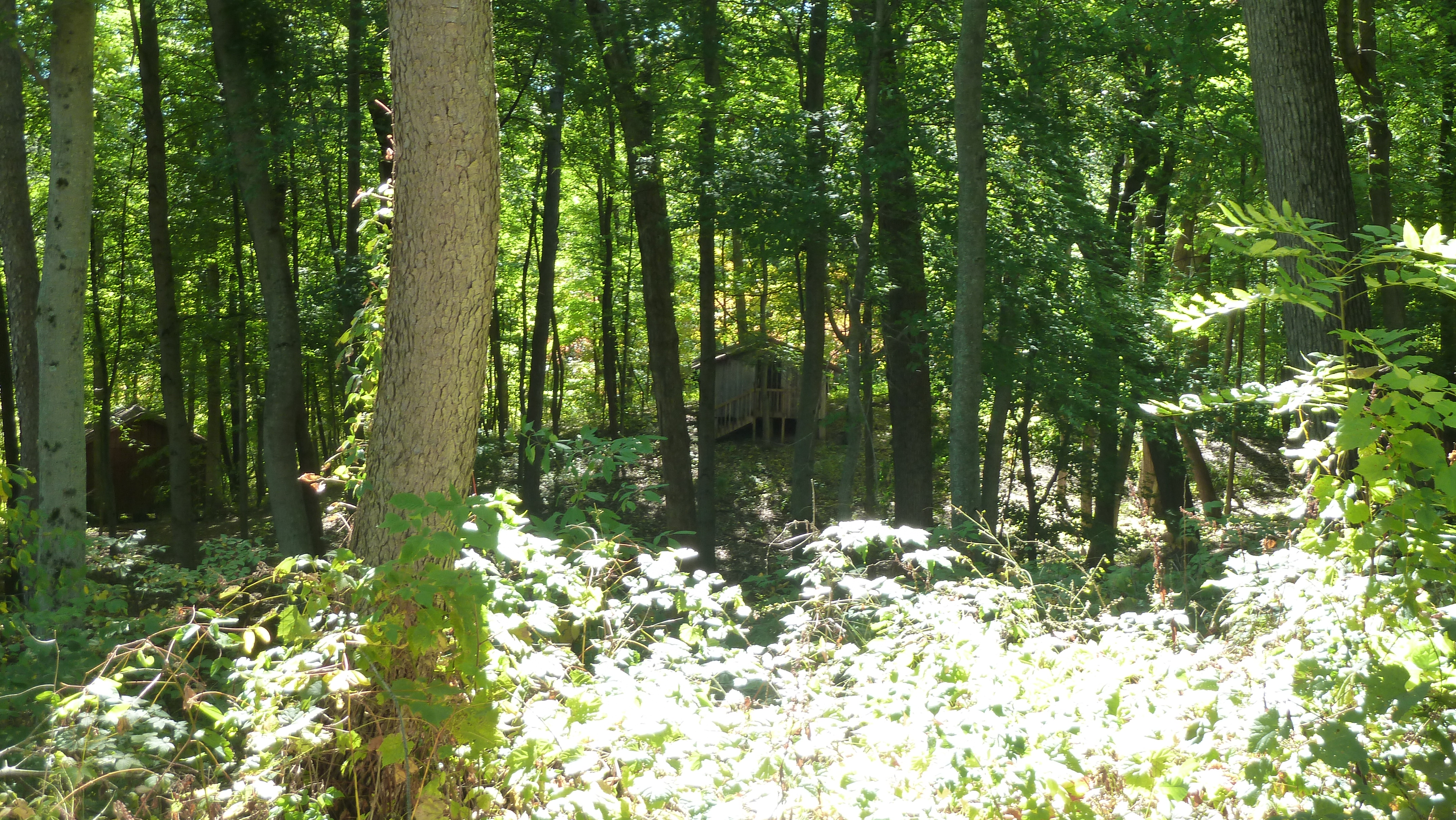
My stomping grounds at Camp Amigo were not the first childhood camp I ever went to (established in 1957, and I remember well my dad’s excitement to help with early projects making a campground out of woods and lake). Little Eden (how aptly named) a bit further upstate was my first, where my parents coaxed me into leaving my “gi gi” pacifier as a toddler.
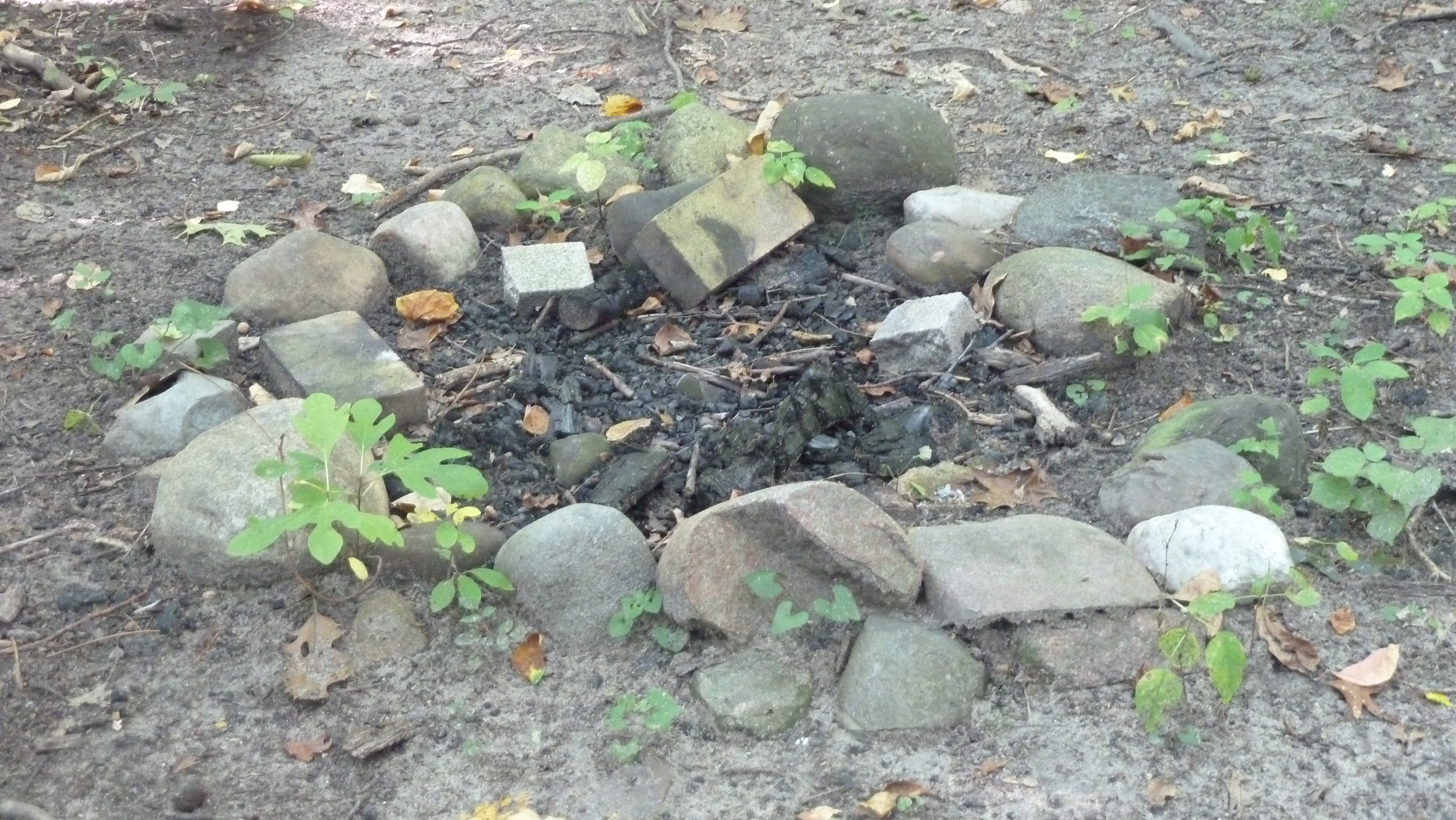
But these grounds at Camp Amigo are close to holy pilgrimage every time I have the opportunity to return to this lower-Michigan-basic-lake-cabins-woods-tennis-and-ball-courts-church campground. How well I remember pondering life direction and my own spiritual wanderings around evening campfires.
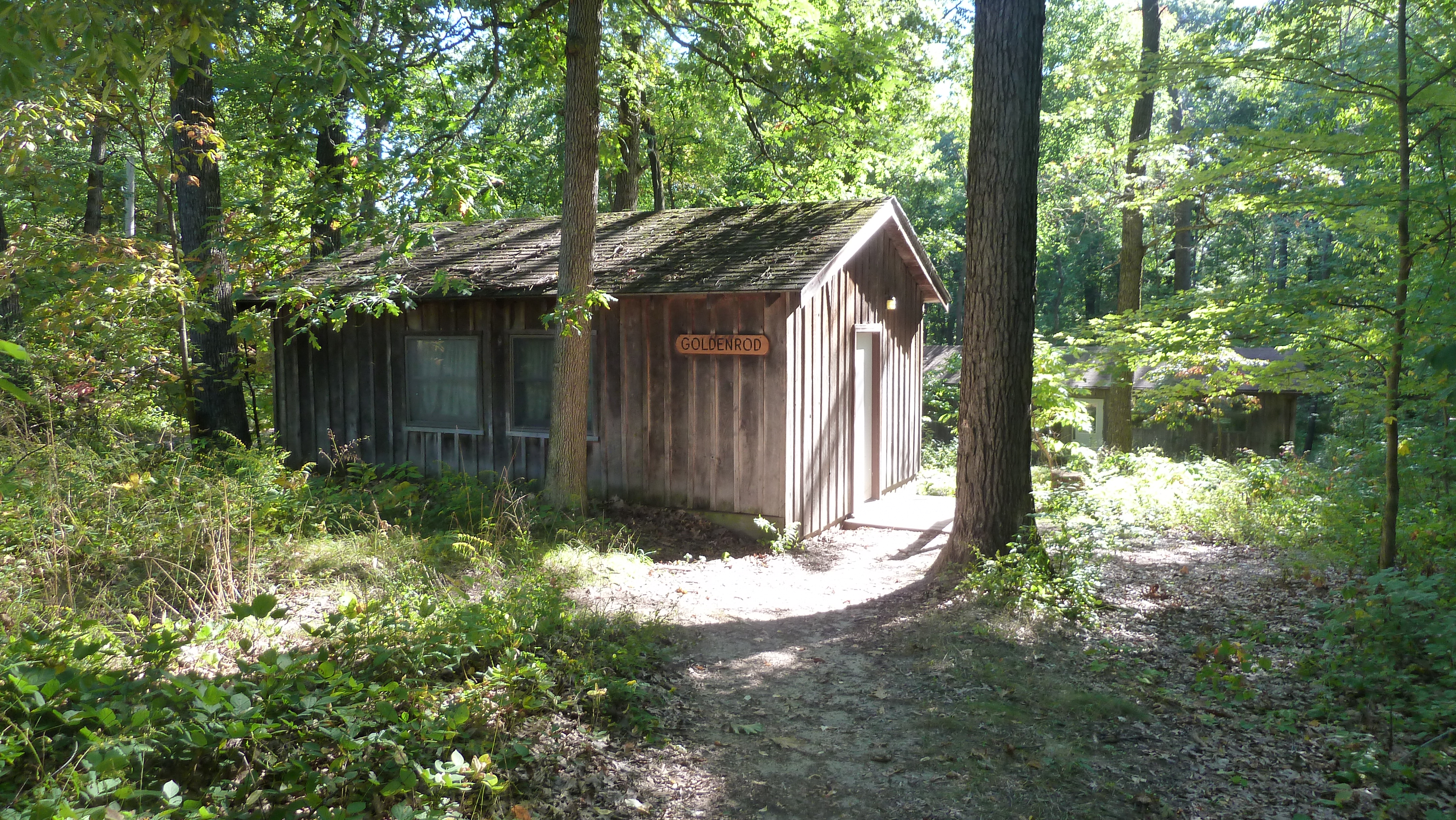
The camp is now called Amigo Centre, headquarters for an exciting outdoor/environmental educational program for public and private school children and hosting a variety of adult programs all year long such as Road Scholars, which I’ll write more about soon, and Quilting Retreats and Scrapbooking and other cool stuff.

Its slogan/logo is “In Harmony with God and Nature.” A perfect slogan for this blog, too, methinks. God for me is inseparable from nature whether it is ocean’s depths or mountain heights or limitless sky or rollicking river.

I do not just find God in nature, God finds me and wraps me once again in thrall of a wondrous world.
Thanks be to God.
***
Where do you find God, or God find you? What places do you remember in your childhood or teenage years as being special? I’d love to hear about them.
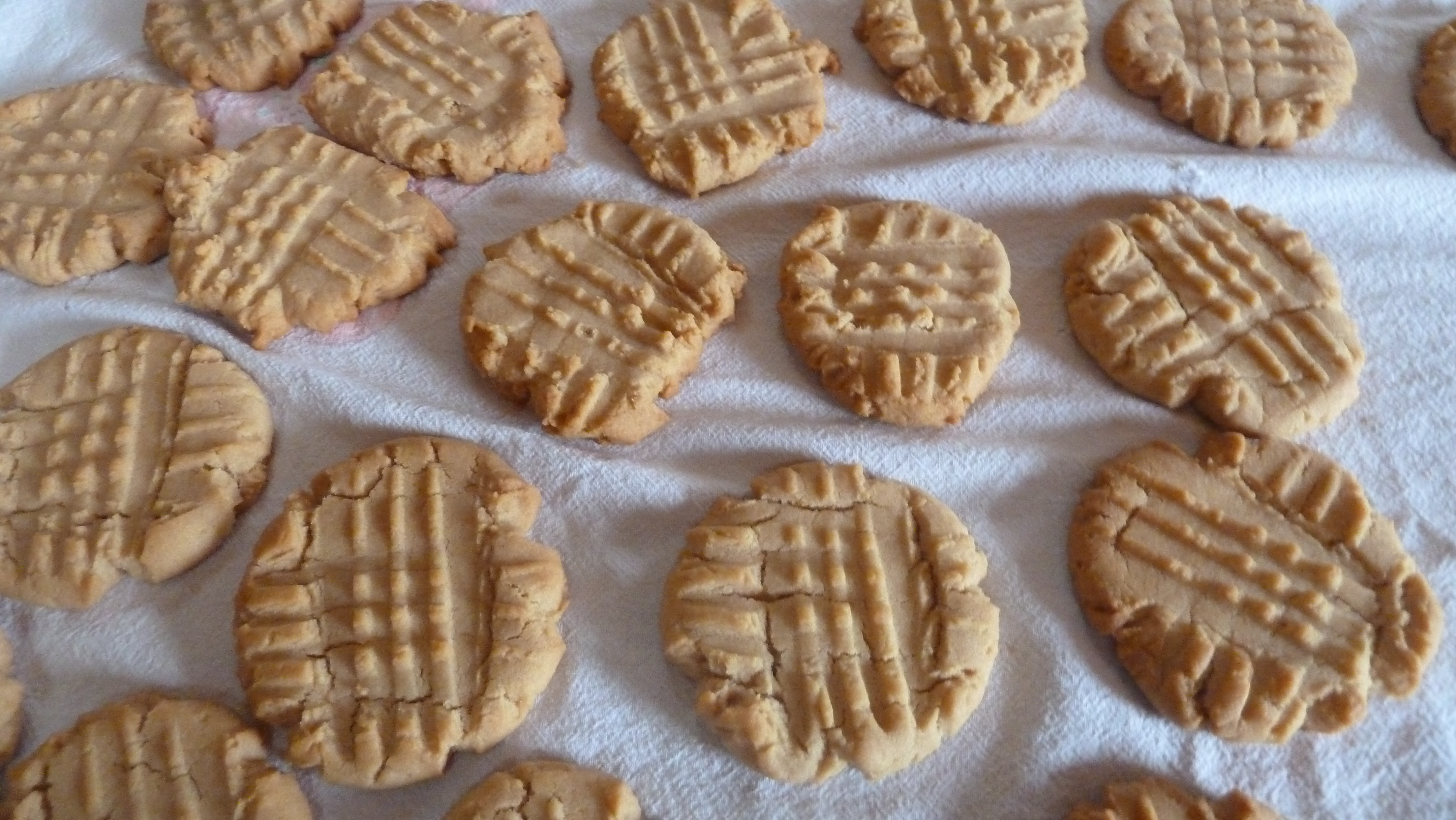
I baked up some peanut butter cookies to carry to my first grandbaby down in North Carolina (still waiting as of this writing/posting). Of course I know technically the grandbaby won’t eat the cookies but the mother will, and she plans to nurse, so there you go. Cooking for my grandbaby.
I went to my trusty recipe box but my tried and true, greased-up-and-stained-up recipe card was gone! Nowhere to be found. Luckily I had this written down on the computer, to send one of my daughters at some point, I’m sure. It is nothing fancy, but your basic peanut butter cookie and I whipped them up in less than 15 minutes using my powerful Kitchen Aid mixer.
Now, the recipe says you are supposed to let them chill a half hour before baking but I rarely do and this time I tried another shortcut and discovered, eureka, you really don’t have to roll them in balls to press them crisscross with a fork. Are you reading this Doreen?
My youngest loves to make and eat peanut butter cookies and she frequently would surprise me with them when I came home in the four years she lived at home after college and mixed up a batch on her day off. But she HATED to roll them in balls so always wanted me to help with that.
So I skipped that step and just plunked dough on the cookie sheet and pressed that hunk down..
Take that, cookie dough. Good anyway you press them.
Who really can tell the difference between the ones rolled into a ball first
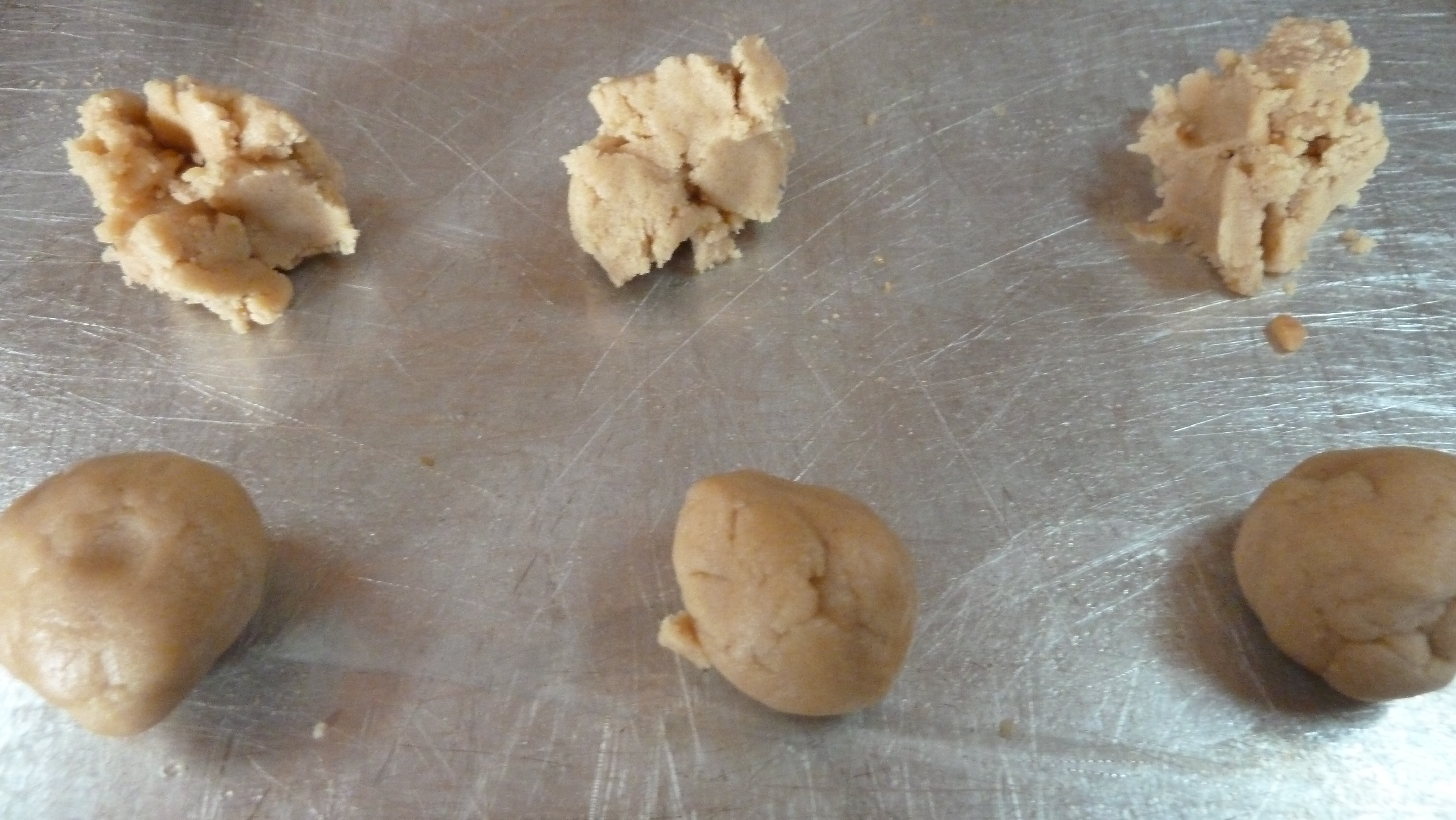
And the ones just kind of spooned or forked onto the cookie sheet?
You can maybe tell here.

But not here.
Or below. And who cares, as long as you’re not a food stylist prettying up things for a blog.

Which I’m not.
So enjoy my homely tips and not bad cookies.
My husband and his brother scarfed this whole plate down before I whisked the last one away.
Peanut Butter Cookies
Cream together:
1 c. shortening
1 c. peanut butter
Add and mix:
1 c. brown sugar
1 c. white sugar
2 eggs
1 t. vanilla
Then add dry things:
3 c. flour
1/2 tea. salt
2 tea. soda
1 tea. baking powder
Chill dough as long as you can. Shape into 1″ balls. Press with fork. 375 degrees for 12-15 minutes.
***
What are your favorite freezer-staple cookies?
And here’s a bonus: the best site for figuring out what went wrong with your baking.
Our wall of pole beans is still bearing
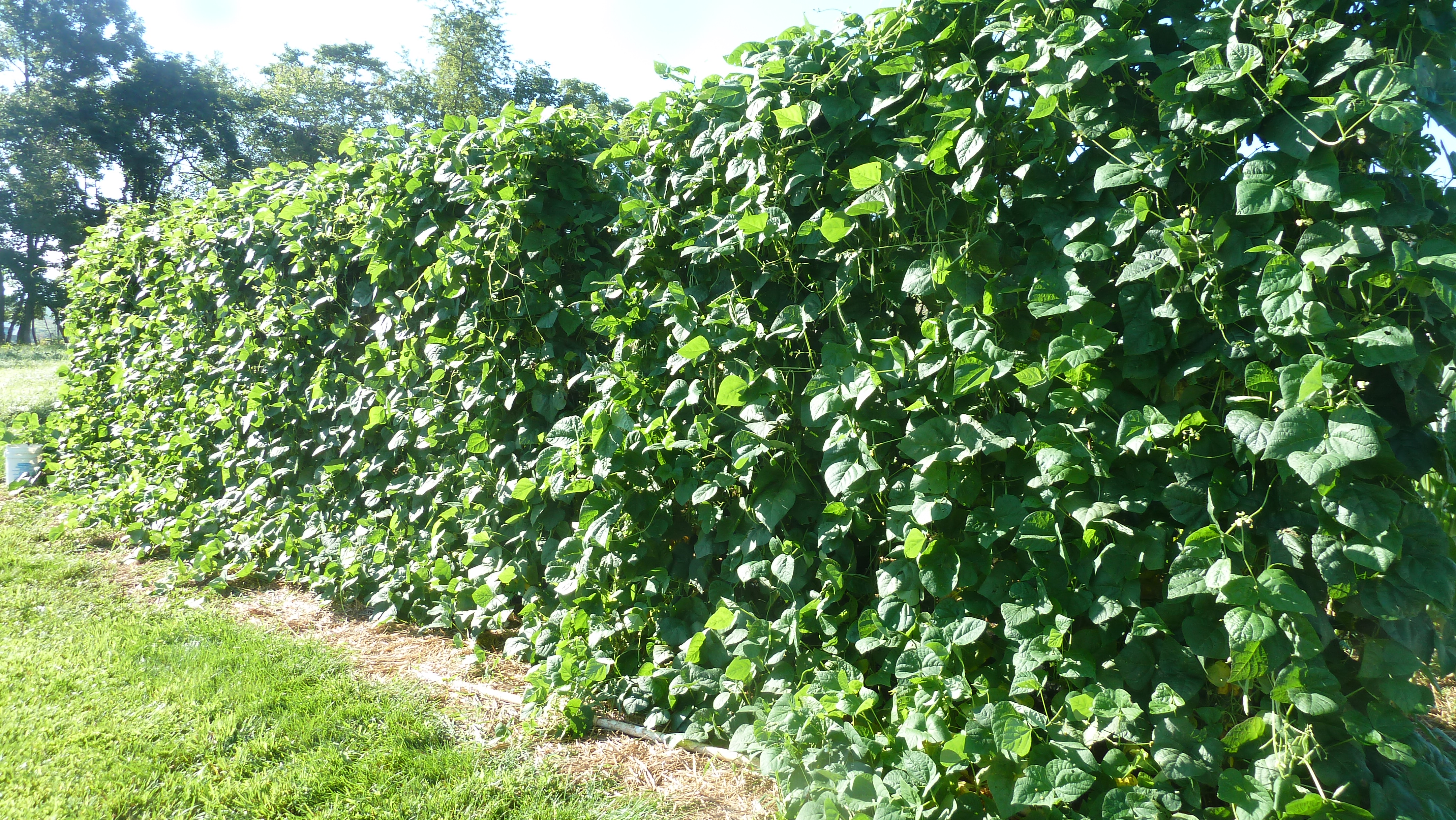
… and I’m not really complaining, especially since the tall wall helps get my husband out there.

And his brother (below).
s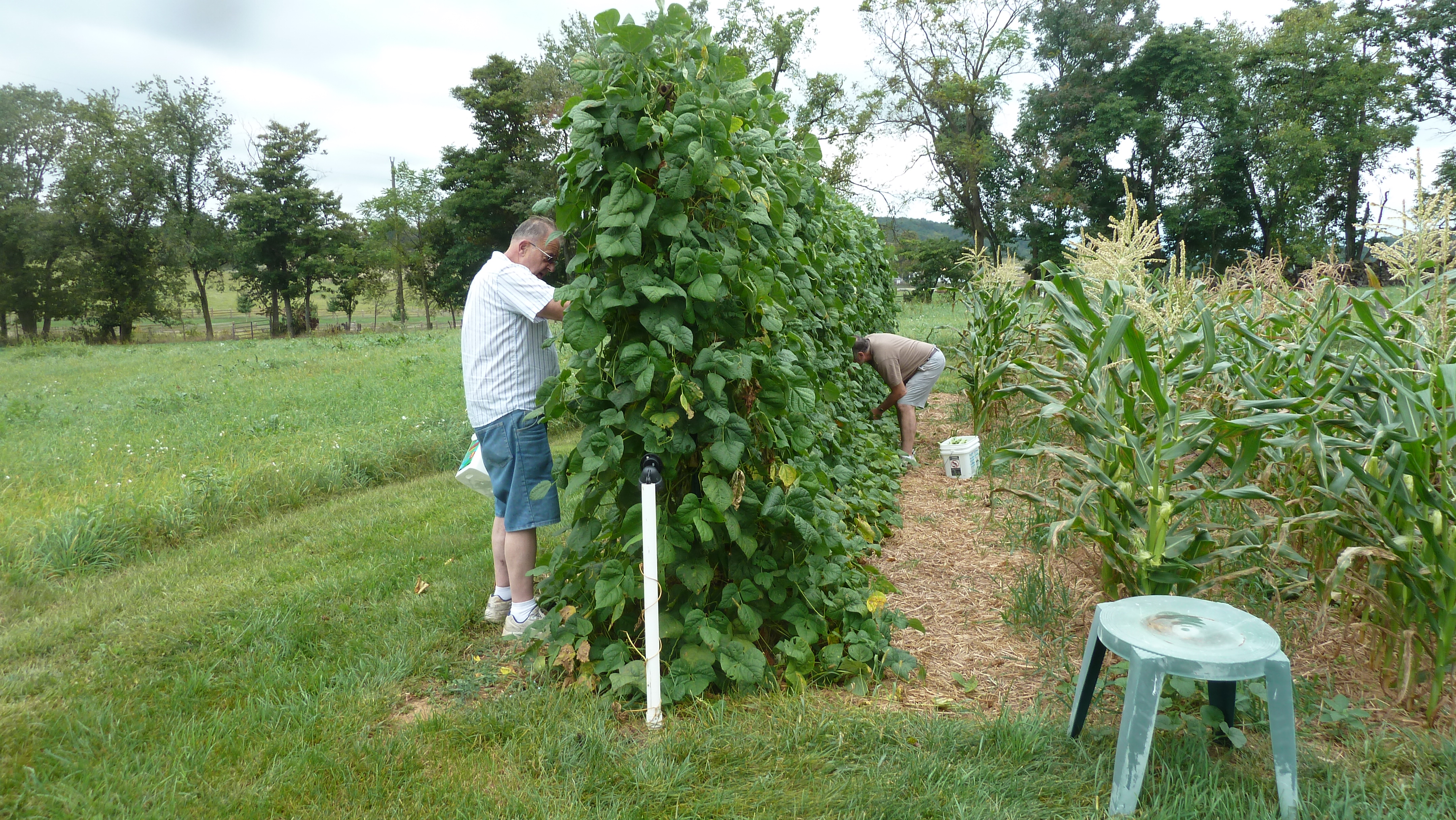
Of course, I pick plenty down lower too.
And here is how you string beans if you are a man.
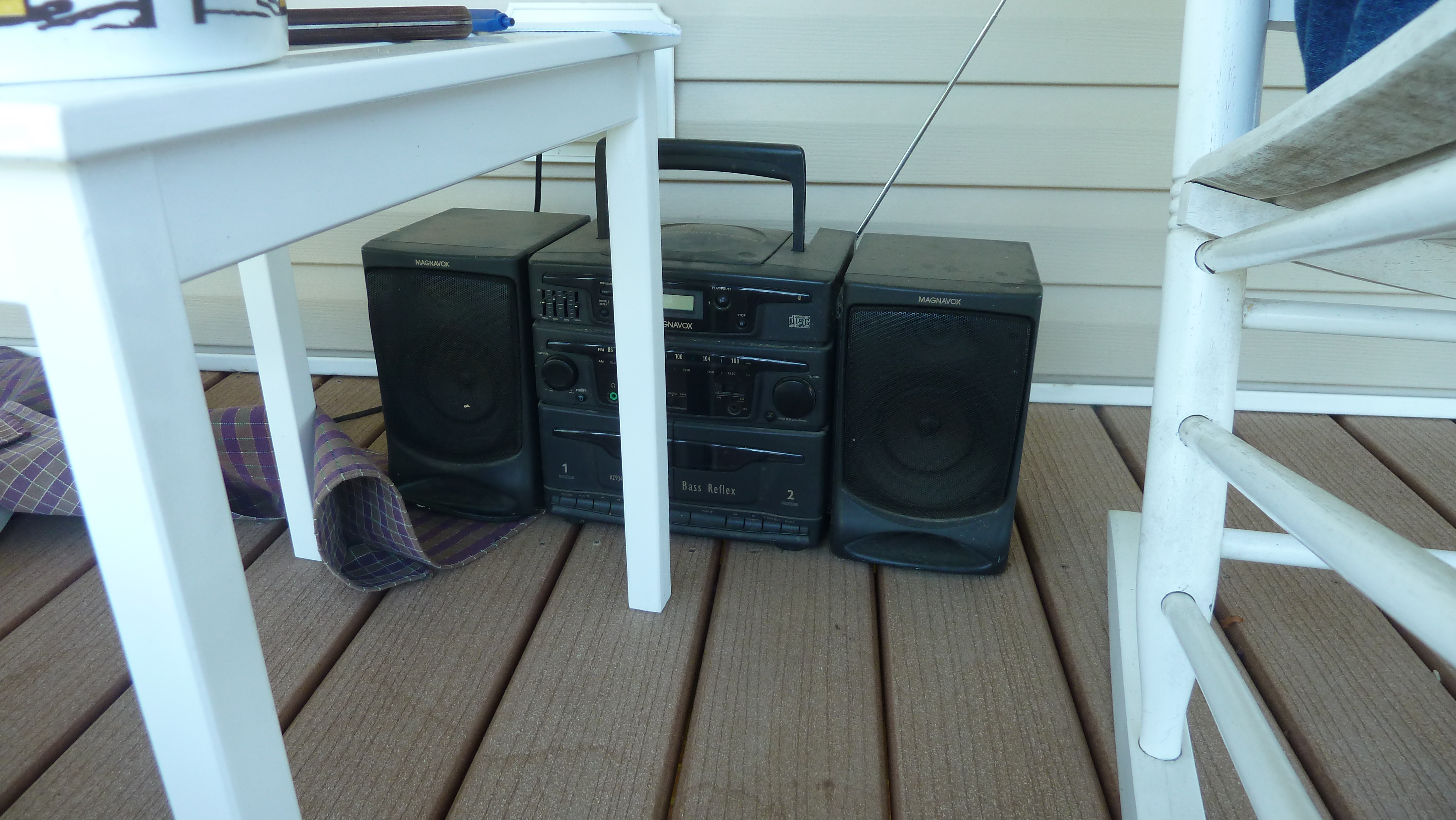

Sit on the front porch with a radio, ready to take notes from a Saturday morning bargain show where people call in what they have for sale.
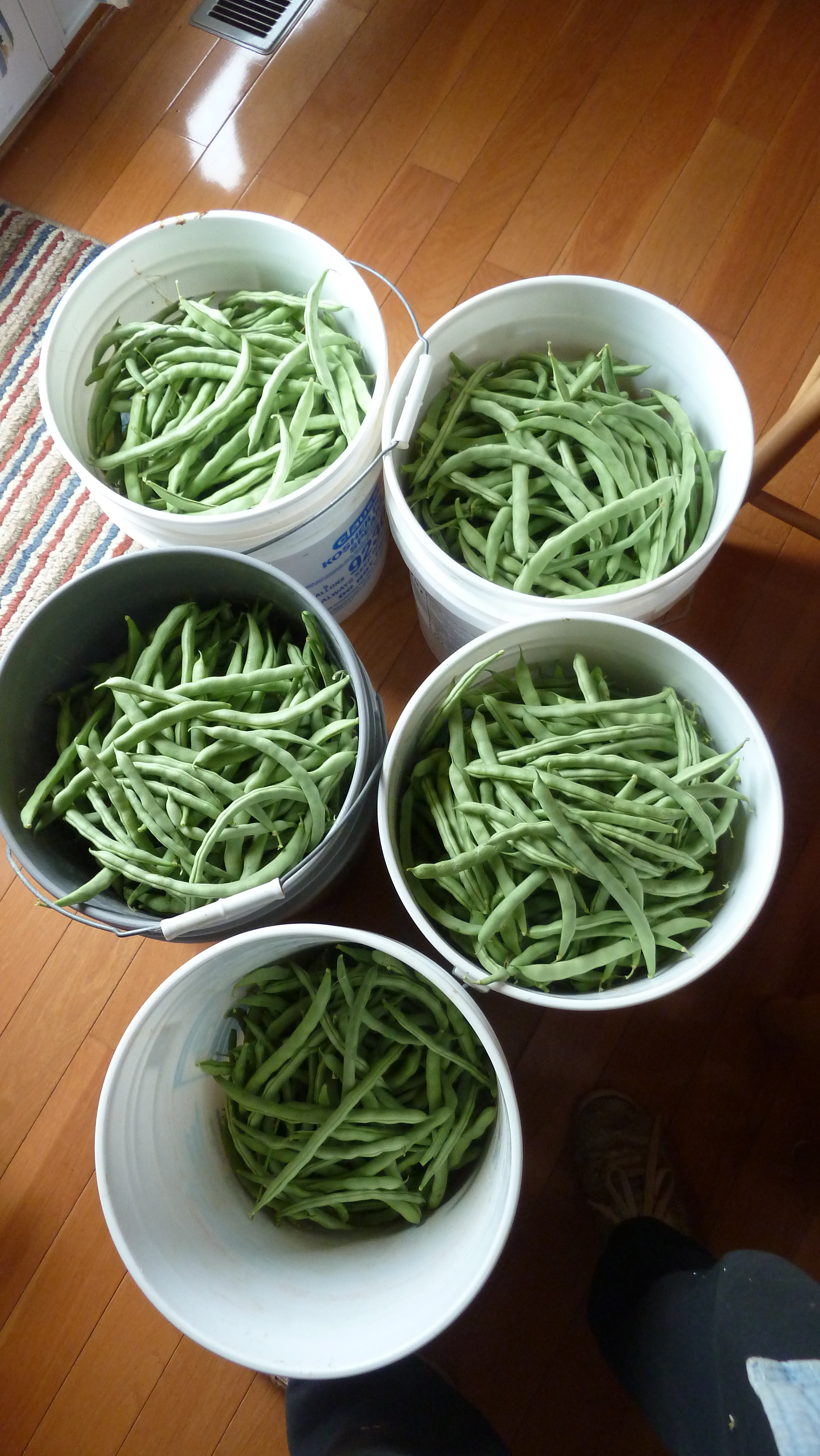
So far we have harvested more than 5 bushels and given four of those away. We also grow bush beans and canned those earlier in the summer, so I have all I need for the next year.
But not everyone knows how to cook pole beans. I sure didn’t. But some kids who have turned up their noses at plain jane basic green beans, seem to like beans at our house, or other beans cooked the slow southern way as I’ve learned to do. One mother of two sons said they loved my beans, but won’t eat them at home when she tried serving the grocery store variety (I’m not sure whether she purchased canned green beans or frozen). The pole beans are not very soft the first time you cook them (unless you use a pressure cooker—which I don’t use), but upon reheating for several days, they take on more and more flavor. I should note that I do use a pressure canner for canning the beans, and once canned, that does of course “cook” and soften them.
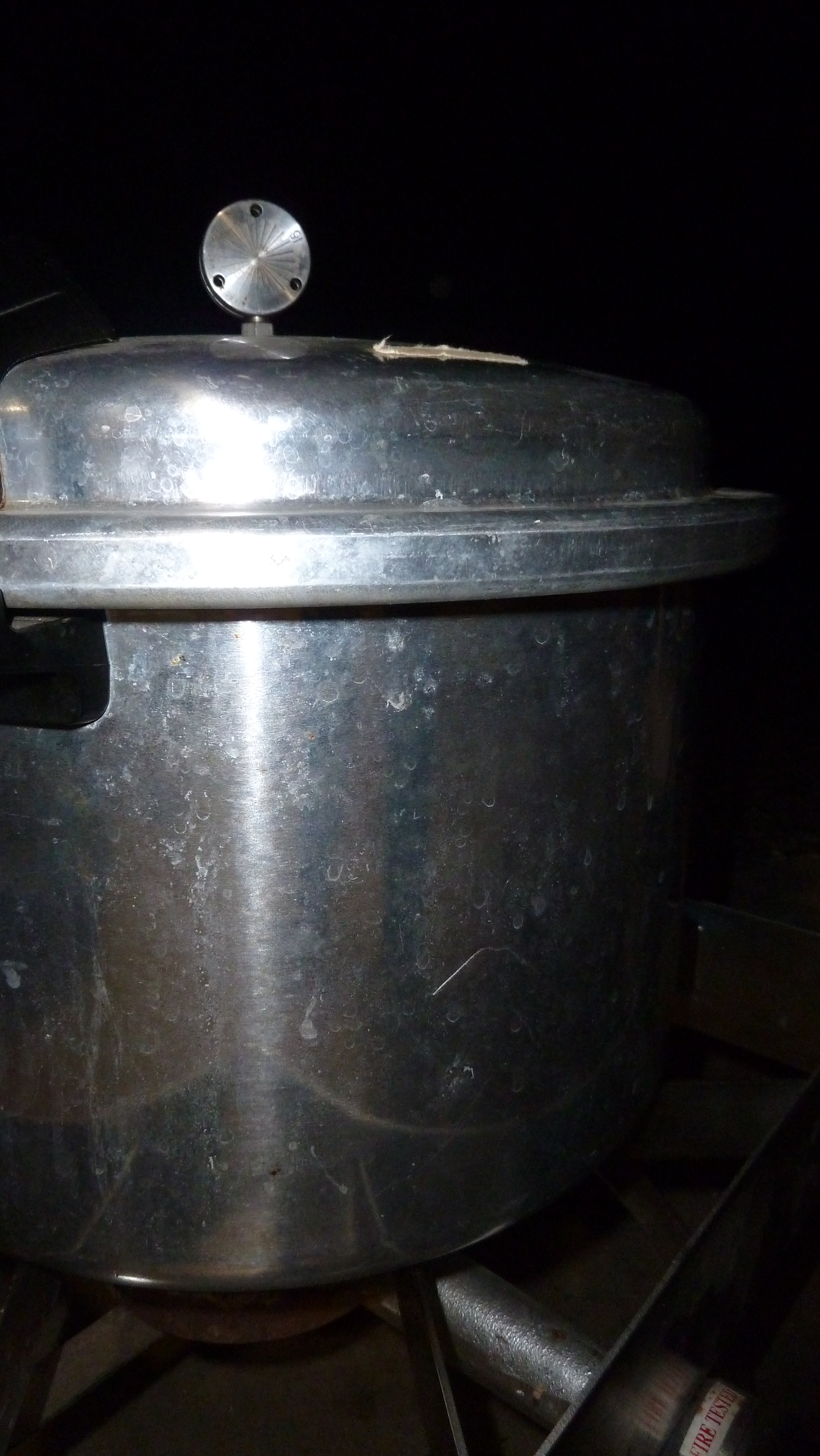
This is a large pressure canner; people generally use much smaller pressure cookers to cook a big mess of beans without canning etc.
No one will tell you the beans are very nutritious this way (and my husband just told me that the Hottingers, his mother’s family) was known for serving green beans with every meal. A staple like bread. No wonder I’ve heard tell of some who “put up” 100 to 150 quart each summer. So if you think of the beans as a side dish, and look to a salad or other veggie for a more nutritious dish at the meal, that works. Many times my Virginia family boils their potatoes right along with the beans, for yet another flavor.
I’ve read that in areas of the world where refrigeration is not available because of spotty electricity, people cook and reheat the same pot of food for several days until it is used up, because reheating (to the boiling point) kills any germs and makes it safe to eat again.
Let me hasten to add that I personally love green beans that have only been lightly cooked or sautéed with a little olive oil, seasoning salt and minced garlic. My mother’s favorite way was to lightly boil fresh garden beans to the point they turn bright green, then brown them in a cast iron skilled in which she’s sautéed a few pieces of bacon. We didn’t even mind the beans a bit burned from the cast iron skillet. Now that was flavorful.
Here’s a little tutorial on pole beans (or others) cooked the slow southern way.
http://www.youtube.com/watch?v=dqNLyNWniTY
And here’s a real chef’s takes on slow cooked southern green beans over at Chef John’s Food Wishes blog.
Like Chef John at this blog says, there was a time when people cooked peas and asparagus and broccoli way too long, too. I do not like any of this trio cooked long and limp and will forgive any school child who grew up having to eat cafeteria-cooked peas or broccoli and think that it has to taste that bad. It doesn’t! It isn’t!
The way I cook most green beans though doesn’t involve onions or chicken broth or any additional ingredients than beans, sautéed or microwaved bacon pieces (I save the ends of fatty bacon for this purpose), or a piece of country ham or ham hock. (If you don’t know what country ham is, never mind, just use the bacon) and salt and pepper to taste.
Here’s my current pot of beans, warmed over now three times I think. I do refrigerate them since I don’t live in Africa or the 1800s.

You’ll take bright lightly cooked green beans? That’s ok. Beans can be fixed great so many different ways. When the wall of beans is done bearing, I’ll be saving some seeds for next year so I don’t know of much cheaper eating.
How do you like your green beans?
Guest post by Michelle Sinclair
Finding Harmony Blog is hosting a series of guest posts in September on how to break out of food ruts and maybe even connect with friends and family in the process. See other posts in the series: Supper Club here, Food Swap here, and From Market to Table here.
Michelle Sinclair is my daughter who writes regular movie reviews for Third Way Cafe, and guest columns for my Another Way newspaper column. She and her husband, Brian, are expecting their first child in November. She works in the advertising (legal notices, exciting!) for The Washington Post but in her free time is a novelist in search of an agent.
Games and Gourmet: EPV* Night
Once a month, my husband and I can be found sitting around a table with two other thirtysomething couples, laughing while playing a board game and sampling food straight out of a gourmet cookbook.
[For shorthand, we call our monthly dinner and board game night “EPV Nights” after the name we adopted when we used to compete as a team at trivia nights. EPV* stands for “E Pluribus Voltron” because we’re dorks children of the 1980s with strong civics backgrounds. Voltron was an eighties-era cartoon: E pluribus unum— “From Many, One” —is a motto of the United States, so perhaps you get the picture.]
We had been doing this off and on over the years, but it seemed like months and months would go by before we found the time to get something planned. I suggested we make a regular date of it—a particular Saturday every month—and set it up so our Gmail Calendar regularly reminds us EPV Night is coming. We rotate between homes, and if someone has a conflict, we find an alternate date or just move on for the month. Most importantly, it reminds us to have the conversation, which leads to nine or ten EPV Nights a year—far more than the three or so we used to muster.
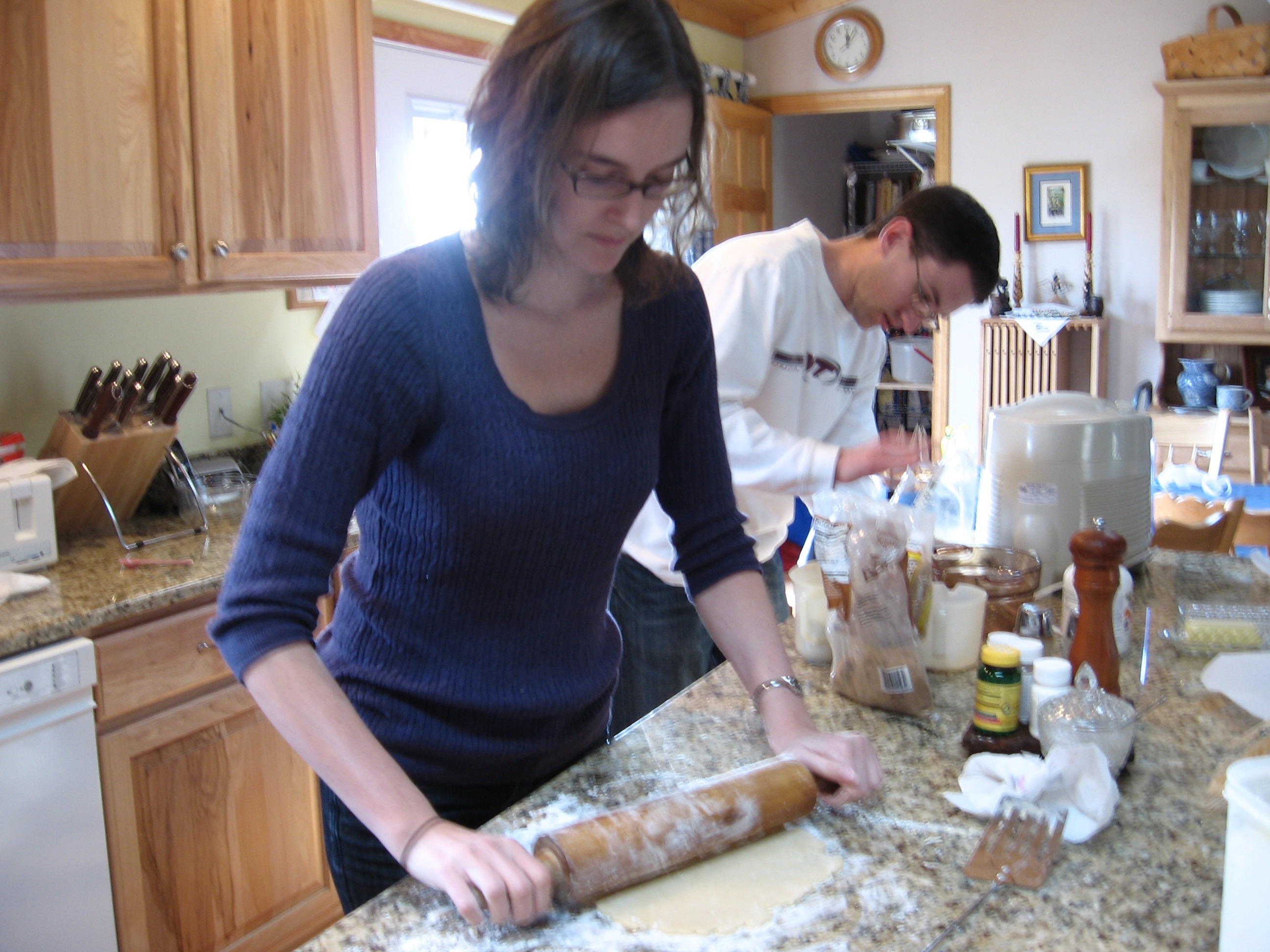
Michelle and her husband Brian, cooking in my kitchen.
Food is always a highlight of the evening. We have all grown as cooks in the years we’ve known each other. What used to be delivery pizza has become stuffed green peppers or sausage orecchiette—“foodie” elements and delicious tastes we don’t often encounter in our own kitchens. The hosting couple serves the main meal, with the guests bringing dessert and drinks, or maybe a side dish. One couple in particular enjoys reading chef books and trying techniques that I sometimes find daunting. What fun to enjoy a “restaurant dinner” at a friend’s house!
The board games are another highlight, although sometimes we get so caught up in good conversation that we never do get around to cracking a game open.
What will happen to our EPV nights once children start to arrive on the scene? Well now that our first child is on the way, (of the group, and personally as a couple) we’ll have to see. I have fond memories of my parents’ own version of EPV, when they had their good friends over for knock-down-drag-out pinochle nights. All the kids played together, and we enjoyed rolling our eyes at the adults whenever their shouts and laughter over the kitchen table interrupted our play. I hope EPV Nights can evolve to become family affairs—so long as we continue to live in the area and don’t get sick of each other!
 As luck would have it, the night this was taken the menu was sloppy jo’s, beans and salads, since it was a work night.
Ultimately, the important part isn’t the games, or the food, or the dorky name. The essential ingredient is regular social interaction in a world and community that is increasingly fractured or moving online. That is particularly true in the Washington, D.C. area, where so many people have moved into the area for jobs and live far from the built-in social fabric of family. To substitute, many people turn to the website Meetup.com to join gatherings centered on a particular interest. Brian and I tried a few of those, but never managed to go back a second time. I suppose we’re just not outgoing enough to try forging new friendships from a houseful of strangers.
That’s why I’m grateful for our EPV friends, and our regular gatherings for as long as they last. We’ve made some great memories, found some new foods, and trounced some good friends. What more can anyone ask?

Michelle and Brian Sinclair, photography by Misty Yoder, at www.mistiyoderphotography.com/
***
How do you get together with friends or family around food? Comment here to be entered into a drawing for a free copy of Whatever Happened to Dinner. You can share links to similar ideas here, or at my Whatever Happened to Dinner Facebook page, to be entered in the drawing. (Posts for the drawing will close Sept. 30, 2013, midnight).
And don’t forget to plan something special for today, Family Day, Monday September 23. For more on my book, here are study questions, an interview with yours truly, two podcasts with the food editors, and a video book trailer. Or think about who might like a copy of the Whatever Happened to Dinner book with about 100 recipes ranging from traditional/old time to foodie! Order here.
Guest post by Jennifer Murch
Finding Harmony Blog is hosting a series of guest posts over two weeks on how to break out of food ruts & punch up mealtime with something a little different. Today we travel to Guatemala, courtesy of my neighbor, Jennifer Murch, a foodie for sure who has blogged at mama’s minutia since about 2008 with an excellent and extensive collection of original and adapted recipes. Jennifer and John have four children so cooking for six in Guatemala gets interesting …
From market to table
Friday morning, my husband and I walked into town. Once in town, we went our separate ways: him to pick up a box at the bus station and me to squeeze my way through the market and juggle money, list, umbrella, and big heavy bags of produce.
Fridays have become my main market day. We stop by the market for necessities on a daily basis, but even so, by the end of the week the refrigerator is pretty bare. All the vegetables and fruit that we eat come into our home in raw form and only as much as we can carry comfortably in our hands or haul in a taxi. In other words—there is no stockpiling bushels of potatoes, canning up jars of spaghetti sauce and peaches, or freezing bags of broccoli and blueberries.
This means there is nothing to pull from when making a meal. You want a green vegetable? Then buy a pound of green beans, snap them, and cook them up. Some fruit to round out a meal? Get a pineapple and chop-chop.
It’s taken me about seven months to get used to this new form of buying and cooking. I think I’m finally catching on.
Wednesday and Thursday are busy days at Bezaleel (school), leaving me with hardly any time to cook, let alone forage for food. So come Friday, the market is a priority.
Here’s what I picked up last week: 9 oranges, 3 pounds of potatoes, 4 pounds of apples, 1 bunch of squash leaves, 1 pineapple, 1 pound of onions, 2 pounds of tomatoes, 2 starfruit, 1 bag of tostados, 2 carrots, 1 cucumber, 1 punch of cilantro, 10 mandarin oranges, 3 limes, 2 tree tomatoes, 3 peppers, 1 pound of green beans, 4 peaches, 1 tayuyo, and 1 ounce of dried chilis.
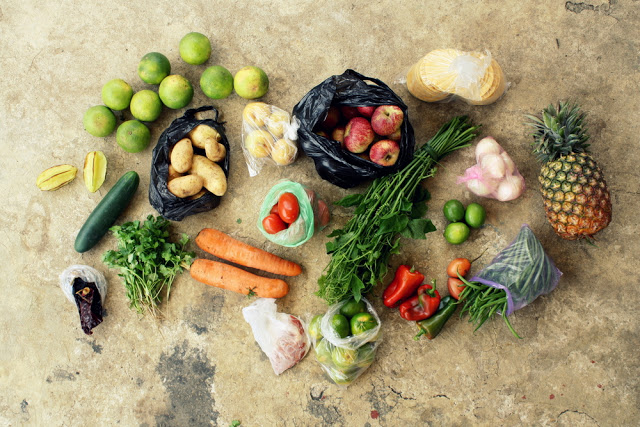
Jennifer’s market finds.
After the kids got home from school, I spent the next several hours getting the food a step closer to being edible. I made a chili sauce, cut up a carrot for the kids’ snack, stewed the squash leaves into a soup (more on that later), cooked a pot of rice, and roasted some onions, peppers, carrots, zucchini, and a giant head of broccoli for the supper’s stir-fry. I also made a zucchini cake.
Saturday morning, the cooking storm continued with bread, a big pot of dried beans with onions, garlic, and dried chilis, pie crust (so an apple pie is just that much closer to being a reality!), and starfruit smoothies. I also put away the granola I had started the morning before. Oh, and there were breakfast pancakes, too.
There is still a lot of work to do to finish readying the market purchases for consumption: cutting up the pineapple (a simple task, but one I hate), that pie, snapping the green beans, and figuring out a plan for the potatoes, peaches, cilantro, limes, tomatoes, cucumbers, and carrots. But at least I’ve made a dent. The new week will begin with a well-stocked refrigerator—full of both cooked food and produce—and an overflowing fruit bowl.

Vegetable stir-fry
I think longingly of my freezers back home. Two big ones filled with containers of soup and pesto, bags of broccoli and peas and corn, jars of meatballs and roasted tomatoes, boxes of strawberries and applesauce! Just thaw, heat, and eat! What a novelty! What a luxury!
However, when I leave here I’ll probably miss the abundance of fresh food and the simplicity of having all my cooking options laid out right before my eyes on the concrete patio floor, no secrets, no surprises.
Neither style is easy. Both take work. In Virginia, my summers are crammed with growing, harvesting, and putting up. In Guatemala, I do it from scratch (minus the growing, thank goodness) on a daily basis.
What’s your method for getting fruits and veggies to the supper table? Do you buy lots of produce on a weekly basis, year round, cooking it up as you go? Or do you prefer to stockpile for quick meals?
From market to table (excerpted, with her permission, from mama’s minutia blog.)
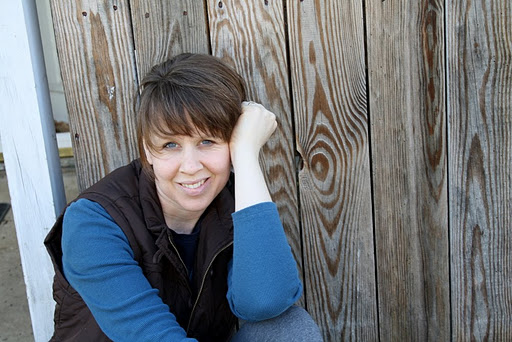
Jennifer Murch. Photo by a daughter, if I remember correctly.
Jennifer Murch and family are currently finishing up a 9-month short term assignment with MCC in Guatemala at Bezalell School, after also serving with MCC in Nicaragua for three years when their oldest child was born 13 some years ago. They serve as vocational arts facilitators with Jennifer’s main work being tutoring and teaching (and learning about) cooking in that setting.
Have you ever cooked in a setting other than North America? What did you learn?
Comment here to be entered into a drawing for a free copy of Whatever Happened to Dinner, which includes lots or recipes from other countries, along with traditional and southern U.S. cooking. You can share links to similar ideas here, or at my Whatever Happened to Dinner Facebook page, to be entered in the drawing. (Posts for the drawing will close Sept. 30, 2013, midnight).
And don’t forget to plan something special for Family Day, Monday September 23. For more on my book, here are study questions, an interview with yours truly, two podcasts with the food editors and me, and a video book trailer. Or think about who might like a copy of the Whatever Happened to Dinner book with about 100 recipes ranging from traditional/old time to foodie! Order here.
Other posts in this series: Food Swaps. Supper Club.


