

Verses for reflection: Large crowds were traveling with Jesus, and turning to them he said: “If anyone comes to me and does not hate father and mother, wife and children, brothers and sisters—yes, even their own life—such a person cannot be my disciple. And whoever does not carry their cross and follow me cannot be my disciple. Luke 14: 25-27
Have you ever witnessed a violent confrontation or loud argument that left you uncomfortable? Did you ever pass by a person with his hand out on the street and feel guilty for having so much?
We were traveling peacefully down an Interstate one day when suddenly the car in front of us pulled sharply onto the shoulder. The driver flung his door open wide and jumped on the pavement in an apparent rage. I could see there was also a passenger.
The driver reached into the car, pulled out something, and threw it on the blacktop. There was a puff of smoke. Then I could no longer see anything in the rear-view mirror.

You may not feel it is fair to leave the story hanging there but that is all I could see.
But I wondered whether we should have done something. If so, what? How much risk is reasonable when you have three small children in the car (as we did at that time)?
This leads me to a larger everyday question: in a world crying out with need, what can I do? When should I get involved? When should I respond to a panhandler on the street? When should I stick my neck out? Intervening could create an opportunity for more violence and possible crime (against us).
Jesus was considered crazy by his contemporaries and even his family. Mark 3:21 says “When his family heard about this, they went to take charge of him, for they said, ‘He is out of his mind.’”
When is helping foolhardy? When is it Christ-like? What is the likely outcome? Is there a way to reach out wisely—we AREN’T God, afterall.
I can no longer hide behind the excuse of “three small kids” but I still have excuses: a mortgage, we’re getting older, we’re (too) comfortable?
The “double dare” in my title is not just a childish taunt, but a nudge to (myself included) take responsible risks to help those in desperate need. If you have children at home, are there mission projects that can involve both children and parents?
My photo above is just an illustration for my “highway” story, but perhaps the signage can be applied to situations of getting involved without taking foolhardy risks. One sign says “Proceed with caution” and the other “Passage through tunnel by escort.” Helping through organized programs (such as a Clothes Closet my church runs) is one way to minimize risk and also to work as small communities to respond to issues whether it is violence, bullying, hunger or poverty.
College students and people from our church are sticking their necks out just a little to help hungry children through a back pack program, where kids who get free or reduced lunches through the week are sent home simple foods and meals for over the weekend, when they may not get much in the way of nutritional food.
Another way is by participating in community-wide thermal shelter program (or other shelters) for homeless persons through the winter months. This is probably a wiser way to help than giving guilt money on the street. Here is information on our local program.
Action: How will you stick your neck out in response to Christ’s call to “be my disciple.”
Verse for reflection: When Jesus saw this, he was indignant. He said to them, “Let the little children come to me, and do not hinder them, for the kingdom of God belongs to such as these. Mark 10:14
I remember one morning when our youngest was just approaching three. She woke up too early, so I put her at the kitchen table to eat while I continued the business of tidying up and getting ready to go to work.
“Sit there and watch me,” she requested with milk dribbling on her chin as I rushed through the kitchen.

Again I was stopped in my tracks by a child, causing me to consider what is really important in life. Is it more crucial to wash the dishes before going to work, or to spend a few quiet moments with my child?
I’m convinced children are placed in our lives to remind us of priorities. They tug at our trousers. With their actions they say, “Pity me!” Children remind us, if we’ll listen, that we were children once too who needed attention, hugs and direction.
Consider the child Jesus. Mary and Joseph did for him all the things normal parents do. They wiped his nose, cleaned messes, fixed food, kissed hurts, mended toys, told stories, and patched squabbles with siblings. This was divine work for Mary and Joseph.
But parenting can be divine work for us, too, nurturing sons and daughters of God into beautiful men and women.
Just because Mary and Joseph were raising a divine child didn’t make it easy. Remember when Jesus was twelve and “got lost” from his parents? His parents expressed outright exasperation when they found him. And surely there were many other incidents we’ll never know about.
When one child spilled her cereal, another wanted help picking out yet another outfit, and the third needed help looking for a lost library book—thinking of parenting as divine work made my fuse a little longer. It is also helpful to think of mothers where tangles are not over spilled milk, arguments about clothes, or a missing book. Being aware of families living for endless years in refugee camps, or apartments without heat, or kids left to fend for themselves while moms get high—helped me slow down and be more present to dear moments with my children.
I do wonder though what Jesus would say to us who profess to follow and love him, about the indignities so many children suffer. … “When Jesus saw this, he was indignant.” Surely some of his forty days in the wilderness that we recall during Lent were spent pondering the great needs of his world—and ours too.
What do you think?
Action: Take time not only for a child, friend or loved one who needs your attention, but consider how God may be calling you/us to divine work caring for God’s children.
Verse for reflection: As a mother comforts her child, so will I comfort you; and you will be comforted over Jerusalem. Isaiah 66:13
I had to dash out during the middle of a day-log seminar on the future shape of Christian education, to carpool some nursery schoolers home.
“I don’t believe in Santa Claus,” Brian chattered (it was a few weeks before Christmas), “because how could he come down a chimney?”
I had not come up with a response by the time his busy, wonderful mind had linked this problem with another. Pausing, he looked at me with the biggest black eyes: “Why doesn’t God come down?”
“You mean to earth?”
“Yeah.”
“You mean why can’t we see God?”
Brian solemnly nodded.
In that instant, all the theorizing I had heard that morning about the shape of Christian education and the future came alive. Here was a teaching moment more valuable than the best planned Sunday school lesson. Here was a bright four-year-old asking the question of the ages, a question theologians and philosophers and popes have pondered and debated.

Brian, from nursery school.
We were already at his stop. I put the van in park and gave him a big smile. “That’s a wonderful question, Brian, one that lots of people think about.”
Then I tried to put into brief, simple words the idea that God did come down to earth in the form of baby Jesus. But Jesus had to go back to live with God. Now we can’t see Jesus or God anymore except in the loving, sharing things people do for each other.
Brian’s face changed from quizzical to satisfied-for-now and he hopped out of the van.
As I drove away, marveling at the ability of children to cut through verbiage, the conversation took me to a larger question. Why doesn’t God come down as people suffer, nations go to war, and natural disasters take their toll? How can a loving God sit back and allow all the terrible stuff to go on?
I find comfort in acknowledging that much of the terrible stuff is caused by people, and natural disasters are just that: disasters caused by forces in nature. I don’t believe God sits around pulling strings on hurricanes to make them hit one town and avoid the next.
So is God powerless to intervene? No. But God gave us free choice, which we learn in the story of Adam and Eve.
When we ask, “Where is God amid suffering?” we can know that God (whether we admit or recognize it) can be there giving us strength to go on. Someone put it this way: “God’s heart breaks with ours in tragedy or death and puts loving arms around us as we grieve.”
All of this becomes more real as the loving actions of friends, family and church help us in concrete ways. When we take someone a dish, share a cup of coffee, provide transportation, a hug—then God truly does come down!
Action: How can I show God to someone during this season of Lent?

Emma, one of many beautiful children I enjoyed getting to know better by teaching Sunday school.
Verse for reflection: For I will pour water on the thirsty land, and streams on the dry ground; I will pour out my Spirit on your offspring and my blessing on your descendants. Isaiah 44:3
When my daughter when to preschool, she hated to be the last one to be picked up. I tried not to be late but when you are working and need to leave in the middle of the day for a pick up, things happen.
“Mommy,” Doreen said one morning, “Remember, I don’t want to be last today.”
“Yes dear,” I had said, “I’ll try to be early. I can’t promise to be first, but I won’t be last.”
That morning at work I previewed an old video, “The Estate Sale” for an upcoming meeting. The gist of the video was the story of a couple who had been “too busy” with other priorities while their children were growing up; the father even cancelled out of a graduation celebration because of work. At an estate sale after their demise, many keepsake photos from the family were put up for sale, pawed over by strangers. The viewer is left to ponder their own values.
Suddenly I looked at my watch. Horrors! It was ten minutes to twelve. Would I be late?
I got to her classroom about two minutes to twelve. There was no way all the other children could have been picked up already. I looked in the door. There stood Doreen looking bereft. Then it hit me. Perhaps I wouldn’t think of canceling out of a child’s graduation ceremony, but to Doreen, my showing up on time was, at this moment in her life, just as important.

Then her face lit up. No, I hadn’t been the first, but at least there were still four other children waiting. Her hand felt better than usual tucked in mine as we walked toward the car. For once I didn’t hurry her, and we enjoyed the signs and smells of an early spring day.
If I’m never late to pick up the children at school, never miss a recital or a school play—will this guarantee kids who keep in touch as we get old? Of course not. But I think there are patterns to our lives that increase the odds of our children growing up to be a blessing. Do I worry more about things—about the next acquisition, than the happiness of friends and relatives? Do I take time for them when it counts, not just when it’s convenient for me? Surely a part of being more mindful of our actions, thoughts, and integrity during Lent can include evaluating our relationships with those we claim to love the most.
Action: If I’ve made choices in the past with my family that I now regret, can I reach out to someone even now?
***
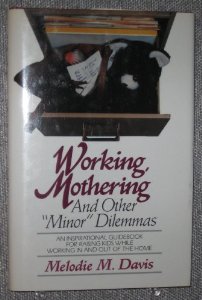
I wrote about the many dilemmas of being an employed mother in one of my first books, Working, Mothering, and Other “Minor” Dilemmas published by Word Books in 1984. I have some really really cheap “out of print” copies I’m happy to give away, for the cost of postage and handling, about $3. Some of it is dated but many of the principles, as above, work in any era. Let me know if you’d like one and I’ll send you one or if you are local, you can pick one up.
Verse for reflection: Do not judge, and you will not be judged. Do not condemn, and you will not be condemned. Forgive, and you will be forgiven. Luke 6:37
It happened in second grade. I can still see Sandy bending by the shelves that stored our gym shoes at school, desperately trying to scrub mud off my pretty red sneakers with wet paper towels.

“It won’t come off!” she said, shaking her head and close to tears. She had borrowed them without asking and worn them at recess, out in the mud. “I’m sorry,” she said over and over. It was certainly a forgivable offense, but it seemed a large sin to second graders.
“Let’s all hate Sandy,” my friend Sharon conspired on my behalf. So we passed “hate” notes until Sandy was properly ostracized and punished.
Childhood can be a terribly lonely, cruel time. I’m still ashamed, even though we soon forgot about the muddy shoes and Sandy was our friend once again.
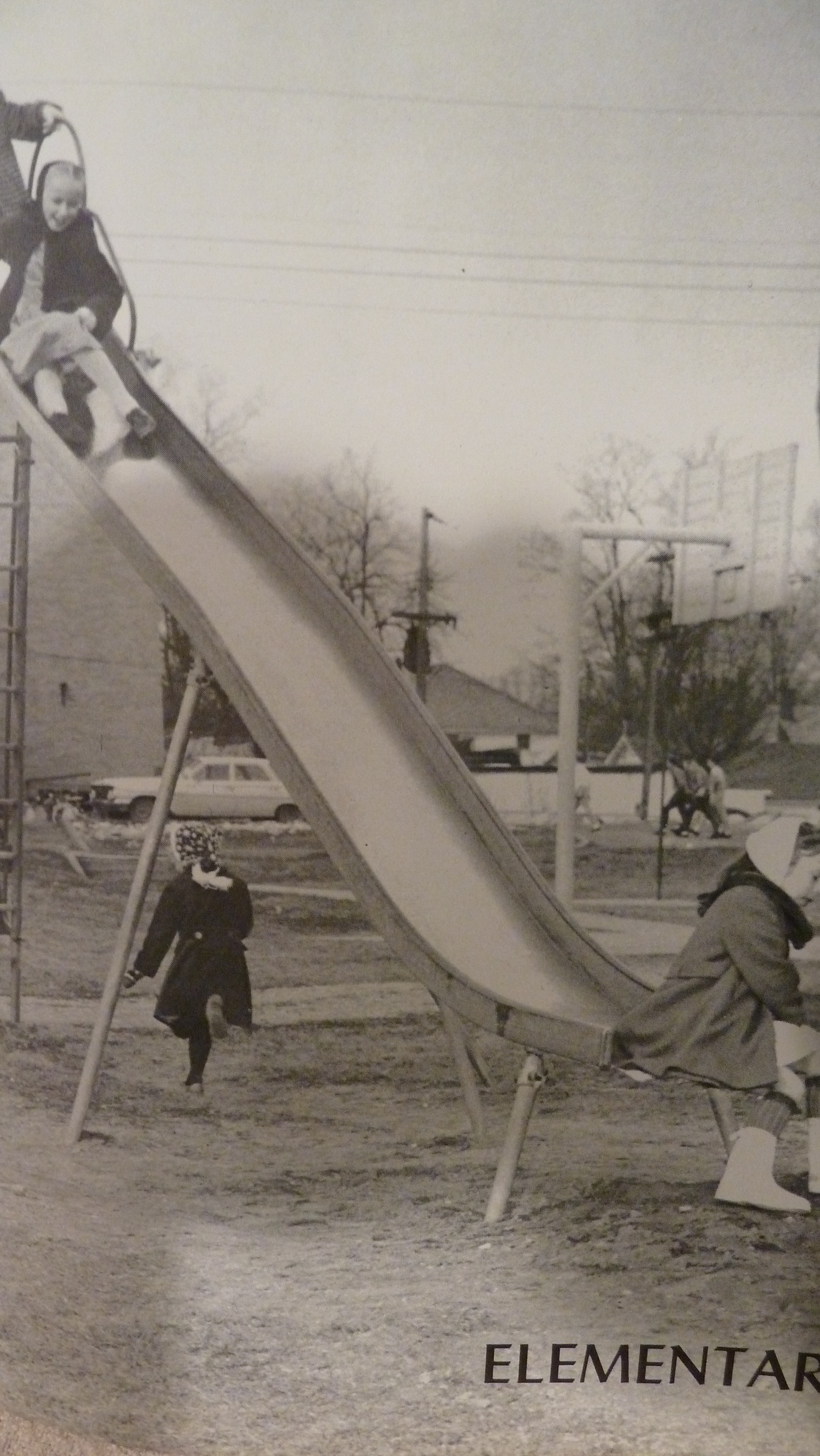
Recess on our school’s muddy playground in Middlebury, Ind.
In Matthew 18:23-25, we read the parable of the unmerciful servant who has a huge debt wiped clean, then refuses to go easy on a man who owes him a few dollars. When the king throws the unmerciful servant into prison we read that this is how God will treat us unless we forgive others.
This makes me realize again that forgiveness is not just something nice to do out of the bigness of our hearts. It’s not an extra, it is required of anyone who calls herself Christian.
That doesn’t mean it’s easy. Like second graders, we have a hard time coughing up the words and meaning them. We have a hard time asking, giving, and receiving forgiveness. Why is it so hard?
Granting forgiveness is something God does, so when we extend forgiveness, we’re behaving a little like God. So no wonder it’s hard to do. This doesn’t mean we put up with abuse or adultery: forgiveness can become too cheap—a “second grade” forgiveness. That’s not what Jesus was talking about in today’s verse. We seek forgiveness with others because we see God more clearly when our slates with God and other human beings are clean.
Action: During this season, may we ponder how much we’ve been forgiven, who we may need to forgive, or who we may need to ask for forgiveness.
***
Journey Toward Forgiveness is a documentary Mennonite Media produced in 2001 where I learned much about forgiveness in difficult circumstances working as scriptwriter.
A forthcoming book from Herald Press tells 50 stories of grace and forgiveness: FIFTY SHADES OF GRACE.
Photo credits: Sneakers from FreeDigitalPhotos.net Playground photo from Middlebury Elementary School (Ind.) Yearbook, 60s.
Verse for reflection: Hear my prayer, O Lord; let my cry for help come to you. Do not hide your face from me when I am in distress. Turn your ear to me; when I call, answer me quickly. Psalm 102:1-2
The runaround happens to all of us. We call a company and get tossed from department to department. We get so frustrated we resolve never to call them again.
But one day when it happened to me again, I just laughed. When the fifth person to handle my call asked whom I was trying to reach, it had become so ridiculous I just chuckled and thought about going for a record. I repeated my request. In an instant I was talking to the man I wanted.

Several of the people who handle the calls in our own organization discussed this one day at break. “I hate to get calls on line X because I never know whom to give the call to!” said one.
That helped me understand why I sometimes receive the runaround elsewhere. The inner workings of a company are often so complex that giving the wrong call to the wrong person can result in confusion and even reprimand.
It is helpful if we can be as specific as possible in explaining what we want. For instance, call one division of the office I work for and say, “I want to know about your books.” The receptionist needs to know whether you want to place an order or whether you want information on the philosophy of the organization. That can make a difference in who should receive the call.
That may be the problem with prayer, too. Sometimes we feel like we’re getting the royal runaround from God. Why aren’t our prayers answered? Or why do we seem to feel we’ve received one answer, but a week later, the door closes.
Maybe it’s because we don’t really know what we’re praying for. We haven’t defined our request, and so we’re not ready for an answer. We think we want to talk to the ordering department—when really we should back up and discuss life philosophy with the Almighty. Prayer is more about being in communication with God than giving God our want lists. We’re inclined to give God the runaround. We tell God, “Thy will be done,” and in the next breath we whisper “but not that way.”
One book I’ve studied, The Workbook of Living Prayer (Maxie Dunnam) encourages us if we’re stuck and don’t know how to pray, simply follow directions, as in the Lord’s prayer. We pray it so often that sometimes we fail to appreciate what Jesus was teaching—a pattern, for anytime.
Action: Dunnam suggests praying Matthew 6:9-13 and paraphrasing it in new words, if needed, which have more meaning for you. Perhaps that can bring you a step closer to truly getting through to the Almighty. Or God getting through to you.
***
Adapted from Why Didn’t I Just Raise Radishes: Finding God in the Everyday, Herald Press, 1994, p. 135, and originally for my newspaper column, Another Way, where you can sign up to get a free weekly email subscription, or daily “Stress Tips.”
Verse for reflection: There are different kinds of gifts, but the same Spirit distributes them. There are different kinds of service, but the same Lord. There are different kinds of working but in all of them and in everyone it is the same God at work.1 Corinthians 12: 4-6 Today’s New International Version
Cleaning or janitorial work has to be one of the most under-appreciated jobs in an organization—or even at home. No one notices your work unless you don’t wipe down all the cobwebs.
I became aware of this when our church janitor was gone for several weeks. Persons from church were asked to volunteer. Somehow the lofty idea of “service” we hold in high esteem on Sunday morning takes on new meaning when you’re down on your hands and knees cleaning up someone’s drips in the toilet stall.
Being a janitor or cleaning woman is difficult not just because of distasteful tasks, but because it is such a low status job. Too many of us somehow look down on the janitor, which is strange, because “clean” is something most of us value.

By Daquella Manera, Flickr, Creative Commons License.
I cleaned houses one summer during college while living in the deep South. At one house, I felt like a maid. I had to clean the whole house including changing bed sheets twice a week, and do all the laundry. The woman, sort of like the wives and mothers in the book/movie “The Help,” would disappear all day to a full calendar of social events—clubs, bridge, teas, shopping—while I worked.
At the other house, I felt like the woman’s friend coming in to help out. On days when she had big jobs for me to do like washing windows or cupboards, she helped with the task to make the job go faster. She always asked about my family, and would fix coffee or soda for me, like a friend.
The jobs were much the same, but my feelings about them were different because each woman had a different way of relating to me.
I’d guess that many people who clean for a living take pleasure in their work. My mother enjoyed cleaning homes for many years a few days a week after we were grown. Your mind can do many things while you sweep, dust and scrub. You can leave your work at the end of the day and not “take it home.” There’s an immediate result to show for your work. But I’d also guess there isn’t a cleaning person alive who at some point has felt unappreciated or stigmatized.
The scripture from Corinthians reminds us that all parts of the body are important, just like the jobs we do in a church, home or organization are important. One time after hurting my palm, I realized how important even that small body part was to many tasks—such as slamming the trunk of a car. Our palms are like feet in that they do most of their work without our ever noticing how important they are.
During this season when we try to live more purposefully, take time to notice and thank those who empty the wastebaskets at the office, clean the coffee mugs, mop the floors at church. If you are one who does these tasks, allow yourself to feel pride and joy in a job well done.
And go to the deeper level with today’s scripture by reflecting on roles in the church. Is cleaning, painting, mowing or taking care of the nursery really just as important as preaching and teaching in your church’s hierarchy? What about denominational moderator, stated clerk, executive director, pope?
Action: Take time to write a note, email or verbally thank someone who does a job that is under-appreciated.
***
For a review of The Help, check Third Way Cafe’s Media Matters review.
Verse for reflection: By the seventh day God had finished the work he had been doing; so on the seventh day he rested from all his work. And God blessed the seventh day and made it holy, because on it he rested from all the work of creating … Genesis 2:2-3
A number of years ago, my husband and I were trying to accomplish a half dozen things at once. A storm had knocked down several large limbs off our maple trees. I needed to run a new book manuscript off my computer printer. And I was washing a load of clothes.
I set up the computer to print, got the clothes started, then went out to prop up limbs so Stuart could saw them for firewood, which the children helped to stack.

“Do you realize that 100 years ago our grandparents would have considered this science fiction?” I mused during a lull from the work. “They would have had a scrub board to do the wash, an ax or crosscut saw for the wood, and paper and pencil to write a book. They could never have had all three chores happening simultaneously.”
“So how come we still feel like we never get anything accomplished?” Stuart contemplated.
Even with our “labor saving” devices, we have more chores maybe because we have so much: many more clothes than those who live in places where laundry is still done by hand, for instance.
But most of us like, want, and need to be involved in meaningful, productive activity. Even kids seem happier when they have appropriate, kid-sized chores. When the kids were small they would complain, sure, about Saturday morning cleanup, but if I broke down their chores into a list they could check off as they finished, they seemed to prefer something to do over being bored. I recall the happy sound of hearing one daughter humming as she worked.

Meaningful work and busyness are enjoyed the most when we also experience the opposite: meaningful breaks and periods of rest. Perhaps the real message of Gen. 2:2 (above) and the Bible’s teaching about “sabbatical” (giving the ground a rest every seven years), is that rest follows work. God took joy in the work of creation, and enjoyed a period of rest.
Action: Many of us have a long list of chores we want to accomplish on the weekend, but make sure the work is followed by a period of purposeful rest.
Verse for reflection: I have seen all the things that are done under the sun, all of them are meaningless, a chasing after the wind. Ecclesiastes 1:14, (NIV)
How do you measure snow? I once heard the owner of a radio station in southern Arkansas at the National Federation of Press Women tell this story. They don’t get much snow at that end of Arkansas so when they got a big one back in 1987, everyone was calling the station asking, “How deep is the snow?” No one at the station knew how to measure it. Surely one needed a fancy instrument.
So the station called the U.S. Weather Bureau (obviously in the days before Google) and said, “We’ve got a crazy question down here: How do you measure snow?”
The reply was, “Well, we’ve got a crazy answer for you. Get yourself a yardstick, push it down in the snow, and when you hit bottom, read the yard stick.”
They had twelve inches, (which coincidentally, is how much I measured yesterday at my house when I stuck my yardstick in the snow).

We’re masters at making the simple complex, like the folks at the Arkansas radio station. For instance, I had always put the twelve disciples of the Bible on a pedestal for so quickly leaving all to follow Jesus. What charisma Christ must have had, I thought. What commitment the disciples showed! What an interesting cultural time when some followed a master around for a period of years instead of going to college, I read.
Then a guest minister at our church started her sermon one Sunday by saying, in reference to the calling of the disciples, “As a wife and mother, I don’t see what’s so wonderful about a bunch of men who go off on a fishing trip one morning and don’t come home for three years. If someone were to offer me a three-year sabbatical with no dishes or clothes to wash, no responsibilities of any kind, to go off and wander around the country with a wonderful teacher, listening to stories and learning great truths, you wouldn’t have to ask me twice!”
So the disciple’s commitment may not have been so lofty and complicated as I was making it.
“Simplify, simplify,” said Henry David Thoreau. “Our life is frittered away by detail.”
The deeper question here is how do we measure happiness. I enjoyed many pictures on Facebook yesterday of kids and parents enjoying their romps in the snow around here. We have not much had this much snow for about two years. Such simple pleasures, especially since many work places were also closed.
We all need a good snow day now and then to remind us of some of life’s simple pleasures of fresh air, a warm house (if you were lucky and didn’t lose power, or have a good wood stove), tasty food, the love of family and friends.

Action: How is God asking you to simplify your (my?) life?
***
Stories come from Why Didn’t I Just Raise Radishes: Finding God in the Everyday, Herald Press, 1994. Originally printed in Another Way Newspaper Column, syndicated and found online at www.ThirdWay.com/aw.
Since most of the east coast of the U.S. (from Virginia on up) is happily (?) enjoying a snow day today, I’m taking a break from my Lenten devotional series and have been trying to catch up a bit on reviewing manuscripts for the magazine I edit, Living for the Whole Family.

Our spring 2013 issue.
I’m also a writer who has also submitted many many articles and book proposals to a variety of publishers and publications, and that’s what makes my job as editor so hard.
I know the sting of rejection. The desire to lash out, “stupid editor, she/he doesn’t know anything. People would love this topic! They would buy thousands of books! They would beat a path …” Or not. (Hence why you have so many publishing their own blogs today. Me included.)

(What you hope you never get)
So I HATE to send rejections (and that’s why it takes me so long to respond sometimes). But I have had many writers tell me, “yours is the nicest rejection I have ever received.” Some writers are grateful for any comment, any direction, any feedback that will help them (us) in our quest to connect and be published!
Thus I weigh the options for the feedback I give to writers:
- Shall I be brutally honest or spare feelings?
- How do I tell an elderly writer that the writing feels like it was written in the 1960s or 1970s? How do I feel about maybe becoming an elderly writer myself someday (not now, heavens!) and feeling rejected because of “ageism”?
- How do I balance the need for articles with a different twist or slant, with the “way out there” pieces that no one will identify with because no one else has had or will have this experience?
- The profound experiences of everyday life – birth, marriage, death – are just that, profound experiences that all of us experience (except for marriage) and therefore, most editors receive way way too many articles on the topic (especially grieving and loss or death).
- Would writers rather hear “we are overstocked” which is usually true, even though I make exceptions for pieces that totally rock and sing? Or would they (you) rather hear “this humor just isn’t funny” or “you are talking down to your readers.”
Hating to send rejections is almost overcome by the joy of opening an email or letter to find an article that jumps from the computer screen or page and makes me laugh, cry or think deeply.
The amazing thing to me is that writers go through all this trouble and travail to be paid a mere $35 to $50 most of the time and be JUMPING UP AND DOWN FOR JOY when they get the check and a copy of the publication with their name in print.
Writers are not really vain, we just live for the byline.
But at least I rarely get pieces anymore (which used to be fairly common at some publications) from writers saying “God inspired me to write this piece” and inferring you better use it or your publication is not so inspired. L Editors have probably complained about that old standby for so long they have pretty much killed the line, even if writers still feel it.
My old standby advice for getting published anywhere is to spend a lot of time reading the publication or website or blog where you’d like to be published, so that you absorb not only what it is about, but the language (formal, informal, loose, trendy) the publication uses, how they approach readers, the editorials (what the editor writes about gives you clues as to their likes and dislikes). And for pity sake, do read (memorize!) whatever guidelines the editor or magazine shares. Ours are here.
If you are a writer, what kind of feedback do you prefer from an editor? Feel free to respond to any of the above bullet items if you comment. You will be a help. Thanks!

 findingharmonyblog