


Okay, so I’m not a big international cook. I love to eat most any dish from around the world (well, no eel, brain or tripe please) but beyond stir fry and occasionally paella and trying to do curry once or twice, tacos and lasagna is about as exotic as my cooking gets on a regular basis.
But I was pleased to help test recipes for a new edition of Extending the Table cookbook for Herald Press/MennoMedia (disclosure, which also puts food on my table in the form of a 90 percent time salary). Extending the Table, originally by Joetta Handrich Schlabach with editor Kristina Mast Burnett, is one of three cookbooks in the classic and bestselling World Community Cookbooks series from Herald Press. (Read more about the project here.)
The new book is scheduled for publication sometime in 2014 and it will have photos and new recipes, although fewer recipes (to make room for the photos and new stuff) and the delightful editorial hand of Valerie Weaver-Zercher who is pulling it together. (I’m also reading her wide-sweeping examination of Amish-themed fiction, Thrill of the Chaste: The Allure of Amish Romance Novels, John Hopkins Press, 2013) right now, which I hope to write about here soon.)

Valerie assigned to me a recipe for Het Fang Sai Khaai, a dish I’d never heard of, but it turns out to be simply Mushrooms with Eggs. Not so exotic I thought, that’s one of my favorite omelets. Only this is a LOT of mushrooms with a few eggs in a pungently Asian-flavored sauce.
Turns out that not even Google or Wikipedia could come up with a common recipe for it, but then maybe the particular ordering (or rendering of English spelling) of the words in the recipe name might be to blame for that. Confessing a great deal of ignorance here. Please let me know if you find another form of this recipe online!
The best part is that this was relatively easy to make and my recipe testers gave it two thumbs up.
Be watching for the new edition of Extending the Table—which has already extended MY table. I don’t know yet whether this recipe will make it into the book nor do I know the name of the contributor of this particular dish, but I’m happy to add it to my list of options when wanting a twist on something that turns out not to be so different after all. It’s nice to find common ground half way around the world: a love for eggs and mushrooms.

Het Fang Sai Khaai
Mushrooms with Eggs
Ingredients:
1 lb fresh mushrooms (cut into slices or quarters; white mushrooms are fine)
⅛ cup oil
5 cloves minced garlic
3 eggs
2-3 Tb pork, beef or chicken bouillon (I used beef, low-sodium)
1 ½ Tb sugar
¼ cup oyster sauce (could also use fish sauce or something similar)
Fresh cilantro and green onion, chopped
Directions:
Recipe contributor’s directions: “The Thai way of cooking happens pretty quickly so have all the ingredients ready to go and once your start cooking, add ingredients one right after the other until it’s done.”

Heat oil and sauté garlic for 1 minute. Add 2 eggs and whisk. Add mushrooms and stir. Add bouillon, sugar, oyster sauce, and 3rd egg and stir continuously until the egg is fully cooked. (Total cooking time, not more than 10 minutes. Have rice ready to serve.)

Top with fresh cilantro and green onion and serve over rice.

***
I told the editor that the cilantro and green onion really “made” this dish in my opinion and luckily I had fresh cuttings of both of these in my garden right now.
Find a recipe for a similar but even easier dish in my cookbook, Whatever Happened to Dinner, called “Dave Schrock’s Tuna/Egg Skillet Dinner” or ask me to email that recipe to you.
Last summer I wrote a series of four Another Way columns focusing on Mennonite cookbooks, the first of which is here.
How do you figure out your calling, your passion in life?
My sister, who is a nurse, found her calling through having appendicitis as a child. The experience of being in the hospital—scary or distasteful for some—left her awestruck and with an image of her as a nurse in a white uniform and a little white nurse’s cap with a black stripe. An old image for sure, but it got her adrenaline going then and she still loves her job today (now partially retired).

My oldest sister “Nancy Nurse,” who was once featured on the front
of the employee newsletter of her hospital which included this lovely picture.
For me it was a trip with the “Sunshine Girls Club” (for real!) from North Goshen Mennonite Church to tour the Chicago Tribune that got my blood pumping. I loved seeing the workings of a big city daily newspaper—the desks, the typewriters, the smartly dressed women in high heels (this was the late 50s or early 60s) and people dashing around like they had important deadlines. I tried to see if there were any young copy boys or copy girls. I had read the youth-reader type book Copy Girl describing the duties of a “common position at many papers in those days, of a younger worker who is a typically young and junior worker on a newspaper,” according to Wikipedia:
“The job involves taking typed stories from one section of a newspaper to another. Reporters typed their stories on slips of butcher’s paper…then a copy boy ran the story into the neighboring [editor] room, hence the cry of ‘copy’. Each slip of the story had about six carbon copies…stapled together and it was the job of the copy boy – or girl – to separate the original and run it …”
HuffPost Canada ran a piece last year about an award-winning journalist, Michael Ignatieff, and eventual professor and politician who started out as a copy boy. Interestingly, since the job is now archaic, there are no books on Amazon that look like they have anything to do with a copy girl, unfortunately.
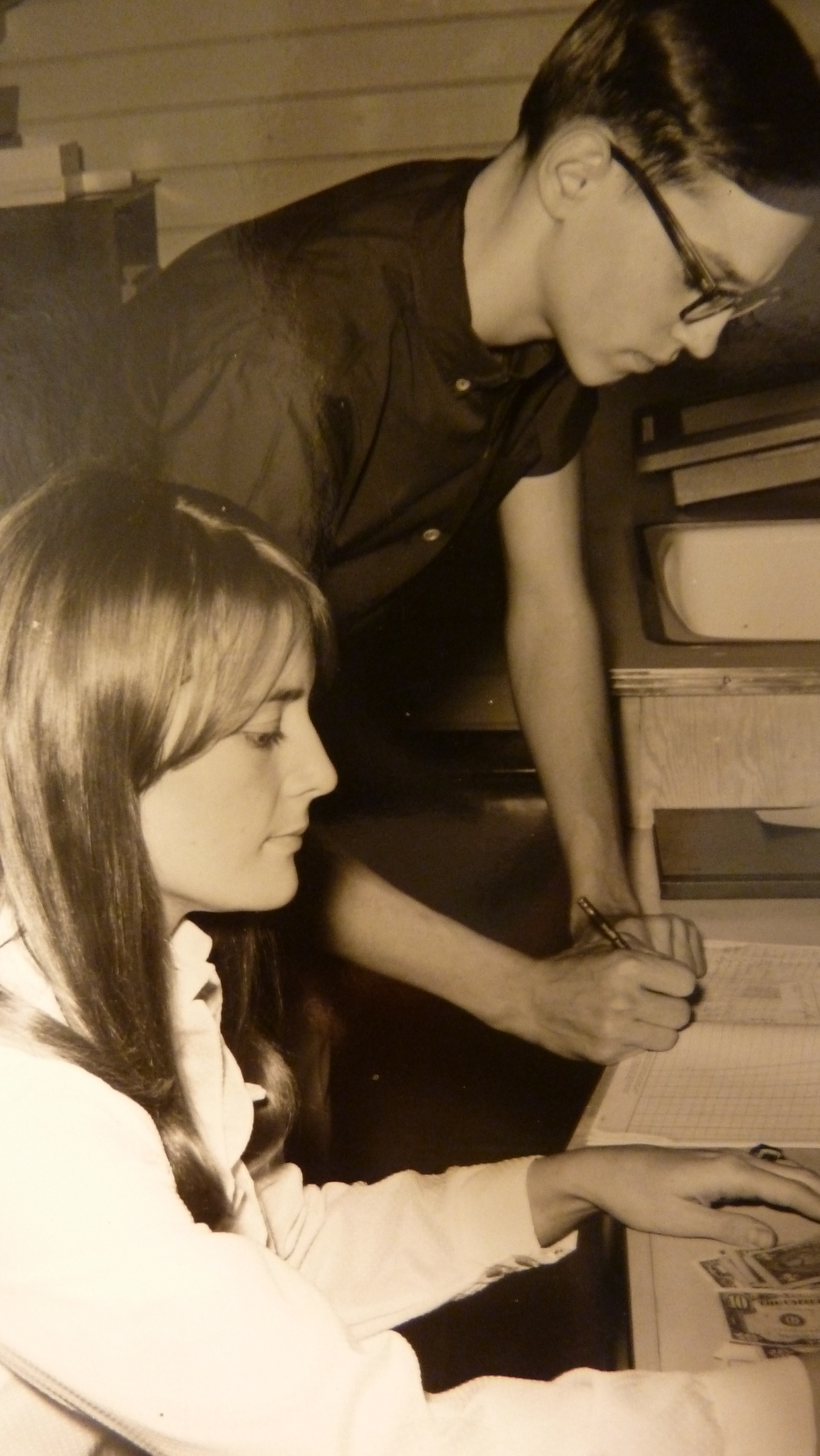
Working on my high school yearbook The Witmarsum,
as a business manager (um… yeah … not exactly my career aspiration). With Rodney Maust.
Anyway, I never was a copy girl but I began earning my writing creds in the years after I was first inspired by seeing the Chicago Trib in action, on a career path that I can trace only in retrospect. Who would have known that:
- An assignment writing about youth group activities for our church newsletter at North Goshen Mennonite where I tried to be a little bit creative rather than just reporting that the youth group had a car wash or a bake sale—got the attention of (at least) the pastor’s wife, Martha Krabill …
- When her son, James Krabill, was looking for staff as editor of the school paper, The Reflector at Bethany Christian High School, Martha suggested to James that maybe I would make a good writer for him. James asked me to do a column of profiles of senior class members, which led to …
- At Eastern Mennonite University, one of my high school and church friends, Chuck, recommended my name to the college newspaper, The Weather Vane. I well remember my first article writing about students who had done interesting things over the summer, and I was still writing in high school newspaper informal style. I’m sure the feature editor, Gretchen Hostetler Maust was aghast at my first attempt but she soon brought me up to speed …
- Eventually I was asked to serve as editor of the college yearbook my senior year, The Shen (the request arrived by telegram when I was studying in Spain, how quaint, they were desperate), which I turned down for fear of being too busy. But a smaller job as co-editor of the college literary magazine, The Phoenix, sounded like something I could manage …

Dorcas Kraybill and me working on The Phoenix my senior year of college.
- Along with a work-study job my senior year of college at WVPT-TV, the public broadcasting station in Harrisonburg where one of my first days I had to run a studio camera when they were short a camera person to tape a local public affairs show. That day I was introduced to the prettiest string of foul language my young Mennonite ears had ever heard when one of us failed to move the camera at the right time. The *&^%$ was piped directly into my ear from the director. I learned a lot of better things on that job which impressed my future employer on my resume—at least that is what I heard from him later …

Tear sheets from The Weather Vane.
- The experiences in college also gave me many tear sheets (official published pieces of writing) that I submitted as a portfolio with my application for my first job out of college at (then) Mennonite Broadcasts, Inc. There was a secretarial opening that I was applying for, but I wanted them to know I was interested in moving into writing positions. …
Which I did, and still am moving in to various writing/editing positions for 38 years now. I began July 7, 1975, about one month after graduating from EMU.
I could go on, but this is long enough. A couple weeks ago I wrote about some of the odd jobs I did along the way, and when I was done with that post, I realized oh! I didn’t even include the jobs (mostly unpaid) that actually took me to a job I continue to enjoy and that gets my adrenaline going almost every day.
Oh, and P.S., I still write volunteer articles for our church newsletter, The Nous at Trinity Presbyterian (sample here reused in Another Way, which originally appeared in The Nous).
What influenced you most in pursuing the job you have or aspire to? If you are currently a stay-at-home mom or dad what led to that decision and role and how do you feel about it?
What if you never have an adrenaline rush about work? How can hobbies fill that role?
***
An earlier post also talks about some of my early published works.
Part III
As I mentioned in my last post, when my sister, brother, and I had our children, my father told his “war” stories of service in a mental hospital to his grandchildren, so they would know this faith and family history too. (I also tell more of Dad’s story in an earlier Another Way column here.)
Our oldest daughter Michelle has always been drawn to history, something her father and I both enjoy. I don’t know if it was all those hours watching the History Channel which my husband frequently had on, (back in the days when all programs were historical, unlike today), or her own compulsion to want to go to the historical (and challenging) College of William and Mary (alma mater of George Washington, Thomas Jefferson etc.) as early as fourth grade, because of its role in U.S. history.

My husband’s only living aunt, Mary Russell,
tells family stories to our oldest daughter, Michelle.
At William & Mary she had friends who were even more involved in the study of history and she became intrigued by trying to find out if anyone in her family (either side) ever “fought in the Revolutionary War.” She studied bits and pieces of our own records and information. Finally last year, for her birthday, we gave her a subscription to Ancestry.com. As a novelist (still in search of an agent and publisher) who strives for historical accuracy, she has honed her research skills and over the next months she spent a lot of time researching a number of branches of her own and her husband’s family histories.
Interestingly, Michelle found her Revolutionary War veteran! Not on her father’s side with a long history of war veterans, but on my side of the family which included many, but certainly not all, pacifists. His name was Nathaniel Jefferies, Sr., my four-times great grandfather (on my grandmother’s side). Michelle wrote, “The tremendously sad thing I uncovered about him was that in 1777 he lost his father, his mother, his wife, and all six of his children, ages 10-18, to “camp fever” or typhus. That’s the very same winter as Valley Forge. Nathaniel may have survived the outbreak that took his entire family because he was with the Continental Army.” Irony of terrible ironies. He remarried around 1793, and my mother’s family descended from his second wife.
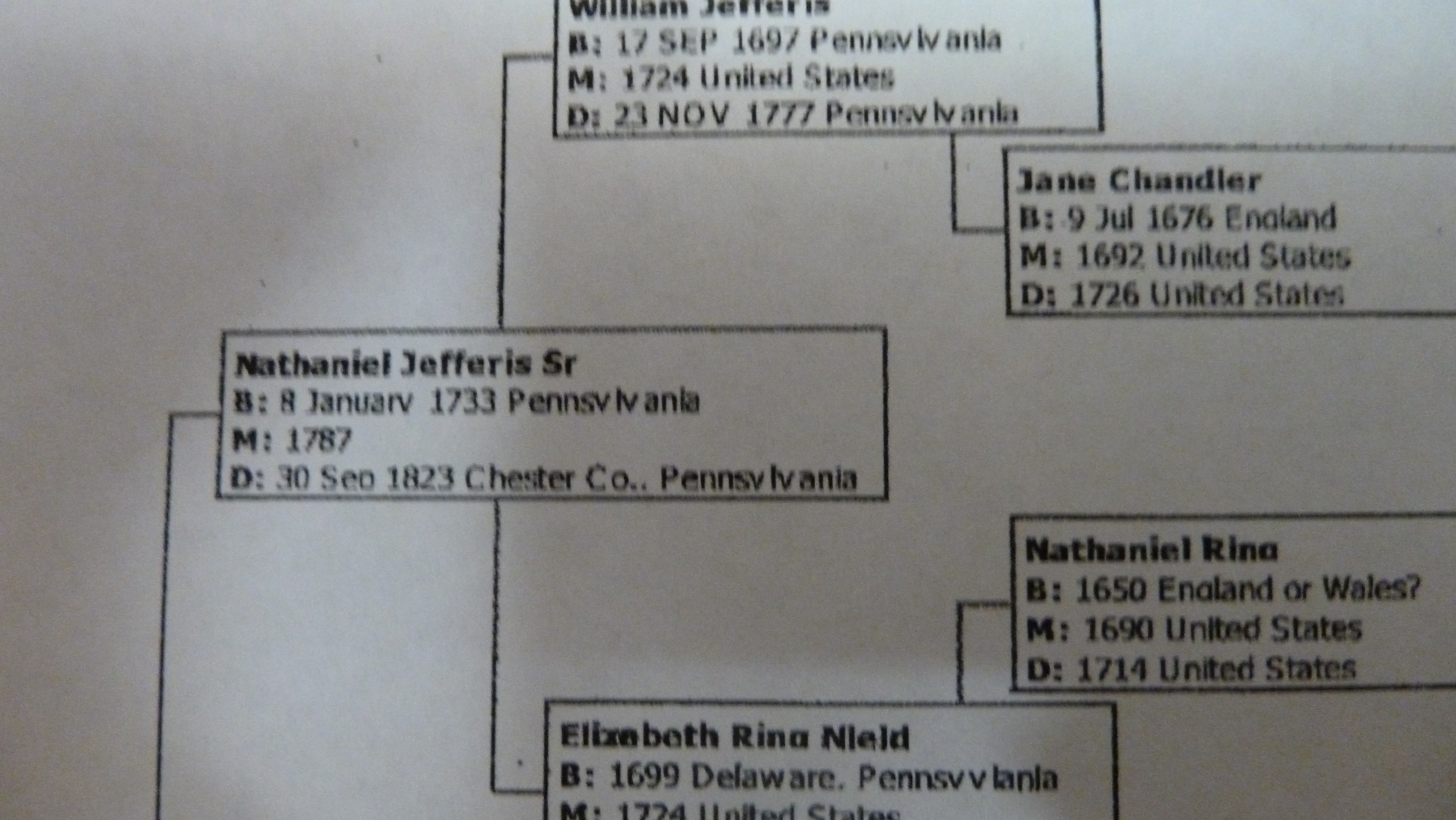
Part of Michelle’s research showing family tree of
Ruth Loucks Stauffer, my maternal grandmother.
My daughter further speculated from information she read that the Jefferies were either Quaker or Quaker sympathizers, so his involvement may have been compulsory. Michelle wrote in an e-mail:
“But it’s kind of odd to imagine the Continental Army forcing a 44-year-old man to join up. Nathaniel would have been 44 in 1777, the year of Valley Forge. Still, he must have been a healthy man, he lived to be 90 years old. Another possibility is that he wasn’t in the army at the time of the outbreak, managed to survive, and having lost his entire family, joined the army thinking he had nothing else to live for. The only records I’ve found of him in the service is a ‘leave card’ from 1780, so I know he was part of the rolls by then, but I don’t know exactly when he joined.”
More of her study and findings can be found here. Her own journey in understanding pacifist teachings and history has continued by learning from people at Northern Virginia Mennonite Church near where she lives, (while continuing official membership at her home congregation, Trinity Presbyterian, an official “peacemaking” congregation of PCUSA).
So, I am descended in part from a Revolutionary War veteran who was likely Quaker. My dad “would have been a medic” if he had not felt he would have just been part of the whole “war machine” as he called it. My brother-in-law was a medic who was wounded who still bears the pain of that experience in multiple ways. (My own husband’s draft number never came up, but for many younger years I knew that if called, he probably would probably go.)
Our very different histories on the surface are not as far apart as they look. I’ve often said I’m liberal and open enough in my thinking to love a conservative. So I’m still trying to build bridges, find harmony, and looking for paths toward peace in many ways.
Would you marry someone with different beliefs? How different?
(See Part I here of this blog post and Part II here.)
Part II
I was brought up in the home and religious training of committed conscientious objectors where I didn’t know any other way. But my faith and life journey took me to the place where I was okay marrying a man brought up in the home and religious training of a committed, patriotic, wounded war veteran who didn’t know any other way.

Easter Sunday when I was about three years old, before my little brother was born. Dad was one of the few men at church who still wore a “straight” coat because he was deacon.
That broadening journey started as my family stepped out of the “Mennonite ghetto”—as my father used to call it, of Goshen, Ind. and purposely moved to where there were only two small Mennonite churches in north Florida.
So I left my Mennonite high school and went to a public school overwhelmed by its first year of full racial integration of schools. As I dated a few guys I learned how very different their Christian orientation was. My journey continued as I entered Mennonite Voluntary Service and worked near Hazard, Kentucky, where one of my most vivid memories was a conversation in the “youth/young adult” class I taught for Summer Bible School at Talcum Mennonite Church with a young man who could not grasp how any Christian would refuse military service, or why. It was a foreign concept.
I went to Eastern Mennonite College where I took courses like “War, Peace and Revolution” with Grant Stoltzfus and studied books like Preachers Present Arms by Ray Abrams where I learned about a Lutheran pastor, Peter Muhlenberg during the Revolutionary War. Stoltzfus animatedly told how Muhlenberg, right down the road from us in Woodstock, Va., had preached a sermon in 1776, tore off his clerical robe revealing his Colonel’s uniform, and encouraged all the men to enlist in the Continental Army (which they did, right outside the church). My husband grew up in the Harrisonburg Muhlenberg Lutheran Church (named for Peter Muhlenberg, a fine church by the way. In addition to faculty at (now) EMU who influenced me, a steady stream of chapel speakers or lecturers like Art Gish presented a sometimes radical way of looking at the gospel.
During a junior year abroad spent in Barcelona, Spain, (then Brethren Colleges Abroad) one of my best friends was dating a West Point cadet; through her contacts we were invited onto an aircraft carrier in Barcelona’s port. While most of the men caroused off the ship in Barcelona, a group of Christians who didn’t want to do that held prayer meetings on the ship and my mind was just a little blown to be sitting in a cramped space on a huge U.S. aircraft carrier praying with enlisted men who were, obviously, committed Christians. Everything in my head was screaming, but … my dad wouldn’t get this … how can this be … who’s right, who’s wrong? What do I believe? These people just believe differently than I do, but we’re both, we’ve got to be, Christians.
My father’s own strong teachings were shaped by his own journey off the farm into Civilian Public Service during World War II, the arrangement between peace churches and the U.S. government for conscientious objectors to still serve their country and God by alternative service. He always said he would have went into military service as a medic if they would have allowed the possibility of treating anyone who was injured, including “the enemy.” But of course that wasn’t possible, at least officially.
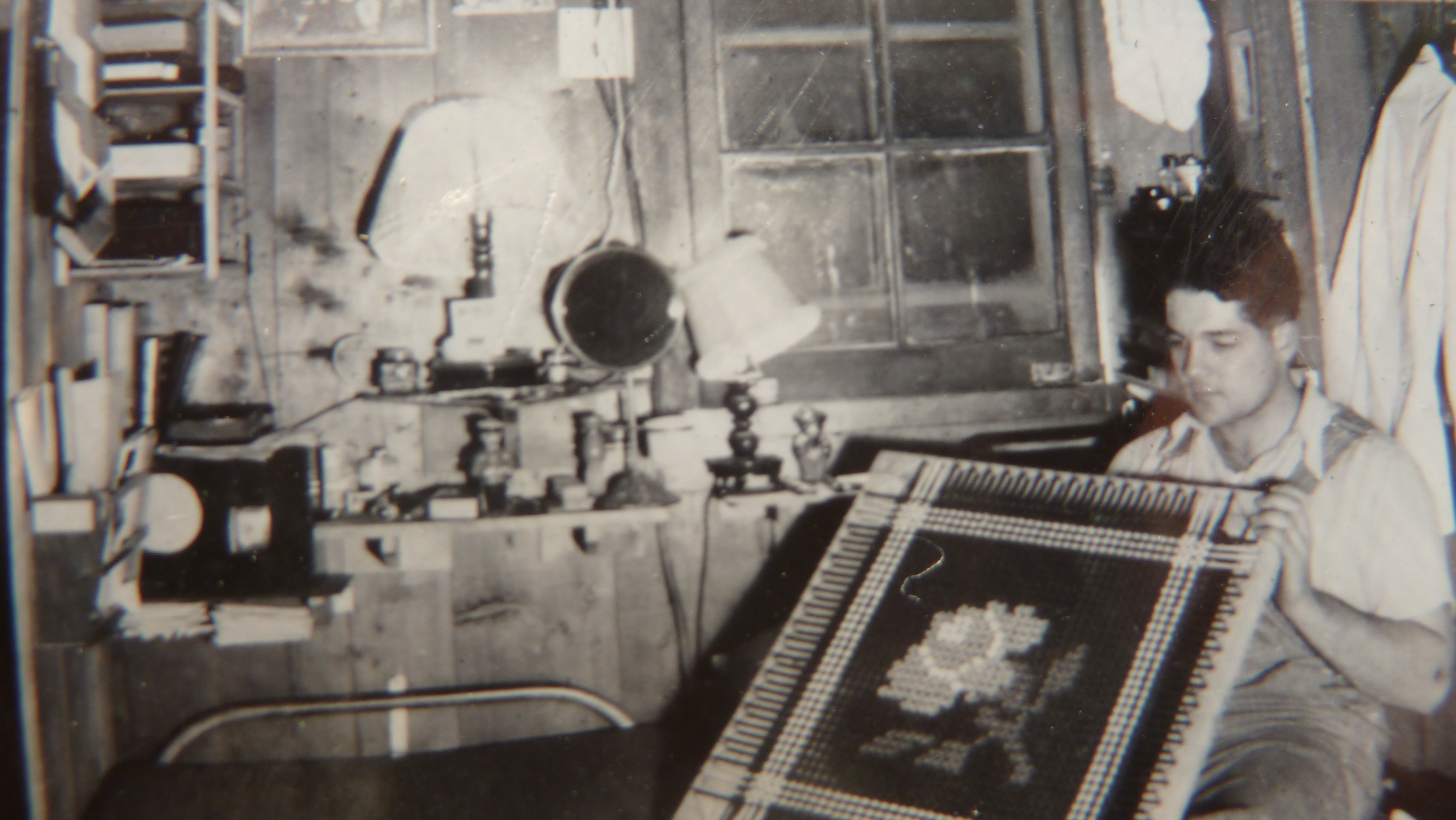
My dad keeping busy in the barracks in CPS camp.
CPS was his “college” and he too was influenced by a steady stream of speakers brought to the camps, and conversations with other CPSers who ended up being some of the Mennonite church’s outspoken leaders during the years following the war. In turn, he shared those convictions with us as children through mealtime conversations, musings in the car on the way home from church, through articles in the Gospel Herald and elsewhere which he would stick under our noses and ask us to read. I still have a treasured letter he sent after reading a piece in Mennonite Weekly Review from April 1996, highlighting the excerpted book, For Conscience’ Sake, a novel by Solomon Stucky, (Herald Press, 1983).
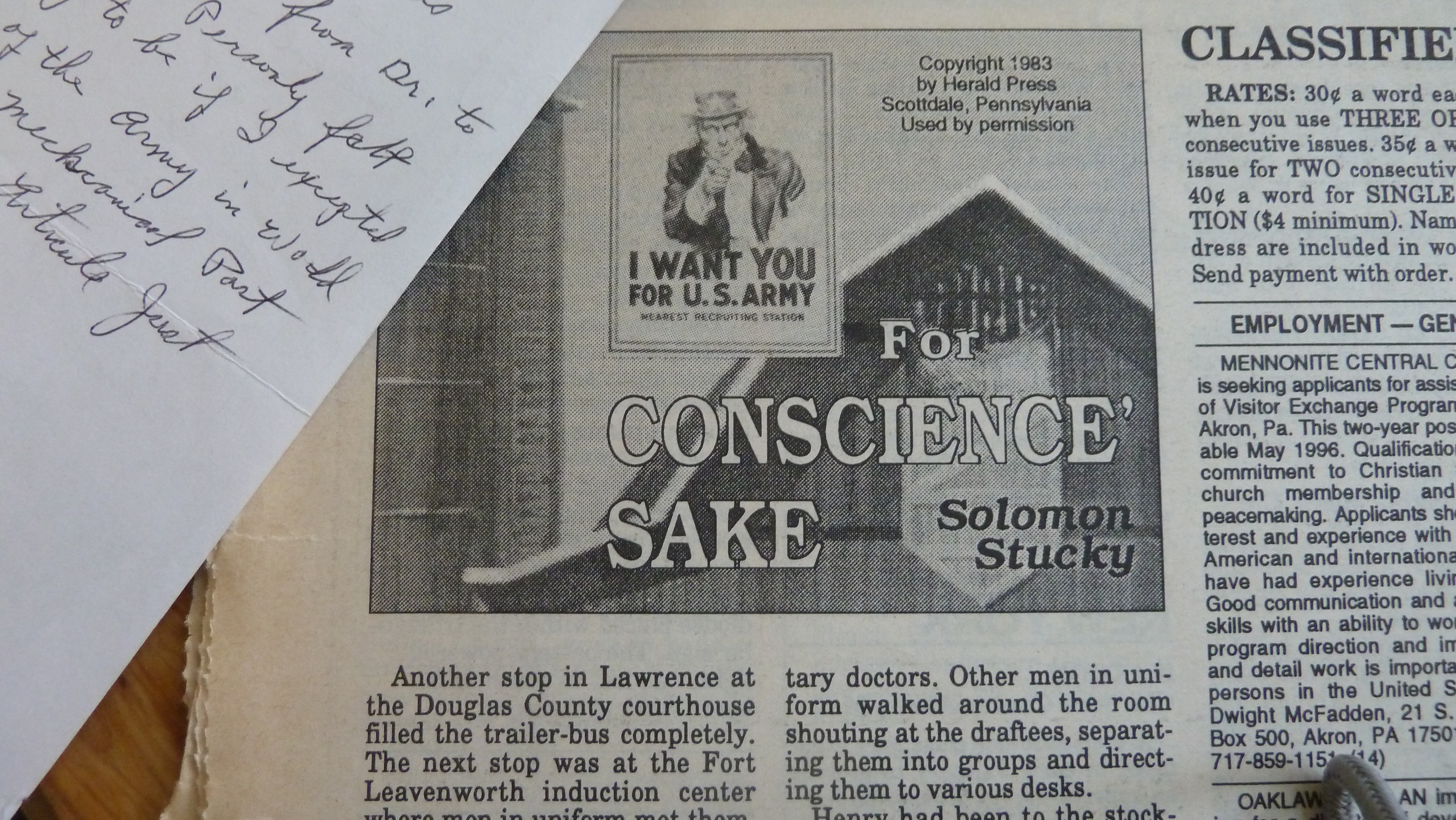 I saved Dad’s letter and page from Mennonite Weekly Review
many years, not knowing how I would ever use it. 🙂
The excerpt details how “Henry”—most likely Stucky himself, felt when as a conscientious objector, they were sent to the same induction center as enlisted man for physicals and completing paperwork. A crowd of several hundred recruits were herded into a huge locker room:
“A man in uniform stood on the top step in front of the closed door. He began yelling to the draftees below him. ‘All right men, get your clothes off, an’ I mean all of ‘em.’ … The room became so crowded that the men, pressed together shoulder to shoulder, had difficulty removing their clothes. … Several men had left their shorts on. The uniformed man pointed at them and bellowed, ‘You there, Get undressed. All of it.’ … Henry had been to the stockyards in Wichita … and he began to think of himself as part of a great herd of naked, vulnerable animals, goaded and pushed from place to place…”
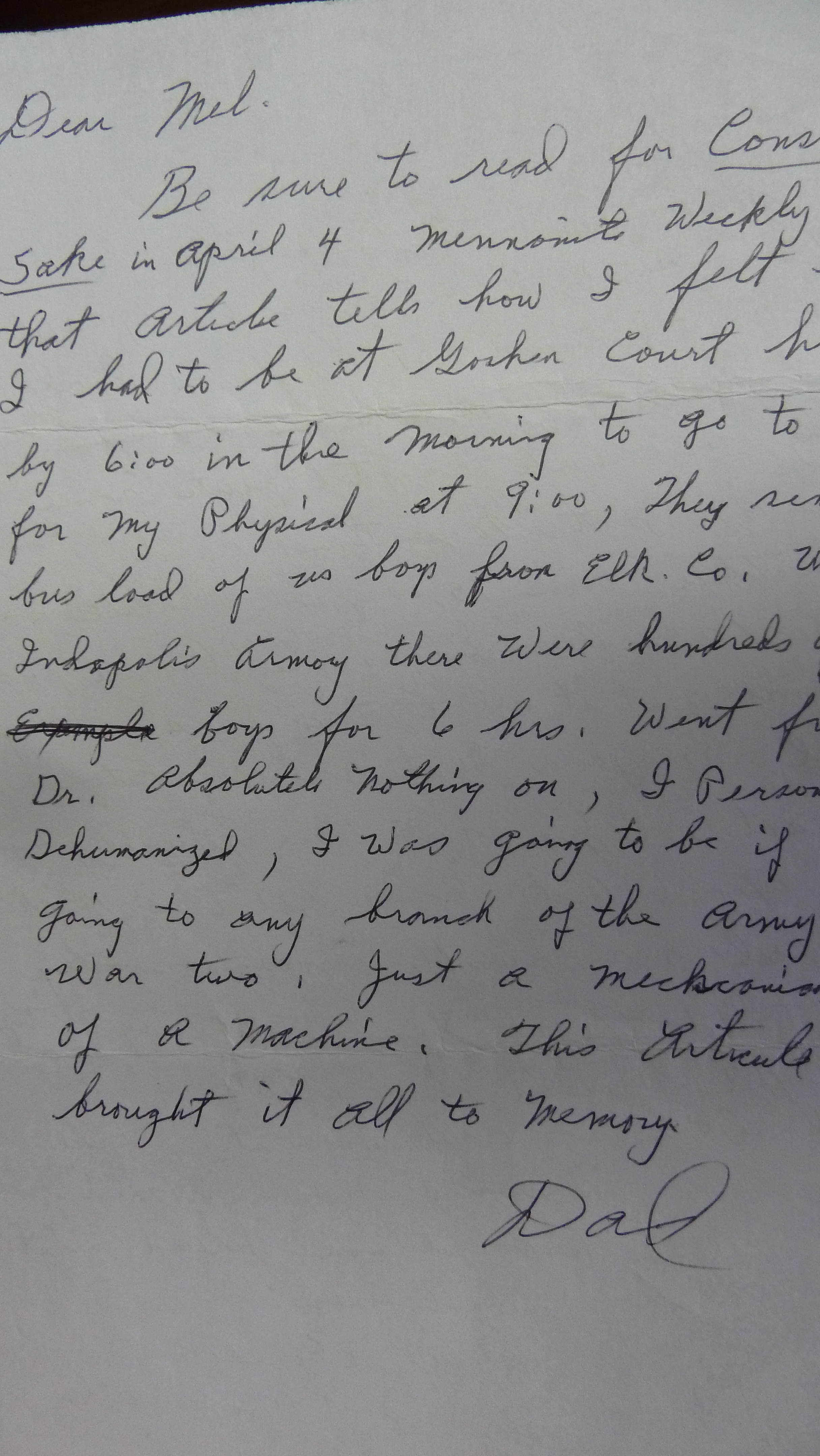
My dad’s note (above), in reference to this book excerpt, wrote:
“Be sure to read For Conscience Sake in April 4 Mennonite Weekly Review. That article tells how I felt when … in the Indianapolis Armory, there were hundreds of us boys … for six hours, went from Dr. to Dr., absolutely nothing on. I personally felt dehumanized, as I was going to be if accepted going into any branch of the army in World War two. Just a mechanical part of a machine. This article just brought it all to memory. Dad.”
Several years ago, a website about CPS was finally launched with a complete directory of persons who served, giving exact locations and dates of service. When I first found my dad’s name here, I felt goose bumps.
I loved that connection across history and generation. And I always wondered how we would raise our own children. What would they believe?
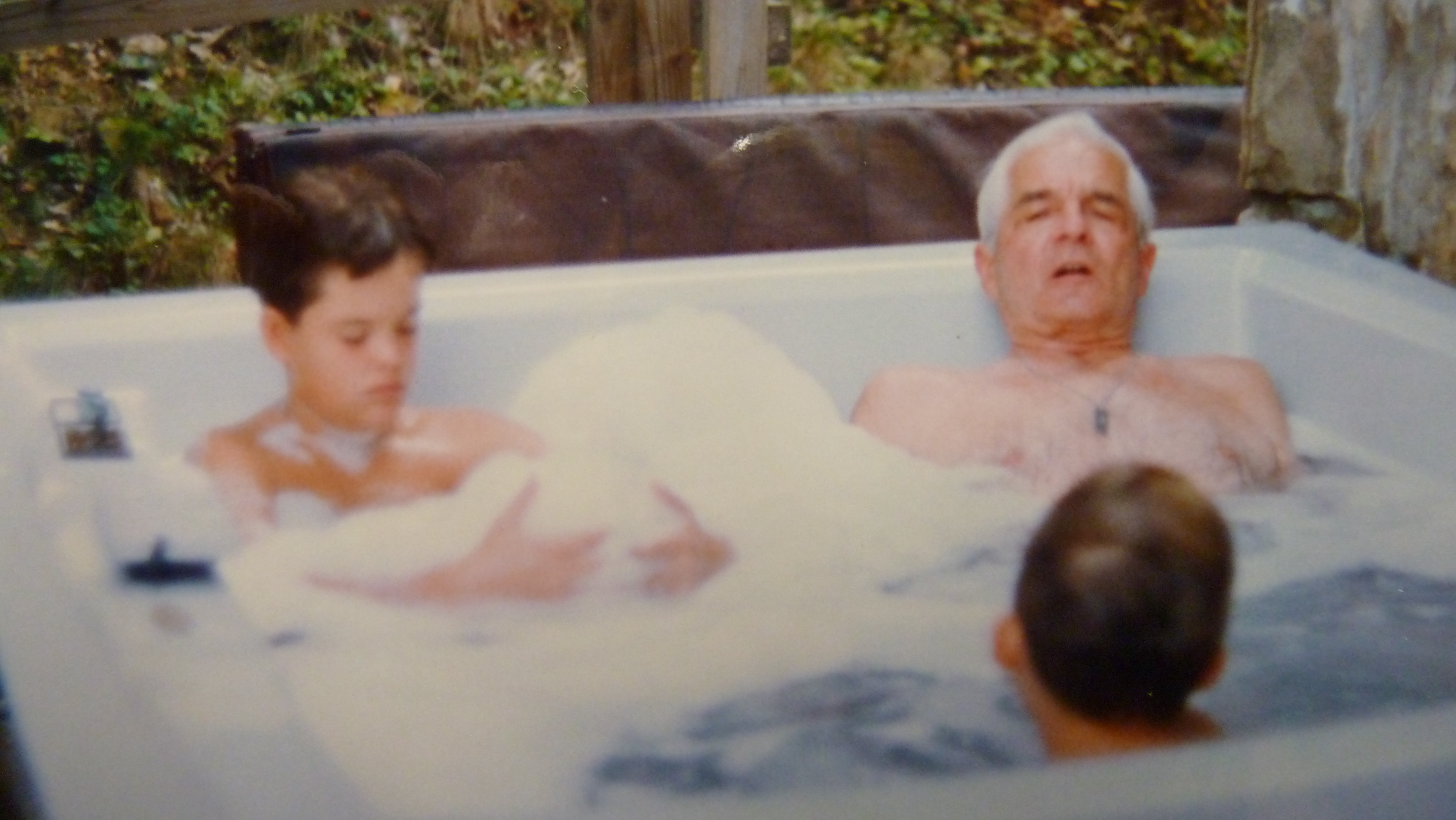
Dad telling CPS stories to his grandsons, Jamie (left) and Jeremy Miller,
while relaxing on vacation with the extended family.
***
Read Part I to this blog post here.
For more about a man who was instrumental in setting up the CPS program with the U.S. government, read my earlier blog post on Harold S. Bender.
And for even more see The CPS Story: An Illustrated History of Civilian Public Service, Albert N. Keim, Good Books, Intercourse, Pa., 1990.
For visual learners, a link to the PBS special from several years ago, The Good War and Those Who Refused to Fight It.
Part I
Dedicated in loving memory of my father and father-in-law.
The harmony of my married life has been coming to terms with the very different backgrounds and life experiences of my father and family, and my husband’s father and family.
My husband’s father, Hershel William Davis, was born and raised a Methodist near Tuskegee, in southern Alabama in 1916.
My dad, Vernon U. Miller was born and raised a Mennonite in northern Indiana in 1917.
I’ll explore a little of the lives of these two men in a three-part blog post.
Hershel’s family used to attend a Methodist Camp meeting and church here at Little Texas, Alabama.

Tabernacle at Little Texas, Ala.
There were five children in his family and they lived the hardscrabble lives of Alabama farmers. When 26-year-old Hershel was drafted during World War II, the army spelled it wrong and forever ever after he was known in veteran records as Herschel.
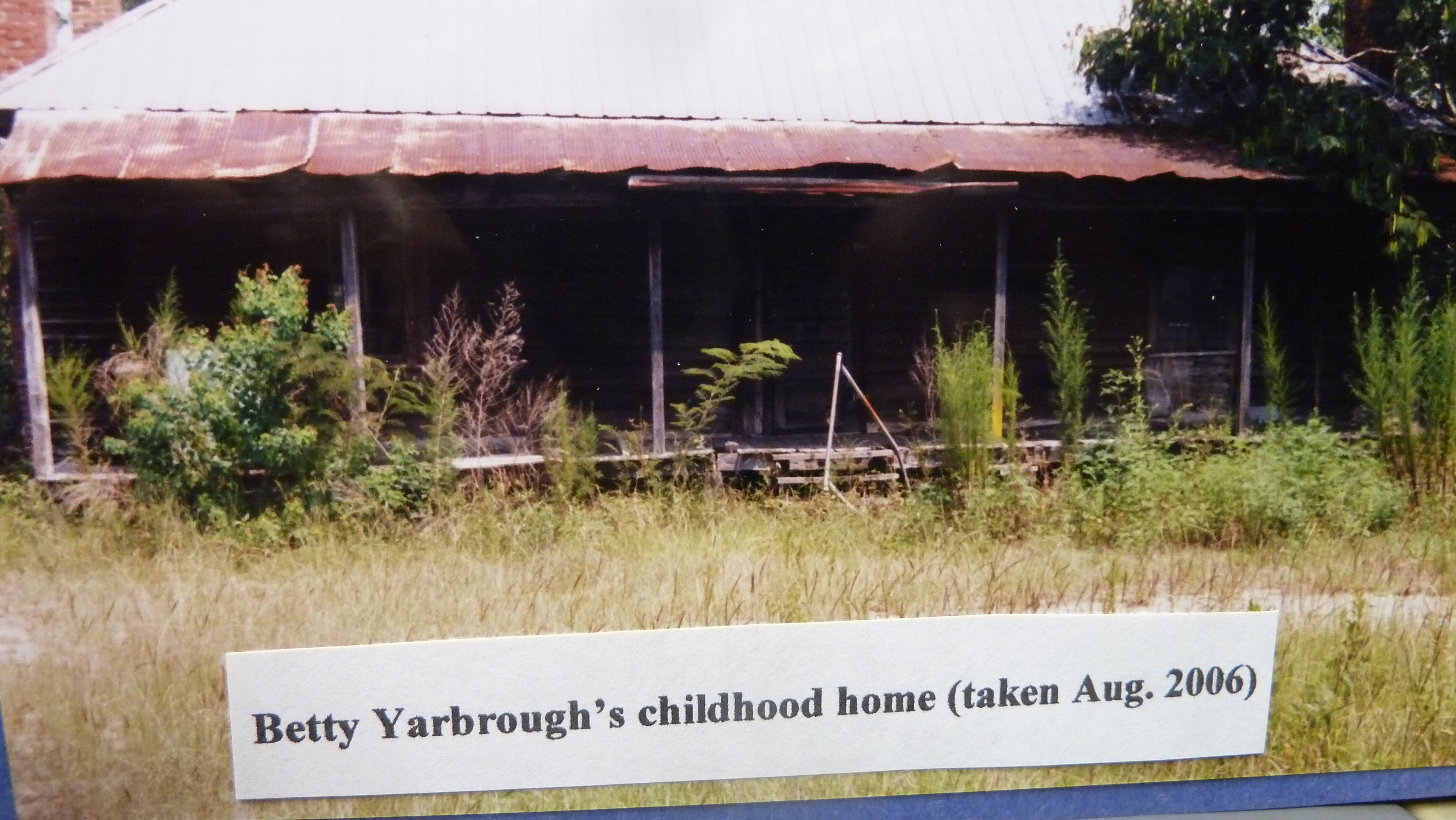
One of the tragedies of Hershel’s life was that his mother, Betty Mae Yarborough, which according to her obituary came from “one of Macon County’s large and prominent families,” died while her son was overseas in World War II. Hershel was not able to come home for the funeral.
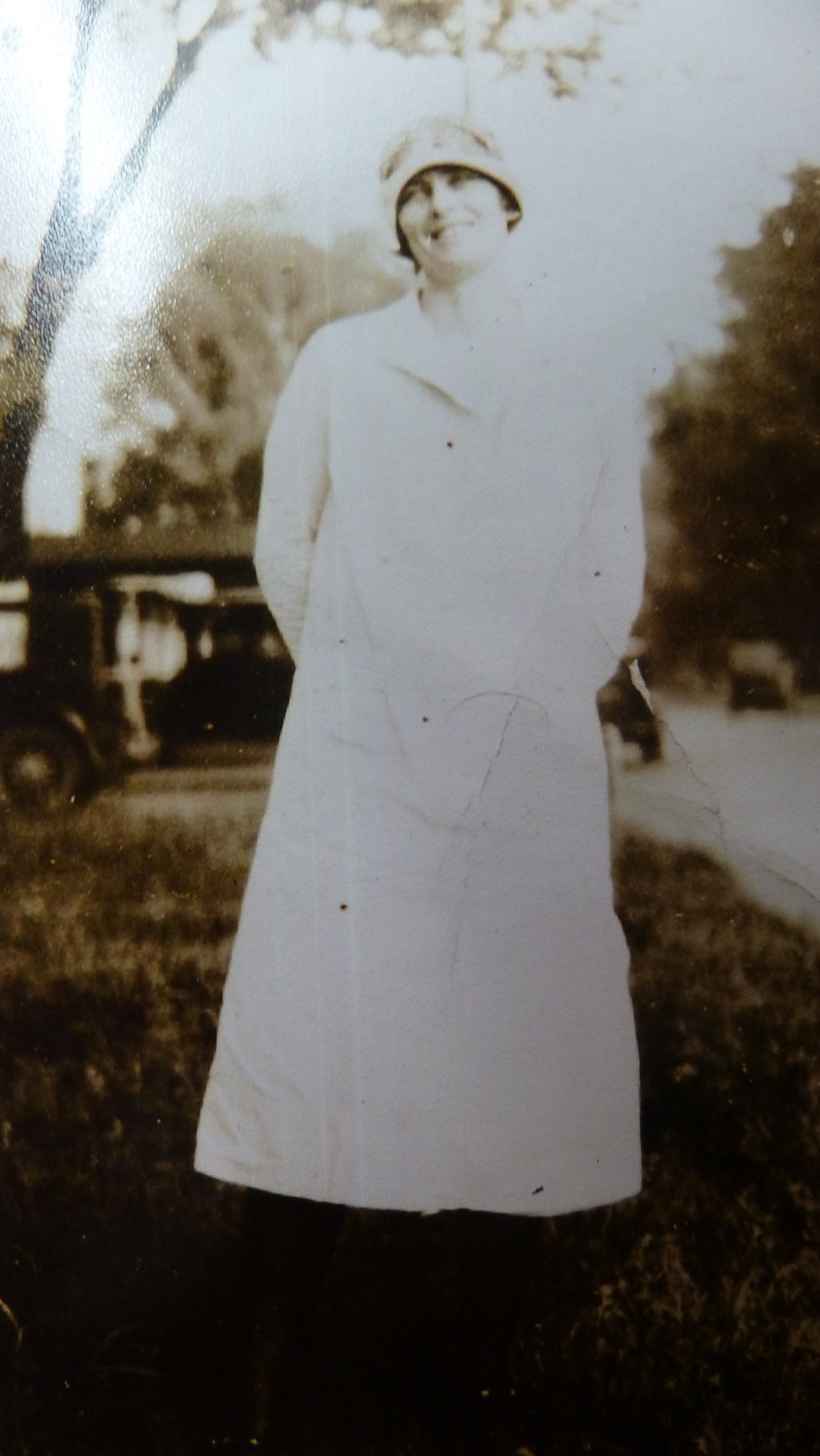
Hershel’s mother, Betty Mae Yarborough
Three years after Hershel died in 1998, we learned from some newly obtained letters how much this heartache grieved him. He had written regularly to Ruth Kerns Clatterbuck, a friend dating one of his friends. In 2001, Ruth contacted me because she was a frequent reader of my Another Way column and asked whether the Davis family wanted the letters Hershel had written since she was downsizing to an apartment and needed to get rid of things. She said she had written to Hershel out of friendship and patriotic duty.
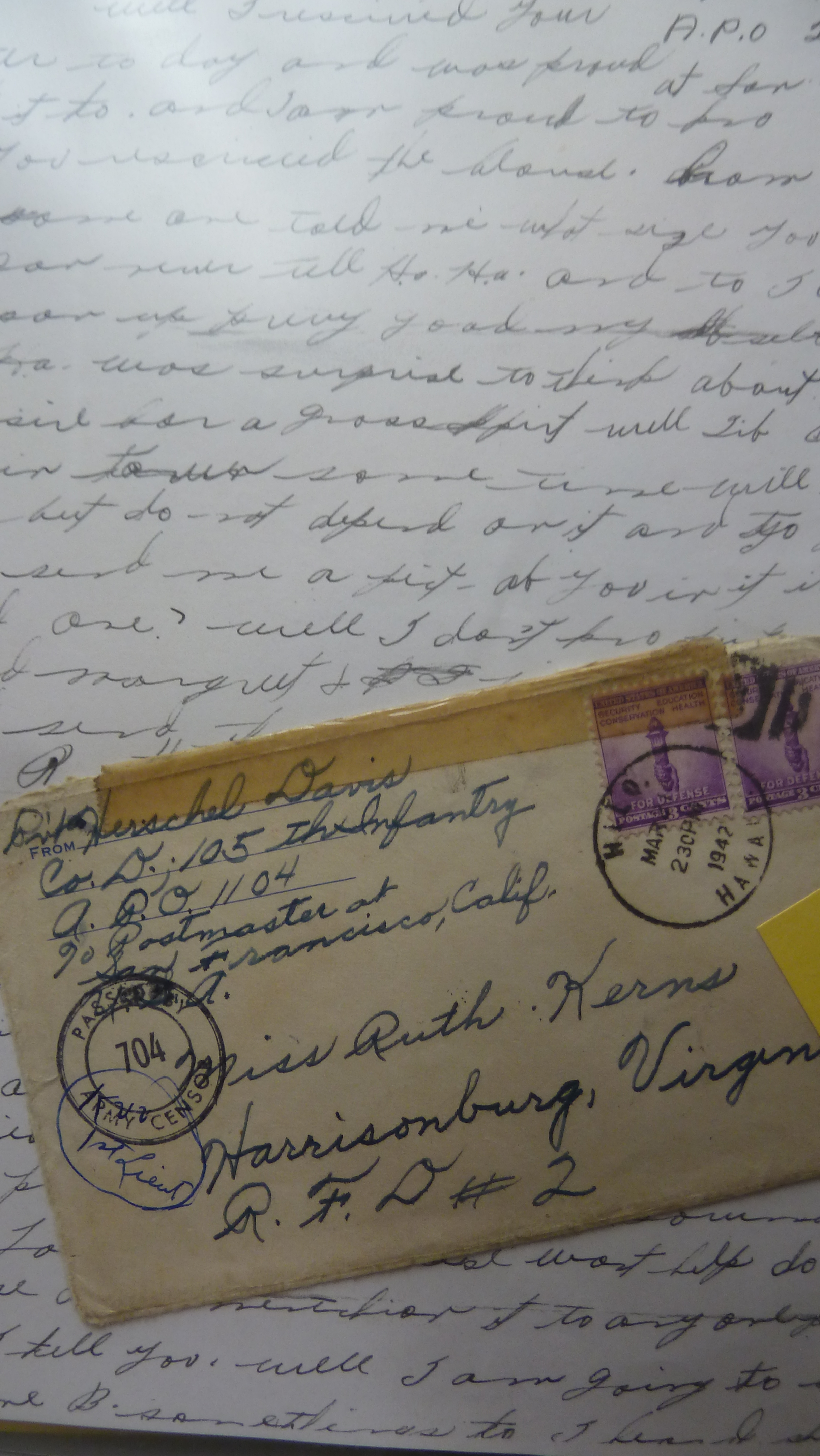
Letter from Hershel to Ruth, a friend.
Hershel most likely “hired” other men to pen his letters so they would be more legible, although some of the letters look like they may have been written by him. Here are some excerpts focusing on army camp life (he was initially stationed in Hawaii), and also the death of his mother.

Hershel in Hawaii.
April 1943. “Hello Ruth. You asked what I was doing [here] well, [to] tell the truth, it would be cut out or they would send the letter back telling me to write it over so see I am not allowed to tell anything; and speaking about working, we never know when we are going to be out from camp and Sunday is almost like Monday. Christmas Day we had to go out to work or go to church so I went to church but did not enjoy it at all.
(Hershel loved going to church. I remember him frequently saying, “If you don’t go to church on Sunday, it feels just like any other day.” Eventually the Davis family became Lutheran after he married Estella Hottinger.)
September 1943. “Well I guess you have heard about me losing my mother. Well it sure was a shock to me. … I hope your mother will soon be well and out again for I know when you lose your parents you have lost your best friend and my mother has passed on but I am proud she has gone in one way for from what everyone said she sure did suffer and from what the doctors say if she would have gotten well she would have never had her right mind and what hurt me so bad I couldn’t even go and it still worries me and think about home all the time.”
October 25, 1943. [Explaining more about his mother’s illness, which Ruth apparently had asked about]: “Well Ruth my mother was sick about four days and my dad had just come home [to Alabama] from a visit to Harrisonburg and when he arrived at my hometown mother was in the doctor office and went to Montgomery to the hospital and died down there. Well Ruth, you say cheer up but I just can’t and to know I have lost my mother and when I go home, she will not be there, and she would write me so often, I don’t hear from my sisters and brothers, guess I am not worth [it] … at least that is what I think.”
Eventually Hershel was wounded in combat on the island of Saipan and was sent home. This was the way he was brought up: this was what men did in time of war.
World War II was an example of a “just war” if there ever was one, for how could you seriously not want to halt the horrible advances and torture and mayhem of Hitler? So my father-in-law was a product of observing many of his family and friends serving “God and country” in military service. As he went off and endured the rigors and indignities of military training, missing his family, losing his mother and not being able to participate in her final services, all the horrors of war, watching his friends and comrades fight and die and then wounded himself—well, I must honor the sacrifices and commitment of my father-in-law—and his whole family, who never knew another way.
Two of Hershel’s sons later served in the Army; one as a MP in Germany and one as a medic in Vietnam. The medic was wounded too and more than just physically. He saw children blown up who had been booby trapped by their fellow countrymen as part of guerilla warfare. Today this brother-in-law, even though he can be stern, is one of the most generous and kind-hearted guys I have ever seen, especially around small children. He’s a “dog whisperer” and a “kid whisperer.”
So this is the family I married into, after many long and sometimes heated discussions with my boyfriend and then fiance. Could our very different belief systems somehow harmonize: find a way to come together?
Check back tomorrow for Part II.
***
You can sign up for a free e-mail subscription to my Another Way newspaper column at www.thirdway.com/aw
Then I had to grow up and get a real job.
Do you remember your first job? How much you were paid?
I don’t have the first dollar I ever earned or my first paycheck, but I still have scraps of paper listing most if not all of the jobs I have had. And now I will publish it for the world to see. I have lots of memories (aided by notes) but very few pictures of me in a work setting–funny how that is and I bet I’m not alone.
Like a lot of girls, my very first job was babysitting for neighbors, Jim and Christine, when I was 11 or 12. I was paid 35 cents an hour. Now I sound like I grew up in the Depression.
Then I got to the age when I actually ran an ad in the paper saying I would do ironing, babysitting and cleaning. Ironing, really? Yes! I felt grown up, running and paying for my own ad which cost about $3.75. So that got me my first gig for someone I didn’t know, and earning 75 cents an hour babysitting and ironing.
Over the years I also cleaned houses, scrubbed floors (and waxed them), painted, picked up pecans, pruned shrubbery, picked up corn in fields (my notes say to pay for homescoming dresses), and lots of odd jobs earning money for various youth groups trips and projects.
By the time I moved to Florida my senior year of high school, one summer I earned $5 a day as a waitress for Carpenter’s Steak House (plus tips). Over other summers during college, I cleaned for the town judge and a dentist at $1.70 an hour, drafted blueprints for the mobile home factory my father was involved in for a few years ($1.80 an hour) and did clerical work for the Calhoun County School Board at $2.10 an hour. I worked about two months at a steak house at Panama City Beach (which I thought would be a dream job), earning 75 cents an hour plus tips, averaging about $10 a night. My most unusual jobs were tutoring a businessman in Spain at $2.50 an hour while studying abroad my junior year of college, scrubbing pots and pans for a cookware demonstrator, and altering sleeves on the clothing of a woman whose arm enlarged inexplicably after she had surgery for breast cancer.
And oh yeah, I was also a camp counselor a couple weeks, and a short order cook in my college’s snack shop, and later a dishwasher in the college cafeteria.
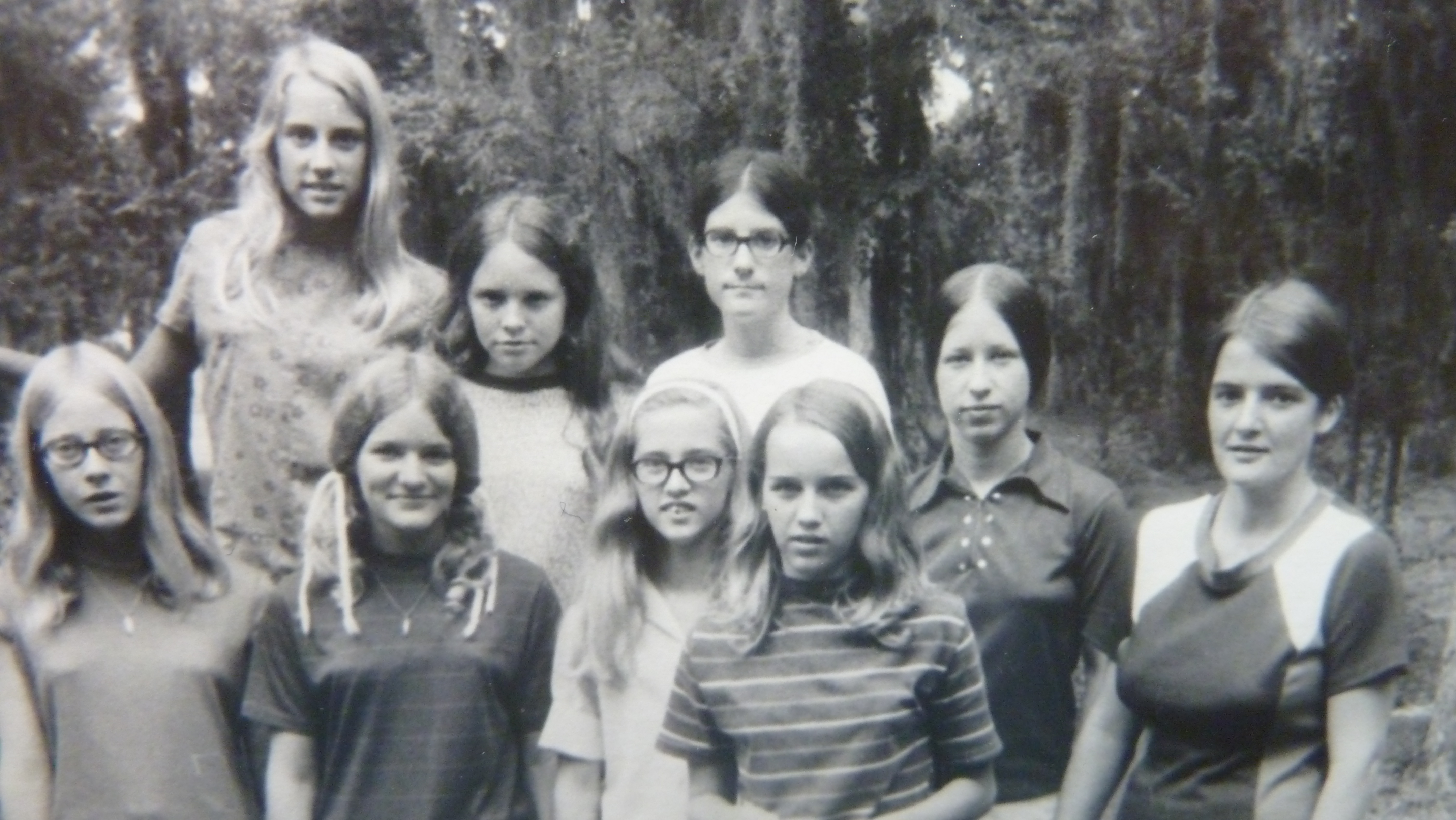
Counselor at Lakewood Retreat Mennonite Camp, Fla., me far right. Circa 1972.
My worst job ever was working the night shift at a lumber mill in Florida. I was a “runner” for a huge plywood drying machine earning $2.05 an hour, which would have been ok, but there were no coffee or lunch breaks and when I asked about that my coworkers said you had to get fast enough to grab bathroom breaks or eat your lunch. After two nights, I decided there had to be a better job in town. There was, packing flannel shirts in bags at a sewing factory. I learned much from my coworkers as they talked about who was stepping out on whome, who was pregnant, who was getting a divorce.
During a year of Mennonite voluntary service, I also taught nursery school (and discovered I didn’t want to be a teacher), and organized cooking and sewing classes for middle school girls.

One of the many office spaces I’ve occupied at Mennonite Broadcasts, Inc.,
Mennonite Media Ministries, Media Ministries, Mennonite Media, Third Way Media, and now, MennoMedia.

Some of my coworkers over the years, at a time when Choice Books
was housed in our building. Circa 1995, I’m near the middle in a kelly green dress.

Choice Books used me as a “model” on one of their brochures circa 1975,
as they did most new female staff members. Funky glasses.
And you thought all I’ve done my whole life is just be a writer. Nearing 38 years here, I’m still with my first real full time employer (although the agency has gone through numerous name changes and one merger). I started as a secretary and had to take a typing test on an old electric typewriter. That was before the Depression. Ha. I remember my first training session on a computer, the first time I used a mouse and how foreign that felt, the first time I saw a FAX come in, the first time I got online.

Giving a speech at an award banquet by Skyline Girls Scouts (still circa 1995 with those pearls and fav green dress).
Finding harmony between work and personal life is a gift that not everyone gets or achieves. I know it is a rich blessing to not only have a job, but to enjoy my work. I try to be grateful every day.
What was your favorite weird job you love to remember? Your worst job ever?
Check also my editorial in the summer issue of the magazine I edit, Living, for a piece on kids and helping them get valuable work experience over summer.
(Continued from yesterday’s blog post.)
Imagine two hundred 8 to 11-year-olds at 9 a.m. on a lazy summer morning. You’d expect them to be doing anything but learning difficult classical choral music.
Helen Kemp, a composer and world class conductor was teaching her composition, Prayer Litany, a lengthy and challenging piece based on St. Francis of Assisi’s classic, “Lord, Make Me an Instrument of Thy Peace” to these children. Earlier Kemp wrote the piece dedicated to “The singing children of Montreat.”
All of my daughters were fortunate to have the opportunity to learn notes with her; in 1996, I got to watch Kemp conduct my youngest child, Doreen. As a writer, I took notes.
Kemp pulled a Slinky toy out to illustrate how if they let their bodies sag down, they would look like a Slinky being held at each end and drooping in the middle. Their notes would drag to the bottom and not come out open and clear.
Then she pushed the timeless toy together so its middle rounded to a nice arch. “If you pull your head up, your notes will come up and won’t be pinched,” she explained.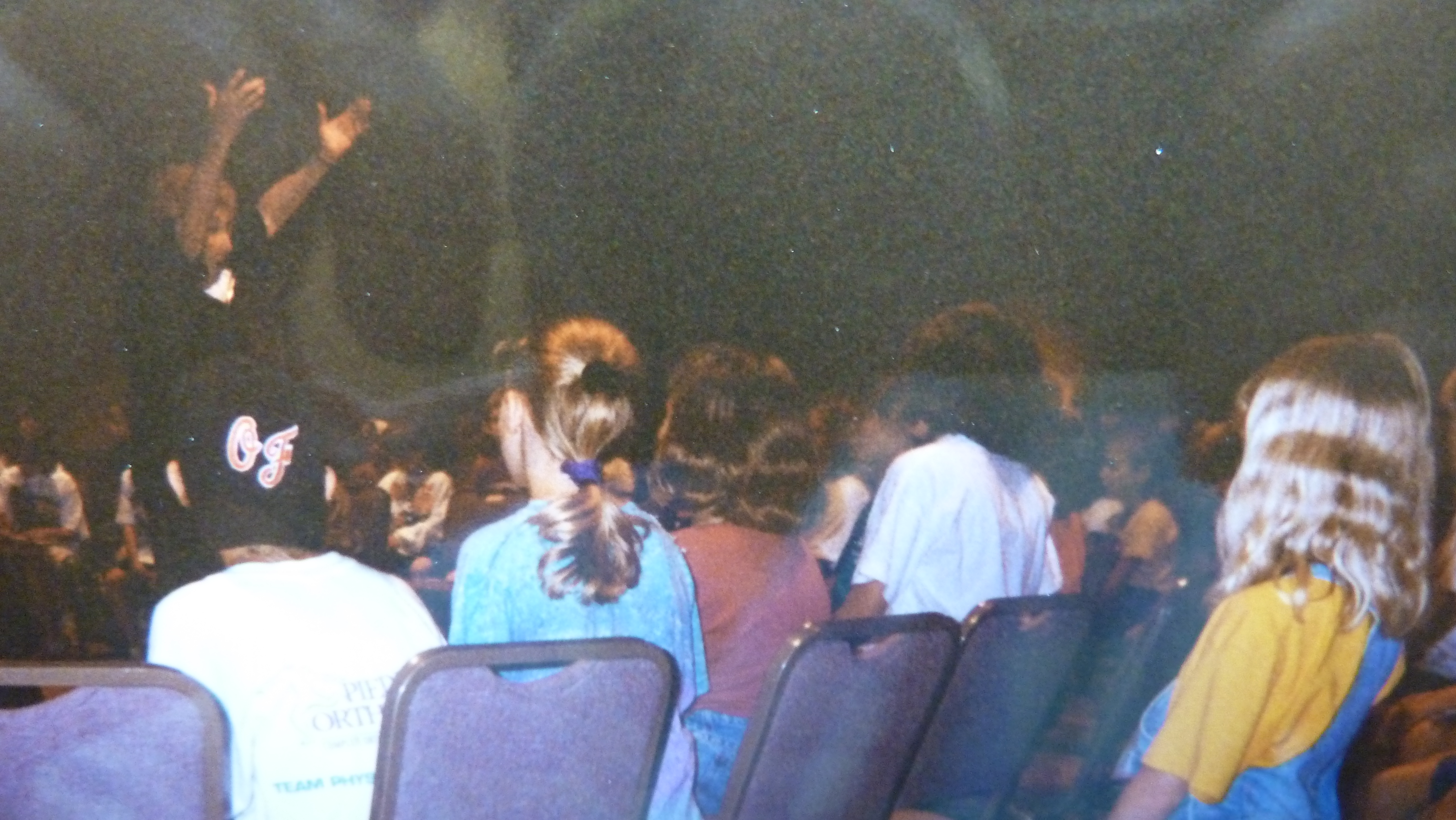
Helen Kemp, in background, left, conducts 200 children, including Doreen, blonde at far right, sitting up tall.
The children pulled themselves up straighter even while yawning, wiggling, swinging legs, jiggling, stretching, messing with their hair and jumping their legs up and down on the floor. They were kids, after all.
I marveled at Ms. Kemp having enough energy to manage and hold the attention of 200 children two hours a day, five days at a time, while perfecting exquisite music.
After one attempt, Kemp scolded, “Oh come on! That’s a little puny. You can’t sing it with your teeth closed.” She flung her arms wide open to illustrate how their mouths should fall wide to let out the word, “Joy.” For a few minutes, she had the kids sing while she paced around, bending her head to hear which words they were getting, which words they were mumbling. She began slapping her own leg to keep rhythm, gently poking the backs of children to get them to sit up straight, and motioned for heads to be lifted up.
“We don’t quite have the ending yet,” she noted, but it was an observation, not a critique.
Ms. Kemp told the youngsters, “If you can hit the high G on the ending, go ahead and sing it. But not all of you can hit the G, so sing the lower note. Now let’s try the whole thing.” Then she added with a happy look, “I’ve very pleased with you this morning. I know some of you are sleepy, but you’re doing ok.” She knew just how to talk to the children—admonishing and advising without condemning.
“Now this will be a test,” she proposes. “I want you to start the song without me.” A choir of 200 children getting started without their conductor? She goes to a chair and sits with her head bowed, just waiting. So they start, gingerly at first, and without her they sound like Captain Von Trapp’s children singing without him in “The Sound of Music.” They sing dutifully, but without spark.
Towards the middle of the piece, she can’t contain herself. She begins keeping rhythm on her thigh, then throwing her hand wide open again to a pretend audience so the children will be sure to hit “joy” with a full sound.
By the end of the song she is standing, swaying gently, directing with her body but not her hands. When they reach the tricky part where the tempo changes, she is now directing the children openly, waiving aside her proposal for them to sing without her.
The children finish. She takes her glasses off in satisfaction. The kids applaud, swept up in Kemp’s own spirit. She notes they still have “some cleaning up to do” but Kemp is clearly satisfied, knowing the children will be able to nail the number.

Anderson Auditorium on the campus of Montreat College, N.C.
At the song’s debut in Anderson Auditorium on the campus of Montreat College, it is a warm and muggy June morning. The children are children—acting causal, but they sing their little hearts out, hitting the high G on “joy” with enough power that I notice a woman in the seat in front of me shiver involuntarily. It is a goosebump moment, and others around me huskily clear throats and dab noses.
Later, in her after-performance talk with the children, Kemp told them, “This song was written for you. It took me a long time to think about how I wanted the song to sound, and you made it come out like I wanted. That was a gift to me. You made it come out right and helped people worship God today.”
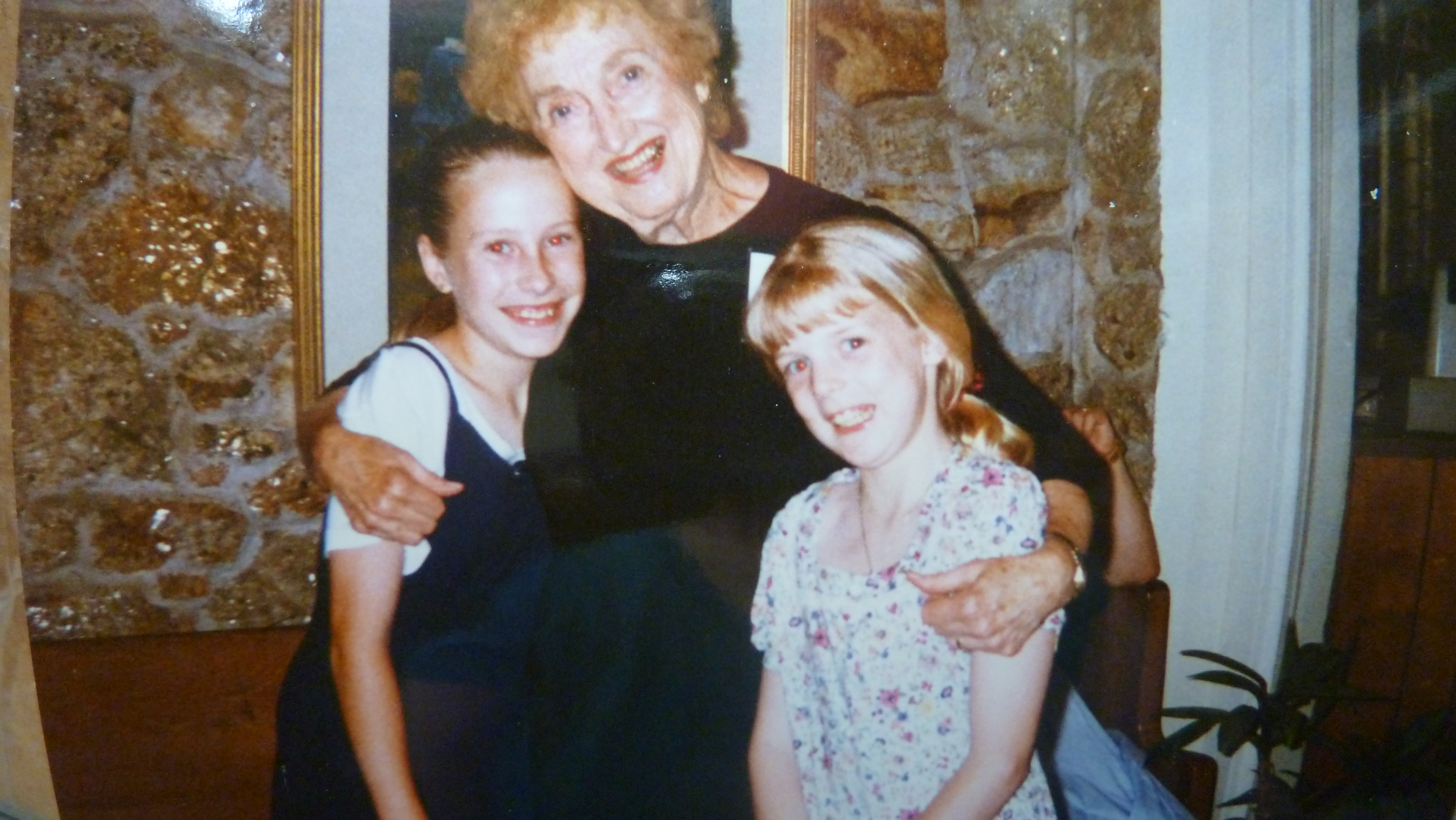
Helen Kemp poses with my daughter, Doreen, right, and a friend from our church, Chris.
As a mom, I was so grateful: not only for this grand experience for my daughters, but for all the people who took the time to nurture our children through the years at camp, the congregation, small groups, their friends and the parents of friends.
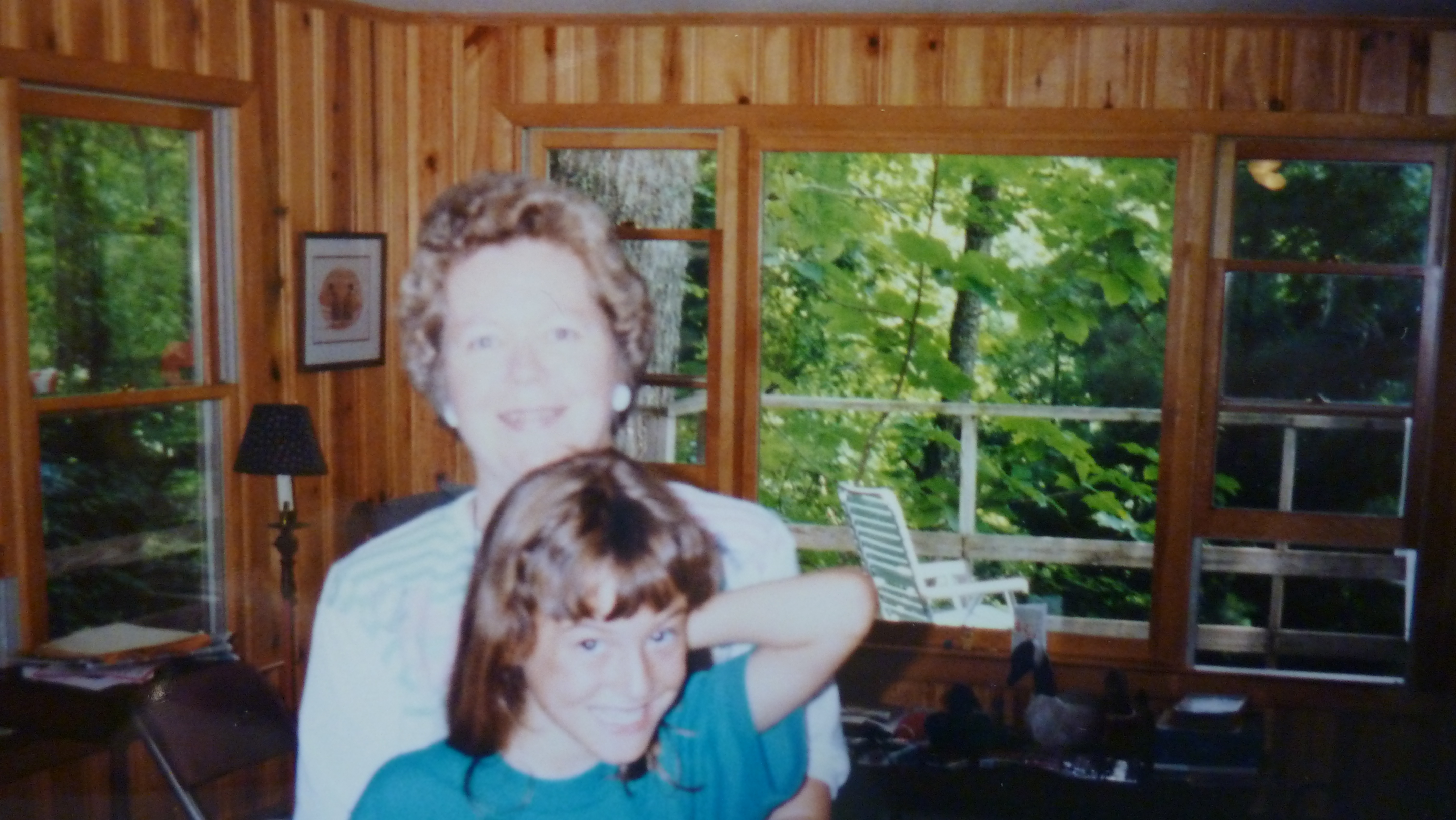
Beverly Silver, longtime member at our church, helps comb my oldest daughter, Michelle, when she accompanied the children to Montreat as a chaperone.
And I’m grateful for experiences in the larger church, like at Montreat, and eventually also at Mennonite Youth Conventions which they attended with me because of my long employment working for the Mennonite church. In these larger venues they had experiences impossible to duplicate at the local level and had the thrill of working under masterful teachers like Helen Kemp, Ken Medema and many other lesser known but great musicians.
And worshiping with thousands of other like-minded souls. Like heaven on earth.

Parts of this post appeared originally in my Another Way newspaper column, published by MennoMedia for over 26 years.
I can’t imagine sending my children off to camp for a whole summer like people do in books or movies: not just the expense, but what are families for but to enjoy special experiences together in summer?
Of course I highly value new opportunities and experiences for children. But even a week away at a camp, multiplied by three children, seemed like a huge stretch on the family budget. So I’m grateful for all the experiences our church helped provide for the kids.

Michelle overlooking valley at Montreat, N.C.
For many summers of their childhood, they were able to participate in the Presbyterian Church’s wonderful Music and Worship Conferences held at Montreat, N.C.. They also went to a more traditional church camp in the woods and fields, Paddy Run.
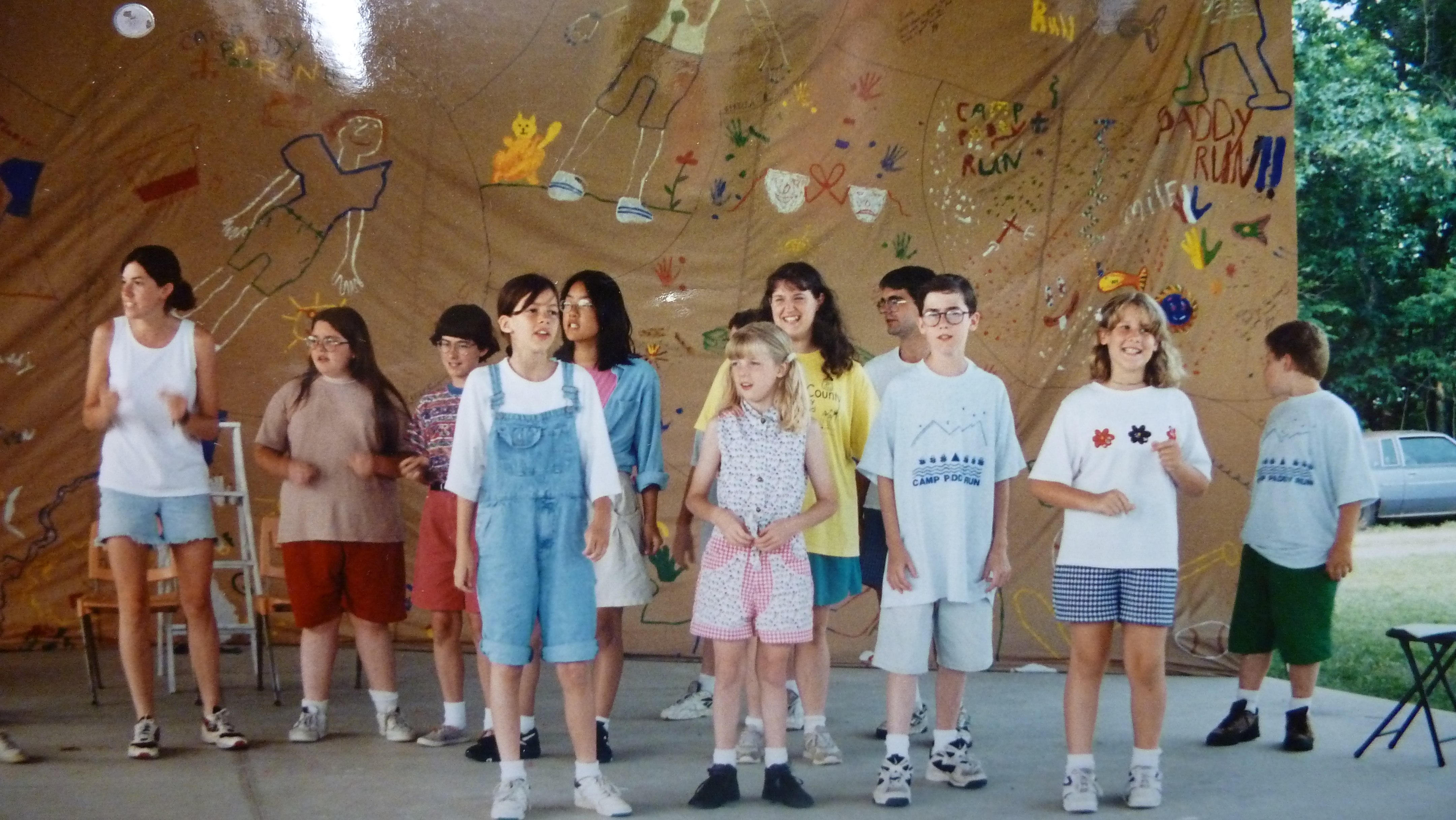

Top: Doreen, middle in pink shorts, at drama camp, Paddy Run, Strasburg, Va.
Bottom: Friend Allison and Tanya at Paddy Run music camp.
For their music involvement we are indebted to John Held, who started a children’s choir at our church. With his beautiful tenor voice and charming Tennessean ways, he got the children interested in singing some pretty high falutin’ choral music, along with enjoying silly warm up music and folksy-guitar-led sing-alongs. He and his wife, Ann, our pastor, took them to the music conference at Montreat for a number of years. John is no longer with us, succumbing to cancer at the age of 59, but his legacy certainly lives on, in part through a fund at our church to help other kids have these enriching musical experiences.

John Held, in a cabin at Montreat, checking music literature.
In the spring of 1996, John told me that composer Helen Kemp would be again leading the elementary aged children at the Montreat Music and Worship Conference (organized through Presbyterian Association of Musicians, PAM). Our older daughters had already been privileged to sing under her inspired direction; that year Doreen would be the right age. Did I want to come along for the week and (ahem) cook for all the kids in our church’s group, and finally see Ms. Kemp at work?
I would and I did, taking advantage of her open rehearsals where I observed first hand her magical ways with children. More on that in my next blog post.
Augsburg Press store calls Helen Kemp “without question, the grande dame of children’s music in America. She knows the child’s voice and understands that the body and spirit are equally important.”
Kemp has been known internationally as a specialist in the area of training young voices. She has been a guest conductor in all 50 states, five provinces of Canada. She has written books and prepared resources that have become standard in the industry. One of her compositions, “Praise, O Praise the Lord” is billed as “easy two-part literature—a wonderful way to introduce the concept of singing in harmony.”
As recently as two years ago (2011), she gave a homily at her alma mater, the Westminster Choir College. I believe she’s still living but has to be nearing 90.
For some 38 years I’ve straddled Presbyterian and Mennonite worlds, having been brought up in the rich tradition of Mennonite a cappella singing. But I have to say our small (Pres.) congregation’s singing is not too bad either. We have a tradition of singing only with a piano, in a sanctuary built to enhance live acoustic sound (rather than the deadening effect of carpet and drape), so people actually sing heartily, rather than being drowned out by an organ. Plus we’ve had a long history of having the head of the vocal music department at James Madison University as the church’s volunteer musical director, John Lyon. Hearing and singing good music each Sunday is a gift not all kids get. I’m happy to say our current assistant to the pastor, Tonya Menard, continues the tradition of a fine children’s choir at Trinity.
All of our daughters found their high school niche and most of their friends in music programs at school: band (concert, marching and jazz), two in honors choir, piano, flute, trumpet and French horn lessons.
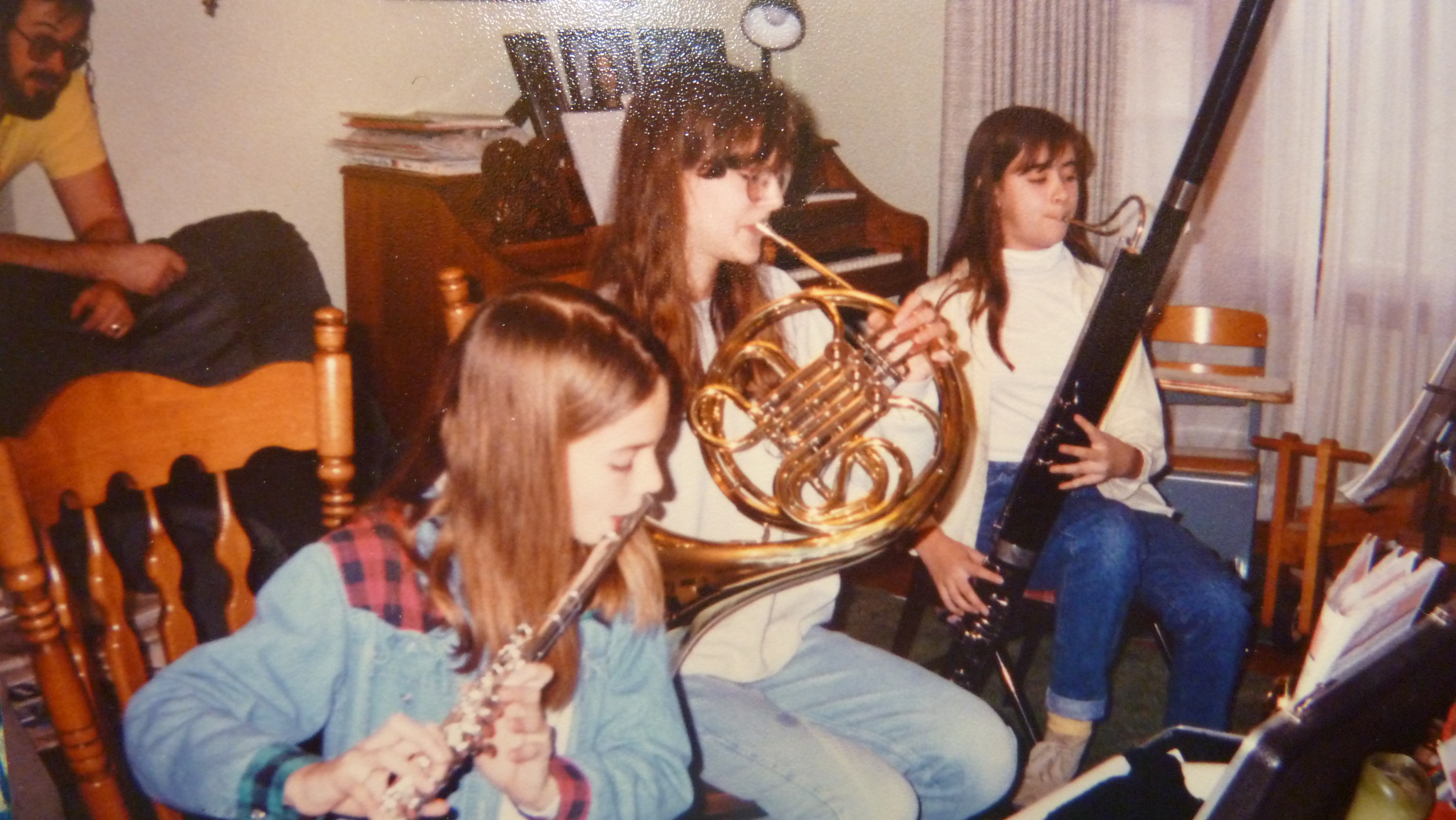
Music with friends: Tanya on flute, Michelle on French Horn, friend Allison on bassoon. Note husband in background enjoying his living room symphony.
Tanya eventually followed a career in music, majoring in flute and music industry at JMU, and is now artistic director for the Charlotte Symphony, N.C.
We found that most kids participating in music programs in the public schools to be the kind of kids who were so busy practicing with their various ensembles they didn’t have time for the typical high school vices of drinking and drugs. I also noticed that many of the kids in choir were kids who sang in church every week.

A music camp at Paddy Run.
One of our daughters, in her “senior sermon” at church before graduating from high school, talked about the theme of contentment and how much her study and practice of music had contributed to happiness in her life. And while she acknowledged that she learned a lot about music in school, she said, “The church has given me this gift, from Sunday after Sunday of singing hymns, and learning at an early age how to match pitch, which is a fundamental of music. I know that God gave me this gift of music through the church, for which I am so joyful. Music has given me a place to fit in through school and served as an outlet for my emotions. I will likely not follow it as a career but always enjoy it as a hobby.”
Next time I will describe what it was like to observe Helen Kemp, the grande dame described above, at work conducting this child and 200 others.

A tradition at Montreat: paddling on Lake Susan.
Come and enjoy musical Montreat with me tomorrow.
We moved five years ago and have not been able to grow spinach in our new garden. It is a great garden with much better soil than at our old rocky place … but spinach does not thrive here.
Here is my one lonely spinach plant that came up this year.

For several years, I’ve been listening to my neighbor, Harold, tell me I ought to try eating lambsquarter. Harold is in his eighties and whenever we have a gardening question, we ask him. (You can spell lambsquarter like that or as two separate words, the dictionary says).
If you garden in North America, you have likely seen this weed. It is ubiquitous and fierce to pull if you let it go like we sometimes do at the end of the season and it grows to be 4-5 tall.
Of course it is no good to eat when it gets like that, but when it is smaller and fresh especially in spring, Harold said he welcomes and loves lambsquarter—along with his dandelion greens.

Small lambsquarter growing all over my garden.
So this week instead of weedeating the tall plants that always grow along the edge of our house, we ate weeds, and loved them—in a fresh salad.

Lambsquarter with a bit of cilantro.
I’d like to try sautéing them with a bit of onion and garlic too and serve with a splash of vinegar like collard or turnip greens.
The dressing I used on my small lambsquarter salad was from a slaw recipe from my niece-by-marriage Jessica, who was about five months pregnant at the time she made this for our extended family when we were on a camping/cabin family vacation in Kentucky. She talked her dear husband into driving one hour each way to fetch soy sauce that had been forgotten. I thought that was pretty remarkable: that she asked her husband, and that he went! The salad was remarkable too: it is a very common recipe, but always tasty. First is her recipe, then how I adapted it for my small lambsquarter salad.

Keeping lambsquarter fresh in a jar of water until ready to fix.
Jessica’s “Kentucky” Salad (Cabbage slaw with Ramen noodles)
Salad
3 packages Ramen noodles only (I used chicken flavor)
2 one pound bags of shredded cabbage (or shred it yourself)
1 cup slivered almonds, browned lightly in butter in a skillet
2 bunches green onions, chopped to small rounds
(Can be prepared ahead of time; refrigerate until serving)
Dressing
1 cup sugar
¾ cup olive oil
½ cup cider vinegar
2 Tb. soy sauce
Shake dressing together to blend.
Add Ramen noodles and dressing to cabbage mixture at the last minute.
Serves 15 or more with leftovers, which are great, even though the Ramen noodles get a bit soggy.
Lambsquarter Salad
1 cup lambsquarter leaves
¼ crumbled Feta cheese
¼ cup pecans, chopped
½ cup fresh strawberries, slivered or quartered
Wash weeds thoroughly.
Snap off leaves.
Add cheese, pecans, strawberries or any of your favorite condiments. Serve with your favorite dressing.
I had some of Jessica’s leftover dressing (described above) from an earlier salad, which I had refrigerated. Naturally the olive oil congealed and looked gross. However, I put it in a glass measuring cup, heated it briefly in the microwave until I could stir it up again. I served it warm on the salad—it was like a hot dressing on greens which many people love.
I especially loved that we were eating free food and loving it! Here are some more recipes for serving lambsquarter leaves.
But guess what I spied in the garden today: a few shoots of new spinach that I had replanted. It’s a little late, but with the wacky weather we’ve been having, it may stay cool enough to mature. A gardener or farmer is nothing if she doesn’t have hope!

Do you have a tasty weed to recommend? Any recipes to share?
I often walk the nearby campus of Virginia Mennonite Retirement Community for exercise or as a break from my job at MennoMedia. From March to November, a wide array of flowers can be found. I used to walk this ground while a student at Eastern Mennonite University when it was “only” a pasture field filled with cows and cow pies. It was a place for me to escape back to my farm roots.
It is not lost on me that someday I may walk this campus as a VMRC resident; I certainly don’t have my name on a waiting list, but one never knows. It is a good place. I’m told that some flower beds are planted and groomed by residents who choose the varieties. So on a recent morning I “picked” (by photo only) some gems to share. Stroll with me and enjoy.


Flowers appear on the earth; the season of singing has come, the cooing of doves is heard in our land.
Song of Songs 2:11-13

Consider how the wild flowers grow. They do not labor or spin. Yet I tell you, not even Solomon in all his splendor was dressed like one of these. Luke 12:26-28

All people are like grass, and all their glory is like the flowers of the field;
the grass withers and the flowers fall,but the word of the Lord endures forever. I Peter 1: 24-25

Then God said, “Let the land produce vegetation: seed-bearing plants and trees on the land that bear fruit with seed in it, according to their various kinds.” And it was so. The land produced vegetation: plants bearing seed according to their kinds and trees bearing fruit with seed in it according to their kinds. And God saw that it was good. Genesis 1: 11-12

I am the rose of Sharon, and the lily of the valleys. Song of Solomon 2:1

Flowers are the sweetest things God ever made, and forgot to put a soul into. ~Henry Beecher, Life Thoughts

Earth laughs in flowers. ~Ralph Waldo Emerson, “Hamatreya”

I’d rather have roses on my table than diamonds on my neck. ~Emma Goldman

I will be the gladdest thing
Under the sun!
I will touch a hundred flowers
And not pick one.
~Edna St. Vincent Millay, “Afternoon on a Hill”

A morning-glory at my window satisfies me more than the metaphysics of books. ~Walt Whitman

When you have only two pennies left in the world, buy a loaf of bread with one, and a lily with the other. ~Chinese Proverb

Why do people give each other flowers? To celebrate various important occasions, they’re killing living creatures? Why restrict it to plants? “Sweetheart, let’s make up. Have this deceased squirrel.” ~The Washington Post

Bread feeds the body, indeed, but flowers feed also the soul. ~The Koran

I perhaps owe having become a painter to flowers. ~Claude Monet
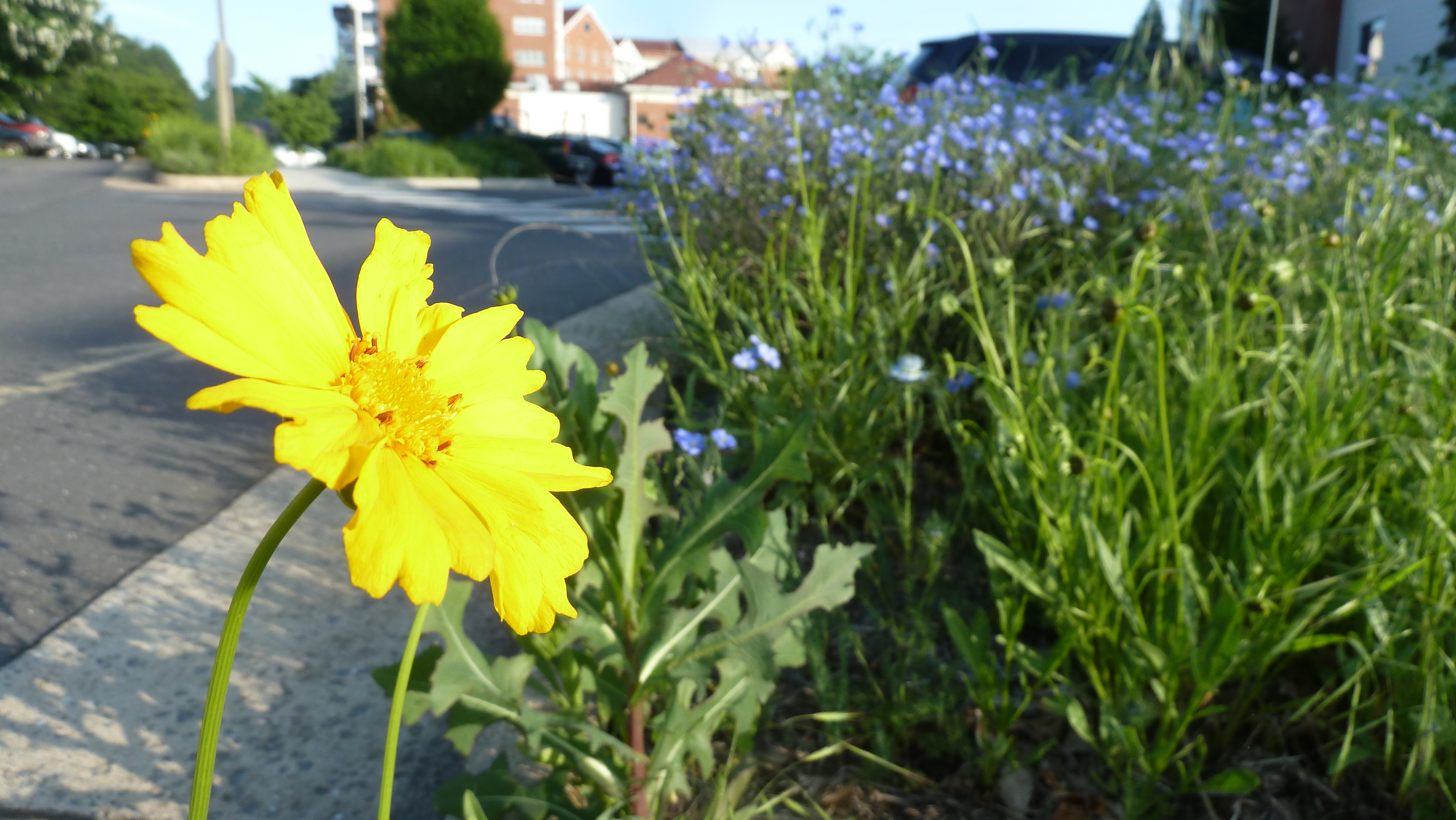
If you’ve never been thrilled to the very edges of your soul by a flower in spring bloom, maybe your soul has never been in bloom. ~Terri Guillemets
Bible quotations from Bible Gateway.
Flower quotations found at http://www.quotegarden.com/flowers.html

 findingharmonyblog